Up next in 10

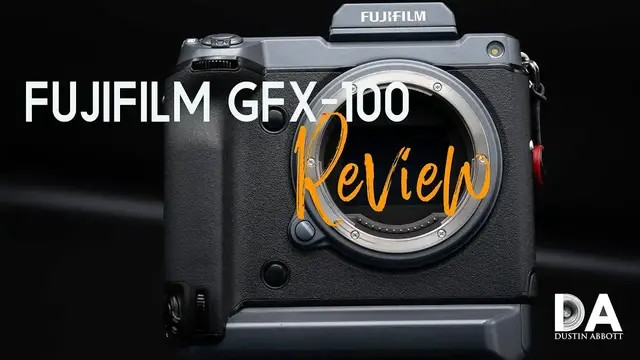
FUJIFILM GFX-100 Medium Format Camera Review | 4K
Jul 19, 2023

Photographer Dustin Abbott shares a thorough review of the Fujifilm GFX-100 medium format camera | Read the Text Review: https://bit.ly/GF80Review | Visit the Image Gallery: https://bit.ly/GFX100Pics | Purchase the Fujfilm GFX 100 camera @ B&H Photo https://bhpho.to/3k4PqGM | Amazon https://amzn.to/3jYT30P | Camera Canada https://shrsl.com/2st3f | Amazon Canada https://amzn.to/3po4JLC | Ebay http://ebay.us/yOJE1i
Purchase the Fujinon GF 80mm F1.7 @ B&H Photo https://bhpho.to/2N58YyJ | Amazon https://amzn.to/2ZsJ4XW | Camera Canada https://shrsl.com/2st7l | Amazon Canada https://amzn.to/3jVygv0 | Ebay http://ebay.us/Zw1pbc
Purchase the Fujinon GF 45mm F2.8 @ B&H Photo https://bhpho.to/3asT5eh | Amazon https://amzn.to/2NxrKys | Camera Canada https://shrsl.com/2st3l | Amazon Canada https://amzn.to/3dmGifd | Amazon UK https://amzn.to/2NxYLL5 | Ebay http://ebay.us/uKukcR
Check out the DA Merch here: https://bit.ly/TWIMerch
Want to support this channel? Use these affiliate links to shop at:
B&H Photo: http://bhpho.to/1TA0Xge
Camera Canada: http://bit.ly/DLACameraCan
Ebay: http://bit.ly/DustineBay
Make a donation via Paypal: https://www.paypal.com/paypalme/dustinTWI
Get a discount off all Skylum Editing Software (Luminar, Aurora HDR, AirMagic) by using code DUSTINHDR at checkout: http://bit.ly/LuminarDLA
Become a Patron: https://www.patreon.com/dustinabbott | Check me out on: Personal Website: http://dustinabbott.net/ | Sign up for my Newsletter: http://bit.ly/1RHvUNp | Instagram: http://bit.ly/DLAinsta | Google+: http://bit.ly/24PjMzv | Facebook: http://on.fb.me/1nuUUeH | Twitter: http://bit.ly/1RyYxIH | Flickr: http://bit.ly/1UcnC0B | 500px: http://bit.ly/1Sy2Ngu
My filming setup: Sony a7R III: B&H Photo: https://bhpho.to/2D6ibNO, Camera Canada https://shrsl.com/2ikpr, or Amazon: http://amzn.to/2CNxOvH | or | Sony a9 @ B&H Photo: https://bhpho.to/2HyWIyt, Camera Canada https://shrsl.com/2ikpx, or Amazon: https://amzn.to/2s1vYE0
Tamron 28-75mm F2.8 RXD @B&H Photo: https://bhpho.to/2FA00la, Camera Canada https://shrsl.com/2ikq2, or Amazon https://amzn.to/2G2kaEr
Show More Show Less View Video Transcript
0:00
I am Dustin Abbott and I am here today to give you my standard review of the Fujifilm GFX100
0:18
This is their medium format camera in kind of the large body style with the integrated vertical grip
0:25
as a part of it. And then of course, also it is their highest resolution camera at 102 megapixels
0:31
So this is a true monster optically and in terms of sensor performance. Now, very shortly
0:37
they are bringing to market a smaller version body of this, the GFX100S. And I do hope to have
0:46
a look at that in the future and see what else has changed alongside having the more compact
0:51
kind of standard size body without any kind of integrated vertical grip. But for some people
0:56
who prefer having the vertical grip for shooting vertically, but then also the advantage of having
1:03
twice the battery life, you know, due to having an integrated two batteries here in the vertical
1:08
grip portion, this camera is going to continue to have some attraction. Now, Fujifilm has
1:14
essentially taken two paths that are a little bit unconventional. First of all, they've really
1:19
focused in the APS-C space and developed, you know, more premium APS-C lenses and cameras than
1:25
really what anyone else has, then they have bypassed a full frame altogether and they've gone right to
1:31
medium format. What you might call a medium format light in that the sensor size is considerably
1:37
larger than a standard 35 millimeter sensor, but it's not quite as large as say a Hasselblad
1:44
full medium format size sensor. And so if to understand the math, it works like this
1:51
APS-C for Fuji is a 1.5 times crop. Full frame is just a one crop. And so that's why
1:57
lenses are evaluated in terms of their focal length in 35 millimeter or full frame terms
2:04
because there's no crop factor on that. Fuji's medium format is 0.79. And so it's considerably
2:11
larger than what the full-frame sensor is while the Hasselblad sensor is 0.65 times
2:17
And so that gives you an idea of the varying sizes of these different sensors
2:22
Now today we're doing the standard review. I'm going to hit the highlights of functionality of
2:26
the camera and the performance and if you want more detail in all of those areas including a
2:32
detailed sensor performance I recommend that you check out the definitive review instead
2:36
So let's talk about some of the main standouts in terms of the build and features
2:40
As noted, there is an integrated vertical grip here, and as a part of that, there are a lot of redundant controls
2:47
Most of the various dials and buttons and the shutter button are replicated in the vertical
2:53
and so that you have access to those with your thumb or finger when shooting vertically
2:58
So that is good. What's not so good, however, is that they elected to take the top plate kind of design and finish
3:06
which is a, you know, kind of a smooth platinum type finish and integrate that into the vertical
3:11
grip. That's fine from a stylistic perspective, but it's certainly not from an ergonomic or
3:17
functional perspective because you lose the nice textured grip and then also the ergonomic contours
3:23
of the horizontal grip. And in the vertical grip, you have a very straight, very rigid and very hard
3:30
There's no rubberized surface. There's not great grip there. And so because it's not as
3:34
ergonomically sound, you feel like you're kind of just hanging on to the camera and the vertical
3:38
as opposed to the grip kind of conforming to your hand. And so that is what I consider probably to
3:43
be the largest ergonomic fail on this camera. Now on a practical level, this is, as you can tell
3:48
it's a very large body. The camera itself with just no lens, but just the, you know, a memory
3:55
card and the batteries integrated is over 1400 grams. And I weighed it in at, I believe, 1430
4:02
in that range. So that's basically the weight of say a 70 to 200 millimeter F2.8
4:08
And so you're starting off already with a heavy assembly. Now for some people that's obviously going to be an issue
4:13
You're already starting off over three pounds, you know, with just the camera itself
4:17
before you add any lens to it. The other thing as a part of that is that this is a obviously a very large body physically and it also a very deep body I would say that I have medium large hands in terms of glove size but even so I find that
4:32
with this grip I can feel a little bit of tension between my hand and my knuckles in that area
4:38
because I'm actually having to to stretch a little bit to get my you know knuckles fully around to
4:43
have the proper kind of grip perspective and so it definitely is is fuller in my hand than the other
4:49
camera grip that I've used before. For example, my EOS R5, as you can see from these pictures
4:53
it is dwarfed, number one. The EOS R5 has a grip depth of 88 millimeters, the depth of the camera
5:00
This is 102.9 millimeters. And so that's a significant difference. The other thing is that
5:05
there is also more width in the camera itself. And so on the back, we have a 3.2 inch LCD screen
5:13
It has a fairly large bezel, which does contribute a little bit to the problem I'm about to describe
5:17
the screen itself is is nice as i noted 3.2 inches decent resolution i believe it's 2.36
5:25
million dot resolution it is touch screen and while it isn't fully articulating it does tilt
5:32
in three different axes so you can pull it out you can tilt it up and down and if you hit a release
5:36
on the side you can angle it to the uh to the side which is obviously useful if you're going
5:41
to be shooting in vertical grip because it allows you to you know still have some play in adjusting
5:46
the screen if you want to shoot at different positions. And so all of that's fine. The
5:51
touchscreen implementation is that you can do a lot of things via touchscreen except for navigating
5:56
the main menus. You can navigate to the Q menu, not the main menu, however. But one of the things
6:02
you can do theoretically by touch is touch to move a focus point around, which a lot of times I'll
6:07
utilize looking through the viewfinder and I'll use my thumb to move a point around. It's the
6:13
fastest way to do it. You can do it via the little joystick nub here, but you can do it faster
6:20
typically by just using the touchscreen. In this case, however, you're going to have to really
6:25
support the camera with the left hand because it's such a distance. It's about 70 millimeters
6:30
from the side of the camera to the very edge of that touchscreen. And so it's a little bit longer
6:35
than what the thumb reaches to. And so it's about 20 millimeters longer in that distance. So again
6:39
than say the EOS R5 and certainly even more so than what you're going to find on cameras like
6:45
the A7R Mark IV or a similar other Sony bodies like that. So those are kind of my ergonomic
6:53
complaints here outside of one other and that is that along the top of the camera
6:58
typically Fuji cameras are really great about having physical controls. Lots of dials for
7:03
you know, for shutter speed, ISO, exposure compensation, you know, mode selection
7:08
In this case, most all of that is replaced by just the top LCD screen, which of course, it's great to have a top LCD screen
7:16
But I think that if I had the option, I would prefer to have more of the physical controls
7:21
You end up having to do a lot of things through a couple of buttons and selecting different things on screen and then using front and rear dials to adjust those things
7:31
And it's just, it's never quite as ergonomically satisfying as what a lot of Fuji bodies are
7:38
So the irony to me here is that they have more real estate on this very large body for physical controls
7:44
And in some ways, there's fewer physical controls here than what you're accustomed to
7:49
At the same time, the LCD screen on top, it's easy to see and even in bright light
7:55
I also like the fact that it retains a passive display even when the camera is powered off
8:00
And so you have a sense of what settings you're going to come to even before you power on the camera
8:05
there's also a sub lcd at the bottom that has a lot of that basic information on there that screen
8:11
is certainly nice to have because it means you don't have to have all of that information on
8:16
your display or in the viewfinder and so it gives you a little bit less clutter there speaking of
8:21
that viewfinder it is a nice high resolution 5.7 million dots it has an 85 frame per second refresh
8:28
rate which is you know pretty good some of the newer cameras have 120 frames per second
8:33
and that helps more particularly if you're tracking action. This isn't really an action
8:37
camera and so you know it gets the job done. The viewfinder itself is nice to look into
8:42
It is detachable a little bit of a modular design there although I don know why you would want to you know not use it but you know your mileage may vary You can buy an optional accessory that allow you to tilt it in different directions It pretty pricey though about US So overall I mean there are a lot of you know
9:02
otherwise a lot of the controls are fine. Nothing that's really exceptional for such an expensive
9:07
camera, but you know, after a while with most cameras, you get to, you know, you get to learn
9:12
them fine. It's just in this case, I wish that they had done a better job with the integration
9:16
of the vertical grip portion. Now, one of the things that is great about this camera that really
9:22
helps with such high resolution, 102 megapixels, and in many ways makes it more accessible than
9:28
say, when I did years ago, when I did the Canon EOS 5DSR review, which was a 50 megapixel camera
9:34
which was exceptionally high at the time when most full-frame cameras were between 20 and 22
9:40
megapixels and so massive amount of resolution but it was a little bit inaccessible because this
9:45
was before in-body image stabilization and so it meant that you had to really be careful because
9:50
what happens with camera shake motion blur is that blur occupies more pixels so it becomes more
9:56
obvious. In this case having an effective 5.5 stop in-body image stabilization really helps to
10:03
where you can essentially use the camera as normal without worrying too much about motion blur and I
10:09
found that it's made a huge difference for me in making that high resolution accessible. You know
10:14
say for example, in this portrait shot, I was shooting an 80 millimeter focal length
10:18
one 55th of a second shutter speed. And you can see that even at a pixel level, it is, you know
10:24
perfectly sharp and no sign of motion blur. That would not have been the case if it were not for
10:29
the addition of embody image stabilization. So it's certainly very useful, obviously useful also
10:34
when shooting video that you can get nice stable handheld footage as you can see here
10:41
Now, autofocus was a kind of a major step forward for medium format. It's not unusual for medium
10:47
format to have cameras to have very primitive autofocus systems comparatively to what, you know
10:53
is saturating the market elsewhere. In this case, they largely adopted the autofocus system that
10:58
we're familiar with with say the X-T3 and and so you've got you know they claim just millions of
11:06
focus points phase detect points but you know the the bottom line is there are 425 selectable AF
11:13
points that cover the vast majority of the sensor and so you know performs in that sense very similar
11:19
to what we're familiar with from other Fuji cameras. Now the limiting principle here is is in a couple
11:26
of ways. First of all, this camera, you know, it touts up to five frames per second burst, but
11:31
you know, that is basically without continuous autofocus. And so if you have a static subject
11:36
and you don't need to autofocus in between shots, you might be able to get five frames per second
11:40
That drops to three frames per second if you want autofocus. And if your subject is moving
11:45
you're going to probably see even less than that. This is not, repeat, not an action camera. This is
11:51
going to be great for portraits, products, landscapes, but you know, you can leave beside
11:57
any kind of action type photography. And so it's not going to compare in terms of tracking abilities
12:02
to, you know, like the X-T3 or the X-T4, which are actually fairly effective in that. So it's not
12:08
going to do that. What I did find, however, is that I had good IAF consistency. And I found that
12:15
particularly helpful if I selected the eye that I wanted, you can choose different modes there
12:20
face detect, you know, no preference on eye or select right or left eye. And I found that getting
12:25
down to that smallest variable left less thinking to the camera. And, and so it actually, I thought
12:30
achieved a little bit better result, but I actually had really consistent focus results at a variety
12:35
of different focus distances while shooting portraits. And I felt that it stayed fairly
12:39
sticky on the eye. The only negative I'll note is that the IEF doesn't get the iris. It's more
12:45
likely to get like the eyelash. And so if you're looking at, you know, high resolution levels
12:51
you're going to, which obviously all of these files are here, you might notice that the eyelash
12:56
but not the iris itself is in focus, which, you know, actually is a little bit of front focus
13:01
you know, over what you would actually want. So I found that the autofocus was okay
13:06
but it certainly not at the level of what I accustomed to seeing from the other newer cameras And so certainly not all that great for video AF There a lot that lacking on that front and just a lot of extra hunting and pulsing and sometimes just a downright refusal to
13:25
focus or to change focus if you want to do a focus pull. And so there's certainly some limitations
13:30
in that aspect. But if you stick to what is really kind of the niche of this camera
13:35
after the firmware updates, it seems to do a fairly functional job. There is a little bit also
13:41
of shutter lag. And so you don't get like an immediate result there. There seems to be almost
13:46
like a double clutch. You know, for example, I tend to focus with button half pressed. And so
13:52
typically when you go and actually click the rest of the shutter button, you know, it's almost an
13:56
instantaneous process. That's not true here. It's like there's an extra little clutch there where it
14:01
verifies focus. And so a little bit more of a delay. I did find, however, that if I chose to
14:07
shoot at the, you know, 14 rather than 16 bit and, you know, like a lossless compression that I got a
14:14
little bit faster, but still not all that quick. And so, you know, another thing that you have to
14:18
kind of get accustomed to. So autofocus is better than probably other medium format cameras, but if
14:24
you're coming from full frame, it will not seem like a step up. It'll seem like a little bit of a
14:29
step down in that regard. So let's talk about image quality here. Obviously image quality is key to
14:36
this, and that's really where this camera is set apart. In many ways, I'm more impressed with
14:41
this camera, images off of this camera, than any that I've basically ever reviewed before. I've
14:46
seen details from the 102 megapixel sensor that does not have an anti-aliasing filter on it
14:53
which means that you really get even more detail out of it. Just an incredible amount of detail
14:58
and a lot of latitude for recovering shadows and highlights. Here, for example, you can recover
15:05
five stops of underexposure almost perfectly very little additional noise and it's just a
15:11
very clean end result and then on the upper end I found that that somewhere between two and three
15:18
stops was the maximum I could recover there but a little bit more dynamic range than what we're
15:24
seeing on the current crop of full frame bodies ISO performance was also quite good and I found
15:29
you know results usable all the way up to you know 25,600 and and actually if I down sample to
15:37
the same resolution level as say my Canon EOS R5 I actually felt like the the GFX 100 was a little
15:44
bit better so some great sensor performances and that amazing amount of detail means that you can
15:49
take a vertical shot like this I can deeply crop and get you know this framing out of this landscape
15:56
scene, which by the way, is still at the resolution level, basically of the, you know, Sony A9 that
16:02
I'm filming on right now. I would say that that's about 23 megapixels of resolution versus the A9's
16:07
24. So that's incredible. Or from this portrait shot, I can take a deep crop of the face and the
16:13
eyes and, you know, just get an amazing end result. And I also found when I did portrait comparisons
16:18
that there's just a little bit more nuance in the way that the fall off is on different areas of
16:24
light and on skin tones, just it's not a huge difference. I do want to emphasize that, but it's
16:31
certainly a noticeable difference. And so this, this camera produces just stunning, stunning images
16:37
And I think that that really is where it's at in terms of if you're willing to bear the extra
16:43
cost and inconvenience and weight of a camera like this. And this is a $10,000 US camera
16:49
but where I think if anyone can justify that expense and that bulk and size it is in the
16:54
incredible incredible sensor performance from this camera which is truly truly fantastic
17:00
I'm Dustin Abbott and if you'll look in the description down below you can find linkage to
17:04
my full text review there's also linkage there to an image gallery and of course buying links if
17:10
you'd like to purchase one for yourself beyond that there's linkage to follow me on social media
17:14
to become a patron to sign up for my newsletter that comes out every Thursday to purchase my
17:19
merchandise if you want to get some of that. And then of course you haven't already, please click
17:23
that subscribe button right here on YouTube. Be sure to click that, ring that bell. And so you get
17:28
notifications when new content drops. Thanks for watching. Have a great day and let the light in
#Camera & Photo Equipment