Up next in 10


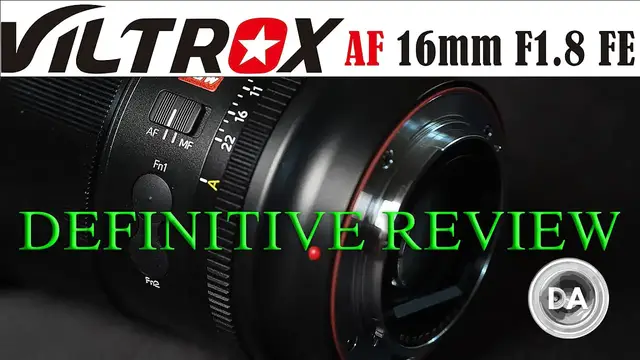
Photographer Dustin Abbott shares a thorough, real world review of Viltrox's best full frame lens to date - the amazing Viltrox AF 16mm F1.8 large aperture wide angle prime lens for Sony FE. | This video is sponsored by Fantom Wallet. Visit https://store.fantomwallet.com and use code DUSTIN15 to get 15% off | Read the Text Review: https://bit.ly/Viltrox16DA | Visit the Image Gallery: https://bit.ly/Viltrox16pics | Purchase the Viltrox AF 16mm F1.8 @ Viltrox https://bit.ly/buyViltrox16 (use code DUSTINABBOTT for 8% off) | B&H Photo https://bhpho.to/3OqFZCu | Adorama https://howl.me/cjO6CBvHfiI | Amazon https://amzn.to/436xgtH | Amazon Canada https://amzn.to/435DCcQ | Amazon UK https://amzn.to/45uGL7N
Check out the DA Merch here: https://bit.ly/TWIMerch | Become a Patron: https://www.patreon.com/dustinabbott | On the Web: http://dustinabbott.net/ | Sign up for my Newsletter: http://bit.ly/1RHvUNp | Instagram: http://bit.ly/DLAinsta | Facebook: http://on.fb.me/1nuUUeH | Flickr: http://bit.ly/1UcnC0B | 500px: http://bit.ly/1Sy2Ngu Follow Craig @ https://www.instagram.com/craigstoffersen/
Want to support this channel? Use these affiliate links to shop at:
B&H Photo: http://bhpho.to/1TA0Xge
Camera Canada: http://bit.ly/DLACameraCan
Amazon: https://amzn.to/3HrY64d
Amazon Canada: https://amzn.to/3qG1p18
Ebay: http://bit.ly/DustineBay
Make a donation via Paypal: https://www.paypal.com/paypalme/dustinTWI
=============================
Table of Contents:
=============================
0:00 - Intro and Concept
0:39 - Fantom Wallets
1:26 - Build and Design
8:30 - Autofocus
10:25 - Image Quality
Show More Show Less View Video Transcript
0:00
built rocks has level up once again with their latest release that is the af 16 millimeter f1.8
0:17
fe this is for sony full frame mirrorless cameras this is a full frame wide angle wide aperture prime
0:24
lens that happens to have the features and the performance of a sony g master lens but at a
0:29
fraction of the price. Find out why the Viltrox 16mm f1.8 should be at the top of your list if
0:35
you're looking for a wide-angle prime lens, right after a word from our sponsor. Today's episode is brought to you by Phantom Wallet, the minimalist, modern wallet that is
0:44
now even better with the new Phantom X that is crafted from aluminum right here in Canada
0:49
It is 22% smaller and 35% lighter, while still making it easy to access your cards and money
0:56
when you need them thanks to their unique fanning mechanism. You could even customize your wallet due to its modular design
1:02
with accessories like a money clip, cash holder, ID display, and even Chipolo and AirTag tracking integration
1:10
Visit store.phantomwallet.com to check out their unique sizes, styles, and finishes that span from aluminum to wood to carbon fiber
1:18
And use code DUSTIN15 for 15% off when you're ready to check out
1:26
Viltrox has hit a whole new level for its features in a lens like this
1:31
I noted that they had leveled up with their 75mm f1.2 for Fuji X-mount
1:36
That was an APS-C specific lens, but this lens really surpasses what we saw even on the 75mm f1.2 Pro lens
1:44
This doesn't carry a Pro badge, but it really feels, if anything, even more professional than what that lens did
1:51
We have seen a whole new level of features here, including, well, for a while Viltrox has had an aperture ring
1:57
and you continue to have that here with one-third stop to tense, the ability to put it all the way over into automatic mode
2:03
But now we have a de-click option on the side of the barrel, which allows you to de-click that aperture and to do smooth aperture racking
2:11
which obviously is going to be a key feature if you're wanting to do some video work with a lens like this
2:16
And by the way, it works really well for video purposes, as we'll see a little bit later on
2:20
They have added for the first time on one of their full frame lenses, we have an AF-MF switch here
2:27
We also, below that, we have dual function buttons on here. So the top function button works something like the focus hold button on a Sony lens
2:35
The bottom lens, however, is a preset button. And that gives you the ability to preset a couple of an AB focus position
2:43
And so you can click and you can go right in between those two preset focus positions
2:47
That's obviously going to be really useful if you're doing video work and you're wanting to pull between two preset subjects
2:53
Or even if you're doing stills work and you want just to have a certain focus distance program in, a click of a button after you have set that and away you go
3:02
But the headline feature here, of course, is the addition of the top mounted LCD screen
3:06
This is a feature that I've only seen really on Zeiss baddest lenses on the mirrorless space here on Sony
3:11
but I would say that they have actually one-upped what Zeiss did with theirs and that there's a whole
3:16
lot more functionality built into this LCD screen. So you have a couple of things that are taking
3:22
place, primary things. You have obviously the ability to see your focus distance both in a
3:28
large scale in terms of just a digital readout but then also in an electronic distance scale
3:33
along the top that helps you to let you know there. Along the bottom it gives you kind of a
3:37
redundant showing of what your aperture setting is. Now I say redundant if you're using the aperture
3:42
ring, which is right there. However, if you are using your aperture control from within the camera
3:48
what that allows you to do is to see right from a top mounted what your actual aperture position is
3:53
And so if you happen to have a camera like which most Sony, I don't think any Sony cameras do have
3:58
a top mounted LCD screen, it allows you to see right there what your aperture value is. The other
4:02
thing that's there is that it will light up showing you the function button when you're using that
4:07
But then it also will show you the, allows you to use this screen to preset your focus distances
4:13
And so you can see an actual marking of where your focus distance is
4:17
Our two A, B focus points are on that. And it gives you more information on that
4:22
By the way, you can set or reset those focus positions by long holding the second function button there on the bottom
4:29
That allows you to preset that position. Now, I have only one complaint about this operation here
4:34
And that is that the buttons could be a little bit better executed. They seem to require a little bit more force than what I like
4:39
They're a little bit spongy feeling. And so as a byproduct, I find that it is a little bit difficult
4:44
if you're doing a video focus pull back and forth. As you can see here, you can probably see a little bit of vibration introduced
4:50
when I actually click that function button to change that because you have to push it a little bit harder than what you might otherwise like
4:57
Also included now for the first time on one of their full frame lenses is weather sealing
5:01
It starts with a uniquely colored gasket at the lens mount and there are internal seals as well. Now, I haven't seen a cutout for this yet because it's
5:10
not been released. I'm reviewing a pre-release copy, but what I saw, if it's comparable to what
5:16
I saw on the 75 millimeter F1.2, there are the pretty typical amount of weather seals
5:22
gaskets at the key positions throughout. And I suspect that this is probably sealed in the same fashion. There is a metal focus ring that has a nice damping. It has about 210 degrees
5:32
of rotation. And obviously the addition of having a distant scale on here, which is something you
5:37
typically don't see on a mirrorless lens, allows you to have a little bit more repeatable results
5:42
if you're doing manual focus pulls. So there definitely are some really useful video centric
5:46
features on this particular lens. Now a Viltrox standard that they've had pretty much from the
5:52
beginning is the inclusion of a USB port. In this case, it's USB-C that is located on the lens
5:58
mount itself and so that allows you to do firmware updates right to the lens without any kind of
6:03
docking station or anything like that. The lens itself is what I would call a medium-sized lens
6:10
It is 85 millimeters in diameter that three and a quarter inches and it is 101 millimeters or a little over four inches in length It weighs in at 550 grams or about 19 ounces So it is very
6:24
slightly larger and heavier than the Sony 14 millimeter F1.8 G master, though I did point out
6:30
that lens as being incredibly unusually small for its size. This is still a moderately sized lens
6:36
and it certainly is not at all heavy. In fact, I was able to use it no problem
6:40
on a smaller gimbal like the DJI RS3 mini gimbal. And so it balanced on there just fine
6:48
and I was able to use that. And you'll see some footage from that in just a moment. Now, one thing that I'm really impressed
6:53
that they were able to pull off with a wide angle, wide aperture prime like this
6:56
is that we do still have a flat front element. We can use traditional 77 millimeter
7:01
filter threaded filters on here. And so that's very, very useful. I did some of these long exposure shots by putting on an ND1000 filter on there
7:11
to allow me to get long exposures even in the middle of the day. So I really appreciate that as a part of the design, we don't have a bulbous front element
7:18
and it's much simpler to actually filter this lens. There are nine aperture blades inside and Viltrox has gotten much better at retaining a circular shape on their aperture when it stopped down
7:29
And it does have a pretty nice sunburst effect as well as we'll see during our image quality breakdown section
7:34
Now, unfortunately, the one kind of lingering Viltrox negative that I'll highlight here once
7:39
again is the fact that the minimum focus distance is not particularly close. It's 27 centimeters
7:44
and the maximum magnification seems to be kind of the standard that all Viltrox lenses have. It's
7:49
just 0.10 times, which is definitely on the low side, and so it makes it a little bit less useful
7:55
for those close-up shots. The overall build here is very nice. It's mostly metals in the construction
8:00
so it feels really good quality. The only thing that kind of stands out as being the exception
8:05
is the lens hood itself, which is plastic and also it just feels a little bit cheap
8:10
and also I find that it's not all that difficult for me to push past what should be the locking
8:15
point here and to go a little bit beyond there. And so it's just not as engineered to the
8:20
tolerances that I would prefer to see. Frankly, I'd prefer to see one of their metal lens hoods here
8:25
but even if it's going to be plastic, if it was just a little bit more robust, that certainly
8:29
would be appreciated. Overall, however, it's hard to complain about all of this for $549 US bucks
8:35
That is a huge, huge bargain. Now, autofocus comes via Viltrox's lead screw type of STM or
8:42
stepping focus motor. This is a really well-executed one here. Focus changes are nice and snappy
8:48
as you can see here, even going from very close to infinity. It's not GM level fast
8:53
with their multiple linear motors, but this is nice and snappy. I had zero issues in focusing
8:59
out in the field. I found that IAF worked well, even working off of a gimbal. As we can see here
9:05
I had no problem moving around and you can see that everything stayed nice and sticky on Nala's
9:10
eye during that shot. Then when I did the focus pulls, you can see the focus pulls are nice and
9:15
smooth here. No kind of pulsing or settling. Also, you'll note that there is next to no focus
9:21
breathing there. Everything is really well executed on that front. I also found that focus
9:26
pulls in video were typically very smooth, not quite as beautifully damped as the new Samyang
9:32
VAF lenses. They're purposely designed for use for Cine, and so their damping is a little bit
9:38
smoother. But even in those focus changes as I move around on the gimbal, overall, I think the
9:42
focus changes are nice and smooth, nothing abrupt or disjointed. Also, when I did my hand test
9:49
autofocus worked just fine there, moving from the hand to the eye. And again, because it's so smooth
9:54
basically all you just see is that the focus changes with nothing abrupt or kind of jaggy
9:59
feeling as it goes back and forth. I also did use it in a portrait setting. And while with a wide
10:05
angle like this, it is the eye, it occupies too small a portion of the frame for a box to be on it
10:11
At the end of the day, the autofocus results were all just fine. And so that's what matters most
10:15
and I was able to get good precise results even when I was shooting at as shallow depth of field as possible
10:21
So again, autofocus performance is actually really, really good here. So all of this is stacking up pretty well
10:26
And if we look at the MTF for the lens, we see that it suggests a lens that is very sharp wide open
10:32
and deadly sharp when stopped down with a very consistent performance all across the frame
10:37
We're going to dive in and take a look and break down that optical performance, but I suspect you're going to be pleased with what you see as we do
10:43
So let's start by taking a look at vignette and distortion. So as you can see here, there is not a lot of distortion for a wide-angle lens
10:52
However, as we're going to see, the distortion in this area is just very slightly complex
10:57
There is a fair amount of vignette, as we're going to see. And at this stage, I don't yet have a profile to correct, so all I have to go on is manual corrections
11:05
So as you can see, kind of correcting for the distortion is a little bit complicated
11:10
because there is a very, very tiny amount of barrel distortion. But if you try to correct the barrel distortion, it creates some pin cushion distortion
11:18
And if you go the other direction, it just creates some barrel distortion curving out on these edges
11:23
It's a non-linear type distortion. Fortunately, there's a very small amount. But this is going to be a lens that is, if you're going to correct it
11:31
it's going to be better to do it with a profile rather than trying to do it manually. A fair amount of vignette here, a plus 80, so well over three stops
11:38
certainly far from the worst that I've seen, but also not the best either. I will note, however
11:44
that they've managed to get this wide aperture of f1.8 and retain a flat front element. Sometimes
11:52
vignette can be reduced by doing a curved front element, and of course that eliminates using
11:57
traditional filters. So I'm going to accept this compromise because it's not all that hard to
12:02
correct this vignette. Now in real world applications, the distortion is low enough
12:07
that it's really not going to be a factor. So here's a real world image here. You can see straight lines here and along the edges of the frame
12:14
Really no issue to see there. Likewise, taking a look at a room, lots of straight lines here
12:19
And you can see that there's no real bulging that's taking place in these lines
12:24
And so most of the time, you're going to be able to get away with just not correcting the distortion at all Now in terms of chromatic aberrations they are pretty mild here You can see just the tiniest amount of fringing after the plane of focus there
12:38
nothing significant at all. We can take a look at lateral chromatic aberration near the edge of the
12:43
frame, and we can see it if we punch into the sides here that there's really just not much of
12:48
anything to see, not really a factor here. So overall chromatic aberration, not an issue. So
12:54
will take a look here now at our resolution this is a 50 megapixel sony alpha one sensor and i'm
13:00
showing you these results at 200 magnification you can see even at that very high magnification
13:06
in the center of the frame this lens is extremely sharp with very high contrast everything looks
13:11
really fantastic if we move towards the mid frame mid frame is not quite as sharp but it's still at
13:17
a very high level even wide open and popping down here into the corner we can see that sharpness
13:24
and contrast is good even right into the corner. Now to put this into perspective, I've got for
13:29
comparison purposes the much more expensive Sony FE 14mm f1.8 G Master. And so we can see here that
13:38
looking here at the mid frame that the Viltrox is the sharper of the two lenses. That's true also
13:45
here. We look down towards the corner. The corners are a little bit closer, but the Viltrox still
13:51
looks, I would say, just a little bit better even into the corners. Over here on this side
13:56
we can see it looks better there. And looking over here towards the queen, we can see that again
14:03
it's the Viltrox that stands out as being the stronger lens up into this other corner as well
14:09
And we can just see that Viltrox is just holding up a little bit more consistently. And we can also
14:14
see obviously not quite the same comparison points here, but we can see also at the same time that
14:20
the Viltrox is showing good centering and a good strong performance. So for some perspective in
14:25
real world shooting, here we have basically the same shot at f1.8 and then at f5.6. And we can see
14:33
here that if we go in towards the center of the frame, that in the center of the frame, there's
14:37
really not much difference between the two lenses at f1.8 or at a landscape aperture of f5.6. We pan
14:45
over towards the side of the frame, we can see that here that contrast is holding off better
14:50
towards the edge of the frame at f5.6, but we can see overall that performance is really quite good
14:57
even at f1.8. Perfectly usable image you can get wide open at f1.8. So of course that does give you
15:04
some flexibility in playing with depth of field here. So for example, in this shot, the first shot
15:10
I put the lighthouse here in focus and you can see here that in the second shot, it is
15:15
completely out of focus. And then in the second shot, I put the foreground branches in focus
15:21
And so it just allows me to really kind of change up the result that I'm going for in that by playing
15:26
with the depth of field. Now, if we stop the lens on down, we can see that F2 is looking just a
15:32
little bit sharper, a little bit better contrast. F2.8 is more contrasty still. And that becomes
15:39
more obvious as you go towards the edge of the frame. You can see here that, you know, F2 looks
15:43
good but f 2.8 looks better and down into the edge of the frame we can just see that at f 2.8 we've
15:49
made a real strong leap forward in terms of edge performance and that's going to be true you know
15:54
regardless of what edge we look at essentially that over here also looking sharper as well
16:00
getting very crisp even on a 50 megapixel sensor right off into the corner of the frame
16:04
now if we check back in with the sony g master at f 2.8 we can see here looking at the mid frame
16:12
that, you know, again, they're closer, but I would say that the Viltrox still looks a little bit better
16:18
down into the corner of the frame. Again, it's close, but I would still lean Viltrox looking in this area
16:25
Again, it's very close, but Viltrox is probably just a little bit more consistent there
16:31
in terms of the performance delivering. And definitely over on this side, I would favor Viltrox and up into this corner
16:37
Both of them look good, but again, I think the Viltrox is just, As you can see here, it's just delivering a little bit stronger performance
16:45
Now to throw up just one more point of comparison, the Sony 12-24mm f2.8 G Master zoom lens
16:54
obviously a very expensive lens by comparison. However, we can see that the zoom is just really incredible here at 16mm f2.8
17:03
and it's definitely the sharper of the two there in that mid-frame. As we look here, very clearly sharper
17:08
and down into the corner it is not as strong there the Viltrox has has the edge in the in the corner
17:16
of the frame but in other spots I definitely would say the the G Master zoom is sharper but
17:21
put in comparison there we definitely can see that the Viltrox is really holding its own for being at
17:27
such a low price point by comparison now if we look at f4 and then f5.6 we can see that in the
17:33
center of the frame we've pretty much maxed out what we're going to see not a big improvement
17:38
there even from what we've seen before. In the middle of the frame, however, we can see ongoing improvement at f4 and then even
17:46
more so at f5.6. And down into the edge of the frame, those corners are looking just really fantastic
17:52
Very crisp, very sharp by this point. And so that's really obviously very encouraging to see a really strong performance
18:00
That makes this lens a really great one for high resolution bodies because it means you
18:04
can be out and you can shoot a wide scene like this
18:08
You can zoom into 100% level here and you've got great detail on your subject
18:13
And you could deeply crop into an image like this. And because the lens is resolving so well, still have a lot of detail for other type uses that would hold up fine for printing or sharing on social media, etc, etc
18:26
Now our minimum aperture here is f22. As per usual, however, diffraction is robbing a lot of your sharpness and contrast away
18:35
and so I would avoid shooting at that smaller aperture. Usually about f11 is about the limit
18:41
of what I recommend going on a high resolution body Now to take a look at a few other things we already noted that the maximum magnification is not super high here On the positive note you can see that contrast and detail are really really sharp up close And so and the plane of focus is not too
18:59
bad for a wide angle lens. You can see we don't drop off to like complete softness. And over here
19:06
up in the corner, we can see that it still looks quite good. And so it is fairly useful, even though
19:11
the magnification level is not high. And so as a byproduct, you are able to get some blurred out
19:17
backgrounds between getting close to the subject and then using that f1.8 aperture. And so in this
19:23
case, we've got, you know, really nice detail on the subject. And then we have a fairly decent
19:29
defocus background, maybe a little bit more outlining in some of the bokeh circles than
19:33
what I would like, but really not a bad performance. Here, the outlining is a little
19:38
less obvious and you know as we can see detail is good on our subject here and then we have a
19:45
fairly blurred out background and then you know again having that high resolution here's you can
19:51
see again the the book has a little bit busy there too much outlining but the ability to deeply crop
19:57
as i can do here and still hold up with a lot of detail you know makes for a little bit more
20:01
compressed looking background a few more looks here i thought this image actually looked pretty
20:06
good for wide angle and up close and another from this kind of sequence and again yeah more outlining
20:14
than what i would like but bokeh quality not bad for a wide angle lens often that's not a strength
20:19
for wide angle lenses and so all things considered i think this is fairly decent in its performance
20:24
so also interesting is in times past i felt like viltrox color was not really all that fantastic
20:30
but their optical glass has very clearly improved and so what we can see here is that i've shot this
20:36
in this sequence side by side with the new Sony 50mm f1.4 G Master lens
20:42
And you can see that obviously there's a tremendous difference in the framing between these two extremes
20:48
But in terms of the overall color, the color is actually quite consistent between the two
20:54
And so we can see that obviously it's a whole lot creamier on the G Master
21:00
This is a little bit jittery the way that it falls in that mid frame. But as far as the actual colors here, the colors look quite similar between the two lenses
21:08
which just, again, is something that I felt in general that colors just looked pretty good out of the lens
21:15
which is progress. Here's another example here where just the overall colors
21:20
and obviously the lens has beautiful contrast and beautiful resolution. So a lot of great things happening there
21:27
But I also felt like the overall colors here look quite nice
21:31
another aspect of wide angle lens design that's important is flare resistance now we can see here
21:37
that the flare is at the wide apertures is is pretty well contained there's a little bit more
21:43
to be seen you can see just down here in this effect when you're shooting at a closed down
21:50
aperture this is f11 here although i will say that the sunburst looks quite nice again here with it
21:56
that a wide angle with this close up to the leaf, bright sun coming through here
22:01
and yet you can see just a little bit of a kind of a prismatic effect there
22:04
that is fairly artistic, and overall flare resistance is quite good. One other shot to show you here, and that is the sun right in the frame in this shot
22:13
and you can see there's this little bit of a kind of artistic effect here
22:19
not bad at all, and certainly not destructive, no ugly blobs that are ruining the image
22:24
Now, if we pan back and forth, you can see that, as always, there are points that are better than others
22:29
But in general, I would say that flare resistance is not bad here for a wide-angle lens
22:34
One final thing that's interesting to look at is the coma performance. A wide-angle lens like this with a wide maximum aperture immediately becomes an option for shooting the night sky or cityscapes at night
22:47
You can see in the center of the frame, the lens is very sharp. And so even at f1.8, it has really crisp star points that aren't ruined by chromatic aberrations
22:55
And as I pan off towards the side, you can see a little bit of some coma deformation
23:00
but it is really minimized. And so there is nothing severe here, nothing that I think is going to be destructive for this
23:08
This is actually quite a good option for shooting the night sky for the reasons mentioned
23:12
and the fact that coma is quite low. So at a price point of 550 US dollars, this lens is, in my opinion, a home run for Viltrox
23:21
It's hard to imagine getting more bang for your buck in a wide angle, wide aperture prime like
23:26
this. It's delivering high optical performance, has very good autofocus performance. It's feature
23:31
rich. It has a beautiful build. It's pretty much checking all the boxes at this point
23:36
And the fact that they retained a reasonable size and the ability to use traditional filters
23:41
As I said, that's another few boxes that are checked for me. I'm actually looking forward to using this as my primary wide-angle prime lens
23:50
I just think that they have done a great job with it. I'm happy now with Viltrox colors in a way that I used to not be
23:56
I think that they have really upped their game on basically every level. And if this is what we can expect from Viltrox moving ahead
24:02
I am very excited to have them as a player in the lens maker market
24:07
Here's hoping that this lens also comes to other mounts in the future. Nikon Z and hopefully, hopefully Canon RF in the future. It really is a beautifully executed lens
24:17
And I can understand a company like Canon wanting to keep a lens like this way
24:22
It's going to be tough to compete with at that price point. I'm Dustin Abbott. And if you look
24:26
in the description down below, you can find linkage to my full text review, also to an image
24:30
gallery. Obviously this lens is just coming to market if you're watching on the day of release
24:34
of this review. And so if you'll just stay tuned, it should be available before too long through
24:39
the buying links below, and I appreciate it as always if you use those. You can also find
24:43
links there to follow myself or Craig on social media to become a patron, to sign up for my
24:47
newsletter, to get channel merchandise, and if you haven't already, please like and subscribe
24:51
Thanks for watching. Have a great day, and let the light in