0:00
Hi, I'm Dustin Abbott. For the past, basically all of 2019, for the last four months or so
0:12
I have been spending time with a couple of different sets of filters. And today I'm here
0:17
to highlight one of those filter lineups. And it's actually from the new lens maker Irix
0:22
which for the last couple of years, they've been making a number of well-received lenses
0:27
including the 15mm f2.4. I also recently reviewed the 150mm f2.8 macro, but they have also developed
0:37
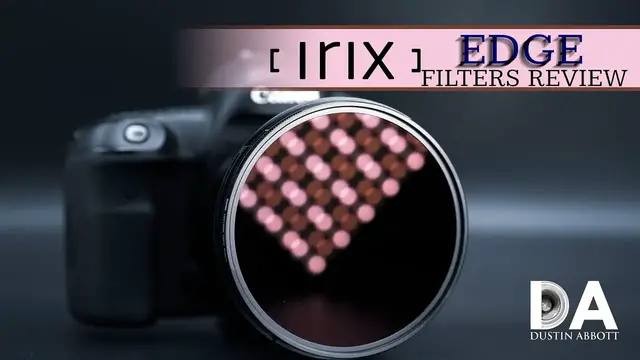
a full line of filters that they call the Edge series. And so I've been spending time with three
0:43
different varieties of those filters, including a circular polarizer, which I think is the most
0:49
important filter there is for general purpose photography work. If I was to have just one
0:54
filter. It would be a CPL. I've also been using an ND1000, which is a 10-stop filter that allows
1:03
you to get long exposures with, in this case, I used a 95 millimeter, so a very large filter
1:10
and I've used it with the IREX 15 millimeter F2.4 to get some long exposures. And so obviously
1:17
cutting that amount of light reaching the sensor allows you to go from, say, this shot where there
1:23
is movement constantly of the water, and thus, you know, it's a somewhat busier image to get a
1:30
more ethereal image where the water has smoothed out and become more mist-like. And so you can see
1:37
the difference in this pier shot. And then also here is another, which is over a three-minute
1:44
exposure of Niagara Falls. And as you can see, it produces a really gorgeous image with a lot of
1:50
kind of dynamic elements in the photo itself. You can accomplish that only by blocking the amount of
1:56
light that comes to the sensor with that. The third filter that I've been using is a completely
2:02
different kind of filter that Irix has developed and they call it light pollution filter. And so
2:08
I've got it and I'm actually been using it on the Loudwa 15 millimeter f2 lens for Sony. And so what
2:16
What the light pollution filter does is it actually cuts down the amount of yellow light
2:21
that reaches the sensor. And so that helps obviously for shooting cityscapes
2:27
It helps to eliminate you know kind of that yellowish dull look that can sometimes come through smog or pollution in that way It also a really effective filter to use for like astrophotography
2:40
to allow you to eliminate you know some of that stuff and to get a different kind of look at the
2:46
night sky just kind of a cleaner look. And so anyway it is it works very effectively it has a
2:52
little bit of a blue slash lavender cast to it that's designed for that. And so it also creates
2:59
a unique effect for other type images. You know, for example, this image of the beach
3:04
or I've used it some in winter type shots because it gives you kind of a different look and certainly
3:10
interesting for that beyond its intended purpose, which frankly, I've not had a lot of opportunity
3:15
to shoot with as far as city pollution because I don't live in a major metropolitan area
3:20
nor do I shoot in one very often. So when I'm evaluating filters, there's a few things that I
3:27
want to highlight that I look for as being important. The first, of course, is the optical
3:32
performance itself. One reason why some of us hesitate to use filters, for example
3:38
I basically never personally use a UV or protection filter any longer because often
3:43
you know you're adding additional potential of reflections or flare artifacts if you have a
3:51
backlit subject. The other thing too is that I find that many newer lenses already have some kind
3:58
of coating on the front element you know often a flooring coating or something like that that
4:03
already helps to weather seal the lens you know at least that that face a little bit and helps to
4:10
resist fingerprints and oils, things like that. In the case of the Irix filters, however, number one
4:15
I have found that the actual transmission, the optical performance is very good. I mean
4:20
they are an optical manufacturer making, you know, well-regarded lenses at this point. So they do
4:25
understand the importance of good optical glass. So very good glass. And so I haven't really seen
4:30
any kind of resolution drop. And even with that, you know, the kind of the, probably the worst
4:35
defender would be the ND1000 filter. That's where I've seen the most, you know, kind of damage. But
4:40
as you can see, this image was shot on the Canon 5D Mark IV, so a 30 megapixel sensor. And if we
4:48
look in close, you can see detail is really fantastic in the image. So that is very good
4:53
The other thing too, is that they have nano coatings that, by the way, nano coatings on both
4:59
both sides both of the outer layers And so that helps to reduce reflections It also helps however to make it more resistant They say waterproof and also oil resistant and so it
5:13
helps to make them easier to clean, which can be an issue with filters in the past. I've certainly
5:18
had issues with that. It's also a very hard coating, and so it's going to help to also make
5:23
them more resistant to scratching, thus giving you more life out of them. Beyond that, these are all
5:29
of very low profile filters. And obviously, I mean, they are kind of, I suspect where this all
5:36
started was to provide a filter solution for some of their own lenses. You know, namely that 15
5:41
millimeter F 2.4, a 95 millimeter front filter thread is not exactly a common one and it's large
5:48
filters often tend to be expensive. But the other issue is, is that with a wide angle lens, you
5:53
really need a low profile filter because a thicker filter runs more of a risk of introducing
5:59
mechanical vignetting because of the thickness of it. In this case, you've got a very slim filter
6:05
And so fortunately, I've not personally seen any issues with mechanical vignette that has been
6:12
added in due to the thickness of the filter. Beyond that, they have nicely knurled sections
6:18
all across the filter that allows you to actually grip it and to get it loose. And so obviously that
6:24
is very important as well. So all in all, I mean, you know, the circular polarizer, you know
6:31
you have a mechanical piece in operation that it needs to rotate. All of that works very well
6:36
As you can see, they have a somewhat unique kind of case with a, you know, a custom foam insert
6:42
and all of that seems to work well. At the end of the day, however, I do think if you're looking
6:48
for filters, one reason to consider the IREXs is that I've been very pleased with their actual
6:53
performance, but beyond that, they are what I would consider very, very reasonably priced
7:00
And so just to give you an example of the three filters that I have on hand
7:04
that 77 millimeter circular polarizing filter, it's on their website is 65.5 euros. And so
7:14
So if you do, I use the currency exchange rate for the day
7:18
And that came out to basically $75 US, which is a very reasonable price
7:23
for a very good quality filter. Now the light pollution filter, I have this in a 72 millimeter filter thread size And it a little bit more expensive It comes in at 107 euros or about US And so more expensive but there obviously is something about the nature of this particular
7:43
filter that makes it a more expensive filter to manufacture. Now the big filter here, the 95
7:52
millimeter 10 stop ND filter, it comes in at 117 euros or $131 US. And I definitely consider that
8:01
to be a fair price considering how expensive good quality filters like this are. And beyond that
8:07
I've also used a number of ND1000 filters that introduced a color cast when you shot long
8:14
exposure with them. And so in some cases I've encountered a magenta or a really bluish cast
8:20
I found this filter to actually be really, really nicely neutral, which was a really welcome change
8:26
And so positive things on that front as well. So all told, I think that if you're looking for reasonably priced, good quality filters
8:35
I see no reason to not encourage you to take a look at the IRIX Edge filters
8:40
They're nicely made. They seem to perform well, and I've used them fairly extensively at this point
8:45
particularly the circular polarizer in 77 millimeters is very common. I've used it on lots of lenses from the new Sigma 70-200 Sport
8:54
I've used it on the Irix 150mm f2.8 macro. I've used it on the Fuji XF16-55mm f2.8 lens
9:05
All of these are recent reviews that I've used, and you've seen lots of photos in those reviews
9:09
I've taken with this filter in place, and I've been really pleased with the results
9:14
This has really been my most used filter over the last several months, and so I find it very handy
9:19
So take a look at them. I'll throw some links in the description down below. There's also a link to a brief review article, but beyond that, more of an image gallery with lots of photos taken with a variety of lenses with these filters in play to see how they perform for yourself
9:36
So take a look at that and buying links there as well. Also, as per usual, there's links there so you can follow me on social media, including now on Instagram
9:45
You can also become a patron and help to support what I'm doing here and get sneak previews at upcoming content
9:51
You can sign up for my newsletter. And if you haven't already, please click that subscribe button right here on YouTube
9:57
Thanks for watching. Have a great day