0:00
Hi, I'm Dustin Abbott and in my ongoing review of the Canon EOS 5D Mark IV, I've been shooting
0:14
with it for a week now and as I go along it's premature for some of my real final review
0:22
but and I'll share some episodes along the way highlighting different features but today I just
0:27
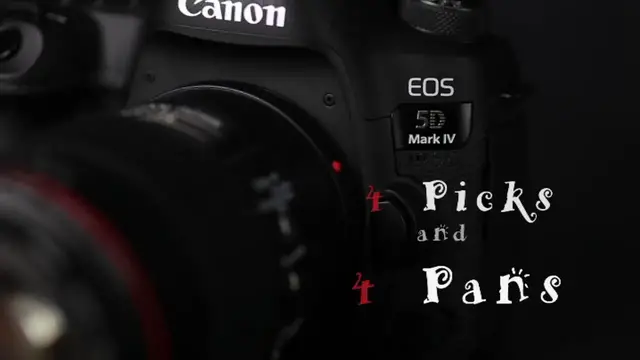
wanted to give you a quick look at what I would call the picks and the pans of the actual
0:33
real world usage of the camera. And so I'm going to start by looking at some of the negatives so far
0:39
The biggest, of course, negative thing that people have talked about regarding the 5D4
0:44
is when it comes to the implementation of the 4K video. A lot has been made over that crop factor, but also with the huge, the motion JPEG storage
0:58
codec and how massive amount of storage that it takes. And all of that is true and well justified
1:06
I wanted to highlight one other practical issue, and that is you have to have a really
1:11
fast card to even record much of anything in 4K. I primarily skipped the last generation of 5D bodies and so the CF cards that I have go back to the 5D Mark II
1:25
And while I've used the 5D Mark III and the 5DSR, I've primarily shot with Canon 6D bodies over the last cycle of full frame cameras
1:36
As a result, my fastest CF card that I have was a 400 times Transcend card
1:42
And using that or a Lexar Professional SD card that is supposed to have, they call it 1,000 times with a transfer rate of 150 megs per second
1:54
I find that I can only record about 7 or 8 seconds of 4K video before the camera automatically shuts off because the data transfer rate just isn't fast enough
2:05
So that's a pretty significant issue in and of itself outside of the other 4K issues that have been delineated
2:12
And so I've got a faster card on its way to me. But just note that that's one other kind of, you know, pan in terms of the handling with it
2:21
The price, of course, is another big issue here in Canada. And I'll be honest with you, I've been putting money aside for the last year and a half
2:29
to be prepared for when the 5D Mark IV came or whatever body I chose as a replacement And so I had put away around in preparation for this moment
2:41
I thought that that would cover it without any kind of issue. But here in Canada, the actual list price is $4,599
2:50
and I got a slightly preferred price of $4,200. Even so, after I paid taxes, I was over $4,700 for the camera
2:59
And so it came in at considerably more than what I had anticipated
3:05
Of course, there's other early adopter woes. You know, I found that while some of my Tamron lenses that came before the new tapping console
3:15
and you don't have easy firmware updates, I found that a number of them didn't function properly in live view
3:22
And so I've had to send three lenses to Tamron to have firmware updates done on them and to prepare them for that
3:29
And then, of course, many of you that have bought a 5D4 have figured out that Adobe doesn't support the RAW files yet
3:35
And that's still probably a couple of weeks at least out. So in the interim period, you're stuck either using Canon's fairly limited Digital Professional Pro software
3:45
or just using the JPEG files that come out of the camera
3:49
I've done a little bit of both, and if there's files that I really want to get more into the raw processing
3:55
and of course to really evaluate performance, I'm outputting some 16-bit TIFF files out of DPP
4:02
and then doing my kind of normal workflow in Adobe. But even so, I don't really feel like I'm yet getting the full potential of the raw files out of it
4:12
So that's obviously a hassle, and beyond that, I like to calibrate my lenses
4:17
using Rykan Focal, and it's not supported yet for the 5D Mark IV. The other thing is, is that using
4:25
JPEGs, I find that in some situations, the JPEGs aren't quite as sharp as what I'm accustomed to
4:30
seeing out of the 6D. And of course, if you down res them to 6D size, they look nice and sharp
4:36
but it's more that the JPEG engine, it doesn't produce quite as much detail as what I would like
4:42
and I see more detail in the RAW files themselves. All of that being said, I have had a fabulous time
4:49
shooting with the 5D Mark IV and I'm quickly falling in love with it for a number of reasons
4:55
For one thing, although on paper the focus system is similar to that of the 5D Mark III or the 5DSR
5:03
it has a slightly expanded coverage of where the focus points go to and so while it has the same number it covers a large larger area of the frame but on top of that I just find that the focus has
5:15
improved in every detail it's faster than the previous generation of bodies it's more precise
5:21
even without having done a lot of calibrating yet I'm finding that I'm getting very quick
5:26
very fast focus results. Furthermore, while the 5D3 didn't have GPS and the 6D did, and I've used
5:34
the GPS capability on the 6D a lot over the last four years, at the same time I've lamented its
5:41
execution. I don't use it all the time. I use it more when I'm traveling or shooting specific
5:46
events where I want that GPS information logged, because if you leave the GPS on, the way that it
5:52
was implemented in the 6D, it stays on all the time. As a result, even if you're not using the
5:58
camera, the battery is slowly draining. And so if you're traveling, it just means that you're going
6:01
through batteries more quickly. And so I was really delighted to see that not only is there GPS
6:06
on the new 5D Mark IV, but the GPS is much better implemented in that you have a choice
6:14
of different modes, including one that the GPS is only active when the camera is on. And so
6:21
So when the camera turns on, if you give it a few seconds to locate and to start to transmit
6:27
it does a great job of GPS tagging your images, but without that constant battery drain
6:32
Just a much smarter implementation that makes life easier in the real world as a photographer
6:38
Now I'm leaving it in that mode all the time, and so I more consistently get the GPS tags on my images
6:43
I really liked when the 80D came out and its more expanded implementation of autofocus with a maximum aperture of f8
6:54
Specifically with a combination like the Canon 100-400mm, f4.5-5.6 LIS Mark II lens and a 1.4x teleconverter
7:06
But at the same time, I found that it worked best when you used it in specific situations
7:13
It works best with better light situations, and on top of that, it works best basically the fewer number of focus points that you use, the better results you get
7:23
I'm happy to say that on the 5D Mark IV, number one, all of the different focus points, all 63 of them are active
7:33
And so you can use that F8 combination on every single one of them. And beyond that I find that it focuses faster It focuses better in lower light situations than what it does with the Canon 80D And overall I getting very fast very consistent focus results basically whatever I choose
7:51
to do. And so while I haven't done a lot of tracking yet, I feel like it's going to do a better
7:56
job in tracking situations even with that teleconverter attached. One final thing that I'll highlight, my final pick that I've really noticed even though
8:05
I've had limited raw support as I've noted before, but there is a clear advantage to
8:11
the dynamic range of the 5D Mark IV images. I really noted a big difference when I moved to the 6D and its improved dynamic range, how
8:21
I just found that I had more latitude when processing images. It was a revelation at that point
8:26
I feel like even coming from the 6D to the 5D Mark IV, it's a similar revelation in that
8:31
I just find that there's much more latitude for pushing shadows and even recovering highlights
8:36
more so on the latter than what I've ever seen out of a Canon body before
8:40
The 80D was a big step in the right direction, but the 5D Mark IV is even better
8:46
And so I really find that I'm really excited actually for Adobe support of the RAW files
8:51
because there seems to be a tremendous amount of latitude there and really creating a very dynamic looking image, even without resorting to techniques like HDR
9:01
which the camera does have HDR built right in, unlike some of the previous bodies
9:07
even HDR when it comes to shooting movies. And so there are some really nice features that are there
9:13
And so the bottom line is that while there are some annoyances, yes, some of which just have to come with early adopting
9:20
both in price and implementation and support, but I'm finding that I really enjoy shooting with the 5D Mark IV
9:27
and I'm excited about it becoming my new workhorse everyday camera. It really is a great camera and I'll be giving you more details as I progress further into both using it and reviewing it
9:38
I'm Dustin Abbott and if you'll look down below, I've now got a pretty extensive gallery of images captured with the 5D Mark IV
9:45
with a number of different lenses and a variety of different situations, including some 4K screen grabs
9:51
which is one of the things that they're kind of marketing about this camera to see how it actually works
9:56
and so you'll want to follow along there there's a link down in the description below as well as
10:01
the ability to follow me on social media or to shop for the camera itself if you haven't already
10:07
please subscribe thanks for watching have a great day