Up next in 10

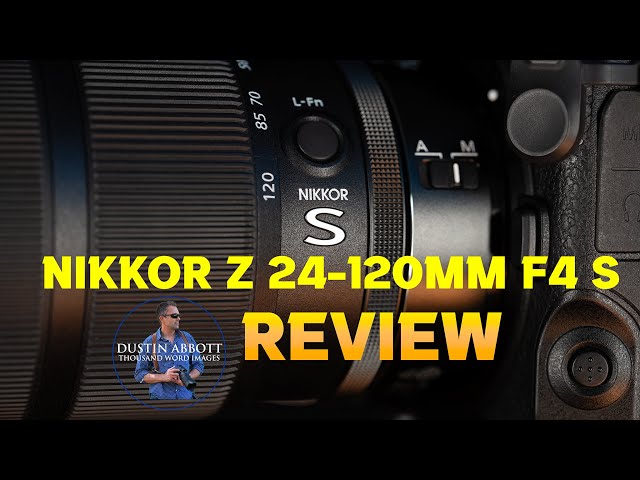
Nikkor 24-120mm F4 S Review | The Best F4 Standard Zoom?
Feb 7, 2026

Photographer Dustin Abbott shares a deep dive review of one of the most popular and beloved zooms for Nikon Z-mount - the Nikkor Z 24-120mm F4 S. Is it the best of its kind? | Read the Text Review: | Purchase the Nikkon Z 24-120mm F4 S @ B&H Photo https://bhpho.to/4khL4uZ | Adorama https://prf.hn/l/8jkjw1Q/ | Amazon https://amzn.to/4ruu72L | Camera Canada https://tidd.ly/4a7fc93 | Amazon Canada https://amzn.to/4kiagBl | Amazon UK https://amzn.to/3ZRaF4k | Amazon Germany https://amzn.to/4bB3G6W
Check out the DA Merch here: https://bit.ly/TWIMerch | Become a Patron: https://www.patreon.com/dustinabbott | On the Web: http://dustinabbott.net/ | Sign up for my Newsletter: http://bit.ly/1RHvUNp | Instagram: http://bit.ly/DLAinsta | Facebook: http://on.fb.me/1nuUUeH | Flickr: http://bit.ly/1UcnC0B | 500px: http://bit.ly/1Sy2Ngu Follow Craig @ https://www.instagram.com/craigstoffersen/
Want to support this channel? Use these affiliate links to shop at:
B&H Photo: http://bhpho.to/1TA0Xge
Adorama: https://tinyurl.com/AdoramaDA
Camera Canada: http://bit.ly/DLACameraCan
Sony Canada: https://www.thesonyshop.ca/?ref=abbott
Amazon: https://amzn.to/3HrY64d
Amazon Canada: https://amzn.to/3qG1p18
Ebay: http://bit.ly/DustineBay
Into the AM Clothing: https://bit.ly/intotheAMda and use code DUSTIN10 for 10% off
Fioboc Clothing: https://tinyurl.com/FiobocDA20 and us code DUSTIN20 for 20% off
Make a donation via Paypal: https://www.paypal.com/paypalme/dustinTWI
=============================
Table of Contents:
=============================
0:00 - Intro and Concept
1:36 - Disclosure
2:43 - Build and Design
7:22 - Autofocus
9:36 - Video AF
10:49 - Optical Performance
21:48 - Conclusion and Pricing
---------------------------------------------------------
Oben Tabletop Tripod shown in video: https://bhpho.to/3vL8YWy
My Cameras:
Purchase the Sony a7RV @ B&H Photo https://bhpho.to/3ZivNyZ | Adorama https://howl.me/cjNY1LU3gFH | Amazon https://amzn.to/3CRCDlq | Camera Canada https://shrsl.com/3vulf | Sony Canada https://bit.ly/BuyA7R5 | Amazon Canada https://amzn.to/3H8yeNH | Amazon UK https://amzn.to/3kbg5FM
Purchase the Sony Alpha 1 @ Camera Canada https://shrsl.com/2wdk2 | B&H Photo https://bhpho.to/3upRFZd | Adorama https://howl.me/cj2nQpjLBKW | Amazon https://amzn.to/3t1m8MD | Sony Canada https://bit.ly/BuySonyA1 |Amazon Canada https://amzn.to/3cVFrBB | Amazon UK https://amzn.to/2OtrjGe | Amazon Germany https://amzn.to/3d0GtMO | Ebay https://ebay.us/i371Vs
Canon EOS R5: B&H Photo https://bhpho.to/3iMH18x | Amazon https://amzn.to/33L3D53 | Camera Canada https://shrsl.com/2jqth
Purchase the Fujifilm X-H2 @ B&H Photo https://bhpho.to/3KAInTC | Adorama https://howl.me/cjyzbiO5lVp | Amazon https://amzn.to/41zMzKl | Camera Canada https://shrsl.com/4128o | Amazon Canada https://amzn.to/40gY4W7 | Amazon UK https://amzn.to/43Grn7a | Amazon Germany https://amzn.to/3L6hwjR
Purchase the Nikon Z8 @ B&H Photo https://bhpho.to/3yaMuDB | Adorama https://howl.me/cmcvUHymQIt | Amazon https://amzn.to/3UQjfi0 | Camera Canada https://shrsl.com/4ipga | Amazon Canada https://amzn.to/3UtFSHL | Amazon UK https://amzn.to/4bsf1Tn | Amazon Germany https://amzn.to/4drP4oN
Get a discount off all Skylum Editing Software (Luminar, Aurora HDR, AirMagic) by using code DUSTINHDR at checkout: http://bit.ly/LuminarDLA
DISCLAIMER: This video and description contains affiliate links, which means that if you click on one of the product links, I’ll receive a small commission. As an Amazon Associate I earn from qualifying purchases.
Keywords: Nikkor, Nikkor 24-120, Nikkor Z 24-120mm F4 S, Nikkor Z 24-120mm, F4, F2.8 S, Nikkor Z, Nikkor Z 24-70mm S review, Nikon 24-120mm, S, Nikon, Nikon Z8, Z, Z-mount, Z8, Review, mirrorless, Full Frame, Sports, Tracking, Dustin Abbott, Real World, Comparison, Handling, Focus, Portraits, Resolution, High ISO, Image Quality, Sample Images, Photography, 45MP, #letthelightin, #DA, #NIKON, #Z8, #NIKONZ8, #NikonZ24-70SII, #NikonLens, #ZoomLens, #PortraitPhotography, #WeddingPhotography, #Astrophotography, #FastAperture, #ProfessionalPhotography, #CameraGear, #NikonZmount, #PhotographyGear, #LensReview, #UltimatePortraitLens, #nikonphotographers
Show More Show Less View Video Transcript
0:00
[music]
0:10
Ask anyone [music] the top zoom lenses
0:13
on the Nikon Zmount platform and you can
0:15
pretty much guarantee that [music] one
0:16
of those that will be listed is the 24
0:19
to 120 mm f4s lens. It takes what has
0:24
already been a very very popular 24 to
0:27
105mm f4 combination and stretches that
0:30
out an additional 15 mm. And what's
0:33
more, I own the Canon RF equivalent.
0:36
I've extensively used the Sony E-mount
0:39
equivalent. And I can say that I think
0:41
that this lens surpasses either one of
0:43
those in the overall performance of the
0:46
lens. And so Nikon has managed to do a
0:48
pretty fantastic job in designing this
0:50
lens and also keeping the price fairly
0:53
moderate. It's going to set you back
0:56
somewhere around $250 less than what
0:58
those lenses cost, making it a really
1:01
intriguing option. I've definitely
1:03
gotten a number of requests since I
1:05
started to cover Nikon Zmount to review
1:08
this lens. And having spent some time
1:09
with it over the past couple of weeks, I
1:12
can understand what the hype is all
1:14
about. This is a really, really
1:16
versatile lens that has relatively few
1:18
drawbacks. We're going to dive into it
1:20
today and take a look at whether or not
1:23
it is a lens for you to consider if you
1:25
don't already own one. I'm filming on
1:28
the lens at the moment, and we'll film
1:30
the majority of this review, either
1:32
indoors or outdoors, shooting with the
1:33
lens mounted on my Nikon Z8. Before we
1:36
jump in, I do want to say thank you to
1:38
Nikon Canada for sending me a loaner of
1:40
this lens. As always, however, this
1:43
review is completely independent and
1:44
they have had no input in my findings,
1:47
nor will they see the video before you
1:48
do. Today's episode is sponsored by the
1:50
all-new Phantom Tracker 2.0, Phantom has
1:53
not only seriously upgraded the visual
1:56
look of the card, but now we have a
1:57
superior build quality. Made with
1:59
tempered glass and metal alloys, this
2:01
credit card size tracker can be locally
2:03
tracked via a 90 decel beeping noise,
2:06
but also on a global level via Apple's
2:08
Find My Network and its map. The
2:10
addition of NFC means that you can also
2:12
use the card to trigger an automation.
2:14
Just tap it. The tracker fits perfectly
2:17
in any wallet or bag and assures you
2:19
won't lose your valuables. It has a
2:21
built-in rechargeable battery that can
2:22
be easily charged via any wireless
2:24
charger, and a single charge can last up
2:27
to 6 months. The Phantom Tracker 2.0
2:29
makes for a seriously cool gift. So,
2:32
visit store.fanomwallet.com
2:34
and use code dustin20 at checkout for
2:37
20% off. That's store.fanomwallet.com.
2:39
phantomwallet.com and use code dustin20
2:42
for 20% off. All right, let's take a
2:44
closer look at the build and the design
2:46
here. This lens retails at $1.49 USD,
2:50
though it's on sale for cheaper than
2:52
that at the moment. MSRP by for the
2:55
competition. The Canon is $13.99 as is
2:58
the Sony. And so you're talking a pretty
3:00
substantial savings uh for this lens
3:03
relative to the competition. And so that
3:05
obviously gives it an additional
3:07
advantage along with that additional 15
3:09
mm of overall focal length. The lens
3:13
weighs in at 630 g or 1.4 lbs which does
3:18
make it a little bit lighter than the
3:20
competing lenses from Canon or Sony.
3:22
However, this lens is a little bit
3:24
bigger and longer than either one of
3:26
them. It is 84 mm in diameter or 3.4 in.
3:30
It is 118 millimeters or 4.7 in in
3:34
length. This is an externally zooming
3:36
design, which is true of all of these
3:38
lenses. And so you're going to find that
3:40
it extends about 60 additional
3:42
millimeters when then it is zoomed out
3:44
to 120 mm. This is an externally zooming
3:49
lens, but I'm actually pretty happy with
3:51
the overall zoom action. I felt like I
3:53
was able to zoom in and out pretty well
3:55
during video use without, you know, any
3:57
kind of sticky spots or the weight being
3:59
too heavy. So, while I prefer an
4:02
internally zooming lens a lot of times
4:04
for that ability to do really quick
4:05
zooms, this actually does work fairly
4:08
well. Now, up front we have filter
4:10
threads of 77 mm, which is pretty common
4:14
for this class of lens. If we look at
4:16
the back of the lens, we'll find a
4:17
gasket here. And then also, if we look
4:19
at this diagram, we'll find there's a
4:21
total of about 11 seal points throughout
4:23
the lens itself. And there's also a
4:26
flooring coating on the front element.
4:29
Now, in terms of features here, we have
4:31
a custom or function button here. And
4:33
then we have an AF MF switch uh here. As
4:37
always, I find at least on my Z8 body.
4:40
The ergonomic of this position is not
4:42
great because we have protrusions here
4:44
on the Z8 that make it a little bit
4:46
difficult to get at. And so, I do I
4:48
would prefer it to be out here on the
4:50
same tier as the function button. But, I
4:52
mean, that is what it is. We have
4:53
Nikon's customizable control ring that
4:57
you can assign different values to. If
4:58
you do assign it to aperture control, it
5:01
will function as a decllicked aperture
5:03
and it will allow you to do fairly
5:05
smooth aperture racks. No problem there.
5:07
You can see that there are nine aperture
5:09
blades inside. And while that's not as
5:12
high as we see on some lenses, the
5:14
blades are nice and round and it does a
5:16
fairly good job of keeping a circular uh
5:19
shape to the the bokeh highlights. And
5:22
so no concerns there. You can see here
5:25
at f4, f5.6, and f8 that it's keeping a
5:28
nice circular shape. The manual focus
5:31
ring does have some decent damping to
5:33
it. And uh it focuses just fine. No
5:36
issues there. It does include a lens
5:38
hood. As you can see here, there is no
5:40
lock on this. I find that Nikon's lens
5:43
hood, the plastics are a little bit
5:45
thinner than what I would expect. Uh
5:47
however, it does the job. No, you know,
5:50
concern there. And while there is no
5:51
lock, you can see it clicks into place
5:54
with good precision and it's going to
5:55
stay on there. Now, one of the other
5:57
strengths for this lens is it has a
5:59
constant minimum focus distance of 35
6:01
cm. So, at 120 mm, that's going to give
6:04
you a very high magnification of 0.39
6:08
times. That's really really useful in a
6:10
lot of applications. Now, one drawback
6:13
that we do have in this design that is
6:15
pretty unusual relative to uh other
6:18
lenses in this class is that there is no
6:20
lens based stabilization or VR vibration
6:23
reduction in the lens itself. And so
6:25
that's fine if like me you're shooting
6:27
on a body that has camerabased
6:29
stabilization, but if your camera does
6:31
not have stabilization, it's going to
6:33
make this lens less appealing. And so
6:36
that is one limiting principle there. I
6:39
will also note though that with the
6:41
camerabased stabilization I was able to
6:42
get, you know, nice handheld results. I
6:44
shot this, for example, at 120 mm and
6:48
113th of a second. I wanted to drag the
6:50
shutter a bit to get the uh the movement
6:52
of the water around the ice flow. And
6:54
so, I mean, it works fine if you have
6:57
camerabased stabilization. If you don't,
6:59
that's going to be a negative factor for
7:01
you. The end of the day, however, this
7:03
is a very attractive package. It handles
7:05
well. It is very very slightly longer
7:08
than some of the competing lenses, but
7:10
not enough to make any kind of
7:11
meaningful difference. And it also is
7:14
slightly lighter than the competing
7:15
lenses while going extending out an
7:18
additional 15 mm. That's a winning
7:20
combination. Oh yes, you might have
7:22
guessed it is snowing yet again. Let's
7:24
talk about autofocus while I sit out
7:26
here and absorb a few snowflakes yet
7:29
again. Nikon has been pretty persistent
7:31
in utilizing STM or stepping focus
7:34
motors in a number of their lenses with
7:37
a few notable exceptions recently. But
7:40
at the same time, while I don't love STM
7:43
focus motors compared to some of the
7:44
better linear or voice coil style motors
7:47
that are out there, I think that Nikons
7:49
are some of the better ones in
7:50
existence. And in this case, they've
7:52
actually utilized dual SDM focus motors,
7:55
one uh essentially pulling and the other
7:57
pushing. Um, and so to give us more
7:59
thrust as a part of the overall
8:02
autofocus. And frankly, I don't really
8:04
have anything to complain about here.
8:06
Autofocus is nice and snappy. You can
8:08
see here in my formal test that we go
8:10
from a close to distant subject with
8:13
pretty close to instantaneous results.
8:16
What's more, the focus motors are quiet.
8:18
They're smooth in operation. No real
8:20
issues there at all. I had an
8:23
opportunity to take some shots of Nala.
8:25
She was rolling around. We finally had a
8:27
a sunny day that was halfway decent. And
8:29
so she was rolling around outside so
8:31
ecstatic to have some nicer weather. And
8:34
so as she was whipping around, I was
8:36
able to keep track of her even though
8:38
she was flipping back and forth. But
8:40
autofocus was just locking there in on
8:42
her eye. What's more, I found when
8:44
shooting in lower light conditions, even
8:46
though an F4 lens is hardly a low light
8:49
warrior, I found that autofocus
8:50
continued to be excellent. good focus
8:52
speed and able to achieve good results
8:55
uh in this shot just shooting across the
8:57
table with my wife's eyes down. You can
8:59
see that the autofocus results are
9:01
really crisply nailed in there on her
9:03
actual eyelashes. What's more, I posed
9:06
for a portrait series and found that
9:10
autofocus did a great job. Every shot is
9:13
is locked on just as you would expect it
9:15
to. and out shooting around in my
9:17
various um you know conditions and uh
9:20
just kind of general purpose shots. I
9:22
had zero issues with autofocus all
9:24
around. So good results there. I didn't
9:26
have an opportunity to test sports per
9:28
se, but it feels like there's enough
9:30
thrust there that with at least, you
9:31
know, moderate sport action, as long as
9:33
you have a reasonable amount of light,
9:35
you should do just fine there. The
9:37
autofocus pools were good and confident.
9:39
And you can see here that they move back
9:41
and forth with no visible steps. I also
9:43
felt like from this, you know, this
9:44
normal test shot that I do that the
9:46
video quality had really nice clarity to
9:48
it. And so that was an unexpected
9:50
surprise on that. What's more, I found
9:52
that my hand test worked well with good
9:55
transitions from my hand to my eye and
9:57
back and forth. Autofocus just kind of
9:59
in general there, it felt smooth. And
10:01
you can see here that if I start to
10:03
approach the camera, you can see that it
10:05
has no problem uh staying locked in on
10:08
me. If I duck out of frame and then pop
10:11
back in, it's picking me back up. And if
10:13
I step out to the side as I typically do
10:15
and then jump back in, you can see it's
10:17
able to pick me up just fine. So, in
10:20
general, I would say that autofocus is
10:22
good for either stills or video. And uh
10:26
you know, one thing you're lacking for
10:28
video use obviously is no built-in VR in
10:30
the lens itself. However, if you're
10:32
shooting as I have been with my Nikon Z8
10:36
body with the VR built into the camera
10:38
itself, it gets the job done and I feel
10:40
like video results have been nice and
10:42
stable. So, no real issues there. So, in
10:44
general, autofocus is a strength for the
10:47
20 24 to 120 S-line lens. Okay, let's
10:51
start by taking a look at the optical
10:52
design. We have 16 elements in 13
10:54
groups. That includes we've got three
10:57
extra low dispersion elements. We also
11:00
have three aspherical elements and then
11:02
we have one combo aspherical extra low
11:05
dispersion glass element as a part of
11:07
the design. So a lot of uh exotics that
11:09
go into this optical formula. The MTF
11:12
chart on the wide end really looks at
11:14
quite excellent. It starts off as we can
11:17
see here really really high in the
11:18
center of the frame. In this midframe
11:21
it's staying really really excellent on
11:23
the sagittal plane. And we can see the
11:25
meridian plane starting to drop a bit.
11:27
And then we see a crisscross here
11:28
towards the end. And so really looking
11:30
at that, you can tell that the weakest
11:32
point is going to be right there in the
11:33
corners. Now, if we look over at the
11:35
telephoto end, also very, very sharp in
11:37
the center of the frame. You can just
11:38
see that it starts to drop faster. And
11:41
so mid-frame, we're not quite as high on
11:43
either axis. And then into the corners,
11:45
we have a weaker still result. Now this
11:48
is a rare lens for Nikon in that the
11:52
ability to disable distortion correction
11:54
in camera is not available and even the
11:57
raw images come into Lightroom at least
12:00
with corrections enabled and so I can't
12:03
you know kind of uncrack the code here.
12:05
This is the image that I get. However,
12:07
if I brought it into Luminar Neo I can
12:10
see the raw result without the
12:12
corrections applied there and take a
12:14
look at what's kind of going on with the
12:16
electronic corrections. So you can see
12:17
there is a significant amount amount of
12:19
barrel distortion though not as extreme
12:21
as what I just saw on the Canon RF 24 to
12:24
105 f2.8.
12:26
Uh but it is a little bit complex and so
12:29
you can see here that the bulge kind of
12:31
starts more towards the center of the
12:33
frame. So if I try to fully correct the
12:34
barrel distortion it will actually
12:36
create some pin cushion distortion in
12:37
the corners. So it's a little bit
12:39
complicated. Bottom line is is that I
12:41
had to work to even see this and you're
12:43
never going to see it. Here is a real
12:45
world result that obviously has been
12:47
corrected and you can see looking at the
12:49
straight lines across here that at 24 mm
12:52
it looks fine. No issues there. Likewise
12:55
here if we jump in this kind of toggling
12:57
back and forth gives you a sense of
12:59
going from 100 for excuse me from 24
13:01
millm to 120 mm. And so we have that
13:05
shows just how far that five time zoom
13:07
range is going to get you. Now as we
13:08
move on to the midframe and then to 120
13:12
millimeters. You can't really see
13:13
anything here, but again, if I look
13:15
behind the scenes under the hood, I did
13:16
find some pin cushion distortion that
13:19
was pretty correctable. No problems
13:20
there. And there is vignette, but the
13:23
vignette is lesser than what we saw at
13:25
24 mm. Now, moving on to things that
13:27
aren't getting artificially corrected.
13:29
They have done a really, really good job
13:31
of optically correcting for aberrations.
13:33
We can see here that there's basically
13:36
no visible longitudinal style chromatic
13:38
aberrations. Then if I take a peek in
13:40
here, you can see along this source
13:42
where a lot of times I'm going to see
13:44
fringing. I don't really see anything.
13:45
Likewise on all of these shiny bits and
13:47
edges, basically no frringing at all. So
13:50
a really, really good job on that front.
13:52
It would be more likely to actually see
13:54
lateral style chromatic aberrations. And
13:56
frankly, I just don't see them here.
13:58
It's a really, really good job of
13:59
correcting for all of that. And I just
14:02
don't see any kind of fringing in these
14:03
transitions. Maybe this slightest bit
14:05
right there, but this is at a high level
14:07
of magnification. In the real world, you
14:09
won't see anything. So, a great job on
14:11
those fronts. So, how about resolution
14:13
and contrast? This is on a 45 megapixel
14:15
Z8. 200% magnification is what I'm going
14:18
to show you results at. As we the MTF
14:21
suggested, the center of the frame is
14:22
fantastic at 24 millimeters. Super
14:24
bright, crisp, detailed, all good.
14:27
Mid-frame also looks really, really
14:29
fantastic. And as we kind of move down
14:32
towards corner, even through this zone,
14:33
still looking really strong. And what
14:35
we're going to see is it starts off good
14:37
here, but then it kind of falls off of a
14:38
cliff right in that final few percentage
14:41
points. True up here as well, where it
14:43
still looks quite good here. And then by
14:45
over this point, it's getting much
14:46
softer. Just for the fun of it, I
14:48
thought we could go back and take a look
14:50
at the RF 254 to 105 millimeter. I
14:53
happen to own that lens. And because the
14:55
R5 is similarly 45 megapixels, that's
14:58
what I tested this on. we can get a
15:00
fairly apples to apples comparison. You
15:02
can see in the center of the frame,
15:04
there's no question that the nicor lens
15:05
is crisper and just shows more detail,
15:08
more contrast. It looks better
15:10
generally. The mid-frame there doesn't
15:12
line up because of an older test result.
15:14
But if we take a look here, there's not
15:17
a radical difference. There's a little
15:18
bit more detail there coming from the
15:21
Nick lens. Looking in this zone here,
15:23
again, just a little bit more clarity in
15:25
the fine details there of the bill, but
15:28
not a radical difference. And if we pop
15:29
down here towards the corner, I would
15:31
say that it is the Canon lens that looks
15:33
better in the corner, at least on that
15:36
side. Over on this side, I would say
15:37
that the results are more similar uh
15:41
than different. And so, you know, it's
15:43
it's kind of an apples to apples
15:44
elsewhere. Certainly in the center of
15:45
the frame, the Nickor lens is the
15:47
sharper one. So, is there more room uh
15:49
to improve when stopping down here at
15:51
f5.6 on the right? You can see that the
15:54
center of the frame looks largely
15:56
similar. It was so good to begin with
15:57
that there's not a lot of room for
15:59
improvement. However, here in the
16:00
mid-frame, we can see further
16:02
improvement, better clarity and detail
16:04
there. And if we pop up to the upper
16:07
left corner here, we can see a little
16:09
bit more detail here. We can see that
16:12
the sharpness plane is extending a
16:14
little further towards the edges. Moving
16:16
on to f8 here on the right, you can
16:18
again see that we're getting further
16:20
into the seal, but not quite reaching
16:22
those extreme corners. In general,
16:25
however, detail is really really crisp
16:27
everywhere, save into those far corners.
16:30
Now, by f11, defraction will very
16:33
lightly start to soften the image. And
16:34
by the minimum aperture of f-22, you can
16:37
see that defraction has severely
16:39
softened contrast and detail there. Now,
16:41
if we move on in the zoom range, 35 mm
16:44
is probably peak performance. I would
16:46
say it looks really fantastic in the
16:48
center of the frame. And here at f5.6 on
16:50
the right, it actually is even better.
16:52
The mid-frame looks like super crispy
16:56
here. It looks really fantastic. Lots of
16:58
detail there. And if I pop up into the
17:00
corners, we can see that the sharpness
17:02
profile just extends out further by f.6.
17:05
Right off to the very edge, we can see
17:07
that we're getting sharp results. And so
17:09
definitely an improvement over 24 millm
17:12
in that regard. Now at 50 mm, we can see
17:14
that we have we're not quite as sharp as
17:16
what we were in the center of the frame.
17:18
Um, and stopping down to f5.6, six. It's
17:21
starting to improve, but not like a
17:23
major improvement. Mid-frame also
17:25
doesn't look quite as crisp. However,
17:27
what we will see is that the corners
17:29
actually look better than what they have
17:31
elsewhere. And at f5.6, this is actually
17:33
a very really crisp uh center result.
17:36
And so, um, they have managed to just
17:39
kind of flatten the profile to where
17:40
it's really sharp kind of all across the
17:42
frame, just not as sharp in the center
17:44
of the frame. 85 mm is similar to 50 mm
17:48
with one exception. and that is that I
17:51
would say it's a little less sharp
17:52
generally. And what we're not seeing is
17:54
that awesome corner performance. It's
17:57
still good as you can see here, but not
17:59
quite as good as what we saw at 50 mm.
18:02
And uh but it's kind of a similar
18:04
sharpness profile to what we saw at 50
18:06
mm. Now for some real world perspective
18:08
here, popping into a portrait type
18:10
setting. This is actually at 70 mm f4.
18:12
You can see there's lots of detail there
18:15
in the, you know, the skin and the
18:17
textures. And so a couple of them we'll
18:19
look at here. You can see so I mean I
18:21
don't think that anyone is going to say
18:22
oh I don't have enough sharpness to work
18:24
with. Um there's plenty of sharpness
18:26
there even at f4. Finally moving on to
18:29
120 mm which is arguably you know the
18:31
most important position here outside of
18:33
24 millm. We can see we've actually
18:35
rebounded from what we saw at 85 mm.
18:38
Center of the frame is looking pretty
18:39
good at 120 m at excuse me f4. At f5.6
18:44
it's looking pretty fantastic. And you
18:45
can see that moir starting because
18:47
contrast is so high. Mid-frame is also
18:50
looking good at f4, but looking fairly
18:53
great by f5.6. And we can see that the
18:56
corners, as the MTF shows, they just
18:59
they aren't quite as sharp, but
19:01
perfectly usable at the same time. Not
19:03
bad at all. Here we have a real world
19:05
shot that is right under 120 mm. And you
19:08
can see even though it's shot a little
19:10
bit higher ISO that the detail there is
19:13
really really fantastic in the plane of
19:15
focus. This is quite a sharp lens for
19:17
having such a big zoom range. Now
19:19
returning to the minimum focus distance
19:21
for a moment. We can see that f4
19:23
contrast is a little bit low at the
19:25
minimum focus distance. I was interested
19:27
to see how that played out in the real
19:28
world. And so as you can see right near
19:30
minimum focus distance you can see that
19:33
contrast is not fantastic. We also see a
19:36
little bit of fringing here, which is
19:37
the only setting in which I saw that in.
19:39
But what was interesting is if I moved
19:41
this heel of this shiny shoe just a
19:44
little bit further out and so a little
19:46
slightly less magnification. You can see
19:48
that the detail and contrast actually
19:50
improve considerably. And so there is a
19:52
little bit of a clue that if you want
19:54
maximum performance, if you'll just move
19:56
the camera back a few centimeters
19:59
further back, you're actually going to
20:00
get better contrast and better results.
20:03
Here's a look at an uplose result just
20:05
to kind of show you what you might be
20:06
able to get. Say if you were shooting,
20:08
you know, wedding or detail here. And
20:10
really, I think that that's quite good
20:12
detail that's showing up there. I
20:13
believe this is stopped down to f5.6,
20:15
but it gives you an idea of the kind of
20:17
results you can get up close. That leads
20:19
us to a discussion of the bokeh. And in
20:21
an image like this, I think we're seeing
20:23
kind of the the best of both worlds with
20:26
this lens. Good sharpness and contrast
20:28
on the subject and a fairly nice
20:30
transition to defocus here. In this shot
20:33
here, the background isn't quite as, you
20:36
know, melted away, but the detail is
20:38
really, really great on these leaves.
20:40
And you can see that the background,
20:41
while it still, you still see some
20:43
edges, it looks fairly good. Another
20:46
shot here. And you can see that the
20:48
background, you know, it's not like
20:49
completely creamy, but you're you're not
20:52
going to see that on a zoom lens, this
20:54
kind of zoom ratio anyway. And and so I
20:57
think that overall for this type of
20:59
lens, the rendering is pretty good. Now,
21:01
when it comes to flare resistance, I was
21:03
also quite impressed. The coatings that
21:05
are being used here, you can see they're
21:07
doing a good job here at f4. If I stop
21:09
down to f11, I do see a little bit of
21:12
this kind of, you know, prismatic, you
21:14
know, reflections here. But as I look
21:17
throughout the image itself, looking
21:18
for, you know, some kind of ghosting
21:21
pattern. There's a tiny bit in here, but
21:23
again, I had to look for it to see it.
21:25
So, really quite good. This shot here
21:28
also you with a composition that gives
21:30
more room for those ghosting artifacts
21:31
to show up. In general, it looks really,
21:33
really nice and clean. We can see
21:35
contrast holding up well against the
21:37
sun. No problems there. And I also noted
21:39
that if you compose in the right way,
21:41
you're getting an 18bladed sunst star,
21:43
which frankly looks pretty decent. All
21:46
told, this is quite a good optical
21:47
performance for this style of lens. So,
21:50
what's my conclusion? Well, obviously
21:52
there are the typical limitations that
21:54
any kind of extended zoom range has,
21:56
namely that it does have some
21:58
significant barrel distortion on the
22:00
wide end that turns to some pin cushion
22:02
distortion as you zoom throughout. But
22:04
outside of that, this is a lens that
22:07
holds up really quite well optically. I
22:09
don't think that you're ever going to
22:10
find that a 24 to 105 or 24 to 120 F4
22:15
lens is the most exotic when it comes to
22:18
the rendering and the bokeh quality from
22:20
the lens. But at the same time, when
22:22
compared to other such lenses, I think
22:24
that the bokeet quality is actually
22:25
pretty decent and certainly better than
22:27
what I see from the Canon RF 24 to 105.
22:31
And so I I think that in many ways Nikon
22:34
has really done a fantastic job with
22:35
this lens. Now, of course, that primary
22:38
drawback potentially for you is that
22:40
this is the rare 24 to 105 or in this
22:43
case 24 to 120 that doesn't have
22:46
built-in optical stabilization or VR
22:48
vibration reduction in the lens itself.
22:51
So, it means you're going to have to
22:53
rely on in camera stabilization. And of
22:55
course, if your camera does not have
22:57
said stabilization, well, it means that
23:00
this lens is less versatile in some
23:02
situations. It also means that it's less
23:04
likely to be useful for those of you
23:06
that might like to shoot with it on
23:08
APS-C, but again, many of those APS-C
23:10
bodies do not have Nikon's VR. So, at
23:14
the end of the day, that is going to be
23:15
one limiting principle. But outside of
23:17
that, particularly considering at the
23:19
moment that the price tag, last I
23:22
checked, is actually running under
23:24
$1,000 US at places like B&H Photo
23:26
because of a sale. It makes for a
23:28
really, really compelling lens. It's a
23:31
lot of lens for the money and it pretty
23:33
much does everything quite well. I was
23:35
happy with the autofocus. I was happy
23:37
with the image quality. I was happy with
23:39
the performance generally from the lens
23:42
and I can understand why it is a
23:44
favorite for a lot of people. Now, if
23:47
you want more information, you can check
23:48
out my full text review which is linked
23:51
in the description down below. As
23:52
always, thanks for watching. Have a
23:54
great day and let the light in.
#Science