Up next in 10

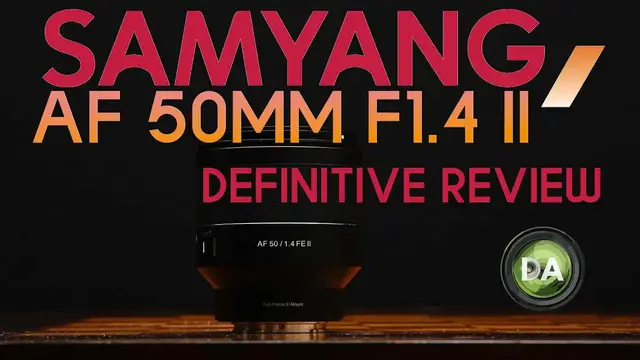
Samyang AF 50mm F1.4 II Definitive Review | DA
Jul 16, 2023

Photographer Dustin Abbott shares a thorough, real world review of the intriguing new Samyang (also sold as Rokinon) AF 50mm 1.4 II prime lens. | Visit https://bit.ly/lethelightinTV for the new channel | This video is sponsored by Fantom Wallet. Visit https://store.fantomwallet.com and use code DUSTIN15 to get 15% off | Read the Text Review: https://bit.ly/SAMAF50IIda | Visit the Image Gallery: https://bit.ly/SAMAF50IIpic | Purchase the Samyang AF 50mm F1.4 II @ B&H Photo https://bhpho.to/3FYqUAR | Amazon https://amzn.to/33bGRWJ | Amazon Canada https://amzn.to/3rkv4Nv | Amazon UK https://amzn.to/3FntDmt | Amazon Germany https://amzn.to/3FmhJcI
Check out the DA Merch here: https://bit.ly/TWIMerch | Become a Patron: https://www.patreon.com/dustinabbott | On the Web: http://dustinabbott.net/ | Sign up for my Newsletter: http://bit.ly/1RHvUNp | Instagram: http://bit.ly/DLAinsta | Facebook: http://on.fb.me/1nuUUeH | Flickr: http://bit.ly/1UcnC0B | 500px: http://bit.ly/1Sy2Ngu Follow Craig @ https://www.instagram.com/craigstoffersen/
Want to support this channel? Use these affiliate links to shop at:
B&H Photo: http://bhpho.to/1TA0Xge
Camera Canada: http://bit.ly/DLACameraCan
Amazon: https://amzn.to/3HrY64d
Amazon Canada: https://amzn.to/3qG1p18
Ebay: http://bit.ly/DustineBay
Make a donation via Paypal: https://www.paypal.com/paypalme/dustinTWI
=============================
Table of Contents:
=============================
0:00 - Intro and Concept
2:52 - Build and Design
8:45 - Autofocus
14:58 - Image Quality
30:23 - Conclusion and Pricing
Show More Show Less View Video Transcript
0:00
Hi, I'm Dustin Abbott and I'm here today to give you my definitive review of the new Samyang AF 50mm F1.4 Mark II
0:19
I know a lot of you have been asking me to do this review for months now
0:23
and I'm really thankful to Samyang for sending me a review copy and so that I could spend some time with it
0:29
and give you my unfiltered opinion. I actually reviewed the first generation Samyang 50mm f1.4
0:37
in 2018 where I at the same time did a comparison looking at the Sony Zeiss Sonar 55mm f1.8
0:49
along with the Sony Zeiss Planar 50mm f1.4. And so at that point I was in some ways underwhelmed
0:58
by that particular lens. It was actually the first autofocusing Samyang lens that I had tested
1:02
and I found autofocus to be clunky, somewhat primitive. I just found that focus speed wasn't
1:08
all that fast. It wasn't all that quiet in operation. And the lens itself, optically
1:13
there were things I liked about it. Great light transmission, beautiful bokeh from it
1:18
but not a lot of sharpness or contrast at wide aperture. You really had to stop it down to get
1:23
better performance out of it. And so I just didn't like it looking at the competition that I was
1:29
evaluating at the same time. I ended up, as many of you know, putting my money down on the
1:34
Planar 50mm f1.4. Even though it was the most expensive, I found it to be the most special
1:39
optically. Fast forward here to 2022 and we have a Mark II of this. And I was really excited for
1:46
this announcement, hoping that Samyang had brought a lot of the developing, maturing
1:51
lens design and skill that I had seen in executing it over the last three or four years
1:58
hoping we would see that come to bear in this particular lens. And I think that by and large
2:02
that is the case as we're going to discover in our review today. First, however, a word from a new
2:08
sponsor. Today's episode is brought to you by Phantom Wallet, the minimalist, modern wallet
2:14
that sets you free from the bulky traditional wallet while also making it easy to access your
2:19
cards and money when you need them thanks to their unique fanning mechanism. Visit phantomwallet.com
2:26
to check out their unique sizes, styles, and finishes that span from aluminum to wood to
2:32
carbon fiber. You can even customize your wallet with new accessories like a money clip, cash holder
2:39
ID display, and even the Chipolo tracking integration if you're the kind of person who
2:45
loses their wallet. Use code DUSTIN15 for 15% off when you're ready to check out
2:52
So we'll start by taking a look at the physical design. There is some new design elements. This
2:59
certainly is not just a carbon copy of the lens previous, but as we're going to see, it is smaller
3:05
lighter, and yet better in a lot of ways. Let's take a look. So we'll take a closer look. First
3:09
of all, you'll note there are some design aesthetic elements that were debuted actually
3:14
on the APS-C 12mm F2 autofocus lens that I reviewed in 2021. And so that includes this new
3:21
kind of diamond pattern micro texture on the focus ring, a little bit of a different look
3:27
the silver accent ring here, and then moving to what they call a hidden red ring at the front. And
3:32
so it is hidden in the fact that you really only see it from certain angles. And if you have the
3:36
lens hood attached, you really definitely only barely see it at certain angles from the edge
3:41
But at the same time, we have a really nice looking, very modern looking design that I'm quite partial to
3:47
Second thing that really stood out to me is how compact this lens was for a 50 millimeter f1.4
3:54
And it is noticeably smaller than competing lenses. For example, the Sony's Ice Planar is about 20 millimeters longer and weighs 780 grams compared to 420 grams for this lens
4:07
The same applies to the GM lens, though that lens is even wider in diameter
4:11
So it's a little bit of a squatter lens in addition to being longer. But the largest lens here really is the Sigma 50mm f1.4 Art and its FE guise where it has
4:23
you know, basically the space it would be required for an adapter because it's not actually designed for mirrorless
4:28
The byproduct of that is that that lens is about 135mm long compared to 88.9mm for this lens
4:36
And that lens is getting way up close to a kilogram. It's somewhere around, I think, 920, 930 grams
4:46
And so that means it is basically more than double the weight of the 420 grams of this lens
4:52
So this lens is only 80.1 millimeters in diameter, but it's only about 89 millimeters in length
4:57
So it gives it that kind of squat prime lens profile that a lot of people are really partial to the look of on a camera
5:04
Myself being included on that. Anyway, it is impressive that they have managed to actually downsize the physical size and the weight of this lens relative to the first generation lens, while including a number of improvements
5:17
Those improvements include now having the ability to have the custom switch here
5:23
And so depending on how you have it set up, if you use the Samyang lens station, you could program different functionality
5:28
My favorite is to have in one position, have this function as an aperture ring and then the other
5:34
position to automatically go into manual focus and to operate as a manual focus ring. You also now
5:40
have a focus hold button like Sony lenses that can be, you know, programmed to whatever functionality
5:45
you desire, just like any other Sony lens. Now coming back to the manual focus ring, I do like
5:51
the feel of the texture, has nice grip and, you know, good look to it. It is a little bit on the
5:57
heavy side in terms of the weight, the damping. And I also noted it took about five full rotations
6:04
like this to go from minimum focus to infinity. So I would prefer a little bit tighter of a focus
6:11
throw. This one's about 380 degrees, though it does seem to behave in a linear fashion. So
6:16
regardless of what speed you use, you're able to get consistent autofocus or manual focus
6:21
I should say, results. We have a 72 millimeter front filter thread here at the front. The lens
6:27
hood is pedal shaped. It is included. It's just plastic, nothing particularly special there. And
6:33
it does also include a lens pouch as well. Again, nothing particularly special, but, you know, at
6:38
least it includes these things. More important, I would say, and more special is the fact that this
6:44
is a nicely weathered seal lens. And so it starts with the gasket here at the lens mount. And I
6:49
count about six different seal points throughout, which is really great to see. And obviously another
6:55
improvement over the first generation lens. Minimum focus distance here is 40 centimeters
7:01
or right under 16 inches. And that gives you a, you know, a very competitive 0.16 times
7:07
magnification falls right in between the two Sony lenses with the planar lens at 0.15 and the GM
7:14
lens at 0.17 times. As we'll see a little bit later on in the image quality section, closeup
7:20
performance is only okay, however. There are nine rounded aperture blades inside, and they do a
7:27
reasonable job through f2.8, keeping a circular shape. The look of the blades becomes a little
7:32
bit more prominent after that. I did find that the overall geometry of the bokeh is pretty good
7:37
however, and so a nice looking lens in general. And of course, price point, this lens debuted at
7:44
$750. It's already selling for $700. So that makes it even more competitive relative to the
7:53
planar lens at about $1,500 and then the GM lens at about $2,000. So it comes across as a real value
8:00
I will note as far as the handling goes, I really like the lens. It fits nicely on the camera. The
8:06
weight makes it really convenient And often that lighter weight can be the difference between a Glenn getting packed to bring along and getting left home And so I think that Samyang has really struck a nice balance here
8:19
of quality of build. You know, it's engineered plastics, the typical stuff, but it feels like
8:25
it's well built and it is very compact and lightweight for an f1.4 lens. So lots of good
8:31
stuff there. And I'm really thankful to see this kind of evolution of design. And, you know
8:37
the fact that we're getting some of the pro-grade features here, things like weather sealing
8:40
you know, a few more features makes this lens just more competitive in general, I think
8:45
So let's talk autofocus. I'm actually filming with the lens at the moment on my Sony Alpha One
8:50
just so you have a sense in this segment, how it does for consistency and tracking my face without
8:55
you know, pulsing or, you know, moving around, shifting in terms of focus
9:00
Samyang has actually employed a linear STM motor on this particular lens
9:05
which is similar to what they employ on things like their tiny series
9:10
but not what they have employed on some of their other F1.4 lenses
9:15
Those lenses, like the 35mm F1.4 or 85mm F1.4, have actually employed a dual sonic linear motor design
9:26
In this case, we only have one focus motor. And I think if there's any vulnerability to this lens, really, it's in the fact that it could use just a little bit more torque and power than what this single focus motor provides
9:42
For example, the Sony 50mm f1.2 G Master lens actually uses a quad linear motor focus system
9:50
So it actually has four different motors, which is part of why it performs at such a high level, even though it has a huge maximum aperture of f1.2
9:59
And so in this case, we're a little bit underpowered, though thankfully it doesn't show up in most circumstances
10:06
If you're making minor focus changes, the more typical focus changes, you probably won't notice focus speed at all
10:12
And you'll only notice any kind of focus lag for photography. Really, if you're doing a major focus change from up close to infinity and there you'll have a split second lag
10:23
But truth be told, for most of things like, you know, portraiture or general purpose photography, I found focus to be to be very fast and I didn't really notice it
10:32
I didn't notice it at all in the field, which is typically a good sign. It means that focus, the focus system is getting out of the way and just allowing me to do photography without having to think about it very much
10:43
But I did notice a few situations where that lack of focus speed kind of betrayed itself
10:49
So, for example, it kind of shows up more in video applications
10:53
I did notice it, for example, in focus transitions in this video here where I am testing for that
11:00
And you can just see that there is a little bit more deliberate focus transitions
11:05
It seems like the lens speed is kind of detuned a bit to where it focuses, makes those focus shifts a little on the slow side
11:11
And I did see a few visible steps there along the way rather than just a fast and smooth transition
11:18
And so I did see that also just a little bit out in nature when shooting video that you can just see that there's kind of a stepping from one subject to another, not kind of a gradual and smooth transition
11:33
And so if you're more of a video person, you might notice this more than if you are more photography oriented
11:40
for these type segments of course focus is just fine because it's not jumping around
11:45
and it doesn't need to make any kind of major focus changes and as I said for photography in
11:51
general I was very satisfied I found I had very good low light performance I shot this in a very
11:58
dim stairwell of of Ferrari who's you know very dark in his coloration and I still had no problem
12:05
getting accurately focused results, you know, ISO 3200 shooting at F1.4. I mean, we're talking
12:11
about low light conditions and yet I was still was able to get accurately focused results
12:16
And that was true of my other pet type shots. As you can see, I got very good results because it's
12:22
been so freezing outside. It's been consistently like down on the minus 25 Celsius range plus
12:27
wind chill that I didn't torture my daughter by taking her out. And instead I had Craig take some
12:33
photos of myself as well. So I'm not as cute as my daughter is. However, I was also more cold
12:40
resistant on that particular day. And so a few things to note is that first of all, Craig was
12:47
handling the new Sony a seven four for the very first time. I'm testing that at the same time
12:51
And so I've done, you know, part of this review, split it between my alpha one and then the a seven
12:58
four. And so though he was using a camera for the very first time, a lens for the very first time
13:02
I went through all of the shots that he took of me at various distances, varying apertures
13:08
f1.4 to about f3.2. That's basically the range that I saw. And through, you know
13:15
different foreground objects. And yet throughout all of that, I couldn't find one result that was
13:21
not accurately focused. And so good news is, is that the accuracy seems to be just fine
13:27
So the only place where I think as a photographer that you might have any concern is if you
13:32
plan on doing any kind of fast sports type action, though frankly, I don't know that that's a common
13:37
application for a 50 millimeter, you know, prime lens. But if it is your application, you might
13:44
want to consider some other lens. But I think for everyone else, focus speed is going to be just fine
13:48
And there is a little bit of focus sound, but it's not, you know, anything that's exaggerated
13:53
or loud. And it's certainly a far cry better than what I saw on the first generation lens. There's
13:59
nice growth here, but it's not, at the same time, it's not at Samyang's highest level
14:04
of autofocus performance in terms of focus speed and sound, even though accuracy
14:10
consistency seems to be quite good. And so, as you can see, autofocus here is good
14:16
but I think, frankly, it could have been even a bit better if Samyang had elected to use their
14:20
you know, highest in focus system here, and for whatever reason, they elected not to
14:25
But at the same time, I am happy enough with autofocus here that I really have no true complaints for what I'm doing with the lens
14:32
It is wholly adequate. And the fact that it's been very accurate has made me extremely happy
14:38
And I do know that there has been some question about accuracy
14:42
And I've tested everything that I can at this point. And I come back to where this particular copy has served me very well
14:49
on both my Alpha 1 along with this Sony a7 IV that I've been testing at the same time
14:58
And so let's talk about the image quality here, because fortunately, I think that Samyang has
15:03
basically solved all the problems with the old lens and retained a lot of its strengths at the
15:08
same time. This is a strong optical performance, and we're going to dive into detail of just why
15:12
I have concluded that. So we'll start by taking a look at vignette and distortion. And the first
15:18
thing to note here is that I've got a JPEG and a RAW file side by side. And you'll see that
15:23
unfortunately, we're not seeing in-camera support for a vignette or distortion correction for Samyang
15:31
lenses on Sony. And that's something that I do hope changes. Fortunately, as we're going to see
15:37
there isn't anything too severe here to correct. Now, the second thing I wanted to demonstrate to
15:42
you is that, you know, I had the idea, as maybe some of you would, that maybe we can
15:46
use the profile from the first Samyang 50mm f1.4 until a profile for the new lens arrives
15:53
But as you can see here, it actually makes the distortion worse. It overcorrects in this situation
15:59
So obviously there was a slight bit of barrel distortion on the other. There's a tiny bit of
16:03
pink cushion distortion on this. And so it actually creates more of a problem, even if it does a
16:09
reasonable job of correcting the vignette. So for the moment, until that profile arrives, you're
16:14
probably better doing a manual correction if you actually want correct for these aberrations
16:20
To achieve the result I just showed you I dialed in a minus three on the distortion so you know mild amount of pincushion distortion I would say looking at even a minus two would probably work somewhere in between those two vignettes a little
16:33
heavier at a plus 80 however as we're going to see it's actually a nicely linear vignette and so
16:40
for example here's a real world f1.4 shot in the snow this is the kind of shot that typically i
16:46
would really see vignette in a negative way and we can see if we look down into the foreground here
16:52
it really doesn't look all that bad. And so we've got a nice linear type vignette that is allowing the image to
17:00
you know, it draws the attention in towards the subject a little bit, and the subject looks good there
17:05
But what we're not seeing is any kind of like real darkening in the corners that is destructive
17:10
So this hasn't been corrected at all. It really doesn't look all that bad. Now we'll return to this in a moment
17:16
but mostly what I want to point out here is that you will see a little bit of green fringing on some of the out-of-focus highlights
17:24
kind of a blue-green color. I didn't find chromatic aberrations, longitudinal chromatic aberrations
17:29
to be overly pronounced, however, so not much of a real-world issue
17:34
So we'll take a look at resolution and contrast. This is a 50-megapixel Sony Alpha 1
17:39
This is at 200% magnification. So you can see center of the frame looks fabulous
17:45
I mean, really fabulous, even at f1.4. Lots of detail, great contrast. You can see that moir pattern there that shows just how much it's resolving already
17:55
And you can see as you move off center, it continues to look excellent. If we move up here and we look in the mid frame, you can see that it's really good on this corner, less good on this corner
18:06
And so you can see that the resolution is starting to drop as you move off center
18:12
Same can be seen down here. And if we move all the way down into the corner, what we see is a still a good result though not an exceptional result and you know a little bit
18:21
more drop off right in that last you know bit of percentile we can see there's just a little bit
18:26
of lateral chromatic aberration you can see a little bit of fringing on either side of the
18:30
black and white transitioning again out in real world images i didn't really see much of a problem
18:35
so fortunately it seems to be kind of you know localized to something very minor so for a bit
18:41
of perspective, let's go out into the real world for a moment. This is at 100% magnification, and so
18:46
you can see here we've got a narrow depth of field, and you can see, however, that the, you know
18:52
textures and the resolution looks really fantastic in this, you know, more center-type composition
18:58
You can see, as I noted, some little tiny traces every now and then of some chromatic aberration
19:04
but nothing severe at all. Here's another F1.4 shot of Loki here. Now that the texture is popped
19:11
in, however, you can see just how nice all the delineation is of all the fine bits of fur around
19:18
his eye, and you can see that, you know, focus is very good. That's a very strong-looking result
19:24
and also a nicely defocused background. Loki gets to be the subject for another shot as well, so
19:30
this I've played with the tone curve just a little bit to give it a certain look, but once again
19:37
once we get texture pop in, we can see that we've got really crisp detail, and it looks really great
19:44
and again, a tiny bit of fringing here in the outer eye, but nothing severe. So for a bit of
19:49
perspective, let's compare it to the Sony Zeiss Planar 50mm f1.4. So in the center of the frame
19:56
I think that you can agree with me that the Samyang actually looks a little bit better
20:01
You can see a little bit more contrast, a little bit better resolving of the fine details here
20:06
If we move off towards mid-frame, the lenses are roughly equal. If we move down into the corner, however, though the Sony Zeiss is not quite as bright in its rendering
20:19
you can also see that it has a little bit better detail and a little bit less distortion in the corner of the frame
20:25
So I would say that the center performance belongs to the Samyang, about a tie in the mid-frame, and then a slight improvement for the Sony Zeiss in the corner
20:36
Now, if we stop down to F2, one thing I will first point out is that you can see a different metering here
20:44
And since the lighting is pretty constant on these, it tells you that, as I've noted in the past with the Sony Zeiss planar, that it doesn't have the world's best light transmission
20:53
The Samyang obviously is a little bit better, as was the Mark I in that regard, actually, when I compared them
21:00
You can see that F2, the advantage in the center of the frame for the Samyang, continues to hold up here
21:06
where it just looks a little bit crisper, has more detail, better contrast
21:11
In the mid-frame here, I think that there's a little bit more advantage for the Sony Zeiss at this point
21:18
A little bit better contrast. If we pop down to this area here
21:21
we can see that I do think there's just ever so slightly more resolution there
21:28
However, I would say that there's maybe a little bit better looking contrast from the Samyang
21:33
Down in the corner, I definitely think that it's resolving higher with the Sony Zeiss lens
21:40
Finally, at f2.8, we can see in the center of the frame, Samyang continues to hold its advantage
21:45
It's amazingly sharp here at f2.8. In the mid frame, both of them look really excellent
21:51
I still think there's a very slight edge in terms of the resolving power of the Sony Zeiss
21:59
And then if you look down in this area, I would call them roughly equal with a little bit better kind of brightness
22:05
Again, light transmission continues to be a little bit better. And so it gives you a little bit brighter looking result there
22:11
Down on the corner, as far as the actual resolution, they're more similar, I think, with a little bit of an edge still for the Sony Zeiss
22:19
particularly as you get off to that last few percentiles you look at this it looks kind of
22:24
muddy compared to it resolving better there but you can also see that the Samyang image is just
22:30
kind of a little more brighter and a little less dingy looking as well now if we compare to the GM
22:35
lens we can see that if we look in the middle of the frame Samyang is definitely still holding its
22:41
own it looks quite good in the center of the frame even compared to the amazing GM lens that
22:47
advantage begins to drop off though again as soon as you get to mid frame where the gm lens is
22:53
already very very good at f1.4 and down into the corner of the frame while the gm is um it's it's
23:01
not as bright it actually muted a little low there i i think um it probably should have been more
23:06
comparable to the samyang at the same time you can see that it definitely is out resolving it
23:11
towards the corner of the frame by a pretty good margin at f2 we can see in the center of the frame
23:17
Again, Samyang continues to look really, really strong and arguably better than what the GM does
23:23
They're now metered the same way. And you can see that, again, light transmission is good
23:28
The GM is better than the Sony's Ice Planar, but not quite as good as the Samyang in light transmission
23:33
But it's definitely sharper in the mid-frame, resolving higher. And down into the corner, it's a clear winner in terms of just raw resolution and contrast
23:43
where it's just got a lot more details showing up that are completely lost here
23:48
not being resolved by the Samyang. Finally, at f2.8, if we look in the center of the frame
23:53
now I would say they're about equal. The GM lens is looking much crisper now
24:00
and so starting to show that same kind of noir false color there
24:04
Both of them look really awesome in the center of the frame. The Samyang definitely doesn't look any worse than the GM lens
24:10
midframe um it's it still i think favors the gm lens but the gap is not as wide samyang has really
24:16
gotten better there if we look at some of these other spots gm i think is just a little bit crisper
24:21
but again the margin isn't huge and looking over here like queen elizabeth's uh hair you can see
24:28
that you know maybe a little bit better on the gm but there is a nice brightness to the image
24:33
on the samyang that the gm doesn have down here in the corner you know it no question when you get to this building the GM looks fabulous whereas the Samyang doesn But you have to say this is a pretty decent performance for a versus lens So we already noted that the lens is excellent at f2 across the frame
24:54
If we look at f4 and then f5.6, no real improvement in the center of the frame between those two
25:00
but we can see mid-frame, they're, you know, at both of these looking really fantastic. Very
25:06
very crisp out here if we look out towards Queen Elizabeth looking good in this corner
25:12
And we can see down here that we're starting to resolve those fine details on the building
25:18
Never quite to the level of the GM, but this is a very crisp lens at small apertures for
25:23
shooting things like landscapes. Now one final look at the chart here. We've got our minimum
25:28
our maximum aperture and our minimum aperture. So f1.4 and f16. Let's see how diffraction is
25:34
affecting the lens. So in the center of the frame, I would say it's clearly better at f1.4 than it is
25:40
at f16. In the mid frame, the results so here are roughly equal, and down in the corner, I would
25:48
argue that you're getting a better result at f16. And so I would say that this is a lens that
25:54
actually works pretty well near its minimum aperture, and you could still get a really nice
25:59
looking result at f16. So as noted, the minimum focus distance and maximum magnification are
26:05
competitive here. What isn't as amazing is the up-close performance. And so you can see that
26:11
the contrast is not off the charts. And I would say, you know, a bigger deal is the fact that
26:16
you've got a fairly narrow, you know, plane of focus here. And so there's definitely some field
26:23
curvature up close that is impacting that. It's not a very flat focus plane there. So coming back
26:28
to this image, you can see that across the frame, geometry not too bad here. There is some
26:34
deformation towards the edge, but it's not really, really pinched looking. And most of the frame
26:39
we can see that the, you know, bokeh balls are really round, really soft, not a lot of busyness
26:45
inside them. That's some nice looking performance there. We can see here at F2, even though I've
26:51
composed right up near the edge of the frame, that we've got fairly circular shapes all across the
26:57
frame and so that looks quite good and the quality of the bokeh is is very nice you can of course
27:03
create very very shallow depth of field if you get up close at f1.4 this lens and so you can see that
27:09
this decoration it just bleeds away to nothingness very very quickly in this image one I quite like
27:16
you can see that we've got a very narrow depth of field that show these kind of snow type ice
27:22
crystals that have formed and all the rest of the snow is really defocused all around it and you can
27:30
just see that you know it's it's nice detail there but it also is a nice amount of blur around the
27:36
subject. Here's another image that kind of shows off a nice background. This is a little bit harder
27:41
time of year to get great bokeh images. Everything is kind of whited out and extremely cold but you
27:47
can see that you know the detail is good on the subject and the background is nice and soft. So
27:52
that makes this quite a nice portrait lens and so here we've got some layers before and after
27:57
myself as a subject I spared my daughter because it was so cold outside and got Craig to take
28:03
photos of myself instead it was about minus 25 celsius when these pictures were taken so you can
28:10
see obviously great detail on the subject here and the various degrees of blur look really nice
28:17
Here's another image. It's a little bit more layered here. And so you can see again that, you know, it's handling all the various layers of focus quite well
28:26
And good, you know, good information detail on the subject here. And so overall, it's really effective as a portrait lens
28:36
Now, while I don't typically test 50mm lenses for Astro, I happen to have another wide angle lens that I was testing at the same time
28:44
And so I, you know, I thought, why not throw it on there? And so you can see at f1.4 in the center of the frame, everything looks really good
28:51
There's a minimal amount of some fringing here, and you can see as you get towards the edge that you're starting to get more deformation
28:59
And so here we have either got an invading alien spaceship, or you're having some coma smear that is taking place there
29:07
I was very pleasantly surprised by the resistance to flare by this lens
29:11
And so you can see that in the still shot here with the sun right in the frame, there is basically nothing negative to report
29:19
And even as you pan across the sun for video at f1.4, it's really not bad for a wide aperture prime like this
29:29
Likewise, when I stop down here at f11, you can see that we really haven't introduced any kind of new negative behavior
29:37
And again, even panning across the sun doesn't look too bad. This image was a real pleasant surprise to me in that I wanted to shoot at wide aperture
29:45
I wanted to shoot these cattails and get the sun coming through them. The sun was intensely bright at this point
29:51
And you can see there's just no ghosting artifacts that are there. It held up really well
29:56
This was kind of the worst in terms of flare intensity in this portrait shot
30:00
And again, I wanted intentionally, because I wanted to test this, to have a very strong backlighting
30:06
And so it's just a little bit of localized veiling that in this case happens to be somewhat on my face, but it looks cool, I think
30:13
And here, if you compose a little bit wider where it's not really right on the subject, again, I think it's more artistic than negative
30:21
And so I consider that to be a positive. So at the end of the day, the fact that this lens is so competitive with the Sony's Ice Planar 50mm f1.4
30:29
a lens I consider to be not only excellent, but also one that costs twice as much, makes this a really compelling package
30:35
Samyang has managed to give us a lens that is compelling in its build
30:40
in that it is so lightweight and relatively compact while still having things like weather sealing and some pro-grade features on it
30:50
They've given us autofocus that is good, although I think it could have been better
30:54
It's certainly not at the GM level, but I think in many ways, I would say it's competitive with my Sony Zeiss Planar 50mm f1.4
31:02
And I would say for portrait applications, it's actually seems to have been more consistent
31:06
that the lens that I own has, you know, at times it's disappointed me in that my keeper
31:11
rate isn't as high as what I, I think it should be. And this lens, at least to this point over my review period is actually proven to be
31:19
a little bit more consistent in its results for portraits and things like that
31:24
So at the end of the day, I think obviously that's a positive. And then of course, to have such a strong optical performance to where it really has
31:30
no kind of glaring weakness at all, makes this really a compelling package at the end of the day
31:36
And I'm really excited to see this lens in that I think that now we have a viable alternative to
31:42
the high-end lenses to where you get most of that performance, but at a much lower price point
31:48
And, you know, it's just the reality that a lot of people don't have a, you know, a GM
31:53
G-Master type budget. And so lenses like these Sam Yings really help to fill the void for
31:58
people like that. And so I hope that this review has helped you to have a more informed opinion of
32:04
this particular lens and maybe helps you if you're debating whether or not it's a lens worthy of
32:08
adding to your own personal kit. I'm Dustin Abbott. And if you'll look in the description
32:12
down below, you can find linkage to my full text review. I know there's still a lot of you that
32:16
enjoy text reviews. You can check out mine, which is thorough and has lots of information there
32:21
There's also an image gallery. If you want to check out some of the photos that I have taken
32:25
during this very cold season. There are buying links that are there
32:29
and also links to follow myself or Craig on social media to become a patron, to purchase channel merchandise
32:35
And of course, if you haven't already, please click that subscribe button right here on YouTube
32:39
Be sure to ring that bell so you get notification when new content drops. Thanks for watching
32:44
Have a great day and let the light in. Thank you
#TV & Video
#Online Video