Up next in 10


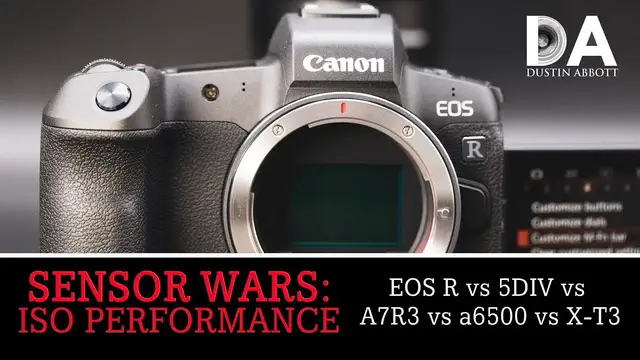
Sensor Wars: EOS R vs 5DIV vs Sony vs Fuji | High ISO | Photographer Dustin Abbott breaks down the performance of a number of current cameras and how they handle noise and color at high ISO settings. Visit the EOS R Image Galleries: http://bit.ly/EOSRig | Visit the X-T3 Galleries: http://bit.ly/fujiXT3ig | Visit the a7R3 Review: http://bit.ly/a7R3review
Purchase the Canon EOS R @ B&H Photo https://bhpho.to/2A6H9wI | Amazon https://amzn.to/2FasIvN | Amazon Canada https://amzn.to/2qDzCj7 | Amazon UK https://amzn.to/2AVnKPq | Amazon Germany https://amzn.to/2OzhErJ | Ebay http://bit.ly/eosRdla
Purchase the a7R III: B&H Photo: https://bhpho.to/2D6ibNO | Amazon: http://amzn.to/2CNxOvH | Amazon.ca: http://amzn.to/2CNYz36 | Amazon UK: http://amzn.to/2CRGvWM
Purchase the FUJIFilm X-T3 @ B&H Photo https://bhpho.to/2Q5q0sz | Amazon https://amzn.to/2CRd1ab | Amazon Canada https://amzn.to/2Jvf1GA | Amazon UK https://amzn.to/2DggEaA | Amazon Germany https://amzn.to/2Rn4Jec | Ebay http://bit.ly/fujixT3
Want to support this channel? Use these affiliate links to shop at:
B&H Photo: http://bhpho.to/1TA0Xge
Amazon: https://www.amazon.com/shop/dustinabbott
Ebay: http://bit.ly/DustineBay
Make a donation via Paypal: paypal.me/dustinTWI
Get a discount off all Skylum Editing Software (Luminar, Aurora HDR, AirMagic) by using code DUSTINHDR at checkout: http://bit.ly/LuminarDLA
Become a Patron: https://www.patreon.com/dustinabbott | Check me out on: Personal Website: http://dustinabbott.net/ | Sign up for my Newsletter: http://bit.ly/1RHvUNp | Instagram: http://bit.ly/DLAinsta | Google+: http://bit.ly/24PjMzv | Facebook: http://on.fb.me/1nuUUeH | Twitter: http://bit.ly/1RyYxIH | Flickr: http://bit.ly/1UcnC0B | 500px: http://bit.ly/1Sy2Ngu
My filming setup: Sony a7R III: B&H Photo: https://bhpho.to/2D6ibNO or Amazon: http://amzn.to/2CNxOvH | or | Sony a9 @ B&H Photo: https://bhpho.to/2HyWIyt or Amazon: https://amzn.to/2s1vYE0
Show More Show Less View Video Transcript
0:00
Hi, I'm Dustin Abbott and I'm here to give you the first of a few videos that I'm going to call
0:12
Sensor Wars where I'm going to take a look at the new Canon EOS R and how it compares to some of the
0:19
competing options that you might be considering. One of the main ones that of course I'm going to
0:24
be looking at in this series is seeing how it compares to the actual 5D Mark IV, which it seems
0:31
to have at least a version of the sensor from the 5D Mark IV, but we're going to see if it's actually
0:36
the exact same sensor or if there are some differences as a part of this. But also as a
0:41
part of the series, I'm going to be giving you a look at how it compares to other sensors, like say
0:46
from the new Fuji X-T3 or from both the Sony a6500 and a7R Mark III, which I'm filming on at the
0:57
moment, and then seeing how it compares out with some of these other mirrorless type options as
1:02
well. I understand that the probably most natural Sony competitor to put against would be the Sony
1:07
a7 III, but since I don't actually have one of those, that's not a comparison that I can do
1:13
Fortunately, I do have the Fuji on hand and I have, of course, some of the Sony bodies and the 5D Mark IV in my kit
1:19
And so I'll be doing a comparison with those. In this episode today, we're going to be looking at how the camera does at various ISO values
1:27
And so as you begin to crank that ISO up, we're going to see how it responds towards the upper limits
1:34
and how far you can go before the sensor starts to fall apart
1:38
Or does it fall apart? Well, let's jump in. Let's find out. So what we've got is the EOS R, which is going to be on the left, and then the 5D Mark IV on the right
1:48
Once again, we're using the same lens, 35mm f1.4 L Mark II
1:53
And so at base ISO, I mean, we would expect everything to look really clean, and of course it does
2:02
Depth of field is roughly the same with these two lenses. and in terms of the amount of detail that's rendered
2:10
I would say at least in this case, I like what I see from the EOS R just a little bit more
2:17
And, you know, it's hard to read too much in here, even though I try to focus them identically
2:23
You know, you don't always get the exact same result. But anyway, in terms of the actual look of the image
2:30
it is, I would say, more similar than different than at base ISO
2:34
So we're going to keep an eye on this area here, kind of this out of focus dark area is where the most pattern noise kind of show up
2:42
So just know as we go in, this is not pattern noise. Sometimes I do a bokeh highlights here
2:48
And so these are lights to use for that. And so that's not anything weird going on in the background
2:53
I threw in a kind of a deep red here umbrella as a part of this setup and lots of color to allow us also to see what it does with colors as we climb up the ladder here
3:05
Now for the sake of brevity, I'm going to jump right up to ISO 1600
3:10
I find that these days that, I mean cameras, really there's not much of a difference until you get to ISO 1600 and sometimes not even there
3:19
and so we'll just skip the bottom stages here. Looking at the images at large
3:25
they look more similar than different. Metering, for whatever reason, it asks for a little less
3:32
shutter speed with the EOS R compared to the 5D Mark IV. However, they do tend to look like
3:40
they're delivering a fairly similar image quality or exposure value here. It's only a third stop
3:48
difference and so it's not really significant anyway for a statistical purpose. So dark areas
3:54
we're not really seeing any new noise. I mean here you can see the original patterns that were there
3:59
kind of the the texture of the paper on the game there but no noise introduced. You know lots of
4:07
detail rendered here and in this dark area not seeing anything really showing up there and once
4:13
again, I would say there's a little bit better contrast on the actual texture of the grip there
4:20
on the old camera. If we look up into our kind of dark area, you know, there's a very, very
4:26
very fine noise pattern on both of them. But I mean, only detectable at a pixel level
4:31
not really a whole lot to see here. They both look basically the same. So once again, we see
4:36
the pattern continues that we get a basically equal exposure value with a little bit faster a
4:44
shutter speed on the EOS R. I'm going to, looking at tests that I've already looked at, go out on a
4:49
limb and say that Canon has managed to milk a little more sensitivity out of this sensor, and
4:55
I'll touch on that more in just a moment. So now we're at ISO 3200, ISO 3200, and so this is where
5:03
Sometimes you can begin to see a little bit of something, but at this stage, we're still seeing a very, very fine, fine noise pattern
5:12
Not a whole lot to see. I would say that our colors are still looking about similar, still lots of detail that is there
5:20
Looking over here, once again, I still prefer the contrast that I see on the grip there
5:26
Looking inside here, you can see a fine amount of noise that is on the mirror there
5:32
And I do think that there is the slightest bit more noise on the EOS R compared to the 5D Mark IV
5:40
At the same time, I also think it's delivering a little better degree of detail
5:46
And so that could also be a factor here as well. Once again, looking at the out of focus area, there's no color band or anything here that we're seeing
5:55
And, you know, reds look as they should. And so I mean again more similarities than differences At this stage I would say a tiny bit more noise on the EOS R but also a little bit more detail as well
6:11
Now, often at ISO 6400, you can start to see the early stages of breakdown
6:18
although modern cameras are really doing a remarkably good job with this
6:22
And so once again, I wouldn't say there is a significant greater amount of noise than what we saw there before
6:31
And once again, detail is holding up quite well. Let's look over here on the old Spotmatic
6:36
And, you know, there still is a little bit better contrast for the EOS R, maybe a little bit more detail
6:43
Noise is a little bit more pronounced as we've seen before. Looking up in the defocused area, you can see it's a little bit softer
6:51
but at the same time there's also I would say a little less contrast for the 5D Mark IV image
6:58
as compared to the EOS R and so that's your trade-off maybe when it comes to that
7:04
So now if we jump on up to ISO 12800, this is for many people this is probably the limit of where
7:10
they feel comfortable in using cameras I mean based on tradition. At the same time my tests
7:16
have shown that modern cameras, you really can push them a little bit higher without a whole
7:22
lot of penalty, as we're going to see here when it comes to ISO performance. So once again, I do
7:29
find that, again, we have a little bit of a different in the exposure value or how the camera's
7:35
metered. Maybe contrast does still slightly favor the EOS R. As far as the noise goes here
7:43
At this stage, I would say that they kind of look fairly similar
7:49
and in some ways maybe the noise has crept up a little bit more on the 5D Mark IV
7:55
You know, patterning here still looks very good, nice detail. Looking at this mirror inside of here
8:01
what we can see is maybe a little coarser of noise compared to the 5D Mark IV
8:09
Looking out in this area, though, you know, more similar than different
8:12
and still no real apparent color banding showing up for either one
8:19
And so I'm not seeing anything major here to be concerned about
8:24
And I would say that looking at both of these on a global level, still very, very usable
8:29
Okay, so at ISO 25600, we're definitely starting to push up into more noisy territory
8:37
But we can see sensor is still holding up pretty well here
8:41
I do think there is a little bit more noise I'm seeing from the EOS R compared to the 5D Mark IV
8:49
At the same time, you know, color fidelity looks good. And if you look here, there's just a little bit more pronounced detail
8:55
and a little bit better contrast on the whatever that is on the Puzzle Quest game
9:03
Similarly here, I mean, there is definitely some noise you can start to see here
9:07
but contrast is holding up well. and I also think that maybe color fidelity is holding up maybe a little, little better on the
9:16
EOS R. And so the trade-off seems to be a little bit more noise, but then a little bit more detail
9:23
and a little bit more contrast. I'm starting to see just the beginnings of a little bit of some
9:30
green patterning there in the defocused area, a little bit more of blotchiness that starts to show
9:36
up at higher iso values but here on the 5d mark 4 you can also see some of these magenta blotches
9:43
that aren't showing up quite as much on the eos r and so you know i don't know that one is
9:50
particularly better than the other but i will say as far as noise if you're concerned by noise
9:56
the eos r seems to have a little bit more but it also trades off that by having a little more detail
10:02
and contrast and perhaps a little bit better image punch still at that higher ISO value
10:10
So let's look at the upper limits here. Now, there is a little bit of a difference between
10:14
these two in that the native ISO range goes up to 40,000 on the EOS R, 32,000 on the 5D Mark IV
10:23
Let's find out if that's justified. So taking a look at the actual images here
10:30
we see kind of the general pattern and that I do think that the noise is more pronounced here
10:35
I also think that the contrast is holding up better on the actual EOS R and so that's your
10:42
trade-off that I've seen. Again here you've got a little bit better contrast that's holding up at
10:47
this high ISO value, a little bit more detail rendered there but also more pronounced noise and
10:55
so in some ways there's maybe a little bit more sharpening on the image but also a little bit more
10:59
contrast. But here I'm not seeing any kind of significant color banding. I think that there is
11:05
the slightest bit of green cast that is starting to creep in there. So it's maybe not quite as
11:12
neutral as what it's been. But beyond that, I mean, it's still holding up pretty well. And if
11:17
you look at like the writing here compared to here, just a little bit better contrast there
11:21
and likewise on these dials. Now looking up into the black area, it's blacker, you know, than what
11:30
and so that you remember too, this is a little bit higher and there's definitely, you can see both
11:36
some green and, you know, purple magenta patches in there. But again, stepping back, if you're not
11:42
looking at a pixel level, I mean, I would say that that is a generally, you know, useful image
11:48
particularly if you're shooting for reportage or you're down sampling to take down the actual noise patterns a little bit
11:55
So what happens if we compare it to another mirrorless body? I going to show you a few other options In this case I have the new Fuji X here on the right side This is an APS sensor but Fuji approach is that they feel with the technology they got in their APS sensors that they can do as good a job as full
12:15
frame. We're going to find out how that holds up. So here at ISO 1600, and as you can see
12:22
I'm using the Fuji XF 35mm F2 lens here. So let's jump in and let's look here at our
12:31
amount of detail and noise. So if we start over here on the lens, what we're going to find is that
12:38
I mean, contrast actually looks really, really fantastic on the Fuji and detail and noise is
12:43
nicely controlled. I mean, I would say it looks probably a hair better in my opinion than what
12:50
does the EOS R. Contrast here looks quite excellent on the Fuji and like our detail here
12:58
looks good and you know darks look a little bit darker and brights look you know essentially
13:03
almost as bright and as far as the detail here it looks really fantastic and you can tell depth
13:10
of field is a little bit deeper f5.6 on APS-C of course has a deeper depth of field at this
13:17
distance than it does f5.6 on full frame. Looking inside the camera I really like the way that light
13:25
and shadows is handled there on the Fuji. So Fuji actually looks quite good here
13:29
Dials looks good. Looking up in this area, both of them are really, really smooth
13:34
and not a whole lot to see. There may be a slight bit more fine noise there
13:41
for the Fuji, but it's hard to detect much of a difference
13:45
and a little bit more detail showing up there for the Fuji
13:49
So maybe a little better contrast for the Fuji sensor at ISO 1600
13:53
Now, the X-T3 actually caps its normal range at ISO 12,800. So here we're looking at, you know, essentially the upper limit without going into the expanded range
14:05
So let's see how it looks here. And so I would say looking at our lens, like in this pattern, again, contrast looks really fantastic
14:13
So the image itself looks great, but I do think that there's more noise in the Fuji than what there is in the EOS R
14:22
And so look at here, you can see just in the reds, you can see more noise showing up there
14:27
And looking at the game here, what you can see is that in this kind of lighter area, there's more noise
14:35
You know, it's a fine noise and it's pretty clean looking, but there's definitely more of it than what there is on the EOS R
14:42
I still do favor the actual kind of contrast in the general look
14:46
And so I think that really, as far as usability, this looks pretty fantastic
14:50
And Fuji says that the way that their sensor is set up, this is not a Bayer sensor, that the noise is a little bit more randomized
14:59
And so, you know, it's a little bit more like film grain. I'll let you decide that for yourself
15:03
That's what they tell me. And so you can tell me if that's what you see or what you don't see
15:08
But I would say that the EOS R is giving us less noise at this equivalent ISO range
15:16
But I think that the Fuji is giving us a little bit better contrast and detail
15:20
So there's your trade-offs there. Okay, I'm also going to give you a look at a couple of Sony centers to wrap this up
15:27
I wish I had the a7 III on hand. I don't. So I'm going to give you a look with the a6500, which is another APS-C body
15:35
and then also the a7 Mark III. And so on both the Sony bodies, I'm using the Samyang AF 35mm f1.4
15:44
So taking a look, ISO 12800 Looking at these two, you know, Sony is actually metering quite a bit faster shutter speed here
15:58
Than what the Canon is And so it has a little bit of advantage when it comes to contrast
16:03
I like the, you know, again, the contrast look I do also think though that the Sony has a, you know, more noise that is showing up there
16:13
We'll take a look at our game here. And once again, I would say that the noise is a little bit heavier
16:22
If we look up here into the umbrella portion, you can definitely see more of that noise pattern showing up here
16:28
Also, when it comes to the detail on the front of the camera, contrast and detail actually look quite good on the Sony body here compared to the Canon
16:40
and I would say that the noise here is you know roughly equal there's a crease contrast that helps
16:47
the noise to show up a little bit more looking out into this area of the frame here again not yet a
16:55
lot of color banding and you know there's a difference in exposure value that kind of
17:00
provides a little bit different in some cases here I have to use kind of let the camera do some of
17:06
metering itself because not all of these cameras have the same base ISO and so it's a little bit
17:11
hard to you know do a complete apples to apples comparison like in the case of the Fuji. It's
17:16
jumping up to 25,600 we'll take a look here at the detail and once again we see that kind of the
17:26
same pattern noise is a little bit more pronounced but so is the detail and you can see looking at
17:33
this, there's definitely a heavier noise pattern in that area. And so, you know, it kind of depends
17:39
on what your priority is. You know, neither one of them is showing like color banding, discoloring
17:46
in this area, but you know, both have strengths and weaknesses and it kind of depends on what
17:52
your priority is going into this. Now pushed up to the very limits here, ISO 40,000, definitely
17:59
heavier noise pattern on the Sony. The noise is rougher, coarser looking
18:05
And at the same time however both of them are managing to hold color fidelity fairly well And so but I mean you definitely are starting to get a breakdown in terms of just how rough the noise pattern is on the Sony APS body in this area here
18:23
It's really, you know, it's very coarse and very obvious compared to the Canon
18:27
So our final comparison will be with the EOS R to the A7R Mark III
18:31
Now, obviously the A7R Mark III is significantly higher resolution. And so in our final ysis, we'll take a look at a down sampled image that will give you a complete kind of apples to apples at a pixel level comparison
18:47
So with the A7R Mark III, and again, I'm using the Samyang AF on that
18:51
What we see here is at 12,800 is that we've got a pretty smooth looking result from the Sony
18:59
that of course now we're back to a full frame sensor. And so, I mean, full frame sensors
19:04
do have a bit of an advantage here. Lots of detail on the Sony
19:09
and noise right now, I would say, looks roughly the same as far as the noise in between them
19:18
And, you know, there's a little bit more detail on the, and more resolution on the Sony
19:23
So I would say that maybe it shows up a little bit more than what it does on the Canon
19:28
Let's take a look up in this area and you know it's as far as the this dark area noise it's it's
19:36
really not all that dissimilar and so and once again the the Sony meters with a little bit faster
19:44
shutter speed than what does the Canon. Now if we jump to 25,600 we're going to of course you're
19:53
starting to push into higher limits there. Let me just jump back for a second and looking at the
19:58
image at large, what I am starting to see is a little bit of blotchiness on the Canon that I
20:02
don't see on the Sony. The Sony does a really good job with this. Looking here, Sony is retaining
20:08
better contrast, I would say, and again, noise is maybe a tiny bit more apparent at the added
20:17
resolution of the Sony. Looking at this area here, once again, contrast is holding up, I would say
20:25
well for both of them, but it's a little, maybe a little bit more pronounced for the Sony. Looking
20:31
at this noise, it looks a little bit rougher because of the extra detail of the Sony. Looking
20:36
at this area here, you know, again, contrast looks better, but looking on the front facade of this
20:43
which is a smooth surface, you're seeing a little tiny bit more noise show up for the Sony there
20:50
Looking at our defocused area however it does stay more consistently even whereas there's a little bit more color blotching on the Canon
20:59
So for our final comparison we're going to look at the Sony and the EOS R but this time with the Sony down sampled at 40,000
21:08
And so we have identical resolution now And so kind of an apples to apples comparison on a pixel level reveals that the Sony is going to look a lot cleaner
21:18
The noise is less visible, contrast is superior This is the advantage of a higher resolution sensor
21:25
And of course, Sony's is very, very good at a high ISO performance
21:31
Looking up in this area, I mean now it's the Canon that looks a little bit rougher
21:35
In terms of the noise pattern and contrast continues to favor the Sony
21:40
looking here detail looks you know pretty fantastic here on the the Sony compared to
21:48
the Canon and the noise is not any more pronounced and our out of focus area you know there's some
21:56
of that banding that's showing up for the Canon that you're not really seeing on the Sony and so
22:01
at higher ISO levels particularly if you're willing to do some down sampling the a7r3
22:07
definitely brings some advantages to the table when it comes to that. And so as you can see
22:12
in a lot of ways, the ESR sensor does quite well at higher ISO values. It's kind of a give and take
22:20
with the 5D Mark IV. They don't behave identically. And certainly you see a little bit more native
22:26
contrast out of the EOS R sensor. You also see a little bit more sharpness maybe. And so the
22:36
The trade-off of that is that the sensor noise can be a little bit more noticeable at higher ISOs
22:43
But what we also saw is that it stayed pretty clean in terms of not putting in patches of discoloration
22:51
or kind of a tint coming across it. And so it definitely doesn't behave identically to that of the 5D Mark IV
22:59
and we'll explore that a little bit more fully in some other episodes as well
23:04
Here I'll show you just a few kind of real-world high ISO shots
23:08
And so, I mean, it's one thing to look in kind of a controlled test situation
23:12
but how do images look in the real world? And so you can see that for the most part
23:17
you really can get away at shooting at high ISOs here, and there's not really a big hit that you take from it
23:23
Stay tuned, and I will be back to you with more episodes in this series
23:27
as I work towards a final verdict on the Canon EOS R
23:31
I'm Dustin Abbott and if you'll look in the description down below you can find linkage to
23:35
my image gallery where I'm continuing to add images to it both with the native kit lens 24
23:42
to 105 also with adapted lenses and so far everything that I've adapted has worked really
23:47
well and I'll talk to you more about that in the future you can also find linkage if you'd like to
23:51
purchase one for yourself and of course there are links there if you'd like to follow me on social
23:56
media or become a patron. And if you haven't already, please click that subscribe button
24:01
right here on YouTube. Thanks for watching. Have a great day
#Online Video
#Camera & Photo Equipment