0:00
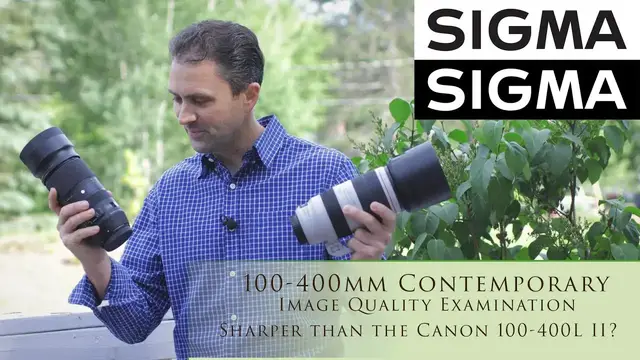
Hi, I'm Dustin Abbott, and when I first heard the announcement months ago about Sigma's new
0:17
100-400mm contemporary lens, you know, I wasn't necessarily particularly thrilled, particularly because it was announced with a number of other lenses that I felt more interested in
0:27
However, once I actually got my hands on the lens, as you know from my first look video
0:31
which if you haven't already, you can take a look at here, I was pleasantly surprised, really, by the quality build on it
0:40
And so I began to use the lens. I liked the functionality of it overall
0:44
And, of course, part of why I wasn't necessarily super excited is that I already have a really excellent lens
0:49
that covers that identical focal length, and that's the Canon 100-400mm L Mark II lens
0:55
and so of course the Canon you know it's got a higher grade of build it's got a little bit faster
1:00
aperture all throughout it but where I really expected it to blow away the much much cheaper
1:05
Sigma is in image quality and so in today's episode we're going to examine whether or not
1:11
that's actually the case because you're going to find out in a moment is that while I was pleasantly
1:16
surprised at the build and operation of this lens I've been even more pleasantly surprised by the
1:21
pretty amazing image quality that comes out of it. Can this compete with the over $2,000 100-400L
1:28
Mark II? Why don't we jump in and find out? So we'll start our comparison by taking a look at
1:34
images comparing the new Sigma 100-400 contemporary lens with the really kind of top of the heap
1:43
Canon 100-400L Mark II. Now one thing that we will note as a part of this series is that the
1:50
Canon has an aperture advantage basically everywhere. And so it is able to get by with
1:55
less light, but this is really, we're looking today more at the image quality that's produced
2:01
and a few different metrics as a part of that. So as we look at the images globally, one thing that
2:07
you will note as we look towards these corners is that there's definitely a heavier vignette with
2:12
both lenses wide open. Wide open is f5 on the Sigma. It's f4.5 on the Canon. And so you can
2:21
definitely see that the Sigma with a smaller front element, it has a front filter thread of 67
2:27
millimeters versus 77 millimeters for the Canon. And it takes a little bit of a hit when it comes to
2:34
vignette there. So if we take a look towards the center of the image here, we find that actually
2:40
the Sigma is delivering a little bit crisper detail rendering here in the center of the frame
2:47
and this is at 100 millimeters here. If we look out towards this side of the frame, we're going
2:55
to see that, for example, if we look at this window, there's definitely a pretty vast difference
2:59
in the terms of the detail that's rendered there from the Sigma as opposed to the Canon lens
3:06
and so again here if we look along this edge of the frame we can definitely see that the detail
3:12
rendering on the Sigma is crisper looking than what the Canon is. Now one other thing to note
3:19
here if we look here towards the edge is if we use a comparison point here at this kind of patch
3:26
here we can see that the Sigma is framing tighter than what the Canon is and so at this range the
3:32
Canon is delivering a little bit wider angle of view and that's important to know for zoom and
3:38
you say well you know maybe they're not framing exactly and no I don't think the framing is
3:42
exactly identical but we can also see on the left side of the frame that the Canon also has a little
3:47
bit more in the frame and so that tells me that there is a bit wider overall framing for the
3:54
the Canon at 100 millimeter Now another thing to note here is that I would say there a little bit more chromatic aberration showing up in this very high contrast area up here And so there another
4:06
area where I see some advantage for the Sigma lens. Now, if we were to give an apples to apples
4:13
comparison with both of them at f5, and so we now have an identical shutter speed, we look towards
4:19
the center and obviously it's still very close but I think that the contrast here actually favors the
4:26
Sigma which there's a little bit of a light haze look to the Canon image that's just not there on
4:32
the Sigma and so I mean this is a really really impressive performance from Sigma here and once
4:39
again looking at this window frame there's a pretty vast difference if you look out towards
4:42
the right side I'm seeing a pretty huge advantage even at equal aperture values here for the Sigma
4:49
and so at 100 millimeters it is a really powerhouse of a lens optically because the Canon is fantastic
4:57
Okay, how about if we stop each one of them down to f5.6
5:01
If we look towards the center, again, you know, there's not a huge difference here
5:06
but I, if anything though, I still give a little bit of favor to the Sigma
5:11
and as we move towards the edges of the frame, definitely at 100 millimeters this is f5.6
5:18
it's giving a really wow performance very excellent detail and probably not a whole
5:24
lot different than the wide open performance but you will note there is a little bit of a lifting
5:28
of the vignette there although it's pretty clear that the Canon is pretty much perfect perfectly
5:34
even illumination across the frame and we're definitely still seeing some vignette from the
5:39
Sigma here but in terms of the actual sharpness it is impressively good another quick peek and this
5:45
is at f8 here at 100 millimeters and so finally at f8 I would say that the vignette is mostly
5:51
cleared up although there still probably is a little bit more shadowing there in the corner
5:56
of the image so just taking a quick look already our image sharpness was you know pretty much
6:01
perfect and I would say that now you know there's probably some equalization here but once again
6:08
over on the edge of the frame I'm still favoring the Sigma and it's it's pretty obvious and also
6:13
You can see a little bit more chromatic aberration in this area on the Canon, even at F8
6:18
And towards the edge of the frame, this is some lateral CA that the Canon suffers from
6:22
that the Sigma seems to be doing a better job with. And so 100mm, the Sigma is very impressive in its performance
6:31
All right, if we jump ahead now to 200mm, and once again, there's an aperture advantage for the Canon lens here
6:39
And so it's at f5 compared to f5.6 on the Sigma lens
6:45
But if we'll take a look here at the image sharpness, you know, this is a little less distinguishable
6:52
I would say I very, very, very slightly prefer the contrast from the Sigma lens in terms of the center of the frame
7:00
Sharpness, though, there's little to distinguish it. Both of these look really fantastic
7:04
I love the texture rendering. Looks fantastic. out towards the very edge of the frame. I'm going to give a very slight advantage to the Canon here
7:12
and even though it's at a wider maximum aperture at this point, there's a little bit more detail
7:17
towards edge of the frame, but I mean, at the same time, we're also splitting hairs. Both of
7:22
these are delivering a pretty exceptional performance here. Very, very nice. Just a quick
7:28
look to equalize settings, both at 1 1 25th of a second, f5.6, and you're not going to see a big
7:36
difference here. You know there may be a hair more detail for the Canon but it is so close as to be
7:42
virtually indistinguishable and right out towards edge of the frame. Once again there's there's a
7:47
little bit of an advantage for the Canon but really both of these these lenses are very impressive
7:53
and I very impressed by the Sigma its performance here against a lens that cost well over twice as much Now with both of them stopped down to f8 we take another quick peek here and you know you can look for yourself
8:08
I would say I'm having a hard time picking a winner. Both of these are really really excellent
8:15
I mean there's just nothing to complain about there and right across the frame you're getting
8:20
an outstanding result from both these lenses. So if we move out to the crucial 400 millimeter
8:26
setting, this would be where you would expect the budget lens to, you know, fall apart. But I would
8:32
say if, as we look at these images globally, we can certainly tell that it hasn't fallen apart
8:37
That's for sure. And in terms of the framing at 400 millimeters, I would say that, you know
8:43
they're not a hundred percent identical on this edge, but they're very, very close. And I would
8:49
say that the Canon is framing just a little bit looser here. And so the Sigma, I think
8:55
is definitely giving you very close to a full 400 millimeters. And at this distance, which is about
9:01
40 feet, I would say that maybe the Canon shows a little slight bit of focus breathing
9:06
at that point, which I know it is guilty of. The Sigma does not do that, by the way
9:12
So if we look at these and we compare them, I mean, look at this right here. Now, you know
9:18
once again, there's an aperture advantage for the Canon. It needs less light here, but I mean
9:23
once here right in the middle, I would say that I like that texture rendering there a little bit
9:28
better from Sigma. They're, you know, they're very close, but in some of these little details
9:34
these knots, I kind of like what I see from the Sigma a little bit better than the Canon
9:38
which is really, it's pretty mind blowing when you consider that the Canon has fantastic optics
9:45
and is over $2,000, and the Sigma is selling for under $800, and so that's really, really impressive
9:54
So now if I stop the Canon down to f6.3, and so that all things being equal
10:00
it does surprisingly make a pretty big difference for the Canon, and now I would say it's probably got the upper hand in terms of overall sharpness here
10:11
and the crispness of the textures, but once again, it is so minimal as to be pretty close to being
10:18
within the margin of error. You know, these little knot type things, now I favor the Canon a little
10:22
bit, but as I said before, it's extremely close, close enough to where if you're out shooting in
10:30
the real world, you would be hard pressed to visually see much difference between these two
10:35
lenses, that's really an amazing performance. Now with both lenses stopped down to f8, I would say
10:42
that once again, the Sigma I think is taking just a little bit of a jump forward here. It's again
10:50
it's very close as to be almost indistinguishable, but I do slightly prefer the overall contrast and
10:56
just the visual impact in some of these areas here. I think that yes, it's extremely close
11:03
but I just very slightly prefer what Sigma is doing here, just a little bit crisper in terms of the rendering of the textures
11:10
And so once again, just color me very impressed with that kind of result
11:15
Now just a quick look at the infinity performance of these. Both of these are at F8 and at 100 millimeters
11:22
And so I just wanted to give a little bit of a comparison
11:26
And let me just note that unfortunately, due to the nature of the Sigma not having a tripod collar
11:31
it's a little bit harder to line everything up here and so I mean that I couldn't get an identical
11:39
framing out of these two lenses so I'll just kind of pull things around so just note that
11:43
they won't end up as you can see in the exact same portion of the frame and that's that's really a
11:49
lot due to the not having a tripod color but at the same time I think that you're going to find
11:54
that you know there a there a very slightly favor the Canon rendering in that area also know just a little bit crisper texture rendering But again they extremely close I mean very very close And so once again
12:11
I'm very impressed by how close that Sigma is staying with a lens that I consider to be an
12:16
extremely impressive performer. And so kudos to Sigma for doing that on that kind of budget
12:22
So we'll just look at a few other images here just to fill in the gap. This is close to minimum focus here. And so you can see the bokeh rendering is also really pretty good from this lens. I also really like the contrast at wide open apertures, color rendering. It's all image quality is really quite fantastic here
12:41
And so you can see in real world applications, there's a lot of detail here
12:46
This is a 5D Mark IV, so 30 megapixels. And it's having no problem producing a whole lot of resolution there
12:54
along with a really beautiful overall rendering here. Here's another example here
12:59
Very, very slightly cropped just for the sake of framing. But again, a very nice result
13:04
And on our main subject, the butterfly here, a lot of nice detail
13:09
and so another impressive performance there. Here just to give you a look at how much you can blow out a background
13:18
at close to minimum focus and this has a 0.26 times magnification
13:23
which is nice, useful, not quite as good as the Canon but useful and you get there in a little bit different way
13:30
It has a little bit longer minimum focus distance but because it doesn't focus, breathe
13:35
it still has quite a nice magnification And of course, you're able to really, really completely diffuse that background
13:41
Now, just to take a look at what could be a busier kind of thing. So this is, first we'll look at an image here that focuses on a foreground subject that's quite a ways away
13:52
probably close to 50 feet away from the camera, 60 feet maybe, and at 400 millimeters
13:58
And so it's not far to this background. And while there's a little bit of a busyness there, I think that there's nothing that is ugly about it
14:07
And I've seen some budget telephotos that would look really ugly in this kind of setting
14:11
And while that's a slight bit busier than what I like, I think that it's done a pretty decent job here
14:17
And if we focus further on out, and so that the spirea bushes are now in focus, we can look at the foreground rendering
14:25
and once again, it's not going to compete with the high-end ultra telephoto lenses that have a larger maximum aperture
14:34
and so this front foreground would be more blurred, but at the same time, there's nothing ugly about that
14:41
and so optically, there's a whole lot to love about this new Sigma lens
14:46
So as you can see, the Sigma does a very impressive job
14:50
And while it does have an aperture disadvantage and it also does have more vignette quite obviously than the Canon lens does
14:58
we found that really at almost all focal lengths it either exceeds the image quality of the Canon lens or at the very least it very closely matches it
15:08
And so I am extremely impressed at a price of under $800 of what incredible image quality you can get out of this lens
15:17
now in our final episode we'll take a look at you know just kind of the actual real world use
15:22
and the autofocus performance and I'll give you a final verdict on who I think this lens will work
15:28
for and maybe who I think that it won't work for and so please check back in for that it'll probably
15:33
come to you next week in the meantime you can also find a lot of ongoing images that I'm taking with
15:39
the lens in the image gallery in the description down below and of course if you haven't already
15:43
you can follow me on social media and please click that subscribe button. Thanks for watching. Have a great day