Up next in 10

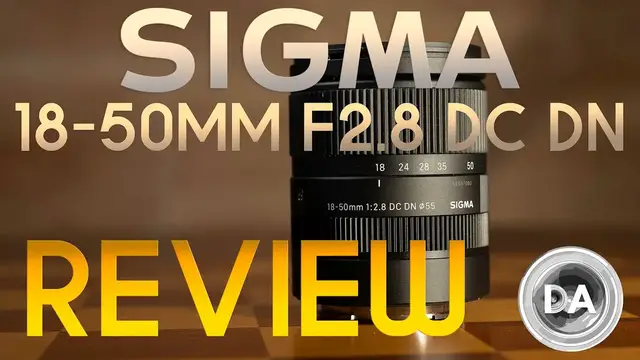
Sigma 18-50mm F2.8 DC DN Review | DA
Jul 17, 2023

Photographer Dustin Abbott shares a review of the compact and competent Sigma 18-50mm F2.8 DC DN that is now available for both Sony E-mount (tested here) and Leica L APS-C mirrorless cameras. | Visit https://bit.ly/lethelightinTV for the new channel | Read the Text Review: https://bit.ly/SIG18_50DN | Visit the Image Gallery: https://bit.ly/Sig1850DNpics | Purchase the Sigma 18-50mm F2.8 DN @ B&H Photo https://bhpho.to/3piOjaW | Amazon https://amzn.to/3DJVI7g | Camera Canada | Amazon Canada https://amzn.to/3pmLRQC | Amazon UK https://amzn.to/3pgO7sO | Amazon Germany https://amzn.to/3BXCv1e | Ebay https://ebay.us/iHcfPM
Purchase the Sony a6600 @ B&H Photo https://bhpho.to/2Eobmfe | Amazon https://amzn.to/3BdNELr | Camera Canada https://shrsl.com/32tug | Amazon Canada https://amzn.to/3ihX0x8 | Amazon UK https://amzn.to/3exz5Zv | Amazon Germany https://amzn.to/2UeHWbL | Ebay https://ebay.us/iWK2wf
Purchase the Sony a6400 @ B&H Photo https://bhpho.to/2JqJ8Cv | Amazon https://amzn.to/2TOff3W | Amazon Canada https://amzn.to/2Ogeiv5 | Amazon UK https://amzn.to/2CrtO2t | Amazon Germany https://amzn.to/2HvxRyS | Ebay
Check out the DA Merch here: https://bit.ly/TWIMerch | Become a Patron: https://www.patreon.com/dustinabbott | On the Web: http://dustinabbott.net/ | Sign up for my Newsletter: http://bit.ly/1RHvUNp | Instagram: http://bit.ly/DLAinsta | Facebook: http://on.fb.me/1nuUUeH | Flickr: http://bit.ly/1UcnC0B | 500px: http://bit.ly/1Sy2Ngu Follow Craig @ https://www.instagram.com/craigstoffersen/
Want to support this channel? Use these affiliate links to shop at:
B&H Photo: http://bhpho.to/1TA0Xge
Camera Canada: http://bit.ly/DLACameraCan
Ebay: http://bit.ly/DustineBay
Make a donation via Paypal: https://www.paypal.com/paypalme/dustinTWI
=============================
Table of Contents:
=============================
0:00 - Intro
2:00 - Build and Handling
6:57 - Autofocus
Show More Show Less View Video Transcript
0:00
Hi, I'm Dustin Abbott, and I'm here today to give you my standard review of the brand new Sigma 18 to 50 millimeter F2.8, which means it has a maximum matcher of F2.8 across its zoom range. It starts at a wide angle
0:23
18 millimeters. That's the equivalent of about 27 millimeters on full frame. And then all the way out to the telephoto in
0:29
of 50 millimeters or full frame equivalent of 75 millimeters. So maximum aperture throughout that, very, very handy
0:37
Beyond that, it also has, it is a DCDN lens, which means it is designed for APSC mirrorless
0:44
in this case, Sony E mount and L-Mount. This is a lens that I'm kind of surprised
0:49
it's taken this long for us to get. When I first got into shooting on DSLRs
0:55
this is probably going back 13 years or so ago, it seemed like, you know, I couldn't, number one, I couldn't wait to get rid of my kit lens
1:03
that came with my camera at that point. And after trying out a few lenses, what I ended up settling
1:08
on as a kind of a primary walk-around lens was one of these type lenses, either a, either
1:15
17 to 50 or an 18 to 55 millimeter, something in that range from either Sigma or Tamron. And that was
1:22
a lens with a maximum matcher of F2.8, and it just gave me more creative opportunities. It had better
1:28
image quality. It had more creative options with depth of field, all of those things. And so that
1:33
kind of became the lens that I went to. And it seemed like a lot of photographers were using lenses
1:38
like that at that point. And I think that there's obviously still a lot of room for photographers
1:43
to have just that kind of lens, particularly one that is compact and reasonably priced. All of those
1:48
things, which the Sigma is. It is extremely compact. In fact, if you compare the available option
1:54
It's basically only a very expensive option that is from Sony that kind of directly covers his focal length
2:00
It's a 16 to 55 millimeter F2.8G lens. That lens weighs in at nearly 500 grams
2:07
It's 100 millimeters long. It cost $1,400. Sigma is coming to market here with the lens
2:12
It is 76.5 millimeters long. So, you know, considerably shorter. It weighs only $290 grams
2:19
And it cost only $549. So about two and a half times
2:23
less what the Sony does. In between there in terms of price, you have got the new Tamron
2:29
17 to 70 millimeter F2.8 VC lens. I reviewed and really liked that lens, but I will point out
2:36
it is 525 grams. It's nearly 120 millimeters long, and it costs about $800. So that lens is
2:43
great if you don't mind a lens. It's basically more of a full frame size lens. The Sigma is a really
2:50
great fit if you want to travel light, but you want the flexibility. that comes from a lens with a larger maximum aperture and this very, very usable focal range
3:00
And so I think there's a lot of things that Sigma has nailed as a part of this formula
3:05
The build is nice. This falls in their contemporary lineup. And so that means that it doesn't have a lot of bells and whistles
3:11
There are no features on the barrel here no switches of any kind What it does get you however is a really nicely built lens with a gasket at the lens mount No mention of any kind of internal seals and if it holds true with many contemporary lenses from Sigma recently released it means that weather sealing is really that
3:28
gasket without internal seals inside. However, everything is really nicely engineered. Both the manual focus ring, which is the slimmer closer to the camera, and then the thicker
3:40
zoom ring, the zoom ring moves beautifully. There's no. there's no wobble in the barrel, no stickiness anywhere. It just glides really, really smoothly
3:50
Makes it a really nice lens to use in the field. Though I will note that for whatever reason
3:54
Sigma on all of their zooms for Sony, the zoom direction is the opposite of what it is on Sony and Tamron and other lenses
4:05
And so I don't know why they persist in that one, maybe a little criticism there
4:09
But I think the biggest takeaway here is that the lens is so compact and light. It's only 61.1
4:14
0.6 millimeters in diameter, has a very compact 55 millimeter front filter thread, seven rounded
4:21
aperture blades inside, and so a lot of nice things there. Now, interestingly, like a lot of
4:26
recent zoom lenses that I have been seeing on mirrorless, it has a different minimum focus distance
4:32
and magnification for the wide end as compared to the telephoto end. So on the wide end, you can get
4:37
as close as 12.1 centimeters. Now, that's great, except for the fact that from the sensor to the end
4:44
The lens, you use up all but about 26 millimeters of that overall length, 2.6 centimeters
4:50
which means that you're basically right on top of your subject at that minimum focus distance
4:55
And so, as you can see from this shot, very, very close. And here's the result that I could get a very useful 0.36 times magnification
5:03
But it's going to be very hard to achieve that in the real world because you're almost certainly
5:07
going to be shading your subject with the lens. And so unless you have dedicated macro lights, and even then, I don't know if you have room
5:13
to hardly get them in. It just means that that's not incredibly a useful real-world application
5:20
Now, it is more useful at the telephoto end. Telephoto end, your working distance is 30 centimeters
5:26
obviously a much better working distance, but your magnification drops to 0.20 times
5:31
Neither one of those figures is bad, however, and I think that I certainly could get up close
5:37
and get some very useful, you know, close-up shots by using that lens, even if I didn't always
5:41
achieve the full magnification, you know, of being right on top the subject. I could still get
5:46
fairly close. One advantage, however, for video work is that I have certainly run into a situation
5:51
when on a slider or a gimbal that I get a little bit too close to my subject and the lens
5:56
starts pulsing, it's autofocus, or it just stops focusing altogether and ruins the shot
6:01
You're almost never going to run into that situation here because if you're too close to your
6:05
subject, you're probably going to be hitting it. And so in this case, it allows you just to
6:09
to focus basically as closely as you want on the wide end. And so there are useful applications for that
6:16
Now, on that gimbal front, there is no built-in optical stabilizer here
6:21
And because I primarily tested on an A6400, I did miss that
6:26
And you can see, for example, with some of my video shots here, that the video is beautiful, the setting is beautiful
6:33
but there far more camera shake than what I would like because I didn have something nearby to lean against and of course it would be best on a gimbal but you don always have a gimbal along with you And I didn for the time
6:43
This is just some roadside shot, some opportunities that I had along the way
6:47
So I do miss that. And if you really, really need an optical stabilizer, probably the lens to choose would be the Tamron 17 to 70 millimeter
6:55
because it does have that stabilizer and it's very good optically. Let's talk about autofocus for a moment
7:01
This has an STM or a stepping motor. And as you can see from my focus pool test, focus pools are quick and quiet
7:09
You'll also see almost no focus breathing here. So that's a huge plus for the lens as well
7:15
It did a good job as I approached the camera and tracked my eye, as you can see
7:20
And as I'm using it right now to film on, you can also see how it's doing for this kind of application
7:25
and doing a consistent job of tracking my face. Because of the speed and the quietness of this focus motor, I had good
7:33
fast auto focus in all the different applications that I worked in, having a larger maximum
7:38
aperture of F2.8 is also going to give you advantage if you've been shooting with a slower
7:42
kit lens and it's going to allow you to get better focus in dimmer environments. So it becomes a
7:47
much more useful lens for shooting indoors, for example, or in other lower light situations
7:52
I also had good eye detect for animal AF and in these shots of Loki, you can see that focus
7:57
has just nailed and given a very crisp looking in result. So obviously very useful
8:03
on that front as well. Overall, autofocus gets the job done and I was pleased with it
8:08
I don't really have any kind of negatives to report. Let's talk about the image quality side of things
8:14
Obviously, this is hugely important, so we've got a very compact lens
8:17
We know that, but does it still deliver optically? The good news is that for the most part
8:22
the answer is yes. Now, on the wide end at 18 millimeters, I did see a little bit more distortion
8:27
than what I would like. It took me somewhere around a plus 23 to correct for that
8:32
there not being a correction profile yet for raw files. So I will note this lens will receive correction both in camera for JPEGs and for video
8:41
And so no problem there. But because I'm working with a pre-release copy, there is no profiles out there yet for, you know
8:49
post-processing for raw files. And so more distortion than what I would like
8:52
You can see that the lens actually framed wider to accommodate for that to give room for correction
8:58
And so that just gives you an idea of how much, you know, room is being left for the profile to do
9:02
the correction work because I was actually framing in the viewfinder nice and tight. There also was
9:08
you know, a moderate amount of vignette, one and a half to one and three quarters stops
9:12
and that increased a little bit to almost two stops as I went on throughout the zoom range
9:17
As you move on to the zoom range, however, the distortion problem goes away. It quickly inverts to
9:22
a slight pincushion distortion, not really a problem at any other point there throughout
9:28
And when it comes to controlling aberrations, I found that I saw just a little bit of a little bit of
9:32
a minimal amount of longitudinal fringing before or after the plane of focus in a few shots
9:38
Very few, however, it seems to be quite well controlled, not a significant problem
9:42
And I didn't see any kind of lateral chromatic aberration along the edges of the frame at all
9:47
When it comes to the sharpness, there are very crisp results at 18 millimeters
9:51
Very good in the center of the frame mid frame and just a little bit softer in the corners That does increase and get sharper as you stop down with about F5 being kind of a go aperture for landscape if you want sharpens
10:06
across the frame. Moving on, 24 millimeters is basically the height of performance for this
10:11
lens. There's basically no distortion. It delivered very, very good results, very crisp results
10:17
across the frame. Better in the corners at 24 millimeters and stopping it down. The lens was
10:22
extremely sharp. A little bit of dip at 35 millimeters with contrast levels not quite as high
10:28
And even when stopping down, I didn't achieve quite the same results that I did at the wider
10:32
apertures. 50 millimeters, a little bit of improvement once again, however, and I found 50 millimeter
10:38
to give me very usable results. And going out into the real world, the bottom line was
10:43
is that I got photos that I really, really liked. I felt like they had good detail, even viewed
10:47
at a pixel level. I felt like there was good color and contrast
10:52
images. And of course I was shooting at my favorite time in a year and so it makes it easy for me to
10:57
like the end results. But I really did like the images I was able to get. I also found flare resistance
11:03
to be reasonably good. There were some of my shots where you can definitely see some little
11:07
ghosting artifacts, but nothing that was ruinous in any kind of way. So at the end of the day
11:12
this I think did deliver definitely fairly usable results. And it was even quite good for shooting
11:19
the night sky and I got some nice astral results with fairly low incidence of coma and just a little
11:25
bit of chromatic aberration up there on the star points. And so overall, as you can see, the images
11:31
turned out looking very, very good. So I certainly think that this is going to be a very usable lens
11:36
a great lens, for example, to carry along when you're debating whether or not to bring a camera
11:39
at all. This is a lightweight combination that, you know, might tip the balance towards you using
11:44
that as opposed to using your foam. And obviously that's going to give you better end results
11:49
And that really, I think, is where the value proposition is here. This lens is reasonably priced at about $550 relative to its performance
11:57
but it is so nice and compact that I think it provides a really, really great upgrade path
12:02
for those that are looking for something more than what their kit lens is going to offer them
12:07
So you're not adding a lot of additional bulk or weight, but you are adding a lot of optical performance on there
12:13
And, of course, the versatility that comes with a wider maximum aperture that allows you to get good results in a much broader range of shooting environments
12:21
So well worth your consideration if you're a person that's looking for a compact standard zoom lens
12:27
for your APSC, APSC, either Sony or like a camera. I'm Dustin Abbott, and if you look in the description down below, you can find linkage to my full text review
12:36
also to my image gallery that's there. And there are some buying links, though because this lens is so new
12:41
it'll be a few weeks before some of those links fully populate as the manufacturers get their listing
12:47
up. And so be sure to check back and thank you to all of you who make your purchases through my
12:51
links to help to support this channel. Beyond that, there's linkage to follow myself or Craig on
12:56
social media, to purchase merchandise, to become a patron or sign up for my newsletter
13:01
And of course, if you haven't already, please click that subscribe button right here on YouTube
13:05
Thanks for watching. Have a great day and let the light in
#Camera & Photo Equipment