Up next in 10

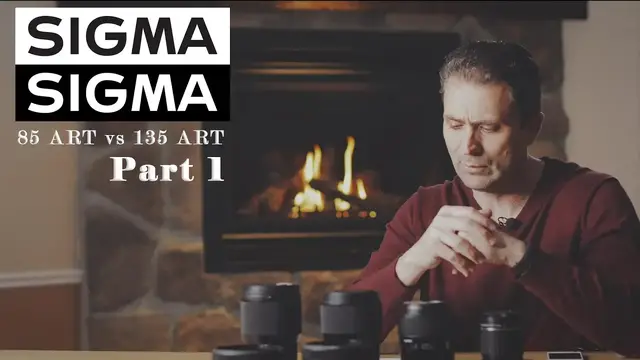
Sigma 85mm vs 135mm ART Comparison | Part 1
Jul 25, 2023

Sigma 85mm vs 135mm ART Comparison | Part 1 | In this episode photographer Dustin Abbott shares Part 1 of a comparison between the new Sigma 135mm f/1.8 DG HSM ART - a highly anticipated new lens - vs the highly desirable Sigma 85mm f/1.4 ART lens released late last year. See how the two lenses stack up in size and features along with a long at image sharpness, chromatic aberrations, and other image quality metrics. Visit the Image Gallery: http://bit.ly/135ARTig | See the Sigma 85mm f/1.4 ART Review: http://bit.ly/2gIt0sy | Purchase the 135 ART - B&H Photo: https://bhpho.to/2omypKq | Amazon: http://amzn.to/2pfYpLF | Amazon.ca: http://amzn.to/2omoRiu
Zhiyun Crane - USA: https://bhpho.to/2gDJhnC - Europe: http://bit.ly/2fWMWbQ
Want to support this channel? Use these affiliate links to shop at:
B&H Photo: http://bhpho.to/1TA0Xge
Amazon: https://www.amazon.com/shop/dustinabbott
Ebay: http://bit.ly/DustineBay
Make a donation via Paypal: paypal.me/dustinTWI
Get a discount off all Skylum Editing Software (Luminar, Aurora HDR, AirMagic) by using code DUSTINHDR at checkout: http://bit.ly/LuminarDLA
Become a Patron: https://www.patreon.com/dustinabbott | Check me out on: Personal Website: http://dustinabbott.net/ | Sign up for my Newsletter: http://bit.ly/1RHvUNp | Instagram: http://bit.ly/DLAinsta | Google+: http://bit.ly/24PjMzv | Facebook: http://on.fb.me/1nuUUeH | Twitter: http://bit.ly/1RyYxIH | Flickr: http://bit.ly/1UcnC0B | 500px: http://bit.ly/1Sy2Ngu
My filming setup: Sony a7R III: B&H Photo: https://bhpho.to/2D6ibNO or Amazon: http://amzn.to/2CNxOvH | or | Sony a9 @ B&H Photo: https://bhpho.to/2HyWIyt or Amazon: https://amzn.to/2s1vYE0
Tamron 28-75mm F2.8 RXD @B&H Photo: https://bhpho.to/2FA00la or Amazon https://amzn.to/2G2kaEr
Lights: Rotolight AEOS @B&H Photo https://bhpho.to/2IK7mqV | Genaray Contender @B&H Photo: https://bhpho.to/33HbGNM | and Aputure AL-MW: https://bhpho.to/2N3MtZV
DISCLAIMER: This video and description contains affiliate links, which means that if you click on one of the product links, I’ll receive a small commission. As an Amazon Associate I earn from qualifying purchases.
Show More Show Less View Video Transcript
0:00
Hi, I'm Dustin Abbott and I'm here today to give you some visual comparisons here between
0:24
the Sigma 85mm f1.4 art, the new Sigma 135mm f1.8 art, and then just as a visual representation
0:34
of some other alternatives, or really another alternative, there's the Tamron 85mm f1.8
0:41
VC lens. Also, just for the fun of it, here's a vintage 135mm, this is an f2.5 lens that I have
0:51
and SMC Takumar. And so if you compare it, of course, visually, obviously we've come a long way
0:59
in terms of the size of lenses. But of course, we've also come a long way optically as well
1:05
The reason why I wanted to do some of these comparisons today is for the primary reason
1:09
that many people who are looking for an 85 millimeter or a 135 millimeter lens
1:17
they may be kind of cross-shopping back and forth. And so in a lot of ways, I think that perhaps the most direct competition
1:24
to the new 135mm f1.8 art from Sigma is its own 85mm
1:30
And so what I'm going to try to do in a couple of parts in this series
1:34
is to give you some comparison both of the overall physical size
1:38
but then also to give you some comparison when it comes to the overall optics
1:43
And so in this first episode, we will quickly look at the overall build characteristics
1:46
and comparisons there and then we'll also look at the overall resolution between the two lenses
1:52
and then in a second part I'm going to give you both the look at the overall bokeh and rendering
1:58
quality the difference between those two aspects of the lens design and then follow that up with
2:04
some conclusions as to the strengths and weaknesses of each one hopefully that will help you in making
2:09
a purchasing decision if you are cross-shopping these two lenses so in terms of the overall
2:14
physical size as you can see these follow a pretty similar blueprint for the overall lens design and
2:22
design philosophy they're so similar in fact that unless you were close enough to actually read
2:28
what's mounted on the camera body you would probably need to mistake one for the other one
2:33
physical difference is more about the lens hood and so the 85 millimeter has a pedal shaped hood
2:39
whereas the 135 millimeter it has just a flat lens hood that has a little bit of a different
2:46
physical design. It's also a little bit longer as you can see to help to shade a longer focal length
2:52
and so looking at these two lenses physically there there's more similar than there is different
2:58
although the 85 art its weight was not listed without any of the caps on my scale it comes out
3:05
1138 grams if i put the um 135 art on my scale it comes out at 1138 grams or so exactly identical
3:18
it's listed at 1130 but for me it weighs a little bit just a hair heavier than that that's right
3:23
under two and a half pounds in overall weight for both of them and so in the overall length as you
3:28
can see side by side here there is a little bit of difference in the overall length it's the
3:32
the difference between 126 millimeters versus basically 115 millimeters. And so about a nine
3:40
millimeter difference roughly overall. And so one is right under five inches and the other
3:46
is a little over four and a half inches. And so there's a little bit of difference there
3:52
There's also a little bit greater diameter of the 85 art and it is 3.73 inches around
4:02
or right under 95 millimeters compared to 3.6 inches or 91.4 millimeters they both also take
4:11
different filter thread sizes the 85 art is a relatively uncommon 86 millimeters whereas the 135 art is a large but more common 82 millimeter front filter thread
4:24
Both of them have nine rounded aperture blades. We'll take a look at aperture as a part of our second episode
4:30
And they both can focus down to pretty close to the same distance
4:34
The 85 art focuses down to 85 centimeters, whereas the 135 art will focus down to 87.5 centimeters
4:45
Now, while that's quite close, because of the difference in the focal length, the reproduction value is quite different between the two
4:53
And so the 85 art has a rather poor 0.12 times magnification
4:58
while the 135 art has a much more useful 0.20 times or a 1 to 5 reproduction ratio
5:06
And so that's certainly useful. The 135 art is a little less complex, 13 elements in 10 groups
5:12
The 85 art is 14 elements in 12 groups. And so a few subtle differences there in the overall design
5:20
and so if you ask is one smaller than the other yes 135 millimeter it is technically smaller but
5:27
not in a meaningful way it's not really going to change things one way or another in terms of
5:32
balance or size or storage they basically come out to being pretty much the same and in fact
5:38
if you were to mount the lens hood on both of them you'll find that they actually end up being
5:45
almost identical in their overall length because of the slightly longer lens hood on the 135. And
5:51
with the lens hood mounted, if you were to, I mean, other than the physical shape there, they're very
5:56
very similar in size overall. So let's take it a step further, however, and let's look how that
6:02
how that they compare optically, because obviously that's a huge point of consideration. And so we'll
6:07
take a look in the lab and see how the resolution is between these two lenses. All right. First
6:12
things first is we'll take a look at the overall sharpness for the lens. First, let's just take a
6:16
look on an absolute level. And so as we look towards the center of the frame, we see nothing
6:23
to complain about. Excellent sharpness there at f1.8. Looking towards the left side, we also see
6:30
good sharpness overall. So that's right out to the edge of the frame. And so we see that on both
6:37
sides, we've got a very good sharpness as we look at it. Other things to note in this kind of
6:42
comparison is that we can see chromatic aberrations are nice and low even towards the edges of the
6:47
frame, something that is very, very well controlled on this particular lens. One of the chief
6:53
competitors to the 135 art is really the 85 art, and there will be a lot of people that are debating
6:59
between these two lenses. So here's a look at the overall global rendering from both lenses. We see
7:04
that in both cases really at wide open vignette is quite well handled on both of these. I just
7:10
want to point out this edge of the frame. This is still really quite bright. The top area
7:16
it's kind of in shadow, so it doesn't necessarily give a full indication. But you can tell looking
7:21
towards the edge of the frame here that really the vignette is quite well controlled, a strength
7:26
for both of these lenses. Now, if we look towards the center of the frame, there's a couple of
7:31
things to note. First of all, I would say that in an absolute sense, the 85 art is a little bit
7:37
sharper. However, you're going to find that in a real world application, I think that you're going
7:42
to actually have a perceived better resolution from the 135 art for this reason right here
7:49
that there is in fact some chromatic aberration that is there and you can see both purple fringing
7:55
along with green fringing. And I know from practical experience having reviewed the 85 art
8:00
that once you correct for that chromatic aberration, you lose a bit of the contrast and thus a bit of the apparent resolution
8:09
And so while the 85 art, probably on a chart test, is going to seem a little bit sharper
8:15
I think that in the real world, the 135 art is going to be your slight winner in terms of apparent look
8:22
Similarly here, again, absolute resolution. You can tell for example here in these textures a little bit better on the 85 art a little bit maybe better definition like on the 8 here but again the chromatic aberration is going to impact that overall sharpness and so here similar thing a story on
8:42
the right side of the image bottom line though is that both of these lenses are producing really
8:47
stunning amounts of resolution so it's not a problem for either of them so if we stop both
8:53
lens is down to f2 now we're going to see that really the story is changes only slightly and
9:01
the change is really that at f2 a lot of the chromatic aberration is starting to leave the 85
9:06
art and so here it's because it has a bit more contrast now we're going to find that the overall
9:13
the resolution is well but again both lenses are exceptional here but i would say that there's a
9:18
bit more resolution here in the center on the 85 millimeter lens. Moving out towards the side of
9:25
the frame, you can see a bit of lingering chromatic aberration here, but at the same time, you can also
9:30
see some crisper detail rendering on the 85 art. And then if we move over to the opposite side of
9:38
the frame and we look here, we're going to see a similar type story that here we are at equal
9:45
settings in terms of the aperture and the shutter speed but overall there's a little bit probably
9:53
better contrast and resolution on the 85 so we'll take it one deeper here's at f2.8 uh now at f2.8
10:02
you know maybe still a slight edge for the 85 art but both of these lenses are producing just
10:07
stunning amounts of resolution so there's nothing to be concerned about there at f2.8 the chromatic
10:13
aberration is basically gone on the 85 art and so it just really has a lot more has a lot of pop
10:20
there and thus I think it looks maybe just a hair better than the 135 art but at the same time you
10:26
know if we look overall here on the right side I would say there's an edge going to the 135 both
10:33
these lenses I mean great resolution nothing to complain about so just for comparison sake here's
10:39
look at both at f 2.8 a comparison with the new Tamron 70 to 200 g2 now to get similar framing
10:47
here I've got the Tamron which has some focus breathing that's covered in another episode
10:52
covering that I set this at 158 millimeters to give us about the same focal length so we can see
10:58
at the center of the frame there is a slight resolution edge for the 135 art it's not major
11:05
but I do see a little bit better contrast and a little sharper and a few key details there
11:11
And so both lenses look good, but the 135 looks better. And so here towards the edge of the frame
11:17
the Tamron, its strength really is that it is very consistent across the frame. And so
11:23
I would say the situation is reversed with a little bit of an edge for the zoom lens here
11:28
towards the left edge of the frame. If we look on the right side of the frame, however, both
11:33
these lenses are very very close and if anything I would say there's a very slight edge for the 135
11:40
Okay just for the fun of it we'll do one more comparison. This is against the Tamron 85 f1.8
11:46
VC. They have the same maximum aperture so I thought it'd be interesting to compare them
11:50
Here in the center of the frame resolution wise we are basically pretty much equal. However there
11:56
is a bit more chromatic aberration. It's not much but there's a bit more on the Tamron
12:01
compared to the Sigma here. And so as a result, I slightly favor the look from the 135 art
12:09
Now towards the edge of the frame, you're going to see here that the Tamron is more impacted by
12:14
vignette. It vignettes more heavily than what the Sigma does. Resolution wise, I definitely give an
12:21
edge to the 135 art there on the left side. Looking over at the right side, I'm going to say
12:29
it's a similar result from both lenses, but you know, if anything, there is the slightest of edges
12:35
going to the Sigma in that it has just a little bit more definition here, a little bit more
12:40
three-dimensional rendering in that area. And of course, a little bit less chromatic
12:44
aberration right there at that point Pretty close overall but 135 has definitely got a bit of an advantage all right another comparison i wanted to quickly look at is just in terms of the overall light
12:56
transmission so uh we already the the tamron 85 f1.8 has been tested and found to have a light
13:05
transmission of f2 and or a t2 in terms of the the light transmission i would say that while i
13:14
I expect the 135 f1.8 to have a rating of T2 because they are introducing a cinema version of the lens
13:22
that has a T2, T-stop rating of two. And so I expect it's gonna be rated the same
13:28
However, I do think that the light transmission is a hair better from the new Sigma Art lens
13:34
compared to the Tamron 85 VC. So anyway, just another metric to take a quick look at
13:40
Now, if we look at some real world sharpness results here, f1.8 and you know my kitty here in good light as you can see I mean just a fantastic amount of
13:51
resolution there at our plane of focus and real world this is I mean that's fabulous look at all
13:56
of those fine hairs that are rendered there and that's right out towards the edge of the frame
14:01
a very very very strong result and so resolution is fantastic from this lens here is another
14:08
portrait type image and so this just gives you an idea. You can see very clear definition there at
14:15
the eyes there and so there's just a crop looking at that and as much resolution as any of your
14:22
subjects are going to want. Another example here and so you can see overall rendering no processing
14:29
here on that particular shot and here is a crop of the eye and in this case we are looking at an
14:36
f 2.8 aperture value here and so you can see you know f 1.8 at 135 millimeters for head and shoulders is really
14:45
it's it's too shallow that you can have an application for full-length body
14:49
portraits environmentally but you're going to want to stop down in a studio type setting
14:53
but you can see plenty of resolution for that. So you can see from our tests that
14:59
both of these are extremely sharp lenses lenses that hold up well against other competition and it's only really when
15:05
compared to each other that we see a little bit of a subtle difference. And so I would say in an
15:11
absolute sense, in a chart lab type testing scenario, the 85R is probably going to come
15:17
across as being ever so slightly sharper than the 135 millimeter. That being said, the 135
15:24
millimeter exhibits less chromatic aberration. And in my experience says that when you correct
15:30
for the chromatic aberration in real world shooting situations with the 85R, you lose a bit
15:35
contrast enough so that the tamron although it's not as sharp as the 85 art it actually comes out
15:42
to being about equal and with a bit more contrast because it has lower chromatic aberration good
15:48
news for the 135 art is that your real world resolution is going to be excellent as we can see
15:53
from looking at these real world shots that there is a great deal of sharpness there and so i would
15:59
say you can eliminate resolution as a buying choice both of these lenses are going to be as
16:08
sharp as you would ever need them to be and they are able to handle really the high highest in
16:13
resolution dslr bodies that are available right now and so and when it comes to the basic optical
16:19
performance both of them are excellent overall so in our next episode we'll take a look at the
16:25
overall bokeh and rendering performance and see which one of these stacks up as being the better
16:30
portrait option for you if that's what you're looking for. I'm Dustin Abbott. If you'll take
16:35
a look in the description down below, you can find linkage to the ongoing image gallery. I'll also
16:40
throw a link there to my full reviews of the 85 art if you missed those. And of course, there'll
16:46
be some buying links for both of these lenses if you would like to shop for yourself. Thanks as
16:50
always for your support. And if you haven't already, please click that subscribe button
#Photographic & Digital Arts
#Camera & Photo Equipment