Up next in 10

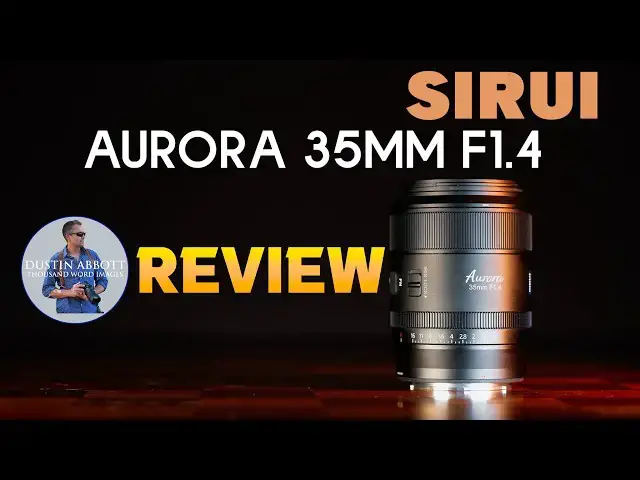
Sirui Aurora 35mm F1.4 Review | The Best Kind of Dreamy
Nov 1, 2025

Photographer Dustin Abbott shares a deep dive review of the Sirui Aurora 35mm F1.4. Is this $550 wide angle prime a winner? | This episode is sponsored by Fantom Tracker. Visit store.fantomwallet.com and use code DUSTIN20 for 20% off. | Read the text review on dustinabbott.net: https://tinyurl.com/Aurora35da | Purchase the Sirui Aurora 35mm F1.4 @ Sirui https://tinyurl.com/BuyAurora35 (use code DustinA5 for 5% off) | B&H Photo https://bhpho.to/47NsSo9 | Amazon https://amzn.to/4qAfDPn | Amazon Canada https://amzn.to/4nEjDvs | Amazon UK https://amzn.to/4nzPFZy | Amazon Germany https://amzn.to/4p98N1N
Check out the DA Merch here: https://bit.ly/TWIMerch | Become a Patron: https://www.patreon.com/dustinabbott | On the Web: http://dustinabbott.net/ | Sign up for my Newsletter: http://bit.ly/1RHvUNp | Instagram: http://bit.ly/DLAinsta | Facebook: http://on.fb.me/1nuUUeH | Flickr: http://bit.ly/1UcnC0B | 500px: http://bit.ly/1Sy2Ngu Follow Craig @ https://www.instagram.com/craigstoffersen/
Want to support this channel? Use these affiliate links to shop at:
B&H Photo: http://bhpho.to/1TA0Xge
Adorama: https://howl.link/nt4zdz1goa7ql
Camera Canada: http://bit.ly/DLACameraCan
Sony Canada: https://www.thesonyshop.ca/?ref=abbott
Amazon: https://amzn.to/3HrY64d
Amazon Canada: https://amzn.to/3qG1p18
Ebay: http://bit.ly/DustineBay
Into the AM Clothing: https://bit.ly/intotheAMda and use code DUSTIN10 for 10% off
Fioboc Clothing: https://tinyurl.com/FiobocDA20 and us code DUSTIN20 for 20% off
Make a donation via Paypal: https://www.paypal.com/paypalme/dustinTWI
=============================
Table of Contents:
=============================
0:00 - Intro
Show More Show Less View Video Transcript
0:00
[Music]
0:10
Hi, I'm Dustin Abbott. Last year towards the end of the year, Suré introduced the first of their Aurora series lenses in
0:17
the 85mm f1.4. I gave that lens a largely positive
0:23
review with a few caveats largely based on the fact that it had really really
0:28
gorgeous rendering from it. Suré is back with the second in the Aurora series in
0:34
the 35mm f1.4 that I'm reviewing today and we'll be filming all of these outdoor segments on. This lens continues
0:42
in the formula but does make a few positive improvements to it both on the feature set and also in just the general
0:50
design and handling of the lens itself. At the same time, however, it does manifest some of the same shortcomings
0:56
that we saw in the Aurora 85 mm. I'm going to be doing this review on Nikon
1:01
Zmount today. And so I'm filming this on my Nikon Z8 right now and have done all of my test on that same camera body, but
1:08
it will also be available on Sony E-mount along with now Lmount, which Suré has joined the Lmount Alliance. So
1:15
will act like a first-party lens there, but then also somewhat oddly on Fuji Xmount where it will serve as a 52.5 mm
1:24
effective lens on that APS-C crop factor. And so this is an intriguing
1:29
lens that comes to market at about $549. So, if you're looking for a lens, a 35mm
1:36
lens with a fast maximum aperture and really gorgeous rendering, this might be the lens for you. We're going to dive in
1:42
today and see whether or not its strengths and its weaknesses are those that you can either celebrate or maybe
1:48
live with. Before we jump into the main part of the review, I want to thank Suré for sending me a review copy of the
1:53
Aurora 35mm. As always, however, they have had zero input on my actual review
1:58
process, and they will not see this video before you do. My findings and my conclusions are my own. Today's episode
2:05
is sponsored by the all-new Phantom Tracker 2.0. Phantom has not only seriously upgraded the visual look of
2:12
the card, but now we have a superior build quality made with tempered glass and metal alloys. This credit card size
2:18
tracker can be locally tracked via a 90 decel beeping noise, but also on a global level via Apple's Find My Network
2:25
and its map. The addition of NFC means that you can also use the card to trigger an automation. Just tap it. The
2:31
tracker fits perfectly in any wallet or bag and assures you won't lose your valuables. It has a built-in
2:37
rechargeable battery that can be easily charged via any wireless charger, and a single charge can last up to 6 months.
2:44
The Phantom Tracker 2.0 makes for a seriously cool gift. So, visit store.fanomwallet.com
2:50
and use code dustin20 at checkout for 20% off. That's store.fanomwallet.com
2:56
and use code dustin20 for 20% off. All right, so let's talk about the build and
3:01
the design here of the new Aurora 35mm. At $549,
3:08
this is a lens obviously that is competitively comp priced relative to the feature set and the quality of lens
3:14
here, but it is going to face a diversity of competition on the various mounts that it is reviewed or released
3:21
for. Lmount is probably the simplest. Sigma 85mm f1.4 art is going to be
3:26
probably the main competitor there. And that lens is considerably more expensive, almost twice as much. On uh
3:33
Sony E-mount, obviously there's going to be the usual competitors there. There's something from Samyang. That same Sigma
3:40
lens is available, some Sony branded lenses, and then of course in the future, probably the main competitor
3:46
will be the Viltrox Pro AF35mm f1.4 when that lens arrives. But at the moment,
3:52
this is a pretty solidly placed lens when it comes to value. on Nikon where
3:57
I'm reviewing it, it's a little bit of a different story because the Nicor 35mimeter f1.4 lens is available for
4:06
right only like 30 or $40 more. It's not a very significant difference. And so,
4:11
you know, there are certainly going to be those that are going to prefer a first-party lens relative to a third-p
4:17
partyy lens. Even though the Aurora is definitely much more featurerich and probably a bit higher performing
4:23
optically. However, um you know there's there's a different reality to face on all those platforms and X mount. It's just a
4:30
little bit odd. It's a full-frame lens on a APS-C exclusive mount system. And so anyway,
4:37
we'll see how it flies there. Packaging is great here. It comes with a nice zippered case. I really prefer these to
4:43
any kind of little like sock or pouch. the packaging in the box, all of that is nice. Nothing complain about there. The
4:50
lens size is what I would call moderate. It's neither the smallest and lightest nor the biggest and heaviest on the
4:57
platform, but it's, you know, kind of in the ballpark of where most of these lenses land. It is 76 mm in diameter and
5:05
or 2.99 in and it is right under 105 mm in length, 4.13 in. kind of an odd
5:14
choice was made and that is that there is actually a taper at the front of the lens to come in to a 62mm front filter
5:22
thread. Now why I think that's odd is that the Aurora 85mm had a 67 mm front
5:28
filter thread which would been really easy to achieve here and just retaining that would have allowed them to kind of
5:35
market sharing filters across the two of them. I mean, with the 85mm lens, they even included some filters as part of
5:42
the early adoption of that particular lens. And so, I I kind of don't understand why they did that. But
5:47
anyway, we've got 62mm front filter thread. The weight is 503 g or 17.76 O.
5:55
The heaviest lens in the class really that it's going to face is the Sigma,
6:00
uh, which is 640 g. But on the other end, you've got the Nicor lens that is
6:06
415 g. And and obviously that Nicor lens is a little bit more plasticky. This is
6:12
an all aluminum alloy body. This is, you know, more featurerich, a little bit more robust, professional-grade type
6:18
lens. But anyway, certainly if you're looking for smaller and lighter, there are options that fall into that
6:23
category. There were some areas that particularly in my texture view I was a little I critiqued some of the just design
6:30
choices and somebody took that to heart because there has definitely been some improvements. It's a little bit more
6:36
subtle in terms of the fonts and the branding on the lens itself and uh just
6:41
some subtle stylistic changes that to me make it a more attractive lens that doesn't yell at you quite as much as
6:47
what the predecessor to this lens did or the 85mm lens did that I should say. And
6:52
so that's branding here on the top and on the side. And just in general, they've just made some minor tweaks to
6:57
clean things up. I complained a bit about the lens hood not locking with as much precision as what it should. Well,
7:03
they solve that by actually adding an actual locking button to the hood itself. And so that is all nice. There
7:09
is a little bit of a rubberized section here, Allah Sigma, that allows you to, you know, kind of grasp that when you're
7:15
removing it. So really some improvements that have been done there. As far as the
7:20
aperture iris, we now have uh they've added one extra control point and so you
7:25
have the ability to have it either clicked or decllicked. There's a switch on the right side to control that. But
7:31
they've added in an iris lock switch which is really really welcome. That means you're not inadvertently going to
7:36
either get in or out of the aperture range and so you're going to be able to stay where you want. So that's a nice
7:43
added feature. The Aperture Iris itself has 13 rounded blades, which certainly is higher than usual. You can see here
7:50
that the Aperture Iris, when it's shut all the way down to F-16, it's not perfectly round. Little bit of an odd
7:57
shape there. However, throughout the actual range here, if we look at an aperture rack, you can see it retains a
8:02
nice circular shape as you stop the lens down. The aperture racking, at least on Nikon, is not flawless. I do see a
8:10
little bit of a little jumps along the way as far as the lighting and so it's not in as entirely smooth as what I
8:16
would like, but certainly having the ability to do aperture racking is is welcome. We also have an AFMF switch
8:24
along with a function button or custom button there on the side. All of that is
8:29
good. The manual there is fulltime manual override here on Nikon. The manual focus ring has moderate weight to
8:36
it and it focuses with pretty good precision. No real complaints about that. I appreciate that performance
8:42
there. We do have a USBC port on the lens mount for firmware updates. And also, you'll see a weather sealing
8:48
gasket there. And fortunately, that is just the beginning of a very robust weather sealing. I count 11 different
8:55
seal points in this diagram with flooring on the front element as well. The overall finish of this lens, as
9:01
noted, it's made out of metals. It looks really nice. It feels robust and it's not overly heavy at the same time. Now,
9:08
one area where it does fall behind the competitors is that its minimum focus distance is just 35 cm. Most of them are
9:15
more like 30 cm and like the exceptions like the Sony G Master, it'll be all the
9:20
way down to 25 cm. And so the resulting maximum magnification is only 0.14 times
9:28
here. Most competitors, it's at least 0.18 times and that G Master lens all
9:34
the way up to 0.26 times magnification. So certainly not the top choice if you're wanting to do
9:41
up close work with it. At the same time, however, this is a lot of lens for the
9:46
money. It's very nicely made. It's an attractive lens and overall the handling of it has been fairly good. I will
9:53
notice one minor tweak here on Nikon. Nikon like Fuji, they tend to control uh
9:59
AFMF more from a bodybased switch. And so if you have the body in
10:06
manual focus mode, um this AFMF switch is not going to accomplish anything. It will stay in manual focus mode. However,
10:12
if you have the actual camera in an autofocus position, the AFMF switch will
10:17
function fine here. Now, on Sony, that's not really going to be an issue, but just something to be aware of that uh
10:24
those two physical controls, the one on the camera body can potentially override the one on the lens. And that's because
10:30
most Nikon lenses don't have an AFMF switch. That's true also on the Fuji platform as well. So, let's talk
10:38
autofocus. Focus here comes via an STM or a stepping focus motor. And it's in this
10:44
area, particularly on Nikon, that I think that the lens shows its biggest weaknesses.
10:50
Previously, I reviewed the Aurora 85mm on Sony E-mount. And while the autofocus motor was slower there than what is
10:58
optimal or maybe what some of the competitors are able to achieve, I found that the quality of focus was really pretty good and focus consistency was
11:05
good. I didn't really have any major problems with it. Here on Nikon, however, I feel like maybe some of these
11:10
thirdparty manufacturers struggle a little bit more with the focus algorithms. And so here, I found focus
11:15
to be a little bit more inconsistent. First of all, you can see that in terms of focus speed, it's not quite as quick
11:21
as what you might like. Just didn't feel like the focus algorithms were or was quite as confident with those focus
11:28
algorithms here on Zmount. And thus, I didn't find that my accuracy was as
11:33
good. It's still good generally, but not as good as what the best lenses are here
11:38
on my Nikon Z8. So, because of that, I found, for example, when doing uh some
11:44
portrait work, the portrait work was pretty much fine. Um, it focus was was mostly nailed, but sometimes you could
11:50
tell it just was just a little bit either for or back, not perfectly right on the eye where I would like it, but
11:56
largely that was okay. anytime the subject was moving. However, like with this shot of Ferrari, you can just see
12:02
that focus lag behind. It couldn't keep up with any kind of real movement at all. So hopefully firmware updates will,
12:09
you know, tweak those the response to the algorithms to where it's just a little bit better in terms of focus accuracy. But I would say that generally
12:16
if you are looking to shoot any kind of action with a 35mm lens, this probably
12:21
isn't the lens for you. But if you're going to shoot portraits or things like that, you'll probably do okay with it.
12:28
So, let's talk video autofocus. In some ways, I like this lens best
12:33
actually as a video lens. Now, that isn't because everything is perfect and it does things like the focus pull test
12:41
that I do. That's touch to focus and on Nikon, you don't really have any control over the how that behaves. And so, what
12:46
you can see here is that it's the focus attempts are a little bit abrupt, but then it's just not confident. It's not
12:52
settling there. And obviously that is very different than what you're seeing right now as I approach the camera. You
12:57
could see that it was effectively keeping focus on me and it's nice and stable right now as I'm filming. But
13:03
when I do those specific touch to focus things, it didn't really excel in that regard. When I actually just approached
13:09
the camera and then ducked in and out of frame in my test there, I found that it
13:15
was it did fine in the approach segment. As I stepped out of frame, it definitely moved to the background and then moved
13:21
back to me when I stepped back into frame. But you can see that focus didn't just didn't nail perfectly. It needs
13:27
just a little bit of time to maybe do some little micro adjustments and get the perfect focus on my face. And so if
13:33
it's anything again more abrupt, just like we talked about in the previous section, anything that's moving a little
13:38
too much where it needs to be reactive, that's not where this lens excels. At the same time, however, I did find I
13:44
have filmed a fair bit with it. I shot some of my uh YouTube episodes on it and
13:49
I really like the the overall look and rendering from the lens. For a 35mm lens, I think it renders really
13:55
beautifully as we'll talk about in a moment. And so I did like it for video, maybe like it best for video, even more
14:01
so than stills, but at the same time, it's not because autofocus is always perfect in that segment. When I did my
14:07
hand test, it largely didn't do great in that either. Didn't always want to adjust from my hand to my face or vice
14:14
versa. But more importantly, what I found is again after it makes a a focus adjustment, it needs a little bit of
14:20
time to kind of get settled back in to focus in the right place. So I found that a lot of times in that, you know,
14:26
movement back and forth that I'd end up with focus, you know, not quite on my palm, you know, back on my wrist or not
14:32
quite getting all the way back to my face. And so again, I would say that if your autofocus is more about stable
14:39
shots and less about abrupt or moving shots, you're going to like what this lens produces. If action is steady, you
14:46
know, if I'm moving backwards or I'm moving forwards towards the camera, but in a fairly linear fashion, it does okay
14:52
with that. But more abrupt things, ah, not so much. All right, let's talk image quality. I'll give you a breakdown, and
14:58
if you want the deep dive at the end of the video, check back for that. We have 16 elements in 11 groups. That includes
15:04
about seven special elements including high refractive index elements, extra low dispersion, super extra low
15:10
dispersion elements, and some aspherical lenses in that design. You can see from the MTF chart that it shows a fairly
15:17
even uh performance across the frame. A little bit of uh dips up and down. However, you can see that really it
15:24
looks like the performance should be pretty even from the center to the edges. Uh, I think that it really comes
15:31
down with these Aurora lenses. What I have found in real world use is that they tend to be optimized for certain
15:37
focus distances, more in the medium range. And so up close, they're not particularly strong contrast. And at
15:43
distance, they're not particularly great contrast, but in that medium range, they tend to do really nice. It can produce
15:48
really gorgeous results. So, it really is going to be dependent on where you're shooting. And so in some situations I
15:54
was doing a little bit of head-to-head with my main 35mm lens which is the Sony
15:59
35mm f1.4 G Master. So because I can use it by a mega here on Nikon, I did a lot
16:06
of comparisons and in some situations I was, you know, I thought that the rendering and even the sharpness looked
16:12
fairly similar between the two lenses. And then there would be other situations where that was far less true. And so I
16:18
would say that the G Master its higherend performance is that it's consistent kind of regardless of the
16:23
focus distance and more flexible in different situations. Whereas the Aurora
16:28
just doesn't have quite the optical chops to excel in all focus distances and all lighting type situations. But
16:36
when it's at its best, it's really really nice as we're going to see. Now it is not perfectly corrected. There is
16:43
some longitudinal style chromatic aberration. I saw that on my chart. I could see it a bit when I looked at my
16:49
dad's old SLR. Uh just some various situations. I did see a little bit of fringing around specular highlights. Um
16:56
if you've got bright bokeh balls in the in the frame and so uh certainly there and there also is some lateral style
17:02
chromatic aberration which tends to be a bit of an issue for sur lenses. Uh it feels like they are more likely to have
17:08
lateral style chromatic aberrations than some other brands do. And that showed up also in some real world shooting and
17:15
definitely on my test chart you'll see it at certain points. Now here on Nikon,
17:20
while the distortion is very low, only a very tiny bit of a pin cushion style of
17:26
distortion minus three to correct. That's not bad. But vignette is very heavy. And as per usual, I suspect
17:32
you'll find that it's lighter on Sony. But for whatever reason, it's all these third party lenses tend to be much worse
17:39
in terms of vignette on the Nikon platform. And so in this case, I had to max out the slider at 100 to correct for
17:46
all of the vignette. and it will clear up some by f2.8, but um there's always
17:51
going to be a bit of vignette here on the platform. So, just be aware of that. By the way, it doesn't seem to receive
17:57
profile corrections here on Nikon. And I noticed with the 85mm testing before that on Sony, it didn't seem to get
18:03
correction profiles either. I'm not sure about Xmount, but I would assume on LMount it will receive correction
18:09
profile because now Suré is a part of that alliance, which means it should get basically firstparty support there. When
18:16
it came to testing resolution and contrast, I found that the center looks very good at f1.4. The mid-frame looks
18:24
good at f1.4. However, the corners are softer than I would expect from the MTF
18:30
chart. Uh, as I stopped down, I found that the contrast was good, um, really
18:37
strong by f2.8 in the center of the frame and not quite as good in the
18:42
mid-frame by f4. Mid-frames looking good by f5.6 six mid-frame and corners are
18:48
looking good, though the corners never get what I would call pen sharp. And I noted that in real world shooting, too.
18:53
They're they're good, but not amazingly good. And uh then by f11, you'll start
18:59
to see a bit of defraction and a little bit more by f-16. Though here at 45 megapixels on Nikon, it's not as bad as
19:06
what you'll see on like the 61 megapixel mark on Sony. And then also if you're shooting on the 40 megg me megapixel
19:12
mark on um Fuji that's going to be even more pronounced there. Uh but in general
19:18
I didn't find defraction to be particularly bad. So I found landscape images to be good but not great. I think
19:26
that there are better options for landscape. However, where this lens is a big winner is when it comes to the
19:32
actual rendering. It has really gorgeous bokeh on it. Uh, and you know, some 35
19:37
millimeter lenses I find quite bland when it comes to their um their bokeh performance. That's not true at all
19:43
here. There's a lot of images that I thought looked really, really beautiful in terms of their out of focus
19:48
rendering. Uh, and I found also that even in difficult situations, you know, this shot for example, I shoot basically
19:54
because it's all hard edges and it looks ugly. And in this case, it still looks uglyish, but it's nicer than usual. And
20:01
so that is is nice to see there. I I find also that the three-dimensional
20:07
quality from the lens is nice and for that reason I actually really quite like
20:12
this lens. I you probably will have noticed that some of the outdoor sequences they they really look nice and
20:17
shooting at 35mm f1.4 sharpness looks good. There's a nice um you know
20:23
three-dimensional quality of the subject. The backgrounds are nicely blurred. There's some things about this lens that I really really like even if
20:30
it does have some optical shortcomings. One of those shortcomings is that it does exhibit some flare in certain
20:36
situations and particularly when you're stopped down, that flare can become a little bit dominant, but even wide open,
20:42
there's going to be just some flare artifacts that you need to be careful in your composition. I found that if I
20:48
blocked it a bit with uh, you know, shooting through, you know, like a a tree, the leaves of a tree, it was fine
20:55
under that circumstances, but just panning across, it was a little bit uh intense there. Suré colors are not top
21:02
of the heap for me. I find that there's just a tiny cast to them. Uh that's a little bit to the cooler side that I
21:09
don't pre prefer. And I do think because it suffers with some lateral style chromatic aberrations. There are some
21:14
situations where not all of the colors to me are perfectly focused together and some of their optical glass you I found
21:21
in in a number of lenses, not just a few of them that it's not my favorite. However, um I think that it's I was able
21:29
to get a lot of images that I really liked at the same time, too. And so, that very much is a taste thing. And the
21:34
truth of the matter is that people's eyes perceive color differently anyway. And so, uh for my personal opinion, not
21:40
top the heap, but at the same time, I really liked a lot of the results I got. The standout quality to me here is that
21:46
this is a beautifully rendering lens. It produces a lot of images that I really like. And for some of you at least, that
21:54
means a lot more than any kind of just pure technical perfection. The Suré Aurora 35mm f1.4 is a lens with a lot of
22:03
character. Some of it is good, some of it is not so good. If you're one of those people that likes your lenses to
22:09
not be overcorrected, kind of clinical in their performance, then the Aurora 35mm might be a really intriguing lens
22:16
for you because it does something very, very well. and that is it has amazingly
22:22
good rendering. And so for both video and stills, I find that if I'm looking
22:27
at the overall look of shots generally, I I tend to really like them. It isn't always perfect in the technical details,
22:34
flare resistance isn't as good as some competing lenses. It doesn't have as high a contrast in some situations, and
22:40
the corner performance, it never really wowed me uh throughout my review process. But I found that I actually
22:46
really did like the look of of shots and I really like the look of it for video work. I feel like it has a nice
22:52
three-dimensional quality and of course a nice job with the out of focus rendering that makes it, you know, more
22:58
special than what it's kind of chart testing might indicate. And so at the
23:03
end of the day, I think that it offers a very good value for someone who's looking for a fast 35mm lens that has
23:09
some character to it. And for while I think that that will make it maybe a little bit more of a niche lens than
23:15
what you know some competitors might be at the same time I think it also is going to be a lens that that some people
23:20
are really going to love. Now unfortunately autofocus means that you aren't going to be able to maybe use
23:25
this as a professional lens. I don't know that I would rely on it if I were a professional wedding photographer or um
23:32
you know definitely not for using it for sports at least here on Nikon. But if you're someone that is just
23:38
looking for a a nice rendering lens, you could use it, I think, fine for portrait settings and things like that, then at
23:44
the end of the day, I think that this is going to be be a lens that certainly does have some appeal and it is priced
23:49
very competitively. It's a lot of lens in terms of the package of what you're getting for this amount of money and and
23:56
so I think that it certainly is going to find a home in a number of photographers bags. Now, if you want more information,
24:02
you've got a couple of options here. You can check out my full text review which is linked in the description down below.
24:07
That's on the newly revised and updated dustabbott.net. Be sure to check that out. You're going to enjoy the website
24:13
and there are some buying links there as well. And if you would like a deeper dive into the optical performance, well, jump into that with me right now and
24:19
let's take a closer look. All right, let's start by taking a look at vignette and distortion. You can see there's just the tiniest amount of pin cushion
24:26
distortion. You can mostly see it here at the edges. However, a minus3 and all of that cleans up nice and clean.
24:33
Distortion or excuse me, vignette is another story. However, I have maxed out the slider at 100%. You can see I could
24:39
probably go a hair further. Like I said, I think it's going to be worse here on Nikon Zmount than it is on other
24:45
platforms because that's been my experience with all other thirdparty lenses. There is some longitudinal style
24:52
chromatic aberration, some magenta here before, green after. You can show see
24:57
showing up there. If I look at my dad's old SLR, we can see on some of the shiny bits, there is some green fringing and
25:03
also you can see a bit of that blue green fringing around the specular highlights there. You can see some of
25:10
the typical cat eye effect towards the edge of the frame, lemon shape there. But as you stop down here at f2, the uh
25:16
13 aperture blades keep the everything nice and circular. And you can see you've got spec, you know, circular specular highlights right off into the
25:23
corner if that's a priority to you. The lens also suff suffers from some lateral
25:29
style chromatic aberration. You can see kind of more of that blue green and then like a yellow that is showing up here.
25:34
Definitely present here in these transition zones. Bit of a weakness for sur glass in general in my opinion. Now
25:41
when it comes to resolution and contrast, this is on a 45 megapixel Nikon Z8 and shown at 200%
25:47
magnification. Center of the frame looks great. Good contrast, good detail. The
25:53
mid-frame here is largely good, but not exceptionally good. If I pan down here,
25:58
you can definitely see it looks better here than what it is down here, which is looking a little bit jittery. And as we
26:04
move towards the corners, the corners, unfortunately, are softer than what I anticipated. And that seems to be the
26:10
case all around. It's the centering is fine here. You can see it's consistent,
26:15
but it's just not great in any of the corners. What I find is that these aurora lenses tend to be optimized for
26:22
certain zones. And so we've seen there close at the chart. It's not necessarily amazing here out at f1.4 at landscape
26:29
distances. You know, you can see that contrast and detail is just okay here.
26:34
However, if we pop into an image like this in that optimized zone, kind of the medium distance, I mean, that looks
26:41
fantastic. Great contrast, great detail, and then the uh out of focus rendering is just gorgeous. really really soft and
26:48
beautiful. And in this shot, you know, I've got the sur on the left. I've got the three times as expensive uh Sony G
26:55
Master 35mm F1.4, one of my favorite 35mm lenses. And you can see if you look
27:01
at the overall rendering from both lenses, look very very similar. And even if we pop in and we look at the detail
27:07
and contrast, while focus isn't identical, it's off by a millimeter or so there, you can see that both of them
27:14
have fairly similar amounts of detail and contrast here. And so at its best,
27:19
the Suré can really hold its own. As you start to stop the lens down here at f1.8, you can see that contrast and
27:26
detail in the center of the frame has definitely increased. In the mid-frame, it's more mild. You don't notice it as
27:33
much. in the corners. They're not any sharper, but they sure are brighter. And so, one reason to stop down is if you
27:39
want to eliminate some of that vignette. Even at f1.8, it's pretty radically different. You can see by f2, the center
27:47
is pretty much perfect, but in the mid-frame, there's still not a huge difference between f1.8 and f2. And the
27:54
corners are still fairly soft. From f2 to f2.8 doesn't really make that huge
28:00
jump yet. But now by f4, you can see that contrast is starting to really
28:05
improve there. It's much darker on the lettering. And by f5.6, you're pretty
28:10
much at excellent uh space here. Now, if we look up into the corners here, the
28:16
corners are starting to look better. They're still not as good as what the mid-frame was, but definitely improved
28:21
here. There definitely unfortunately is some of that lateral style chromatic aberration that is marring the image
28:27
quality. But we can see even down in this corner that it's starting to look crisper. Though you can see it's just
28:32
it's not what I would call exceptional at all. And out in the real world, you can see that center of the frame if we
28:38
punch in looks great. Great contrast, great detail. But if I pan over this way, you can see over towards the edge,
28:44
the textures are just a little bit mushier. They're not as crisp, not as, you know, tightly delineated as what you
28:50
see over here even. And so the corners are just so so. Now by f11 you'll start
28:56
to see some effects from defraction. F-16 is minimum aperture and it's a little bit stronger there. But here on
29:03
Nikon the resolution point of 45 megapixel doesn't punish as much with defraction and so it's not too bad.
29:09
Expect it to be a little bit stronger on Sony and stronger still if you're on the Fuji 40 megapixel sensor. Now we've
29:16
already noted that the maximum magnification isn't fantastic. However, you can see looking at it a little bit
29:21
closer that at least the plane of focus is fairly flat. It's not not warped or
29:26
anything. And you can see looking here that the amount of detail is good. Contrast isn't off the chart, but it's
29:33
really not a bad performance. There's a lot that is there in terms of rendering some of the fine details. So, it is
29:38
usable even at f1.4. Now, I mentioned this shot earlier as kind of my ugly test. And this is how I'm going to start
29:45
to look at the overall rendering because even in this very difficult lots of just hard edges, it holds up nicely. And here
29:52
where we have a little bit more favorable scenario, you can see that even these poppplers that are, you know,
29:58
they're straight up and down, but they're fairly soft and there's a lot of nice cream here. Uh, that looks really
30:04
nice. An image like this, I think, is beautiful. And, uh, you know, you can see good detail and contrast and then
30:10
really, really nice rendering. This is my favorite image that I took during the I just I love the color palette. I love
30:18
the contrast and detail there and then the defocused area. Really, really nice. Particularly for a 35 millimeter lens
30:24
that I'm not always wowed by their rendering of defocused. This is nice though. Really nice. This shot here
30:31
again, it's a little bit more of a medium and so there's a little more in the transition zone, but you can see
30:37
even this it doesn't look bad and there's a little bit of swirl effect which, you know, some people like. I
30:42
happen to like it. Not everyone does. I also really like the rendering for monochrome. You can see here that
30:48
there's there's enough detail and contrast to be compelling, but then the overall rendering, and it just lends
30:54
itself to monochrome really quite nicely. Now, flare resistance isn't fantastic, and you can see wide open
31:00
there's definitely some flare artifacts. And then if you stop down, they become a little bit more dominant. Here at f11,
31:07
you can see if I rack through the aperture how that like the light rays and the uh ghosting pattern just becomes
31:13
more and more pronounced. You're going to want to be careful and so you don't ruin shots through the flare. It's
31:19
probably one of the weaker aspects of the optical performance. So, thanks for going through the opt optical segment
31:26
with me and I hope that that has given you a sense of whether or not the personality of the Aurora 35mm f1.4 for
31:33
is what you have been looking for or not. As always, thanks for watching. Have a great day and let the light in.
#Science