Up next in 10

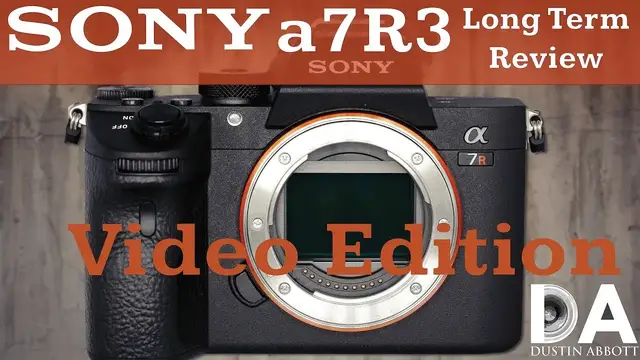
Sony a7R3 (a7R III) Long Term Review | 4k
Jul 26, 2023

Sony a7R3 (a7R III) Long Term Review | Join photographer Dustin Abbott for his long term verdict on the Sony a7R3 (a7R III). Is this Sony's best camera yet? Read the full text review: http://bit.ly/a7R3review | Visit the Image Gallery: http://bit.ly/Sonya7R3ig
Purchase the a7R III: B&H Photo: https://bhpho.to/2D6ibNO | Amazon: http://amzn.to/2CNxOvH | Amazon.ca: http://amzn.to/2CNYz36 | Amazon UK: http://amzn.to/2CRGvWM
Purchase the 5D Mark IV: B&H Photo: http://bhpho.to/2cLng3e | Amazon: http://amzn.to/2mAJ7MX
Strap of Choice: Peak Design Slide Lite: Peak Design Store: http://bit.ly/pdslidelite | B&H Photo: https://bhpho.to/2BsubH2 | Amazon: http://amzn.to/2GcxINh | Amazon Canada http://amzn.to/2Fa5Yr7 | Amazon UK: http://amzn.to/2n6ALxC
Want to support this channel? Use these affiliate links to shop at:
B&H Photo: http://bhpho.to/1TA0Xge
Amazon: https://www.amazon.com/shop/dustinabbott
Ebay: http://bit.ly/DustineBay
Make a donation via Paypal: paypal.me/dustinTWI
Get a discount off all Skylum Editing Software (Luminar, Aurora HDR, AirMagic) by using code DUSTINHDR at checkout: http://bit.ly/LuminarDLA
Become a Patron: https://www.patreon.com/dustinabbott | Check me out on: Personal Website: http://dustinabbott.net/ | Sign up for my Newsletter: http://bit.ly/1RHvUNp | Instagram: http://bit.ly/DLAinsta | Google+: http://bit.ly/24PjMzv | Facebook: http://on.fb.me/1nuUUeH | Twitter: http://bit.ly/1RyYxIH | Flickr: http://bit.ly/1UcnC0B | 500px: http://bit.ly/1Sy2Ngu
My filming setup: Sony a7R III: B&H Photo: https://bhpho.to/2D6ibNO or Amazon: http://amzn.to/2CNxOvH | or | Sony a9 @ B&H Photo: https://bhpho.to/2HyWIyt or Amazon: https://amzn.to/2s1vYE0
Tamron 28-75mm F2.8 RXD @B&H Photo: https://bhpho.to/2FA00la or Amazon https://amzn.to/2G2kaEr
Lights: Rotolight AEOS @B&H Photo https://bhpho.to/2IK7mqV | Genaray Contender @B&H Photo: https://bhpho.to/33HbGNM | and Aputure AL-MW: https://bhpho.to/2N3MtZV
Show More Show Less View Video Transcript
0:00
Hi, I'm Dustin Abbott and I'm here to give you my final review of the new Sony a7r Mark III
0:14
And I've been spending an extended period with this camera shooting with it as a photographer
0:19
would in a variety of different situations. I've done everything from astrophotography with it to
0:25
shooting events, to shooting fine art, to shooting portraits, and of course lots of video work along
0:31
the way as well. And so I feel confident now that I can come to you and give you an accurate report
0:38
not just having shot with it for a few hours at a trade show or for just a day in some kind of
0:44
setting, but having used it almost exclusively for the last five weeks, I feel like I've got a pretty
0:51
strong sense of where we're at with this. And so first of all, I just want to highlight a few
0:56
things from the build and handling episode. And I'll refer to a number of, I've got a long playlist
1:03
now that breaks all of these things down in more detail. I'd recommend that if you want kind of the
1:08
full picture to look at all of these as my episode today, we'll just be kind of skimming some of the
1:14
highlights. There's a lot to cover in a new camera, of course. So in terms of the build, a few things
1:19
that really stood out to me just in day-to-day use of the camera is number one, the improved
1:24
battery life makes a huge improvement. Over the course of nearly five weeks of my review period
1:31
spanning from December, late December, all the way through early part of February, close to six
1:37
weeks, I recharged the battery only two times during that time period. There was a third time
1:45
where I just topped it up towards the edge when I was going out shooting for a day. But in terms
1:49
a full kind of discharging down to recharge or where it needed to be recharged it only was a
1:54
couple of times and over that period of time I shot probably at least 1500 frames and so much
2:02
improved battery life and that was a huge improvement over the previous generation a7r mark ii the
2:09
improved resolution in the viewfinder the viewfinder resolution is basically close to doubled from the
2:15
Mark II, and that certainly is very welcome. You know, there's a lot of pros to an electronic
2:21
viewfinder. There are also some weaknesses, however, and often one of those weaknesses is
2:27
that it feels like you're looking at a screen as opposed to, you know, with a DSLR, you're looking
2:31
at a mirror, looking at, you know, the world. And so while we're certainly not to a replacement for
2:39
an optical viewfinder yet, and I found still in some really bright, harsh conditions, you know
2:44
It's winter here in Canada. Some days where the sun is shining and glaring off the snow, it's extremely bright
2:50
And so as a byproduct, I found that the EVF, it still wasn't the same as an optical viewfinder under those settings
2:57
But this EVF is much improved and it makes a lot of things better, including, of course, as I'll touch on later
3:04
using it with manual focus glass, which this is a fantastic platform for that
3:10
Beyond that, of course, this camera has a much more practical, useful frame rate and buffer that adds versatility to it
3:18
The A7R Mark II was a camera with a great sensor, but a lackluster focus system
3:24
And, you know, not incredibly useful, kind of slow by modern standards, burst rate and buffer
3:33
And so we have a nice significant improvement here and to where now this is really tops amongst the, you know, you're comparing the Canon 5D Mark IV, Nikon D850 and the a7R Mark III
3:46
The a7R Mark III is at least capable of a faster burst rate, you know, if not as deep a buffer always in some situations
3:56
the one kind of disadvantage there is that it takes a lot longer to write and flush the buffer
4:03
than what either of those cameras does. Another really significant ongoing improvement here is
4:11
that is Sony's excellent in-body image stabilization which when I did some control
4:17
tests I found that really it's giving to me the equivalent of dedicated lens image stabilization
4:23
I mean, I've done, of course, tested lots of lenses with IS or OS or VC or OSS
4:31
And so I have a pretty good sense of what to expect with certain focal lengths
4:34
And I found that, you know, even if I was adapting lenses at certain focal lengths
4:39
I was getting, you know, as good a result as what I would get in dedicated lens image stabilization
4:45
So that's pretty huge. And of course, that IBIS is covering everything, including my 40 and 50 year old vintage lenses
4:53
that I'm throwing on there. That's pretty fantastic. And so a lot of pluses there
4:59
In terms of the general handling, without covering all of that again, there's lots of
5:03
improvements here. The addition of the joystick is good. The grip feels a little bit better
5:09
And for those of you that are interested in kind of my strap of choice here, I'm using
5:13
the Peak Design Slide Light, which is a nice match for the A7R in terms of, well, you know
5:21
aesthetic. It also is a nice match in terms of the actual camera size and thickness. Way better
5:27
of course, in terms of versatility, how you connect it and all of that stuff. So that's what
5:32
I'm using on here. You know, something that I can quickly, you know, connect or disconnect
5:36
you know, depending on what I'm going to do. I can go right to my tripod with an Arca Swiss
5:41
compatible plate, you know, all that stuff. And certainly that is my, that's my kind of strap of
5:48
choice for the a7R Mark III Now to highlight a couple of negatives here I did find just in again real world shooting this isn about what you know somebody has said what I experienced myself I experienced some issues with sensor dust in a way that I haven seen for a while And I haven even seen with the A6500 which I have used for about eight months now
6:11
Haven't really ever had a lot of sensor dust issues here, but I have been having it with the
6:16
A7R Mark III. And so I'm having to be much more cautious about, you know, having a little blower
6:21
to keep it cleaned out periodically because of that. The other thing too that I've touched on several times
6:28
but I'll just highlight here again, the touchscreen implementation here is lackluster
6:33
It's not nearly as good as particularly the Canon 5D Mark IV
6:37
but even as good as the Nikon D850. And so you're left with, you know
6:42
it's kind of somewhat random what works on the touchscreen and what doesn't work
6:46
And what certainly doesn't work is any kind of menu navigation. And so that's certainly a downside
6:53
Now, moving on to image quality, I've got really a long playlist where I've broken this stuff down in detail and compared it to the 5D Mark IV
7:02
So I'm just really going to hit some highlights here. I could sum it up by saying that, you know, overall, this is a fantastic sensor
7:10
One of the very best out there. It has very, very good dynamic range that was very comparable, pretty much identical to what I saw with the Nikon D850
7:21
when I ran similar tests with that, the D850 might have the slightest, slightest edge, but they are
7:26
very, very close. And so I encourage you to check out this episode on dynamic range if you want more
7:33
clarification on that, more detail on that, but very, very good. A little bit better in shadow
7:39
recovery than it is in highlight recovery, which is on par with everything else that I have reviewed
7:44
along the way. I'm just noticing for practical purposes, you know, for example, with some of
7:50
these landscape shots, that when I've gone to process them, there's just a lot of latitude
7:55
there. I'm able to pretty much do what I want in post-processing with the files, and really
8:01
that's all I can ask from a camera when it comes to dynamic range, and so kudos to Sony for a great
8:07
job there. This camera also boasts excellent ISO performance throughout the native ISO range from
8:14
100 to ISO 32,000. And at 32,000, I saw a significant advantage compared to the Canon 5D
8:23
Mark IV. And of course, if you down sample the higher resolution, 42 megapixels versus 30 megapixels
8:28
the end result is even more impressive at, you know, straight comparative resolution values
8:37
And so certainly they've done a great job for a camera that has so many megapixels. This has
8:43
intensely good ISO performance, and that's certainly an advantage, say, even compared to
8:49
Canon's 5DSR that has even higher resolution, but it's basically not all that useful at anything
8:58
past ISO 6400, whereas I consider the A7R Mark III to be useful throughout its entire native ISO
9:07
range. So, huge kudos there. Detail, of course, is very good from the camera
9:13
42 megapixels is very useful. There's a great deal of latitude there for cropping. So if you're
9:18
for example, a wildlife shooter, you have a lot of ability to fairly deeply crop images while still
9:25
having a lot of leftover pixels to have a nice resolution. And if like me, you often end up not
9:34
needing all of those megapixels, you always have the option of making even better looking
9:39
end result images by down sampling as I demonstrated in this episode here
9:46
Now, another advantage of having high megapixels like that is that it allows for a very useful
9:52
APS-C crop mode that still gives you 18 megapixels to work with, which is, of course
9:57
if you go back to basically the previous generation, most of them right now are
10:01
sitting at 24 megapixels like the Sony a6500 I'm filming on right now. But you go back a generation
10:07
and they were all around that 18 megapixel range. And so, you know, you're basically not losing anything
10:14
in terms of at least where they were a generation ago, but you're getting all the advantages of the superior sensor
10:22
that is in this full-frame camera. And so that certainly is very nice
10:27
If there's any negative I can point to in this kind of option list
10:31
is that while you have size options on JPEGs, on RAW, you're basically stuck with only the 42 megapixel size. And so, you know, unlike Canon
10:41
that has a medium RAW and a small RAW file size, you don't have that option here. So it's 42
10:47
megapixels and that's it. You do have an option between compressed and uncompressed RAW files
10:54
And so that can help some with on the space saving end, but there may be situations where you prefer
10:59
shooting RAW because of the latitude of RAW files versus JPEG, but you don't need 42 megapixels
11:06
and it would be nice to see a few more modes implemented there. Another thing that I covered
11:12
in a separate episode was the color science, and just kind of the colors that you're going to get
11:18
out of camera. In a lot of ways, it reminded me of what I saw out of the Nikon D850, in that
11:24
to my eye, there is somewhat of a green or yellow bias to images, particularly in skin tones
11:30
And that's an advantage that Canon has. And I kind of, you know, shake that out here in this
11:37
color science episode here. Now, you know, after I released that episode, I got feedback from people
11:44
saying, oh, well, if you're shooting in Adobe or using Adobe for processing, you know, it messes up
11:50
Sony color I have to say that I am a little bit skeptical of that since Adobe is the benchmark but people claim that they get cleaner looking results out of other pieces of software Capture Pro is one that often came up Bottom line is that I probably like a
12:09
lot of you shooters, have a lot invested in Adobe workflow and carefully curated catalogs that go
12:16
back for many, many years at this point, not to mention a workflow that I'm fast at and I'm good
12:21
at at this point. And so I did a little bit of tweaking myself and discovered that I could get
12:26
colors that I liked in Adobe with creating some profiles. And I've shared those for those of you
12:33
that are my patrons. If you take a look there, they are available for you. And I covered that
12:40
in how to get good portrait color out of the Sony a7R Mark III, this episode here. So bottom line is
12:46
is that I'm finding that with a little bit of work, I'm able to get color that I like out of
12:50
the a7r mark iii and it does give you room even in camera to do some custom profiling so that's
12:56
certainly advantageous but just just note that i'm kind of been spoiled by years of being primarily
13:02
a canon shooter where i've not really had to think about this very much and unfortunately there it
13:07
does require a little bit more thought when you're looking at it from the sony side of things
13:13
now in terms of video features i recommend that you took take a look at this episode here where i
13:19
break down the video features and functionality in detail and do some comparison to the 5D Mark IV
13:25
But bottom line is that there's a lot to like here when it comes to video functionality. And of
13:30
course, a lot of people that shoot video have been moving to Sony bodies because of excellent
13:37
footage. And, you know, maybe if they're not interested in going the micro four thirds route
13:42
and so, you know, the GH series is kind of out for them. Sony is kind of the best option
13:48
particularly if you're looking for something full frame with all the versatility that comes with the
13:52
a7R Mark III. The footage that comes out of it is great looking footage, of course, as is the
13:59
footage out of the a6500 that I'm filming on at the moment. Excellent there. I like the fact that
14:04
now on the a7R Mark III, you instead of capping out at 60 frames per second for 1080 footage
14:12
you can move all the way up to 120 frames per second
14:16
And so it gives you a good quality footage there for if you're wanting to capture footage for slow motion
14:22
That's great. You also have some options there in terms of, if you're in 4K, between Super 35
14:29
and then the kind of the uncropped full frame look. The Super 35 footage is a little bit cleaner
14:36
as people have noted. There's less, well, there's no pixel binning there
14:40
And so footage is a little bit cleaner, a little bit sharper looking, but both the footage in both
14:47
modes is actually excellent. And, and I like the, the choice of the framing choice between those two
14:53
options. And, you know, you can also affect depth of field. The other advantage of having both of
14:58
those modes in one body is that it also gives you a wider choice of lenses because if you're
15:03
shooting in Super 35 mode. And because the camera natively supports APS-C lenses, it opens up
15:10
another full range of lens options there that are, you know, perhaps as a focal length are well suited
15:16
to Super 35. And those lenses, of course, tend to be smaller and more compact and so easier to bring
15:22
along, et cetera, et cetera. And so that's certainly a big plus to me and a big advantage over the 5D
15:28
Mark IV, which, you know, kind of locks you into the EF mount and Canon's own crop sensor EFS
15:35
lenses just won't physically mount. And so even though they would be useful in Canon's crop mode
15:41
for 4K footage, you can't use them there. And so I like Sony's approach here, as do I like Sony's
15:47
kind of just support of profiling in camera for not just Sony lenses, but third party lenses
15:54
you know, be they from Sigma or from Zeiss or from Rokinon and Samyang, you know, et cetera
16:01
et cetera. There's support for them in camera that just allows you to have a better experience
16:06
with third parties. That's a huge, huge thing to me as a person who shot a lot of third party
16:12
lenses. And as a person who reviews a lot of them, it's nice to see that kind of more open
16:17
source concept here with the Sony. Now, in terms of the face tracking and the quality of face of
16:24
focus, I find that it's the best yet from Sony. And this is the third Sony body that I've used
16:31
And I find that, you know, they seem to be slightly closing the gap with Canon's DPAF
16:35
I think that Canon's DPAF is still a little bit better and the full package of how it's
16:41
implemented is still better, particularly when you think about the touchscreen. But at the same time
16:46
I find that the quality of the focus pulls and face tracking is closing the gap. Just remember
16:53
that the closer your subject is to the center of the frame, the better performance you're going to
16:58
get. And if you push the edges of the square, it seems like it falls off a little bit more than what
17:04
the Canon does out near the edges. But overall, this is a nice implementation here and it works
17:10
quite well. One negative point that I will highlight here is that if you're behind the camera
17:15
and you're doing the touch to focus, it can be really hard to see the little tiny box that doesn't
17:22
stand out. It's kind of a grayed out look. And so it doesn't stand out very well. And it's sometimes
17:27
very hard to know where it is. And so it kind of disappears. And so that's something that I think
17:33
that Sony could easily fix through firmware that I really think that they should. Finally, just to
17:39
talk for a minute about the focus quality. I've got another episode here where I break down focus
17:43
in detail. And I would encourage if you want to learn more to look at that. But here in the Sony
17:50
Sony A7R III IAF one of you know Sony most touted features It is far from being a gimmick It is more fully realized than I ever seen it before And I really do think this is a game changer technology for portrait photographers And if you are a Canon or Nikon shooter you need
18:07
to hope and wish that Canon and Nikon develop something that works as well as what Sony's
18:14
IAF does. It just really expedites the whole process. It allows you to get consistently
18:19
accurate focus wherever you place the eye, you know, within reason in the frame. And that is huge
18:27
And I'm also finding that the heavily improved autofocus system in the A7R Mark III means that
18:35
when I'm using an adapter here, like the Sigma MC-11, that I'm getting better performance out of
18:42
all the different lenses that I am putting on here as compared to the way that they performed
18:48
on previous Sony bodies. And so in some cases, I'm actually getting IAF with some lenses where
18:54
I didn't before. And so that's certainly a plus. And so if you've been kind of disenchanted by
19:00
using other lenses on a Sony body before, which of course is one of the huge advantages here
19:07
let's face it, is the ability to kind of pick and choose what lenses you're going to put on here
19:12
It's a much more realized reality here than what it's been before
19:18
Just on that note, just as a tip, I find that I get much more consistent results with a lot of other lenses adapted to Sony's
19:27
If I keep it in AFC or continuous autofocus mode, it just seems like the focus doesn't kind of hang up or freeze on me nearly as often that way
19:39
And so that is good. tracking is much improved here not only you know tracking if you're trying to keep an eye in focus
19:47
like with IAF but even just tracking in general for you know sports or wildlife photography is
19:54
vastly improved and I think finally we're getting pretty close in performance to say the D850 and
20:01
even you know to the 5D Mark IV which are you know both excellent focusing cameras and I think that
20:07
Sony is getting very close there now. This is the first time that I've used a mirrorless body that I
20:13
wasn't wishing that I had a DSLR in those kinds of situations instead. Another thing that I like
20:19
is that if your eye is up to the viewfinder and you're wanting to actually use a spot AF point
20:25
you have the ability to just move your thumb around here on the touchscreen and move the
20:30
autofocus point around. And I've sorely wished that at the very least, say with the Canon 5D Mark
20:35
for that I could at least choose a focus point in that way, even if I'm using traditional
20:41
you know, predefined AF point locations. But here on the Sony, that's a nice plus. And the addition
20:48
of the thumbstick on the back, you know, more like DSLRs, also aids in that as well. Also
20:55
this is the best platform I think that I know of if you're wanting to use a manual focus glass
21:01
And the improved electronic viewfinder here means that it just gives you a lot more options to make sure, to actually capture images in a more organic fashion
21:14
I don't know about you, but I really don't enjoy focusing using an LCD screen with manual focus glass
21:20
And if you're magnifying the image, it just seems like things are constantly moving and there's all those issues
21:25
but the combination of being able to shoot in the traditional position here and of course magnify
21:31
that image in the viewfinder and of course touching that screen you can choose what part of the image
21:36
you want to magnify very quickly it's fantastic and beyond that of course because you're you're
21:43
in a more stable shooting position there's not as much camera shake and then of course the in-body
21:47
image stabilization means that with all of those lenses including my old old tacky mars or helios
21:53
lenses, boom, it's stable. I'm able to magnify. I'm able to accurately focus and I'm getting much
22:01
higher keeper rates than I ever have before. And frankly, that for those of you that don't really
22:06
care about manual focus, you know, you don't care. But for someone like me who has a pretty big kit
22:11
of manual focus lenses and kind of enjoys the process of shooting manual focus, sometimes I find
22:18
that this is a godsend for that kind of situation. So all in all, it's still far from perfect. And
22:26
Sony, there's room for improvement in a number of different areas. And I've detailed those along
22:31
the way as a part of this review. But at the same time, I have to say that this is perhaps the most
22:37
complete camera that I've ever used before. And definitely, without a doubt, the most complete
22:43
mirrorless camera that I've ever used before. This is the first mirrorless camera that I could
22:49
use and forget about a DSLR with. And that's a huge, huge step forward there. I do still think
22:57
that there are some advantages for DSLRs, but the Sony a7R Mark III is so good that it makes you
23:04
forget most of those things. And most of the shortcomings that are left in this camera
23:09
I can look at them and say, I can live with that. And so that's exactly what I'm going to do
23:15
And I'm purchasing an a7R Mark III to add to my own personal kit to shoot alongside my Canon gear
23:21
at this point and the a6500 that I use a lot for filming. So there you have it in conclusion
23:28
I'm Dustin Abbott. If you'll look in the description down below, you can find linkage to my
23:32
written review on my website. Also an image gallery loaded with lots of photos that I've
23:37
taken as a part of this review cycle. And beyond that, of course, there are buying links. If you'd
23:42
like to purchase one for yourself, you can follow me on social media, become a patron. And of course
23:47
if you haven't already, please click that subscribe button. Thanks for watching. Have a great day