Up next in 10

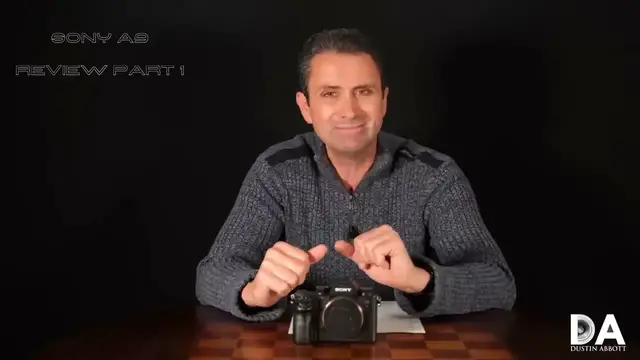
Sony a9 (in late 2019) Review: Part 1 | 4K
Jul 24, 2023

Sony a9 (in late 2019) Review: Part 1 | Photographer Dustin Abbott takes a look at the Sony a9 three years after its release and its new position in the market after firmware updates and reduces prices. Should it be an option for you? He covers updated features, build, and autofocus performance in this episode, including: Tracking, buffer depth, Eye AF, and more. Read the text review: http://bit.ly/a9review | Visit the image gallery: http://bit.ly/SonyA9Gallery | Purchase the Sony a9 Camera @ B&H Photo https://bhpho.to/2HyWIyt | Amazon https://amzn.to/2B4NAjh | Amazon Canada https://amzn.to/2peQkbn | Amazon UK https://amzn.to/2M7XPcY | Amazon Germany https://amzn.to/2VHbDOP | Ebay http://bit.ly/Sonyalpha9
Want to support this channel? Use these affiliate links to shop at:
B&H Photo: http://bhpho.to/1TA0Xge
Ebay: http://bit.ly/DustineBay
Make a donation via Paypal: paypal.me/dustinTWI
Get a discount off all Skylum Editing Software (Luminar, Aurora HDR, AirMagic) by using code DUSTINHDR at checkout: http://bit.ly/LuminarDLA
Become a Patron: https://www.patreon.com/dustinabbott | Check me out on: Personal Website: http://dustinabbott.net/ | Sign up for my Newsletter: http://bit.ly/1RHvUNp | Instagram: http://bit.ly/DLAinsta | Google+: http://bit.ly/24PjMzv | Facebook: http://on.fb.me/1nuUUeH | Twitter: http://bit.ly/1RyYxIH | Flickr: http://bit.ly/1UcnC0B | 500px: http://bit.ly/1Sy2Ngu
My filming setup: Sony a7R III: B&H Photo: https://bhpho.to/2D6ibNO or Amazon: http://amzn.to/2CNxOvH | or | Sony a9 @ B&H Photo: https://bhpho.to/2HyWIyt or Amazon: https://amzn.to/2s1vYE0
Tamron 28-75mm F2.8 RXD @B&H Photo: https://bhpho.to/2FA00la or Amazon https://amzn.to/2G2kaEr
Lights: Rotolight AEOS @B&H Photo https://bhpho.to/2IK7mqV | Genaray Contender @B&H Photo: https://bhpho.to/33HbGNM | and Aputure AL-MW: https://bhpho.to/2N3MtZV
DISCLAIMER: This video and description contains affiliate links, which means that if you click on one of the product links, I’ll receive a small commission. As an Amazon Associate I earn from qualifying purchases.
Keywords: Sony a9, ILCE-9, Sony Alpha 9, Sony A9, Review, Sony, Dustin Abbott, Review, Autofocus, Sony a7RIII, Sony A7RIV, Sony a7R IV, a9, Tracking, Sports, Hands On, Video Test, Portrait, Video, Image Quality, ISO Performance, Real World, Comparison, VS, Sensor Test, Sample Photos, Sports
Show More Show Less View Video Transcript
0:00
Hi, I'm Dustin Abbott and I am here to give you a part one of a two-part review of the Sony A9
0:12
camera. The Sony A9, you might ask, didn't that camera release three years ago? Why, yes, it did
0:19
However, I am here to discuss why some developments both through firmware and then also with some
0:24
market shifts in terms of pricing and alternate cameras has put the A9 in a unique position
0:31
Now, it has always been, in my opinion, the most specialized of Sony's cameras. It is focused
0:36
primarily on speed and tracking abilities. It is the most dedicated sports and wildlife camera of
0:43
the bunch and thus is really acclimated towards those who need higher burst rates, up to 20 frames
0:50
per second here, and maybe the deeper buffer and the greater tracking abilities that it offers
0:55
and are willing to pay a premium for that, even though on some other levels, it maybe doesn't
1:01
offer as many features as some of the other cameras. For example, compared to the A7R series
1:06
it is lower resolution, only 24 megapixels. It also arguably has fewer video functions
1:13
because it doesn't have some of the profiles, and we'll look at that in just a second
1:17
And so you don't have access to like S-Log, for example, even though it's a body that's quite often used for video for other reasons
1:24
But we'll explore all of that in just a moment. But I'm here to look at kind of the revised market position of the A9 after the announcement of the A9 II with the announcement and release of the A7R Mark IV
1:37
And to see why this might become interesting to you as it did to me, even though it really wasn't interesting to me three years ago
1:44
I looked at it and said, I don't need a camera that's that specialized. I don't need 20 frames per second. After reviewing the A7 III a year and a half ago
1:51
I began to really heavily toy with the idea of purchasing an A7 III. But with shifting of the
1:58
market and the price down somewhat of an A9, I made a choice to go with the A9 instead of the
2:03
A7 III. I'll detail why. Maybe it might help for you. So in this first episode, part one
2:10
we're going to look at the features, the build, the autofocus abilities, and why I chose this
2:15
over the a7 III. In the episode two, we're going to look at the sensor performance. We're going to
2:20
look at the video performance and give you a summation of who the camera is for these days
2:26
and who it is not for. So what helped to lead to this point where it became more attractive to me
2:32
was in part due to Sony finally showing some love for some of its products, existing products
2:39
as opposed to always being forward looking towards, you know, the next innovation, the next feature
2:44
Instead, they've spent some time with a number of firmware updates. We're now up to version 6 as of the day of this review on the A9, in which they have added
2:53
a lot of very important features, which include things like real-time IAF, which is incredibly
3:00
important that rather than having to map IAF to some button, you have full-time, as long
3:06
as it's enabled, you have full-time IAF without having to involve anything else ergonomically
3:11
You have animal IF, pet AF now that uses a different detection method to detect the unique
3:18
properties of animal or pet eyes as opposed to human eyes. They've added interval shooting and so that you can now shoot time lapses
3:26
They have added the fast hybrid AF for video. They've actually even added more contrast points
3:33
Initially, there was only 25 contrast AF points. They actually bumped that up to what has become the standard for their full frame series of
3:40
425 contrast AF points via firmware, which shows that, you know, in certain areas, there's quite a
3:47
lot of flexibility if you really set your mind to it of what you can do. They also have increased
3:52
the phase detection to where it is sensitive all the way down to f16. And so what that means
3:59
is that that's a full additional stop over what it was initially, which means that you have more
4:04
flexibility when using teleconverters, for example, with variable aperture zoom lenses. And what that means, put very simply, is that you can add a teleconverter to more lenses and still
4:16
get effective autofocus. So an important thing there. They've added the ability to do touch focus
4:22
and touch tracking. And so along the way, they've added a lot of very important features that have
4:27
made this a far more attractive camera. And as I noted, it now occupies a new market position
4:33
For one thing, the new price dropped from $4,500 down to $3,495, and sometimes you can even find it for less than that
4:42
You can find used models often available in the mid-$2,500 US dollar range
4:49
And I actually purchased a used one myself because as I looked at a used A9 versus a new A7 III
4:58
Here were the reasons that I decided to go with the A9
5:02
and spend a little bit more compared to the A73. I'll give you a chart to look at here
5:07
but some of those things include faster firm rate You can get up to 20 frames per second as opposed to a limit of 10 frames per second on the A7 III It also has a 10 times faster sensor
5:20
readout, and so it can process better. So even though they share a focus system in many assets
5:26
the processing is much faster on the A9, which gives you better performance. Included in that
5:31
because of the unique electronic shutter and image, or the sensor stacking here
5:35
is that you actually have 20 frames per second with no blackout, which we're going to see makes
5:40
a huge difference when tracking action and the difference of seeing blackout in between each
5:45
frame, which can be disconcerting, cause you to lose tracking of your subject. And so that's a
5:52
big deal. The buffer depth is three times deeper when it comes to raw images. And so you have lots
5:59
of room for many, many raw files. It's twice as deep for JPEGs. And so, you know, if you're wanting
6:06
to shoot and hold that shutter down, and of course that 20 frames per second, you know, you can get a
6:10
lot of shots very quickly. And so having that deeper buffer is obviously very, very important
6:15
Another very nice feature if you're shooting with wide aperture lenses is that rather than the
6:20
limitation of 1 8,000th of a second on your shutter, you actually can go all the way up to
6:25
1 32,000th of a second, which means that, for example, when I was shooting with the Sigma 35
6:32
millimeter f1.2 for my review recently with the A9, I was able to get shots with it that I simply
6:37
couldn't shoot with the A7R4 or A7R Mark III. It has compared to the A7 III, it has a higher
6:45
resolution viewfinder and LCD, and the viewfinder also has a higher refresh rate. And so it is more
6:53
you know, realistic, it's more useful for that. And so there are definitely a fairly long list of
6:59
reasons to consider an A9 over an A73. And really the only thing that I can really come up with in
7:06
the category of the A73 that over the A9 is that it does have picture profiles, it does have S-log
7:12
And so if your primary, you know, motivation is video, then you might want to consider the A73
7:17
over the A9. Now we're going to do a hands-on segment where we take a look at the build and
7:25
the design here and see what's different in the A9 as opposed to the, you know, A7R series or the
7:31
A7 III. Let's jump in and take a look. Sony has a pretty familiar design now at this point that
7:37
really was pioneered by the A9 in terms of the body. It was the first of their cameras to go with
7:45
new FZ100 battery. And of course, with that to have a little bit of a different design to
7:52
the grip. Now, even though with the A9, it's, you know, it's still like the A7R Mark III. It could
7:58
use a little bit, you know, more robust grip that fortunately has improved with the A7R IV
8:03
And then also the A9 II. What we've got here is a body that's similar, just a little bit
8:10
you know, higher grade in terms of materials. Now, obviously the A9 that I purchased is
8:15
used and it looks like it's been used you know fairly thoroughly there's you know little nicks
8:20
and scrapes on the body but you can see that the body itself has held up well
8:25
through a lot of hard use here and so and certainly works just as new now as far as
8:32
differentiating the the a9 from other bodies like the r3 biggest thing here is that you got a you
8:41
You actually have an ethernet port here, and sync is a little bit different setup
8:48
flash sync there, and so you have a few more pro grade features. Here you have a headphone jack
8:53
and then also microphone input. And then down on the bottom, this is before they move to the USB-C
9:02
and so you have got mini HDMI out, and then you've got a multi and charging thing
9:08
that is still in the micro USB rather than USB-C that is the newer design
9:17
Other side of the camera, like the R3, you've got dual card slots which they introduced there
9:24
but like the R3, only the bottom one is UHS-II, the top one is UHS-I
9:31
and they've just finally reversed these a little more logically on the R4 and the A9 II
9:38
in which the top slot is now slot number one, which is only logical
9:43
And in the newer camera, of course, both slots are UHS-II. Now, very familiar button layout here on the back
9:51
familiar dials, all of this being the same, pretty much the same when it comes to the mode dial
9:56
What you do have differently is that you have a dial on the left side as well
10:02
And what you've got here is you've actually got a dual layer or kind of a dial with a switch underneath
10:09
And so this functions a little bit more like the Fuji X-T3
10:13
when it comes to that. So the top dial here is your drive dial
10:18
And so you have got options from everything from bracketing you got your timer here you got low medium and high burst rates And then of course single shot being the last one of those And so you hold down like this other dial you hold
10:32
down the lock and you rotate it to the desired position. Now underneath there is a switch here
10:38
at the top that rotates the bottom one. And on the bottom one, what you've got is the option of
10:43
rotating between manual focus, direct manual focus, AFC, and AFS. What you have to do is there's a
10:49
little locking mechanism here that you've got to hold back, hold down and switch to prevent you
10:55
from inadvertently selecting that. Now, the one thing I do note is that even between my copy of
11:00
the R3 and the A9, the record button here for video is, it has less travel even than what the
11:10
R3 does. And obviously a really noticeable difference between the R3 and the R4, I should
11:16
say the A9 and the R4 in terms of the travel of that. The viewfinder is like the A7R3 in that you
11:22
have the 3.6 million dot resolution, not quite as high a resolution as now in the R4 or the A9 too
11:30
Front of the camera, everything is pretty familiar here. You've got your front dial
11:35
you've got just on and off here, and then C1, C2, all of that there, and release button here
11:43
Everything pretty similar. Your accessories will match in terms of the battery grip
11:48
and those type accessories or grip extender. They will work with shared across A7R III and the A7 III
11:56
Most of you have seen that I actually use a small rig grip extender
12:00
and you could also then have the L bracket portion on there. I just mostly use the grip extender that gives me the Arca Swiss compatibility
12:06
and also it just gives me a little bit more robust a grip to hang on to
12:12
and that's the way that I like to handle things. So as you can see, primary physical differences
12:17
include the additional drive and focus mode dials here on the left side. There is an ethernet and
12:25
sync port here, which gives you more connectivity options. And also the general construction itself
12:31
seems to be a little bit more metal. I think it feels like a little bit more metal in the
12:36
physical body as opposed to the A7 III. And so not a huge amount of physical differences
12:43
but certainly some tangible ones there. Now, of course, the main attraction here is when it comes
12:49
to the autofocus. And the autofocus here continues to be supreme outside of the newly announced A92
12:56
that I haven't gotten my hands on to test yet. And so what that includes is 693 phase detect AF
13:03
points that covers 93% of the frame. In other words, pretty much anywhere that you are going
13:09
to be tracking action, there are lots of AF points to cover that portion of the sensor
13:15
There's just a little tiny gap on either side of the frame that are not covered, but pretty much
13:21
the entirety of the frame is covered. It also has more processing power. And so it's able to run all
13:27
of those focus algorithms and make adjustments. And thus it's still a little bit better. I've
13:33
noted, even with the, you know, much improved a7R Mark IV, comparing it with the a9, that it felt
13:39
like there was just a, maybe a little bit more juice there, a little bit more voltage in driving
13:43
telephoto lenses. And maybe that has to do with processing power. I don't know. But what I can say
13:49
is that even with a very, very good and newer focus system in the a7R Mark IV, the a9 seems to
13:55
still have a little bit of an edge, particularly with telephoto. In fact, it was the only camera
14:01
in my test that was able to successfully track, you know, fast moving action, a sprinter moving
14:06
towards the frame with an adapted telephoto lens. And while some of the other cameras
14:11
including the a7R4 or even the a7 III when I tested it, did fairly good with a lateral action
14:17
when you had fast moving action and an adapted lens moving towards the camera
14:22
the a9 continues to be the best option there. Now, of course, I recognize that, you know
14:26
the best option is going to be investing in, you know, a native lens for this. But practical reality
14:33
means that if you have multiple systems, as many of us, including myself, do, you know, if you have
14:39
an option of buying a lens that's, you know, really excellent, that can work on both systems and can
14:44
work reasonably well adapted, you know, that becomes a pretty compelling option. And that
14:48
certainly was the case with the Canon 100-400 L Mark II lens that I used in adapting for that
14:56
sequence. And so, as we've already noted, you have not only 20 frames per second and with that
15:02
electronic shutter, and so it's just, you know, instantaneous. But beyond that, you also have no
15:09
blackout. And so, when you're looking through the viewfinder, you're able to, you know, set a box on
15:15
what you're, you know, if you're setting, I mean, I like to use a red box outline, so that way I know
15:20
you know, where the focus is at. But you'll see it pick up an eye, for example, if an eye is in
15:26
and just track right with that or a face if you're a little bit further away
15:30
and you watch it just moving real time even while you're taking shots
15:33
And so it makes it much much easier to track action which is obviously the big deal here Now one thing that a lot of people don know and that is that if you switch over to mechanical shutter
15:45
it's actually one of the slowest of the current cameras, is the slowest of the current Sony full-frame cameras
15:52
and that it's only five frames per second in mechanical shutter. So you say, well, why would I want to use mechanical shutter ever then
16:00
Well, one area where you do have to use it that I can attest to is that if you're going to use, for example, a trigger to do TTL flashing, if you want to, for the hot shoe to trigger, it seems to require being in mechanical shutter mode
16:15
And if you switch over into mechanical shutter, your trigger will work, your flashes will sync up
16:20
In electronic, that's not the case. And so there's one reason for that
16:24
And by the way, that is one area where Sony has made, you know, one of the most obvious
16:28
improvements with the A9 Mark II is that you now have a 10 frame per second mechanical shutter
16:34
And so it's as good even in mechanical shutter as what say the A7 III is, but with improved
16:40
tracking abilities there. And so, and beyond that, of course, it still has the 20 frames per second in electronic mode
16:47
IAF, you know, real-time IAF is something that was added via firmware, but it works exceptionally
16:52
well here. You can just see how beautifully it tracks. And for example, in this sequence
16:57
I was moving purposely behind a subject in between and wanting to see if it would, you know
17:03
track even with a foreground object blocking the way. And it did a beautiful job. It is also a great
17:10
option if you want to use some existing legacy lenses and adapt them, Canon EF mount lenses
17:16
for example. And it seems to do a pretty good job with all of the lenses that I've thrown on there
17:21
I've been surprised with how well they work, how well IAF works, even with adapted lenses
17:27
Now, of course, you know, if you want to know just a quick preview of areas that have been improved for the A9 Mark II
17:33
is that its processing is even faster. And so it's, you know, able to go through focus algorithms and make tweaks to where
17:41
although the basic focus system there, it's still the same amount of PDAF points, it's still the same coverage
17:48
but tracking is a little better yet. We've already discussed the mechanical shutter improvements, and along with that mechanical
17:53
shutter improvement is they have added also the anti-flicker technology, which I believe
17:59
only works with mechanical shutter. But that is certainly, for example, if you're a sports shooter and you're shooting in a football
18:06
arena and there are sodium lights that are continually cycling, you get a lot of crazy
18:11
different colors and even banding sometimes in images. So having anti-flicker does help with that
18:16
There are the physical improvements that are also there on the A7R Mark IV improvements in dials and grip and better weather sealing, all of those things
18:25
And also they've added more connectivity in. And so beyond, you know, the Ethernet port that we saw here, you also have the ability to do direct, you know, basically make direct ad hoc connections to where you can do, I think, FTP uploads and things like that
18:42
And so more connectivity. I'll explore that more when I do the A9 Mark II review, hopefully at some point here in the near
18:50
future. And so there you see some very, very real and tangible performance results that come as a
18:57
part of that. And still, this remains one of the best focusing cameras for tracking action that
19:02
exists. And with the price lowering down and some of the other features that have been added via
19:08
firmware, in many ways, I think the A9 is just as attractive as it's ever been. And for a lot of
19:14
people, when they were, you know, kind of waiting to pull the trigger, thinking, well, is the A9 II
19:18
going to really become, you know, a revolutionary camera? And they saw that it was more evolutionary
19:24
and just some, you know, some good, but incremental changes and improvements. The A9, you know, kind
19:30
of becomes more attractive because it's not like you're losing a ton compared to the newer, more
19:35
expensive model. And so there might be another compelling reason to consider it there. Now
19:41
if you stay tuned next week, I'll be rolling out part two of the review and we'll take a look
19:45
a closer look at the sensor performance and how it compares, you know, with some of the other
19:50
cameras, including how it does and things like dynamic range and how it does with high ISO
19:55
performance. And we'll also take a close look at video performance and see how, you know
20:00
these features that we have mentioned roll out the quality of the video. And I'll give you a final
20:05
verdict at that point, show you lots of pictures, show you lots of videos, maybe a time-lapse or two
20:10
and we'll throw all that together for you in the final ysis. So stay tuned for that
20:14
In the meantime, you can take a look in the description down below. I do have an image
20:18
gallery that's up and going with photos taken with a variety of different lenses. There's also
20:23
buying links there if you'd like to go shopping and maybe consider a present for yourself or
20:28
someone that you love. So take a look there for that. There's linkage also to follow me on social
20:33
media, to become a patron, to sign up for my newsletter. And if you haven't already
20:37
please click that subscribe button right here on YouTube. Thanks for watching. Have a great day