Up next in 10

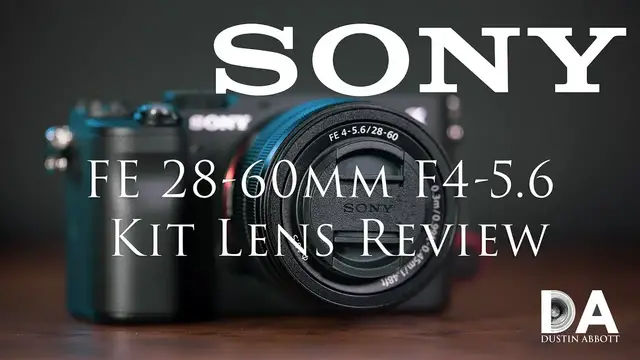
Sony FE 28-60mm F4-5.6 Kit Lens Review | 4K
Jul 19, 2023

Build and Handling 01:30 | Autofocus Performance 105:01| Image Quality 06:40 | Summation 14:20 | Read the Text Review and Visit the Image Gallery: https://bit.ly/FE28_60DA | Purchase a Sony FE 28-60mm F4-5.6 @ B&H Photo https://bhpho.to/32ljbez | Amazon https://amzn.to/38iLaj5 | Amazon Canada https://amzn.to/2JKh9OT | Camera Canada https://shrsl.com/2lp9q
Purchase a Sony a7C @ B&H Photo https://bhpho.to/323jP0m | Amazon https://amzn.to/34MlE3z | Camera Canada https://shrsl.com/2l7yt | Amazon Canada https://amzn.to/3jGoN93 | Amazon UK https://amzn.to/2JoSnDL | Amazon Germany https://amzn.to/3mFxBy1 | Ebay http://bit.ly/Sonya7C
Purchase the Sony a73 at B&H Photo: https://bhpho.to/2HTcogD | Amazon: http://amzn.to/2GRoG7T | Amazon Canada: https://amzn.to/2KhSaON | Amazon UK: https://amzn.to/2I3NU4D | Ebay: http://bit.ly/a73DA | Amazon.de: https://amzn.to/2Hk7fwq
Sony a9 Camera @ B&H Photo https://bhpho.to/2HyWIyt | Amazon https://amzn.to/2B4NAjh | Camera Canada https://shrsl.com/2ikpx | Amazon Canada https://amzn.to/2peQkbn | Amazon UK https://amzn.to/2M7XPcY | Amazon Germany https://amzn.to/2VHbDOP | Ebay http://bit.ly/Sonyalpha9
Purchase the Sony a7RIV @ B&H Photo https://bhpho.to/2nUgnno | Amazon https://amzn.to/2oGpVD1 | Camera Canada https://shrsl.com/2imqe | Amazon Canada https://amzn.to/2mY8UDW | Amazon UK https://amzn.to/2n9GWF3 | Amazon Germany https://amzn.to/2nXhene | Ebay http://bit.ly/a7RIVda
Want to support this channel? Use these affiliate links to shop at:
B&H Photo: http://bhpho.to/1TA0Xge
Camera Canada: http://bit.ly/DLACameraCan
Ebay: http://bit.ly/DustineBay
Make a donation via Paypal: https://www.paypal.com/paypalme/dustinTWI
Get a discount off all Skylum Editing Software (Luminar, Aurora HDR, AirMagic) by using code DUSTINHDR at checkout: http://bit.ly/LuminarDLA
Become a Patron: https://www.patreon.com/dustinabbott | Check me out on: Personal Website: http://dustinabbott.net/ | Sign up for my Newsletter: http://bit.ly/1RHvUNp | Instagram: http://bit.ly/DLAinsta | Google+: http://bit.ly/24PjMzv | Facebook: http://on.fb.me/1nuUUeH | Twitter: http://bit.ly/1RyYxIH | Flickr: http://bit.ly/1UcnC0B | 500px: http://bit.ly/1Sy2Ngu
Show More Show Less View Video Transcript
0:00
Hi, I'm Dustin Abbott and I'm here today to give you a quick review of the newest Sony
0:16
kit lens and that is the FE 28-60mm f4-5.6. Now on paper, this would seem to be a regression from the previous kit lens
0:26
It is a lens that has a smaller zoom range. The other is 28 to 70 millimeters
0:33
It has a smaller maximum aperture on the wide end, F4 versus F3 3.5
0:39
It doesn't have an optical stabilizer, and on top of that, it costs an extra $100
0:45
And so on paper, this lens makes no sense. But when you actually use it, if you've used both of those lenses, which I have
0:52
you see that Sony has actually given us a surprisingly good lens optically
0:58
though it's not perfect in every metric. And so today I want to just break down for you how the lens handles, its size, its features
1:07
but then above all, let's talk about its autofocus performance and, of course, its optical performance
1:13
which is really where the rubber meets the road. And so first of all, we're going to jump in and we're going to take a closer look at the build and the design
1:21
and so you can see close up how the lens operates. We'll take a look at that and then we'll pop back and talk about those other things
1:28
Let's jump in. Let's take a look. So first of all, of course, this is a retractable design
1:32
and the reason for that is to pair with this new A7C body
1:36
and give a really compact overall package, which is the priority here
1:42
So as a byproduct of this, this lens when we tracked it is only 45 millimeters long
1:48
that compares to 83 millimeters for the 28 to 70 millimeter your previous kit lens and so
1:54
you're almost you know getting very close to half of the overall length. Now of course to get into
2:00
shooting position you have to take it out of that retracted position and I will note this is where
2:06
the probably the biggest clunkiness is. It's obviously it's important to have some resistance
2:11
here so it doesn't inadvertently pop out and of course a little bit of resistance so you don't
2:16
inadvertently go back in. But it's just not really smooth and takes a fair bit of force
2:23
And so it just doesn't feel very premium. And there's aspects of the build that definitely
2:27
kind of reflect that. You'll find that as you go throughout the zoom range, there's a little bit
2:32
of what I call a pump action, where you kind of go in and out. You start fully extended at 28
2:37
millimeters. You come back out at 60 millimeters and somewhere around 38 millimeters, you are the
2:43
most retracted. Now, what you're also going to find is that obviously your barrel extends by
2:49
about 30 more millimeters, but for the most part, when you're traveling, that's not going to be an
2:54
issue. The zoom ring itself here is reasonably smooth. It's, you know, it's not flawless. There's
3:01
a little bit of different resistance when it's in the inward position versus when you're going back
3:07
out. And so it's not entirely even the actual manual focus ring. If you're wearing gloves
3:12
are going to have a hard time distinguishing between these two rings. I say that because I'm
3:17
going into winter and I'm thinking about this. Like most focus by wire, there's not a whole lot
3:24
of tactile feedback, but it's smooth enough and it does seem to operate in a linear fashion
3:30
Anyway, which means you can go at different speeds and you're still going to end up
3:35
with some repeatability at the same destination. So not a lot of complaints on the actual focus
3:41
other than the fact that because this lens is so compact, there's not a lot of room for it
3:47
Now, some positives, there is some weather sealing, there is a decent size gasket here at the mount
3:53
and some internal seals. Up front, we have a really odd 40.5 millimeter
4:00
front filter size. Now the lens is actually 66 millimeters in diameter but of course because of this inner barrel the actual inner portion is much slimmer I had never seen a 40 millimeter filter thread before
4:17
However, the filters do exist, and so you can pick them up for it. The overall weight here is only
4:24
167 grams, 5.9 ounces. And so obviously it is really, really lightweight. The other, the 28 to
4:32
70 millimeter was closer to 300 grams. And so, I mean, you get a really compact package here
4:39
And I think that's really what this is all about. And so as you can see, if you were just left at
4:45
this stage, I don't think that there would be a whole lot to write home about. It feels like a kit
4:49
lens, you know, and particularly that roughness in popping it out to the, from the retracted
4:54
position and back to the retracted. I just, it just feels a little bit under engineered to me, but we'll leave it at that
5:01
But fortunately, everything gets better when you start to look at the internals of the lens
5:06
This is obviously designed for the new Sony a7C in particular. And so, you know, all of that lightweight stuff lends to the heavyweight stuff when
5:16
you go inside. And so first of all, we have a linear focus motors here, and I am really impressed once again with how quiet and how fast autofocus actually is
5:28
And so you've basically got very close to instantaneous autofocus. It just, you know, without any drama, without any sound, it just pops and locks on
5:38
And I had zero issues with focus accuracy. and so as you can see it obviously makes it a you know a decent lens for video because you're not
5:46
going to be picking up any kind of focus sounds it's just really really quiet in operation and of
5:52
course it gets the job done now to be fair a lens that has a relatively you know smaller zoom range
6:00
and it doesn't really go into any kind of the demanding areas either on the wide or the telephoto
6:05
in and has a relatively small maximum aperture throughout you know that's not going to give you
6:10
a whole lot of challenges when it comes to autofocus, but at the same time, I don't want
6:16
to sell the autofocus system here short. It does a fantastic job. I was even more impressed when I
6:22
began to look at the optical performance because frankly, I never get very excited about a lens
6:26
like this. And I wasn't all that impressed with the 28 to 70 millimeter and I couldn't wait to
6:32
get rid of it when I had it in my hands. That's not really true here. So let's jump in and let's
6:37
take a look at how good those optics actually are. All right let's start out by taking a look at
6:42
vignette and distortion here and so first of all distortion you can see that at 28 millimeters
6:47
there is definitely some fairly pronounced barrel distortion. You can see my manual correction here
6:53
on the right side and I'll break that down for you. So as you can see it required a significant
6:58
amount plus 23 to correct that barrel distortion. Good news however is that obviously the nature of
7:05
the distortion is quite linear. And so you can see that it corrected, you know, nice and easily
7:10
no major problems there. As far as the vignette, plus 40. And so a moderate amount, and I moved the
7:16
slider on the midpoint over to seven. And I think that that gives us a fairly clean looking end
7:22
result. So a positive is that even though there is a significant amount of both distortion and
7:27
vignette, you can expect that the correction profiles when they're available will, you know
7:33
do a fine job with that. And then of course in camera for JPEGs and video, it will be no problem
7:38
Now uncorrected, as you can see, this is no glamorous photo, but you can definitely see the
7:43
barrel distortion present here in this. And, and so anyway, you just, you're definitely going to
7:49
want to correct that if you've got straight lines in your shots. For a lot of other scenes
7:53
it probably won't matter. Now, the good news is, is that 60 millimeters, we have a near perfect
7:58
lack of distortion there and so no problems. And also vignette is quite mild
8:04
So you can see I've done just a little bit of correction to the vignette there but it not significant And so no problem there at all So this would give you an idea of the difference in framing at 28 versus 60 millimeters This is barely over a two zoom range
8:19
However, you can see it does give you some significant options when it comes to your
8:23
framing. This also gives you an idea of essentially how close you can get at minimum focus here
8:28
really at both distances, but obviously you're going to get your better magnification at 60
8:33
millimeters. So I was really pleasantly surprised when it came to the optical performance of this
8:37
lens. Now, I did test it on the a7C since that's really the camera that it is going to be sold with
8:43
so obviously not as demanding as, you know, the resolution of the R bodies, but maybe less of a
8:49
target for those bodies. But either way, even at my really demanding 200% magnification that I do
8:56
these comparisons at, you can see that in the center of the frame, other than a little bit of
9:01
you know, a little more contrast is gained when you stop down to f5.6, but that's really impressive
9:07
right off this bat right there. Very strong performance. Also in the mid-frame, you can see
9:12
it's just genuinely excellent right from the start. And then F5.6 gives us a little bit more
9:19
contrast. You can see a little bit of the moir pattern that is developing. And so anyway, that's
9:26
just increased sharpness showing up. And even right down into the corner, you can see that we have
9:31
quite good resolution right into the corner with a mild again mostly contrast improvement at f5.6
9:39
Stopping on down to f8 gives us slightly more contrast a little bit more resolution but I mean
9:45
this is a nice result already. Minimum aperture here is f22 and obviously even on a 24 megapixel
9:52
body diffraction is really softening things up. It's not bad but you can see compared to the wide
9:57
open result it's significantly poor and obviously as you go up to higher resolution bodies the
10:03
diffraction effect is going to be even more pronounced and so I for myself I almost never
10:08
shoot at minimum aperture on any lens under any circumstance your mileage may vary of course
10:14
and if we switch to a more you know typical 100 percent magnification you can see that contrast
10:20
and resolution just looks really fantastic that's an impressive looking result here's another shot
10:26
This is at f6.3, and so you can see where we're focused at
10:30
Really, really nice crisp results, good contrast, good color. Things are getting pretty bland out there for me right now in my world
10:39
but at the same time, I think it's a good-looking end result. Moving on to 40 millimeters, we can see that, again, we have a consistent result
10:47
almost identical to what we saw at 28 millimeters. Very sharp, right out of the bat in the middle
10:52
improve contrast as you stop down at f5.6 though I will note that obviously it's you're not stopping
10:59
down nearly as much it's only a third of a stop to f5.6 mid frame again looks really really excellent
11:06
and even down into the corners I would say the contrast levels are even a tick higher
11:11
even wide open and then stop down a little bit looks just a little bit better still f8 allows
11:18
things to sharpen up even more so even in the corners and contrast looks excellent you can also
11:24
see no evidence of lateral chromatic aberrations here aberrations are really well controlled with
11:29
the lens and if we move to the end of the zoom range unlike a lot of kit type zoons it does not
11:35
in any way fall apart at the end of the zoom range in fact i would say it's the best that we have
11:40
seen wide open and stopping down to f8 it is just really really sharp and mid-frame looks fantastic
11:48
either wide open or stop down one stop and in the corners it looks really really crisp particularly
11:54
at f8 looks very impressive and I just want to point out the pattern on this size you can see
11:59
that no lateral chromatic aberrations but you can see that you know contrast improves very very sharp
12:06
by F8. So here's an F8 example and you can see if we zoom into a pixel level and look at you know the
12:13
area that in focus everything here is really really crisp great looking in result Again here you can see you know at a pixel level everything is nice and crisp Good contrast good color rendition
12:28
you know, such as the colors are. Another example here, and if we zoom in, we can see that everything
12:34
is just, all the details are rendered here. There's good acuity for the lens. And so anyway
12:40
an impressive end result. Here's another shot that's near minimum focus and you can see it's
12:45
done a nice job there close to minimum. Here gives you an idea of how much magnification you can get
12:51
and also a little bit of look at the bokeh which although this is not a lens with a large maximum
12:57
aperture you are going to be able and if you get close to have soft backgrounds in the right
13:03
situation. Here's another one here. This is a little bit more complicated of background and yet
13:08
I think that the lens has done fairly well. And you can see looking up close that the detail there is really, really nice on this
13:15
particular shot. Here's a little bit more of a busy background. And again, I'm just, I'm impressed
13:20
I mean, for one thing, no evidence of chromatic aberrations. That's really crisp detail rendered
13:25
And I think that a complex background really looks, you know, pretty good
13:30
Another shot where you have a little bit more space to the background. It's handled quite well
13:34
You know, contrasting colors look very good on the plane of focus. Here's one more, what I would say a strong result
13:41
You can see the longitudinal chromatic aberrations are really well controlled. No fringing on the out-of-focus areas
13:48
And again, the background looks fairly good here. So finally, just wanted to show you a flare resistance, also fairly good
13:55
You can see that contrast has held up. We've got a tiny bit of a ghosting pattern here at 28 millimeters
14:00
Of course, this is without a lens hood. And so even without it, good result
14:05
and at 60 millimeters with the sun right up there in the corner where it's likely to cause problems
14:09
you can see contrast has held up and I don't really see any ghosting artifacts. So again
14:15
coatings, optical designs doing a good job of preventing flare as well. So a lot of good
14:21
packed into this cheap little body. So at the end of the day, this lens is going to have some
14:25
limitations due to its very nature, but if you're shooting the right thing with it, you're going to
14:31
get highly detailed, good contrast, very low aberration images out of it. And so that just
14:37
might make it a worthwhile starting point for you if you're buying it in kit with the new A7C
14:42
Now, as far as the price, frankly, I do think it's overpriced as a kit lens. While it has a great
14:48
optical performance, I just don't see this as a $500 lens, which is what it's priced at as an
14:54
independently. Now, to be fair, the 28-70 was priced at $400, and it's definitely not worth that
15:02
So it's a little more affordable when you get it in kit. It's about $300 premium over the body-only
15:08
configuration for the A7C, and I suspect with market forces, that price will probably drop down
15:14
to $250. Right now, the 28-70 millimeter is more like $200 in kit, and so I suspect there'll be
15:23
some deals there around it in the future. I'm not sure that I would just go out and spend $500
15:28
on this lens independently, but in kit at $300, it's, you know, it's not a bad proposition in
15:35
terms of its performance. So at the end of the day, obviously it's a decision you'll have to make
15:39
for yourself. I'm Dustin Abbott. And if you look in the description down below, you can find linkage
15:44
to a text review of the lens, also an image gallery, if you want to check out photos. And
15:49
Beyond that, of course, there are links there to buy one either independently or in kit with the
15:55
a7C. And if you haven't seen my review of the a7C, I recommend that you check out either the
16:00
definitive or the standard review of this camera as well. Beyond that, there's linkage to follow
16:06
me on social media, to become a patron, or to sign up for my newsletter. And if you haven't already
16:11
please click that subscribe button right here on YouTube. Thanks for watching. Have a great day