Up next in 10

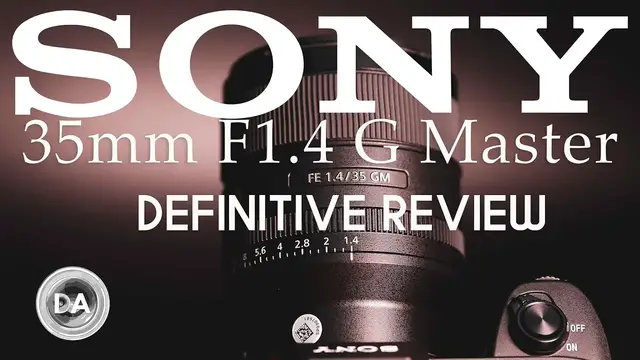
Sony FE 35mm F1.4 G Master Definitive Review | 4K
Jul 17, 2023

Photographer Dustin Abbott shares a thorough review of the excellent new Sony FE 35mm F1.4 G Master premium prime lens. | This video is sponsored by Fantom Wallet. Visit https://fantomwallet.com/ and use code DUSTIN15 to get 15% off | Read the Text Review: https://bit.ly/35GMreview | Visit the Image Gallery: https://bit.ly/35GMpics | Purchase the Sony 35mm F1.4 GM @ B&H Photo https://bhpho.to/2RA0Isf | Amazon https://amzn.to/3vRRBSF | Camera Canada https://shrsl.com/2y3qu | Amazon Canada https://amzn.to/3o48p67 | Amazon UK https://amzn.to/3ewthjk | Amazon Germany https://amzn.to/3tpKoYk | Ebay https://ebay.us/9ITrrJ
Purchase the Sigma 35mm F1.4 DN ART @ B&H Photo https://bhpho.to/3vdsWI0 | Amazon https://amzn.to/3gBj4ne | Camera Canada | Amazon Canada https://amzn.to/3dPBnmI | Amazon UK https://amzn.to/3njr3GU | Amazon Germany https://amzn.to/3viMrP7 | Ebay https://ebay.us/btZDSM
Check out the DA Merch here: https://bit.ly/TWIMerch
=============================
Table of Contents:
=============================
0:00 - Intro
2:43 - Build & Handling
5:34 - Focus Action
10:05 Image Quality Breakdown
24:07 Conclusion and Pricing
---------------------------------------------------------
Purchase a Sony a7C @ B&H Photo https://bhpho.to/323jP0m | Amazon https://amzn.to/34MlE3z | Camera Canada https://shrsl.com/2l7yt | Amazon Canada https://amzn.to/3jGoN93 | Amazon UK https://amzn.to/2JoSnDL | Amazon Germany https://amzn.to/3mFxBy1 | Ebay http://bit.ly/Sonya7C
Purchase the Sony a73 at B&H Photo: https://bhpho.to/2HTcogD | Amazon: http://amzn.to/2GRoG7T | Amazon Canada: https://amzn.to/2KhSaON | Amazon UK: https://amzn.to/2I3NU4D | Ebay: http://bit.ly/a73DA | Amazon.de: https://amzn.to/2Hk7fwq
Show More Show Less View Video Transcript
0:00
Hi, I'm Dustin Abbott and I'm here today to give you my definitive review of the new Sony FE 35mm F1.4 G Master lens
0:21
Now, the 35mm f1.4, like the 24mm f1.4, kind of falls on what I consider to be Sony's magic formula
0:31
and that is producing a lens that is optically excellent, high-performing, high-grade of build
0:37
while also managing to keep it nice and compact, and, you know, a true advantage over comparative lenses that we saw on DSLRs
0:46
And I think that that was maybe the missing formula for a while, and that mirrorless started with mostly smaller sensors, and so everything was nice and compact
0:55
Everyone, you know, that was kind of marketed as a chief advantage. Then we went through this phase to where, once we started transitioning to full-frame sensors and full-frame, you know, professional-grade lenses
1:06
it's as if manufacturers didn't know how to build both high-grade for larger sensors and also keep them compact
1:13
Sony's figured it out though and they have managed to consistently recently
1:17
produce lenses that are I think you know relatively small you know relative to
1:22
what they are but also managing to be very high performing and so kudos to
1:27
them for that great accomplishment for doing that. Now today we are doing the
1:32
definitive review of this very essential lens and it's so we're going to be
1:37
hitting everything in detail most notably the overall performance of the optics here. And so if you want a quicker more to the point review, check out the standard review
1:47
instead, which will be shorter and just kind of cover the highlights and give you a verdict on
1:51
the lens. I want to start by thanking our sponsor of today's episode, which is Phantom Wallets
1:58
They've been a great partner. They make a great product. Today's episode is brought to you by
2:03
Phantom Wallet, the minimalist modern wallet that sets you free from the bulky traditional wallet
2:08
while also making it easy to access your cards and money when you need them
2:13
thanks to their unique fanning mechanism. Visit phantomwallet.com to check out their unique sizes, styles, and finishes
2:20
that span from aluminum to wood to carbon fiber. You can even customize your wallet with new accessories like a money clip
2:29
cash holder, ID display, and even the Chipolo tracking integration if you're the kind of person who loses their wallet
2:38
Use code DUSTIN15 for 15% off when you're ready to check out
2:44
So we're going to start this review by taking a look at the build, handling, and features and see how that Sony has given us a genuinely competitive product relative to even the brand new Sigma
2:53
in terms of being very small and compact. So the first thing worth noting is that all of the Sony GM lenses do come with nice cases
3:02
In this case, we've got a nicely padded case, opens up, allows access to the lens
3:07
and inside we have got this delightfully compact lens relative to the size. It does have a nice
3:14
lens hood with a focus lock so you've got to press that to remove it. It does reverse nicely
3:19
for storage and then even with the lens hood in place it's still a nicely compact lens and so in
3:25
fact this lens weighs in at only 524 grams and so that is 116 grams lighter than what we saw on the
3:35
Sigma. The overall length of the lens is just 96 millimeters compared to 111.5 millimeters for the
3:41
Sigma DN lens, and it's three inches in diameter with a 67 millimeter front filter thread, which
3:48
that does share with the Sigma. We have the Sony GM approach to aperture control in that there is
3:53
both a manual aperture ring that you can go through and one third stop to tense. You can select then
3:59
to de-click that aperture and so have smooth racking without to tense, and of course you can
4:04
switch it into auto and control it from within the camera as well. Other features include the
4:10
focus hold button along with an AF-MF switch to give you control over operation. We have a thorough
4:18
suite of weather sealing here which begins with a gasket at the lens mount. There are other seal
4:24
positions inside the lens itself and there is a flooring coating on the front element. I believe
4:31
there are nine different seal points around the rings, around the switches, and then of course at
4:38
the gasket at the rear of the lens. The manual focus ring is linear in operation, though the
4:45
amount of focus weight is a little bit light for my taste. It is mostly metals and the barrel and
4:52
materials here, but done in such a way that keeps it nice and lightweight. And so as you can see
4:57
Sony has managed to do a great job of developing, you know, lenses that are compact relative to the competition, but also just feel professional grade
5:05
I don't necessarily love the design language of the GM lenses. I think that they're, you know, more like workman functional than they are like aesthetically beautiful necessarily
5:16
But at the same time, they feel quality in the hands and they've managed to do this while, you know, creeping the prices down
5:24
even at a time where it seems like Canon, their chief competition, the lens prices keep edging up
5:30
And so I think that that does give Sony a competitive market edge. Likewise, they really are nailing autofocus on these lenses
5:38
So let's take a deeper dive into that. So let's talk about autofocus
5:42
I'm actually filming on the 35mm f1.4 GM on a Sony Alpha 1 right now to give you a sense
5:49
nice and close, how it does in tracking my face, shooting in APS-C mode just for the framing
5:54
but you know you get a sense of how it's performing for this. Early on I actually
5:59
wasn't blown away with GM lenses relative to competition. That was particularly obvious with
6:04
a lens like the 85mm f1.4 GM which the autofocus there was noticeably inferior to the much cheaper
6:12
FE 85mm f1.8 lens. But Sony has really found a winning formula for autofocus when they begin to
6:20
move to linear focus motors. And so these linear STM motors, they're designed to basically
6:27
whether than any kind of rotation like there was in USM type motors, instead they anchor on often
6:33
on either side of the optical, you know, focusing group and just move very quickly back and forth
6:39
And the way that they designed is that they have a lot of great damping And so they not only start up fast and get you to your destination but they also stop fast without any kind of settling or you know shifting there And basically what Sony has done is that they
6:54
calculated the amount of linear motors needed for each kind of optical design. So in the case of
7:01
say, the 135 millimeter F1.8, big heavy elements, but a lot of speed and torque needed to move that
7:07
And so it can be competitive for, say, sports use, which it is, by the way. They, I believe
7:12
use quad or four different linear motors. In this case, smaller elements, a little less torque
7:18
requirements, and so we have dual linear motors, but it turns out to be the perfect formula
7:23
Autofocus is completely quiet, is extremely fast, basically near instantaneous to make focus changes
7:29
when shooting in AFC mode, for example. And so, we'll take a quick look at my focus pull test
7:36
even for video work. and so you can see from the focus pull test that everything is very smooth there's no settling
7:51
hunting pulsing any of those negative things you have a little bit of a sense of inertia as it makes
7:57
big focus changes but no actual sound associated with all you hear is environmental sound so
8:02
obviously that's awesome the only negative to take away there is that you probably notice some
8:07
focus breathing if you're video oriented. And this is probably the chief, I would say
8:13
a liability of this lens is that it does focus breathe in a fairly pronounced way. And so that
8:19
means that subjects are going to become larger or smaller relative to where they are in focus
8:24
And that can be a distracting thing if you are using them in certain kinds of video applications
8:31
Outside of that, I also noticed a really good stickiness of tracking my eyes. And so, for
8:36
example, in this test, it not only did a great job of tracking my eye as I moved in and out
8:42
but what kind of stood out to me is the smoothness of operation in doing so. There's no obvious focus
8:47
changes. It just stays in focus no matter where the subject is, and so obviously top-notch. Likewise
8:54
the stickiness for shooting portraits in a still setting was fantastic, and I found
9:00
particularly when I was shooting through in a portrait setting, I was shooting through various
9:06
layers in a budding maple tree, just trying to create some depth in the shot. And there's probably
9:11
at least six different layers of focus between myself and my subject. And what I found is that
9:16
the IAF just stayed on the eye the whole time. It never got distracted by any of the differentiating
9:21
layers. And so obviously that is, that's, you know, hugely important if you are a portrait
9:27
or an event shooter, anything where you need to keep people in focus, it did just a really great
9:33
job with that. So high marks all around. Autofocus is fast, it is silent, it is accurate. What more
9:40
could you ask for? So I mean really the only thing I have to complain about when it comes to both
9:44
build and autofocus is that I would have liked a little bit heavier damping, you know, just for a
9:49
little bit more feel and precision in the manual focus ring, but that really is a pretty niggling
9:54
complaint. And so overall, everything is excellent outside of the focus breathing
9:59
which I know is going to be an unfortunate disappointment for some of you who are very video focused in your work. Let's take a look now at the image quality because it's all
10:08
well and good to have a compact, high focusing, you know, fast focusing lens. But if it doesn't
10:13
produce the goods on a professional grade of overall optical performance, then it's going
10:19
to still leave a lot of people disappointed. Fortunately, that's not the case. Let's take a
10:23
closer look at that. So first of all, let's take a look at distortion and vignette. You can see that
10:28
there is surprisingly a very mild amount of pin cushion distortion. It's more typical to see a
10:35
barrel distortion on a wider angle lens like this, but good news is that you can see that it corrects
10:41
quite easily. This is a manual correction. The lens does have an automatic profile available at this
10:46
point, but this does show you what you can do in terms of a manual correction. Just to kind of more
10:52
demonstrate the quantity of the distortion in the vignette here. I corrected that with just a minus
10:58
one which shows you how mild the pin cushion is and then a 67 plus 67 in terms of vignette and
11:05
moving the midpoint all the way over. So that indicates to me somewhere around two and a half
11:10
stops of a vignette in the extreme corners which is a significant amount. Certainly they're not as
11:17
as what you would see like on the Canon 35mm f1.4L, however, is slightly more than what we saw on the Sigma
11:24
Now as far as our longitudinal chromatic aberration goes, you can see that there is a little bit of purple fringing
11:30
before the plane of focus and a little bit of green after the plane of focus
11:35
At the same time you can also see that contrast levels are very high and the blacks on the plane of focus are very nice and inky
11:43
whites are nice and bright. Likewise for lateral chromatic aberrations these are very well controlled
11:49
and so you don't see any fringing to either side of the black and white transition areas here on
11:54
any of these lines which shows that lateral CA is being very well controlled. So how does that
12:00
translate into resolution? This test chart shot with the 50 megapixel Sony Alpha 1 so very high
12:06
resolution and you can see that in the center of the frame resolution is fantastic. Contrast is
12:11
already very high. You can see the weave in the bill here. If we look over here, we can see, you
12:18
know, great amount of texture and detail information on the bill here. And even right down into the
12:24
corner, we can see that right out to the edge that we have very good resolution and contrast. This is
12:30
clearly a very strong optical performance. So the question then is how does it compare to the Sigma
12:37
35 millimeter f1.4 dn that i just reviewed so in the center of the frame the two lenses are really
12:44
more similar than different um i don't really see a particular winner here there's areas that you
12:52
know look better to me on one and then the other but it's it's not enough to really make call out
12:57
a difference i think it's mostly a draw even with them side by side if we move to the mid frame i
13:03
I think that in the midframe the GM lens is ever so slightly better, just a little bit
13:08
better contrast and look around the eyes area, you can see just a little bit more detail
13:13
a little bit deeper darks, a little bit brighter bright areas there by comparison
13:18
Down into the corner, the difference is there for sure and you can definitely see it the
13:23
further you get towards the edge that the GM is the stronger lens towards the edge and
13:29
you know in this area still you can see it. As you move back towards here however I think the GM is better but as you can see it not by a significant amount So they fairly close at f1 though the GM delivers a more consistent result across the frame
13:45
So just for some perspective at f1.4 here with a real-world image, you can see that you've got nice defocus in the foreground here
13:54
But you can see if we look at the area of focus that it looks really fantastic
13:58
textures contrast are all really really excellent everything just looks fantastic here so very strong
14:06
real world performance in fact if i compare these two images side by side where i shot them f1.4
14:12
and then at f5.6 you would certainly think that the f5.6 image would be you know obviously better
14:19
in this case in the center of the frame it's not really and if we move off towards the edge of the
14:25
frame. You know, the f5.6 is ever so slightly better in terms of contrast here towards the edge
14:31
and you can see maybe just a little more detail on the boards, but it is certainly not night and day
14:37
The GM lens is giving you just really fantastic sharpness right from f1.4 on. Another real world
14:44
image here, you can see that, you know, detail at the center of the frame here, the area of focus
14:50
is really excellent. I did want to point out, however, that in this particular image, you can
14:54
see a little bit of lateral chromatic aberration, a little bit of fringing that you could remove
14:59
but it certainly is there and noticeable in this kind of extreme situation. Here's another image
15:05
It just kind of gives us some perspective between F1.4 and F5.6. So focus area being this little
15:12
lighthouse here. And as you can see, you know, the truth of the matter is, is that it is, there's not
15:17
much of a difference to be seen between F1.4 and F5.6 in our real world shooting. I mean, both of
15:23
them just look fantastic and not particularly different. So we'll go back to our charts and see
15:30
as we stop down if we start to see a difference. So the first, you know, mild stop down between F1.4
15:36
and F1.8, you've got a really, really mild contrast boost that, you know, you can see
15:43
but only if you're looking really close at this. They're still quite close in performance
15:49
f2 gives us a little bit more boost here in the corners in terms of our contrast and just a little
15:56
bit you know sharper delineation of some of these textures on the bill moving on to f2.8 and you can
16:03
see a little bit more still just a little bit sharper delineation on the bill but we're reaching
16:09
very close to peak performance here already at f4 you can see that the detail is really fabulous
16:15
here in the corners and looking back to the mid frame looks really excellent let's pop down here
16:21
and see how winston looks you can see all the little uh you know bits of dots of ink there in
16:26
the face but then as you look at parliament buildings here they look really you know fantastic
16:31
just great results and the queen is looking great here just you can just see a little bit more
16:38
contrast like in the hair that shows up and a little more definition in the lines of the print
16:43
that show up in the stop-down image. But again, it's not night and day
16:49
Even at f1.4, you're not far off peak performance. Now, our minimum aperture is only f16 here
16:56
and so diffraction has set in, but not extremely so. That being said, you can see that there's more contrast
17:02
and detail at f1.4 than there is at f16. So that's worth bearing in mind
17:08
if you're shooting on a higher resolution body. If you're shooting on like a 24 megapixel body
17:13
you should be fine, diffraction will impact the lens rendering a little bit less. Now here you can
17:19
see the detail at our minimum focus distance and this is a magnification level of 0.26 times. So
17:26
a lot of good things to be pointed out. First of all, you can see that the detail and the contrast
17:32
close up even at f1.4 is excellent. You're getting a lot of information there. So it's not a macro
17:38
lens no but it is rendering some of the fine detail in a way that's not dissimilar to a macro
17:45
lens the other thing that's worth noting though is how flat the plane of focus is and that's i'm
17:50
more surprised by that and that we can see that you know we're both sharp in the center but then
17:56
also here in the edge it looks very good and you cannot really see any kind of field curvature or
18:02
you know there's no barrel distortion barrel distortion being a greater enemy to this kind of
18:07
image up close for sure. Now this is certainly an area where the GM lens shines in comparison to the
18:14
Sigma DN lens. First of all, you can see that the level of magnification is significantly higher
18:19
but the other thing that is well worth noting is that the Sigma has some barrel distortion
18:24
and some serious field curvature issues, and so up close you can see that it's not nearly as good
18:30
as the GM for delivering a flat plane of focus, and so, you know, it's just not nearly as useful
18:37
The figure is lower, but then the image quality is not as good either
18:41
Now here's a real world image to show you just how close you can get with that kind of magnification
18:46
which as you can see is very close. And you can also see that a lot of the fine textures are rendered here
18:53
giving you a lot of information for a 35mm lens up close
18:58
This is a very, very useful addition to this particular lens. So we can see that wide open, there is a little bit more geometric deformation
19:05
than what we saw on the Sigma lens in terms of the bokeh here
19:10
However, stopping down to f2 does a great job of helping to equalize all of that
19:17
to where circular shapes are nice and round. And so if you're looking for like round bokeh circles across the frame
19:23
stop down to f2 and get close to your subject, and you're going to get a really delightful look
19:28
You can also see here, and I'm going to zoom in just to illustrate, that at f f 2.8 sony is doing a fabulous job of keeping a nice circular shape of the aperture even
19:39
with it stopped down at this point two full stops and beyond it the 11 aperture blades but also just
19:46
they're they're very symmetrical they're very rounded and so it keeps a very very circular
19:50
aperture shape which is a this is a better performance than what i see on average by a long
19:56
shot. Likewise, our real-world bokeh is really fantastic, and this is an area where it does
20:02
set apart from the Sigma. Not that the Sigma bokeh was bad, but the contrast didn't let up
20:09
out here to where it never quite produced the creaminess that I'm seeing here, and so we can
20:13
see great detail and contrast on the subject, and then a very creamy background, and that stands
20:19
out as being unique Similarly here we can see that you know the detail on the sign here is just fabulous But then the fall off is very soft and pleasing
20:31
That's going to be a very, very useful addition to the performance of this lens. And it's this, I think, that really above all probably differentiates the quality of rendering from the two lenses
20:41
And so here's the GM, here's the Sigma. And so I wanted to find this
20:45
I had shot this chain link fence when doing the Sigma review. I wanted to find this same lock again. So you can see the position changed a little bit between the
20:54
two days in which I, you know, shot this. But what we can see is that if we look at the plane of focus
21:00
both of them are really delivering quite excellent results, lots of contrast in detail
21:04
The difference here though is in the quality of the fall off to where you can see that very quickly
21:10
the GM transitions to what is an entirely creamy background blur. Whereas the Sigma, you can just
21:18
see that it doesn't do that as naturally. There's some unevenness that is here. You can continue to
21:24
see some detail there in the Bokert region, a little bit of line doubling, things like that
21:29
whereas the GM just floats away. And so maybe that's not going to be a big deal to you in your
21:36
style of shooting. I wouldn't say I would purchase the GM lens over the Sigma in terms of the
21:42
just for sharpness sake. I think the Sigma is extremely sharp. However, if you're someone who
21:47
really cares about global rendering, I think the GM is certainly a winner in the quality of that
21:53
So obviously the GM is going to be nice for shooting environmental portraits, just, you know
21:58
capable of at f1.4, even at a distance providing all the detail that you're going to want
22:04
but also, you know, that nicely defocused background. It also allows you to, in this case
22:09
I've put a lot of stuff in the foreground, you know, the buds that are coming on this tree
22:14
and as a byproduct I kind of layered in the subject you can see that autofocus number one
22:19
nailed in on the eyes even with lots of distraction in the foreground but you can also see that the
22:25
lens allowed me to be creative in the way that I shot here producing a nice defocused background
22:31
or foreground as well. You may remember this scene from my Samyang 24 millimeter f1.8 review and
22:38
while the Samyang did produce a little bit of ghosting artifact in this particular scene the
22:43
The GM lenses are the coatings that they're doing right now. Their tech there is really fantastic
22:48
They are some of the most flare resistant lenses that I have really ever seen
22:53
You can see here that though this you can't tell it but this is a very bright evening
22:58
directional sun but it is producing no kind of ghosting artifacts, no loss of contrast
23:04
and it just looks fantastic. So kudos to them for doing such a great job with this
23:09
Finally let's look at the Koma performance. at f1.4 we can see that in the center of the frame that star points are very nice and crisp
23:18
that looks fantastic if we move off to the edge of the frame however they're also quite good they're
23:23
not as you know geometrically perfect as what they are in the center of the frame but coma is really
23:28
well controlled and even if we go to 200 and look a little bit more critically you can still see
23:34
that there's not really wings they're not becoming you know overly stretched out or elongated but
23:39
everything still looks quite good no matter where you look on the frame. And so, you know, kudos to
23:45
Sony. They've really dealt with basically all the issues. My only criticism is, you know, there's
23:50
certainly a moderately heavy amount of vignette, and then there is still a little bit of uncorrected
23:56
longitudinal chromatic aberration. However, I think that that does contribute to allowing for
24:01
a little bit nicer bokeh rendering as well. So overall, high marks for image quality
24:07
And so, yeah, this is a fantastic lens. In many ways, I think it's going to be a benchmark here for a while for the 35mm focal length
24:15
managing to combine all of the elements that I like, you know, namely to give you a wide aperture lens
24:21
but still maintaining a compact form factor means it's more likely to be brought along
24:25
It's more likely to get used than a massive lens. But beyond that, we also have amazing image quality that manages to do both things
24:33
and not a lot of lenses nail that to where it has great contrast, well-corrected even at f1.4
24:40
but also manages to have really creamy, soft bokeh. And as I said, that's a feat that just few lenses and few lens makers manage to pull off
24:49
And so I believe that Sony has done a pretty fantastic job of accomplishing that here
24:54
and so I give them really high marks for that. And so in conclusion, relative to the Sigma that I just reviewed
25:01
the Sigma is also a very, very good lens. It's not quite as good a lens as the Sony
25:08
For one thing, it's larger and heavier. Number two, it doesn't have as nice of overall rendering
25:13
as does what the Sony lens does. It also isn't as good up close, and it has much lower magnification
25:21
And so, you know, these may be big things to you. They may be, you know, inconsequential. And if
25:26
they're inconsequential, you can save 500 bucks by purchasing the Sigma over the GM lens. But
25:33
at $1,399 US dollars, this is not an inexpensive lens. However, relative to true competing lenses
25:41
you know, for example, the Canon 35 F1.4 L Mark II that I really, really love, I paid around 2000
25:48
US for. And so this lens is just as good as that lens, better in some ways, and it's a whole lot
25:54
less expensive. And so, you know, I think that relative to, you know, pro grade competition
26:00
I think Sony has marketed and priced this at a very competitive price point. And so, I mean
26:06
I have very little to criticize here overall. I think that Sony has delivered another fantastic
26:11
lens and it follows in the vein of the 24 millimeter F1.4, the 135 millimeter F1.8 as
26:18
being some of Sony's best lenses they have ever made. And that of course means that this is for
26:24
many buyers going to be a must-have lens for the collection. I'm Dustin Abbott and if you'll look
26:30
in the description down below you can find linkage to my full text review if you like prefer that
26:35
format. There's also linkage to an image gallery if you want to look at more of these photos
26:39
beautiful photos because it's a beautiful lens, you can check those out there. There's also buying
26:44
links if you'd like to purchase one for yourself. There's linkage there to purchase some merch
26:48
There's lots of great options there if you want to check those out and of course beyond that link
26:52
to follow me on social media, to become a patron, to sign up for my newsletter that comes out every
26:57
Thursday. And if you haven't already, please click that subscribe button right here on YouTube
27:01
Thanks for watching. Have a great day and let the light in