Up next in 10

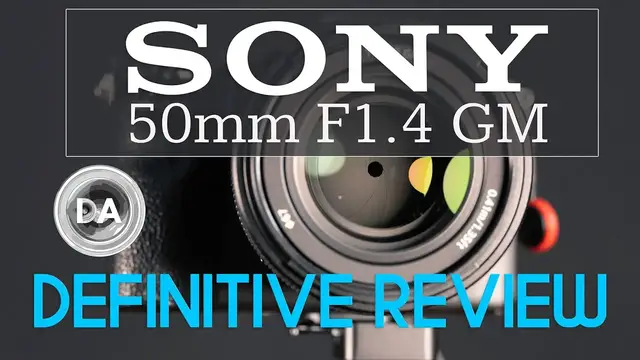
Sony FE 50mm F1.4 G Master Definitive Review | The "Goldilocks 50?"
Jul 16, 2023

Photographer Dustin Abbott shares a definitive review of the Sony FE 50mm F1.4 GM lens - is this lens "just right"? | This video is sponsored by Fantom Wallet. Visit https://store.fantomwallet.com and use code DUSTIN15 to get 15% off | Read the Text Review: | Read the Text Review: http://bit.ly/50GM14da | Visit the Image Gallery: https://bit.ly/50GM14pics | Purchase the Sony 50mm F1.4 GM @ B&H Photo https://bhpho.to/3kRK1rj | Adorama https://howl.me/cjtu4KbD3KN | Amazon https://amzn.to/3YFQrb3 | Camera Canada https://shrsl.com/3yhqt | Sony Canada https://bit.ly/50GMsony | Amazon Canada https://amzn.to/3kOIC4R | Amazon UK https://amzn.to/41MOSuu Amazon Germany https://amzn.to/3YuEBQG | Used at KEH https://shrsl.com/3yhqr
Purchase the Sigma 50mm F1.4 DN ART @ B&H Photo https://bhpho.to/3WOYgtM | Adorama https://howl.me/cjtu8nvC1eU | Amazon https://amzn.to/3kXe5Sc | Camera Canada https://shrsl.com/3xaqm | Amazon Canada https://amzn.to/3Rfukpu | Amazon UK https://amzn.to/3DpAwpk | Used at KEH https://shrsl.com/3wlbv | eBay https://ebay.us/Dnr6jX
Purchase the Samyang AF 50mm F1.4 II @ B&H Photo https://bhpho.to/3FYqUAR | Adorama https://howl.me/cjtu8obt10i | Amazon https://amzn.to/33bGRWJ | Amazon Canada https://amzn.to/3rkv4Nv | Amazon UK https://amzn.to/3FntDmt | Amazon Germany https://amzn.to/3FmhJcI
Check out the DA Merch here: https://bit.ly/TWIMerch | Become a Patron: https://www.patreon.com/dustinabbott | On the Web: http://dustinabbott.net/ | Sign up for my Newsletter: http://bit.ly/1RHvUNp | Instagram: http://bit.ly/DLAinsta | Facebook: http://on.fb.me/1nuUUeH | Flickr: http://bit.ly/1UcnC0B | 500px: http://bit.ly/1Sy2Ngu Follow Craig @ https://www.instagram.com/craigstoffersen/
Want to support this channel? Use these affiliate links to shop at:
B&H Photo: http://bhpho.to/1TA0Xge
Camera Canada: http://bit.ly/DLACameraCan
Amazon: https://amzn.to/3HrY64d
Amazon Canada: https://amzn.to/3qG1p18
Ebay: http://bit.ly/DustineBay
Make a donation via Paypal: https://www.paypal.com/paypalme/dustinTWI
=============================
Table of Contents:
=============================
0:00 - Intro and Concept
Show More Show Less View Video Transcript
0:00
Hi, I'm Dustin Abbott, and I'm here today to give you my definitive video review of the new Sony 50-millimeter F-1.4 G-master lens
0:19
This lens was an unexpected one in that less than two years ago
0:23
Sony did release their 50-millimeter F-1.2G master and continue to sell their 50-millimeter, 50
0:30
50 millimeter F1.4 Sony's ice planar lens, and my understanding from Sony is that lens will continue
0:35
to be sold, though I suspect we'll probably see a price reduction, as it currently comes in
0:40
several hundred dollars higher than what this lens does. So while this lens was unexpected
0:46
I think that it makes a lot of sense if you look at it from this perspective, and that it brings
0:51
most of what makes the 50mm F1.2 Gmaster special into a cheaper, $700 cheaper, smaller, smaller
0:59
20% smaller, and lighter, 262 grams lighter package. So in many ways, for those that are looking to travel a little bit lighter and a little bit lighter on their wallet
1:12
this is a lens that makes a lot of sense, particularly when, as we're going to discover in this review
1:16
it comes with the kind of performance that this lens does. So is this the lens that you should consider adding to your kit
1:23
Well, we'll find out right after a word from our sponsor. Today's episode is brought to you by Phantom Wallet, the minimalist modern wallet that is now even better with the new Phantom X that is crafted from aluminum right here in Canada
1:36
It is 22% smaller and 35% lighter, while still making it easy to access your cards and money when you need them, thanks to their unique fanning mechanism
1:46
You could even customize your wallet due to its modular design with accessories like a money clip, cash holder, ID display, and even Chippolo and Airtag tracking
1:56
integration. Visit store.fantamwallet.com to check out their unique sizes, styles, and finishes
2:02
that span from aluminum to wood to carbon fiber, and use code Dustin 15 for 15% off when you're ready
2:10
to check out. So let's talk about aspects of the build and the design here. This lens, as
2:17
mentioned, is smaller, so it's 80.6 millimeters in diameter or 3.2 inches. It is 96 millimeters in length
2:24
3.8 inches and it has a 67 millimeter front filter thread. Now that's important because that gives it a
2:31
common kind of design philosophy with two other important G master lenses including the 24 millimeter
2:37
F1.4 and the 35 millimeter f1.4. This lens has a lot of similarities to those lenses in terms of
2:43
its design and kind of its overall presentation. It's just a tiny bit shorter than the 35 millimeter as you
2:50
can see here and a little bit larger in diameter. But quite comparable as a
2:54
package and obviously sharing that 67mm front filter thread is going to be very useful if you
2:59
happen to own multiple of these lenses. So I like the design philosophy there. And just to give you
3:04
some perspective, it's also about 15 and a half millimeter shorter than what the new Sigma 50mm
3:10
F1.4DN lenses and weighs in at 150 grams lighter than that. So definitely a meaningfully smaller
3:18
and lighter package. It's also 12 millimeters shorter and 265 grams lighter than what is
3:24
is the Sony's Ice Planarm. So definitely outside of the Samyang 50mm F1.4 Series 2 lens
3:31
this is the smallest and the lightest on the platform. And particularly if you're looking at kind of this level of lens
3:38
it is a very reasonable package. Now, despite being a little bit smaller
3:42
it comes with the full suite here of Gmaster features, and that includes having multiple focus hold buttons
3:48
and so you have one accessible, whether you're shooting in vertical or horizontal positions
3:52
an AFMF switch, and then also a very comprehensive approach to the aperture
3:58
which includes an aperture ring that you can use either clicked at one-third stop to tense
4:03
You can switch over and to use it declipped and so that you can do smooth aperture racks
4:08
Though as always, this is aperture by wire. There's a little bit of lag between rotating the ring and what happens in terms of the actual movement of the aperture blades
4:16
You also have the iris lock switch that allows you to either lock into the manual aperture ring
4:22
or to lock out of it if you don't want any kind of inadvertent bumps on there
4:26
And so a really full-featured approach to the overall features on the lens itself
4:30
and I think that this is all set up in a well-designed, well-engineered way
4:34
in that everything is easily accessible, it's not too cluttered, and it just works as it should
4:39
We also have 11 aperture blades in the aperture iris, which allows for a very circular shape, as you can see as it opens and closes
4:47
The 50-millimeter F-1.4G master also has a very robust weather ceiling, with 11 different seal points from this diagram along with a flooring front coating
4:56
So it actually has, I believe, one additional seal point as compared to the F1.2 Gmaster
5:02
So a very thorough weather ceiling there. Also interesting is that we have a kind of two-pronged approach when it comes to minimum focus distance
5:09
and maximum magnification. With autofocus, you can get as close as 41 centimeters and get a 0.16 times magnification
5:17
which is a little bit better than the Rhesa Sigma, a little bit poorer than the F1.2
5:22
2G Master, but you can also manually focus down to 38 centimeters, giving you a 0.18 times
5:28
magnification, which actually ends up being the highest in this particular class of lens
5:33
Also included is a very nice lens hood. It's not too large
5:37
It has a locking mechanism, and I always like it has a rubberized front edge, which allows
5:42
you to either set it down like this, but also, more importantly, helps to absorb some shock
5:48
if you inadvertently bump up against something. It also comes with a nice padded nylon case with a zipper there, and so to help with transport
5:56
So it's a premium lens. It comes to the premium package, and at a price point of $1,299 U.S. dollars, it's not inexpensive
6:03
but for a Gmaster lens, it's actually one of the least expensive Gmaster lenses
6:09
Let's talk about autofocus. We have got dual-XD linear focus motors. These are Sony's high-powered, high-speed focus motors, and while some will point out that the 50-millimeter
6:19
F1.2 has quad focus motors. The reason why this one doesn't have quad focus motors is not really
6:26
Sony trying to save money. It's just unnecessary. The elements here are smaller and lighter than in the
6:31
50mm F1.2, and we have got very fast autofocus that is just as fast, if not faster, than the
6:38
lens with the four quad motors. It is perfectly capable of keeping up with fast action, and, of course
6:45
being a first-party Sony lens and having this high-powered focus system, it is compatible with
6:50
say on my Sony Alpha which I got it mounted on here the 30 frames per second burst rate So as you can see in this sequence here of Nala coming across on the floor somewhat poor lighting and I had to crank the ISO for this
7:04
but I also put it in high-speed mode, and it was just flawless the way that it tracks her across the floor
7:09
even as she gets very close. That really sets a lens like this apart from a lot of other competitors
7:15
and the fact that you can shoot it with that high-speed action and get such good autofocus results is very, very
7:21
impressive. Autofocus was also good during a quick portrait session. The only time that I ever saw any kind of miss at all was on a couple of shots where I had the lens or the hood pulled down over my face and so it was partially blocking the eye and it just caught a little bit of the texture of the fabric there rather than getting on through the eye itself. Not a big miss but just a very, very minor one. But in general, autofocus was very good during that. Also, we used it during an event. I had my assistant shooting in an event
7:51
in our church. And a lot of different varieties of focus distances
7:56
and shooting often at F1.4. Auto focus was flawless. It just nailed it every time
8:01
And as I looked back over the images at high magnification, they were all perfectly focused
8:06
I also note that the manual focus ring here, though it is focused by wire and a little bit on the light side
8:12
but it is fully linear and so I could do repeatable focus pools
8:16
And I found that it actually was, I didn't mind in some ways the light touch
8:20
when I was just trying to focus with a finger, for example. I was able to get really smooth results there
8:27
Now, on the video side, things are good, but maybe not as exceptional as I thought that they might be
8:32
I had a good result when I was approaching the camera that it tracked consistently and moving at that speed
8:38
There was no problem in it moving effectively along. When I did my hand test, I found that the results were fine
8:45
but it wasn't quite as snappy and responsive as you might think under that circumstance
8:49
And so it worked fine, but it didn't just, you know, jump right back
8:53
And so some might be disappointed at the speed of some of those focus transitions, which seemed to emphasize smoothness rather than overall speed
9:01
You can also see in the focus pulls test that while the focus pulls look good
9:05
there is some focus breathing there. And that's fairly similar into what I saw with the recent Sigma
9:12
The difference being is that if you happen to have a newer Sony camera, they do have, some of them have a focus breathing compensation
9:18
And as you can see here, shot on the A74, you can see that using the focus breathing compensation basically eliminates that focus breathing
9:26
So it's one advantage, again, that you have for a first-party lens that you don't necessarily have with the Sigma lens
9:33
as Sony is to at least this point is limiting that feature only for their first-party Sony lenses
9:39
So autofocus overall was just fantastic. It is incredibly fast. There's basically no lag between any kind of focus change
9:46
Focus was accurate in my various tests. I was overall very, very pleased with the autofocus performance
9:52
And by the way, I did use it. You didn't know it, but I did use it on a number of these type sessions
9:58
and the reality was that it did flawlessly during that time. Never left my eyes, no pulsing, anything like that
10:05
So very good autofocus results. Image quality is, if anything, even more impressive here
10:11
Now, the MTF chart shows a very impressive result, but I think in many ways the MTF chart is
10:16
only the starting point here, and that real world sharpness is even more impressive
10:20
And I know that some outlets have reported that this is setting a new record at smaller
10:25
apertures for just the sharpest lens that they have essentially seen of its kind
10:30
And as we're going to see in our image quality breakdown, this lens is a very, very strong
10:35
option when it comes to its optics. Let's take a look. So let's start by taking a look at vignette and distortion
10:40
You can see that there is some pincushion distortion here along with some vignette in the corners
10:44
I was able to manually correct it fairly well. You can see it's not perfect
10:49
It's not entirely linear, but for the most part, I was able to get a clean correction
10:53
that I think that would work in probably 99% of situations. The numbers I dialed in here were a minus 5 on the distortion front
11:01
and a plus 58 on the vignette front, so roughly about two stops of vignette in the corners
11:08
Now here's a look at a corrected JPEG that comes out of camera
11:12
And you can see that the actual correction profile from Sony is going to give you a cleaner correction of the distortion without any of the kind of leftover wave that I had in my manual correction
11:24
Now, to give you a little bit of perspective on this, you can see that the distortion is more pronounced and as is the vignette on the new Sigma, 50 millimeter F1.4
11:34
This is about the same as the 50 millimeter F1.2. and if we correct or take a look at the Samyang
11:42
you can see that the Samyang actually is our winner here as far as having very, very little distortion to begin with
11:49
and not quite as much vignette either. So in terms of chromatic aberrations
11:55
the longitudinal chromatic aberrations are present. You can see that there's a bit of a green fringing
12:01
and a purple fringing there before the four and after plane of focus
12:06
though not as pronounced as what I saw on the sigma. A few other kind of real-world examples here is that you can see, yeah, if you look at it at just a global level, you're not really seeing anything in terms of chromatic aberrations
12:18
Now, if you look in down here at a pixel level, you can see there's a little bit of that purple fringing before the plane of focus, which is here
12:25
And then if we look after the plane of focus, you can see a little bit of green fringing around these bouquet highlights
12:32
Again, you're probably not going to notice that on a regular level, so I wouldn't consider it a major concern there
12:38
at all. Looking at this image here, we can see again. There is the faintest hint of some fringing
12:44
here in this high contrast area, but very, very little to look at and certainly nothing
12:49
that you're going to pick up on just a global level of sharing an image. Now, lateral
12:54
chromatic aberrations are pretty close to perfectly corrected. If we look here at the
12:59
edges of the frame, there is essentially no fringing of any kind showing up here in these bare
13:04
branches, high transition areas. So nothing that I'm concerned about. about here we also get a little bit of look at the potential sun star that you can create
13:12
if you put it in the right situation 11 bladed aperture so we have 22 blades of the sun star so
13:19
nothing particularly concerning so far how about resolution in contrast 50 megapixel Sony alpha
13:25
1 is the sensor being used here I'm showing these results at 200% we can see in the middle of
13:30
the frame this lens is fantastically sharp I mean just contrast sharpness everything is
13:36
exceptionally good here great detail everywhere we look. Mid frame looks just really, really fabulous. I mean, that is a fantastic end result
13:45
We can see just high levels Everywhere we look a really consistent performance by the way We can see everywhere that we look It looking just very very sharp very crisp and as I look around the frame that just an exceptional wide open result on a high body
14:00
Now, we can see that there is just a little bit of drop-off here in the corner, but frankly, I mean, it's so sharp that there's very little concern there in any area that we look
14:11
It just looks really great all around. So to put that in perspective, here's a look at the 50-millimeter F-1.2
14:17
Gmaster at F1.4 as well. And so we can see looking in the center of the frame, I would argue that the 50
14:24
millimeter F1.4 is actually just a little bit sharper and higher contrast
14:29
Looking at the midframe, I would say the same. In fact, it's only in the corner here where I would say that the 50
14:37
millimeter F1.2 is just a little bit better contrast, a little bit better in
14:42
result there at the edge of the frame. But, you know, in every other place, I would argue that the
14:47
F1.4 lens is actually the sharper of the two. We'll take a look at two other competitors here
14:54
first being the Samyang 50mm F1.4 Series 2 lens. Now the Samyang holds up really well in the center of the frame
15:01
though I think that the new G-master is probably just a little bit better
15:06
in the center of the frame. Samying is held up well at this point, but we can see at the mid-frame
15:11
There's no contest. The GM is very obviously sharper, and down into the corner
15:16
we can see that the same is true there, that we start to get towards a more smeared result on the Samyang
15:22
whereas the GM lens is holding up much better. And how about the new Sigma 50mm F1.4
15:28
If we take a look in the center of the frame, the GM lens is quite obviously sharper there
15:33
Definitely a stronger result there. The Sigma is really strong in the midframe, though I don't think that it's sharper than what we see from the Sony here
15:42
The Sony is showing very, very good results. And even if you look in this five, you can just see more texture showing up in there
15:49
than what we are seeing on the Sigma itself. Looking here in this mid-frame, again, there's just a little bit more pop and vibrancy
15:56
coming off of the Sony result. And it's only as we get towards the edge of the frame here
16:02
where I would argue that the Sigma has a little bit of an advantage. Just a little bit more contrast and a little bit more of the fine details here
16:09
of the structure that show up on the Sigma result. But I would say over at least two-thirds of the frame, the new Sony G-master is the sharper of the two lenses
16:20
So what happens when you start to stop the lens down? Well, in the middle of the frame, you know, it's already so good
16:25
I think there is a little bit more contrast there, but there's only so much room for improvement there also in the mid-frame
16:32
Down here in the corner is where there is the greatest potential for improvement. You can see that the image is brighter, so contrast is a little bit improved
16:39
And maybe a little bit more texture information here. but it's not significantly changed yet
16:46
We stop on down to F2. We can see that their contrast is boosting still a bit further
16:52
We can see as we look other places in the frame that contrast and resolution is just
16:57
I mean, it's just fantastically good at this point. Looking over on this left side
17:01
you can just see that there's more texture and just a little bit more contrast popping up
17:05
in the hair there of the queen, and by and large, just a generalized improvement
17:11
But already we had an exceptional result that's just getting a little bit better as we stop it down
17:16
Now, if we go from F2 to F2.8 here in the corner, we can see that right off at the edge of the frame
17:21
is where we're seeing the most notable improvement to where just more texture and more contrast in the building there
17:26
If we move on to F4, we can see that that's better still
17:32
So now quite a noticeable difference between F2 and F4 in terms of our edge performance
17:38
And you can see a little bit more still if you go from F4 to F5.6 to where contrast
17:42
and resolution is really just top-notch. And so anywhere you look in the frame
17:47
we're just at fantastic levels of performance. You couldn't really ask for any more resolution
17:53
and contrast than what you're getting out of a lens like this. Minimum aperture here is F-16
17:58
And so it's not as small a minimum of aperture as we see on some lenses
18:03
And, of course, the lens is so sharp to begin with that it holds up reasonably well to diffraction
18:08
but you can see that compared to F-1.4, we've definitely lost a lot
18:12
on this high resolution body nonetheless. And while it still looks pretty good
18:16
by the standard of many lenses, I would say that, you know
18:21
I would still probably use F11 as a typical maximum or should me minimum aperture
18:26
that I would personally use on a high resolution body. So as noted, we have two different options
18:31
when it comes to our minimum focus distance. One as autofocused, the other manually focused
18:36
And so you can increase that magnification by 0.2%. If you use the
18:42
manual focus option here. So as far as the performance, both look quite good and fairly similar
18:49
I would say that the autofocused result just a little bit further out is a little bit better
18:53
as you can see, just a little bit better contrast and a little bit better consistency
18:57
probably a flatter plane of focus there. But at the same time, both of them look good
19:03
Here's a real world illustration, which I think looks a little bit more dramatic to show you how much that magnification can change with a three-dimensional object
19:12
And so you can see it's a fairly noticeable difference. And it also allows you to blur that background out just a little bit further
19:17
when you're at that closer focus distance. So speaking of the bouquet quality, we can see as far as the geometry
19:24
that there is some deformation near the edges of the frame, kind of that cat eye shape
19:28
It's one area where I think that the F1.2 Gmaster stands apart
19:33
and that it does give you a little bit more better, a little better geometry, I should say
19:38
and also larger and softer specular bouquet highlights. there. Now as you stop down here at F2, mostly circular across the frame, you can see it's not
19:47
completely perfect, but quite good. And then at F2.8, a good circular shape everywhere. And we could
19:54
see that the quality of the bouquet is staying good. It's not getting busy, not any kind of hard
19:59
inner lines. And so overall, a good performance there. So to look at some real world examples
20:05
here's one where we've got a little bit more of a busy scene. So first of all, I mean the
20:10
actual resolution and contrast on the subject is fabulous. I mean, that's just fantastic
20:15
There's a lot of potential for busyness in the scene, and it's not perfect for sure
20:20
There's a little bit more edging than what I would like. I would say on this particular complicated scene
20:26
you would see a difference with the 50mm F1.2, and that everything would just seem a little bit softer and creamier
20:33
Looking at this image, kind of at a medium distance, first of all, I mean, fantastic on the sharpness and contrast
20:40
that just off the chart here and as far as the overall rendering beyond I would say that it it very pleasing in that setting in this setting it it shows off a little bit more And so you can see how number one we have a really really high resolution and
20:55
contrast on the subject that looks fabulous. What I really like is in this zone. And it's almost
21:00
hard to describe in words, at least for me, to articulate what I see here. But it's kind of this
21:06
blending of colors that almost has a kind of a smoky look to it that I really, really like. I find
21:14
that very good lenses can produce a really kind of indefinable quality to the bow cap
21:19
Now, obviously, not perfectly circular as far as the specular highlights up here
21:23
If that's something that bugs you, you might want to pony up the extra money for the Gmaster
21:28
or the F1.2G master, I should say. But in general, I mean, the overall look of the defocused area and just the general rendering
21:35
from the lens, I find very, very nice. Now, of course, you get up close and you really blur out the background
21:41
You really can create that creamy look. And so obviously here I'm using the sugar cubes to focus
21:48
In another shot here, we've got some tulips on the table. And so you can see that transition to defocus is really nice, no hard outlining, even on hard edges like these chairs beyond
21:59
They're blurred out really quite nicely. Returning to the teacup here for a moment
22:04
And so you can see once again, obviously, on the subject, which is challenging. Lots of light going through there, a very thin edge
22:10
It's handled really, really well in terms of the chromatic aberration. Overall, the quality of the background blur is nice here
22:17
I would say my only complaint probably is the somewhat pronounced cat eye or lemon shape there towards the edge of the frame
22:23
In general, however, though, this is a really, really nice rendering result. So for portraits, here at F1.4, we can see, obviously
22:33
you're never going to have to ask for more resolution than what you're going to get out of this
22:37
Also, skin textures look good to me, and this is just a quick casual type portrait
22:43
single light, fixed light, but you can see that produces a good end result a little bit further
22:49
away. Same kind of result here, just very, very good focus on the eye, very good rendering of
22:55
details, all of that, no problem. Here I put up the hood to make things a little tougher on
23:00
autofocus, and by the way, it wasn't flawless. There was a couple of angles to where it caught
23:06
maybe the texture here rather than focusing on to the eye. But we can see once again, skin textures
23:12
are nicely rendered tons of resolution in detail there. So let's talk about flare resistance for a moment
23:18
At wide apertures, in this particular image, the lens has handled things really quite well
23:24
There's very little as far as ghosting and veiling. And here the F11 example
23:29
you see a little bit more in terms of a ghosting pattern. If we pan back and forth, however
23:35
first at wide open, you can see that that's not always the case
23:38
There's a little bit more ghosting artifacts there. And then if we stop down to F11
23:42
I would say in general I'm seeing a little bit less at smaller apertures than I am at wide apertures
23:48
I would consider this to be a slightly above average result, but not the best result that I have seen
23:55
One final thing that I'll show you is I did, one thing that Sony touted is that this has a good coma correction
24:03
and so I wanted to take a look at that in case those of you that want to use this for shooting stars at night
24:09
So first of all, you can see in the center of the frame, everything is really well controlled
24:12
the fact that we have fairly low chromatic aberrations holds up well in this situation
24:18
As we move towards the edge of the frame and we have some pronounced stars up here in this corner
24:22
which gives us kind of our best result, we can see that there is some deformation
24:27
but it is not at all extreme. This is actually a fairly good performance here in that we don't have major wings being formed
24:34
They just become somewhat more like wedge-shaped here, stars in the corner
24:38
Overall, that's a pretty nice performance when it comes to coma, and I would say that Sony is living up to what they have touted on this lens
24:47
This is a very good coma correction, certainly a lens that would be worth using for the night sky
24:51
All in all, a strong optical performance. So as you can see, that is a very, very strong optical performance
24:57
It gives you just incredible sharpness while also offering a nice creamy bouquet
25:02
I don't think as magical as the 50mm F1.2, but very, very nice
25:07
and it's that rare combination where you could have incredible sharpness in contrast and also still have a nicely defocused background
25:14
So who is this lens for? I think it makes a lot of sense for those that want the premium option
25:19
but want a smaller price and size. It doesn't always... For a while there, it seemed like the logic was
25:27
that if you wanted a premium lens, it always meant a larger lens
25:31
But there are a lot of people that actually want to travel lighter, and the reality is even for myself
25:36
I own a lot of lenses, but I can tell you freely that I reach more often
25:40
for those lenses that are smaller and lighter. Maybe if I want to pack multiple primes
25:44
I love shooting with primes, but you can only carry so many lenses with you
25:48
particularly if they are larger and heavier. So a smaller lens is easier to bring along
25:53
and maybe in addition to other focal links as a complement. And so I will reach for a lens like that more often
25:58
And also, not everyone wants to spend $2,000 on a 50-millimeter lens
26:06
Very likely won't be their only lens, and so that's a pretty expensive investment
26:10
And obviously there are cheaper alternatives to this lens in both the Sigma and the Samyang
26:15
and both of them are very good lenses, though I would say as a complete package, neither compared to this particular lens
26:21
And so if you want that more kind of medium price point at $1,99 US dollars
26:27
this lens, I think, makes a lot of sense. Now, if you want the kind of the most exotic, most impressive looking images
26:34
particularly for like portrait work, I would say that the 50mm F1.2 is still the overall winner
26:40
I think that it can achieve things with shallow depth of field that this lens can't quite
26:45
But this lens is even sharper. And so if you're willing to deal with just a little bit less exotic-looking images
26:52
but to have all of that performance on tap, I think that this lens makes a lot of sense at about 66% or so of the purchase price
27:01
of the more expensive F1.2 option. So at the end of the day, I think that this lens will do just fine
27:08
There are plenty of people that will look at this as they, the Goldie locks the just right when it comes to price and performance
27:14
I'm Dustin Abbott, and if you look in the description down below, you can find linkage to my full text review, also to an image gallery
27:20
if you'd like to see more photos or look at them longer. There's also buying links there if you'd like to purchase for yourself
27:26
links to follow myself or Craig on social media to become a patron or to get channel merchandise
27:30
If you haven't already, please like and subscribe. Thanks for watching. Have a great day and let the light in
#Online Media
#Camera & Photo Equipment
#Event & Studio Photography