Up next in 10


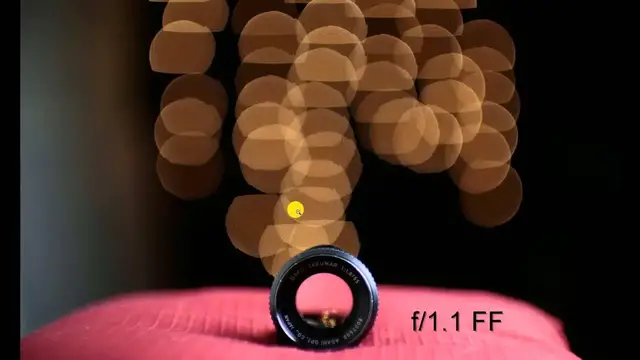
Photographer Dustin Abbott shares a detailed, extensive look at the bokeh quality from the rare and legendary Canon EF 50mm f/1.0L lens both in a controlled environment (where aperture shape and how it affects bokeh at various f-stops is also considered) and also in a variety of real world settings. Take the time to get a rare, unprecedented look at the bokeh performance of this bokeh monster and how a massive, f/1.0 aperture affects real world shooting.
Want to support this channel? Use these affiliate links to shop at:
B&H Photo: http://bhpho.to/1TA0Xge
Amazon: https://www.amazon.com/shop/dustinabbott
Ebay: http://bit.ly/DustineBay
Make a donation via Paypal: paypal.me/dustinTWI
Get a discount off all Skylum Editing Software (Luminar, Aurora HDR, AirMagic) by using code DUSTINHDR at checkout: http://bit.ly/LuminarDLA
Become a Patron: https://www.patreon.com/dustinabbott | Check me out on: Personal Website: http://dustinabbott.net/ | Sign up for my Newsletter: http://bit.ly/1RHvUNp | Instagram: http://bit.ly/DLAinsta | Google+: http://bit.ly/24PjMzv | Facebook: http://on.fb.me/1nuUUeH | Twitter: http://bit.ly/1RyYxIH | Flickr: http://bit.ly/1UcnC0B | 500px: http://bit.ly/1Sy2Ngu
My filming setup: Sony a7R III: B&H Photo: https://bhpho.to/2D6ibNO or Amazon: http://amzn.to/2CNxOvH | or | Sony a9 @ B&H Photo: https://bhpho.to/2HyWIyt or Amazon: https://amzn.to/2s1vYE0
Tamron 28-75mm F2.8 RXD @B&H Photo: https://bhpho.to/2FA00la or Amazon https://amzn.to/2G2kaEr
Lights: Rotolight AEOS @B&H Photo https://bhpho.to/2IK7mqV | Genaray Contender @B&H Photo: https://bhpho.to/33HbGNM | and Aputure AL-MW: https://bhpho.to/2N3MtZV
DISCLAIMER: This video and description contains affiliate links, which means that if you click on one of the product links, I’ll receive a small commission. As an Amazon Associate I earn from qualifying purchases.
Show More Show Less View Video Transcript
0:00
Hi, I'm Dustin Abbott. When anyone begins to think about the Canon 50mm F1.0 L series lens
0:20
this rare and unique lens, people immediately think of bokeh, of course, and that very unique
0:28
huge aperture and when you look at the lens there's a massive amount of glass there
0:33
And so of course people want to know what does it do when you throw something out of focus
0:37
That's what we're going to look at in this segment and we're going to examine interactively both with
0:42
a controlled setup to where as you can see behind me we've got set up to where we have some
0:48
bokeh lights that will produce out of focus spherical highlights. We'll take a look at what
0:54
happens when those are in the frame and as the aperture stops down. So we'll take a look at the
0:58
aperture changes as it goes. But then also in the test, we're going to look at some more real world
1:05
results and then just see what it does in a variety of other settings in producing bokeh
1:10
And so jump in with me and I hope you enjoy the results that we get to. Now our first image here
1:17
we're actually going to start looking at it on a crop sensor camera. I was doing a comparison to
1:21
the new Rokinon 50mm f1.2. And since that is a crop sensor specific lens, actually for mirrorless
1:30
I use the adapter and through the 50mm on here. So those of you that have a crop sensor, here's
1:36
the results you get. So the first thing to notice, of course, is that the bokeh highlights are huge
1:43
And as we see these massive bokeh circles, we see just how much it's capable of producing
1:48
Now that part is wonderful. What isn't so wonderful, of course, is that there is a tremendous amount of busyness within the circular highlights here, what you might call onion bokeh with very, very clear concentric circles throughout
2:04
out. We also see that there is a little bit of kind of that hazy look of lower contrast on our
2:10
main subject here. And if we take a close look here, we see that there is very strongly pronounced
2:15
chromatic aberrations on a reflective surface here of the metal of my SMC Takumar 55 millimeter F1.8
2:23
We also see over here to the sides that there is a little bit of the lemon shape towards the edges
2:29
of the frame. Now, as we stop down to F1.1, that's something you're not going to say very often
2:36
stopping down to F1.1. Anyway, we see that right off the bat, the first thing you notice is that
2:43
the edge of the aperture blades, there's kind of almost like a tooth look that begins to show
2:50
Even with that little bit of stop down, you can see those points begin. On a positive note
2:55
over here we get a rounder shape than we did initially. The overall busyness is not really
3:01
much more pronounced. And one thing that is a positive, although you'll see in this series
3:05
there is a little bit of green fringing on these bokeh highlights. The outer edge is reasonably
3:11
soft here. And so that is a positive. Now on down to f1.2. And this is where the lens's successor
3:19
began. Now, you can certainly see the teeth of the edges of the aperture blade, and it creates
3:25
almost like a gear type effect, which is fairly unique. I've seen a few vintage lenses that do
3:31
something similar. Almost no modern lenses do this. The positive here is that now across the
3:37
frame, the circular highlights are all quite good, and we're also starting to see a bit more
3:41
contrast on our main subject here. I wouldn't say that the busyness is necessarily more pronounced
3:48
It's just busy, period. Now, stopping down to f1.4, this is where most of the competitors begin here at this point
3:57
And so we have already gone through a full aperture stop difference here
4:03
And so we see basically everything is somewhat the same. It's just now we see that those teeth and the shape of the aperture blades is just a little bit more pronounced
4:13
But again, on a positive note, the chromatic aberration is starting to diminish here
4:18
the sharpness is coming up. Now at f1.8 we see now we're starting to see the
4:25
actual shape of the aperture itself when it stopped down and so there are eight
4:30
aperture blades and so you can see an octagon shape beginning to emerge here
4:35
Now finally at f1 I really starting to see a more of an uptick and overall I would say that overall there much more contrast punch to the image here and less chromatic aberrations as well although they still there
4:49
both purple fringing here and then some green fringing on the bokeh circles. Now these little
4:55
bits of like these dots you see here that's a result of there being some kind of dust or something
5:01
within the lens itself and of course since this is a lens that hasn't been made for some time
5:07
that certainly is to be expected. Now at f2 we very clearly see the stop sign or octagon shape
5:15
of the aperture blades. Chromatic aberrations are dropping but still still there and overall here we
5:23
see there still is that bit of green fringing there as well. Moving on down on to f2.8 and
5:29
from here on we see kind of another oddity emerging and that is that when the lens is
5:34
stop down. It doesn't actually stop down, at least in terms of the aperture blades, it doesn't stop
5:39
down in a fully symmetrical way, but we see that it stays fairly symmetrical on the right side
5:47
but the left side will start to de-shape here a little bit as we go. Now, even here though
5:53
I certainly would prefer these shapes to like the weird hexagonal shape of the older 50 millimeter
5:59
f1.8 lenses. Now here we see the chromatic aberrations on our subject are basically
6:05
almost completely gone and a contrast and resolution is nice and high
6:11
At f4, just kind of a little bit more of the same as you, I'm sure you've noticed that as you
6:16
stop a lens down, the amount of bokeh that is produced in these highlights, you can see the
6:22
amount of bokeh is diminished as the plane of focus is extending further and further out
6:28
because of the larger depth of field. Now, here we see the overall sharpness and resolution is great here on the lens
6:36
And then finally at f5.6, you know, we still have that non-symmetrical shape here
6:43
and we start to see a little bit of the light bleeding that starts to take effect
6:47
And, of course, by the time you stop all the way down to about f8 and even more so at f11
6:53
that will start to turn into the starring effect, which is a more pleasing look
6:59
And that's you get a sunburst or a sun star. Overall, our resolution here is very impressive
7:05
Now that's crop sensor. So now as we look at the performance on a full frame, we get a very, very different kind of look
7:13
And wide open here, I find this personally to be quite odd and distracting looking
7:20
Number one, we get almost like a goblet shape, or to me it kind of looks like a bunch of wooden bowls up here
7:26
to where there's actually a clipping effect that takes place, and so the Boka circles are not really complete
7:32
but all of them are kind of off-shape. And then also, we get almost like a three-dimensional effect
7:37
It kind of reminds me of the design of the Death Star from Star Wars
7:42
where there's that kind of aperture at the top, and then it sinks on in. It's a very, very unique effect
7:48
I don't know that I've ever seen anything quite like it before. At F1.1, we see that now the
7:55
clipping effect is diminishing, and so we're heading towards being a little bit more
8:01
circular, and if you look here, that three-dimensional effect is still pronounced
8:07
there to where there's almost two different shapes that are taking place here, one out towards the
8:12
edge and then the center circles. It's very, very unique. One other thing that I'm not crazy about
8:17
is the heavy overlapping of the circles makes a very, very strong and definite color variations
8:24
that either is very artful to your eye, and maybe as an abstract, it is that way
8:31
But it also is quite dominating and distracting. Now, if we look at our actual subject
8:37
the kind of softness or haze here is, of course, magnified on a full frame lens
8:42
And as you can see, the actual, the width of that chromatic aberration here is quite wide
8:47
And so you're losing a definite line at this point due to that chromatic aberration
8:52
So if we stop on down now to F1.2, we see that now we basically have lost that clipping effect for the most part
9:00
And so most of these, except for some along the top half, we've seen the full circular shape emerging
9:06
Once again, we see kind of the teeth of the aperture blades. And that overlap is a little less distracting
9:12
Chromatic aberration, there's still some softness here. and that chromatic CA along here and a bit of the along the fringing there Okay so now at f1 and this is where the majority of the competitors kick into gear I will say that now we starting to see some contrast on our main subject and more resolution
9:32
there. The chromatic aberration, we're starting to see that line start to resolve again. And so here
9:38
I would say in some ways it's less distracting. The overlap is less pronounced, but there's still
9:43
these kind of really dark areas that really kind of draw my eye and not necessarily in a positive
9:49
way. Down to F1.8. Now we basically, other than a little bit of clipping towards the top end of the
9:55
frame, we're getting more circular shape. Although now at the same time, the hexagon is beginning to
10:01
emerge at this point. Still on the outer edge, we get those kind of weird three-dimensional effects
10:06
within the Bokeh circle. On our actual subject, I would say that the chromatic aberration almost
10:12
resolves itself more quickly on the full frame here. And so it's, I mean, it's barely objectionable
10:18
here at this point and our overall sharpness is of course better. Now at f2 the octagon shape is
10:25
definitely emerging at this point and the teeth are kind of disappearing but the octagon shape
10:33
is now emerging and basically all of those various effects are still there still pronounced but
10:39
probably somewhere between f1.8 and f2 you're starting to really bring on the the overall
10:44
contrast and sharpness in the lens. Now at f2.8, you know, once again, we're starting to see that
10:50
slightly deformed shape of the octagon shape here. But in some ways, it almost seems a little
10:58
less pronounced on full frame. But now as we move on down to f4, you can really see that
11:03
kind of non-symmetrical shape here along the bottom. But overall, really, that's not bad
11:09
looking there at that point. And now on our main subject, we've got lots of sharpness and
11:14
resolution. So finally, as we stop down at our last stop for this test at F5.6, we see that
11:21
we've got, of course, separation from all the bokeh highlights. So there's none of the overlap
11:25
but anyway, nothing new or weird that's been introduced in some ways. There's a little bit
11:30
less of the light bleed here as compared to on the crop sensor. Now it's important to not just
11:37
look at this kind of controlled test that really doesn't represent a very large percentage of the
11:42
way we actually shoot in the real world. But here we're going to take a look at a few real life
11:46
samples. So here's one of a familiar scene, Scrabble game. And so of course you can see over
11:52
here on the side, there's really quite a lack of definition and kind of a hazy effect. But if we
11:59
look close in the center of the frame, we find that there actually is a good deal of sharpness
12:04
here on our main subject. It's just really the lack of contrast and the chromatic aberrations that
12:08
introduce that hazy type effect. But what I really want to point out from this image is that I was
12:14
about two feet away from the subject here, the middle of the scrabble board, and then these boys
12:19
are only about two feet further. And so what is very, very unique about this lens at a 50 millimeter
12:25
focal length is how defocused they are at such a very short distance. Now this is also at f1
12:34
And so there's some good and bad here. Number one, we've got a very tiny depth of field at this point
12:41
But the downside here is that we have some fairly pronounced chromatic aberrations in the foreground
12:46
because of the transition from the dark to the bright there. And so there is a little bit of that in the green fringing here
12:54
but it's not nearly as pronounced beyond the plane of focus. But here we see how a very unique image that can be produced by that very shallow depth of field
13:05
Now this I think is really, really cool because it shows how completely defocused a background can become
13:10
I took this picture by getting quite close to the paddle and the ping pong balls
13:16
But what's amazing is the ping pong net is right here. And that ping pong net is only about a foot and a half beyond that
13:24
But look how completely defocused it is. And that is something you really just would have a hard time doing with other 50 millimeter options
13:31
And once again, while there is some chromatic aberrations, and thus you see some lack of definition along this edge
13:37
there really is a fair amount of resolution along the very, very narrow plane of focus there
13:44
I think this is a really cool image that shows how you can transform very ordinary objects into something unique with this lens
13:52
Now here's one that I wanted to show you that's actually stopped down to f1.4
13:56
And so we see our plane of focus is right towards the bottom edge of the frame
14:00
So we have some decent resolution here but it shows the nice blurring of the background And you know if you had a little bit more interesting subject here in the foreground for example in a portrait setting this would create
14:14
a very nice effect. And so I think that the lens actually does better with this kind of setting
14:20
than what it did with the bokeh highlights or bright lights, spherical highlights in the frame
14:27
And I think that this is a nice looking image here. Now here's one that I think is just beautiful
14:32
all around. We have nice sharpness here on our main subject. You see lots of detail along the
14:38
edge of that leaf, but then we have a beautifully defocused region along here. This all looks
14:44
lovely. And if we look down towards the very bottom of the image, I just think this is all
14:48
very nicely blurred down here. Very creamy. Now this area here is perhaps a little bit busy to
14:55
some eyes. In many ways, this reminds me of the drawing that comes from the Zeiss planar T 50
15:01
millimeter f1.4 lens. And I found it quite artful. Maybe you might find a little bit busy, but I
15:08
think that that is a nice result there. Now here, there's really nothing to criticize about this
15:14
This is a beautiful image and it shows off another thing about this lens. And that is that it does
15:19
have very, very nice color rendering that has a warm kind of og feel to it that I found it to
15:26
be fairly unique. And so here we've got a little bit more color in the scene and this is rich and
15:31
beautiful. These are flowers, tulips that are set in a vase in the middle of a kitchen table. So
15:37
I want you to note that how completely the kitchen has disappeared here. This is actually a chair at
15:43
the end of the table, just a few feet away. And look at how it has just disappeared and just
15:49
creates a nice color contrast instead. And here on our main subject, we have enough information
15:56
there are enough resolution to create a truly beautiful artistic image. This is stopped down to
16:03
F1.2 here. And so I wanted to show you just kind of a difference of what you can accomplish with
16:08
the same scene. So stopping down to F1.2 has given us some nice resolution overall here on
16:14
our subjects. You can see there's a little bit of that green fringing that's there. But as we look
16:18
towards the background, we can see that there are nice circles here. These are leaves in the
16:23
background, but that's just some lovely bokeh back in that area. Now, if we step back to F1
16:30
look at the difference in the scene. For one thing, this area over here has really, really
16:36
kind of disappeared even further. But as we see in our background here, we have less circular shapes
16:42
but what we do have is more just kind of almost like a watercolor type effect, just very artistic
16:49
and quite beautiful here. Our resolution is not quite as strong. Of course, that depth of field
16:55
is just very narrow along the edge of that leaf. We do see a bit more chromatic aberrations
17:01
and you'll see that they're quite wide. The downside of them being so wide is that they are
17:06
hard to correct for in post-processing. You end up with, if you remove that color
17:11
you end up with just kind of a two-wide gray area, which seems a bit odd. But the overall
17:16
effect here of the image I think is something that's quite artful and beautiful. So there you
17:21
have a look at a variety of different images, both in a controlled environment and then also just some
17:28
real-life examples. And so as you can see, the lens, it has a lot of character, to say the least
17:36
And whether that character is the result of having flaws or ugliness, that really comes down to
17:44
your opinion or perhaps in your mind it is unique and artistic. It certainly is unlike any other
17:51
lens that I've used before and the results you get are very very unique and if you become familiar
17:57
with the look of the lens you can immediately identify shots that were taken with it. So I hope
18:02
you've enjoyed this interactive look at the rare and elusive Canon 50mm f1.L and what it does with
18:10
bokeh i'm dustin abbott and if you haven't already please subscribe i'll have a few other segments
18:15
coming along the way as we'll look at this um this unique lens a little bit further as we go and then
18:22
ultimately i'll give you kind of a final review on it as well stay tuned also for some looks at
18:27
the roquinon 50 millimeter f 1.2 for mirrorless bodies and what it does in similar settings
18:34
Thanks for your time and for watching today. Have a great day
#Online Video
#Camera & Photo Equipment