Up next in 10


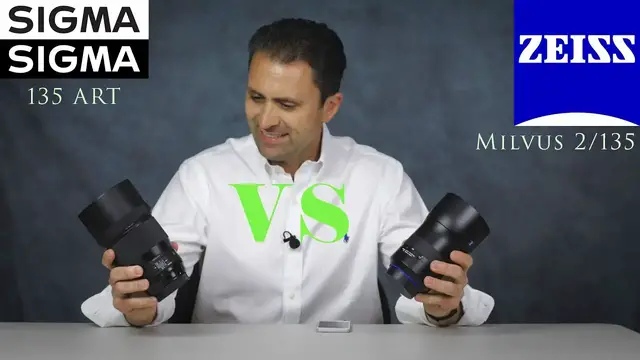
Milvus vs ART | 135mm Showdown | Photographer Dustin Abbott shares a detailed breakdown of the relative strengths of the two 135mm Titans - the Zeiss Milvus 135mm f/2 and the Sigma ART 135mm f/1.8. Both offer some serious strengths, but which one comes out on top? Zeiss Milvus 2/135mm Review: http://bit.ly/Milvus2135 | Sigma 135mm ART Review: http://bit.ly/ART135DA | Purchase the Milvus 2/135mm: B&H Photo https://bhpho.to/2oF8NZh | Amazon: http://amzn.to/2qqkTq8 || Purchase the Sigma 135 ART: B&H Photo https://bhpho.to/2rJAKnz | Amazon: http://amzn.to/2rs9xWV | My Patreon: https://www.patreon.com/dustinabbott | Zhiyun Crane - USA: https://bhpho.to/2gDJhnC | Check me out on: Personal Website: http://dustinabbott.net/ | Sign up for my Newsletter: http://bit.ly/1RHvUNp | Google+: http://bit.ly/24PjMzv | Facebook: http://on.fb.me/1nuUUeH | Twitter: http://bit.ly/1RyYxIH | Flickr: http://bit.ly/1UcnC0B | 500px: http://bit.ly/1Sy2Ngu Check me out on: Personal Website: http://dustinabbott.net/ | Sign up for my Newsletter: http://bit.ly/1RHvUNp | Google+: http://bit.ly/24PjMzv | Facebook: http://on.fb.me/1nuUUeH | Twitter: http://bit.ly/1RyYxIH | Flickr: http://bit.ly/1UcnC0B | 500px: http://bit.ly/1Sy2Ngu
Want to support this channel? Use these affiliate links to shop at:
B&H Photo: http://bhpho.to/1TA0Xge
Amazon: https://www.amazon.com/shop/dustinabbott
Ebay: http://bit.ly/DustineBay
Make a donation via Paypal: paypal.me/dustinTWI
Get a discount off all Skylum Editing Software (Luminar, Aurora HDR, AirMagic) by using code DUSTINHDR at checkout: http://bit.ly/LuminarDLA
Become a Patron: https://www.patreon.com/dustinabbott | Check me out on: Personal Website: http://dustinabbott.net/ | Sign up for my Newsletter: http://bit.ly/1RHvUNp | Instagram: http://bit.ly/DLAinsta | Google+: http://bit.ly/24PjMzv | Facebook: http://on.fb.me/1nuUUeH | Twitter: http://bit.ly/1RyYxIH | Flickr: http://bit.ly/1UcnC0B | 500px: http://bit.ly/1Sy2Ngu
My filming setup: Sony a7R III: B&H Photo: https://bhpho.to/2D6ibNO or Amazon: http://amzn.to/2CNxOvH | or | Sony a9 @ B&H Photo: https://bhpho.to/2HyWIyt or Amazon: https://amzn.to/2s1vYE0
Tamron 28-75mm F2.8 RXD @B&H Photo: https://bhpho.to/2FA00la or Amazon https://amzn.to/2G2kaEr
Lights: Rotolight AEOS @B&H Photo https://bhpho.to/2IK7mqV | Genaray Contender @B&H Photo: https://bhpho.to/33HbGNM | and Aputure AL-MW: https://bhpho.to/2N3MtZV
DISCLAIMER: This video and description contains affiliate links, which means that if you click on one of the product links, I’ll receive a small commission. As an Amazon Associate I earn from qualifying purchases.
Show More Show Less View Video Transcript
0:00
Hi, I'm Dustin Abbott and I'm here today as requested by many of you to do a direct head-to-head
0:24
comparison between the Zeiss Milvis 135mm F2 lens and Sigma's new 135mm F1.8 Art series lens
0:36
And so today we are going to compare them directly optically, we will compare their overall rendering
0:42
and then at the end of the episode I'll try to position both of them in the market to help you
0:46
to make a decision if you're choosing between these two lenses. And so first and foremost we're going
0:53
to do some optical comparisons and we will jump in and take a look at that and help you to draw
0:59
some of your own conclusions by seeing the lenses in action. So first, if we compare F1.8 to F2
1:06
obviously that gives a little bit of an advantage to the Milvus, you know, just because, well, both
1:11
of them are wide open. So we'll just compare them like that too. And then we'll stop the Sigma down
1:15
to F2. So here in the center of the frame, definitely you can see a little bit more detail
1:19
that is rendered there, finer detail and contrast there at the center of the frame
1:26
Let's take a look out here towards the edges, and as we look out towards this corner
1:32
definitely more detail for the Milvus, although it does vignette more heavily
1:36
and so there is a little bit of an advantage for the Sigma in that it's a little bit brighter
1:40
here in the corner, but in terms of the actual rendering, there's definitely more detail there
1:45
in the Milvis. We'll take a look here and definitely once again we can see that there's
1:51
just more detail that's rendered there by comparison. Over on this side the same is
1:58
definitely true just textures a little bit muddier here and more sharply delineated there
2:03
on the Milvis. Looking down at this corner definitely a pretty strong advantage for the Milvis
2:10
Now if we look at these two images globally, exact same settings, exact same aperture, the Sigma image definitely looks brighter
2:17
Now I know that the Milvus has been tested and it has a light transmission of a T-stop of 2
2:24
And I suspect that the Sigma will actually be rated the same as there is a Cinema version that's coming out right now that is a T2
2:33
However, if we look at the image globally, the heavier vignette of the milvis makes the image look a little bit murkier by comparison
2:40
If we look at the actual center of the frame, you know, I do think that the Sigma is still a little bit brighter in the center
2:47
And so I do think that the light transmission is a hair better on the Sigma
2:52
But in the actual center of the frame, there's not a huge difference between the light transmission
2:56
There is a difference, however, in the overall rendering and sharpness, which still definitely favors the Zeiss Milvus lens
3:04
Looking out towards the corner, there's obviously even a greater vignette advantage for the Sigma lens
3:12
but unfortunately, there's still definitely more texture that is being rendered by the Zeiss lens by comparison
3:18
And so I would say that in an apples to apples comparison, that the Zeiss is definitely the sharper lens at wide apertures
3:28
And that is pretty obvious. It also is a little bit more consistently centered
3:33
And the Sigma, obviously, this particular copy is maybe a little bit softer on the right side
3:38
Not a lot, but maybe just a little bit softer on the right side than it is on the left
3:43
And there's definitely a pretty strong advantage for the Zeiss on the right side of the frame
3:48
One other thing to notice that the 85mm art lens was pretty guilty of being less wide than 85mm, probably somewhere more like 83-84mm
4:01
And the 135mm is closer, although you will notice that on both sides of the frame, it is actually framing a little bit wider than what the Zeiss lens is
4:11
And so I do think that it's maybe just a hair short of 135 millimeters, but I think it's close, you know, maybe 134 millimeters and definitely within the, you know, the tolerance range
4:25
And so anyway, I think you're going to get pretty much most everything that you pay for in terms of focal length, maybe just a hair less than what you get from the Milvis lens
4:33
Now if we stop both lenses down to f2.8 we now see with equal settings and a custom white balance
4:41
that is set we see that the now with the vignette starting to clear up on the Milvus lens that it is
4:46
starting to look quite bright and even a hair brighter than what the Sigma is and that's true
4:52
even if we zoom in. When we zoom in we also see that stop down to f2.8 the Milvus advantage in
4:58
center sharpness does continue there. Let's take a look here over on the left side
5:02
and definitely just you know you can see more of that texture popping out here on the Milvis lens I take a look here up in this left corner And now of course it not far off but there still definitely more resolution here for the Milvis lens
5:19
And now it's not suffering as much when it comes to the vignette. But I think that the Sigma is pretty close here out on this side
5:26
On the right side, as we saw before, the more consistent evenness of the centering of the Milvis lens is showing its worth here on the right side once again
5:37
We'll do one final comparison with both of these lenses stopped down to f4
5:41
There's really no need to go down any further than this, as both of these lenses are pretty close to perfect by that point
5:47
Still a bit of an advantage, however, for the Milvis lens. I think that there's no real way to conclude otherwise than it is just a bit sharper than what the Sigma lens
5:57
at least in the copies that I'm comparing. This is the second copy of the Milvis lens that I have used
6:03
and I've also used a copy of the previous APO Sonar lens before it, the classic lens
6:11
And it's just an incredibly sharp lens that really is an Otis in everything but name
6:17
and it certainly proves it here. But I will say that the Sigma stopped down here to f4
6:22
I mean, there's nothing to complain about. That's sharp from corner to corner. Now, I always find it constructive to take lenses outside
6:30
Now, understand that while I've tried to equalize settings here, it's a little bit harder with some variable sunlight to really get the exact same lighting
6:40
And so, as a result, it looks like the Sigma was just a hair brighter at the moment of the shot
6:46
even though they're just a few minutes apart. but we're more looking at a few other things. Number one, we're looking at the global look of
6:52
the image, both of them at f2. And so of course the Sigma is showing definitely much less vignette
6:58
That's a great strength for the 135 art. And it is perhaps the only area of weakness for
7:03
the Milvis 135. I do, obviously I do favor the color rendition from the Milvis lens. And this
7:12
has been the one area where I think that the Sigma, it's the only real area that I think that it
7:17
you know, maybe lacks a little bit is that I don't find the colors coming out of the frame
7:22
And I've used a custom white balance to remove that variable here. I just don't find them as
7:27
saturated as some of the, my favorite lenses. If we look here at the center of the frame
7:34
I've purposely chosen something that's going to really show chromatic aberrations, particularly
7:38
in brighter sunlight. Both of these lenses are doing an exceptional job. And I really want to
7:43
praise the 135 art for its near perfect handling of any kind of chromatic aberration in all of the
7:50
situations that I've put it in. That being said, obviously there is a little bit more resolution
7:55
and contrast, micro contrast for the Milvis lens. That is an area of exceptionalist for
8:01
the Milvis lens and it shows its worth here. As we look at this defocused region, both of them are
8:07
producing a really nice bokeh. I placed a second one of these kind of glass eggs here and so that
8:15
we could examine. There is, as you'll see, there is the slightest, slightest green fringe around
8:21
the bokeh circles for the Milvus lens, whereas the Sigma one, it's basically completely neutral
8:28
One thing to notice here, however, is that you can see an inner line on the bokeh circle from
8:34
the Sigma, whereas the transition on the Zeiss Milvus lens is almost perfectly smooth there. No
8:40
real inner line to see. But both of these obviously are producing a really beautiful result. But I
8:46
mean, you look at areas like this and there's just a, there's more complexity in the color rendering
8:51
from the Zeiss lens. And that's really what I think that I'm trying to get at and to point to
8:57
However, there is another area where you will find a bit of an advantage for the Sigma. And that is
9:02
the fact that it has a little bit larger maximum aperture means that it is able to handle this area
9:08
right here and produce just a little bit more softness as compared to the Milvus lens, even
9:14
though they're at equal apertures here. And so if we just zoom into this area here, you'll note that
9:19
you can see a bit of edges here, whereas you basically just have an almost perfect creaminess
9:26
here for the Sigma lens. And so definitely the Sigma lens does produce a very nice quality of
9:33
bokeh. I think probably the best that I have seen from a Sigma lens. And so I've got nothing but
9:39
praise for it on that front. Now, if we throw both of these lenses into a really, really bright
9:45
situation, this is midday sun. And so this is a situation that would, it would torture both
9:52
being flare prone, and also it really would highlight any kind of fringing here
9:59
You'll see that both of these lenses do an exceptional job here. Nothing to complain about
10:04
This is a situation where a lesser lens would be producing tons of chromatic aberration
10:09
It's just not there. You will note however that the Milvus lens holds up just a little bit better a little bit better flare resistance and just a little bit better contrast on these branches Exact same settings for both of them
10:22
Now, in this image, there's something to praise for both of these lenses. On the Sigma lens
10:27
I definitely want to praise the overall brightness of the frame. Again, this is outdoors, so it's hard
10:33
to draw too many conclusions because the lighting does change. This was a couple of minutes apart
10:39
but it definitely it has a it has it's controlling vignette quite well and so i definitely praise it
10:45
for that um if you look if we look a little bit closer we're going to find that there is definitely
10:52
just more sharpness and micro contrast for the milvis lens and but you know the sigma is giving
10:59
a good performance here the milvis is one of the best lenses that i know of period and so
11:04
the fact that the Sigma lens is staying pretty close here is certainly praiseworthy. And so
11:12
I think that the, again, the color complexity from the Milvis, I do favor that, but I do really
11:20
appreciate the brightness of the image. And if you're going to be shooting JPEGs as these are
11:24
obviously you're going to get a much nicer result in terms of consistency of light across the frame
11:29
with the Sigma as compared to the Milvis lens. Another comparison here where the lighting can
11:36
be a little bit more consistent. This is indoors, but just using available light
11:41
So a few things to point out here. Once again, I do favor the overall color rendition from the
11:48
Milvis lens. If we look towards our point of focus here, you know, the Milvis has a little
11:56
bit more micro contrast there. I mean, they're close. I mean, that's the bottom line. They are
12:00
close there. One thing, again, where I do favor the Sigma is that if you'll look at this area here
12:06
again, because of that greater maximum aperture of the Sigma, it's a little bit softer in this
12:11
zone compared to the Milvis lens. And so advantage there for the Sigma. Now, if we look at one final
12:18
comparison, there's a couple of things I wanted to point out with this. This is at f2.8. And so
12:23
for one thing, we can see the greater, I put both of these lenses near at their minimum focus
12:29
distance. And so here we can see, of course, the Milvis has an even greater maximum magnification
12:34
of a 0.25 versus 0.20. And both lenses are very useful, but the Milvis is just a little bit more
12:43
so. Once again, a little greater color complexity coming out of the Milvis lens. And at F2.8
12:50
we don't have a vignette affecting either one of them all that much we can see here at our plane of
12:57
focus that there's just a little bit more detail rendered from the milvis lens and that is that
13:03
superior micro contrast and frankly nobody does this as well as zeiss does i'm not faulting sigma
13:09
here i mean zeiss is a master at this kind of thing and it shows up i mean you look at this
13:14
area here and it's just it's doing a better job than what the Sigma is and handling that fine
13:21
detail. Not every lens performs as its absolute best at minimum focus so if you're considering a
13:26
lens that you might use as a pseudo macro lens perhaps with extension tubes and you want to get
13:31
double duty out of it I would I would recommend the Milvus lens over the Sigma mostly for the
13:37
reason too that a manual focus isn't such a big deal when you are doing macro type work anyway
13:44
So first we'll look at the optical strengths there to sum up of the Milvis lens
13:50
In an absolute sense, it is definitely the sharper of the two
13:54
It has exceptional, very even, very consistent sharpness across the frame. It has fantastic contrast and micro contrast
14:03
And as a result, it is an optically superb lens that, in my opinion, is an Otis series
14:10
lens in everything but name. and beyond that we saw that it also has beautiful rendering it has fantastic color rendering and so
14:20
if you're a person that prefers to not do a lot of post-processing I think that you're going to
14:25
prefer what you get out of the Milvus as compared to the Sigma and that colors are just less
14:31
saturated the image is a little bit less contrasty right out of the box and so my finding has been
14:39
that the Sigma images demand a little bit more post-processing than what I get out of the Milvis
14:44
lens. We also found, of course, that it has the ability to focus down more closely and thus it
14:50
has a better reproduction ratio 0.25 times or a one to four life-size magnification, which is a
14:59
very useful figure. And if you throw an extension tube on there, it becomes extremely useful
15:04
Beyond that, it does an amazing job of rendering fine details and that superior micro contrast
15:11
comes into play at those kind of very close focus distances. And so if you looking for a lens that you might like to kind of double up as being a macro lens for you with extension tubes I think the Milvus is probably worth the extra money there because that definitely an area of strength The Sigma has a 0 times
15:34
magnification, which is useful, of course. It's a one to five reproduction ratio
15:39
but less so, of course, than the Milvus. And as we saw, it doesn't perform resolve as highly at
15:46
that minimum focus as what the Milvus lens does. The Milvus lens has a slightly better
15:54
flare resistance and a contrast in that kind of situation. But at the same time, we also saw some
16:01
strengths for the signal lens. We saw that because it has much lower vignette that it produces a
16:08
brighter looking image at wide aperture values. It also, of course, has the advantage of f1.8
16:15
versus f2 which played into the real world in that both in that light gathering potential
16:20
but it also means that even at equivalent aperture settings that the backgrounds on the
16:27
sigma lens are just a little bit softer because of the ability created by that larger maximum
16:33
aperture and and so I think that that's something to take into consideration in many ways I think
16:40
that the bokeh quality from the Sigma lens is just as good as the Zeiss lens, if not better
16:46
And so that really is saying something and is a great achievement, in my opinion, for a Sigma lens
16:53
Another, of course, intrinsic advantage that it has is that it has a much lower price tag. And
17:01
while it sets a new high watermark for a prime lens in the ART series at nearly $1,400 in the
17:08
US market, the Milvis lens is closer to $2,000. And so it is still significantly more expensive
17:16
In terms of the actual build, the Milvis of course is exceptionally well built. It has all metal and
17:22
glass construction. It has a high grade of moisture and dust resistance. And so it definitely is still
17:28
the winner when it comes to that. But at the same time, there's absolutely nothing wrong with the
17:33
Sigma build. It is a very nice lens. A little bit more, there are some plastics that are built into
17:40
the construction, but I find them to be very high grade. And I've been very thankful to see some
17:45
moisture and dust resistance built into the series now. And so as a result, while I think that the
17:51
Milvis is going to be designed to last better for the long haul, I think that this lens is going to
17:59
work just fine for a long time for a lot of shooters. And so if you're wanting to save money
18:04
there's a pretty obvious place to start. The other area where, of course, there is a huge advantage
18:11
for the Sigma lens is the fact that it has a highly functional autofocus system that's built
18:17
into it, whereas the Zeiss lens is manual focus only. And frankly, for many of you, I know that's
18:23
a deal breaker. You simply aren't interested in everything that comes with manually focusing the
18:28
lens and the way that that limits perhaps the subjects that you can shoot with it and that is
18:34
a little bit more of a challenge with a telephoto focal length this is the longest focal length that
18:40
i'm aware of that zeiss is currently making right now and part of that reason i believe is that 135
18:47
millimeter is a little bit more of a challenge to nail focus because of the very shallow depth of
18:52
field and so for many of you i know that having autofocus makes all the difference in the world
18:58
and so if you are looking for a kind of more practical lens for day-to-day shooting you can
19:06
use in a wide variety of situations i think that the new sigma 135 art is a great option for you
19:12
if you are all about ultimate image quality and you prefer the richness perhaps you're
19:20
also a video shooter and you want the absolute best in manual focus capability and the absolute
19:28
best when it comes to image quality. I'm not aware of any 135 millimeter lens in the world
19:33
that is better than the Zeiss Milvis 135 millimeter f2 lens. And if you're about having the best
19:41
I think that your money is going to be well spent on this lens that while expensive
19:46
if you compare it to the Otis alternatives, it starts to look kind of like a bargain
19:51
And so hopefully that will give you some positioning in the market of these two lenses
19:55
and help you to make a decision if you're choosing between the two of them. I'm Dustin Abbott, and if you'll look into the description down below
20:03
you will find a linkage to my full reviews of both of these lenses
20:08
You will find some buying links there for both of them. And, of course, you can follow me on social media, sign up for my newsletter
20:15
and if you haven't already, please click that subscribe button. Thanks for watching today. Have a great day
#Movies
#Computer Hardware
#Software