live_tv
Livestream Starting Soon
00
Hours
:
00
Minutes
:
00
Seconds
Up next in 10

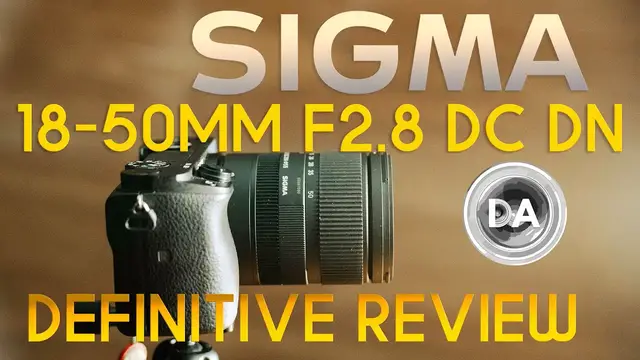
Sigma 18-50mm F2.8 DC DN Definitive Review | DA
Jul 17, 2023

Photographer Dustin Abbott shares a review of the compact and competent Sigma 18-50mm F2.8 DC DN that is now available for both Sony E-mount (tested here) and Leica L APS-C mirrorless cameras. | This video is sponsored by Fantom Wallet. Visit https://fantomwallet.com/ and use code DUSTIN15 to get 15% off | Visit https://bit.ly/lethelightinTV for the new channel | Read the Text Review: https://bit.ly/SIG18_50DN | Visit the Image Gallery: https://bit.ly/Sig1850DNpics | Purchase the Sigma 18-50mm F2.8 DN @ B&H Photo https://bhpho.to/3piOjaW | Amazon https://amzn.to/3DJVI7g | Camera Canada | Amazon Canada https://amzn.to/3pmLRQC | Amazon UK https://amzn.to/3pgO7sO | Amazon Germany https://amzn.to/3BXCv1e | Ebay https://ebay.us/iHcfPM
Purchase the Sony a6600 @ B&H Photo https://bhpho.to/2Eobmfe | Amazon https://amzn.to/3BdNELr | Camera Canada https://shrsl.com/32tug | Amazon Canada https://amzn.to/3ihX0x8 | Amazon UK https://amzn.to/3exz5Zv | Amazon Germany https://amzn.to/2UeHWbL | Ebay https://ebay.us/iWK2wf
Purchase the Sony a6400 @ B&H Photo https://bhpho.to/2JqJ8Cv | Amazon https://amzn.to/2TOff3W | Amazon Canada https://amzn.to/2Ogeiv5 | Amazon UK https://amzn.to/2CrtO2t | Amazon Germany https://amzn.to/2HvxRyS | Ebay
Check out the DA Merch here: https://bit.ly/TWIMerch | Become a Patron: https://www.patreon.com/dustinabbott | On the Web: http://dustinabbott.net/ | Sign up for my Newsletter: http://bit.ly/1RHvUNp | Instagram: http://bit.ly/DLAinsta | Facebook: http://on.fb.me/1nuUUeH | Flickr: http://bit.ly/1UcnC0B | 500px: http://bit.ly/1Sy2Ngu Follow Craig @ https://www.instagram.com/craigstoffersen/
Want to support this channel? Use these affiliate links to shop at:
B&H Photo: http://bhpho.to/1TA0Xge
Camera Canada: http://bit.ly/DLACameraCan
Ebay: http://bit.ly/DustineBay
Make a donation via Paypal: https://www.paypal.com/paypalme/dustinTWI
=============================
Table of Contents:
=============================
0:00 - Intro
4:00 - Build and Handling
8:35 - Autofocus
Show More Show Less View Video Transcript
0:00
Hi, I'm Dustin Abbott and I'm here today to give you my definitive review of the new Sigma
0:14
18-50mm f2.8 lens. So it has a constant maximum aperture of f2.8 going from 18mm wide angle to
0:23
50 millimeters on the telephoto end and this is a DC DN lens which in Sigma speak means that it is
0:30
designed for APS-C mirrorless and so in this case I'm testing a Sony e-mount version there's also a
0:37
Leica L version that is available as well. This is a lens that in many ways I'm almost surprised we
0:44
haven't gotten sooner on the Sony space. The reason why I say that is that when I first started getting
0:49
into DSLRs back in the day. I started off with on Canon and with the, you know, the kit lens was
0:57
an 18 to 55 millimeter F3.5 to 5.6 IS. That lens back then, it was kind of a plastic, fantastic
1:05
very low build quality. It had all of the things that we would criticize these days. You know
1:09
the front end would spin when you, when you would focus. And so it was hard to use circular
1:16
polarizers because, you know, everything would rotate when that, um, you couldn't have any
1:21
full-time manual override, you know, on and on the list went and optically it was
1:25
it was really not a very intriguing lens. And I dumped it as soon as I could
1:30
Like many people of that era, you know, 13, 14 years ago, I ended up with, um, I had
1:36
at varying times had both a Sigma and a Tamron of about this focal length somewhere around 18 to 50
1:42
or 18-55mm, but an f2.8 maximum aperture. Those lenses opened up new horizons optically. They were
1:50
much sharper lenses, but also that maximum aperture of f2.8 made them far more useful indoors
1:56
for example, and also gave you more creative options when it came to depth of field
2:00
And so it seemed like almost everybody had a lens like that back at that point. And so it's
2:06
surprising to me that we're only seeing this lens at this point in 2021 on the Sony platform
2:11
And kudos to Sigma for filling this void with a lens that has a lot of things going for
2:18
Now, I really did like the Tamron 17-70mm f2.8 VC that I reviewed at the beginning of the year
2:25
It's a great, great lens. However, when it comes to the physicality of that lens, it is a much larger lens
2:32
More like a full frame size lens. Almost 120mm in length. whereas this lens is only 76.5mm and that Tamron weighed in at 525 grams. This lens, 290 grams
2:45
And so it is, you know, in many ways, it's very close to being half the size of that lens
2:49
And for those of you that care about traveling light and compact, be able to have a, you know
2:55
a zoom that covers a 27 to 75mm full frame equivalent with a maximum aperture of f2.8
3:01
and which fits in the size of your palm of your hand
3:05
that's going to be a very intriguing proposition. And so there are a lot of things
3:09
that I like about this lens and a few things that I don't like. And we'll dive into both of those
3:14
as a part of that review here today. First, however, a word from our sponsor
3:19
Today's episode is brought to you by Phantom Wallet, the minimalist, modern wallet
3:23
that sets you free from a bulky traditional wallet while also making it easy to access your cards and money
3:29
when you need them. Thanks to their unique fanning mechanism. Visit phantomwallet.com to check out their unique sizes, styles, and finishes
3:38
that span from aluminum to wood to carbon fiber. You can even customize your wallet with new accessories like a money clip
3:47
cash holder, ID display, and even the Chipolo tracking integration if you're the kind of person who loses their wallet
3:55
use code Dustin15 for 15% off when you're ready to check out so we're going to start by diving
4:03
into the build and the handling of this lens and detailing a few more of the things that make it
4:08
tick and how it works out in the field let's take a look at that the overall physical design is
4:14
pretty familiar one at this point this falls in their contemporary line and so these days what
4:19
that means is you get a a nice degree of build you do get a gasket at the lens mount but not
4:25
necessarily any kind of internal seals, so at least some movement towards weather sealing
4:30
but not a thorough one. In this case, there are no switches or anything on the barrel
4:35
so even when it comes to using AF-MF, you're going to have to select that from within the
4:39
camera body instead. What we do have is two nicely designed rings here. The focus ring here
4:45
moves nice and smoothly with a good degree of damping, and then in the same fashion
4:50
the zoom ring moves very, very smoothly, very consistent throughout the zoom range. There's no
4:57
wobble in the inner barrel. Everything feels really nicely damped. Very good tolerances on that
5:02
As noted, the lens is very compact. It is only 61.6 millimeters in diameter. That gives you a 55
5:10
millimeter front filter thread. It is 76 and a half millimeters in overall length and weighs in
5:16
at 290 grams. The lens included lens hood, bayonets into place nicely there. And I like
5:23
Sigma's lens hood. They have some soft touch material, a little bit of texture variation
5:28
a little bit of a grip surface to help you to, you know, either break that free or to attach it
5:32
with a little bit of force. Overall, really nice aspects here, even if there's not much here in
5:38
terms of bells and whistles. One notable thing that is not here that the Tamron has, but you know
5:44
the Sony E-mount 16-55mm f2.8g does not. As an image stabilizer, optical stabilizer, that's
5:52
missing here as well. Now, like a lot of recent zoom lenses, we actually have two minimum focus
5:57
distances. One at the 18mm zone, which means you can focus down as close as right over 12cm
6:04
but once you calculate from the sensor to the front of the lens, even if you remove the lens
6:09
hood from the equation. That only leaves you about 26 millimeters, 2.6 centimeters of working
6:15
distance beyond. So as you can see from this picture, you get very, very close to your subject
6:19
to get that high degree of magnification. Now, the degree of magnification is great. It's nearly
6:24
0.36 times. However, it's going to be very hard to actually achieve that on the wide end without
6:30
like dedicated macro lights to get light on your subject. So you're probably going to have to just
6:34
back off a little bit and accept a little bit lower magnification. Now, if you zoom into 50
6:38
minimum focus distance becomes 30 centimeters. That's obviously a much more usable figure
6:45
but your magnification drops to 0.20 times. It is more easy to achieve It still a nice figure And you know it somewhere in between there and the zoom range you kind of split those differences But anyway you do end up with a nice amount a very usable amount of magnification one way or another Inside there are seven rounded aperture blades that do a
7:06
fairly good job of keeping a circular shape when you stop the lens down. Overall the lens is nicely
7:13
made and of course extremely compact. That's a huge strength for the lens and in many ways is my
7:19
biggest takeaway. It's a nice looking lens. It's well engineered and designed, but nothing overly
7:25
special in its design either. And so obviously, to me, the biggest takeaway here, biggest Sigma
7:32
specific advantage is the fact that it does have such a compact build and that's going to be
7:37
extremely useful. I mean, I appreciate the nice levels of magnification, also very useful, but I
7:43
think the number one reason why this lens is going to be attractive to a certain audience is the fact
7:48
that it combines this focal range with such a compact footprint, which makes it a very easy
7:53
lens to throw into your bag, maybe alongside a few compact primes. And really these days
7:59
if you want ultimate image quality and performance, you kind of have to move to full frame
8:03
on APS-C. But if you're wanting to travel light, it's hard to beat a combination like this for the
8:10
versatility it provides. And I see this as being a great lens and camera combination to maybe keep
8:15
in the car for those moments. You know, when you're on drive, for example, you're not carrying
8:19
a full kit, but this, you know, or going out hiking or things where if it came down to making
8:24
a choice between, you know, having a compact camera or taking no camera at all and just relying
8:28
on your phone, this is going to obviously give you the kind of images you're just not going to be
8:33
able to get with your phone. So let's talk about autofocus for a moment. There's been a pretty
8:39
definite blueprint that has emerged with Sigma on Sony mirrorless. And that is of course using
8:44
an STM focus motor and their focus motors are quiet and you know they just get the job done
8:51
There's been a few applications more demanding applications where I've wanted a little bit more
8:55
but in this case this is not one of those type lenses. There's not huge amounts of stress that
9:00
are put on the focus system and I really feel like the focus system just does a smooth job of getting
9:05
things done. And so whether it is doing the focus pull test that I do for video where you can see
9:11
that there is a smooth and quiet transitions between focus points. You'll also notice you
9:16
see this, that there's basically next to no focus breathing. And so that's obviously another huge
9:21
plus for a lens like this. That extreme minimum focus distance on the wide end also makes this
9:26
a great fit, by the way, for using on a gimbal or a slider, or in some cases where you're going to
9:32
get really close to your subject. Sometimes you end up flirting with a lens's minimum focus distance
9:37
as a part of that. And so you end up with getting, you know, pulsing or the lens just stops focusing
9:42
because you've gotten a little bit too close. In this case, you know, like with some other recent
9:46
lenses, if you get too close on the wide end, you're going to pretty much be bumping into your
9:50
subject already. And so that's really not the limiting principle. It can focus down very closely
9:55
And so that makes it useful. I also found it to be accurate if I was doing IAF tracking
10:01
whether it was myself approaching the camera, I've used this, you know, kind of silently without you
10:07
knowing for a few video episodes and clips, and it's done an accurate job of tracking my face
10:11
as a part of that. And then even if I was taking pictures, for example, of Loki, you can see that
10:18
animal IAF worked very, very well, delivered very crisp, very sharp in results. And so I got good
10:24
focus results really regardless of what I was focusing on, whether it was closer shots or
10:30
focusing at a distant infinity subject, still at F2.8, as in here, you can see that focus was nailed
10:36
as a part of that. All things considered, this is a lens that is just getting the job done in
10:42
the focus department. And again, that delineates it from those early lenses that I used in that it
10:48
has features that those lenses just didn't have. On the build side, obviously, it's much more
10:53
smoothly constructed. There used to be there was little quirks you had to put up with on lenses
10:57
like this from third parties. And when it comes to autofocus here, autofocus obviously is much
11:03
smoother and more sophisticated and doesn't have any of those buzzy micromotors that we used to
11:07
have or used to put up a little bit you know slower focus speed that's not the case anymore
11:12
these lenses are really developing or delivering a fairly sophisticated autofocus performance and
11:18
that is true of this lens as well. So let's dive in and let's take a look at the image quality and
11:25
see if in such a compact lens if Sigma has managed to hold together the image quality as a part of
11:31
We'll take a closer look now. So let's start off by taking a look at vignette and distortion
11:36
Obviously I am reviewing this prior to the release, and so there is no automatic profile available yet for RAW files
11:43
though already JPEGs and video will be corrected in camera. So first of all, at 18mm we see a fairly significant amount of barrel distortion as you can see
11:54
Now just so you know, when I was setting up the framing for this shot in camera
12:00
camera it's actually showing the corrected jpeg view and so you can see that the framing
12:04
for the raw file is a whole lot looser than what i would have been seeing on screen so that shows
12:10
that sigma has left a significant amount of room for proper correction and so you still get the
12:16
you know the angle of view that you're looking for so on the right side you can see that i have
12:20
done a manual correction and have been able to do a fairly reasonable job the geometry of course
12:26
isn't perfect here but it's not too bad there's only a very mild kind of wave pattern that is left
12:32
there I corrected that with a plus 21 in the distortion slider and then you can see that I
12:38
used a plus 54 for correcting the vignette which gives us a moderate amount of vignette somewhere
12:44
in the vicinity of two stops so moving on to 28 millimeters we see that the barrel distortion has
12:50
changed to a very very mild pincushion distortion and so pretty quickly we move past the barrel and
12:57
begin to invert there you can also see that the framing has been left quite loose here and in this
13:04
case I don't know that it's really necessary because as you can see there's you know there's
13:08
not a whole lot to correct for and so you will probably see some of the extreme vignette in the
13:13
corner eliminated just when the profile is there just by the amount of correction that is done in
13:19
In this case, it only took a minus five on the distortion slider to correct for that
13:24
And you can see it's a nice linear correction. And then a plus 48, so just a tiny bit less vignette than what we saw at the wide end
13:33
So in the middle, there's a little less vignette. So finally, at the telephoto end of the spectrum, we can see that the pincushion distortion has become a little bit more pronounced
13:43
Vignette is also a little bit heavier as well we can see however it is still quite linear and so I was able to get a good correction by inputting a minus 10 And so you know basically double the amount of distortion
13:57
that we saw previously. Then yet being about the same as what we saw there in the middle of the
14:02
frame. So throughout the zoom range, I would say that distortion is probably our major optical flaw
14:09
and that there is basically no matter where you do outside of somewhere between 18 and 28 millimeters
14:14
probably somewhere around 24 millimeters is your most neutral result in terms of distortion
14:20
But, you know, there's vignette throughout. It's never extreme, but it never goes away either at some point in the zoom range
14:27
Now, overall, I did not find longitudinal chromatic aberrations to be a significant issue
14:32
Here we have a really, really bright, you know, real-world transition area
14:37
And you can see a little bit of fringing around the edges of these acorns here
14:41
but I mean I don't know that that's a real world problem at all and for the most part I saw basically
14:48
no longitudinal chromatic aberrations and we can see that there are also minimal lateral chromatic
14:53
aberrations and so in these transition areas from black to white on my test chart along the edges
14:58
where you would see lateral chromatic aberration it's just not really there and so I think that
15:03
overall Sigma has done a good job in controlling the aberrations on the lens. So let's take a look
15:08
at our overall contrast and resolution. So we are testing on a 24 megapixel Sony a6400 here
15:16
and also I'll be showing you the results magnified at 200%, and so we can easily see any kind of
15:22
flaws. So starting off at 18 millimeters f2.8 and f4 on the right, we can see that at f2.8
15:30
that in the middle of the frame, everything is really, really crisp, very good contrast
15:34
good detail and you can see that stopping down you just get a little bit more contrast dialed up
15:40
in the center of the frame. If we take a look at our mid frame here we also see an excellent result
15:45
in the mid frame with good contrast and detail that gets a little bit better when stopped down
15:50
to f4 and down here on the edge you can see that contrast has dropped a bit but we actually have
15:57
basically no major issue here moving out to the edge still a good amount of resolution and we can
16:02
see that contrast improves a bit when stopped down to f4. Now fortunately this translates very
16:08
well into real world results as well and so this is very early morning and so I mean maybe not
16:14
optimal you know conditions I'm hand holding in lower light but we can see that looking in the
16:19
center of the frame this is around 20 millimeters f2.8 the detail is very very good as we look off
16:25
into the distance and that there is resolution out to the edge of the frame a little bit of fall off
16:29
but some of that is depth of field related as well. And so if we kind of keep along the plane of focus
16:34
we can see that there's very usable detail even at F2.8, even in these lighting conditions
16:41
So from F4 to F5.6, I don't really see a whole lot of difference overall there in the mid-frame
16:48
Things are maybe just a little bit higher contrast and with a very mild pickup here in the corner of contrast and resolution
16:56
Though, I mean, you would be hard-pressed to see any of these differences in the real world
17:01
And so somewhere around F4, we're already hitting about peak performance across the frame with just a little bit extra at F5.6 and F8
17:08
And it'll start to drop off after that due to diffraction. Just to illustrate that point about diffraction, which will be true throughout the rest of the zoom range, so we won't come back to this
17:17
But you can see that our minimum aperture is F22. But this gives you an idea of how much you lose even compared to wide open f2.8 in terms of contrast and resolution
17:26
Diffraction really does start to limit the ability to render fine textures and just robs a lot of contrast
17:33
So I would avoid really anything beyond f11 unless absolutely necessary. So if we move on to 24mm, we see what I believe to be probably pretty close to peak performance in the lens
17:45
At 24mm, everything is really, really crisp in the middle of the frame
17:49
A mild improvement at F4. And again, in the mid frame, we can see just excellent results wide open, marginally better at F4
17:58
And you can see that in our corners, the corner performance is really excellent at 24 millimeters, even wide open
18:04
Again, with a mild uptick at F4. Stopping on down to F5.6 gives us a little bit more still
18:11
And so you're going to get really excellent results across the frame at 24 millimeters
18:15
so if it suits your you know kind of your framing for landscaping and you want peak performance out
18:20
of the lens shoot at 24 millimeters f5.6 range and you're going to get fantastic results 35 millimeter
18:26
range there's actually a little bit of drop off in performance you can see the contrast isn't quite
18:31
as high it does start to get better again stop down to f4 same is true here in the mid frame where
18:37
it's not as good at any point as what we saw at 24 millimeters uh starting to look better though at
18:43
f4. In the corner, the drop-off is not nearly as significant, and I think that we have a fairly
18:50
flat resolution curve in that the corner performance really doesn't look any worse to me
18:56
than what the center performance did, and by f4, it's actually looking quite good in the corner
19:01
Stop on down to f5.6, and you'll get really good results across the frame. As what we've seen here
19:07
this lens is capable of really high resolution, and so again, looking back in the center of the
19:12
frame at f5.6 our results are looking really good. So with the telephoto end 50mm f2.8 we can see
19:19
that we've got a little bit better results than what we did at 35mm. There's a little bit of a
19:23
further uptick and stopping down to f4 center looks excellent. Here at mid frame looking better
19:29
again once again and then down in the corner. Corner results also looking very good. You know
19:35
in many ways I think that the wide and the telephoto ends are probably the most important
19:40
focal lengths to get right because they tend just by the numbers to be the most often shot
19:47
And so anyway, I really like the fact that Sigma has given us really strong performance on both
19:52
ends of the telephoto range. Here's a real world 50 millimeter f2.8 shot. And so you can see that
19:58
if we zoom into a pixel level, this is a 100% magnification. You can see that detail here is
20:03
really, really crisp. And so that's a great performance from such a compact lens. At landscape
20:09
aperture around f5.6 you can see at 50 millimeters we really got a beautiful beautiful result here
20:16
good detail across the frame you can just see even down in the field and all the grass there's so many
20:22
textures that are rendered very very nicely for an aps-c lens i mean this looks really really
20:28
fantastic and showing me just a lot of detail even at the 24 megapixel point here and so and of course
20:36
the color, everything. This was a beautiful scene, obviously, but it done a very good job of capturing it This is an image obviously I would be very proud of having taken I am proud of it I did take it And so anyway the lens certainly is one that I would happily
20:51
have along as a roadside type lens while you're traveling. Easy to grab, easy to bring along
20:56
and delivering really nice looking results. This is a very small marigold blossom. And so it goes
21:02
to show that you can get very nice degrees of magnification. You can blow out backgrounds. Here
21:07
is at the 18 millimeter end and while obviously i'm not able to get as as close necessarily it's
21:14
a high degree of magnification there's good detail there you just basically would need macro lighting
21:19
to use this effectively in the real world here's another very close result and again this is just
21:26
handheld just out along the you know along a trail so you can see you're able to blur out a background
21:31
very nicely. It's just another area of usefulness for a lens like this. Now this is closer to the
21:38
50 millimeter end and I actually kind of prefer the look of images taken with that focal length
21:44
as opposed to the wider focal length. You get a little bit more perspective distortion where this
21:49
is a little bit more natural angle of view and it allows the bokeh of the scene to be really nice
21:54
I love these sumac leaves in the fall. The symmetry of it in nature is really beautiful
21:59
but you can see it's delivered a really nice result, good detail there
22:03
and then of course a beautiful bokeh and fall off. I felt colors from the lens were very nice
22:08
and in my various explorations out in the woods with it, I was able to get some really nice looking images
22:15
obviously with nicely saturated colors that aren't garish. Just a lot of really pleasing images that I got out of it
22:23
and so it makes it, to me, a very useful kind of lens. Now stopping down, you can get nice looking sunburst
22:29
You know, not like world beating, but certainly nice enough to add some style to an image
22:34
And in this kind of setting, we can see that other than a little tiny bit of a ghosting artifact there
22:39
our flare resistance has held up well in this shot. And then if we go out into other real world type shots, I mean, obviously beautiful morning light here, but very direct
22:49
And you can see there's just there's a tiny bit of ghosting artifacts down in here, but contrast has held up well
22:55
and here's another shot just a little bit of a ghosting artifact there but again i mean this is a
23:01
good performance there outside of that distortion there really aren't a lot of optical flaws here
23:06
finally let's take a look at our coma performance obviously you know having a
23:11
18 millimeter f 2.8 is useful for shooting the night sky and so as we can see i was able to
23:17
capture a lot of stars and if we look off towards the edges yeah there's a little bit of coma here
23:23
towards the edges. You can just see some deformation of these star points, the slightest
23:27
bit of fringing around some of them. But overall, this is actually a pretty good performance overall
23:33
And, you know, you'd be happy to get images like this. So it makes it useful for shooting the night
23:38
sky. And so I certainly would use it for that if I owned it. And so as you can see, while the lens
23:43
isn't perfect, there is a little, you know, a little more barrel distortion than what I like
23:47
at 18 millimeters, a little bit of dip in overall contrast and sharpness in the 35 millimeter range
23:54
But overall, this lens actually delivers throughout the zoom range. I was able to get good image
23:59
quality, get images, real world images. You know, if I back off and look at just a hundred percent
24:03
magnification images that I really was happy with colors seem nicely saturated and, uh, and overall
24:10
just the look of images was, was pleasing. And again, I was reminded this would be a really
24:14
convenient lens to just have along. And also when it comes to use for video. Now, the one exception
24:20
here that I certainly miss having an image stabilizer, if you're not using a body that
24:26
has built-in image stabilization. And so in this case, I did most of my testing on an A6400. And so
24:32
you can see from some of these video clips that while the subject is gorgeous, there's more
24:36
movement than what I would like. And that's due to not having an image stabilization, any kind of
24:41
factor there. And so if you don't actually happen to have something to rest the camera on or to lean
24:45
against to stabilize with, it makes it harder to get that static footage. So yes, absolutely you can
24:50
get better footage if you're using it on a gimbal, for example, but you don't always have a gimbal
24:55
along. And so having lens stabilization certainly is useful. That might be one reason to consider
25:01
for example, the Tamron, a 17 to 70 millimeter f2.8. If you don't mind the larger size and you
25:06
really want that image stabilization, that's one factor to consider that because there are only so
25:11
many camera bodies, APS-C camera bodies that actually do have built-in image stabilization
25:17
in-body image stabilization. So, you know, that could be a factor for some people. But I really
25:22
do feel like for many people, this is going to be a lens that its size is going to make it really
25:27
really convenient. And I think that if you're looking for a natural upgrade path away from
25:31
your kit lens, for example, you want just something a little bit more, more in terms of
25:36
its optical properties more in terms of maximum aperture, this to me is a very natural upgrade
25:42
And at a reasonable price point of $549, you're getting a lot of little lens for that money
25:50
And so I think that it might be a really tempting option as an upgrade, a first upgrade for some
25:55
shooters, or if you're just looking for a standard zoom with a larger maximum aperture, this is
26:01
pretty much the way to go on the Sony platform, particularly when you consider that Sony's own
26:05
a 16-55mm f2.8 G lens costs $1,400, and so that's two and a half times as much as this lens
26:14
So obviously that makes it really attractive from a price point as well. I really think that this is
26:19
an important lens from Sigma, maybe not the most exciting or glamorous announcement that they've
26:23
had in the last few years, but it's this kind of lens, I think, that ends up in a lot of people's
26:28
kits, and not just those that like to shoot high-end primes or with big budgets. It's these
26:33
kind of lenses that show up in real people's kits out there as well. And if you're that kind of
26:38
person and you're considering a, you know, a small but standard zoom, I think this is a great option
26:43
for you. I'm Dustin Abbott. And if you look in the description down below, you can find linkage to my
26:48
full text review. Check out that. There's also an image gallery. I've got a lot of beautiful photos
26:53
It's my favorite time of year for shooting. And so check out those photos there as well
26:57
There are buying links though, with any brand new lens, just being announced like this
27:00
It may take a few weeks for some of those lenses to populate. So be patient and check back here
27:05
But thank you for using my links to help to support this channel. And on that note, you can check out links there to purchase some merchandise
27:12
or to sign up to become a patron. Sign up for my newsletter that comes out every week
27:17
And of course, beyond that, there's linkage to follow myself or Craig on social media
27:21
And if you haven't already, please click that subscribe button right here on YouTube. Be sure to ring that bell so you get notifications when new content drops
27:28
Thanks for watching. Have a great day and let the light in