0:00
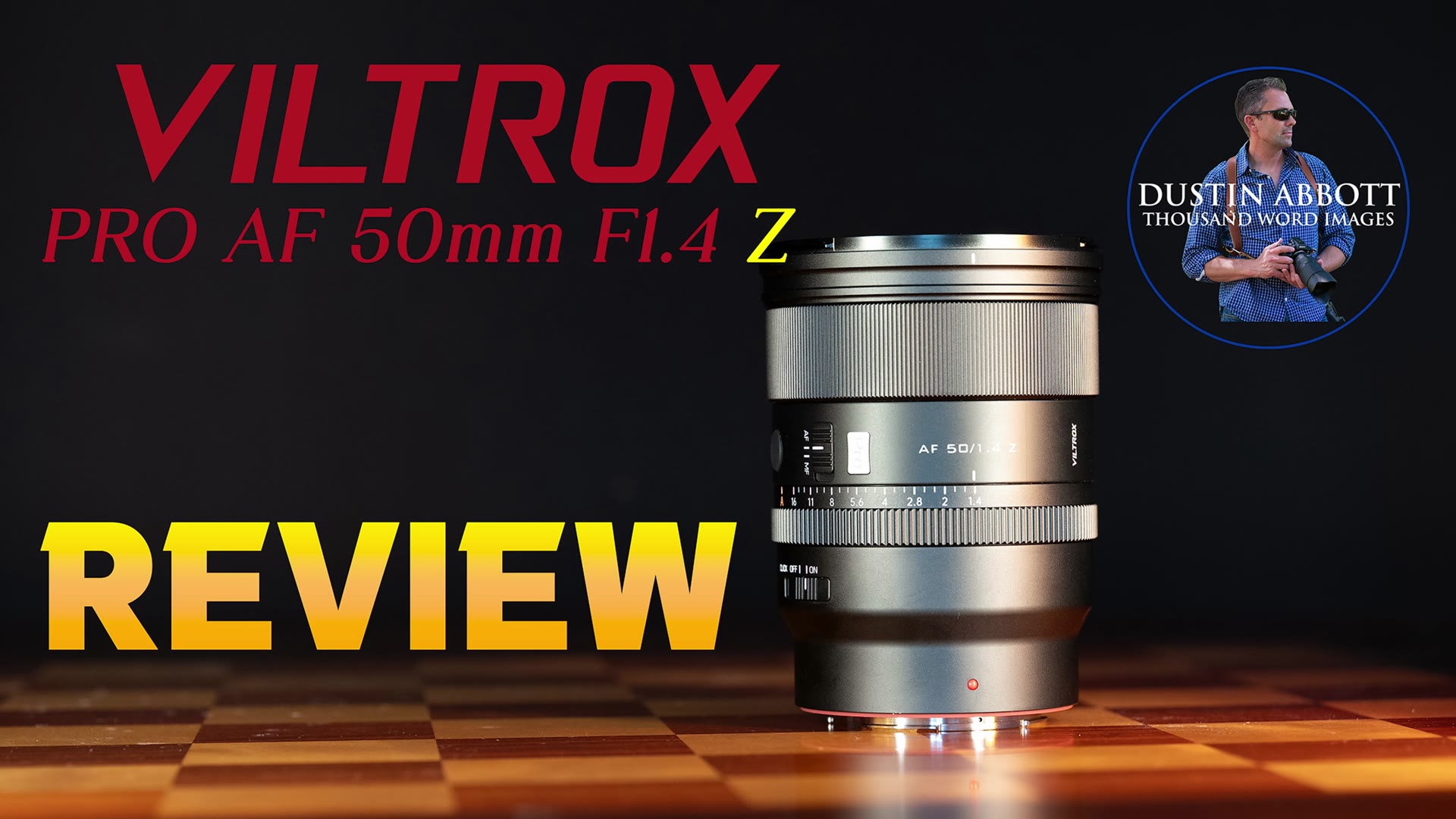
Hi, I'm Dustin Abbott and I'm here today to give you my review of the Viltrox Pro AF 50mm F1.4
0:18
this time for Nikon Z-Mount. Now I understand that there's been some controversy over the last month
0:24
as it became public that Nikon and Viltrox were involved in a lawsuit that the details have not
0:29
been fully disclosed, but it seems to be over licensing on the Z-Mount platform. However, a
0:36
piece of good news is that Viltrox told Petapixel that they are proceeding as planned with their
0:43
roadmap on Nikon. And so they clearly have some confidence that they're going to be able to resolve
0:48
this in a way that is satisfactory for us. Namely, that we continue to see Viltrox products here on
0:54
Nikon. And I am really delighted to see the Pro AF 50mm F1.4 come to Z-mount for a number of reasons
1:03
One of the primary ones being because while we have an excellent 50mm F1.8 and a good
1:10
if flawed, 50mm F1.4, what we don't have is a truly premium 50mm F1.4 option, the S-line
1:19
equivalent here on Nikon. I think that Viltrox is going to very ably fill that gap. And while this
1:25
is a big and heavy lens, it is beautifully made. It has beautiful optics. And frankly
1:32
I feel like I enjoy it even more on Nikon than what I do on Sony E-Mount. I did review the Sony
1:40
E-Mount version last fall. And while I really liked that lens, there is the fantastic Sony
1:46
50mm f1.4 G Master that I already own that does a lot of what this lens does and does a few things
1:52
a little bit better. Whereas there isn't really that same lens equivalent here on Nikon. And so
1:59
this is a beautiful fit here. And we're going to dive in today and explore the ways where it really
2:05
suits the Nikon Z-Mount platform and how well it works. Now, before I do that, I do want to start
2:11
by giving you a disclaimer that this lens was sent to me by Viltrox for evaluation
2:17
As always, however, they have had zero input in my review process
2:21
My findings are my own. This is completely independent, and they will not see this video before you, the public
2:26
sees it. That aside, let's jump in and let's take a look at the build and handling for the lens today
2:32
All right, let's take a look at the build and the design here. Now, this is obviously the same lens as the Sony E-mount version, but there always are
2:40
some subtle differences when it comes to Z mount. You'll notice that in this area of the barrel that
2:46
it is, it is thicker through the section and that is to accommodate the larger Z mount. And then also
2:51
the lens up being two millimeters longer. And that is due to the difference in the flange on the Z
2:57
mount that requires the optical path to be just a little bit further out. This is obviously a really
3:02
beautifully made lens. It's made out of aviation grade magnesium, aluminum alloy. It feels and
3:08
looks very upscale. You put it next to the Nikkor 50mm f1.4 and frankly the Nikkor feels
3:14
comes off feeling a little bit like a plastic fantastic. Now the downside of that is that this
3:20
is a very big heavy lens. It is 84.5mm in diameter or 3.3 inches. It's 113mm in length or 4.38 inches
3:31
So 2mm longer than what the E-mount version is which was already a big lens
3:37
By contrast, the Nikkor is 76.2 millimeters by just 88.9 millimeters. And so we're talking about
3:45
about 25 millimeters longer for the Viltrox lens. That's obviously a significant difference
3:52
And so that also comes out in the weight. This weighs in at 830 grams, which by the way is 30
3:58
grams heavier than the E-mount version because of those differences in the overall build and size
4:05
So that's 29.2 ounces. And the Nikkor weighs in at 422 grams
4:11
So we were talking about more than 400 grams heavier, nearly twice the weight as the Nikkor lens
4:17
So that obviously could be a very serious deciding factor for you if you're debating
4:21
between these two lenses that aren't all that different in price. The Nikkor lens retails for roughly $500
4:29
The Viltrox is going to set you back something more like $550
4:33
particularly if you use the discounts available. Now, up front, we have a 77 millimeter filter thread, which is pretty common
4:40
It does come with the lens hood and a pouch. There is no lock on this, and it does bayonet on smoothly
4:48
but I would like it to click in place a little bit tighter. It'll be just a little bit harder to loosen that and pull it away
4:56
Now, in terms of other features, we do have a traditional aperture design
5:00
and so you can have clicks with one-third stop detents like this. You do have the option to de-click the aperture, and so you can smoothly rack throughout
5:08
What we don't have is an iris lock, though. We do have a nice firm detent between F16 and automatic
5:14
I think you're going to be able to feel that. There's enough resistance there to keep you from just slipping into that mode
5:20
In the de-click mode, we do have the ability to do aperture racks nice and smoothly
5:24
I actually prefer this to just the customizable control ring. It's more versatile
5:29
It gives you real feedback. You can actually see the markings. I just prefer it
5:33
We also have a customer function button. We have an AF-MF switch here on the side
5:38
So obviously a much more fully featured lens than what the Nikkor lens is
5:44
Here at the rear of the mount, we can see the weather sealing gasket. And so this is a thoroughly weather sealed lens
5:49
I haven't seen a diagram for this, but typically these lenses have around 10 different seal points along with a special coating up front to prevent fingerprints or moisture
5:59
You also see here the USB port that is standard for Viltrox lenses Makes them very easy to do firmware updates on though the difference between this lens and like the Lab Series on the Lab Series lens you can also do a bit of customization which you cannot do here
6:14
No built-in lens-based VR vibration reduction, but that's very common for lenses in this class
6:21
I've never seen otherwise. This lens does have floating elements. And so if you have it off the lens like this and you rock it back and forth
6:28
you will feel something moving around in there. That is not your lens being broken, but it is floating elements. It's by design. If the lens
6:36
is powered on like this, it doesn't clunk anymore because those elements are energized
6:41
The purpose of that is that it allows you to get better performance up close. And so we can focus
6:46
down to 45 centimeters and it gives you only an average 0.14 times, excuse me, 1.45 times
6:55
magnification which falls behind the 0.17 times of the Nikkor lens though the Nikkor lens is much
7:02
much softer and less clean up close. Those floating elements do help us to get a much better performance
7:09
even at f1.4 at the minimum focus distance. A very nicely built lens. It is not small. It is not light
7:16
but if you can tolerate that it is beautiful and it has a robust feature set. So let's talk autofocus
7:22
I'm outside filming once again as you can see there's still plenty of snow good news today it
7:28
is not snowing and for once I'm out here filming talking to you and I'm not having snow blowing
7:34
into my eyes the bad news well it's minus 25 this morning and so not so great so let's talk
7:41
autofocus here Viltrox is using utilizing their hyper vcm focus motor once again as they did in
7:48
the Sony e-mount version. Now in the Lab Series lenses, it's where we're getting multiple Hyper-VCM
7:53
motors used in tandem that provide, you know, kind of the upper end thrust that the Lab Series
7:58
have been known for thus far. Here on the Pro Series, we're getting typically a single Hyper-VCM
8:04
focus motor. However, voice coil motors are great and there's a reason why Nikon is starting to move
8:09
to some of them in their own premium lenses at this point because they are, it's a sophisticated
8:15
focus system that is smooth, it's quiet, and in this case, it is fast, though not, again
8:22
blazingly fast. As you can see here in my formal test, autofocus moves back and forth with mostly
8:27
good confidence and with good speed. It's just not instant in the way that the fastest lenses are
8:34
particularly in the outdoor segment. However, you can see it zipping back and forth with really good
8:38
confidence. I did find that I had very good focus accuracy throughout my review period
8:45
And that was true whatever subject I was moving or shooting, whether it was shots of the cats as
8:49
they were moving around, always just focused really, really perfectly. And you can see in
8:54
this shot with kind of some bright window light coming through that that focus is perfect. And
8:59
that detail at F1.4 is just amazing. And a portrait series of me, because again, minus 25 and nobody
9:07
wants portraits right now. So I shot in my living room and I did some portraits there, but I got
9:12
flawless results shooting just at F1.4. Everything was well-focused, good detail, just did the job
9:20
And so no complaints about that. And so I would say that in general, autofocus is going to be
9:24
pretty fantastic here on Nikon. Frankly, it feels for stills. It feels very, very much like a first
9:29
party lens. And I would say that focus speed is actually a little bit better than the Nikkor 50
9:34
millimeter f1.4 that I happen to own and I have tested and compared in multiple occasions
9:39
So the one thing that I would offer any kind of caution is if you're buying a 50 millimeter f1.4
9:45
for some reason to shoot sports with or very fast action, I find that tracking laterally is no
9:51
problem moving towards the camera. You're going to get some back focus and so it's just not quite
9:56
fast enough to keep up with something like that. Outside of that though, autofocus is pretty awesome
10:01
Now, if we talk about video AF performance, I have been filming on this throughout this video
10:07
and you've been able to see that it does a perfect job of locking onto my face. And so
10:11
for these static shots, no problem at all. As I approached the camera, what I found is that it did
10:18
a really good job tracking and it does a good job picking me back up. However, I do see some little
10:23
micro pulses in there. It feels like it's a firmware update short of just being perfectly
10:28
stable here on Nikon at this point. In terms of the focus pulls, when I did touch to focus
10:34
sometimes it was flawless going back and forth, but other times there was a bit of a lag before
10:39
it started to actually make the focus change or a little bit of those micro pulsing. You can tell
10:45
that there's lots of thrust there in the hyper VC motor, but it's not always quite as stable
10:50
as what I would like. When I did my hand test, that actually went really well with good transitions
10:55
from the hand to the eye and back. And one thing that stands out that helps that test
11:00
is that focus breathing is quite low on this lens. And so there's not that sense of like big inertia
11:05
moving back and forth as you go from the hand to the eye or vice versa
11:10
And so in general, I would say that my focus was good. I will say, however, that at least for video
11:16
it feels like there needs to be that, just one more firmware update
11:20
to stabilize the focus a little bit more and to prevent a little of those micro pulses
11:25
that pop up on a few occasions. And I saw that even in this clip of Nala
11:30
that there's some little adjustments there at time. And unfortunately, because minimum focus distance
11:34
is only 45 centimeters or is as big as 45 centimeters, I feel like I did maybe push into that zone
11:41
which is not hard to do. And so you can see the latter part of that clip. It's not really perfectly, it's back focus
11:46
but it's because I'm inside of the minimum focus distance. In general, I would say that video AF is good
11:53
but there's a little bit room left for improvement. So let's start by taking a look at the optical design
11:59
Now this is the same optical design as what we saw in the Sony E-mount version. That means 15 elements in 11 groups including three extra low dispersion elements a total of eight HR or high refractive index and then one ultra precision aspherical lens which is one of their newer lenses that they started grinding in 2025 and so we have a fairly complex
12:23
optical design here. Now if we take a look at the MTF chart you can see if we're looking at f1.4 and
12:30
at the 30 line pair we can see that it is extremely sharp in the center of the frame
12:34
very strong through the mid frame and then a fairly mild drop off towards the corners and so
12:40
it is softer in the corners but still at a high level really overall if we look at the f8 results
12:47
we can see that it's basically a you know pretty much kind of a straight line all the way across
12:52
at the 30 lines pair and and so a little bit less sharp in the center of the frame but basically
12:57
completely flat all across the the whole image circle now for a bit of perspective i threw the
13:03
MTF for the Nikkor 50mm f1.4 Z lens here and I put the line through the 80% margin. I do that
13:10
because anything above 80% looks fantastic pretty much on any camera and so you don't have to worry
13:16
about that. So we can see looking back at the Viltrox that basically half of the image frame
13:21
falls in this completely excellent zone. What we can see looking at the Nikkor is that it doesn't
13:27
even start in that threshold of 80%. It starts at about 74% and then drops off from there. And so
13:34
you should expect that by no means is it going to be able to replicate the sharpness of the
13:40
Viltrox lens. Now I will do a deep dive comparison video between the two lenses in the future
13:46
However, if we just take a quick look at the charts here, we see those results kind of played
13:50
out. This is on a 45 megapixel Z8 sensor and shown at 200% magnification. You can see that
13:56
the Viltrox is super sharp, high contrast in the center of the frame, and the Nikkor, well, is not
14:02
And you can see it's much lower contrast, much lower detail, all those things that the MTF
14:06
suggest. And it also suggested that that gap would be even bigger in the mid-frame, and that is
14:11
certainly what we see. The Viltrox looks fantastic in the mid-frame, whereas the Nikkor lens looks
14:16
very soft by comparison. Moving off into the corners, we can see that in terms of the raw
14:23
detail there is more detail for the Viltrox relative to the Nikkor but the big difference
14:28
here is the amount of contrast you can see that the contrast is quite low in the corners of the
14:33
frame for the Nikkor so as I said I will do more comparisons in a future video so we're going to
14:38
return back to just looking at the overall optical performance here from the Viltrox we can see that
14:44
in terms of vignette and distortion as we saw on e-mount there is the tiniest amount of barrel
14:49
distortion. I used a plus two to get the result here. Vignette is required about a plus 62 to
14:57
correct for to get to this level in the corners. Now, interestingly, unlike what I used to see on
15:02
Viltrox lenses in the transition from E-mount to Z-mount, I'm now seeing about the equal amount of
15:08
vignette in the corners relative to what I saw on E-mount. That's a positive sign because now
15:13
these are performing better on Z-mount than what they did previously. Now, one of the key areas that
15:18
is important to me when it comes to fast prime lenses is how well they control chromatic aberrations
15:25
That fringing can really take away from your images. We can see quite a neutral performance
15:29
here on the test chart. And if we jump in and look at my dad's old SLR here, we can see that
15:36
on all of these shiny bits, it's really well controlled. No real fringing showing up there
15:41
Taking a quick look at the specular highlights, we can see they're pretty clean. There's not any
15:46
visible kind of like double lining inside no like onion bokeh or any kind of concentric rings going
15:53
on there it really looks quite good in terms of lateral style chromatic aberrations again a good
15:58
performance here there is the tiniest bit here in the corners but it's so minor that if you weren't
16:02
looking at such a high magnification you wouldn't see it at all and i certainly did not see it in
16:07
any of my real world images we've already taken a quick look at the wide open sharpness but let's
16:13
take a look at a real world image at a more typical 100% magnification. In the center of the
16:18
frame f1.4 you can see that it really looks quite good and there is some improvement stopped down to
16:23
f4 but in the center of the frame it's really not all that significant. It's more when we pan over
16:29
towards the sides that we start to see the biggest margin of improvement. We can see that it is
16:34
getting softer looking here in the corner at f1.4 but by f4 you can see that that side result looks
16:41
pretty much as excellent as what it did in the middle of the frame. And looking back over here
16:46
on the other side as well, you can just see that these trees look a little bit mushy in terms of
16:50
the textures while everything is very nice and crisp at f4. And we're going to see that's the
16:55
biggest margin of difference is that you're going to see just a more even performance across the
17:00
frame as you stop the lens down. Now, if we take a look back at the test chart and going from f1.4
17:05
to f2, we don't notice a huge difference in terms of the center of the frame, very slightly more
17:11
contrast. Mid-frame was already fantastic, and it looks just a little better still. What we're
17:17
going to primarily see is that we're going to start to see more sharpness in the corners
17:21
and you can see here that it's extending further towards the corners. And, you know
17:26
they also look a little bit brighter, just a little bit higher contrast. Really for F2
17:30
this is looking pretty fantastic in the corners. From F2 to F2.8, you can see that that corner
17:35
performance is just getting better and better. Now, this seal here is really standing out
17:40
really nice and crisp. We can see that looking it's bright, it's high detail in the corner
17:45
really an excellent result even by f2.8. So as you can imagine anything from f2.8 to f8 is going to
17:51
look amazing. Now diffraction is going to show up starting at f11 as it typically does though
17:57
it's less pronounced on the lower resolution here on Nikon 45 megapixels versus what I saw on Sony
18:03
with the 61 megapixels. And so you can see it is a little bit softer and then at f16 which is the
18:09
minimum aperture it is softer still but frankly in a 100 magnification this would still look really good and so I wouldn be too concerned about shooting at whatever aperture value that you want Now I will show one more comparison here just because this is an area that on paper
18:25
the Viltrox is weaker and that is that maximum magnification of just 0.145 times versus 0.17
18:33
times for the Nikkor and so you can see just in terms of the raw magnification the Nikkor is
18:38
magnifying much higher but you can probably see even at 100% magnification or just at a full level
18:44
that it's not at all a flat plane of focus. And that is where these floating elements really help a lot
18:51
And then, of course, if we punch in and we look at the actual detail here
18:55
there's fringing there. It's very, very soft on the Nikkor, whereas the Viltrox lens looks really, really crisp
19:02
And we can see here that as we moved even just a little bit off center that the Nikkor really starts to fall apart
19:09
And so you can see it just gets very soft, very fast
19:13
Whereas we can see here looking, for example, in this area, it's just holding together much, much more on the Viltrox lens
19:21
So even though the magnification is lower, the actual up-close performance is way better
19:25
So that plays out. Obviously, it gives you nice, good high contrast even at f1.4
19:31
That looks really, really great. But now as we start to look towards the defocus area, obviously at those closer focus distances, you're going to get a really strongly blurred out background
19:39
but even at a little bit further back this image really shows off I think a lot of good things about
19:45
this lens we can see that the texture information looks really really crisp and then as we look
19:49
towards the defocus it's pretty soft and creamy very nice looking even in this you know this is a
19:55
little bit more complicated with things in the transition zone here but you know detail looks
20:01
good there and then the transition to defocus looks very very nice that's really where I think
20:06
the strength for the Viltrox lens lies. Now as far as flare resistance, it is not perfect, but really
20:11
it's quite good for a big aperture lens. We can see that there is a little bit of ghosting here
20:19
at f1.4, but it's really really mild, not going to be a problem. If we stop down to f11, get a
20:25
little bit of that prismatic effect up here, and a little bit of a ghosting artifact down here, but
20:29
nothing pronounced. And again, this is cycling back to f1.4, it's just that little green dot
20:35
not really going to cause a lot of problems there. In this shot here, I've got very, very bright window light coming into the frame
20:42
And so we've got this little bit of a blob here, but mostly what we get is a little bit of a glow to it
20:49
And I found with the E-mount version as well, I actually tended to like the overall flare effects that were there
20:55
I thought they added character rather than being destructive. Your mileage may vary, obviously
20:59
All told, however, I would say that this is a lens that really produces
21:04
a beautiful blend of sharpness, contrast, but then also fine rendering. It is one of the nicer
21:10
50mm F1.4 lenses I've tested in terms of that combination. So what's my conclusion? Well, as I
21:17
mentioned in the intro, I am really delighted to see the Pro Series coming to Nikon, largely because
21:24
we don't really have an F1.4 equivalent of this lens, kind of that premium, more upscale lens
21:32
This is essentially filling the F1.4 S line void here on Nikon
21:38
And I thought the 85mm was a great addition, and I love this 50mm here
21:42
At the same time, if you're one of the people that have come from, let's say, a smaller sensor camera
21:48
and you've moved up to full frame, you're saying, hey, I miss having a flash. At the same time, Viltrox is bringing out this vintage Z2N flash that is for Nikon
21:57
and it essentially is like a pop-up flash. It's very inexpensive, gives you both TTL and then some simple manual controls
22:05
It just runs off of an internal battery that you charge via USB-C
22:09
Very simple, very easy to use. Slide that onto your hot shoe and away you go
22:14
and it does pop up to get away from a big lens like this
22:18
to make sure that it's not casting any kind of shadow with it. I'm not a big one for flash photography unless I'm doing off-camera strobing
22:25
but for some of you, maybe it'll make a difference. I have used it for some of these sample pictures where I have either portrait shots or shooting
22:33
some of the shots with the cats there. And so anyway, we're considering if you want to spend 20 or 30 bucks and get an inexpensive flash
22:40
As for the lens itself, I really, really love this lens on Nikon
22:43
In some ways, I actually enjoy it more on Nikon than I did on Sony. And that's for a couple of reasons
22:48
It is a big, heavy lens, and there's no question about that. But the big, heavy bodies of Nikons make it a better fit
22:56
and on my Z8, it feels like a very natural fit there. And what's more, I feel like the 45 megapixel resolution point
23:05
is kind of a sweet spot for matching this lens to where even the corner performance at f1.4 feels better here on Nikon
23:13
than what it was on e-mount, and it's not actually better. It's the difference between the 45 megapixels and the 61 megapixels
23:19
It's just a really, really good match, and so I've really enjoyed shooting with this on my Z8
23:23
I actually like the Nikkor 50mm, or not just 50mm f1.4, but their f1.4 lenses they've released thus far
23:32
They have kind of a vintage vibe to them, and they're not perfectly corrected, but I think they do render nicely
23:39
However, as I compared side by side, I felt like the Viltrox rendered every bit as good and, frankly, better in a lot of situations
23:47
Plus, it is much better corrected. It's sharper, higher contrast, much less fringing, which is my kind of biggest problem with this particular lens
23:56
And so in general, I think that if you can handle the size and the weight, the Viltrox is a lovely option here if you're looking for a 50mm f1.4
24:05
And frankly, if you're not considering one, maybe you should because they are a blast to shoot with
24:11
If you want more information, you can check out my full text review, which is linked in the description down below
24:15
as always thanks for watching have a great day and let the light in