Up next in 10


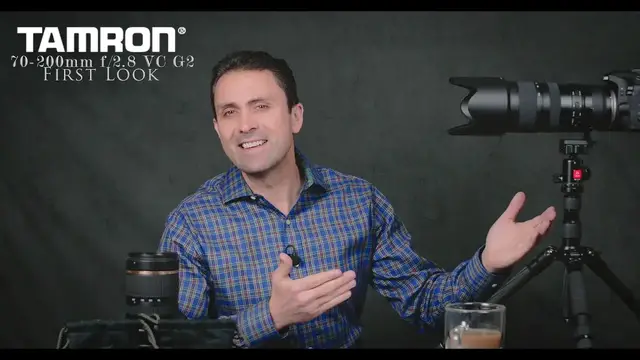
Tamron SP 70-200mm f/2.8 VC G2 | First Look | Photographer Dustin Abbott shares a first, detailed look at the build, design, and upgrades from the previous generation lens. Tamron 70-200 G2 Image Gallery: http://bit.ly/70200G2IG |
Buy the 70-200 G2: B&H Photo: https://bhpho.to/2kkOdhg | Amazon: http://amzn.to/2lEcwsy
Buy the Tamron SP 1.4x TC: https://bhpho.to/2mFLD70 | Buy the Tamron SP 2.0x TC: https://bhpho.to/2m4xGLQ |
Want to support this channel? Use these affiliate links to shop at:
B&H Photo: http://bhpho.to/1TA0Xge
Amazon: https://www.amazon.com/shop/dustinabbott
Ebay: http://bit.ly/DustineBay
Make a donation via Paypal: paypal.me/dustinTWI
Get a discount off all Skylum Editing Software (Luminar, Aurora HDR, AirMagic) by using code DUSTINHDR at checkout: http://bit.ly/LuminarDLA
Become a Patron: https://www.patreon.com/dustinabbott | Check me out on: Personal Website: http://dustinabbott.net/ | Sign up for my Newsletter: http://bit.ly/1RHvUNp | Instagram: http://bit.ly/DLAinsta | Google+: http://bit.ly/24PjMzv | Facebook: http://on.fb.me/1nuUUeH | Twitter: http://bit.ly/1RyYxIH | Flickr: http://bit.ly/1UcnC0B | 500px: http://bit.ly/1Sy2Ngu
My filming setup: Sony a7R III: B&H Photo: https://bhpho.to/2D6ibNO or Amazon: http://amzn.to/2CNxOvH | or | Sony a9 @ B&H Photo: https://bhpho.to/2HyWIyt or Amazon: https://amzn.to/2s1vYE0
Tamron 28-75mm F2.8 RXD @B&H Photo: https://bhpho.to/2FA00la or Amazon https://amzn.to/2G2kaEr
Lights: Rotolight AEOS @B&H Photo https://bhpho.to/2IK7mqV | Genaray Contender @B&H Photo: https://bhpho.to/33HbGNM | and Aputure AL-MW: https://bhpho.to/2N3MtZV
Show More Show Less View Video Transcript
0:00
Hi, I'm Dustin Abbott and I'm here today to give you a first look at the new Tamron 70-200mm f2.8
0:26
And this is a DI, which means it's full frame compatible. It is VC, Tamron's vibration control or image stabilizer
0:34
It has a USD or ultrasonic drive. That's a full ring USM type focus motor
0:40
And of course, this is the G2 version, the generation two of the lens
0:46
Now, as a part of my review, I will be comparing this lens to the previous generation of VC lens
0:53
and comparing it optically and features and all of those things. But I'll also be comparing it to the Canon 70-200mm f2.8 L Mark II lens
1:04
I really hope to be able to bring you a definitive version in my final review of a definitive review on this lens
1:11
I know that there are a few different reviewers that are out there right now that are reviewing the lens
1:17
but I'll do my best to cover all the bases as a part of this. I do think it's a very important lens
1:22
And the reason why I say that is that 70-200mm f2.8 lenses are really the staple for a lot of photographers
1:31
from everything from weddings to events to portraits to even sports. And so they're just a very key signature lens in many photographers' kit
1:41
and so I want to cover it as thoroughly as possible. Now, I'll spare you the details of the unboxing
1:48
you can see it in high speed here, but really the key things that I want to emphasize as a part of
1:55
that, kind of the interesting things in the box, is that number one, starting last year, Tamron
2:00
started including for those that purchased new Tamron lenses, one little benefit, and that is
2:06
that there is a link to registering to get Adobe Creative Cloud the photography plan at a discounted
2:14
rate. Now, a North American price, it's usually $9.99 per month for that plan. And as a new Tamron
2:21
owner, it will be $7.99 per month. So, you know, not necessarily a big deal, but saving a few bucks
2:27
every month, of course, is a nice thing. That's what I do. I use the Creative Cloud, and I think
2:33
it's great to be able to have both Lightroom and Photoshop constantly updated, always the current
2:39
version at a, you know, what I think is a pretty fair price when I consider what I used to pay for
2:45
Photoshop. The other thing in the box is that now Tamron is including a, you know, a felt-like
2:53
sack pouch for the lens with a padded bottom. It's, if you're familiar at all with Canon's L
3:00
series pouches, then you pretty much know what this is. I'm not crazy about these things. Some
3:05
of you that follow my reviews know that, but at the same time, it's a step forward in that Tamron
3:10
included nothing before, and that's a step in the right direction. So kudos to them for that small
3:16
step in the right direction. Now, when Matt Granger did his unboxing of this, and I've been
3:22
following his coverage, although he reviews on Nikon systems, I'm interested in his feedback on
3:28
the lens itself. One thing that he noticed is that when he took it out of the box, he thought
3:33
on first impression that this was actually a smaller lens than the previous generation
3:38
It's actually not. It's a hair longer and it is just a tiny bit heavier. And so overall
3:46
this lens is now, it's 7.6 inches long. That's 193 millimeters. And the old lens was right under
3:57
seven and a half inches long and 188.3 millimeters. And so it's actually grown physically and the old
4:04
lens was 1470 grams. The new one is right at 1500 grams or 3.31 pounds. And so it is, has minutely
4:13
grown but I completely understand why he felt looking at the lens that it was actually physically smaller Something about the design makes it look like a smaller lens overall even though that it not technically smaller in any way It has a very sleek new design
4:30
that makes it look somewhat diminutive, surprisingly, and quite compact in a lot of ways
4:38
Overall, of course, there's a major upgrade in the overall quality of the build. This previous
4:45
generation lens did have a lot of metal in it, but you know, kind of the polycarbonate or
4:50
engineered plastics covering around that all. Meanwhile, the new generation of Tamron's lenses
4:58
are all aluminum body. So all metal construction and, and you know, it's, it's a lightweight metal
5:03
and not kind of like Zeiss metal, but still it's definitely an upgraded overall build
5:09
The weather sealing is improved. And while the previous generation did have the gasket around
5:14
the rear of the lens. The new generation, it has all kinds of internal seals at all of the switches
5:21
and along the focus and zoom rings. And then so additional sealing there, it also along the front
5:29
it has an expensive flooring coating that helps to repel fingerprints, oil, you know, moisture
5:35
also makes it very easy to clean. And so the build quality is certainly a pretty huge step up and
5:42
and is certainly now very competitive with the first-party offerings from Canon or Nikon
5:47
The other nice thing is that unlike the old tripod collar and foot that was on the old lens
5:53
the new one is designed to be Arca Swiss compatible, which, you know, basically what that means is that you don't need a quick-release plate
6:00
If you have an Arca Swiss compatible tripod, which a lot of them are
6:04
all you got to do is just go right on and screw it on to the quick, or not the quick-release plate, but just screw it right on and you're ready to go
6:11
And so, you know, it's just a time-saving thing. It's also less, you know, rather than always having a quick-release plate also on there before
6:19
now it's much simpler to just go right to the tripod. And so a nice bit of convenience there
6:25
I'm happy to see that the tripod collar and foot continue to be fully removable
6:31
And frankly, unless I know I need to be shooting on a tripod
6:34
and that's really mostly when I'm testing, when I actually use these kind of lenses
6:39
I'm using them handhold almost exclusively. And so I will remove the tripod collar and just
6:46
eliminate a little bit of weight for overall use there. So anyway, I'm very happy to see that it
6:51
continues to be a fully removable tripod. Now around the front, I've already mentioned that
6:57
there it's all metal. That includes even the filter threads, a 77 millimeter front filter
7:04
thread, which it retains from the previous generation lens. We'll also note that I think
7:09
that Tamron's new pinch caps for the new SP line are pretty much the nicest ones out there. And
7:15
really it comes down to the mechanical action. They just feel a little bit more quality when
7:20
you squeeze them. Some of them feel kind of loosey goosey or very plasticky. These feel really nice
7:26
And so I do really like those. Now, a couple of things to note when it comes to the overall
7:32
focus and zoom rings here. First being that the actual zoom ring is furthest away from the camera
7:40
body. Not my favorite. I do prefer those to be reversed. And unfortunately, there's lenses that
7:45
go back and forth. And it's not just third party. For example, the Canon 7300 millimeter L series
7:52
lens. It also has a zoom ring further away from the actual shooter. And so I prefer those to be
7:58
reversed. However, the overall ring, it's a little bit different than the previous generation
8:03
It's a little bit narrower. It also has just a kind of a softer touch feeling rubberized surface
8:11
just straight ribs rather than the little more complex pattern that was on the previous generation
8:16
lens. As far as the actual movement, it's nicely damped, nice and smooth there with, you know
8:23
maybe just a little bit heavier resistance than some, but already it's starting to loosen up. So
8:28
that may just be a breaking in thing but most importantly there's no sticking
8:31
points it's nice and smooth there in terms of the overall a focus ring
8:35
similarly it's a different rib pattern than the previous gen lens and moves nice
8:41
and smoothly you know and once again I think that Tamron has done a really good job with the manual focus rings They probably don get used a lot but on this new SP line they are some of the better
8:52
mechanical operating manual focus rings than what I've, better than what I typically see
8:59
on autofocus lenses, though still not to the level of what a good manual focus lens is
9:05
Distance windows that is there, and that does raise two points here
9:09
Number one, that the actual manual focus ring action and the zoom action, it zooms in the
9:16
Nikon direction and not in the Canon direction. I know that's a big deal to some people
9:20
I have to tell you, and maybe it's because I use so many different lenses, I don't even
9:25
think twice about it, to be honest. My brain must just adapt, and it's only when people actually raise that point that I ever
9:30
think about it. But I really can't say that I lose shots based on that
9:35
But I do know that for some of you it is a big deal, so I will report, yes, it continues to zoom in the Nikon or to the left, not in the Canon position
9:48
The other thing when looking at the distance window is that the minimum focus distance you will note is considerably smaller than what it was on the previous generation lens
9:57
Now to give you just a quick breakdown of that minimum focus distance on the previous generation Tamron was 1.3 meters
10:06
The Canon L Mark II lens is 1.2 meters. This new lens will focus down to under a meter or 95 centimeters
10:15
That's just barely over 3 feet, 3.12 feet. And so as a result of that, the maximum magnification ratio is improved
10:25
That was one of the serious weak points to me on the previous generation lens
10:30
It had a really quite poor 0.12 times or 0.125 times maximum magnification
10:40
which when you consider how good, kind of the one serious strength of Tamron's first 70-200 lens
10:47
is it had a great reproduction ratio. And so it was kind of disappointing to take such a huge step back in this lens
10:54
So the new Tamron, because it focuses down closer, is better, 0.163 times
11:01
So, you know, that's a step forward of about, you know, four points
11:05
However, it's still about four points behind that of the Canon. And the reason is, is that this lens will do some focus breathing
11:13
We'll break that down a bit more when we actually look at the overall review
11:18
In terms of the optical formula, it is similarly 23 elements in 17 groups
11:23
and the Canon is 23 elements in 19 groups. However, this is a completely revamped optical formula
11:30
and I think we're going to find because all the reports point me in that direction
11:35
that this lens is pretty fantastic optically. Nine rounded aperture blades. So all of those things are good, of course, overall
11:44
Now, in terms of the overall kind of customization of the lens, there are some steps forward there
11:50
Instead of just two switches on the old lens, On the old lens, you had an AF-MF switch
11:56
Both lenses offered full-time manual override, but that switch is there. And then just an on and off for the vibration compensation
12:04
On the new lens, there is a focus limiter, which is always welcome, particularly on a
12:08
telephoto lens. And so only two positions, though, either the full range or from three meters to infinity
12:16
And so, I mean, if you want that extra little bit of autofocus speed and you're not focusing
12:20
close to yourself using the focus limiter eliminates all the focus options up to three
12:26
um three meters which on a lens that can focus down so closely is a fair bit you know that's
12:32
saving you certainly a lot of speed there the second switch is that autofocus manual focus
12:38
switch then the vc on and off the fourth switch here however gives you some options on vc modes
12:44
the standard um just you know out of the box type mode number one number two is for panning and so
12:50
it only stabilizes one axis so as you're moving it will only correct for you know
12:56
the up and down motion but allow you free movement side to side the third option
13:01
will actually it is is what what cam our Tamron calls like capture priority and that it doesn really work at stabilizing the image in the viewfinder but instead just focuses on stabilizing the actual captured image and so if you use it in
13:18
that fashion Tamron claims that it is actually capable of giving you a industry leading five
13:26
full stops of correction and so that's that's pretty fantastic around four stops and the other
13:33
modes. You may find with a longer focal length, particularly if you're shooting around 200
13:37
millimeters, that you may prefer to have your viewfinder stabilized, but it's certainly a great
13:43
option there to have that and to be able to get really, really great freezing of action if you
13:50
want to employ that. Now, this lens is now fully compatible with the tapping console, which the
13:56
nice thing is, is that I actually own the previous generation lens for three, three and a half years
14:01
It served me very well. I did have to send it in a few times for firmware updates, though
14:05
when I changed camera bodies and sometimes Canon would just tweak something and so the lens
14:11
wouldn't work properly. So the good news is that you can apply those firmware updates directly to
14:17
your lens at home through the tapping console. Nice because it just saves some downtime and it
14:23
also helps to future-proof your lens. You can also customize different attributes of focus
14:29
and then when it comes to the image stabilization you can also employ a mode if you're going to
14:33
shoot a lot of video where it's in that third and so to that third position you can program a fourth
14:39
option to where it will emphasize kind of a smooth ramping on and off of the image stabilization
14:46
keep it on just a little bit longer and thus to help to produce the most smooth video option
14:53
possible. And so a lot of goodness there when it comes to that. Now, as I kind of wrap up the first
15:01
look, one thing that is pretty huge here is that Tamron has been very, very aggressive with the
15:06
pricing on this lens. They're bringing it into market actually a few hundred dollars cheaper than
15:12
what the previous generation lens was. This previous generation lens was retailing at $14.99
15:18
There's kind of a flash sale on it right now, dropping it down to be cheaper than the new lens
15:23
but you know it was retailing at $1499. Tamron's bringing this new lens to market at $1,299
15:30
Now that is pretty huge when you consider this lens is going to be extremely competitive
15:36
in all of the various options with the first party Nikon and Canon lenses and probably is
15:42
going to be a bit sharper. We'll see that as we compare them head to head but MTF you know
15:48
resolution graphs and everything point me to the the fact and the ones that have had their hands on
15:54
the lens early on i think it's going to be extremely competitive and of course the the
15:58
canon version is a couple of grand nikon's newest version is somewhere around twenty eight hundred
16:03
dollars and so when you consider that you're looking at a pretty huge savings um and going
16:09
with the tamron which is now a full metal construction fully weather sealed uh it's a
16:15
pretty compelling option. I'll also be looking, Tamron has a new line of teleconverters, 1.4
16:21
times and a two times teleconverter. These also have, you know, they're moisture resistant
16:27
and so they're very nice metal body, very nice teleconverters. And so we'll look at the performance
16:32
on that. The last generation lens was not really compatible with teleconverters
16:38
and so that's a nice plus here. And so with the 1.4 times, you can achieve on the long end
16:43
a 280 millimeter f4 image and with the two times converter you can get a 400 millimeter f5.6 and
16:52
so we'll see how the image quality holds up and focus with those things attached but that will be
16:57
a part of my review anything else you want to see covered go ahead and sound off about it in the
17:02
comments in my description you can find a link to my ongoing image gallery images of the lens
17:09
images taken with the lens. And of course, you can also find some linkage there if you'd like
17:14
to purchase a copy for yourself. I'm Dustin Abbott. If you haven't already, you can follow
17:19
me on social media and please click that subscribe button. Thanks for watching. Have a great day
#Arts & Entertainment
#Home & Garden
#Reference