Up next in 10


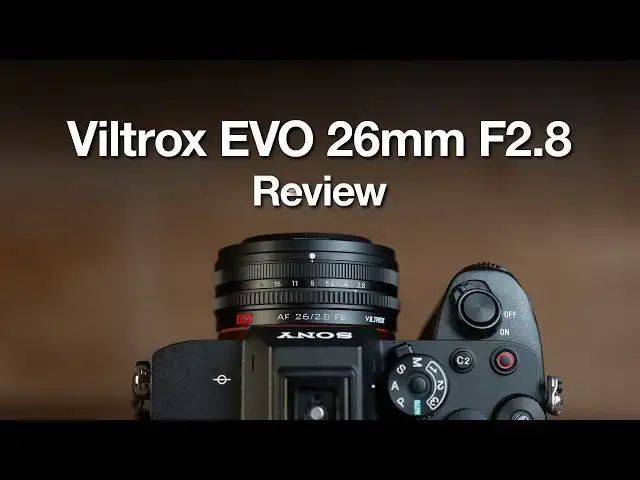
Photographer Dustin Abbott takes a deep dive look at the Viltrox EVO 26mm F2.8 pancake lens for Sony FE or Nikon Z while traveling in beautiful New Zealand | Read the Text Review: https://tinyurl.com/EVO26FEda | Purchase the Viltrox EVO 26mm F2.8 @ Viltrox (use code DUSTINABBOTT for 5% off) | B&H https://bhpho.to/4vZ5nSV | Adorama | Amazonhttps://amzn.to/3RaKchE | Amazon Canada https://amzn.to/4wFzvm2 | Amazon UK https://amzn.to/4ynS9AJ | Amazon Germany https://amzn.to/4hiynAm
Check out the DA Merch here: https://bit.ly/TWIMerch | Become a Patron: https://www.patreon.com/dustinabbott | On the Web: http://dustinabbott.net/ | Sign up for my Newsletter: http://bit.ly/1RHvUNp | Instagram: http://bit.ly/DLAinsta | Facebook: http://on.fb.me/1nuUUeH | Flickr: http://bit.ly/1UcnC0B | 500px: http://bit.ly/1Sy2Ngu Follow Craig @ https://www.instagram.com/craigstoffersen/
Want to support this channel? Use these affiliate links to shop at:
B&H Photo: http://bhpho.to/1TA0Xge
Adorama: https://howl.link/nt4zdz1goa7ql
Camera Canada: http://bit.ly/DLACameraCan
Sony Canada: https://www.thesonyshop.ca/?ref=abbott
Amazon: https://amzn.to/3HrY64d
Amazon Canada: https://amzn.to/3qG1p18
Ebay: http://bit.ly/DustineBay
Into the AM Clothing: https://bit.ly/intotheAMda and use code DUSTIN10 for 10% off
Fioboc Clothing: https://tinyurl.com/FiobocDA20 and us code DUSTIN20 for 20% off
Make a donation via Paypal: https://www.paypal.com/paypalme/dustinTWI
=============================
Table of Contents:
=============================
0:00 - Intro
Show More Show Less View Video Transcript
0:03
Hi, I'm Dustin Abbott and I'm here today
0:05
to give you a little bit different kind
0:07
of review. I'm filming in beautiful New
0:09
Zealand right now. I've spent the last
0:12
week or so here while visiting my son
0:14
and daughter-in-law while he goes to
0:16
chiropractic college in Auckland and so
0:18
I've had a great time taking Viltrox's
0:20
newest lens all around the North Island.
0:23
Now, this newest lens from their Evo
0:25
series is a serious departure from what
0:27
we've seen in the Evo series to this
0:29
point. Those lenses, while I've liked
0:31
every single one of them, they have
0:32
followed a very defined formula in terms
0:35
of the actual physical body of the lens,
0:38
all of them having the exact exterior
0:40
same exterior dimensions, same feature
0:42
set.
0:43
However, in this case we've moved to a
0:45
radically different kind of lens, a
0:46
pancake lens and this is a 26 mm F2.8
0:51
from their Evo series. I've heard a lot
0:53
of people pontificate on forums and
0:56
different places that it was impossible
0:57
to do a pancake lens, true pancake lens
1:00
on Sony E-mount
1:02
and even people that have lamented that
1:04
there was no equivalent to Nikon's own
1:06
26 mm F2.8 Z-mount lens. Well, we have
1:09
got basically that same lens but with
1:12
some improvement to the feature set and
1:14
to the performance and a much lower
1:16
price. This lens will also be available
1:18
for Nikon Z-mount. I'm testing it on
1:20
Sony E-mount but it is a lens that
1:23
frankly is a lot of fun and and so we're
1:26
going to dive into all the features of
1:27
that today though it will be a little
1:29
bit different of format because I'm
1:30
filming in different environments with
1:32
different tools available to me. So, I
1:34
did film all of the formal test chart
1:36
test before I left and so we will have
1:38
access to that. I also want to say a big
1:40
thank you to Viltrox for sending me a
1:42
review sample. As always, however, they
1:44
have had zero input in this review. They
1:46
will not see it before you do and my
1:48
findings are my own. It is completely
1:50
independent. All of that aside, let's
1:52
dive in and let's take a look at this
1:54
exciting new lens from Viltrox.
1:59
The first thing to notice is this is a
2:01
real pancake lens. It is incredibly
2:04
slim. In fact, it is 2.59 in or 66 mm in
2:09
diameter, but just 23.8 mm or right
2:12
under an inch in overall length, making
2:15
it a true pancake in overall size.
2:17
What's more, it is incredibly light. It
2:20
weighs in at just 130 g or 4.58 oz,
2:24
making it truly lightweight, but at the
2:26
same time it feels very robust. The
2:28
construction feels more metal than
2:30
plastics. And what's different from a
2:33
lot of existing pancake lenses,
2:34
including Nikon's own 26 mm F2.8 in
2:38
their Z mount, is that while this lens
2:41
just weighs 5 g more, it actually has a
2:44
fully functional aperture ring, has a
2:46
manual focus ring, it's a little bit
2:47
more feature-rich in that regard. Now,
2:50
one quirk I did notice is that while
2:51
traditionally you rotate to the right to
2:54
rotate through the aperture, in this
2:56
case you have to go the opposite
2:58
direction to the left to go through the
3:00
aperture. This is a clicked with uh
3:02
detents at 1/3 stops and then markings
3:05
at full stops. There is no declick
3:07
option here. However, just having an
3:09
aperture ring is pretty fantastic.
3:11
The manual focus ring
3:13
uh moves fine, but it is a little bit
3:15
hard to access and that is particularly
3:17
true when you move into the various
3:19
stages. This lens utilizes a very cool
3:22
magnetic system and so already you can
3:24
see that this filter adapter / lens hood
3:28
it already is attaching on there, but in
3:30
this case very nicely will bayonet
3:32
tightly into place and so it's not going
3:34
to move. Continues to utilize that
3:36
magnetic, however, for that and it is a
3:38
really definite firm it's actually a
3:41
kind of a very cool
3:43
a kind of tactile thing. Uh there's
3:45
something about it that's that's
3:46
pleasing the way that it pops on there
3:47
and you have no fear of that coming off
3:49
uh without that.
3:51
There is a weather sealing gasket at the
3:53
lens mount. Um no other internal seals
3:56
that I'm aware of, however. And then
3:57
there is the USB-C port that allows you
3:59
to do quick and easy firmware updates.
4:02
Overall, this is a very simple lens to
4:04
use. However, I as noted, that manual
4:07
focus ring is a little hard to access
4:09
because it is pretty much flush with
4:11
this uh adapter here, filter, which by
4:14
the way, 43-mm filters will attach there
4:17
on the front onto the lens hood's filter
4:19
adapter. And so it's not easy to access
4:21
it, but I mean at least there's a manual
4:23
focus ring there. Their 28-mm f/4.5 had
4:27
no manual focus ring, obviously had no
4:28
aperture ring because it had no aperture
4:30
control. It had a fixed aperture. This
4:32
is a much more fully functional lens and
4:35
it is generally a pleasure to use.
4:38
Minimum focus distance is 20 cm and you
4:41
can get a 0.20
4:43
uh times magnification, which is quite
4:45
useful. Overall, this lens is generally
4:48
a pleasure to use and I love the compact
4:50
size. Uh makes a lot of cameras pretty
4:53
close to pocketable.
4:58
So let's talk autofocus. Autofocus comes
5:00
via an STM focus motor, which is of
5:03
course typical for all of Evo series.
5:05
However, this is not an identical focus
5:07
motor to what we've seen in all of the
5:09
other lenses. Those are what is called a
5:11
lead screw type STM focus motor, which
5:14
is a little bit bulkier, but more
5:15
importantly, it's higher-powered,
5:17
smoother, it's, you know, for for faster
5:19
lenses, whereas this is a gear type STM,
5:22
which is designed for uh to be as
5:24
compact as possible. And obviously, in a
5:26
lens like this, that is the number one
5:28
priority.
5:29
And so because of that, we don't have
5:30
the same degree of thrust that what we
5:32
have seen in those other Evo lenses. And
5:34
so autofocus isn't quite as fast as
5:36
those. Uh definitely, there's a little
5:38
bit of a feeling of like a lurching
5:40
effect if you're wanting to go from very
5:42
close to very distant. It's not
5:43
instantaneous. However, your normal type
5:46
shots, where there's a more, you know,
5:47
minuscule autofocus adjustment, those
5:50
happen fairly quickly. And frankly, I
5:52
haven't had any kind of issues. This
5:54
shot may not look like a whole lot, but
5:57
I just snapped up the camera really
5:58
fast. I wanted to get a picture of the
6:00
the pastor of the church that my kids
6:02
are attending while they're here in
6:03
Auckland. And and so anyway, I snapped
6:05
up photo real quick. I wanted to catch
6:07
the the pastor there while he was there
6:08
briefly at the pulpit. And so within a
6:10
couple of seconds, I grabbed it, it
6:11
focused, took the shot. And and so
6:13
anyway, I you know, I felt like it was
6:15
responsive enough for that kind of
6:16
setting. I wouldn't use this for sports
6:19
photography, but then again, I I doubt
6:21
that anybody's going to be buying this
6:22
lens for that. More importantly, those
6:24
of you that shoot street, I think that
6:25
autofocus is going to be definitely fast
6:27
enough for that. And definitely for all
6:30
of the environments that I shot in, a
6:31
variety of lighting conditions, I had
6:34
zero issues, and focus actually was
6:36
always really really excellent. So
6:38
that's all great. Focus motors actually
6:40
really quiet in operation. And and so
6:42
switching to the video side of things, I
6:44
think that part of that kind of lurching
6:46
effect, as you can see here, there's
6:47
definitely some pronounced focus
6:49
breathing. That's pretty common in very
6:51
compact lenses because there frankly,
6:53
there isn't a lot of space for the lens
6:55
elements to go. So there are ways that
6:57
in manufacturing, you can help to
6:59
mitigate focus breathing a bit within
7:01
the lens design. There isn't really room
7:04
to do those same kind of mitigations
7:06
here. At the same time however, those
7:07
focus pulls, they are smooth and
7:10
confident. And and I didn't see any kind
7:12
of like pulsing or settling. And what's
7:13
more, I've shot tons of video clips
7:16
while traveling here to just augment my
7:18
photos that I'm taking. And I haven't
7:20
had any issues with any of them. Focus
7:22
has been where I wanted it to, it's been
7:24
stable, and I've been able to get a lot
7:26
of really beautiful video footage with
7:28
the lens because as we're going to see
7:29
in a moment, it is nice and sharp. And
7:31
so no issues with it on that front. So a
7:34
lot of good things there.
7:37
So in summation, I would say that
7:38
autofocus really is quite good. It's not
7:41
as fast as the other Evo lenses, but
7:43
it's fast enough to get the job done.
7:45
And for a pancake style lens, I think
7:47
that it does really quite a fantastic
7:49
job.
7:52
Let's talk a few minutes about the
7:54
optics. We have an optical design of
7:56
eight elements in six groups that
7:57
includes one high refractive index
7:59
element along with two aspherical lenses
8:02
in the design. If we take a look at the
8:04
MTF chart, it shows a very sharp center,
8:07
a very good mid-frame, but then a very
8:10
steep drop-off into the corners. Now, I
8:13
was kind of interested in seeing that
8:15
because that didn't necessarily
8:17
reconcile with what I was seeing out in
8:19
real world shots. And so, I looked a
8:21
little bit more critically and I found,
8:23
for example, in this shot that I I could
8:25
definitely see a fade towards the edges
8:28
of the frame, but there, you know, with
8:30
a lot of landscapes, it's the edge that
8:32
is very important. That looked fine. So,
8:34
I then looked over at a shot where the
8:35
foreground would be important, the shot
8:37
of of train tracks shot at F5.6. I found
8:41
that, you know, really the corners
8:42
looked pretty decent to me. And so, I
8:44
would say that this is one of the cases
8:45
where I feel like the lens maybe
8:47
outperforms the MTF in real world
8:50
performance. So, maybe it works better
8:51
at that distance than what it does on
8:53
the chart testing. Though, as we're
8:54
going to see in a moment, it really
8:56
doesn't look that bad on the charts,
8:57
either.
8:58
Some of the other factors at play here,
9:00
however, is that when it comes to
9:02
vignette and distortion, it does show a
9:05
bit of barrel distortion. I used a plus
9:07
six to correct that, so no big deal on
9:09
that front. And then, surprisingly, I
9:11
only needed a plus 47 to correct the
9:14
vignette as well, which, you know,
9:16
frankly, is not bad for such a compact
9:19
lens. And I've seen far worse in in
9:22
pancake style lenses before. And so, I
9:24
was actually quite pleased with that
9:26
performance.
9:27
I found that in most shots, you know,
9:29
this shot, for example, shot in Hobbiton
9:31
inside they they have a really charming
9:34
kind of Hobbit house you can actually go
9:36
through with attention to detail. But
9:38
this shot, for example, you can see with
9:40
zero correction on it. There's, you
9:42
know, a fair amount of straight lines in
9:43
that shot, but it looks natural without
9:45
any kind of obvious barrel distortion or
9:47
warping to it. And so, frankly, I'm
9:49
pretty happy with that overall
9:51
performance. Likewise, when it comes to
9:53
longitudinal style chromatic
9:54
aberrations, very, very well controlled.
9:56
And here on the test chart, you can see
9:58
that there's just minimal amount of
9:59
fringing before and after the plane of
10:01
focus. And even out in real-world shots,
10:03
I've got some shots of some flowers with
10:06
bright light hitting them, and you're
10:07
going to see that there really isn't any
10:09
evidence of fringing there. Now, I did
10:11
see some lateral style chromatic
10:12
aberrations in the corners on either my
10:15
test chart and in a few real-world
10:17
shots, but it wasn't strongly, you know,
10:20
pronounced. And so, no major issue with
10:22
that, either.
10:23
So, frankly, for a being such a compact
10:26
lens, that's really quite a good
10:27
performance in general. So, no
10:29
complaints on that front. Now, when it
10:31
comes to sharpness, this is tested on a
10:34
61-megapixel a7R Mark V, and results are
10:37
shown or the crops are shown at 200%
10:39
magnification. Here's the test chart,
10:41
and then here are some crops at f/2.8
10:43
from across the frame. Center crop looks
10:45
good, as expected. Mid-frame looks good,
10:48
as expected. But where I'm surprised is
10:50
at the corners, you know, they don't
10:51
look fantastic, but they're certainly
10:53
more usable than a lot of lenses that I
10:56
have tested. And so, no major results
10:58
there. And I found that, you know, to
10:59
me, even shooting real-world f/2.8
11:02
images, that frankly, I thought that
11:03
they looked quite good. And so, if
11:05
you're shooting in lower light
11:06
conditions where you, you know, you just
11:08
want to shoot at f/2.8, I think you
11:10
still get very, very good detail, very
11:12
credible results. If you stop it down,
11:15
there isn't a huge gains in the center
11:17
and mid-frame.
11:19
I found peak was probably around f/5.6.
11:21
There is some noticeable improvement in
11:23
the corners, however. And so, if you
11:25
want to get the most even performance,
11:27
I'd say shoot at f/5.6. And I found that
11:30
by f/8, it was a very, very mild
11:33
regression from the peak I saw at a 5.6.
11:37
Uh if you're there's lots of resolution
11:39
if you're shooting on a high-resolution
11:41
body where you can deeply crop into
11:42
images. And so, I mean, this is a this
11:45
is a full performance here. It's not
11:46
like a you know, it's a cute little lens
11:48
that doesn't have real optics to it.
11:50
This is a real lens and it performs as
11:53
such. And in this beautiful shot, this
11:55
is from Piha Beach in New Zealand. I was
11:58
able to deeply crop into this image and
12:00
you can see that the detail holds up
12:02
really, really nicely.
12:03
You're going to see the typical
12:04
diffraction issues at starting at F11
12:07
and more pronounced at F16. It's going
12:10
to be somewhat specific to your camera
12:11
model and how high the resolution is,
12:13
but nothing unusual here on that front.
12:16
Bokeh quality is kind of a mixed bag.
12:19
This is a little lens and we've already
12:21
seen that it's quite sharp. The bokeh
12:22
quality because it's wide and it only
12:25
has an F2.8 aperture, it's not going to
12:27
obliterate backgrounds. You can focus
12:29
quite closely and that does help. And
12:32
so, you focus down to 20 cm, you're
12:35
getting a 0.20 times level of
12:37
magnification. So, you know, that is
12:39
enough to blur out the background fairly
12:41
decently. But, the bokeh is just okay.
12:44
And I didn't see anything that really
12:45
wowed me, but nothing that was
12:46
particularly ugly, either.
12:48
Flare resistance is very much a mixed
12:50
bag. And so, if you are shooting right
12:53
into the sun, the flare resistance is
12:55
actually quite good and there's very
12:56
little ghosting or veiling that is
12:58
there. However, if the sun is right out
13:01
of frame or the light source is right
13:02
out of frame, you will get some flashing
13:04
and veiling effects that can be quite
13:06
strong. And so, you're going to have to
13:07
watch for that. Look at how different
13:09
here the just the overall look of the
13:11
image is with just a tiny little
13:13
adjustment to my composition in the shot
13:15
of my daughter-in-law. One of them is
13:17
very blown out, you know, with that a
13:19
lot of veiling effect, and the other is
13:21
high contrast, nearly perfect. And it
13:23
was just, as you can see, just a tiny
13:25
little adjustment. And so, just kind of
13:27
be aware for that. You can kind of shoot
13:29
for the effect that you want. In
13:31
general, I would say however that I was
13:33
actually quite delighted again at how
13:35
credible images were. They have nice
13:37
detail, good contrast, good color. I
13:40
don't feel like I'm compromising
13:41
optically for carrying such a compact
13:43
lens. And at the end of the day,
13:45
can you ask for any more than that?
13:50
So, what's my conclusion? Well, in many
13:52
ways I feel like the Viltrox Evo 26 mm
13:55
f/2.8 is really quite a special lens.
13:58
Those of you that have been looking for
13:59
something that is super compact, but yet
14:01
high performing, this is a very useful
14:04
focal length for walk around and general
14:06
use. I've really enjoyed it. I haven't
14:08
really shot a lot of 26 mm lenses, but
14:10
I've actually enjoyed the focal length
14:12
and so I've had no issues with that. But
14:14
also, this lens, there's something about
14:16
it that has kind of a retro charm to it.
14:19
The lens, although it is very
14:20
lightweight, it feels very well made.
14:23
Having an actual aperture ring makes the
14:25
shooting process feel a little bit more
14:28
analog, a little bit more organic. And
14:31
in general, I've actually really liked
14:33
both the process of using the lens, but
14:35
also the images that I've gotten out of
14:37
it. And I keep coming back to the fact
14:40
that this is a serious performing lens
14:42
despite it being so compact. And I think
14:44
that that is exactly what a lot of
14:46
photographers have been looking for. And
14:48
the fact that you can score this for
14:49
under $300, I think is going to make it
14:52
very appealing to a lot of people. And I
14:55
think this is going to scratch an itch
14:57
for a lot of people, even those that
14:58
didn't know that they had it.
15:00
So, at the end of the day, kudos to
15:02
Viltrox for, you know, diversifying the
15:05
Evo format and giving us a lens that is
15:07
both unique, but also pretty special at
15:10
the end of the day. If you want more
15:11
information, feel free to check out my
15:12
full text review. That's going to look a
15:14
little bit more traditional. And you can
15:17
find that linked in the description down
15:18
below. There are some buying links there
15:20
as well. As always, thanks for watching.
15:22
Have a great day and let the light in.
#Science