Up next in 10


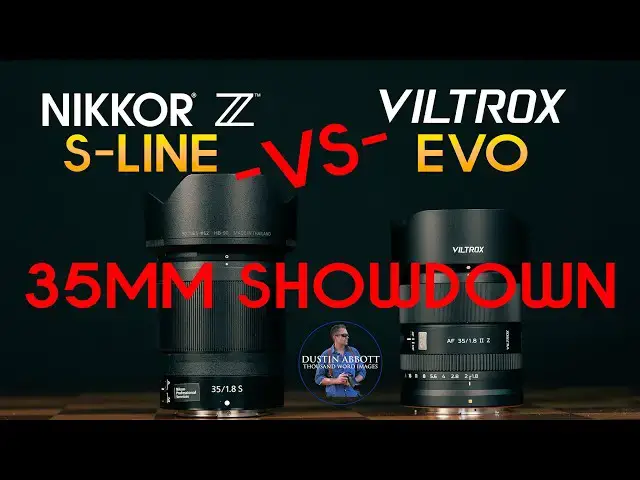
Can the Nikkor Z 35mm F1.8 S hold off the new Viltrox EVO 35mm F1.8 on Z-mount? Find out here!! | This episode is sponsored by Fantom Tracker. Visit store.fantomwallet.com and use code DUSTIN20 for 20% off.
EVO Reviews - Video: https://youtu.be/42dHVXp67cI | Text https://tinyurl.com/EVO35Ereview
S-Line Reviews - Video: https://youtu.be/ByMOf_McIEw | Text: https://tinyurl.com/1835Sreview
Purchase the Nikkor Z 35mm F1.8 S @ B&H Photo https://bhpho.to/44XsmmI | Adorama https://howl.link/17wga2obbgt04 | Amazon https://amzn.to/4dFhCfb | Camera Canada https://shrsl.com/4woeu | Amazon Canada https://amzn.to/43k4xV0 | Amazon UK https://amzn.to/4dEsaLk | Amazon Germany https://amzn.to/3ZxaSu3
Purchase the Viltrox EVO 35mm F1.8 @ Viltrox (use code DUSTINABBOTT for 5% off) https://tinyurl.com/BuyEVO35E | B&H https://bhpho.to/3Oq3n5H | Adorama https://prf.hn/l/Oq2o3mX/ | Amazon https://amzn.to/3OMNV3E | Amazon Canada https://amzn.to/42jMXPq | Amazon UK https://amzn.to/4vzMOot | Amazon Germany https://amzn.to/4vEJZmf
Check out the DA Merch here: https://bit.ly/TWIMerch | Become a Patron: https://www.patreon.com/dustinabbott | On the Web: http://dustinabbott.net/ | Sign up for my Newsletter: http://bit.ly/1RHvUNp | Instagram: http://bit.ly/DLAinsta | Facebook: http://on.fb.me/1nuUUeH | Flickr: http://bit.ly/1UcnC0B | 500px: http://bit.ly/1Sy2Ngu Follow Craig @ https://www.instagram.com/craigstoffersen/
Want to support this channel? Use these affiliate links to shop at:
B&H Photo: http://bhpho.to/1TA0Xge
Adorama: https://tinyurl.com/AdoramaDA
Camera Canada: http://bit.ly/DLACameraCan
Sony Canada: https://www.thesonyshop.ca/?ref=abbott
Amazon: https://amzn.to/3HrY64d
Amazon Canada: https://amzn.to/3qG1p18
Ebay: http://bit.ly/DustineBay
Into the AM Clothing: https://bit.ly/intotheAMda and use code DUSTIN10 for 10% off
Show More Show Less View Video Transcript
0:10
Hi, I'm Dustin Abbott and I'm here for
0:12
yet another one of my showdowns. To this
0:14
point, Nikon's f1.8 S-line lenses have
0:18
been pretty unique in the industry being
0:20
premium lenses with a maximum aperture
0:23
of f1.8.
0:24
Typically, that's not where you're going
0:26
to find kind of professionalgrade, more
0:28
expensive lenses. However, they have had
0:30
a lineup that really for the first
0:33
probably six, seven years of the Zmount
0:35
platform's existence have been a staple
0:38
for a lot of photographers with not
0:40
really any kind of major challenge.
0:42
That's all changed with Viltrox's EVO
0:44
line because they too are compact
0:48
premium lenses with maximum apertures of
0:51
typically around f1.8. Though that's not
0:53
a hard and fast rule for them. In this
0:56
case, the 35mm f1.8s 8s and the Evo 35mm
1:01
f1.8 are very natural competitors here
1:04
on Zmount. And so I'm going to be doing
1:06
a com one of my head-to-head showdowns.
1:08
We'll take a look at a variety of
1:09
different categories and see how the new
1:11
Challenger holds up against what is the
1:14
established player on the block. So
1:17
let's dive in and let's take a look.
1:19
Today's episode is sponsored by the
1:21
all-new Phantom Tracker 2.0. Phantom has
1:24
not only seriously upgraded the visual
1:26
look of the card, but now we have a
1:28
superior build quality. Made with
1:29
tempered glass and metal alloys, this
1:32
credit card size tracker can be locally
1:34
tracked via a 90de beeping noise, but
1:36
also on a global level via Apple's Find
1:39
My Network and its map. The addition of
1:41
NFC means that you can also use the card
1:43
to trigger an automation. Just tap it.
1:46
The tracker fits perfectly in any wallet
1:48
or bag and assures you won't lose your
1:50
valuables. It has a built-in
1:51
rechargeable battery that can be easily
1:53
charged via any wireless charger, and a
1:56
single charge can last up to 6 months.
1:58
The Phantom Tracker 2.0 makes for a
2:00
seriously cool gift. So, visit
2:02
store.fanomwallet.com
2:04
and use code dustin20 at checkout for
2:07
20% off. That's store.fanomwallet.com
2:10
and use code dustin20 for 20% off. In
2:14
round one, we're going to take a look at
2:15
the build, features, price, kind of the
2:18
basic configurations of the lenses
2:20
themselves. And so, here is where Evo is
2:23
probably always going to win because
2:25
when it comes to price, the MSRP is
2:27
$395,
2:29
whereas the MSRP for the S-line lens is
2:32
nearly $900.
2:35
And right now, you can get this lens for
2:37
$316. And the uh Sline lens is pretty
2:41
heavily discounted. You can get it for
2:42
about 750 at the moment. Either way,
2:45
however, it is vastly more expensive.
2:48
Not quite three times as much, but not
2:50
far off from that. Obviously, when it
2:52
comes to size, also an area where the
2:55
Evo lens has an advantage. It is just 69
2:57
mm in diameter versus 73 mm and 78 mm in
3:02
length versus 86 mm. So, that's 4 mm
3:07
wider in diameter, 8 in longer in
3:09
length. Surprisingly, since it is the
3:12
bigger lens, the S-line lens is actually
3:14
the lighter lens. It weighs in on my
3:17
scale at 365 grams, whereas the Evo lens
3:21
on my scale is 376 g. And so 11 g
3:26
lighter. So that gives an advantage for
3:28
the S-line lens. Now, filter thread size
3:32
is not radically different. We have a 58
3:34
mm on the EVO lineup, whereas we have a
3:36
62 millimeter on the S-line. That being
3:40
said, I am going to give a point as I
3:42
did with a comparison with the 85mimeter
3:46
uh to the EVO lens for the simple reason
3:48
that there is very little filter sharing
3:51
across the S-line lineup of f1.8 lenses.
3:54
Now, this does share that same front
3:56
field thread with the 50mm, but it's
3:58
different from the 85mm, from the 20,
4:00
and from the 24 millimeter. We actually
4:03
have four different filter sizes across
4:05
those five lenses. whereas that 58
4:07
millimeter filter thread is shared
4:08
across all of the EVO lenses. So that is
4:11
an advantage because you can share
4:12
filters easily. Now an easy win for the
4:15
EVO lens is when it comes to the feature
4:18
category. The EVO lens is a fully
4:19
featured lens. It has got an aperture
4:22
ring that can be clicked. There's an
4:24
option to de-click it and a switch for
4:26
that on the side. It has a custom button
4:29
here on the side. It has an AFMF switch,
4:32
a very nice manual focus ring. Whereas
4:35
the S-line lens has an AFMF switch and
4:38
it's got a single ring that can be used
4:41
for manual focus, for aperture, and some
4:44
other options there as well. But in the
4:46
feature department, it is really sadly
4:47
lacking. And that shows up very much by
4:50
this higher standard that is being
4:51
achieved by the EVO lenses. Both of them
4:54
do have some degree of weather sealing.
4:56
Both of them have a gasket at the lens
4:58
mount and and some internal seals, but
4:59
with the lenses, they're just felt uh
5:01
seals inside, so not as robust. Whereas
5:04
the Sline lens has a full professional
5:06
grade of seals with a variety of seal
5:08
points around eight of them throughout
5:10
the lens itself and true rubber seals
5:12
everywhere throughout. And so this
5:14
obviously gets the win for a more pro
5:16
level of just uh weather sealing inside.
5:20
It also gets a point for having
5:22
firstparty support and Nikon has a you
5:26
know broad network of repair centers and
5:29
service around the world whereas Viltrox
5:32
is a newer brand and with a less
5:34
established presence outside of China
5:37
and so definitely I'm going to give a
5:38
win there and the Sline lenses have held
5:40
up now. Um many people have owned them
5:43
for six, seven years at this point and
5:45
they have held up just fine at that
5:47
point. Another point actually goes to
5:49
the Sline lens for minimum focus
5:51
distance and maximum magnification. It
5:53
can focus as closely as 25 cm whereas
5:56
the S, excuse me, the EVO lens can only
5:59
focus as closely as 34 cm. So that gives
6:02
a maximum magnification for the S line
6:04
of 0.19 times and just 0.15 times for
6:09
the EVO lens. That difference in reality
6:11
is very noticeable. As far as the build
6:14
quality goes, the two lenses feel about
6:16
equal. They both have a blend of some
6:19
metal and some polycarbonates or
6:21
engineered plastics as a part of them.
6:22
They both feel very very nice, you know,
6:25
robust. They're going to hold up. Both
6:27
of them have nine aperture blades
6:29
inside. And so, not really any
6:31
difference in those. So, when it comes
6:33
out of that section, there is some wins
6:36
for both of them. And actually, because
6:37
of different factors, they shake out
6:39
about equally in the these this
6:40
particular category with four points for
6:42
the Evo lens, four points for the S-line
6:45
lens. And that's where we end round one.
6:49
Jumping into round two. Again, on paper,
6:52
not a major difference between these two
6:53
because they both have STM or stepping
6:56
focus motors. One thing I did find is
6:59
that the Evo focused a little bit
7:01
quieter. It's newer, more modern motor.
7:04
Just makes a little bit less noise in
7:05
operation. It's not that this one is
7:07
loud at all, but you will hear just a
7:09
little bit of kind of clicking and
7:10
worring as it goes back and forth very
7:12
faintly. When it comes to focus speed, I
7:15
looked long and hard, and frankly, I
7:17
didn't really notice much of a
7:18
difference. Both of them are relatively
7:20
snappy, though not instantaneous, and
7:22
they go back and forth with good pace,
7:24
but about equal pace. Both of them are
7:27
also accurate in my test, delivering
7:29
well focused results in a variety of
7:32
different situations. So, coming out of
7:33
that section, we just are awarding one
7:35
point because they're mostly equal in
7:37
most categories. And so that gets us up
7:39
to five points for the EVO with four
7:41
points remaining for the S-line. Round
7:44
three is all about video. And actually
7:47
of the S-line lenses that I have tested
7:50
at this point, which is the 35, 50, and
7:52
85 millimeter, this is actually my
7:54
favorite of the three for video work.
7:56
And we're going to see why in this
7:58
section. When it comes to the touch to
8:00
focus test that I like to do, I found
8:03
that this is a very good operator. It's
8:06
uh confident going back and forth. It's
8:08
also really nicely damped and so I feel
8:10
like focus pools feel fairly cinematic.
8:13
And obviously a huge benefit for it is
8:15
that it has much less focus breathing.
8:18
The EVO lens shows some obvious focus
8:20
breathing. And while it's not bad going
8:22
back and forth, it's not quite as smooth
8:24
as what the Sline lens is. And certainly
8:26
it has more focus breathing. Two
8:28
categories there and two points for the
8:30
S-line lens. The focus noise when uh
8:34
testing for this kind of thing is equal.
8:36
Both of them are essentially silent.
8:38
While this makes a little bit noise when
8:39
you're doing fast focus, you know, racks
8:42
back and forth for stills, it's damped
8:44
and so that it makes no noise there.
8:47
However, there are a couple of points
8:48
coming for the EVO lens and it comes
8:50
down to the performance of the rings.
8:52
Now, in the case of the Sline lens,
8:54
there's just one ring. And so, whether
8:55
you're doing trying to do aperture
8:57
racking through it or doing manual focus
8:59
through it, in both cases, the ring is
9:02
only so so the feel is kind of numb. And
9:04
frankly, it moves a little bit too
9:06
quickly and not quite smoothly enough to
9:08
have the kind of precision that I would
9:10
like for manual focus. Whereas the
9:12
manual focus ring here on the EVO lens,
9:14
it is more nicely damped. It's got a
9:16
little bit heavier weight and more feel
9:18
to it. And it feels like you have more
9:20
precision, a little bit more focus
9:21
throw. Likewise, when it comes to focus
9:23
racking, it's that same limitation of
9:26
this ring because as I do an aperture
9:28
rack, I find that there's quite a bit of
9:30
lag between and typically about two
9:33
stops at least that I'm lagging behind.
9:35
And so that means as I'm making a
9:36
rotation, if the camera shows that I'm
9:38
hitting, you know, f8, for example, I
9:40
need to stop because it'll keep going to
9:43
f11 and maybe even like f13 before it
9:46
actually stops. So it makes for a less
9:47
precise feel. whereas we have a
9:50
dedicated aperture ring that can be
9:51
decllicked and a much more direct
9:54
control there. And so I vastly prefer
9:56
the performance when it comes to the EVO
9:58
lens when it comes to that. So both of
10:00
them come out of this section with a
10:02
another uh two points each. And so that
10:04
gets us up to seven points for the EVO
10:07
and six points for the S-line. So
10:09
everything's pretty tight coming out of
10:11
round three. In round four, we're going
10:13
to hit the crucial level of optical
10:16
performance. And these S-line lenses
10:18
have been hailed since their
10:20
introduction for being some of the
10:21
better uh lenses with this kind of
10:24
maximum aperture. And so sharp, good
10:26
contrast, all of those things. However,
10:28
as we're going to see today, that's
10:30
going to get dethroned with this EVO
10:32
lens.
10:33
Now, one thing that I did note that I'm
10:35
it's kind of a neutral diff difference
10:37
depending on what you're looking for,
10:38
but the Evo lens actually frames a
10:41
little bit tighter than what the S-line
10:44
lens does, which frames a little bit
10:45
wider. And so, if you're looking for
10:48
more of a wide angle lens, obviously
10:49
that's an advantage for this. If you're
10:51
looking for softer, smoother
10:53
backgrounds, that's an advantage for
10:55
this. And so, I'm just going to call
10:56
that an a kind of a neutral difference
10:58
between the two. When it comes to
11:00
distortion, the EVO lens is much better
11:03
corrected there. It's not that the Sline
11:05
lens is bad. Actually, I only needed to
11:07
dial in a plus five to correct for the
11:09
barrel distortion, and it was fairly
11:11
linear, so not hard to manually correct.
11:13
But the Evo lens is nearly neutral in
11:15
its design. I added on a plus one to
11:17
take out the tiniest amount of barrel
11:19
distortion, but really quite a strong
11:21
performance there. When it comes to
11:23
vignette, they're both losers. Uh both
11:25
of them have very heavy vignette to them
11:27
and basically I need to max out the
11:29
slider with either one of them to
11:31
correct for the vignette and so not a
11:33
strength for either of them and so not a
11:34
point to either one of them. When it
11:36
comes to sharpness however the EVO lens
11:39
is easily our winner here with if you're
11:41
looking at the category of wide open
11:43
sharpness that I evaluate it is sharper
11:45
in the center it's sharper in the
11:47
mid-frame and it is sharper all the way
11:49
out to the corners. In other words from
11:51
across the frame it is the more
11:53
consistently sharp lens. What's more, if
11:55
I stop the lenses down, it still gains a
11:58
little bit more relative to the S-line
12:00
lens. And so again, it at f2.8, it is
12:03
sharper in the center, in the mid-frame,
12:05
and in the corners. And I found even
12:07
when looking at landscape shots that I
12:09
felt like contrast and detail at around
12:11
f, you know, 5.6 actually favored the uh
12:14
EVO lens as well. I also found that
12:17
while it wasn't a major difference, the
12:20
micro contrast did favor the EVO lens as
12:22
well. And when I look closely at things,
12:24
there was just a little bit more
12:26
contrast on textures without any of the
12:28
kind of blooming effect on them. And
12:30
while that's mild with the S-line lens,
12:32
there is a bit of it there. And so
12:34
contrast is stronger on the EVO lens.
12:37
EVO lens can claims to be an APO or
12:39
apochromatic design. And when you put it
12:41
headto-head with the S-line lens, a much
12:43
more expensive lens, you see how that
12:46
pays off because fringing is much lower
12:49
on the Evo lens relative to the S-line
12:51
lens. And that was true whether I was
12:53
looking on my chart, but even more
12:54
noticeable with three-dimensional
12:56
subjects. And so I particularly found
12:57
that when I was shooting things where
12:59
either on the shiny bits on the SLR or
13:02
in fringing around the edges of leaves
13:04
or contrast areas. Definitely see some
13:07
of that on the S-line, whereas the EVO
13:09
is basically neutral. So all good on
13:11
that front. One that surprised me
13:14
considering that I feel like this is
13:15
still an area where there's room for
13:17
growth for Viltrox is when it comes to
13:19
the coatings. Again, this is an older
13:21
lens from Nikon, however, and they have
13:23
newer, more improved coatings at this
13:25
point that certainly a Mark II of the
13:28
lens would probably get. But at this
13:30
this point, I would say that the flare
13:31
resistance is actually better for the
13:33
EVO lens. And in a variety of different,
13:35
you know, scenarios that I tested in,
13:37
whether shooting it wide open and
13:39
allowing for window light or directly
13:41
into the sun or stopping down, in all
13:43
cases, I just felt saw more ghosting
13:46
type artifacts out of the S-line lens
13:49
relative to the EVO lens. Neither one of
13:51
them is perfect, but the EVO lens is
13:53
noticeably better there. It also is
13:56
better, which is not always the case. It
13:58
is also better in its overall rendering
14:00
and the softness of the bokeh. Often
14:02
when you have a higher contrast, higher
14:05
resolution lens, the trade-off is going
14:06
to be that the bokeh isn't quite as
14:08
soft. But what I found is that in the
14:10
different categories that I evaluated,
14:12
and yes, bokeh is subjective, but by my
14:15
opinion, I actually found it to be
14:17
better. I found that the autofocus
14:18
rendering was um was not only softer and
14:22
less hard edges, but of course there's
14:23
less fringing in some of those out of
14:25
focus areas. And so that definitely paid
14:27
dividends because of that slightly
14:29
longer focal length of the EVO lens at
14:31
equal distances. I found that the bokeh
14:34
balls were bigger, but on top of that,
14:36
they're a little bit less busy inside.
14:39
There's less fringing on them. And so I
14:41
give a win to it there. When it comes to
14:43
subject isolation, you know, other than
14:46
that marginal little difference because
14:47
of the focal length, I would say that
14:49
both of them are about the same there.
14:51
And you know, neither one of them is
14:53
going to just, you know, crush a
14:54
background obviously and so both of them
14:56
have about equal subject isolation. That
14:59
being said, at best the S-line could
15:01
just equal the Evo lens in some
15:04
categories, but the Viltrox was better
15:06
in eight different categories that I
15:08
typically evaluate as a part of these
15:10
comparisons. And so, as I looked at
15:12
image after image, I was surprised at
15:14
how consistently this little less
15:17
expensive EVO lens was the winner. So,
15:19
it comes out of the optical performance
15:21
category with a whopping eight points
15:23
added to its total, whereas the S-line
15:26
lens actually got zero there. So, that
15:28
leaves us with 15 points after round
15:31
four for the Viltrox lens and just six
15:34
points for the S-line. So, that brings
15:37
me to my conclusion. The 35mm f1.8, it's
15:41
a solid lens, but to be honest, it's my
15:43
least favorite of the f1.8 8 Sline
15:46
lenses that I've tested because it's not
15:48
particularly spectacular in any single
15:50
category outside of maybe autofocus for
15:53
video work and I think it's a really
15:55
solid video lens. But looking at the EVO
15:58
lens, the EVO 35mm f1.8, it's smaller,
16:02
it's way cheaper, it's much more
16:04
featurerich, and it's stronger in
16:06
basically every optical category. It's a
16:09
really, really special lens. And the
16:11
fact that we can get this lens for so
16:13
little money and it's such a great fit
16:16
on Nikon Zmount makes it my definite
16:20
pick in this category. And it would be
16:21
hard for me to recommend the S-line lens
16:24
over this EVO lens in basically any
16:26
circumstance. I'm Dustin Abbott and if
16:29
you want more information on either one
16:30
of these lenses, look in the description
16:32
down below. I've got links to full text
16:34
and video reviews for both of them.
16:36
There's also some buying links there if
16:38
you would like to follow up on one of
16:39
these. As always, thanks for watching.
16:41
Have a great day and let the light in.
#Science