Up next in 10

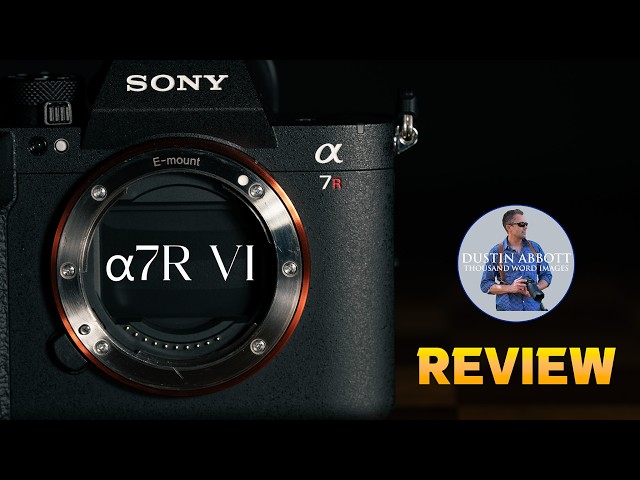
Sony α7R VI (a7R6) Review | The New Resolution King Has Arrived
Jun 11, 2026

Photographer Dustin Abbott shares a deep dive review into Sony's new high resolution king - the α7R VI. Does the 68MP a7R6 live up to the hype? Find out in Dustin's review. | This episode is sponsored by VERO Watches. Visit https://verowatch.pxf.io/GbOZOn and use code DUSTIN for 15% off. | Read the Text Review: | Purchase the Sony α7RVI @ Sony USA https://howl.link/we2gbej7spteq | B&H Photo https://bhpho.to/43RaUOR | Adorama https://prf.hn/l/2MJjXpO/ | Amazon https://amzn.to/4aciGXe | Camera Canada https://tidd.ly/3Qq4hjt | Amazon Canada https://amzn.to/4uWEGxL | Amazon UK https://amzn.to/4o8Tp60 | Amazon Germany https://amzn.to/4fw1uzt
Check out the DA Merch here: https://bit.ly/TWIMerch | Become a Patron: https://www.patreon.com/dustinabbott | On the Web: http://dustinabbott.net/ | Sign up for my Newsletter: http://bit.ly/1RHvUNp | Instagram: http://bit.ly/DLAinsta | Facebook: http://on.fb.me/1nuUUeH | Flickr: http://bit.ly/1UcnC0B | 500px: http://bit.ly/1Sy2Ngu Follow Craig @ https://www.instagram.com/craigstoffersen/
Want to support this channel? Use these affiliate links to shop at:
B&H Photo: http://bhpho.to/1TA0Xge
Adorama: https://tinyurl.com/AdoramaDA
Camera Canada: http://bit.ly/DLACameraCan
Sony Canada: https://www.thesonyshop.ca/?ref=abbott
Amazon: https://amzn.to/3HrY64d
Amazon Canada: https://amzn.to/3qG1p18
Ebay: http://bit.ly/DustineBay
Into the AM Clothing: https://bit.ly/intotheAMda and use code DUSTIN10 for 10% off
Fioboc Clothing: https://tinyurl.com/FiobocDA20 and us code DUSTIN20 for 20% off
Make a donation via Paypal: https://www.paypal.com/paypalme/dustinTWI
=============================
Table of Contents:
=============================
0:00 - Intro
Show More Show Less View Video Transcript
0:00
[music]
0:10
>> When Sony released [music] the a75 at
0:13
the beginning of this year, I think a
0:14
lot of us wondered if the a7R series was
0:17
going to get a similar treatment.
0:20
Unsurprisingly, that's exactly what has
0:22
happened, and the a7R Mark VI has moved
0:25
the series ahead into unprecedented
0:27
territory. The headline here is a brand
0:29
new 67.8 megapixel sensor, the highest
0:33
resolution point that we've yet seen on
0:35
full frame, but this is not just another
0:37
sensor. It's a fully stacked sensor,
0:39
allowing us not only to have that
0:41
massive amount of res resolution, but
0:43
also to achieve up to 30 frames per
0:46
second with full autofocus and a
0:48
blackout free viewfinder. That along
0:51
with a variety of other tweaks to the
0:54
a7R formula has led to a camera that in
0:57
many ways probably has a lot of people
0:59
asking the question, what can the Alpha
1:01
1 Mark II do for $2,000 more that this
1:05
now $4,500
1:07
a7R Mark VI can't do? That's right,
1:10
$4,500. The price has crept up around
1:14
five or six hundred dollars relative to
1:15
what we saw with the launch of the a7R
1:19
Mark V, but you are getting a lot more
1:22
camera for your money. And so in today's
1:24
review, I'm going to break down all the
1:26
different aspects of performance and
1:27
explore whether or not this is a worthy
1:30
upgrade for you.
1:32
And one of the interesting
1:34
angles here is that if you happen to own
1:36
both a Sony full frame and a Sony APS-C
1:39
camera,
1:40
we'll talk about why this is probably
1:42
the best APS-C camera that Sony is
1:44
making right now. All that and more in
1:46
just a moment. First, I want to say
1:48
thanks to Sony USA for sending me a
1:50
loaner of this camera. They have not
1:52
seen this review before you do. It is
1:54
completely independent, and the camera
1:56
will be going back to them after this
1:58
review. And so, let's dive in and let's
2:00
take a look at all aspects of
2:01
performance right after a word from our
2:04
sponsor.
2:05
Today's episode is sponsored by Vero
2:07
Watch, a company from Portland, Oregon
2:09
that designs rugged, modern field
2:11
watches that are designed to be lived
2:13
in.
2:14
Most of their watches are limited
2:15
edition collaboration with brands like
2:17
Realtree, Wildwood, and even Scout
2:19
Motors.
2:20
Mine is a Wildwood Studio Edition Steel,
2:23
a limited edition beauty with 120 m
2:26
water resistance, a flat sapphire
2:28
crystal, bronze case, and a
2:30
cross-stitched Italian Saffiano leather
2:32
strap. It has a Japanese Seiko NH38A
2:36
movement with a 41-hour power reserve,
2:39
and the presentation case absolutely
2:41
top-notch. Every Vero Watch comes with a
2:44
10-year warranty against any kind of
2:46
damage. Give Dad a Father's Day gift he
2:49
can treasure for decades with a new Vero
2:51
Watch. Visit verowatch.com to shop all
2:54
the styles.
2:57
All right, let's take a closer look at
2:58
the a7R VI. The first thing that stood
3:00
out to me is that it doesn't look much
3:02
different than the a7R V. It is pretty
3:05
similar in terms of the button placement
3:09
and layout in terms of the physical
3:10
controls. Most things look pretty much
3:13
the same here. Physical dimensions of
3:15
the new camera are 132.7
3:18
mm by 96.8
3:21
mm in height by 82.9 mm in depth. That's
3:26
5.2 by 3.8 by 3.3 in.
3:30
So, that makes it actually, although it
3:32
doesn't really look like it, it actually
3:34
is 2 mm wider and it is 1 mm deeper. So,
3:38
a little bit more refining to the grip.
3:40
It's getting better and better. My hands
3:42
fit reasonably well these days.
3:44
Um and I still wouldn't mind even a bit
3:46
larger a body, but I did note, I threw
3:48
on a big thick lens like the uh Song Rao
3:51
50 mm f/1.2, And while my knuckles would
3:54
barely touch side of it, it's a lot
3:56
better than it used to be when my
3:58
knuckles would be squeezed right in on a
4:00
lens like that. One thing I did notice
4:02
that is different is that the finish is
4:04
a little bit more matte. It's not quite
4:06
as shiny as the A7R Mark V, so they've
4:09
tweaked that texture just a little bit
4:11
there.
4:12
The weight, surprisingly, is actually a
4:13
little bit lighter. It weighs in at 713
4:16
g. That's with the memory card actually
4:18
memory cards and the battery installed,
4:21
or 25.1 oz. It's 622 g with just the
4:25
bare camera without any of those things.
4:27
That's actually 10 g lighter than what
4:29
the A7R Mark V was. So, good job there.
4:34
Now, this has the improved efficiencies
4:36
of the A7R V, which were much
4:38
appreciated, but we've also got for the
4:41
first time in a long time, we have got a
4:43
completely new battery pack here. And
4:46
so, this unit here is the new NP-SA100.
4:50
You may not be able to see it here on
4:51
the side, but it's rated at 2,670
4:54
mA
4:55
or 20.9 Wh.
4:58
So, higher capacity, I think it's about
5:00
27% higher, and it is rated for much
5:04
more shots, rated at 600 using the
5:07
viewfinder, 710 views using the LCD. In
5:11
practical use, however, it is much
5:13
better. I did my entire review shooting
5:17
oh, probably about 1,400 photos. I shot
5:20
all kinds of video. I shot long
5:22
exposure. I I shot everything. I shot
5:25
this video review.
5:27
I still have 21% battery life left, and
5:29
this is the last thing that I'm filming
5:31
out of all of that. I didn't have to
5:33
recharge the battery one time. Very,
5:35
very impressed by that. Now, they did a
5:37
really great job with the overall size
5:39
configuration, so the grip is really not
5:41
all that much different to accommodate
5:42
it. However, it will require a new
5:44
battery grip because completely new
5:46
batteries here, obviously. And one thing
5:49
that they did give to kind of help out
5:51
is they gave us a very nice dual bay
5:53
fast charger. This new battery can also
5:55
charge faster than the old ones. Trust
5:57
me, it's a little painful at the moment,
5:59
but this is a big improvement for the
6:01
Sony lineup. We have a 3.2-in 209
6:04
million dot This is a tilt and flipping
6:08
screen. This is my favorite screen in
6:10
the business right now. It just does
6:12
everything well. Touch for navigation is
6:15
responsive or, you know, touch to focus
6:17
things like that. And so, everything
6:19
works well as far as the LCD screen.
6:22
The overall controls here are really
6:23
familiar. We have all the regular
6:25
buttons in all of their regular places.
6:27
Unfortunately, we don't get the C5
6:29
button at the front that we get on the
6:30
sports cameras, but we do get something
6:33
new and that is for the first time in a
6:35
Sony camera, we get backlighting here on
6:38
the back buttons when you depress that
6:40
button. That is a really nice
6:42
improvement when you are working in the
6:43
dark. So, very, very cool.
6:45
Also improved is the viewfinder. Now,
6:47
the specs look the same at first glance.
6:50
It's still 9.44 million dots. It's got a
6:53
0.9 times level of magnification.
6:56
Refresh rate, though, is better up to
6:58
120 frames, but more importantly is the
7:00
actual
7:01
OLED itself. It is now up to three times
7:04
brighter. It can show you HDR in there.
7:07
It is much, much better in practicality.
7:09
It's much better when using APS-C
7:11
lenses. Much better when holding down
7:13
the shutter halfway. It's just better in
7:16
every way. One other physical change
7:18
that we do have here that doesn't stand
7:20
out all that much, but there is a tally
7:22
lamp here now at this point and that is
7:25
very nice for monitoring from the front
7:27
to making sure that you know when video
7:29
recording is taking place. Definitely
7:31
something new for a Sony camera. Glad to
7:33
see that here, at least as far as this
7:35
lineup. One thing I've noted for a long
7:37
time is that the overall compartments
7:39
here are They're just the door
7:41
organization is better than what I'm
7:42
seeing from Canon and Nikon or Fuji at
7:45
this point. Just a nice clean
7:47
application here. We have full-size HDMI
7:49
like the A7 5, we have moved to two
7:53
USB-C ports. One of those for data
7:55
transfer, the other for power delivery
7:57
charging in and the camera itself. We do
8:00
have both the microphone input and then
8:03
headphone monitoring jacks there as
8:06
well.
8:07
Dual memory card slots that can be used
8:09
with either CFexpress type A or SD cards
8:12
in either one of those, so that is
8:14
always useful.
8:15
The in-body image stabilization is
8:17
upgraded now rated at 8.5 stops in the
8:19
center of the frame and then seven stops
8:21
in the corners. One thing I noticed is
8:23
if you're in video mode and you're using
8:25
the dynamic active, it really is
8:27
surprisingly good now at imitating a
8:30
gimbal, giving you some smooth footage
8:32
as you walk along. Body here is a tough
8:35
magnesium alloy. It has thorough weather
8:37
sealing throughout. The shutter,
8:39
mechanical shutter is rated for 500,000
8:42
actuations. Here the mechanical shutter
8:45
will give you 10 frames per second as
8:46
before, but of course the big
8:47
improvement is the electronic shutter,
8:49
which now gives us up to 30 frames per
8:51
second and that's with a blackout-free
8:54
viewfinder experience. We also now have
8:56
a pre-capture at 1 second available and
8:59
then you can do the pixel shift if you
9:01
want even more resolution up to 266
9:04
megapixels. I detail more about that in
9:06
the review article if you want to check
9:08
that out.
9:10
I'll end with one negative here,
9:11
however, and that is when it comes to
9:13
how you can manage this massive amount
9:15
of resolution. We now have some very
9:17
basic options when it comes to our raw
9:20
capture. And so rather than having the
9:23
different options that we did before, we
9:24
have lost uncompressed raw and under the
9:27
lossless compressed raw, we only have
9:29
the full-size option. We don't have
9:31
either an M raw or an S raw size. And so
9:34
options include lossless compressed HQ
9:36
and compressed. That's it. Now, when it
9:39
comes to JPEGs, we still have the option
9:42
of choosing a file size in terms of full
9:45
resolution at 66 megapixels, 28
9:48
megapixels for the medium or the 17 for
9:51
the small, but no similar options for
9:54
raw as unfortunately we did have on the
9:58
A7
9:59
R5, which as you can see gave us a lot
10:02
more options when it comes to what
10:04
you're going to select when you're
10:05
shooting raw. Outside of that complaint,
10:07
however, this is another impressive
10:10
camera with good ergonomics, lots of
10:12
easy-to-use control, customizable
10:14
buttons. Everything is pretty much a joy
10:16
to use and that new battery, fantastic.
10:19
So, let's talk autofocus. There are some
10:21
really key updates here that allow this
10:24
to be a better focusing camera than what
10:27
we've seen ever before from the A7R
10:29
series.
10:30
Now, with the fully stacked sensor, we
10:32
have a blackout free viewfinder
10:34
experience. And so, when you are
10:35
tracking action, you are able to do it
10:38
uninterrupted with no blackout there in
10:40
between. What's more, the new processor
10:42
allows it to do 60 AE or AF calculations
10:46
per second, meaning that for every frame
10:48
shot, there are two calculations that
10:50
are taking place, ensuring that you're
10:52
going to have more effectiveness when
10:54
tracking that fast action.
10:56
On top of that, we've already had a very
10:58
robust autofocus system in the past that
11:00
covers the majority of the frame with
11:02
focus points, but now we have an
11:04
integrated AI chip that takes that AI
11:08
recognition to the next level. And one
11:11
of the most important things for me on
11:12
the autofocus side is that included in
11:15
all the various subject recognition
11:16
subjects that we have from human to
11:19
animal to bird, insect, plane, train,
11:22
car, all the things like that. We now
11:24
also have finally the automatic or auto
11:27
option that allows it to auto detect the
11:30
subject. And because I become used to
11:32
having that on some of my other cameras,
11:35
when I don't have it on the a7R V, which
11:38
I still currently own, there are times
11:40
when I have had video clips or shots
11:43
messed up because I didn't realize that
11:44
I had the wrong subject set up. Being
11:47
able to at least start with that auto
11:48
mode and then refine down if you want
11:51
to, you know, kind of drill down on a
11:52
particular subject is so incredibly
11:54
useful. And so I'm really glad to have
11:56
that as an option here as well.
11:59
Now, on paper, the ability to achieve 30
12:01
frames per second with the electronic
12:03
shutter, and by the way, those are
12:04
14-bit raws. That's real full images
12:07
that you're getting there. It seems like
12:09
that's right up with the performance of
12:11
the Alpha 1 Mark II, but there are a
12:13
couple of flies in that ointment. First
12:15
of all, the Alpha 1 Mark II or the A9
12:18
Mark III, they're not doing 60 autofocus
12:20
calculations per second. They're doing
12:22
120 autofocus calculations per second.
12:25
And so you have double the amount of
12:27
processing going on of focus on each
12:30
shot, which just means you're going to
12:30
have higher keeper rate because of that.
12:33
But where the a7R Mark VI does fall a
12:35
little bit flat is the buffer depth.
12:37
Those are big files that it's having to
12:39
pump through there. And so what you're
12:41
going to find, at least I found that
12:43
when I was shooting the, you know, full
12:45
pop raws, I got about 60 shots, about 2
12:48
seconds worth before the buffer slowed
12:51
down. Now, it doesn't stop shooting
12:52
altogether, but it slows way down to
12:54
something like four or five shots. The
12:56
buffer does clear quickly, and I never
12:58
used to be if you shot burst on a Sony
13:00
camera, you look at the back of the
13:01
camera and you'd wait while it, you
13:03
know, ran off the files and wrote them
13:05
to the card. That's not really the case
13:06
now, but you're not going to be able to
13:08
just hold down and track through a long
13:10
extended segment like you're going to be
13:12
able to do on the, you know, Alpha 1
13:14
Mark II or the A9 Mark III. I did find
13:16
that if I shot in APSC mode, which is
13:18
cropping down to 28 megapixels, that I
13:21
was able to get longer burst and I shot
13:24
probably 130 to 140 frames before the
13:27
burst rate started to slow down. In
13:29
general, I was able to track action
13:31
quite well and you can see with these
13:33
shots of of birds, particularly this
13:36
sequence I I shot of some geese coming
13:39
in that I was able to track accurately
13:41
throughout the frame, no problem with
13:43
that. I did, you know, test trying to
13:45
track the bees and it did fairly good.
13:48
I've got a number of well-focused shots
13:49
in there, but I've also got some where
13:51
it, you know, kind of lost focus. I
13:53
wouldn't say it's quite to the level of
13:55
the Alpha 1 Mark II in that kind of
13:56
setting, which frankly it's about what
13:58
I'd expect when it's not able to do as
14:00
many calculations or sustain burst for
14:03
quite as long.
14:04
The end of the day, however, this is a
14:05
big step forward for the A7R series in
14:09
terms of the subjects that you can
14:11
successfully capture with it and so that
14:13
adds to its versatility as a very
14:16
high-definition jack-of-all-trades
14:18
camera.
14:19
Video is yet another area of improvement
14:22
over the A7R Mark V. For one thing, we
14:25
now have the ability to shoot up to 8K
14:28
30 with it and in this case there is a
14:31
minor crop at 8K 30, about a 1.2 times
14:35
crop, so a little bit less crop, but
14:37
more importantly you're able to shoot
14:39
things like 4K 60, 4K 120 and able to do
14:42
those without having any kind of crop.
14:45
And the overall quality of the footage
14:47
is very good here. We are able to get
14:50
over sampled footage even when shooting
14:52
8K, by the way, it's just slightly over
14:54
sampled, but particularly when you're
14:55
shooting your 4K footage, you are
14:57
getting a a pretty, you know, extreme, I
14:59
think it's a 6.41K that it's down
15:02
sampling or over sampling to get to the
15:04
4K footage and so it has nice
15:06
definition. As you would expect at this
15:08
point, you have the ability to shoot
15:09
with with log, you have the ability to
15:12
upload user LUTs to tweak LUTs within
15:15
camera. You have you can shoot
15:16
S-Cinetone, all of the things that we do
15:19
love about Sony's video, all of those
15:21
things are on tap here. What's more, the
15:24
improved autofocus that we've talked
15:25
about does pay dividends here, allowing
15:27
you to have better subject tracking and
15:30
to perform more, you know, calculations
15:32
in terms of the focus. And a really
15:33
important aspect of improvement here is
15:36
due to that fully stacked sensor, we
15:38
have a vastly reduced readout time and
15:42
so that we don't near deal with nearly
15:44
as much issues with rolling shutter.
15:46
Now, it's quite not quite all the way
15:47
down to the level of something like the
15:49
Alpha 1 Mark II, but if we're getting
15:51
somewhere around a 17 ms readout speed,
15:54
that compares to somewhere over around
15:57
90 that we saw before. So, for example,
15:59
if I shoot this photo of a fan and use
16:02
the exact same settings, this is about
16:04
1/800 of a second and as I capture those
16:07
blades, you can see with the A7R V,
16:10
those blades are pretty much blurring
16:11
together. When I shoot with the A7R Mark
16:13
VI, you can see we've got much more
16:15
blade definition, less of that rolling
16:17
shutter taking place. It's almost as
16:19
good as the Alpha 1 Mark II, which you
16:21
can see just shows the blades pretty
16:22
much perfectly. And so, we are getting
16:24
much closer to what we are looking for
16:26
and so that's something that's going to
16:27
really help when you're capturing a
16:29
video or, you know, doing panning while
16:32
shooting video when using this. What's
16:35
more, they have the Act Active or
16:36
Dynamic Stabilizer Plus here, which is
16:40
getting pretty decent of emulating the
16:42
what it looks like to use a gimbal. It's
16:44
not quite as silky smooth, but you can
16:46
see here as I follow along after the my
16:49
lawnmower that if I shoot without that
16:51
stabilization on, that's a little bit
16:53
more jerky, but if I shoot with that,
16:55
you know, that dynamic or active on
16:57
there, you can see that it smooths that
16:59
footage out and gets away from that kind
17:01
of thudding of my footfalls as I go back
17:03
and forth behind it. Now, there is a
17:05
crop factor associated with that to give
17:07
the sensor some room to play with with
17:09
that, but I would say that in the
17:11
situations we're going to need the
17:12
stabilization like that, it's probably
17:14
worth that crop factor as a part of it.
17:17
What's more, we do also have this newly
17:18
designed architecture within the camera
17:21
itself that helps with vectoring out
17:22
heat away from the chassis, and so Sony
17:25
is claiming that you can shoot up to a
17:26
couple of hours at in high-definition
17:29
video without having to worry about
17:31
overheating issues. All of this adds up
17:33
to a camera that really is pretty
17:35
robust. Now, we don't quite have quite
17:37
everything. We still can't do any kind
17:38
of internal raw recording. You're going
17:40
to have to record externally for that.
17:42
We don't have anything like open gate
17:44
video in any shape or form here. So,
17:46
there are a few areas where it's, you
17:48
know, not as robust as some of the
17:49
competition, but while I wouldn't buy
17:52
this camera just for video work
17:54
necessarily, it is, as in all areas, a
17:57
remarkably robust camera to use for any
18:01
type of either photography or
18:03
videography.
18:04
So, let's talk sensor here. The Sony a7R
18:07
VI has a 66.8 megapixel full-frame Exmor
18:12
RS fully stacked CMOS sensor. And it
18:15
sets a new height of resolution for a
18:18
full-frame camera with 9,504
18:22
by 6,336
18:25
pixels,
18:26
giving us a effective resolution of 66.8
18:30
megapixels or 67 megapixels.
18:33
Now, while you've already heard my
18:34
lament over not being able to shoot at
18:36
smaller raw sizes, take a look at how
18:38
far we zoom in to go to a pixel level
18:42
when you're talking about this high of
18:44
resolution. Obviously, you have a
18:46
tremendous amount of detail captured in
18:48
these frames, giving you a lot of
18:50
flexibility on how you might crop.
18:53
This shot, for example, with the full
18:55
resolution here, I could crop in just a
18:58
really tight kind of zoom. I could crop
19:01
into a vertical or portrait orientation.
19:04
Lots of flexibility on what I can do
19:06
with that amount of pixels. Now, if the
19:09
native 9,984
19:11
by 6,656 pixels was not enough for you,
19:14
you can use pixel shift to combine
19:17
either four or 16 images and get an
19:20
image with a unbelievable 19,968
19:24
by 13,312
19:27
pixels. Zooming into a one-to-one pixel
19:30
level takes you a long way into an image
19:33
like this.
19:34
Now, while that resolution is rarely
19:36
necessary, in this case I have down
19:39
sampled the pixel shift image down to
19:41
the same native resolution and then
19:43
showing you at a 200% magnification, you
19:45
can see that you definitely are
19:47
achieving higher amounts of detail and
19:50
particularly contrast really looks
19:52
fantastic. However, there are
19:53
limitations. For example, here you might
19:55
be able to see there's some ghost
19:58
because as I was shooting the pixel
19:59
shift sequence, someone walked into the
20:01
frame. So, there are issues like that
20:03
and of course in any kind of situation
20:05
where there's any movement at all, even
20:07
though this is a calm day,
20:09
you know, things move and so you can see
20:11
that some resolution is lost there.
20:13
Another advantage is that when shooting
20:15
in APS-C mode, this is the highest
20:17
resolution that we've seen on Sony in
20:19
APS-C and as you can see here, APS-C
20:22
results are gorgeous.
20:24
I'm going to disrupt the section on
20:26
resolution briefly to just talk about
20:28
why I said in the intro that this may be
20:30
the best APS-C camera that Sony has.
20:33
First of all, on a kind of an obvious
20:34
level, this is the highest resolution
20:36
that
20:37
that we have ever seen from Sony in the
20:39
APS-C space. In the APS-C mode, we have
20:42
28 megapixels of resolution which,
20:45
you know, for most people in most
20:46
situations is going to be plenty. What's
20:48
more, even in the crop mode, you're
20:51
still getting the best APS-C sensor out
20:54
there in terms of performance and
20:56
metrics like dynamic range in low light
20:59
ISO performance. And so, this is a
21:02
really incredible sensor on a lot of
21:04
levels. What's more, you're getting a
21:06
way better viewfinder, you're getting
21:07
much better ergonomics, you're getting
21:09
better battery life, you're getting all
21:11
kinds, you're getting better autofocus,
21:13
you're getting all of the, you know,
21:15
inherent advantages to the a7R Mark VI
21:18
in, you know, your APSC mode as well.
21:21
And I would say that in all of those
21:22
metrics, I personally prefer the, you
21:25
know, ergonomics and the handling of the
21:28
a7R Mark VI. Now, the one caveat to this
21:30
section is that if you're wanting to
21:32
travel as small and light as possible,
21:34
obviously something like an a6700 is
21:37
going to get you into a smaller body
21:39
style. And so maybe the way to solve
21:41
this in the future
21:43
is when we see the next generation of
21:45
the a7cR come out, that will give you
21:48
both a compact camera and then also
21:51
hopefully some of this sensor and
21:53
autofocus performance. We'll have to see
21:55
what Sony has for us. But at the moment,
21:57
if I were a man that was out shopping
21:59
for both a full frame and an APSC camera
22:02
from Sony, I would skip buying two and I
22:04
would just buy this one.
22:07
So let's talk dynamic range. This is
22:08
actually an image that is an HDR image
22:11
that I created in camera. And when you
22:14
shoot HDR, it's taking four different
22:16
shots and then you can combine those in
22:18
post. So here is the underexposed image
22:21
that it came out of that. My question
22:23
was is can I create something like this
22:25
out of that single underexposed image?
22:28
And the answer is with very simple
22:29
edits, yes. You can see that the
22:31
recovered image on the left looks very
22:33
similar to the HDR image from the right.
22:38
How about going the opposite direction,
22:39
however? This is the overexposed image
22:41
from that sequence. And with a few
22:44
tweaks, here is what I got out of that.
22:46
Let's compare. While I wouldn't say that
22:49
the image here on the left is as rich as
22:52
the HDR image and certainly the sky is a
22:54
little less consistent, it's a pretty
22:56
incredible result considering that this
22:58
is what we started with.
23:00
In my more formal test, this is the base
23:02
exposure that I'm trying to get it to
23:04
look like. Then I begin to intentionally
23:07
overexpose and underexpose images to see
23:10
how effectively we could recover all of
23:12
it.
23:13
At two stops of overexposure, you can
23:15
see we've got no problems here. Timer
23:17
face continues to be really consistent.
23:19
All the color swatches that, you know,
23:21
it kind of faded away, all of those
23:23
colors have been restored. All of that
23:25
looks good. Now, I can usually get two
23:26
stops, but very very rarely, in fact,
23:29
almost never can I get three stops.
23:31
However, the A7R III, no problem. You
23:33
can see here that all of those color
23:35
swatches colors look rich and true. The
23:37
timer face looks very very consistent.
23:40
And even the lost textures here from the
23:42
front of the SLR, you can see that for
23:45
the most part, all of that texture
23:47
information in the metal has been
23:49
recovered. Now, I've never gotten an
23:51
effective four-stop overexposure
23:52
correction out of any camera's dynamic
23:55
range, and I'm not going to get it here,
23:56
either.
23:57
You can see that the overall image looks
23:59
a little bit dingy and unnatural.
24:01
However, I do want to give some credit
24:03
where it is due, and that is that a
24:05
surprising amount of the color swatches,
24:07
even at four stops of overexposure, have
24:10
actually come back. And so, in terms of
24:12
getting color back, this camera is
24:14
really really effective on the
24:16
highlights. Going the other direction,
24:17
you can see here that we have deeply
24:19
underexposed this image to where it is
24:21
basically all in shadow, but you can see
24:23
that it pops back really really nicely.
24:25
A few areas where I tend to see any kind
24:27
of issues will be around here where you
24:30
start to see some noise from that
24:32
recovery. Looks nice and clean there. In
24:34
what should be inky black, sometimes
24:36
we'll see some uh we just some you know,
24:39
uneven pixels there. And of course, just
24:41
some general pattern noise that starts
24:42
to show up. And there is only minimal
24:44
amounts here, even with this very very
24:46
high resolution. At a full five stops,
24:48
you can see how deeply overexposed that
24:51
is. We still have a really effective
24:53
recovery here for the most part. We can
24:55
see here there's a little bit more noise
24:57
than what we saw before, but and maybe
24:59
just a little bit of noise here in the
25:01
shadow, but overall looking pretty good.
25:04
The only place where I'll give it a
25:05
little bit of grief here is that we can
25:08
see some false color. Just very, very
25:10
small amount showing up there. You can
25:12
also see a bit of that just kind of
25:14
pattern color here. Otherwise, however,
25:16
quite an effective recovery. We can see
25:18
from photons to photos that this is the
25:20
highest dynamic range that they have
25:22
measured in terms of stops that we've
25:24
seen of any of the full-frame cameras
25:27
and any of the competing cameras on the
25:29
market. 12.56 stops, that beats the a7R
25:32
V, which is our previous best holder.
25:35
Canon's R5 Mark II is 11.45 though with
25:38
a caveat as many of you know, and the
25:40
Nikon Z8 is 11.32. And so in all of
25:43
these cases, we've got basically at
25:45
least a full stop more dynamic range for
25:48
the a7R VI. Now, shockingly to me
25:51
considering this is the highest
25:52
resolution that we have seen, we also
25:54
see our highest figure amongst all these
25:56
cameras for low-light ISO. And so
25:59
low-light ISO measures essentially how
26:01
high you can raise the ISO and still
26:03
have I believe about 6.5 stops of
26:06
dynamic range, which is basically
26:08
necessary to have what would constitute
26:10
a normal or good-looking image. Can see
26:13
here we got all the way over 6,000 ISO.
26:16
And so getting very, very close to that
26:18
ISO 6400 metric. And so a very, very
26:21
strong result. And by comparison, Nikon
26:23
Z8 here at the bottom, it's only 45
26:25
megapixels and you can see that it is a
26:27
long way beneath what the a7R Mark VI is
26:31
accomplishing.
26:32
Let's take a look at my test and see
26:33
what we find. Here's our base ISO here
26:36
at 1600. What we're hoping to see is
26:39
pretty much parity between these two as
26:41
close as possible. And in fact, we can
26:44
see no uneven textures there. We can see
26:47
no real kind of roughness of pixels
26:51
noise yet. It all looks pretty much the
26:53
same. Black levels look very, very
26:55
similar.
26:56
Jumping up to 3200, another stop here,
26:58
we can see looking into that same area.
27:01
Everything's looking good here in the
27:02
front. Very, very little additional
27:04
noise down in this area here. Just a
27:06
tiny bit of noise showing up there.
27:08
Very, very natural still. Black levels
27:11
are looking quite good overall. Color
27:12
swatches show minimal amounts of noise
27:15
all well.
27:16
I'm going to switch to 3200 as our
27:18
baseline here because that to me looked
27:20
very acceptable. So, let's see moving
27:21
beyond that. 6400, according to photons
27:24
to photos, we're just starting to exceed
27:26
the threshold of optimal here. We can
27:29
see though still looking pretty good
27:30
overall. Getting a little bit rougher
27:32
noise kind of in this area here and
27:35
maybe just a tiniest bit of pattern
27:37
starting to begin in those black levels,
27:39
but looking at it globally, image still
27:41
looks great.
27:42
If we jump up to 12,800,
27:44
looking at the image globally, you can
27:46
see the black levels are raised very,
27:48
very slightly, but overall still looking
27:50
quite good. Definitely starting to get a
27:52
little bit rougher here though, and as
27:54
we go into this, it's the first time
27:55
that I can actually see some kind of
27:58
white pixels, some of that noise showing
28:00
up in what should be
28:01
kind of uniformly black over there.
28:03
Looking over in this area, you can see
28:05
that it's just generally rougher, but I
28:07
also don't see any kind of false color
28:09
or anything that really destroys the
28:10
image for me.
28:12
Jumping up to 25,600,
28:14
looking at it globally, still looks
28:15
pretty decent, but all of those things
28:17
we saw before, they're getting much,
28:19
much rougher at a pixel level. You can
28:21
see that the noise level out in the
28:23
shadows is looking quite rough. You
28:25
could see a lot of visible noise now
28:27
inside here on the mirror. So, we're
28:29
getting to the level where for most
28:30
people may not be acceptable. Using that
28:33
as our standard and moving up higher
28:35
into the expanded range, the basic ISO
28:37
range goes up to 32,000. You can expand
28:40
up to 51,200
28:42
and 102,400.
28:44
We can see here though it's looking
28:45
pretty bad at 51,200. And for the first
28:49
time looking at it at a global level at
28:51
102,400,
28:53
you can see it just looks bad. It's
28:55
There's an actual color shift that's
28:56
taken place, and so it's just not
28:58
natural as it was before.
29:00
How about some real-world images here at
29:02
6,400? We can see this is the baseline
29:05
image. Over here, I've applied just a
29:07
little bit of Lightroom's D noise just
29:10
to give you kind of a sense of how
29:12
that's going to play out. So, here's the
29:13
original image. You definitely see some
29:15
of that pattern noise here. And then we
29:17
see after the denoising has taken place.
29:20
And, you know, there's a little bit of
29:21
smoothing there, but I would say that
29:23
most people consider that acceptable.
29:25
Here at 12,800, what I've done is a
29:28
couple of things, couple of steps here
29:30
on the right. Uh I've applied a little
29:32
bit of that D noise, and then what I've
29:34
also done is I have downsampled the
29:36
image a little bit. It's a little bit
29:38
lower resolution, not quite as high. And
29:39
you can see that the end result, I would
29:41
consider that still be very usable.
29:44
Finally at 25,600, this is where we saw
29:47
as a threshold. I didn't love the end
29:48
results, and you can see there's a you
29:50
know, some false color that's there. So,
29:52
this works to me better in monochrome,
29:55
and you know, you you might still get by
29:57
with some usable images shooting in
29:58
monochrome. In general, however, we've
30:00
already seen that these numbers are as
30:02
good as you're going to get.
30:04
Finally, let's talk color. At this
30:06
point, Sony I think has really done a
30:08
great job with color science. I feel
30:10
like they're doing just a good job
30:11
generally. One area where I'd like to
30:13
see a little bit more growth is when it
30:15
comes to kind of leaning into their
30:17
creative looks. And I think that Fuji
30:20
and even Nikon have done really good in
30:21
that space. However, they have added a
30:24
couple of new looks that people are
30:25
really liking. So, this one already
30:28
existed. This is the FL or film look
30:30
one. And so, just give you a quick look
30:32
at that. And then they've added in an
30:34
FL2, film look two. So, I'm going to
30:36
toggle back and forth between those. And
30:39
then one that a A of people are liking
30:41
is FL3. And so, kind of cycling back
30:44
through those, you can see some subtle
30:46
variations, but in every case, it's
30:48
giving you just a little bit of
30:50
distinctiveness, a little bit different
30:52
performance. And so, I think color
30:54
science is doing good. Just maybe lean
30:56
into those creative looks and come up
30:58
with a few fresh ideas in that space,
31:01
but at least we've got a couple of new
31:03
looks or profiles available here now. In
31:05
general, however, this is a really,
31:08
really gorgeous sensor that is pretty
31:10
much top-notch in nearly every category.
31:14
I have owned the a7R Mark V since just a
31:17
few months after its release. I've owned
31:19
the a7R Mark III. I tested the a7R Mark
31:23
II and a7R Mark IV. I'm pretty familiar
31:26
with the series to this point, and this
31:28
is definitely a huge step forward for
31:31
this overall lineup. Now, it's obviously
31:34
also a price increase, and let's be
31:36
honest, what you're watching right now
31:38
is that Sony is scaling each one of its
31:41
product lineups, scaling the price up.
31:44
You know, 4 to 500 dollars. And I think
31:46
that that's part of the market realities
31:48
of where we're at at this point. And so,
31:50
while none of us are thrilled about
31:52
that, it is the way of the world.
31:54
The thing that I'm probably most
31:56
disappointed about when it comes to the
31:57
a7R Mark VI is that you have less
32:00
options on how to handle all of that
32:02
resolution than what you did on the a7R
32:04
Mark V. We not only have dropped
32:06
uncompressed raw, but more importantly
32:08
to me, I no longer have the option of
32:10
shooting either a medium raw or a small
32:13
raw setting in the lossless compressed
32:16
raw, which I have taken full advantage
32:18
of, particularly the medium raw on the
32:20
a7R Mark V. And it's one of my favorite
32:22
things to do for those settings where I
32:23
still want raw, but I don't need, you
32:26
know, all of that full resolution, nor
32:27
do I want all of that massive file size.
32:30
And so, that's something that I don't
32:32
understand why that they've dropped it,
32:33
but I hope that it's something that
32:35
maybe they can address via firmware and
32:37
to bring that back. But, beyond that,
32:39
frankly, there's not a lot to complain
32:41
about here. We have real improvements
32:44
all across the board. And one of those
32:45
things that I do that really stands out
32:47
to me is how improved the viewfinder
32:49
itself is.
32:51
It's not just the
32:53
the fact that it's brighter and it
32:55
already had great resolution before.
32:56
It's a better viewfinder than what was
32:57
in the A7R R Mark V, but what doesn't
33:00
show up in the stat sheet is there's
33:02
been this quirk with Sony viewfinders as
33:04
far back as I can remember. Sometimes
33:06
it's when you're half holding down the
33:08
shutter and things just kind of start to
33:10
almost mosaic a bit. Or if you're
33:12
shooting in APS-C mode, it just looks
33:15
cruddy. And it's really you only see the
33:18
In the past, you've only seen that full
33:19
resolution if you're reviewing things in
33:21
the viewfinder after the fact. That's
33:23
not the case here anymore. And what a
33:25
relief it is to to hold that shutter
33:27
down halfway or to throw an APS-C lens
33:29
on there and to have a nice clear
33:31
viewfinder that I'm still looking
33:32
through. So, kudos to them on that
33:34
front.
33:35
While it will be controversial to some
33:37
photographers that are heavily invested
33:39
in the old Z style batteries, this move
33:43
to this new battery pack is pretty
33:46
amazing. I went through my entire review
33:48
period where I shot something like 1,300
33:53
photos. I shot all kinds of videos. I
33:55
filmed all of this review on it. And I'm
33:57
still going on my original charge. And
33:59
the last I looked at the camera, it was
34:01
down to about 24 or 23%.
34:04
How amazing is that compared to the
34:06
battery life that I'm accustomed to out
34:08
of my Sony cameras? It's not just a
34:10
little bit better. It is a lot better.
34:13
And so, kudos to them on that front.
34:15
Obviously, having the fully stacked
34:16
sensor, having that higher resolution
34:18
point, not only having more resolution,
34:20
but also having more dynamic range, and
34:23
even mildly better low-light ISO
34:26
performance,
34:27
wow. Sony has done a fantastic job with
34:30
this sensor, and I think that it is
34:32
going to bear dividends for them.
34:34
I've pointed out a few ways where I
34:36
don't think that the a7R Mark VI is
34:39
quite to the level of the A1 Mark II,
34:41
and if you're a dedicated sports
34:42
photographer, I'd still stick with that
34:44
or the A9 Mark III.
34:46
At the same time, however, for most
34:48
people, there's not going to be a really
34:50
compelling reason to spend $2,000 more
34:53
to get the A1 Mark II.
34:55
Most of what it can do, a7R Mark VI can
34:58
do, and there's a few things that the
34:59
a7R Mark VI can do better. Such is the
35:03
nature of the ongoing progress of new
35:05
Sony camera releases.
35:08
At the end of the day, however, this is
35:09
an amazing camera, and I'm sure it will
35:11
sell well for Sony.
35:13
If you want more information, feel free
35:14
to check out the thorough text review
35:16
that covers all the things that I forget
35:18
to say on camera sometime, and so check
35:20
that out at dustinabbott.net. Links in
35:23
the description down below, buying links
35:24
there as well. As always, thanks for
35:26
watching. Have a great day, and let the
35:29
light in.
#Science