Up next in 10


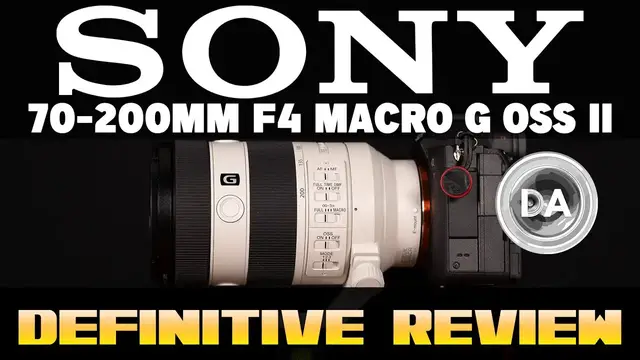
Photographer Dustin Abbott shares a definitive review of the Sony FE 70-200mm F4 Macro G OSS II - the most versatile 70-200 lens I've used yet! | This video is sponsored by Ridge Rings. Visit https://ridge.com/dustinabbott and use code "DUSTINABBOTT" for 10% off | Read the Text Review: https://bit.ly/70-200GIIda | Visit the Image Gallery: https://bit.ly/70-200GIIpics | Purchase the Sony 70-200mm F4 Macro G II @ B&H Photo https://bhpho.to/3ph3lAD | Adorama https://howl.me/cj2nGvbAxwe | Amazon https://amzn.to/3Jwgooy | Camera Canada https://shrsl.com/45gtb | Sony Canada https://www.thesonyshop.ca/products/sel70200g2?ref=abbott | Amazon Canada https://amzn.to/46qEhrm | Amazon UK https://amzn.to/3NuBPaP | Amazon Germany https://amzn.to/3CN3yyp
Check out the DA Merch here: https://bit.ly/TWIMerch | Become a Patron: https://www.patreon.com/dustinabbott | On the Web: http://dustinabbott.net/ | Sign up for my Newsletter: http://bit.ly/1RHvUNp | Instagram: http://bit.ly/DLAinsta | Facebook: http://on.fb.me/1nuUUeH | Flickr: http://bit.ly/1UcnC0B | 500px: http://bit.ly/1Sy2Ngu Follow Craig @ https://www.instagram.com/craigstoffersen/
Want to support this channel? Use these affiliate links to shop at:
B&H Photo: http://bhpho.to/1TA0Xge
Adorama: https://howl.me/cjU0LKdp3LN
Camera Canada: http://bit.ly/DLACameraCan
Sony Canada: https://www.thesonyshop.ca/?ref=abbott
Amazon: https://amzn.to/3HrY64d
Amazon Canada: https://amzn.to/3qG1p18
Ebay: http://bit.ly/DustineBay
Make a donation via Paypal: https://www.paypal.com/paypalme/dustinTWI
=============================
Table of Contents:
=============================
0:00 - Intro and Concept
0:58 - Ridge Rings
2:14 - Build and Design
Show More Show Less View Video Transcript
0:00
Hi, I'm Dustin Abbott and I'm here today to give you my definitive review of the new Sony
0:15
FE 70-200mm f4G Macro OSS Mark II. This new lens is perhaps Sony's most versatile lens yet
0:25
allowing you to zoom from this at 70 millimeters to this at 200 millimeters while also offering
0:32
one to two macro performance throughout the zoom range. You can even use teleconverters to increase
0:37
the macro performance or the reach like this to 280 millimeters or even beyond at 400 millimeters
0:44
Sony has even managed to shrink the size while also improving the optics, the autofocus, and the
0:50
optical stabilizer. Sound interesting? Well, it should. We'll break it all down in detail after
0:55
a word from our sponsor. By this point, you all know that Ridge makes high-end minimalist wallets
1:01
but did you know that Ridge also makes rings to match those wallets? Ridge rings come in the same
1:06
kind of premium materials as their wallets, from carbon fiber to tungsten to titanium, and yes
1:12
even traditional gold. Every Ridge ring also comes with a silicone band to wear when working
1:17
out or wanting a more casual look. My son is getting married this summer, so we chose the
1:22
forged carbon look for him. The Ridge also offers a unique lost and sizing protection. So if you
1:28
lose your ring or lose 20 pounds, Ridge will give you up to two future exchanges for the same ring
1:34
in the same or a different size. As with all Ridge products, their rings come with a lifetime
1:39
warranty and will even let you test drive it for 99 days. So visit ridge.com forward slash Dustin
1:45
Abbott and use code Dustin Abbott to get 10% off. That's Ridge.com forward slash Dustin Abbott
1:52
So as noted, this lens is smaller than its predecessor. I will say that, however
1:58
with a caveat because they have changed the overall design kind of ethos of this particular
2:04
lens, much like Canon did in its RF mount lenses. So we have gone from an internally zooming lens
2:11
which of course maintains a constant length, to an externally zooming lens
2:16
And so yes, without any kind of zoom, it is much more compact than the previous lens
2:21
It takes off about 25 millimeters of length, and so it's 150 millimeters in length, 5.9 inches
2:28
However, if you zoom it out, it zooms out actually further to about 205 millimeters
2:32
or about 8 inches at its full extension. It remains only 80 millimeters in diameter, that's 3.1 inches
2:40
and continues to have a 72 millimeter front filter size. The weight is lightweight. Without
2:46
the collar attached, it is 794 grams or 28 ounces. With the collar attached, it is 862 grams or 30.4
2:56
ounces. By the way, all of these measurements are my own personal measurements. I'm reviewing a
3:01
pre-release copy of the lens and so far no official measurements are released. So if there's a very
3:06
light variants from the official ones, you'll know why. As noted, there is a tripod collar here
3:11
which does distinguish it from Canon's design. Now, Canon also went with an externally zooming
3:16
design in their own RF 70-200mm F4. That lens is even smaller still than what this particular lens
3:24
is, but there was some compromises that were made to the design to make it even more compact
3:29
And one of those is the fact that it does not come with a tripod collar, and the design doesn't
3:33
really allow for a tripod collar. It's also not at all compatible with Canon's RF teleconverters
3:40
whereas this lens is fully compatible. More on that in just a moment. But our tripod collar here
3:45
is included in the package. It is fully removable and very easy to remove. My only kind of complaint
3:53
about it is that it continues to not be ARC Swiss compatible, which means that here as I've got it
3:58
mounted on this little tripod, I had to use a quick release plate to accomplish that. And I
4:03
would love to see an ARCA compatible design. As noted, we do have full TC compatibility. I only
4:09
own the 1.4 times and so I tested with that. I don't own the 2.0 times, but along with extending
4:16
the focal length with this 1.4 times, the maximum focal length available is 280 millimeters at a
4:21
maximum aperture of f5.6. If you use the two times teleconverter, you get up to a focal length of
4:28
400 millimeters at full extension. However, your maximum aperture drops to f8 at that point
4:35
But what's also interesting is the fact that you've already got incredible macro performance
4:39
as a part of this lens. Now that's not one to one macro, that's one to two macro or 0.50 times
4:44
You throw the teleconverter on there, however, and that increases that magnification with the
4:49
1.4 times to about 0.75 times. You put the two times on there and you're all the way up to one
4:55
to one macro level. And so obviously that compatibility with teleconverters really adds
5:01
to the versatility of the lens, particularly when you're talking about a lens that already has great
5:05
close focus capabilities and the teleconverters actually are an asset to improving that even
5:11
further. Now, some people have an issue with an externally zooming design and at least one of
5:18
those logical reasons is that they feel like an externally zooming design is more likely to get
5:23
you know, ingest some dust along the way. Fortunately, in the case of the Sony, this is a
5:29
very thoroughly weather sealed design. I think there's about 16 different seal points according
5:34
to the diagram that I was shown at a press briefing. And so it is thoroughly weather sealed
5:39
And I also note that there really haven't been even anecdotal reports with other externally
5:44
zooming, you know, kind of professional grade Sony zooms with them having problems with either
5:48
dust or moisture, even in very dusty or moist environments. The one thing that I will say is a
5:54
legitimate complaint is, you know, you may find if you're working on a gimbal that the balance point
5:59
is going to change a little bit. That's not as bad with a tripod collar, obviously, but you're not
6:04
going to change the fact that you're moving some of the weight out here as opposed to being right
6:08
here. As far as the actual zoom action, I know I can't say that it's 100% as good as an internally
6:13
only zooming lens, but the zoom action is so good here that it's actually very, very close
6:18
Now the manual focus ring, it moves smoothly, but I will note that there's very little resistance on there
6:24
And so if you have very little resistance, you also have very little feel as a part of the process
6:29
So you not gonna be thinking you using a Zeiss at any point with some kind of great manual focus Now we have also evolved in this lens design in terms of the overall feature set
6:40
There are a total of five different switches here in this bank. And so that gives you an AF-MF switch
6:45
It gives you a switch for full-time DMF, which is a new function for this type of lens
6:50
And so you have the ability to always override focus. And the interesting thing about Sony's focus is that it will then, for example, in video
6:57
it will continue to kind of track at that point to where you focus to and so it's a very useful
7:02
feature also added to the focus limiter here is a macro range that allows you to make sure that
7:08
there's no focus racks if you're trying to do up close type focus so that's obviously going to be
7:12
useful as well and then we have two switches that are devoted to the OSS or optical steady
7:17
steady shot the stabilizer here basic on off switch and then there are three different modes
7:22
you can access there on the bottom and if you're not familiar with the way that sony sets that up
7:26
Mode one is going to be your standard kind of mixed use. Number two is going to be for panning
7:31
And number three is kind of a dynamic mode to where you're not going to do a lot of stabilization of the viewfinder
7:37
just stabilization at the time of taking a photo. So for video work, probably mode one is going to be your preferred mode there at that point
7:45
They've also added additional focus hold buttons and so that you now have them in three different positions
7:50
So that means that whatever position you're shooting in, so both horizontal and then vertical in either direction
7:56
you're going to have easy access to a focus hold button and the functions you can assign to that
8:01
from within the camera body. There is a zoom lock that is a new part of the design and obviously
8:06
that wasn't necessary on the previous internally zooming design but the zoom lock locks in at 70
8:12
millimeters to keep you from the lens extending. There's not really going to be an issue with zoom
8:16
creep here. Everything is very well damped but I did note when I was out kind of backpacking with
8:22
it that if I was carrying it in a harness or a strap there would be some rubbing as I went along
8:27
on the zoom ring and eventually that would start to extend it so the lock helps to keep that from
8:31
happening. There are nine rounded aperture blades inside and I felt like it did quite a good job of
8:36
maintaining a circular shape. It also stood out to me as you could have seen there that the geometry
8:41
across the frame is really good even from wide open. Great really round circles all throughout
8:46
Very very nice look there. There is a variable minimum focus distance that allows you to have
8:52
that one to two macro everywhere from 70 to 200 millimeters all along with every stop in between
8:58
So at 70 millimeters, you can focus as closely as 26 centimeters or 0.86 feet. So right under a foot
9:05
And then at 200 millimeters, your minimum focus distance is 42 centimeters. That's 1.38 feet
9:13
And so obviously there's going to be some variation in between, but the point is, is that you can get
9:17
macro all along the way. You can kind of choose the framing and the working distance that works
9:22
best for your situation. I will point out that in many situations, particularly if you're working
9:26
with a moving subject, the 200 millimeter position is preferred because it does give you a little bit
9:31
more working distance there, a little more separation between yourself and the subject
9:37
itself. The optical steady shot has been improved here and I saw the ability to handhold fairly
9:44
easily to handhold shutters at 200 millimeters of one third of a second and so that's pretty close
9:50
to six stops of assistance, which is pretty sweet. There's also a new lens hood design. It is color
9:56
matched, but then it's also a pedal shape, which I don't often see a pedal shaped lens hood for
10:02
telephoto lenses. It's kind of a nice look, but it's unique to this lens. And so overall, a very
10:07
very nice build quality, a lot of versatility and features, and I can report that the lens
10:12
handles really great out in the field. It's a joy to use. Also fantastic is the improved autofocus
10:18
We now have quad XD linear motors. That's their high-powered linear motors
10:23
And so focus is near instantaneous. As you can see here, you can focus from near to far to in between
10:30
And even autofocus is near instantaneous even at very, very close focus distances
10:35
It's also highly accurate in my test. And I had zero issues with focus consistency
10:41
In fact, I saw that as Sony's tech continues to improve, You're getting just improved, improved performance when it comes to making sure to really nail eye AF just at the perfect spot
10:52
Even if there's obstructions, you can see I shot this photo of a pony
10:58
and I was shooting through some brush, plus through a fence, and then the tangle of the long mane hanging down
11:04
And yet it went past all of those things, and it focused right in there perfectly on the eye
11:09
So that's fantastic. I also found that I could get a full 30 frames per second with my Sony Alpha 1
11:15
Of course, one of the advantages of shooting with a native Sony lens, and it tracked action beautifully
11:20
When I was shooting just some pickup basketball and, you know, at various shots
11:25
even if the subject was, you know, moving and there was things that are interfering, you know, temporarily, it maintained that tracking and did a really fantastic job of tracking the action
11:35
And so it didn't matter if I was taking photos of people, even in a wedding type setting
11:39
if I was taking photos of various animals. And of course, now you have insect tracking
11:44
and so tracking some of my bees, either with photos or as you can see here
11:48
tracking them with video. In fact, I'll show you this clip to where I started off without that tracking enabled
11:55
and you can see when I kind of click it on and there's a little bit of movement there
11:59
but it immediately starts doing an amazing job of tracking the action of the bee as it moves around
12:05
Focus pulls also were not only smooth and well damped, as you would expect from, you know, a first party Sony lens, but also there was
12:13
really, really low focus breathing. And yes, some of Sony's new cameras have a focus breathing
12:18
compensation, but the more focus breathing there is, the more deep the crop needs to be to compensate
12:24
for that. And because there is so little focus breathing here, there's next to no crop that
12:29
needs to happen, even if you have that focus breathing compensation enabled. So that's
12:33
obviously nice. Then my typical hand test was handled, you know, very, very well and, you know
12:39
smooth transition back to my eye. Autofocus was just excellent for both videos and still
12:45
So fantastic there. Also fantastic is the image quality. Sony has really, really hit a pretty
12:52
amazing stride as a lens designer. And it just seems like they're able to do things just a little
12:58
bit better than just about anyone else is doing at this point. This is a lens that has fantastic
13:03
image quality throughout the zoom range And one of the things that stood out to me as a person that shoots with new lenses all the time is that I found that there was very little editing needed It just seemed like photos had a great look to them right out of camera
13:17
And I found that even when doing adjustments of photo type shots of people
13:23
there just really wasn't much to do. Just skin tones look good, but then just kind of the overall look of the transition to the backgrounds
13:29
and variety of different lighting and shooting conditions, it just looked really fantastic
13:33
So we'll take a deeper look at image quality performance right now together
13:38
We'll start this optical breakdown by taking a look for chromatic aberrations
13:42
We're going to take a look because we're really not going to be able to find them. As you can see here, there are no longitudinal chromatic aberrations at all
13:49
It is completely neutral before and after the plane of focus. Likewise, if we look for lateral chromatic aberrations near the edges of the frame
13:56
you can see that once again, there just isn't anything there to see
14:00
This is without any kind of correction, and those transitions from black to white near the edge of the frame are completely neutral
14:06
Now if we move on to vignette and distortion, we do find some of each, though very little of the latter
14:12
There is a pincushion distortion basically all throughout the zoom range that actually intensifies up to about the middle of the zoom range and then stabilizes
14:21
Here at 70mm, I corrected with a minus 5. You can see a nice linear cling correction there, and vignette is quite low, just a little over a stop
14:29
It's a plus 38 to correct there. In the middle of the frame at 135 millimeters
14:35
the middle of the zoom range, you can see that that distortion has intensified up a bit
14:41
And so for corrections, I'm using dial-in a minus nine to correct for that
14:46
Again, nice linear correction. Look here at the Vignette figure, though. It's dropping down to under one stop
14:52
At 200 millimeters, we can see that the pin cushion distortion is the same
14:56
But as we're going to see, Vignette has dropped even further. So distortion is still a minus nine, but Vignette is down to just a plus 12
15:07
Now what's interesting is if I throw the 1.4 times teleconverter on there
15:12
it obviously introduces a bit of barrel distortion because you can see that the distortion is actually corrected
15:17
from the 200 millimeter mark by adding the teleconverter. And what's interesting to me is that if we look at corrections here
15:23
we're looking at just a tiny amount of vignette even with the teleconverter added on there
15:28
So this is probably for a zoom lens this is probably the lowest vignette that I've yet
15:34
seen at this point. The distortion is present but it's all linear it all corrects very easily
15:40
So here's a look at the test chart that we'll be using for our resolution and contrast results
15:44
I have moved up in terms of my testing this is the first time I'm using a Sony a7r mark 5 so a
15:50
61 megapixel result instead of my typical 50 megapixels from the Alpha 1. And so at 200%
15:57
this is as high a test as what you get on full frame right now. And as you can see in the center
16:02
of the frame, it passes that test with aplomb. There is great contrast, great detail. Mid-frame
16:08
also looks perfect. And down into the corners, we can see that the result looks very good
16:14
just a little bit softer than what we saw at the mid-frame. We can also find if we kind of pan
16:19
around here that we have got great centering, great results looking on this left side. Up into
16:24
the top left corner, results looking very good. And the upper right corner results also looking
16:30
fantastic. So very strong results here all across the frame. Now when you start off with such a high
16:36
resolution at wide open F4, there's not going to be as much to gain as you stop down. And that's
16:41
what we see here at F5.6. They look roughly the same in the middle of the image in the mid frame
16:48
Again, roughly the same. There is a very slight advantage here in the corner, however
16:53
You can see that contrast is just picked up a little bit there, and that is our major improvement
16:59
Now, diffraction starts on these high-resolution bodies. It starts in pretty early, and so whatever potential extra gain might be there from f5.6 to f8
17:08
diffraction has probably taken a little bit of an edge off that, so they look pretty much the same
17:12
Our minimum aperture throughout the zoom range is f22, but diffraction has really robbed basically all the contrast
17:19
and so the results look quite soft and dreamy by comparison. So I certainly would avoid shooting at smaller apertures, probably anywhere beyond f11 if at all possible
17:29
So if we compare 100mm at f4 in the center of the frame
17:34
we can see that it is just very slightly softer than what we saw at 70mm
17:39
the mid frame the same is true though the margin is extremely small there but what we do see
17:45
is that the corners are significantly sharper at 100 millimeters and are already at wide open at a
17:51
sharper level than what we ever saw them become at 70 millimeters even when stopped down now 135
17:57
millimeters on the right side provides what i would say is the high water mark for sharpness
18:03
you can see compared to 100 millimeters it is sharper in the center of the frame so closer to
18:07
what we saw at 70 millimeters. Also in the midframe, we can see that the result is the
18:13
sharpest we have seen yet. Extremely, extremely good. And what we can also see is that down here
18:18
in the corners, the results are basically the same as what we saw at 100 millimeters, which was the
18:23
high watermark there. So at 135 millimeters, even at f4, I would call the image quality extremely
18:29
close to perfect all across the frame. Extremely strong, very, very good performance. And so it is
18:36
just incredibly consistent there. Now if we compare at 200 millimeters, for some reason I got 189
18:42
millimeters there, it didn't quite zoom all the way in, and we compare it to our high watermark of
18:47
135 millimeters, we can see that the center of the frame looks very very similar. Not really anything
18:53
to distinguish between the two. In the mid-frame the results are very close. I would give a very
18:58
slight edge to 135 millimeters, but not by much. And down here at the edge of the frame, we can see
19:04
that in the corners, the 200 millimeter is every bit as good, if not even a hair better than what
19:08
we saw at 135 millimeters. And so what you're seeing is an extremely consistent result all
19:15
across the zoom range. If we look at this in the real world and at a hundred percent magnification
19:22
we can see, for example, on this image of these, look at the rusty bolts here. You can just see
19:27
how much information in detail is there at a hundred percent magnification, even at a very
19:32
high resolution body. It's incredibly sharp. And then for example here that if we kind of take a look in closer we can see this hover fly coming in to land on the stamen of the blossom here And you can just see all of the detail and all of that It just really is fantastic
19:50
Now I would argue that that 200mm end is probably the most important place in the zoom range
19:55
For one thing, at least for me, it's the place where I shoot the most. But also it's the place that is going to be most put to the test if you add on something like a teleconverter
20:03
So here I've got the Sony 1.4x TC added on here. and you can see that there is a slightly reduced contrast in detail by comparison with the teleconverter added on there
20:16
I will point out, however, that this is still a better result than what I see with most lenses
20:22
And so this lens remains very sharp even with the teleconverter added
20:26
A few real world examples here that at macro range you can see that there's just fantastic detail with the teleconverter on there
20:33
and obviously a very high level of magnification. move a little bit further out and we can see that even though the I think I'm shooting at ISO 800
20:42
here so there's just very very slightly more noise you can see that the detail there is just
20:48
fantastic and then if I'm using my test chart and I'm shooting at our base ISO you can see that if
20:54
we look in at a pixel level the detail here is just fantastic and so it is really showing off
21:01
there and if I switch over here to the side of the bill with this lettering you can see just how crisp
21:06
and high contrast we are and how that if we zoom in here to a pixel level you can see the fibers
21:11
and the ink kind of flowing over it's a really really impressive result we can see here that if
21:17
we compare the 70 millimeter and the 200 millimeter that we definitely are getting similar levels of
21:22
magnification the framing isn't identical between these two shots but the magnification basically
21:28
is and we can see that the up close performance looks really good whether you're whatever end of
21:34
the zoom range that you're at. And so that's a really kind of unique and impressive result
21:39
As noted earlier, I really feel like the colors and just overall look of images is really fantastic
21:46
These images have received next to no processing, and you can see just how deep and beautifully saturated the colors are
21:53
In this shot of Nala, not only is the detail very good, but you can also see the transition to defocus on her body looks really, really great
22:01
Color and detail here is just fantastic. and then look how soft and creamy the bokeh is
22:06
I love this shot right here. These are tiny, tiny little developing blackberries
22:11
And if I look in here, this is a handheld shot, but the detail there is just fabulous
22:16
And then the overall color rendition, the defocus is great. And here's a couple of shots in the middle of the zoom range
22:22
to show you that here at about 100 millimeters, you can see that the detail looks really nice
22:28
The bokeh continues to look really nice. Here at about 140 millimeters
22:33
you can see again detail is fantastic no chromatic aberrations but then the transition to defocus is
22:40
just beautiful with the lens finally flare resistance is also quite good here at wide open
22:46
you can see there's just a little bit of prismatic veiling up there but very little to see here's the
22:52
lens stopped down and very little see there and here even with the you know the sun fully exposed
22:58
It was very bright. You can see again, there's just that little bit of prismatic veiling
23:02
This is at f11, but there's just really nothing to see there
23:06
This is a lens that just pretty much has zero optical flaws
23:10
So in conclusion, I think it's Sony's transition to the macro aspect of this lens
23:15
And you can debate whether or not 1 to 2 macro is true macro. The reality is
23:19
is I've reviewed a lot of just single prime macro lenses that only had a 1 to 2 magnification
23:26
So whether you want to argue that point or not, This is as much of a macro lens in terms of the magnification as those lenses are
23:33
But the ability to add that functionality, particularly the way that it happens throughout the zoom range
23:39
really helps to set this lens apart from the competitors. It gives it kind of a unique niche to where it's not just the little brother of the f2.8 zoom
23:47
you know, kind of the lesser one, but it is a unique lens that has a unique application to it
23:53
I recognize that not everyone will love the transition to an external zoom
23:57
and obviously the trade-off for that is that this is a lens that stows into a very compact area
24:04
It's going to be easy to bring along in a variety of different pouches. I mean, that is your
24:09
footprint right there. It can stand upright in a lot of different lens pouches or backpacks and so
24:16
that is what's useful for that. The only thing that this lens in terms of performance isn't good
24:22
at is opening up to f2.8. I think a lot of people would be surprised, however, unless they shoot in
24:27
a lot of really low light situations, that they actually are going to be just fine with an f4
24:33
lens. Because of a longer focal length, there is already very nice subject isolation at f4
24:39
very creamy bokeh. So for a lot of people, this is going to get the job done and it will save you
24:44
over a thousand dollars of choosing this as opposed to the admittedly very excellent 70-200
24:50
f2.8 G Master Mark II lens. And so it can save you a lot of money, a little bit of size and weight
24:56
and obviously add that versatility of doing that macro type performance. This is an incredibly
25:02
versatile lens. And in many ways, of all the Sony lenses I've reviewed to this point, I would argue
25:07
that this could be the most versatile of them all. I would say that overall, I would rate for any lens
25:13
on the Sony platform, the Tamron 35 to 150 millimeter f2 to f2.8. I find that lens so useful
25:19
for so many things. The reality is, however, that the Sony is good at some things that the Tamron
25:24
is not, even if the Tamron is a little bit better in some other areas like low light performance
25:30
and obviously being able to go quite a bit wider with the focal length, allowing you to really use
25:34
a one lens solution. But if you're looking for a telephoto lens covering this focal length
25:39
this lens is pretty fantastic, and I think offers pretty strong value for money. I'm Dustin Abbott
25:45
and if you look in the description down below, you can find linkage to my full text review
25:49
to an image gallery. Buying links are there. Obviously, this lens is just coming out
25:54
And so if you're watching early on, it'll take a little bit for some of those links to populate
25:58
but they will. So stay tuned for that. You can also find links to follow myself or Craig
26:02
on social media, to become a patron, to get channel merchandise. Please like and subscribe
26:07
Thanks for watching. Have a great day. And let the light in
#Arts & Entertainment
#Shopping