Up next in 10

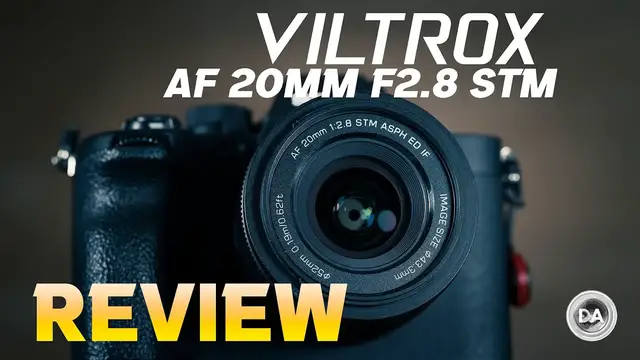
Viltrox AF 20mm F2.8 STM Review | The New Wide Angle Value King?
Nov 7, 2023

Photographer Dustin Abbott shares a definitive review of the Viltrox AF 20mm F2.8 STM - a surprisingly strong wide angle option for Sony FE, Nikon Z, and Fuji X at just $150. | This video is sponsored by Fantom Wallet. Visit https://store.fantomwallet.com and use code DUSTIN15 to get 15% off | Read the Text Review: https://tinyurl.com/Vil28STMda | Visit the Image Gallery: https://tinyurl.com/Vil28STMpics | Purchase the Viltrox AF 20mm F2.8 @ Viltrox https://tinyurl.com/buyVil20 (use code DUSTINABBOTT for 8% off)| B&H Photo https://bhpho.to/40oIYzk | Adorama https://howl.me/ckVZj32i7es | Amazon https://amzn.to/46UXCAQ | Amazon Canada https://amzn.to/467S4SA | Amazon UK https://amzn.to/3u16h6f | Amazon Germany https://amzn.to/3tX8UGd | Pergear https://tinyurl.com/buyvil20per
Purchase the Sony a7C2 @ B&H Photo https://bhpho.to/46WMrry | Adorama https://howl.me/ckVZJJ2wnNV | Amazon https://amzn.to/47fiumc | Camera Canada https://shrsl.com/4ajcz | Sony Canada https://tinyurl.com/buysonycameras | Amazon Canada https://amzn.to/47n7nI5 | Amazon UK https://amzn.to/40nvgga | Amazon Germany https://amzn.to/3FK6g9n
Check out the DA Merch here: https://bit.ly/TWIMerch | Become a Patron: https://www.patreon.com/dustinabbott | On the Web: http://dustinabbott.net/ | Sign up for my Newsletter: http://bit.ly/1RHvUNp | Instagram: http://bit.ly/DLAinsta | Facebook: http://on.fb.me/1nuUUeH | Flickr: http://bit.ly/1UcnC0B | 500px: http://bit.ly/1Sy2Ngu Follow Craig @ https://www.instagram.com/craigstoffersen/
Want to support this channel? Use these affiliate links to shop at:
B&H Photo: http://bhpho.to/1TA0Xge
Adorama: https://howl.me/cjU0LKdp3LN
Camera Canada: http://bit.ly/DLACameraCan
Sony Canada: https://www.thesonyshop.ca/?ref=abbott
Amazon: https://amzn.to/3HrY64d
Amazon Canada: https://amzn.to/3qG1p18
Ebay: http://bit.ly/DustineBay
Into the AM Clothing: https://bit.ly/intotheAMda and use code DUSTIN10 for 10% off
Make a donation via Paypal: https://www.paypal.com/paypalme/dustinTWI
=============================
Table of Contents:
=============================
Show More Show Less View Video Transcript
0:00
Hi, I'm Dustin Abbott and I'm here today to give you my video review of the newest lens from
0:15
Viltrox. This is the autofocusing 20 millimeter f2.8 SDM lens. Now this lens is really interesting
0:22
to me for a number of reasons. It is one of the most inexpensive lenses, if not the most
0:27
inexpensive lens that Viltrox has ever made. Despite that, however, there is a lot of very
0:33
positive things going for this lens. And I'm also interested in the fact that whereas Viltrox has
0:38
primarily produced their lenses in series in the past, where they've utilized a common outer shell
0:43
and basic design, this shows a little bit of a departure for them in that they're starting to
0:49
kind of specially design each individual lens. And so we've seen that they've gone to kind of
0:55
the higher end of the spectrum with their Pro Series or their 16mm f1.8, which is an amazing
1:01
lens, those are obviously trending up into more professional grade lenses, whereas this lens kind
1:07
of moves in the opposite direction. But it is very interesting for that reason as well, because this
1:13
is a lens that has good autofocus, has good optics, is extremely compact and lightweight
1:18
and only cost around $150 at MSRP. It's a lot of lens for that money
1:25
And so is it worth buying? Well, that's what we're here to explore together today
1:30
which we'll do right after a word from our sponsor. Today's episode is brought to you by Phantom Wallet
1:35
the minimalist modern wallet that is now even better with the new Phantom X that is crafted from aluminum
1:41
right here in Canada. It is 22% smaller and 35% lighter while still making it easy to access your cards and money when you need them
1:50
thanks to their unique fanning mechanism. You could even customize your wallet due to its modular design
1:55
with accessories like a money clip, cash holder, ID display, and even Chipolo and AirTag tracking integration
2:03
Visit store.phantomwallet.com to check out their unique sizes, styles, and finishes that span from aluminum to wood to carbon fiber
2:11
and use code DUSTIN15 for 15% off when you're ready to check out
2:19
So 20 millimeters is a really interesting focal length. It really hit the lens right in the middle of the sweet spot for wide angle work for a lot of things
2:28
It's not extreme wide angle and so it's not going to give you quite as dramatic or dynamic images
2:33
as a wider focal length like 14 or 15 millimeters, but it's much easier to use and it's more practical for a lot of different applications
2:41
It's a 91.6 degree angle of view and this lens is coming to market on Sony E-mount which is where
2:47
I'm testing but also on Nikon Z along with Fuji X. Now the third is interesting because that is an
2:54
APS-C only platform. Now obviously on Sony E-mount and Nikon Z-mount you also have the options of
3:02
shooting with APS-C cameras there and so this lens on APS-C with a 1.5 times crop is going to give you
3:09
a 30 millimeter equivalent angle of view. Still interesting, maybe not as interesting
3:14
but certainly perhaps very practical as a walk around type lens. But on full frame where I'm
3:19
testing 20 millimeters is great for a lot of things. It's great for interiors, for landscapes
3:24
for architecture. It's a, can be an interesting walk around lens if you're wanting a little bit
3:29
wider angle of view. And the ability on many cameras to be able to crop in allows this lens
3:36
to kind of do even more things because you can crop a fair bit and still have a reasonable amount
3:41
of resolution. I will also note that I had the opportunity to do a lot of my tests and a lot of
3:45
the images I'm going to share in this review on the new Sony a7C Mark II. So this lens is actually
3:51
a really interesting pairing on those compact cameras because it itself is very compact and
3:57
lightweight. It is only 65 millimeters or 2.66 inches in diameter. It is 59 and a half millimeters
4:04
or 2.3 inches long and it weighs in at only 157 grams or 5.5 ounces. So yeah, that's really small
4:13
and really lightweight and of course with also a very lightweight price point, it means that this
4:18
is a lens that's easy to buy and add to your kit and bring along even if it's not your primary
4:23
option for that day or even if it's not a focal length that you shoot often. The ability to have
4:29
that wider angle of view at such an inexpensive price makes it an intriguing kind of lens
4:34
It is the smallest and lightest of the 20mm options that I'm aware of on any of these particular platforms that it's going to be sold for
4:42
Up front we do have a 52mm filter thread. I would recommend using slim filters there to avoid any additional vignette from thicker filters
4:52
It does include the lens hood and then also a little lens pouch
4:57
The lens hood is made of plastic. Nothing particularly fancy or special here, but it does do the job
5:03
I will note that I would prefer that it bayonet into place just a little bit tighter. It doesn't
5:08
really lock when you get to the proper point and so there's just a little bit of friction there and
5:12
so it's not hard to shift it away from that one minor complaint at least at that point. Of course
5:17
the fact that both a lens hood and a little lens pouch even if it doesn't have a lot of protection
5:23
value the fact that those are included on a $150 lens is impressive in and of itself
5:29
Now, unlike some Viltrox recent lenses, this lens is essentially featureless on the barrel
5:35
The barrel itself is made out of polycarbonates or engineered plastics, but it doesn't feel cheap
5:42
They feel like quality plastics here. And even the manual focus ring, which is the only thing that's on the lens barrel
5:48
There are no switches, no aperture ring, just the manual focus ring
5:52
But the manual focus ring itself, though it is ribbed and in plastic, it actually has a substantial feeling
5:58
It has a nice damping or weight to it. Just not heavy, but a firm enough to where it feels like you're focusing with precision
6:07
There is a little bit of resistance there. And I found that the actual manual focus action was very good
6:13
I didn't see any kind of visible steps or anything like that. And all of the typical manual focus aids are available up to and including the ability on Sony here to magnify the area that being focused and automatically And so anyway no complaints on that front However if you looking for an AF switch or an aperture ring you going to be disappointed here But then again this is
6:35
$150 lens. Inside, we have seven aperture blades. And so not as high of a blade count as we found
6:43
on their lenses where they're looking for a more circular shape. And as you can see, stop down a
6:47
few stops. The aperture shape is not completely circular. The idea I think is to get to getting
6:54
sunstar sunburst effect more quickly. I'm not completely blown away by the actual sunburst
7:00
look. It's okay, but there isn't that nice pointy definition to the rays coming off. And so it's
7:07
I've seen better looking sunstars, but you know, it does the job here at this point
7:11
Like all Viltrox lenses, this comes with a USB-C port on the lens mount that allows you to do
7:18
firmware updates. And then while I've been reviewing a pre-release copy here, they've
7:22
actually done three different firmware updates already to get it ready for release. I didn't
7:27
actually notice any of the issues that were supposedly being corrected by that firmware
7:31
but it's all I can say is that the lens has performed flawlessly for me and autofocus is
7:36
very well, which we'll talk about in just a moment. Nonetheless, I'm very thankful to have
7:41
that USB-C port there because it makes firmware updates very, very simple. Now, one area where
7:47
Viltrox has been improving in 2023 is that prior to that, basically all of their lenses sported a
7:54
very low minimum focus distance, or I should say a very poor minimum focus distance and a very poor
7:59
maximum magnification. They almost all were just 0.10 times, which is not a lot of magnification
8:06
In this case, we can focus a little bit closer down to 19 centimeters, and we have a magnification
8:11
figure of 0.17 times. Now that obviously is not going to compete with a lens like the Tamron 20
8:17
millimeter f2.8 that has a 1 to 2 or a 0.50 times magnification but if you're not looking for a
8:25
pseudo macro lens and just want to be able to get up close maybe to blur out a background or when
8:30
shooting video to approach a subject without worrying about autofocus all of a sudden not
8:36
being able to focus anymore it does the job and I find that to be a steady improvement the Viltro
8:41
is making. The lens does not come with any weather sealing, but it does have at least an HD
8:47
nano multi-layer coating on the front. Kind of serves something like a flooring coating
8:53
so it helps with a little bit of moisture resistance on that and also helps with
8:57
fingerprints and things like that. Makes it easier to clean. So, you know, again, for $150 lens
9:03
that's a nice little additional feature. So no, there aren't a lot of bells and whistles here
9:08
But what is here is nicely made. And the biggest selling feature, of course, is the fact that it is such a compact and lightweight lens
9:15
It still gives you very adequately the 20mm angle of view on full frame
9:20
And for that reason, I'm willing to give a pass on some of the missing features
9:24
Because again, it's a price point of $150. And what you actually get for that money is pretty considerable
9:31
Now, autofocus here comes via an STM or a stepping motor. And this is a very good execution of STM
9:38
There is basically no focus sound unless I put the lens right up next to my ear in focus
9:43
and then I can hear a very light whirring, but I heard nothing, an actual capture
9:48
I can feel if I'm doing focus tests back and forth, back and forth
9:52
I can feel a little bit of inertia changing, but I can't really hear anything from the lens itself
9:58
Focus speed, as you can see here, is fairly quick. It's not as instantaneous as, say, some of the new GM lenses, but it is very fast
10:07
and even faster in outdoors. The reality is that there's less major focus changes
10:13
taking with a lens that doesn't have a super shallow depth of field, and so focus is more than adequate
10:18
for just about any kind of application. I also had very good focus accuracy
10:23
whether it was inanimate subjects, shooting even at slim depths of field
10:27
but also when I was tracking animals or human subjects, good stickiness on the eye
10:33
and good precise focus in those settings. I also have no complaints when it comes to the video side of things
10:39
As you can see here, focus pulls are fast and confident. It just moves back and forth without any drama, no visible steps, anything like that
10:48
You can see that there is a minimal amount of focus breathing, but nothing significant there
10:52
I don't think it's going to be a deal breaker for anyone. I also found that when I did my hand test and removed my hand
10:59
that there was good transition from the hand to the eye and back and forth
11:03
no settling or pulsing, no kind of a pause before it actually started to make that focus transition
11:09
So it is fairly reactive and thus able to handle different video activities. But at the same time
11:16
I didn't have any kind of issue with when I was, for example, tracking a subject. I didn't see any
11:21
kind of jumping around, but it stayed locked on the eye and did a good job with that. I will note
11:27
that it also did a great job for vlogging. This is an effective vlogging focal length, and it stayed
11:33
easily locked on my eye as I moved around, even when I spun around. Focus just stayed where it
11:38
should. So very good there. And you can see from this shot that when I moved around manning the
11:43
camera and wanted to stay focused on the eye of my daughter-in-law, that it did a great job of
11:49
just staying locked on without any kind of hunting or anything like that. This is obviously going to
11:54
be a great gimbal lens. The fact that it's so lightweight that if you pair it with a camera
11:59
like an a7c or an a7c mark ii it means that you can really get down to quite small and inexpensive
12:06
lightweight gimbal systems whereas you know you just a larger heavier lens you wouldn't be able
12:11
to use it in that application but it gives you some versatility of using that and of course it's
12:15
lightweight enough depending on your rig that you could also shoot it from a drone and it could be
12:20
an interesting application for something like that so overall autofocus performance very very good
12:27
Nothing to complain about on that front. Viltrox has really matured very quickly when it comes to
12:32
their autofocus designs. So let's talk about the image quality. This is an optical design
12:40
as you can see from this diagram of 10 elements in eight groups, and half of those are exotic
12:44
elements of one kind or another. You can see that the MTF looks moderately good, but I will note
12:50
that I felt like real world results mostly feel better There is one quirk that we will detail in our image quality breakdown but let dive into that together and just see how this little inexpensive optic performs out in the real world Okay let break down the performance of this
13:06
little lens. We'll start by taking a look at vignette and distortion. So first of all, you can
13:11
see that there is not a significant amount of distortion in terms of the quantity, but you can
13:16
also see very quickly that there is some complexity to the distortion. So much so, in fact, that you
13:22
kind of have an option. You can either try to get straight lines inside or you can try to get
13:27
straight lines outside. So if I try to correct for the lines inside, and this is obviously with
13:32
a manual correction at this point, there isn't a profile yet available. I've been reviewing a
13:37
pre-release so I can get nice straight lines inside here, but you can see that actually
13:42
exaggerates the distortion in the corners. The alternative is to try to square things up out
13:48
here. But as you can see, that actually creates a little bit of barrel distortion. And so in this
13:52
case, I'm actually treating it as if it's pin cushion distortion. And in this case, treating it
13:58
as if it were barrel distortion. So if I correct it as if it's pin cushion, that's a minus two
14:05
And you can see that end result and what it creates, not preferable really. But if I go the
14:12
other route and I correct inside here, you can see through a lot of the frame that looks pretty
14:17
good until you get to the corners, that's correcting as a plus nine. So obviously that's
14:23
not great, but to put it into perspective, if we take a look at the Tamron 20 millimeter F2.8
14:28
you can see that there is a massive amount of barrel distortion, a plus 42 in fact. And so if
14:34
this is a plus nine to correct, that's a plus 42. That's obviously a huge difference. So it does
14:40
help to give some perspective on the performance of the Tamron. So without any kind of correction
14:45
profile available. Truth of the matter is that I mostly just elected to not touch it at all. And so
14:50
you can see this shot here, the interior of a barn. If you look at all the various lines, nothing
14:56
actually looks all that terrible. And so I just left it as it was. One of the things that we'll
15:01
kind of look back at later, but as you see this light kind of creeping through the slats here
15:06
you can see that there's very little color fringing there. This is a situation where color
15:10
fringing could be terrible and so that gives you a preview of an area that is a stronger area of
15:15
performance here's another shot with a lot of straight lines in it including down here and so
15:20
you can see there's been no correction of anything here and frankly it doesn't look too bad and so i
15:26
would just leave it uncorrected one final shot here again with a lot of various lines here and
15:32
for most real world uses unless you're shooting a brick wall i think that the distortion is low
15:37
enough, you can probably just get away with not doing anything to it. So as we've already noted
15:42
the amount of fringing is really well controlled on this lens. And so you can see in this shot that
15:46
there is very little fringing before and just a tiny bit of fringing after the plane of focus
15:51
nothing too bad there. And so that allows you to shoot shots like this, where you can see this is
15:57
a very high contrast subject, lots of opportunity as you go out of focus for color fringing, and
16:02
it's just not there. It's well controlled. Likewise, in this shot here, you can see that
16:09
we've got very good contrast and low fringing in any of the reflective surfaces here
16:14
And as we transition towards the defocus, you can see in the actual fringing areas that there
16:19
is very, very little fringing to see. Likewise, lateral chromatic aberrations are also well
16:24
controlled. So here near the edge of the frame, you can see that there's just very little fringing
16:28
There's no correction to this, so very little fringing on these black and white transitions
16:33
Everything looks nice and clean there. So here's a look at the test chart that we will do our controlled test for sharpness and contrast here
16:41
So this is using the 61 megapixel Sony a7R Mark V, and we're looking at these results at 200% magnification
16:48
Now that might seem unfair for a $150 lens, but the truth of the matter is that that looks pretty fantastic there in the center of the frame
16:56
As we move out towards the mid-frame, results continue to look excellent
17:00
And as I pan down this way, we see that everything looks fine until about here
17:05
but there is a big drop off as we get to the corner. And in fact, you can see from just a little bit of fringing there
17:12
that it's almost like it's not focused. So that prompted me to do the test multiple times
17:18
and then to try it with it focused in the corner instead of the middle
17:22
So here is still at f2.8, but instead of before, this is focused in the corner. So for perspective, there's focused in the corner. There is focused in
17:31
the center of the frame. So obviously a pretty radical difference. Now, if we look back in the
17:35
center of the frame, center focus looks fantastic. Focusing in the corner, not fantastic. So obviously
17:42
at close focus distances, like to do my test chart, we have some serious field curvature there
17:47
So going out into a subject where I'm a little bit further back. So here focused in the center
17:53
of the frame, things look sharp. As we go towards the corner, it's a much more natural fall off to
17:58
where it's just, you know, it's not as sharp as the center, but it is a more typical normal type
18:04
performance. So it's at really at close focus distances that you're going to see that significant
18:09
problem. So that means that if you're a little bit further away from the subject, like here
18:13
and then of course, if you're shooting with a little bit smaller apertures, that yes, it's not
18:18
going to be as sharp in the edge is what it is in the center of the frame but you can see that it's
18:23
a normal reasonable performance not you know that kind of extreme variance there so obviously for
18:30
chart testing that's a serious problem for rear-wheel use it's typically less of a problem
18:35
because here for example this is composed pretty near the edge of the frame you can see that it's
18:41
nice and sharp because it's focused in the area where it needs to be you know if i was focused in
18:45
center of the frame this might look less sharp down here but because you're focusing where you
18:51
need sharpness to be it it kind of all works out okay so returning to the corner focused results
18:57
obviously it's very soft in the middle of the frame but what we see is it's not a centering
19:02
problem so if I look over here things look sharp if I move over to the left side we can see that
19:09
things look sharp. Up in this upper left corner, we can see things look sharp. And then likewise
19:15
up in the upper right corner, things look sharp. And so it's actually well-centered. It's just got
19:21
field curvature to where it is not focusing everywhere simultaneously at this close focus distance So leaving that aside and moving on we can see that from f2 to f4 there is an uptick particularly in contrast And if I pan over this direction you can really see
19:38
that difference in that the darks are much darker and the light areas look brighter
19:44
There's more resolution there, but the primary improvement is the contrast. From f4 to f5.6, we can see that there's a bit more
19:52
And then from f5.6 to f8, there is just a marginal improvement, but there is still a little bit of improvement there
20:01
And so now, obviously, we're sharp in the center of the frame. And now we can see that that sharpness at f8, there's an up depth of field that now the corners are going to be sharp as well
20:12
Now, after f8, diffraction is going to start to soften the image
20:16
Our minimum aperture here is f16, but as you can see, it's not as bad as what mini lenses are
20:22
And so you can get away with shooting at f11 and f16, but I would still, if you're wanting maximum performance across the frame, f8 seems to be the sweet spot for that
20:32
Now, if we visit our up-close performance, it's focused here on this text
20:36
You can see very, very sharp there. But as before, our field curvature issue is going to remain here
20:41
So in the center of the frame, things looking sharp. But obviously, if we look up into this right corner where we could have some sharpness, there is nothing there
20:50
That helps us transition to a discussion of bokeh. And so if we can get up close to our subject, we can see great detail and contrast on the subject
20:58
And we can see that in this case, the out of focus area really looks pretty decent
21:03
Now, in this situation as well, I mean, we're focused up here close
21:07
And so as the background transitions overall, there's a little bit more outlining here than what I would like
21:12
but not a bad bokeh performance. Likewise, here, there's a pretty good separation
21:18
from the subject to the background. You can see that there's more outlining
21:22
in terms of circles around different out-of-focus things than what allows for a really creamy background
21:28
but looks fine there. In this image, I find that it tends towards
21:32
some jittery or busyness. This image does have some areas in that transition zone
21:37
but overall, I think that it actually looks quite nice, and I just like the image as a whole
21:42
Uh, obviously really nice detail and contrast on the subject really beautifully rendered there
21:47
And the overall out of focus area for a wide angle prime lens really doesn't look too bad
21:52
I also found that color rendition was good. Viltrox has continued to improve their optical glass and I was pleasantly surprised, happy
22:01
to see that I felt like this lens, even though it's inexpensive, continued that trend to
22:06
where colors just looked good to me. They had a nice level of saturation
22:10
And so you can see here looking at this image that the detail and the contrast and the color all come together to produce a really great looking image
22:18
Now flare resistance is so-so. Their contrast holds up relatively well as you can see here
22:25
But particularly as you stop down there are some ghosting artifacts that become more apparent
22:30
And so again you can see those in a mild fashion when we pan across the sun at f2.8
22:35
But then when we stop down to a smaller aperture like f8 or f11, that becomes a much more pronounced pattern
22:43
Overall, however, pretty nice optics on this little lens. So in conclusion, I find this lens in some ways as exciting as Viltrox's higher end releases recently
22:54
Because I recognize that there is a whole market there that doesn't really have a lot of options like this out there
23:01
something that is this lightweight and high performing at such a low price point. It really
23:06
kind of opens up the threshold for a lot of people that maybe wouldn't consider a wide angle prime
23:11
but at a price point of $150, you know, it all of a sudden becomes more of a valid option for people
23:18
It is very competent as we have seen. It is very lightweight. And the fact that it costs so little
23:24
means it's going to be easy to both add to the bag in terms of buying it, but also to keep it in
23:29
the bag to bring along because it has such a lightweight and compact design. It's great to see
23:36
Viltrox taking what I would call a little bit more bespoke approach to lens design rather than just
23:42
designing series to design individual lenses and tailor them to that specific application
23:48
And I think that this lens is better for it. There are a few alternatives out there
23:53
particularly on Sony. There is the aforementioned Tamron 20mm f2.8 and the Tamron cost about $100
24:00
more at this point. The Tamron's advantage is that it does have that very high magnification
24:06
However, the Viltrox lens is more lightweight, has a much better autofocus system, and it has
24:12
much less barrel distortion and some of the optical flaws that the Tamron has, though the Tamron is
24:17
also a very sharp lens. There also is the Samyang AF 18mm f2.8 which is another compact lens that is
24:26
even more lightweight than this lens though the build quality of the Viltrox is definitely better
24:32
The Samyang is almost $200 more expensive and frankly the Viltrox has a lot of things to
24:38
recommend it. It has a better autofocus system, it has a better build quality, much better manual
24:45
focus ring, for example. And I would say that it is actually a little bit of the sharper lens of
24:51
the two. And so it's hard to make a big argument for the Samyang unless you're looking for that
24:56
extra two millimeters of width going to 18 millimeters instead. And that does have value
25:00
You'll have to determine whether it's worth $200 more than what this lens does. Overall, however
25:06
I'm quite impressed with this lens and particularly at this price point. And if you buy from Viltrox
25:11
and use the code Dustin Abbott, you can get an additional 8% off to bring that price tag down even a little bit lower
25:18
And at that place, it becomes a really compelling lens. And I think that for many people
25:23
this probably is as much wide angle prime as what you need
25:28
And if you can get by with spending that little on a lens like this
25:32
well, it means you might have more money to spend somewhere else. And that's always an interesting idea
25:37
I'm Dustin Abbott. Now, if you'll look in the description down below, you can find linkage to my full text review
25:41
There's also linkage to an image gallery there, some buying links there if you'd like to purchase
25:45
one. If you haven't already, please like and subscribe. Thanks for watching. Have a great day
25:51
and let the light in
#Science