Up next in 10

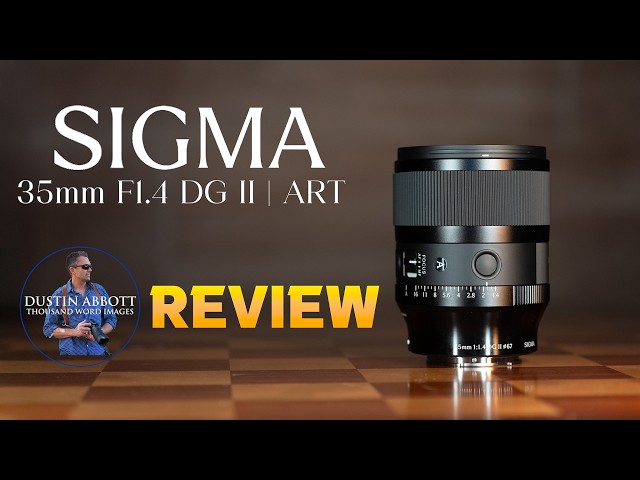
Sigma 35mm F1.4 DG II | ART Review: Sigma's Best 35mm Ever?
Feb 24, 2026

Photographer Dustin Abbott shares a deep dive review of the excellent Sigma 35mm F1.4 DG II | ART wide-angle prime lens for Sony E or L-mount cameras | Read the Text Review: | Purchase the Sigma 35mm F1.4 DG II | ART @ B&H Photo https://bhpho.to/3MNIKQ3 | Adorama https://prf.hn/l/1eqQvdZ/ | Amazon https://amzn.to/4tOXJdj | Camera Canada https://tidd.ly/4aADuIL | Amazon Canada https://amzn.to/3ZV5qAL | Amazon UK https://amzn.to/4ayrbMW | Amazon Germany https://amzn.to/4tOY6EJ
Check out the DA Merch here: https://bit.ly/TWIMerch | Become a Patron: https://www.patreon.com/dustinabbott | On the Web: http://dustinabbott.net/ | Sign up for my Newsletter: http://bit.ly/1RHvUNp | Instagram: http://bit.ly/DLAinsta | Facebook: http://on.fb.me/1nuUUeH | Flickr: http://bit.ly/1UcnC0B | 500px: http://bit.ly/1Sy2Ngu Follow Craig @ https://www.instagram.com/craigstoffersen/
Want to support this channel? Use these affiliate links to shop at:
B&H Photo: http://bhpho.to/1TA0Xge
Adorama: https://tinyurl.com/AdoramaDA
Camera Canada: http://bit.ly/DLACameraCan
Sony Canada: https://www.thesonyshop.ca/?ref=abbott
Amazon: https://amzn.to/3HrY64d
Amazon Canada: https://amzn.to/3qG1p18
Ebay: http://bit.ly/DustineBay
Into the AM Clothing: https://bit.ly/intotheAMda and use code DUSTIN10 for 10% off
Fioboc Clothing: https://tinyurl.com/FiobocDA20 and us code DUSTIN20 for 20% off
Make a donation via Paypal: https://www.paypal.com/paypalme/dustinTWI
=============================
Table of Contents:
=============================
0:00 - Intro and Concept
Show More Show Less View Video Transcript
0:10
Hi, I'm Dustin Abbott and I'm here today
0:12
to give you my review of the third
0:14
generation of Sigma's 35mm f1.4 art
0:18
lens. I'm filming right now on the lens
0:21
and so that you can get a sense of the
0:23
performance and the rendering in this
0:25
kind of setting as well as how well it's
0:27
staying locked on my eyes during the
0:29
filming section. The original back in
0:32
the DSLR days was really the lens that
0:34
launched Sigma's overall makeover and
0:38
the first time that we saw their uh
0:40
current labeling of art, contemporary
0:42
and sport series of lenses. And at that
0:45
point, they really stepped up their game
0:47
in terms of optical performance. And
0:49
that lens was extremely popular back in
0:51
the day. In 2021, they released their
0:54
first uh design specifically for
0:56
mirrorless lenses. And that was in some
0:58
ways a bit overshadowed because Sony had
1:00
released their excellent 35mm f1.4 G
1:04
Master that was, you know, smaller,
1:06
lighter, and you know, superior in a lot
1:09
of different ways. Fast forward to 2026,
1:12
however, and Sigma is back with the lens
1:14
that I think is going to be a lens
1:17
that's going to persuade a lot of
1:18
people. They've managed to make the lens
1:20
smaller and lighter while also making it
1:23
improved in terms of the optical and
1:25
autofocus performance. And in many ways,
1:27
this is a lens now, I think, that can go
1:29
head-to-head with Sony's own 35mm f1.4 G
1:33
Master and really give it a run for its
1:36
money despite costing more than $500
1:38
less. At the same time, those of you
1:40
that are Elmount shooters now have a
1:42
lens that I think is going to be a
1:44
really great match for a lot of L-mount
1:46
cameras and has a lot to offer. And so
1:49
today, we're going to explore whether or
1:51
not this is the 35mm lens that you
1:54
should add to your short list for adding
1:56
to your kit in the near future. I do
1:58
want to thank Sigma Canada for sending
2:00
me a review copy of this lens. Uh it
2:02
will be going back to them after this
2:04
review and they've had no input in this
2:06
review. My findings are my own. And
2:09
without further ado, let's jump in and
2:11
let's take a look at the build and
2:12
handling of the lens. All right, let's
2:14
take a closer look at the build and the
2:16
design of the lens here. So again, this
2:19
price is $1,59.
2:22
And so that compares to right under
2:25
$1,600 for the Sony G Master. The Aurora
2:28
35mm f1.4 from Suré is $549.
2:33
And then there's a Rokenon or Samiang uh
2:36
35mm f1.42 that will run you right under
2:40
$700 US. And so the Sigma is more
2:43
expensive than the other third-party
2:45
options, but it's also at a higher level
2:48
in basically every way relative to those
2:50
lenses. The big kind of headline news
2:53
here is that Sigma has managed to
2:54
radically reduce the size of this lens.
2:57
It is narrower. It's about 14% shorter.
3:00
It is 20% lighter overall. You can see
3:03
from this comparison shot that it is a
3:05
seriously smaller than the first
3:07
generation lens that was released in
3:09
2021. And so what we do have is a lens
3:12
that is 73 mm in diameter or 2.9 in.
3:17
That leaves us a 67 mm front filter
3:19
thread. The lens is 94 mm or 3.7 in in
3:23
length. And so it's lost 2.5 millimeters
3:26
in diameter and over 17 mm in length
3:30
relative to the first generation lens.
3:32
And that leaves us a weight of just 530
3:36
g or 18.5 oz. That brings us now into
3:40
very much contention with the Sony 35mm
3:43
f1.4 G Master, which is almost the same
3:46
weight at 524 gram. I've always remarked
3:48
at how good the Sony was for its size
3:51
and the fact that Sigma is now matching
3:53
that is impressive because that's been
3:55
something that Sony has been very very
3:57
good at doing. And to give you a a sense
3:59
of comparison, the older Sigma uh 35mm
4:02
f1.4 DN lens which was released in 2021
4:06
weighed 645 gram and so they have shaved
4:09
off a lot of weight about 115 grams
4:12
there. Now, in that process, rather than
4:14
losing features, we've actually gained
4:16
features. And so, we now have the
4:18
ability to have the aperture with clicks
4:21
if so desired, you have the option to
4:23
de-click that aperture. So, you can
4:25
smoothly rack through it. And then here,
4:27
you can have a look at an aperture rack.
4:29
As I focus down for flare, you can see
4:31
that the aperture is changing, but it is
4:34
doing it in a smooth fashion. You have
4:36
an iris lock here on the side. And so
4:38
you can either lock into the aperture
4:40
ring or if you don't like aperture
4:42
rings, no problem. You can lock out of
4:44
it and you can operate without it. We
4:47
have an AFMF switch here on the side.
4:49
And now rather than one, we have two
4:52
custom or function buttons and so that
4:54
you have one easily accessible even if
4:56
you're shooting in a vertical position.
4:58
The manual focus ring is nicely damped
5:00
and works with good responsiveness. No
5:03
problems there. We have a little bit
5:05
thicker a gasket here. And now we have
5:08
internal seals throughout the lens.
5:10
Special coating on the front element.
5:12
This is a professionalgrade lens even
5:14
though it is compact. Now the hood
5:18
always Sigma does give us nice lens
5:20
hoods and so there's a lot that I like
5:22
about it. We've got, you know, we've got
5:25
the various grip surfaces here, the
5:27
textures and so all of that is nice.
5:29
There is a lock here if you want to lock
5:31
it into place. And so, uh, no problem as
5:34
far as the basic function there. But
5:37
there is one caveat, and that is if you
5:39
want to use something like a circular
5:41
polarizer or a variable ND filter, well,
5:45
you're going to have a hard time doing
5:47
that because it fits so narrowly here.
5:49
And so, for example, if I put on a
5:52
filter first and lock that into place,
5:56
I pretty much can't mount the lens hood.
6:00
or if I see it's it's already kind of
6:02
stuck on there. And even if I did manage
6:04
to get it mounted, which I have done,
6:07
you're just going to be unable to rotate
6:09
that filter at all. And so that is one
6:12
flaw here. I would like to have seen
6:14
them design this with a little bit more
6:16
room to uh navigate using filters on it.
6:19
Now, our minimum focus distance is 28
6:22
cm, and that gives us a nice useful
6:25
0.8185 8185 times magnification right
6:29
under 0.19 times. So that's a little bit
6:31
higher than say the Viltrox Lab
6:34
35mimeter f1.2 which is 0.17 times but
6:37
it is lower than the Sony G Master which
6:40
gives us a very useful 0.26 times
6:43
magnification. There are floating
6:45
elements now in this design. The rocking
6:47
I find to be really gentle compared to
6:48
like Viltrox for example. So you may not
6:50
even notice it at all, but there are
6:52
floating elements there that allow this
6:54
to have a much better performance up
6:55
close than what the previous generation
6:57
lens did. So the magnification isn't
6:59
higher, but the performance is most
7:01
definitely better. One final note is
7:03
that Sigma has moved to an eco style
7:05
packaging. And while I complain about
7:07
that in some cases, Sigma actually is
7:09
got a nice retro aesthetic going here
7:11
that I really don't mind at all. So
7:13
kudos to Sigma showing that you can be
7:15
eco-friendly and stylish at the same
7:18
time. So, let's talk autofocus. I want
7:20
you to know today I am sacrificing
7:22
filming for you today because it is
7:24
freezing out here. We're right at the
7:26
end of the month of February and winter
7:29
is having its final harrah today and
7:31
it's about minus 20 21 or so out right
7:34
now. It's cold. Now that I'm done
7:36
whining, we'll talk more about autofocus
7:38
because this is an area of huge
7:39
improvement. In fact, it is what Sigma
7:41
has done with autofocus that according
7:43
to them has enabled them to produce a
7:45
smaller and lighter design that is still
7:48
superior in performance. They've done
7:50
that in large part because rather than
7:52
having a single focusing group that was
7:54
driven by a single STM or stepping focus
7:56
motor, they now have two focus groups
7:59
that are driven by their uh high high
8:01
thrust HLA high-speed linear actuator
8:04
motor. And so they have two different
8:06
focus focusing groups. and they say that
8:08
the focusing groups are now six times as
8:10
heavy, but because these new motors have
8:12
so much more thrust. Not only has it
8:14
enabled them to improve autofocus
8:16
performance, but because of the new
8:17
design that they can do, they can kind
8:19
of shrink down the overall optical
8:22
formula and make the lens more compact
8:24
and yet high performing. And definitely,
8:26
we've got a lot of thrust here. I would
8:28
say that this lens is now the equivalent
8:30
of the Sony G Master in terms of overall
8:32
thrust and speed and autofocus. You can
8:35
see it's basically instantaneous going
8:37
back and forth. And not only that, I
8:39
found it to be very, very accurate in
8:42
all of my test. You know, at this point,
8:44
I would be shocked if a lens didn't
8:46
perform well on Sony when it comes to
8:49
portrait type performance because Sony
8:50
has really kind of perfected the whole
8:52
IAF and uh face detection, those things.
8:56
And so, I wasn't surprised to find that
8:57
I got perfectly focused results even at
8:59
f1.4 in a portrait type setting. also
9:02
when shooting out in just you know
9:04
general purpose shooting I had no
9:06
problem in nailing focus and one thing I
9:08
will say that I appreciate about Sigma's
9:10
designs is that in those situations that
9:12
I find on all uh camera systems and all
9:16
lens makers is that there are situations
9:18
where sometimes if I've got a foreground
9:20
subject sometimes focus wants to stay
9:22
locked on the background but I do
9:24
appreciate on Sigma that we do have
9:25
fulltime manual override available so
9:28
it's really easy to just pull focus into
9:30
the the zone that I want and then let
9:32
allow allow autofocus to take back over.
9:34
That's really the only situation that I
9:35
could say that I saw any kind of focus
9:38
limitation. And like I said, that's
9:39
pretty much a universal issue. So, at
9:42
the end of the day, for stills, I think
9:43
they've done a fantastic job in terms of
9:45
the autofocus performance, speed, it's
9:48
super quiet, it's quick, there's nothing
9:50
to complain about. I'll conclude this
9:51
section by saying this. as a third-party
9:54
lens. Obviously, here on Sony, we're
9:56
going to have the limitation when it
9:57
comes to the overall burst speed and
10:01
that any third-party lens with full-time
10:03
autofocus is going to be limited to 15
10:05
frames per second. And obviously on the
10:08
Alpha 1 Mark II that I'm filming on at
10:10
the moment, if I was shooting with the
10:11
Sony G Master, I could shoot at 30
10:12
frames per second. That is a limitation
10:14
that Sigma can't do anything about at
10:16
the moment. And so, it is what it is.
10:19
For many people, I think with a 35
10:20
millimeter lens, that's probably not a
10:22
limitation that's going to affect them
10:24
very much. But just something to bear in
10:26
mind. Those of you that are LMount
10:27
shooters, no such limitations exist. So
10:29
fire away. Likewise, on the video front,
10:32
I feel like this is the lens that is
10:34
definitely improved. Large part, it's
10:36
improved because it exhibits very low
10:38
levels of focus breathing. And here you
10:40
can see in the focus pull test that
10:42
while those focus pulls are nice and
10:44
smooth, beyond that, they also are
10:46
showing that very low degree of focus
10:48
breathing. That's obviously a huge
10:50
advantage over the uh Sony 35mm f1.4 G
10:54
Master lens, which unfortunately suffers
10:56
from quite a lot of focus breathing.
10:58
Now, if you have a camera that can
10:59
compensate for that, you might be able
11:01
to eliminate it, but it's going to come
11:02
at a significant crop factor. The fact
11:05
that Sigma is able to do that optically
11:07
is obviously very much appreciated. I
11:09
also found with my hand test, there's no
11:11
problem in transitioning from the hand
11:13
to the eye back and forth. And
11:15
obviously, as I approached the camera,
11:17
it stayed locked on me fine, as it's
11:18
doing during this segment right now. And
11:20
beyond that, if I ducked out of frame
11:22
and then popped back in, it was very
11:24
quick to pick me back up, very confident
11:26
in regaining focus. And so, all of that
11:28
was excellent in general. So, the fact
11:30
that we've got nice cinematic type pools
11:32
that we've got good confidence in terms
11:34
of the stickiness of locking on makes
11:36
this a lens that's going to be very,
11:38
very useful for a lot of focus
11:40
situations. All right, we've got an
11:42
optical design, as you can see here, of
11:45
15 elements and 12 groups. So, fairly
11:47
complex. That includes four aspherical
11:50
elements and then also two of these SLD
11:54
glass elements. And you can see the
11:56
focusing groups here and here that we
11:58
mentioned earlier. We can see that the
12:00
MTF chart shows a really strong center
12:02
performance, very consistent basically
12:05
all across the frame with just a very
12:07
mild dip near the corners. This is a
12:09
lens that is basically going to be sharp
12:11
all across the frame. And if we look by
12:14
back by comparison to the original that
12:16
was released in 2021, you can see that
12:19
it's starting way down here, a huge
12:22
difference in where the center of the
12:23
sharpness is. And then as we get even
12:25
towards the end, we can see that even
12:27
that is operating at a higher place, but
12:29
basically all across the frame till like
12:32
this zone in particular, it is not just
12:34
a little sharper, it is a lot sharper.
12:37
So obviously that suggests that we're
12:39
going to have a sharp lens, but what
12:40
about the other metrics? We can see when
12:42
it comes to vignette and distortion,
12:43
there is a minimal amount of distortion.
12:46
I just needed around a plus two to
12:47
correct a tiny amount of barrel
12:49
distortion. But you probably would not
12:51
notice this in 99% of the situation. So
12:54
that is well done. Vignette is another
12:56
story. However, vignette is quite heavy
12:59
as you can see. And to get this result
13:01
that we see here in the corners, I
13:02
needed to dial in about a plus 80 plus
13:04
82 to achieve that. And so we're having
13:06
to correct for a lot of vignette.
13:08
Fortunately, the correction profile
13:10
either in camera or in post editing
13:12
software will take care of that. Though,
13:14
just note that if you're shooting at
13:16
high ISOs, you may get a little bit of
13:18
additional noise in the corners. Now,
13:20
when it comes to longitudinal style
13:22
chromatic aberrations, we have a huge
13:24
improvement over the previous generation
13:25
lens that had a unfortunate amount of
13:28
fringing. In this case, you can see that
13:29
there is minimal amounts of fringing
13:31
here on my test chart. in this whole
13:33
scenario that is designed to really show
13:36
off any kind of fringing in here at 200%
13:38
magnification. We see a tiny little bit
13:41
there and a tiny bit here, but that's
13:43
only when looking at at ridiculous
13:45
levels of magnification. It's very well
13:47
controlled. And likewise here, we can
13:50
see very well handled here. Tiny bit of
13:53
fringing there, just a little bit on
13:55
some of these shiny surfaces, but again,
13:57
not enough that you're even going to
13:58
notice at this kind of level. And if we
14:00
look up here at the specular highlights,
14:02
there's no obvious fringing around them.
14:05
Speaking of those specular highlights,
14:06
you'll see some lemon or cat eye shape
14:08
towards edge of the frame at f1.4. By
14:12
f2, it is largely all circular. A few of
14:15
them are not quite completed. And then
14:17
by f2.8, you can see very consistent uh
14:20
performance. You can start to see the 11
14:23
aperture blades there a little bit in
14:25
the shape, but the overall effect is
14:26
very circular. What we can also see is
14:28
that while this isn't completely clean
14:31
inside here, there definitely is some
14:32
just kind of general busyiness, there
14:35
isn't any concentric rings or the onion
14:37
style bokeh that all of us hate. Lateral
14:39
style chromatic aberrations are
14:41
extremely well controlled. No issue with
14:43
that. And all of these transitions from
14:45
black to white near the edge of the
14:47
frame. Now, as we move on to resolution
14:49
and contrast, this is where the MTF
14:51
suggests that we should be impressed.
14:53
And let's see if we are. I'm testing on
14:55
a 61 megapixel A7R Mark II and this is
14:58
shown at 200% magnification. Even at
15:01
that extreme high magnification, center
15:03
results look fantastic. Mid-frame
15:06
results look fantastic. Corner results
15:09
are really strong right out to the very
15:11
edge of the frame. And we also see good
15:14
consistency. It is sharp up in all of
15:17
these corners, holding up really, really
15:19
well. So, when that comes to a portrait
15:21
type situation, we can see here that the
15:25
uh it's all very sharp, very crisp, lots
15:27
of detail and contrast in the skin
15:29
textures. No issue at all with that. Uh
15:32
in this shot, you know, just natural
15:34
light in this situation. You can see
15:36
that detail is very good. The
15:38
background's nicely defocused. And if I
15:40
pull focus over to the lady back here,
15:43
you can see again very crisp detail and
15:46
focus there. It's not just up close, but
15:48
far away. gives you a look at the
15:50
foreground bokecet as well. The shot of
15:52
Nala being mouthy. Once again, you can
15:55
see great detail and contrast even at
15:58
f1.4 and even shooting through glass.
16:01
And here at in blue hour again at f1.4
16:05
at a further distance. You can see
16:07
fantastic detail and contrast all
16:09
throughout the image. And that's true as
16:11
we get even off here towards the edge
16:13
holding up really really well. One of
16:16
the sharpest 35mimeter lenses that I
16:18
know of is the Viltrox Lab 35mimeter
16:20
f1.2. Even stopped down to f1.4. And
16:24
putting them side by side, we can see
16:26
that I would say that the contrast,
16:30
micro contrast here is maybe a hair
16:32
better from the Sigma. Uh, and so that's
16:36
really, really impressive all things
16:37
considered. Obviously, they're very,
16:39
very close. And if you weren't seeing
16:40
them side by side, you probably wouldn't
16:42
see the difference. But as we look at
16:43
the overall rendering and all of that,
16:45
it is remarkable how similar the two
16:47
lenses actually look. Now, sometimes
16:49
when lenses are this sharp, there isn't
16:51
a whole lot more improvement to see. But
16:53
as we look on down at f2.8, we can see
16:56
that there's actually more detail and
16:58
more contrast really all across the
17:01
frame. The mid-frame here looks
17:04
fantastic. That is one of the best
17:06
mid-frame performances that I have seen.
17:08
And we can see going right off into the
17:10
corners, fantastic detail. This seal
17:13
here shows just how much more contrast
17:16
and detail is available. This is a
17:18
really impressive performance. After uh
17:20
f2.8, I didn't see a lot more
17:22
improvement, though. You can see there
17:24
is a bit more contrast here at f4. And
17:27
after this, it largely stays the same.
17:30
So, as you might expect in real world,
17:32
you know, landscape style shots, um,
17:35
shot here at f5.6, six, there's just,
17:38
you know, good detail everywhere we look
17:39
in the frame. Right off here to the
17:41
corners, we're seeing that there's good
17:43
contrast, good resolution that's showing
17:45
up. So, after f8, you'll start to see
17:47
some reduction in sharpness and contrast
17:49
due to defraction. So, here at f11, it's
17:52
definitely softer looking. And then
17:53
slightly more at f16. Though, again, if
17:57
you're looking at 100% magnification,
17:58
this is still going to look very good.
18:00
Just note that you're going to get some
18:01
diminishing returns due to defraction as
18:04
you stop the lens on dam. The floating
18:06
elements that are part of the design of
18:08
this new generation lens really helped
18:10
the performance up close. The last lens
18:12
was a little bit soft. Had the same
18:14
level of magnification, but it was kind
18:16
of soft up close. You can see here that
18:18
we now have great detail and contrast
18:20
even at f1.4. We also have a pretty flat
18:24
plane of focus. And so all of that
18:26
helps. We can see right down here to the
18:28
edge, you've got good resolution that's
18:30
showing up there. And so that is
18:32
fantastic. The bokeh quality and
18:36
sharpness even up close is in my mind
18:39
it's really impressive. You can see all
18:41
the fine delineation of detail here up
18:43
close. A nice transition towards defocus
18:46
here again in this shot. You can see no
18:49
fringing, nice detail on all of these
18:52
little fine u very you know slender
18:55
textures. And as we look towards the
18:57
defocus that really looks lovely at that
19:00
point. Here again, same kind of
19:02
scenario. We can see great detail here
19:04
up close. Background very nicely
19:06
defocused. And even if we move a little
19:08
bit further back to where this is no
19:11
longer a favorable ratio, we can see
19:13
again detail looks good. Some nice
19:15
dimensionality there. And as we look
19:18
towards this all in the transition zone,
19:20
it's not like creamy necessarily, but
19:23
neither does it have a lot of hard edges
19:24
that are grabbing my eyes. This is far
19:27
from a terrible performance. You combine
19:29
those things together of the sharpness
19:31
and then the rendering for portraits and
19:33
obviously you're going to get great
19:35
results. You can see great detail there
19:37
on the face and the skin textures. And
19:39
as we then as we look towards the
19:40
background, it's quite painterly looking
19:42
in this situation. I think uh likewise
19:45
here, you know, I think that those are
19:47
that are going to use this lens for
19:48
shooting portraits are going to be
19:49
really happy. Just the background's
19:51
nicely blurred out. The detail is
19:53
fantastic. Nothing to complain about
19:55
there. Even when using this lens for
19:58
shooting astro, we can see that there's
20:00
nice crisp star points in the center of
20:02
the frame. As we move off towards the
20:04
edge of the frame, yeah, there's a
20:05
little bit of coma smear, but it's
20:07
really quite minimal. Overall, I would
20:10
say this is a great result. Other than
20:12
the vignette, I have corrected for the
20:13
vignette somewhat here, but obviously if
20:16
you're shooting in the night sky, you
20:17
might get a little extra noise at the
20:19
side for correcting that vignette, but
20:20
overall, it's quite good. Finally, when
20:23
we talk about flare resistance, we see
20:24
also improvement here. This uh 35mm f1.4
20:29
DC2 has their newest AAC, which is
20:32
advanced amorphous coatings, and it does
20:34
a fantastic job of resisting uh flare
20:37
whether you're wide open or stop down.
20:39
Uh in this image here, we can see that
20:42
this is very bright window light coming
20:44
in. The image is holding up perfectly.
20:46
If I pan back and forth wide open, you
20:49
can see very minimal ghosting artifacts
20:51
and uh contrast is holding up. Likewise,
20:54
stop down, we get the same kind of
20:56
results here. And even in that close-up
20:58
shot, if I pan up towards the source of
21:00
the light, it all looks really
21:02
fantastic. So, Sig Sigma has done a
21:04
great job with the optical design, which
21:06
is impressive considering that they have
21:08
made the lens so much smaller and
21:10
lighter. So, what's my conclusion? I
21:12
think this is probably the 35mm lens
21:15
that we have wanted from Sigma all
21:16
along. And at a a price tag of about
21:19
$1,50. It's not cheap, per se, but when
21:22
you compare it to the Sony G Master,
21:24
there's about a $500 $550 difference
21:26
between the two, which when you're
21:29
looking at a lens that can do everything
21:30
that the G Master can at a similar size
21:33
and weight, makes it a very, very
21:35
compelling package. So, I really
21:37
appreciate what Sigma has done and they
21:40
really seem to have kind of achieved
21:41
that next level of lens design in their
21:44
most recent generation of lenses to
21:45
where they've always been able to do
21:47
unique and amazing things in terms of
21:49
aperture and focal length combinations
21:52
and their optical performance has been
21:54
stellar. What we're seeing now, however,
21:56
is that next degree of polish to where
21:59
they're able to shrink those designs
22:01
down to make the final result even more
22:03
compelling. And I think that for those
22:05
of you that are considering a 35
22:07
millimeter f1.4 lens, this really should
22:09
probably be at the top of your list.
22:11
It's a fantastic lens, fantastic for
22:13
both stills and video. I think it's
22:15
going to be a delight for a lot of
22:17
people. If you want more information,
22:19
you can check out my full text review
22:21
which is linked in the description down
22:22
below. There are some buying links there
22:24
as well. This lens is going to start
22:25
shipping, I think, in about midappril.
22:28
And so, as always, thanks for watching.
22:30
Have a great day and let the light in.
#Science