Up next in 10

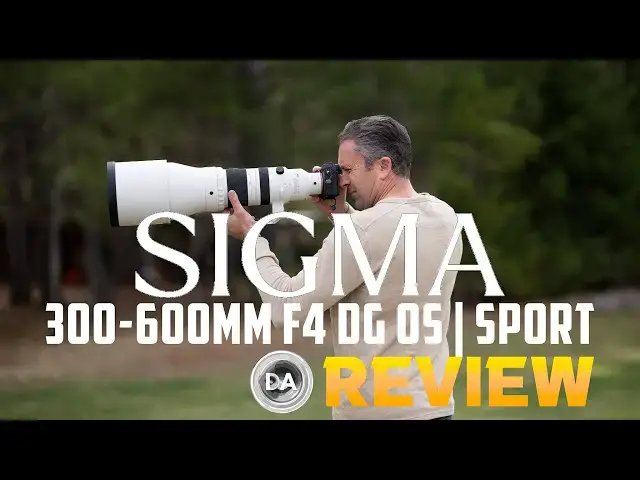
Sigma 300-600mm F4 DG OS SPORT Review | An Expensive Bargain
May 2, 2025

Photographer Dustin Abbott shares a deep dive review into the incredible Sigma 300-600mm F4 DG OS | SPORT telephoto zoom for Sony E and Leica L mounts. | This video is sponsored by Fantom Wallet. Visit https://store.fantomwallet.com and use code DUSTIN20 to get 20% off | Read the Text Review: | Visit the Image Gallery: | Purchase the Sigma 300-600mm F4 OS SPORT @ B&H Photo https://bhpho.to/43PJoTh | Adorama https://howl.link/chyp3iqd7ksp6 | Amazon https://amzn.to/3Rjcd32 | Camera Canada https://shrsl.com/4vplf | Amazon Canada https://amzn.to/42ckGeC | Amazon UK https://amzn.to/3YzDpOO | Amazon Germany https://amzn.to/3Y0Vllr
Check out the DA Merch here: https://bit.ly/TWIMerch | Become a Patron: https://www.patreon.com/dustinabbott | On the Web: http://dustinabbott.net/ | Sign up for my Newsletter: http://bit.ly/1RHvUNp | Instagram: http://bit.ly/DLAinsta | Facebook: http://on.fb.me/1nuUUeH | Flickr: http://bit.ly/1UcnC0B | 500px: http://bit.ly/1Sy2Ngu Follow Craig @ https://www.instagram.com/craigstoffersen/
Want to support this channel? Use these affiliate links to shop at:
B&H Photo: http://bhpho.to/1TA0Xge
Adorama: https://howl.me/cjU0LKdp3LN
Camera Canada: http://bit.ly/DLACameraCan
Sony Canada: https://www.thesonyshop.ca/?ref=abbott
Amazon: https://amzn.to/3HrY64d
Amazon Canada: https://amzn.to/3qG1p18
Ebay: http://bit.ly/DustineBay
Into the AM Clothing: https://bit.ly/intotheAMda and use code DUSTIN10 for 10% off
Fioboc Clothing: https://tinyurl.com/FiobocDA20 and us code DUSTIN20 for 20% off
Make a donation via Paypal: https://www.paypal.com/paypalme/dustinTWI
=============================
Table of Contents:
=============================
0:00 - Intro
1:21 - Fantom Wallets
2:08 - Disclaimer
2:17 - Build and Features
16:08 - Teleconverters?
19:37 - Autofocus
22:47 - Video AF
23:48 - Image Quality Summary
31:52 - Conclusion and Pricing
33:49 - Optical Deep Dive
---------------------------------------------------------
Oben Tabletop Tripod shown in video: https://bhpho.to/3vL8YWy
My Cameras:
Purchase the Sony a7RV @ B&H Photo https://bhpho.to/3ZivNyZ | Adorama https://howl.me/cjNY1LU3gFH | Amazon https://amzn.to/3CRCDlq | Camera Canada https://shrsl.com/3vulf | Sony Canada https://bit.ly/BuyA7R5 | Amazon Canada https://amzn.to/3H8yeNH | Amazon UK https://amzn.to/3kbg5FM
Purchase the Sony Alpha 1 @ Camera Canada https://shrsl.com/2wdk2 | B&H Photo https://bhpho.to/3upRFZd | Adorama https://howl.me/cj2nQpjLBKW | Amazon https://amzn.to/3t1m8MD | Sony Canada https://bit.ly/BuySonyA1 |Amazon Canada https://amzn.to/3cVFrBB | Amazon UK https://amzn.to/2OtrjGe | Amazon Germany https://amzn.to/3d0GtMO | Ebay https://ebay.us/i371Vs
Canon EOS R5: B&H Photo https://bhpho.to/3iMH18x | Amazon https://amzn.to/33L3D53 | Camera Canada https://shrsl.com/2jqth
Purchase the Fujifilm X-H2 @ B&H Photo https://bhpho.to/3KAInTC | Adorama https://howl.me/cjyzbiO5lVp | Amazon https://amzn.to/41zMzKl | Camera Canada https://shrsl.com/4128o | Amazon Canada https://amzn.to/40gY4W7 | Amazon UK https://amzn.to/43Grn7a | Amazon Germany https://amzn.to/3L6hwjR
Get a discount off all Skylum Editing Software (Luminar, Aurora HDR, AirMagic) by using code DUSTINHDR at checkout: http://bit.ly/LuminarDLA
DISCLAIMER: This video and description contains affiliate links, which means that if you click on one of the product links, I’ll receive a small commission. As an Amazon Associate I earn from qualifying purchases.
Keywords: Sigma 300-600mm, DG, SPORT, SPORTS, Sigma 300-600 Sport, Sigma 300-600mm F4, Sigma 300-600mm F4 DG OS Sport, Sigma 300-600 Review, #SIGMAEmount, #SIGMA #SIGMA300600mmF4Sport, #SIGMASport, #SIGMASPORTS, Full Frame, Review, Sony Alpha 1, Sony a7RV, Review, Hands On, Dustin Abbott, Real World, Comparison, Sharpness, Bokeh, Flare Resistance, Autofocus, Image Quality, Sample Images, Video, Photography, let the light in, weathersealing, #letthelightin, DA
Show More Show Less View Video Transcript
0:00
[Music]
0:10
hi i'm dustin abbott i've long noticed that there is a huge gap between variable aperture telephoto zooms like
0:18
sony's own 200 to 600g lens and then the super telephoto primes that often cost
0:25
well in excess of $10,000 but nothing that really fits in between those i
0:30
think sigma has given us the solution however in their new 300 to 600 millimeter f4 and this is a dgo sport
0:39
lens that's right we have all the way from 300 to 600 mm with a constant maximum aperture of f4 which actually
0:47
matches the aperture focal length combination of many of those high-end primes all in a lens that cost around
0:56
$6,000 believe it or not that's a huge bargain when you add up a few of those prime lenses and realize you could
1:03
pretty quickly get up to $40,000 but is this lens capable of providing
1:08
the kind of performance that photographers in that range are looking for well that's what we're here to
1:14
explore so let's dive in and let's take some pictures
1:20
today today's episode is brought to you by phantom wallet the minimalist modern wallet that is now even better with the
1:27
new phantom x that is crafted from aluminum right here in canada it is 22%
1:33
smaller and 35% lighter while still making it easy to access your cards and money when you need them thanks to their
1:40
unique fanning mechanism you could even customize your wallet due to its modular design with accessories like a money
1:46
clip cash holder id display and even chipo and air tag tracking integration
1:52
visit store.fanomwallet.com to check out their unique sizes styles and finishes that
1:58
span from aluminum to wood to carbon fiber and use code dustin 15 for 15% off
2:04
when you're ready to check out now this lens was loan to me by
2:10
sigma canada but they have had zero input on my review and they will not see
2:16
this video until you do all right so let's jump into the build and features of this bad boy here i had a unique
2:23
opportunity when this lens was launched along with some other sigma products to be there in tokyo at the product
2:29
announcement and so because of that i was able to see a little bit more of the behind the scenes of what actually went
2:34
into this lens and by the way i did write an article uh taking a look at
2:40
sigma's factory in isizu uh japan it's a really fascinating place and if you haven't checked that out i will throw a
2:46
link uh to that in the description down below but this lens is it is their first
2:51
of sigma's we'll call them a great white so the first time that they have uh done
2:56
this finish and so this is their thermal insulating paint i i think that the
3:03
whole insulating thing is maybe a little uh overstated in my opinion i think that
3:08
people love great whites above all because they look cool they attract attention and those that want to be more
3:14
discreet they're going to wrap them anyway in some kind of camouflage or whatever but it certainly if at their
3:20
first kick at the can this is beautifully done and it has their new design language in terms of their logo
3:26
and their fonts and it all looks really spectacular and so i do want to give them a huge thumbs up on that because it
3:33
is a beautifully executed package here and you can tell that it is quality all throughout this is maybe the most
3:40
featurerich lens that i personally have tested before so we'll break that down by just
3:47
kind of moving from the camera forward and so kind of go through these logically the first thing you're going
3:52
to encounter is a dropin filter holder here so included with it is what they
3:58
call the rfh2se so this uh comes with just a
4:03
standard kind of protection uv type filter i don't know why that is actually
4:08
needed considering it's at the back of the lens but nonetheless here it is but you can replace that with any 40 and 12
4:15
mm filter now right now this one just has a little rotating knob that allows
4:21
you to either lock or unlock it into there however there are two optional uh
4:26
drop-in filter holders that you can get one of those comes with a circular polarizing filter the other with a
4:33
variable nd filter up to seven stops and that comes in addition with a little
4:38
wheel on it where you can rotate it and thus rotate the circular portion to uh optimize the effect for whatever you're
4:45
looking for now you're going to pay anywhere between right under $200 to
4:51
about $265 i think dollars for the variable nd so under 200 for the cpl and
4:58
then the uh 265 for the variable nd but the bottom line is here that this is not
5:05
designed to be used with front filters at all because frankly there really aren't front filters that are made to
5:11
accommodate that the diameter of the lens is 167 mm there just aren't 167
5:16
millimeter filters out there and so uh it's doesn't even have filter threads up front it's all going to be this drop in
5:22
filter so yeah that's that that's expensive however it is probably less
5:28
expensive and certainly far more practical than carrying around filters that would be that size if you were so
5:33
inclined to want to use them i suspect many people probably aren't but anyway
5:38
it's there next we have a two banks of switches one on either side of the lens i'll focus on the left side first this
5:45
is kind of the more traditional bank of fi of switches gives you an afmf switch it gives you a three-position focus
5:51
limiter it gives you a three-position os um uh switch here which gives you off
5:58
position one which is the standard two which is for panning underneath that there is a custom switch again three
6:04
position off c1 and c2 now this is where there's a divergence in the path i'm
6:11
reviewing a sony e-mount version of this lens however on the elmount version of the lens there it functions as a
6:17
first-party lens there and so it doesn't have any of the restrictions that i'll detail that happen on the sony side of
6:22
things so on the elmount side of things you actually can get a dock where you can program function additional function
6:29
into the lens so there are more options as to what you can program to the c1 and c2 positions on sony we don't have that
6:36
option so on sony this becomes two other uh optical stabilizer modes and so one
6:43
of those really focuses so c1 will really focus on stabilizing the viewfinder that's giving what they call
6:49
the dynamic view it actually does a great job on that more on that in just a second the second is what they call a
6:55
moderate view and so it is more of an active mode to where it's not going to interfere as much with you moving around
7:01
and tracking action but rather it will focus on just stabilizing the image at capture now you will get really great
7:07
performance at capture but you're going to have a far less stable viewfinder experience so you might want to play
7:12
around with those os modes and determine what works best for you now uh sigma's
7:19
os2 focus algorithm and then their image stabilization system optical
7:24
stabilization it is actually i would say probably the best that i'm seeing on the sony platform right now and that's
7:31
better than first-party sony lenses i was rather unimpressed with the os on or
7:36
oss on the recent sony 400 to 800 mm uh g lens review that i did uh it was only
7:43
okay this is definitely better and so it's it's actually has a rating which
7:48
sony's lens didn't even come with a rating which told me that it it wasn't fantastic and so in this case the rating
7:54
is six stops at 300 millimeters and then 5 1/2 stops at 600 mm now i don't know
8:01
how that interacts with the inbody image stabilization of your camera it's it's
8:06
kind of an all on or all off you can't test those systems individually but i would say that you're probably not
8:12
getting a lot of additional stabilization from the camera body if any and uh but it it is nonetheless it
8:18
is still very effective and so even at 600 millimeters it's not hard to have a stable viewfinder nor is it really all
8:24
that hard to get fairly stable handheld video as you can see here for example i think it's a great system now on the
8:31
right side of the lens we have a unique set of controls that i haven't really seen something similar to before and so
8:37
these controls are designed to interact with this unique function ring that is at the front of the lens and so this
8:43
doesn't fully rotate it's more of like a rocker you can rock left you can rock right on it and so there is a set button
8:50
here if you push the set button it will allow you to set a preset focus position and so then if you just quickly you know
8:57
rotate the ring and you're in the uh the set position or preset position it'll immediately focus will immediately
9:04
instantly go to that preset position so that can be really useful if you're shooting sports for example maybe you're
9:10
focusing on the the pitcher or home plate or something like that and you can instantly go return to that shot even if
9:16
you've looked at other action so that can be a useful application the second application you can set here is what
9:22
they call power focus and what's interesting with the power focus when that is set you can rotate this ring and
9:29
you can rotate it at there's it's it's kind of a variable speed so there's two different speeds so if you rotate a
9:35
little bit it will smoothly power through your focus options if you turn it more aggressively it will rack
9:41
through that faster and obviously you can go in either direction depending on how you rotate the ring that i found
9:47
that to be really useful because if you're holding the lens like this and so your natural position is you're stabilizing it out away from the body
9:54
you can easily you can reach up fingers and very easily rotate that and so what i where i found that useful is for
10:00
example if i was trying to shoot a bird that was hidden in branches uh and focus
10:05
didn't immediately lock on the the correct layer that i was looking for i could use that to pull back focus into
10:12
the proper layer of focus very quickly and then i could you know revert to autofocus and it would lock on you know
10:19
more appropriately in that so that can be useful you also have a another switch that allows you to have a beep on or off
10:25
and that beep comes and it's it's not loud anyway i don't think it's a big deal but um you there's can be a mild
10:31
beep there when you're setting the focus to let you know that you've set that focus but if you're in an environment
10:36
maybe shooting wildlife for example where you don't want any sound you can avoid that and turn that off next we
10:43
come to the tripod collar it's a really really wellex executed collar and and so it has a feature that i've actually
10:49
never seen before and that is on the back of the tripod foot you actually have a switch that will allow you to
10:55
turn clicks on or off now when you have that set it what will do is cause a a
11:01
click or a detent at the cardinal positions you know top right bottom and
11:06
left sides and that makes it easy to make sure that you're perfectly aligned in those positions if you turn that
11:12
click off you can just freely rotate without any of those clicks but you'll have to rely on the actual you know
11:18
engraved lines to line things up and make sure it's properly set actually really like this option i think it's
11:23
makes makes it unique also i like the fact that on either side of this we've
11:29
got anchor points for a carrying strap the knob is really beautifully executed
11:34
and then i really love the foot here you've got three different options for mounting positions on the bottom it does
11:40
have arca grooves cut into it and you know the for the people that say that this weakens the foot so it can't
11:46
support the lens this is a 4 kilogram lens and this foot does just fine so i i
11:51
just don't buy that argument and you can see here even on this mini table tripod i'm able to lock it on there without any
11:58
kind of issue and by the way it is it's nice and stable here i mean if i point
12:04
that down and lock this in place yeah it's a it's a heavy lens but you can see
12:09
that it's not going anywhere and so uh that is great i appreciate that and i'll
12:14
also note that the balance point is actually really great on this lens uh it makes it made it quite easy to even line
12:21
up my test chart even though this is a hugely heavy lens i found that the fact that it locked uh it has a great balance
12:28
point made it much easier to align again easier than the 400 to 800g lens that i
12:33
recently reviewed one final feature that i really love about this is that we've got a textured and padded section on the
12:41
top of that so it makes it a much nicer place if you're carrying around the lens by the actual tripod foot like that it
12:50
just makes it a much nicer thing to grip and so it's a little kind of ergonomic
12:55
detail that they they put some thought into and they really nailed and so i appreciate that after this we have got
13:02
first the manual focus ring good damping everything moves well there and then we have got the zoom ring this is an
13:08
internally zooming lens so i love that there's about 80 degrees of rotation between 300 and 600 mm i wish it was
13:16
even smaller than that i prefer on the the sony 200 to 600g lens which i own
13:22
it's a shorter throw and you can just really instantly react and it's a little bit lighter a weight than this and so i
13:29
i prefer that this is still nice but i think around 60 degrees of rotation would have been even better so you could
13:35
easily do it in one wrist rotation without having to kind of exceed what is your your natural kind of break point on
13:42
your wrist but it is outside of that it is nicely executed obviously internally
13:47
zooming you're not going to have to worry about zoom creep or anything like that so all of that i think is nicely
13:52
implemented up front here we do have again in those cardinal positions we have the focus hold buttons or function
14:00
buttons and that is those are redundant so whatever value you've got set in the camera for that focus hold button to do
14:06
all of these will perform that same function they're redundant and so whatever shooting position you're in there's one that is close to hand
14:13
obviously on a big lens like this it's not going to fall into like a natural position for your hand and so probably
14:20
you know if you're holding the lens like this this is going to be the most natural i do appreciate that like even on this top one they've got it not quite
14:28
at like the the straight upright position it's caned just a little bit to make it a little bit easier to get your
14:33
hand to it and then obviously up front we're tapering to this very big front element now it's kind of cool here they
14:41
have that kind of rubberized front kind of um touch point on the lens itself
14:48
which we will see that on lens hoods but recognizing that sometimes the hood might not be on there and you're going
14:54
to want to set the lens upright like that it's also got that there the lens hood here is huge as you can see this is
15:01
the biggest lens hood that i've personally ever seen before in fact i measured the lens hood and it's 165 mm
15:07
long and so that makes it longer than a lot of uh telephoto lenses itself it's
15:13
got a tension knob that will lock it into place here at the bottom it is relatively lightweight you know they i
15:19
they usually use some carbon in a fiber in these hoods to help to keep them lighter and so it is very nicely done
15:27
without that hood attached the lens is 167 mm in diameter that's 6.6 in and it
15:33
is a whopping 470 millimeters or 18 and a half inches in length making it weigh
15:40
in at 3,970 g or 140 ounces again i measured
15:47
that lens hood then i measured how far this all sticks out if from the camera
15:52
body to the tip if you've got the lens hood on there you're looking at 60 cm that is a full 2 feet of a lens sticking
16:00
out in front of your camera this is definitely a case of the tail wagging the dog when it comes to any of the sony
16:06
cameras you would have mounted to it overall now i knew that teleconverters
16:12
weren't going to work because sony has imposed an artificial limitation on any third party lens and teleconverters so
16:19
yes i tested i do own the sony 1.4 times it mounts fine everything powers on fine
16:25
you can see an image through the viewfinder however you cannot focus and when i say you cannot focus you cannot
16:32
focus at all autofocus is not going to work because it's you know limiting to
16:37
where it won't allow those those focus algorithms that focus information to come through however because this is a
16:42
mirrorless design and even when you manually focus it's still using the focus motor to move you can't even
16:48
manually focus because manual focus won't do anything because it is blocking the signal from routing through the
16:54
camera body and back into the lens itself so it is a total nogo which is
17:00
terribly unfortunate now if you're shooting on the leica lmount version of
17:05
the lens you can use sigma's 1.4 times and two times teleconverters on lmount
17:11
obviously that adds a lot to the functionality you can get up to 840 mm at f5.6 that's amazing all the way up
17:19
to,200 millime at just f8 still amazing so i mean obviously that would be very
17:25
very useful here on sony but it's not going to happen unless sony changes their mind inside we have 13 rounded
17:34
aperture blades and here here's what those blades actually look like loose um before they're actually installed into
17:40
the lens you can see also that the design of this lens there's all kinds of magnesium and aluminum alloy parts
17:47
inside there it is a truly robustly made lens minimum focus distance varies
17:53
between the wide end you know 300 millimeters is the wide end and so you can focus as closely as 2.8 m at 300
18:01
millm and then at 600 millime that stretches out to 4 1/2 m now you get a
18:08
little bit higher magnification at 600 millimeters than you do at 300 millime as you can see here but what's
18:13
interesting is if you dig into the literature you actually get your maximum magnification at a rather odd
18:21
470 millime now of course 470 mm is not even marked on the lens barrel so you're
18:26
going to have to guess you know where oh that feels something like it i tried to do as close as i could i came back at
18:33
462 millimeters i said close enough but at that distance you can see you do get
18:38
a higher level of magnification you also get good performance there now the magnification isn't like macro level at
18:44
all it's at 0.17 times level of magnification so you
18:49
know useful but not incredibly useful if you want a macro lens i can tell you that this is not all that practical to
18:56
use for macro but it's not terrible for doing somewhat close-up work now it does
19:02
come with the carrying strap but also this beast of a case right here and
19:07
speaking of carrying strap this camera actually has straps for you to carry it like a backpack it is uh nicely padded
19:15
inside it's got a nice collar to you know make sure that everything is secure there and so it is a nice setup which i
19:23
appreciate uh sigma does their cases really really well and that's certainly true here so there's a lot to talk about
19:29
in this section because there's a lot going on in this lens it is i would say the nicest sigma lens that i have ever
19:35
tested it's one of the nicest lenses i've ever tested period now autofocus comes via sigma's hla which is their
19:43
high-speed linear actuator motor and obviously this is their improved
19:48
autofocus system and it's needed in a lens like this that is going to require obviously those are huge glass elements
19:54
even in the focus group and so means it's going to need a lot of thrust to achieve proper focus what i found out in
20:01
the real world is that i had plenty of speed for acquiring subjects when it came to being birding or uh in shots of
20:08
nala or shots of kaying and i'll show you sequences all throughout this what i found as you'll see from these results
20:14
in these these burst is that on my alpha 1 i was able to get very good but not
20:20
exceptionally good autofocus consistency not at the level what i would say that i could get on an equivalent sony first
20:28
party lens reason for that is that while most of the time focus is very good there will be little occasional front or
20:35
back focus swings where autofocus just isn't nailing it 100% of the time usually it's within an acceptable range
20:42
but because depth of field is so small on a lens like this you can really see even very subtle focus misses and so
20:49
overall i found it to be very good i would have no problem getting a number of keepers um in any kind of burst but
20:55
when i'm showing them like this where every frame is being shown there are some misses there and i just find that
21:01
there are some sony lenses where i can nail pretty much 100% of them autofocus sound is very quiet you're not going to
21:08
really hear any kind of focus in operation focus is smooth and as we can
21:13
see here if i do kind of a formal example you can see that focus at 300 millimeters is pretty close to
21:20
instantaneous and it goes back and forth very very quickly with good confidence i move on to 600 millimeters and there's
21:27
just a little bit more of a lag moving from the foreground to the background subject seems a little bit faster in
21:33
fact coming back but uh definitely just a little bit of salona but overall there is sufficient speed that i was able to
21:41
shoot a variety of highmoving subjects with i would say very good results just
21:46
not uh perfect type results but overall for stills i would say that autofocus is
21:52
really excellent and i think if anybody is using one of sony's premium sports
21:58
cameras they're going to have no problem getting plenty of photos that they're happy with now i do have to give the unfortunate caveat with any kind of non
22:06
sony lens that if you're using a sports related body i'm shooting mostly on the alpha 1 for this review uh outside of my
22:14
formal test which i you know for sharpness i use the a7r mark ii but my alpha 1 i could shoot up to 30 frames
22:21
per second with a sony lens i'm going to be limited to just 15 frames per second here and that's true even if you're
22:27
using a camera as fast as the a9 mark iii which in theory can shoot up to 120
22:33
frames per second it's still going to be just 15 frames per second with the sigma lens attached now obviously if you're
22:39
shooting the lmount version of the lens there is no such limitation but there's also no such camera as an alpha 1 or an
22:44
a9 mark iii either so it's a bit of a catch 22 there because of an abbreviated
22:50
review period with the lens i wasn't able to shoot maybe as much video as what i would like however i found that
22:56
video overall was fine you can see in these shots of seagulls that the shots are stable and focusing fine when i did
23:04
my actual formal focus pull test i found that again much like we saw with
23:09
autofocus for stills that 300 mm tends to be a little bit faster and more
23:15
precise 600 millimeters just a little bit longer in the focus process i did
23:20
did find at 600 millimeters that maybe it it had a little bit more of a hesitation in finding its contrast
23:26
subject on the distant it was more confident when pulling back to the foreground subject which was a little
23:32
bit more obvious in general however i felt like autofocus felt smooth and
23:38
overall it seemed to track just fine i think it'll work fine for those of you that are wanting to shoot long range
23:44
video that's going to get that uniquely shallow depth of field that you can achieve with a lens like this so now
23:50
that we've talked about autofocus let's take a look at the image quality i will give you my typical deep dive optical
23:57
breakdown at the end of the video if you want that this is an optical design of 28 elements in 21 groups you knew it was
24:04
going to be complicated and of course it is the mtf looks quite excellent we've
24:09
got a very linear fade particularly at 300 millimeters just a very gradual and very linear fade from a very sharp
24:16
center to still sharp corners uh 600 mm is just a little bit worse and you can
24:22
see there's a little bit less contrast a little bit more uh divergence between the two axes that are measured in that
24:29
mtf chart however even at 600 millimeters f4 you know which is technically the worst performance of the
24:35
lens you're still able to get very sharp highly detailed images so don't worry about that now i will note for those of
24:43
you that are not familiar with telephoto lenses whenever you're testing for sharpness note that at with at long
24:49
telephoto distances there are tons of factors that can negatively impact image
24:55
quality um if you're shooting across any kind of thermal pockets it will cause some little waves of distortion you
25:01
don't really pick that up on short focal lengths but on telephoto focal lengths where that gets compressed into the
25:06
scene uh you definitely will see those things so just note that uh you're going to have to learn these lenses require a
25:13
lot more time investment to get good with them or at least with a similar type lens if you've invested and you
25:19
know how to shoot well with telephoto you're going to get great results out of this lens now it will go from 300 mm on
25:26
this end to 600 mm on the telephoto end and you can see that gives you a lot of
25:32
different framing options in between now as ter in terms of the actual optical performance i found that the lens had a
25:39
just a very tiny amount of longitudinal style chromatic aberration at 300 millm almost none at 600 millimeters that's
25:46
one thing that does improve on the telephoto end i didn't see any issues with lateral style chromatic aberrations
25:53
anywhere what's interesting is that this lens uh kind of bucks the trend that we see with a lot of modern lenses and that
25:59
it does almost all of its correction optically there's almost no need for any
26:05
kind of correction profiles with this lens even when it comes to vignette and distortion there is the tiniest amount
26:11
of uh pin cushion distortion on the 300 millimeter end and a ever so slightly
26:17
just one mark more on the 600 millimeter end but they're both so slight you won't
26:22
ever notice that it needs correction there's so little vignette that i could correct a little bit i mean when i say a
26:28
little bit dialing like a plus 13 but again you would never notice it this real world shot for example has received
26:35
no correction it's wide open f4 you know against a very uniform background and
26:41
there is the tiniest amount of uh vignette there just enough to help to
26:47
draw the eye a little bit there's really nothing that needs correction at all you can see at 300 millimeters and now i've
26:53
switched to the a7r mark 5 and so 61 megapixels and uh i will get again give
26:58
a caveat i have to move my whole testing setup outside so there are more factors that come in play uh but it's just too
27:04
long for me to test anywhere indoors that i have access to um but at the same time i i redid my test multiple times i
27:11
used a 10-second rather than 2 second delay just to make sure i tried to avoid as much vibration as possible but
27:18
outdoors you know with a lens this big even you know wind coming along can introduce a little bit of vibrations you
27:24
just know it's not like shooting in an optical lab so i think my findings are accurate but you can also maybe take
27:30
them with a tiny grain of salt as well because of that however wide open at 300 mm i found that there was very good
27:38
sharpness and a very good consistency across the frame in some ways i'm almost more impressed with the mid-frame and
27:43
the corner performance because they are more uniquely good uh relative to the center performance even if that is a
27:49
little bit higher i found that stopping down to f5.6 six provided a little tiny
27:55
bit of contrast boost and a tiny bit more at f8 by f11 you're starting to regress a little bit due to defraction
28:02
minimum aperture is f22 and on a high resolution body you definitely see some softening due to defraction effect on
28:09
that moving on to 400 mm i actually found that to be what i would consider probably peak performance in and around
28:15
that it is noticeably sharper and higher contrast than 300 mm or anything that
28:20
comes thereafter and so this is top of the heap it's really really exceptionally good you can really see
28:26
that in the corners just how much better it is uh in the corners as well at 500 mm i saw slightly less contrast with
28:34
more of a boost if you stop down uh so between f4 and f5.6 i see a more noticeable contrast boost it's still
28:42
very good performance even at 500 millm f4 however 600 mm looks largely similar
28:48
to 500 mm so again there's a little bit of an improvement that comes at f5.6 and
28:54
even a bit more i would say that comes at f8 however at 600 millimeters f4 it's
28:59
still easy to get highly detailed images with lots of contrast and of course an
29:05
extremely shallow depth of field and a strongly blurred out background and so if you're relatively close to your
29:11
subject i mean you obliterate the background but where the real value of the a lens like this is relative to
29:18
these slower variable aperture zooms is not just in the light gathering potential though that obviously is huge
29:24
because that constant f4 aperture means that you can shoot in much dimmer lighting conditions and get higher
29:30
shutter speeds i definitely noticed that i didn't have to jack my iso as much to get you know 1/ 1,000th or more of a
29:37
second uh shutter speeds and so that i could really stop action it was fantastic for that and so um i mean
29:44
that's great but the other area where that really gives you a benefit is that any of these long telephoto lenses even
29:49
if they have a maximum aperture of f8 if you're relatively close to your subject and the background is some distance away
29:55
you'll completely blur out that background but where this becomes very valuable is if you're a long distance
30:01
from your subject and the background is not so nearly far away you can still have a nice subject separation from the
30:07
background at 15 meters which is 50 feet uh the depth of field at 600 millimeters
30:13
f4 is still only 15 centimeters that's six inches and so that means you still have this little tiny depth of field for
30:20
example you can see in this shot in and about those conditions that the front seagull is in focus and one that's just
30:26
a couple of feet behind it out of focus and so that ability to separate a subject from the background is very
30:32
unique which means you're going to have much more pleasing backgrounds in a lot of real world environments and so the
30:40
the background is going to be less obvious the subject is going to be more prominent and you're going to get those really high-end looking images that
30:47
people pay the big bucks on these super telephoto primes to achieve while i
30:52
didn't point the lens right at the sun i which is not going to happen all that often anyway i did shoot into some very
30:59
strongly backlit situations uh where there's lots of glare coming off the water and i saw no issues with flare
31:06
contrast held up i saw no ghosting artifacts that's kind of more of a real world test anyway and i think that the
31:11
lens passed it very very well optically this lens is really really fantastic i
31:17
don't know that it can necessarily quite match the performance of those super telephoto primes but you wouldn't expect
31:23
a zoom to be able to do anyway but it is very close and much closer than you're
31:28
ever going to get with a lens like a you know 200 to 600 millimeter that style of
31:34
lens that has a variable aperture lens and as you can see it's it's tiny i mean i never thought of the 2600g as being
31:41
tiny but relative to this lens it's tiny because of all that optical glass inside you look at the front of the lenses and
31:47
there's more than twice as much glass on this lens than what there is at that lens with a maximum aperture of
31:53
f6.3 so my conclusion is this this is an ironic kind of lens and that it is both
32:00
expensive $6,000 8500 canadian that's a lot of money however it's also a huge bargain
32:07
relative to the telephoto primes that it is able to match their maximum aperture is at those focal lengths i would say
32:14
that autofocus is good though not sony you know g master high-end good and so
32:20
you're going to get plenty of autofocus to get all the keepers that you want but not every single shot is going to be
32:26
nailed so just need to know that in many ways i have regretted sony's artificial
32:32
limitations on third-party lenses more on this lens than any lens before if i
32:38
could get the full burst rate of my alpha 1 that would be amazing even more so if i could use teleconverters on this
32:44
lens this is a lens that is begging for use with teleconverters and the fact that we can't on sony really feels
32:50
pretty criminal at this point this is an amazing lens it's unique it's special i will say this if
32:58
you're going to shoot with this lens handheld on any kind of regular basis you're going to need to build some
33:04
muscle because this does take work i did primarily shoot it handheld however i
33:10
felt it for sure my forearms have been aching a bit uh from carrying this thing around and shooting with it and
33:16
handholding it probably for many people a better solution is going to be to use a monopod at the least and maybe a
33:23
robust tripod as well however this is a killer lens i think that this is a great
33:29
flagship lens for sigma and for those that are willing to spend the big bucks to get the high-end photos i think it's
33:35
going to make a lot of people very very happy now if you want more information you can jump into my full text review
33:40
that's linked in the description down below uh there are buying links there as well and if you want to look into that
33:47
deep dive of the optical performance stay tuned with me right now we'll jump into it together so we'll start by
33:52
taking a look at the overall zoom range so here's 300 mm versus 600 mm you can
33:58
say see there's a lot of focus opportunities throughout there obviously shooting across water you're not going
34:03
to necessarily get peak performance but you can tell that this does deliver a very even performance particularly at
34:10
300 millimeters it looks great all across the frame little lower contrast at 600 mm but that's also due to the
34:17
fact that it's you know just the the effect of being over the water is affecting the image on the right more
34:23
now when it comes to vignette and distortion it is just you hardly see any
34:28
difference between the two and that's because there is just the tiniest amount of pin cushion distortion so you can see a little inversion in this line i
34:35
straighten that out with a minus two vignette is so low that i didn't hardly mess with that i i dialed in like a plus
34:41
12 and so that you know clears up that little bit in the corner at 600 mm there's just one basically one
34:48
percentage point more of the pin cushion distortion again it's very linear straightens out just fine again almost
34:54
no vignette i think i put a plus 13 in but again you could put nothing and it you wouldn't really show up at 300
35:00
millimeters i see just a little bit of fringing before and after the plane of focus nothing serious and then at 600 mm
35:08
i would say there's a hair less nothing really here that you're going to have to worry about uh it's very well corrected
35:14
in that regard likewise with the lateral style chromatic aberrations nothing to worry about this is a lens as i
35:20
mentioned earlier that just does a great job of correcting all the aberrations optically and not relying on electronics
35:26
to do it i've already given the caveat about outdoor testing so i won't do that again these results are at 200%
35:32
magnification and this is 300 mm at 300 mm center of the frame looks fantastic
35:38
lots of detail lots of contrast mid-frame looks fantastic that's just
35:43
perfect looking up here in the corner just a little bit more softness but still a lot of good detail a little bit
35:50
less contrast and if we pop down to the bottom right corner i would say if anything that looks even better so we've
35:56
got a nice centering performance here as well with good performance on both sides
36:01
all four corners now when you're looking at 200% magnification yes you're going to see a little bit of improvement at
36:07
f5.6 six and you know maybe even beyond that going into f8 but i mean it's
36:13
without having it side by side it's a let's just say it's a very incremental improvement if you're looking at real
36:19
world results at just a more typical 100% magnification uh there's all the sharpness there that you could want it
36:25
looks fantastic likewise in this shot even though it's high-speed action you can see there's tons of of detail and uh
36:33
no aberration showing up it's just a really great looking result there's a fair bit of a build through f8 at f11
36:40
there's a very tiny regression due to defraction by f-22 however that defraction regression is much more
36:47
obvious we've lost both contrast and detail now if we compare 300 mm to 400
36:52
mm on the right you can see that there's even more detail in contrast wide open
36:58
at 400 mm and i really noticed that difference up here in the corner where it is just amazingly consistent all
37:04
across the frame we're talking about a performance here in the corner that is very sim similar to the center
37:10
performance at f4 so 400 millm you're going to be delighted with the images you get from f4 on at 500 mm there's a
37:18
little bit less contrast at f4 here on the left by f5.6 if you stop down a bit
37:23
we've basically gained back all the loss contrast so it's looking as good as what we have seen previously i would say
37:30
particularly at 300 mm though as we get towards like the corners they're good
37:36
but you know and obviously better at f5.6 i'm not sure quite as good as what we saw at 400 millimeters though you
37:43
know stop down to f5.6 it's close at 500 mm here you can see that you know even
37:49
wide open f4 there's plenty of detail there at 100% magnification for real shots like it's it looks great at 600 mm
37:57
it's basically the same pattern a little bit lower contrast but by f5.6 six you're getting that contrast back and
38:04
it's looking quite good once again up in the corners corners are maybe not as
38:09
crisp as what we got to at 500 mm f5.6 but very very close uh it would be a
38:14
splitting hairs difference for real world perspective once again this is 600 mm f4 and as you can see uh there's
38:21
nothing there to complain about tons of detail and contrast it looks really really fantastic uh even you know while
38:28
moving quickly in the area of focus you know it looks really really great great detail i'm reminded again of how weird
38:35
it is that seagulls have like red eyeliner but nonetheless uh it does the
38:40
job now we can see at minimum focus distance that 300 mm is doesn't give you
38:46
as much magnification as 600 mm but what's interesting is that neither one of these is where the maximum
38:52
magnification is i think 300 millm is ever so slightly higher contrast and detail here but really it is at the
39:00
somewhat odd focal length of 470 mm that you get your highest level of
39:05
magnification and it is noticeably higher than even at 600 mm now you're going to see a difference in how
39:12
compressed backgrounds are at 300 mm versus 600 mm as you can see here the background looks flatter and just
39:19
basically a swirl of color without any kind of definition at 600 mm even at 300 millimeters though i think that the
39:25
bokeh looks really really nice that's something i think the lens does quite well depth of field is going to be just
39:31
tiny just a little tiny sliver at any kind of practical distance and so obviously you can completely blur out a
39:38
background that's never going to be a problem and uh that's true this was you're seeing both 300 and 600 mm you
39:46
know if you're close enough to the subject either one is going to obliterate a background you can see here too i was shooting from you know maybe
39:53
30 feet away 10 meterish and the whole background it's a very complex scene behind here but you can see all you see
39:59
is just you know the the color so that's beautiful where i think it's much more
40:05
useful is when you're at a a greater distance like in this shot where it looks like i'm kind of shooting almost
40:11
against a set because you know i i got good detail here on the subject but i'm i'm a long distance away from this
40:18
subject probably a minimum of 15 mters 50 feet or so you can see that there's
40:23
so much definition between the subject and the background i wouldn't get anything like this shot if i was shooting with a slower lens likewise
40:30
here my distance to nala was probably a probably pretty close to 10 m 30 ft a
40:36
little over 30 ft but the distance from her to these background subjects are just you know a few meters and so this
40:44
is a terrible ratio under most settings but you can see how that the background is really blurred out and so it allows
40:50
her to pop out and the background to kind of fade away and that's the real value of a lens like this so thanks for
40:57
sticking around until the very end i hope this has helped you out as always
41:02
thanks for watching have a great day and let the light in [Music]
Science