Up next in 10

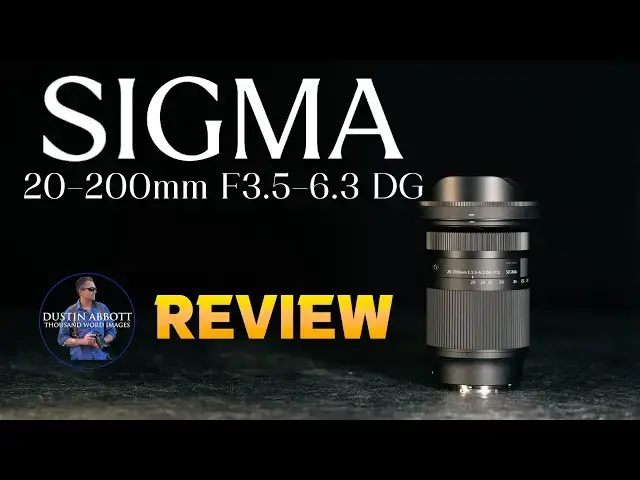
Sigma 20-200mm F3.5-6.3 DG Review | A Full Frame 10x Travelzoom
Sep 20, 2025

Photographer Dustin Abbott shares a deep dive review of the Sigma 20-200mm F3.5-6.3 DG | Contemporary all-in-one travel zoom. Is this now the one lens solution to buy? | Read the text review on dustinabbott.net: | Purchase the Sigma 20-200mm DG @ B&H Photo https://bhpho.to/42p6rT9 | Adorama https://howl.link/wzx5nhpoc91sz | Amazon https://amzn.to/42o2y19 | Camera Canada https://tidd.ly/4mrm3gj | Amazon Canada https://amzn.to/46uXw3S | Amazon UK https://amzn.to/4nEHco3 | Amazon Germany https://amzn.to/3I6USJL
Check out the DA Merch here: https://bit.ly/TWIMerch | Become a Patron: https://www.patreon.com/dustinabbott | On the Web: http://dustinabbott.net/ | Sign up for my Newsletter: http://bit.ly/1RHvUNp | Instagram: http://bit.ly/DLAinsta | Facebook: http://on.fb.me/1nuUUeH | Flickr: http://bit.ly/1UcnC0B | 500px: http://bit.ly/1Sy2Ngu Follow Craig @ https://www.instagram.com/craigstoffersen/
Want to support this channel? Use these affiliate links to shop at:
B&H Photo: http://bhpho.to/1TA0Xge
Adorama: https://howl.link/nt4zdz1goa7ql
Camera Canada: http://bit.ly/DLACameraCan
Sony Canada: https://www.thesonyshop.ca/?ref=abbott
Amazon: https://amzn.to/3HrY64d
Amazon Canada: https://amzn.to/3qG1p18
Ebay: http://bit.ly/DustineBay
Into the AM Clothing: https://bit.ly/intotheAMda and use code DUSTIN10 for 10% off
Fioboc Clothing: https://tinyurl.com/FiobocDA20 and us code DUSTIN20 for 20% off
Make a donation via Paypal: https://www.paypal.com/paypalme/dustinTWI
=============================
Table of Contents:
=============================
0:00 - Intro
02:31 - Disclosure
02:47 – Build and Handling
10:49 – Autofocus
13:07 – Video AF
14:55 – IQ Breakdown
22:58 – Conclusion
---------------------------------------------------------
Oben Tabletop Tripod shown in video: https://bhpho.to/3vL8YWy
My Cameras:
Purchase the Sony a7RV @ B&H Photo https://bhpho.to/3ZivNyZ | Adorama https://howl.me/cjNY1LU3gFH | Amazon https://amzn.to/3CRCDlq | Camera Canada https://shrsl.com/3vulf | Sony Canada https://bit.ly/BuyA7R5 | Amazon Canada https://amzn.to/3H8yeNH | Amazon UK https://amzn.to/3kbg5FM
Purchase the Sony Alpha 1 @ Camera Canada https://shrsl.com/2wdk2 | B&H Photo https://bhpho.to/3upRFZd | Adorama https://howl.me/cj2nQpjLBKW | Amazon https://amzn.to/3t1m8MD | Sony Canada https://bit.ly/BuySonyA1 |Amazon Canada https://amzn.to/3cVFrBB | Amazon UK https://amzn.to/2OtrjGe | Amazon Germany https://amzn.to/3d0GtMO | Ebay https://ebay.us/i371Vs
Canon EOS R5: B&H Photo https://bhpho.to/3iMH18x | Amazon https://amzn.to/33L3D53 | Camera Canada https://shrsl.com/2jqth
Purchase the Fujifilm X-H2 @ B&H Photo https://bhpho.to/3KAInTC | Adorama https://howl.me/cjyzbiO5lVp | Amazon https://amzn.to/41zMzKl | Camera Canada https://shrsl.com/4128o | Amazon Canada https://amzn.to/40gY4W7 | Amazon UK https://amzn.to/43Grn7a | Amazon Germany https://amzn.to/3L6hwjR
Get a discount off all Skylum Editing Software (Luminar, Aurora HDR, AirMagic) by using code DUSTINHDR at checkout: http://bit.ly/LuminarDLA
DISCLAIMER: This video and description contains affiliate links, which means that if you click on one of the product links, I’ll receive a small commission. As an Amazon Associate I earn from qualifying purchases.
Keywords: Sigma 20-200mm, 20-200mm Contemporary, 20-200 F3.5-6.3, 20-200, DG, Contemporary, Sigma 20-200 Review, Tamron 28-200mm, Review, #SIGMAEmount, #SIGMA #SIGMA20-200, #SIGMACONTEMPORARY, Full Frame, Review, Sony Alpha 1, Sony a7RV, Review, Hands On, Dustin Abbott, Real World, Comparison, Sharpness, Bokeh, Flare Resistance, Autofocus, Image Quality, Sample Images, Video, Photography, let the light in, weathersealing, #letthelightin, DA
Show More Show Less View Video Transcript
0:00
[Music]
0:11
Hi, I'm Dustin Abbott and I'm here today
0:13
to give you a review of the final of the
0:16
three trio of lenses that Sigma released
0:18
at the same time, including the 135
0:20
millimeter f1.4, the 35 millimeter f1.2
0:24
2 Mark I from their art series and then
0:26
this lens the new 20 to 200 millimeter
0:29
f3.5 to 6.3 DG from their contemporary
0:34
lineup. Now for about 5 years now I have
0:37
been promoting and using the Tamron 28
0:40
to 200 millimeter because of its unusual
0:42
blend for a travel or super zoom of
0:45
having you know pretty great image
0:46
quality and relatively good brightness
0:49
in a compact form. Now, this new Sigma
0:52
lens has one massive advantage over that
0:55
Tamron lens. It can go all the way to 20
0:58
millimeters, which as you can see from
0:59
this comparison is radically wider than
1:01
28 mm. That's going to be incredibly
1:03
useful in a great variety of situations.
1:06
However, it does have a distinctive
1:08
disadvantage relative to that Tamron as
1:10
well, and that it is not nearly as
1:12
bright. It starts at f3.5, yes, but as
1:14
we're going to see, it hits f4 by not
1:17
even 22 millimeters, and it's going to
1:20
reach its smallest maximum aperture by
1:24
only about 88 millimeters into the zoom
1:27
range. The Tamron by comparison has an
1:30
advantage most often anywhere between
1:32
one and even one and two/3 stops
1:35
depending on the area in the zoom range.
1:37
So, it's a much brighter lens. Now,
1:40
there are other strengths that Sigma
1:41
brings to bear that we're going to
1:42
detail as a part of this review. But if
1:45
you want to know the biggest strength
1:46
and biggest weakness relative to what's
1:48
available on the market right now, there
1:50
you have it right right there. And of
1:52
course, Tamron is already going to
1:53
counter punch in that sometime this
1:55
fall, they're going to release a new 25
1:57
to 200 millimeter lens. So, not quite as
2:00
wide, but it's going to be updated in
2:02
terms of build and features and the
2:03
optical design. So, it'll be interesting
2:05
to see how that shakes out when that
2:06
particular lens arrives. But right now,
2:08
for a,000 bucks, you can get a lens that
2:11
has an extraordinary 10 time zoom range
2:13
that is still very compact and easy to
2:16
bring along and starts at an incredibly
2:18
wide 20 mm. Something that we haven't
2:21
seen from any of these travel style
2:23
zooms on fullframe before. And so, we're
2:27
going to dive in today and see if this
2:28
new Sigma is worth investing in. Let's
2:31
take a look. So, in full disclosure,
2:33
this lens was loan to me by GenTech,
2:35
which is a distributor for Sigma
2:37
Products here in Canada. It will be
2:39
going to them after the end of this
2:40
review. As always, this is a completely
2:42
independent review. They have had no
2:44
input on my findings, nor will they see
2:46
this video before you do. So, we're
2:49
going to take a look at build handling
2:50
and features here. I will give you a bit
2:53
of an apology before we jump in. I am
2:55
fighting a cold right now and as you
2:57
have probably heard I'm a bit stuffed up
2:59
and so if my voice sounds a bit
3:01
annoying, I apologize for that. The
3:04
really standout feature of the new Sigma
3:06
lens is the fact that it has such a
3:09
useful zoom range, 10 time zoom zoom
3:12
range that allows you to go from this
3:14
and zoom all the way in to this at 200
3:18
millimeters. that's going to be so
3:20
useful in so many different situations,
3:22
giving you the ability to really frame
3:24
most settings in the way that you would
3:27
want. And as you can see here, comparing
3:29
to the 28 mm of the Tamron, it is a
3:33
radical difference. And so interior
3:34
spaces in particular, you're going to
3:36
really see a huge difference. Now, the
3:39
biggest weakness, as I detailed in the
3:41
intro, is the aperture here. Not only
3:44
does it have an overall slower maximum
3:47
aperture throughout the range f3.5 to f
3:50
f6.3
3:52
even that f3.5 is a little bit
3:54
deceptive. Yes, it is at 20 mm it is
3:58
f3.5 but by 21.8
4:01
mm less than 2 millime zooming in it
4:04
actually drops to f4. Uh by 28.8 mm it
4:09
is f4.5. I'll remind you the Tamron is
4:12
is f2.8 8. At that point at 38 mm, it
4:16
becomes f5. Tamron is still f2.8. 51 mm
4:20
it becomes f5.6. The Tamron is f3.5. And
4:24
then at only 83.3 mm, it becomes the
4:28
slowest maximum aperture of f6.3.
4:31
Whereas the Tamron is still at f4 and in
4:33
fact does not reach f5.6, its maximum
4:36
aperture until 150 mm. So, these lenses
4:40
are pretty radically different in their
4:42
light gathering potential, and that is
4:45
part of the price that Sigma uh has paid
4:47
for compressing a lot of additional
4:50
focal lengths into a really quite
4:53
compact lens. On top of that, this lens
4:56
does have no lens base stabilization.
4:58
So, that means you're going to be
4:59
relying upon in camera image
5:01
stabilization. And I found that as is
5:04
often the case particularly with Sony
5:05
cameras, when you get into telephoto uh
5:08
spaces, they're only so so in my opinion
5:11
when it comes to telephoto. I find that
5:13
both Fuji and Nikon, Canon, all of them
5:17
tend to have a little bit better
5:18
stabilization of telephoto focal lengths
5:20
in camera, at least in my opinion. And
5:23
so I did run into some situations where
5:25
I got a little bit of motion blur what I
5:27
where I didn't expect some. And that has
5:29
to do with a lack of in camera
5:31
stabilization. Also, that slow maximum
5:33
aperture means that you're going to have
5:34
to really keep an eye on your shutter
5:36
speed because it's pretty easy to get
5:39
into a pretty low shutter speed
5:40
situation if you're shooting in AV mode,
5:43
for example, and not paying attention to
5:44
that. Now, as far as the feature set, we
5:47
do have an AFMF switch, which is
5:49
something that was lacking on the Tamron
5:51
lens. It does have that lock here to
5:54
keep from any kind of zoom creep taking
5:56
place. Uh, as far as anything else,
5:59
there are no other buttons or switches
6:01
here. No aperture ring, nothing like
6:04
that. I will note that the design is
6:06
completely reversed in every way from
6:08
the Tamron. Instead of having the manual
6:10
focus ring first, we've got the zoom
6:12
ring first. It zooms in the opposite
6:14
direction. It focuses in the opposite
6:17
direction. And uh, and so just very,
6:19
very different. So, if you're going back
6:21
and forth, it can be a little bit
6:22
confusing. Ergonomically, you're
6:23
reaching for those things. Sigma has
6:26
done an excellent job in keeping this
6:27
lens compact despite that huge zoom
6:30
range. It is only 77.2 millimeters in
6:34
diameter or 3 in and 115.5
6:38
millime or 4.5 in in length. Now that's
6:41
retracted. Obviously, it zooms out a
6:44
considerable length and so that's going
6:46
to add about 75 millimeters to the
6:48
overall length. But for travel, it
6:50
remains really nice and compact. Now,
6:53
particularly when I first got the lens,
6:54
it was stiff, particularly in the the
6:58
wide part of the zoom range, and it
7:00
still has a little bit heavier weight in
7:02
that zone than what I would like, but it
7:04
does feel like it is getting smoother
7:06
overall. I still do find it because it's
7:08
a little bit heavy on that end, I find
7:10
it a little bit hard to smoothly zoom
7:13
it. And the Tamron is just a little bit
7:16
more consistent, but I've also been
7:18
using this Tamron for 5 years, so it's
7:20
thoroughly broken in. The Sigma might do
7:22
better after it is more um broken in.
7:24
But I did note and I see some other
7:26
reviewers as well have noted that for
7:28
them also there was some stiffness in
7:30
that. So that does mitigate the zooming
7:32
potential particularly during video. Up
7:36
front we have 72mm filter threads and
7:39
that's a little bit less common but uh
7:42
you know it's it's shared with a number
7:43
of other lenses from Sigma and other
7:45
brands as well. The weight here is 550
7:48
gram. You can feel that, but it's far
7:51
from being so heavy that you can't carry
7:53
it around for a good part of the day. I
7:55
think it's a a great weight for all that
7:57
you're getting in this particular lens.
8:00
It also has a pretty thorough weather
8:01
sealing, which is great. That's new for
8:04
the contemporary lineup from Sigma. And
8:06
so, you can see from this diagram, we've
8:08
got seven seal points starting with a
8:10
gasket here at the lens mount and then
8:12
working up to some coating on the front
8:14
element uh in addition. So, nice things
8:17
there. Inside we have got nine rounded
8:20
aperture blades and so that does help to
8:22
keep a circular shape and a decent
8:23
looking sunst star when it is stopped
8:25
down. Now the manual focus ring is right
8:28
up near the front. It doesn't have a lot
8:30
of damping. So it's not as nice feeling
8:32
as the two Art series lenses that I just
8:34
got through reviewing, but it is nice
8:36
and responsive because of the HLA focus
8:39
motor. And I will also note that these
8:41
Sigma lenses all have fulltime manual
8:43
override, which a lot of lenses don't.
8:45
And so I find that to be very very
8:47
useful. So and appreciate that. Now
8:50
because this lens goes so wide, it's got
8:52
a shallower than typical lens hood for a
8:55
a lens like this. And that is at 20 mm.
8:58
Obviously it couldn't have a very deep
9:00
hood because it would start to provide
9:01
some additional shading um in terms of
9:03
vignette. And so it's a shallow hood,
9:06
but fortunately flare resistance is
9:07
good. They kind of I think offset that
9:09
through the optical design. And so no
9:12
major problem there. We have a minimum
9:15
focus distance in this lens and it
9:17
really really v varies and so as little
9:19
as uh 16.5 cm and it will grow up to uh
9:24
much longer I think even around 60 u uh
9:28
centimeters on the long end. But what's
9:32
interesting here is that you're going to
9:33
get your maximum magnification actually
9:35
between 28 and 85 millimeters. And while
9:38
the minimum focus distance varies, the
9:40
amount of magnification you can get does
9:43
not. You can get all the way up to a 050
9:46
times magnification or a 1:2
9:48
magnification ratio. That is hugely
9:51
useful and I find it particularly useful
9:53
at the 85 mm end where I think the
9:56
minimum focus distance is something like
9:58
26 cm. So, you know, useful enough
10:02
working distance, but you're able to
10:03
really blur out backgrounds. It's quite
10:06
useful and so I really appreciate that
10:08
aspect of the lens design as well.
10:10
Finally, the cost is basically $1,000,
10:14
$999,
10:16
$1,300 here in Canada. And so, it is
10:19
considerably more expensive than the
10:21
Tamron, which is about $700. But, of
10:24
course, the Tamron's been out for 5
10:25
years. And Tamron, as mentioned in the
10:27
intro, does have a new 25 to 200
10:30
millimeter G2 lens. We don't yet know
10:32
what the price of that lens is going to
10:34
be, but I suspect it is going to be
10:35
closer to the Sigma. I wouldn't be
10:37
surprised if it comes in at like an
10:39
$8.99 price point. And so, um, it's, you
10:42
know, it is on the expensive end for a
10:45
lens like this, but it also is doing
10:47
some things that no lens like this has
10:49
done before. So, let's talk autofocus.
10:52
Like most of Sigma's recent lenses, the
10:55
20 to 200 millimeter uses their HLA
10:58
focus motor, which stands for high-speed
11:00
linear actuator. It's their new
11:02
high-powered focus system that gives you
11:04
quicker, quieter, and more accurate
11:08
autofocus results. It's got more thrust
11:10
than their previous SDM focus motors and
11:13
is just generally better all around.
11:15
Now, some people think with these super
11:18
zoom lenses because they have a long
11:20
focal length at the end that they're
11:21
like sports lenses. That's not really
11:24
true. And some people will ask me
11:27
questions pretty often actually about
11:29
say comparing a 70 to 300 lens with a 16
11:33
to 300 mm lens. Well, the latter lens is
11:37
just not going to be the same. It's not
11:38
really a dedicated sports lens or even
11:40
telephoto lens. It's a general purpose
11:42
lens. That being said, focus here is
11:45
quick enough that I think you can use it
11:48
in a pretty wide variety of
11:49
applications. What I have found with a
11:51
lot of these zoom lenses in the past is
11:53
that while focus speed was fine on the
11:54
wide end, it would slow way down on the
11:57
telephoto end. With this new HLA focus
11:59
motor, that's not the case. You can see
12:01
that autofocus really is just as snappy
12:03
at 200 millimeters as it is at 20
12:05
millimeters. And so that does mean that
12:07
you can use it in a wider variety of
12:09
situations. I used it for not really for
12:12
sports, but I did use it capturing golf
12:14
swings and throwing horseshoes and
12:17
cornhole and things at some various
12:20
events that I was a part of. And it
12:22
worked fine for all of that. Focus was
12:24
well fast enough to keep up. While I
12:27
didn't try to do any kind of actual
12:28
birding, uh, if I was trying to just
12:30
take shots of of birds flying off of a
12:33
telephone wire early in the morning,
12:35
obviously no problem picking them up.
12:37
So, I would say that for most of the
12:39
things that people actually use while
12:41
traveling, there's going to be plenty of
12:42
speed here. Because of that slower
12:44
maximum aperture, it's not going to be
12:46
quite as good indoors in a variety of
12:49
situations. You're going to have to get
12:50
that ISO way up to accommodate that slow
12:53
maximum aperture. But, if you're
12:55
shooting outdoors while you're traveling
12:57
and just trying to capture events
12:58
moving, I think focus speed is going to
13:00
be perfectly adequate for those kinds of
13:02
situations. So as far as the focus motor
13:04
itself, that component of the lens,
13:07
pretty fantastic. So how about video AF?
13:10
Again, in this instance, that HLA focus
13:13
motor really serves the this lens very
13:15
well. Another thing that serves it well
13:17
is a minimal amount of focus breathing.
13:20
And so here I had things set around 40
13:22
to 50 millimeters for this particular
13:24
shot for my focus pool test. And you can
13:27
see that focus breathing is essentially
13:29
non-existent here. It does an
13:30
exceptional job there. And that remains
13:32
pretty true even on the telephoto end.
13:34
So great job Sigma in controlling that.
13:37
At the same time I on the negative side
13:40
this lens is far from being par focal
13:42
and so if you are zooming while videoing
13:44
you will have moments of lag where a
13:47
focus needs to resume once again. I also
13:49
found that with my copy as mentioned
13:51
previously it was a little bit sticky
13:54
particularly at the early stages and so
13:56
I wasn't able to get really smooth
13:58
zooms. Anyway, it did seem to improve
14:01
over the course of several weeks of use.
14:03
However, when it came to my hand test,
14:06
transitions were basically perfect,
14:08
transitioning from my hand to my eye and
14:10
back and forth with no issues at all
14:12
there. Likewise, in other static shots,
14:15
focus was fine. I've been shooting all
14:17
of the outdoor segments on the lens and
14:19
so, as you can see, it has no problem in
14:21
keeping focus on myself and on my eye as
14:24
I'm shooting these segments. I will
14:27
note, however, that when I tried to zoom
14:29
in close, that at close focus distances,
14:31
it wasn't quite as good. And so, I
14:34
wasn't able to hold focus quite as well.
14:36
So, you will want to watch out for that
14:38
as you're kind of going in. Focus isn't
14:40
naturally going to transition into that
14:42
closest zone. So, just watch out for
14:44
that. In general, however, I would say
14:46
that video focus has been excellent. And
14:48
again, for a travel lens, I think you're
14:50
going to be really delighted with the
14:52
options you have available to you for
14:54
capturing video content. All right,
14:56
let's talk optics. This is a really
14:59
complex optical design, as you might
15:01
expect, with 18 elements in 14 groups.
15:04
That includes four aspherical elements,
15:06
one FLD element, and three SLD elements.
15:10
The MTF chart is interesting because in
15:12
both uh 20 millimeter and 200
15:15
millimeter, you have a really really
15:17
strong meridian line, which is the solid
15:21
line. You can see it's a really strong
15:22
performance. But the sagittal axis,
15:25
which is the dotted line, is kind of
15:27
shaky. And so that means that there will
15:29
be some aigmatism and at times contrast
15:32
won't be as exceptional as what you
15:34
might want. But what I found is that I
15:36
saw mostly strong real world
15:38
performance. There were some instances
15:40
where I felt like contrast wasn't
15:42
exceptional, but others where it was
15:43
good. Let me just say that it's probably
15:45
a matter of this lens relying more on
15:47
the contrast of the situation itself.
15:50
And I found that in lower contrast
15:52
situations, it didn't quite work as
15:54
well. You know, there's some lenses that
15:56
they're able to produce the magic by
15:58
themselves. These type of lenses, that
16:01
is not their strength. Their strength is
16:03
being able to have great flexibility and
16:06
so you have them along and so that you
16:07
can capture the magical moments, but
16:09
don't expect the optics to do the heavy
16:11
lifting for you. And I think if you have
16:13
that kind of mentality, you'll be
16:15
happier with lenses like this. In
16:17
general though, I thought that the
16:19
performance was fairly good. Now, there
16:21
are some serious compromises that went
16:23
into this lens. Going to 20 millimeters
16:26
is something that's never been done
16:27
before, but as we're going to see right
16:29
now, maybe there's a reason why it
16:31
hasn't been done before. To get there,
16:33
the engineers had to compromise to have
16:36
an incredible amount of barrel
16:37
distortion. It, as you can see, without
16:40
correction, it has just massive amounts
16:42
of barrel distortion and vignette. at 20
16:45
millimeters. It required a plus 39 for
16:47
me to correct it uh for the the barrel
16:50
distortion, but you can see it's a
16:52
really strong mustache pattern. So that
16:53
just creates lots of pin cushion
16:55
distortion at the edges. And likewise,
16:58
when it comes to vignette, I had to max
17:00
out the slider. So plus 100 in
17:02
Lightroom, and I still could have gone a
17:04
little bit more. And so there are some
17:05
major optical compromises. And I found
17:07
even the correction profile, there's
17:09
still a bit of barrel distortion and a
17:11
bit of vignette left over even after
17:13
applying that profile. So it's, you
17:16
know, optically it's really relying on
17:17
the software to get that done. Much less
17:20
of an issue as you begin to zoom in.
17:22
However, it will pretty quickly invert
17:24
to a pin cushion style distortion and it
17:27
kind of remains consistent from 50
17:29
millimeters. I tested at 50 millimeters,
17:31
135 millimeters, and then at 200
17:33
millimeters, and I got pretty much the
17:35
same results all along there. So,
17:37
anywhere between a minus 10 and a minus1
17:40
to correct a bit of pin cushion
17:41
distortion, but nice and linear,
17:43
corrects just fine. And vignette is also
17:46
quite mild, requiring uh in the low
17:48
plus4s to correct for. And so, uh no big
17:52
deal there. And so really it's on that
17:54
very wide end that the compromises were
17:56
made uh by the engineers to get us to 20
18:00
mm. And so it comes at a cost.
18:03
In terms of longitudinal style chromatic
18:05
aberrations, I tested at multiple focal
18:07
lengths. I didn't really see anything
18:09
and so it comes off well in that.
18:11
Likewise in some really high contrast
18:13
images I took, I didn't see a lot of
18:15
fringing. So I was impressed by that.
18:17
And also there is a minimal amount of
18:19
lateral style chromatic aberrations
18:21
which is also very good. Now when it
18:23
comes to testing the sharpness sides of
18:26
things, I found that on my high
18:28
resolution A7R5, so that's 61 megapixels
18:32
and I show you the crops at 200%
18:33
magnification.
18:35
There's definitely uh some give and take
18:38
at the 20mimeter end. The center looks
18:40
fantastic. The mid-frame looks very
18:42
good, but the corners, particularly the
18:44
far corners, are quite soft. What's
18:47
more, I found that as I attempted to
18:49
stop down, even at f8, which I would
18:52
consider probably the best as it gets,
18:55
it's still fairly soft in the extreme
18:57
corners, I found that to be true also in
18:59
real world shots, that the corners never
19:01
got super sharp. At the same time, I
19:03
found that images were good. But as long
19:06
as I wasn't looking too hard at those
19:07
extreme corners, I was quite happy with
19:09
the results that I could get. Now, to be
19:11
fair, the Sigma lens is never as good as
19:14
the Tamron on the wide end. Tamron
19:17
obviously didn't go nearly as wide. So,
19:19
at 28 mm, it's strong, and the Sigma
19:23
lens all the way through 28 mm is never
19:26
quite as strong, particularly in the
19:28
corners. And so, again, it's it's that
19:30
compromise. you know, you can shoot
19:31
considerably wider, but you're not
19:33
getting quite as good of optical
19:35
performance. Now, defraction is going to
19:38
come after uh at starting by f11 and
19:41
getting stronger at the minimum
19:43
apertures. Minimum aperture varies as
19:45
well as the maximum aperture. And so at
19:48
20 mm, minimum aperture is f22. By the
19:51
time you get to uh around 85 88 mm, the
19:57
minimum aperture is going to become f40.
20:00
And so uh at any of those that is going
20:03
to look quite soft due to the effects of
20:05
defraction. So I would avoid those
20:07
minimum apertures were at all possible.
20:10
As I move through on throughout the zoom
20:11
range, what I found is at 50 mm it isn't
20:14
quite as sharp in the center of the
20:16
frame, but it's more consistent across
20:18
the frame. The mid-frame and the corners
20:19
in particular definitely look stronger
20:22
and have more potential for sharpening
20:24
up. uh real world images at you know
20:27
anywhere between 35 and let's say 75
20:30
millimeters all looked really really
20:32
good. No problems there. At 135 mm I
20:35
noted a little bit of drop in contrast
20:38
just a little bit less potential in
20:40
general but I did note by 200 mm that
20:43
there was a little bit more contrast
20:44
available there. However, I didn't
20:46
notice a lot of improvement when
20:48
stopping down, which stands to reason
20:50
because the lens is already at f6.3
20:53
um on throughout basically all the
20:55
telephoto range, which means that you
20:57
can only stop down 2/3 of a stop and
20:59
you're already at f8. And beyond that,
21:01
you start to see some effects of
21:03
defraction. So, there's just less
21:04
potential on these slower variable
21:07
aperture zooms uh for them to get, you
21:10
know, a lot of additional sharpness from
21:12
stopping down.
21:14
As I noted, the real world results were
21:16
a little bit situational. Sometimes I
21:18
found that, you know, the images look
21:20
really, really crisp and then other
21:22
times where there was less contrast
21:24
there. There just wasn't optics to make
21:26
things pop. In those situations, the
21:28
bokeh quality is going to vary somewhat.
21:30
Now, because you can get close and you
21:32
have a long focal length, you can
21:34
obliterate backgrounds and really,
21:36
really blur them out in some situations.
21:39
However, where the background is
21:40
visible, you can see from this crop from
21:43
specular highlights that they're kind of
21:44
busy. There's some outlining and some
21:46
junk inside them. And so that just means
21:48
that in situations where you have a less
21:51
defocused background, things are going
21:53
to have a little bit more outlining and
21:55
be a little bit more apparent. You know,
21:58
that's true of all these super zoom
21:59
lenses. Like, you can only engineer so
22:02
much of that. It's not going to have
22:03
primeike performance at any focal
22:05
length. I did find the colors looked
22:07
good in all the shots. I was generally
22:09
happy with the overall appearance of
22:12
photos I was able to take. I also found
22:14
that the lens exhibited good flare
22:16
resistance despite having that shallow
22:17
hood. Optically, it held up really well.
22:19
And so, a lot of my back lit images, I
22:22
didn't notice any negative effects from
22:24
the sun. So, kudos to Sigma on that
22:26
front. So all told, there are
22:29
compromises here, which is true of all
22:30
of these, you know, travel zooms, you
22:34
know, super zoom lenses. One of the
22:36
reasons why I've been touting the Tamron
22:38
is that it had fewer of those than most
22:41
lenses. Now, obviously, it doesn't have
22:44
nearly as exciting a zoom range by
22:46
comparison, but it does manage to have a
22:48
little bit less of optical flaws
22:50
relative to the Sigma. At the same time,
22:52
the Sigma does a lot of stuff really,
22:53
really well. And I think that despite
22:56
its shortcomings, it still is an
22:58
interesting lens optically at the end of
22:59
the day. So my conclusion is that in
23:02
many ways the greatest strengths of this
23:04
lens are also the sources of its
23:06
greatest weakness. The fact that it goes
23:08
to 20 mm gives you so many additional
23:11
options when it comes to framing,
23:13
particularly in interior spaces.
23:15
Unfortunately, the slow maximum aperture
23:18
also means that you're going to have to
23:20
jack that ISO up even more in those
23:23
interior spaces to accommodate. On top
23:26
of that, I also noted that a lot of the
23:28
strongest optical flaws are going to be
23:30
found at 20 mm where Sigma's engineers
23:33
had to make the greatest compromises for
23:35
that to happen. So, by far you've got
23:37
the heaviest amount of vignette and
23:38
distortion there and the corners aren't
23:40
as sharp as what we see across the rest
23:42
of the frame. In many ways, however,
23:44
this lens is amazingly competent and it
23:48
offers great flare resistance. It offers
23:50
very good colors and of course that
23:53
half-life size magnification level opens
23:56
up even more potential options for
23:59
getting images. The fact that we're
24:01
relying on in camera stabilization means
24:03
that there will be some situations that
24:05
maybe it's not as effective as a lens
24:08
based stabilization.
24:09
At the same time, however, I can
24:11
understand why Sigma did what they did
24:13
because it allowed them to keep the lens
24:15
smaller, lighter, and maybe a little bit
24:18
cheaper as well. At the end of the day,
24:20
however, $1,000 is not particularly
24:22
cheap, particularly when you do have the
24:24
already strong Tamron 28 to 200
24:27
millimeter available for $699 or about
24:30
$700.
24:32
At the same time, however, 28 mm is far
24:35
from 20 mm. And if your primary
24:38
objection to the Tamron lens has been
24:40
the fact that it just doesn't go wide
24:42
enough, the Sigma is the perfect
24:45
solution for all of that. So, I do think
24:47
that this is going to be a lens that is
24:48
going to not only end up in a lot of
24:50
people's bags, but also is going to be a
24:52
very useful option if you're looking for
24:55
a single lens solution for things like
24:57
travel. Having an all-in-one solution
24:59
like this with the 10x zoom zoom ratio
25:02
means that you don't have to worry about
25:03
carrying additional lenses. you don't
25:05
have to worry about changing lenses. And
25:07
the fact that it does have pretty good
25:09
weather sealing also means that if
25:10
you're shooting in more moist or dusty
25:13
environments, it just alleviates even
25:15
more of those concerns. So, this is a
25:17
lens I think that is going to be really
25:18
useful for those that are looking for
25:20
something just like this. Thanks for
25:22
watching. Have a great day and let the
25:24
light in.
25:26
[Music]
Science