Up next in 10

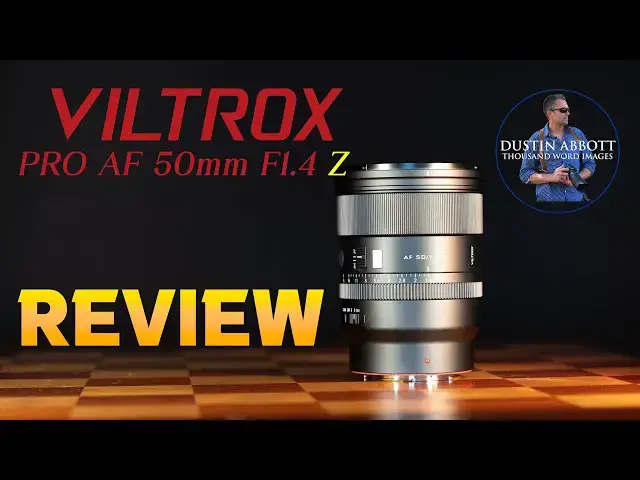
Viltrox Pro AF 50mm F1.4 Z-Mount Review | The F1.4 S-Line?
Feb 10, 2026

Photographer Dustin Abbott shares a deep dive review of Viltrox's newest lens for Nikon Z-mount - the Pro AF 50mm F1.4. Is this the F1.4 "S-Line" we've wanted? | Read the Text Review: https://tinyurl.com/Pro50Zda | Purchase the Viltrox Pro AF 50mm F1.4 @ Viltrox https://tinyurl.com/BuyPRO50Z (use code "DUSTINABBOTT" for 5% off) | B&H Photo https://bhpho.to/3Znjpzd | Adorama https://prf.hn/l/Qq3x3az/ | Amazon https://amzn.to/3M2ZNNL | Amazon Canada https://amzn.to/4qZOEMK | Amazon UK https://amzn.to/4ktZVm7 | Amazon Germany https://amzn.to/4ci7B8Q
Check out the DA Merch here: https://bit.ly/TWIMerch | Become a Patron: https://www.patreon.com/dustinabbott | On the Web: http://dustinabbott.net/ | Sign up for my Newsletter: http://bit.ly/1RHvUNp | Instagram: http://bit.ly/DLAinsta | Facebook: http://on.fb.me/1nuUUeH | Flickr: http://bit.ly/1UcnC0B | 500px: http://bit.ly/1Sy2Ngu Follow Craig @ https://www.instagram.com/craigstoffersen/
Want to support this channel? Use these affiliate links to shop at:
B&H Photo: http://bhpho.to/1TA0Xge
Adorama: https://tinyurl.com/AdoramaDA
Camera Canada: http://bit.ly/DLACameraCan
Sony Canada: https://www.thesonyshop.ca/?ref=abbott
Amazon: https://amzn.to/3HrY64d
Amazon Canada: https://amzn.to/3qG1p18
Ebay: http://bit.ly/DustineBay
Into the AM Clothing: https://bit.ly/intotheAMda and use code DUSTIN10 for 10% off
Fioboc Clothing: https://tinyurl.com/FiobocDA20 and us code DUSTIN20 for 20% off
Make a donation via Paypal: https://www.paypal.com/paypalme/dustinTWI
=============================
Table of Contents:
=============================
0:00 - Intro and Concept
2:09 - Disclosure
2:32 - Build and Design
7:21 - Autofocus
10:00 - Video AF
11:56 - Optical Performance
21:14 - Conclusion and Pricing
---------------------------------------------------------
Oben Tabletop Tripod shown in video: https://bhpho.to/3vL8YWy
My Cameras:
Purchase the Sony a7RV @ B&H Photo https://bhpho.to/3ZivNyZ | Adorama https://howl.me/cjNY1LU3gFH | Amazon https://amzn.to/3CRCDlq | Camera Canada https://shrsl.com/3vulf | Sony Canada https://bit.ly/BuyA7R5 | Amazon Canada https://amzn.to/3H8yeNH | Amazon UK https://amzn.to/3kbg5FM
Purchase the Sony Alpha 1 @ Camera Canada https://shrsl.com/2wdk2 | B&H Photo https://bhpho.to/3upRFZd | Adorama https://howl.me/cj2nQpjLBKW | Amazon https://amzn.to/3t1m8MD | Sony Canada https://bit.ly/BuySonyA1 |Amazon Canada https://amzn.to/3cVFrBB | Amazon UK https://amzn.to/2OtrjGe | Amazon Germany https://amzn.to/3d0GtMO | Ebay https://ebay.us/i371Vs
Canon EOS R5: B&H Photo https://bhpho.to/3iMH18x | Amazon https://amzn.to/33L3D53 | Camera Canada https://shrsl.com/2jqth
Purchase the Fujifilm X-H2 @ B&H Photo https://bhpho.to/3KAInTC | Adorama https://howl.me/cjyzbiO5lVp | Amazon https://amzn.to/41zMzKl | Camera Canada https://shrsl.com/4128o | Amazon Canada https://amzn.to/40gY4W7 | Amazon UK https://amzn.to/43Grn7a | Amazon Germany https://amzn.to/3L6hwjR
Purchase the Nikon Z8 @ B&H Photo https://bhpho.to/3yaMuDB | Adorama https://howl.me/cmcvUHymQIt | Amazon https://amzn.to/3UQjfi0 | Camera Canada https://shrsl.com/4ipga | Amazon Canada https://amzn.to/3UtFSHL | Amazon UK https://amzn.to/4bsf1Tn | Amazon Germany https://amzn.to/4drP4oN
Get a discount off all Skylum Editing Software (Luminar, Aurora HDR, AirMagic) by using code DUSTINHDR at checkout: http://bit.ly/LuminarDLA
DISCLAIMER: This video and description contains affiliate links, which means that if you click on one of the product links, I’ll receive a small commission. As an Amazon Associate I earn from qualifying purchases.
Keywords: Viltrox AF 50mm F1.4 Pro Z, Viltrox AF, Pro, Viltrox Pro, #PRO, #PRO50, #PRO50Z #explorebeyond, Viltrox 50mm, Normal, Full Frame, F1.4, f/1.4, VCM, HyperVCM, Viltrox Pro 50mm F1.4 Z, Viltrox PRO 50mm Review, Viltrox AF 50mm F1.4 Z Review, Nikon Z8, Z5II, Z6III, ZF, Review, Hands On, Dustin Abbott, Real World, Comparison, Sharpness, Bokeh, Flare Resistance, Autofocus, Image Quality, Sample Images, Video, Photography, let the light in, weathersealing, #letthelightin, DA
Show More Show Less View Video Transcript
0:00
[music and bell]
0:10
Hi, I'm Dustin [music] Abbott and I'm
0:12
here today to give you my review of the
0:14
Viltrox Pro AF 50mm F1.4
0:18
this time for Nikon Zmount. Now, I
0:21
understand that there's been some
0:22
controversy over the last month as it
0:24
became public that Nikon and Viltrox
0:26
were involved in the lawsuit that the
0:29
details have not been fully disclosed,
0:30
but it seems to be over licensing on the
0:34
Zmount platform. However, a piece of
0:36
good news is that Viltrox told Pedapixel
0:39
that they are proceeding as planned with
0:42
their road map on Nikon and so they
0:45
clearly have some confidence that
0:47
they're going to be able to resolve this
0:49
in a way that is satisfactory for us.
0:51
Namely, that we continue to see Viltrox
0:54
products here on Nikon. And I am really
0:56
delighted to see the ProAF 50mm f1.4
0:59
come to Zmount for a number of reasons.
1:03
One of the primary ones being because
1:05
while we have an excellent 50mimeter
1:08
f1.8 and a good if flawed 50mimeter
1:12
f1.4, what we don't have is a truly
1:15
premium 50mm f1.4 option, the S-line
1:19
equivalent here on Nikon. I think that
1:22
Viltrox is going to very aly fill that
1:24
gap. And while this is a big and heavy
1:27
lens, it is beautifully made. It has
1:30
beautiful optics and frankly I feel like
1:33
I enjoy it even more on Nikon than what
1:36
I do on Sony E-mount. I did re review
1:40
the Sony E-mount version last fall and
1:42
while I really like that lens, there is
1:44
the fantastic Sony 50mm f1.4 G Master
1:48
that I already own that does a lot of
1:50
what this lens does and does a few
1:52
things a little bit better. Whereas
1:54
there isn't really that same lens
1:57
equivalent here on Nikon. And so this is
1:59
a beautiful fit here and we're going to
2:01
dive in today and explore the ways where
2:04
it really suits the Nikon Zmount
2:07
platform and how well it works. Now
2:09
before I do that, I do want to start by
2:11
giving you a disclaimer that this lens
2:14
was sent to me by Viltrox for
2:16
evaluation. As always, however, they
2:18
have had zero input in my review
2:20
process. My findings are my own. This is
2:23
completely independent and they will not
2:24
see this video before you, the public,
2:27
sees it. That aside, let's jump in and
2:29
let's take a look at the build and
2:31
handling for the lens today. All right,
2:33
let's take a look at the build and the
2:35
design here. Now, this is obviously the
2:37
same lens as the Sony E-mount version,
2:39
but there always are some subtle
2:41
differences when it comes to Zmount.
2:43
You'll notice that in this area of the
2:45
barrel that it is it is thicker through
2:47
this section and that is to accommodate
2:49
the larger Zmount and then also the lens
2:51
up being 2 millimeters longer and that
2:54
is due to the difference in the flange
2:56
on the Zmount that requires the optical
2:58
path to be just a little bit further
3:00
out. This is obviously a really
3:02
beautifully made lens. It's made out of
3:04
aviation grade magnesium aluminum alloy.
3:07
It feels and looks very upscale. You put
3:10
it next to the Nicor 50mm f1.4 for and
3:13
frankly the nicor feels comes off
3:15
feeling a little bit like a a plastic
3:17
fantastic. Now the downside of that is
3:20
that this is a very big heavy lens. It
3:23
is 84.5 mm in diameter or 3.3 in. It's
3:28
113 mm in length or 4.38 in. So 2 mm
3:32
longer than what the E-mount version is,
3:35
which was already a big lens. By
3:37
contrast, the Nicor is 76.2 2 mm by just
3:42
88.9
3:44
mm. And so we're talking about about 25
3:46
mm longer for the Viltrox lens. That's
3:50
obviously a significant difference. And
3:52
so that also comes out in the weight.
3:55
This weighs in at 830 g, which by the
3:57
way is 30 g heavier than the E-mount
4:00
version because of those differences in
4:02
the overall build and size. So that's
4:05
29.2 O. And the Nicor weighs in at 422
4:11
grams. So we are talking about more than
4:13
400 grams heavier, nearly twice the
4:16
weight as the Nicor lens. So that
4:18
obviously could be a very serious
4:19
deciding factor for you if you're
4:21
debating between these two lenses that
4:23
aren't all that different in price. The
4:25
Nicor lens retails for roughly $500. The
4:29
Viltrox is going to set you back
4:31
something more like $550, particularly
4:34
if you use the discounts available. Now
4:36
up front we have a 77 mm filter thread
4:39
which is pretty common. Does come with
4:41
the lens hood and a pouch. There is no
4:44
lock on this and it does you know
4:46
bayonet on smoothly but I would like it
4:49
to click in place a little bit tighter
4:51
so it' be just a little bit harder to
4:54
loosen that and pull it away. Now in
4:56
terms of other features we do have a
4:59
traditional aperture design and so you
5:01
can have clicks with one/ird stop to
5:03
tense like this. You do have the option
5:05
to de-click the aperture and so you can
5:07
smoothly rack throughout. What we don't
5:09
have is an iris lock though. We do have
5:11
a nice firm detent between F-16 and
5:14
automatic. I think you're going to be
5:15
able to feel that. There's enough
5:17
resistance there to keep you from just
5:18
slipping into that mode. In the Dclick
5:21
mode, we do have the ability to do
5:22
aperture racks nice and smoothly. I
5:25
actually prefer this to just the
5:26
customizable control ring. It's more
5:28
versatile. It gives you real feedback.
5:30
You can actually see the markings. It's
5:32
I just prefer it. We also have a
5:35
customer function button. We have an
5:36
AFMF switch here on the side. So,
5:39
obviously a much more fully featured
5:41
lens than what the uh Nicor lens is.
5:44
Here at the rear of the mount, we can
5:45
see the weather sealing gasket. And so,
5:47
this is a thoroughly weather sealed
5:49
lens. I haven't seen a diagram for this,
5:51
but typically these lenses have around
5:54
10 different seal points along with a
5:55
special coating up front to prevent
5:58
fingerprints or moisture. You'll also
6:00
see here the USB C port that is standard
6:03
for Vtrox lenses makes them very easy to
6:05
do firmware updates on. Though the
6:07
difference between this lens and like
6:09
the lab series on the lab series lenses,
6:11
you can also do a bit of customization
6:12
which you cannot do here. No built-in uh
6:15
lens based VR vi vibration reduction,
6:18
but that's very common for lenses in
6:20
this class. I've never seen otherwise.
6:22
This lens does have floating elements.
6:25
And so if you have it off the lens like
6:26
this and you rock it back and forth, you
6:28
will feel something moving around in
6:30
there, that is not your lens being
6:32
broken, but it is floating elements.
6:35
It's by design. If the lens is powered
6:37
on like this, it doesn't clunk anymore
6:39
because those elements are energized.
6:41
The purpose of that is that it allows
6:43
you to get better performance up close.
6:45
And so we can focus down to 45 cm and it
6:50
gives you only an average 0.14 times,
6:53
excuse me, 1.45 times magnification,
6:56
which falls behind the 0.17 times of the
6:59
Nicor lens. Though the Nicor lens is
7:02
much, much softer and less clean up
7:05
close. Those floating elements do help
7:07
us to get a much better performance even
7:09
at f1.4 at the minimum focus distance. A
7:12
very nicely built lens. It is not small.
7:15
It is not light, but if you can tolerate
7:17
that, it is beautiful and it has a
7:20
robust feature set. So, let's talk
7:22
autofocus. I'm outside filming once
7:24
again. As you can see, there's still
7:27
plenty of snow. Good news today, it is
7:29
not snowing. And for once, I'm out here
7:31
filming, talking to you, and I'm not
7:33
having snow blowing into my eyes. The
7:35
bad news, well, it's minus 25 this
7:38
morning, and so um not so great. So,
7:41
let's talk autofocus here. Viltrox is
7:44
using utilizing their HyperVCM focus
7:46
motor once again as they did in the Sony
7:48
E-mount version. Now, in the Lab series
7:51
lenses, it's where we're getting
7:52
multiple HyperVCM mo motors used in
7:55
tandem that provide, you know, kind of
7:57
the upper end thrust that the Lab series
7:59
have been known for thus far. Here on
8:01
the Pro series, we're getting typically
8:03
a single HyperVCM focus motor. However,
8:06
voice coil motors are great and there's
8:07
a reason why Nikon is starting to move
8:10
to some of them in their own premium
8:12
lenses at this point because they are
8:14
it's it's a sophisticated focus system
8:16
that is smooth. It's quiet and in this
8:19
case it is it is fast though not again
8:22
blazingly fast. As you can see here in
8:24
my formal test, autofocus moves back and
8:26
forth with mostly good confidence and
8:29
with good speed. It's just not instant
8:31
in the way that the the fastest lenses
8:34
are, particularly in the outdoor
8:35
segment. However, you can see it zipping
8:37
back and forth with really good
8:38
confidence. I did find that I had very
8:41
good focus accuracy throughout my review
8:44
period. And that was true whatever
8:46
subject I was moving or shooting,
8:48
whether it was shots of the cats as they
8:50
were moving around, um, always just just
8:53
focused really, really perfectly. And
8:54
you can see in this shot with, you know,
8:56
kind of some bright window light coming
8:57
through that that focus is perfect and
8:59
that detail at f1.4 is just amazing. And
9:02
a portrait series um of me because again
9:06
minus 25 and nobody wants portraits
9:08
right now. So I shot in my living room
9:10
and I did some portraits there. But I
9:12
got flawless results uh shooting just at
9:14
f1.4. Everything was well focused, good
9:17
detail. Uh just it did the job. And so
9:20
no complaints about that. And so I would
9:22
say that in general autofocus is going
9:24
to be pretty fantastic here on Nikon. It
9:26
frankly it feels for stills it feels
9:28
very very much like a first-party lens
9:30
and I would say the focus speed is
9:32
actually a little bit better than the
9:33
Nicor 50mm f1.4 that I happen to own and
9:37
I have tested and compared in multiple
9:39
occasions. So the one thing that I would
9:42
offer any kind of caution is if you're
9:43
buying a 50mm f1.4 for some reason to
9:46
shoot sports with or very fast action. I
9:49
find that tracking laterally is no
9:51
problem. Moving towards the camera,
9:53
you're going to get some back focus and
9:55
so it's just not quite fast enough to
9:56
keep up with something like that.
9:58
Outside of that though, autofocus is
10:00
pretty awesome. Now, if we talk about
10:02
video AF performance, I have been
10:05
filming on this uh throughout this
10:06
video, and you've been able to see that
10:08
it does a perfect job of locking onto my
10:11
face. And so, for these static shots, no
10:13
problem at all. Um, as I approached the
10:15
camera, what I found is that it did a
10:18
really good job tracking and it does a
10:20
good job picking me back up. However, I
10:22
do see some little micro pulses in
10:24
there. It feels like it's it's a
10:25
firmware update short of just being
10:28
perfectly stable here on Nikon. At this
10:30
point in terms of the focus pulls when I
10:32
did touch to focus uh sometimes it was
10:35
flawless going back and forth but other
10:37
times uh there was a bit of a lag before
10:39
it started to actually make the focus
10:42
change or a little bit of those micro
10:44
pulsing. You can tell that there's lots
10:46
of thrust there in the HyperV motor, but
10:48
it's not always quite as stable as what
10:50
I would like. When I did my hand test,
10:54
that actually went really well with good
10:55
transitions from the hand to the eye and
10:57
back. And one thing that stands out that
10:59
helps that test is that focus breathing
11:01
is quite low on this lens. And so
11:03
there's not that sense of like big
11:05
inertia moving back and forth as you go
11:07
from the hand to the eye or vice versa.
11:10
And so in general I would say that my
11:12
focus was good. I will will say,
11:15
however, that at least for video, I
11:17
feels like there needs to be that uh
11:19
just one more firmware update to
11:21
stabilize the focus a little bit more
11:23
and to prevent a little of those micro
11:25
pulses that pop up on a few occasions.
11:28
And I saw that even in this clip of Nala
11:30
that there's some little adjustments
11:32
there at time. And unfortunately,
11:33
because minimum focus distance is only
11:35
45 cm or is is as big as 45 centimeters,
11:39
I feel like I did maybe push into that
11:41
zone, which is not hard to do. And so
11:43
you can see the latter part of that
11:44
clip. It's not really perfectly. It's
11:45
back focus, but it's because I'm inside
11:47
of the minimum focus distance.
11:50
In general, I would say that video uh AF
11:53
is good, but there's a little bit room
11:56
left for improvement. So, let's start by
11:58
taking a look at the optical design.
11:59
Now, this is the same optical design as
12:01
what we saw in the Sony E-mount version.
12:03
That means 15 elements in 11 groups
12:06
including three extra low dispersion
12:08
elements, a total of eight um HR or high
12:13
refractive index and then one ultra
12:15
precision aspherical lens which is one
12:17
of their newer uh lenses that they
12:20
started grinding in 2025. And so we have
12:22
a fairly complex optical design here.
12:24
Now if we take a look at the MTF chart,
12:27
you can see if we looking at f1.4 4. And
12:30
at the 30 line here, we can see that it
12:32
is extremely sharp in the center of the
12:34
frame, very strong through the
12:36
mid-frame, and then a fairly mild drop
12:39
off towards the corners. And so, it is
12:41
softer in the corners, but still at a
12:44
high level really overall. If we look at
12:46
the f8 results, we can see that it's
12:48
basically a, you know, pretty much kind
12:50
of a straight line all the way across at
12:53
the 30 lines pair. and and so a little
12:55
bit less sharp in the center of the
12:56
frame but basically completely flat all
12:58
across the uh the whole image circle.
13:01
Now for a bit of perspective I threw the
13:03
MTF for the Nickorf 50mm f1.4 Z lens
13:07
here and I put the line through the 80%
13:10
margin. I do that because anything above
13:11
80% looks fantastic um pretty much on
13:15
any camera and so you don't have to
13:16
worry about that. So we can see looking
13:18
back at the Viltrox that a basically
13:20
half of the image frame falls in this
13:22
completely excellent zone. What we can
13:24
see looking at the the nicor is that it
13:27
doesn't even start in in that threshold
13:30
of 80%. It starts at about 74% and then
13:33
drops off from there. And so you should
13:35
expect that by no means is it going to
13:37
be able to replicate the sharpness of
13:40
the Viltrox lens. Now I will do a deep
13:43
dive comparison video between the two
13:45
lenses in the future. However, if we
13:47
just take a quick look at the charts
13:48
here, we see those results kind of
13:50
played out. This is on a 45 megapixel Z8
13:53
sensor and shown at 200% magnification.
13:56
You can see that the Viltrox is super
13:57
sharp, high contrast in the center of
13:59
the frame. And the Nicor well is not.
14:02
And you can see it's much lower
14:03
contrast, much lower detail, all those
14:05
things that the MTF suggest. And it also
14:08
suggested that that gap would be even
14:09
bigger in the mid-frame. And that is
14:11
certainly what we see. The Viltrox looks
14:13
fantastic in the mid-frame, whereas the
14:15
Nicor lens looks very soft by
14:18
comparison. Moving off into the corners,
14:20
we can see that in terms of the raw
14:23
detail, there is more detail for the
14:25
Viltrox relative to the Nicor, but the
14:28
big difference here is the amount of
14:30
contrast. You can see that the contrast
14:32
is quite low in the corners of the frame
14:34
for the Nicor. So, as I said, I will do
14:36
more comparisons in a future video. So,
14:38
we're going to return back to just
14:39
looking at the overall optical
14:41
performance here from the Viltrox. We
14:43
can see that in terms of vignette and
14:45
distortion, as we saw on E-mount, there
14:47
is the tiniest amount of barrel
14:49
distortion. I used a plus two to get the
14:52
result here. Vignette is required about
14:55
a plus 62 to correct for to get to this
14:58
level in the corners. Now,
14:59
interestingly, unlike what I used to see
15:01
on Viltrox lenses in the transition from
15:04
E-mount to Zmount, I'm now seeing about
15:07
the equal amount of vignette in the
15:09
corners relative to what I saw on
15:11
E-mount. That's a positive sign because
15:13
now these are performing better on
15:15
Zmount than what they did previously.
15:17
Now, one of the key areas that is is
15:19
important to me when it comes to fast
15:21
prime lenses is how well they control
15:23
chromatic aberrations. That fringing can
15:26
really take away from your images. We
15:28
can see quite a neutral performance here
15:30
on the test chart. And if we jump in and
15:32
look at my dad's old SLR here, we can
15:35
see that on all of these shiny bits.
15:38
It's really well controlled. No real
15:40
fringing showing up there. Taking a
15:42
quick look at the specular highlights,
15:44
we can see they're pretty clean. There's
15:45
not any visible kind of like double
15:48
lining inside. No like onion bokeh or
15:51
any kind of concentric rings going on
15:53
there. It really looks quite good. Now,
15:55
in terms of lateral style chromatic
15:57
aberrations, again, a a good performance
15:58
here. There is the tiniest bit here in
16:00
the corners, but it's so minor that if
16:02
you weren't looking at such a high
16:04
magnification, you wouldn't see it at
16:05
all, and I certainly did not see it in
16:08
any of my real world images. Now, we've
16:10
already taken a quick look at the wide
16:12
openen sharpness, but let's take a look
16:13
at a real world image at a more typical
16:16
100% magnification. In the center of the
16:18
frame, f1.4, you can see that it really
16:21
looks quite good. And there is some
16:22
improvement. Stop down to f4. But in the
16:25
center of the frame, it's really not all
16:27
that significant. It's more when we pan
16:29
over towards the sides that we start to
16:31
see the biggest margin of improvement.
16:33
We can see that it is getting softer
16:35
looking here in the corner at f1.4. But
16:38
by f4, you can see that that side result
16:41
looks pretty much as excellent as what
16:43
it did in the middle of the frame. And
16:45
looking back over here on the other side
16:47
as well, you can just see that these
16:48
trees look a little bit mushy in terms
16:50
of the textures while everything is very
16:52
nice and crisp at f4. And we're going to
16:54
see that's the biggest, you know, margin
16:57
of difference is you're going to see
16:58
just a more even performance across the
17:00
frame as you stop the lens down. Now, if
17:02
we take a look back at the test chart
17:04
and going from f1.4 to f2, we don't
17:06
notice a huge difference in terms of the
17:09
center of the frame. Very slightly more
17:11
contrast. mid-frame was already
17:13
fantastic and it looks just a little
17:15
better still. What we're going to
17:17
primarily see is that we're going to
17:19
start to see more sharpness in the
17:21
corners. And you can see here that it's
17:22
extending further towards the corners.
17:25
Um, and you know, they also look a
17:27
little bit brighter, just a little bit
17:28
higher contrast. Really for f2, this is
17:30
looking pretty fantastic in the corners.
17:32
From f2 to f2.8, you can see that that
17:34
corner performance is just getting
17:36
better and better. Now, this seal here
17:39
is really standing out. Really nice and
17:41
crisp. We can see that looking it's it's
17:43
bright. It's high detail in the corner.
17:45
Really an excellent result even by f2.8.
17:48
So, as you can imagine, anything from
17:49
f2.8 to f8 is going to look amazing.
17:52
Now, defraction is going to show up
17:54
starting at f11 as it typically does,
17:57
though it's less pronounced on the lower
17:58
resolution here on Nikon 45 megapixels
18:02
versus what I saw on Sony with the 61
18:04
megapixels. And so you can see it is a
18:06
little bit softer. And then at f-16,
18:08
which is the minimum aperture, it is
18:10
softer still. But frankly, in at 100%
18:14
magnification, this would still look
18:15
really good. And so I wouldn't be too
18:17
concerned about shooting at whatever
18:19
aperture value that you want. Now, I
18:21
will show one more comparison here just
18:23
because this is one an area that on
18:25
paper the Viltrox is weaker, and that is
18:28
that maximum magnification of just 0.145
18:31
times versus 0.17 times for the nicor.
18:34
So you can see just in terms of the raw
18:36
magnification, the nicor is magnifying
18:39
much higher, but you can probably see
18:40
even at 100% magnification or just at a
18:43
at a full level that it's a it's not a
18:47
not at all a flat plane of focus. And
18:49
that is where these floating elements
18:50
really help a lot. And then of course if
18:52
we punch in and we look at the actual
18:54
detail here, there's fringing there.
18:56
It's very very soft on the nicor whereas
18:59
the the Viltrox lens looks really really
19:02
crisp. And we can see here that as we
19:04
moved even just a little bit off center
19:06
that the nicor really starts to fall
19:09
apart and and so you can see it just
19:11
gets gets very soft very fast. Whereas
19:14
we can see here looking for example in
19:16
this area it's just holding together
19:18
much much more on the Viltrox lens. So
19:21
even though the magnification is lower
19:22
the actual up close performance is way
19:25
better. So that plays out obviously you
19:27
know it gives you nice good high
19:29
contrast even at f1.4 for that looks
19:31
really, really great. But now, as we
19:33
start to look towards the defocus area,
19:35
obviously at those closer focus
19:37
distances, you're going to get a really
19:38
strongly blurred out background. But
19:40
even at a little bit further back, this
19:42
image really shows off, I think, a lot
19:44
of good things about this lens. We can
19:46
see that the texture information looks
19:48
really, really crisp. And then as we
19:50
look towards the defocus, it's pretty
19:52
soft and [clears throat] creamy, very
19:54
nice looking even in this, you know,
19:55
this is a little bit more complicated
19:57
with things in the transition zone here,
19:59
but you know, detail looks good there.
20:02
And then the transition to defocus looks
20:04
very, very nice. That's really where I
20:06
think the strength for the Viltrox lens
20:07
lies. Now, as far as flare resistance,
20:10
it is not perfect, but really it's quite
20:12
good for a, you know, big aperture lens.
20:15
We can see that there is a little bit of
20:18
ghosting here at f1.4, but it's really,
20:20
really mild. Not going to be a problem.
20:23
If we stop down to f11, get a little bit
20:25
of that, you know, prismatic effect up
20:27
here. And a little bit of a ghosting
20:28
artifact down here, but nothing
20:30
pronounced. And again, you know, this is
20:32
cycling back to f1.4. It's just that
20:34
little green dot. Not really going to
20:36
cause a lot of problems there. In this
20:39
shot here, I've got very, very bright
20:41
window light coming into the frame. And
20:42
so we've got this little bit of a blob
20:44
here, but mostly what we get is a little
20:47
bit of a a glow to it. And I found with
20:50
the E-mount versions as well, I actually
20:52
tended to like the overall flare effects
20:54
that were there. Thought they added
20:56
character rather than being destructive.
20:58
Your mileage may vary, obviously. All
21:00
told, however, I would say that this is
21:02
a lens that really produces a beautiful
21:05
blend of sharpness, contrast, but then
21:07
also fine rendering. It is one of the
21:10
nicer 50mm f1.4 four lenses I've tested
21:13
in terms of that combination.
21:16
So, what's my conclusion? Well, as I
21:18
mentioned in the intro, I am really
21:20
delighted to see the Pro Series coming
21:23
to Nikon largely because we don't really
21:26
have a an F1.4
21:28
equivalent of this lens, kind of that
21:30
premium, more upscale lens. We This is
21:33
essentially filling the F1.4 S-line void
21:37
here on Nikon. And I thought the 85mm
21:39
was a great addition. And I love this 50
21:41
mm here. At the same time, if you're one
21:44
of the people that have come from, let's
21:46
say, a, you know, smaller sensor camera
21:48
and you moved up to full frame, you're
21:49
saying, "Hey, I miss having a flash."
21:51
Uh, at the same time, Viltrox is
21:53
bringing out this vintage Z2N flash that
21:56
is for Nikon and essentially is like a
21:59
pop-up flash. It's very inexpensive.
22:01
Gives you both TTL and then some simple
22:04
manual controls. Just runs off of, you
22:06
know, internal battery that you charge
22:08
via USBC. Very simple, very easy to use.
22:11
Slide that onto your hot shoe and away
22:14
you go. And it does pop up to get get
22:16
away from a big lens like this to make
22:18
sure that it's not casting any kind of
22:20
shadow with it. I'm not a big one for
22:22
flash photography unless I'm doing, you
22:24
know, off- camerara strobing, but for
22:26
some of you, you know, maybe it'll make
22:28
a difference. I have used it for some of
22:29
these sample pictures where I have
22:31
either portrait shots or shooting um
22:34
some of the shots with the cats there.
22:35
And so anyway, worth considering if you
22:37
want to spend 20 or 30 bucks and get an
22:39
inexpensive flash. As for the lens
22:41
itself, I I really really love this lens
22:43
on Nikon. In some ways, I actually enjoy
22:45
it more on Nikon than I did on Sony. And
22:47
that's for a couple of reasons. It is a
22:49
big heavy lens, and there's no question
22:51
about that. But it the big heavy bodies
22:54
of Nikons make it a better fit. And on
22:57
my Z8, it feels like a very natural fit
23:00
there. And what's more, I feel like the
23:02
45 megapixel um resolution point is a
23:06
it's it's kind of a sweet spot for
23:08
matching this lens to where even the
23:10
corner performance at f1.4 feels better
23:12
here on Nikon than what it was on
23:14
E-mount. And it's not actually better.
23:15
It's the difference between the 45
23:17
megapixels and the 61 megapixels. It's
23:19
just a really really good match. And so
23:21
I've really enjoyed shooting with this
23:23
on my Z8. I actually like the Nicor 50
23:27
mil or not just 50mm f1.4, before, but
23:29
they're f1.4 lenses they've released
23:31
thus far. They have kind of a vintage
23:33
vibe to them, and they're not perfectly
23:36
corrected, but they I think they do
23:37
render nicely. However, as I compared
23:41
side [clears throat] by side, I felt
23:42
like the Viltrox rendered every bit as
23:44
good and frankly better in a lot of
23:46
situations. Plus, it is much better
23:49
corrected. It's sharper, higher
23:50
contrast, much less fringing, which is
23:53
my kind of biggest problem with this
23:55
particular lens. And so in general, I
23:57
think that if you can handle the size
23:59
and the weight, the Viltrox is a lovely
24:02
option here if you're looking for a
24:04
50mimeter f1.4. And frankly, if you're
24:06
not considering one, maybe you should
24:08
because they are a blast to shoot with.
24:11
If you want more information, you can
24:12
check out my full text review which is
24:14
linked in the description down below. As
24:16
always, thanks for watching. Have a
24:18
great day and let the light in.
Science