Up next in 10

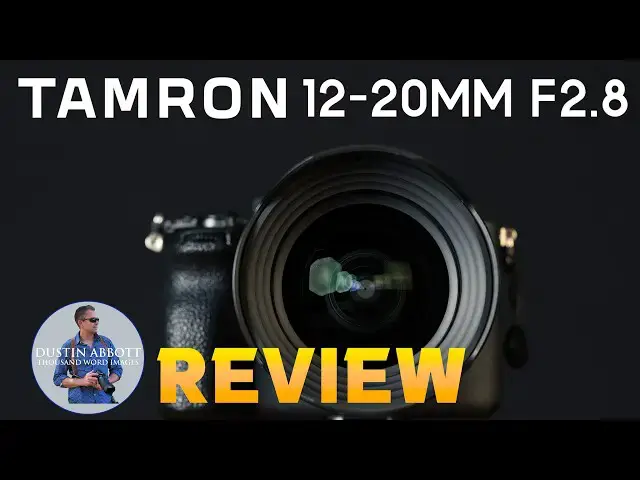
Tamron 12-20mm F2.8 Review | Bargain Alternative to G-Master & S-Line
Aug 4, 2026

Photographer Dustin Abbott shares a deep dive review of the Tamron 12-20mm F2.8 ultrawide zoom for Sony FE and Nikon Z | This episode is sponsored by SmartWings. Find out more at https://tinyurl.com/WELCOME5sw (use code WELCOME5 for 5% off) | Read the Text Review: https://tinyurl.com/TAM35-100VXDda | Purchase the Tamron 12-20mm F2.8 @ B&H Photo https://bhpho.to/4g0IvMf | Adorama https://prf.hn/l/xE0ObYn/ | Amazon https://amzn.to/4beSZ92 | Camera Canada https://tidd.ly/44RjaiA | Amazon Canadahttps://amzn.to/4bhGmdr | Amazon UK https://link.amazon/B05GFi1GE | Amazon Germany https://link.amazon/B0c7Bzrzp
Check out the DA Merch here: https://bit.ly/TWIMerch | Become a Patron: https://www.patreon.com/dustinabbott | On the Web: http://dustinabbott.net/ | Sign up for my Newsletter: http://bit.ly/1RHvUNp | Instagram: http://bit.ly/DLAinsta | Facebook: http://on.fb.me/1nuUUeH | Flickr: http://bit.ly/1UcnC0B | 500px: http://bit.ly/1Sy2Ngu Follow Craig @ https://www.instagram.com/craigstoffersen/
Want to support this channel? Use these affiliate links to shop at:
B&H Photo: http://bhpho.to/1TA0Xge
Adorama: https://tinyurl.com/AdoramaDA
Camera Canada: http://bit.ly/DLACameraCan
Sony Canada: https://www.thesonyshop.ca/?ref=abbott
Amazon: https://amzn.to/3HrY64d
Amazon Canada: https://amzn.to/3qG1p18
Ebay: http://bit.ly/DustineBay
Into the AM Clothing: https://bit.ly/intotheAMda and use code DUSTIN10 for 10% off
Fioboc Clothing: https://tinyurl.com/FiobocDA20 and us code DUSTIN20 for 20% off
Make a donation via Paypal: https://www.paypal.com/paypalme/dustinTWI
=============================
Table of Contents:
=============================
0:00 - Intro and Concept
1:20 - Disclosure
2:07 - SmartWings
3:06 - Build and Design
9:36 - Autofocus
12:30 - Video
14:35 - Optical Performance
23:51 - Conclusion and Pricing
---------------------------------------------------------
Oben Tabletop Tripod shown in video: https://bhpho.to/3vL8YWy
My Cameras:
Purchase the Sony a7RV @ B&H Photo https://bhpho.to/3ZivNyZ | Adorama https://howl.me/cjNY1LU3gFH | Amazon https://amzn.to/3CRCDlq | Camera Canada https://shrsl.com/3vulf | Sony Canada https://bit.ly/BuyA7R5 | Amazon Canada https://amzn.to/3H8yeNH | Amazon UK https://amzn.to/3kbg5FM
Purchase the Sony Alpha 1 @ Camera Canada https://shrsl.com/2wdk2 | B&H Photo https://bhpho.to/3upRFZd | Adorama https://howl.me/cj2nQpjLBKW | Amazon https://amzn.to/3t1m8MD | Sony Canada https://bit.ly/BuySonyA1 |Amazon Canada https://amzn.to/3cVFrBB | Amazon UK https://amzn.to/2OtrjGe | Amazon Germany https://amzn.to/3d0GtMO | Ebay https://ebay.us/i371Vs
Canon EOS R5: B&H Photo https://bhpho.to/3iMH18x | Amazon https://amzn.to/33L3D53 | Camera Canada https://shrsl.com/2jqth
Purchase the Fujifilm X-H2 @ B&H Photo https://bhpho.to/3KAInTC | Adorama https://howl.me/cjyzbiO5lVp | Amazon https://amzn.to/41zMzKl | Camera Canada https://shrsl.com/4128o | Amazon Canada https://amzn.to/40gY4W7 | Amazon UK https://amzn.to/43Grn7a | Amazon Germany https://amzn.to/3L6hwjR
Purchase the Nikon Z8 @ B&H Photo https://bhpho.to/3yaMuDB | Adorama https://howl.me/cmcvUHymQIt | Amazon https://amzn.to/3UQjfi0 | Camera Canada https://shrsl.com/4ipga | Amazon Canada https://amzn.to/3UtFSHL | Amazon UK https://amzn.to/4bsf1Tn | Amazon Germany https://amzn.to/4drP4oN
Get a discount off all Skylum Editing Software (Luminar, Aurora HDR, AirMagic) by using code DUSTINHDR at checkout: http://bit.ly/LuminarDLA
DISCLAIMER: This video and description contains affiliate links, which means that if you click on one of the product links, I’ll receive a small commission. As an Amazon Associate I earn from qualifying purchases.
Keywords: Tamron 12-20mm, 12-20mm, F2.8, f/2.8, VXD, Tamron 12-20mm F2.8 Review, Sony 12-24mm, GM, 14-24mm, S-Line, Travel, Wide Angle, UWA, Full Frame, Review, Sony A1 II, Sony a7RV, α1 II, Nikon Z8, Review, Hands On, Dustin Abbott, Real World, Comparison, Sharpness, Bokeh, Flare Resistance, Autofocus, Image Quality, Sample Images, Video, Photography, let the light in, weathersealing, #letthelightin, DA, #withmytamron, #12-20mm
Show More Show Less View Video Transcript
0:00
[music]
0:06
[music]
0:10
Hi, I'm Dustin Abbott. Back in 2015,
0:13
Tamron took on the first party brands
0:15
with the release of their 15 to 30mm
0:18
f2.8
0:19
um VC lens at that point. And it was
0:22
that lens in many ways was a winner. It
0:24
added image stabilization. It had really
0:28
great image quality, but it was also
0:30
huge and heavy, weighed in at about,00
0:32
grams. Despite that, however, I love the
0:35
lens because of the images that I could
0:36
produce and the fact that it was a lens
0:39
that I could afford. Fast forward to
0:42
2026 and Tamron is delivering an even
0:45
more ambitious project here in their new
0:48
12 to 20 millimeter f2.8. It's a more
0:50
extreme focal length and it also marks a
0:53
huge departure for Tamron in terms of
0:55
their design language and also feature
0:58
set that they're embracing on
0:59
mirrorless. It has far more controls, a
1:02
deeper level of customization, and in
1:04
the case of each of at least one of
1:06
these features offers something that
1:08
I've never seen before on any lens
1:10
before. And so today we're going to
1:12
explore whether this more extreme lens
1:15
is going to have the same kind of
1:16
revolutionary effect that their 15 to 30
1:19
mm lens did. I'm filming on the lens
1:21
right now and I do want to say a big
1:22
thank you to Tamron USA for sending me a
1:25
loaner uh of this lens as always.
1:28
However, they have had no input in the
1:30
review itself and this is a fully
1:32
independent review. We'll dive into all
1:35
the details in just a moment. This lens
1:37
will be available for both uh Sony
1:39
E-mount where it goes right up against
1:41
the expensive but fantastic 12 to 24
1:44
millimeter f/2.8 G Master and also on
1:47
Nikon Zmount where it contends with
1:49
Nikon's 14 to 24 millimeter f2.8 S-line
1:54
lens. In both cases, those lenses are
1:56
far more expensive than the Tamron.
1:58
However, the Tamron is fairly pricey for
2:01
a Tamron. So, is it worth those prices?
2:03
Well, we'll jump into it and explore
2:05
right after a word from our sponsor.
2:07
Today's episode is brought to you by
2:09
Smart Wings. I've previously reviewed
2:11
their motorized blinds and sun shades
2:13
and remain impressed with the blinds in
2:15
my office nearly 2 years later. I've
2:17
recently upgraded the blinds in our
2:19
bedroom from standard blinds to
2:20
motorized matter enabled zebra shades
2:23
from Smart Wings that give more options
2:25
on the amount of light and transparency
2:27
in the room. from a 90% blackout to
2:30
plenty of light while retaining privacy.
2:33
Smart wings are custom made to your
2:35
window and installation was a matter of
2:37
minutes. The motors are smooth and quiet
2:40
and can be charged either via USB a
2:43
couple of times a year or you can opt
2:45
for a small solar panel that will keep
2:47
them perpetually charged. These smart
2:50
blinds are matter enabled and can be
2:52
programmed and controlled through Apple
2:54
Home, Samsung Smart Things, Amazon
2:56
Alexa, or Google Home. Visit
2:58
smartwingshome.com
3:00
via the link in the description for a
3:01
discount on your new blinds today.
3:03
Thanks again to SmartWings for
3:05
sponsoring this video. All right, we'll
3:07
start by taking a look at price tag
3:09
here. And so $1699 USD for the E-mount
3:13
version, $1799 for the Zmount version.
3:16
That compares to $3,248
3:19
for the Sony G Master 12 to 24
3:22
millimeter. And then it is right under
3:24
$2,700 MSRP for the the Nicor 14 to 24mm
3:29
f/2.8 Sline lens. So while this is an
3:32
expensive lens for a Tamron, still it
3:34
represents a fairly strong value and
3:36
that's particularly true when compared
3:37
to the G Master lens. Now, one of the
3:40
big departures here is in terms of the
3:42
design language, and that's true when it
3:45
comes just to the basic look of the
3:47
lens, but also to the sheer amount of
3:49
controls that are on this lens, which
3:52
are definitely way above anything that
3:54
we've seen from a Tamron lens
3:56
previously, just in general. There are a
3:58
total of six switches. There are two
4:00
custom function buttons. There is an
4:03
aperture ring that can be clicked or
4:04
decllicked. On Nikon, it's going to be a
4:07
customizable control ring rather than a
4:09
dedicated aperture ring. But when it
4:11
comes to aperture control here, for
4:13
example, we have the ability to have
4:15
this clicked with, you know, 1/3 stops.
4:18
We have the option to declick the
4:20
aperture for smooth aperture racking. We
4:23
have an iris lock switch that will allow
4:25
you to either lock into or out of the
4:28
aperture ring. If you don't like an
4:29
aperture ring, you can lock out of it.
4:31
If you only want to be in the aperture
4:32
ring, you can lock into it to make sure
4:34
you don't inadvertently go into the
4:36
automatic mode. So, that is obviously
4:38
nice. We have something unique to Tamron
4:41
in this three-position custom switch,
4:43
which through their Tamron lens utility,
4:45
you can actually assign three different
4:47
values that will be accessed through
4:49
these custom buttons, which can be
4:50
really useful because it's just, you
4:52
know, expanding the usefulness there.
4:54
So, for example, on the first one, you
4:56
could just have whatever the camera
4:57
control is, but then you can assign two
4:59
separate values. And that includes a
5:02
fair number of different options,
5:03
including one that is quite unique that
5:06
I've never seen before, and that is an
5:07
advanced time-lapse recording option
5:10
where you can actually set what the
5:12
limits of the focus changes are going to
5:14
be during a time-lapse recording. And
5:17
and so, just to get more precise control
5:19
over that. And that also points to a
5:21
little bit more integration with the
5:22
camera body, which is interesting to me
5:24
as well. This and other customizations
5:27
can be accessed through this weather
5:28
sealed USB C port that is here. You can
5:32
connect to the lens utility and you can
5:34
assign different values to the way that
5:36
the focus ring is going to control in
5:38
terms whether it's linear or nonlinear,
5:39
what direction, how far the focus row is
5:42
going to be. There's a fairly deep
5:43
amount of customization available there
5:45
along with obviously the ability to do
5:47
firmware updates. This also is
5:49
compatible with Tamron Link which
5:51
essentially gives you Bluetooth remote
5:53
control over the lens function so you
5:55
can access it through your phone. So
5:56
again, more customization available
5:58
there. We've got a traditional AFMF
6:01
switch here as well. And then we have a
6:04
couple of unique things. We have not
6:05
only a zoom lock that will allow you to
6:07
lock the zoom um whether it's at the 12
6:10
or the 20 millm position, but one thing
6:12
I do like is that with just a little bit
6:15
more of a firm click, you can actually
6:17
it will automatically release and so you
6:18
don't get stuck missing a shot. The
6:21
actual zoom ring itself obviously is
6:23
because this is internally zooming, it
6:25
does move back and forth, but within the
6:27
housing, it's a nice short focus throw.
6:30
It is very, very smooth. And so you can
6:31
do some zooming while uh focusing or
6:34
while videoing. And so I find that to be
6:36
very useful. And then a feature I've
6:38
never seen before is a manual focus
6:40
lock. And so this is particularly useful
6:42
for something like astrophotography
6:43
where while it's still light, for
6:45
example, you could set proper infinity
6:47
focus, you could lock that in. And so
6:49
when you go out in the dark and you're
6:51
fumbling around a bit, you don't uh
6:54
don't have to worry about moving the
6:55
manual focus position. And so you're
6:57
going to maintain proper uh infinity
6:59
focus. And so again, very very smart
7:01
feature there. So while there's a lot of
7:03
different switches on here, um all of
7:06
them do have an appropriate function to
7:08
them. The lens size here, it is 90 mm in
7:11
diameter at its widest or 3.54 in. It is
7:15
right under 120 mm in length or 4.7 in.
7:21
And it weighs in at 570 g or 1.3 lb. And
7:25
so that makes it 80 g lighter than the
7:27
Nikon 14 to 24. But more significantly
7:30
versus the Sony 12 to 24mm G Master, it
7:33
is uh 277 g less. Now with a fixed uh
7:38
front lens hood and this bulbous front
7:40
element, it means that traditional front
7:42
filtering is out, unfortunately, which I
7:45
really miss. And so our only option is
7:47
actually gel filtering in the end, which
7:49
is yuck. Hopefully there will be
7:51
somebody that comes up, some third party
7:53
maybe, that will have a better rear
7:55
filter holder as I've seen with previous
7:57
lenses. They'll give us a little bit
7:58
more flexibility with that. Inside we
8:01
have 12 aperture blades. And while
8:04
that's less significant for creating a
8:06
circular aperture shape, which it does,
8:08
uh I think more importantly is that you
8:10
actually have a really cool looking
8:12
12-bladed sunst star with the lens
8:14
stopped down. As with many Tamron zoom
8:17
lenses, we have dual minimum focus
8:18
distances. It can focus as closely as 18
8:21
cm on the 12mm end, 28 cm on the 20 mm
8:26
end. The lower magnification is on the
8:28
20 millimeter end just 0.11 times. You
8:31
do get a higher 0.17 times magnification
8:34
on the 12 millimeter side. However, it
8:37
means you have to get pretty much right
8:38
on top of your subject and so it's not
8:40
necessarily easy to access. One final
8:43
thing is along with the design language
8:45
being updated, we also have updated
8:47
packaging. They've gone to an eco style
8:49
packaging, but at least looks cool with
8:52
some updated kind of fonts and logos
8:54
that are stylish. Also interesting is
8:56
that rather than a just a like a little
9:00
padded sock or pouch for the case, we
9:03
actually have a lens wrap. Um, which is
9:06
a I think actually a better way to
9:07
actually protect it. These have become,
9:09
you know, quite popular because they're
9:11
very grippy kind of microfiber that will
9:12
wrap around it and will stay locked into
9:14
place. At least this is going to be
9:16
useful for some application as whereas a
9:18
lot of people probably never actually
9:20
use those little lens pouches that came
9:21
before. All told, this is an interesting
9:24
move for Tamron with far more features
9:26
and a really nice level of build.
9:29
Obviously, deep weather sealing all
9:31
throughout the lens itself. This is a
9:33
professional-grade lens designed for
9:35
professional use. So, let's talk
9:37
autofocus. Tamron, particularly here on
9:40
Sony, has been able to deliver really
9:42
excellent autofocus in large part
9:44
because Tamron, while still a third
9:46
party on Sony, it isn't completely
9:49
divorced from uh Sony's own kind of
9:52
infrastructure. In fact, Sony does own a
9:54
a partnership stake in Tamron and from
9:57
what I understand right now is looking
9:58
to acquire them all together. But
10:00
because of that, I have always felt like
10:02
Tamron lenses focus really well on Sony,
10:04
though there are still some of those
10:05
thirdparty limitations that we'll talk
10:07
about in just a second. Autofocus here
10:09
comes from their VXD or voice coil
10:13
extreme drive focus system, which is
10:15
their premium voice coil motor that
10:17
delivers quick and quiet and accurate
10:21
autofocus. Now, of course, ultra wide
10:23
angle lenses like this, they tend to not
10:25
put as much stress on autofocus systems
10:28
for the simple reason that a lot is in
10:30
focus most of the time. Right now, I'm
10:32
shooting at the maximum aperture of
10:33
f/2.8 and at the longest focal length of
10:36
20 millimeters. And yet, still, you
10:38
probably can tell looking at the
10:40
background that things are really not
10:42
all that out of focus. And at the
10:44
moment, I'm only about 2 meters away
10:46
from the camera. That being said,
10:48
autofocus is very snappy going back and
10:51
forth, essentially instantaneous whether
10:53
I was testing indoors or out ofdoors.
10:56
And I always found in all of my real
10:57
world shooting that focus was very, very
11:00
quick. The autofocus motor is
11:02
essentially silent even when your ear is
11:04
right up next to the lens barrel. And so
11:06
there's going to be no concerns about a
11:08
microphone ever picking that up. I found
11:11
when taking shots at a, you know, closer
11:13
focus distance where I could actually
11:15
have some separation from the
11:16
background, I found that when Nala was
11:18
rolling around, autofocus picked up her
11:20
eye very quickly. No problems with that.
11:22
And you can see that these shots are
11:25
intensely sharp and very, very well
11:28
focused. I didn't shoot anything
11:29
particularly demanding as far as sports.
11:32
I did take some group shots. And of
11:34
course, the nice thing about a lens like
11:35
this is even though we were operating in
11:37
a tight space, I was able to fit a group
11:39
of around 20 people all within a shot.
11:42
And so that obviously is nice as well.
11:44
But I didn't really run into any
11:46
situation where autofocus wasn't, you
11:48
know, kind of up to the task. The one
11:50
limitation that we will run into here is
11:52
that even on I'm filming on the Alpha 1
11:55
Mark III right now and it's capable of
11:57
30 frames per second as are a number of
11:59
other uh Sony cameras and faster still
12:02
in the case of the A9 Mark III. You're
12:04
going to still run into that third party
12:05
limitation with autofocus of getting
12:08
just 15 frames per second. And so, you
12:10
know, unfortunately that does make this
12:13
lens a little less useful for sports as
12:16
compared to the G Master lens. That
12:18
limitation is not going to exist on
12:21
Nikon, however, and so if you're
12:23
shooting there, you won't have to worry
12:24
about any kind of artificial limitation.
12:27
At the end of the day, for stills,
12:28
autofocus is simply fantastic. On the
12:31
video side of things, likewise, I didn't
12:33
run into any issues at all. Again, it's
12:35
a powerful, smooth focus motor, so that
12:38
helps a lot. And again, it it's not
12:41
suffering from a lot of the third party
12:43
hiccups that I run into sometimes. And
12:44
so focus pools are nice and smooth back
12:47
and forth. Focus breathing looks quite
12:49
low from the lens. And so that's
12:51
excellent. One thing I will point out is
12:54
that again as a third party lens, this
12:56
is not compatible with Sony's focus
12:57
breathing compensation. And so
13:00
fortunately focus breathing is low. So
13:01
it's not really any kind of particular
13:03
loss. One area where I will say that
13:05
this lens is very useful for video work
13:07
is the fact that even though it has this
13:10
huge uh angle of view on it, it is
13:13
relatively lightweight and it's that
13:15
internal zooming design. And so that
13:16
means if you're using it on a gimbal,
13:18
for example, number one, you're going to
13:20
be able to use it on a lot of gimbals
13:21
because it's not particularly heavy and
13:24
not particularly large. But on top of
13:26
that, the fact that it never changes
13:29
overall length means that you won't have
13:30
to worry about cal reccalibration issues
13:32
if you change your focal length. So I
13:34
think it will be a very useful v video
13:36
lens for a lot of people because it has
13:38
that amazingly wide angle of view which
13:40
can be even more useful on video than
13:42
what it is for stills in some
13:44
situations. But of course beyond that,
13:46
it also has that ability to maintain a
13:49
constant kind of state of balance. So,
13:51
at the end of the day, this is a very
13:53
useful lens for video work. I found
13:55
that, you know, obviously in
13:57
transitioning from my hand to my eye,
13:58
things like that, it did fine. And I'm
14:00
sure you've noticed here on these
14:01
outdoor segments, no problem with uh
14:04
keeping myself uh in proper focus, which
14:07
of course I would expect nothing less in
14:09
2026 at this point. All's well on the
14:12
video front, and I think that this is a
14:13
lens that will be a very interesting
14:15
option for some of you who are into
14:17
video production. I could see this being
14:19
very useful for a wedding lens, for
14:22
example, uh for the you the ability to
14:25
be able to have some zoom on it, but
14:27
also to get a really really wide angle
14:28
of view for capturing that venue, for
14:31
capturing some flowing movement along
14:33
the way. Should be very useful on that
14:35
front. Okay, let's start by taking a
14:37
look at the optical design. Here we have
14:39
17 elements in 12 groups. And you can
14:41
see that that includes a variety of
14:43
different exotic elements. the 12
14:45
millimeter MTF chart looks really
14:47
fantastic, incredibly sharp in the
14:49
center of the frame, very very high
14:52
through the center of the frame. And uh
14:54
and that's obviously particularly on the
14:56
sagittal axis. And then as we drop down
14:59
here, we see that we're averaging out at
15:01
over 60 uh even in the far corners,
15:04
which is quite good. Now 20 mm also
15:07
starts very sharp. it does start to drop
15:10
a little bit faster uh towards the
15:12
mid-frame and as we get towards the
15:14
corners it's a little less sharp in the
15:16
corners though not bad again averaging
15:18
out to about 55 56% there. Now if we
15:21
take a look for things like distortion
15:23
and vignette we can see at 12 mm if
15:25
there's no profile corrections on that
15:27
there is going to be a you know a
15:30
moderate amount of barrel distortion. We
15:32
can also see if I when I try to manually
15:33
correct it, however, that there is
15:35
somewhat of a mustache pattern there.
15:37
And so it doesn't correct in a nice
15:38
linear fashion fashion if I try to do it
15:41
manually. I only needed a uh between a
15:44
plus 12 and plus 14 to correct. So I've
15:46
seen far far worse on a lot of wide
15:48
angle zooms, but obviously you're not
15:50
going to be necessarily happy with those
15:52
lines if you're shooting architecture,
15:54
for example. Fortunately, the standard
15:56
correction profile is able to do it a
15:58
little bit cleaner. And this is a JPEG
16:00
out of camera. And you're going to have
16:02
both JPEG corrections and video
16:04
corrections in camera. And so this is a
16:06
cleaner, much more usable result. In the
16:08
middle of the zoom range here, 16 mm
16:11
without any kind of correction. We have
16:12
far less vignette. We also have less
16:14
distortion. Pretty mild at this point.
16:17
By 20 mm, however, we do have a bit of
16:19
pin cushion distortion and a little bit
16:21
more vignette. All of that corrects in a
16:23
nice linear fashion. However, without
16:25
any kind of issue, even when I'm doing
16:27
it manually, and obviously the
16:28
correction profile will do it better
16:30
still, even with zero correction, we can
16:32
see that in the center of the frame,
16:34
things don't look too bad. Lines look
16:36
pretty straight. If I recompose with
16:38
that same at the same focal length with
16:40
the bridge near the top, however, you
16:41
can see that that barrel distortion
16:43
starts to show up. I saw very good
16:45
control of fringing, and that's
16:47
something that Tamron is often quite
16:48
good at. Here you can see that there's
16:50
little fringing, basically none before
16:52
or after the plane of focus. Uh even
16:55
more usefully for a lens like this. I
16:57
also didn't see any fringing in these
16:59
transitions. There's a bit of motion
17:01
blur here cuz these leaves were blowing
17:03
around. But you can see in the
17:05
transition edges to the word the very
17:07
bright. There's just no fringing, no
17:09
fringing coming through any of these
17:10
pockets here. All really nice and clean.
17:13
Likewise, when it comes to lateral style
17:15
chromatic aberration, which is quite
17:17
common on wide angle lenses, we see that
17:19
it's basically perfectly corrected in
17:21
the corners and no issue with that. So,
17:23
a really strong performance on that
17:25
front. Now, if we move on to resolution,
17:27
here's where one of the challenges comes
17:29
with testing ultrawide lenses, and that
17:31
is that I have to get so close to my
17:34
test chart at 12 mm that issues with
17:37
fill curvature start to stand up and so
17:39
I don't get particularly accurate
17:40
results coming off here. So here just a
17:43
quick look at the test chart. This is 61
17:45
megapixels A7R Mark 5 and looking at
17:48
200% level of magnification. So where
17:51
we're not affected by field curvature,
17:53
namely right in the center of the frame,
17:54
things look nice and crisp, high detail,
17:56
good contrast, but you can see pretty
17:58
quickly from here to here that that
18:01
field curvature is making things seem to
18:03
be kind of leaning away from the sensor.
18:05
And so by the time we get to corners,
18:07
there's not a lot of image quality
18:08
showing there. So, I moved to a real
18:10
world test subject out of doors. And
18:12
here at 100% magnification, we can see
18:15
in the center of the frame, everything
18:16
looks crisp, high detail. And as we pan
18:19
towards the side, we can see that there
18:21
is a a drop as the test chart, you know,
18:25
predicts. But it's still a at a very
18:27
usable level even at this distance,
18:30
which is about 2 m away. Here also at
18:33
f2.8, a real world shot. We can see that
18:36
right off here towards the edges that
18:38
we're getting good detail. We're
18:40
affected a bit by depth of field here.
18:42
But as we pan up, we can see that detail
18:44
is really crisp throughout the frame.
18:46
And and so no problems with resolution
18:49
there. And if we stop on down here at
18:51
f5.6 and so probably a more typical
18:54
aperture if you're shooting at least out
18:56
ofdoors, we can see that there's
18:58
resolution right off to the corners
19:00
there. If we pan back here towards the
19:02
middle, detail is very crisp. And off to
19:04
the other side, you can see that detail
19:06
all throughout the image is holding up.
19:08
Maybe just a little drop off in this
19:10
corner, but also that is somewhat
19:12
affected by depth of field. So, in
19:14
general, I saw zero issues at 12 mm in
19:17
terms of sharpness. Now, obviously, as
19:19
you stop the lens down, you will start
19:20
to run into the effects of defraction.
19:22
By f11, it's starting to show up on my
19:25
high resolution camera. And you can see
19:26
by the minimum aperture of f-16 that we
19:29
are losing some contrast and sharpness
19:31
due to the effects of defraction. it is
19:33
a bit easier to start to assess uh image
19:35
sharpness if I move on to 14 millimeter
19:37
and I'm a little bit further away from
19:38
the test chart. You can see at f2.8 very
19:41
crisp in the middle f4. Um looking a
19:44
little bit higher contrast. Moving on to
19:46
the mid-frame we can definitely see an
19:48
improvement by f4 and then down into the
19:50
corners they're looking good and a
19:53
little bit more contrast at f4. Likewise
19:55
at 16 mm looking very nice and crisp.
19:58
Stopping down to f4 gives us a bit more
20:00
contrast. The mid-frame is looking very
20:02
good and better still at f4 and down
20:06
into the corners as well. We are seeing
20:08
good results particularly when we stop
20:10
on down to f4 with a little bit more
20:12
contrast and obviously being less
20:15
impacted by things like vignette in the
20:17
corners. We do see a consistent
20:19
performance in terms of the centering
20:21
and so no issues with that. This is a a
20:24
high quality lens and so I would expect
20:27
good centering and that's what I get. 20
20:29
millimeters, there's just a little bit
20:30
less sharpness. Contrast is still very
20:33
good. And we can see it's consistent off
20:36
to the mid-frame, particularly at f4.
20:38
Looking really excellent there. And down
20:40
into the corners, corners looking just a
20:42
little bit softer as the MTF charts
20:44
suggest. For some real world
20:46
perspective, however, here we can see at
20:48
20 mm f2.8 that contrast and detail in
20:51
the shot of Nala are just fantastic.
20:54
Likewise, the shot at 20 millm f4. We
20:57
can see that the detail and contrast is
20:59
just fantastic. Not only in the center
21:01
of the frame, but as we move off towards
21:03
the corners, again, it's only those kind
21:05
of uh far far corners that are really
21:08
negatively impacted. And real world
21:11
results, they look just fine. Even here,
21:13
looking along the edge of the frame,
21:15
colors are also good. Tamron has good
21:17
optical glass, and so I was pleased with
21:20
the colors I got out of the lens. Now
21:22
returning for a moment to our uplose
21:24
results. At 20 mm, we can see that yeah,
21:27
contrast is not bad. Detail is not
21:29
fantastic at our minimum focus distance.
21:31
However, the plane of focus is
21:34
reasonably flat. That's not at all true
21:36
at 12 millimeters. And while we probably
21:38
get a little bit more contrast, it is
21:40
somewhat hard to unlock this performance
21:42
because there is so much field curvature
21:44
that is there. Obviously with
21:46
two-dimensional it doesn't work great,
21:47
it does work a little better with
21:49
three-dimensional objects. Now, you
21:50
don't purchase a lens like this for the
21:52
bokeh quality. Um, and if you do shoot
21:55
images with more shallow depth of field,
21:57
as we can see here, the defocused area
21:59
is it's okay. It's not particularly
22:02
soft. Uh, here in another shot where
22:04
we've got a little bit more in terms of
22:06
the specular highlights. We can see that
22:08
there is definitely some outlining to
22:10
them. And so, a little bit of a soap
22:12
bubble effect. this shot here, we can
22:15
see as we transition towards defocus. I
22:18
mean, it's it's okay, but it's certainly
22:19
not great. That's not what I would buy
22:21
this lens for. Fortunately, it has many
22:24
other strengths. Flare resistance is
22:26
good, which is really important in a
22:28
lens like this. It has the Tamron's Bar
22:30
2 coatings. And here we have the bright
22:33
sun right there in the frame. And
22:35
obviously at 12 mm in particular,
22:37
there's going to be lots of times when
22:38
bright lights are in the frame. We can
22:41
see here that as we stop down, we'll get
22:43
a little bit of, you know, impact around
22:45
where the the sun is coming. I see a
22:48
little ghosting artifact here, but
22:49
nothing bad here at 20 mm. Again, it's
22:52
just kind of zooming in a little bit
22:54
more of the same kind of thing. We can
22:56
see that 12-pointed sun star that to me
22:59
looks really, really nice. Really nicely
23:01
defined arms coming off of it. Now, one
23:03
of the main things that Tamron is
23:05
marketing this lens for is for
23:06
astrophotography. Unfortunately, I
23:08
didn't get like amazing astrophotography
23:10
weather during my review period, but
23:12
what I could see is that star points not
23:14
only are nice and crisp in the center of
23:16
the frame, but very, very little
23:18
chromatic distortion near the corners of
23:20
the frame, little coma, and so all of
23:22
that is good. Here we can see in this
23:25
shot, I waited until a car was
23:27
approaching just to kind of combine a
23:29
few elements. But once again, we can see
23:30
that all the star points, they're nice
23:33
and crisp. I I think that this is going
23:35
to be a really fantastic astro lens. I'm
23:38
also not seeing any kind of fringing up
23:40
here around star points. The fact that
23:42
you can get so much in the frame, I
23:43
don't love it when I have lots of trees
23:45
around, but if you're in a nice wide
23:47
open vista, this lens is going to be
23:49
fantastic for astro. All in all, a
23:51
beautiful optical performance. So,
23:53
what's my conclusion? Well, I love the
23:55
original 15 to 30mm f2.8 8 back in the
23:58
day. And I think that this lens has all
24:01
the potential of being an even more
24:03
interesting lens. Being able to go even
24:06
wider in this day of such high
24:08
resolution is increasingly useful
24:11
because we can crop deeply to add focal
24:14
length, but obviously you can't decrop
24:17
to add a focal length and to get a wider
24:20
angle of view. And for example, if I set
24:22
up the the Samyang 14 to 24 millimeter
24:25
at this same position on a tripod and I
24:29
shot my living room, I could frame this
24:30
widely. But if I put the Tamron on there
24:34
with its 12 millimeter, I was able to go
24:36
much, much wider and get a lot more in
24:38
the frame. That obviously is going to be
24:40
really useful for both photo and video
24:43
use. And while this lens is more
24:45
expensive than a lot of other Tamron
24:48
products, it also comes at a higher
24:50
level of, you know, overall packaging.
24:53
It is an extremely featurerich lens that
24:55
is basically lacking nothing and adds
24:57
some feature. It has a deep level of
24:59
customization and it is really very
25:01
cleverly designed with some of those
25:03
features for use for astrophotography,
25:05
which I believe is going to be a great
25:07
application of a lens like this. And so
25:09
at the end of the day, while the price
25:11
tag is fairly high, it's still
25:13
undercutting here on Sony, it's
25:15
undercutting the G Master lens by about
25:17
$1,500, which obviously is you can do a
25:20
lot with $1,500. And so I think that it
25:23
is still has a strong value option for
25:25
those that are invested in getting a
25:27
lens like this. And of course, there is
25:28
the fact that it undercuts the size of
25:30
the G Master lens by over 200 grams as
25:33
well. And that could be another
25:35
compelling option to consider this
25:36
Tamron instead. Tamron is doing a great
25:40
job of giving us high-erforming zoom
25:42
lenses and the optics have been there
25:45
basically the entire time that they have
25:47
been producing for Sony FE. But what has
25:50
changed now is that they're moving more
25:51
upscale in their packaging, moving more
25:54
upscale in their feature set. And I
25:55
think that they are now going to be
25:57
viewed maybe in a different light, at
25:59
least this particular lens, uh when it
26:01
comes to how directly they are competing
26:04
with the first party lenses. And I think
26:06
that that's a very interesting direction
26:08
for Tamron to go. If you want more
26:10
information, you can check out my full
26:11
text review which is linked in the
26:13
description down below. Uh there's also
26:15
some buying links there as well. As
26:17
always, thanks for watching. Have a
26:18
great day and let the light in.
#Science