Up next in 10


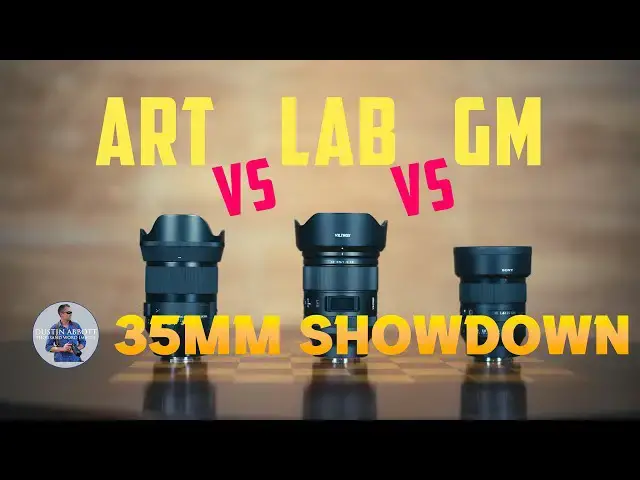
Photographer Dustin Abbott directly compares the Sigma 35mm F1.2 DG II | ART with the Viltrox LAB 35mm F1.2 and the Sony 35mm F1.4 GM. Which is the winner?
ART Reviews: Text: | Video:
GM Reviews: Text: https://bit.ly/35GMreview or Video: https://www.youtube.com/watch?v=p8-4XGP1jqQ
LAB Reviews: Text: https://tinyurl.com/LAB35review or Video: https://tinyurl.com/LAB35vid
Purchase the Sigma 35mm F1.2 DG II | ART @ B&H Photo https://bhpho.to/3I5ukbK | Adorama https://howl.link/kclnvplwvy8dp | Amazon https://amzn.to/4no43Eq | Camera Canada https://tidd.ly/46cXZaV | Amazon Canada https://amzn.to/4ngGKw4 | Amazon UK https://amzn.to/41Ob74R | Amazon Germany https://amzn.to/46iA4Ha
Purchase the Sony 35mm F1.4 GM @ Sony USA https://howl.link/r36imc3xohw7x | B&H Photo https://bhpho.to/2RA0Isf | Amazon https://amzn.to/3vRRBSF | Sony Canada https://tinyurl.com/Buy35GM | Camera Canada https://shrsl.com/2y3qu | Amazon Canada https://amzn.to/3o48p67 | Amazon UK https://amzn.to/3ewthjk | Amazon Germany https://amzn.to/4386K4E
Purchase the Viltrox AF 35mm F1.2 LAB FE @ Viltrox https://geni.us/Dustin35Lab (use code DA3512LAB5 for 5% off) | B&H https://bhpho.to/4jm5G3w | Adorama | Amazon https://amzn.to/43Q3zR4 | Amazon Canada https://amzn.to/3G7tbiA | Amazon UK https://amzn.to/43R6skE | Amazon Germany https://amzn.to/4jtb7h9 | Pergear https://tinyurl.com/BuyLAB35
Check out the DA Merch here: https://bit.ly/TWIMerch | Become a Patron: https://www.patreon.com/dustinabbott | On the Web: http://dustinabbott.net/ | Sign up for my Newsletter: http://bit.ly/1RHvUNp | Instagram: http://bit.ly/DLAinsta | Facebook: http://on.fb.me/1nuUUeH | Flickr: http://bit.ly/1UcnC0B | 500px: http://bit.ly/1Sy2Ngu Follow Craig @ https://www.instagram.com/craigstoffersen/
Want to support this channel? Use these affiliate links to shop at:
B&H Photo: http://bhpho.to/1TA0Xge
Adorama: https://howl.link/nt4zdz1goa7ql
Camera Canada: http://bit.ly/DLACameraCan
Sony Canada: https://www.thesonyshop.ca/?ref=abbott
Amazon: https://amzn.to/3HrY64d
Amazon Canada: https://amzn.to/3qG1p18
Ebay: http://bit.ly/DustineBay
Into the AM Clothing: https://bit.ly/intotheAMda and use code DUSTIN10 for 10% off
Fioboc Clothing: https://tinyurl.com/FiobocDA20 and us code DUSTIN20 for 20% off
Make a donation via Paypal: https://www.paypal.com/paypalme/dustinTWI
=============================
Table of Contents:
=============================
0:00 - Intro
01:46 - Similarities
3:19 - Neutral Differences
3:40 - Reasons to choose LAB
7:42 - Reasons to Choose GM
11:25 - Reasons to Choose ART
14:10 – Conclusion
16:40 – Optical Deep Dive
---------------------------------------------------------
Oben Tabletop Tripod shown in video: https://bhpho.to/3vL8YWy
My Cameras:
Purchase the Sony a7RV @ B&H Photo https://bhpho.to/3ZivNyZ | Adorama https://howl.me/cjNY1LU3gFH | Amazon https://amzn.to/3CRCDlq | Camera Canada https://shrsl.com/3vulf | Sony Canada https://bit.ly/BuyA7R5 | Amazon Canada https://amzn.to/3H8yeNH | Amazon UK https://amzn.to/3kbg5FM
Purchase the Sony Alpha 1 @ Camera Canada https://shrsl.com/2wdk2 | B&H Photo https://bhpho.to/3upRFZd | Adorama https://howl.me/cj2nQpjLBKW | Amazon https://amzn.to/3t1m8MD | Sony Canada https://bit.ly/BuySonyA1 |Amazon Canada https://amzn.to/3cVFrBB | Amazon UK https://amzn.to/2OtrjGe | Amazon Germany https://amzn.to/3d0GtMO | Ebay https://ebay.us/i371Vs
Canon EOS R5: B&H Photo https://bhpho.to/3iMH18x | Amazon https://amzn.to/33L3D53 | Camera Canada https://shrsl.com/2jqth
Purchase the Fujifilm X-H2 @ B&H Photo https://bhpho.to/3KAInTC | Adorama https://howl.me/cjyzbiO5lVp | Amazon https://amzn.to/41zMzKl | Camera Canada https://shrsl.com/4128o | Amazon Canada https://amzn.to/40gY4W7 | Amazon UK https://amzn.to/43Grn7a | Amazon Germany https://amzn.to/3L6hwjR
Get a discount off all Skylum Editing Software (Luminar, Aurora HDR, AirMagic) by using code DUSTINHDR at checkout: http://bit.ly/LuminarDLA
DISCLAIMER: This video and description contains affiliate links, which means that if you click on one of the product links, I’ll receive a small commission. As an Amazon Associate I earn from qualifying purchases.
Keywords: Sigma 35mm, 35mm ART, 35mm F1.2, 135 f/1.2, DG, DG II, ART, Sigma 35mm ART, Sigma 35mm F1.2 II, Sigma 35mm F1.2 DG II | ART, Sigma 35 ART Review, #SIGMAEmount, #SIGMA #SIGMA35mmF12ART, Viltrox LAB, LAB 35mm, #SIGMAART, Full Frame, Review, Sony Alpha 1, Sony a7RV, Review, Hands On, Dustin Abbott, Real World, Comparison, Sharpness, Bokeh, Flare Resistance, Autofocus, Image Quality, Sample Images, Video, Photography, let the light in, weathersealing, #letthelightin, DA
Show More Show Less View Video Transcript
0:00
[Music]
0:08
[Music] I am Dustin Abbott and I am here today to give you another one of my showdown
0:14
videos. This was a tough one. We have here the three top 35mm prime lenses on
0:20
the Sony E-mount platform, including the existing uh Sony 35mm F1.4 for G Master
0:27
lens. The Viltrox Lab 35mm F1.2 that was released earlier this year and then the
0:33
newest which is the Sigma 35mm F1.2 and this is the M2 Art series lens from
0:40
them. All of them are excellent lenses in their own right. The Sony is the
0:46
outlier in this particular comparison because it has the smaller maximum aperture of just f1.4. that does come
0:52
with some built-in advantages because the Sony is incredibly compact and lightweight. The Viltrox is the cheapest
0:59
and it's also the sharpest. The Sigma is maybe the most complete of all three.
1:05
So, which one is worth your money? Well, that's what we're here to determine. And I have shot tons of sidebyside images.
1:13
I've done tests for their autofocus and various things to try to determine which of these really is the best performing
1:19
lens. and the answer is difficult. But I'm going to do my best to parse things out and to help you to make an informed
1:25
buying decision. So before we jump in, just so you know, the Sony and the
1:30
Viltrox are my own personal copies that I happen to have for this comparison,
1:36
the Sigma was loan to me by Sigma Canada, which is Gentech, and so it will be going back to them just so you know
1:42
kind of what the the providence was on each one of these uh lenses. So let's
1:48
start by talking about what is similar and there are some surprising similarities between these three lenses.
1:53
They all have mostly the same feature set and so that includes an aperture ring or control ring. Um it the ability
2:01
to have an AFMF switch function button uh the ability to declick the aperture
2:06
and so all of them are similar in that fact. You can do aperture racking with all of them. So, they have a similar
2:12
control scheme in some ways, though the most disparate of those is going to be the Viltrox, which utilizes the LCD
2:19
screen and has a little bit different approach to things. All three of these are thoroughly weather sealed. They're
2:24
professional-grade lenses with gaskets at the lens mount, seals all throughout, and then coatings on the front element
2:31
to prevent fingerprints and moisture. Surprisingly, all of them are roughly
2:36
similar in autofocus speed. All of them have at least two focus motors and are near instant in transitions from close
2:43
to distant subjects. All of them prove to have equally consistent autofocus accuracy when shooting portraits. And in
2:50
a portrait situation, I didn't have one miss with any of them. They were all perfect in terms of locking on and
2:55
giving accurately focus results um when doing eye detection and thus portrait work. Even at their maximum apertures,
3:03
all of them have a tiniest bit of pin cushion distortion. each in each one of them I used about a minus one to correct
3:09
the tiniest amount of pin cushion distortion and so they're about equal in their optical signatures on that and so
3:15
there is a lot of things that are similar across these three lenses as far as the kind of neutral differences here
3:22
the really only thing that I would point out is that obviously one of these has an f1.4 for maximum aperture that brings
3:28
both strengths and weaknesses to the table. And I'm going to do something a little bit different in today's breakdown. There's there's unique
3:34
strengths for all of them, but there's also unique weaknesses relative to the other lenses, and I'm going to try to
3:39
highlight those as well. I'm going to start with the center lens here and talk about the Viltrox Lab lens and reasons
3:46
to choose it. The first of those and most obvious is the price. It currently has an MSRP of $999.
3:54
It can be had for cheaper than that by using discount codes, one of which is available in the description down below.
4:01
So, that makes it anywhere from between $400 to $600 cheaper than any of the other lenses. That price difference is
4:08
obviously going to be a really compelling factor if you're on a limited budget where you can get this for, you know, as as little as 50% um or 50% less
4:17
than, you know, the Sigma lens, for example. It also is more customizable and so it does have a little bit
4:23
different feature set than the other two. It's a little less traditional for good and bad as a part of that. So it
4:28
does have this front OLED screen and on that O LED screen you have you have a
4:34
distance scale. You see your your aperture there, but also allows you through a secondary function button
4:40
which it's the only one to have two function buttons. One of those you can actually preset to different things. You can preset it to uh instantly focusing
4:47
towards infinity uh if you're shooting astro with the lens or you can set something like AB focus and so that you
4:54
can preset positions and move instantly from one focus point to the other back and forth. And so there's a little bit
5:00
of additional customization that you can do and they have through the Viltrox app you can actually set up different
5:05
functions to that something that you cannot do with either of the other lenses. It is also the only of these
5:12
lenses to have not just two focus motors, but actually quad hyperVCM focus motors. And I did find while in real
5:19
world practicality, there's not really a difference. But if I'm doing a formal test and you know shooting the same
5:25
thing over and over, I did find that it was ever slow so slightly faster and going from point A to point B. It is a
5:31
very fast focusing lens and thus it had a little bit of just a tiny bit of edge in that. It is also very slightly the
5:39
sharpest lens and that's true in chart testing and then also it is more
5:44
obviously so sometimes when shooting three-dimensional subjects and that leads me to its final strength that I'll
5:49
point out and it has the best micro contrast and that's really where you see that extra degree of performance is that
5:56
in just rendering those really fine details there's just a little bit more pop to the textures from the lab lens
6:02
than either of the two others and that became obvious as I looked at various comparisons, which by the way we'll do
6:08
at the end of the video for those of you that want to dive into all that. When I did a blind test of I did portraits with
6:15
all of those and when I just you put no information on the screen, put them side by side and went through a series of
6:22
different ones. I asked my wife which she preferred. She actually instinctively chose the Viltrox every
6:28
time. And uh and I think that there is something to that that there's just particularly when you look in at images,
6:33
you zoom in to 100% it's like, you know, it's it's very very close, but there's something about this one that just feels
6:39
very slightly better. So what about some of its deficiencies compared to the other two lenses? Number one, as you can
6:45
probably see, it is the biggest and the heaviest and and so it's you're going to pay for some of that extra optical
6:51
engineering in there with extra bulk and weight as a part of it. It also has the lowest level of magnification of the
6:57
three. It has a 0.17 times magnification. The Sigma has a 0.19
7:03
times magnification. The Sony, however, has a 0.26 times magnification, which
7:09
gives it obviously a win in that department. The Viltrox of these three lenses is also what I would call the
7:15
glitchiest. And it just has, you know, little things because Viltrox is trying new things and they are a newer at this
7:22
point. They're not new anymore, but newer lens maker. I just find that of these three, I would say that these two
7:27
are going to arrive to you very, very stable. You're not going to be worrying about firmware very much. The Viltrox,
7:33
there's been a few iterations of firmware already cuz there's just little things that that Viltrox is working to
7:38
clean up. They are good to do that. However, I would say it's the glitchiest lens of the three. So, how about reasons
7:44
to choose the Sony G Master lens? Now, it does have the disadvantage of having the smallest maximum aperture, but that
7:50
does pay off in it being a really light, compact package. And by the way,
7:55
relative to other 35mm f1.4 lenses, this still stands out as being exceptionally
8:01
small and light, particularly relative to its performance. So, just to give you an idea of that difference, it is 5 mm
8:08
narrower in diameter than the Sigma lens and a whopping 13 mm narrower than the
8:13
lab lens. It is also 15 mm shorter than the Sigma and 25 mm shorter than the
8:20
Viltrox lens. So, a pretty significant difference there. Having less size also means less weight in this instance. And
8:27
so, it weighs in at 524 g, which is 231 g lighter than the Sigma and 386 g
8:35
lighter than the Viltrox lens. And so, that's a huge difference. You're definitely going to feel the difference
8:40
in weight comparing these two lenses. and and so that could make a major difference for you. It also has the most
8:47
common 67 mm front filter threads and so those are going to be shared with a huge
8:52
variety of lenses. 72 mm on the Sigma which is definitely less common than 67
8:57
mm. And of course the big Vtrox is a 77mm filter thread. Also quite common.
9:03
However, you know, bigger bigger size, bigger filters, bigger cost when you go
9:08
to purchase them. It also has just some bakedin firstparty advantages. It's a
9:15
Sony lens designed for Sony cameras. And so, as a by byproduct, it comes with breathing compensation built in if your
9:22
camera supports that. You can get full burst speeds. And so, on my Alpha 1, I can shoot 30 frames per second. With the
9:29
other two, I can only shoot 15 frames per second. So, it's a bakedin advantage there. and and of course it's the most
9:35
stable lens because it has access to obvious access to to first-party uh
9:40
algorithms for focusing. And so that just means also when you move to an application like sports, I would say
9:46
that the Sony lens is going to give you the most reliable focus results for sports and give you the highest keeper
9:52
rates because it's designed to keep up with even the fastest of cameras from uh from Sony and thus you're going to be
9:59
able to just get that a little bit more keeper rates that you're going to take away from that. It also, as mentioned
10:04
already, it has the highest level of magnification and so it's really useful in getting up close to subjects and
10:10
getting unique shots that the others can't do to the same degree. You can see at this shot of my dad's SLR from the
10:16
Viltrox and then from the Sigma and then from the Sony that there is a
10:22
significant difference between all three with the Sony being the most useful there. So, how about some negatives?
10:27
Well, it is only f1.4 four. And number two, while it has the ability to have
10:35
focus breathing compensation, it also has the most native focus breathing of these three lenses. And so it's the
10:41
worst. It needs the correction the most. And when you correct it, that does come at a crop. And then of these three, it
10:47
is the Sigma that's the best, Viltrox second best, and then the Sony the third. But the Sony actually plays out
10:53
better than the Viltrox because it gets those corrections. It also has the worst low light potential and thus the least
10:59
bokeap potential. And I did see when you're comparing the f1.2 lenses to the f1.4 lens, you can see a difference.
11:06
It's not like, you know, make or break into the world kind of difference, but you can definitely see a difference.
11:12
Backgrounds a little bit less focused, DRD focused. They're a little bit busier relative to the f1.2 lenses. So, there
11:19
is some some real advantage for the f1.2 two lenses that is not shared by the Sony in this case.
11:26
How about reasons to choose the Sigma last of all? Well, in some situations, I felt like the Sigma had the smoothest
11:33
bokeh of them. And that was particularly true I found in foreground where there's just a little bit less jitter, a little
11:38
bit better transition. I also found that there's a little bit less real world fringing from the Sigma relative to the
11:45
other two lenses. And not that the other two are terribly bad, but definitely with the Viltrox and some with the Sony,
11:51
you are going to see a bit of fringing in some situations. Whereas the Sigma remains very, very close to neutral in
11:56
those situations. One feature that the Sigma has that the other two does not have is an iris lock. That is a useful
12:04
feature if you're a person that doesn't like aperture rings. You can lock out of it. Or if you're doing aperture racking,
12:10
for example, and you want to make sure that you don't end up in the automatic mode, it allows you to lock in in or out
12:16
of the uh the actual manual aperture ring. And that can be a really useful feature. As already discussed in the
12:22
from the negative side of the the Sony lens, this does have the lowest native focus breathing. And so if you're not,
12:29
maybe you have a camera that doesn't support focus breathing compensation and you're looking for a lens that's just
12:35
really going to do the best job in those situations, the Sigma is the winner there.
12:41
It also, I would say, of these three lenses, it is the most balanced option of the three. And what I mean by that is
12:47
that it does everything well enough that at the least it is in second place in
12:52
any of these categories. And in no way is it third place. So, it doesn't really have any huge weakness that stands out
12:58
as we're going to see in just a moment. And so, in many ways, it has the best kind of balance in its approach. It's,
13:04
you know, it's not as small as the Sony, but it's much smaller than the Vtrox. And it's just things like that to where
13:10
it's a really well executed package that shows the polish of being a second generation lens. And that leads me to my
13:18
one negative that I will say, and that is that it is the most expensive of these three lenses. And so at $1,549,
13:25
you know, that is significantly more than what the Sony is, which the Sony is
13:31
MSRP is $14.99, but because it's been out for a while, it's going to be very
13:36
often on sale. At the moment, its price is $13.99. And so obviously that's, you
13:41
know, you're talking about $150 difference at that point. In some markets around the world, I know that when a Sony lens has been out for a
13:47
while, it will be significantly cheaper than what the Sigma lens is coming out new to market. So, that could be a major
13:53
factor for you. And then obviously the Viltrox at under $1,000, it is the bargain lens here. And the Sigma is the
14:01
question is is that can I deal with a little bit of extra weight and maybe a quirk or two for $550 off? Well, for
14:08
many people, the answer to that will probably be yes. So my conclusion is is that this really was a tough comparison.
14:14
I looked at dozens of side to side photos and I had to really dive deep to find optical differences and sometimes
14:21
even having them side by side and you know analyzing them at 100% is still hard to find differences in some
14:28
situations. So I will do my best to summarize these three lenses as follows.
14:33
buy the Viltrox if your top priority is a either pure image quality and you want
14:39
the very best optically. I would say that the Viltrox is still probably represents that buy it. Also, if you're
14:46
on a tighter budget and you would like the idea of having a high-end 35mm lens,
14:51
but you don't want to spend the big bucks, the Viltrox is the best bang for
14:56
your buck optically by the Sony. if you want high performance and it is a really high
15:02
performing lens. This has been one of my absolute favorite 35mm lenses. I think for the the size that it comes in and
15:08
the performance it gives, it is an amazing lens and Sony it it still impresses me after several years of it
15:15
being out. So, buy it if you want high performance in the smallest and lightest package and you don't feel like you
15:20
really need f1.2 and not everybody does and so I think it still has a very valid
15:26
place in the market. buy the Sigma if you want what I would consider to be the best overall package and f1.2 if you
15:33
really want f1.2 and you want a stable balanced lens that is just good at
15:38
everything trustworthy I would say pick up the Sigma going to spend the most money for it but in many ways it feels
15:45
like it is very worth it. If this was on the Nikon platform and I was comparing it to the 25 or excuse me the 35mm f1.2s
15:52
2S, I would probably be saying, yeah, there's a few tiny tiny areas where the Nicor lens is better. But the Sigma at
15:59
basically half the money feels like a very compelling alternative. And it really is that lens. It's just in this
16:06
case on Sony. We don't have a first-party 35mm f1.2. If we did, I'm sure it would cost $2,200 or even more.
16:14
And so the Sigma is expensive, but for what you're getting, you're getting a lens that is competitive with the very
16:19
best and uh for less money. And so that certainly is a compelling reason to consider it. Now, if you would like more
16:27
information, I have both text and video reviews on each one of these, which I'll link in the description down below. And
16:33
if you would like to see how I came to my conclusions and look at a lot of those optical comparisons, well, knock
16:38
yourself out. We're going to dive into it together right now. Okay. There's a lot of different comparisons that I have
16:44
done. I've selected just a few of them to highlight some of the things that we're talking about. We'll start by to
16:49
taking a look at resolution and contrast across the three lenses. Now, as much as possible, I'm going to try to put the
16:54
Sigma on the left and the Viltrox or the Sony on the right. I will let you know if I do something otherwise as we move
17:01
ahead. So, here this is on all of these are on a 61 megapixel camera and this
17:06
will be 200% magnification. You can see if you compare the two that the Viltrox is definitely higher contrast in the
17:13
center of the frame and so that additional moir false color that you're getting just because the contrast is so
17:18
high even at f1.2. So the center is definitely a win for Viltrox as is the
17:24
midframe which you can see looks really really crisp on the Viltrox at f1.2. Now, if we move out to the corners, it's
17:31
a bit of give and take here. And I would say that, you know, it's hard for me to
17:36
really choose a winner on that side. If I look over at this side, I do think that the Viltrox is showing a little bit
17:42
better contrast. If we look up into this corner, I would say Viltrox is taking the win there. So, since the Viltrox is
17:49
the winner, we're going to put it here on the left and put the GM here on the
17:55
right. And so, both of these are wide open. And so, that means F1.2 2 for the Viltrox, F1.4 for the GM. Now, in the
18:01
center of the frame, the GM is right there matching the Viltrox, maybe even exceeding it in the depth of the
18:07
contrast. Looks really exceptional. In the mid-frame, it is closer to a draw
18:13
here. And I would say the Viltrox may very slightly be a winner, but contrast
18:18
level is fantastic on the Sony lens. Looks really, really great. Now, if we move out to the corners in this zone,
18:24
there's a little bit more detail as you can see on the Viltrox. And as we pan out towards the the extreme edge, I
18:31
would say the Sony maybe gets a little bit back there. So towards the corners, there's a bit of give and take. Popping
18:36
over to the left side and there's a little bit more detail on this left side for the Viltrox lens. The upper left
18:43
corner, it's close, but there's more clarity for the Viltrox lens. It is the
18:49
clear winner in terms of wide open performance. But we'll give a rematch to the Sigma and the Viltrox and then the
18:55
Sony afterward. But starting with the two third party lenses at f2. So stop
19:00
down a bit. How are things shaking out? Well, we can see that the Sigma looks amazing, but the Viltrox, I mean, the
19:08
contrast level is just kind of popping right off the page. And so it still is the winner in the center of the frame.
19:14
As we look here at contrast, I mean, that contrast looks fabulous on both lenses. And so I would say here in the
19:20
mid-frame, I think clarity-wise, there's a very slight edge for the Viltrox. You can see here in this um bunk to Canada
19:27
uh you can see here that it's a little bit crisper looking there. But uh down here in the corners uh corners are
19:34
looking really awesome for both of them. You I wouldn't call really much of a winner on the lower right side. Here on
19:41
the left side I think that the U Vtrox gives a little bit of a win there. If
19:46
you look at the hair just the contrast is really fantastic for the Viltrox
19:51
there. And up in the corner, there's no question. Definitely the Viltrox is stronger up here in the upper left
19:57
corner. So once again, since the Viltrox took the overall win there, we'll put it up against the GM now also at f2. So in
20:05
the center of the frame, both lenses look fantastic, but clearly the from the degree of moir we're seeing there, it
20:11
lets you know that the contrast level for the Viltrox is just higher still. And so it's really doing a great job
20:17
though. Both lenses, I mean, all three lenses look amazing. This is splitting hairs really. The mid-frame here, I
20:23
think actually the Sony takes a bit of a win there. It's looking really really crisp uh in that mid-frame zone down
20:30
into the corners. It's um again, it's it's it's a little more complicated in
20:35
the corners. There is some give and take in the different things that I see. Contrast levels are really good for the
20:41
Sony in the corner. However, the raw detail looks maybe a little bit crisper for the uh the Viltrox lens over here on
20:49
the left side. Kind of a similar pattern. Uh I would say that the Viltrox shows a little bit more contrast and
20:55
clarity like in the hair. And then just this overall pattern of the ink droplets stands out a little bit better there.
21:02
And to the upper left corner, we can see that both of them look good, but the Viltrox looks better. So overall, in
21:08
terms of raw sharpness, Viltrox is the winner. Now, if we go out into a and
21:13
take a three-dimensional subject here, we can see that if we punch in, and this
21:19
is still at 200% magnification, so it's an almost unfair amount of magnification. However, it allows you to
21:26
really get in here and look tight. And you can see that while both of them are giving really amazing levels of detail,
21:32
that micro contrast does favor the Viltrox. You can just see more definition in those textures. There's
21:38
not even a hint of any kind of like spherical haze on the surface of the textures, whereas there is a tiny tiny
21:44
bit on the Sigma. Now, if we look beyond that here at f1.2, looking at the
21:49
overall rendering from the image, I find that with the the Sigma and the Viltrox,
21:55
it there is some give and take kind of depending on what I'm shooting. In this particular instance, I feel like if I
22:00
look at this zone, the Viltrox feels a little bit smoother in the out of focus rendering. it's just a little bit
22:06
softer, a little bit creamier looking. However, you can look at other places and that's maybe less true. I do also
22:13
notice that for whatever reason, probably just a slight variance between the two when it comes to maybe the focal
22:20
length, it feels like the these out of focus um highlights here, bokeh
22:26
highlights are just a little bit bigger and maybe just a tiny bit softer from the Viltrox lens. And so in this
22:32
particular instance, I would say that the Viltrox manages to win both on micro contrast, but then also in the overall
22:38
rendering from the image itself. So once again, if we go back now and we compare with the Sony, which the Sony does have
22:46
the disadvantage in this particular comparison of being f1.4. Now, if we look towards that micro
22:52
contrast here in the center of the frame, you can definitely tell a win for the Viltrox. And again, it's a really
22:58
high level of magnification, but you can see that just that micro contrast on a threedimensional subject, there's no
23:03
question that the Viltrox is the winner. And in this case, the GM is not as good as what the Sigma was. So then, of
23:10
course, that bigger advantage comes with the overall rendering where the F1.2 lens, you can just see if we look at the
23:16
Sony lens here on the right, everything is just a little bit more in focus, thus just a little bit more edges to catch
23:22
your eye, whereas the F1.2 two image looks softer and creamier and just a
23:28
little bit more visually pleasing. Let's take a look at another micro contrast example here. Again, f1.2 and at 200%
23:35
magnification. You can see that while the Sigma is good, the Viltrox is clearly better. Now, there is an area
23:42
where Sigma is going to wins in these comparisons, and that is that you can see around some of this that there's
23:48
very little fringing, whereas you will see a bit of green fringing on the Viltrox lens that does show up later on.
23:53
But in terms of being able to deliver that micro contrast of giving great contrast on very small textures, it's
24:01
able to resolve those a little bit better than what the Sigma does. Now, in this image here, I would say that
24:07
looking at bokeh rendering, I do kind of just visually favor the Viltrox. Overall, both of them are exhibiting, as
24:13
you can see, some fairly strong vignette that is uncorrected here at the moment. And so, that does detract from the image
24:19
a bit. When you look over here at kind of just the basic geometry between the two, they really don't look a lot
24:25
different other than the fact that I would say that these shapes are maybe just a little bit rounder on the Viltrox
24:32
as opposed to the Sigma. So, if we sh throw the GM lens into the mix here on
24:37
the right, one thing that you will notice is that there's a pretty obvious difference in the shutter speed versus
24:43
so 125th of a second for the GM at f1.4 four and then 1/200th of a second for
24:49
the Viltrox. And so there's also this underlying advantage when it comes to the, you know, just basic amount of
24:56
light gathering potential of the F1.2 lens. And in this particular case, it's pretty clear that the Viltrox has the
25:01
edge and micro contrast in a really obvious way over the GM. And we saw that
25:07
on our previous comparison as well. It's just not able to give the same level of pop to textures as what the Viltrox is.
25:14
And then of course here in this case, all of those specular highlights are going to be obviously bigger and softer
25:20
on the Viltrox. And you can see looking at the even down in this zone here that it's just just softer and more kind of
25:28
uniform. There's a little bit more disruption in the Sony, a little more variation because it's not as defocused.
25:35
So so far the Viltrox seems to be cleaning up. However, we're going to get to some spaces where it doesn't able to
25:43
succeed quite on the same level. So when it comes to minimum focus distance, you can see that its maximum magnification
25:48
level is significantly lower than what the Sigma's in is. And so that means as
25:53
you can see here in this case, the specular highlights for the Sigma are much bigger and softer than what they
26:00
are from the Viltrox lens. What's more, if we take a look in at a like a a high
26:06
magnification level, we can see that while the Viltrox is great at that micro contrast, as we've already seen, it's
26:13
not as great at controlling fringing. And as we look towards these areas here, you can see that green fringing that is
26:19
marring some of the textures, whereas the Sigma does a really great job of controlling that. And so in this area,
26:25
there's two places where the Sigma takes a win over the Viltrox lens. So in this
26:30
case, we'll eliminate the Viltrox lens and throw the GM in. Now, one area of advantage for the GM lens becomes
26:37
obvious. It has the highest level of magnification, and that is by a pretty good margin. In this case, 0.26 versus
26:43
0.19 versus 0.17 for the Viltrox. When we
26:48
take a look at the fringing situation, it's a little bit closer a comparison
26:53
here. We can see that as we look towards these defocused areas, the GM has a very
27:01
very slight green tinge there. Whereas the uh Sigma lens is really really
27:06
neutral and so it's very very well corrected. And in this case, the largest specular highlights do come from the the
27:13
Sony lens because of the higher magnification, but you can see it is not by much of a margin. It's actually quite
27:19
close and the difference is made up from the Sigma lens because of having that faster maximum aperture and so um you
27:26
know some give and take here but a definite win for the Sony when it comes to magnification. Now this next
27:31
comparison it becomes a a little bit surprising considering the fact that the Viltrox does have worse fringing because
27:38
in many ways often it's fringing that reduces the amount of contrast that a a
27:44
lens is able to produce. And so here what we have is a different kind of situation where you have really bright
27:50
um shiny surfaces that are almost on the verge of blowing out. And you see if you look in these textures that the Viltrox
27:58
is got some purple fringing showing up in those really high contrast areas. You would think that that would actually
28:04
reduce the overall contrast, micro contrast, but as you can see, the opposite is actually true here where the
28:10
Viltrox continues to be the winner when it comes to the just the degree of contrast and thus the information you're
28:17
able to get off of like the the weave of that pillow cover there. Also, in this
28:22
case, we have got, you know, harsh light and harsh shadows. And you can just see the different ways that the two lenses
28:28
handle that. So, an interesting comparison there. Now, if we throw the Sony into this this situation, you can
28:34
see that it it is a little bit closer. It's not quite as good as the Viltrox in terms of contrast. It is a little bit
28:40
better, but you can see in this situation, it's got equal levels of that, if not more, of that purple
28:45
fringing and that really high contrast zone. And so, in this case, definitely the Sigma continues to win for
28:51
controlling all of that. You can also see just the overall general contrast. I would say in this case the variance
28:58
between the lights and the shadows are uh better on the Vtrox than what they
29:03
are on the Sony lens. So it's not just a matter of the micro contrast, but the general contrast does slightly favor the
29:10
Viltrox lens. Now I've pointed out a situation or two where I felt like the Viltrox had a win in terms of the
29:17
overall contrast. So at close focus distances and where backgrounds are more strongly defocused, I think the Viltrox
29:22
takes a win. However, here when you're a little bit further away, I don't know that that advantage continues. In many
29:29
ways, I think it's kind of hard to parse out a winner between these two. Look at
29:34
the foreground level of blur. It looks nice from both lenses. And if you look towards the background, you know, with
29:41
these various layers of defocus, they really are more similar than different.
29:46
I do feel in this case the superior contrast of the Viltrox lens actually
29:51
produces a slightly less creamy background. And so in this kind of shot, if I were to just instinctively choose a
29:58
winner, I would actually choose the Sigma's defocus a little bit over that of the Viltrox. So in this case, I'll
30:04
put the GM up against the uh the Sigma lens. And if we look here, you can tell
30:09
if you look at this area of the background, the F1 one.2 lens is going to win every time over the F1.4 four
30:15
lens. I actually think that the bokeh quality from the the Sony lens is nice and I've always thought that, but I do
30:22
think that the Sigma is a very slight winner here. Thus, it is the overall winner in this particular kind of
30:28
scenario. So, finally, what about portraits? And so, if we try to recreate similar type settings again and again,
30:35
what I find is a couple of things. First of all, when it comes to the sheer amount of detail, both of these f1.2
30:43
lenses, even at f1.2, two are fabulous. The Viltrox um in in just a lot of
30:48
head-to-head comparisons, I've got dozens of these that I've looked at very often. That little bit of extra micro
30:54
contrast I do feel produces a little bit more pop around eyes than what the Sigma
31:00
does, but you probably wouldn't notice that unless you had them side by side. In this particular scenario, I felt like
31:07
the there was just a little bit more busyness for the Viltrox in this transition zone right here. I see I've
31:13
also got a cat that's going underneath my leg at that point. But you can see here that the Sigma comes across as just
31:19
a little bit softer there. And then as I looked at this, it's very very close, but I felt like the softness from the
31:26
Sigma was a little bit better than what the Viltrox lens uh looked like. Looking
31:31
at them as a whole. However, as I mentioned, when I did a lot of blind test, my wife basically every time chose
31:38
the Viltrox lens, and I think it has a lot to do with just the optical glass. I think the richness of the color is maybe
31:44
very slightly better from the Viltrox lens. So, if we throw the GM lens there
31:49
instead, again, this is f1 uh 2 versus f1.4, we can see that I would say in
31:56
this case, I actually feel like again around the eyes, I like the GM just a little bit better than what I do the
32:03
Sigma lens. And so, in terms of contrast on uh portrait subjects, I would say I favor the other two lenses over the
32:10
Sigma. However, very clearly here, you've got almost like a soap bubble effect from the GM lens, whereas you
32:17
have a much in my at least in my mind, a much more pleasing defocus background from the Sigma. So, I actually like all
32:23
three of these as portrait lenses, but there is some give and take in terms of their strengths. And as you can see,
32:29
that's pretty true of these lenses generally. They're exceptionally good. However, there are areas of strength and
32:34
weakness for each one. So, thanks for sticking around until the very end. And I hope that this deep dive into these
32:40
three lenses has helped you to determine which one is the most intriguing for you. As always, thanks for watching.
32:47
Have a great day and let the light in. [Music]
#Online Media
#TV & Video
#Science