0:10
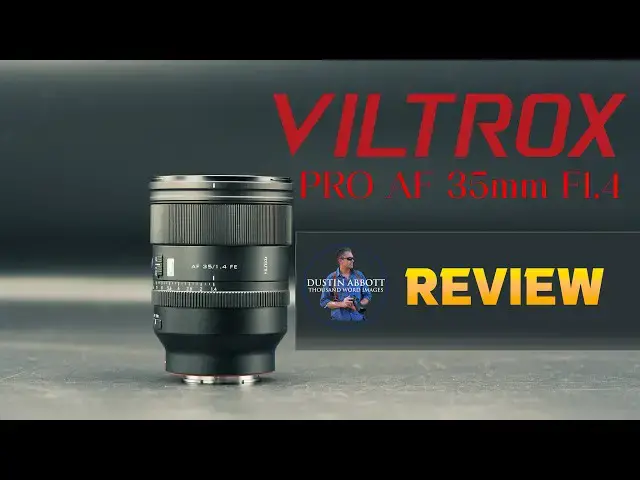
Hi, I'm Dustin Abbott. Viltrox's latest
0:12
lens is kind of one for the
0:14
completionists because the new 35mm f1.4
0:17
for from their pro series. It helps to
0:20
complete first their basic pro lineup of
0:23
the 35,50 and 85 millimeter traditional
0:26
focal lengths which we actually got in
0:27
reverse 8550 and now 35. It also
0:31
completes their lineup of 35mm lenses.
0:34
We have the excellent 35mm f1.8 Evo lens
0:38
and then on the other end we have the
0:40
35mm f1.2 lab series lens. their top
0:43
grade lens and the Pro Series kind of
0:45
sits in between those two. The question
0:48
must be asked is this the Goldilocks
0:49
lens of the three. The challenge for
0:52
Viltrox is that while this is another
0:54
excellent lens in the Pro Series, it is
0:56
coming up against a lot of competition
0:58
including some great competitors from
1:00
Viltrox themselves. Does the market
1:02
actually need yet another 35mm lens from
1:05
Viltrox? Well, I guess we're going to
1:07
see. We'll explore all of that in
1:09
today's review. First of all, however, I
1:11
do want to say a big thank you to
1:12
Viltrox for sending me a review copy of
1:14
the lens. As always, this is a
1:16
completely independent review and they
1:17
have had zero input in the review
1:19
process itself. They will not see this
1:21
video before you do. All of that aside,
1:24
let's dive in and let's take a look
1:25
right after a word from our sponsor.
1:27
Today's episode is sponsored by the
1:28
all-new Phantom Tracker 2.0. Phantom has
1:31
not only seriously upgraded the visual
1:33
look of the card, but now we have a
1:35
superior build quality made with
1:37
tempered glass and metal alloys. This
1:39
credit card size tracker can be locally
1:41
tracked via a 90de beeping noise, but
1:44
also on a global level via Apple's Find
1:46
My Network and its map. The addition of
1:49
NFC means you can also use the card to
1:51
trigger an automation. Just tap it. The
1:53
tracker fits perfectly in any wallet or
1:56
bag and assures you won't lose your
1:57
valuables. It has a built-in
1:59
rechargeable battery that can be easily
2:01
charged via any wireless charger, and a
2:03
single charge can last up to 6 months.
2:06
The Phantom Tracker 2.0 know makes for a
2:08
seriously cool gift. So visit
2:10
store.fanomwallet.com
2:12
and use code dustin20 at checkout for
2:14
20% off. That's store.fanomwallet.com
2:18
and use code dustin20 for 20% off. All
2:21
right, let's take a closer look at the
2:23
35mm f1.4. First of all, when it comes
2:26
to price, for some reason, this
2:28
particular lens is priced much higher
2:29
than other ones in the series. The MSRP
2:32
is going to be$8.29 29 USD and so that
2:35
is more than the 85mm f1.4 which is
2:38
about 600 and then 550 range for the
2:42
50mm f1.4 and so for whatever reason
2:45
it's more than $200 more expensive than
2:47
those lenses and to position that in the
2:49
market the Sigma uh 35mm f1.4 for Art
2:56
So about $230 more expensive than the
2:59
Sony G Master, $1,498.
3:03
So that's considerably more expensive.
3:04
But then you also have some great
3:06
competition from Viltrox themselves.
3:08
We've got the Evo uh 35mm F1.8 and you
3:13
can get that for right under $400. And
3:16
for not much more money, you can even go
3:18
up to the Primo 35mm f1.2 two lab series
3:22
lens uh from them for about $1,000.
3:26
And so that does make the price point a
3:28
little bit more challenging because
3:30
that's typically been a place where
3:31
Viltrox has really been able to compete.
3:33
Where it's certainly not competing is
3:35
when it comes to the overall size of the
3:37
lens. This lens is 84.5 mm in diameter
3:40
or 3.32 in and 111 mm in length or 4.37
3:45
in. That compares to lenses like the
3:48
Sigma and the Sony uh G Master which are
3:51
around 73 to 75 millimeters in diameter
3:54
and both of them are 96 millimeters in
3:57
length. So compared to the Sigma for
3:59
example, this lens is 11 mm wider in
4:01
diameter which is significant and about
4:03
15 mm longer and so it's a much bigger
4:06
and thus a much heavier lens. Weighs in
4:08
at 760 g or right under 27 O. And so I
4:13
mean that it compares the Sigma and the
4:15
Sony are both right around 525 grams.
4:18
And so again this lens is considerably
4:21
heavier about 335 grams bigger than or
4:24
heavier than those lenses. It also has a
4:26
larger front filter thread at 77 mm
4:29
versus 67 for the others. Now to be
4:31
fair, it also has less vignette than
4:33
them, but again it's just a bigger,
4:35
heavier lens. It is a really nicely made
4:37
lens. However, we have the traditional
4:39
control to aperture here. And so that
4:41
can either be clicked uh aperture or you
4:44
have the option to de-click it and so
4:46
that you can do smooth aperture racks
4:48
and all of that works nicely. The
4:50
aperture Iris itself is 11 blades inside
4:54
and that helps to have nice circular
4:57
shapes for your specular highlights and
4:58
then stop down. It's a fairly
5:00
interesting sun star as well. Additional
5:02
features include a function button here
5:04
that moves nicely and then an AFMF
5:06
switch to give you further control
5:08
there. The body is very very nice. It's
5:10
aluminum magnesium alloy. Top-notch in
5:13
terms of the build materials. I think
5:14
the lens looks really, really fantastic.
5:17
I also like the color accent of the
5:19
weather sealing gasket here. And then
5:21
there are other seals all throughout the
5:22
lens along with their HD nano coating on
5:25
the front element. On the mount itself,
5:28
we have their traditional USBC port that
5:30
allows for easy firmware updates. That's
5:32
nice to have as well. Minimum focus
5:34
distance is 30 cm and you have a 0.18
5:38
times level of magnification similar to
5:40
the Sigma but not as good as the Sony.
5:43
Like the other lenses in this series, it
5:44
does have some floating elements and so
5:46
when the lens is powered off and you
5:48
rock it back and forth like this, you'll
5:50
feel some clunking inside. But if you
5:51
attach it to the body and you power it
5:53
up, all of that will go away when those
5:55
elements are energized and no longer
5:57
moving. So overall, it is a very nice
5:59
package, but unfortunately it's also a
6:01
bigger, heavier package than what we're
6:03
seeing from the competition. So let's
6:05
talk autofocus. At this point, we have a
6:07
pretty firmly established formula for
6:09
the Pro Series and how auto focus is
6:12
accomplished. They have a single hyper
6:15
VCM focus motor that is driving focus
6:17
here. And that allows there to be kind
6:20
of the multiple uh focus motor
6:22
configuration for the up upscale lab
6:24
series. And in this case, their HyperVCM
6:27
focus motor, it is excellent. It's very
6:29
smooth. It's very quiet in operation.
6:31
And in this case, we have, you know,
6:33
good quick autofocus moving from point A
6:36
to point B. And you can see it moves
6:38
back and forth with no drama, good focus
6:41
accuracy, good precision, and good
6:43
confidence throughout. The challenge, of
6:45
course, is that some of the competition,
6:47
namely Sigma, they've now moved to a
6:50
dual motor configuration in their 35mm
6:52
F1.4 Art M I. And then also the same is
6:56
true for Sony's own G Master lens. Now
6:59
you have other competition that's a
7:01
little bit cheaper like the Suré Aurora
7:03
35mm f1.4 and it is getting by with a
7:07
single STM focus motor and so obviously
7:08
the Viltrox is superior to it. However,
7:11
it's not that level that Viltrox is
7:13
aspiring to. It's more at where what the
7:15
first party is and of course where Sigma
7:18
is with their products. And so I do
7:20
think that while we've got good
7:22
autofocus here, it's not quite to that
7:24
level. Overall, however, I did have good
7:26
focus accuracy and precision. I had zero
7:29
issues with the lens. Um, and that was
7:31
testing it on both Sony and Nikon. And
7:33
I'll come back to you with look look at
7:34
it on Nikon a little bit later on. So
7:37
autofocus, even when shooting against
7:38
backlit situations, no problem. I had
7:41
good precision and no drama in the
7:43
autofocus. Now on the video side of
7:45
things, also I would say a really good
7:47
report there. First of all, when I did
7:49
my touch to focus pools, they not only
7:52
are smooth and I would say fairly
7:54
cinematic in operation, but you'll
7:56
notice that focus breathing is very very
7:58
low. That's obviously one of the I would
8:00
say top issues with Sony's own 35mm f1.4
8:04
G Master. And while you can help that
8:06
through uh their focus breathing
8:09
compensation in certain camera bodies,
8:11
it does come at a pretty significant
8:12
crop because there is so much focus
8:14
breathing. Sigma is better in that
8:16
regard, but I would say that Viltrox is
8:18
really, really good here. And so that is
8:20
definitely a plus there. I also found
8:21
when doing my hand test and going back
8:23
and forth that it did a great job of
8:26
just going back and forth. And again,
8:27
because there is so little focus
8:29
breathing, there's just not really any
8:30
kind of drama. There's none of that
8:32
lurching effect as you go back and
8:33
forth. It's just a smooth transition
8:35
from one to the other. Likewise, I found
8:38
just in doing uh just video clips in
8:40
general that focus was either stable
8:42
when I wanted to be like at the moment
8:43
when I'm filming on it or if I was
8:45
wanting focus to move move along, it did
8:47
so with nice, you know, precision and
8:50
without any kind of abrupt lurches in
8:52
one direction or the other. And so
8:54
overall on the autofocus side of things,
8:56
I would say that things turned out quite
8:58
good. And of course, you're able to get
8:59
really nice looking footage from the
9:01
lens as well. All right, let's take a
9:04
look at the optical design. Here we have
9:06
a design of 16 elements in 12 groups.
9:10
And you can see from the breakdown here
9:11
that we have three of those that are
9:13
extra low dispersion elements. We have a
9:15
total of four that are high refractive
9:17
index elements. And then two of their
9:20
new ultra precision aspherical elements,
9:22
which is something new that they've been
9:23
able to grind in the last couple of
9:25
years. If we take a look at the MTF
9:27
chart, and specifically here, what
9:28
you're wanting to look at is the kind of
9:30
lighter uh black line here and dotted
9:34
line. So we can see starting in the
9:36
center of the frame that we have a very
9:38
sharp center moving towards the middle
9:40
of the frame. Still very very good.
9:42
Basically at about the 80% threshold
9:44
here. And then off to the corners there
9:46
is a mild drop but overall looking quite
9:48
good. And then if we move on to f8 it's
9:51
pretty close to a straight line across
9:52
though a little bit of drop on the
9:54
meridial axis but for the most part
9:56
you're going to have very very high
9:58
detail and contrast. Now as far as
10:00
vignette and distortion you can see we
10:01
have a mild amount of pin cushion
10:03
distortion. And so in this case, I
10:04
needed a minus4 to correct for uh the
10:08
little bit of distortion there. And
10:09
there is a bit of vignette in the
10:10
corners, but not too bad. Uh this on the
10:13
right is just a plus 44 dialed in. And
10:16
for perspective, you can see just how
10:18
much heavier the vignette on the Sigma
10:21
35mm f1.4 R Mark I is. So definitely a
10:25
whole lot more vignette. You know, it's
10:26
maybe part of the trade-off of having a
10:28
bigger design as opposed to the more
10:30
compact design. Now taking a look for
10:32
longitudinal style chromatic aberration.
10:34
We see a little bit of a blue green
10:37
before the plan of focus. Quite mild and
10:39
then not nothing in terms of magenta,
10:41
but I do see just a little bit of yellow
10:43
there. But overall quite mild in terms
10:45
of fringing. As far as a
10:47
threedimensional subject, we can see
10:48
here that there really isn't much in
10:51
terms of fringing on the shiny bits.
10:53
Nothing much to see there. There is some
10:55
of that yellow fringing around specular
10:57
highlights. Now taking a look at those
10:59
specular highlights, we can see there is
11:01
a bit of a lemon shape towards edge of
11:03
the frame. Stopping down to f2, nice
11:05
circular shape all across the frame. We
11:07
can see just a little bit of the shape
11:08
of the blades. F2.8. Same remains true.
11:12
Pretty high blade count. And so you're
11:13
going to keep a fairly circular shape as
11:15
you stop the lens down. Now often
11:17
lateral style chromatic aberrations near
11:19
the edge of the frame are more of an
11:20
issue with wide-angle lenses. Nothing
11:22
really to see here. However, it's nicely
11:24
corrected in that regard. So how about
11:26
resolution and contrast? We're shooting
11:28
on a 61 megapixel Sony A7R Mark 5. And
11:31
this result is at a 200% level of
11:34
magnification. And we can see looking in
11:36
the center of the frame, there is good
11:37
detail and good contrast there. The
11:40
midframe is continuing to look quite
11:42
good. Good detail and contrast. No
11:45
problems there. And as we pan down, we
11:47
can see that, you know, there we're
11:49
retaining a nice consistent result right
11:51
off towards the edge of the frame. And
11:53
just a mild drop off in the corners. If
11:55
anything, it looks even better on this
11:57
side. Different spots that I look I
11:59
would say I'm getting a really
12:00
consistent centering result as well.
12:02
Now, to put that in perspective, here is
12:04
one of the best that I reviewed
12:06
recently. And by the way, don't read
12:07
anything into the exposures here. It's
12:10
two different lighting systems. I've
12:11
gone to a more subtle diffused light
12:14
system just for more even results, but
12:16
uh so don't read into the shutter speed.
12:18
But that aside, we can see that the
12:20
Sigma is giving us a slightly punchier
12:22
image in terms of contrast. It's not
12:24
necessarily more detail, but I think
12:27
that there is a little bit more contrast
12:28
and so some of the text is, you know, a
12:30
little bit cleaner looking in the
12:32
mid-frame. I would say that the Sigma is
12:33
definitely showing some advantage. You
12:35
can see this versus this. Just a much
12:38
stronger result from the Sigma. And
12:40
likewise into the corner, though, the
12:42
corner difference is really, really uh
12:44
minute. There's not a lot of difference
12:46
between the two lenses there. So, to put
12:48
that into perspective, here's an F1.4
12:50
shot real world at 100% magnification. I
12:53
think just about everyone's going to be
12:54
happy with that level of detail and
12:56
contrast on a high resolution body. Uh
12:59
here, you know, taking advantage of low
13:00
light and shooting at f1.4, we can see,
13:03
I mean, there's just really beautiful
13:05
detail and contrast in real world
13:07
images. You're not lacking in any way
13:10
shooting on this lens for sure. Now,
13:12
from f1.4 to f2, there is a clear uptick
13:15
in your contrast and detail in the
13:17
center of the frame. Looking really
13:19
fantastic. Likewise, the mid-frame is
13:21
looking sharper. I would say now looking
13:23
more like what the Sigma did at f1.4 and
13:27
into the corners you know the corners
13:28
are actually looking really really
13:30
strong and that's great in a wider angle
13:32
lens it already by f2 you got pretty
13:35
fantastic results from f2 to f2.8 you
13:38
can see even a bigger kickup in the
13:40
corners and so now the corners are at
13:42
f2.8 I would say these corners are
13:44
pretty close to as good as what I see
13:47
out of any lens I mean that is a really
13:49
really strong result at f2.8 8. Just
13:52
great detail, great contrast, and again,
13:55
it's a really consistent result.
13:57
Everywhere I look, I'm seeing really
13:58
fabulous detail. Now, due to the effects
14:00
of defraction, you're going to start to
14:02
see a bit of softening by f11. And you
14:04
can see by f-16, that is a much more
14:06
pronounced result. And so, I would say
14:08
if you're shooting on one of the high
14:10
resolution bodies, maybe use f11 as your
14:12
limit on the minimum side of things. The
14:15
real strength of the Pro Series has been
14:17
in its combination of of good, not
14:19
necessarily top top of the class, but
14:22
very good detail and contrast, but more
14:24
importantly, really really soft
14:25
rendering. And for a 35mm f1.4 lens, I
14:28
think that this lens really renders
14:30
really, really nice. You can see that
14:32
the backgrounds have very, very little
14:34
hard edges. They're really, really
14:35
nicely defocused and so really soft. And
14:39
so, I mean, it's great. You can get
14:40
images that have really good, you know,
14:42
contrast and detail there. and you know
14:45
like a nice micro contrast but then
14:46
really really fall away nicely um as you
14:49
look towards the background. Here's
14:51
another shot. Very similar. You could
14:52
see just that really creamy background,
14:55
not any hard edges that it's attached
14:57
to. And so I really really love this
14:59
kind of result. I also felt in an image
15:01
like this that you're getting a nice
15:03
three-dimensional pop there. You know,
15:05
the subject at this kind of me we'll
15:07
call it a medium distance is great. It
15:09
kind of really stands out. But while the
15:11
background isn't as strongly blurred
15:13
here, you can see it's really really
15:14
soft. And you know, if I switch focal
15:16
points, you know, we just go from a nice
15:19
defocus to just a nice pop, nice crisp
15:21
detail on the point of of focus there. I
15:25
would say that up close um near minimum
15:27
focus distance results are good, but
15:29
contrast I wouldn't say. I mean, that's
15:31
that's great, but contrast is not off
15:33
the charts. But again, it's that
15:34
transition to defocus, I think, that is
15:36
really really nice. And you know, in an
15:38
image like this, your subject looks
15:40
great. But even here, where there's a
15:42
lot of potential busyiness in the
15:43
textures, I really don't see anything uh
15:46
that I'm bothered by. And the further
15:49
backgrounds look really, really soft.
15:51
This is one of my favorite images I took
15:53
during my review period. And you can
15:55
see, you know, good contrast and detail
15:57
in this fallen leaf. But then just all
15:59
of this stuff through here is all really
16:02
nicely rendered. Now, here's another
16:03
shot that's similar, but I tried to
16:05
include more sun so we can start to look
16:07
at our flare. I actually like this image
16:09
at f1.4. There are some ghosting
16:11
artifacts, but it's somewhat artistic.
16:14
And you can see that while there's some
16:16
minor ghosting artifacts, they're
16:17
they're fairly soft. You can see here.
16:20
So, they're not going to negatively
16:21
impact images too much. And if I pan
16:23
back and forth at f1.4, you can see
16:26
again all of those things are kind of
16:27
just they're there, but they're muted
16:29
and fairly soft. It's when things are
16:31
stopped down that sometimes those
16:33
ghosting patterns can become a little
16:34
bit more defined as you can see in this
16:36
image here. And that to me is much more
16:38
destructive looking. And likewise here,
16:40
you can just see the ghosting patterns
16:42
are just more obvious. And if we go
16:43
ahead and pan back and forth once again,
16:45
you can just see that those ghosting
16:47
patterns are a little more pronounced
16:49
and and so a little bit less pleasing.
16:52
The final thing to look at is for coma
16:54
and shooting the night sky. And I was
16:55
actually quite happy with the lens for
16:57
this. You can see that there's lots of,
17:00
you know, it's sucks in a lot of light,
17:01
so a lot of star points captured. It's a
17:04
low vignette. I haven't done any
17:05
correcting here. And you can see there
17:07
is some coma smear in the corners, but
17:09
it's not strongly pronounced. And
17:12
there's so many other virtues here that
17:13
I actually think that this would be a
17:15
rather tempting lens to use for
17:16
astrophotography. So, at the end of the
17:18
day, there's a lot of good here in terms
17:20
of the optics. So, what's my conclusion?
17:23
Well, outside of being a bit big and
17:25
heavy, there really isn't anything wrong
17:27
with the Viltrox Pro AF 35mm F1.4. It's
17:31
another really, really excellent 35mm
17:34
f1.4 lens. The problem is is that we've
17:37
got a lot of those at this point. And
17:38
what's more, we've already got two
17:40
excellent 35mm lenses from Viltrox. And
17:43
depending on what your priorities are, I
17:46
would say that you could make an
17:47
argument for either one of those making
17:48
more sense for you. If you're on a
17:50
tighter budget, obviously the Evo series
17:52
is giving you a really, really capable
17:54
lens uh that has a similar feature set
17:56
to this lens at a much cheaper price and
17:59
a much smaller form factor. And then if
18:01
you're wanting the ultimate in
18:03
performance, jumping up for not a whole
18:06
lot more money to the the Lab 35mm f1.2
18:10
might be tempting on that end. Then
18:13
again, there may be a lot of people who
18:14
find this to be the a good balance
18:16
between the two and really like the
18:18
rendering from the lens, which I would
18:19
say is definitely the strength to me.
18:21
For the Pro Series in general, it seems
18:23
like Viltrox has chosen to not tune them
18:26
so much for uh just topnotch contrast at
18:30
f1.4. They're good, but not as
18:34
necessarily as good as what Viltrox is
18:36
capable of. But really they have focused
18:37
on giving a nice combination between the
18:41
overall sharpness but then also a really
18:43
really nice soft rendering from the
18:44
lens. And I think that the rendering is
18:46
certainly where this lens uh makes its
18:49
mark and I would say is very competitive
18:51
with any of the other f1.4 options on
18:54
the platform and maybe even s surpasses
18:56
them. I still don't quite understand why
18:58
we have had a price increase for this
19:00
particular lens unless for whatever
19:02
reason the manufacturing costs are
19:03
significantly higher on it and I think
19:05
that that helps to erode what has been a
19:08
very significant Vtrox advantage. Namely
19:10
the fact that for under $600 you can get
19:13
a professionalgrade lens and in this
19:15
case moving up into that $800 plus price
19:18
zone makes that a little bit more of a
19:20
challenge. Now there are alternatives as
19:23
it's coming out. there's a Black Friday
19:24
sale that they're starting right off
19:26
with a brand new lens where you can get
19:27
it for 20% off. Well, that's going to
19:29
help obviously, but sales pass away. I
19:32
wouldn't be surprised if maybe once the
19:34
sale is over, if we actually see a
19:36
revision down of this price and and I
19:39
think that that will help it to be a
19:40
more competitive alternative to a lens
19:42
like the Sigma, which is smaller and
19:44
lighter and a little bit sharper, though
19:46
I don't think that the rendering is
19:47
better on the Sigma. And so at the end
19:49
of the day, I think that this is another
19:50
good lens from Viltrox, but maybe not
19:53
one that makes as much sense as some of
19:55
the other lenses we've seen from them in
19:57
the past as things stand at the moment.
19:59
If you want more information, feel free
20:01
to check out the full text review which
20:02
is linked in the description down below.
20:04
There's also some buying links there if
20:06
you'd like to go ahead and purchase and
20:07
take advantage of that sale at launch.
20:09
As always, thanks for watching. Have a
20:11
great day and let the light in.