Up next in 10


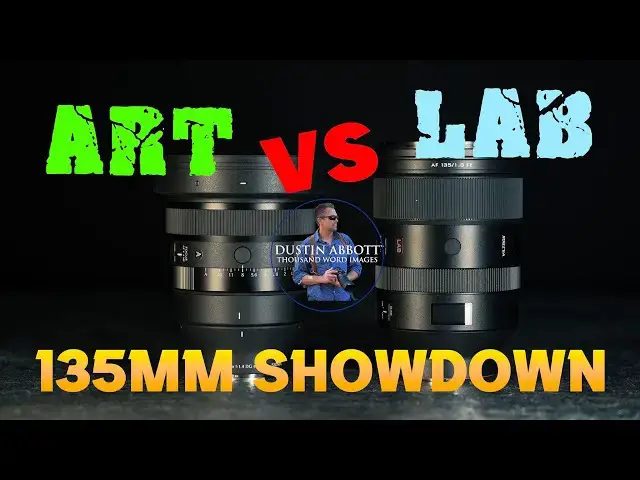
Photographer Dustin Abbott directly compares the Sigma 135mm F1.4 DG | ART with the Viltrox LAB 135mm F1.8. Which is the winner?
Sigma Reviews: Text https://tinyurl.com/135ARTda | Video https://tinyurl.com/ART135vid
Viltrox LAB reviews: Text: https://tinyurl.com/LAB135review | Video: https://tinyurl.com/LAB135vid
Purchase the Sigma 135mm F1.4 ART @ B&H Photo https://bhpho.to/4pcLzbG | Adorama https://howl.link/tqub2r1yr7um2 | Amazon https://amzn.to/4nkAN18 | Camera Canada https://tidd.ly/4maYIiR | Amazon Canada https://amzn.to/4ghJcjJ | Amazon UK https://amzn.to/4m6wYfe | Amazon Germany https://amzn.to/4n516ZF
Purchase the Viltrox AF 135mm F1.8 LAB @ Viltrox https://tinyurl.com/BuyLab135 (use code DUSTINABBOTT for 8% off) | B&H https://bhpho.to/3YLAYJM | Adorama https://howl.link/2wffw60qkjmth | Amazon https://amzn.to/3AhNGqe| Amazon Canada https://amzn.to/4ea4PQs | Amazon UK https://amzn.to/3CnIpOf | Amazon Germany https://amzn.to/4ftHomc | Pergear https://tinyurl.com/Buy135LAB
Check out the DA Merch here: https://bit.ly/TWIMerch | Become a Patron: https://www.patreon.com/dustinabbott | On the Web: http://dustinabbott.net/ | Sign up for my Newsletter: http://bit.ly/1RHvUNp | Instagram: http://bit.ly/DLAinsta | Facebook: http://on.fb.me/1nuUUeH | Flickr: http://bit.ly/1UcnC0B | 500px: http://bit.ly/1Sy2Ngu Follow Craig @ https://www.instagram.com/craigstoffersen/
Want to support this channel? Use these affiliate links to shop at:
B&H Photo: http://bhpho.to/1TA0Xge
Adorama: https://howl.link/nt4zdz1goa7ql
Camera Canada: http://bit.ly/DLACameraCan
Sony Canada: https://www.thesonyshop.ca/?ref=abbott
Amazon: https://amzn.to/3HrY64d
Amazon Canada: https://amzn.to/3qG1p18
Ebay: http://bit.ly/DustineBay
Into the AM Clothing: https://bit.ly/intotheAMda and use code DUSTIN10 for 10% off
Fioboc Clothing: https://tinyurl.com/FiobocDA20 and us code DUSTIN20 for 20% off
Make a donation via Paypal: https://www.paypal.com/paypalme/dustinTWI
=============================
Table of Contents:
=============================
0:00 - Intro
02:17 - Similarities
3:55 - Neutral Differences
4:31 - Reasons to choose Viltrox
9:09 - Reasons to Choose Sigma
11:58 – Conclusion
13:31 – Optical Deep Dive
---------------------------------------------------------
Oben Tabletop Tripod shown in video: https://bhpho.to/3vL8YWy
My Cameras:
Purchase the Sony a7RV @ B&H Photo https://bhpho.to/3ZivNyZ | Adorama https://howl.me/cjNY1LU3gFH | Amazon https://amzn.to/3CRCDlq | Camera Canada https://shrsl.com/3vulf | Sony Canada https://bit.ly/BuyA7R5 | Amazon Canada https://amzn.to/3H8yeNH | Amazon UK https://amzn.to/3kbg5FM
Purchase the Sony Alpha 1 @ Camera Canada https://shrsl.com/2wdk2 | B&H Photo https://bhpho.to/3upRFZd | Adorama https://howl.me/cj2nQpjLBKW | Amazon https://amzn.to/3t1m8MD | Sony Canada https://bit.ly/BuySonyA1 |Amazon Canada https://amzn.to/3cVFrBB | Amazon UK https://amzn.to/2OtrjGe | Amazon Germany https://amzn.to/3d0GtMO | Ebay https://ebay.us/i371Vs
Canon EOS R5: B&H Photo https://bhpho.to/3iMH18x | Amazon https://amzn.to/33L3D53 | Camera Canada https://shrsl.com/2jqth
Purchase the Fujifilm X-H2 @ B&H Photo https://bhpho.to/3KAInTC | Adorama https://howl.me/cjyzbiO5lVp | Amazon https://amzn.to/41zMzKl | Camera Canada https://shrsl.com/4128o | Amazon Canada https://amzn.to/40gY4W7 | Amazon UK https://amzn.to/43Grn7a | Amazon Germany https://amzn.to/3L6hwjR
Get a discount off all Skylum Editing Software (Luminar, Aurora HDR, AirMagic) by using code DUSTINHDR at checkout: http://bit.ly/LuminarDLA
DISCLAIMER: This video and description contains affiliate links, which means that if you click on one of the product links, I’ll receive a small commission. As an Amazon Associate I earn from qualifying purchases.
Keywords: Sigma 135mm, 135mm ART, 135mm F1.4, 135 f/1.4, DG, ART, Sigma 135mm ART, Sigma 135mm F1.4, Sigma 135mm F1.4 DG | ART, Sigma 135 ART Review, #SIGMAEmount, #SIGMA, Viltrox LAB, F1.8, LAB 135mm, #SIGMA135mmF14Sport, #SIGMAART, Full Frame, Review, Sony Alpha 1, Sony a7RV, Review, Hands On, Dustin Abbott, Real World, Comparison, Sharpness, Bokeh, Flare Resistance, Autofocus, Image Quality, Sample Images, Video, Photography, let the light in, weathersealing, #letthelightin, DA
Show More Show Less View Video Transcript
0:00
[Music]
0:08
[Music]
0:10
The two most recent 135mm lenses on the
0:14
Sony E-mount platform are probably the
0:17
most interesting. One of those that was
0:19
released last year is the Viltrox Lab
0:22
series 135mm f1.8. And then we have the
0:25
new contender which is the Sigma 135mm
0:28
f1.4. 4, the world's first f1.4.
0:32
I thought I would take advantage of
0:34
having these two lenses at the same time
0:36
to give you one of my head-to-head
0:38
comparisons because I suspect that these
0:40
lenses might get cross shopped a bit.
0:43
And those of you that are trying to
0:44
decide on whether or not you want 135
0:46
millimeter lens, which one to go with,
0:48
there are definitely some really
0:49
compelling options here. Now, both of
0:51
them have a really obvious advantage
0:53
over the other. In the case of the
0:55
Viltrox, it retails for under $900.
0:59
Whereas the Sigma comes in at $1,900.
1:02
That's a $1,000 difference. That's
1:04
pretty obvious. But of course, the Sigma
1:06
is the world's first with an F1.4
1:08
aperture at this 135mm focal length. And
1:11
as we're going to see, that does give it
1:13
some advantages. So, what I have done is
1:16
I have worked off of a tripod and I have
1:18
done a series of comparison shots.
1:21
everything from chart testing to
1:23
portrait work and then of course a lot
1:26
of things in between trying to look at
1:27
the bokeh quality, the various optical
1:30
qualities along the way. And so today
1:32
we're going to do a series of
1:34
comparisons and at the end of the video
1:36
we'll do that actual deep dive into
1:38
those head-to-head if you want to see
1:39
all of that. But in the short term I'm
1:41
going to look at the things that are
1:42
similar between these lenses, the things
1:44
that are different and what I consider
1:46
to be the advantages for each one. and
1:48
so you can make a more informed decision
1:50
as to which one is your winner. Sound
1:53
interesting? Let's dive in and find out.
1:56
Now, in interest of a future showdown,
1:58
just to let you know, I am filming on
2:00
another one of these brand new Sigma
2:02
lenses. In this case, the 35mm F1.2 Mark
2:05
II, and I will be putting that
2:07
head-to-head with another Viltrox lens,
2:09
the Lab 35mm F1.2. So, stay tuned for
2:13
that in the future. Let's start by
2:15
talking about some of the things that
2:17
are similar between these lenses. They
2:19
do have a mostly similar feature set and
2:22
so that includes the ability to have
2:25
complex aperture control, be able to
2:27
declick the aperture, do aperture
2:29
racking, things like that. They have uh
2:32
an auto AFMF switch. They have custom or
2:35
function buttons and so the ability to
2:37
control various features like that. They
2:40
both have thorough weather sealing
2:42
starting with a gasket at the lens mount
2:44
and then seals throughout the lens and a
2:46
special coating on the front to resist
2:48
fingerprints and moisture. Both of them
2:51
have roughly similar autofocus speed.
2:53
They both have dual focus motors,
2:55
advanced focus motors, and autofocus is
2:58
near instant. And you can see here
3:00
whether we're looking at the Sigma or at
3:02
the Viltrox autofocus that both of them
3:04
are achieving, you know, really, really
3:06
snappy results back and forth. Not
3:08
enough difference there, I think, really
3:10
to distinguish the two. Neither one of
3:12
them have any issues with fringing, be
3:14
it longitudinal style or lateral style
3:17
chromatic aberrations. And we'll see
3:18
that a bit more in one of our test at
3:20
the optical breakdown at the end. Both
3:23
being thirdparty lenses suffer from the
3:25
same limitations here on the Sony
3:27
platform that I'm testing. Namely, you
3:29
can't shoot any faster than 15 frames
3:31
per second on any of the sport bodies.
3:33
and they also don't have access to
3:35
things like focus breathing
3:37
compensation.
3:38
So those are going to be limitations
3:40
that they both have to deal with.
3:42
Neither one of them has teleconverter uh
3:45
compatibility and that would be true
3:48
here on Sony because they're thirdparty
3:49
lenses, but neither one of them are
3:51
designed for use with teleconverters
3:53
either. And so both of them share those
3:55
limitations. Now, one obvious difference
3:57
that I'm just going to call a neutral
3:59
difference is that because the Sigma is
4:02
bigger and heavier, it does have a
4:04
tripod collar and foot here. And so, for
4:07
some of you, that might be a plus
4:08
because if you're working off of a
4:10
tripod, having that ability could be
4:12
good. However, with the Viltrox lens, it
4:14
doesn't have one, and neither have I
4:15
ever looked for one. And of course, it
4:17
needs a little bit less because it's
4:20
hard to call this lens smaller and
4:21
lighter, but in this case, it actually
4:23
is. And so, uh, that's a a distinction
4:26
there, but I'm not sure that it is
4:28
really a pro or a con because of the way
4:31
that it plays out. So, let's start by
4:33
talking about some reasons to choose
4:35
last year's Lab Series lens. The first
4:38
and most obvious of those, as we
4:39
mentioned in the intro, is the price. It
4:42
retails for the MSS MSRP is $899,
4:46
but with a discount code ones available
4:49
down in the description, you can drop
4:51
that price by about 5% and get more into
4:54
the $850 range. Whereas the Sigma lens
4:57
has an MSRP of $1,899.
5:01
So, at least $1,000 difference between
5:03
the two. That's obviously huge. You can
5:06
buy two of these for the price of the
5:08
one Sigma and have a little bit of
5:10
change left over there. Also, the lab
5:13
lens because it has an LCD screen and a
5:17
different kind of implementation here.
5:18
It actually has the ability to customize
5:21
it a little bit more. It has two
5:23
function buttons as does the Sigma lens,
5:26
but whereas the Sigma buttons will only
5:28
work redundantly, you can actually
5:30
program a different function to each of
5:32
these lenses through Viltrox's app. And
5:34
so that you can actually set like AB
5:37
focus for example and so do do instant
5:39
focus pools to that. So you have a a
5:42
focus distance scale, little things like
5:44
that. And so Viltrox definitely took a
5:46
little bit more risk when it comes to
5:48
the development of their design, but it
5:50
does give you a few more options there.
5:52
Another interesting uh advantage for the
5:55
Viltrox that is lacking on the Sigma,
5:57
one that I'm surprised by, is that the
5:58
Viltrox does have a focus limiter switch
6:02
that can be useful obviously if you're
6:04
trying to constrain your range to
6:06
exclude close focus or to only shoot at
6:08
close focus. And whereas with the Sigma,
6:11
you're stuck shooting the full range all
6:13
of the time. that's probably more useful
6:15
on the Viltrox because that leads us to
6:17
another advantage for the Viltrox and
6:19
then it is has the ability to focus down
6:22
much more closely uh into the like 70 cm
6:26
range as opposed to the 110 cm range for
6:28
the Sigma and the resulting
6:30
magnification is much higher on the
6:31
Viltrox a 0.25 25 times magnification or
6:35
a 1:4 ratio whereas we have more like a
6:38
0.144
6:40
times magnification here on the Sigma
6:43
lens. So as you can see that is
6:45
radically different.
6:47
Now while the neither one of these
6:49
lenses suffers much from vignette, the
6:51
Viltrox has less and it more obviously
6:55
has much less distortion. It basically
6:57
has zero distortion and zero vignette,
7:00
whereas the Sigma has a little bit more
7:02
vignette, but more importantly, it has
7:06
pretty obvious amount of pin cushion
7:08
distortion. So, definitely an optical
7:10
advantage there for the Viltrox. The
7:12
Viltrox, although it is a big heavy
7:15
lens, a year ago, we were complaining
7:16
about how this was bigger and heavier
7:18
than all of the other 135mm options on
7:21
the platform, it now has seated that to
7:24
the Sigma. And so it is actually nearly
7:26
200 grams lighter. It is about 19
7:30
millimeters narrower in diameter. And
7:33
while it is a hair longer, uh what you
7:36
mostly see is that big big diameter up
7:39
front that is much much larger larger on
7:41
the Sigma due to having that f1.4
7:43
maximum aperture. The other thing that
7:45
comes out of that is that the lens hood
7:48
for the Viltrox is kind of a what you
7:51
might call a normal size, whereas the
7:54
hood for the Sigma is what you might
7:56
call massive. And so you can see here
7:59
that that hood for the Sigma just goes
8:02
uh easily all around the entire diameter
8:05
of the Viltrox lens. Whereas here um if
8:08
you tried to put this hood on the Sigma,
8:11
you can see that there's a lot of room
8:12
to spare. And so these two hoods are
8:15
just the Sigma Sigma's hood is massive.
8:18
I can drop the hood of the Viltrox
8:20
inside of it. And so that's certainly a
8:23
factor that you might want to consider.
8:26
One other thing while we're looking up
8:27
front is that the Viltrox has a very
8:31
common 82mm front filter thread. That's
8:34
what basically all the other 135 f1.8
8:37
lenses on Sigma have. And whereas on the
8:40
Sigma, we have a very large 105 mm front
8:44
filter thread. So filters are not only
8:46
going to be more expensive, they're also
8:47
less common. And in this case with a
8:50
fast maximum aperture, you might want
8:52
filters. And so, you know, particularly
8:55
like an ND filter, which means you're
8:57
going to be spending even more money to
8:59
purchase filters to cover that, whereas
9:01
you be more likely to have 82 millimeter
9:04
filters. And if you don't, they are
9:05
cheaper than 105 millimeter filters.
9:09
So, how about some reasons to choose the
9:11
new Sigma instead? Well, the obvious
9:14
reason is the trade-off for that big
9:16
maximum aperture is that it is a big
9:18
maximum aperture. It is 2/3 of a stop
9:21
brighter than the f1.8 of the Viltrox
9:24
lens. And so, that means it's able to
9:26
let in a lot more light. And that comes
9:29
with a lot of different advantages that
9:31
we'll detail here. One of those is that
9:33
it comes with bigger, softer bokeh
9:35
highlights. And so definitely if you're
9:37
looking at specular highlights and an
9:39
applesto apples comparison, the ones on
9:41
the Sigma are much obviously bigger and
9:44
softer. It also means that you do have
9:47
some other bokeh advantages and just
9:49
kind of the optical signature. I feel
9:51
like the Sigma lens is a bit smoother in
9:53
the transition zone and has just a
9:56
smoother transition from focus to
9:58
defocus as a byproduct. It also is going
10:01
to demonstrate better low light
10:03
performance. One of the great
10:04
applications I found with the Sigma is
10:06
that it's really fantastic for doing
10:09
something like deep sky
10:10
astrophotography. Uh, and so shooting at
10:13
night, it's got low vignette. It's very
10:15
sharp and it's very bright and so it's
10:17
really useful for that. More so there
10:20
than what the Viltrox is going to be
10:22
because it's sucking in that much more
10:23
light. I also find that while you know I
10:27
as I said Viltrox took some risk with
10:29
the implementation of their uh having
10:32
LCD screen and the way that it functions
10:34
with the aperture ring I vastly prefer
10:36
the traditional aperture ring here that
10:39
comes with the Sigma. It just works more
10:41
efficiently. It's less glitchy. uh you
10:44
know, even on my copy of the Viltrox,
10:46
the what shows up on the LCD screen
10:48
doesn't perfectly line up with the
10:50
aperture stops, and so it's just it's
10:52
not perfectly calibrated. So, it's
10:54
little things like that that aren't a
10:56
big deal, but they're kind of annoying.
10:58
And the Sigma just feels like it's
10:59
better implemented. Now, I critiqued the
11:02
Sigma for the size of the hood, but one
11:04
thing I do like better between the two
11:06
lenses, and that is the simple fact that
11:08
the Viltrox hood, it doesn't stay locked
11:11
into place nearly as well. Whereas the
11:14
Sigma hood, while it is massive, it
11:16
actually has a dedicated lock and so
11:19
it's not going to be slipping around at
11:20
all. You do have to release that lock to
11:22
release the lens hood, but it's just
11:24
much more reliable than this Viltrox
11:26
hood, which just doesn't stay on right.
11:29
And so I do find that a bit annoying
11:31
there. And finally, Sigma has been
11:33
making lenses for a long time and it
11:36
shows. They're just a little bit more
11:37
polished in their general presentation
11:39
than what Viltrox is with the Lab
11:41
series. This Lab series represents
11:43
Viltrox trying some new things. And some
11:46
of those things I like, some of the
11:48
things I don't like as much. But I will
11:50
say generally I find that the Sigma just
11:53
feels like a little bit more mature,
11:54
less quirky product than what the
11:57
Viltrox does. So, that leads me to my
12:00
conclusion. Both of these lenses, as
12:02
you're going to see if you stick around
12:03
for the optical comparison, they are
12:05
amazing optically. They're just some of
12:07
the very best lenses that I have tested,
12:09
they both actually have really, really
12:11
good autofocus that is fast, accurate,
12:14
quiet, and operation. As I've just said,
12:16
I feel like the Sigma feels like a
12:18
little bit more mature product. And
12:21
obviously, that f1.4 4 aperture does
12:23
come with some certain assets, but the
12:26
Viltrox has truly unbelievable image
12:28
quality in some ways even a little bit
12:31
better than the Sigma as we'll see. And
12:33
obviously you can get that for way less
12:36
money. It's also of course smaller and
12:38
lighter and that's going to be a
12:40
consideration. So I would say buy the
12:42
Sigma if you just desperately want that
12:44
f1.4 for aperture and the things that it
12:47
can accomplish. And there are some
12:49
really some true values that come with
12:51
that. But if f1.8 works for you, save
12:56
your money and buy the Viltrox because
12:58
it remains a stunningly good lens
13:00
optically that really works beautifully
13:03
well for a whole lot less money, less
13:06
than half in fact. And that is a pretty
13:08
compelling argument for it. Now, if you
13:10
want more information, you have a couple
13:12
of options in the description down
13:14
below. There are links to my full
13:16
reviews on both of these lenses. And I
13:18
have thoroughly tested them in both
13:20
video and text form. And you can find
13:22
those in the description down below now.
13:24
And you if you want to see how they
13:26
compare optically and all of those
13:27
head-to-head situations that I
13:28
described, stay with me right now and
13:30
we're going to dive into that together.
13:32
So, we'll go through a series of
13:34
comparisons here. Always I'm going to
13:36
keep the Sigma on the left side and the
13:37
Vilt Trucks on the right side so you
13:39
know what you're looking at. Starting
13:40
here with vignette and distortion. You
13:42
can see that in both of these metrics,
13:44
the Viltrox takes a win. Uh it has
13:48
basically no measurable distortion and
13:50
almost no measurable vignette here on
13:52
E-mount. Whereas while the Sigma has a
13:56
low amount of vignette, it does you can
13:59
see that it does require some correction
14:00
and quite obviously it has a fair bit of
14:03
pin cushion distortion. So definitely a
14:05
win for the Viltrox on that front. So
14:07
we'll take a look at resolution and
14:08
contrast next. This is 61 megapixels
14:11
shown at 200% magnification. We'll start
14:13
with both lenses wide open. So that's
14:15
f1.4 for the art lens, f1.8 for the lab
14:20
series lens. So in this case with both
14:23
lenses wide open, the Viltrox is
14:26
slightly sharper and higher contrast in
14:28
the center of the frame. In the
14:30
mid-frame where I would argue that the
14:32
Sigma is best, it is a really really
14:35
close comparison. I think that the
14:36
Viltrox is still ever so slightly higher
14:39
contrast if you look at like the text
14:41
through this area, but the two lenses
14:42
are close there down into the corners.
14:45
Once again, the competition is very,
14:48
very close with hard to call a winner.
14:51
Though, I think maybe the contrast for
14:54
the Sigma lens is very slightly better
14:56
in the corners. Now, if we stop the
14:58
Sigma down to f1.8, 8. The center
15:00
comparison closes to where now I would
15:02
call them very very close in the
15:05
mid-frame area. It also is very close to
15:08
being a draw. They are both very good.
15:11
And down in the corners, I would say now
15:14
it is the Sigma that is sharper there.
15:16
Over here on this left side, the Viltrox
15:19
looks like it has a little bit higher
15:20
contrast in this kind of middle of the
15:22
frame zone and in this upper corner. The
15:24
two look very, very similar out in this
15:27
area. Maybe just a little bit more for
15:31
the Sigma lens. So definitely some give
15:33
and take with both of them at f1.8.
15:35
We'll just look at one more aperture,
15:36
f2.8, where both of these lenses are
15:39
pretty much perfect as sharp as they're
15:41
going to get. That is just a little bit
15:43
higher for the Viltrox, which as you can
15:45
see from the Moir there, it's almost
15:47
popping off the page. It is so sharp and
15:50
high contrast in the center of the
15:51
frame. Really, really fantastic.
15:53
Mid-frame, they both look really, really
15:56
excellent. And I think the Sigma, at
15:58
least in this zone, has very much a
16:00
slight edge, but the two of them are
16:02
extremely close. Down in the corners,
16:05
however, it's pretty clear that at least
16:08
in this area that it is the Sigma over
16:10
in this zone where Viltrox was a little
16:13
bit better before, it's still a little
16:14
bit better. And up in this corner, the
16:17
two of them are much more competitive,
16:19
very, very close. And so, I mean, it's
16:21
again, it's a bit of give and take. I
16:23
would say that the Viltrox is very
16:25
slightly more consistently good across
16:27
the frame. We'll look at one more of
16:28
these mid-frame areas. And both of them
16:30
are just amazing. Viltrox is just ever
16:33
so slightly higher contrast. Now,
16:35
another area where the Viltrox has a
16:37
pretty clear advantage is when it comes
16:39
to minimum focus distance and thus
16:41
maximum magnification. You can see that
16:42
the Viltrox is 0.25 25 times
16:45
magnification is much much higher than
16:48
what we see from the Sigma lens which is
16:51
down in the 0.14 times range. So
16:55
definitely a win for the Viltrox in that
16:57
metric. And of course that plays out in
17:00
the real world where not only do you get
17:01
a higher level of magnification but in
17:03
this case although the Sigma has the the
17:06
bigger maximum aperture and thus more
17:08
potential for blurring out the
17:09
background at most distances up close
17:12
the Viltrox is going to be the winner.
17:14
capable of just, you know, blurring out
17:16
the background completely, even though
17:18
the maximum aperture is a little bit
17:19
smaller. Sigma claws out a clear win
17:22
when it comes to the size of the
17:24
specular highlights. However, and you
17:26
can see that the bokeh balls, as they're
17:28
often called, are much bigger and also
17:32
rounder uh at the wide open apertures
17:34
between these two lenses. If I take a
17:37
look up here at just the contrast to see
17:39
if there's any kind of fringing, there's
17:41
a little bit more contrast for the
17:42
Viltrox lens, but neither one of them is
17:44
really showing any kind of fringing. The
17:47
biggest difference here though is the
17:48
size of those specular highlights. I
17:50
also noted when stopping down here at f2
17:53
that the Sigma does a better job of
17:55
getting that circular shape faster by
17:58
f2.8. However, both of them are quite
18:01
good. Now, the Sigma does have two more
18:03
aperture blades, 13 versus 11, but we
18:07
can see that both of them achieve kind
18:09
of a similar effect when it comes to
18:10
specular highlights here. Now, this test
18:13
shows one win for the Sigma lens and one
18:17
for the Viltrox lens. The Sigma win at
18:20
f1.4 versus f1.8. As you can see, that
18:23
background is just softer and creamier
18:26
than what it is from the Viltrox.
18:28
However, if we zoom into a pixel level,
18:30
we can see that the Viltrox is
18:32
definitely delivering better levels of
18:34
micro contrast. All of these textures
18:36
just really stand out with more
18:39
definition. And even if we stop the
18:42
Sigma down to f1.8, so apples to apples,
18:46
the Viltrox is still clearly higher
18:48
contrast, just better micro contrast in
18:51
those textures. Here's another situation
18:53
where I have focused on this area right
18:56
here. And if we look at these compared,
18:58
they're pretty close at this point. I
19:00
wouldn't really call a winner, but when
19:02
it comes to the softness of the
19:04
background, we do have a winner in that
19:06
the lines are just less obvious showing
19:08
up here. They're just soft. They're not
19:10
quite as soft looking on the Viltrox,
19:12
softer on the Sigma. And so that is the
19:15
advantage for the Sigma because of that
19:17
larger maximum aperture. In fact, even
19:19
if we stop the Sigma down to f1.8, 8. I
19:21
do think it retains a bit of an
19:23
advantage with the softness here uh
19:25
compared to the Viltrox lens. So, how
19:28
about flare resistance? Uh in this case,
19:30
I've positioned the sun kind of a a
19:33
typical shot where you might be shooting
19:34
with maybe the sun setting behind a
19:36
portrait subject. And you can see here
19:38
that the two lenses react in similar but
19:40
not identical levels. There's a little
19:42
bit of a halo effect on the uh Sigma
19:45
lens that's not present on the Viltrox.
19:48
There's also a little bit more of like
19:50
almost a light leak type look uh here of
19:53
kind of a veiling effect in the bottom
19:55
right of the image uh from the on the
19:57
Viltrox lens that isn't present there on
19:59
the Sigma. Now, interestingly, as I
20:02
stopped the lenses down, I found that
20:04
the Sigma's effect remained largely the
20:06
same. And so, in this zone of the image,
20:08
the two look very, very similar. But
20:10
what we see is that the Viltrox is
20:11
actually gone to a little bit higher
20:13
contrast level. So, shooting at f2.8,
20:15
eight, it actually does a little bit
20:18
less veiling than what the Sigma lens
20:20
does. These distinctions are really,
20:22
really minor, so probably not a major
20:23
difference. We'll conclude by looking at
20:26
a series of portrait uh images just to
20:29
see how they compare in this instance.
20:30
And so here in a similar type setting
20:33
and a roughly similar type pose, we can
20:36
see that if we compare the faces in
20:39
terms of the detail there, the results
20:41
are really, really close. Obviously, the
20:44
lighting is very slightly different
20:45
here, but as far as the amount of detail
20:48
that's there, both are very similar. If
20:50
we look towards the backgrounds here in
20:52
this particular image, they are not
20:54
radically different. Uh I would say that
20:56
if you looked at these images, you might
20:59
be you would be excused at least in
21:01
thinking that they were both shot with
21:03
the same lens because there isn't a
21:04
radical difference. However, I do think
21:07
that that superior geometry for the
21:09
Sigma does show up as you get towards
21:11
the sides here. And so, it's just a
21:13
little bit rounder looking in those
21:15
specular highlights and also a little
21:17
bit softer even though both of them are
21:18
at f1.8.
21:20
This particular image, however, shows a
21:22
bigger contrast. And so, number one, if
21:25
we start at f1.4.
21:27
So, these poses aren't identical. We'll
21:29
get to the identical pose here in just a
21:31
moment. You can see that both of them,
21:33
however, are producing plenty of
21:34
sharpness for this kind of setting.
21:36
Where I want to draw your attention,
21:38
though, is in this zone, which is
21:39
falling into a transition, a little bit
21:41
more of a complex area. There's no
21:43
question that the Sigma looks softer in
21:45
this zone versus the Viltrox. And so,
21:48
definitely an advantage there. Now, even
21:50
if we move to an applesto apples pose
21:52
here and so we can see both of these are
21:55
now at f1.8, 8. But looking at this
21:58
area, it still, to my eye, I think looks
22:00
a little bit softer on the Sigma than
22:02
what it does on the Viltrox. Now, yes,
22:04
the lighting isn't identical. That's the
22:07
problem with doing outdoor test. There
22:08
are variations in lighting. So, that
22:10
could potentially be a factor because it
22:12
is it's highlighting some of those
22:14
specular highlights with light that are
22:16
less so here. But, I do think that in
22:19
general, we're going to find that again,
22:21
the the backgrounds are just a little
22:23
bit softer with the Sigma lens. And if
22:25
we compare looking at sharpness and
22:28
contrast, even skin textures, they're
22:30
very, very different. The color
22:32
signature isn't identical between the
22:34
two, but they are extremely close. A
22:37
second shot here in this series, we can
22:40
see that again the can see those
22:42
background differences. They are minor,
22:44
but they do exist. And likewise, when we
22:46
look at the sharpness and contrast on
22:49
the face, the skin tones, it is very,
22:51
very similar. So, how about this shot
22:54
where we've got a nice full length here.
22:56
And so, this is where the advantage of
22:58
the f1.4 comes into play. Just giving
23:00
you a little bit more of a cutout look
23:02
from the background. So, again, if we
23:04
look at subjects at this distance, I
23:06
mean, there's plenty of detail on both.
23:08
There's a little bit more contrast,
23:09
micro contrast on the Vtrox if you look
23:11
in like the hair, but again, you would
23:14
be perfectly happy with that normally.
23:17
Looking towards the background, there is
23:19
that bit of difference where the
23:20
background is just a little bit softer.
23:22
the specular highlights are bigger uh
23:25
off of the Sigma lens and that gives a
23:27
bit of an advantage. Finally here with
23:29
both of them at f1.8 and a similar type
23:32
setting. Once again if we look in at the
23:34
subject micro contrast very slightly
23:37
higher on uh on the Vtrox lens but they
23:40
look very very similar. Not a whole lot
23:42
of difference. And again, if we look at
23:44
those backgrounds, you see kind of those
23:46
similar patterns that we have seen where
23:49
while there's a little bit of a kind of
23:51
a soap bubble effect here that's a
23:52
little more pronounced on the Sigma. And
23:55
at the same time, I do think that the
23:56
background is generally softer than what
23:58
it is on the Viltrox. So, that gives you
24:01
a look at maybe some of the comparative
24:03
strengths and weaknesses of the two
24:04
lenses optically. So, at the end of the
24:07
day, hopefully the deep dive into the
24:09
optical performance has helped you to
24:11
determine which one of these lenses is
24:13
going to be the best for you. As always,
24:15
thanks for watching. Have a great day
24:17
and let the light in.
Arts & Entertainment
Online Media
Science