


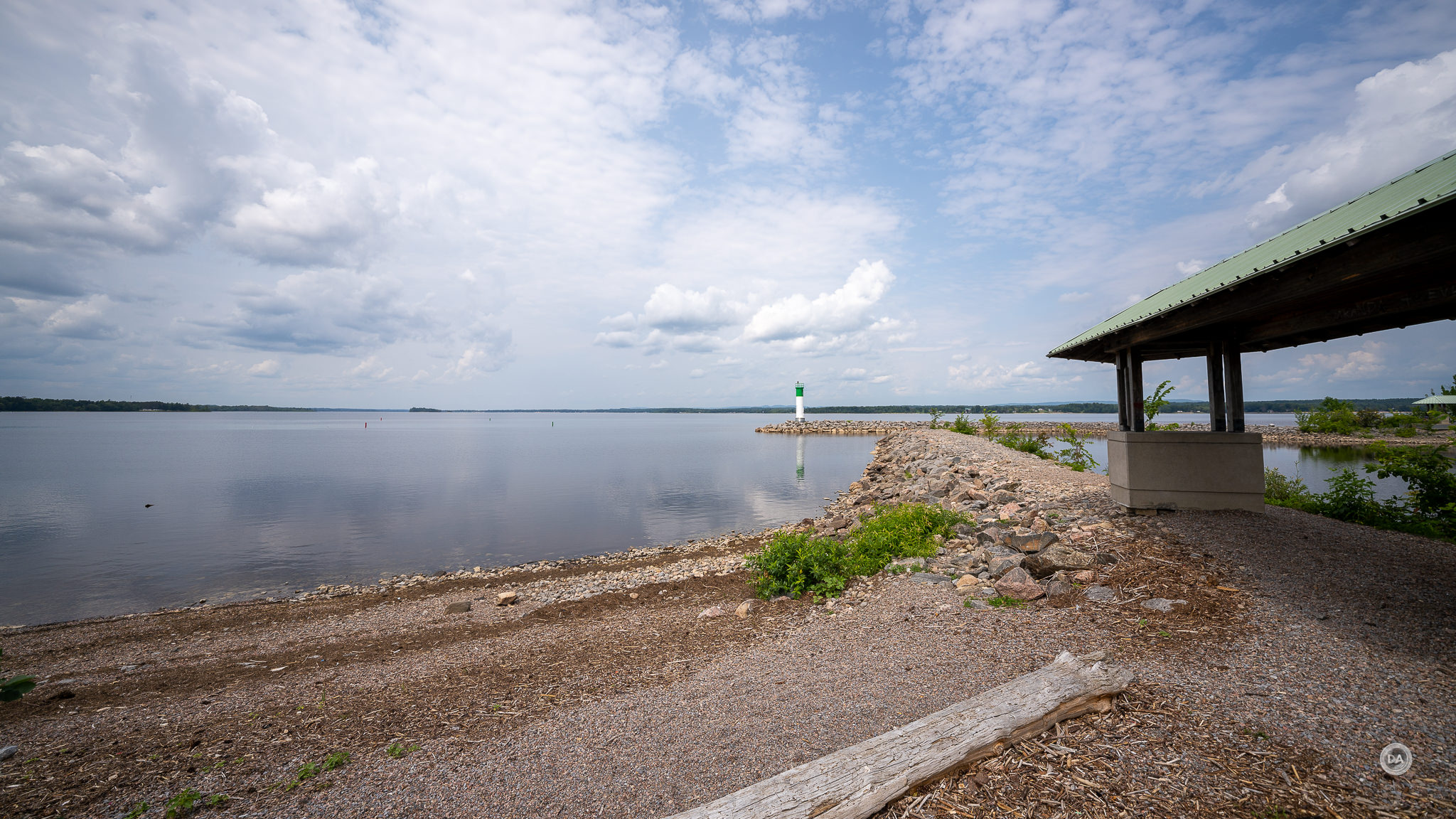
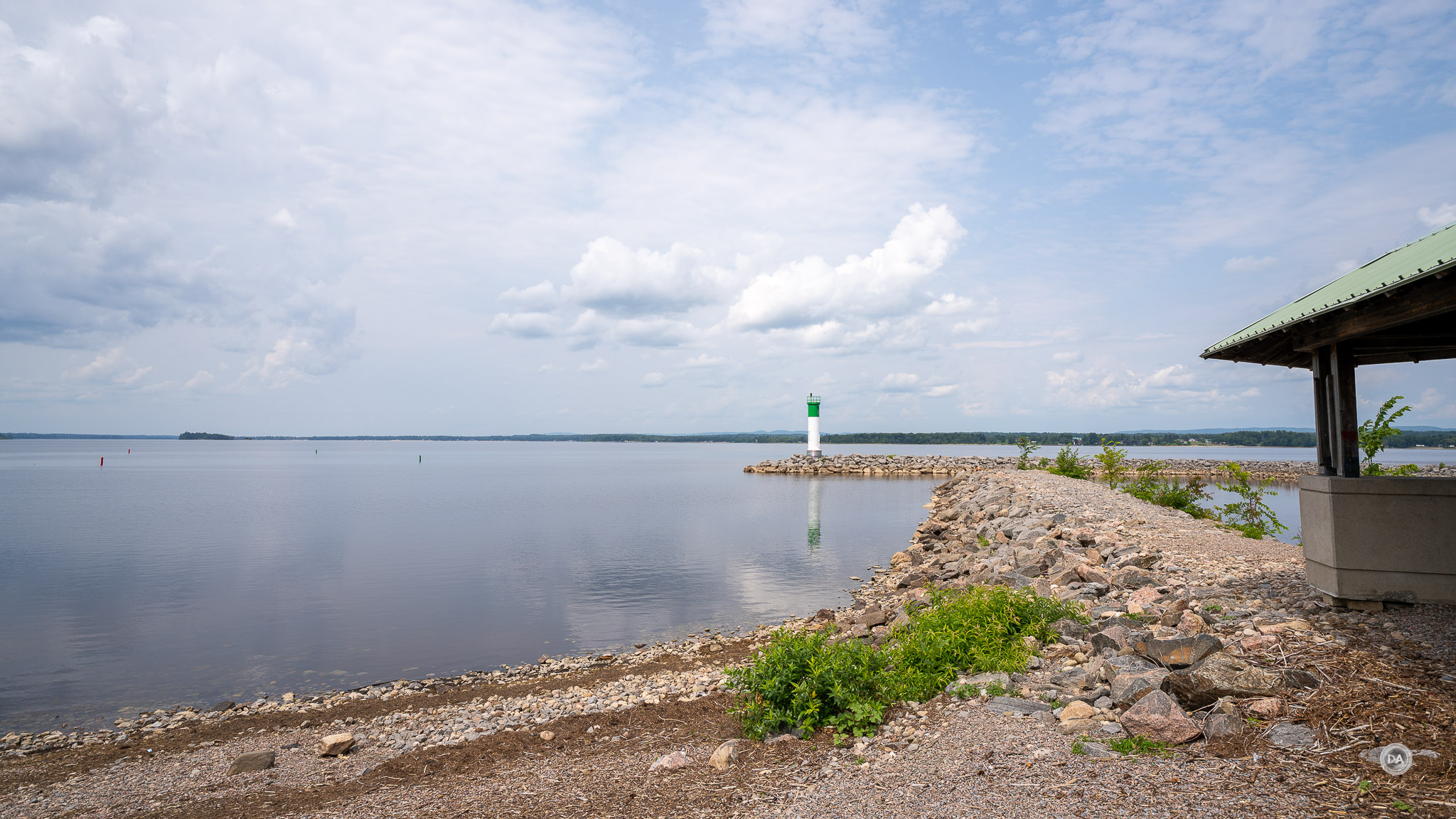

Build and Handling
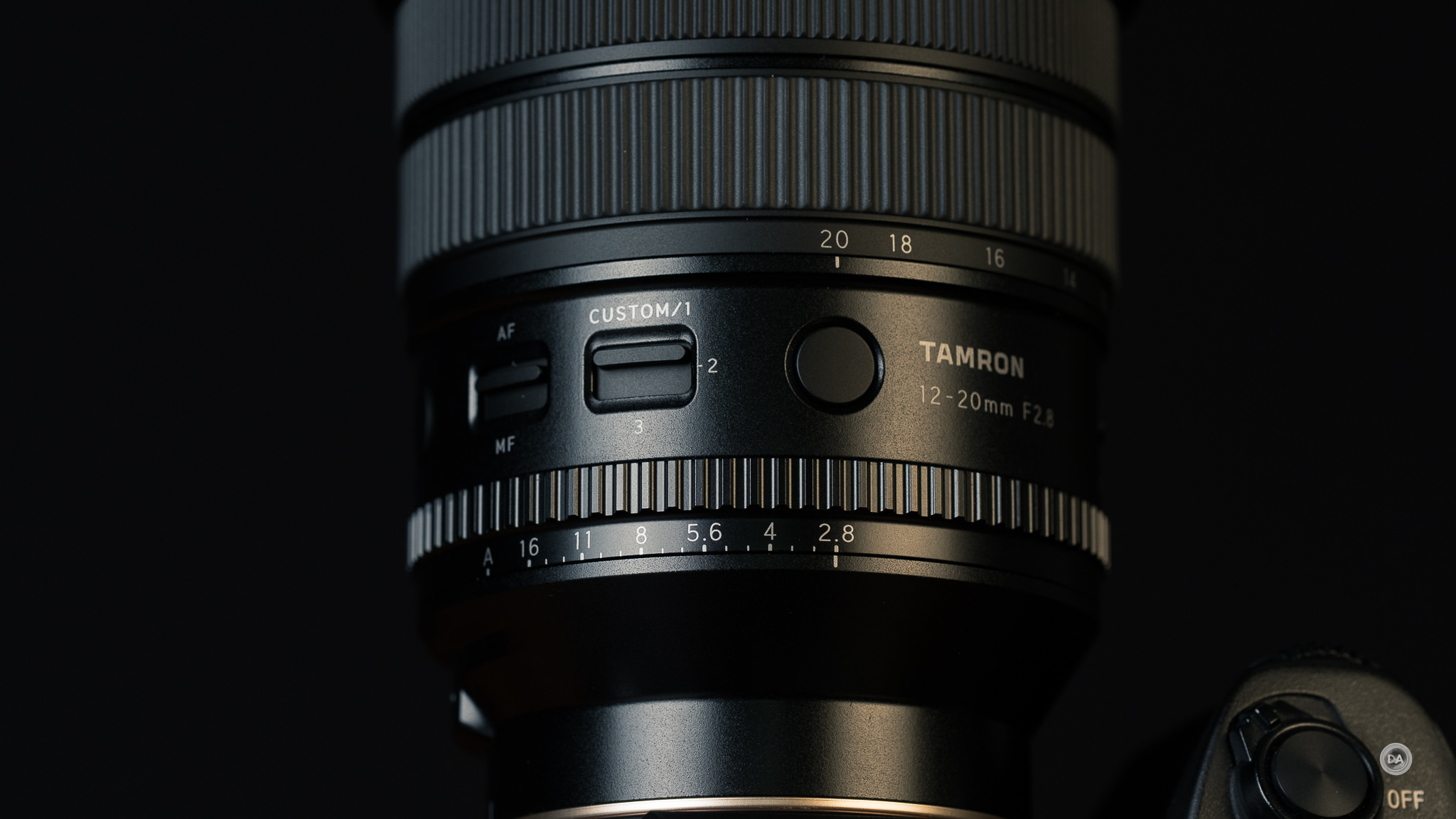
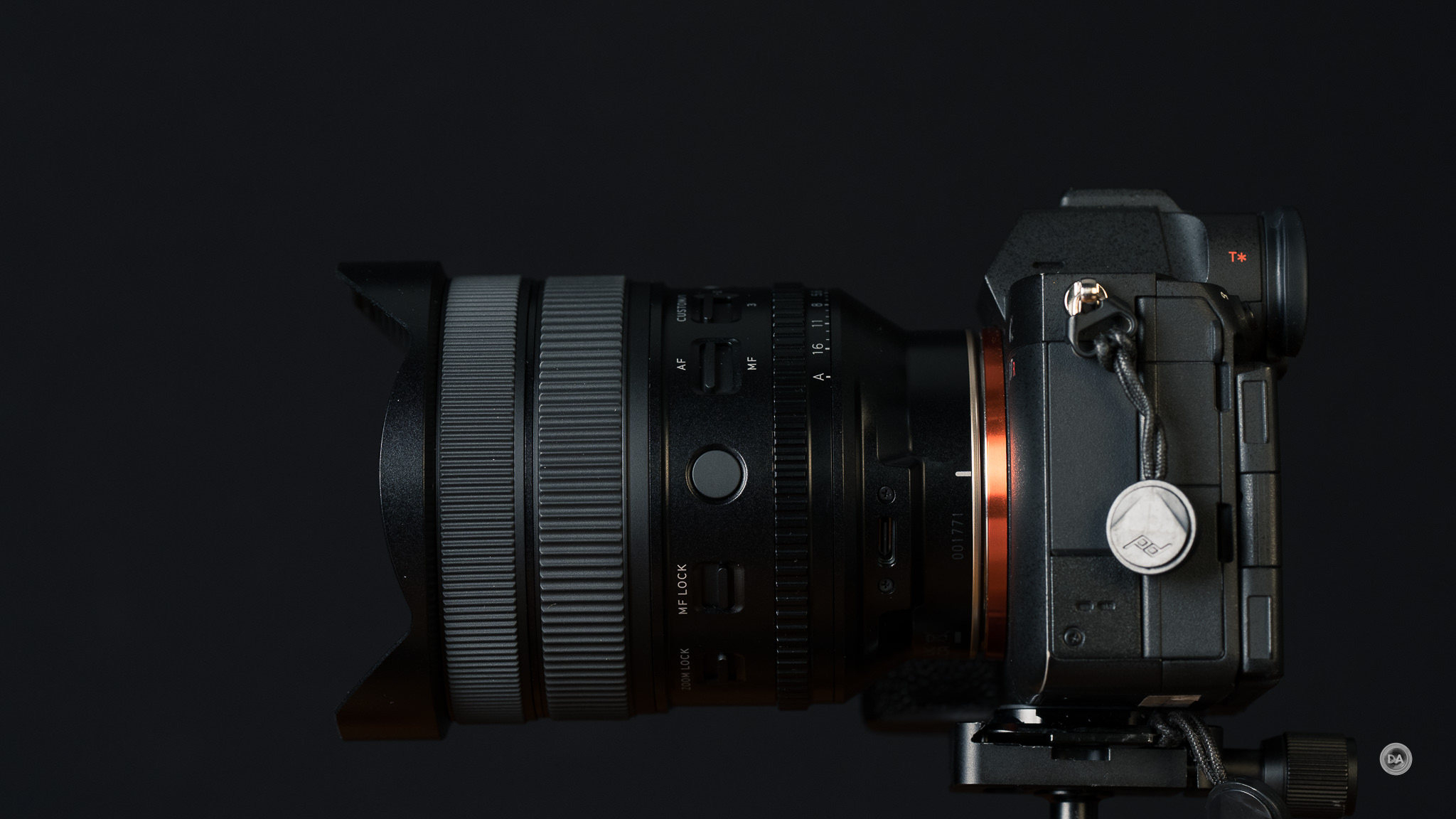
As noted, the Tamron 12-20mm is a departure from previous Tamron lenses in a number of ways. Tamron’s earliest lenses on these platforms were fairly minimalistic, with few features and mostly smooth barrels. Over time, they have introduced more features like a custom button and some switches, but even then they often chose to have one switch handle multiple controls through customization. Rather than a dedicated aperture ring, for example, selecting a certain position on the custom switch would allow the manual focus ring to serve as an aperture ring. But all of that changes here, and, if anything, the new 12-20mm has more switches than typical. We’ve got a whopping six switches, two custom buttons, and a dedicated aperture ring.
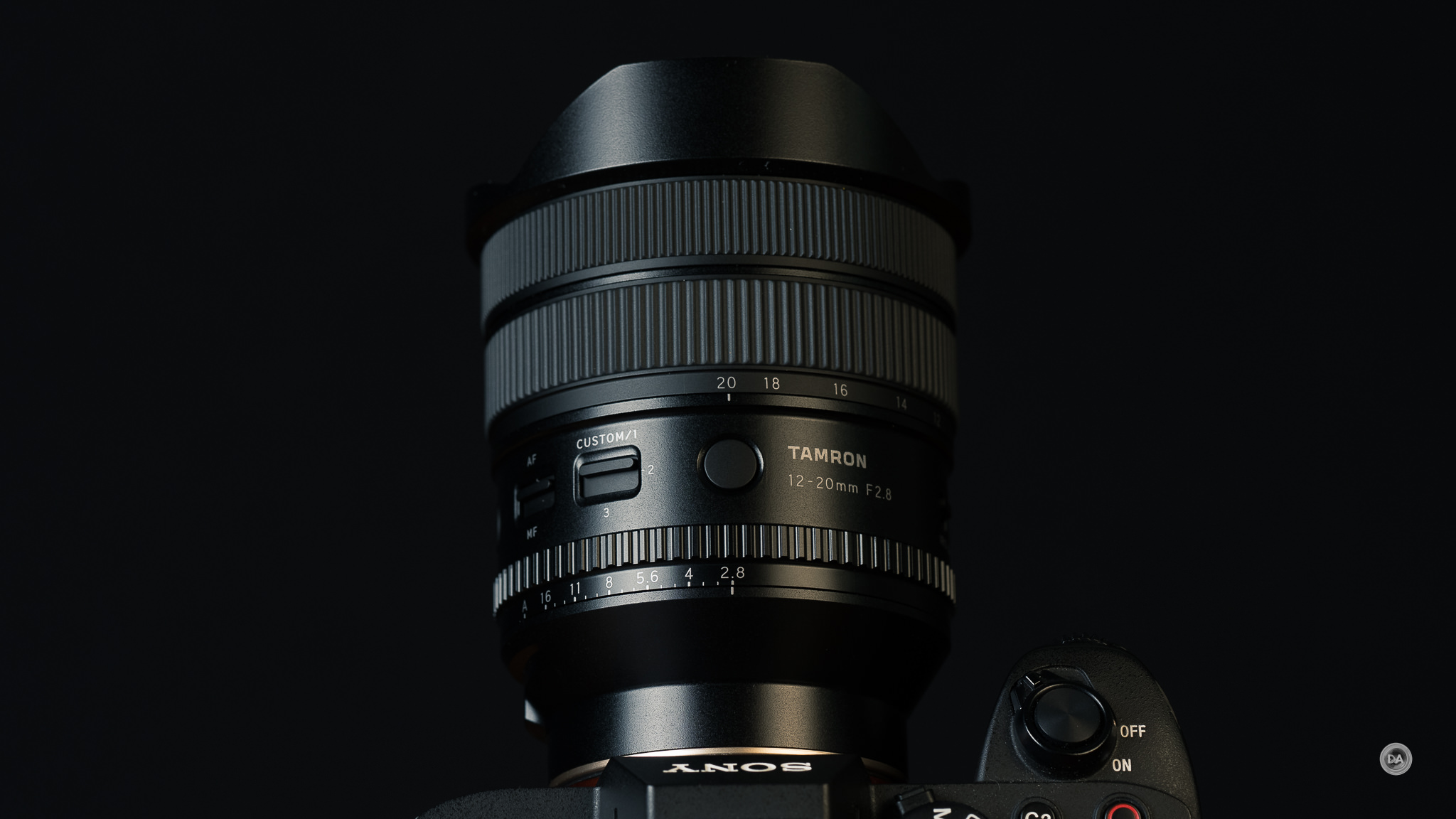
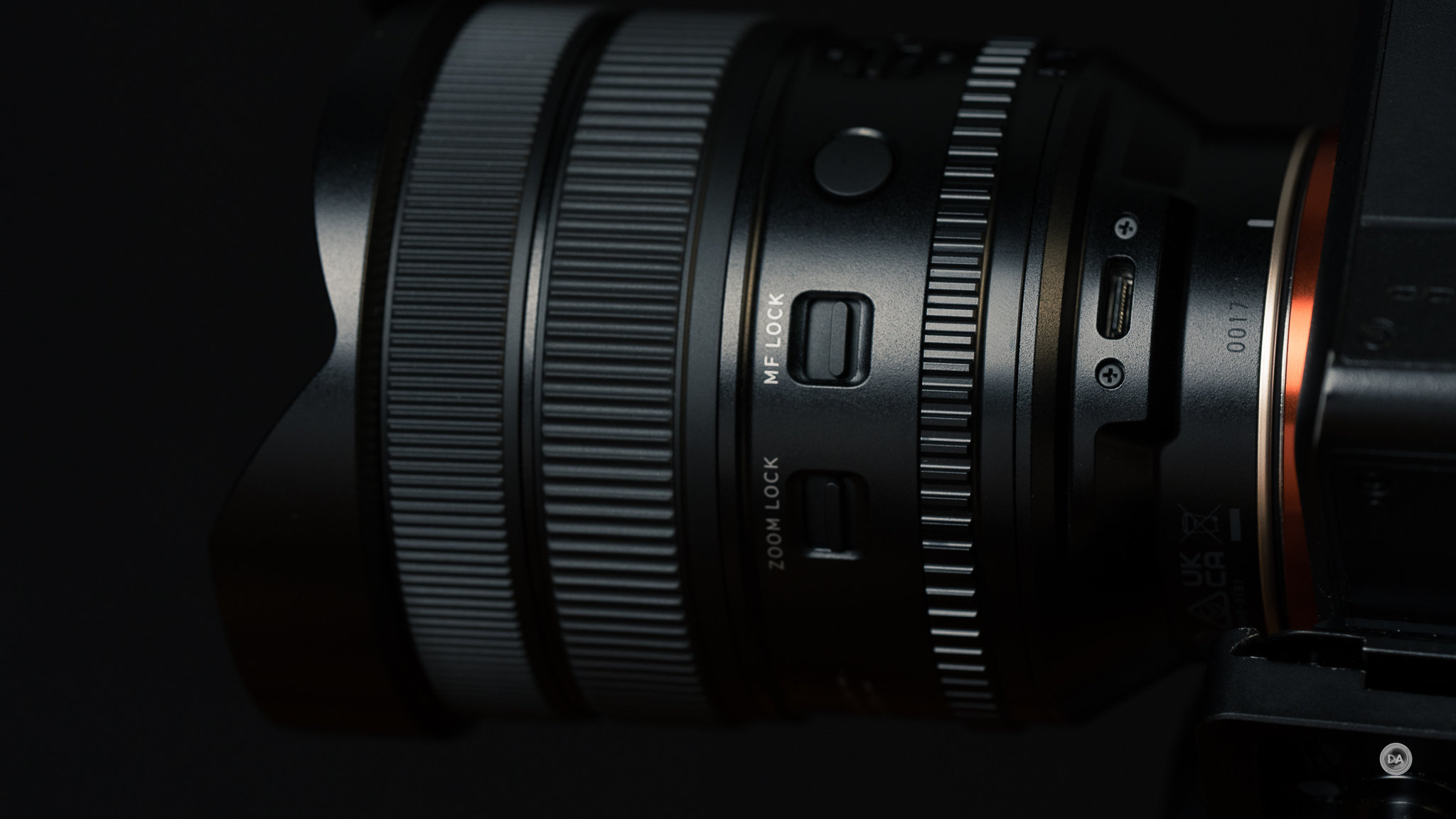
This is the first Tamron lens I’ve seen that has a dedicated aperture ring with marked positions, though on Nikon we get the customizable control ring instead without any marked aperture positions. Both versions get two switches dedicated to the ring, with an option to either have clicks or use the ring declicked (allowing for smooth aperture racks), while the second switch is an iris lock that will allow you to lock into or out of the ring to avoid unintentional changes.
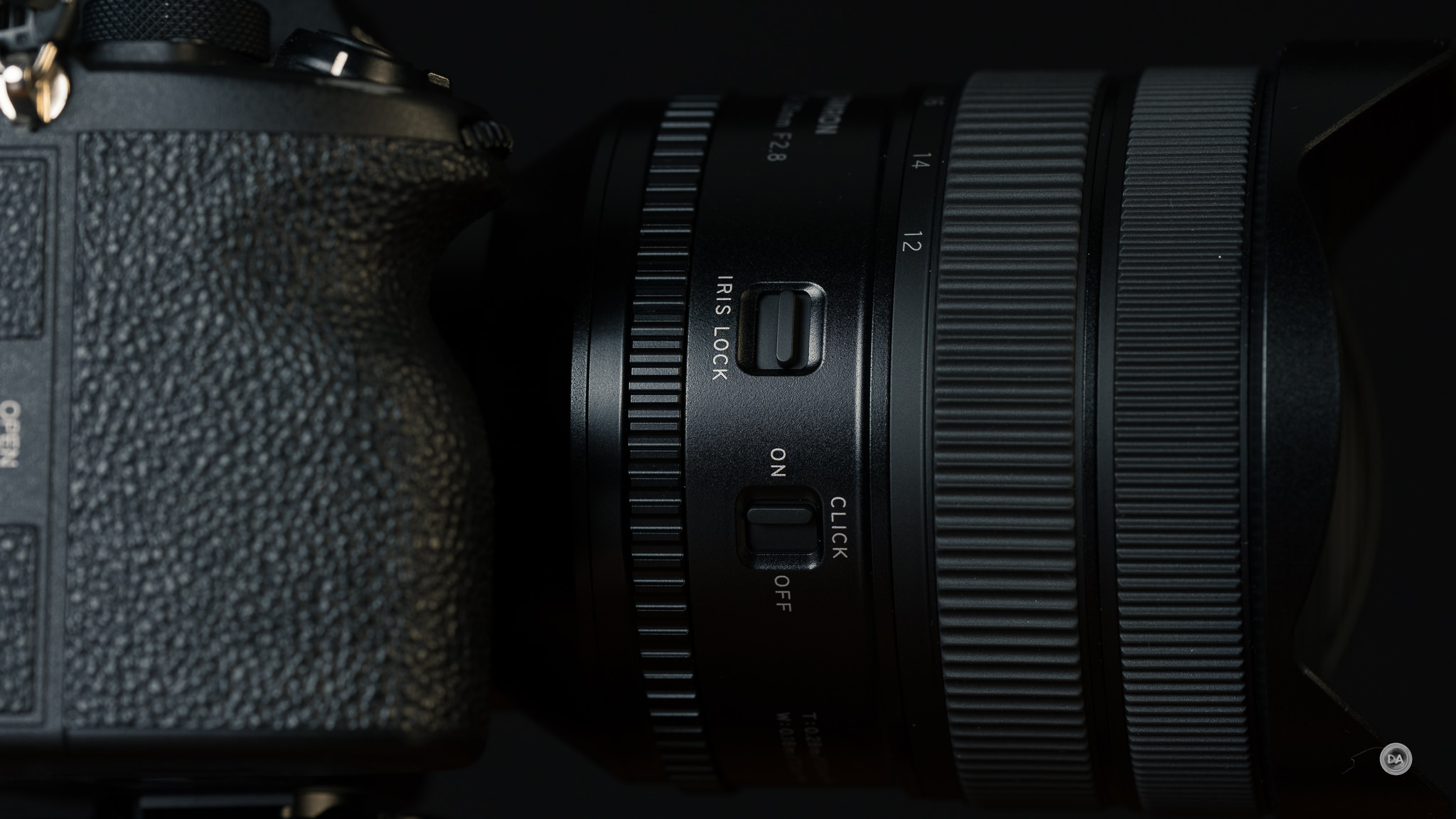
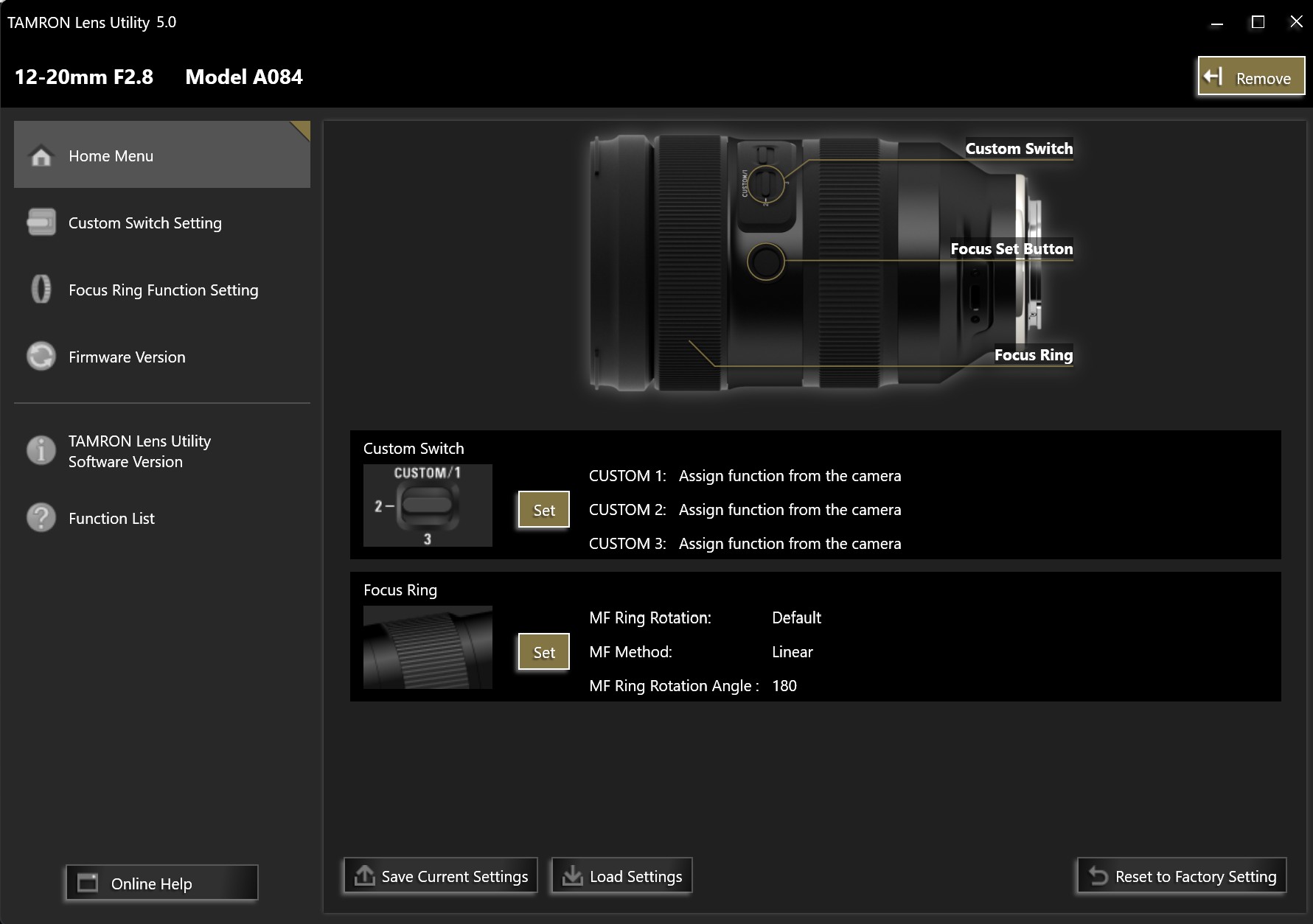
Tamron has retained a three-position custom switch that brings their unique approach to customization to the 12-20mm. You can use their Lens Utility app or desktop software to tweak the behavior of the lens, allowing you to assign unique values to the custom button beyond the single function that can typically be assigned through the camera.
Here’s a look at the list of various functions you can assign through the app.
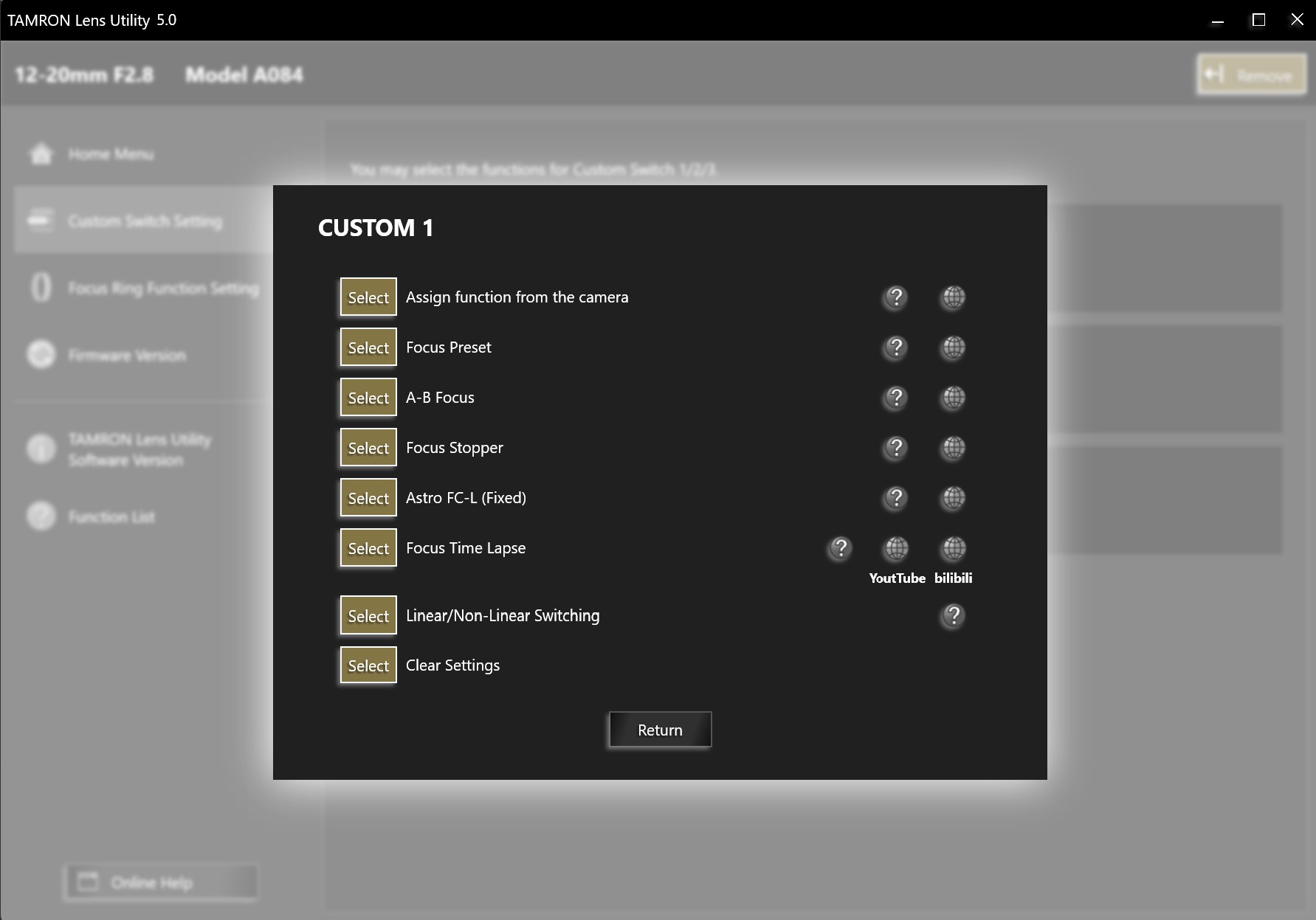
This includes a function I haven’t seen before – the ability to tweak settings for advanced timelapse recording, including focus changes.
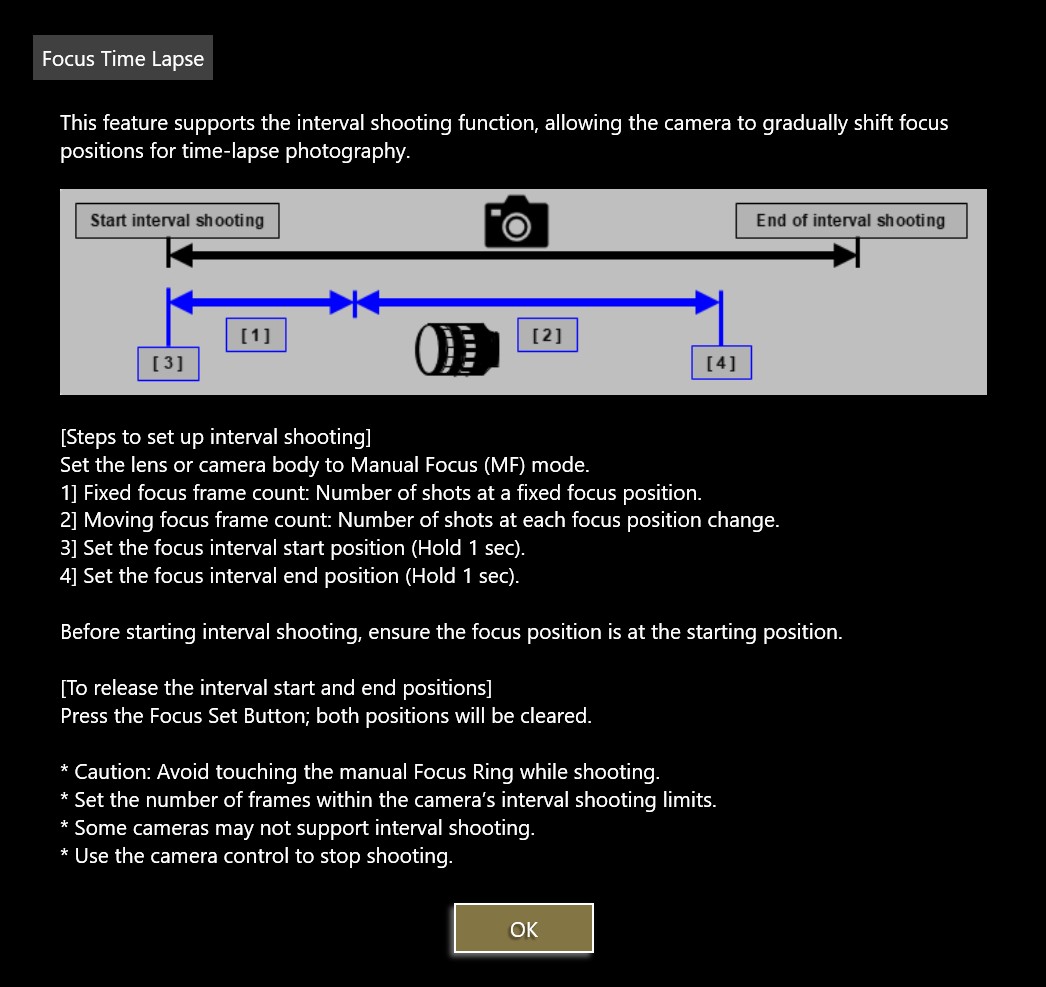
This is a more technical depth of integration with what is actually a camera (not a lens) function than what I’ve seen before. I’m reminded that no one is providing quite the granular level of customization that Tamron is on their lenses.
You attach the lens to a phone or desktop via a weather-sealed USB-C port on the lens barrel.
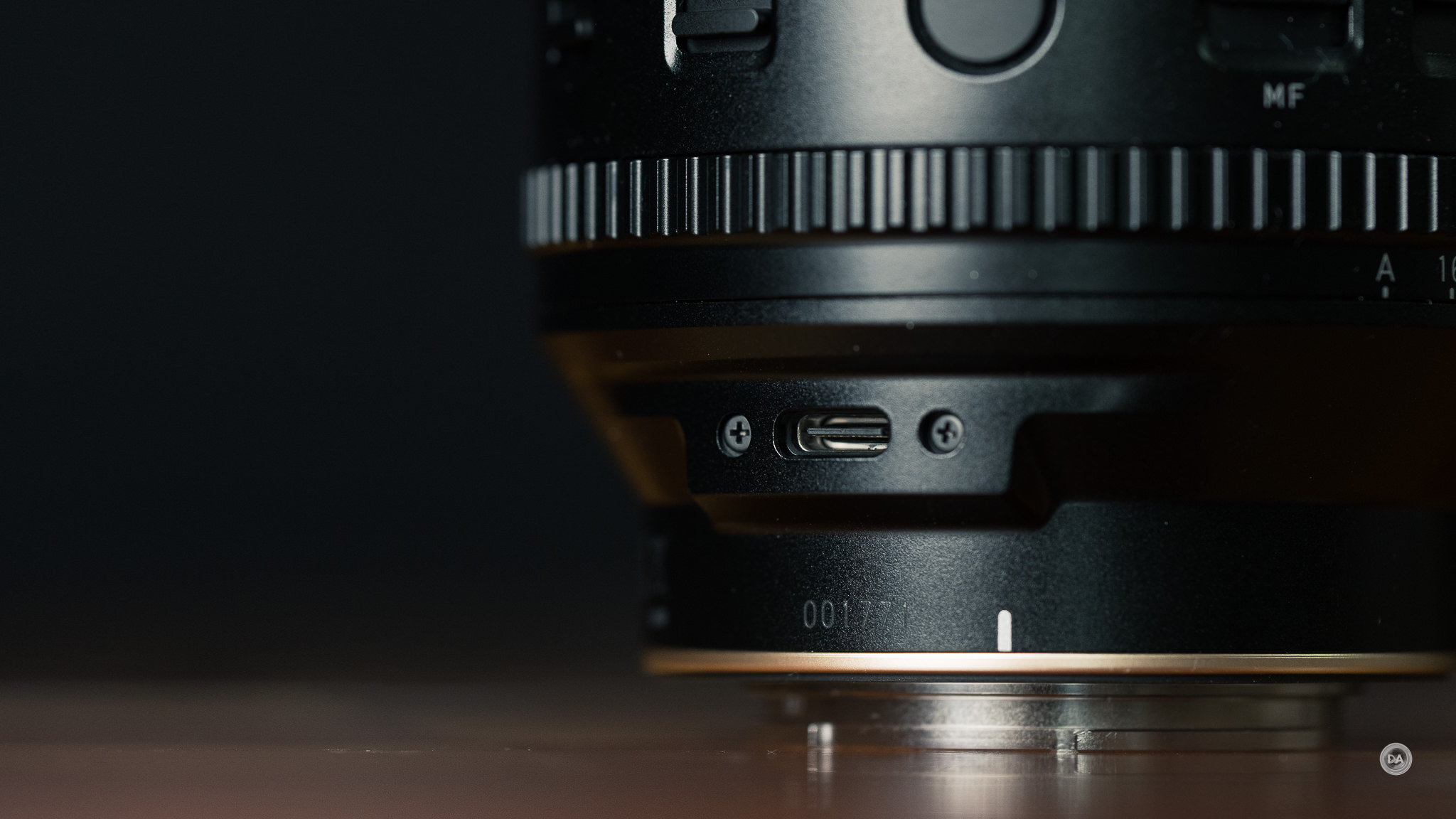
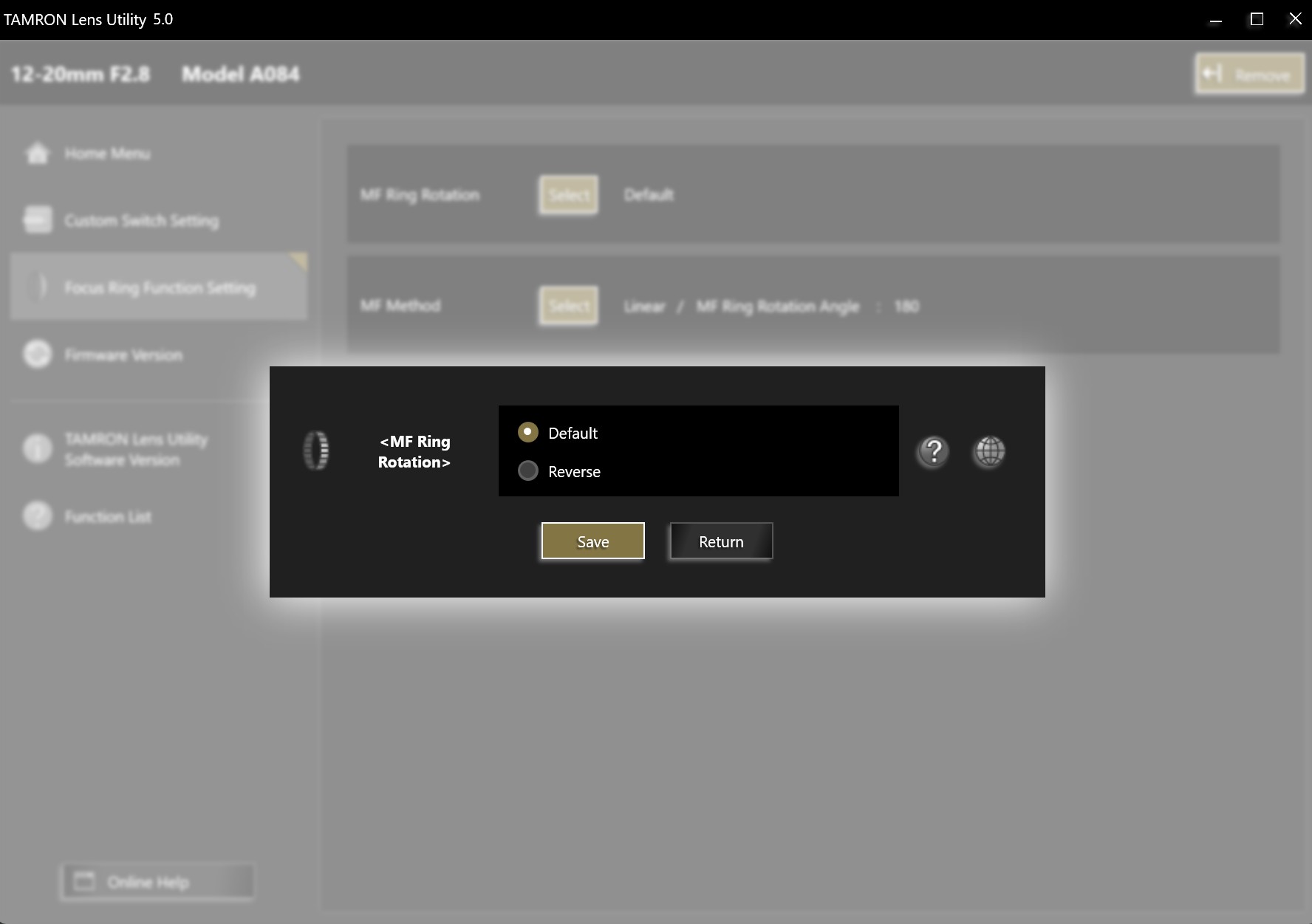
You can also tweak other lens behavior like how the manual focus ring will behave, from the direction to the length of the focus throw and whether or not the behavior will be linear or non-linear.
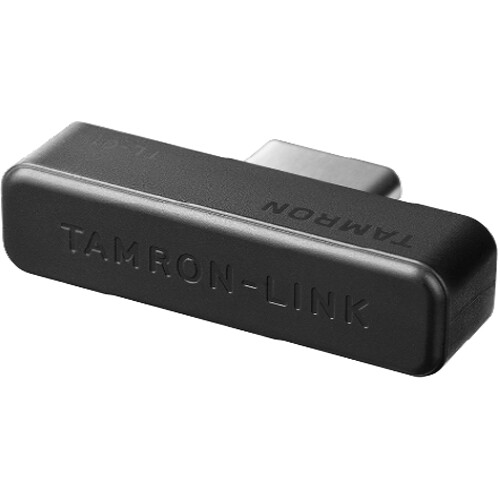
That USB-C port also enables you to use the Tamron Link accessory, which enables remote control of the lens. This could be very useful for many filming and some remote photography situations.
It isn’t just the USB-C port that is weather sealed, as there are seal points throughout the lens. Tamron says, “For greater protection when shooting outdoors, leak-resistant seals throughout the lens barrel help protect your equipment. The Connector Port is the water-proofed USB Type-C variety.” The diagram showing seal points on their lens page is for the wrong lens, however, so I don’t yet have a diagram to share here.
There are two redundant custom buttons to allow you quick access whether in portrait or landscape shooting positions.
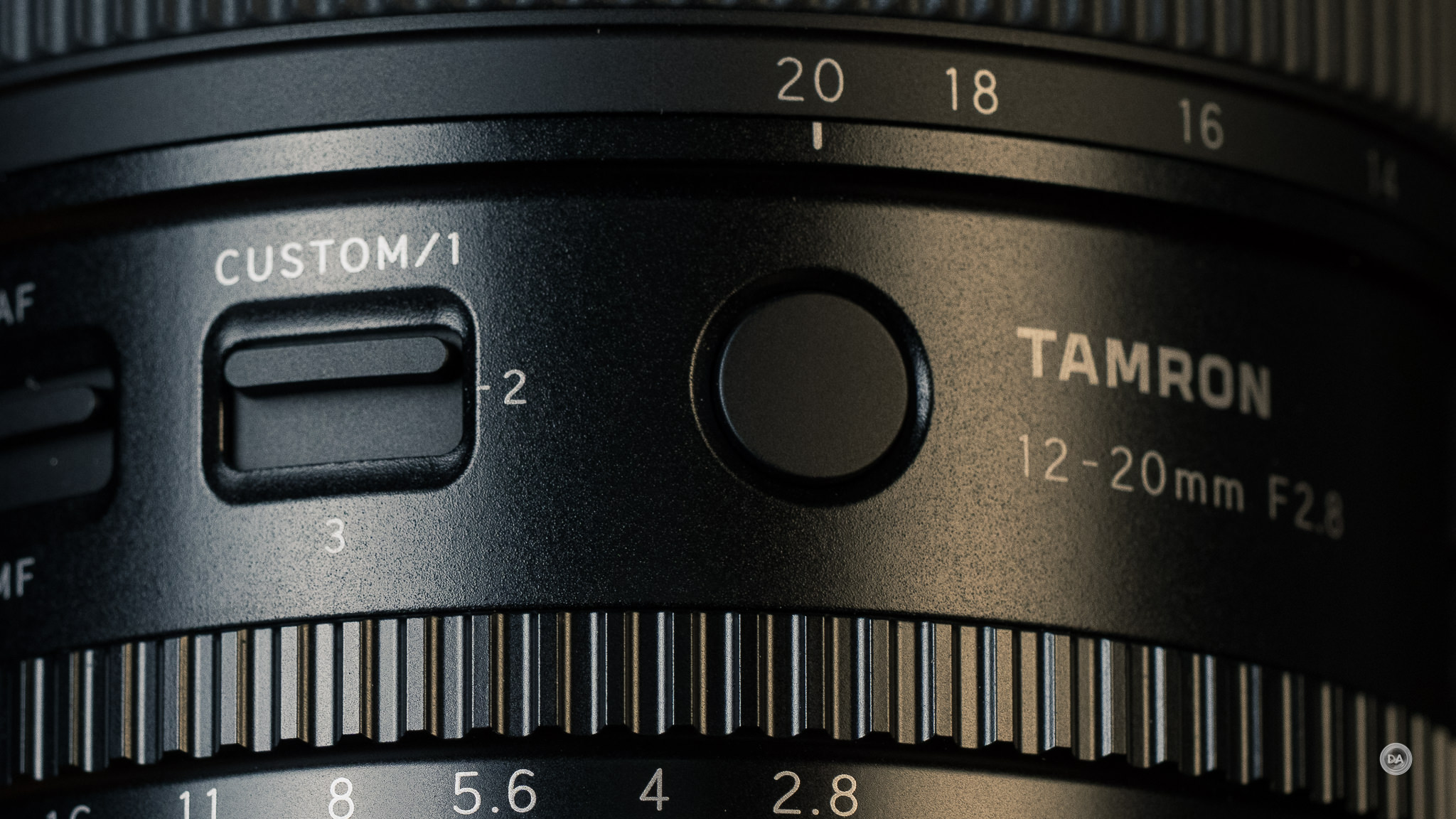
A standard AF | MF switches comes next. There’s also a standard Zoom lock switch, though in this case that might be less necessary considering that this is an internally zooming design.
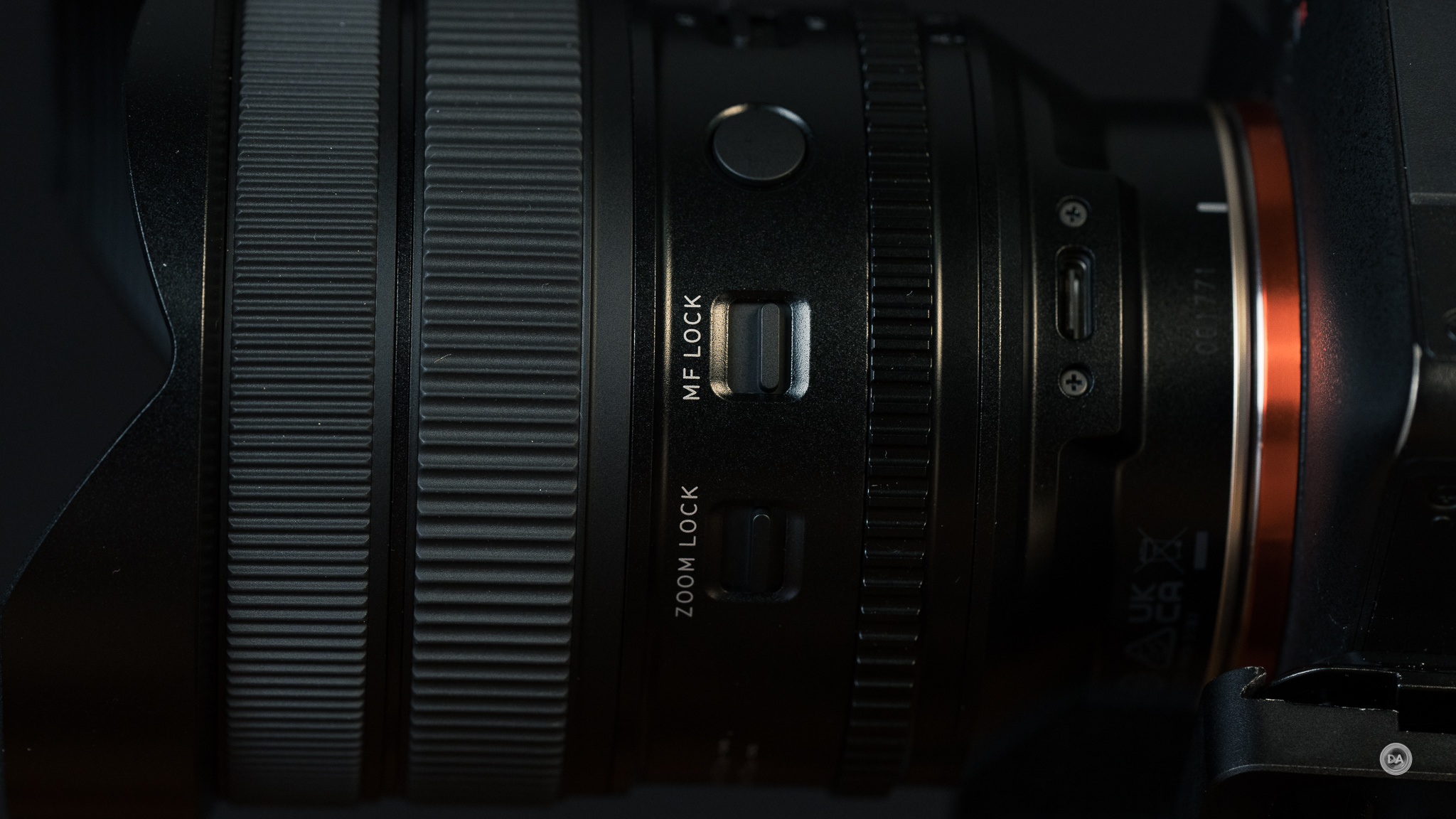
It is the other switch that is unique, however, as there is a Manual Focus lock switch. The primary application for this will be for astrophotography, as it will allow you to preset the proper infinity focus position then lock it down so that as you are fumbling around in the dark you won’t bump it off the proper position.
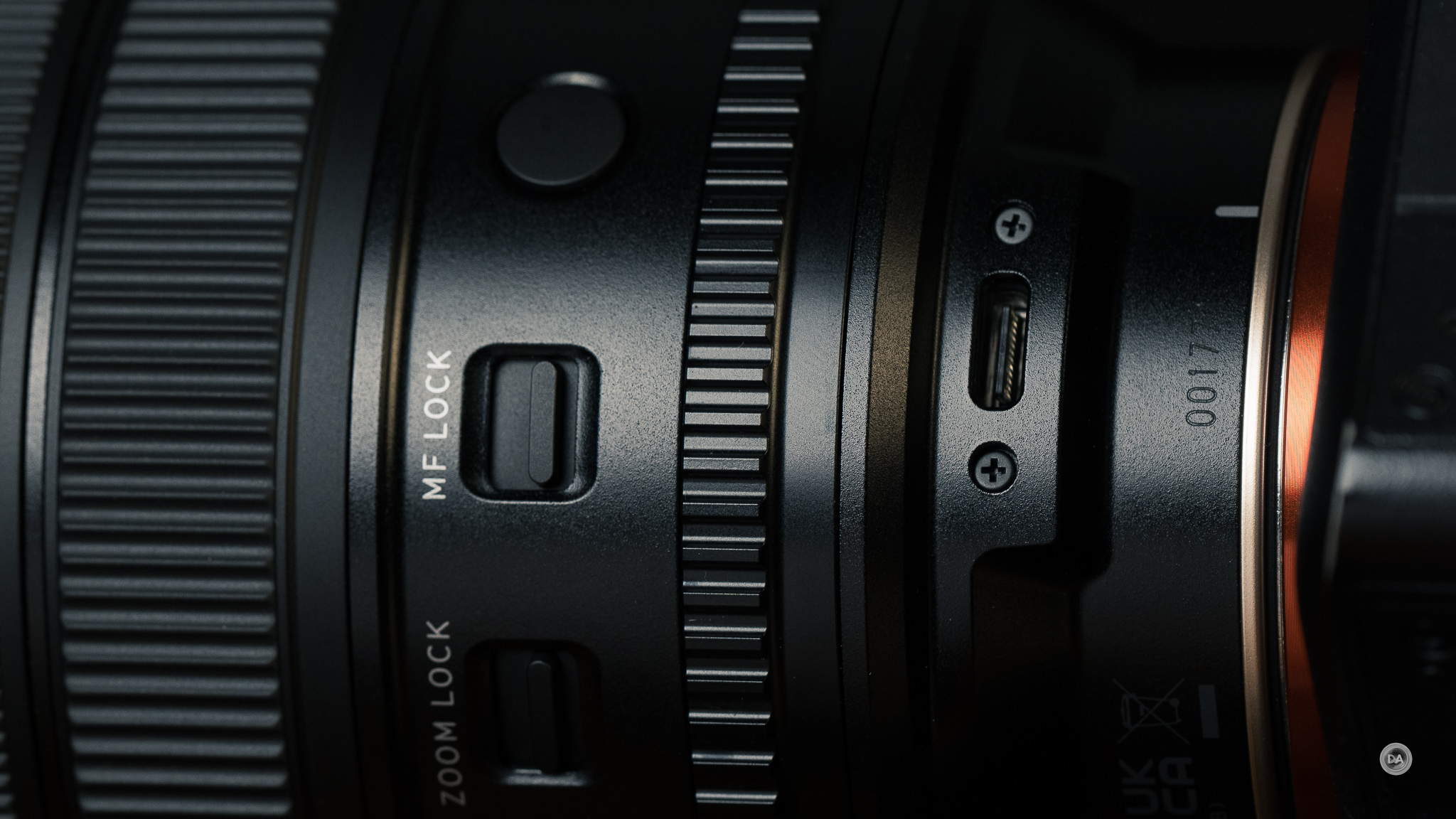
It is a nice attention to detail on a lens being marketed as an excellent option for astrophotography.
The zoom ring is ribbed and moves smoothly. The throw is reasonably short, allowing you to make rapid changes in that unique way of internally zooming lenses.
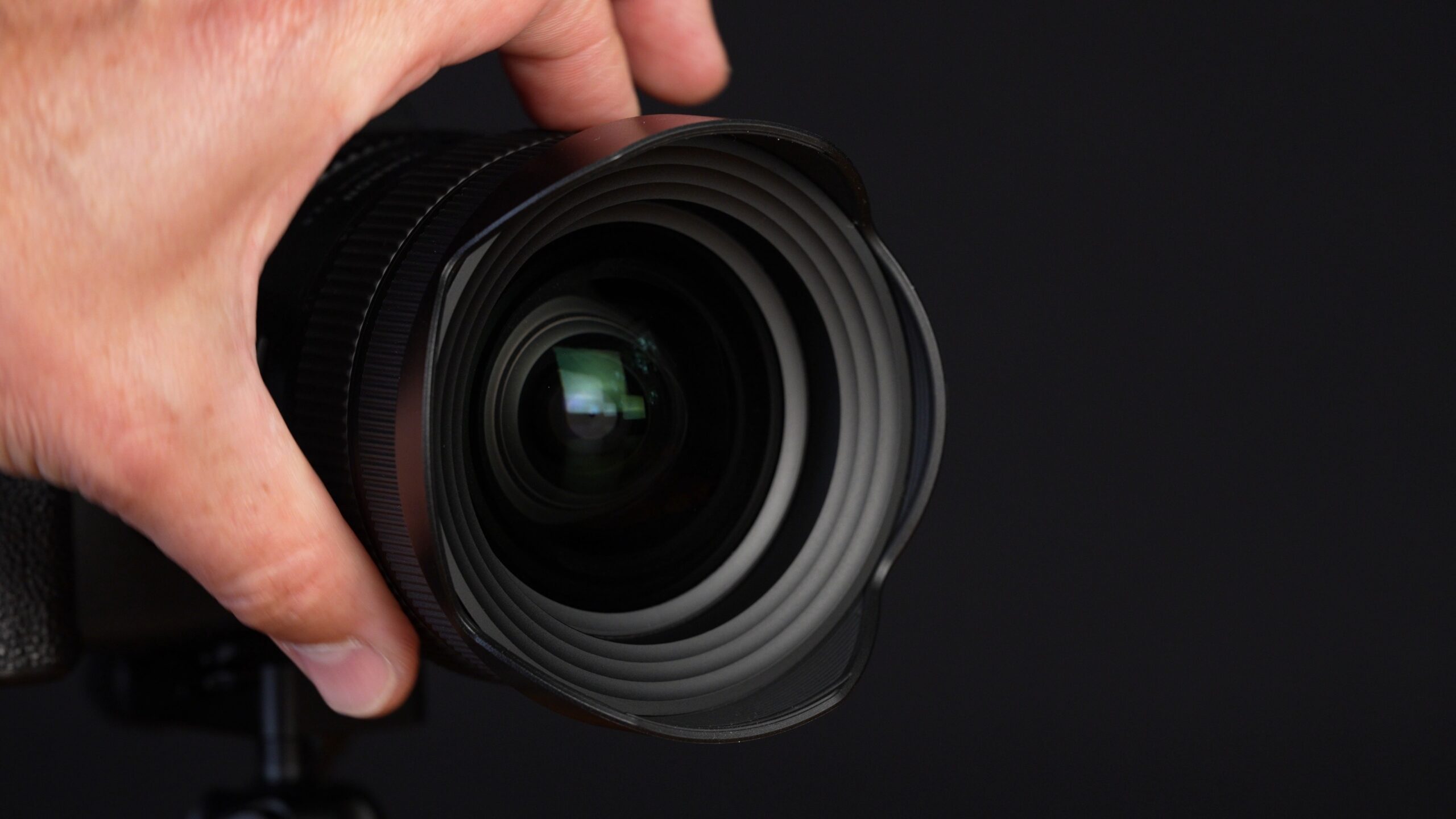
You can see the front elements moving forward and backwards as you zoom if you look at the lens from the front, but always within the confines of the lens barrel itself. The lens never changes length regardless of zoom position, which will be useful for those doing gimbal work (no need to rebalance the gimbal if you move to a different zoom position).
Let’s pause and consider that size. The lens is 90mm in diameter (3.54”) and 119.3mm in length (4.7”). The Nikon Z-mount version is (as always) exactly 2mm longer to accommodate the different flange distance for the Nikon sensor. For perspective, that’s about 5mm shorter than Nikon lens but a full 17mm shorter than the Sony GM lens. The weight is 570g (1.3lb), which is 80g less than the Nikon lens but a whopping 277g less than the GM lens. This is a fairly large lens but Tamron has managed to keep the weight at a very moderate level.
The downside here is that (like the Sony GM lens) the front hood is integrated to protect a bulbous front element. That not only necessitates having a bigger front cap that has to fit over the hood but also means that traditional front filtering via screw-on threads is not possible. There will probably be third-party filter solutions in the future, but those will be by necessity somewhat bulky and expensive.
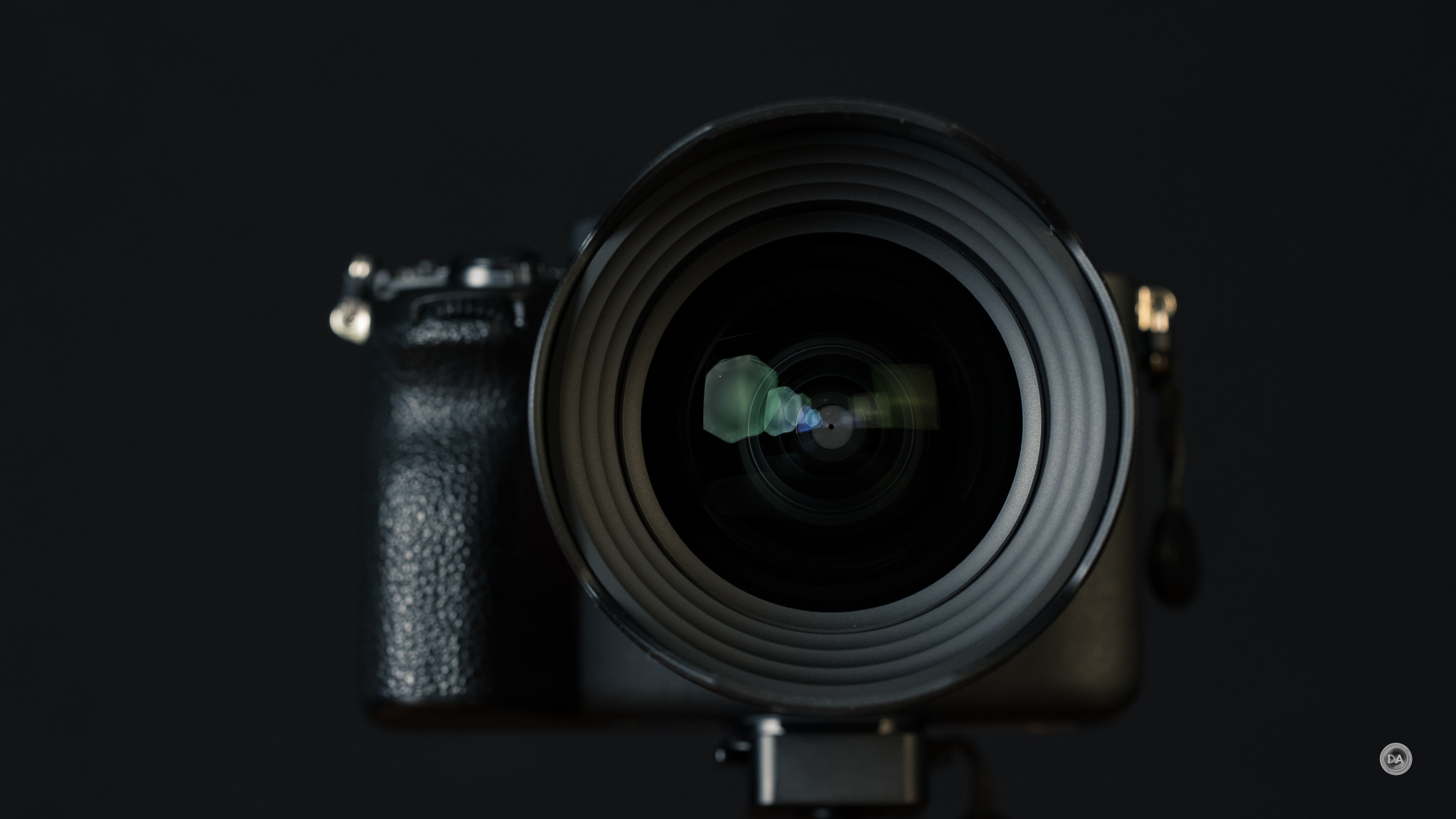
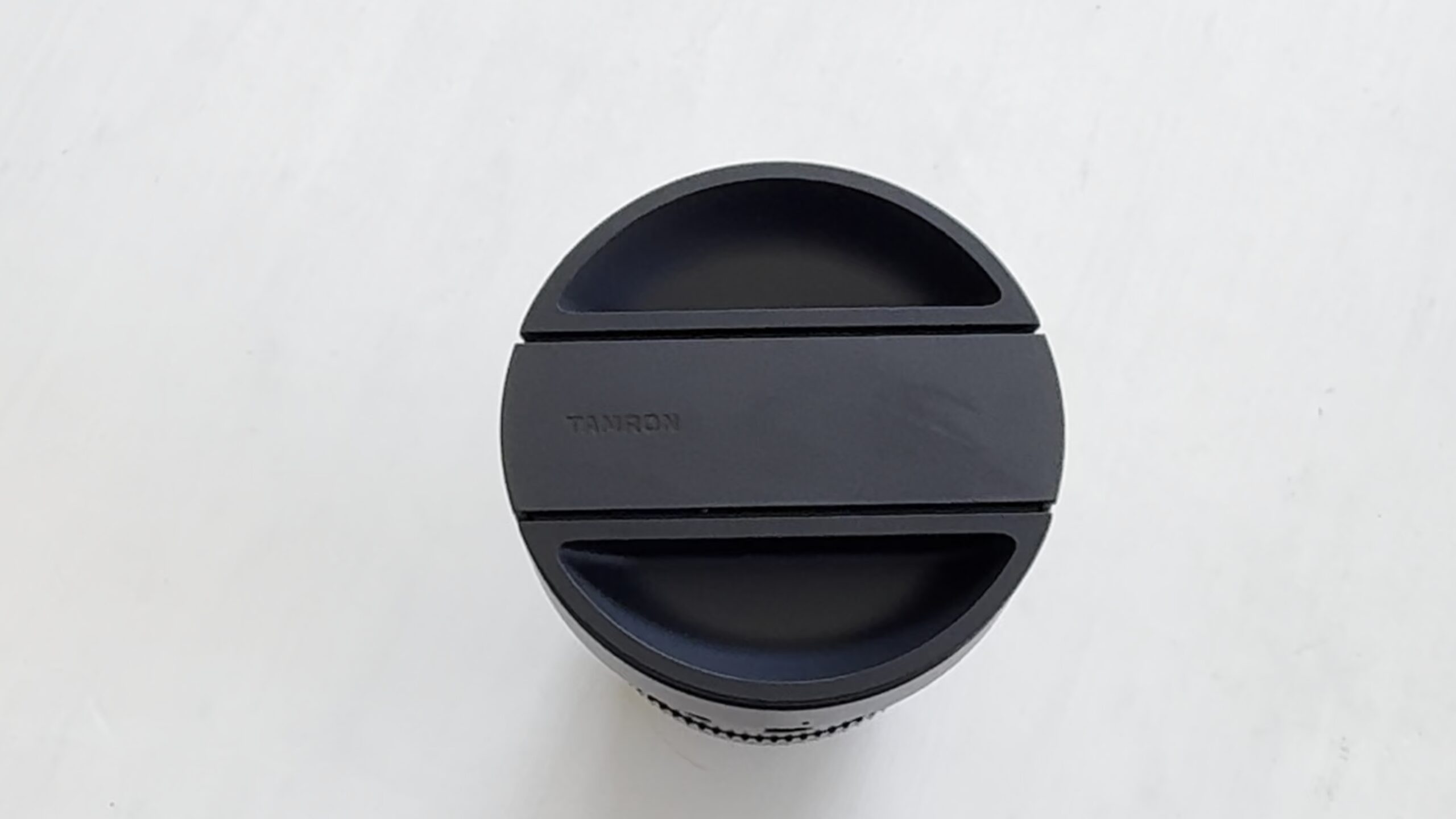
Rear filtering can be done via gel filters (yuck!), but hopefully a third party solution with more robust rear filters will help fill that gap like what I’ve tested for some of the Sigma wide angle zooms.
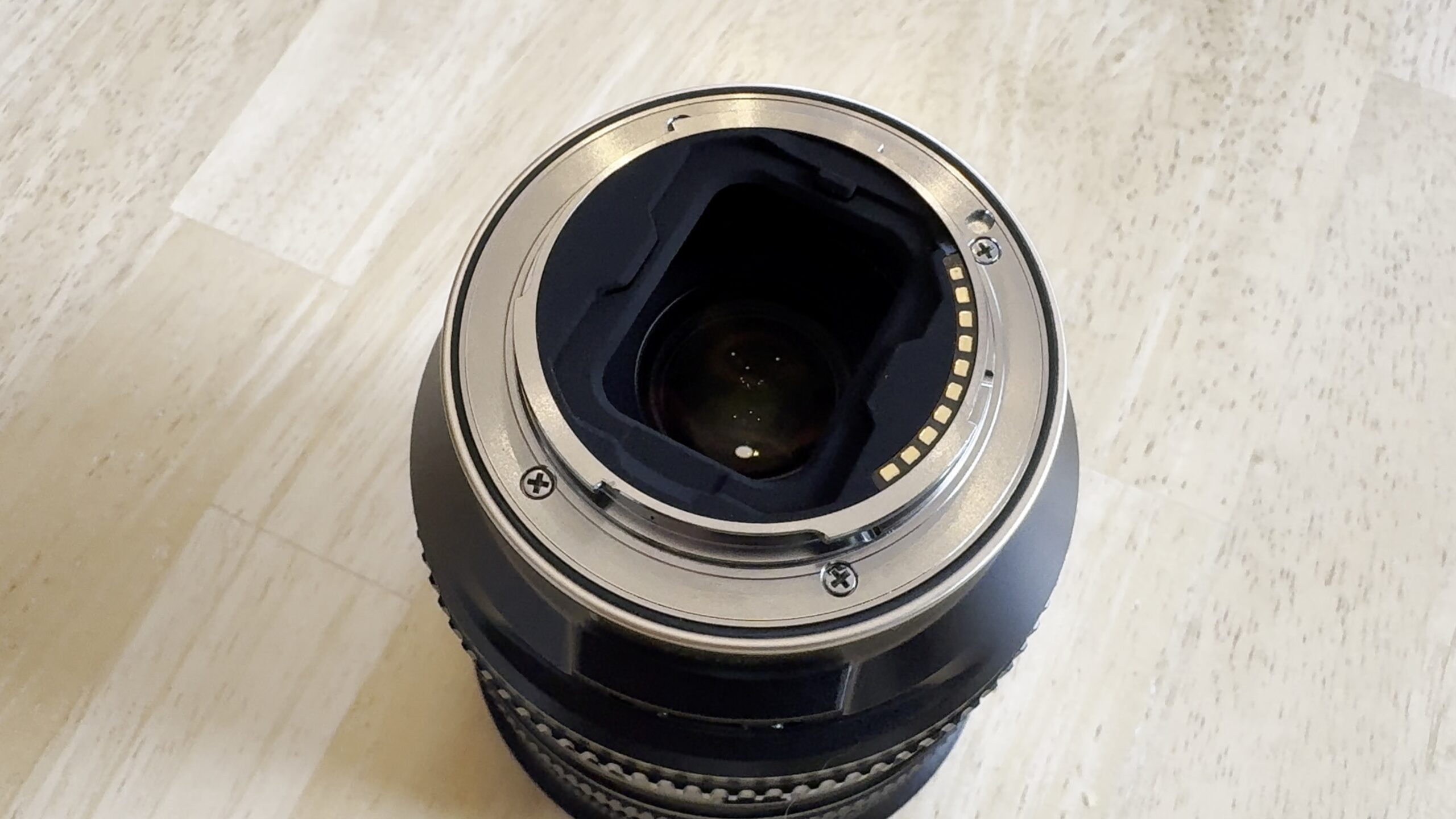
That is basically the price to pay for going so wide, and is part of why I’ve pumped the Schneider-Krueznach x LK Samyang 14-24mm F2.8, as it is compact and allows for traditional filtering, though it doesn’t go as wide as this lens.
The manual focus ring is also nice and wide, though the weight is slightly on the light side for my tastes. As mentioned previously, however, you do have the ability to tweak some of the behavior of the ring (though not the feel, unfortunately).
The aperture iris has 12 blades, and that not only allows for keeping rounder specular highlights (of minimal value in a wide-angle lens), but, more importantly, allows for beautiful 12-pointed sunstars.
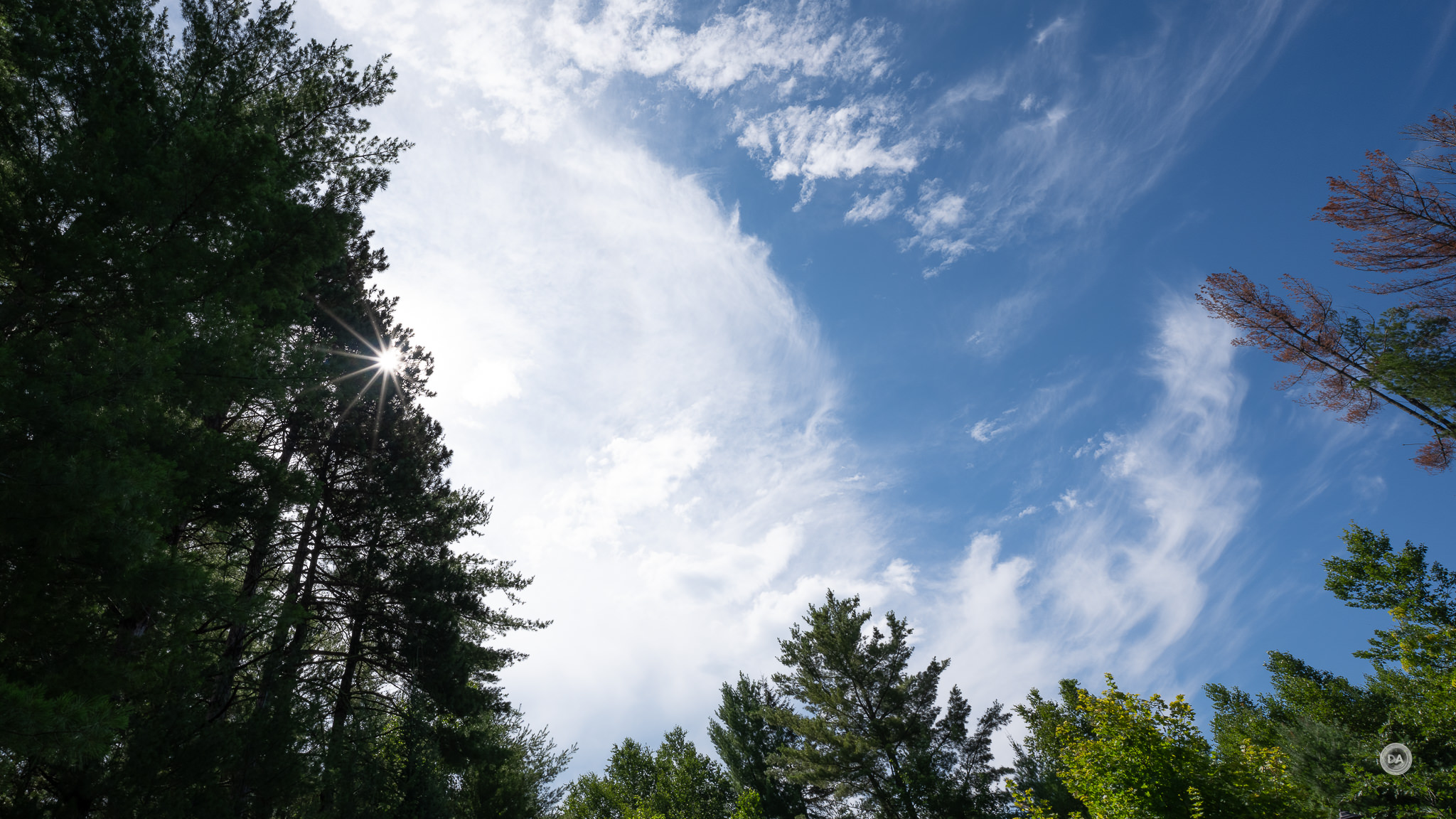
This is a sometimes underrated quality in a wide-angle lens, as these lenses are pointed towards the sun more often, and having beautiful sunstars can really elevate images to the next level.
As with many Tamron zooms, there is a variable minimum focus distance depending on which end of the zoom range you are at. MFD on the wide end is just 18cm, while the telephoto end is 28cm. The telephoto end has just a 0.11x level of magnification (1:9.1), while the magnification is higher at 0.17x (1:5.7) on the wide end. That is higher than either the Sony (0.14x) or Nikon (0.13x), though I find unlocking the magnification on the wide end more challenging because of how close you have to get to the subject. Here’s what magnification looks like at 12mm:

And at 20mm:

Grabbing the former is difficult, as you have to basically get right on top of your subject to take the shot.

Autofocus

Focus was brilliant as Nala was rolling around, nailing focus each time. And the results are fantastically sharp.


In my controlled focus tests, moving back and forth from a near to distant subject, I found the focus speed to be excellent (essentially instant) and quite consistent across the zoom range.
Focus precision was also excellent, allowing me to focus on very narrow subjects effortlessly.

I will also note that Tamron’s full time manual override is great for the moments when the autofocus wants to grab a background rather than foreground subject (something I find common with all modern cameras and lenses), allowing you to get focus in the proper “zone” where AF can take over and make sure that focus is accurate.
This feels like a mature, confident lens on either on my α7RV or α1 II.
Video AF
I also saw good results for video work. Autofocus pulls were fast and confident, and focus breathing is extremely low, allowing for smooth looking pulls back and forth.
My hand test (where I alternately block the camera’s view of my face with my hand and then remove it to allow focus to move to my face) went extremely well, with confident transitions back and forth. Sometimes focus didn’t move to my hand, but that’s because just a peak of my face was visible.

I noticed that “warping” near the edge of the frame when panning back and forth was very low.
This should prove to be a very solid video lens, particularly considering the abilities to customize the behavior and program things like A/B focus. The internally zooming design should also prove very useful for gimbal work.
Image Quality Breakdown
The Tamron 12-20mm features an optical design of 17 elements in 12 groups. This includes XGM (eXpanded Glass Molded Aspherical), Molded glass aspherical, LD (Low Dispersion), and XLD (eXtra Low Dispersion) elements – a lot of exotic elements in the design.
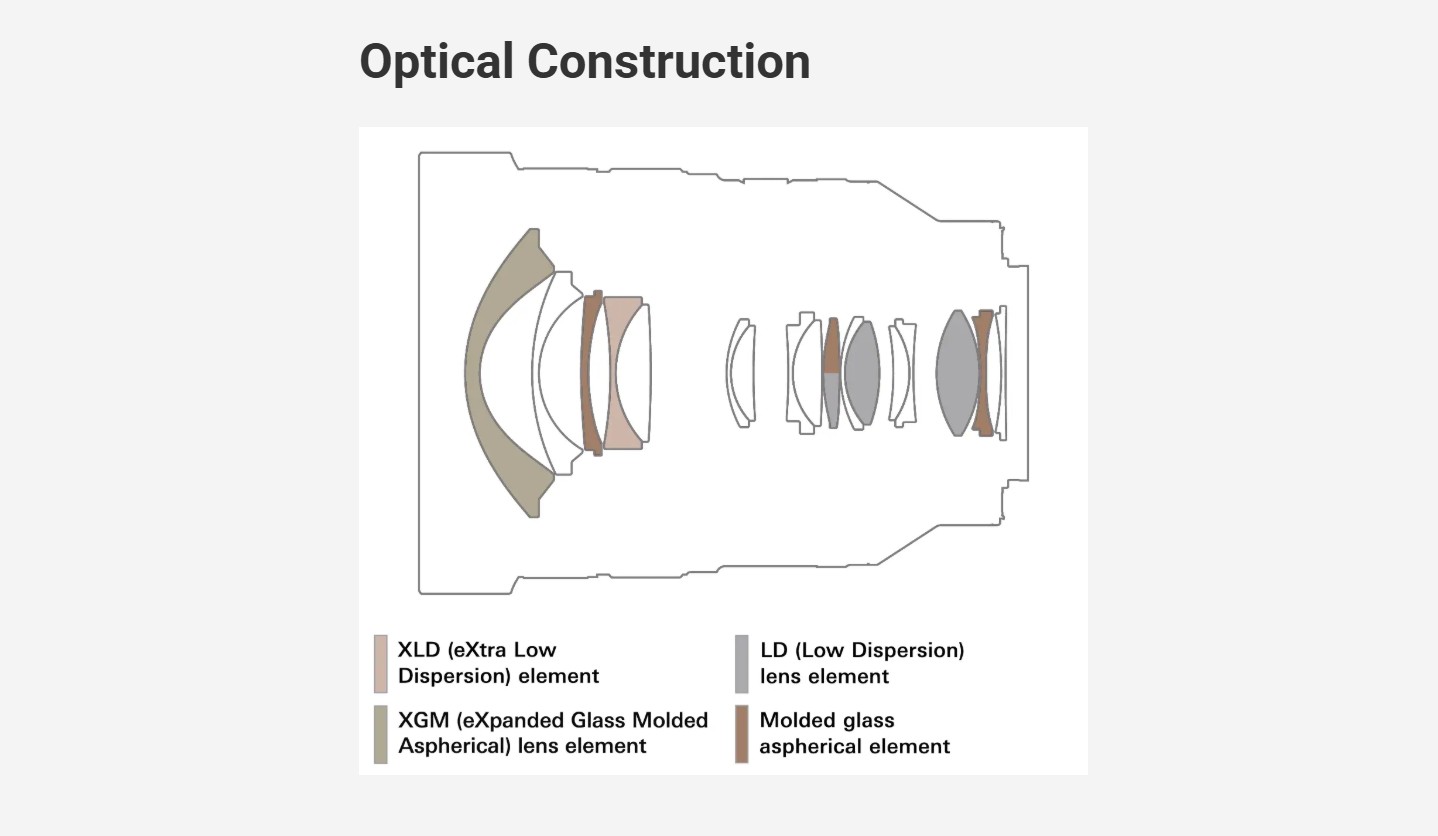
The MTF charts from 12mm and 20mm both look excellent, though 20mm shows a steeper drop off from the midframe to the corners.
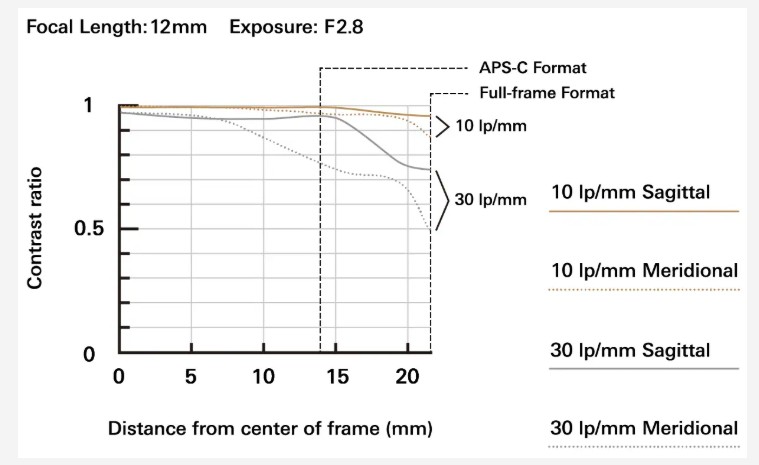
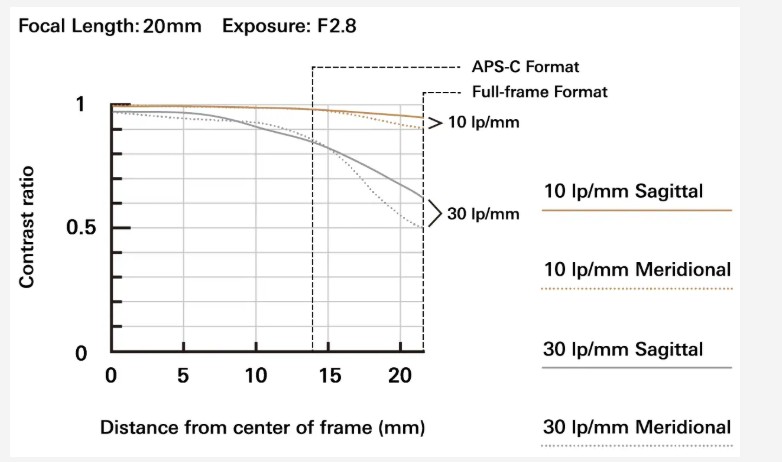
This is the kind of lens that in real world shooting just looks sharp everywhere.



I’ve noted that I quite like the LK Samyang/Rokinon 14-24mm F2.8, but for those looking for serious width, the Tamron is considerably wider. The LK Samyang goes as wide as 114.2°, which looks like this from a tripod position in my living room.
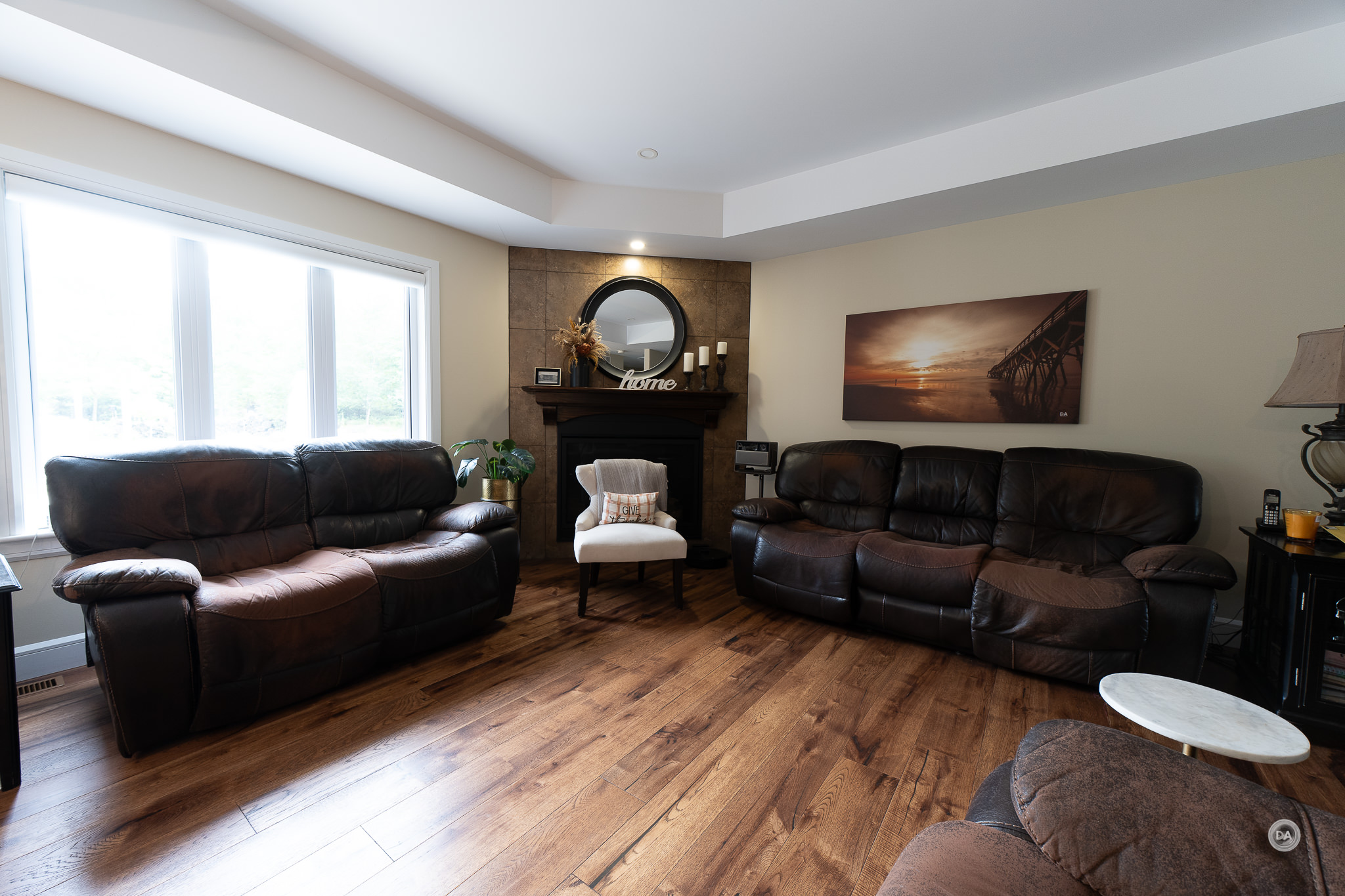
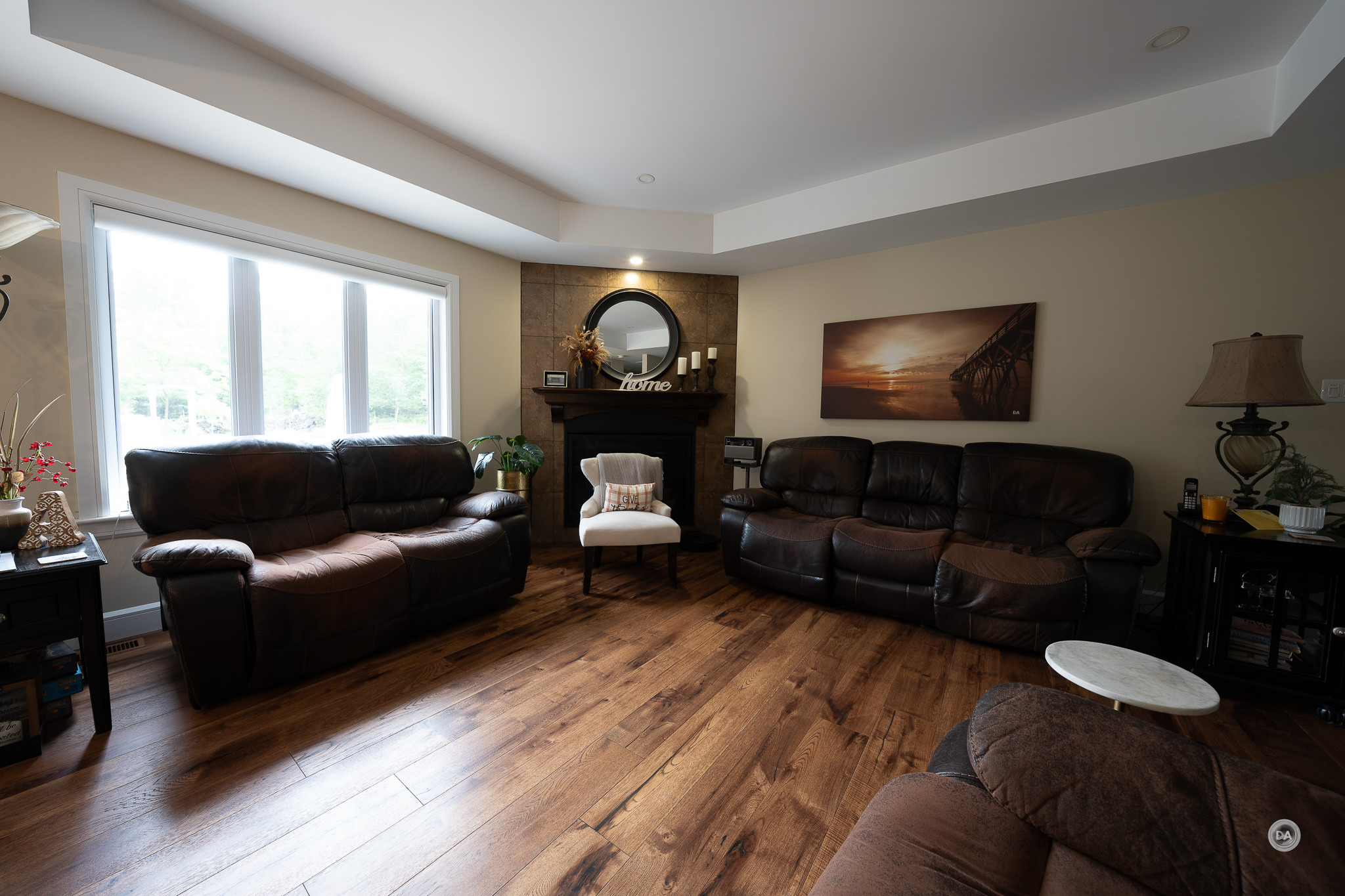
The Tamron 12-20mm, however, is capable of going as wide as 121°58′, which is extremely wide for a rectilinear (non-fisheye) lens.
I’ve got a 10mm fisheye lens that can go to a truly ridiculous 185° field of view, which looks like this:
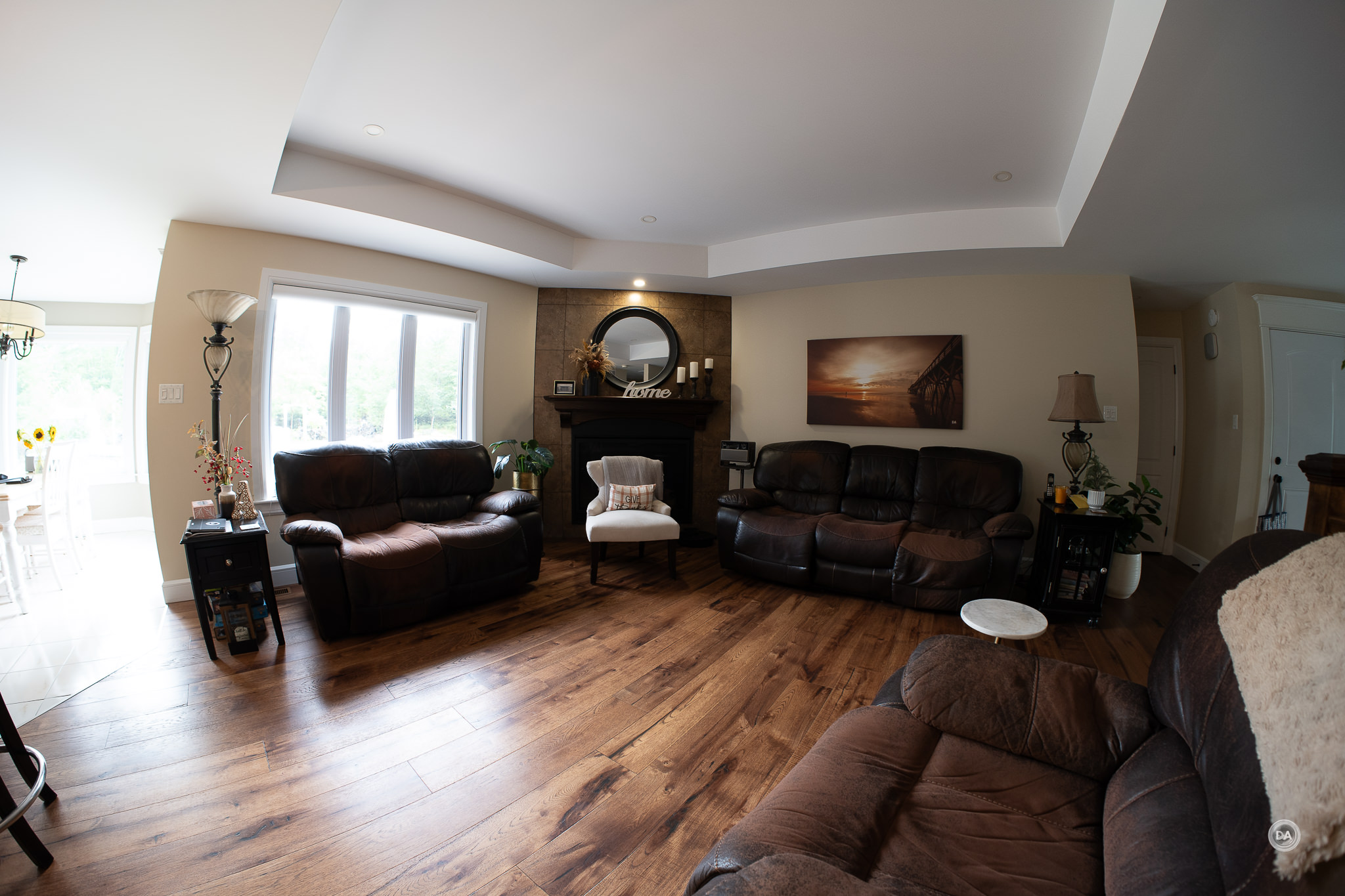
But most people aren’t interested in that kind of distortion.
Speaking of distortion, let’s see what is happening here without corrections at 12mm.
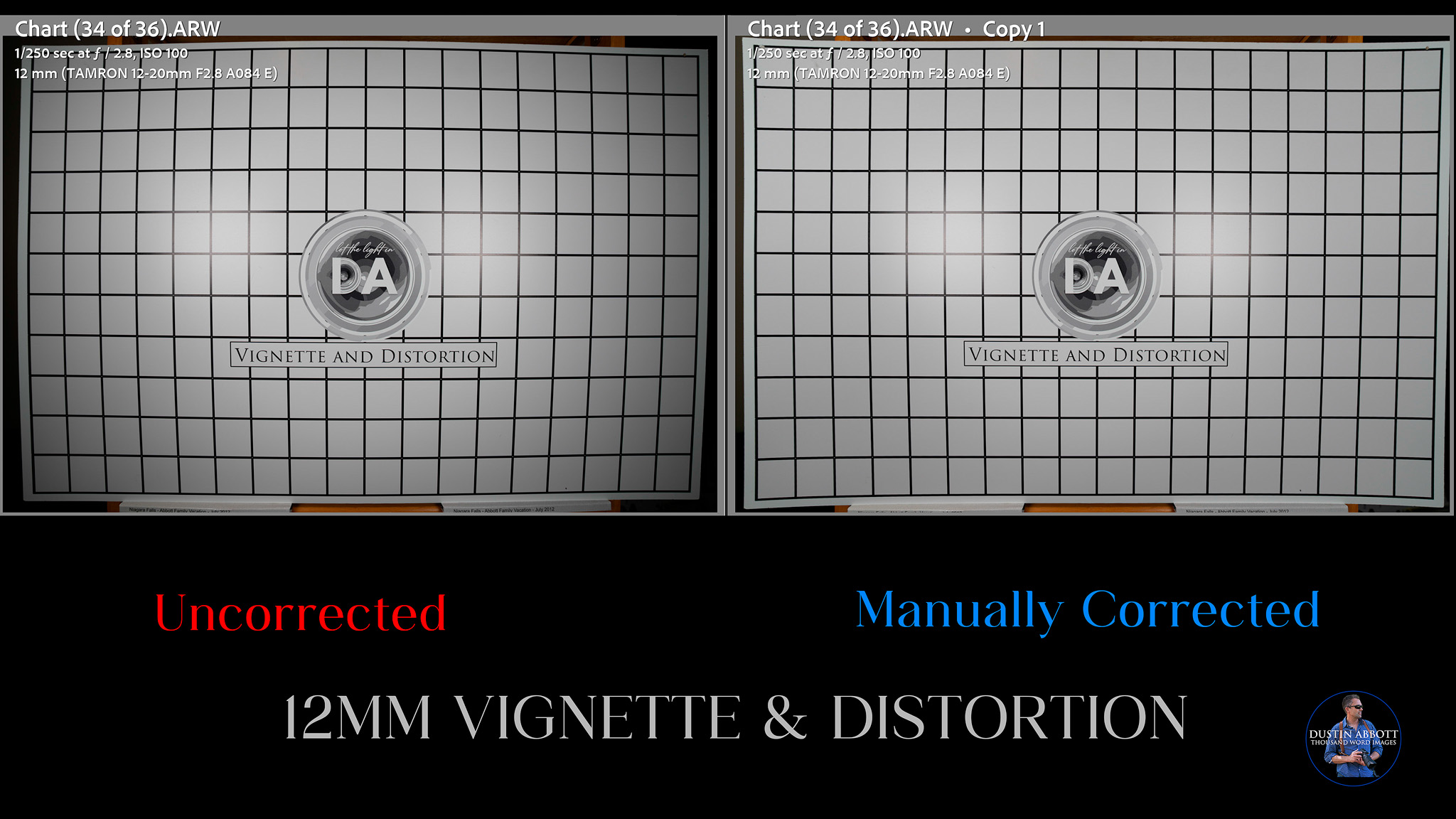
The amount of distortion isn’t bad, actually (I dialed in a +15), but it has a fairly complex mustache pattern that doesn’t correct in a nice, linear fashion. The profile correction does a slightly better job of correcting the distortion. Here’s what a corrected JPEG looks like.
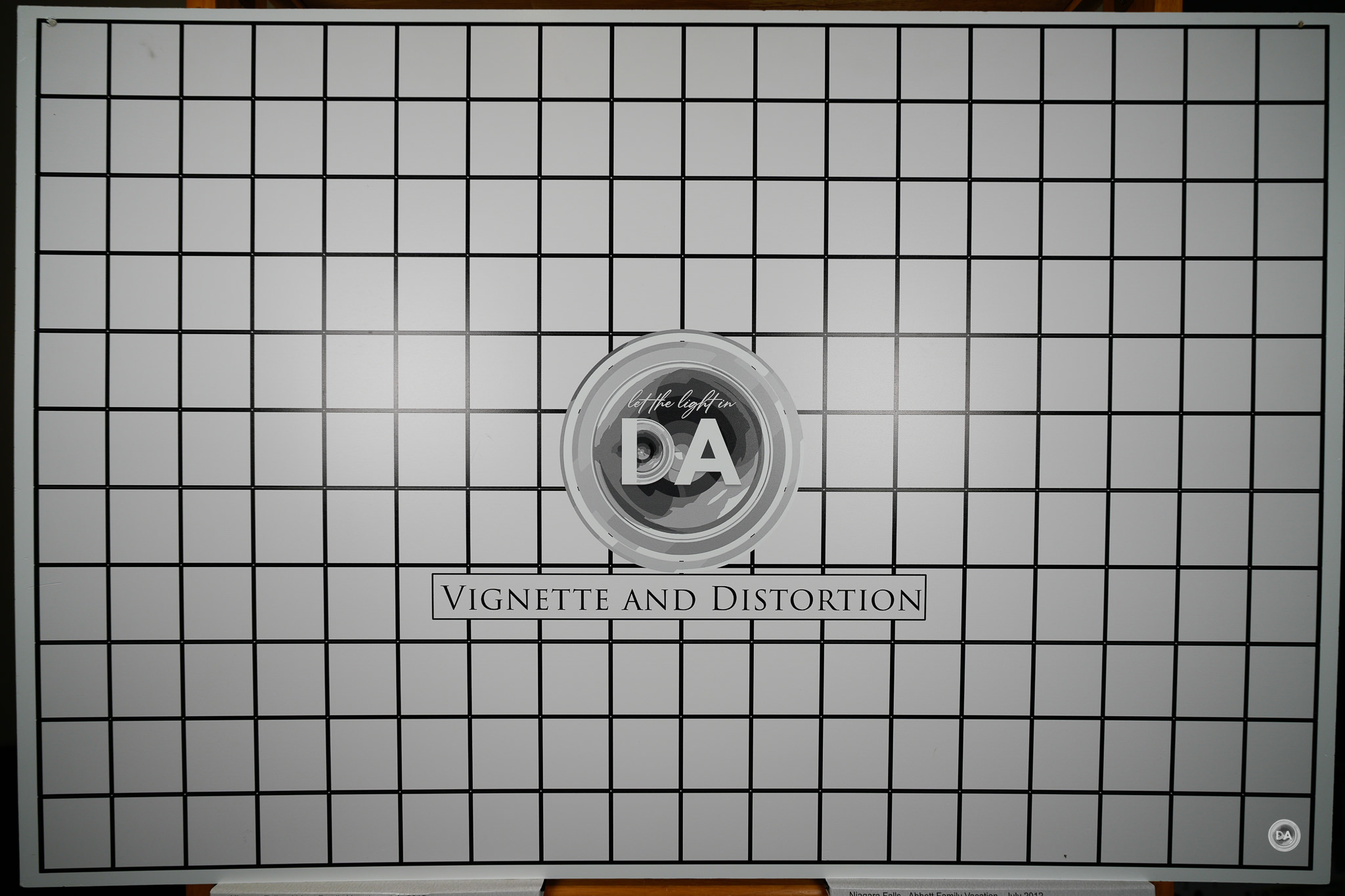
The vignette at 12mm is very heavy, requiring a +90 to correct.
If you compose in the center, this distortion doesn’t look bad. If you have a straight line towards an edge (particularly if the camera is tilted), the distortion will look much more extreme. Neither image below has received any correction.
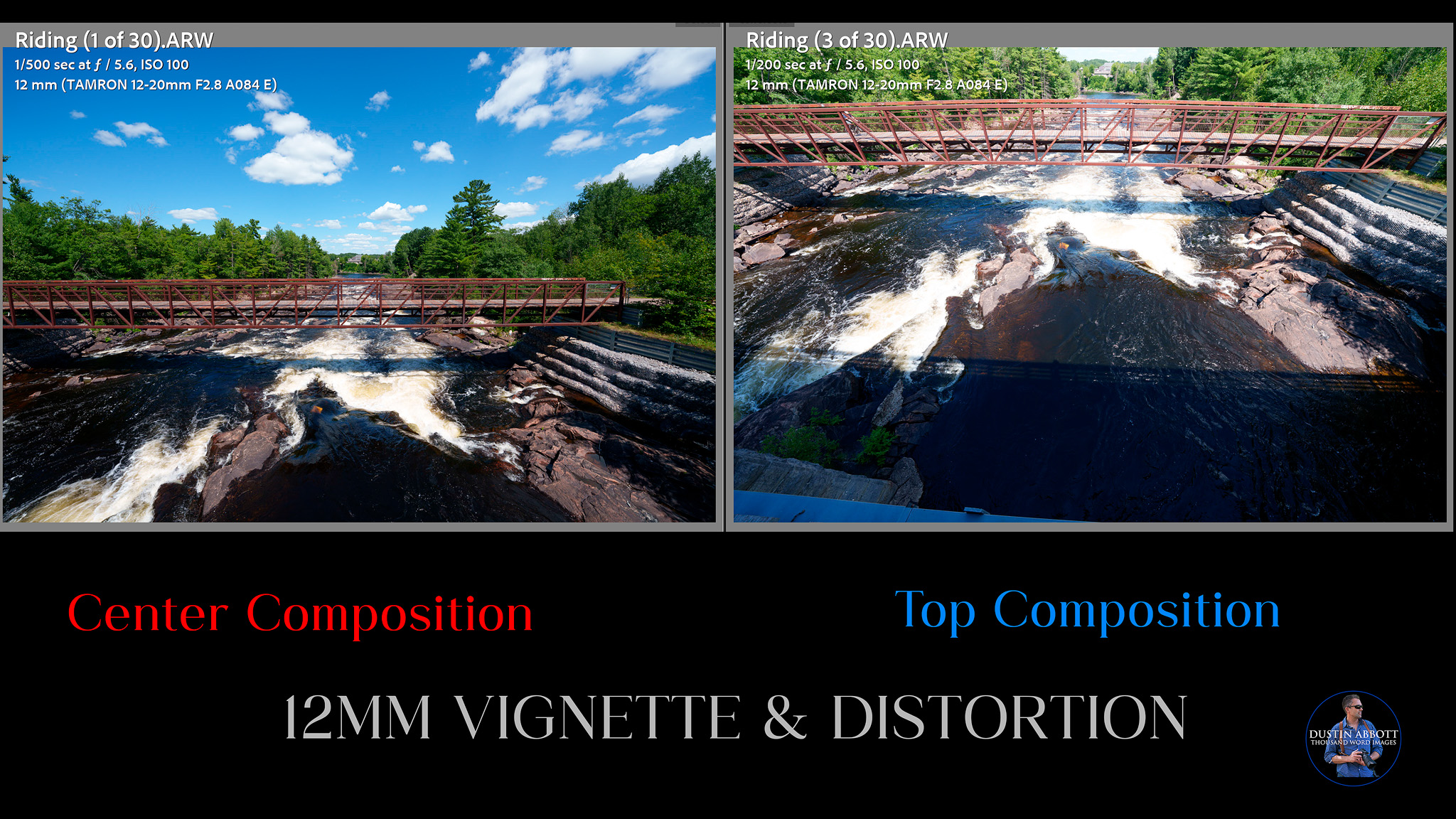
By 16mm the distortion is basically gone, leaving a very neutral result. This is a much better result than you will see from any of the zooms that start at 16mm.
By 20mm the distortion pattern inverts to a pincushion style distortion.
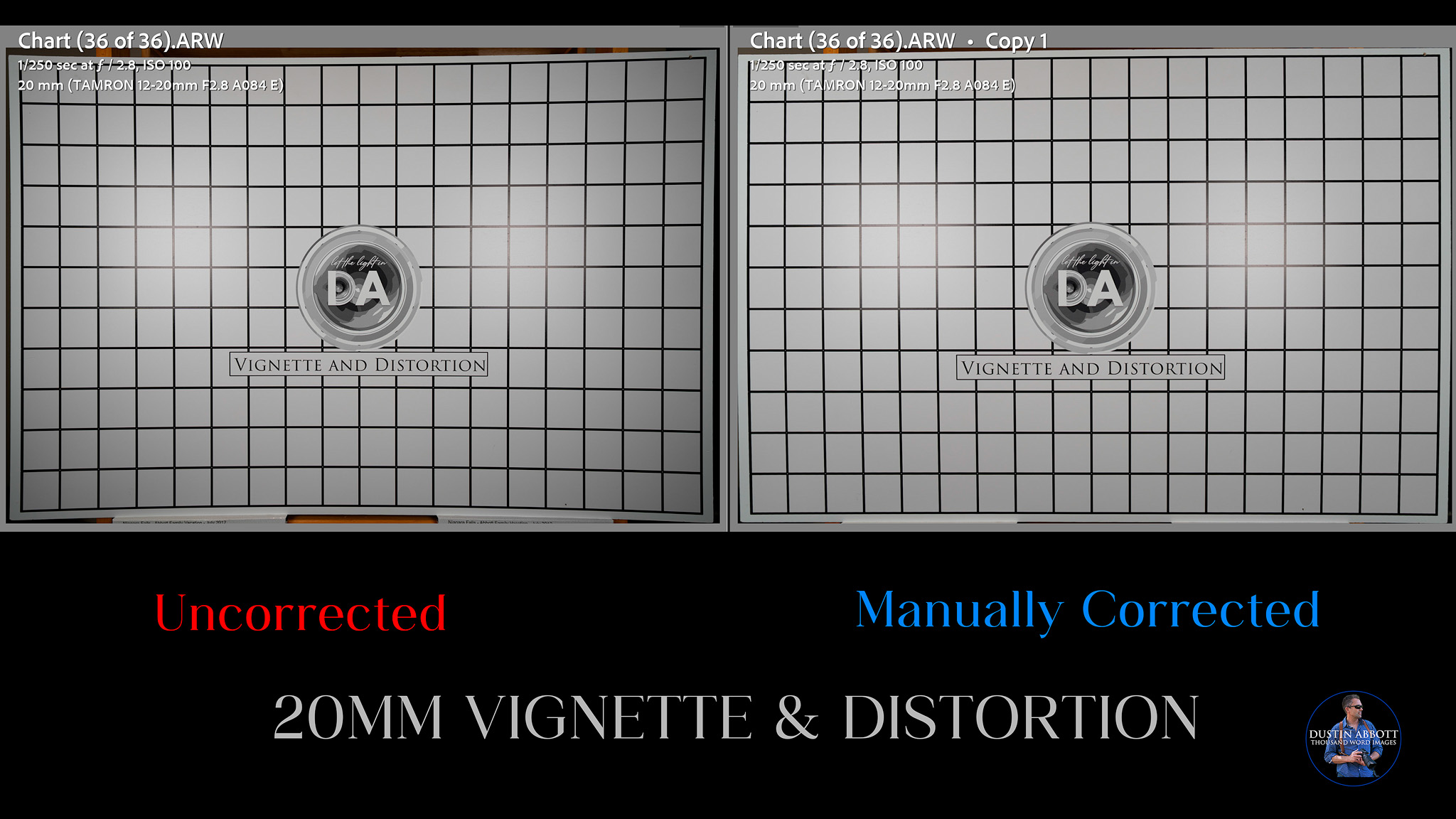
As is typically the case, this pincushion distortion is both easier to correct (a -8 corrects it in a linear fashion) and less extreme. Vignette is also lighter, requiring a +56 to correct.
None of this is bad for a wide angle zoom lens, and profile corrections in-camera or in post editing software clears up the distortion and vignette nicely.
Testing for longitudinal chromatic aberrations (LoCA) showed no apparent vignette before or after the plane of focus.

Often shots like this will look very bad because of fringing in the contrast areas of the leaf edges to the bright sky beyond, but the Tamron does a great job here.

I also saw minimal issues with LaCA (lateral chromatic aberrations), which shows up along the edges of the frame. All of the transitions here are fairly neutral.
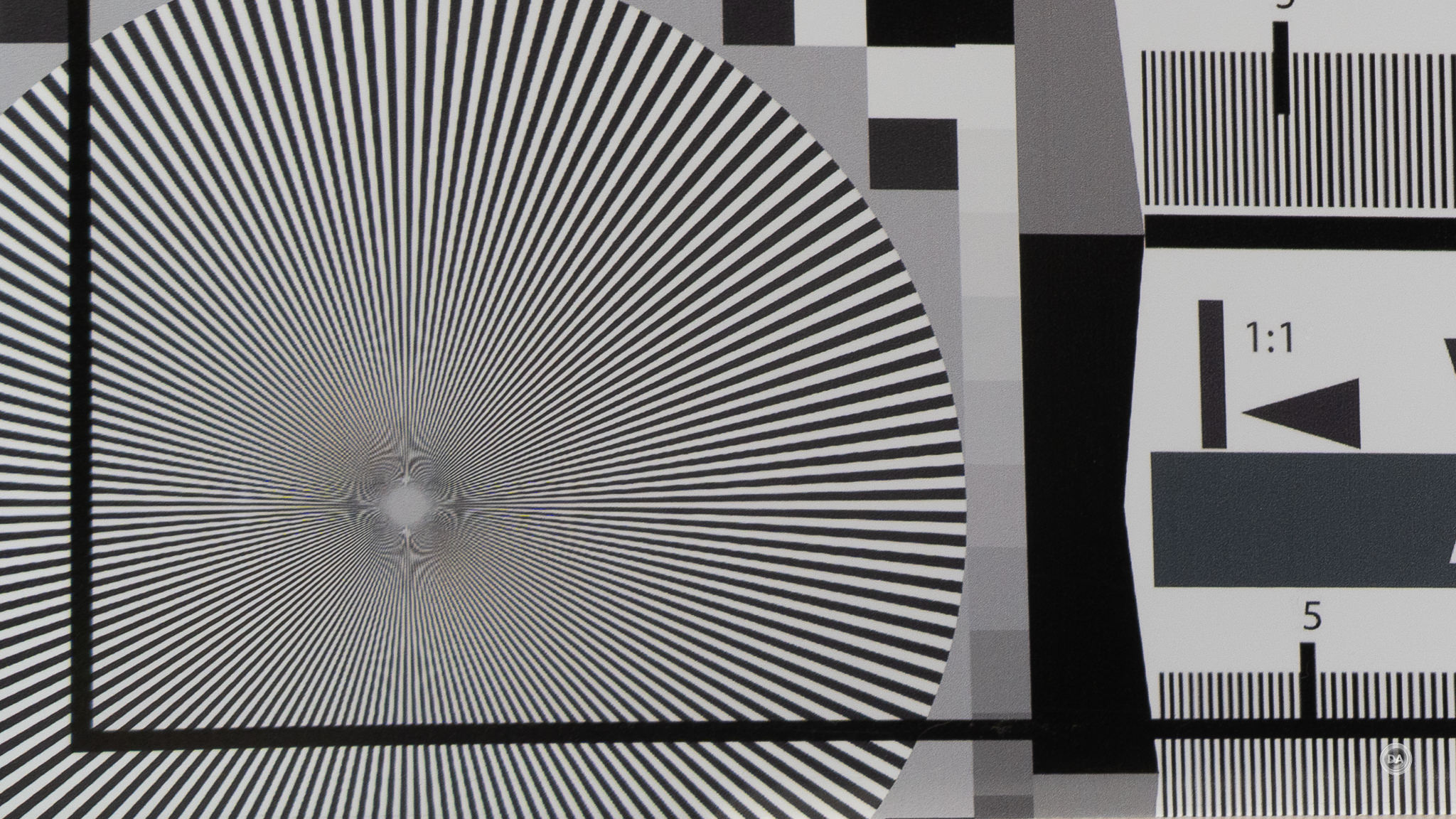
So how about resolution and contrast? My formal tests are done on the 61MP Sony a7RV.
Here’s a look at the test chart from which the crops will come.

Here are crops from across the 12mm frame at F2.8 and shown at a 200% magnification.



The center looks very good, but the midframe is starting to look a little shaky and the corners are looking somewhat weak.
That got me wondering if the lens was really underperforming its MTF by that much, or was this a matter of having to be too close to my test chart to get reliable results. At that close distance, field curvature can play havoc with the findings (particularly with a 61MP sensor shown at 200%). I went out into the real world, and, sure enough, at a distance of about 2 meters (and a more typical 100% magnification), the results look much better.



Bottom line is that the chart test results are going to be of minimal value with this lens…at least at 12mm. At real world distances, I found the results to be quite sharp…even at F2.8:


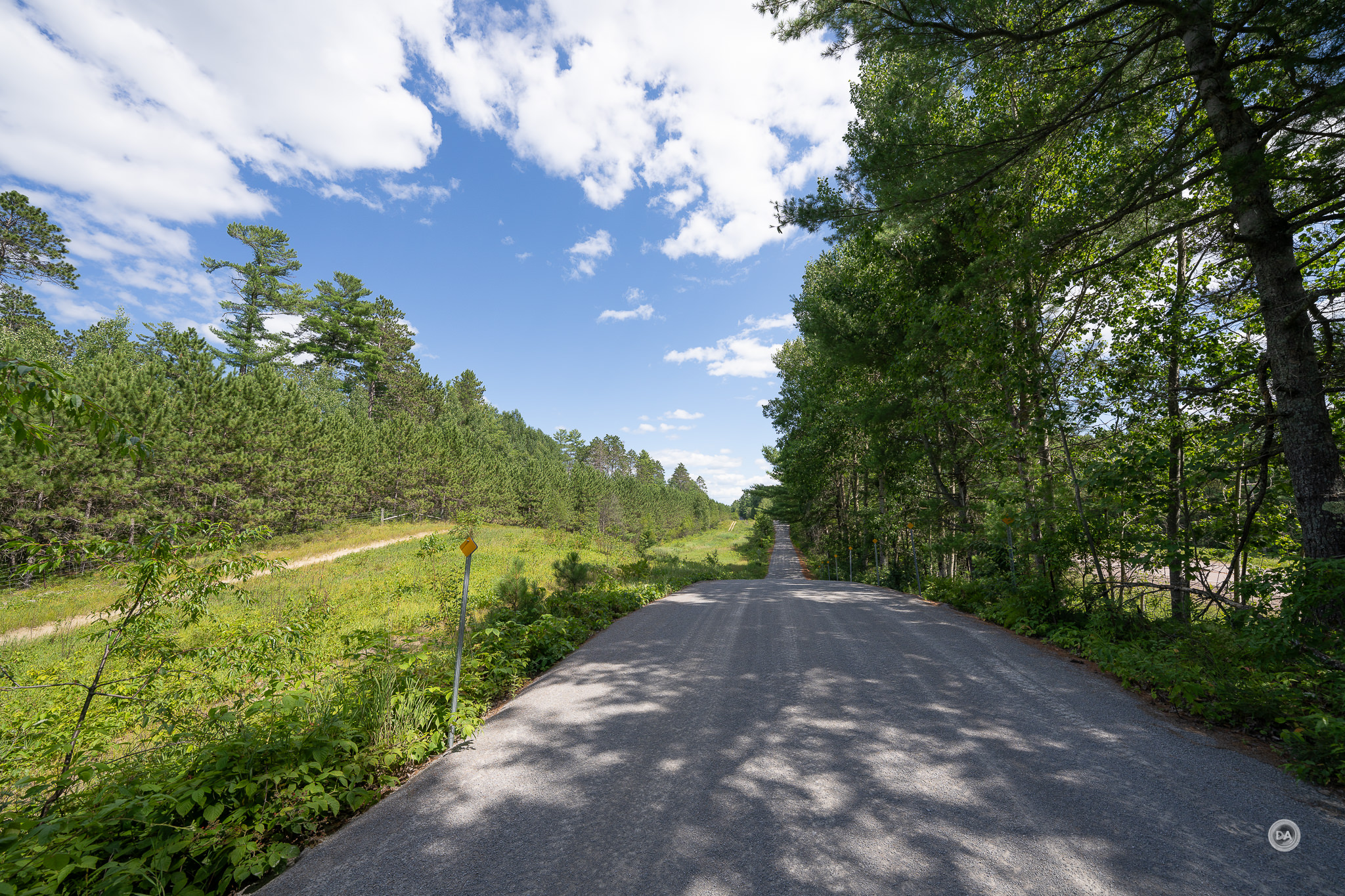
This real-world shot at F5.6 is sharp from edge to edge:
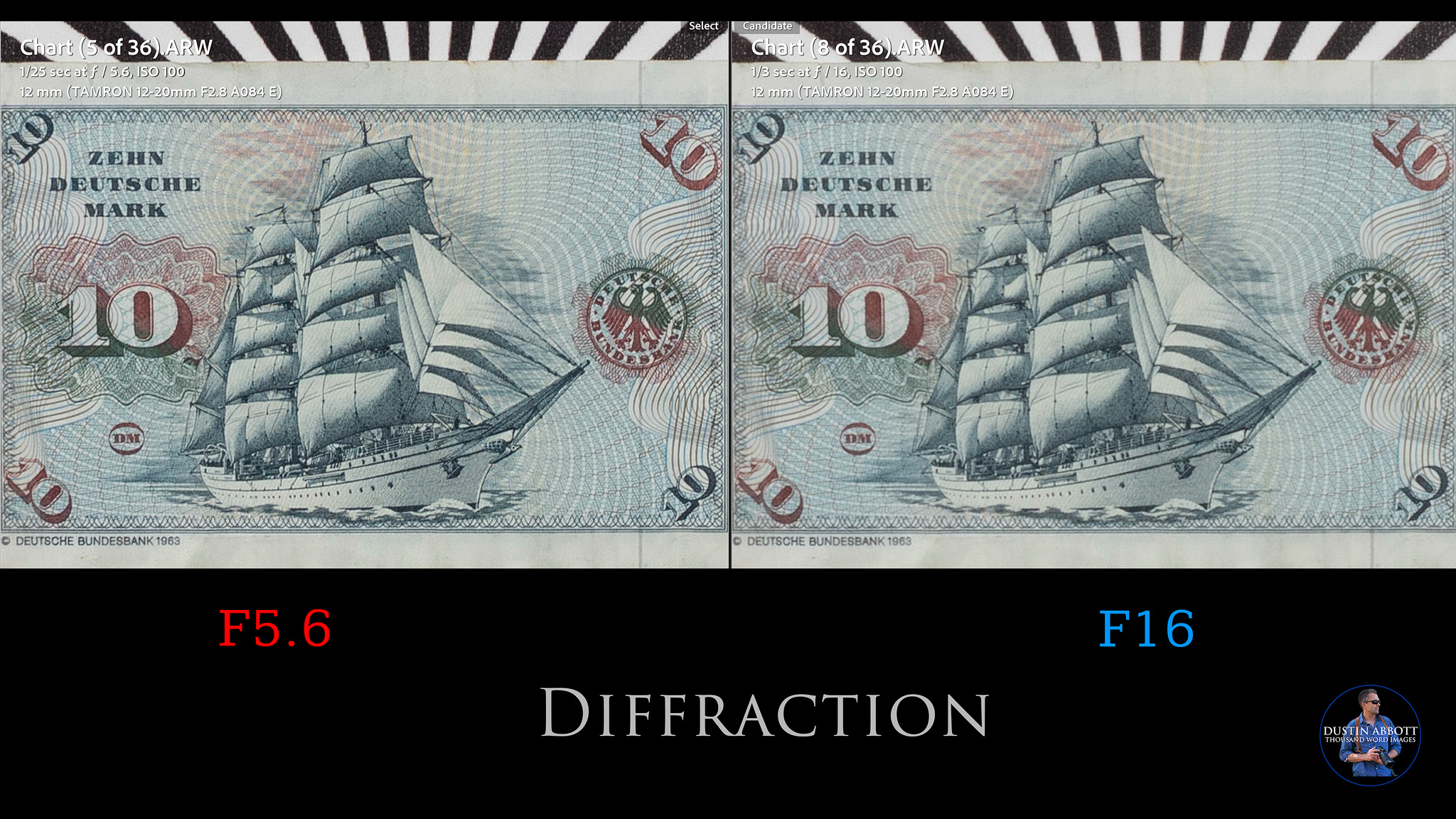
I’ll return to the chart at 12mm only long enough to look at diffraction. Results will start to soften some by F11, and by F16 (minimum aperture), contrast has taken a hit.
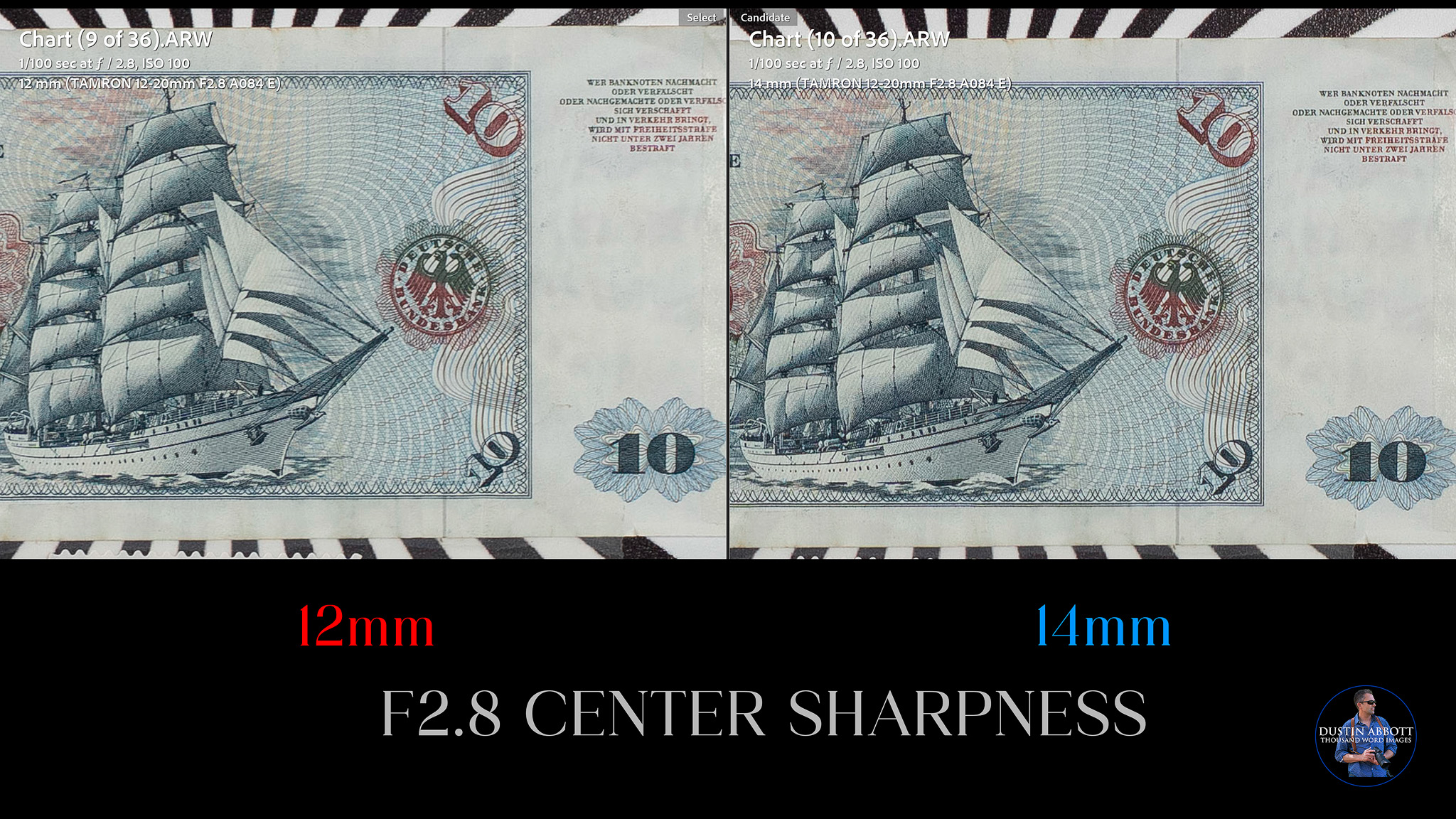
The extra bit of distance to the chart (along with less field curvature) allows for much more reliable results at 14mm. You can see that the results look considerably sharper and higher contrast in the center:
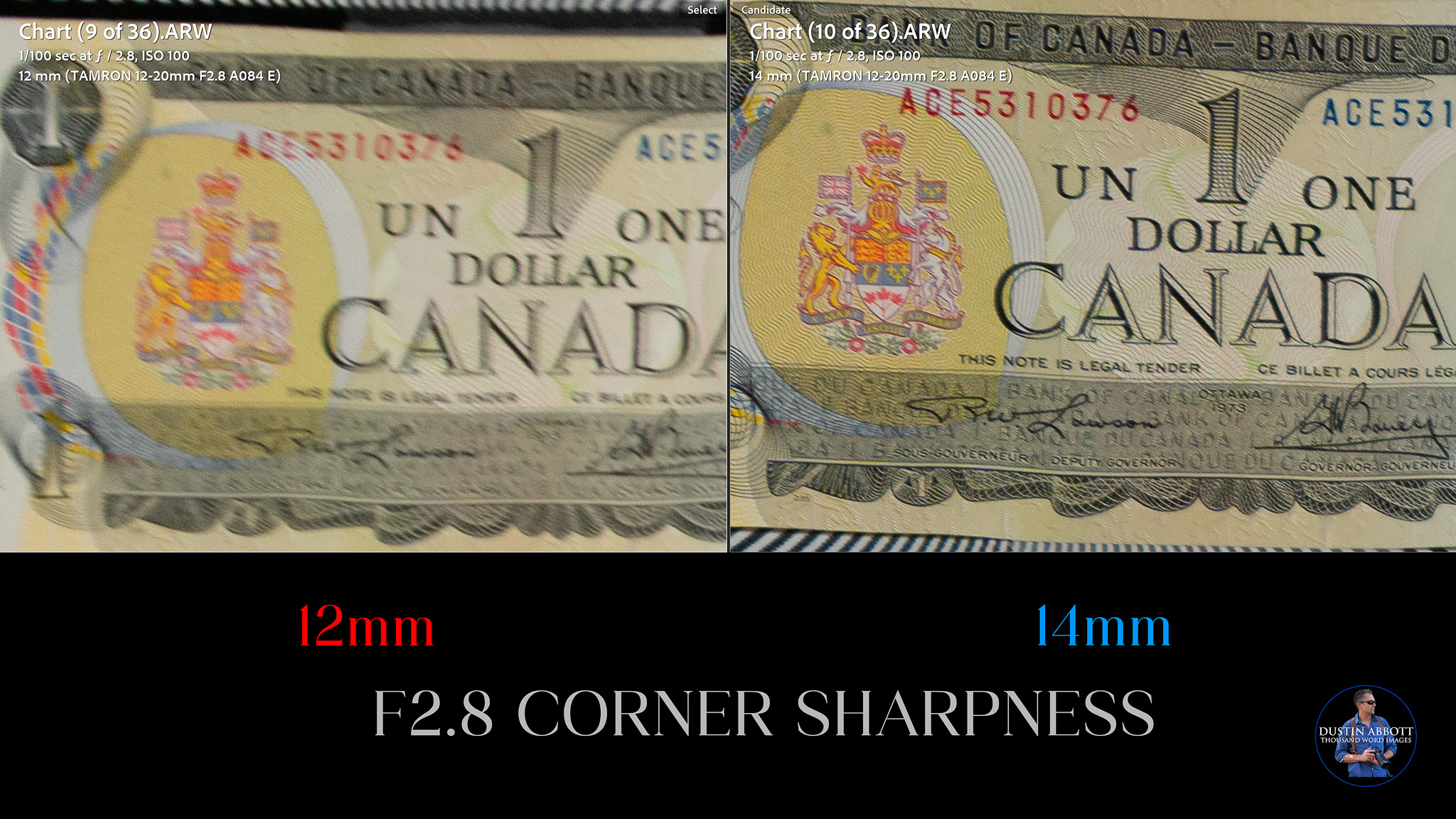
…and in the corners.
Real world results at 14mm are sharp all across the frame. Here’s a shot at 14mm, F5.6, along with crops from different points in the image.



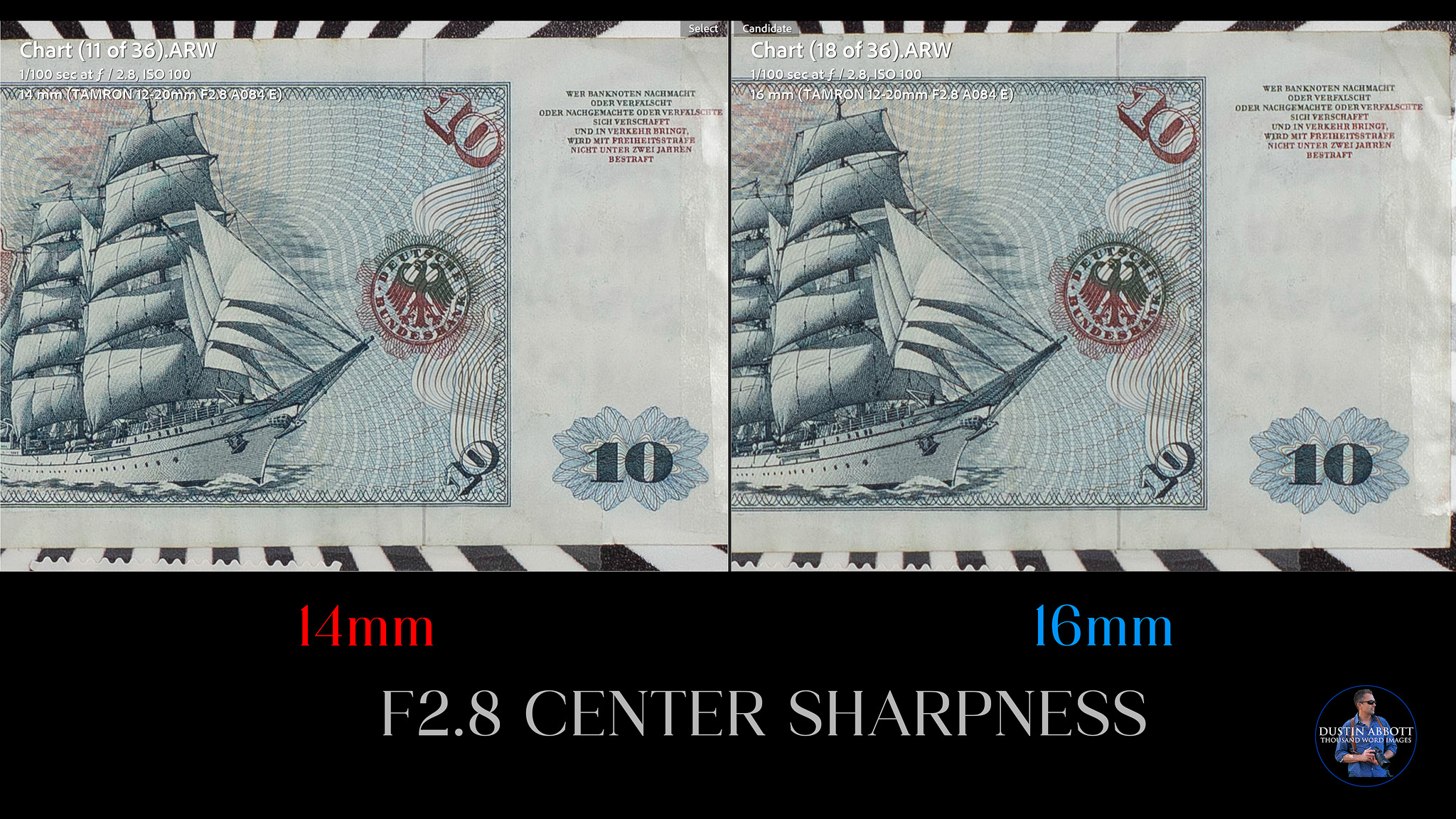
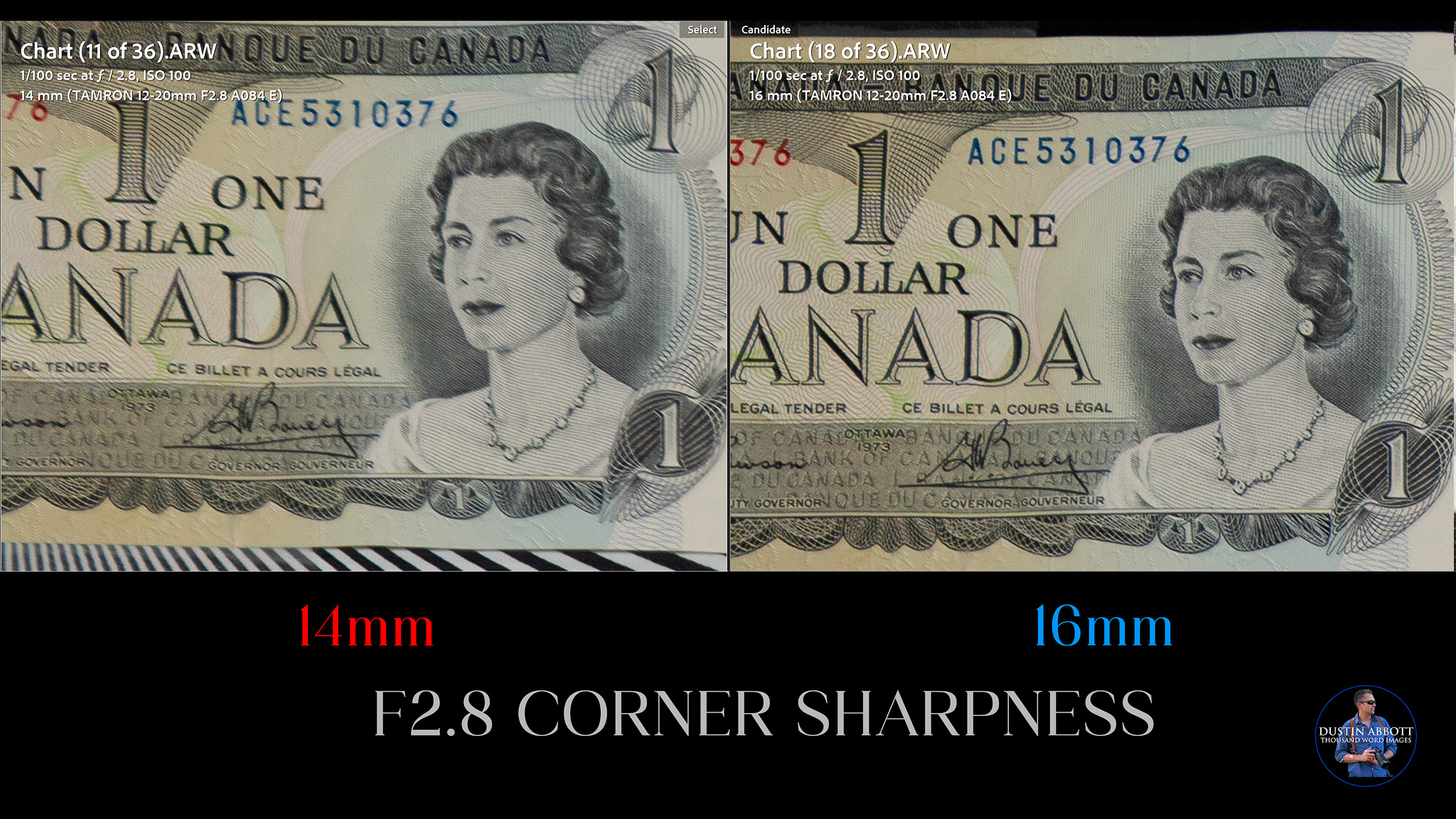
At 16mm, the center results are a tiny bit less sharp than 14mm, though the corners are slightly sharper.
As before, real-world results are very sharp at 16mm all across the frame.

Finally, moving to 20mm, we find that contrast and detail are down a bit, but still good save the corners.



Stopping down to F5.6 produces a mild improvement across the frame, though results are never quite as sharp as they were at wider focal lengths.
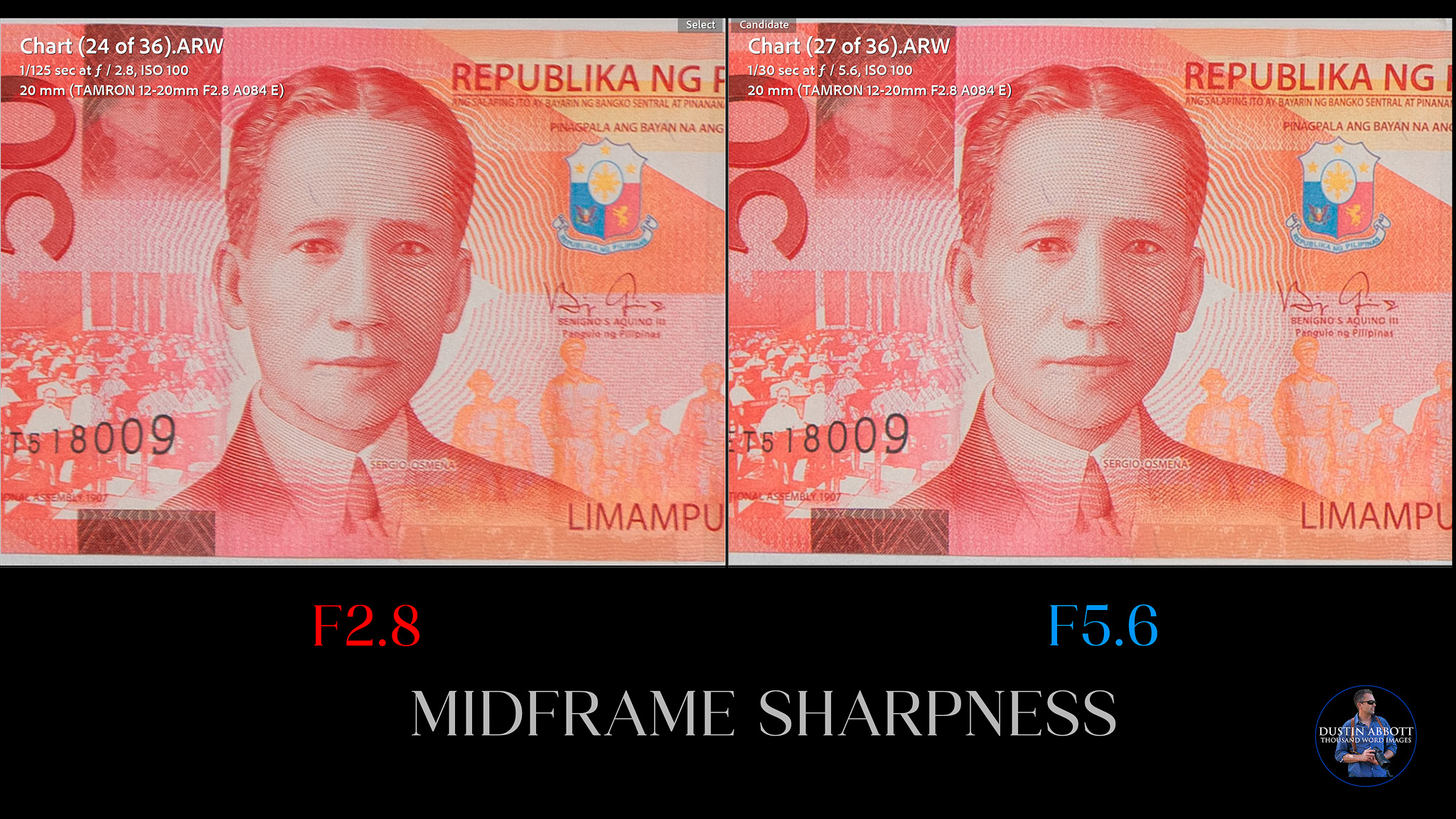
Real world results at apertures like F5.6 and F8 look excellent, though, with detail and contrast extending into the corners.


I found this shot of Nala at 20mm F2.8, to be very impressively sharp in the center of the frame.


You aren’t going to get much more than this out of the extremely expensive G Master lens (other than more consistent corners), so I think that many people will definitely be satisfied with this performance, particularly since the lens is so sharp in the real world at 12-14mm. The primary reason to buy a lens that goes so wide is to use it at 12-14mm, as there are plenty of good lenses that cover from 16-20mm for less money.
Bokeh is not a primary reason to buy an ultra-wide lens, and I found that bokeh was only okay.

Here’s another shot that shows the defocus.

It all looks fine, but this isn’t why you buy a lens like this.
What you do buy it for is astrophotography, and this is one of the primary ways that Tamron is marketing this lens.
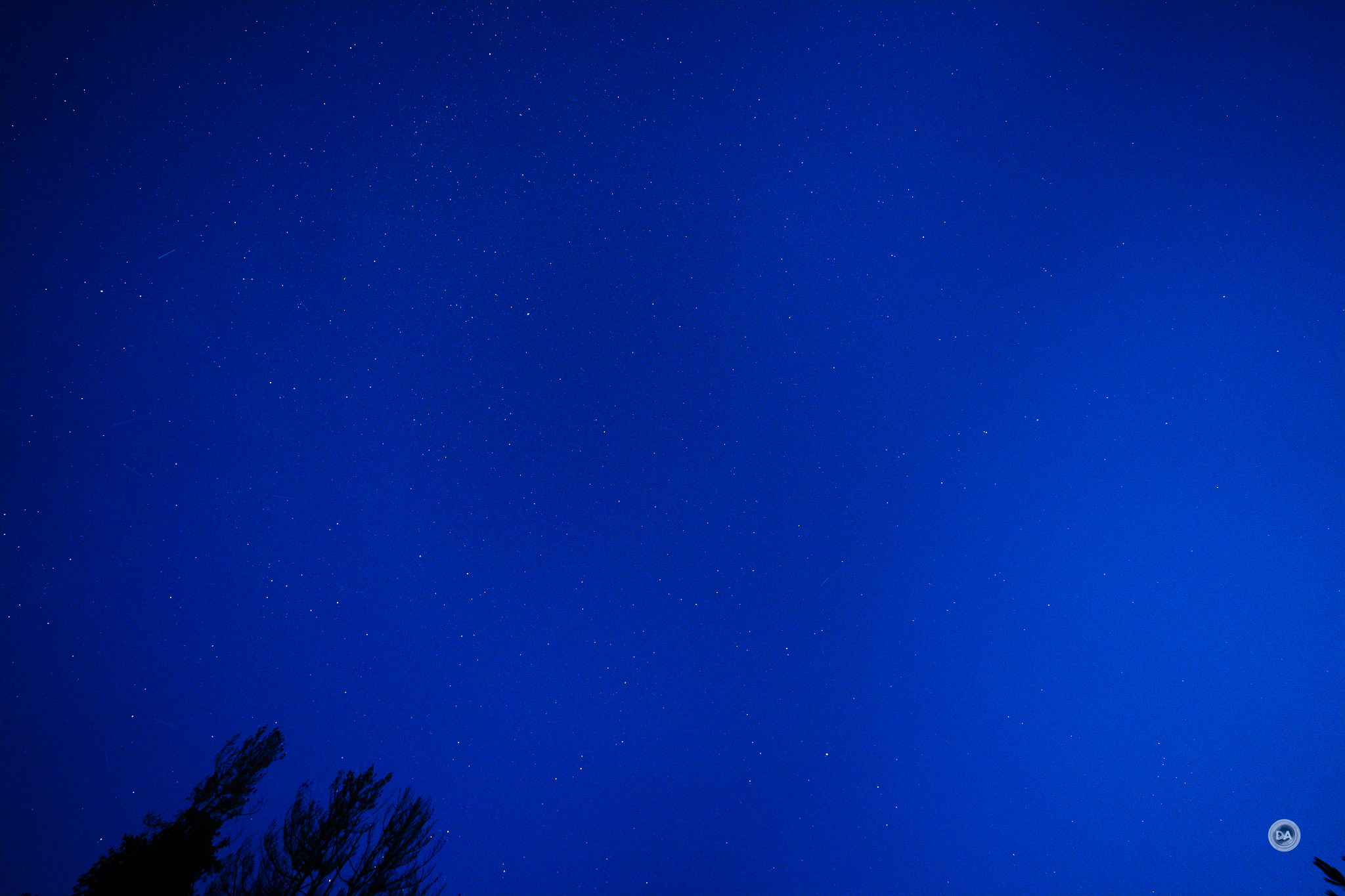
Taking a closer look we find that star points are fine and crisp not only in the center (crop one below) but also at the edge of the frame (crop two below).
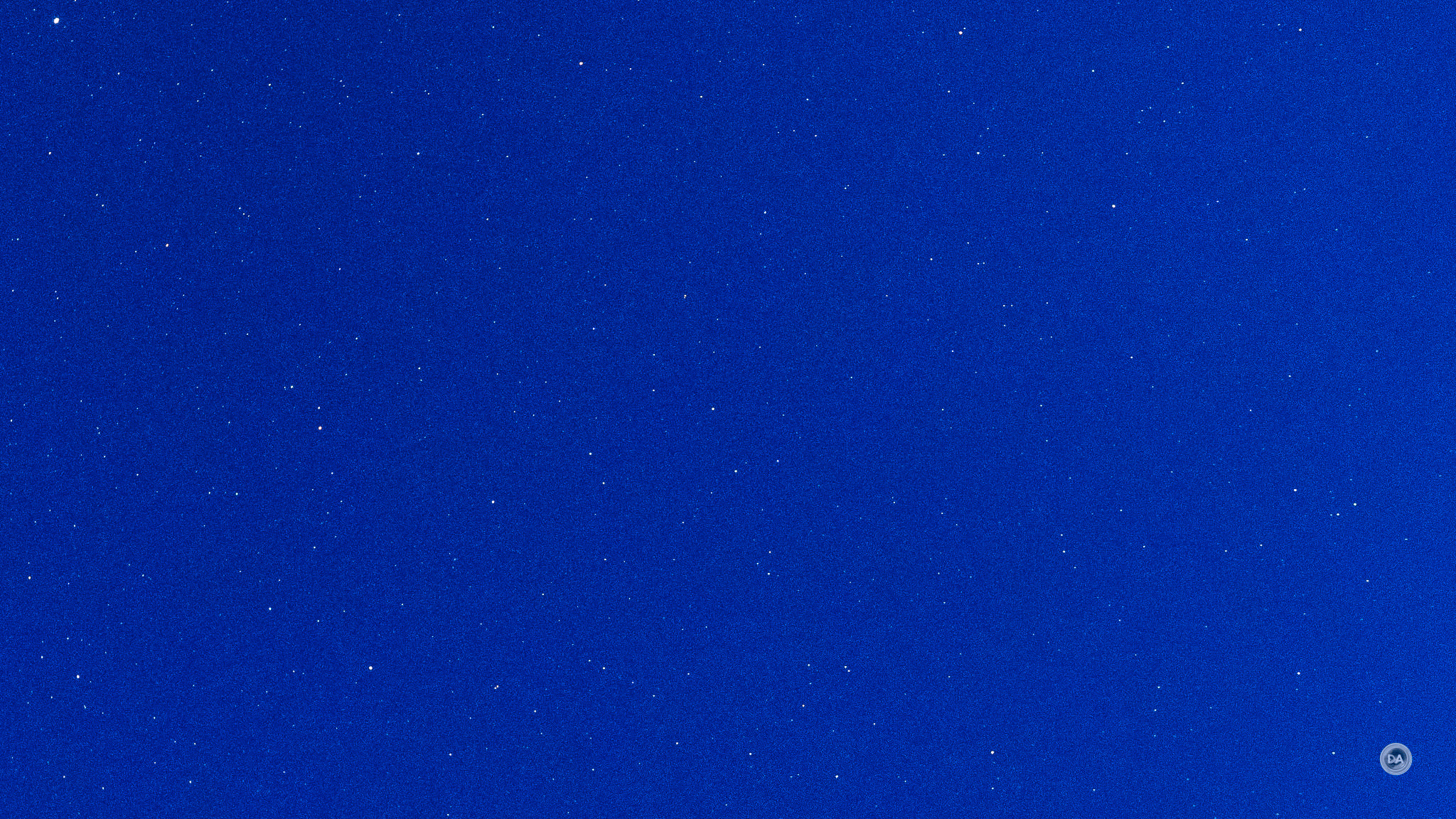
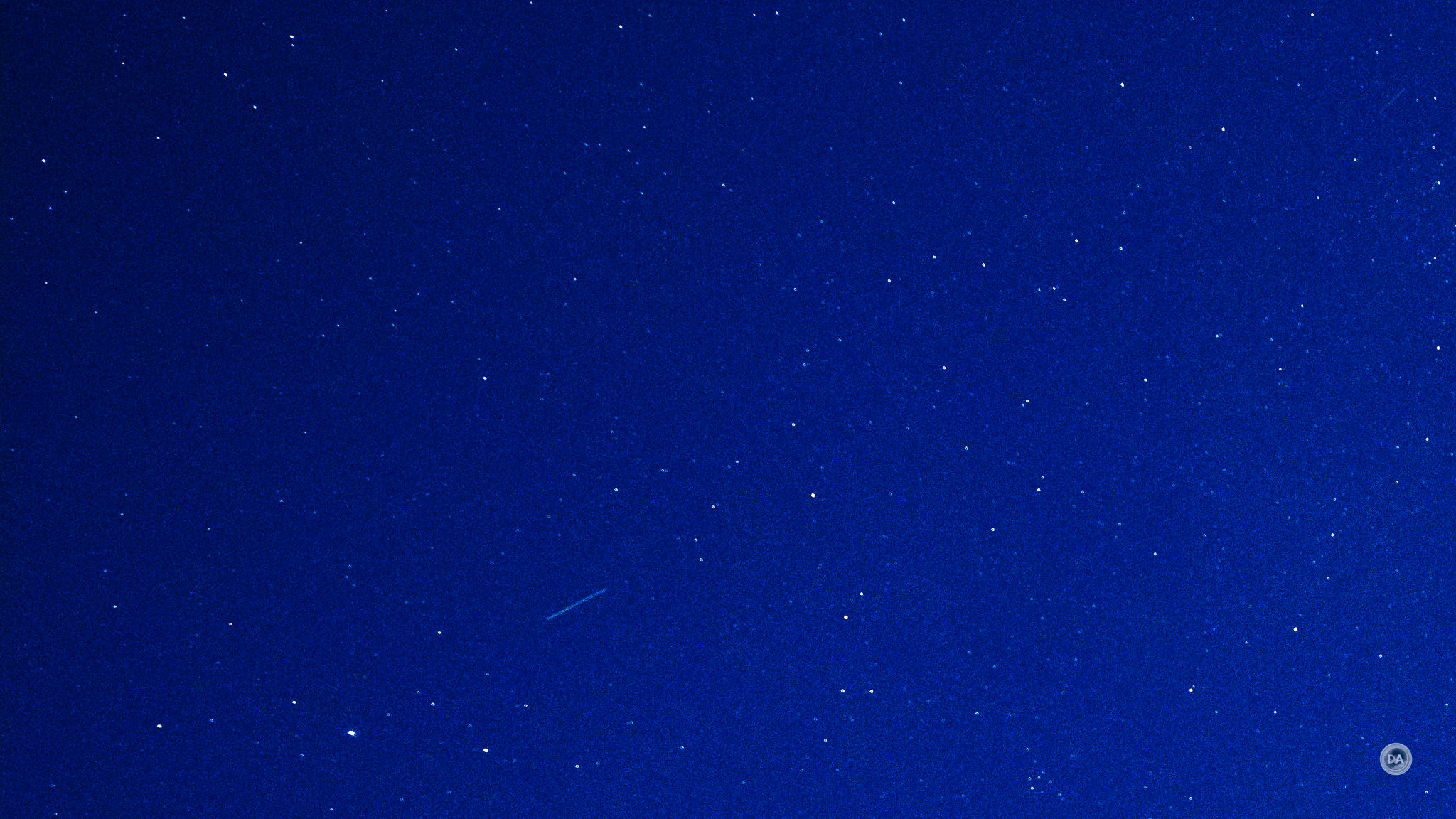
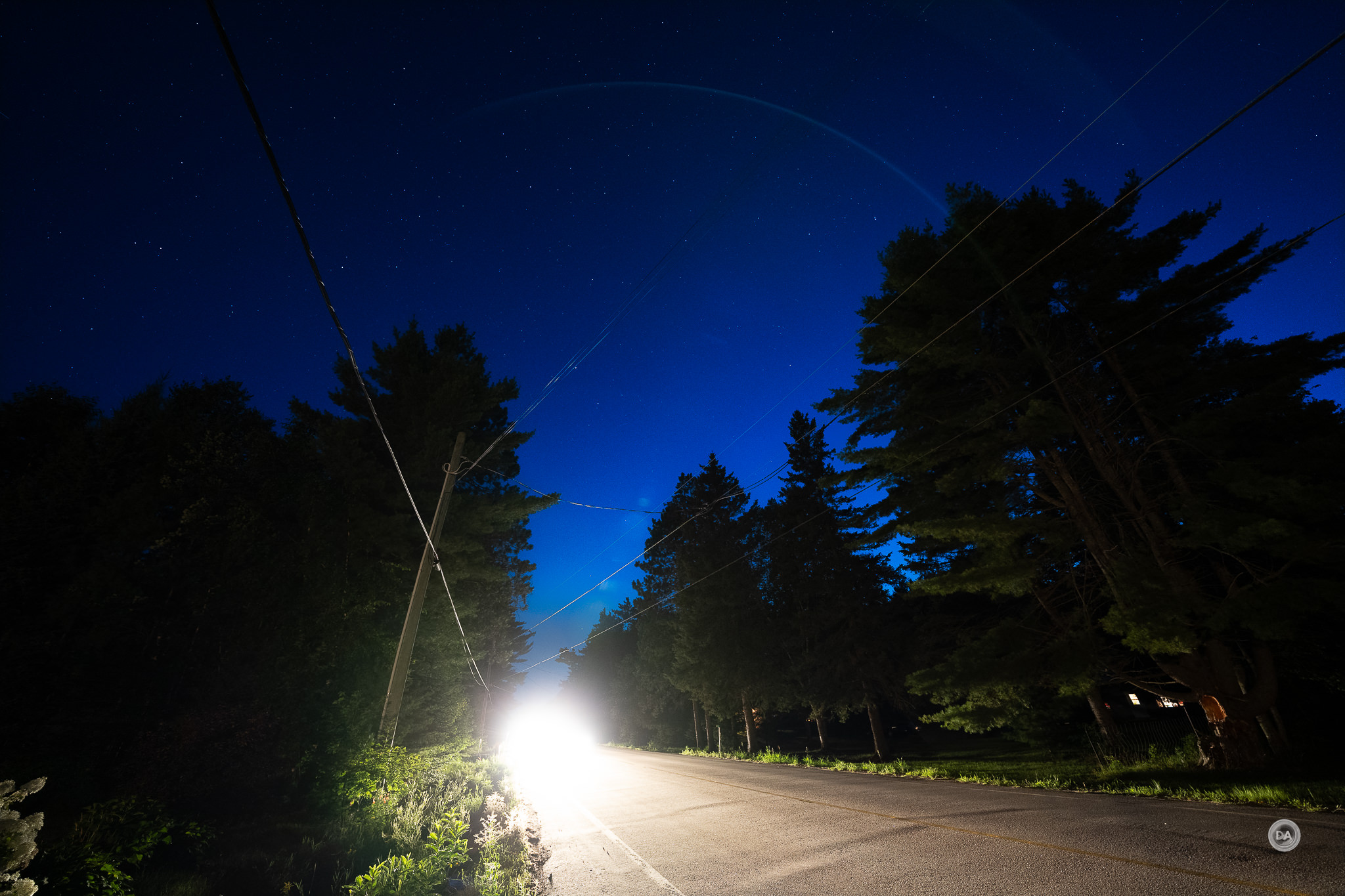
I regretted that I didn’t have a more dramatic location to shoot stars in (where I live is heavily forested and it can be hard to get shots without trees in them with such a wide angle of view), but I definitely liked the results I could get.
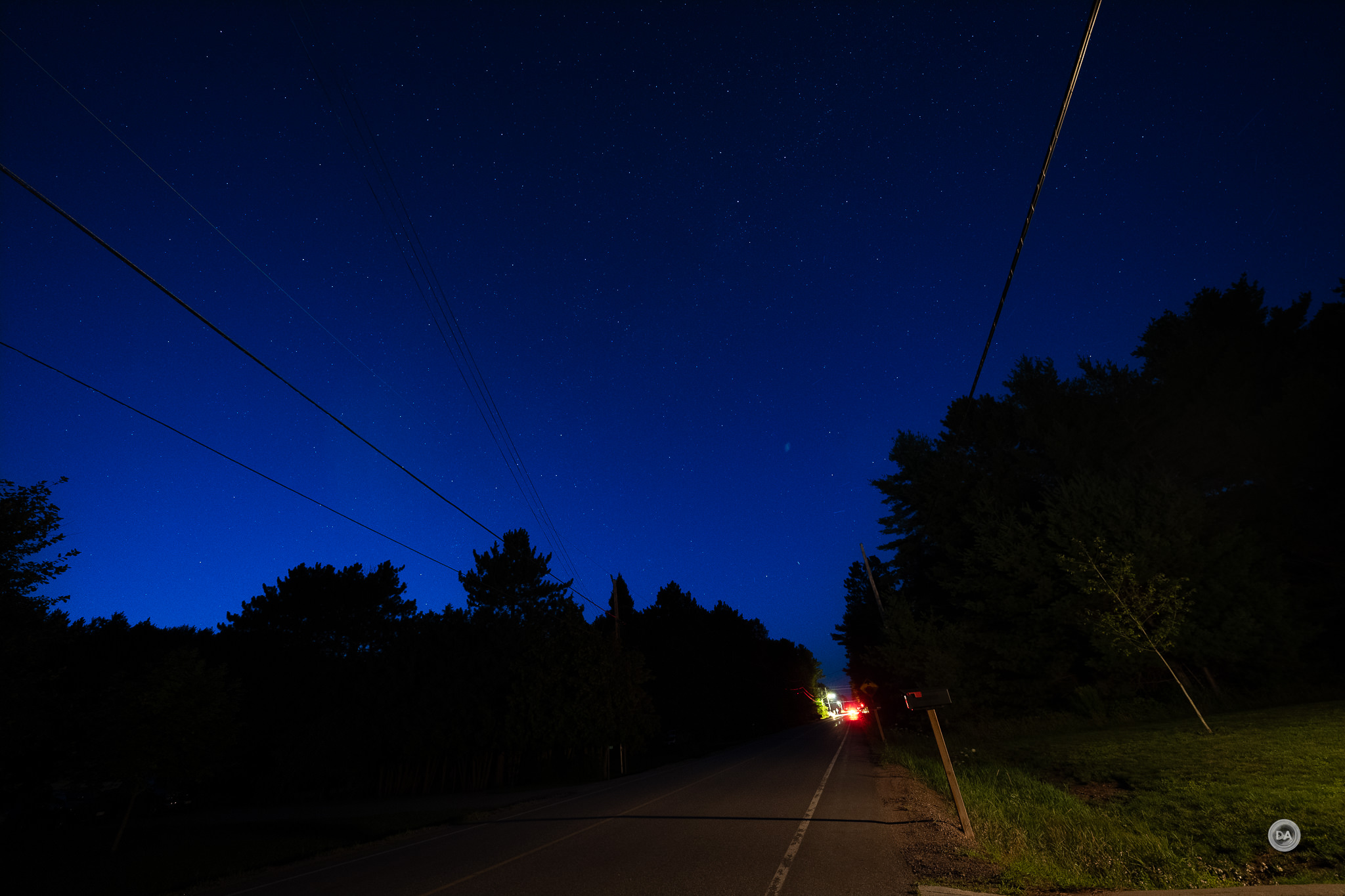
When it comes to flare resistance, Tamron’s BBAR 2 coatings seem to be doing what they need to do. Ultrawide lenses are far more likely to experience flare issues because so much is in the frame at once, but other than a few minor ghosting artifacts, I felt like flare resistance was solid.
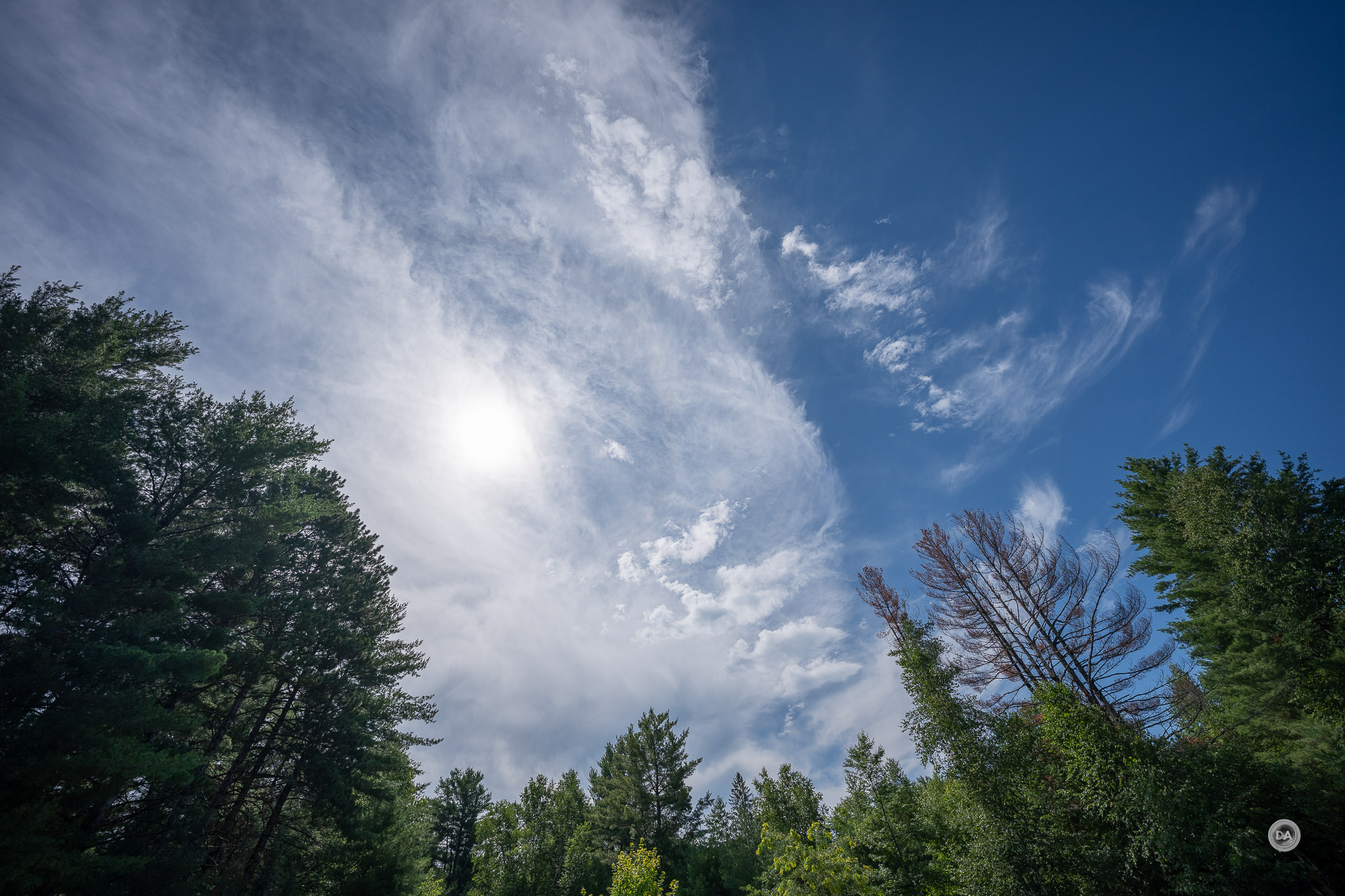

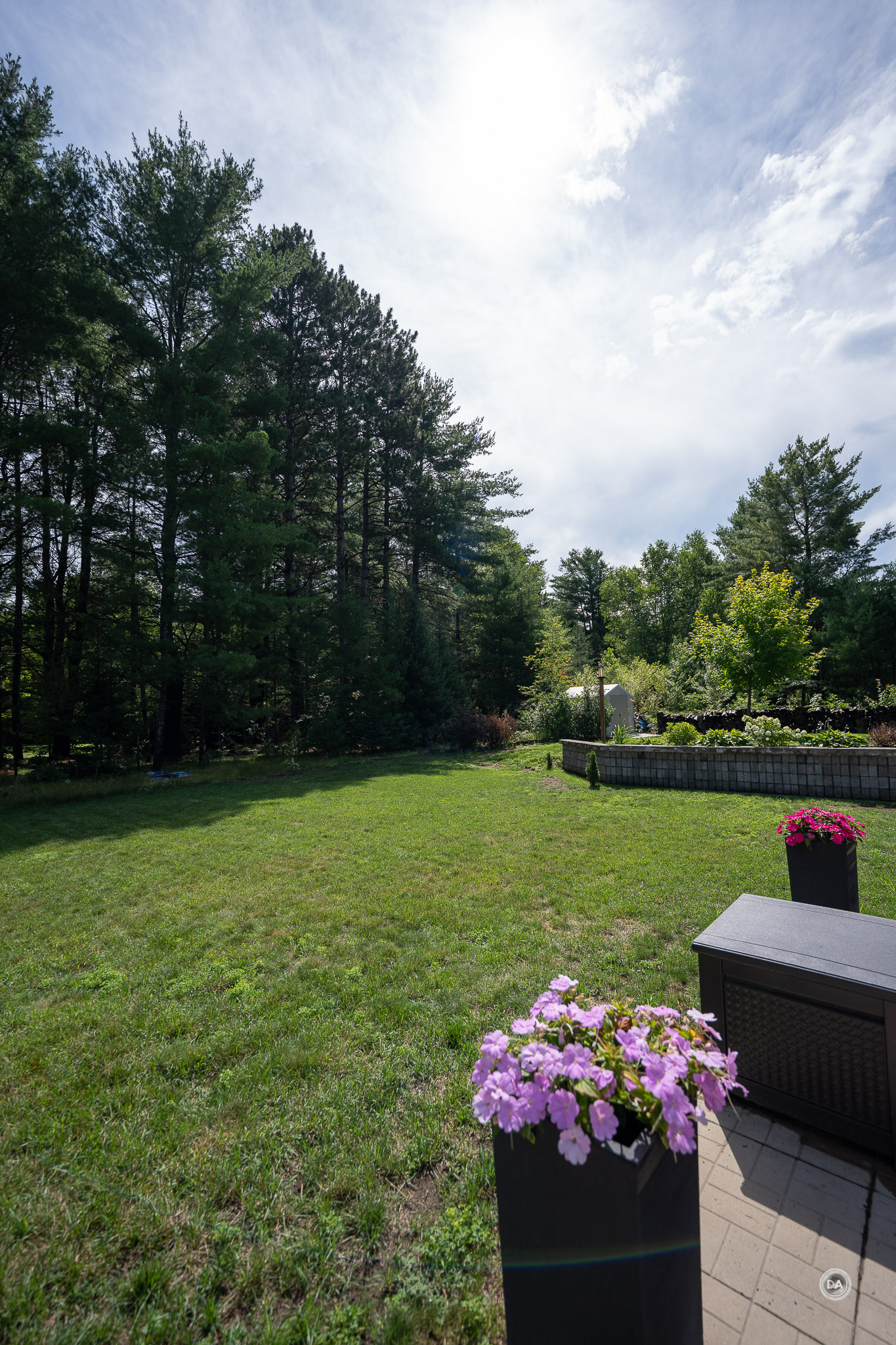
Tamron’s optical glass is nice, resulting in excellent color from the lens. There are good levels of saturation and color accuracy.
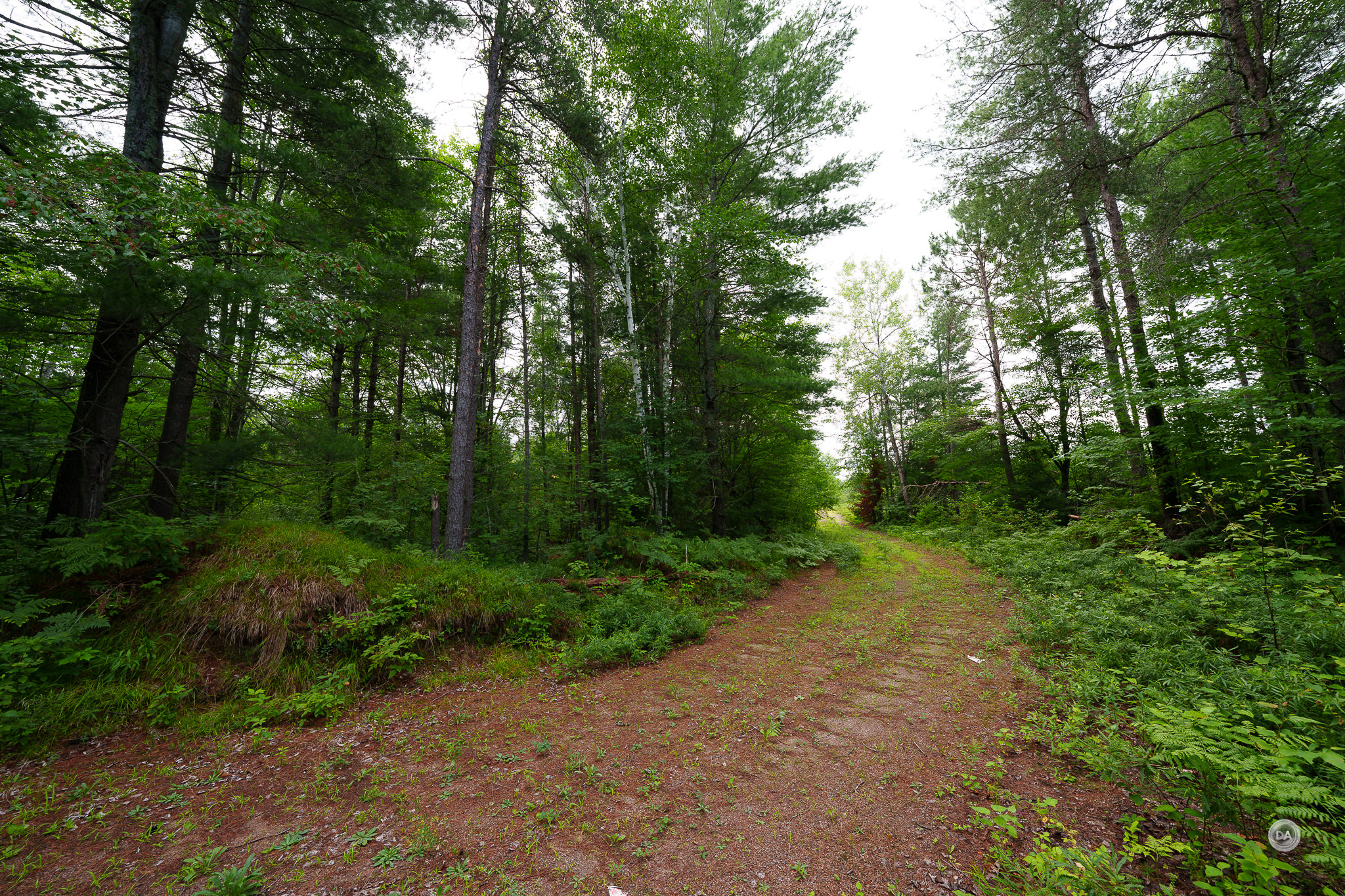
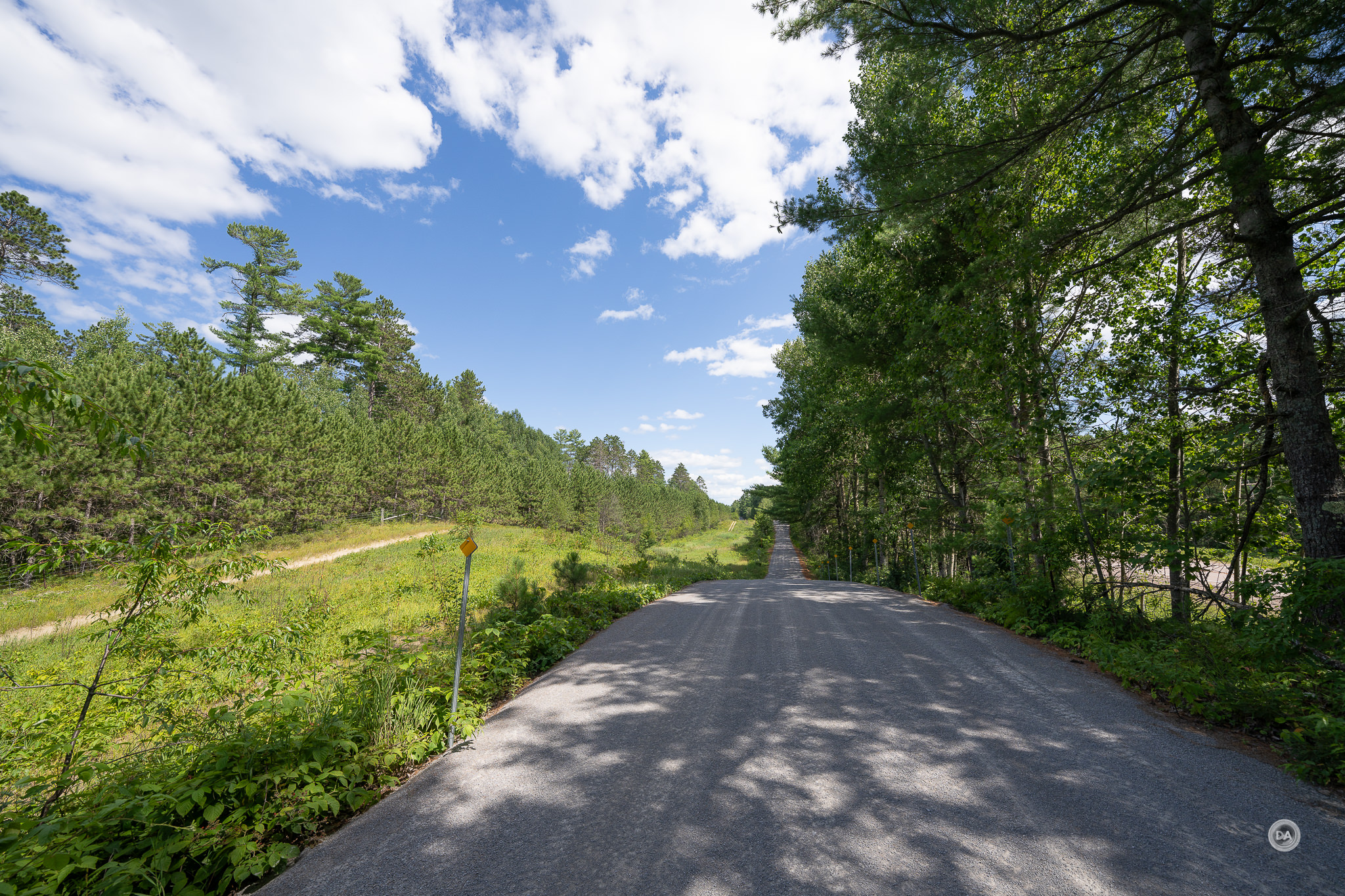
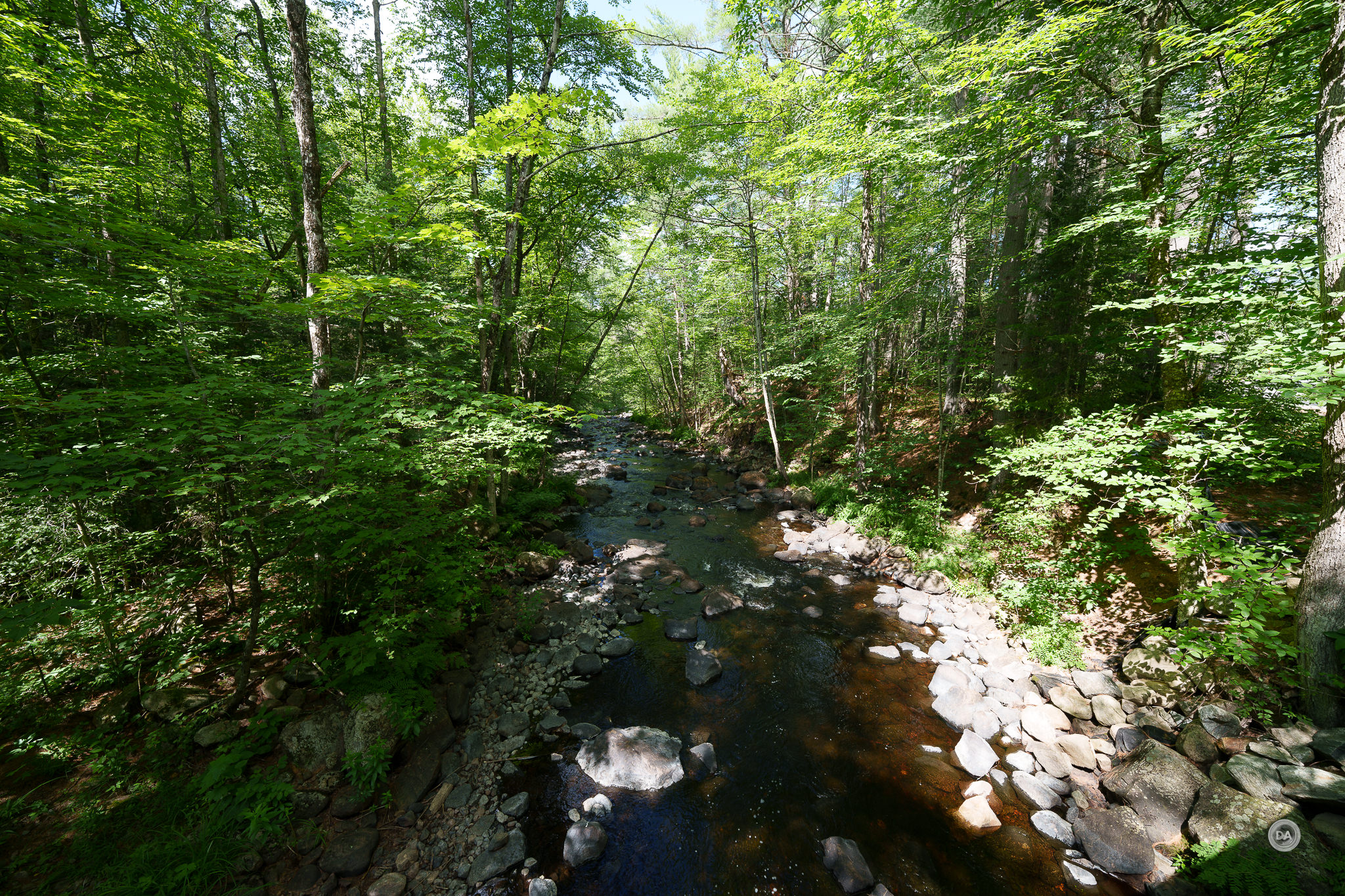
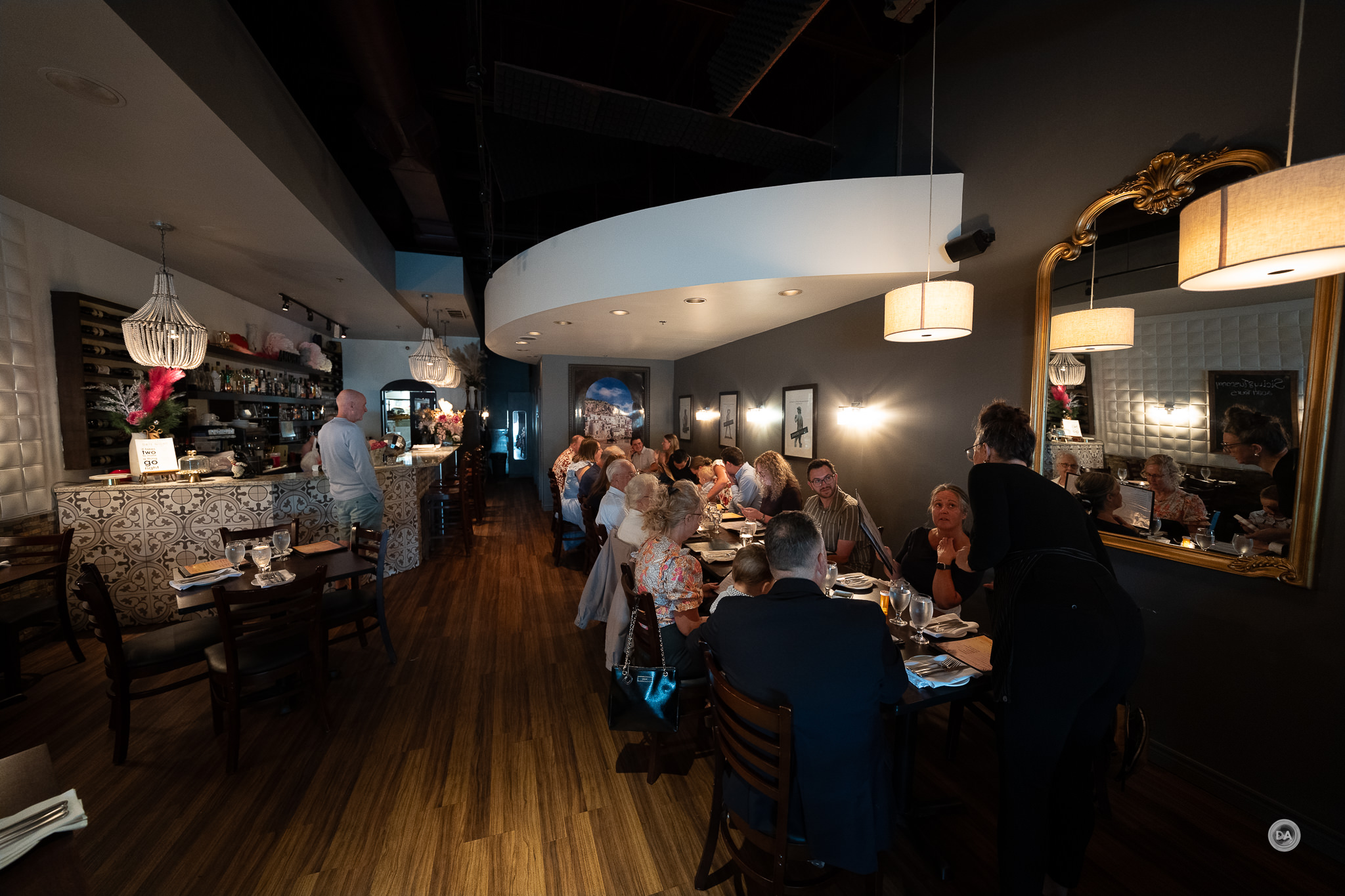
No complaints on that front. Here’s a mini-gallery of images for you to enjoy.





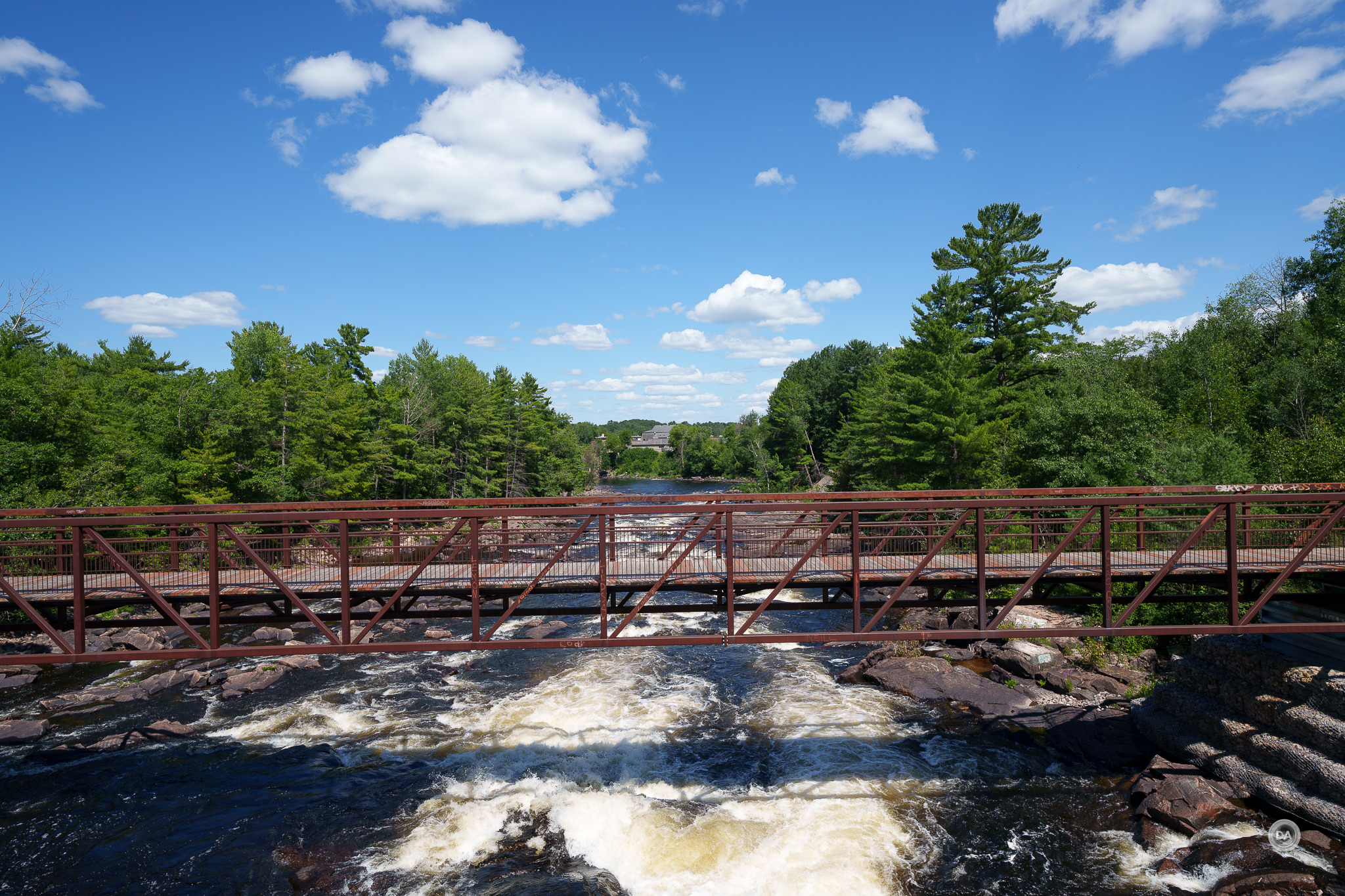
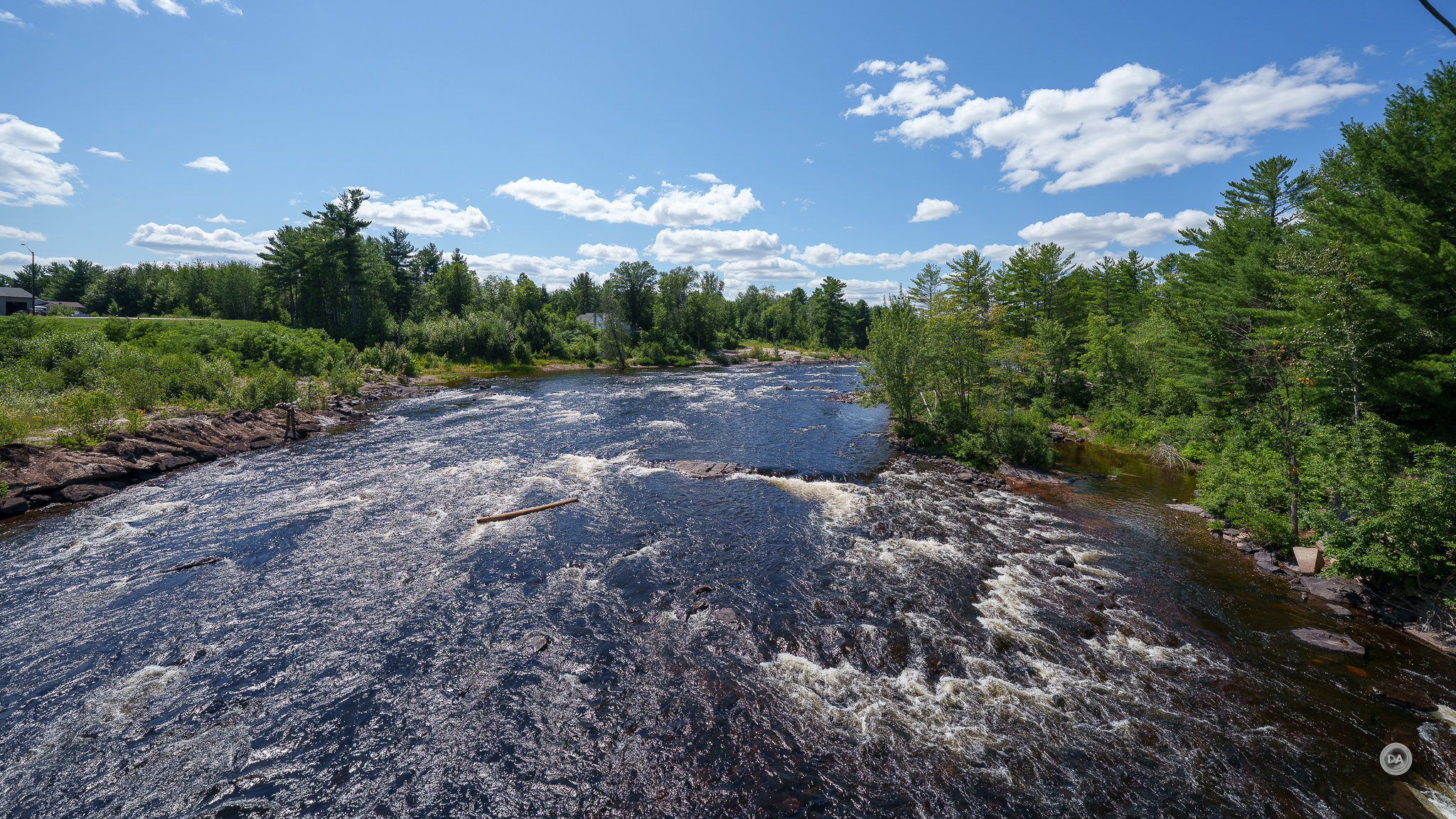





Conclusion
The Tamron 12-20mm F2.8 is a very interesting new direction for Tamron. They’ve shortened the name while dramatically lengthening the features. I read fears on the forums that some of the switches would prove unnecessary, but Tamron has instead given us a lens with a deeper level of granular control and customization than any wide angle lens I’ve tested before. It will be interesting to see if other brands adopt their MF Lock switch.
It is unfortunate that ultrawide lenses like this have to forego traditional front filtering, but that is one of the sacrifices for going so wide. There is some minor risk in Tamron moving upscale in their pricing along with the build/features, but they still comfortably undercut the first part alternatives.

The Tamron 12-20mm performed much better in real-world shots (particularly on the wide end) than on my test chart, which is in part due to the nature of such a wide focal length. I got some of my favorite images “back in the day” with Tamron’s 15-30mm F2.8 USD lens, which I reviewed back in 2015. They know how to make an excellent wide angle zoom, and they’ve done it again here. That lens was 25mm longer and weighed basically twice as much (1100g). This is evidence of how far lens development has come in that we have a more extreme zoom range, the same maximum aperture, far more features, and yet the lens is half the weight while delivering a higher level of performance. This lens isn’t cheap (it is on the higher end of Tamron’s pricing), but will probably still find its way into a lot of bags because A) it is much cheaper than true alternatives) and B) it is feature rich and very, very good. I’m always glad to see new premium alternatives available, and, as always, we consumers are the winners.
Pros:
- Competitive Pricing: Priced significantly lower than rivals like Sony’s G-Master and Nikon’s S-Line, making it an attractive option for professionals on a budget.
- Feature-Rich Design: Incorporates advanced features like a dedicated aperture ring, multiple customizable buttons, and a variety of switches for enhanced control.
- High Build Quality: Weather-sealed design provides durability and protection against environmental conditions, making it suitable for outdoor photography.
- Versatile Zoom Range: The 12-20mm range offers excellent versatility for various photography styles, including landscapes, architecture, and astrophotography.
- Excellent Real-World Performance: Demonstrates sharpness across a wide range, particularly at the lower end of the zoom range, making it reliable for high-resolution cameras.
- Fast and Reliable Autofocus: Utilizes Tamron’s VXD autofocus system for quick and precise focusing, beneficial for both photography and video applications.
- Low Focus Breathing: Very minimal focus breathing during video recording ensures smooth focus transitions, making it ideal for videographers.
- Customizable Functionality: Users can adjust settings, including manual focus behavior and lens functions, via the Tamron Lens Utility app, allowing for personalized performance preferences.
- Lightweight Design: Compared to competitors, it is relatively lightweight, making it easier to handle for long periods and better suited for gimbal work.
- Good Chromatic Aberration Control: Displays minimal lateral chromatic aberrations, maintaining color integrity and sharpness across the image.
Cons:
- Limited Front Filtering Options: The integrated front hood design prevents the use of traditional screw-on filters, which could limit creative possibilities.
- Corner Softness at Wider Focal Lengths: Some tests indicate corner softness when shooting at the extreme wide end, potentially impacting image quality for some users.
- Complexity of Features: The abundance of customizable features and controls may be overwhelming for less experienced photographers, leading to potential confusion during shoots.
- Potential Shortcomings in vignetting: Requires significant correction for vignetting at wider settings, which may necessitate post-processing adjustments for optimal results.
_________________________________________________________________________
GEAR USED:
Purchase the Tamron 12-20mm F2.8 @ B&H Photo | Adorama | Amazon | Camera Canada | Amazon Canada | Amazon UK | Amazon Germany
___________________________________________________________________
Purchase the Sony a7RV @ B&H Photo | Adorama | Amazon | Camera Canada | Sony Canada | Amazon Canada | Amazon UK | Amazon Germany
__________________________________________________________________
Purchase the Sony a7IV @ B&H Photo | Adorama | Amazon | Camera Canada | Sony Canada | Amazon Canada | Amazon UK | Amazon Germany
_________________________________________________________________
Purchase the Sony Alpha 1 @ Camera Canada | B&H Photo | Adorama | Amazon | Sony Canada | Amazon Canada | Amazon UK | Amazon Germany | Ebay
_________________________________________________________________
Want to support this channel? Use these affiliate links to shop at: B&H Photo | Amazon | Adorama | Camera Canada | Amazon Canada | Amazon UK | Ebay | Make a donation via Paypal
Buy DA Merchandise https://bit.ly/TWIMerch

Keywords: Tamron 12-20mm, 12-20mm, F2.8, f/2.8, VXD, Tamron 12-20mm F2.8 Review, Sony 12-24mm, GM, 14-24mm, S-Line, Travel, Wide Angle, UWA, Full Frame, Review, Sony A1 II, Sony a7RV, α1 II, Nikon Z8, Review, Hands On, Dustin Abbott, Real World, Comparison, Sharpness, Bokeh, Flare Resistance, Autofocus, Image Quality, Sample Images, Video, Photography, let the light in, weathersealing, #letthelightin, DA, #withmytamron, #12-20mm
Related posts:
 Tamron 35-100mm F2.8 Di III VXD Review
 Tamron 16-30mm F2.8 Di III VXD G2 Review
 Tamron 28-300mm F4-7.1 Di III VC VXD Review
 Tamron 28-300mm F4-7.1 VC VXD Gallery
 Tamron 90mm F2.8 Di III Macro VXD Review
 Tamron 90mm F2.8 Macro VXD Gallery
 Tamron 25-200mm F2.8-5.6 VXD G2 Review
 Tamron 50-300mm F4.5-6.3 VC VXD Review
 Tamron 50-300mm F4.5-6.3 VC VXD Gallery
 Viltrox EVO 85mm F2 FE Review