Up next in 10

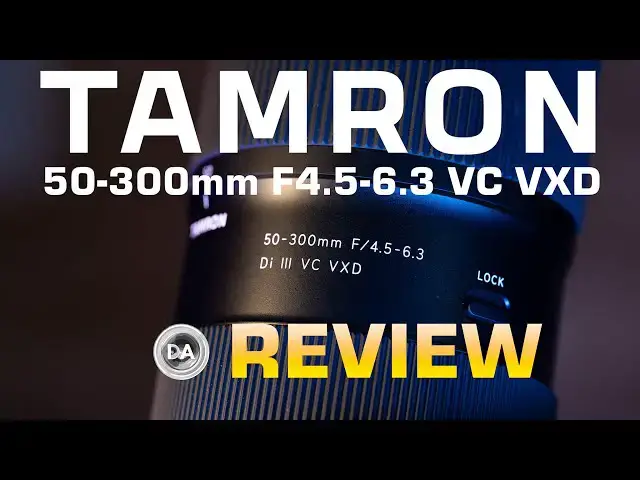
Tamron 50-300mm F4.5-6.3 VC VXD Review | Now with Macro!
Jun 9, 2024

Photographer Dustin Abbott shares a deep dive review of Tamron's new and super versatile 50-300mm F4.5-6.3 Di III VC VXD zoom lens. | This video is sponsored by Fantom Duffel. Visit https://store.fantomwallet.com and use code DUSTIN20 to get 20% off | Read the Text Review: https://tinyurl.com/50-300VCreview | Visit the Image Gallery: https://tinyurl.com/50-300VCpics | Purchase the Tamron 50-300mm VC VXD @ B&H Photo https://bhpho.to/3yPltFT | Adorama https://howl.me/cmqaIqY4XCh | Amazon https://amzn.to/3Rf2xH9 | Camera Canada https://shrsl.com/4kig3 | Amazon Canada https://amzn.to/3KyHVWn | Amazon UK https://amzn.to/3RiO64F | Amazon Germany https://amzn.to/3VzGpKe
Check out the DA Merch here: https://bit.ly/TWIMerch | Become a Patron: https://www.patreon.com/dustinabbott | On the Web: http://dustinabbott.net/ | Sign up for my Newsletter: http://bit.ly/1RHvUNp | Instagram: http://bit.ly/DLAinsta | Facebook: http://on.fb.me/1nuUUeH | Flickr: http://bit.ly/1UcnC0B | 500px: http://bit.ly/1Sy2Ngu Follow Craig @ https://www.instagram.com/craigstoffersen/
Want to support this channel? Use these affiliate links to shop at:
B&H Photo: http://bhpho.to/1TA0Xge
Adorama: https://howl.me/cjU0LKdp3LN
Camera Canada: http://bit.ly/DLACameraCan
Sony Canada: https://www.thesonyshop.ca/?ref=abbott
Amazon: https://amzn.to/3HrY64d
Amazon Canada: https://amzn.to/3qG1p18
Ebay: http://bit.ly/DustineBay
Into the AM Clothing: https://bit.ly/intotheAMda and use code DUSTIN10 for 10% off
Make a donation via Paypal: https://www.paypal.com/paypalme/dustinTWI
=============================
Table of Contents:
=============================
0:00 - Intro and Concept
1:50 - Fantom Duffel
2:40 - Build and Design
12:14 - Macro
13:22 - Autofocus
17:11 - Video
18:08 - Image Quality Summary
22:57 - Conclusion and Pricing
24:34 - Optical Deep Dive
---------------------------------------------------------
Oben Tabletop Tripod shown in video: https://bhpho.to/3vL8YWy
My Cameras:
Purchase the Sony a7RV @ B&H Photo https://bhpho.to/3ZivNyZ | Adorama https://howl.me/cjNY1LU3gFH | Amazon https://amzn.to/3CRCDlq | Camera Canada https://shrsl.com/3vulf | Sony Canada https://bit.ly/BuyA7R5 | Amazon Canada https://amzn.to/3H8yeNH | Amazon UK https://amzn.to/3kbg5FM
Purchase the Sony Alpha 1 @ Camera Canada https://shrsl.com/2wdk2 | B&H Photo https://bhpho.to/3upRFZd | Adorama https://howl.me/cj2nQpjLBKW | Amazon https://amzn.to/3t1m8MD | Sony Canada https://bit.ly/BuySonyA1 |Amazon Canada https://amzn.to/3cVFrBB | Amazon UK https://amzn.to/2OtrjGe | Amazon Germany https://amzn.to/3d0GtMO | Ebay https://ebay.us/i371Vs
Canon EOS R5: B&H Photo https://bhpho.to/3iMH18x | Amazon https://amzn.to/33L3D53 | Camera Canada https://shrsl.com/2jqth
Purchase the Fujifilm X-H2 @ B&H Photo https://bhpho.to/3KAInTC | Adorama https://howl.me/cjyzbiO5lVp | Amazon https://amzn.to/41zMzKl | Camera Canada https://shrsl.com/4128o | Amazon Canada https://amzn.to/40gY4W7 | Amazon UK https://amzn.to/43Grn7a | Amazon Germany https://amzn.to/3L6hwjR
Get a discount off all Skylum Editing Software (Luminar, Aurora HDR, AirMagic) by using code DUSTINHDR at checkout: http://bit.ly/LuminarDLA
DISCLAIMER: This video and description contains affiliate links, which means that if you click on one of the product links, I’ll receive a small commission. As an Amazon Associate I earn from qualifying purchases.
Keywords: Tamron, Tamron 50-300mm, Tamron 50-300, F4.5-6.3, VC, VXD, Di III, A069, Full Frame, Review, Sony Alpha 1, Sony a7RV, Review, Hands On, Dustin Abbott, Real World, Comparison, Sharpness, Bokeh, Flare Resistance, Autofocus, Image Quality, Sample Images, Video, Photography, let the light in, weathersealing, #letthelightin, DA, #withmytamron
Show More Show Less View Video Transcript
0:00
Hi, I'm Dustin Abbott and I'm here today to give you my video review of the Tamron 50-300mm f4.5-6.3
0:17
This is the Di3 VCVXD lens and I'll tell you what all of that means in just a moment
0:26
Back in 2020, Tamron released a 70-300mm lens for Sony E-mount that I gave a largely positive
0:34
review to because it had good autofocus, good optics, and it was very affordable at $550
0:43
I did wish in that review for image stabilization, a zoom lock to prevent some zoom creep on
0:48
it, and better corner performance on the wide end of the zoom range
0:53
Tamron clearly heard those requests and they are back with a new and improved lens in 2024
0:59
though in this case they've done a whole lot more than just my wish list
1:03
We've now got image stabilization, their VC, we've got a bigger zoom range going as wide
1:08
as 50mm rather than 70mm, we have an improved and faster autofocus system, we have better
1:15
optical performance, we have more features, we have a zoom lock, and we even have a 1-2
1:21
macro mode. The price has increased to $799, but in many ways I think as we're going to see, this is
1:29
an interesting alternative to Sony's excellent 70-200mm f4G macro lens that I gave my Zoom
1:38
Lens of the Year award to back in 2023. And this lens costs a whopping $900 less than that one
1:46
So is this lens worth considering? That's what we're here to explore in today's review
1:51
Today's episode is brought to you by the Phantom Duffel, a new unique convertible duffel
1:55
bag that starts as a compact packable case that easily fits into your luggage or carry-on
2:00
bag but then converts into a 35L duffel. The exterior is made of 1680D ballistic nylon which is tough and weatherproof
2:08
The interior has a high visibility reflective finish that allows you to easily see what's
2:13
inside, even in a dim hotel room. A large foam pouch on the side has a cable pass through to allow for charging and the
2:20
removable straps use a Fidlock system to easily and securely connect them
2:24
I've been using it for the gym and it has room for my water bottle, a change of clothes
2:28
a basketball, my massive shoes, a towel and a charger for my cell phone
2:32
Visit store.phantomwallet.com to check it out and use code Dustin20 for 20% off when
2:38
you're ready to check out. So I promised I would break down what all of those letters mean and the description
2:46
of the lens itself. And so very quickly DI3 is Tamron's rather obscure designation for mirrorless based lenses
2:57
So in this case DI3 being full frame mirrorless design. VC stands for vibration compensation which is their name for their optical stabilization
3:07
system and lens. And then VXD stands for voice coil extreme torque drive
3:13
Again a rather wordy name for a high thrust, high torque, linear type focus motor that
3:20
is the autofocus system in the lens itself. Now as noted we have an increased zoom range
3:26
We saw Tamron do this with their typical 100-400mm formula bringing us a 50-400mm which obviously
3:35
is an even bigger zoom ratio, 8x zoom ratio. That lens however is about $500-600 more than this one and considerably larger and heavier
3:43
But in this case adding that additional 20mm to the zoom range really does open up the
3:49
possibilities for what you can do with the particular lens. You can go from as wide as this to as tight as framing as this at 300mm
3:59
So obviously as you can see from these series of images that's a whole lot of focus possibilities
4:04
framing options within one zoom range. It's a very versatile zoom range and I really, really appreciate it particularly when it
4:10
comes in as small a package as what we're getting here. As noted we do get the vibration compensation system here and so lens based stabilization
4:20
to augment what you get in camera if you happen to have a camera with IBIS
4:25
Now a few notes on that. Number one there is no like SIPA rating that is given by Tamron which tells me it's probably
4:32
not top tier in terms of stabilization performance. It seems to work in conjunction with the camera based stabilization system and the reason
4:40
why I say that is that there is actually no on-off switch for the vibration compensation
4:46
on the lens itself. Meaning that if you turn IBIS on in camera it turns on, if you turn it off in camera
4:53
in theory it turns off. Though I suspect what happens is that it's probably a smart system to where it's kind
4:59
of on all of the time. However it does definitely make a difference and so here's what it looks like without
5:05
stabilization turned on at 300mm handheld. This is 1 20th of a second and then here's what it looks like with stabilization turned on
5:14
Obviously a pretty huge difference and so that makes a difference for hand holding stills
5:18
and that helps. I really did notice the lack of lens based stabilization in the original 70-300
5:24
Definitely an improvement here and obviously it also helps with your shooting handheld
5:28
video footage as well and that's going to be really useful and it helps to augment that
5:33
macro mode. And so even when you're shooting video it is possible to get really close to your subject
5:38
and stay pretty stable at the same time. And so it is certainly very welcome to have here
5:44
There now is the addition of a weather sealed USB C port and through that you can do easy
5:51
firmware updates and also tweak some or customize the lens itself and its behavior through Tamron's
5:57
free lens utility software. That software allows you to do more tweaks either through a computer or through Android
6:05
based devices and there's even more kind of remote options that are being brought out
6:11
in the most recent version 3.0 version of that app and or software
6:17
There now is a zoom lock as requested. I've got the actually the Nikon Z mount version of the original 70-300 here
6:26
So the only change is that they did add that USB C port but I did note that with that lens
6:31
when I was out kind of backpacking or whatever that after a while it would start to creep out
6:36
In this case you have the ability to lock it at 70 millimeter position and so as a byproduct
6:40
it is an easier lens to bring along. Tamron has also added a function button here which can be programmed either from within
6:48
camera or through that lens utility software depending on how you want to handle it and
6:53
so that adds a little bit of extra versatility here. This lens is thoroughly weather sealed
6:58
Now it had good weather sealing on the original as well but probably even more so here
7:03
Lens gasket, flooring, front coating, internal seals inside. This lens holds up just well when you take it outside which is obviously very welcome
7:11
I will note a little bit of a redesign to the lens hood. They've made a scallop design for the new lens that suits the look of the lens a little
7:19
bit better. It also makes it as you can see a little bit shorter even though the lens itself is 2 millimeters
7:25
longer than the previous lens. When you have the lens hoods attached it actually is the shorter of the two and so that is a
7:31
welcome change. It is a nice and robust feeling hood. It doesn't feel lightweight or weak
7:38
Bayonets into place very precisely. No problems on that front. So let's talk about the size for a moment
7:44
We have a 78 millimeter diameter here that's 3.1 inches. We have retained the 67 millimeter front filter thread that is shared with the vast
7:52
majority of Tamron's mirrorless designs which is obviously very welcome for filters sharing
7:58
across them. The lens length is 150 millimeters or 5.9 inches. So as noted that's only a 2 millimeter growth in overall length despite adding that additional
8:08
20 millimeters of focal range. Obviously very appreciated and of course adding a host of other features here as well along
8:14
with the optical stabilization. The fact that they've essentially kept the lens pretty much the same size is welcome
8:19
though I will note there is some additional weight here. Now weighs in at 665 grams or 23.5 ounces
8:27
That is about 120 grams heavier than the 70 to 300 millimeter but they've added a whole
8:33
lot here so that's pretty justified and I will note that it's still 200 grams lighter
8:38
than Sony's own 70 to 300 millimeter GOS S lens. Another thing that I noted between the original lens and this new one is that in the original
8:49
lens the zoom action was a little less smooth and it also had a bit of that pump action
8:53
If you've ever done externally zooming lenses sometimes it feels like there's a bit of a
8:57
pump in a certain section and for me that feels like it's sucking, potentially sucking
9:03
air and dust into the lens barrel. In this case we have a smoother more precise zoom action with none of that sucking action
9:12
I also note that the focus ring feels better. The original design both the focus and the zoom ring were flush and so particularly the
9:21
manual focus ring was hard to feel and it just it doesn't feel very good either
9:27
The zoom ring is obviously really really wide. It's a little bit narrow here but because they have added more sculpting to the lens
9:33
barrel itself, for one thing the new lens actually looks a little bit narrower though
9:38
it's not but it also is much more ergonomically pleasing. The manual focus ring is much easier to find
9:45
In fact I really like the scallop design and how it holds out because it fits perfectly
9:50
into the way that I would grab and support this which means that the custom button is
9:55
right there at my thumb. There's this kind of scallop section that kind of naturally sits there and on the other
10:00
hand I can even engage the zoom lock with just that one hand say if I was putting it
10:04
back on to some kind of carry system. So that is much appreciated and it also means that there's a little bit of a kind of a scallop
10:12
forward that allows that zoom ring to also fall very smoothly to hand
10:16
This is a it's subtle changes but they make for a much more ergonomically pleasing lens
10:23
to use. I will also note that like before there is no tripod ring or tripod collar included here
10:32
It's not compatible with teleconverters either but to be fair basically that is a very very
10:37
rare feature on any kind of 70 to 300 millimeter zoom anyway and so it's it's not like Sony's
10:44
own has either one of those things despite being considerably more expensive
10:50
Now there is one area where there is a little bit of a step back relative to the original
10:55
70 to 300 and that is that this lens is a little less bright and so it loses aperture values
11:01
It has the same basic range f4.5 to f6.3 on the telephoto end but it gets to the smaller
11:08
apertures a little bit faster. So to give you the breakdown of that it's f4.5 from 50 to 70 millimeters whereas the
11:17
original 70 to 300 millimeters it was 112 millimeters before it hit f5
11:25
In this case we're hitting f5 starting at 71 millimeters and only holding it through
11:29
101 millimeters whereas the older lens held it all the way through 154 millimeters
11:36
In this case we're going to at 102 millimeters we're at f5.6
11:40
We hold that till 181 millimeters. The old lens got you all the way to 241 millimeters before hitting f6.3
11:48
Obviously this one hits it at 182 millimeters and so from 182 millimeters to 300 millimeters
11:54
f6.3 is your maximum aperture. So it's a little bit less bright and I think it maybe compensates for that a little bit
12:01
by having lens based stabilization so it's going to be a little steadier to handhold
12:06
but at the same time I do need to point out that it is a little less bright and a little
12:10
bit less light gathering compared to the old lens. Now one of the final features I want to highlight is the improved close focus capabilities
12:20
This lens is better at close focus both at the telephoto and at the wide end particularly
12:26
on the wide end. So on the telephoto end you can focus as closely as 90 centimeters and you have a very high
12:33
0.32 times magnification. That's enough to obliterate backgrounds pretty easily but on the wide end you can focus as
12:42
closely as 22 centimeters which is only about this far in front of the lens barrel once
12:47
you compensate the lens length and get to the sensor point. And there however you can achieve a very high magnification of 0.50 times
12:57
Now the one slight advantage here is that because it's brighter on the wide end means
13:02
that in some situations it might be a little bit easier to handhold a result but nonetheless
13:07
getting that one to two macro level is enough that you know Sony calls it macro in their
13:11
own lens. Tamron isn't necessarily saying macro but it is a one to two or half size macro performance
13:18
here that obviously adds a huge amount of versatility to this lens
13:22
I love it. So let's talk autofocus. Autofocus has been upgraded from the RXD focus motor which was a high quality I think stepping
13:31
style motor that Tamron originally had on Sony E-mount. They've now gone to their VXD motor and this is a high thrust linear motor
13:41
And so you're getting faster thrust so quicker focus changes. It is smoother and it is quieter in operation as well
13:48
This is one of those lenses that I can put it right up next to my ear and during focus
13:54
I just don't hear anything. And so it is as close to silent as what you could ask for really in operation
14:01
So obviously that's pretty fantastic. Now one thing I do want to highlight just it may help people that buy this lens
14:07
If the lens is disconnected you will hear a rattle inside. It has floating elements to allow it to achieve that good up close focus performance
14:15
And so it will rattle as you shake it a little bit. That's natural
14:19
Now the way that you can know that this is what you're hearing is that the moment you
14:23
power everything on you can shake it and all of that sound goes away
14:27
And that's because those floating elements are now activated. This is the way that the lens is designed to function
14:32
A lot of modern lenses are like this. It's part of their design but it does sometimes freak out people that are unfamiliar with
14:39
that process. Now in terms of autofocus speed as you can see here from my test autofocus speed is basically instant
14:46
Even indoors where this is you know it's not as bright a lens as a lot of what I test
14:50
being a variable aperture zoom. But there's so much power there in that focus motor that it's just instant back and forth
14:57
And of course outdoors in better light it's effortless in terms of the focus speed
15:02
I did find that I had no problem keeping up with the cats as they were moving around
15:06
You know these series of shots of Ferrari walking towards me. And then in a second series there was for some reason even though I keep Nala on a leash
15:15
attached to a clothesline outside so she can move around but not stray away
15:20
There was a chipmunk that was dumb enough to come into her range and so she played with
15:24
it for a while. To my knowledge no chipmunks were actually harmed in the long run in this process but
15:29
I was able to easily keep up with you know the pounces and the jumps and all of those
15:34
things that were a part of that moving around there. Accuracy is excellent here and I was able to focus with precision
15:41
In fact this shot stood out not because it was special but because up in the air I was
15:46
out trying to capture birds which you'll see no bird shots. None of them showed up but I was on the beach and I noted just a little bit of fluff up
15:53
in the air. So I was kind of curious and so I zoomed in on it 300mm, focus immediately locked onto
15:58
it and I could see that there was in fact like a fishing line that was stretched in
16:02
between two trees with a little bit of maybe leftover from a lure on there or just from
16:07
a bird, some fluff caught on that line. So anyway the fact that it locked onto that was pretty impressive to me considering it
16:14
was a tiny little amount to lock onto just up against just a sky backdrop
16:21
So it was pretty cool there. One thing I do have to point out for sports related action is that if you're shooting
16:27
on a sports related Sony body like my Alpha 1 that I've been shooting a lot on during
16:32
the series, with third party lenses Sony limits burst speed on the sports bodies at only 15
16:39
frames per second. So that's half of what my Alpha 1 is capable of
16:43
So just be aware it's not really Tamron's fault it's just a Sony thing
16:47
And by the way I've actually been really enjoying being able to get full burst speeds when shooting
16:51
with my new Nikon Z8 and this older 70-300mm from Tamron along with other lenses
16:58
The fact that it doesn't have that limitation makes me hope that maybe Sony will abandon
17:02
that in the future and it also makes me very interested in this new lens coming out on
17:07
Nikon Z mount because it'll be even more fun to use there
17:12
On the video side of things there was really nothing to complain about
17:15
I found that my video focus pulls, they were smooth, they were confident, no issue there
17:21
My hand test worked fine as far as transitions from the hand to the eye and then even outdoors
17:27
in real world shots as I transitioned from a close focus subject to a distant focus subject
17:33
it wasn't jumpy or abrupt. Focus breathing didn't seem too bad. It seemed like a fairly natural transition there and back and overall I found video focus
17:44
to be quite good. This is an attractive video lens for the simple reason that it's still small and light enough
17:50
to maybe work on a gimbal if you were so inclined wanting longer shots and obviously that's
17:55
a really versatile focal range, zoom range and that also makes it very attractive for
18:00
a decent amount of money there. So overall auto focus is excellent and this lens, zero complaints about that
18:09
Now as far as the optical performance here I will give you an overview and then there
18:13
will be a deep dive breakdown at the end of the video. The EMTF charts show a definite improvement on both ends of the zoom range but most notably
18:21
on the wide end of the zoom range. This is a whole new optical formula, a little bit more complex
18:28
It is now 19 elements in 14 groups so we've got about I believe 4 new elements in the design
18:35
As far as distortion and vignette I found no distortion at 50mm so there's no barrel
18:41
distortion on the wide end. I used a plus 50 to correct for the vignette so in between a stop and a half and two stops
18:49
not bad at all for that. Zooming on to 100mm I found that the distortion was strongest there and it changed to a pin
18:57
cushion distortion but I say strongest it still wasn't particularly strong. It was a minus 7 to correct, very nice and linear, easy to correct for
19:05
Vignette actually reduced to just a plus 39 to correct for a little over a stop
19:10
Then at 300mm the distortion actually minimized back again to where I was down to just a minus
19:17
5 to correct a little bit of pin cushion distortion. Vignette was at the lowest in the zoom range, just a plus 28 around a stop to correct for
19:25
so awesome on that front. I also found zero longitudinal chromatic aberration, that's fringing before or after the plane
19:33
of focus, super well controlled for that. Likewise lateral chromatic aberrations near the edge of the frame, very very minimal
19:40
no issue with that either. So really strong results in some of those basic optical features there
19:47
I also found when I began to test for sharpness and contrast that the 50mm results were really
19:54
excellent in the center and mid-frame, super sharp and I did still find that the corners
19:59
were the weakest area. Improved over the 70 to 300 but still a little bit weaker than what I expected based on the
20:05
EMTF chart. I did note that everywhere else in the zoom range the corners were fine, just at 50mm
20:11
they were still a little bit weaker than what I would like. You stop it down a bit and those corners did improve however and so that certainly helps
20:19
With a variable aperture zoom like this not only does the maximum aperture vary but also
20:23
the minimum aperture varies between F22 and F32. No matter what it is however you should avoid it if you're shooting on a high resolution
20:31
body like I did with my Sony A7R Mark V, 61 megapixels
20:36
I found that diffraction is quite obvious at F22 through F32 so avoid that
20:42
Moving on to 100mm I found that the middle was a little bit less sharp than 50mm but
20:48
stronger in the corners. A more consistent maybe performance across the frame
20:52
Moving on to 200mm there was some give and take versus 100mm, a little bit better in
20:57
the center, corners a little worse, in some areas in the mid-frame better, in other places
21:02
just a hair worse. So really some give and take but still a very strong, very consistent performance
21:07
At 300mm it was nearly as sharp as 200mm, not quite as sharp, not quite as high contrast
21:13
but still very high performing allowing me to get results that I really, really liked
21:18
at 300mm. Now if you're shooting at 300mm and you're close to the subject you're able to achieve
21:23
a very high compression in the background which means you get that kind of perfectly
21:28
just a color of bokeh behind it which looks really, really flattering if you have something
21:33
that's a nice contrast like these red blossom versus the green background
21:38
It looks really, really great and so you can get really great bokeh like that and even
21:42
when you back off a bit, less ideal circumstances I found that the quality of the background
21:46
blur was generally quite nice. The one area where it's not going to be as nice is when it comes to subject isolation
21:53
If you're comparing it to something like a high end f2.8 zoom at 300mm you're going
21:58
to have, you know, you're talking over two stops difference of light, not only light
22:02
gathering but also a much shallower depth of field due to that. It's two and one third stops faster
22:08
So what that means is if you're shooting at medium distance you're going to have a much more blurred out background from that more shallow depth of field from the faster zoom
22:15
lens as compared to this lens but you know for the actual comparison of the class that
22:21
it is I thought that just the overall look of images was really quite nice overall
22:27
Finally I did note that this lens has Tamron second generation G2 B-bar coatings and they
22:33
seem to do a great job. You can see in this shot where the sun's in the frame
22:36
It doesn't happen as often with the telephoto zoom but I purposely put the sun in the frame
22:41
here and you can see that it held up just fine. No ghosting, no flare artifacts, no veiling or loss of contrast
22:49
The coatings are doing their job. Overall this is a pretty impressive optical performance for this price point and for having
22:55
a six times zoom range. So in conclusion this is a thoroughly versatile lens most obviously
23:02
Great zoom range, great features, that macro area, great auto focus. There's just a lot going on in this package and so yes the price is increased about $250
23:14
from what the first generation lens was but when you look at all that this lens has to
23:18
offer relative to the original you could argue that this is even a greater value when
23:24
you consider the extra features and the fact that it is stabilized, has that macro mode
23:29
a wider zoom ratio, more features, you know a better handling and performance
23:34
You're getting a lot for that extra $250 at this point and in many ways I think that it
23:40
does a lot of the similar things to the very excellent Sony 70-200mm f4 macro G OSS lens
23:48
I loved that lens but the truth matters you've got a bigger zoom ratio here, a slower maximum
23:54
aperture and that does have a difference but you also have that similar 1-2x macro, you've
23:59
got image stabilization, you've got a lot of great stuff going on here
24:03
So this is a lens that I think is going to be a really convenient one to use when backpacking
24:09
when going out where you're wanting to have some zoom but you also want to still travel
24:14
relatively small and light. A great option here and frankly a great price for all that you're getting for it
24:21
Now if you want more information you can check out my written review which is linked in the description down below
24:26
There's an image gallery there if you want to check out some photos. Now beyond that we're going to take a deep dive in the optical performance if you're
24:32
interested in that. Stay tuned, here we go. Okay let's start by taking a look at this incredible zoom range here and so you take
24:38
a look at this shot you can take a little bit longer to consider it. You can see at 50mm that we've got beautiful detail you know all throughout the frame here
24:46
it looks fantastic. But then also we can zoom all the way in to 300mm and obviously you have some atmospheric
24:53
issues that are going to prevent sharpness from looking quite the same as we reach out here
24:59
You can see the difference there if I go back and forth that is massive and it's obviously
25:04
a lot of very useful framing options there. So as far as vignette and distortion at 50mm you can see I didn't end up correcting anything
25:11
I tried doing very minor corrections either direction. I sort of created distortion rather than eliminate it so this is left at a zero
25:19
I used a plus 50mm in the corners to correct the vignette. You can see it all corrects very easily and of course there is a correction profile where
25:26
you don't have to do what I've done. I move towards the middle of the zoom range here 138mm to see how it behaved in the middle
25:33
You can see this is the strongest amount of distortion. We have some pincushion distortion here that required a minus 7mm to correct for
25:41
You can also see here on the right side this is just the manual correction. Very nice and linear, corrects perfectly
25:47
Vignette reduced a little bit to a plus 38mm and so very easy to correct for that
25:52
Then finally at the telephoto end you can see that the pincushion distortion has reduced
25:57
It's now a minus 5mm to correct for and the vignette is really insignificant
26:01
A plus 28mm which frankly is one of the lowest figures that I've ever had to correct for
26:07
So I mean pretty fantastic on that front. Longitudinal chromatic aberrations are basically perfectly controlled
26:13
You can see no evidence of fringing either before or after the plane of focus
26:18
There's nothing to complain about there. If I jump over to a real world example you can see here that along the plane of focus
26:26
everything is fine. As you transition towards defocus there's really no fringing there
26:31
We can look down here and see no fringing marring the white edges of this
26:35
So great job on that point. Likewise when it comes to lateral chromatic aberrations near the edge of the frame there's
26:41
no correction here but you can see there's not really any fringing to see
26:46
Tamron has basically eliminated all fringing on this lens. So that leads us to pretty good expectations for optical performance and here we're going
26:55
to look at 61 megapixels on a Sony a7R Mark V. I'm going to show you results at 200% and so this is a more extreme torture test than
27:03
what you're going to encounter in real world work. That's just what I do
27:07
So taking a look in the center of the frame, really it's basically perfect
27:12
Very high contrast, very high detail even at f4.5 here, 50mm. Mid frame is likewise flawless and that's true if I look here, if I look here and if
27:24
I look up in this area. Everything looks really really great. Now as I get all the way down to the corners you can see that the corner contrast and detail
27:33
just isn't quite as good. Not bad by any stretch of the imagination but not nearly as good
27:38
And if I pop up to the upper left corner it's about the same. So it's not like a centering or a tilting issue, it's just what we're getting out
27:47
of this lens in terms of performance. So if I look at a stop down f5.6 version on the right and compare it to the f4.5 on the
27:55
left you can see there is a little bit more contrast and detail in the center of the frame
27:59
though again it was already pretty much perfect. Same here in the mid frame, just a hair better
28:05
Down in the corner the results are just less apparent. I think there is a very minor improvement but you don't see much of it
28:13
There is a hair more from f5.6 to f8 but it never looks exceptional
28:18
Over on this side I thought that this result is starting to look pretty good here but at
28:23
f8 on the left side of the frame but you know overall as you get towards the edges it's
28:28
just not as impressive at 50mm though we did see out in that real world shot that corner
28:34
performance looked just fine on a real world landscape shot. Now on high resolution bodies diffraction in particular is an issue
28:42
At f11 we're still holding our own just a little bit of loss but by f22 which is minimum
28:48
aperture here by 300mm it's f32 you can see the image is really softened due to the effects
28:55
of diffraction. Now if we compare 50mm to 100mm you can see in the center of the frame it's close but
29:02
I favor the 50mm result. We look at the mid frame if we look at the mid frame the results are very very similar
29:10
but again very very minor favor towards the 50mm result but then if we go to the corners
29:16
the opposite is definitely true. Corners look really great here at 100mm much better than what they do at 50
29:24
Now if we compare the 100mm to the 205mm on the right we can see that in the mid frame
29:30
I would say there's a slight uptick in progress for the 200mm as far as the center performance
29:37
Mid frame performance is very very similar just not a lot to distinguish the two
29:42
We'll look over here to see if there's much of a difference. To me it's very very slightly better at 200mm and in the corners the corners are better
29:50
than at 50mm but not as good as what we saw at 100mm but overall a really consistently
29:56
strong performance at 200mm. So then if we compare 200mm to 300mm you can see that the center still looks good but
30:05
it is softer than what we saw at 200mm. So a mild regression there
30:10
The mid frame there's less of a regression though there is a little bit there
30:14
If I look down in this zone near the edge of the frame we can see again it's a very
30:19
very mild amount less but not by much. Over on this side I would say that I don't know 300mm looks pretty good to me not really
30:28
any kind of regression that I can see there. Likewise in this zone looking good and up in this left corner I would say it is very
30:36
close about the same. So I mean there's some give and take there across the frame but the point is that 300mm
30:43
remains pretty strong. So here is what minimum focus distance looks when you're shooting at the 300mm end
30:51
My focus area is this zone over here and you can see that it looks quite good up close
30:57
and then at the 50mm point you can see the magnification is higher
31:02
The plane of focus isn't it's not as flat as at 300mm but we can also see that the contrast
31:08
and detail is optimized for up close work at 50mm. So you're actually going to get better detail here at 50mm
31:16
A macro-ish shot like this at 50mm is pretty impressive. I mean it's not as good as a dedicated macro lens but that is really great detail for up
31:26
close and I will note this is a handheld not a tripod based shot here
31:32
Here's a handheld 300mm shot at f6.3 and once again if you take a look at this at a pixel
31:39
level it looks pretty fantastic really. Stepping back for a moment the amount of detail and contrast and then the blur of the background
31:47
really pretty impressive overall. And here's how the same scene looks composing a little bit differently here at 50mm
31:53
I could get closer than this but this gives you an idea for comparison
31:58
Bokeh looks pretty soft and then stepping back and shooting at 300mm you can see that
32:03
the background is compressed even further but you know in both cases it's a good look
32:08
at the same scene and so overall I'm impressed with those results
32:13
Another shot here at 300mm and I'm nowhere near minimum focus distance here but you can
32:18
see that the look of the overall image is really nice. I'm impressed with that
32:23
I also really love this image of Ferrari for a couple of reasons
32:27
First of all 300mm f6.3 the amount of detail there is fantastic but look how good focus
32:32
has done focusing on the eye through the layers of grass to get to that eye
32:38
You can see that the focus is perfect right there on the eye itself you know not somewhere
32:43
else and so really impressive end results. A look at this shot that I showed you for flare resistance it was small on screen before
32:51
but now you can see if we look up at the area of the sun there's a couple of little
32:55
tiny dots there that you really can't hardly see. You can see the sparkle off of the water there's no fringing around that
33:02
There's great detail no loss of contrast. Those b-bar coatings are doing a great job
33:07
9 aperture blades here so we're stopped down and we're getting what would be an 18 pointed
33:12
sunburst or sun star effect and really it doesn't look too bad
33:16
One final shot that I'll show you from a golf course and had the ability to kind of
33:21
shoot down towards the golfers here and you can see that if we punch in at to a pixel
33:26
level you can see there's just a lot of great detail all throughout the frame and an interesting
33:31
perspective that's compressed somewhat due to that long focal length. Overall this optical performance is really pretty great
33:39
Thanks as always for hanging around to the very end of the video and I hope that the
33:43
optical deep dive is of some benefit to you and helps you make an informed decision as
33:48
to whether or not this new Tamron lens is the one you want to add to your bag
33:52
I'm Dustin Abbott. Thanks for watching. Have a great day and let the light in
Science