Up next in 10


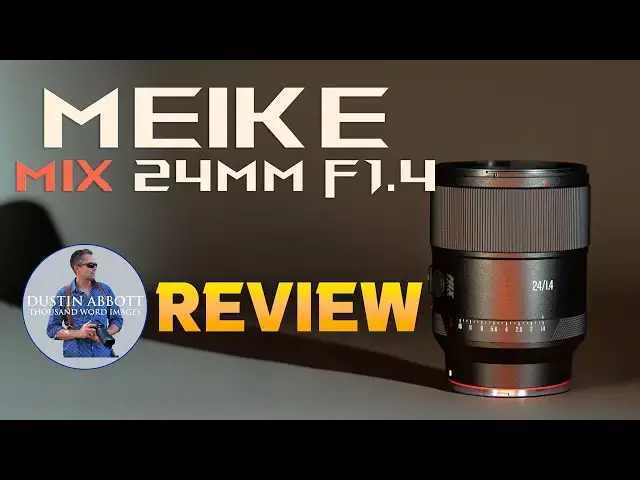
Photographer Dustin Abbott shares a deep dive review of the Meike MIX 24mm F1.8 full frame prime for Sony FE and Nikon Z | Read the text review on dustinabbott.net: | Purchase the Meike MIX 24mm F1.4 @ B&H Photo https://bhpho.to/4nOup22 | Adorama https://howl.link/94gy87qhax8a9 | Amazon https://amzn.to/3LyP9h5 | Amazon Canada https://amzn.to/3JNqJ2P | Amazon UK https://amzn.to/4nOv57A | Amazon Germany https://amzn.to/4hPcabq
Check out the DA Merch here: https://bit.ly/TWIMerch | Become a Patron: https://www.patreon.com/dustinabbott | On the Web: http://dustinabbott.net/ | Sign up for my Newsletter: http://bit.ly/1RHvUNp | Instagram: http://bit.ly/DLAinsta | Facebook: http://on.fb.me/1nuUUeH | Flickr: http://bit.ly/1UcnC0B | 500px: http://bit.ly/1Sy2Ngu Follow Craig @ https://www.instagram.com/craigstoffersen/
Want to support this channel? Use these affiliate links to shop at:
B&H Photo: http://bhpho.to/1TA0Xge
Adorama: https://howl.link/nt4zdz1goa7ql
Camera Canada: http://bit.ly/DLACameraCan
Sony Canada: https://www.thesonyshop.ca/?ref=abbott
Amazon: https://amzn.to/3HrY64d
Amazon Canada: https://amzn.to/3qG1p18
Ebay: http://bit.ly/DustineBay
Into the AM Clothing: https://bit.ly/intotheAMda and use code DUSTIN10 for 10% off
Fioboc Clothing: https://tinyurl.com/FiobocDA20 and us code DUSTIN20 for 20% off
Make a donation via Paypal: https://www.paypal.com/paypalme/dustinTWI
=============================
Table of Contents:
=============================
0:00 - Intro
01:23 - Disclosure
01:39 – Build and Handling
08:11 – Autofocus
10:06 – Video AF
11:14 – IQ Breakdown
16:39 – Conclusion
18:53 - IQ Deep Dive
---------------------------------------------------------
Oben Tabletop Tripod shown in video: https://bhpho.to/3vL8YWy
My Cameras:
Purchase the Sony a7RV @ B&H Photo https://bhpho.to/3ZivNyZ | Adorama https://howl.me/cjNY1LU3gFH | Amazon https://amzn.to/3CRCDlq | Camera Canada https://shrsl.com/3vulf | Sony Canada https://bit.ly/BuyA7R5 | Amazon Canada https://amzn.to/3H8yeNH | Amazon UK https://amzn.to/3kbg5FM
Purchase the Sony Alpha 1 @ Camera Canada https://shrsl.com/2wdk2 | B&H Photo https://bhpho.to/3upRFZd | Adorama https://howl.me/cj2nQpjLBKW | Amazon https://amzn.to/3t1m8MD | Sony Canada https://bit.ly/BuySonyA1 |Amazon Canada https://amzn.to/3cVFrBB | Amazon UK https://amzn.to/2OtrjGe | Amazon Germany https://amzn.to/3d0GtMO | Ebay https://ebay.us/i371Vs
Canon EOS R5: B&H Photo https://bhpho.to/3iMH18x | Amazon https://amzn.to/33L3D53 | Camera Canada https://shrsl.com/2jqth
Purchase the Fujifilm X-H2 @ B&H Photo https://bhpho.to/3KAInTC | Adorama https://howl.me/cjyzbiO5lVp | Amazon https://amzn.to/41zMzKl | Camera Canada https://shrsl.com/4128o | Amazon Canada https://amzn.to/40gY4W7 | Amazon UK https://amzn.to/43Grn7a | Amazon Germany https://amzn.to/3L6hwjR
Get a discount off all Skylum Editing Software (Luminar, Aurora HDR, AirMagic) by using code DUSTINHDR at checkout: http://bit.ly/LuminarDLA
DISCLAIMER: This video and description contains affiliate links, which means that if you click on one of the product links, I’ll receive a small commission. As an Amazon Associate I earn from qualifying purchases.
Keywords: Meike, Meike MIX, 24mm F1.4, MIX 24mm F1.4, 24mm F1.4 FE, Meike 24mm F1.4, Review, Viltrox AF 50mm F1.4 FE Review, Sony a7IV, GM, ART, Sony Alpha 1, Sony A1 II, Sony a7RV, Review, Hands On, Dustin Abbott, Real World, Comparison, Sharpness, Bokeh, Flare Resistance, Autofocus, Image Quality, Sample Images, Video, Photography, let the light in, weathersealing, #letthelightin, DA
Show More Show Less View Video Transcript
0:00
[Music]
0:10
Hi, I'm Dustin Abbott and I'm here today
0:12
to give you my review of the new Mike
0:15
Mix 24mm F1.4. Their Mix series is this
0:19
is now the second uh lens in this series
0:21
of fast aperture full-frame prime
0:24
lenses. There was an 85mm f1.4 and now
0:27
this 24mm f1.4 4. And by the way, I will
0:30
be filming with it on my Alpha 1 Mark II
0:33
on all of these outdoor settings. And so
0:36
you get a sense of the overall rendering
0:38
and how well it does in tracking me
0:40
during this process. I'm always happy to
0:43
see a new 24 mm lens and particularly a
0:46
fast aperture. This lens is coming to
0:48
both Sony E-mount and Nikon Zmount. And
0:51
while there are lots of 35, 50, and 85mm
0:54
lenses, seems like everybody is making
0:56
those, there are much fewer 24mm fast
1:00
aperture lenses. And so there's only a
1:02
few options on Sony and then on Nikon
1:04
Zmount, there really isn't anything that
1:06
quite falls in this category. So this
1:08
lens at under $600, it could be really
1:11
interesting if it holds up in my test.
1:14
This is pitching itself into a premium
1:16
class in terms of the build and the
1:18
optics and even to some extent the
1:20
feature set. So, we'll explore all of
1:22
that in today's review. First, however,
1:24
I do want to thank Mike for sending me a
1:27
review copy of this lens. But, as
1:29
always, they have had no input in the
1:31
review process, nor will they see this
1:33
video before you do. This is a
1:35
completely independent review. So, let's
1:37
dive in and see if this is a lens worth
1:39
buying. All right, let's talk build and
1:42
handling here. And I think the most
1:43
logical place to start is with price. I
1:46
mean, the primary reason I think that
1:47
anyone is going to consider the Mike Mix
1:50
24mm is going to be because of the price
1:53
itself. So, this retails at 5.89 USD.
1:57
The G Master 24mm F1.4 G Master is
2:01
currently on sale retailing at B&H Photo
2:03
for about 1,500
2:05
USD. And then the Sigma 24 F1.4 for art
2:10
is $869 or $870
2:13
uh and then finally on top of that we've
2:16
got the on the Nikon platform where this
2:18
also will come in Zmount really the only
2:21
24mm point of comparison is going to be
2:24
the 24mm f1.8 S-line lens and while it
2:28
is only f1.8 versus f1.4 for it still is
2:31
north of $1,000. And so I think it's
2:34
going to be probably in some ways most
2:36
compelling price-wise there in that it
2:38
is close to half the price of the Sline
2:41
lens while giving an F1.4 versus an F1.8
2:44
maximum aperture. The build quality here
2:47
is very nice. Uh in many ways I would
2:50
say that the overall design and feel of
2:53
the lens actually feels a bit like a
2:55
Canon L series lens to me here. Um, it
2:58
has that kind of light flock material
3:00
and then of course it doesn't hurt to
3:02
have the red gasket that gives kind of
3:04
the red ring that is Canon L Canon L
3:07
seriesesque. And that uh ring here is
3:11
the beginning of a pretty thorough
3:13
weather sealing as you can see from this
3:15
diagram. I can't tell if it's seven or
3:17
eight seals, but either way it is it's
3:19
got a thorough weather sealing at
3:21
various points throughout the lens
3:22
itself. It also has a USBC port here on
3:26
the lens mount that will allow for
3:27
firmware updates. Always glad to see
3:29
that. And to me, that is the most
3:31
logical place to put the USBC port for
3:34
that. This lens is a little bit bigger
3:37
and heavier than competitors, though not
3:38
in kind of the extreme way of the
3:40
Viltrox Pro Series lens. And I think
3:43
that Mike is kind of fortunate that to
3:45
this point there is no Pro Series lens
3:47
because that's probably going if
3:49
something ever arrives in the 24mm focal
3:51
length. That's going to be obviously the
3:52
the chief competition uh in terms of
3:55
that price range there. So this lens is
3:58
79 mm or 3.1 in in diameter, 107 mm or
4:03
4.2 in long. So by comparison on that
4:07
length, the Sigma is 97 12 mm. So, right
4:11
under 10 mm shorter. The GM is shorter
4:14
still. It's 92.4
4:17
millime. And so, you know, close to 15
4:19
mm shorter. Likewise, when it comes to
4:21
the weight, this weighs in at 556 g or
4:25
19.2 O. It's got heft, but not in the
4:28
way of these recent Vtrox Pro series
4:30
with their all- metal body and 800 g
4:33
weight. You know, that you really feel
4:34
those in the hand. This you feel, but
4:36
you know, to it's it's a moderate weight
4:38
at 556 g. And that compares to the Sigma
4:41
510 g. So, you know, about 50 g
4:45
difference. And then the GM is a more
4:47
significant 445 g. So, more like a 100 g
4:50
difference between the two lenses there.
4:52
And so, definitely it is bigger and
4:54
heavier, but not in any any kind of
4:56
extreme or deal-breaking kind of way.
4:58
Really, it's the GM lens that is, you
5:01
know, is more different in terms of size
5:04
and weight relative to the Sigma. And
5:06
but of course, you know, you're going to
5:07
pay nearly three times for the the GM
5:10
lens. And so for many people, they
5:12
probably could handle an extra 100 grams
5:13
for an extra $1,000 in their pocket.
5:16
What we do have in terms of feature set
5:18
here is we have an aperture ring. I'm
5:20
always glad to see that. Though in this
5:22
case, it's not quite as featurerich as
5:25
some others that we have seen recently.
5:26
There is no D-click option here, and so
5:28
you have one-/ird stop detents, and
5:30
there's also no iris lock. And what's
5:32
more, there's not a very firm detent
5:35
between f-16 and the automatic point.
5:38
And so for those of you that don't like
5:39
aperture rings, it's going to be easy to
5:41
bump it out of the automatic and into
5:44
the manual aperture ring. And for those
5:46
of you that that like the manual
5:47
aperture ring, it it is possible to go
5:49
past F-16 pretty easily into the
5:52
automatic zone. So implementation is
5:55
okay, but not fantastic. We've also got
5:57
an AFMF switch. Always glad to see that.
5:59
And then we have got a custom or
6:01
function button that can be programmed
6:03
from within the camera itself. Aperture
6:05
iris is 11 aperture blades. The geometry
6:09
is fairly good. You can see here as we
6:11
stop down at f2 and f2.8 that retains a
6:14
circular shape. I do find for the
6:16
specular highlights there's a little bit
6:18
of a soap bubble type effect. A little
6:20
bit of outlining with specular
6:21
highlights. Some people like that look,
6:23
some people don't. And so just I just
6:25
want to highlight it and so you're aware
6:27
of it. We do have a fairly uh sculpted
6:31
pedal-shaped lens hood. My one complaint
6:33
here is that it fits a little bit
6:35
tighter than what it should. And so,
6:38
particularly to get into that lock, you
6:39
actually have to put for both locking
6:42
and unlocking, you have to put what I
6:44
would consider an uh uncomfortable
6:47
amount of pressure on there. So much so
6:49
that the first time I went to remove
6:51
that lens hood, I went looking for a
6:54
lock because I felt like there was too
6:56
much resistance and I was, you know, in
6:58
risk of breaking a lock on it. Turns out
7:00
that's not the case. I suspect that as
7:02
the lens gets used that that will loosen
7:04
some up, but even right now like I I
7:06
have to really put quite a bit of force
7:08
on there to click it into place. Now,
7:10
the upside of that is that it's not
7:11
probably going to slip out of out of
7:13
place. Up front, we have 72mm front
7:16
filter threads. That's the same as the
7:17
Sigma, a little bit be bigger than the
7:19
67 millimeter filter threads of the G
7:21
Master lens. Minimum focus distance is
7:24
not a strength. It's 28 cm and the
7:27
resulting magnification is is low,
7:29
probably in the 0.10
7:31
times range. And so if you're looking to
7:33
do close-up work as a part of your 24
7:36
millimeter work, not really a strength
7:38
for this lens, although the uplose
7:40
performance is fairly decent. Um, I
7:43
don't really have any complaints about
7:45
the image I get up close, but I just
7:47
can't get particularly close. And so
7:49
that could be a potential deal breaker
7:51
for some people, but in general, this is
7:54
a nicely built lens. It's a far cry from
7:57
the last mic lens that I reviewed. This
7:59
feels like a, you know, it's competing
8:02
in this space of these moderate um, but
8:06
professionalgrade build lenses. And so,
8:09
kudos to them on making that progress.
8:11
So, let's talk autofocus. Mike has used
8:14
an STM or stepping focus motor here in
8:17
the Mix 24 mm uh lens. And while you
8:21
know these days it seems like the better
8:23
quality lenses are using either linear
8:26
or a voice coiled type focus motors
8:29
certainly in this case I would say that
8:31
the STM focus motor works just fine. It
8:34
is quiet in operation. This is a I find
8:37
that the quality of STM motors does vary
8:39
somewhat. And this, I would say, is a
8:41
better one. When it comes to focus
8:42
speed, it's helped by the fact that 24
8:44
millimeters is relatively wide. So, a
8:46
little bit less uh thrust that is needed
8:48
to drive the elements. And I found that
8:50
I could go from near to far with good
8:53
elacrity and move back and forth well,
8:54
whether indoors or outdoors. And of
8:56
course, f1.4 aperture does make it a
8:59
little bit better when you're shooting
9:00
in, you know, those dimmer lighting
9:02
conditions. it's can suck in more light.
9:05
I also found that in the various things
9:07
that I shot, whether it was taking
9:11
photos of the cats or in my just outdoor
9:14
general kind of shooting, I found that I
9:16
got good focus results, good focus
9:18
consistency, I didn't really notice any
9:20
issue where I felt like focus was off.
9:22
And there's enough focus speed that in
9:24
most situations, I think that you're
9:25
going to have plenty of speed to achieve
9:27
what you want. I certainly think for
9:29
portrait work or shooting interiors,
9:31
you're not going to have any kind of
9:32
issue like that. And then when it comes
9:34
to sports, typically I would say that if
9:36
your goal is shooting sports with any
9:38
kind of focal length on Sony, it's
9:40
probably better to invest in the Sony
9:41
lens because then you're unlocking the
9:43
full potential of your camera in terms
9:44
of the burst speed and any kind of other
9:47
focus aids. But for most people, I don't
9:49
know that they're going to want to spend
9:50
that extra thousand to go to the G
9:52
Master lens. And so I think that in most
9:54
situations, other situations, this is
9:56
going to be sufficient in terms of focus
9:58
speed and quality of focus. So in
10:01
general, no reservations. It did the job
10:03
that I wanted and didn't have a lot of
10:05
drama in doing so. So let's talk video
10:08
autofocus. I actually thought that this
10:11
lens did quite a good job when it came
10:13
to video AF. When it came to things like
10:15
focus pulls, I found that it moved back
10:18
and forth with good confidence. No
10:20
issues there. and it did basically
10:23
everything that I wanted. You can see
10:24
that there is some focus breathing, but
10:26
it's not extreme. And so, I think that
10:28
it did just fine in that regard.
10:30
Likewise, with my hand test, I found
10:32
that it transitioned from my hand to my
10:35
eye good. And likewise, when I
10:36
approached the camera and I stepped in
10:39
and out of frame, you can see that it
10:41
picks me back up fine. No real issues
10:44
with that either. And so then I guess
10:47
probably equally important in shots like
10:49
this, you can see that focus is staying
10:51
stable on my face. It's tracking my eye
10:53
as it should and I'm not having any kind
10:55
of issue with it pulsing or losing focus
10:58
in this kind of setting. So at the end
11:00
of the day, once again, while it's not
11:02
the highest end focus system, it's
11:04
getting the job done. And certainly
11:06
while this lens might be a little bit
11:08
heavy for gimbal work in some
11:10
situations, I would say that as far as
11:11
the quality of focus, it would work
11:13
quite fine in that situation. Okay,
11:15
let's talk optics here. This is an
11:17
optical design of 15 elements in 12
11:20
groups. Fairly complex. And that
11:21
includes three uh extra low dispersion
11:24
elements, two high refractive index
11:26
elements, and then three aspherical
11:28
lenses in that optical design. Taking a
11:30
look here at the MTF, it shows a strong
11:33
center and mid-frame, both well above
11:36
the 80% threshold. And then you'll see a
11:38
dip as we get out towards the corners.
11:40
Um, but in general, it's a pretty
11:42
good-look MTF chart. There is an F8 MTF
11:45
chart that has some kind of weird defect
11:47
with a black line through it. That's
11:48
just the way it was on their website.
11:50
But anyway, it's it shows that the
11:52
performance stopped down. It's not as uh
11:55
strong in the center and the mid-frame,
11:57
but it's more consistent across the
11:59
frame. And that's a fairly common uh
12:01
kind of MTF profile for lenses like this
12:04
that as you stop them down, you might
12:06
lose a little bit in the center of the
12:07
frame, but you're gaining it just in
12:09
consistency across the frame. Now, when
12:11
it comes to distortion and vignette, I
12:13
there's a a relatively small amount of
12:16
of actual distortion. So, that is good
12:18
for 24mm lens. I only needed a plus
12:20
three to correct. However, what little
12:23
distortion is there is a little bit
12:24
complex. There's a bit of a mustache
12:26
pattern there. And so you're not going
12:28
to be able to manually correct it
12:29
cleanly. And so better to get a profile.
12:32
Unfortunately, in camera, you're not
12:33
necessarily getting correction uh in
12:36
camera. And so you're going to need to
12:38
do that in post. But in many situations,
12:40
and you're probably not going to have
12:42
enough of it for it to really show up.
12:44
Here's one example where I did see it,
12:46
and that was shooting through a window
12:47
frame with very straight lines. And you
12:49
can see kind of a before and after when
12:51
I manually corrected it, which I I could
12:52
do, and it wasn't terrible in that
12:54
situation. Uh, as far as vignette, it's
12:57
a plus 57, so a moderate amount. A
12:59
couple of stops of vignette in the
13:00
corners. Nothing terrible there at f1.4.
13:03
And it will of course lighten up as you
13:05
uh stop the lens down. I did find that
13:07
chromatic aberrations were well
13:08
controlled. Longitudinal style chromatic
13:11
aberrations were basically not an issue
13:12
at all either on my chart or shooting
13:15
the old SLR. Lateral style chromatic
13:17
aberrations in the corners. I did see a
13:20
little bit on my test chart, but in real
13:22
world shots, it was clean enough that I
13:24
don't think it's going to be any kind of
13:26
factor at all. And so, uh, good results
13:29
there. Now, looking at my test chart,
13:31
I'm testing on a 61 megapixel A7R Mark
13:34
5. So, obviously as high demanding as
13:36
you're going to get on full-frame at
13:37
this point. And what I found is that
13:40
when I look at the crops at 200% very
13:42
high magnification that the center and
13:44
the mid-frame and even into the corners
13:47
good sharpness contra contrast is not
13:50
off the charts at that point. And I
13:51
found in real world shots that that was
13:54
mostly what I saw though I did see some
13:56
variation. I did feel like at the closer
13:59
to medium range that contrast actually
14:00
looks pretty good in real world shots.
14:03
Uh less impressed at in like infinity or
14:06
landscape type distances. And so I
14:08
definitely saw a pretty notable
14:09
difference when stopping down uh when
14:12
shooting at infinity as you can see
14:14
here. Now going back to the test chart
14:16
for a moment at f1.8 there's a very
14:19
noticeable jump from f1.4 to f1.8 in
14:21
terms of contrast. And so if you need a
14:24
contrast boost just stop down a little
14:26
bit and you really it jumps up there
14:28
really quickly. I found by f2 corners
14:30
starting to look good. By f2.8 they're
14:32
looking pretty fantastic. And so at
14:35
landscape type apertures, you get really
14:37
good results, good detail, uh good
14:39
contrast across the frame. So no
14:41
complaints when it comes to the
14:42
sharpness from the lens itself in those
14:44
situations. Defraction is going to show
14:46
up by about f11 and then become more
14:49
noticeable at f-16. That will be a
14:52
little bit less extreme if you're
14:53
shooting on a lower resolution body,
14:56
however, but certainly I would use kind
14:58
of f11 as a practical upper limit for
15:01
that. The rendering from this lens is
15:03
actually quite nice. Now, a 24
15:05
millimeter lens, just by the nature of
15:07
the focal length, even with an f1.4
15:08
aperture, means that in most situations,
15:10
the background is still going to be
15:12
visible. You're not going to completely
15:13
obliterate it. If you get really really
15:15
close to it, obviously you can create a
15:17
defocused background as you see here,
15:19
but not to where it's just, you know,
15:22
just cream beyond it. And so, uh, and
15:24
and then if you're you're back a little
15:25
ways from your subject, um, your your
15:28
subject is going to stand out from the
15:29
background, but the background is still
15:30
going to be visible, as you can see in
15:32
this shot here. But I would say that the
15:34
overall rendering is fairly soft for a
15:37
wide-angle lens, and I had no complaints
15:39
about that. Likewise, another critical
15:42
thing for a wide-angle lens is its flare
15:44
resistance. And I actually felt like the
15:45
lens coatings did a really good job
15:47
against bright lights with minimal uh
15:50
ghosting and not hardly any veiling
15:52
there. And so good results there. I also
15:54
had an opportunity to shoot the night
15:56
sky and I saw fairly low levels of coma
16:00
in the corners. The star points in the
16:02
corners at f1.4 aren't like super crisp
16:05
and so I think that again if you stop
16:08
down a little bit f1.8 8, maybe f2. You
16:12
might get a little bit light, less
16:13
slight gathering potential, but you
16:14
would get a more even illumination, less
16:16
vignette, and also crisper star points
16:18
in the corners and a little bit less
16:19
coma. So, that might be worth doing
16:21
there. In general, however, for a 24mm
16:25
lens, which again, it is a it's a harder
16:27
engineering feat as you go wider and you
16:29
still attach f1.4 to it. And so I think
16:32
that they've done a really solid job of
16:34
giving a really strong optical
16:35
performance here and a lens with a, you
16:37
know, a moderately inexpensive price. So
16:41
in conclusion, I would say that I came
16:43
away fairly impressed from what Mike has
16:46
done with the 24mm 24mm f1.4.
16:50
This is a lens that, you know, fills a
16:53
niche in that there really isn't a lot
16:55
of 24mm f1.4 budget options. And while
16:59
right under $600 isn't like absolutely
17:02
cheap in a you know $200 or $300 space,
17:05
this is a higherend lens than that and I
17:07
think relative to the the cost of the
17:10
lens, you're getting a lot of lens for
17:11
your money. Now the challenge will be at
17:14
least on the Sony platform is that
17:16
you've got the Sigma 24mm f1.4 4, which
17:20
is a little bit more featurerich and
17:22
slightly higher performing,
17:24
and it's also a little bit smaller and
17:26
lighter, though not by any kind of
17:27
significant factor, and it's going to be
17:29
available for roughly an additional
17:31
$300. Now, that's still an extra big
17:34
chunk of money, but there may be some
17:35
people who are more likely to spend
17:37
money on a proven lens like the Sigma as
17:40
opposed to the mic. But also on the
17:42
Nikon platform, there is it's just not
17:45
really a whole lot there, particularly
17:46
if you're looking for f1.4. So, I do
17:49
think that there is going to be a market
17:50
for this lens and you know, probably
17:52
when it hits sales in the future, it's
17:54
going to be even more affordable and
17:56
thus even more attractive from a price
17:58
to performance perspective.
18:00
At the end of the day, however, Mike can
18:02
only control what they can control in
18:04
terms of their own design. And I think
18:06
that they've done a good job with this.
18:08
This lens is really strong optically.
18:10
Autofocus seems to be good and confident
18:12
here on Sony. No issues there. And
18:14
optically, I feel like you're getting a
18:16
really nice performance. um in a lens
18:18
that is reasonably priced. This lens, I
18:21
would say, exceeded my own personal
18:22
expectations, particularly when it comes
18:24
to the quality of the rendering from the
18:26
lens. So, I have no problem giving it a
18:28
recommendation if you're looking for a
18:30
24mm f1.4 lens and you're on a tighter
18:34
budget. Now, if you want more
18:36
information, you've got a couple of
18:37
options here. You can either check out
18:39
my full text review, which is linked in
18:40
the description down below on the newly
18:43
redesigned dustinbot.net. So, check that
18:46
out. And if you are interested in a
18:49
deeper dive into the optical
18:50
performance, you're in the right place.
18:52
And we're going to jump into that
18:53
together right now. Okay, let's start by
18:56
taking a look at vignette and distortion
18:57
here. And so you can see that for a 24mm
19:00
lens, this isn't a an excessive amount
19:03
of distortion in terms of the quantity.
19:05
It's really not bad. However, you can
19:07
see here post correction, there is a bit
19:09
of a wave there. So it's not a linear
19:11
distortion. And so it is a little bit
19:13
more complicated to correct. Likewise
19:15
for the vignette, I needed a plus 57 to
19:17
correct. And probably my biggest kind of
19:19
negative here is if I happen to be
19:21
shooting on snow, which unfortunately
19:23
I'm about to be doing for months on end.
19:25
This kind of discoloration in the corner
19:27
is a little bit harder to correct for.
19:29
And so that's my biggest complaint
19:31
there. I would say the amount of
19:32
distortion is mostly low enough that you
19:34
won't see it very often. However, in
19:36
this image, because I had a little bit
19:38
of an uptilt with the angle of the
19:41
camera, and then also we can see that it
19:43
was very straight lines I was shooting
19:45
through, you can see you can see some
19:47
effect from that. Over here on the
19:48
right, I was able to manually correct in
19:51
what looks pretty clean to me. So, it is
19:54
certainly correctable, but in some
19:56
situations, it will require correction.
19:58
Now, longitudinal style chromatic
20:00
aberrations, that's fringing that comes
20:02
before and after the plane of focus at
20:04
wide apertures. very very well
20:06
controlled. Nothing really before or
20:08
after. Here on my dad's SLR, you can see
20:11
that uh the lettering is nice and crisp.
20:13
And then as we look towards all of the
20:15
shiny bits here, there's no fringing
20:17
marring them. Taking a look at the
20:19
specular highlights, we can see that the
20:20
geometry stays quite good. However,
20:23
there's kind of an inner glow that gives
20:25
it a little bit of a soap bubble type
20:26
effect. And I also noted that while the
20:28
geometry stays fine as you stop the lens
20:31
down, you can see that the bokeh circles
20:34
get progressively busier as you go. So
20:36
just noise inside and that inner
20:39
outlining becomes more and more
20:41
pronounced. Here's another close-up shot
20:43
that shows, you know, good control of
20:45
fringing. You can see a bit of those
20:46
specular highlights coming and very,
20:48
very low fringing before and after the
20:50
plane of focus. lateral style chromatic
20:52
aberrations show up near the edge of the
20:54
frame and you can see there are a bit of
20:56
them there, but I didn't really see them
20:58
much in real world images, so I'm not
21:00
particularly concerned. Now, we'll take
21:02
a look at resolution and contrast. This
21:04
again is a 61 megapixel A7R Mark II, and
21:07
this is a 200% level of magnification.
21:09
In the center of the frame, we can see
21:11
that there's lots of detail and contrast
21:13
is good, not great. We can see, for
21:15
example, in the lettering, it's a little
21:16
bit faded looking. And as we see look
21:19
here the mid-frame again it's mostly
21:21
good but just like a very slight haze on
21:23
the texture due to slightly lower
21:25
contrast. Uh we see however a good
21:28
consistency here to here. So it's not
21:31
dropping fast and even into the corners
21:33
we can see the corners are softer but
21:35
not extremely so. What I found in real
21:38
world shots is that my perception of
21:39
sharpness and contrast kind of varied
21:41
from the focus distance. And so in this
21:44
shot for example I was a little
21:45
disappointed by this. It was softer than
21:48
what I expected. As I look out towards
21:50
kind of infinity, there's just uh some
21:53
murky looking textures, not particularly
21:55
crisp. Here's a second shot here at f4.
21:58
And it shows you what I'm talking about.
22:00
You can see a pretty radical difference
22:02
in the amount of sharpness and contrast
22:04
here, stopping down to f4. And so this
22:07
lens is certainly capable of much
22:08
crisper results, but wide open at
22:10
landscape distances, it's not
22:12
particularly impressive. In this shot at
22:14
f1.4 for at a closer focus distance.
22:16
Contrast and detail looks really quite
22:18
good. You can see all the fine hairs
22:20
around the eyes. They look really nicely
22:23
delineated. You could see good contrast
22:24
looking on the trunk and the portion
22:26
that is in focus here. Likewise in this
22:29
shot, I feel like look at those ice
22:31
crystals. They look, you know, very good
22:33
contrast and detail on that. Uh looks
22:36
good. And then finally this shot, you
22:38
can see it looks very crisp and good
22:40
contrast here at f1.4. So at these
22:43
closer focus distances, good, not so
22:46
much at landscape. The good news,
22:47
however, is that there's a lot of extra
22:49
contrast available just with a very mild
22:52
stop down to f1.8. And you can see
22:54
there's a pretty significant jump.
22:56
Looking at this text in particular, you
22:58
can see it is just much crisper here in
23:00
the mid-frame. Look at the the word
23:02
Canada, for example. The darks here at
23:04
f1.8 are just so much darker. And so
23:06
that allows there to be more contrast in
23:08
the textures, in the writing. All of
23:11
that is starting to pop out. And while
23:13
the corners are not super crisp yet, you
23:15
can see that they're brighter and there
23:17
is more contrast. So, a very significant
23:20
improvement. You can see from f1.8 to
23:22
f2.8 that that contrast and detail is
23:25
really, really growing. And so, now I
23:27
would say the corners are looking quite
23:29
good overall. If we pop up to the upper
23:31
left corner, you can see that there has
23:34
been a mild further improvement by f5.6.
23:37
everything just feels a little bit
23:38
brighter and with a little bit more pop.
23:40
But we're hitting at a very good level
23:42
here already by f5.6. And so if we take
23:44
that into the real world, you can see
23:47
this is at f6.3 that there's great
23:49
detail here looking throughout the the
23:52
image. But even if we pan here to this
23:54
side, you can see the detail is holding
23:56
up there. We swap over to the other
23:58
side, you can see very fine delineation
24:01
of all of those pine needles and the
24:03
trunks here. Everything looks nice and
24:05
crisp.
24:06
Likewise in this image, which was pretty
24:08
impressive because it is very strongly
24:09
backlit, and you can tell that by
24:12
looking at how much light is being
24:14
reflected off of the water here. But
24:16
even in this really high contrast
24:18
situation with really bright
24:20
backlighting, you can see that the
24:21
detail and contrast is holding up
24:24
really, really well all across the frame
24:26
here. So I was actually really impressed
24:28
by this particular image. So that detail
24:30
and contrast will carry through f8. By
24:32
f11, it's starting to get a little
24:34
softer due to defraction. And then by
24:36
f-16, which is the minimum aperture, you
24:38
can see it's considerably softer on my
24:40
high resolution body due to the effects
24:42
of defraction. Now, we've already noted
24:44
that the level of magnification is not
24:46
particularly high. This is minimum focus
24:47
distance here. But on the plus side, you
24:50
can see that detail and contrast are
24:52
really quite good in that area of focus.
24:54
And here, this was as close as I could
24:56
get while focusing on this leaf. So the
24:58
the magnification is not impressive, but
25:00
the amount of detail there is quite
25:03
good. And looking at the out of focus
25:05
area, you know, it looks quite nice.
25:07
Here's another shot kind of showing us
25:09
the out of focus. In these optimal
25:11
conditions, it really looks quite good.
25:14
Um, there is some of that outlining
25:15
there, but it's not too obvious. This is
25:18
a slightly less favorable ratio because
25:21
the background is more complicated and
25:23
you are seeing a little bit more edges
25:24
there. And if I take another step back,
25:27
you can see it gets a little busier.
25:28
Lots more of those things are just less
25:30
defocused and so more of those hard
25:32
edges emerge. This shot again getting a
25:34
little bit closer and a little more
25:36
favorable background. It looks nice to
25:37
me. The image as a whole I really like.
25:40
Here you can see I'm a little bit
25:42
further back, probably about 2 m, 6 feet
25:45
away from my area focus. And so you can
25:47
see that everything even at f1.4 is
25:49
still quite in focus. And the edges are
25:52
a little bit harder. It's going to trend
25:54
more towards contrast here than it is
25:56
towards just softness of defocus. But in
25:59
general for a 24mm lens, the bokeh
26:01
quality is pretty decent. And we'll
26:04
revisit flare resistance again for a
26:05
moment because I think this is a real
26:06
strength for the lens here at f 1.4.
26:09
Just that tiny little ghosting artifact.
26:12
Here you can see a little bit of a
26:13
prismatic haze. This is at f11, but the
26:16
sun star looks good. The image is nice
26:17
and clean. And you can see here that at
26:20
certain angles you'll get kind of that
26:22
pattern. And I'll show you f11 again
26:24
panning back and forth. This is probably
26:26
the most of ghosting artifacts, but it's
26:28
a stylish flare pattern, so I consider
26:30
that to be useful. One final metric that
26:33
we'll look at is for the night sky for
26:35
coma. In the center of the frame, star
26:37
points look nice and crisp. As I move
26:39
towards the corners, they're a little
26:40
bit softer and less defined. There is a
26:42
tiny bit of coma as you can see here,
26:45
but it's not bad. My recommendation from
26:47
what we saw is stop down to f1.8. you'll
26:49
get more consistent illumination in the
26:52
corners, maybe a little bit less coma,
26:54
but sharper, crisper star points. And I
26:56
think that, you know, when used that
26:58
way, this is a nice astro lens. So, in
27:00
general, a pretty strong optical
27:01
performance. So, hopefully the deep dive
27:03
into the optics has helped you to
27:05
determine whether or not this lens is
27:07
for you. As always, thanks for watching.
27:09
Have a great day and let the light in.
27:13
[Music]
Science