Up next in 10

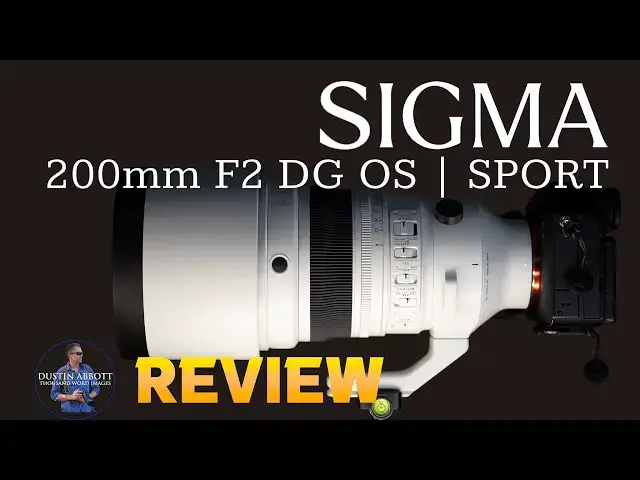
Sigma 200mm F2 DG OS | SPORT Review | Sigma's New Halo Lens?
Aug 18, 2025

Photographer Dustin Abbott shares a deep dive review of the Sigma 200mm F2 DG OS | SPORT - the first 200mm F2 for full frame mirrorless! | This episode is sponsored by Pergear Master CFExpress Cards. Purchase the Type A cards at Pergear https://bit.ly/BuyMasterA pr Amazon https://amzn.to/47GkHdE | Purchase the Type B cards at Pergear https://bit.ly/BuyMTypeB or https://amzn.to/45E6v2p | Read the Text Review: | Purchase the Sigma 200mm F2 OS SPORT @ B&H Photo | Adorama | Amazon | Camera Canada | Amazon Canada | Amazon UK | Amazon Germany
Check out the DA Merch here: https://bit.ly/TWIMerch | Become a Patron: https://www.patreon.com/dustinabbott | On the Web: http://dustinabbott.net/ | Sign up for my Newsletter: http://bit.ly/1RHvUNp | Instagram: http://bit.ly/DLAinsta | Facebook: http://on.fb.me/1nuUUeH | Flickr: http://bit.ly/1UcnC0B | 500px: http://bit.ly/1Sy2Ngu Follow Craig @ https://www.instagram.com/craigstoffersen/
Want to support this channel? Use these affiliate links to shop at:
B&H Photo: http://bhpho.to/1TA0Xge
Adorama: https://howl.link/nt4zdz1goa7ql
Camera Canada: http://bit.ly/DLACameraCan
Sony Canada: https://www.thesonyshop.ca/?ref=abbott
Amazon: https://amzn.to/3HrY64d
Amazon Canada: https://amzn.to/3qG1p18
Ebay: http://bit.ly/DustineBay
Into the AM Clothing: https://bit.ly/intotheAMda and use code DUSTIN10 for 10% off
Fioboc Clothing: https://tinyurl.com/FiobocDA20 and us code DUSTIN20 for 20% off
Make a donation via Paypal: https://www.paypal.com/paypalme/dustinTWI
=============================
Table of Contents:
=============================
0:00 - Intro
01:21 – Disclosure
01:38 - Pergear Master
02:44 – Build and Handling
10:13 – Autofocus
14:14 – Video AF
16:20 – IQ Breakdown
20:57 – Conclusion
24:06 – Optical Deep Dive
---------------------------------------------------------
Oben Tabletop Tripod shown in video: https://bhpho.to/3vL8YWy
My Cameras:
Purchase the Sony a7RV @ B&H Photo https://bhpho.to/3ZivNyZ | Adorama https://howl.me/cjNY1LU3gFH | Amazon https://amzn.to/3CRCDlq | Camera Canada https://shrsl.com/3vulf | Sony Canada https://bit.ly/BuyA7R5 | Amazon Canada https://amzn.to/3H8yeNH | Amazon UK https://amzn.to/3kbg5FM
Purchase the Sony Alpha 1 @ Camera Canada https://shrsl.com/2wdk2 | B&H Photo https://bhpho.to/3upRFZd | Adorama https://howl.me/cj2nQpjLBKW | Amazon https://amzn.to/3t1m8MD | Sony Canada https://bit.ly/BuySonyA1 |Amazon Canada https://amzn.to/3cVFrBB | Amazon UK https://amzn.to/2OtrjGe | Amazon Germany https://amzn.to/3d0GtMO | Ebay https://ebay.us/i371Vs
Canon EOS R5: B&H Photo https://bhpho.to/3iMH18x | Amazon https://amzn.to/33L3D53 | Camera Canada https://shrsl.com/2jqth
Purchase the Fujifilm X-H2 @ B&H Photo https://bhpho.to/3KAInTC | Adorama https://howl.me/cjyzbiO5lVp | Amazon https://amzn.to/41zMzKl | Camera Canada https://shrsl.com/4128o | Amazon Canada https://amzn.to/40gY4W7 | Amazon UK https://amzn.to/43Grn7a | Amazon Germany https://amzn.to/3L6hwjR
Get a discount off all Skylum Editing Software (Luminar, Aurora HDR, AirMagic) by using code DUSTINHDR at checkout: http://bit.ly/LuminarDLA
DISCLAIMER: This video and description contains affiliate links, which means that if you click on one of the product links, I’ll receive a small commission. As an Amazon Associate I earn from qualifying purchases.
Keywords: Sigma 200mm, DG, SPORT, SPORTS, Sigma 200mm Sport, Sigma 200mm F2, Sigma 200mm F2 DG OS Sport, Sigma 200 Sport Review, #SIGMAEmount, #SIGMA #SIGMA200mmF2Sport, #SIGMASport, #SIGMASPORTS, Full Frame, Review, Sony Alpha 1, Sony a7RV, Review, Hands On, Dustin Abbott, Real World, Comparison, Sharpness, Bokeh, Flare Resistance, Autofocus, Image Quality, Sample Images, Video, Photography, let the light in, weathersealing, #letthelightin, DA
Show More Show Less View Video Transcript
0:10
Hi, I'm Dustin Abbott and I'm here today to give you my review of the new Sigma lens that a lot of people have been
0:16
waiting for for a long time. This is the new 200 mm f2 DGO sport lens now.
0:23
Frankly, I'm shocked that Sigma beats Sony to the punch on this one cuz this is a lens that a lot of people have been
0:29
clamoring for for a while. And I remember from back in the days when I reviewed Canon exclusively that the
0:36
Canon EF200mm f2is was really the halo lens for certain
0:42
portrait photographers that could just really make that lens sing. Now, of course, this also would be really,
0:48
really intriguing for sports. And it is intriguing for sports, though less so than what it might be on Lmount for the
0:54
simple reason that as always, there are some constraints that come from for third party lenses on Sony, namely burst
1:02
rate. That being said, I'm here on beautiful Conrad Beach in Nova Scotia,
1:08
Canada. I've been shooting some images here and a variety of other places, portrait images, wildlife, and then also
1:15
shooting just some scenics and nature with it. And so I'll have some great images to share with you throughout the
1:20
course of this review. Now, in full disclosure, this lens was sent to me by Sigma Canada as a loner. They have had
1:27
no input on this review and as always, this will be a fully independent re
1:32
review that you will see when they do. All right, let's jump in and let's take a look at this bad boy. episode is
1:38
brought to you by Pergear's new master series CF Express type A and type B cards. The type A cards are capable of
1:45
read and write speeds up to 1600 megabits per second, while the type B cards can achieve a staggering 3,400
1:52
megabits per second and can sustain a 1500 megabit per second right speed. Easily capable of dealing with 8K video
1:59
files. In my test, I found that I got faster speeds with the Pergear cards than my Sony tough cards that I often
2:05
use. and the new Pergear Mastercards feature capacities up to 1 terabte. I relied on these cards exclusively for a
2:12
recent trip to Nova Scotia and Prince Edward Island, and they were perfectly reliable for photos and videos. All the
2:18
Pergear Master Cards are shockproof, waterproof, X-ray proof, and temperature resistant and come with a 5-year
2:24
warranty to back it all up. Pergear always brings the strongest value, too, with the 512 GB typeA cards available
2:32
for about $180, while the one TBTE type B cards cost just $211.
2:38
You can find more information by clicking the link in the description down below. Thanks again to Pergear for
2:43
sponsoring this video. So, let's take a look at the build and handling here. Obviously, any kind of 200 mm lens f2 is
2:50
going to be fairly large, and this lens is though the weight at 1,800 g or 64.2
2:56
oz is considerably less than what we saw from the previous generation. The Canon 200 mm Lens was 25,520
3:05
g. So, 720 g heavier. That's very significant. So this lens is heavy, yes,
3:11
but doesn't feel particularly heavier than, for example, a lot of 70 to 200
3:16
millimeter type zooms. And so I didn't particularly find it ownorous to carry around. The lens is 118.9
3:23
or 4.7 in in diameter. Of course, there's a lot of glass in there. And it
3:30
has 105 mm front filter thread. The overall length is 7.9 in or 203 mm. And
3:38
so it's basically the length of a 70 to 200 um f/2.8 zoom, but the diameter is
3:45
larger to accommodate all that extra glass for the f2 aperture. Obviously, a lens like this does
3:51
necessitate having a tripod collar. And you've got a fairly standard implementation for Sigma, though that is
3:58
a very good one. There's a tension knob here that allows you to freely rotate that. It does have detents, which I like
4:04
at the cardinal positions. um every 90 90 degree position. And so that just
4:10
allows you to find those more accurately. It doesn't stop you if you want to continue to rotate, but it does give you that little bit of a hint to
4:17
know that's the perfect place to align. I like the fact that it's got attachments for straps on either side.
4:22
The foot itself is removable, though only with uh tools, Allen Allen key
4:27
tools. It is ARCA compatible as you can see here, which I like. This foot is a
4:33
little bit more functional than what we found on the 70 to 200 uh sport lens from Sigma. For one thing, the foot
4:39
itself is a little bit longer. I think around 7 uh millimeters longer. And so it just gives you a little bit more to
4:46
attach to. It also gives you nearly 10 millimeters of additional uh depth in
4:51
between the lens and the actual um foot itself. And so it is so much easier to
4:57
actually carry it by the uh the foot. Whereas on the sport lens, that was one
5:02
of the things I complained about. There just really wasn't room to hardly carry it like that. So to me, it made it a little bit of a less functional foot. So
5:08
we've got a good implementation here. We have a thorough bank of switches. It's a
5:14
very featurerich lens. AFMF, we've got a three-position focus limiter. We've got uh OS uh two different modes there,
5:21
standard mode, and then panning. Then there's also a custom switch down here. So it has an additional C1 and C2. Now
5:28
the road split there depending on whether you're on Leica or on Sony. Here on Sony, those are pre-programmed to two
5:35
additional uh modes for the uh optical stabilizer. On Leica, you have the op or
5:41
LMount you have the option of using a dock to program additional settings there. Tucked down kind of underneath
5:48
here is the click dclick for the aperture ring. And so you have the ability to either have clicks or without
5:54
clicks. You also have an iris lock on the right side that'll allow you to either lock in or out of the manual
6:01
aperture ring. Uh depending upon whether you don't want to get out of it or you don't want to get into it. I will note
6:07
on the OS uh this is Sigma's OS2 as they call it and their focus algorithms are
6:13
or should stabilization algorithms are pretty much as good as anything I see on Sony. I would say pretty close to the
6:19
best. This is rated at 6.5 stops. And so that is number one considerably better than a lot of recent Sony zooms have
6:26
been. Also, I found in real world use that I could get some stable results at
6:33
1/8 of a second and very easily get 1/15eenth of a second stable results. And so, uh, it works really, really
6:39
well. It's good at keeping the viewfinder stable. It's good at giving you good stabilized results. So, I like
6:45
that. It works extremely well. The manual focus ring has nice damping. It's
6:50
got a bevel in here, so it does fall to hand really nicely. And manual focus is a treat. We have also got three
6:57
redundant uh function or custom buttons there. And so a bottom, left side, and
7:03
then on the top. And so whatever position you're shooting in, you have one of those buttons nearby. As always,
7:08
you program the function of that through the camera body itself. And they all share the same function. It's not three
7:14
different functions, one function, but there there's just it's about proximity and so you have one nearby.
7:21
It does come with a nice lens hood. Now, you can see it is a big hood and and so these type of hoods, they don't uh
7:28
bayonet on. It uses a tension knob that you lock down here. Does have a really nice rubberized surface and that not
7:35
only helps with bumps, but it also gives you the most stable position to set a lens camera combo on. because here you
7:43
can see that's really not what you want. Anyway, your best position is going to be uh face down like that if you want to
7:50
store the camera and lens combination together. Aperture Iris has 11 blades. They are
7:57
nicely rounded. After a while, you will start to see the shape of those blades, but again, the overall impression is
8:04
going to always be circular. Sigma sport lenses get their most thorough degree of weather sealing. So,
8:11
this lens is thoroughly sealed um at the the rear mount all throughout at the
8:17
various switches and rings, which there's a lot of, you know, there's a a fingerprint and oil resistant coating on
8:24
the front element. It's got it all. This is designed for professional-grade use, and it definitely feels like that. Now,
8:30
one of the things I did note when I had the camera off and I was looking at the weather sealing and I saw that not only
8:38
I didn't expect it to be compatible with teleconverters here on Sony because that is a limitation that Sony has, but I did
8:45
anticipate it having it on LMount and I saw no reference to that. So, I did check with my Sony 1.4 times and I found
8:52
that in fact, yes, there isn't enough room there for that to mount. And so
8:57
teleconverters will not happen on either L-mount or Sony E-mount. So that's
9:02
really unfortunate. Uh that's a missed opportunity in my mind because there's plenty of photographers that could find
9:08
a use for 200 millimeter f2.8 and a 400 millimeter f4 lens through
9:13
teleconverters and this lens is easily sharp enough to handle that bit of you
9:19
know visual degradation that comes with using teleconverters. So I really missed that. That's kind of my biggest ding
9:24
against the lens itself. Minimum focus distance here is only 1.7 meters, 170
9:30
cm, and 5.6 feet. So, you're only going to get a 0.13 times level of
9:36
magnification. That's roughly similar to what you get from a typical 85 mm lens. And so, on the plus side, it's a flat
9:44
plane of focus, very, very sharp and detailed even at that minimum focus distance. Just not a very high degree of
9:50
magnification. On a final note, the price $3,299
9:55
is really pretty amazing when you consider that all the way back, you know, the Canon equivalent lens back in
10:01
the day cost uh right under $6,000. And even still, the Fuji 200 millimeter F2,
10:08
which is an APS-C lens, cost about $5,500. So, $3,300 bucks for this lens,
10:13
that's a bargain. So, let's talk autofocus. I've returned to the scene of the crime, so to speak, of one of the
10:19
places where I did a portrait shoot. And here in this setting, I want you to be able to see just how things look for uh
10:27
for the video recording in a similar kind of setting. Autofocus here comes from Sigma's newer HLA, which stands for
10:34
high-speed linear actuator, which is their premium focus system. I really think that Sigma probably waited until
10:40
they had developed this autofocus system before they begin to really take on some of the serious sport lenses. And it is
10:48
it's probably a smart move because their older STM focus motor, it was fine for basic stuff, but when it came to sports
10:54
action, it really just didn't have the overall thrust to keep up with really quick or reactive actions. Whereas this
11:00
lens really does. So I, for example, I was shooting on a beach and people came with a dog on there. the dog was running
11:07
fast towards me. I, you know, went up for the shots. No problem immediately stopping action with a high-speed
11:13
subject like that. So, no problem there. Likewise, while this lens is a little bit short for birding, I was able to uh
11:20
there was a a heron that was flying across a beautiful setting in Nova Scotia right off Conrad Beach. And and
11:26
so I was able to in every shot I was able to get accurate focus although from a distance able to stop that action. And
11:33
so no problem there. You can see from my standard focus test that focus is pretty
11:39
near instantaneous. And that was on my A7R Mark II. I would say on my Alpha 1, which I'm filming on at the moment, that
11:46
autofocus was even snappier. And so focus speed is fine. I did notice a little bit of focus sound going back and
11:52
forth when I was just, you know, forcing pulls back and forth, back and forth. I did hear a little bit of a a whine in
11:58
the focus motor, but under normal circumstances, I never really noticed any kind of focus noise. Now, when it
12:04
came to the uh portrait set that I shot here, I had zero problems. Every shot is
12:10
perfectly focused. Whether I was shooting through layers, there was distracting things around, I had no
12:15
problems with that. And so, autofocus was really very good in that kind of setting. Let's jump into another portrait shoot. So, we are here at the
12:22
world famous Peggy's Cove and I thought this would be a great opportunity to pull out the big dog and just shoot some
12:30
seaoriented portraits. So, my wife Lana is going to help us out just to get a few shots here and see how it performs.
12:38
So, in this setting, I first shot at Peggy's Cove and then I also shot on a
12:43
few shots, candid shots on a beach as well. And in both of those settings, as you can see, results are really well
12:49
focused there as well. So, overall, this lens is amazing for shooting uh in
12:55
portrait kind of settings. Now, for sports, while I didn't shoot more formalized sports setting, I don't doubt
13:01
that there is the thrust here to achieve that. My experience says that you're going to get probably about a 90% or a
13:08
little bit higher keeper rate, whereas you might get more like a 98% keeper rate with a higherend Sony lens. And so,
13:15
overall, I think for most people in most situations, this is going to be enough with one caveat. here on Sony. Uh if
13:22
you're wanting fulltime autofocus, you're going to be limited to 15 frames per second. And that's whether you're
13:27
shooting on my Alpha 1 capable of 30 frames per second or an A9 Mark III, which is capable of 120 frames per
13:34
second. Now, for most people in most situations, 15 frames per second is probably enough. But for those of you
13:40
that shoot serious sports and you need even higher burst rate, you may have to look elsewhere. And that is kind of a
13:46
problem because there is nothing else like this on the Sony platform at this point. You've got Sony's own 50 to 150
13:53
millimeter f2 which gives you the maximum aperture but it's 50 millime short. And then you're jumping all the
13:58
way to the 300 millimeter f2.8 and it's very lofty price tag. So I think that
14:05
for most people that have any kind of reasonable budget, they're going to look at what the Sigma is capable of producing and saying good enough for me.
14:11
That's kind of the way that I feel. autofocus is pretty great. So, how about for video work? I found that while
14:18
shooting with longer focal lengths is always a little bit more challenging when trying to do things like forcing
14:24
focus pools, I found that in general, focus pools look okay. Other than there being a little bit of pulsing right when
14:30
you go to settle, it's as if the focus motor moves so fast that it gets to the target and then almost like bounces back
14:36
before settling on the target itself. Other than that, however, focus pulls look pretty good. There is a bit of
14:42
focus breathing when you're doing longer pulls like this. However, as we're going to see here with my hand test that there
14:48
is less noticeable focus breathing in that smaller transition from my hand to my eye. And as you can see, it makes
14:55
that transition just fine. Though again, focus doesn't always seem 100% confident at the first jump. It's as if it needs
15:02
to lock a little bit. So, I wouldn't mind if a firmware update down the road smooth that out a little bit. I found
15:08
though, however, that focus was really great. Obviously, for settings like this where I'm filming on the lens, uh I shot
15:15
this clip while u doing the portrait shoot with Jasine and you can see that
15:21
it does a perfect job as she moves throughout poses of keeping focused on her. So, focus I think is really solid
15:28
for the kind of settings I use and I can see this being a valuable lens for those of you maybe that are shooting uh movies
15:34
or documentaries where you want tight framing of people's faces but with a little bit of working distance. It could
15:39
be handy for that as maybe a a second angle that goes in tighter on faces. I also can see it being valuable for, you
15:47
know, things like I'm doing right now where I'm shooting in kind of a fulllength scene, but able to get that beautiful separation of subject to the
15:54
background shooting at things like f2. And obviously, the ability to do aperture racking is going to be useful.
16:00
I think this lens does have use for video work, but obviously in when you're talking about this kind of focal length,
16:06
it's going to be in more limited type applications than shorter focal lengths. The end of the day, however, though,
16:12
focus really does pretty good for the most part, particularly if they can use a firmware update and just smooth out
16:17
that last little bit of settling. So, let's give you the optical breakdown
16:24
here. And this is kind of an overview if you want the deep dive. That's going to come at the end of the review. This is
16:29
an optical design of 19 elements in 14 groups and that includes two FLD and two
16:36
SLD elements making that up. The MTF is pretty close to a straight line. This is
16:41
one of the better MTF charts that you're going to see. It is very high performing
16:46
all across the frame. Here's a a graph that Sigma actually put together that
16:51
shows the relative MTFs for their 105mm f1.4, four, a very high regarded lens
16:58
from the previous generation, their 70 to 200 sport from this current generation of mirrorless and then the
17:04
Canon 200 millm f2 lis and so you can see that this lens easily best the 105mm
17:10
f1.4 it is sharpness-wise the 70 to 200 sport is similar at 200 millime f2.8 8.
17:18
However, the sport lens or the the zoom lens has a lot more stigmatism. So, this
17:23
lens is going to produce better images and it is definitely better all across the frame than Canon's um 200 millimeter
17:30
f2is. And so, it's great optically as we're going to see. It has a tiny bit of
17:36
pin cushion distortion, a minus4 to correct. In many cases, you don't even want to correct that because
17:41
particularly if you're a portrait photographer, a tiny bit of pin cushion distortion is flattering for your models. make them look a little bit
17:48
slimmer and most of them don't mind that. There is a tiny amount of vignette, a plus 27 to correct about a
17:54
stop and of course Sigma gets good profile support on LMount where it's
18:00
native and here on Sony as well and so you won't have any issue with those factors. Uh fringing either of the
18:08
longitudinal or lateral style is not a problem. There's a tiny bit of fringing before the plane of focus and not really
18:15
any kind of lateral CA to see near the edge of the frame. And so it is very well corrected in that regard and it's
18:21
optically corrected. It's not relying on software to do all the heavy lifting. As the MTF suggests, this is a lens that is
18:28
completely sharp all across the frame. I tested on a 61 megapixel A7R Mark I and
18:33
even at 200% magnification, the results are just perfectly crisp across the frame. What's more, I saw excellent
18:40
centering. And so here we have the upper left and the upper right corner. And even though these are corners, you can see that both of them look very
18:46
consistently excellent. So centering is fantastic. Stopping down to f2.8, 8, you
18:51
will see a bit of a contrast boost in the center of the frame and maybe a hair more noticeable in the corners, but
18:58
anything after that, you're basically just stopping down to get additional depth of field because you're might get
19:04
a little bit more sharpness in the corners, but probably be a little bit less sharp in the center as you stop the
19:09
lens down. What I found is that in shooting landscape type results, I got beautiful results. Even at 61
19:16
megapixels, there's great detail and contrast and delineation of fine details
19:21
all across the frame. It is fantastically sharp. It has fantastic contrast. And what's more, it really has
19:27
quite beautiful bokeh as well. Doesn't mean that the geometry is perfect all across the frame. There is a little bit
19:33
of that kind of cat eye shape near the edges of the frame, but the rendering is really nice and soft. And what sets 200
19:41
millm f2 lenses apart from pretty much everything particularly for portrait work is that amazing amount of subject
19:47
isolation. You go with a longer focal length and it starts to do kind of odd things with people as far as compression
19:53
for portrait work. 200 millimeters you still have a pretty natural uh framing of people, but you have this just almost
20:00
cut out effect from backgrounds that allows you to shoot full body portraits that just look brilliant. And so I
20:07
really love it for portrait work. And I found in other situations where the bokeh could have looked busy like in
20:12
this shot with a lot of ocean rocks behind it. No problem there. It all
20:17
looked really fantastic. Now obviously even the mightiest of lenses is going to be affected by defraction. So as you get
20:24
to f11 see a little bit softer and by the time you get to f22 which is the minimum aperture here you
20:30
will definitely see some softening from defraction there along the way. I even found that flare resistance was good
20:36
that the lens when I was shooting into the sun that um I didn't see any ghosting artifacts and contrast held up.
20:44
There was if anything just a little bit of a glow that entered in that I found to be flattering in shooting shots like
20:50
this. The colors look beautiful. It's just a gorgeous lens. Um optically it is
20:56
fantastic. There's not much to critique here. So, in conclusion, this is a lens that, frankly, I'm a little surprised
21:02
that comes first from Sigma and not from Sony themselves. This is the kind of lens that I think a lot of people for
21:09
different reasons might be interested in. the fact that Sigma has not only scooped Sony at this point, but really
21:16
pretty much everyone that I'm aware of on full-frame mirrorless at this point with the only 200 millimeter f2 lens I'm
21:23
a aware of right now with autofocus would be the Fuji, which of course is just for APS-C. So, this is a lens that
21:31
does something that nothing else is really doing. And the fact that Sigma has managed to do it at this price point
21:38
is really pretty amazing. I look back to 2008 when the Canon EF 200 millimeter
21:43
F2LIS was released and at that point that lens was nearly $6,000 and its MSRP
21:51
at that point. You fast forward 17 years, add on top of that the increased
21:56
prices due to tariffs this year and the fact that Sigma is still bringing this in at about 3,300 US is pretty amazing
22:03
at about half the price as what that Canon lens was. So, I mean, here's the
22:08
deal. If someone else first party had brought it brought a lens like this first, you can guarantee it wouldn't
22:13
have been priced anywhere anything like this and so I think that it remains as an exceptional value. Is it a perfect
22:20
lens? Well, pretty close. I would of course love to see teleconverter support and I think that that is a missed
22:26
opportunity particularly on Lmount with all of the Sony limitations aside.
22:31
I would have also like to have seen just a little bit more confidence when it comes to video autofocus in certain
22:37
settings, but my list of complaints is incredibly small and my list of praises is incredibly long. This lens is
22:44
beautifully built and designed. It is reasonably light comparative to what
22:49
equivalent lenses have been in the past. It has tons of features on it. It has
22:55
great autofocus. It has beautiful optical performance. It's got a lot going for it. So, who's this lens for?
23:03
Well, I mean, it is for people who shoot sports, though you have to be willing to accept the compromises. And again, for
23:08
the money, I think that the list of compromises is relatively small. In many ways, I think this lens could be even
23:14
more intriguing for those of you who shoot portraiture, in particular, environmental portraiture, because a 200
23:20
millimeter f2 can produce images that really no other type of lens can. And so
23:25
if you've got the room to work out in the environment, it produces those kind of next level images that your co
23:32
competition may not be able to produce and that could be pretty special. So at the end of the day, I think that this
23:37
lens is an incredible value. And it's not often that I call a $3,300 lens a
23:43
great value. Now, if you want more information, you have two options here. You can check out my full text review
23:48
that is on the newly updated and refreshed dustinbott.net. So check that out. And beyond that,
23:55
there is also upcoming right after this a deep dive into the optical performance for those of you that just want to see a
24:02
little bit more behind the results that I have found to this point. So let's dive in. Let's take a look. Okay, let's
24:09
start by a look at vignette and distortion. Here you can see on the left, this is the uncorrected image.
24:14
There is a little bit of a pin cushion distortion and this took a minus4 to correct it. Here on the right in the
24:19
corners, there is a little bit of vignette. I used a plus 27 for the correction on the right. So again, no
24:26
issue really there at all. You could leave both of these things uncorrected and probably not notice them in 98% of
24:33
your images. Likewise, there's no issue here with longitudinal style chromatic aberrations. I can see the tiniest bit
24:39
of fringing before the plane of focus here. Not really much of anything afterward, but you can see that the
24:45
black to white transitions are really, really clean there. No issue with that. Likewise, if we look at a
24:51
three-dimensional object, you can see that on all of the shiny bits, there is no fringing to be seen here. Likewise,
24:57
if we look at the specular highlights, there is no fringing around those. So, just not an issue at all. You will note
25:03
here, and we can see that at the edge of the frame, there's a little bit of the pretty typical cat eye lemon type shape
25:08
that's there. Uh, not really a big deal. And if you stop down a bit around f2.8,
25:13
you'll get rounder circular highlights throughout. Lateral chromatic aberrations are also a non-issue. You
25:19
can see here that black to white transitions near the edge of the frame are nice and clean. So, we'll take a
25:24
look at resolution here. This is on a 61 megapixel Sony A7R Mark I. And these are
25:30
200% magnification results. You can see in the center of the frame here that it is flawless. We've already got that moir
25:37
pattern there uh because of just how high the contrast and the detail rendering is. If we pan over here
25:44
towards the mid-frame, we can see that it is flawless. It looks amazing there.
25:49
Contrast and detail all throughout. As we look everywhere, a very good consistency from here to here as we move
25:55
towards the edge of the frame. And right off to the very very edge, you can see very high detail. Nothing's turning to
26:02
mush here. Even at the very edge of the frame. Likewise, we can see that if we look in the upper left corner, it looks
26:09
flawless. Upper right corner, it looks flawless. Looking down here to the lower
26:14
left, it looks flawless. Great centering, great detail and performance all across the frame. Something that
26:19
stood out to me uh regarding the resolution and contrast and then of course that huge maximum aperture. It really pays dividends here. You can see,
26:26
for example, these figures are at a distance. And so I mean I don't have a favorable ratio at all here between the
26:32
foreground and the background. If anything, the foreground is more defocused than what the background is. And yet, if I go into a 100%
26:39
magnification level, you can see that the figures look like they're basically just cut right out. They just stand out
26:45
so perfectly well. That's really, really impressive to me. Likewise, here again, another real world shot on the move
26:52
catching this dog that was running fast. But we can see if we punch into a pixel level that the detail here is just
26:58
amazing. It's frozen that detail and focused perfectly and also given us extremely high resolution and contrast.
27:05
And again, even though we have an unfavorable ratio, I was much further from the dog than what the dog is from
27:11
the background. And this is a very complex, very busy background. You can see though it still looks quite good.
27:17
There's a little bit of jitteriness there, but by and large, it's just defocused. And and so that is fantastic.
27:24
I found if I stop down to f2.8 on the right compared to f2 on the left, there
27:29
is very slightly more contrast. You can see that the writing is just a little bit inkier looking. just a little bit
27:35
more deeper shadow information that is there. Uh likewise in the mid-frame, just a little bit more punch. And if we
27:42
grab a corner and we look there, we can see again there's just higher contrast, a little bit more detail that's being
27:48
rendered here. And then so that is your kind of primary improvement. After that, you stop down more for depth of field
27:55
than optical improvement. Here is an f5.6 real world image. And so this is
28:00
obviously a very big setting. This is the Cabbat Trail in Nova Scotia. But you can see if we start over down here in
28:07
the bottom corner, you can see there's just great detail right out to the edge of the frame. You can clearly delineate
28:13
all the people here in the parking lot here. As we begin to pan deeper into the image, you can see that everywhere that
28:19
we look, there's just fantastic information right out to the edge of the frame. You know, the little uh houses
28:26
and cottages that are there, the person on the beach here. And as we pan towards a diff distance, obviously now we're
28:32
starting to get a little bit of the haze that's starting to impact the image. But you can see that resolution wise, it is
28:39
flawless right off and to the very edge of the frame up here. All of the information that's there, it's all
28:44
there. This little, you know, whatever it is, a shed or house that is there, all perfectly rendered. You can see the
28:51
traffic sign. Again, if we we zoom back out, I mean, that's just a little dot here, but you can see that it's
28:56
capturing all of that information. That's a really, really impressive performance. Of course, even the
29:01
high-end lenses are going to be impacted by defraction, which is the result of physics. And so, you can see here at
29:07
f11, the image is starting to soften somewhat due to defraction. And at f-22, which is the minimum aperture, it is
29:13
obviously softer, though still really quite usable if you're just looking at 100% level of magnification. You just
29:20
won't have the same degree of contrast and delineation of fine details. So, here's what the minimum focus distance
29:26
and maximum magnification looks like. We'll scrutinize it for a moment. You can see that while the magnification
29:31
isn't particularly high, the performance is fantastic even at its closest focus distance with good detail and contrast.
29:38
We've got a fairly flat plane of focus and so it's usable in a lot of different situations. Here's a look at the bokeh.
29:46
And one thing that kind of stood out to me is not just, you know, the soft background, but you focus here on little
29:52
tiny fine things. You can see how that those are really perfectly rendered. They're not kind of falling apart
29:59
because of it being it's almost like really small line pairs, but not having any problem with that. You can see that
30:04
the bokeh isn't completely circular, but it is very soft and creamy in this setting. This is an image which I knew
30:11
could be very difficult because all of these rocks in the background, it would be very easy for these to be
30:16
distracting, but you can see that instead um it's still kept nice and soft. There's a little bit of outlining
30:21
there, but really not bad. And of course, the detail on the subject is amazingly good.
30:28
All of that combines to make this a really fantastic portrait lens. And so here the background is fairly close, but
30:33
you can see that it's nicely defocused. The detail and skin tones all look
30:38
really fabulous. Uh, this image is one of my favorites I think that I took with this lens and it shows that in this
30:45
really, you know, it's a complicated scene. A lot going on, but there's beautiful subject isolation and
30:52
beautiful detail and contrast on the subject. And then just the image as a whole is really pleasing. At more of a
30:57
medium distance, a little bit more than head and shoulders here. You can see detail is fantastic and the background
31:04
is beautifully creamy. A little bit tighter in and you can see that again
31:10
detail looks amazing everywhere that you look and the background of course is fully defocused at this point.
31:17
Colors I thought were also really nice. Here's an image of a a great blue heron that I took at nice golden hour light
31:24
and you can see that it looks really pleasing here in bright conditions. This is the famous lighthouse at Peggy's Cove
31:30
in Nova Scotia. And you can see that the reds look really beautifully saturated. The whites pop nicely. The blues are
31:37
very pleasant. It's all really good. Finally, when it comes to flare, you can see that the sun is right here out of
31:43
frame. And there was a lot of mist as uh it was a very warm day. So, kind of as the evening set, mist was rising. But
31:50
you can see that even though this is a highly backlit image that it's lots of light flooding it, the image hasn't fall
31:57
apart. There's no ghosting artifacts here with the sun right in the frame. You can see that there's not any
32:03
ghosting artifacts. And so overall, even when it comes to flare resistance, the coatings are doing great. This is an
32:09
optically amazing instrument. So, thanks for sticking around until the very end. I hope that the deep dive into the
32:15
optics has helped you to decide whether or not this bad boy is for you. As always, thanks for watching. Have a
32:21
great day and let the light in.
Online Media
Science
Sports