

It has been a long eight months since I released my review of the Viltrox AF 35mm F1.2 LAB FE in April of 2025, leaving a lot of people wondering when and even if the Nikon Z-mount version was coming. But the LAB 35Z is finally here, and I actually think that Viltrox was smart to extend the lead time and get this one right. Unlike E-mount, where no Sony 35mm F1.2 option exists at the time of this review, Nikon already has a heavyweight (literally!) in this class. The Nikkor Z 35mm F1.2 S is big, heavy, and ultra-expensive, but is also arguably the best 35mm F1.2 lens ever released optically. I reviewed it here. While the Viltrox is also big and heavy, it is smaller and lighter than the Nikkor, and comes to market with an MSRP that is literally a third of the S-Line lens at $999 USD (less if you use the code DUSTINABBOTT at checkout). Does the Viltrox AF 35mm F1.2 LAB Z a true contender on Nikon Z-mount? Let’s dig in and find out.
Follow Me @ YouTube | Patreon | Instagram | Facebook | DA Merchandise | Flickr | 500px | X
__________________________________________________________________________________________________
Thanks to Viltrox for sending me a review copy of this lens. As always, this is a completely independent review. All opinions and conclusions are my own. *The tests and most of the photos that I share as a part of my review cycle have been done with the 45MP Nikon Z8, which I reviewed here. You can find the product page for the Viltrox LAB 35mm F1.2 Z here.
__________________________________________________________________________________________________
__________________________________________________________________________________________________
AI Summary: The Viltrox AF 35mm F1.2 LAB Z is a premium third-party lens for Nikon Z-mount that arrives after an eight-month delay from its Sony E-mount counterpart, positioning it as a direct competitor to the much more expensive Nikkor Z 35mm F1.2 S. Priced at $999 (one-third the cost of the Nikon flagship), it delivers exceptional optical performance, including outstanding sharpness and contrast even wide open at F1.2, competitive autofocus driven by four Hyper VCM motors, and a robust professional build with weather sealing and useful features like an OLED display and USB-C firmware updates. The reviewer praises its ability to produce stunning environmental portraits and landscapes with beautiful subject isolation and rich colors, while noting strong performance in video autofocus and low-light scenarios. Overall, it is described as a disruptive, high-value option that often matches or exceeds the pricier first-party lens in key areas, making it a standout bargain on the maturing Nikon Z ecosystem.
Strengths:
- Exceptional optical quality with superb center/midframe sharpness and contrast at F1.2, often sharper across the frame than the $3000 Nikkor Z 35mm F1.2 S
- Excellent autofocus performance (fast, quiet, reliable for stills and video), with no artificial burst rate limits on Nikon bodies
- Strong value proposition at $999, combined with premium build features like weather sealing, OLED info display, customizable buttons, and easy firmware updates
- Versatile rendering with pleasing bokeh, rich colors, minimal aberrations, and strong close-up/detail performance for portraits and landscapes
Weaknesses:
- Large and heavy (977g, nearly 2kg with a Z8 body), lacking compactness despite being smaller/lighter than the Nikkor competitor
- Unconventional aperture ring design (unmarked, overly long throw, 1/9-stop clicks, occasional lag) that feels less intuitive than traditional implementations
- Moderate vignette and minor complex distortion at F1.2 (requiring corrections, no in-camera profile yet), plus slightly weaker flare resistance than the Nikkor
- No linear manual focus control option and a leather pouch instead of a more practical padded case
__________________________________________________________________________________________________
*This is the second time that I’ve reviewed this lens, so while I’ve updated everything to reflect my tests on Z-mount, there are a few carryover sections in this review.
I’ve had about nine months to spend with the Sony E-mount version of the LAB 35mm, and now an additional three weeks to spend with the Z-mount version, and, I think it fair to update you on how my journey with the E-mount version has gone. On the negative side, I had an autofocus quirk with my own personal copy after a firmware update which resulted in Viltrox needing to replace it (which they did). That’s not great. On the positive side, however, I’ve reviewed several 35mm F1.2 and F1.4 lenses during that time and have been incredibly impressed with how well the Viltrox has competed in those settings. Most notable was this comparison video where I put the LAB up against the Sigma 35mm F1.2 ART II and the Sony 35mm F1.4 GM. It remains an incredibly impressive lens optically and is definitely able to compete strongly in some areas with the much more expensive S-Line lens. Look at how crisp this F1.2 portrait is:


I love 35mm lenses. I love the focal length for general purpose shooting, and, more importantly for this particular application, for environmental portraiture. The advantage of a wider focal length is the ability to add context to a shot. To include the room, or the setting, or the environment along with the subject. But the downside is that the depth of field increases, and you often lose the ability of really isolating your subject from the background. A 35mm F1.2 lens restores that ability, however. At a distance of the 3 meters (close to ten feet), a 35mm F1.2 lens has a depth of field of about 50cm (20 inches). With an F2 aperture, that depth of field nearly doubles, at F2.8, it nearly triples. In other words, a fast maximum aperture is very necessary to create a shallow depth of field with a wider focal length. By contrast, an 85mm F2.8 lens has a depth of 21cm. You could stop down to F6.7 and still have the same depth of field at that distance as a 35mm lens at F1.2. For portraiture I might argue that a fast maximum aperture is more important on a wide angle lens than it is on a telephoto. Bottom line is that you couldn’t get shots like this on a slower 35mm lens:

And, despite being at F1.2, you can see from the deep crop that the image is sharp and crisp on the subject (despite the intense backlighting), and there is a nice separation of the subject from the background. On a basic price-to-performance ratio, it is hard to imagine a better 35mm F1.2 option, but that’s only part of the story, so let’s dive in deeper.
Build and Handling
As noted, this time Viltrox has the advantage that the 35mm LAB isn’t the largest and heaviest lens in the class…but that doesn’t mean it is small or light, and, as always, it is a bit bigger and heavier in Z-mount guise. The diameter remains 89.2mm (3.5″), though the mount section grows in diameter to accommodate the wider Z-mount. As always, the length of the lens grows exactly 2mm to accommodate the slightly longer flange distance needed between the optical path and the sensor, so the length grows to 123.8mm (4.8″) in length. It has a common 77mm front filter thread up front and weighs in at 977g (34.46 oz) on my scale, making it quite a heavy lens with the kind of heft and density I’ve often associated with Zeiss lenses in the past. Here’s how it looks next to the E-mount version (on the left).

While I didn’t have the NIKKOR Z 35mm f/1.2 S, on hand at the same time for comparison pictures, note that the it is 150mm in length (+27mm – wow!) and weighs 1060g (+90g). I did use the E-mount version of the Viltrox in a comparison photo back when I did the review of the 35mm F1.2 S.

It also has an MSRP of $3000, so in this rare case the LAB 35Z isn’t the most extreme lens in the class. That being said, put this on a body like my Z8 and you are suddenly carrying nearly 2kg…which you will notice!

Viltrox has demonstrated that they are capable of producing small, lightweight lenses with good optics, but that’s not the point of the LAB series. I feel like they are probably most similar to those Nikon S-Line F1.2 lenses, which eschew trying to keep the lenses small and light (and optically compromising to achieve that) and instead focus on just making as good of optical instruments as they can. The downside of this philosophy is that it results in some beefy lenses.
Viltrox has persisted in a few of their LAB design cues from the LAB 135mm, and I don’t love all of them. The most notable of those is the approach to aperture control.
Some of Viltrox’s other lenses have (and will have) a more traditional approach to aperture similar to either Sony’s GM series or Sigma’s better DN prime lenses. This is a marked aperture ring that can either be clicked or declicked. For some reason Viltrox left that tried and true approach for a new approach more dependent on the LCD screen. The first ring on the lens is for aperture, but it is an unmarked ring that relies on the LCD screen to show you the selected aperture.
Some of the design philosophy around the “aperture ring” makes more sense on Z-mount, as the standard there is that the customizable control ring can be used for aperture but can also be used to control other things, like exposure compensation, ISO, etc… Viltrox’s approach is more of a customizable control ring style, though ironically in Nikkor’s more recent lenses, they are transitioning away from the OLED screen on the lens (which Viltrox seems to be copying…a little too late?)

You still have the option to have the ring either clicked or declicked, but in the clicked mode it has clicks at every 1/9th aperture stop rather than the typical one third aperture stops. I assume the logic is to provide more precision, but frankly it is wasted when A) Nikon cameras only register one third stops and B) the LCD screen shows only one third stops between the full stops like F2 and F2.8. In real life it just feels like too many clicks, and I don’t enjoy it. It also makes the amount of rotation needed to go from F1.2 to F16 just too long, which I find disruptive even when trying to do aperture racks in video mode. A more traditional aperture control setup would have been preferable all around. You can still rotate all the way to the left and move into automatic mode, and I suspect some people will probably prefer to just control aperture from within the camera. And, while the lens doesn’t have an aperture iris lock, that is one of the values that can be programed to one of the customizable buttons.
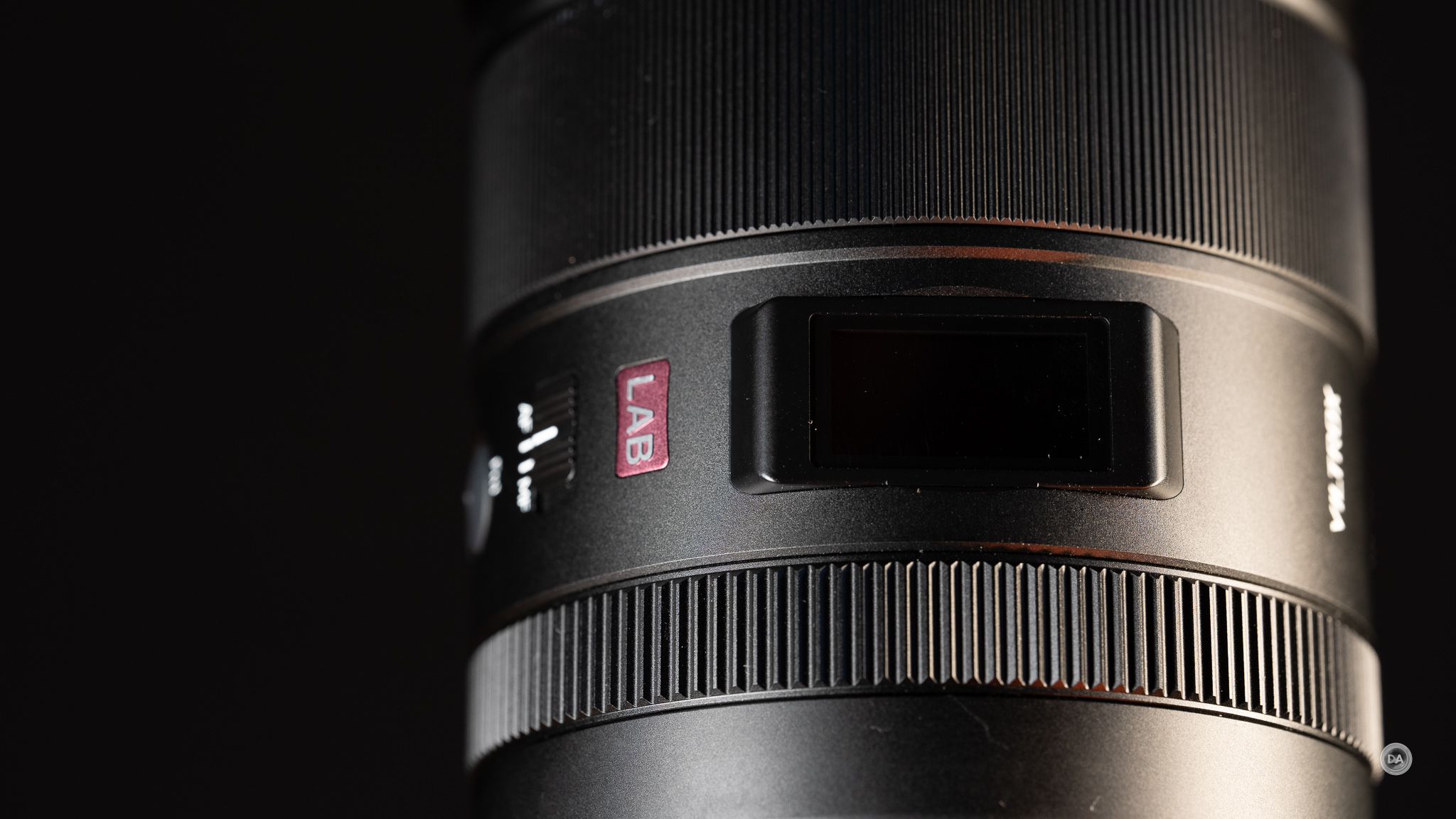
As noted, the aperture racking is a little challenging to do smoothly if you want to coverage a broad range of aperture options because the “throw” of the aperture ring is too long. I also noted a bit of a lag, where I would rotate to F11 according the OLED, but by the time the aperture caught up, I would actually be at F16. I’ve definitely seen smoother implementations than this.

The iris itself has 11 aperture blades, and these make for a reasonably well rounded aperture iris when stopped down. It’s not until fairly small (F4-5.6) that I start to see the shape of the blades.
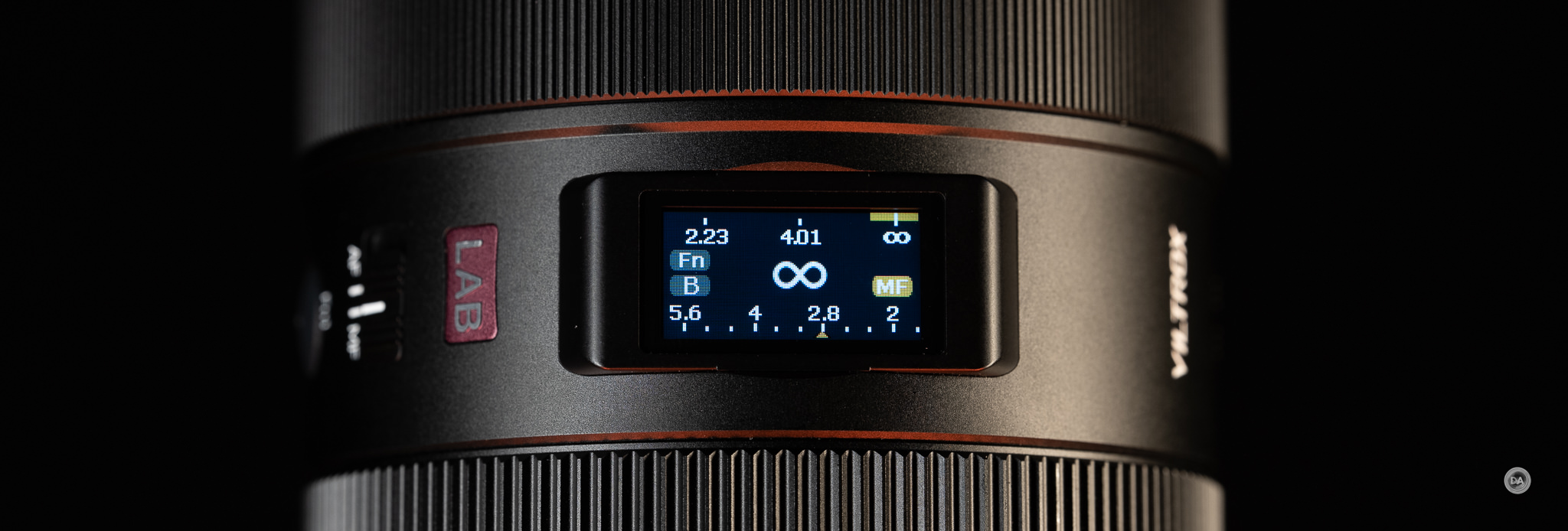
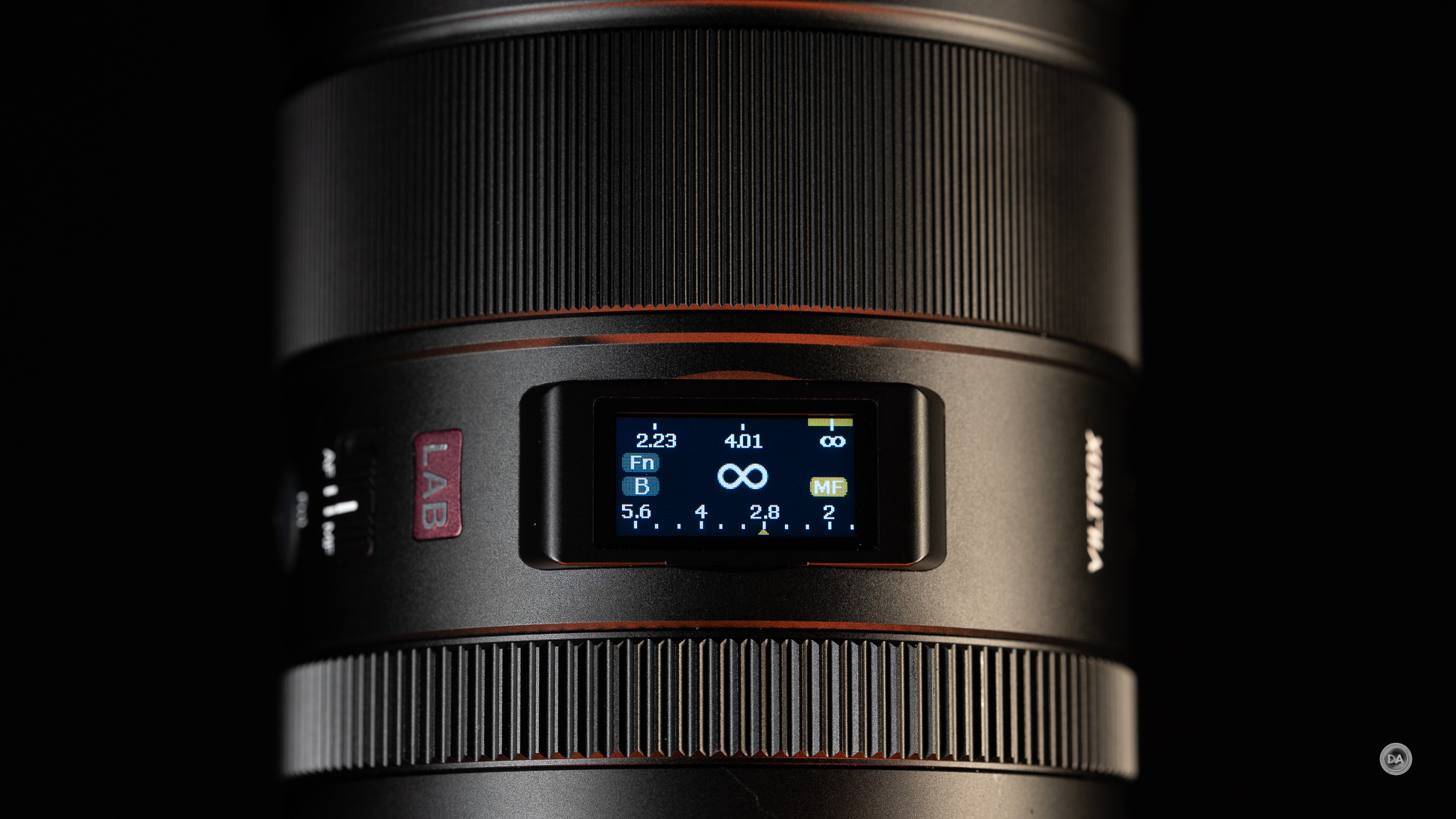
Back to that OLED for a moment. It functions in many ways like those found on the Zeiss Batis lenses, though with some improvements. The screen itself is nice and bright, allowing for good visibility even in bright conditions. It solves the problem of a distance scale (something missing on most mirrorless lenses), as it gives you a large font telling you the precise focus distance along with a distance scale above that. The bottom part of the screen gives you a readout of the current aperture. It also gives you some information related to the function buttons however, with the Fn icon lighting up when the first Function Button is depressed, and then the A or B function lights up when you are presetting focus distances.
I’ve even noticed that this time they are showing you a depth of field scale if you are in manual focus mode that increases as you change the aperture by extending a yellow bar along the distance scale.
There’s actually a lot of useful information on the LCD screen once you get familiar with how it is all being displayed, though I’m sure a lot of people will still find it somewhat of a gimmick.
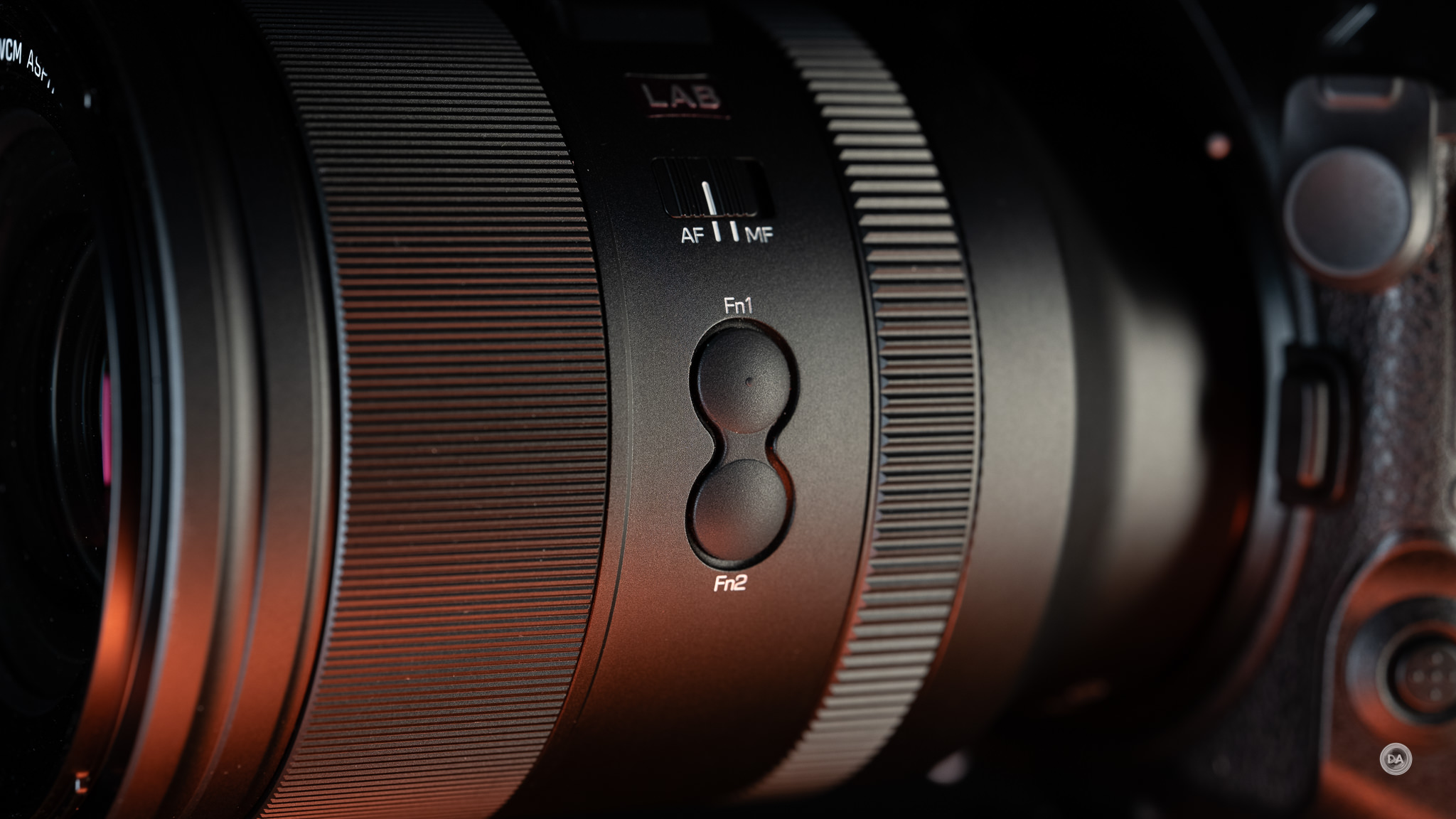
On the left side of the screen you will find an AF | MF switch along with two FN (function) buttons. The top one by default functions like the typical function button, performing whatever function you have that button programmed to in camera. The second button works by default as the main control for A-B focus. When in manual focus mode you can preset the focus position(s) by long pressing the FN 2 button, and then access the focus changes by short pressing it. You also have the ability to change the function of both function buttons through the Viltrox app.

Viltrox continues with a trend that other lens makers are now imitating by including a USB-C port in the lens mount that allows you to do firmware updates right to the lens. I’m a fan of this approach, as it eliminates the need for a separate dock or lens station for firmware updates, and I find the process a little more intuitive than doing firmware updates through the camera. This allows Viltrox to future proof their lenses and continue to improve them through firmware. You also have the option to connect to the Viltrox app for IOS or Android via Bluetooth where you can also update firmware wirelessly…or even make a direct correction via USB-C from your phone to the lens. In the app you can go beyond firmware updates to tweaking the behavior of the custom buttons (photos below come from the E-mount version).


You can even customize the splash screen on the LCD at power-up to show your name or logo.

The one thing I wish was there but isn’t (at least yet) is some control over the function of the manual focus ring. I’d like to be able to choose between linear/non-linear focus and the amount of focus throw rotation similar to what Tamron allows on some of their lenses. I wouldn’t be surprised to see Viltrox get there; they are pretty ambitious.
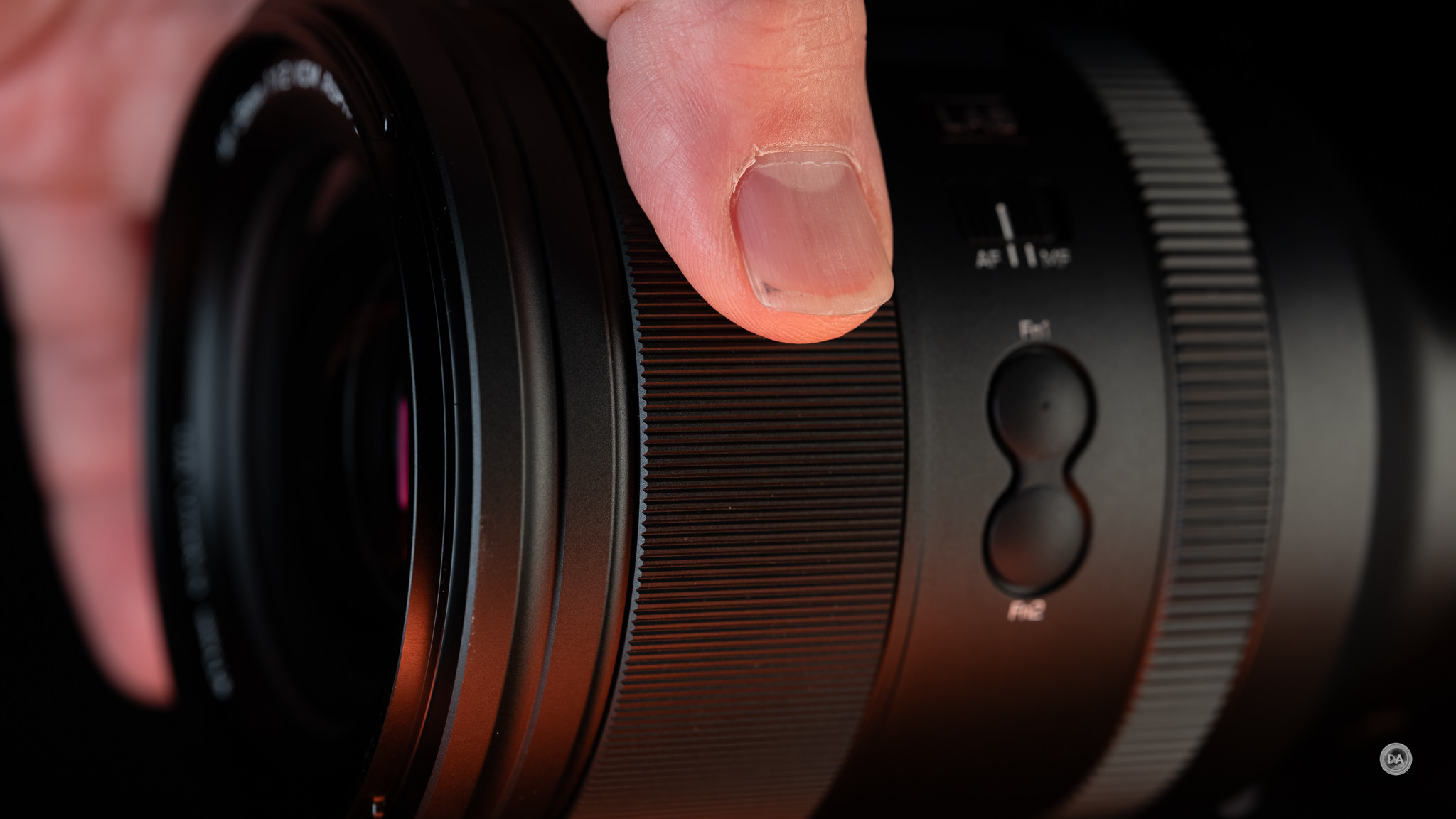
The manual focus ring is slightly raised and has a rubberized, ribbed texture. It moves smoothly and with nice damping. It isn’t linear, so the amount of focus covered will depend on the speed in which you rotate the ring. I found the focus throw to be a little long when trying to do smooth pull for video…at least at close distances. It needed more rotation than I could do with a single wrist rotation. Using the A/B focus is a much more precise way to set up repeatable focus pulls.
We also have weather sealing on this lens that starts with a unique maroon-colored gasket at the lens mount along with other seal points through the lens (a total of 12 of them, by my count).

This is an internally focusing lens, so there is nothing that moves where dust might intrude. There’s also an HD-Nano multilayer coating on the front element to help with water and fingerprint resistance, making the front element easier to clean. This is a professional grade lens with professional sealing. As always, however, “moisture-proof” does not mean “water-proof”, so don’t go crazy!
There is no lens based stabilization, so you will need to rely upon the in-camera stabilization if your camera is so equipped. Handholding a 35mm F1.2 lens is rarely difficult.
Like the 135mm LAB, the 35mm LAB employs floating elements. You might notice that when the lens is powered off, there will be some movement/clunking if you rotate the lens up and down. This can be very disturbing if you are not familiar with modern lens design. Many high end modern lenses employ floating elements that allow for better up close performance. The lens groups are not fixed, but float in a certain area, so when they are not energized they will move around a bit. This is by design, however, and when the camera is powered on, those elements will be energized and become fixed. You can rotate the lens up and down without anything moving around. This allows for superior up close performance. You can focus as closely as 34cm, giving a maximum magnification figure of 0.17x.

That’s a useful but not exceptional figure. The Sigma 35mm F1.2 ART II can focus closer (28cm) and gives a 0.19x magnification level. The Nikkor 35mm F1.2 S can focus as closely as 30cm and gives a 0.20x magnification. But what the LAB does extremely well is give you amazing up close performance even at F1.2, which great detail and contrast.

The lens also comes with a nicer-than-usual leather pouch (similar to Canon L-series lenses). There is some cushion on the bottom, but I don’t find these pouches nearly as useful as a good padded nylon case like what Sigma provides.

The LAB 35mm includes a lens hood that isn’t quite as premium feeling as the one on the 135mm, but it still feels like good quality. The plastics are thick and it has internal ribs. It doesn’t have a lock, but it does bayonet into place firmly and with a definite “click”.
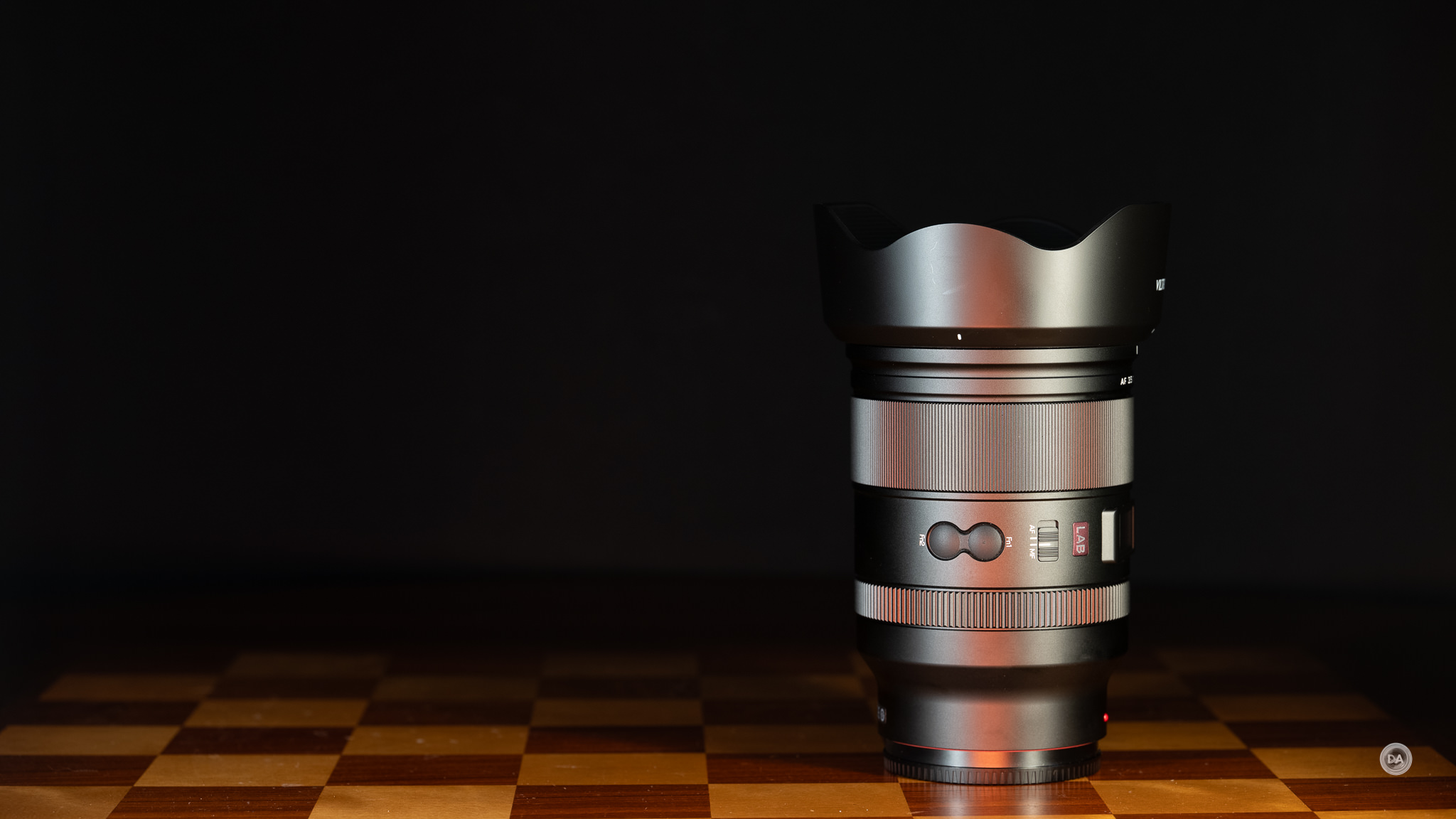
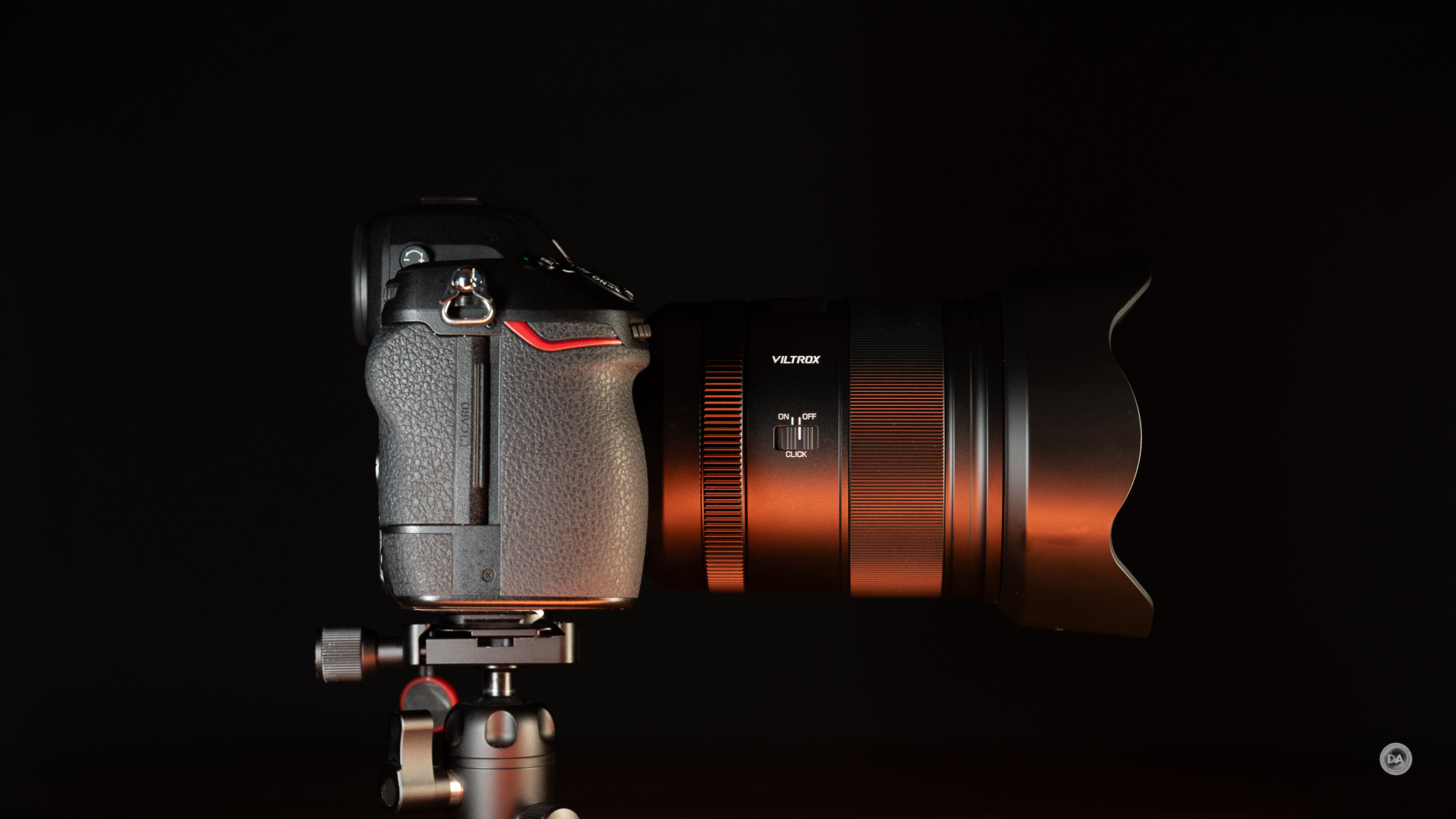
The lens is constructed with a aviation-grade magnesium-aluminum alloy, making it extremely tough. The finish of the lens feels more premium than the much more expensive S-Line lenses to me, with a beautiful satin texture that screams quality.
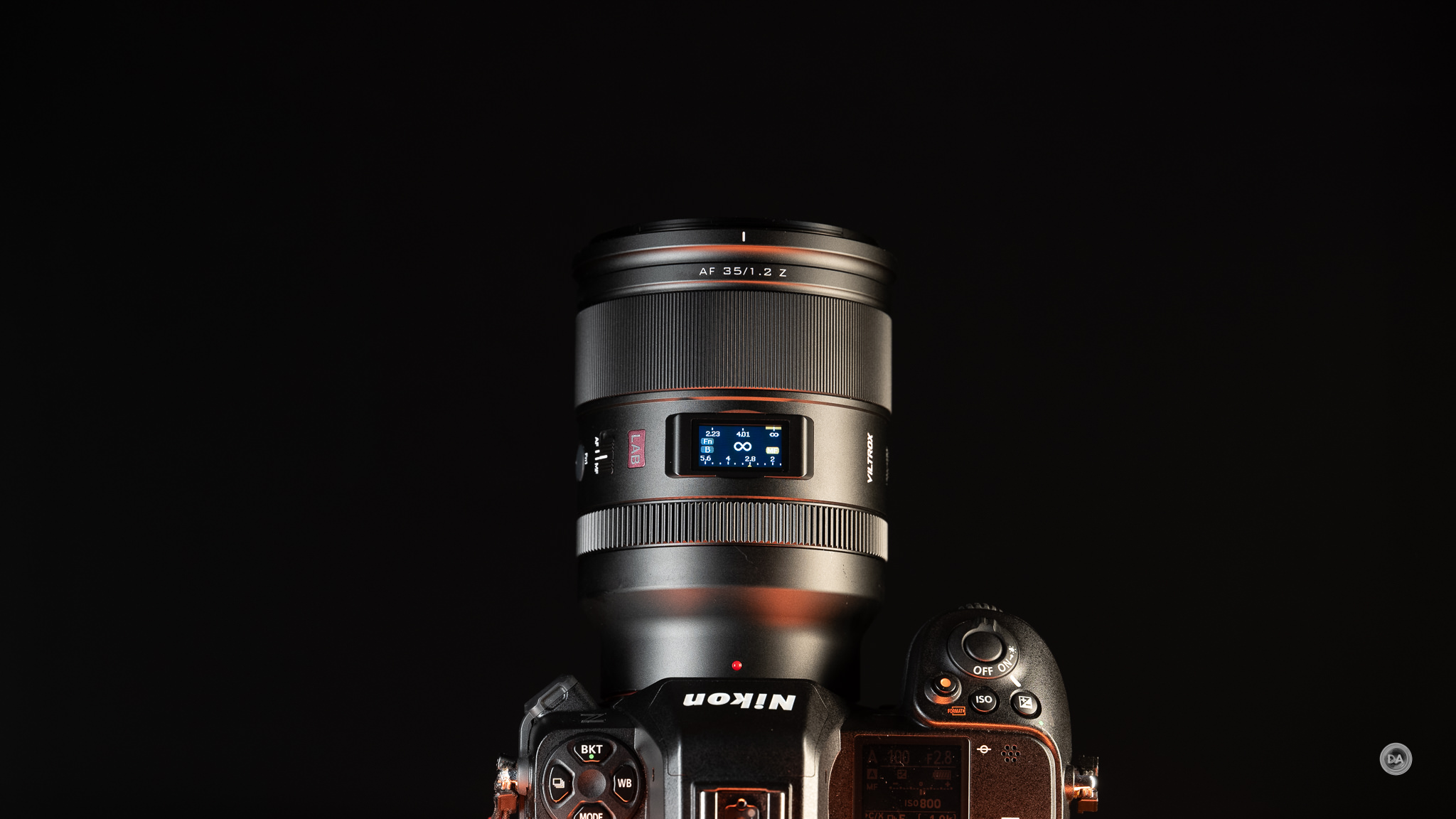
As with the 135mm LAB, the Viltrox AF 35mm F1.2 LAB Z is a premium lens with a robust set of features. I don’t necessarily agree with all the design decisions, but neither do I love all the design decisions on the premium F1.2 S-Line lenses. I do love the price tag of the LAB 35Z, however, as it allows for a much more approachable path to having a premium 35mm F1.2 for your Z-mount body.
Autofocus for Stills
The LAB 35Z utilizes four(!!!) of Viltrox’s new “Hyper VCM” (Voice Coil Motor) motors working in tandem to drive autofocus. Viltrox states, “Its double floating magnetic suspension system ensures precision focusing, whether you’re tracking a fast-moving subject or shooting videos.” Nikkor is starting to move to VCM style motors as well (as least in their recent 24-70mm F2.8S II), though the 35mm F1.2 S-Line still utilizes dual STM focus motors in its design. If I compare the results of my formal speed tests, I would definitely say that the LAB lens has a slight advantage in pure focus speed.

I mentioned feeling like Viltrox taking their time in releasing the Z-mount version was perhaps a smart idea. I say that because I feel like autofocus is more mature and polished than what I initially saw with the 135mm LAB lens on Nikon. I’ve watched Viltrox refine autofocus on the FE version of the 35mm F1.2 over the past 8 months, and the lens feels much more “ready” than some previous Viltrox lenses on Nikon.

Both speed and confidence is excellent for a lens with an F1.2 aperture. Even when shooting in dim conditions, I was able to lock focus.

I shot this lens side by side with the outstanding 24-70mm F2.8S II, and frankly it felt every bit as confident.
Focus sound is near silent, with a very light whirring sound as focus moves back and forth that I can only hear if I put my ear right next to the lens barrel.


My only focus complaint is a common one, and that is that sometimes focus wants to stay locked on the background (image 1 above) rather than instinctively grabbing the nearer foreground subject (image 2). I had to manually override focus to get back in the correct zone, and then autofocus grabbed what I wanted.
I was very pleased that through my portrait session was shot during a snowstorm, focus ignored the swirling layers of falling snowflakes and locked every shot accurately on my subject.

Focus is accurately locked on the iris in this shot even though depth of field is so shallow that the eye lashes are not even in focus at the same time. We’ve got a tiny self-portrait of me in the iris.


Autofocus is excellent, and I would say that this is one of the rare cases where autofocus feels pretty much as good on Nikon as it did on Sony. It’s worth noting that Nikon imposes no artificial limits on burst speed on third-party lenses, so I can shoot at the full 30FPS on my Z8 body, which I can’t do on Sony.
Video AF
The focus excellence carries over the video side of things. Video focus pulls definitely went better than usual, with good smoothness and confidence going back and forth. There is some focus breathing, but it is fairly well contained. It feels about the same as what I saw from the 35mm F1.2 S.
My “hand test” where I alternately block the camera’s view of my face with my hand and then remove it also went well. Focus confidently moved from my hand to my eye and back without any pulsing or lack of confidence. The focus breathing means that you will see the pull from my hand to my face, however.

Focus stayed stable on my face as I approached the camera, though I felt like it was a little slow to reacquire me as I stepped back into frame. It wasn’t as responsive as the 24-70S II in that setting.
Focus stayed stable in static shots at various apertures and didn’t pulse or move around. I moved in and out during a portrait session and saw solid focus throughout.
There isn’t much to complain about here. It doesn’t feel like you are losing much (if anything) relative to the much more expensive S-Line alternative.
Image Quality Breakdown
The LAB 35Z continues in the tradition of being, well, exceptional. The optical design is 15 elements in 10 groups, with five of those being ED (low dispersion) elements, three of them being HD (high refractive index) lenses, and two being extreme aspherical lens (so two-thirds of the elements here are exotics). The MTF at F1.2 looks very good, with an absolutely stunning center and midframe performance and then a fade into the corners. At F8 the MTF is pretty much a straight line across the top, i.e. perfect. I’m reusing the Sony diagrams as the optical design is identical and I don’t have new versions for the Z-mount lens.


Not everyone understands MTF charts, so I won’t do a deep dive into them here, but what I do find helps people visually is if I line up the MTF charts from alternatives, put a line through 80% (anything above that is looking great), and allow people to see what falls above and below that threshold for each lens. In this case, I’ve grabbed the premium Sony FE 35mm F1.4 and the new and exceptionally expensive Nikkor Z 35mm F1.2 S. The results are illuminating.

By this metric, the LAB lens will have the sharpest center and midframe with only the GM having sharper corners. The MTF suggests that the LAB will best the S-Line lens across the frame. Gulp!
But is that the case?
In the center of the frame, I would say that at F1.2 and at high magnification levels (200%) the Viltrox is definitely sharper.

In the midframe, however, I think the S-Line is slightly sharper.

In the corners, however, the Viltrox is clearly sharper and higher contrast.

It’s pretty wild that a lens costing one third of the first party lens is potentially the sharper option.
And yes, in the real world, this is a lens perfectly capable of producing stunning results even at F1.2. You can even create unique landscape images at F1.2:

More on this in a moment. Let’s look at the technical side of things.
I was expecting a lens well corrected for LoCA (longitudinal chromatic aberrations), and that is the case here. I see mostly neutral results on either side of the plane of focus without any fringing.

I see a tiny bit of green fringing on my Dad’s old SRL, and tiny bit of fringing around the bokeh balls.
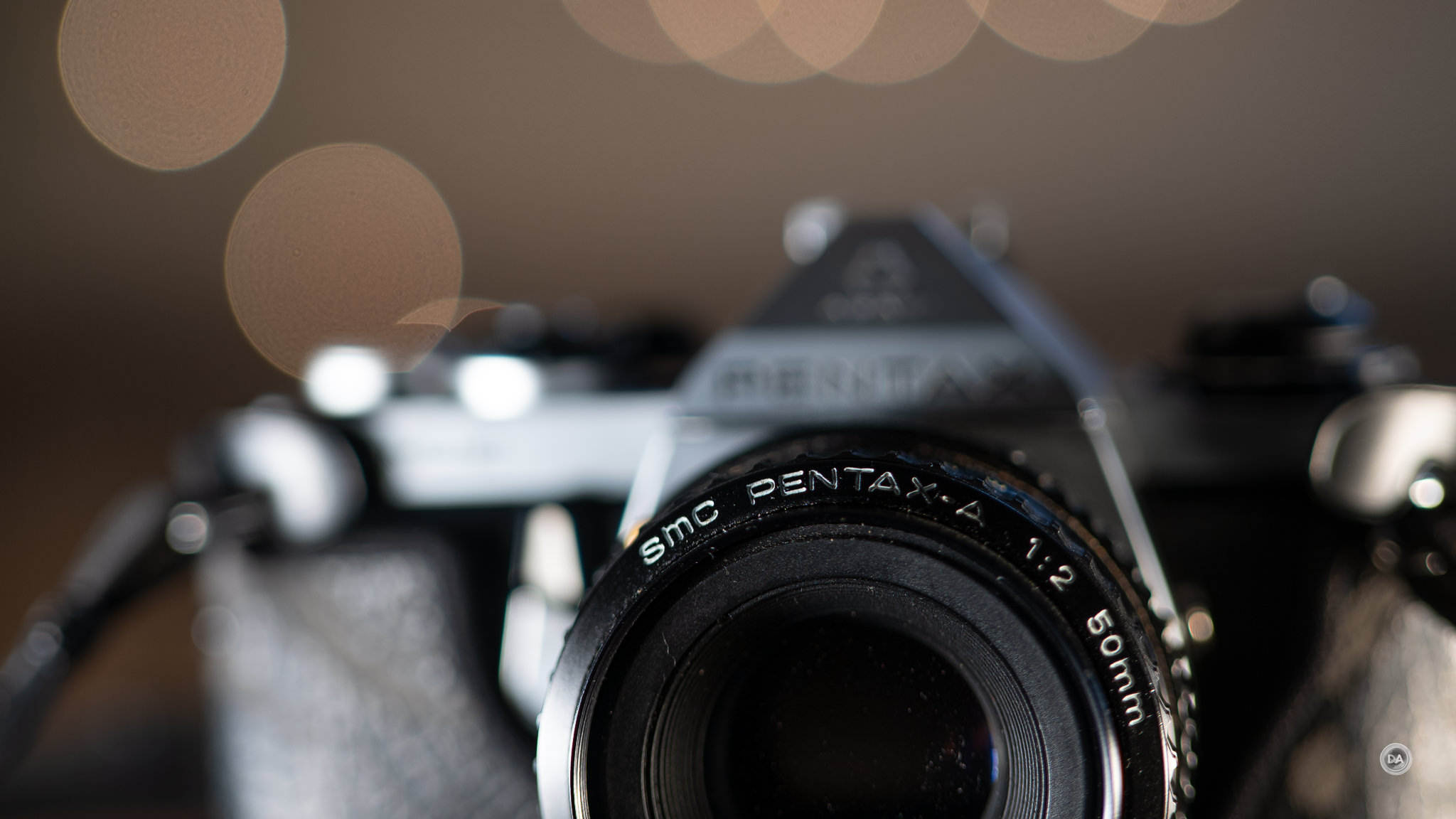
There’s nothing that will be obvious in normal shooting, however, so no big deal.
As is sometimes the case, I see very slightly more LaCA (lateral chromatic aberrations) that typically show up along the edges of the frame with high contrast transition points on the Z-mount version than I did on E-mount. It is still rather minimal.
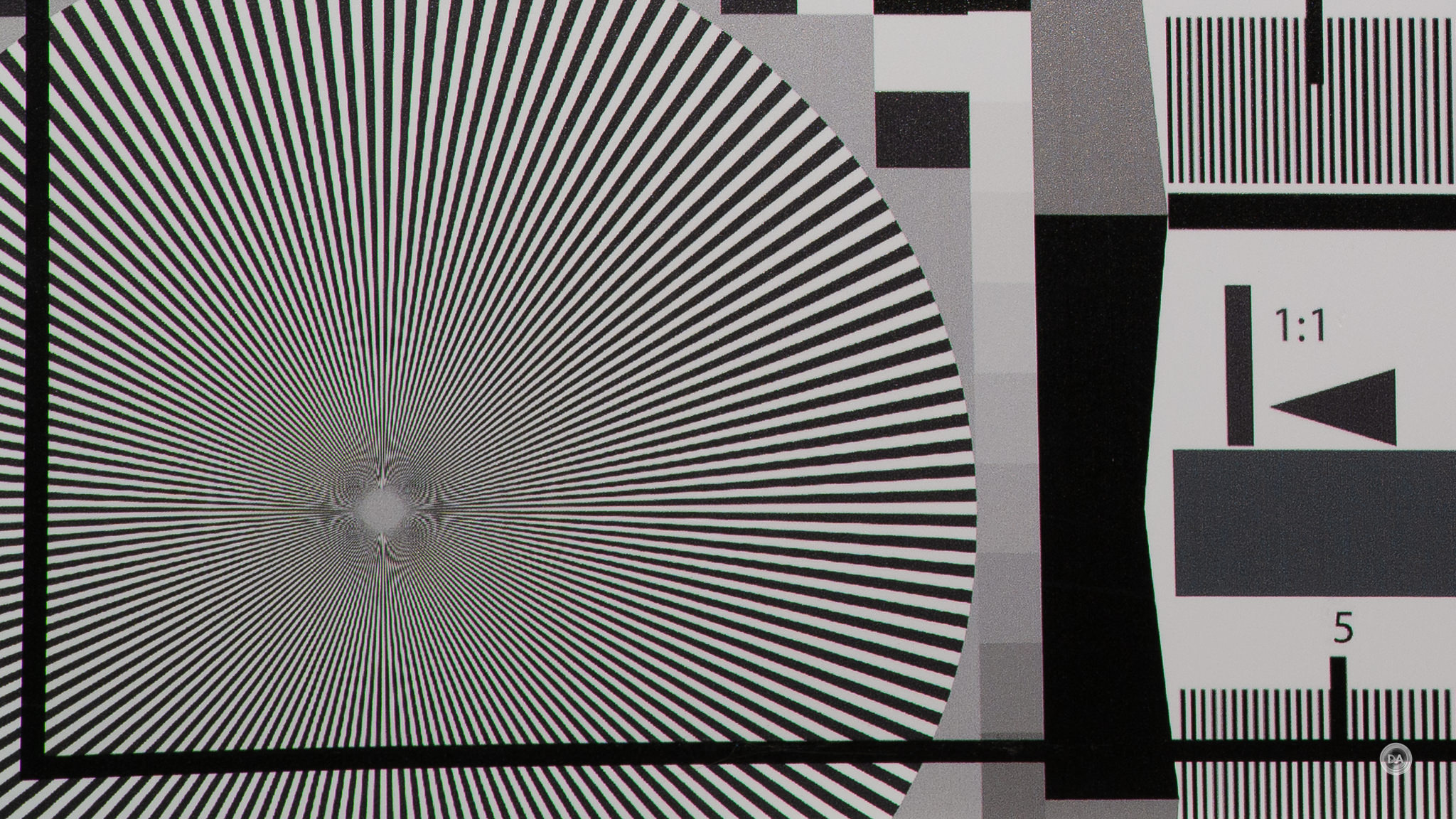
I see no evidence of fringing in the transition areas near the edges of real world images, either.

I have seen some VERY unfortunate results in the past year when it comes to fast 35mm lenses and their quantity of vignette and distortion (hello Canon 35mm F1.4L VCM!). There’s much less of that here, though not the perfect levels we saw with the 135mm LAB.

There is a very minor amount of distortion, though unfortunately what’s there is complex. It is neither a true barrel or pincushion distortion, but a non-linear mix of the two. You can see that the corners have a pincushion look while the center is pretty neutral. Trying to correct the pincushion distortion creates barrel distortion elsewhere. I found that dialing in a minimal -2 was the best compromise I could achieve. When the actual correction profile arrives it will certainly do a better job. At the moment there is no correction for JPEGs, either, which will almost certainly change down the road. Fortunately the quantity of distortion is low enough that I couldn’t see it in real world shots.

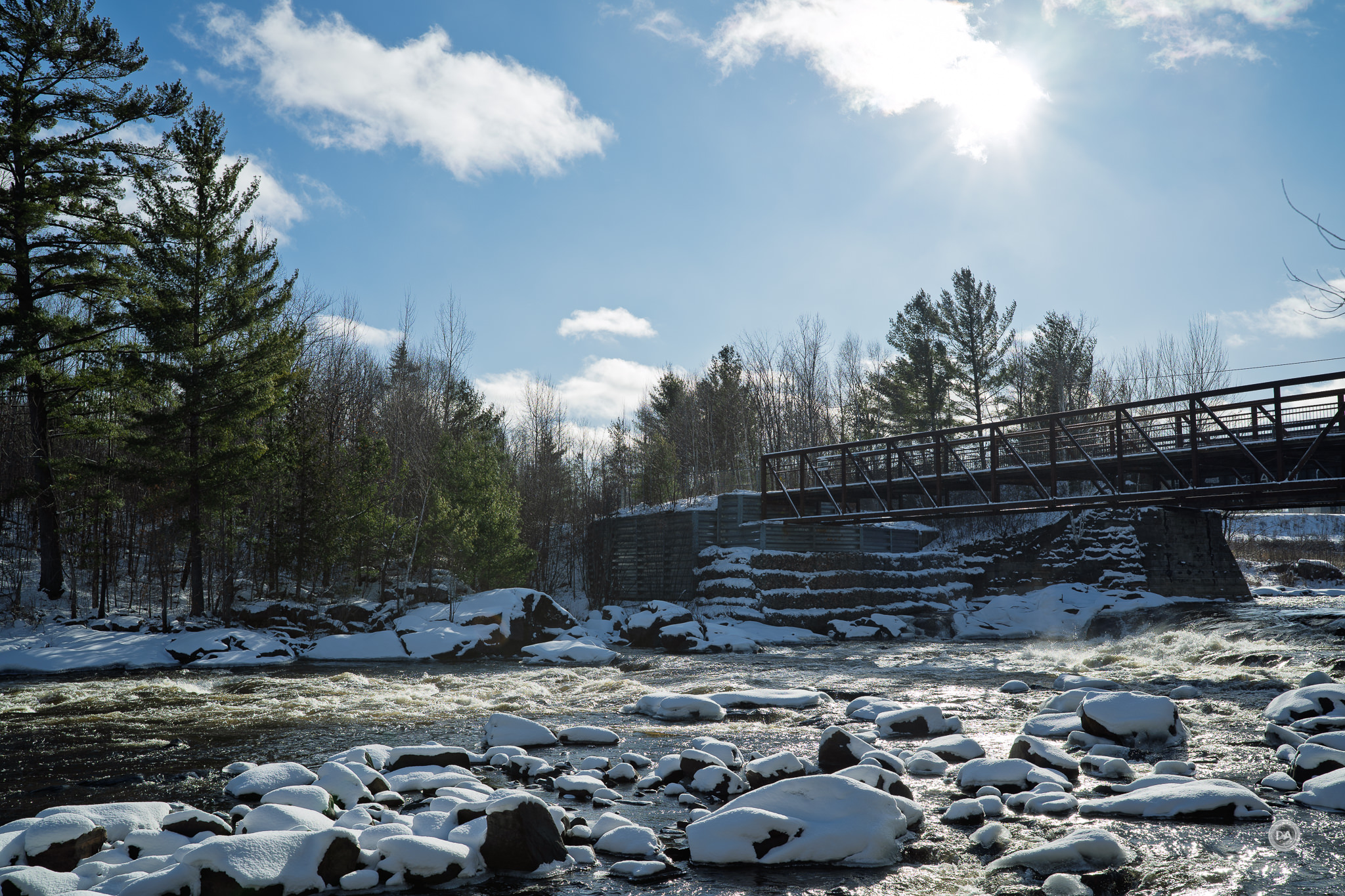
The lines of this bridge look nice and straight with no corrections.
However, in this shot (from the E-mount version), with the horizon right up near the top of the frame, you can see a bit of that “mustache” pattern.

You would probably want to correct that…which will be much easier once this lens has gone to retail and we get RAW correction profiles for Adobe and other editing software. I did find that doing a miniscule -1 in Lightroom’s distortion slider did help enough that I wouldn’t probably notice after correction.
Vignette is moderately heavy at F1.2, requiring a +70 (between 2 and 3 stops), which, interestingly, is the same amount I saw on the E-mount version. The S-Line lens had less distortion but a touch more vignette, requiring a +77 to correct.
At wide apertures, this is often a visible amount of vignette but not necessarily a negative amount. In this portrait shot (uncorrected) you can see that there really isn’t any destructive about the vignette even at F1.2…just a bit of darkening in the snow.

There are going to be situations where a bit of vignette is flattering or productive. Bottom line is that while the 35mm LAB has a bit of distortion and a moderate amount of vignette, neither is extreme.
We’ll move on to inspecting our test chart. This test has been done on a 45MP Nikon Z8 sensor. I use a high end tripod and two second camera delay to ensure vibration doesn’t affect images.
Here’s a look at the test chart that we will examine at high magnification:

If we take a look at crops (at 200%) at F1.2 from the center, mid-frame, and lower right corner, we find that center and mid-frame performance is exceptionally good, and the corners are good but a bit softer.



But as we’ve already seen, that is more than competitive that the very best lens on the platform. Sharpness is never going to be the problem here.
So this is definitely a very sharp lens at F1.2. I didn’t hesitate to shoot with it wide open at all.

Even landscape images at F1.2 look great:

By F2 the sharpness and contrast are at ridiculous levels in the center of the frame.
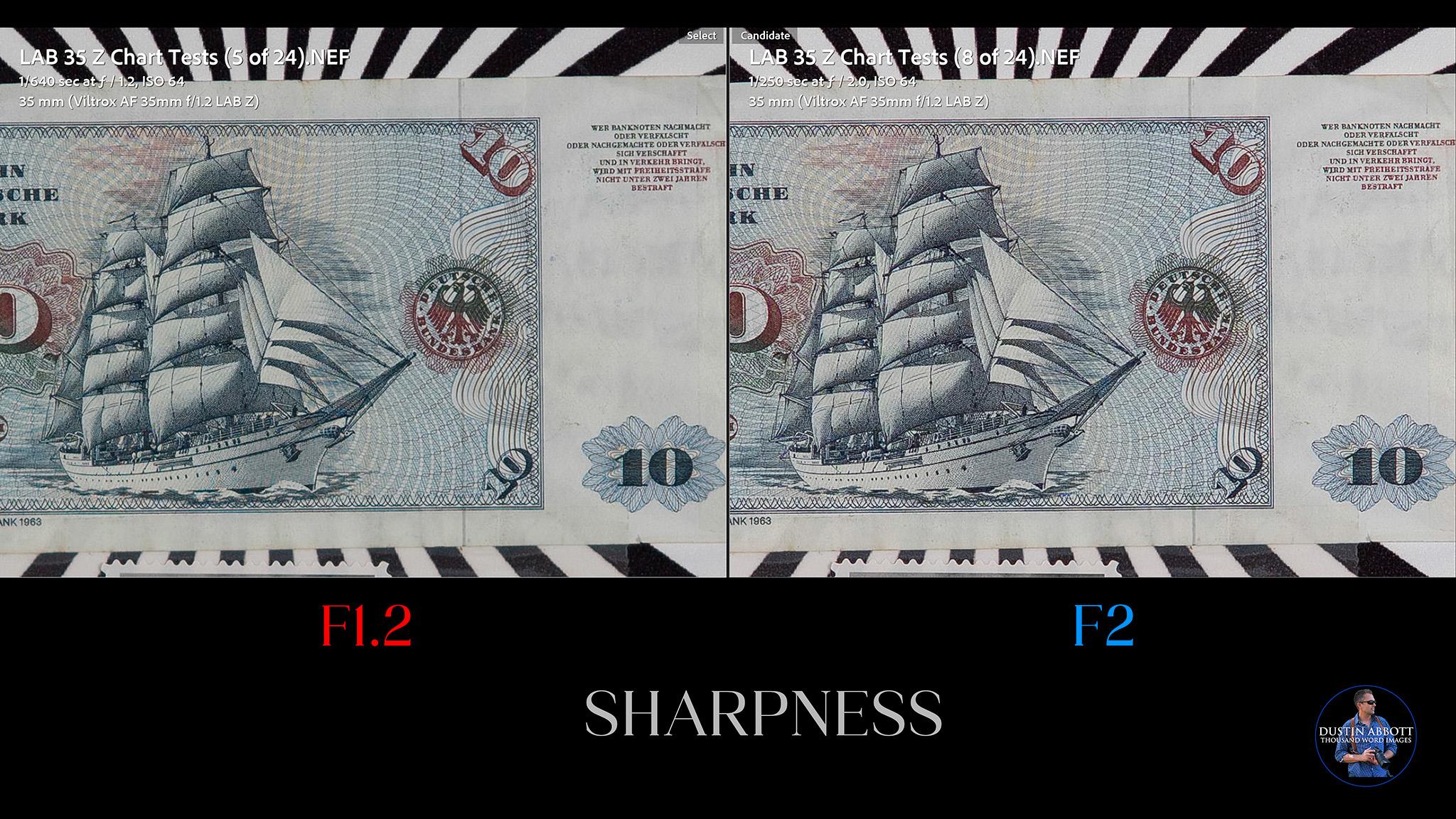
Look at the ridiculous amount of detail in this F2 portrait shot crop.

Even the corners are crazy sharp by F2:

From F2 to F8 you can shoot landscapes with pretty much perfect detail from corner to corner.

This gives you a lot of cropping ability when shooting on a high resolution camera because there is so much detail present.

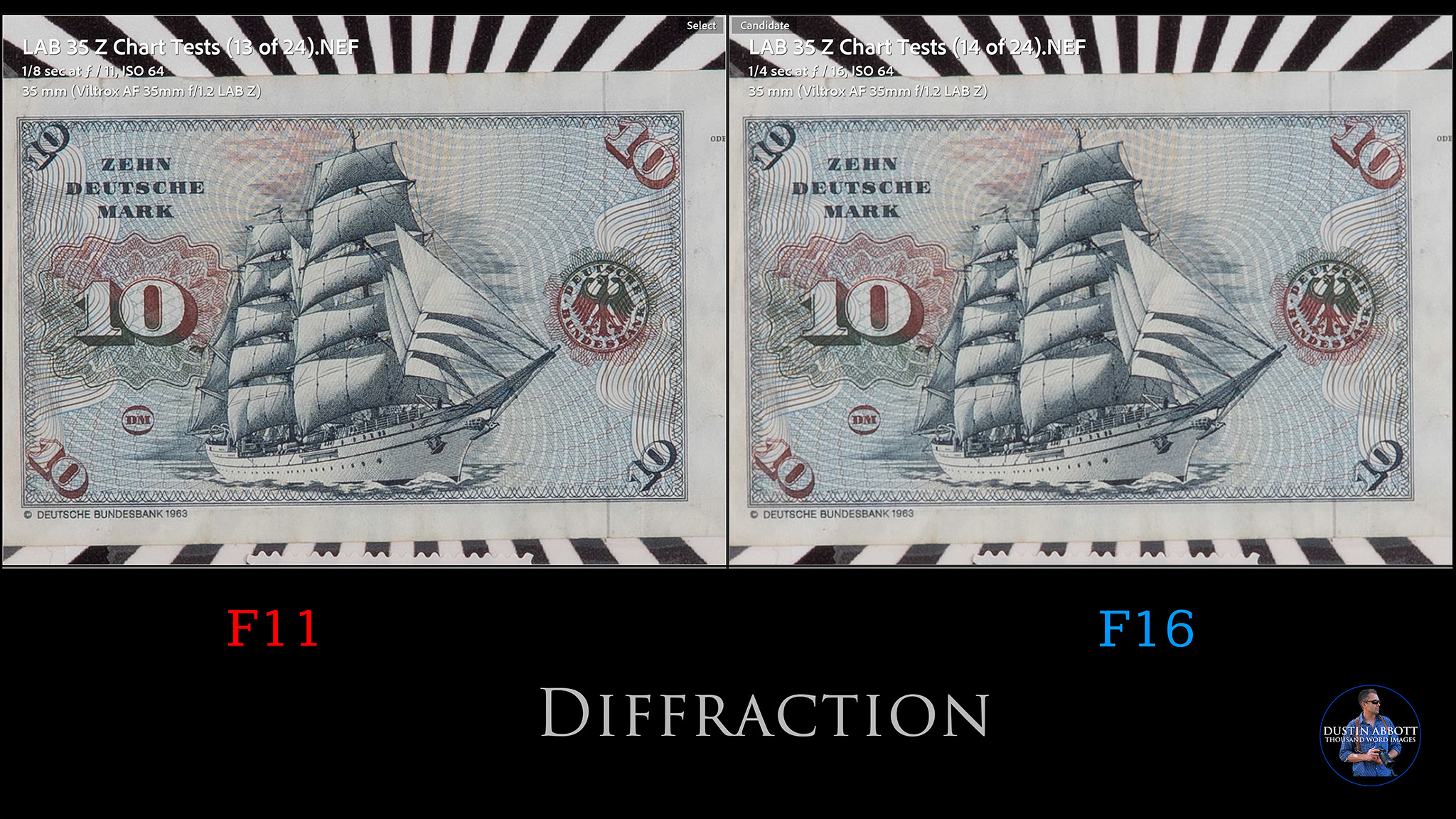
As is typical on a high resolution body, diffraction will start to soften the image by F11 and more obviously by F16, which is minimum aperture (though this lens is still sharper than many lenses at its weakest and diffraction isn’t as pronounced on the lower 45MP resolution relative to Sony.)
Clearly this is a very sharp lens. But we aren’t just looking for sharpness; can this lens also deliver soft bokeh? It is a rare lens at any focal length that is good at both. 35mm lenses aren’t necessarily the biggest “bokeh makers”, but I’ve seen a few that could deliver lovely bokeh.
The LAB 35Z experience some “cat-eye” geometric deformation near the corner of the frame, though geometry by F2 is basically perfectly circular.

We see a little busyness in those specular highlights, but nothing too bad.
In this shot of Nala, you can see some of those lemon-shaped specular highlights, but also that the general rendering is nice and soft.

Winter is hardly the nicest season for bokeh, as snow dominates everything and bare trees and branches make for harsher out-of-focus highlights. Still, in this shot you can see how that the background melts away nicely.

I think the S-Line might have slightly nicer rendering than the LAB 35Z, but it isn’t by much.

I think that most people are going to be very happy with the rendering from the 35mm LAB, and will love that extra bit of subject isolation that you can get from an F1.2 lens.
I also felt like colors are very nice and rich from the 35mm LAB, even though I had to do my test in the middle of winter. I thought colors looked rich here.

I felt like my real world images had very rich color to them.

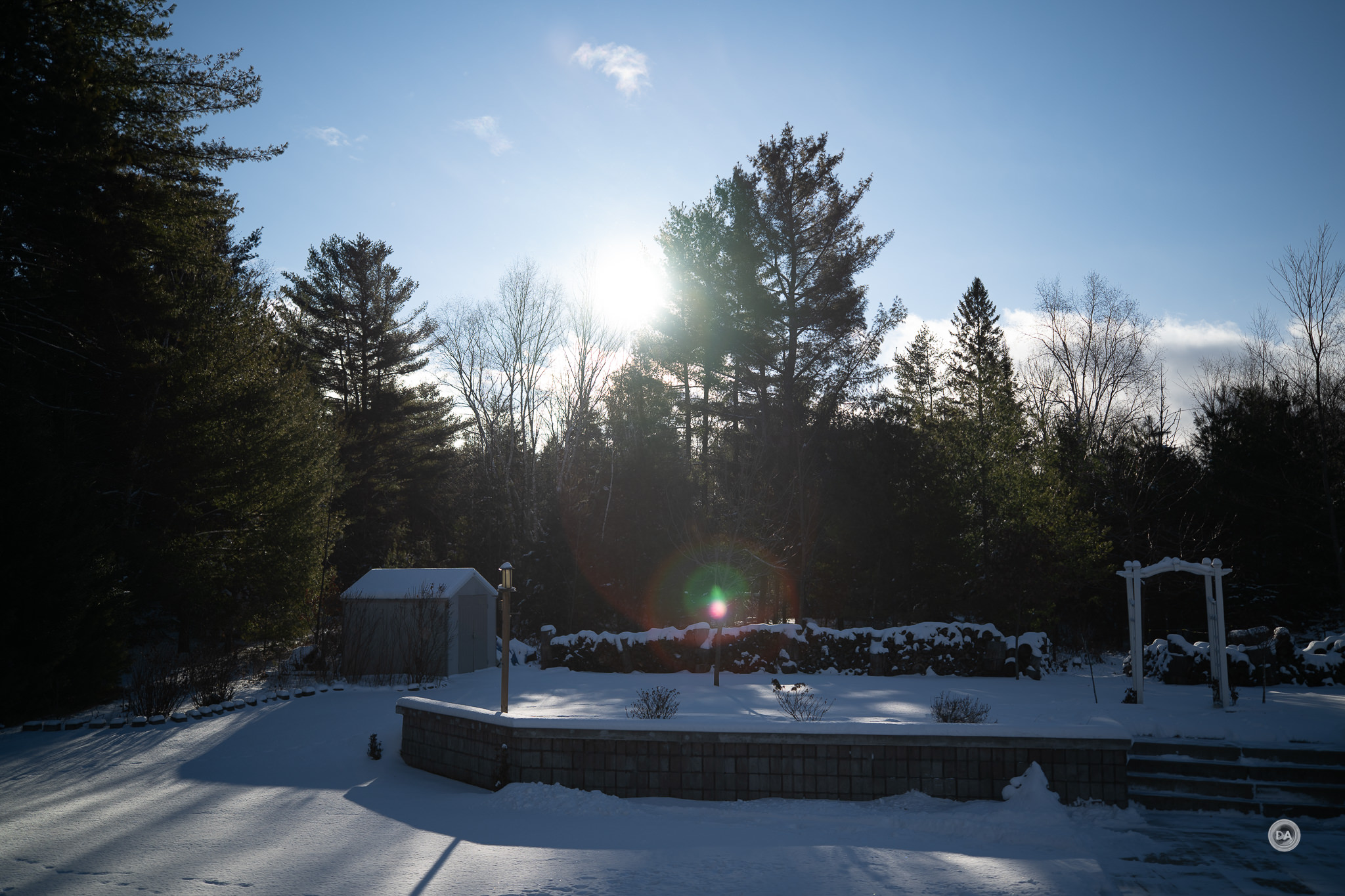
One area where I think the S-Line is slightly better is in flare resistance. The Viltrox is good in many situations, but at certain angles I saw some ghosting.




I did manage to test coma when reviewing the E-mount version. A 35mm lens with an extremely bright F1.2 aperture is going to be a potential favorite for those wanting to shoot the night sky. How did it do?


As you might expect by this point, this is a lens that is pretty much good at everything. Astro is no problem, even at F1.2, with no issues with fringing around bright points of light, crisp star points in the center frame crop, and very little coma near the edges of the frame in the second crop.

The bottom line is that the Viltrox AF 35mm F1.2 LAB Z is an intensely competitive lens in every facet. Enjoy the images in the mini-gallery below.
Conclusion
I can’t help but think that the Viltrox AF 35mm F1.2 LAB Z is going to be somewhat disruptive on Nikon Z-mount. It is smaller, lighter, sharper, and MUCH cheaper, and arguably has the more sophisticated autofocus system than the $3000 35mm F1.2 S. I do think that the S-Line has a few advantages, but it would be hard to argue that those advantages are significant enough to be worth 3x the price.

Viltrox has clearly worked over the past 8 months to tune the performance of Z-mount version of the LAB 35mm, and it feels like a polished, mature product, which hasn’t always been the case with the launch of these LAB lenses in the past. I particularly found the LAB 35Z a treat as a portrait lens, as it nailed focus every time and delivered beautiful results.

Thanks to the launch of the Sirui Aurora 35mm F1.4, we now have multiple F1.4 and F1.2 lenses to choose from alongside the Nikkor Z 35mm F1.4, F1.8 S, and the F1.2 S lenses. Z-mount is quickly becoming a great platform for third-party lenses, and the fact that Nikon does not needlessly restrict lenses on the platform is a huge benefit. But there is no 35mm that delivers as much performance as the Viltrox AF 35mm F1.2 LAB Z relative to the cost of the lens. It is a huge bargain…if only it wasn’t such a huge lens, too!

Pros:
- Not as massive and heavy as the 135mm (or the 35mm F1.2 S-Line)
- Beautiful built lens
- Feature rich
- Very good weather sealing
- USB port for firmware updates along with Bluetooth for wireless access
- Quad HyperVCM motors means focus is near instant
- Focus pulls are nicely damped
- Exceptionally sharp lens that matches or bests the very best in the center and mid-frame
- Minimal distortion
- Strong control of fringing
- Colors look great
- Amazing contrast
- Beautiful bokeh
- Low coma
- Amazing price to performance ratio
Cons:
- Big and heavy
- Don’t love the aperture ring design
- A bit of ghosting issues at some angles
_________________________________________________________________________
GEAR USED:
Purchase the Viltrox LAB 35mm F1.2 Z @ Viltrox (use code DUSTINABBOTT for 5% off) | B&H | Adorama | Amazon | Amazon Canada | Amazon UK | Amazon Germany
_______________________________________________________________
Purchase the Nikon Z8 @ B&H Photo | Adorama | Amazon | Camera Canada | Amazon Canada | Amazon UK | Amazon Germany
_________________________________________________________________
Want to support this channel? Use these affiliate links to shop at: B&H Photo | Amazon | Adorama | Camera Canada | Amazon Canada | Amazon UK | Ebay | Make a donation via Paypal
Buy DA Merchandise https://bit.ly/TWIMerch

Keywords: Viltrox AF 35mm F1.2 LAB Z, Viltrox AF, LAB, Viltrox LAB, #LAB, #LAB35Z, #explorebeyond, Viltrox 35mm, Normal, Full Frame, F1.2, f/1.2, Hyper VCM, Viltrox LAB 35mm F1.2 Z, Viltrox LAB 35mm Review, Nikon 35mm F1.2 S, S-Line, S, Hands On, Dustin Abbott, Real World, Comparison, Sharpness, Bokeh, Flare Resistance, Nikon, Nikon Z8, Z, Z-mount, Z8, Review, mirrorless, Full Frame, Sports, Tracking, Dustin Abbott, Real World, Comparison, Handling, Focus, Portraits, Resolution, High ISO, Image Quality, Sample Images, Photography, 45MP, #letthelightin, #DA, #NIKON, #Z8, #NIKONZ8
Related posts:
 Viltrox AF 40mm F2.5 Z Review
 Nikkor Z 35mm F1.2 S Review
 Viltrox AF 40mm F2.8 Z Gallery
 Viltrox AF 16mm F1.8 Z-Mount Review
 Viltrox AF 16mm F1.8 Z Image Gallery
 Viltrox AF 20mm F2.8 Z Review
 Viltrox AF 20mm F2.8 Z-Mount Gallery
 Nikkor Z 135mm F1.8 S Plena Review
 LAB vs PLENA: Nikon 135mm Showdown
 Nikkor Z 50mm F1.4 Review