


The prime complaint about the Canon RF ecosystem has been that it was closed to third party development when the system launched in 2018…and here in 2026 that remains the case. Canon has allowed some development for APS-C on RF, but to this point, the full frame RF protocol remains closed. That means that all of the lenses are coming from Canon themselves, leaving fewer options for those invested in the platform. Canon has primarily developed high-end (and expensive!) L-series lenses and budget lenses, but too few lenses in the mid-range category that is often filled by Sigma, Tamron, and other brands on other platforms. The Canon RF 45mm F1.2 STM is an attempt to fill that void, with a bright lens at a popular focal length though with a much lower price tag than, say, the $2600 Canon RF 50mm F1.2L. The RF 45mm definitely fulfils that mission on price, costing just $469 USD. But is the lens any good? Find out by watching the video review or reading on.
Follow Me @ YouTube | Patreon | Instagram | Facebook | DA Merchandise | Flickr | 500px | X
Thanks to Canon Canada for sending me a review loaner of this camera. As always, this is a completely independent review, and the thoughts and opinions expressed here are my own. Visit the product page dfor the lens here.
___________________________________________________________________________________________
AI SUMMARY: The Canon RF 45mm F1.2 STM is a compact and affordable full-frame prime lens that seeks to fill the gap in Canon’s RF lens lineup, particularly aimed at budget-conscious photographers. While it offers a bright aperture and a lightweight design, it suffers from significant optical shortcomings including distortion, chromatic aberration, and lack of weather sealing. The lens features STM autofocus, which, while reliable, lacks the smoothness and speed of Canon’s higher-end motors, making it less suitable for fast-moving subjects. Nonetheless, the lens has a unique character and can produce pleasing images in certain situations, appealing to those who prioritize a stylistic aesthetic over technical perfection.
Strengths:
- Inexpensive and lightweight, making it appealing for everyday use.
- Compact design allows for ease of handling and versatility on smaller camera bodies.
- Bright f/1.2 aperture provides creative depth of field options.
Weaknesses:
- Significant optical flaws including distortion and chromatic aberration.
- Lacks important features like weather sealing and a lens hood, which may deter potential buyers.
- Autofocus performance is not as smooth or fast as competitors, which may limit its effectiveness for action photography.
___________________________________________________________________________________________________
On paper, the RF 45mm F1.2 STM is very appealing. It is inexpensive, compact (just 75mm long), and lightweight (346g). Yet one is immediately reminded of Canon’s uniquely frustrating policies with their non-L lenses. The STM autofocus motors feels a bit coarse and unsophisticated, there’s no weather sealing, and if you want a lens hood, that will cost another $59 (the ES-73B). Nikon has a number of F1.4 prime lenses that cost roughly the same amount but do have some weather sealing and include a lens hood, so it isn’t as if not including a lens hood or completely shunning weather sealing in a lens of this class is the class standard anymore.

I’m not sure then that you could call the RF 45mm a “home run”, particularly when brands like Viltrox are making very sophisticated lenses in this price range for other brands. But I’m more concerned with what this lens can do, because at its best, it could be a much cheaper replacement for a lens like the EF 50mm F1.2L…a niche that needs filling when the RF 50mm F1.2L weighs nearly a kilo!
So let’s dive and take a closer look.
Key Specs
- Full-Frame | f/1.2 Maximum Aperture
- Compact, Lightweight Prime Lens
- STM Stepping AF Motor
- Customizable Control Ring
- Aspherical Element Reduces Aberrations
Build and Features
As mentioned, the RF 50mm F1.2L is a bit of a beast. It is nearly 90mm in diameter, nearly 110mm long, and weighs right under a kilogram (950g). By contrast, the RF 45mm F1.2 STM is 78mm (3.1″) in diameter and just 75mm (3″) in length. It has a squat look rather like the EF 35mm F2 IS, a lens I quite liked. The weight is just 346g (12.2oz), making this one of the lightest F1.2 autofocus lenses we’ve ever seen. This is a full frame lens, too, not just designed for smaller sensors. It is considerably bigger than the 50mm F1.8 STM, but still very compact.

I’ve complained about the lack of weather sealing, but at the same time I will acknowledge that this is a nicer-made lens than some of the other bargain RF lenses. We’ve got a metal lens mount, and while the outer shell is made of engineered plastics, it doesn’t feel cheaply made.

The lens has a more elegant profile than the 50mm F1.8 STM, with some sculpting on the barrel that gives it more style points.

Up front we have very common 67mm front filter threads, which I’m always delighted to see.
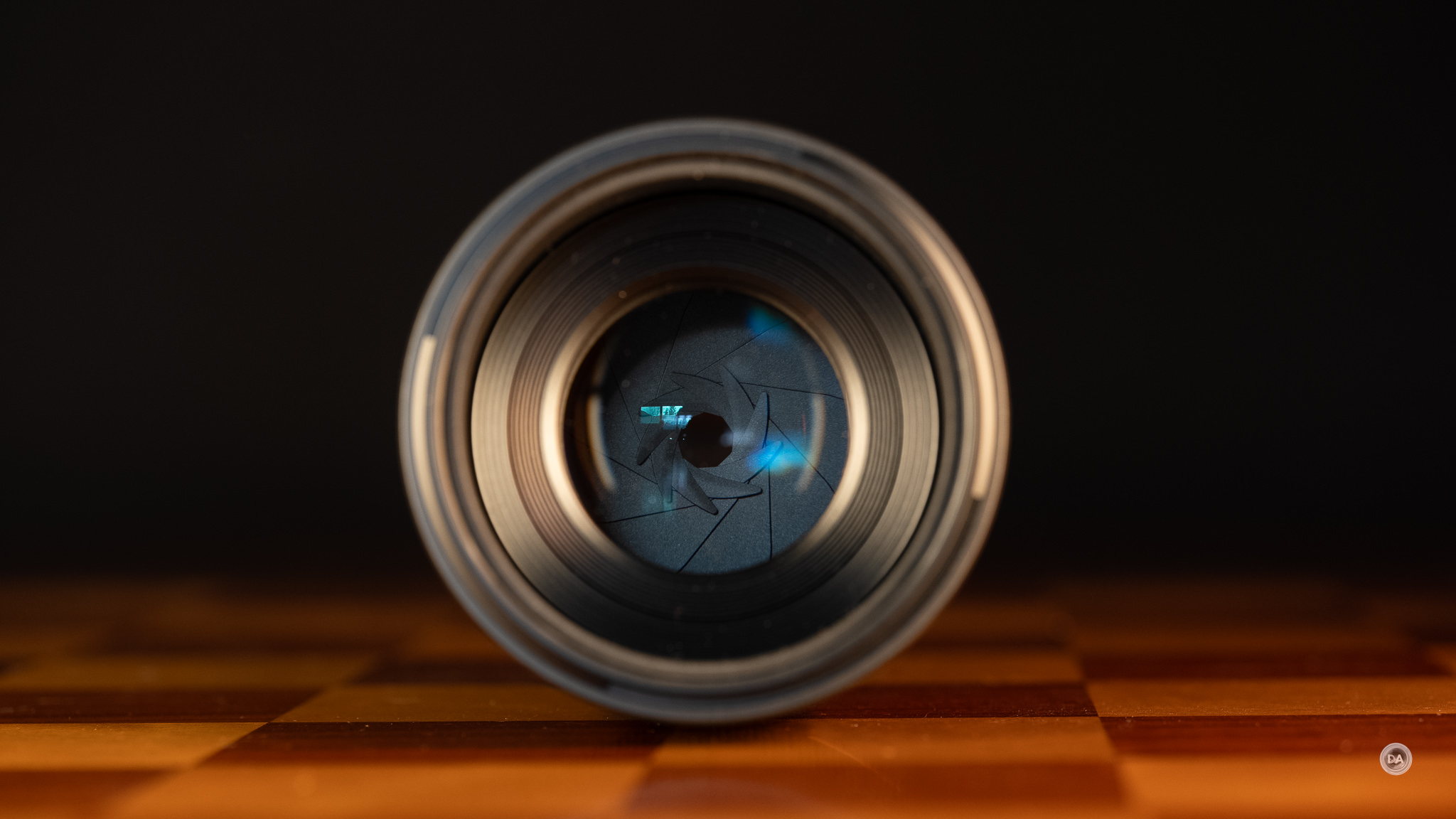
The RF 45mm is technically an internally focusing lens, as the lens next extends further than the barrel, but what you will find is that focus group moves back and forwards within the lens housing during focus, so at times the front element will be quite recessed.

If you are concerned with dust or moisture, it might not be a bad idea to put a protection filter on the lens. Just make sure it is a good one that won’t degrade image quality.

A peek inside shows 9 aperture blades that are moderately but not perfectly circular. By F2.8 you will start to see some of the straight edges of the aperture blades.

At larger apertures, there is the typical cat-eye deformation, though by F1.8 you have very circular shapes across the frame.


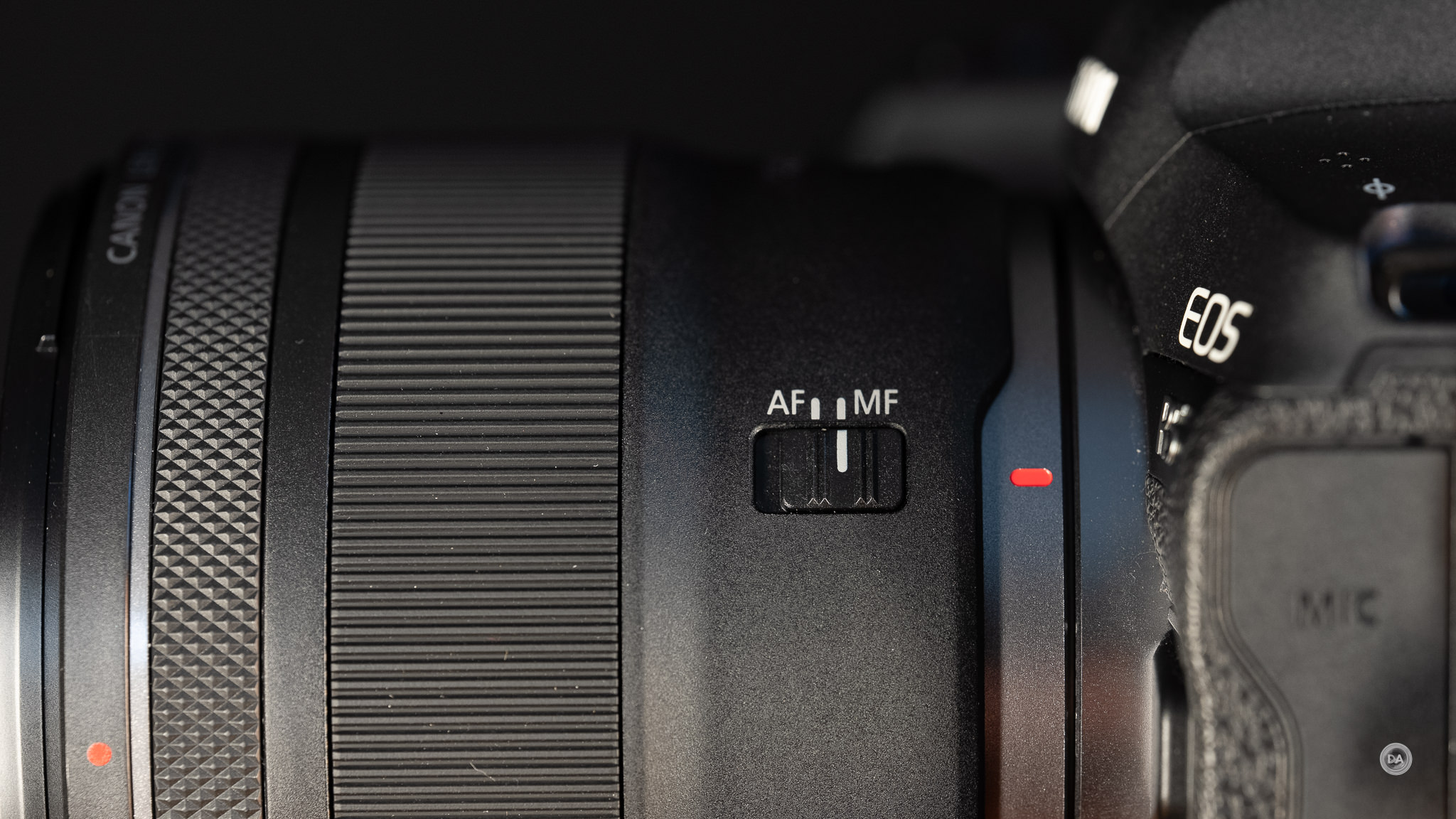
This is not what you would call a feature-rich lens, but it does have a welcome AF | MF switch along with Canon’s customizable control ring at the front of the lens. This can be assigned different functions from within the camera, but will always operate with clicks, making it less useful for aperture racking.
That ring has the unique diamond pattern typical of Canon’s control rings.
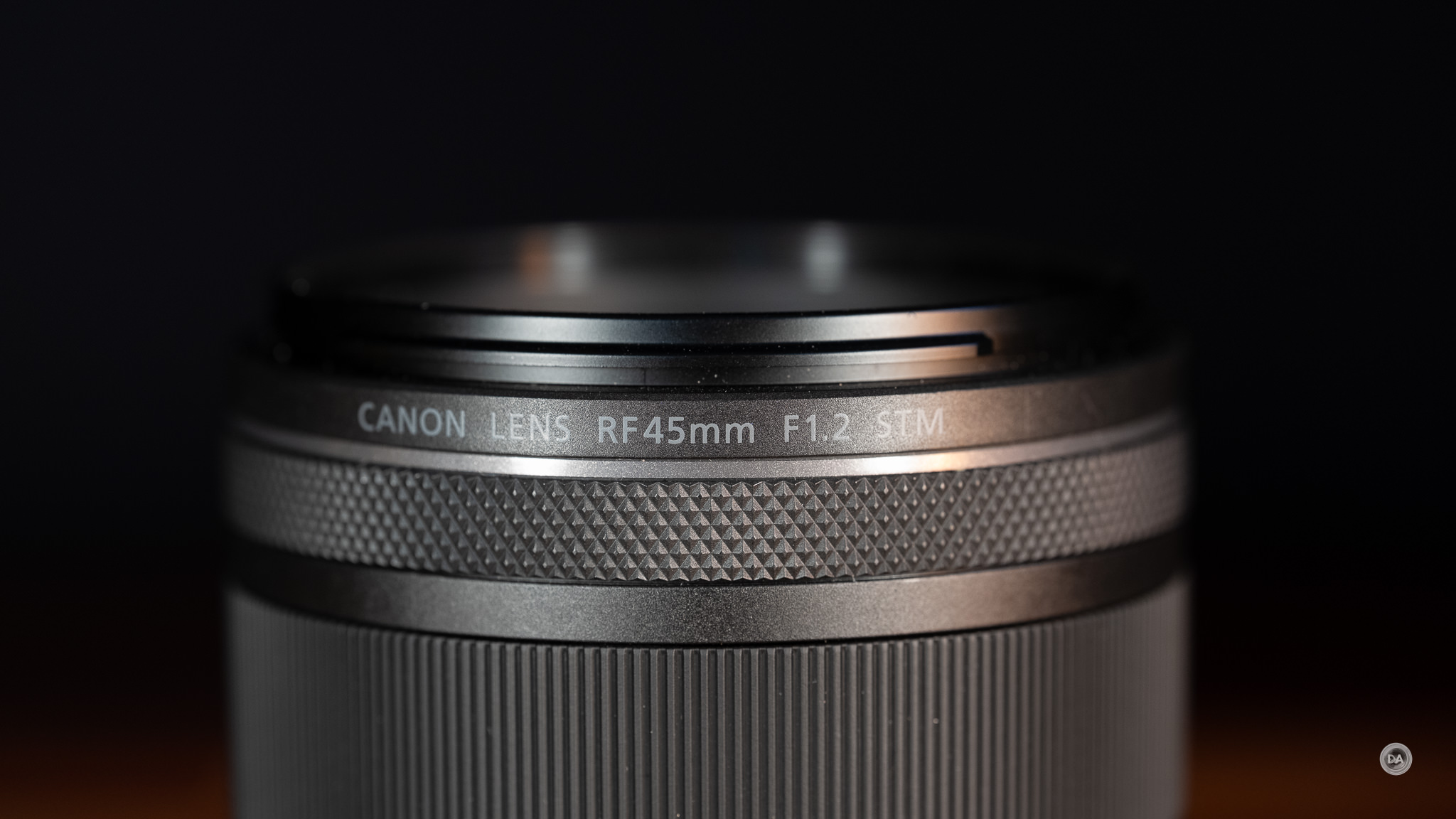
The manual focus ring has a decent damping and focuses nicely when making small focus changes. If you twist it faster to make bigger focus changes you will feel the drag of the focus motor, which takes you out of the focus experience a bit.
This lens looks nice on the camera, and, while very lightweight, doesn’t feel particularly plasticky or cheap.
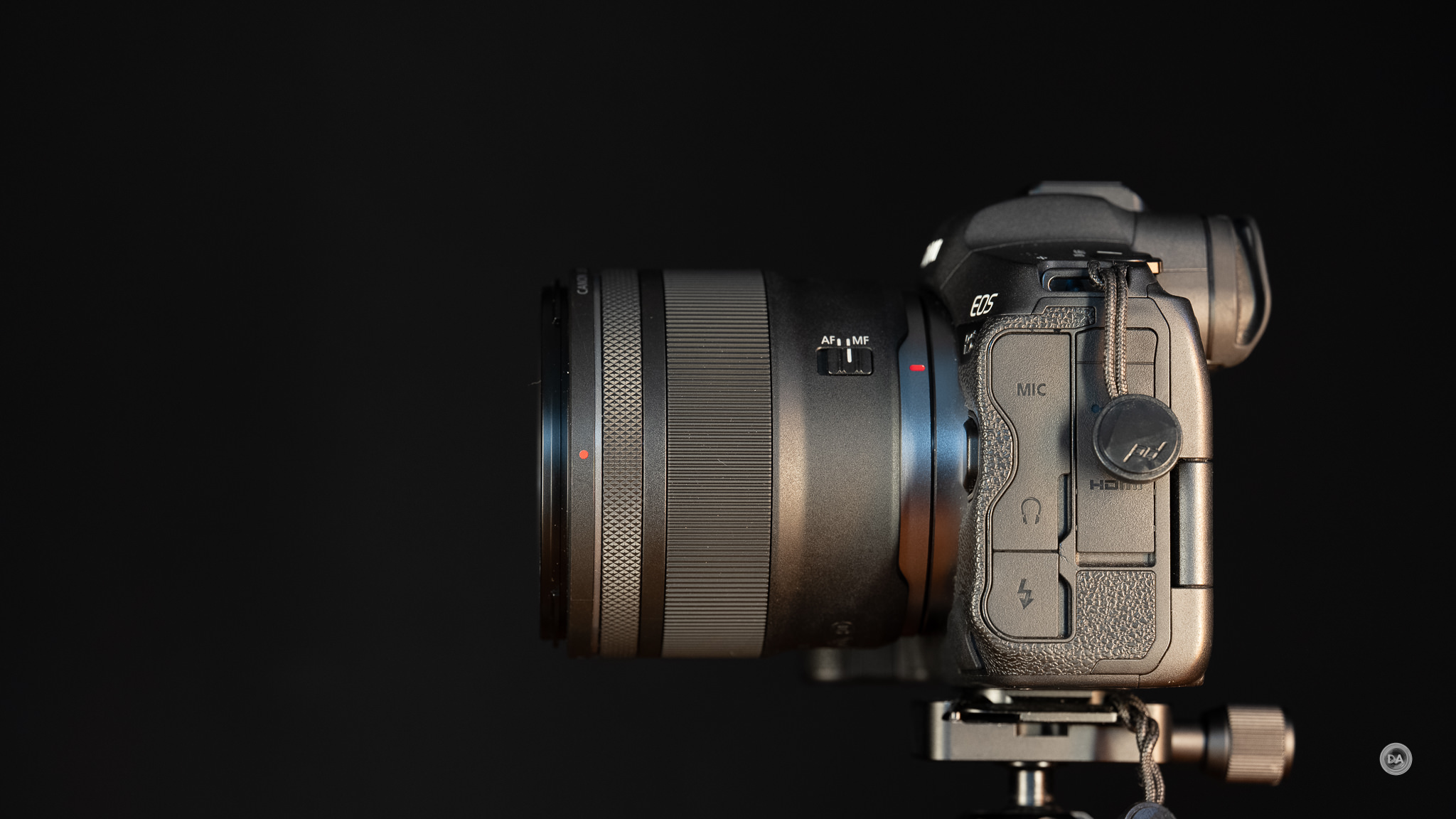
There is no lens-based stabilization so you’ll have to rely on camera based stabilization if your camera is so equipped.
The minimum focus distance is 45cm (1.5′), which unfortunately isn’t particularly close. That results in a rather low maximum magnification figure of 0.13x, well behind what the RF 50mm F1.8 STM can achieve (0.25x). Here’s what the magnification of the RF 45mm looks like:

Up close performance at F1.2 is fairly low contrast, though better results are available if you stop down.

I do wish this lens included a lens hood and at least a weather-sealing gasket, but Canon seems very firmly entrenched in their non-L policies. I really like the form factor of the RF 45mm F1.2, however, and it is small and light enough to suit even smaller bodies like the R8 or Canon’s APS-C cameras, where it will have 72mm equivalent focal length, which is unique enough to be interesting.
Autofocus Performance for Stills
Canon reserves their higher-performing Nano-USM and VCM focus motors for more expensive lenses, so the RF 45mm F1.2 gets a lowly STM. Stepping Motors vary in performance, but Canon’s have never impressed me as being particularly smooth or powerful. This one is unlikely to change my mind, as while it works reasonably well, it is neither particularly fast nor particularly smooth. I’ve read some reports of issues with focus shift, but I didn’t encounter that on my Canon EOS R5 test body though that camera will be six years old this summer. Focus was at the least accurate.

In my formal tests, I found that focus moved at medium speeds from close to distant subjects, though medium is better than it used to be. Focus happens fairly quickly, though you can see a brief pause as inertia builds, and then focus moves quickly. Focus noise isn’t loud, but does exist in the form of some whirring.
At closer distances the depth of field will be extremely shallow at F1.2, but you can see from the crop of the shot below that focus is accurately on Nala’s iris (the camera right eye was selected).


If you are wanting to capture fast moving action, a lens like the RF 50mm F1.4L VCM will probably be preferable to this one. If you are primarily doing every day photography or portraiture, however, there’s nothing wrong with this lens. It’s definitely not portrait season (most of my time with this lens was at a time when temperatures rarely rose above -20 C), but I did some solo work and found that the lens was able to deliver nicely focused portrait results. As we’ll see in a moment, the lens doesn’t always deliver high contrast at F1.2, but you can also see that focus is accurately locked on the (camera) left eye.


Stopping down to F2.8 shows better contrast, which also better shows off the accuracy of focus.


Out in the woods I had no problem focusing on narrow subjects.

The only focus related complaint I can come up with is one common to basically all platforms I test. Sometimes focus is reluctant to move to a foreground subject and remains stuck on the background. It’s a common frustration of mine, and I did run into it a bit while testing this lens. But it’s hard to knock this specific lens for that behavior when I see it with pretty much everything. Autofocus generally works well, though focus speed and motor smoothness is definitely levels below Canon’s best.
Video AF
As noted in the previous section, we have an STM focus motor, and the biggest problem with stepping motors is that they can show visible steps during video focus. Canon appears to have solved that problem by detuning focus speed during video transitions to allow focus to move smoothly…but not reactively. This is probably a good decision, as while focus pulls aren’t quick, they do have a fairly cinematic damping to them.
I found touch to focus pulls slow to react, but didn’t see visible steps during the pull itself. What’s more, while there is some obvious focus breathing, the slow pulls help mask them somewhat.
The lens did fine with tracking me as I approached the camera, but you could see the delayed reaction time in the slow pull to the background if I stepped out of frame and the rather slow process of reacquiring me when I stepped back in frame. It is very different from the highly reactive 50mm F1.4L VCM.
The slow responsiveness showed up in my hand test as well, with focus moving from my hand back to my face slow enough that sometimes the cycle wasn’t completed before my hand was moved way.
But focus was also nice and “sticky”, not jumping around, making this a solid choice if you value stability in your shots over quick reactions. Here’s a shot from one of my clips.

Footage looks good, with some character. The lens isn’t incredibly sharp at F1.2, but it has a look that some will like (kind of like having a mist filter attached).
When gliding along during video capture from one subject to another, I got mostly smooth results with logical transitions. Not perfect, but not bad.
Image Quality
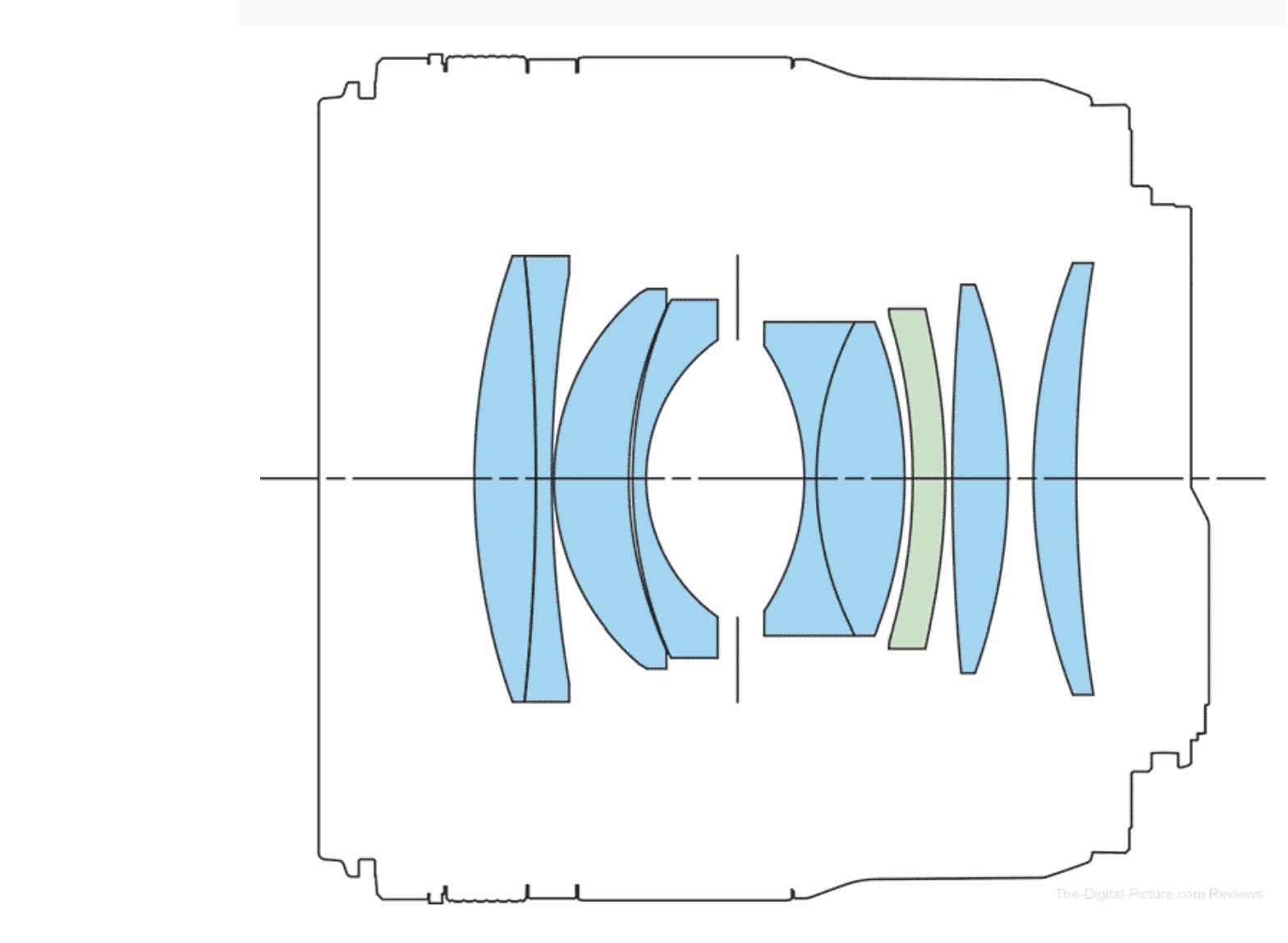
The RF 45mm F1.2L STM sports a rather simple optical design of 9 elements in 7 groups. This includes a single aspherical lens.
The MTF chart is, well, a bit scary, showing softness across the frame at F1.2 and some of the worse corners I’ve seen, well, ever.
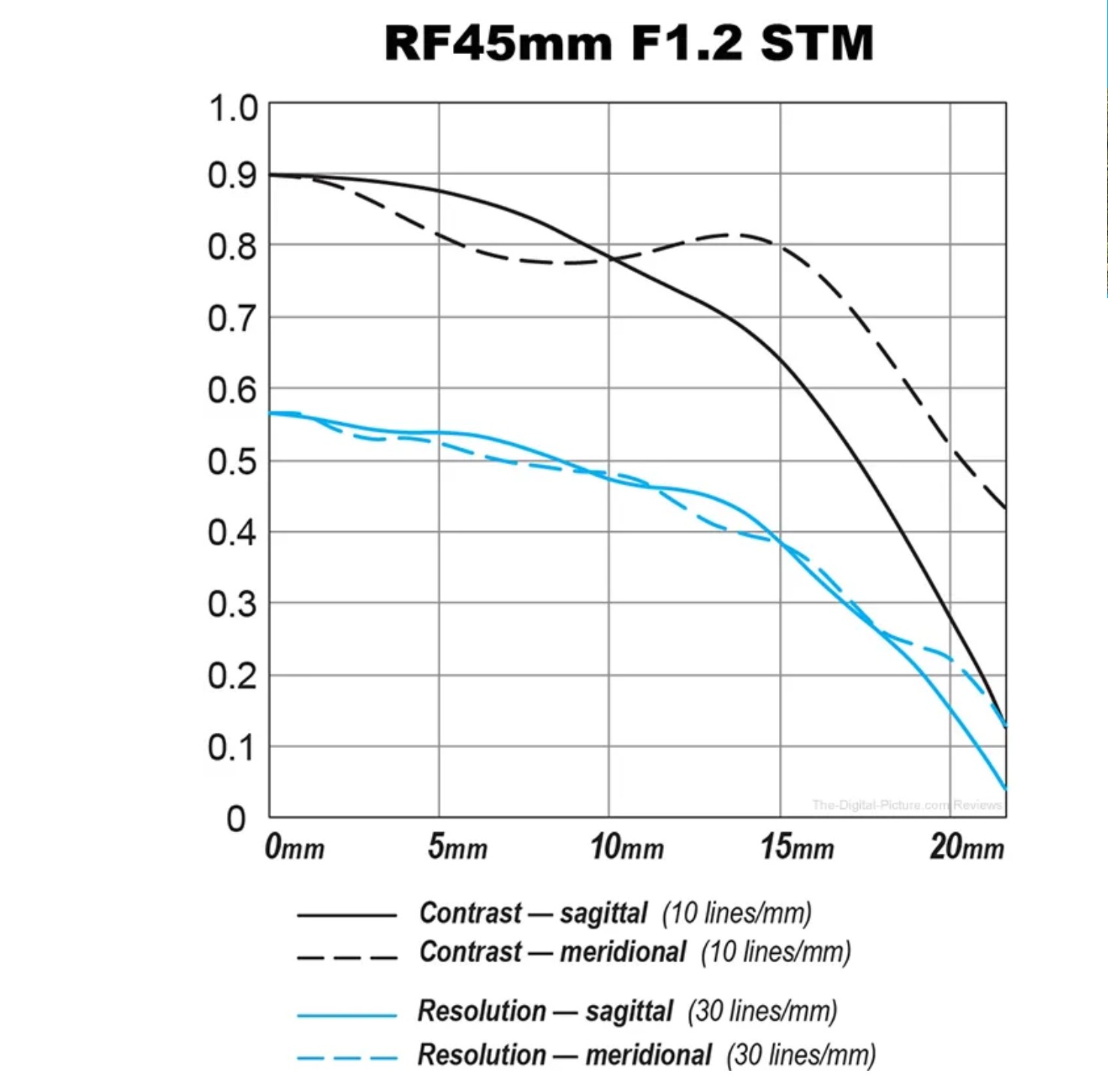
There is almost no image quality in the far corners, and, as we’ll see in a moment, the MTF doesn’t lie. I’m frankly a little surprised at that MTF, and, in this case, I’m not sure it tells the whole story, as the lens is usable at F1.2 in many situations. At the same time, however, this is a sense strong on character and far weaker on technical proficiency.

This is the kind of lens that needs to be used to its strengths, but that was also true of the Canon EF 50mm F1.2L. I think there will be some photographers who are equally able to really milk this lens for excellent images when they use it to its strengths.
…but it does have quite a number of weaknesses.
Canon is perhaps the worst offender among modern lens makers when it comes to relying on digital rather than optical corrections in their designs, as once again I am shocked by just how much distortion and vignette are present. This is a 45mm lens, not a 14mm lens, and yet the amount of barrel distortion is almost unfathomable. I’ve never seen a 40 or 45mm lens with some much distortion, and the vignette is equally heavy.

A manual correction of the distortion required a +21 to eliminate the barrel distortion. For perspective, the Samyang AF 45mm F1.8 for Sony E-mount released over six years ago needed just a +2 to correct an almost undetectable bit of barrel distortion. Vignette correction required me to max out the slider (+100). You can see that leaving that vignette uncorrected will radically change the look of an image.

Invariably people will challenge me over pointing out these flaws, asking, “What’s the big deal? As long as things look fine after correction, no harm done, right?“
The problem is that all electronic corrections come with a penalty. Correcting distortion has a negative impact on sharpness (and sometimes geometry, if the distortion is complex). Correcting vignette is like recovering shadows in that it often comes at the cost of additional noise and even some color banding.
While digital corrections can help with the vignette and distortion, that leaves a problem not so easily corrected. Longitudinal chromatic aberrations (LoCA) occur before and after the plane of focus, and this is the flaw I see the most of in real-world photos and videos.
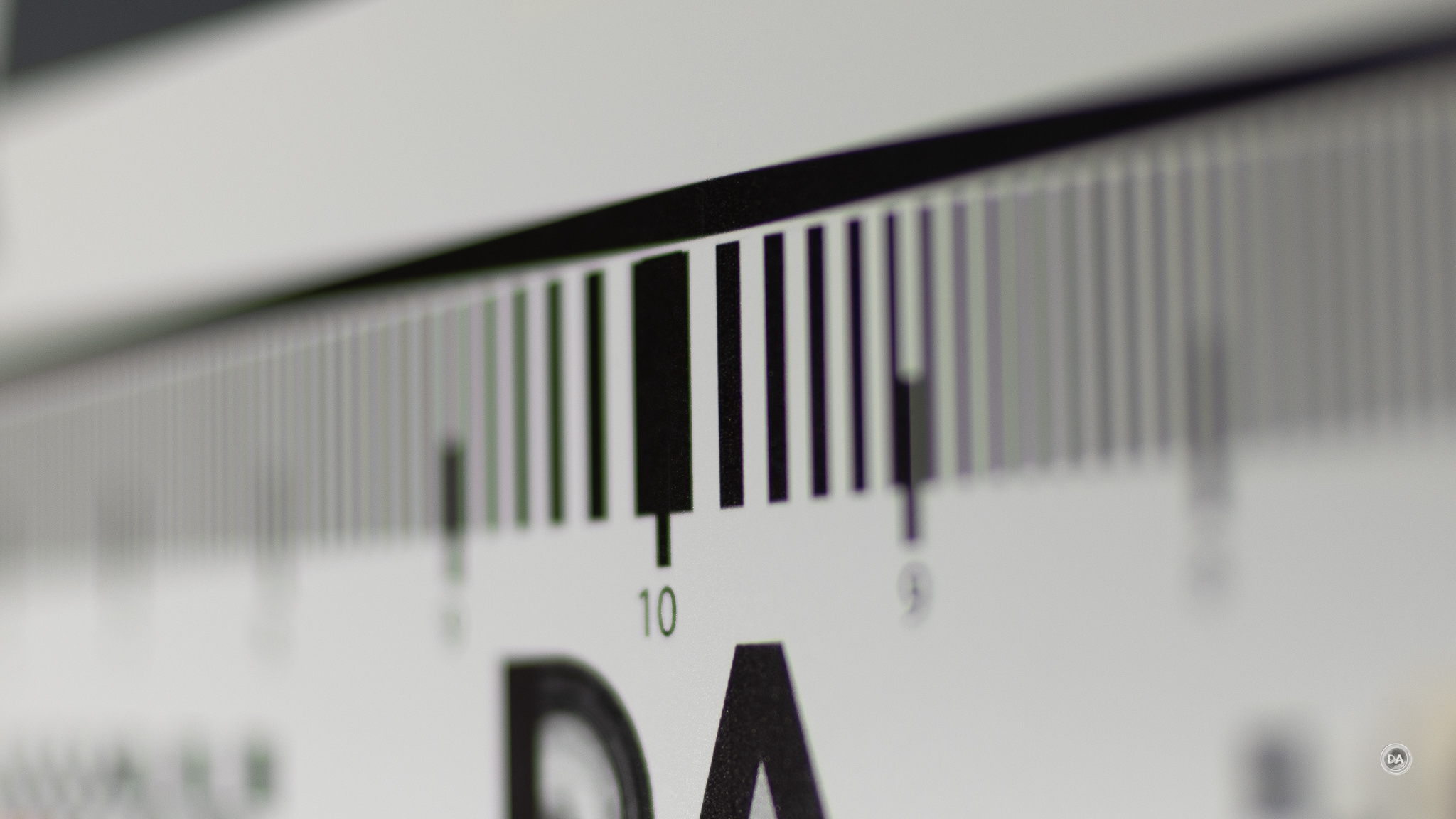
Move out to high-contrast, real-world situations, and fringing is even worse.


It’s very obvious on my Dad’s old SLR that I use for this test.
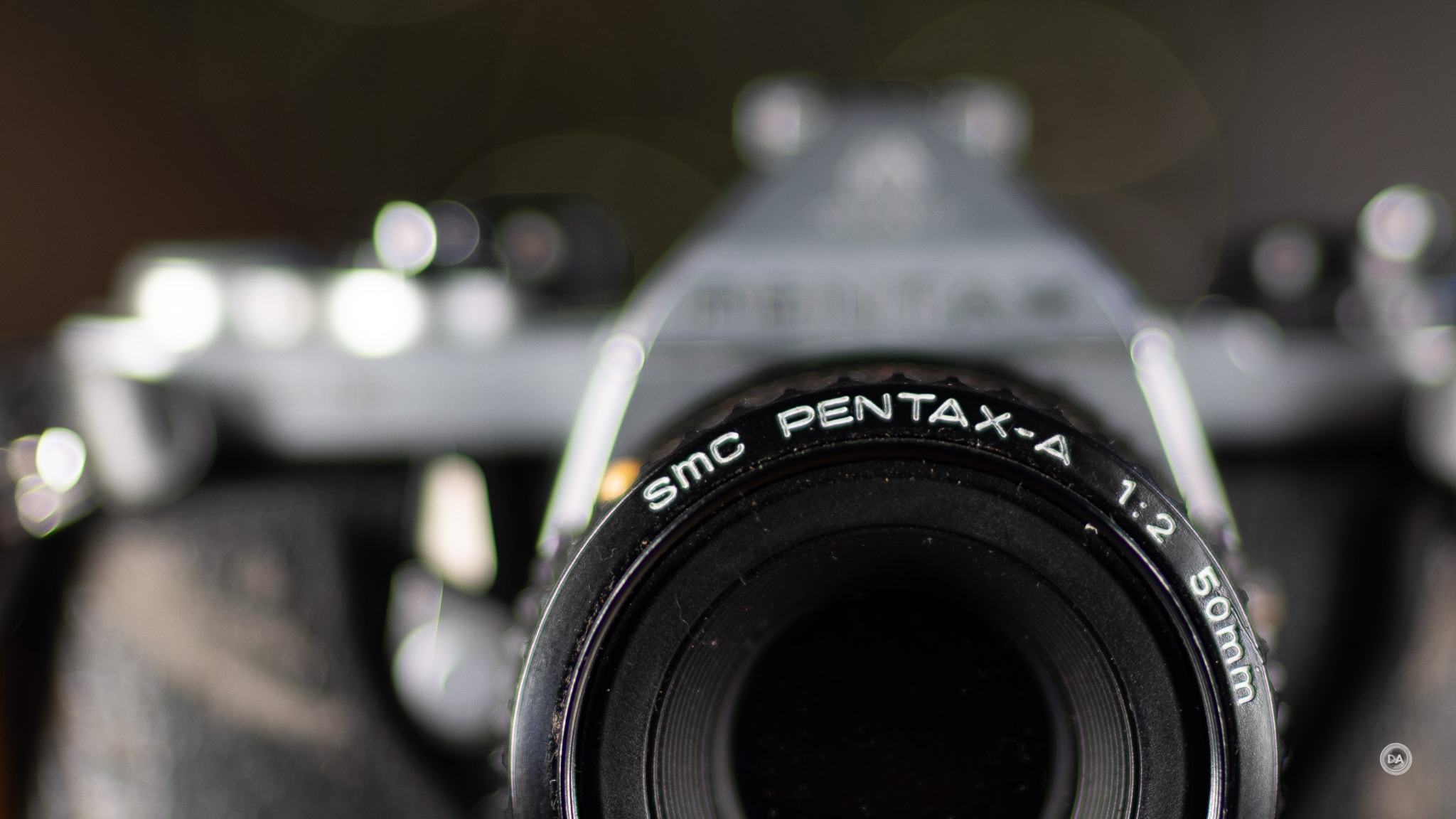
There is also some lateral chromatic aberrations (LaCA) near the edge of the frame in the transitions from black to white.
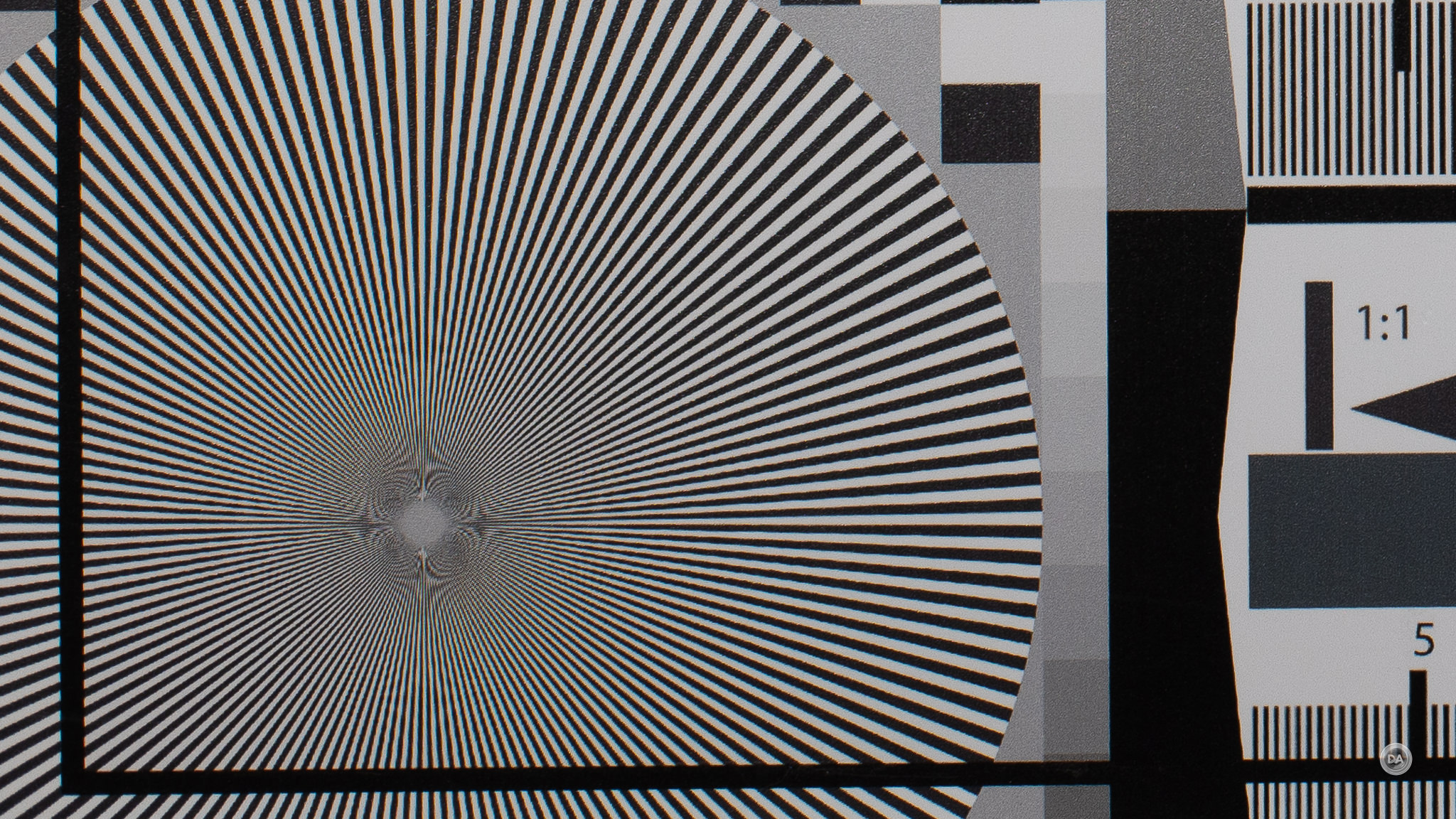
Oof! The RF 45mm F1.2 STM has failed basically all of my tests to this point.
And the chart testing of sharpness and contrast are not likely to help. Here’s a look at the chart that the crops will come from.

Here are the roughly 200% F1.2 crops from across the frame. This is on the 45MP Canon EOS R5:



Contrast is not exceptional here, and the corners are obviously barely resolving the full frame image circle at all.
But, for some real world perspective, most images shot at F1.2 are not reliant on sharp corners, and I had moments where I felt like images at F1.2 looked pretty good.


Those liking a slightly more “dreamy” look to portraits won’t mind what this lens does when shooting at wide apertures.

Are things better at F1.4? Not really. There is very slightly more contrast, but nothing meaningful. There’s a much more obvious improvement to contrast and detail at F2.

Don’t expect the corners to show similar sharpness until around F5.6.

At landscape apertures (F5.6-F8), the lens is sharp from corners to corners.



This is very much a classic optical design that reminds me of a lens like the Voigtländer Nokton 40mm F1.2.
Things stay that sharp through F8, with a little drop-off at F11, and slightly more softening due to diffraction at F16, which is minimum aperture. Still, the lens is sharper and higher contrast at F16 than it is at F1.2-F1.8.

The RF 45mm does have one advantage over the 50mm F1.4L VCM, however, and that is in the smoothness of the specular highlights. The 50mm shows some busyness in the bokeh balls, but the 45mm VCM is a little smoother.

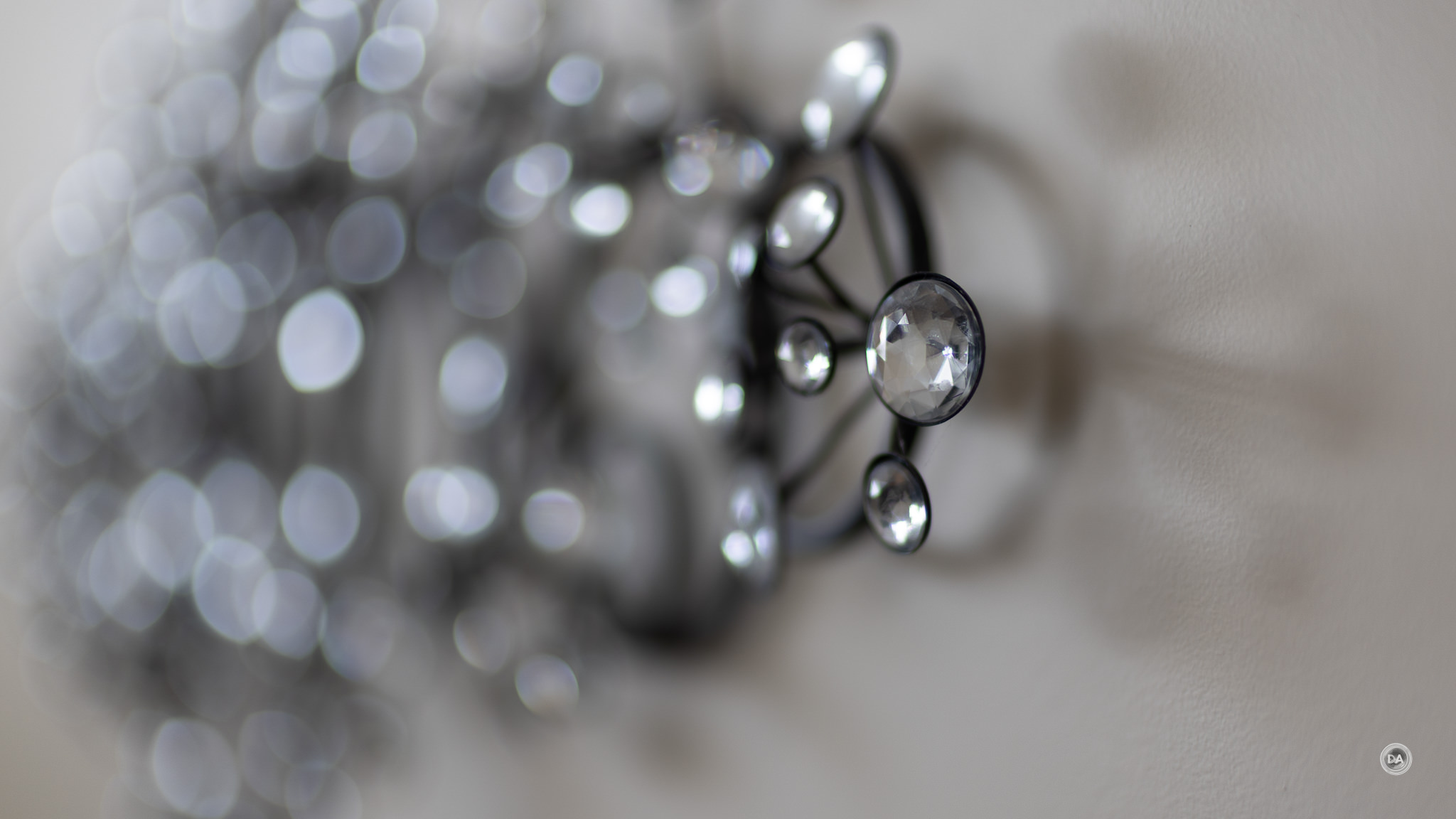
The bokeh quality is generally fairly smooth, though it doesn’t have quite the high end “melting away” look that some premium lenses show.

The lower contrast helps the overall softness of the bokeh, though I do see a bit more hard edges than I would prefer.

Get some depth in the scene, and the bokeh is lovely.

There’s no question that this lens will produce much nicer bokeh than a lens like the RF 50mm F1.8 STM, however, and so represents a nice upgrade for those looking for a little more exotic rendering.

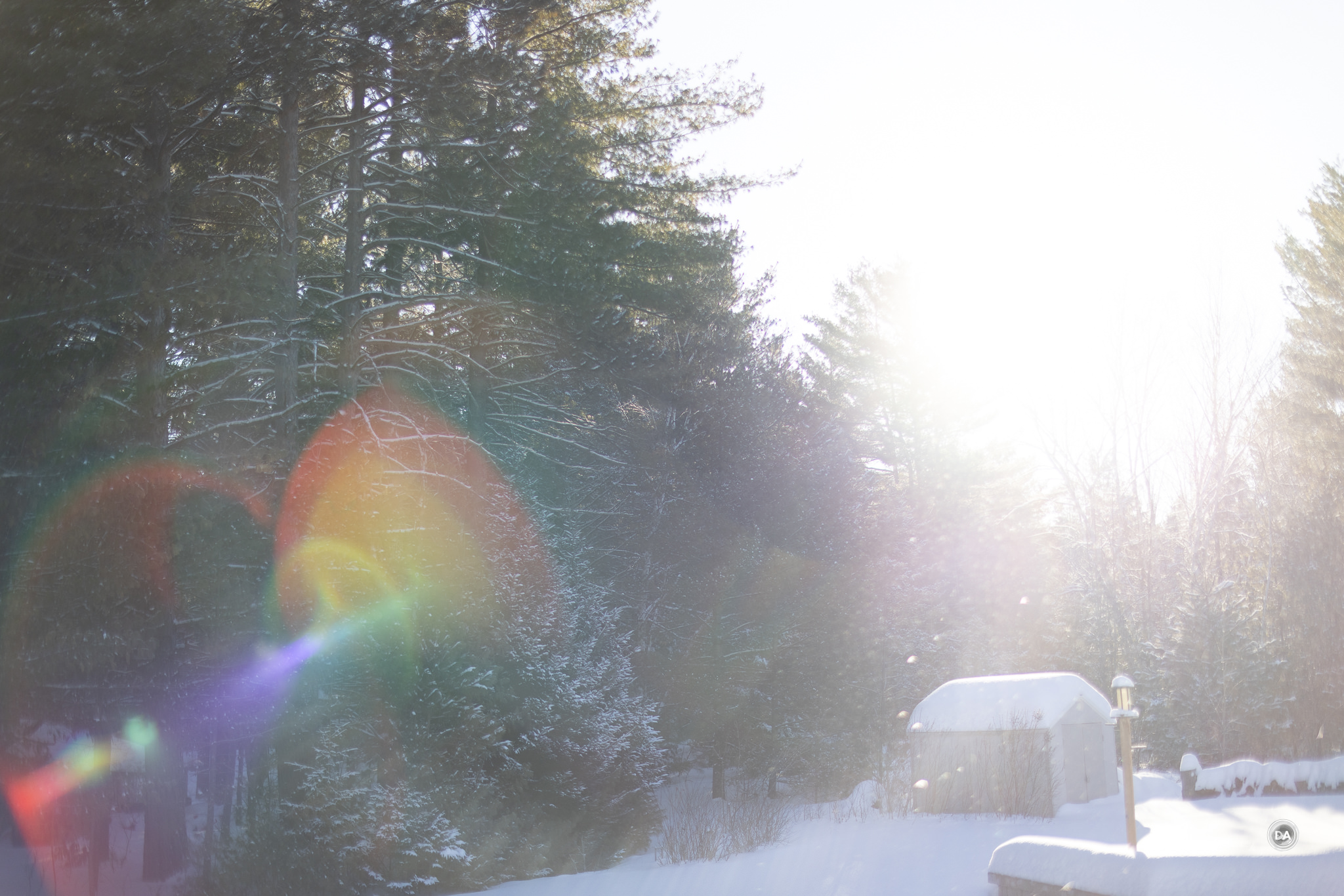
As noted previously, the lens does not ship with a lens hood, so that means that many will be using it without a hood…which is a problem, as this lens is certainly not immune to flare. I found a number of flare artifacts when bright light sources were in the frame, pointing to less than stellar coatings.


Do yourself a favor and never, ever use it for shooting astrophotography. Conditions were extremely poor for me (no visibility of the sky at night at all), but I’ve seen the results from others and they are appalling.
As noted, this is not a lens that performs well for standard tests or pixel-peeping, but that doesn’t mean it should be dismissed. This is a great fit for those of you who look at images holistically rather than at a pixel level. It produces nice looking images that are not technically perfect but pleasing nonetheless. Here’s a mini-gallery of images for you to enjoy.
















Conclusion
In conclusion, the Canon RF 45mm F1.2 STM is an interesting addition to Canon’s lineup. The list of strengths and weakness are probably equal, as while the lens is small, light, and bright, it also has many optical shortcomings and falls prey of Canon’s policies that restrict a lens like this from receiving things like weather sealing or even a standard included lens hood.

But it also opens up the extremely interesting world of ultra-bright photography to many more photographers than the extremely expensive L-series options. I feel like the lens does have some character, and I suspect it will gain a cult following similar to that enjoyed by the EF 50mm F1.2L.

The RF 45mm F1.2 is obviously very unique on the Canon platform. Never before has Canon made a lens quite like this, and I love to see it. It’s a deeply flawed lens in one way, but less so than the extremely expensive EF 50mm F1.0L. That lens had many more optical flaws and yet came with an MSRP of $2500 USD…back in 1989 (so closer to $6500 in today’s dollars). That makes the $470 of the RF 45mm feel like a pretty solid bargain. If you like some character in your lenses, and aren’t looking for clinical perfection, then the RF 45mm F1.2 STM might just be your new favorite lens.

Pros:
- Affordability: Priced at $469, it’s significantly cheaper than other high-end RF lenses, making it accessible for many photographers.
- Compact Design: Lightweight (346g) and compact (75mm length), ideal for travel and street photography.
- Bright Aperture: The f/1.2 maximum aperture allows for excellent low-light performance and creative depth of field.
- Control Ring: Customizable control ring can be assigned various functions for added versatility.
- Decent Bokeh: Produces generally smooth bokeh, enhancing the quality of portrait shots.
- Versatile Focal Length: 45mm focal length works well for a variety of photography styles, including portraits and general purpose.
- Decent Build Quality: Although made from engineered plastics, it feels well-constructed with a metal mount.
Cons:
- Optical Flaws: Significant barrel distortion and chromatic aberration impact image quality.
- Lack of Weather Sealing: Absence of weather sealing may limit usage in adverse conditions.
- No Lens Hood Included: Additional cost for the lens hood may deter some buyers.
- Autofocus Limitations: STM motor is not as fast or smooth as higher-end Canon autofocus systems, making it less suitable for action shots.
- Corner Sharpness Issues: Soft corners and low contrast at f/1.2 can detract from image fidelity.
- Low Maximum Magnification: Minimum focus distance of 45cm results in limited close-up capabilities.
- Digital Corrections Required: Heavy reliance on digital corrections for distortion and vignette can impact image sharpness and quality.
_________________________________________________________________________
GEAR USED:
Purchase the Canon RF 45mm F1.2 STM @ Camera Canada | B&H Photo | Adorama | Amazon | Amazon Canada | Amazon UK | Amazon Germany
Buy the Canon ES-73B Lens Hood @ B&H Photo
Purchase a Canon EOS R6 MKIII @ B&H Photo | Amazon | Camera Canada | Amazon Canada | Amazon UK | Amazon Germany
Purchase a Canon EOS R5 @ B&H Photo | Amazon | Camera Canada | Amazon Canada | Amazon UK | Amazon Germany | Ebay
_________________________________________________________________
Want to support this channel? Use these affiliate links to shop at: B&H Photo | Amazon | Adorama | Camera Canada | Amazon Canada | Amazon UK | Ebay | Make a donation via Paypal
Buy DA Merchandise https://bit.ly/TWIMerch

Keywords: Canon RF 45mm F1.2, STM, 1.2, f/1.2, F1.2, 45mm, F2.8, RF 45mm Review, Canon R6III, Canon R6 Mark III, Canon EOS R6 Mark III, #eosr6iii, Canon, Canon EOS R5, EOS, R, R5, Review, Canon EOS R6 MK III, Canon EOS R6 II, EOS R6 III Review, RF, mirrorless, Canon EOS R7 Review, Sports, Tracking, Dustin Abbott, Real World, Comparison, Handling, Focus, Portraits, Resolution, High ISO, Image Quality, Sample Images, Photography, 45MP, 24MP, 32MP, Canon, #letthelightin, #DA, #EOSR5, #Canon
Related posts:
 Canon RF 50mm F1.4L VCM Review
 Canon EOS R6 Mark III Review
 Tamron 11-20mm F2.8 RXD for Canon RF Review
 Tamron RF 11-20mm F2.8 RXD Gallery
 Canon RF 24-50mm F4.5-6.3 IS STM Review
 Canon RF 24-50mm F4.5-6.3 IS Gallery
 Canon RF 35mm F1.4L VCM Review
 Canon RF 35mm F1.4L VCM Gallery
 Canon RF-S 18-45mm F4.5-6.3 IS STM Review
 Canon RF-S 18-45mm F4.5-6.3 IS Gallery