


Last year I reviewed a beautiful new little APS-C prime from Sigma in the form of the 12mm F1.4 DC. I really liked that lens and gave it a positive review. I had noted that Sigma hadn’t gone any wider than 16mm previously with their APS-C prime lenses, and that 16mm is going on 8 years old. Sigma is continuing to flesh out their wide angle primes for APS-C with anther little sweetheart in the form of the 15mm F1.4 DC | Contemporary, a great alternative to the 12mm for those who don’t want to go quite that wide. I’m reviewing the lens on Sony E-mount today, but it will also be available for Fuji X-mount and Canon RF mount. On Sony, the new 15mm DC will go directly head-to-head with Sony’s own 15mm F1.4 G, and with that lens carrying an MSRP of nearly $950, the $579 USD price ($699.95 CDN) of the new Sigma will make it a very, very attractive alternative. Is this the wide angle prime to choose on these platforms? Let’s dive in and find out!
Follow Me @ YouTube | Patreon | Instagram | Facebook | DA Merchandise | Flickr | 500px | X
Thanks to Sigma Canada (Gentec) for sending me a review loaner of this lens. As always, this is a completely independent review. *The tests and most of the photos that I share as a part of my review cycle have been done with the APS-C mode of my Sony a7RV.
__________________________________________________________________________________________________
AI SUMMARY: The Sigma 15mm F1.4 DC | Contemporary lens is an impressive addition to Sigma’s APS-C lineup, offering an enticing alternative to competitors like Sony’s 15mm F1.4 G at a more affordable price point of $579. With a versatile focal length suitable for street photography, landscapes, and portraits, it also features a fast aperture for enhanced creative flexibility. The build quality has improved with better weather sealing and a slightly more upscale design, making it competitive in the market. Despite some issues with vignette, distortion, and fringing, overall optical performance remains strong, making this lens a valuable choice for various mirrorless platforms.
Strengths:
- Compact and lightweight design, enhancing portability.
- Fast F1.4 maximum aperture for versatile shooting in various lighting conditions.
- Competitive pricing compared to first-party alternatives, providing excellent value.
- Improved build quality with weather sealing and a smooth manual focus mechanism.
Weaknesses:
- More vignette and distortion than the previous Sigma 12mm F1.4.
- Slightly less sharpness compared to the wider 12mm lens.
- Some chromatic aberrations noted, particularly at close distances.
- Reliance on digital corrections for optical flaws can be a concern in certain scenarios.
_________________________________________________________________________________________________
Here’s a look at the DC (APS-C) lineup on mirrorless thus far.
- Sigma 12mm F1.4
- Sigma 15mm F1.4
- Sigma 16mm F1.4
- Sigma 23mm F1.4
- Sigma 30mm F1.4
- Sigma 56mm F1.4
- Sigma 10-18mm F2.8
- Sigma 18-50mm F2.8
- Sigma 16-300mm F3.5-6.7 DC OS
- Sigma 17-40mm F1.8
Sigma dropped the DN designation from their lenses in 2025 for the simple reason that DN was their means of designating mirrorless lens designs, which has become irrelevant now that all development is on mirrorless. The earlier lenses in the series came exclusively to Sony E-mount, and I felt like that lead to some stagnation. There wasn’t a lot of development in the first 10 years (the 30mm F1.4 was released in 2016!), with just 3 primes and one zoom, but as first Fuji and then Canon (and to a lesser degree Nikon) have opened up their platforms to APS-C third party lenses, Sigma has started to bring us new options more frequently, with this being the fifth APS-C release in the past couple of years.
The 15mm focal length must be multiplied by the crop factor of the cameras that it is designed for, which means that on Sony, Fuji, and (potentially) Nikon, the 1.5x crop factor of their APS-C sensors means an 22.5mm full frame equivalent. On Canon RF, the 1.6x crop factor means a classic 24mm focal length. This is a very useful focal length on either platform, nearly perfect for street, landscapes, and environmental portraiture. The fast maximum aperture broadly expands its usefulness, but the compact size means that you pay very little penalty for having a brighter lens.
The 15mm DC also adds reasonable close focus capabilities, which combined with that bright F1.4 aperture, allows for some shallow depth of field shots.

Combine all of this with another strong optical performance from Sigma and you have very little reason to look as cranky as Ferrari does here.

Let’s explore the performance in great detail.
Build and Handling
As noted, this lens has moved Sigma’s lineup a bit more upscale in terms of the build. There is the aperture ring, obviously, but Sigma seems to have increased the degree of weather sealing as well, saying that this lens has “dust and splash-resistant structure”, whereas previously there was just a gasket at the lens mount on some of the lenses. Sigma supplied a diagram showing the placement of internal seals.
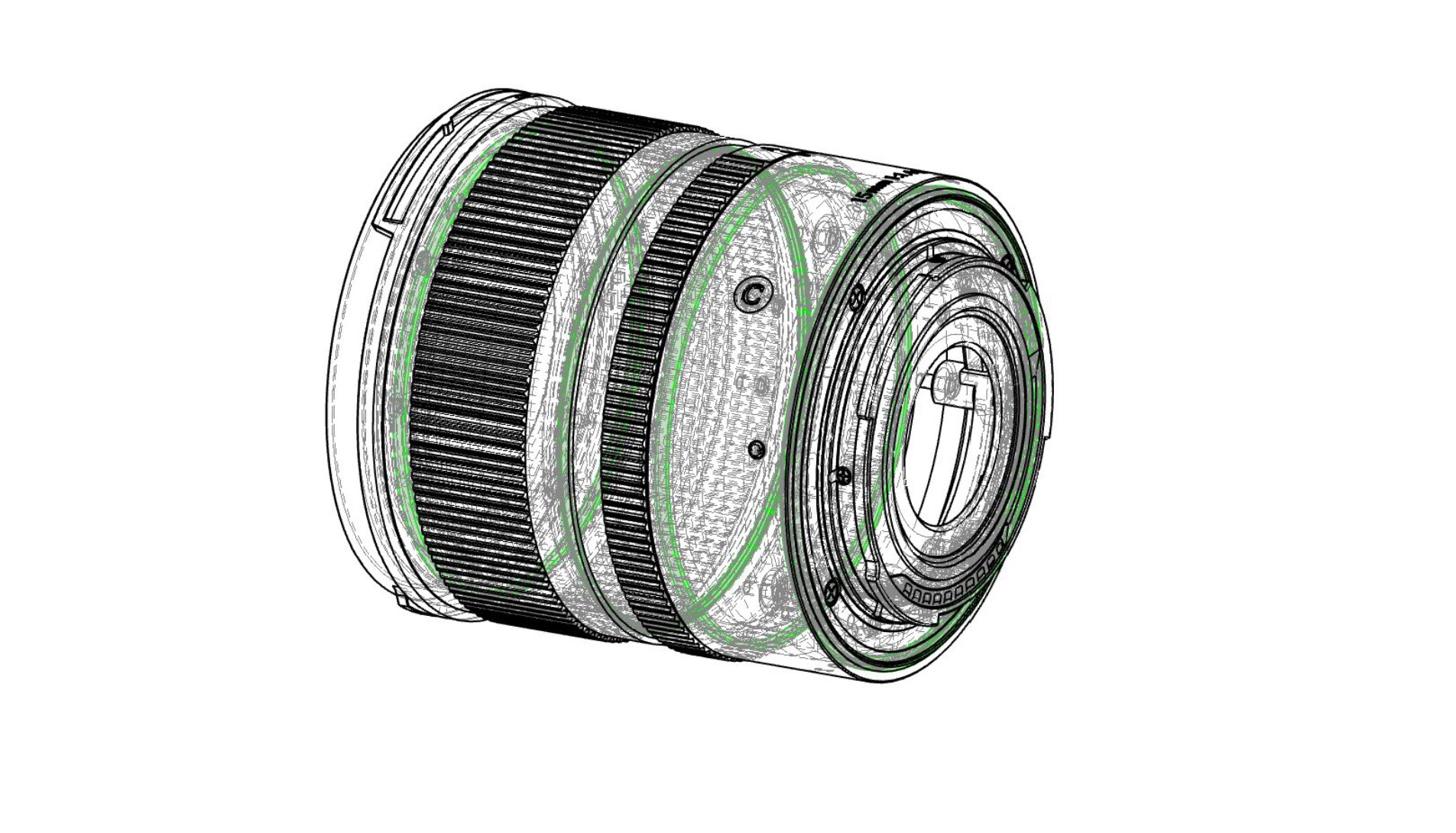
That definitely positions the 15mm DC to go head-to-head with Sony’s premium little 15mm F1.4 G.
That’s also true when it comes to size, as the new Sigma is actually slightly more compact than the Sony while weighing an almost identical amount.
The compact size of the 15mm F1.4 makes the older 16mm F1.4 look pretty huge by comparison.
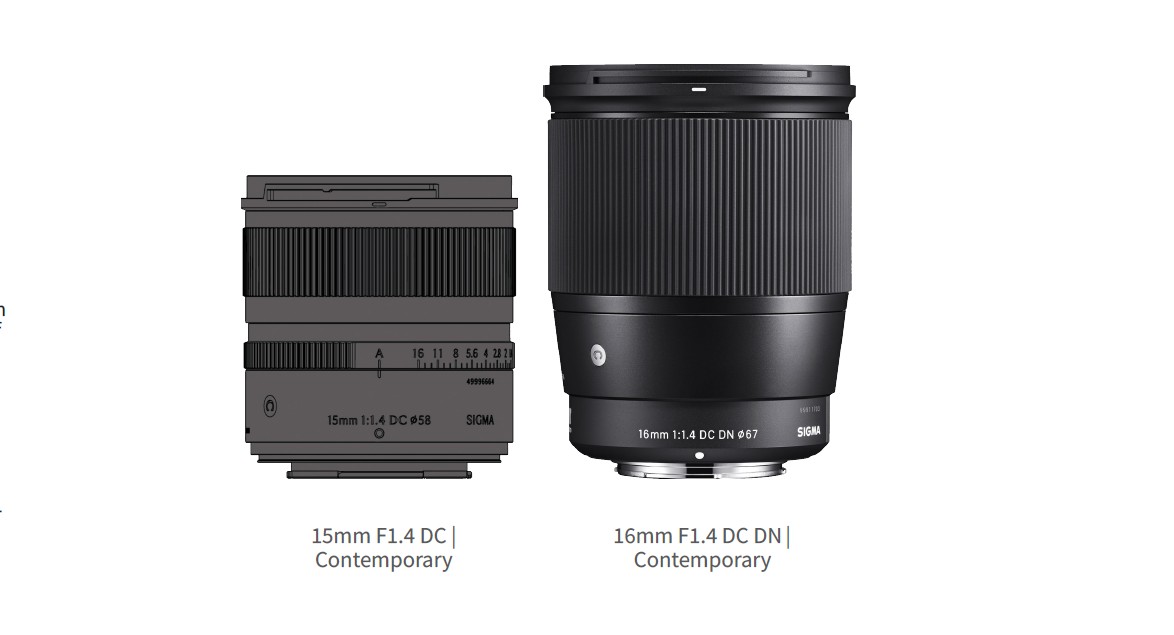
The 15mm F1.4 DC is slightly smaller than last year’s 12mm F1.4 DC, measuring in at 64mm (2.5″) in diameter and 64.8mm (2.6″) in length. That compares to 68mm (2.7”) in diameter and 69.4mm in length (2.7”) for the 12mm, and 66.6mm x 69.5mm for the Sony G. The front filter thread size is 58mm. The Fuji X-mount version is roughly the same size, while the Canon RF is wider in diameter (69mm to accommodate the larger RF mount) but shorter in length (62.8mm).
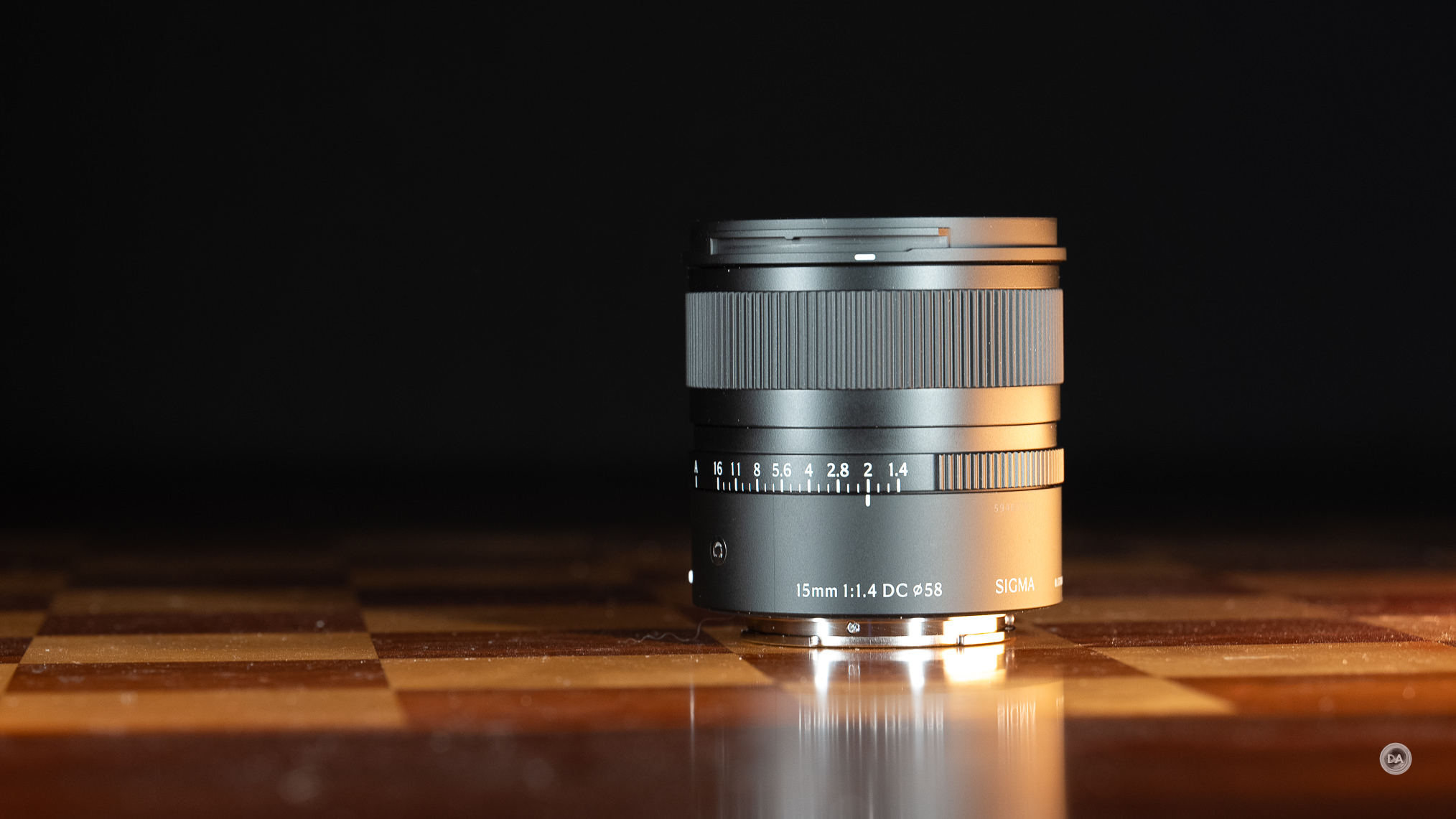
The weight for the E-mount version is 220g (7.8oz), with the X-mount version weighing 225g and the RF mount 240g due to the larger diameter. It looks pretty compact on my camera.

The primary alternatives on Sony include the aforementioned Sony, while the Viltrox AF 15mm F1.7 is available for both Sony and Fuji. Fuji has a 14mm F2.8, though that that lens has both a much smaller maximum aperture and a much bigger price ($999), making it less appealing relative to the Sigma.
The Sigma 15mm F1.4 DC seems to have a winning combination of price and performance.
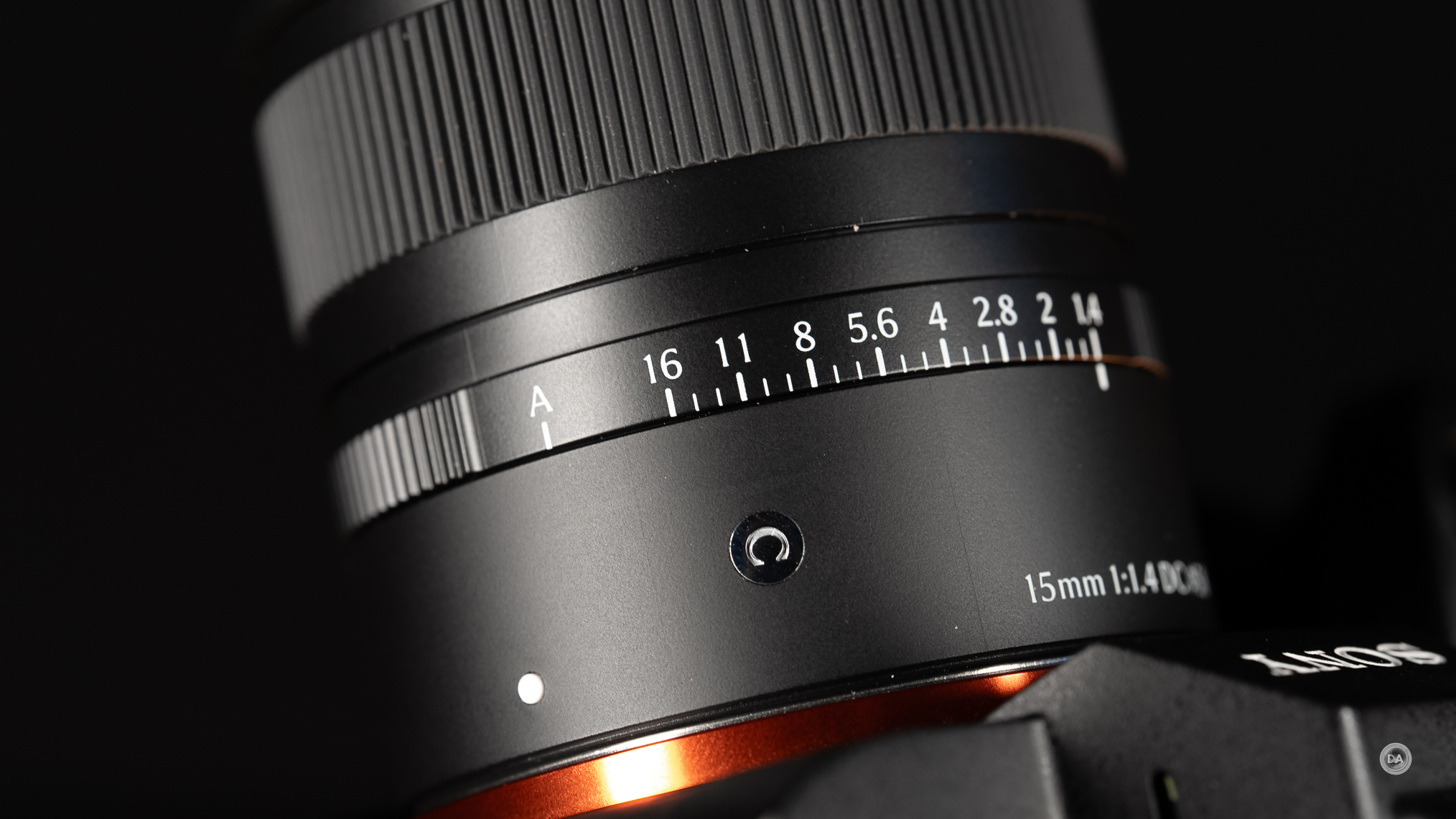
Sigma’s “Contemporary” branding is becoming even less meaningful as they move lenses like this upscale. It still doesn’t have as many features or as nice of build as the ART series, but that gap is narrower now.
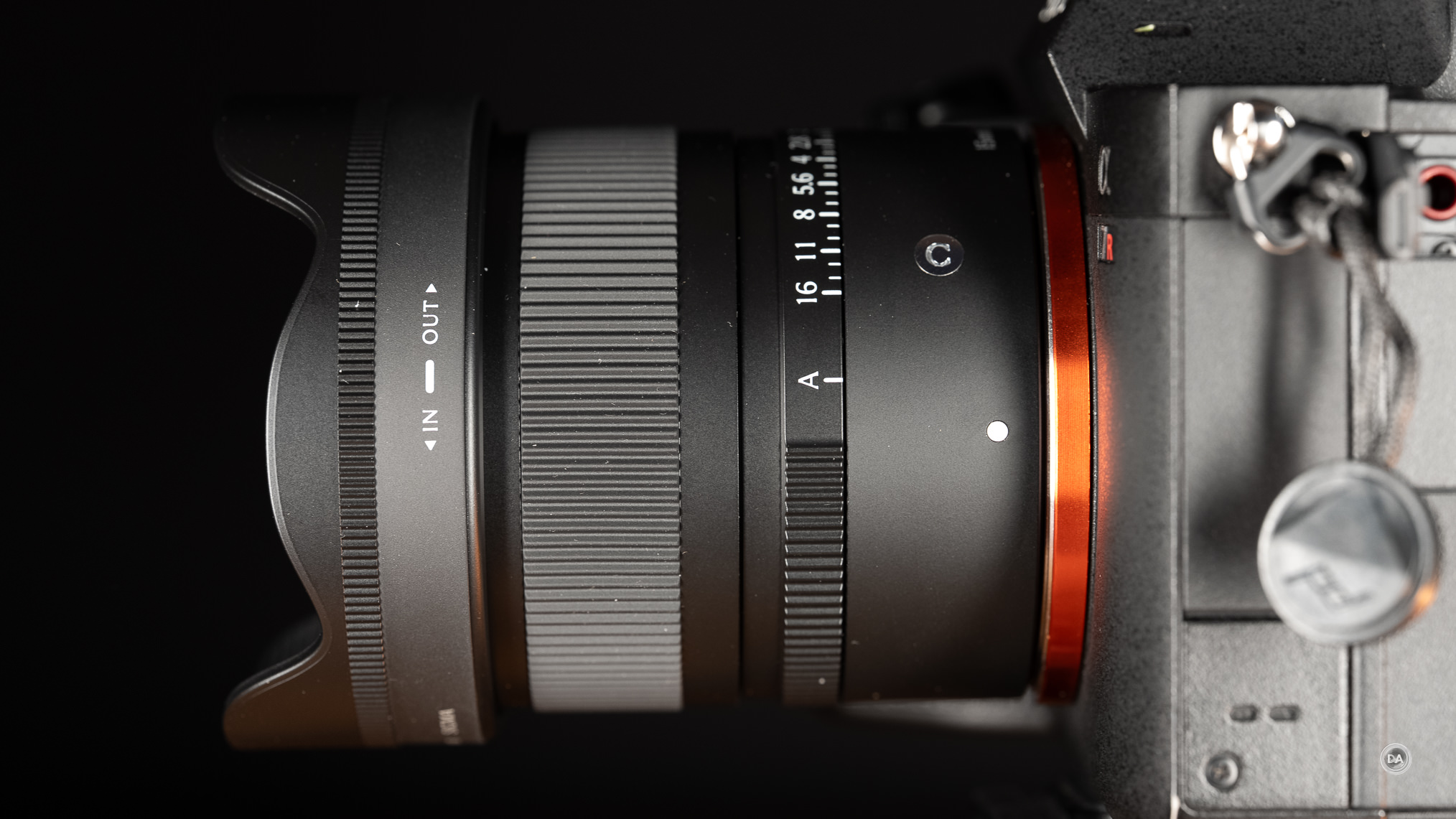
Like the 12mm, the 15mm F1.4 DC does feature an aperture ring on the Sony E and Fuji X versions. The Canon RF version will have a control ring in place of the traditional aperture ring. This is a nice move by Sigma as it makes the lens a more natural fit on all platforms. On Fuji, this is the equivalent of being an “R WR” lens. There’s a bit of resistance at F16 before moving into the A (Automatic space), though I would prefer that to be a bit heavier.

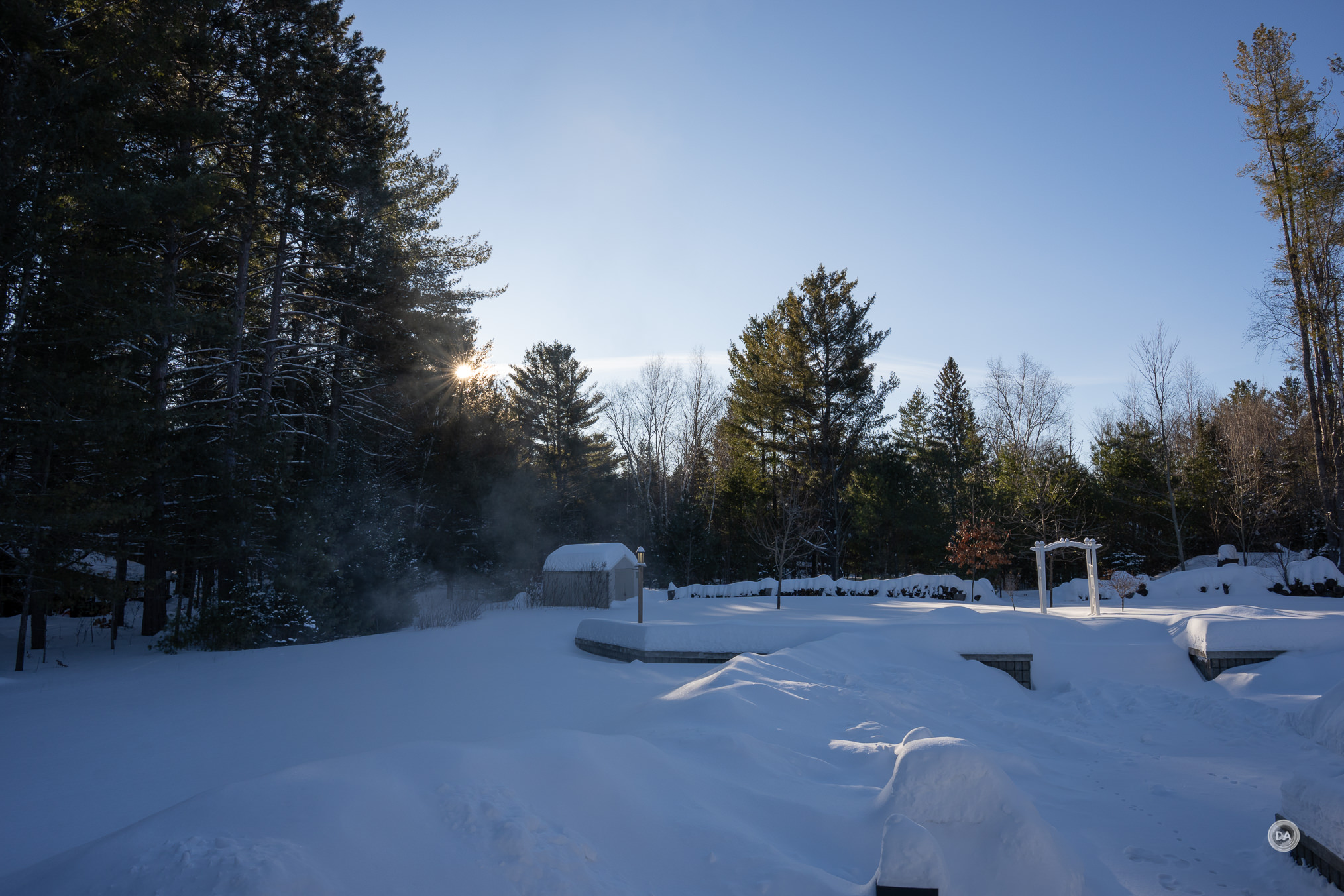
The aperture iris has nine rounded blades, but you can still get a very nice looking sunstar with the lens stopped down.
The manual focus ring has a nice level of damping and moves smoothly. Like other lenses designed for mirrorless cameras, this is a focus-by-wire system in which input from the focus ring is routed through the focus motor. It is actually the focus motor that moves the elements, making manual focus more of an simulation than a direct movement of the elements. Some lenses pull this off better than others, and the Sigma 15mm F1.4 is one of them. I will note that the lens will automatically alert the body to magnify the image when you are manually focusing, which is a big help in visually confirming focus.
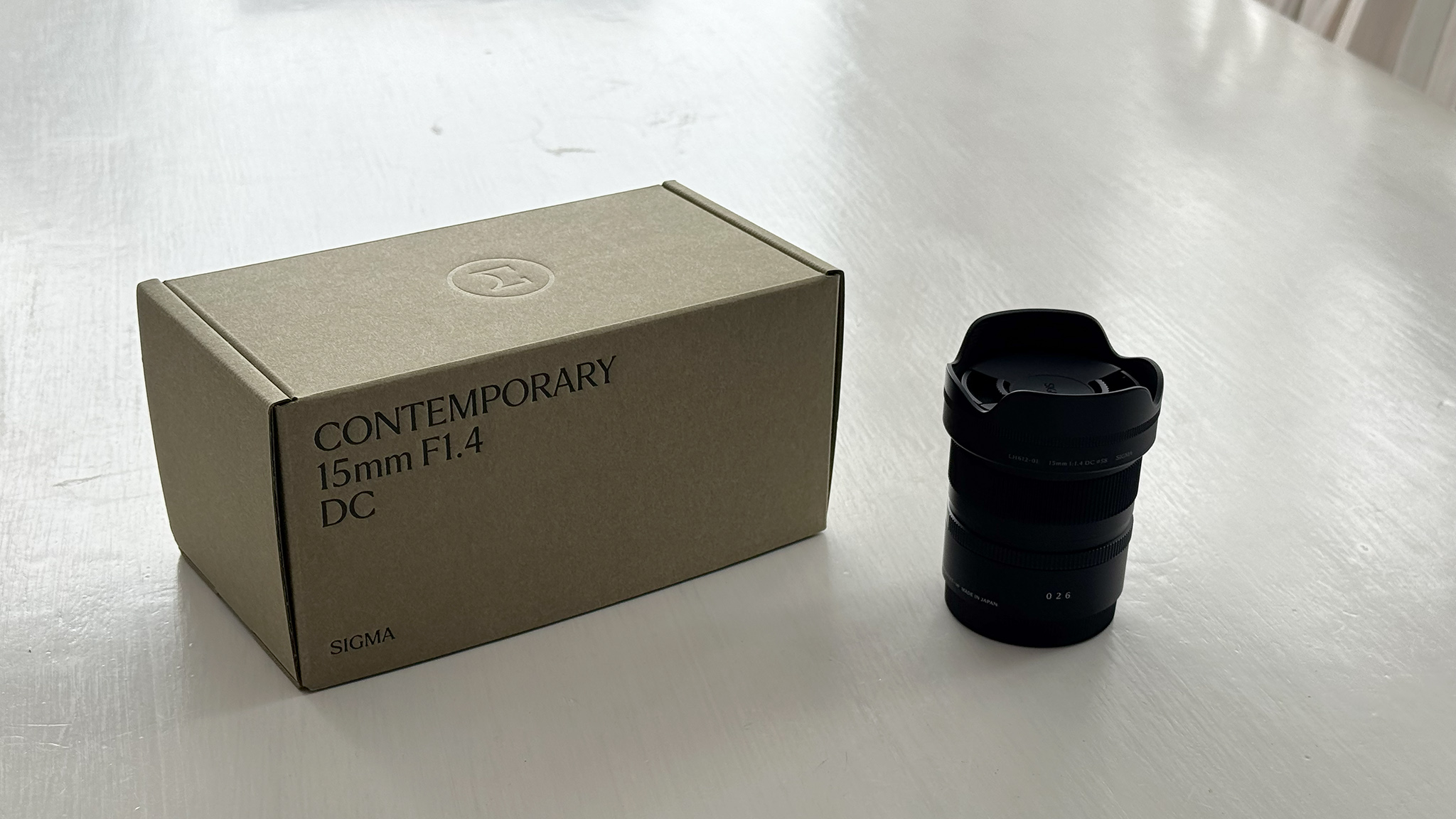
I recently complained about Sony’s eco-friendly packaging on my uber-expensive α1 II, but while Sigma is also doing eco-packaging, it has as a retro style that I actually like.
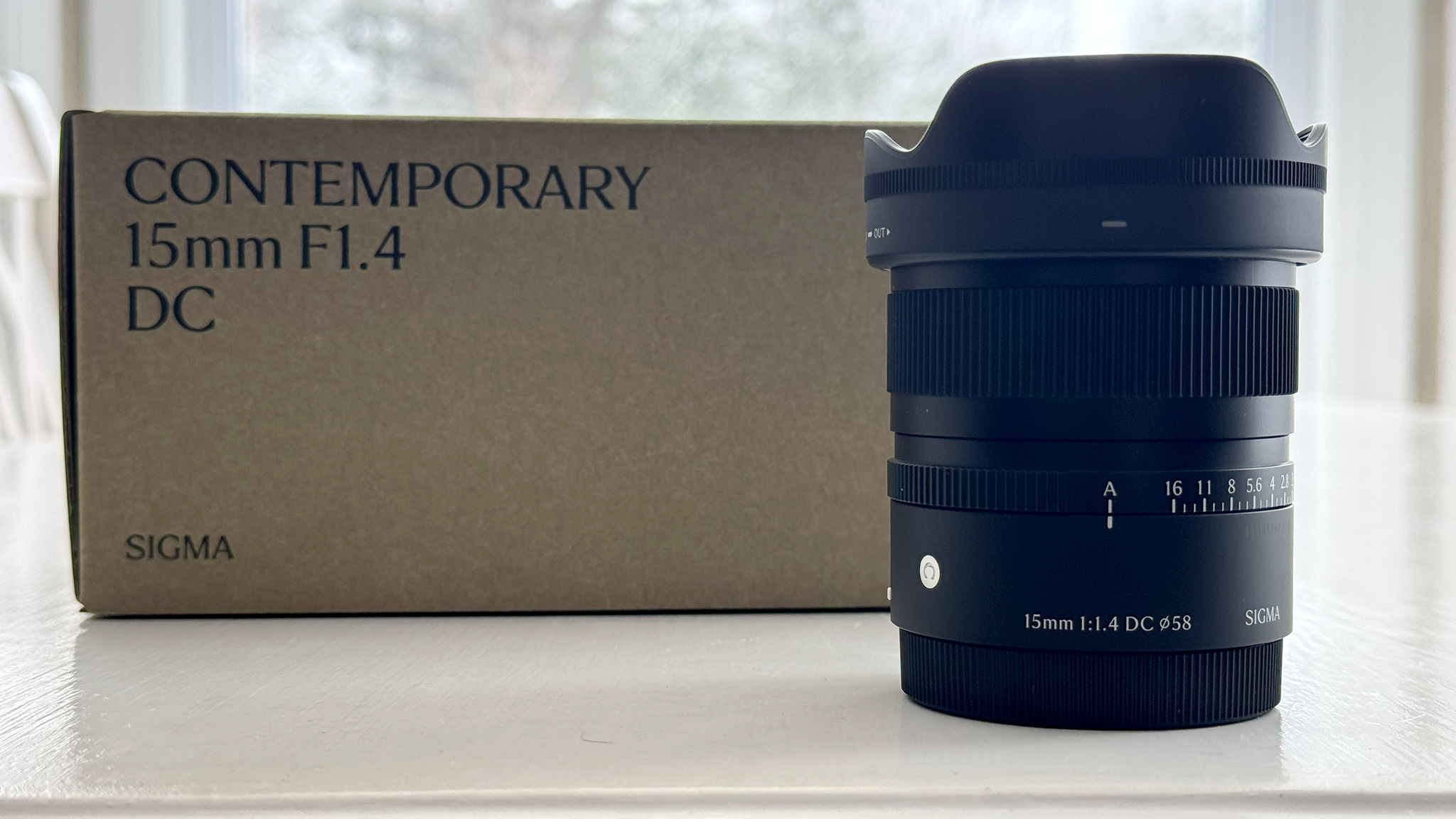
The lens also comes with a lens hood. The petal-shaped lens hood is typical Sigma, which is to say nicer than most. It has a rubberized section along with a ribbed texture to help grip it for mounting and unmounting, and there are ribs on the interior to help deflect light from bouncing around. The hood can be reversed for storage.

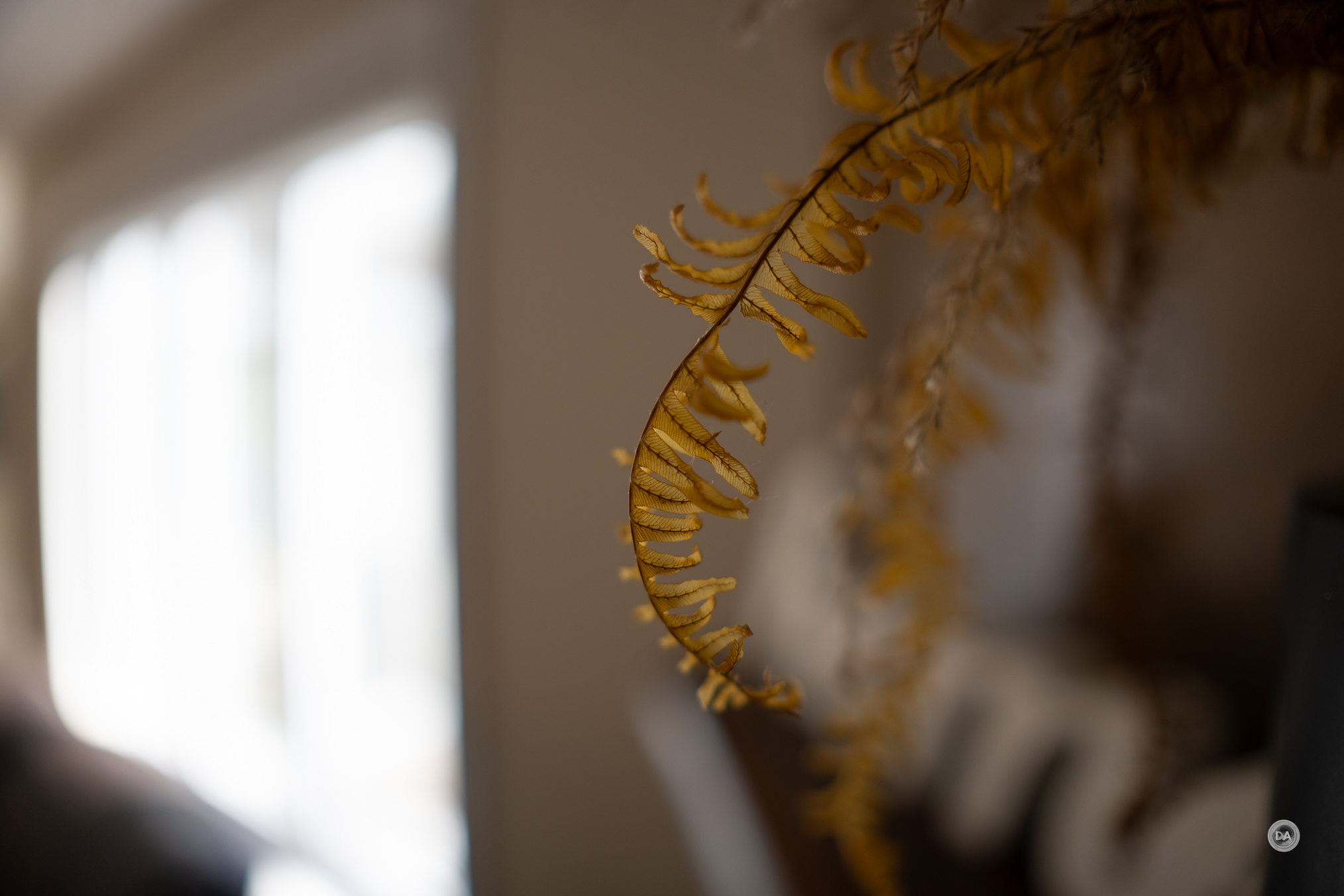
The 15mm DC can focus down to 7″ (17.7cm), where it provides a roughly 0.12x magnification figure. That doesn’t sound high, but, like the 12mm, I felt like I was able to exceed that.

Up close performance is okay, but the plane of focus isn’t particularly flat, so it obviously doesn’t work very well with a flat, two-dimensional subject like this. Things are better with a three-dimensional subject, particularly if you can compose near the center of the frame. The close focus distance combined with the F1.4 aperture allows backgrounds to be strongly defocused.
Sigma was able to bring this lens in to market for $50 less than the 12mm F1.4, and, while it is considerably more expensive than the Viltrox AIR 15mm F1.7, the price of $579 definitely undercuts the first party competition by a good margin.
Autofocus for Stills
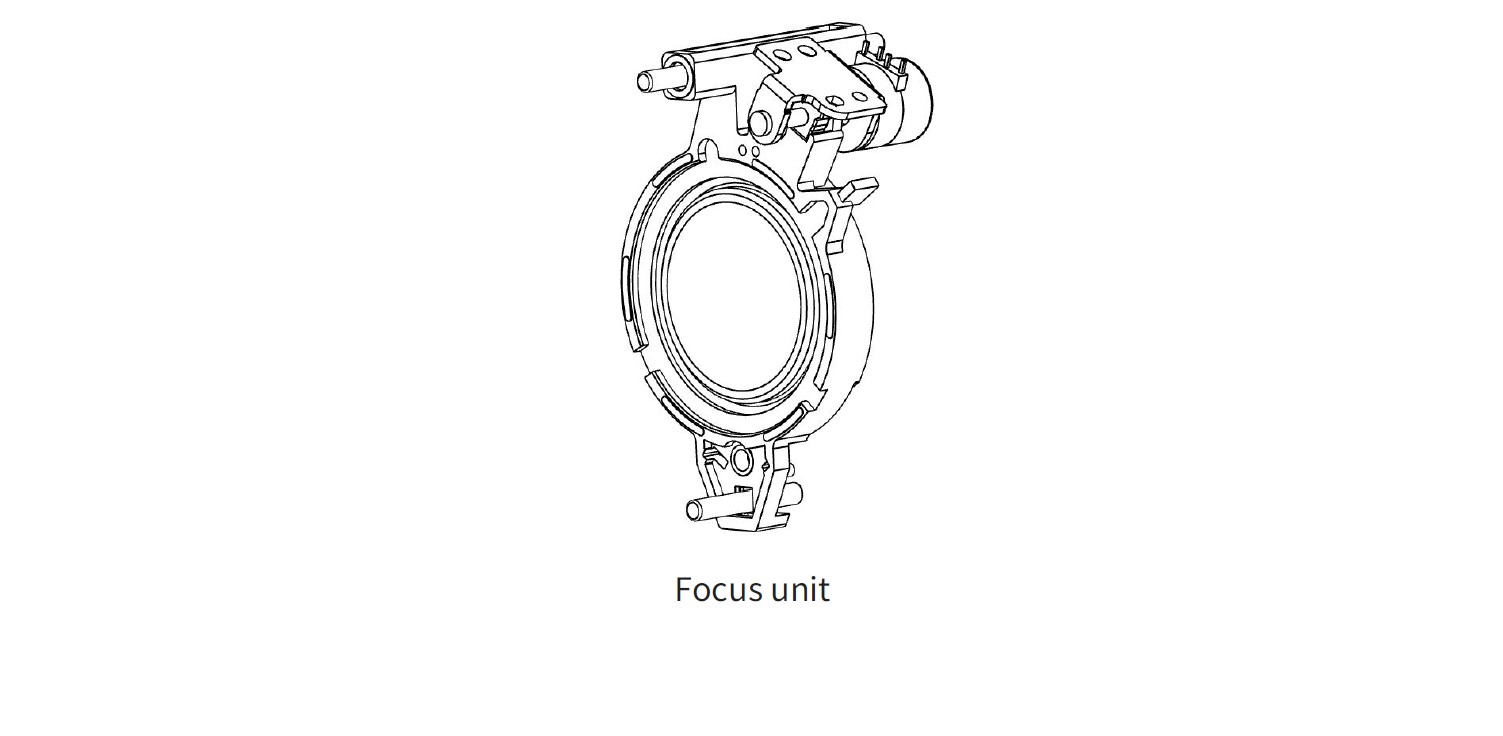
Sigma continues to utilize a stepping focus motor (STM) in these smaller lenses as the elements are smaller and lighter than lenses with an F1.4 aperture designed for full frame. Sigma notes that, like the 12mm DC, the 15mm DC actually has just a single focus lens rather than a focus group, meaning that the focus motor has less mass to move and can provide more thrust.
Autofocus is nice and quick. It is accurate, too.
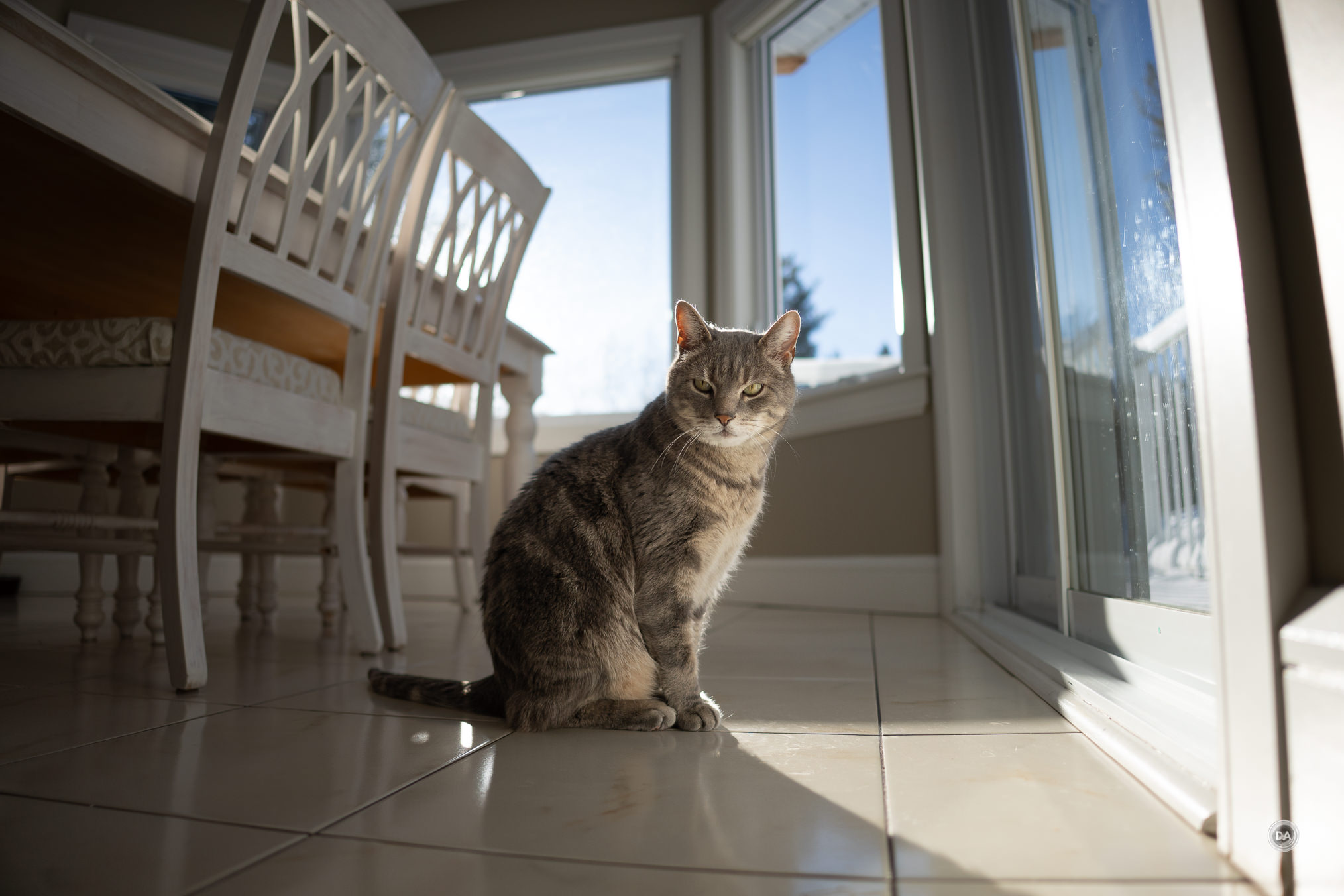

It’s hard to believe that at one point I had to critique the autofocus in Sigma lenses every time I did a review. They have gotten so much better!
In my formal tests, autofocus speed was just short of instant. It should be sufficiently fast for any task. The only sound I could hear was the sound of my fingertip moving on and off the shutter button; the focus motor was essentially silent.
Focus was quick enough that I was able to nail focus even in difficult lighting conditions and with Nala moving progressively towards me.
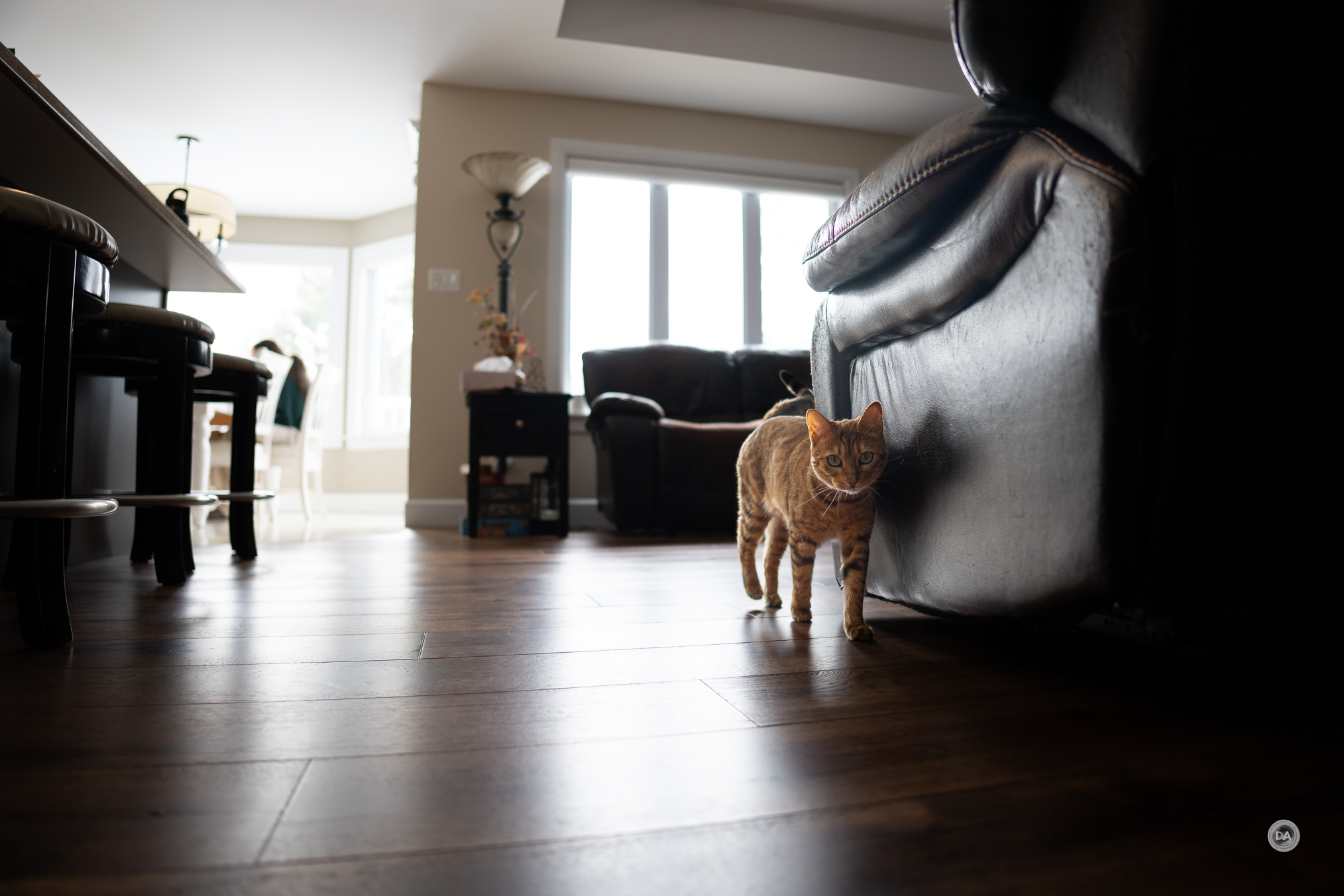
I got the shots I wanted in all the conditions that I was in; what more can I ask of a focus system?
Video AF
During my focus pull test I heard no focus noise despite working in a near silent environment. Focus pulls were smooth and quick without pulsing or settling. Focus breathing is minimal.
My hand test where I alternately block the camera’s view of my face with my hand and then remove went quite well. Focus moved back and forth with good accuracy.

Focus was stable in my various video clips for real world use, however, with no pulsing or hunting. This is another great vlogging focal length, and the focus was stable in that setting even when I moved through varied lighting conditions.
My test when approaching the camera and ducking in and out of frame went well, with focus quickly picking me back up when I stepped back into frame.
In short, the focus system is excellent, and I have no concerns to report.
Image Quality Breakdown
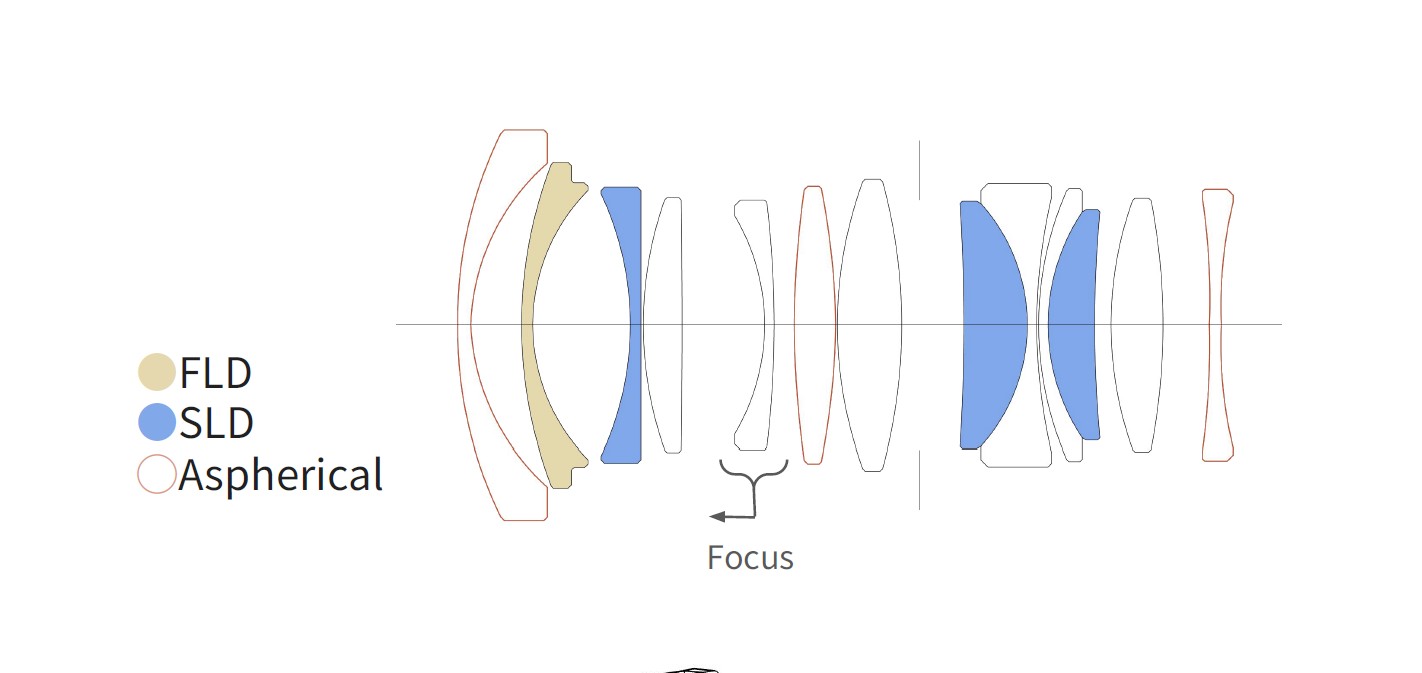
Sigma’s lineup of F1.4 DC DN lenses have all been very strong optically, and the 15mm F1.4 is certainly no exception. This is an optical design of 13 elements in 11 groups, including 1 FLD, 3 SLD and 3 Aspherical elements. Each of the aspherical elements are double sided and this is key to developing a more compact lens that continues to have high optical performance. The MTF looks fantastic even at F1.4, with a high degree of sharpness that reaches right into the corners.
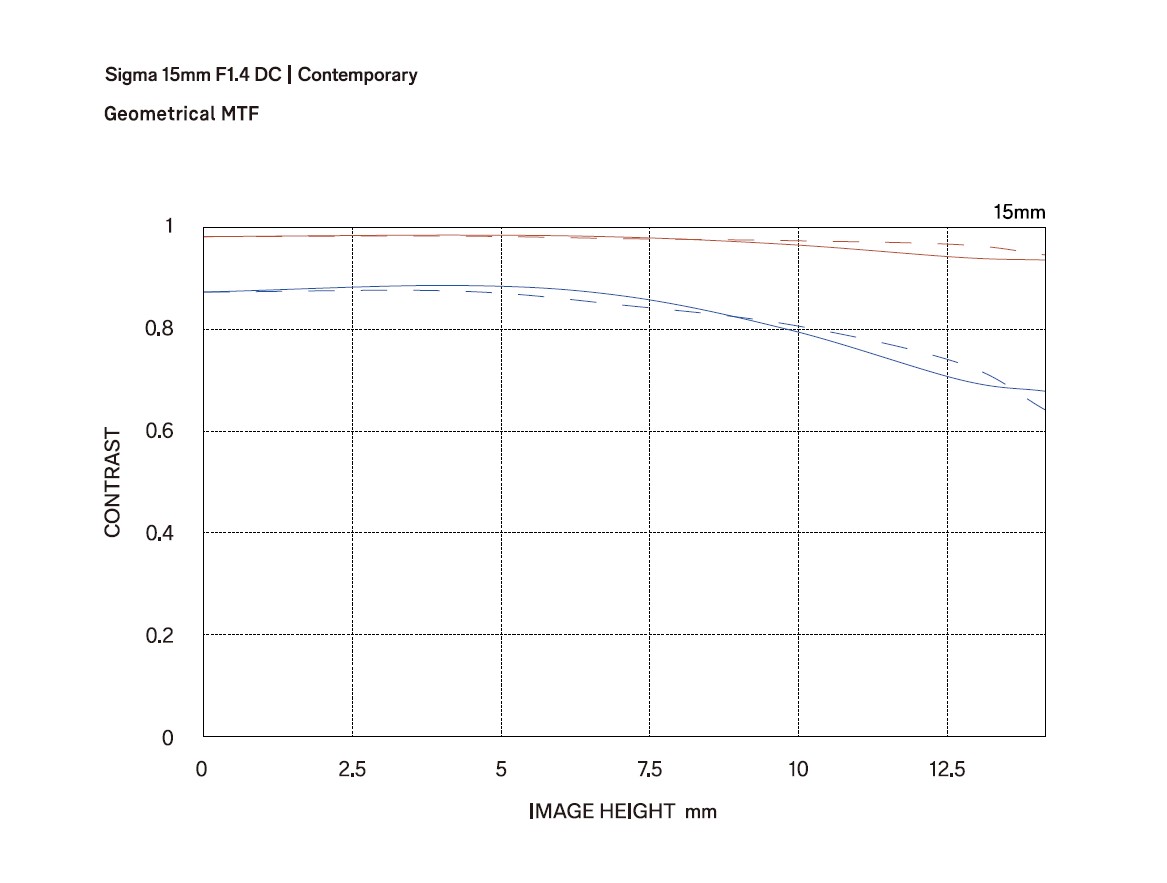
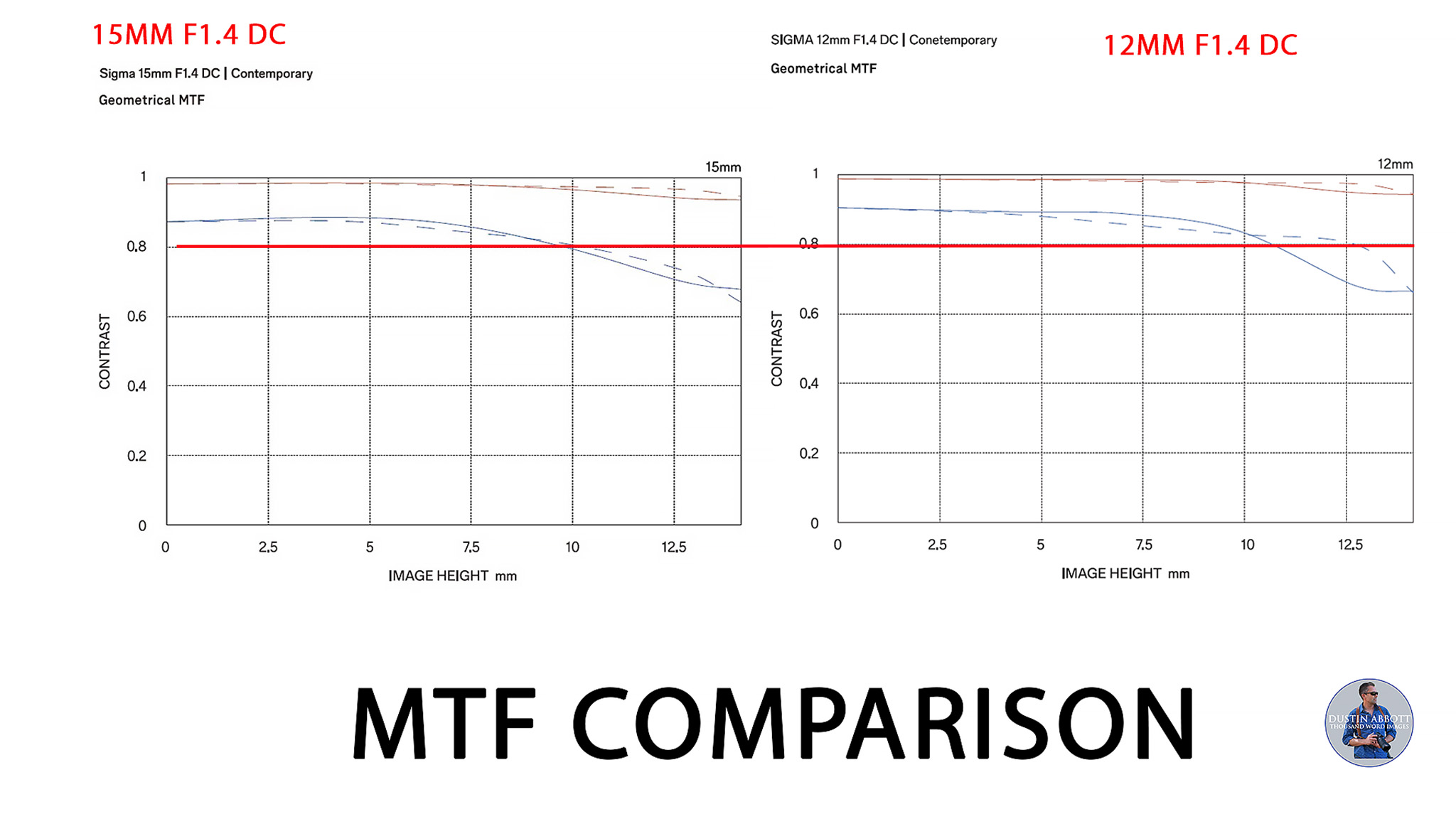
Like the 12mm, the 15mm F1.4 DC is sharper than the older 16mm F1.4, though the 15mm is slightly less sharp than the 12mm. I’ve created a comparison between the two MTF charts with a line through the 80% threshold, as anything above that tends to look pretty excellent.
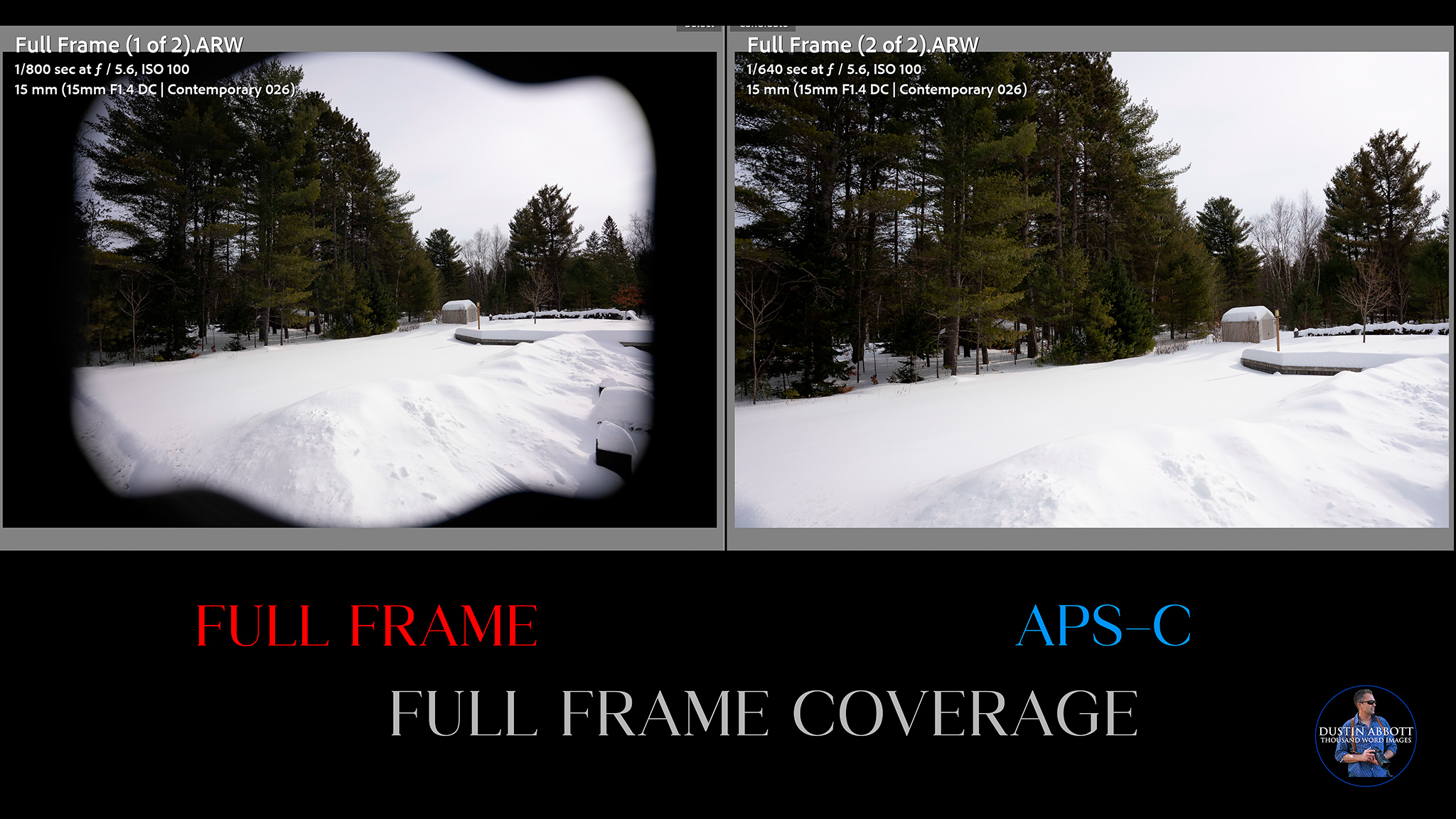
Those looking for a stealth full frame lens will be disappointed. Here’s what an image looks like shooting full frame (left) versus what it looks like in APS-C on the right. You can see a lot of hard, mechanical vignette where the full frame image circle is obstructed.
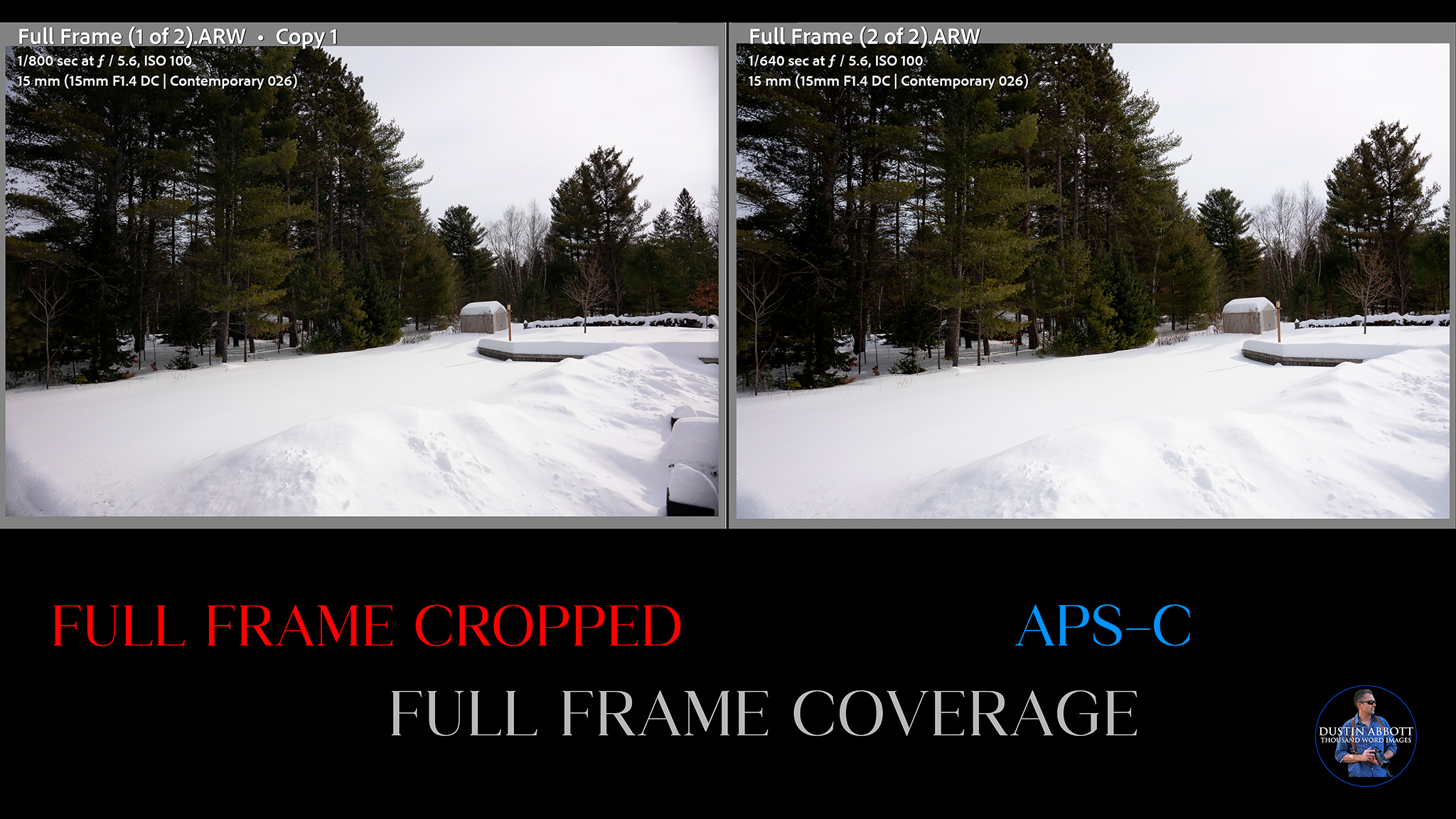
If I try to crop down the full frame image, I can get a bit more image, but not enough to be radically useful.
Let’s take at some of the technical aspects of performance. Sigma lenses enjoy good profile corrections on either Sony, Fuji, or Canon platforms, but we’ll look past the corrections to the optics of the lens itself. Here’s a look at my vignette and distortion chart, with the uncorrected result on the left and a manually corrected result on the right.
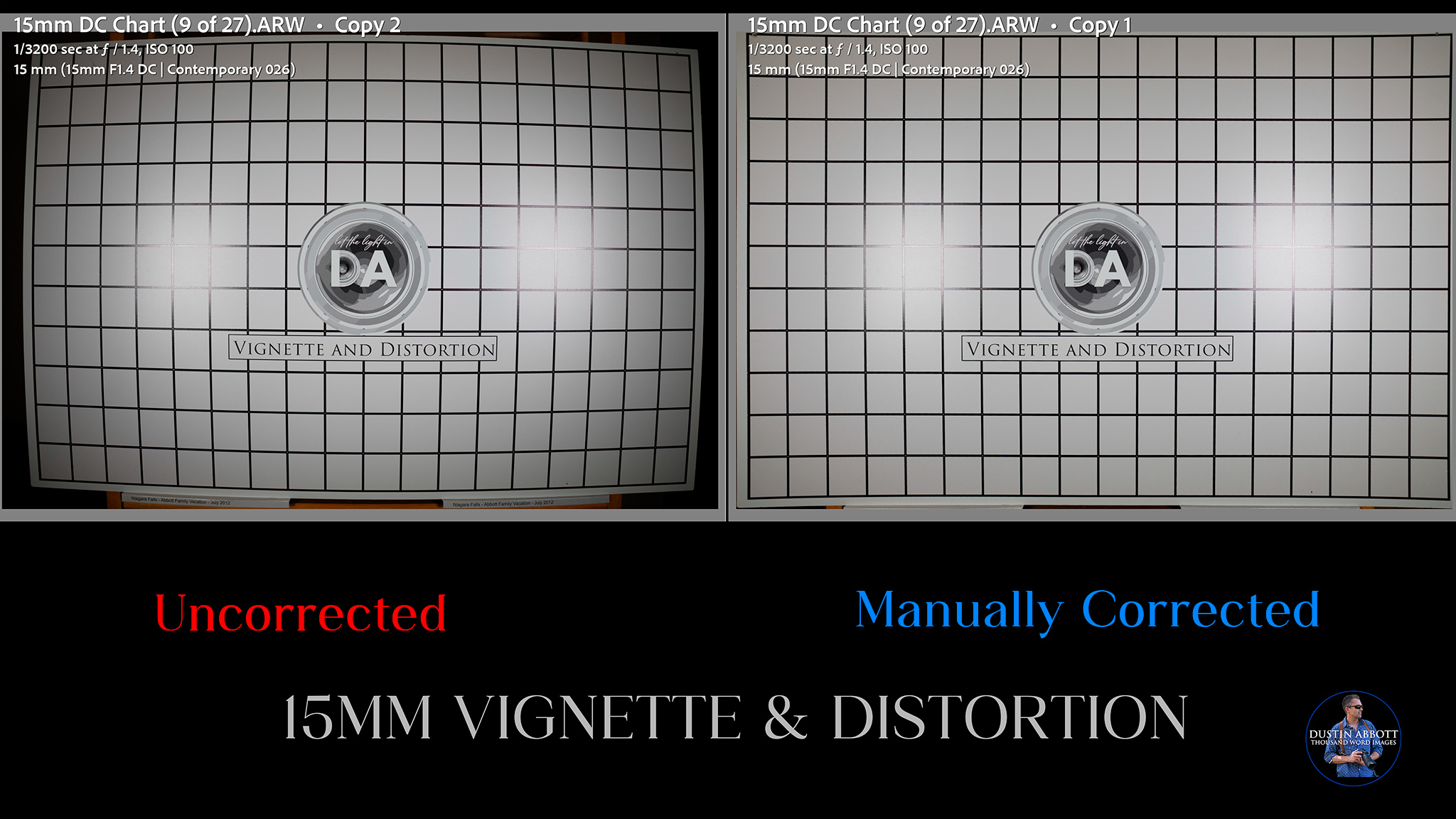
This is often the place where I’m most disappointed in Sigma wide angle lenses, as they tend to lean heavily on correction profiles rather than optical corrections. I was a bit disappointed to find that the 15mm needed even more correction than the wider 12mm lens. That lens required a +26 to correct the strong barrel distortion, but I have had to correct even more here, requiring a +29 to correct the barrel distortion. On the positive side the correction was reasonably linear. Vignette was also heavier on the 15mm, requiring a +83 to correct. Seeing more rather than less distortion and vignette than on the wider 12mm was a disappointing surprise.
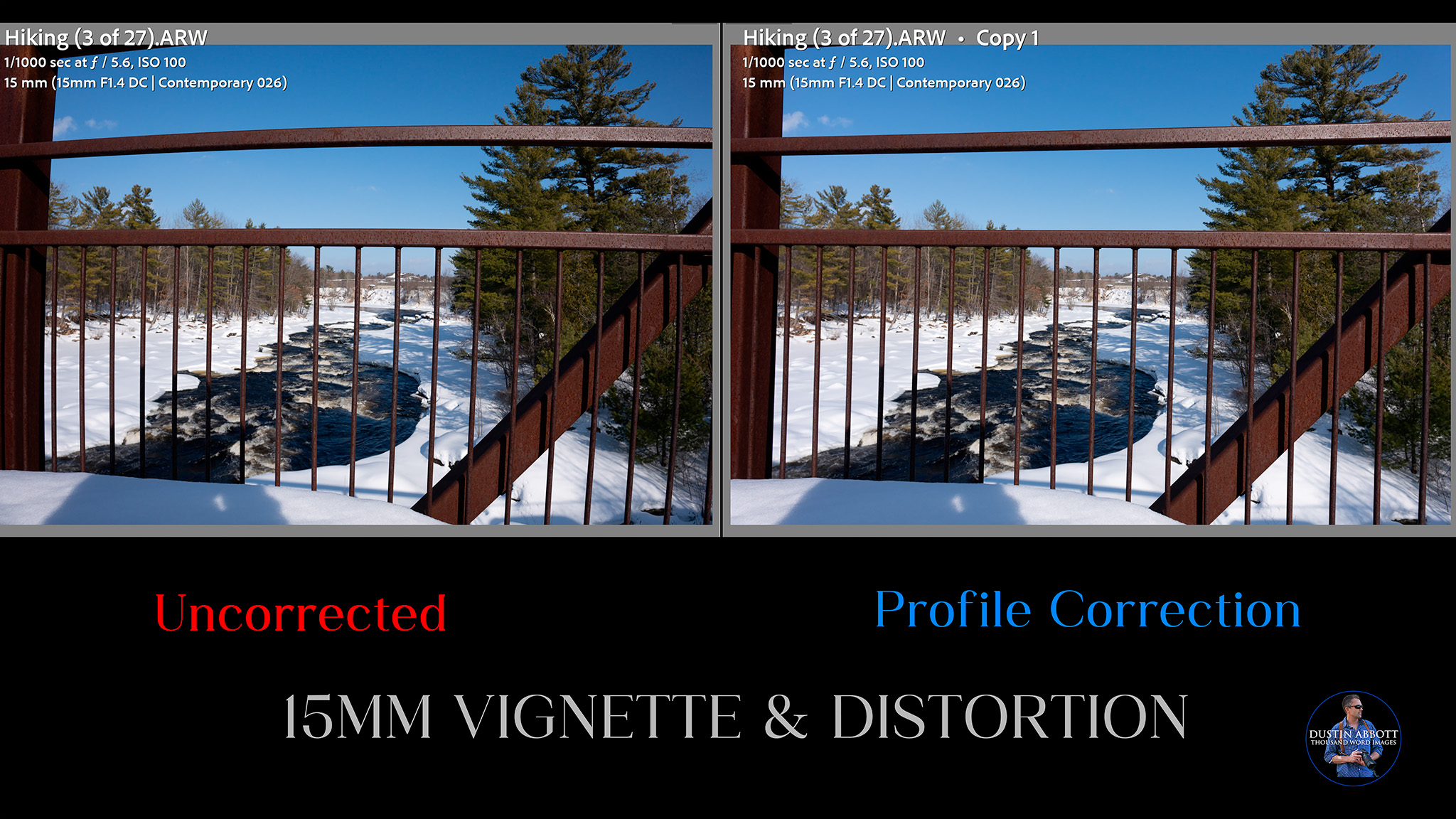
Fortunately, Sigma’s profiles in camera or for software do a solid job of digitally correcting all of that.
It isn’t unusual for a wide aperture prime lens like this one to suffer from some longitudinal chromatic aberrations (LoCA), and that’s true here. We also see a strong amount of green fringing after the plane of focus.
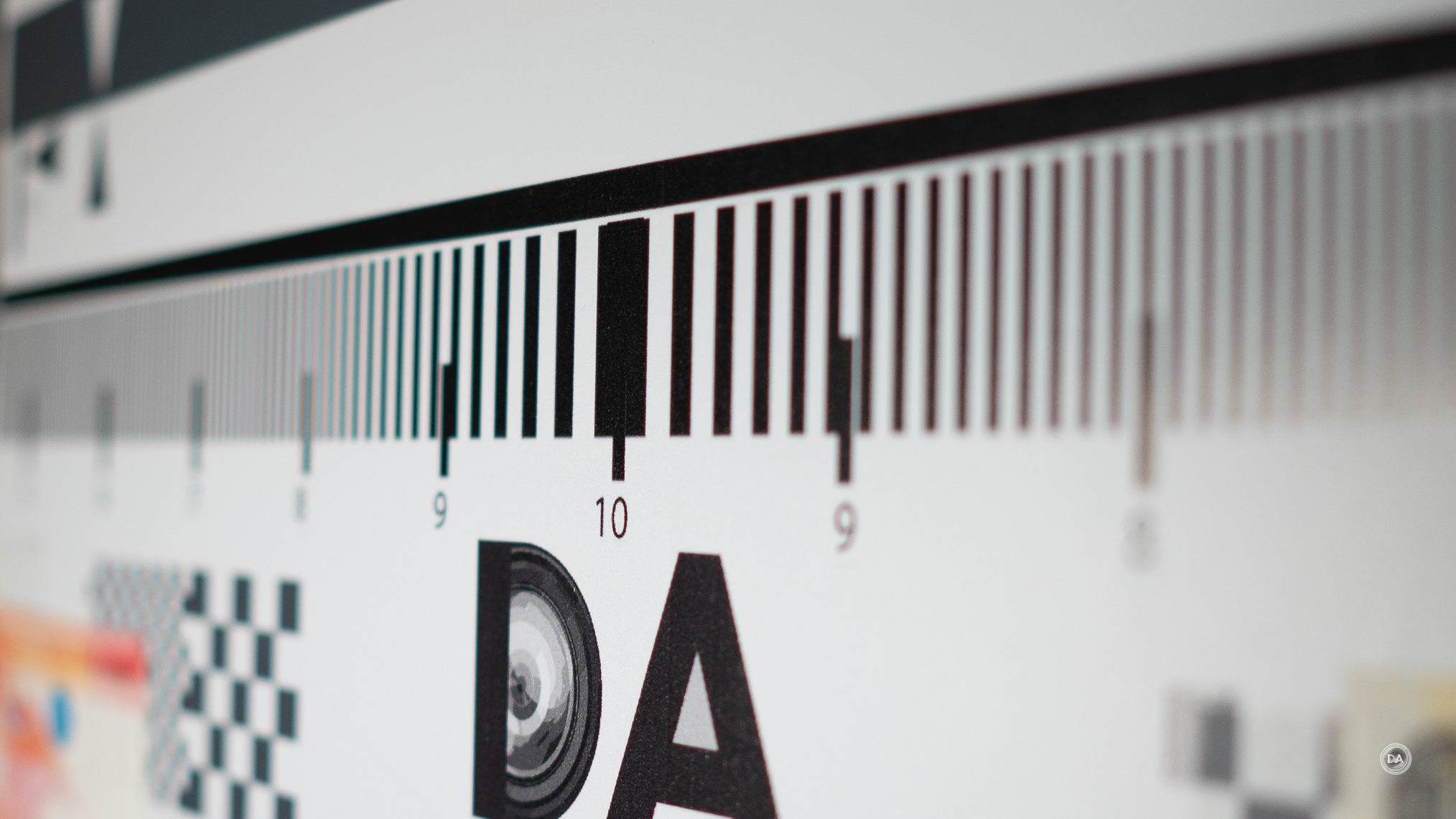
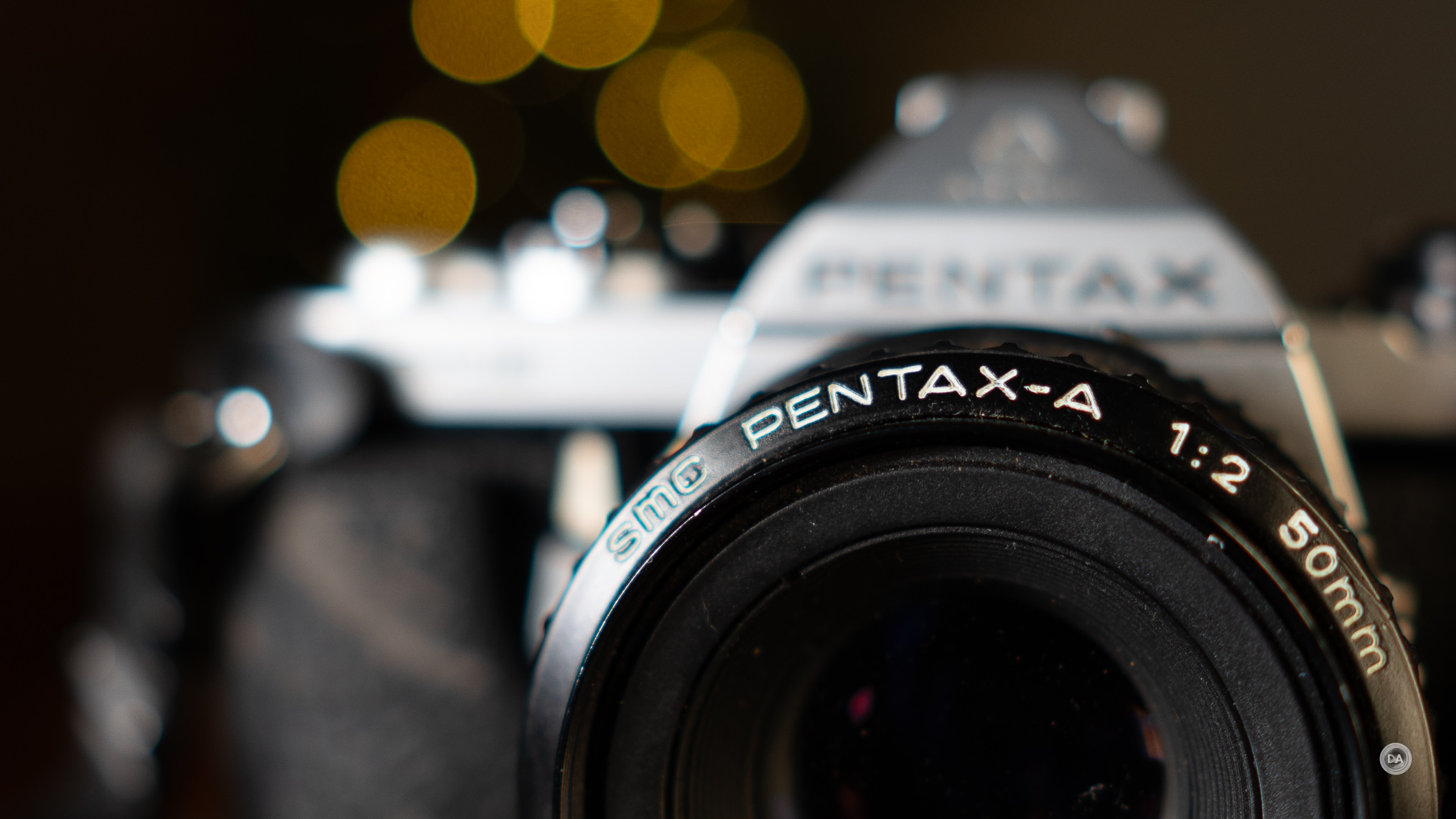
That definitely manifested in real world situations as well, with obvious fringing on my Dad’s old SLR that I use for this test.
I did see this in some real world situations, though mostly in those where I was shooting at close distances and actually getting out-of-focus backgrounds.
I saw little evidence of lateral chromatic aberrations (LaCA) along the edge of the frame in either my chart tests or any real world images. This is a very important metric on wide angle lenses, as strong LaCA can really diminish images.
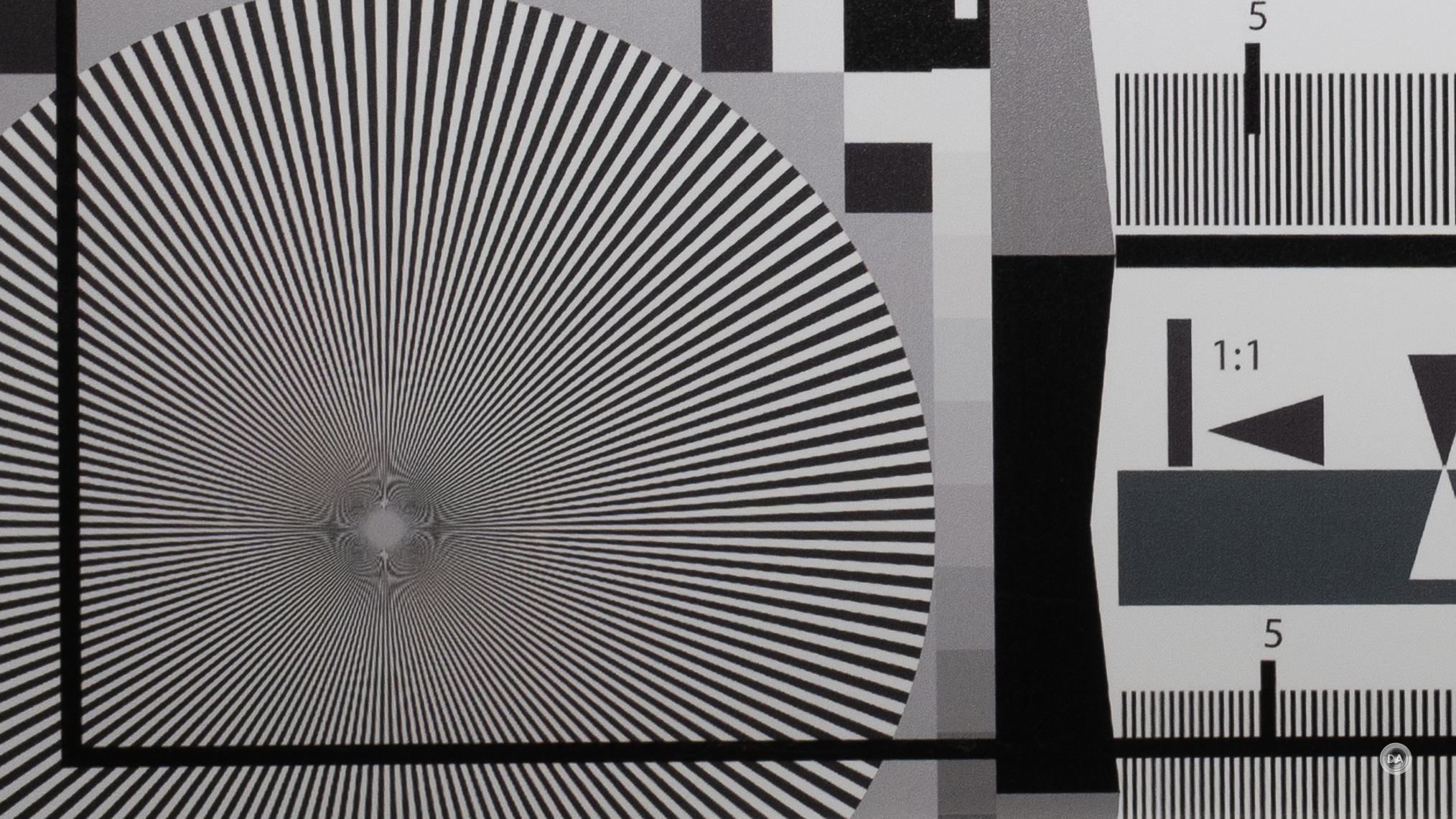
Nothing too concerning here. We’ll move on to testing sharpness. The sharpness tests are done on the APS-C mode of my Sony a7RV, which has 26MP of resolution, the highest current standard on Sony. You can get higher APS-C resolution on either Canon (32MP) or Fuji (40MP), so expect standards to be a little more exacting on either of those platforms. Fortunately this lens is sharper than pretty much everything else available on any of these platforms. Here’s a look at the test chart we’re using for the tests.

If we look closely wide open at F1.4 (crops are at roughly 200%), we find that the lens produces nice resolution results all across the frame. The corners aren’t exceptional, but not bad at all.


At it’s best, this lens is a very sharp and crisp at F1.4:

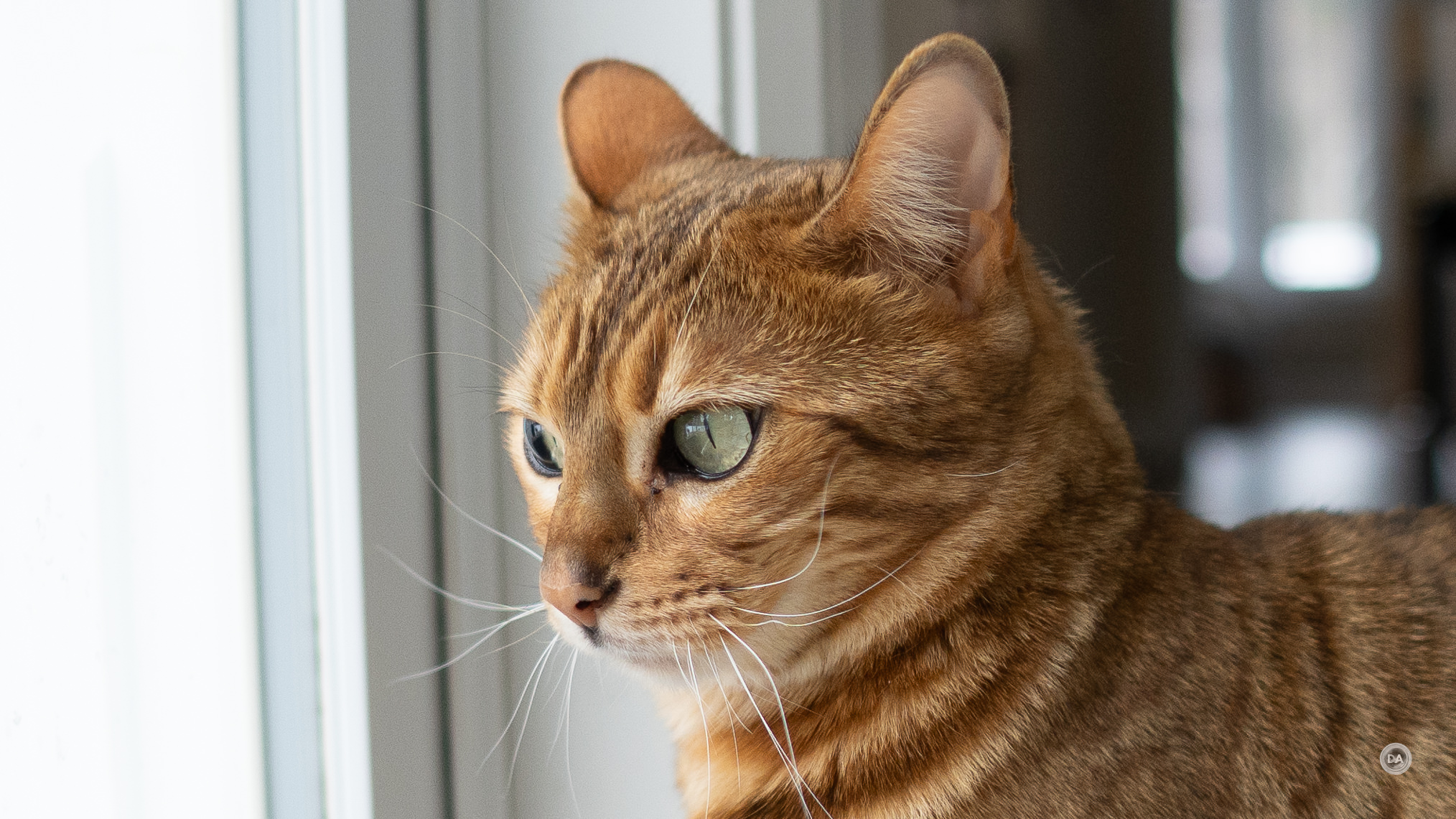
The lens is sharp enough to shoot landscapes at F1.4, as while the corners aren’t exceptional, there is still resolution there.


The Sigma 12mm DC also showed very good centering, with consistent sharpness everywhere I looked. Sigma really takes a lot of pride in their Aizu, Japan factory, and it shows in the consistent quality I see from Sigma products.
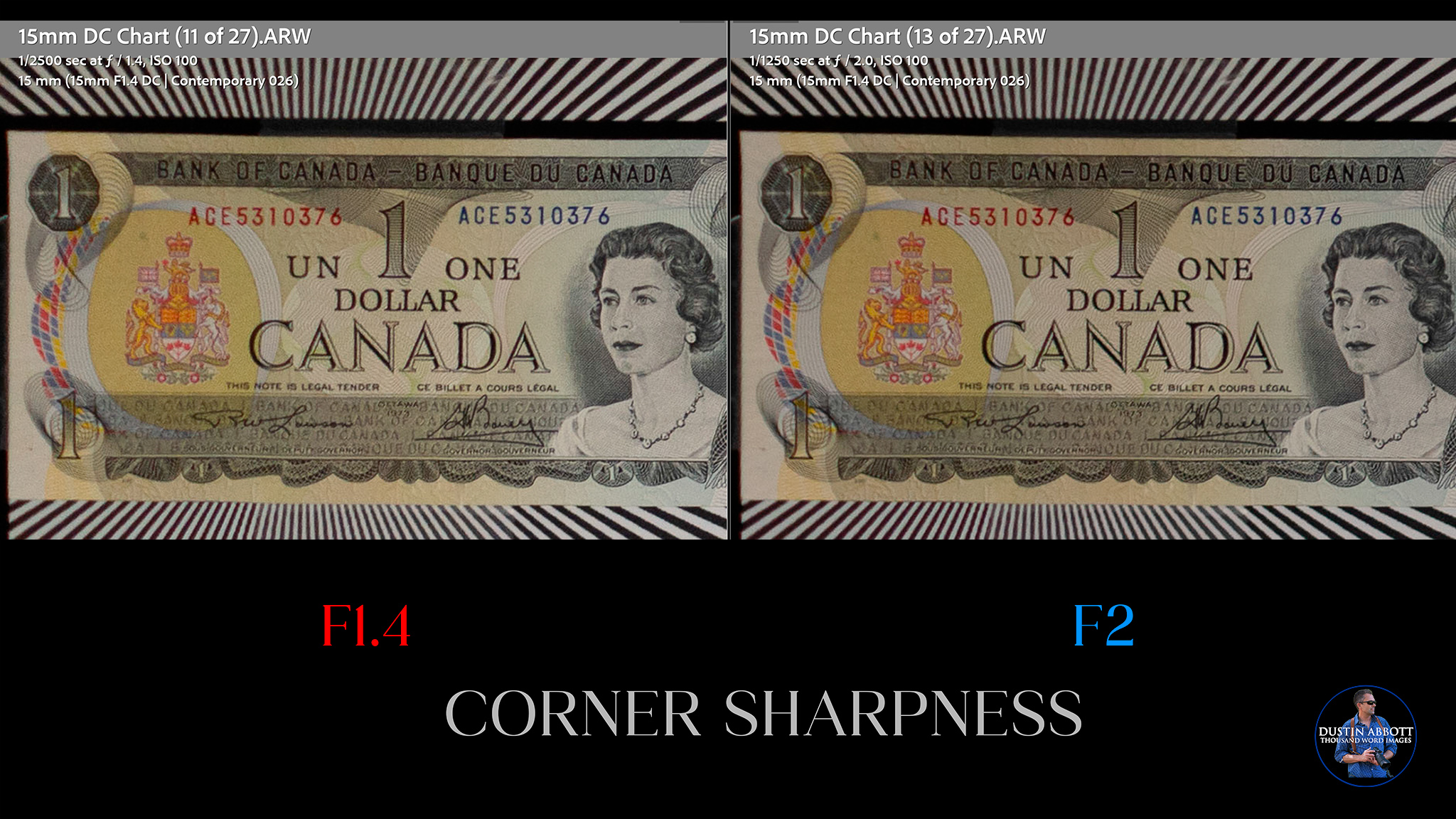
Stopping down to F2 shows a definite improvement in the center and midframe.

The corners aren’t yet as exceptional, showing only a mild improvement at F2:
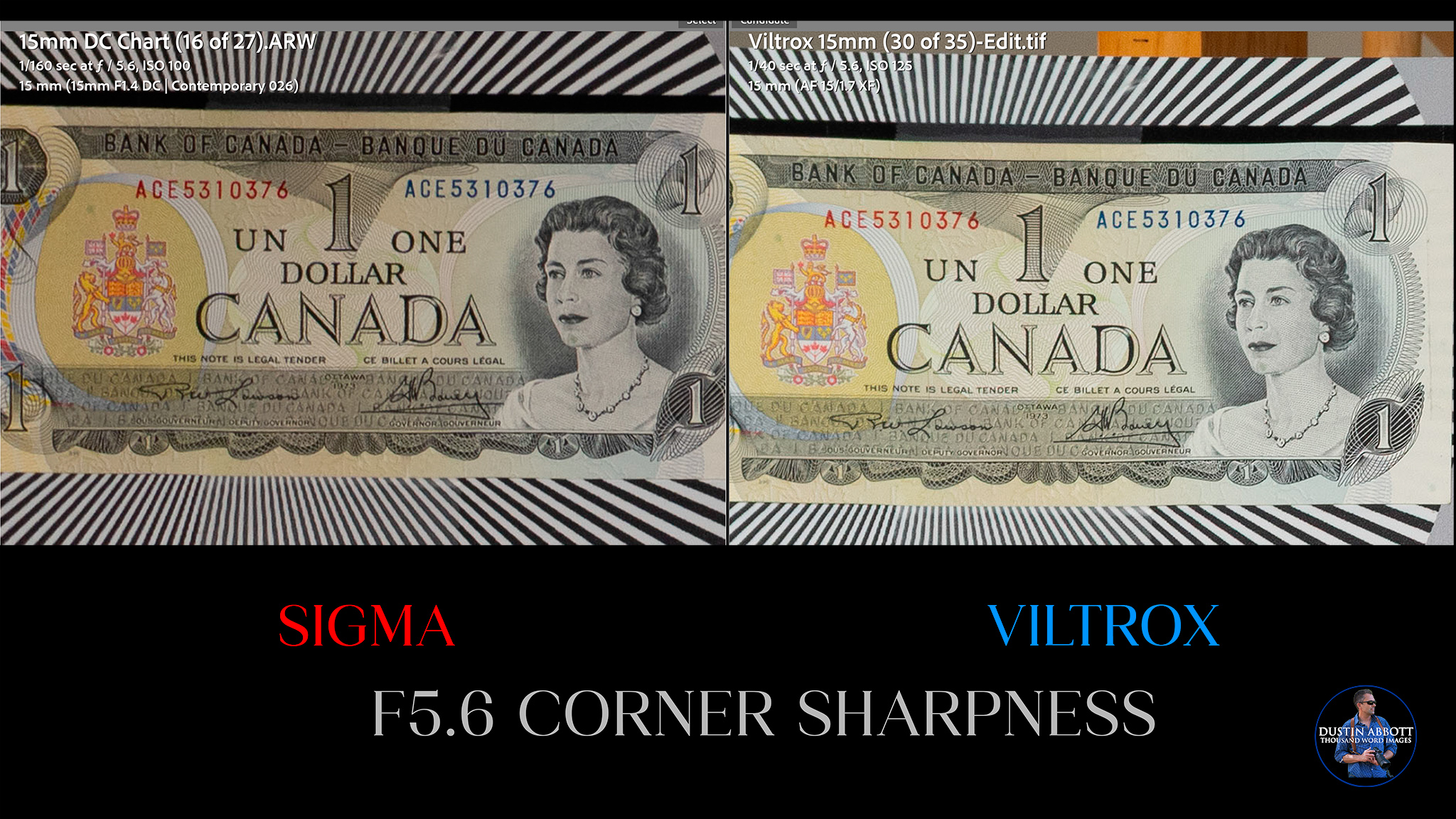
The corners never got exceptionally sharp in my tests, with mild improvements through F5.6 but no big jump ahead. I went back and compared to the Viltrox AIR 15mm F1.7 (a lens that can be had for less than half the price of the Sigma), and there’s no question that the Viltrox is a bit sharper and higher contrast at smaller apertures…including into the corners.
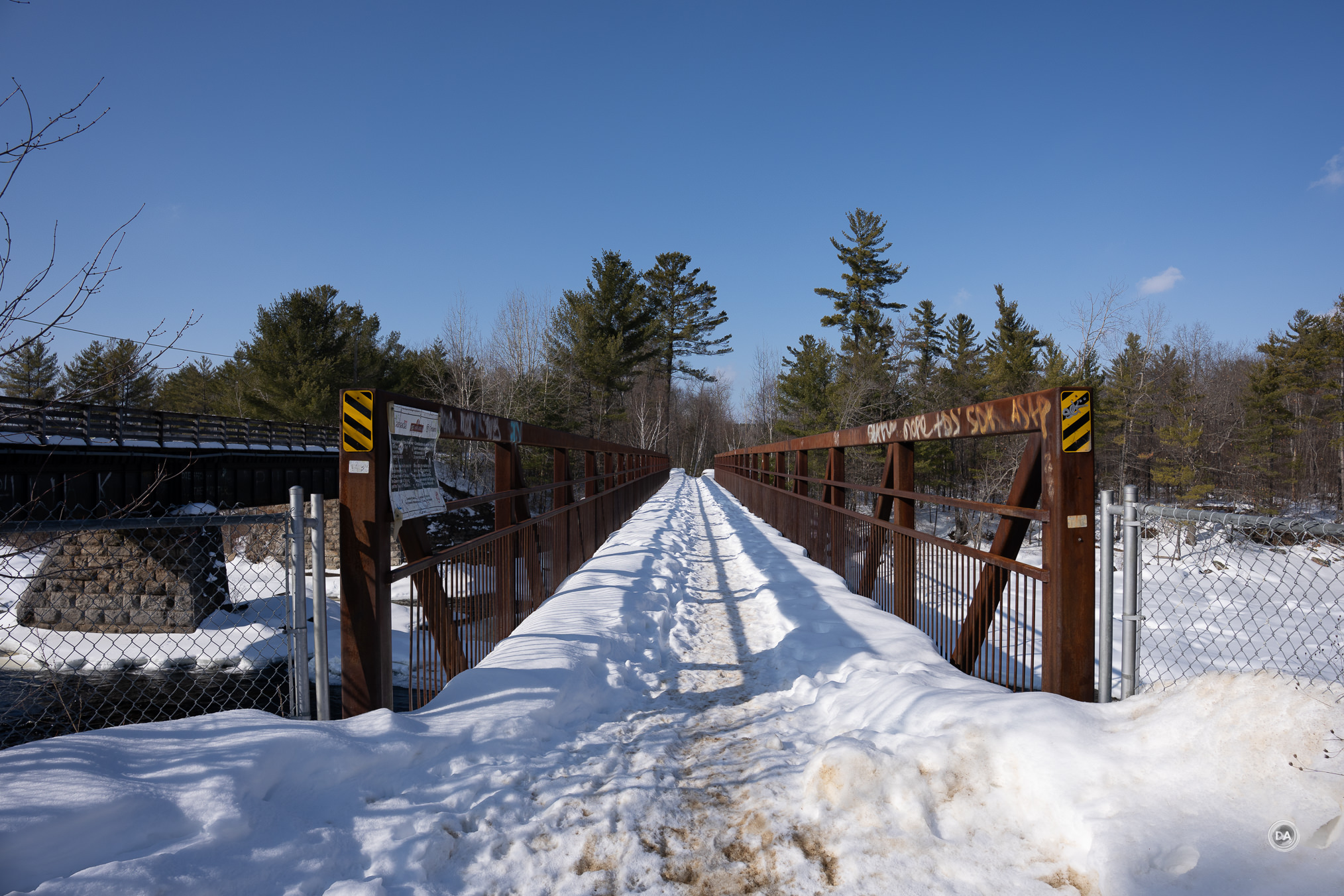
Real world images are crisp at smaller apertures, but not exceptionally so in the corners.



Comparing sharpness between the 12mm and 15mm shows some give and take between the two. Neither is exceptionally sharper than the other.
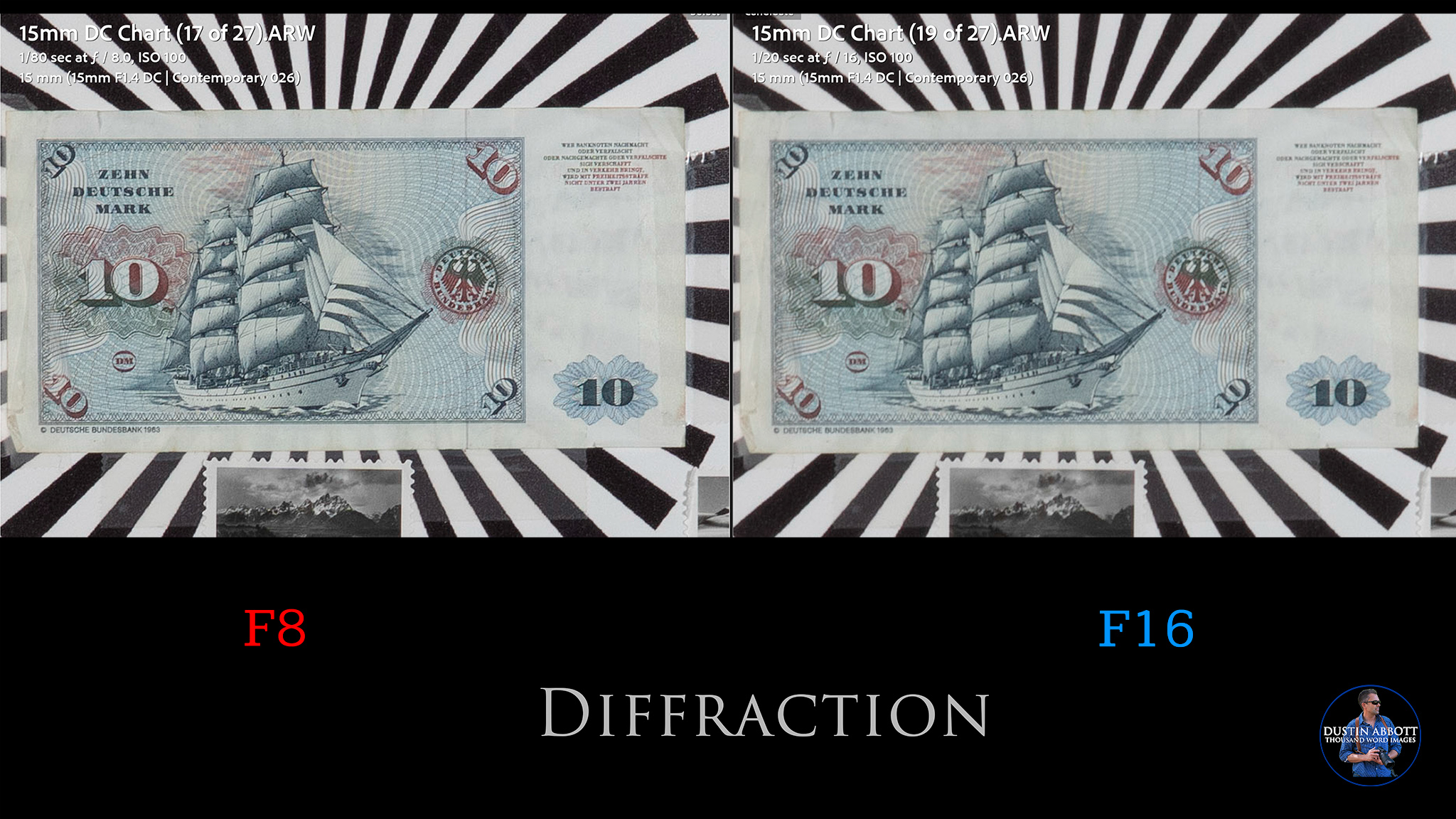
After F8 there is a mild softening effect as diffraction starts to set in. By F16 (minimum aperture) diffraction has really softened the image even on the 26MP resolution sensor. Expect the effect to be worse still on a high-resolution Fuji body.
You don’t really buy wide angle lenses for the bokeh, but the bright F1.4 aperture does create some space to experiment with depth of field. I found that bokeh looks fairly good in some situations, like this.

There is some “cat-eye” effect nearly the corners of the frame at F1.4, though things are much rounder by F2.

There’s a bit of hard edges to some of the defocused area, but the bokeh quality isn’t bad for a wide angle lens.

At the same time, however, I don’t want to critique too much, as that isn’t really the purpose of this lens.
I thought color rendition was excellent. I sometimes find APS-C wide angle lenses to be a bit lacking in this area, but I thought the Sigma acquitted itself well. Colors are nicely saturated but don’t feel comical in any way. I liked the global look of the images I took with the lens.


I was also impressed with flare resistance. I never hesitated to shoot right into the sun at various apertures, and had no issues. There was little loss of contrast and no big ghosting blobs to ruin the image, and as a bonus, the sunstars look pretty good, too.

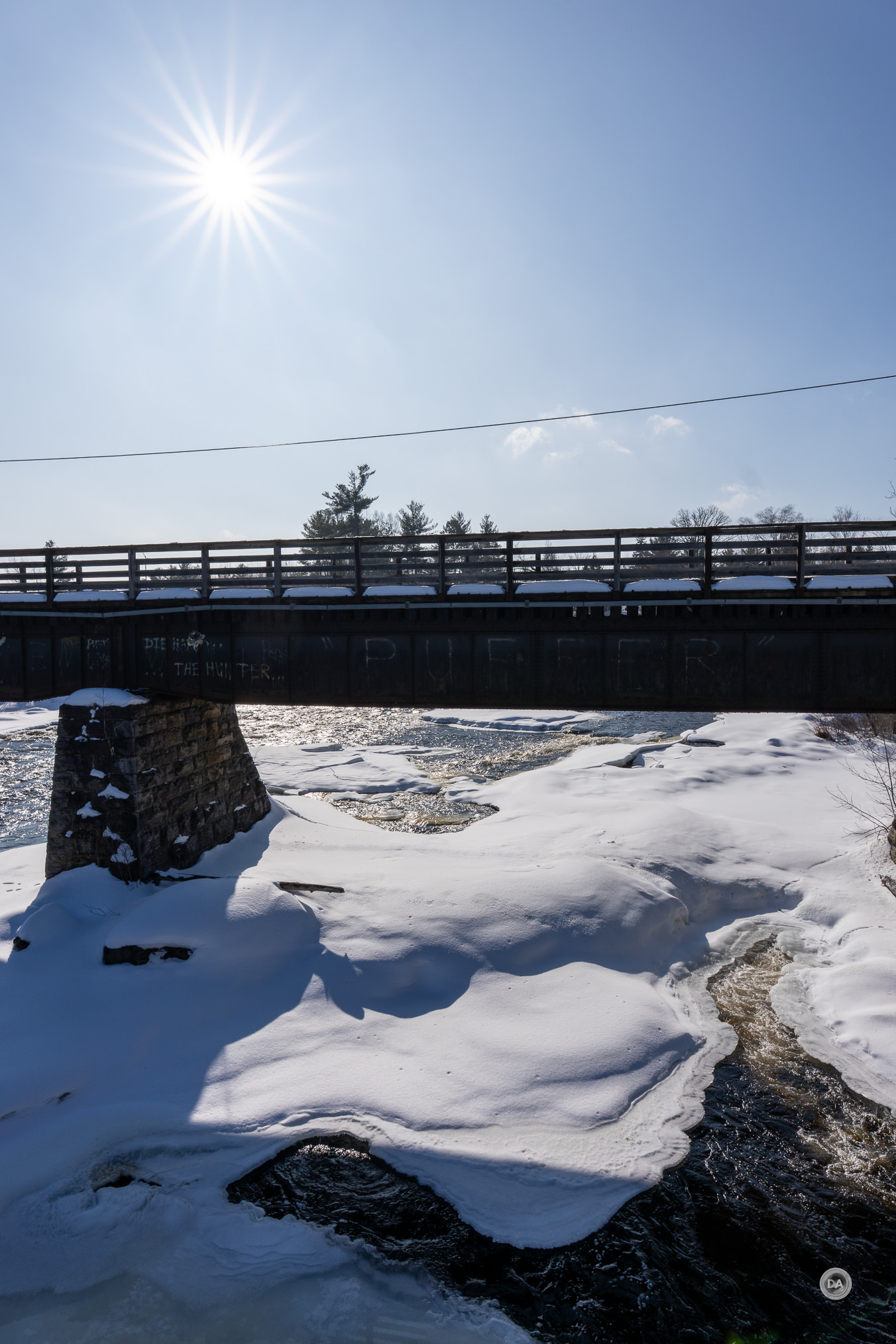
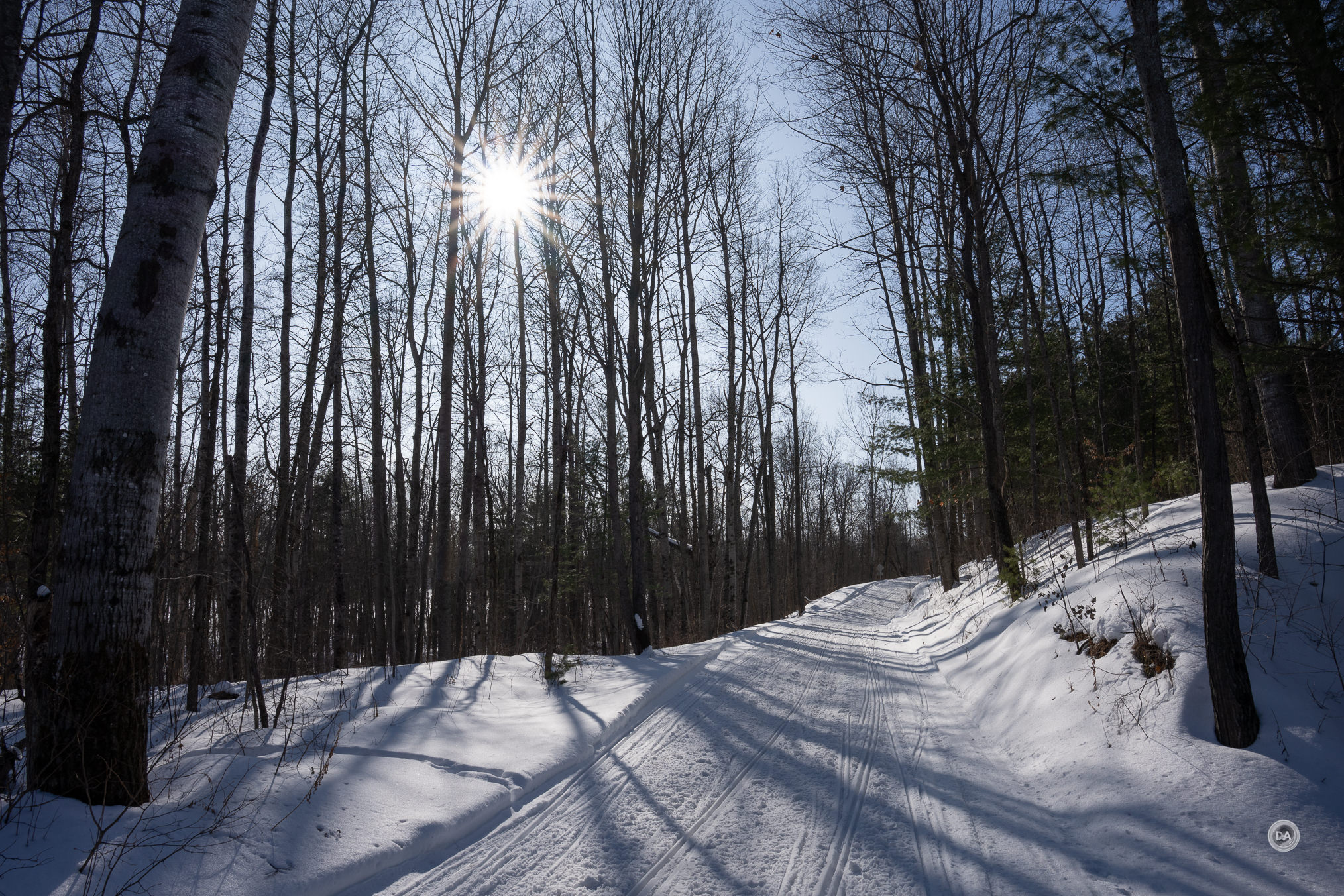
The one exception to that rule is when shooting at F1.4, as one will get something like a “streak” from a cine lens. It is a little dominating in images.
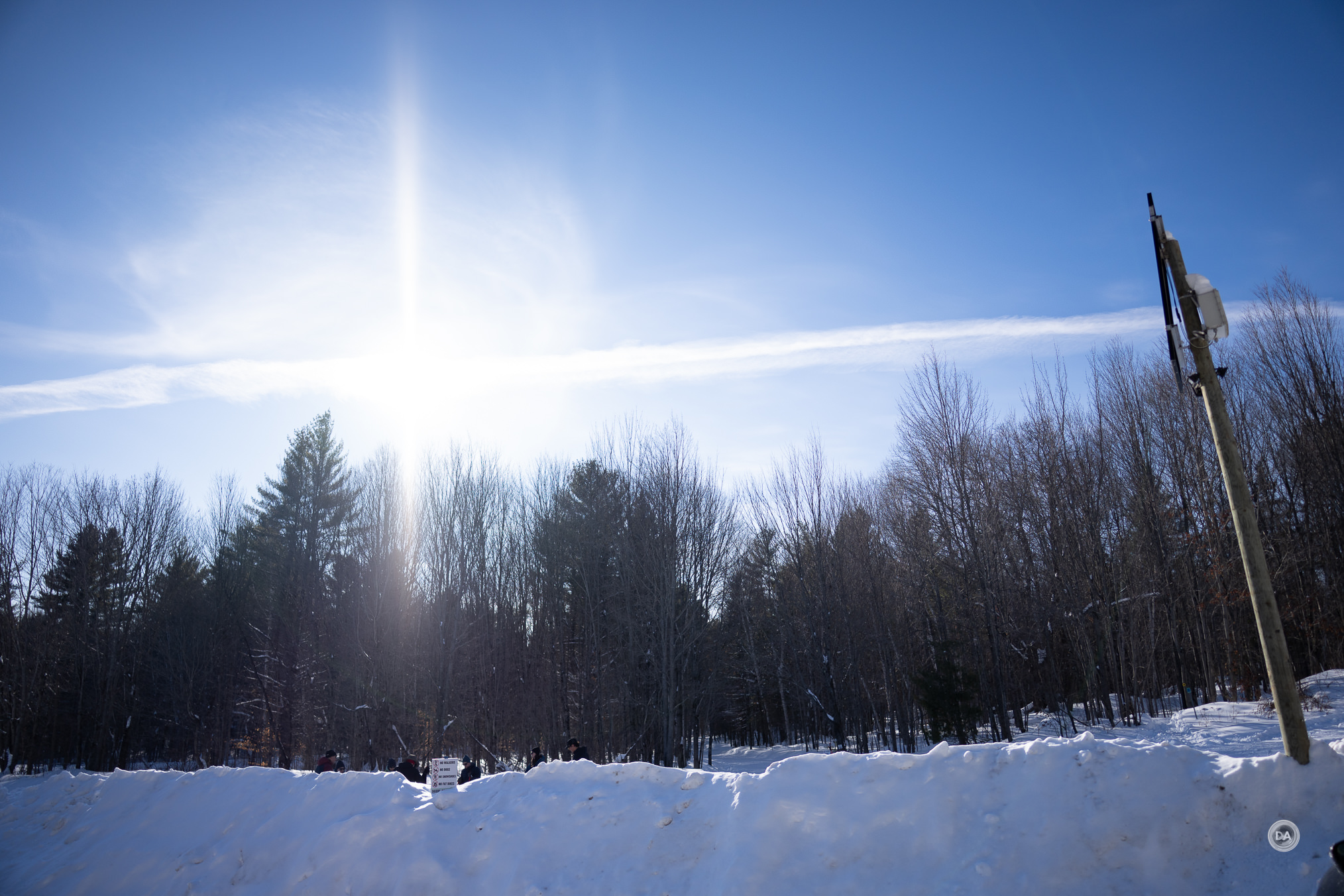

I definitely prefer the stopped down flare performance.
Coma performance is fairly good, making this a nice option for shooting the night sky. There’s a bit of coma smear in the corners at F1.4, but it isn’t pronounced.


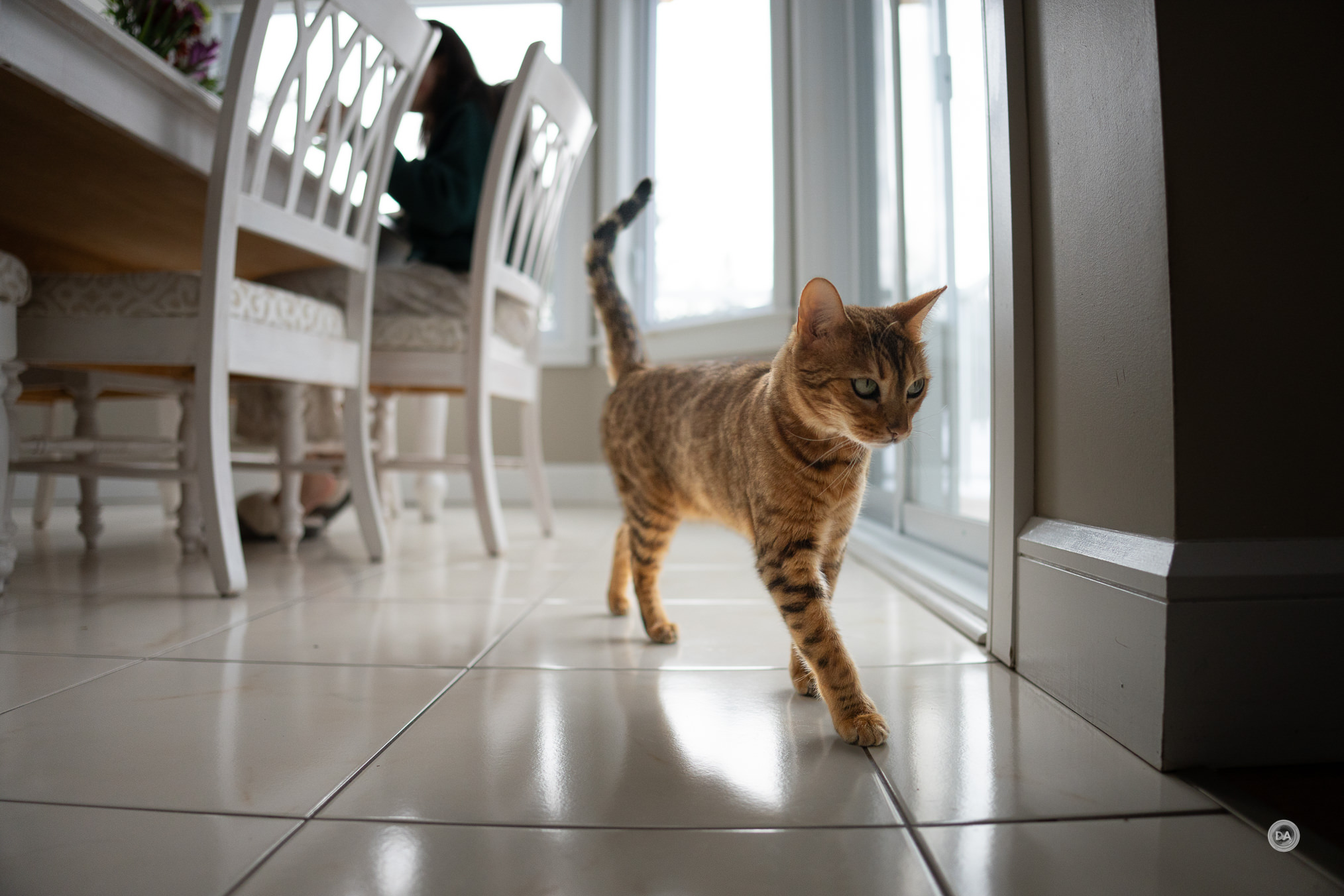
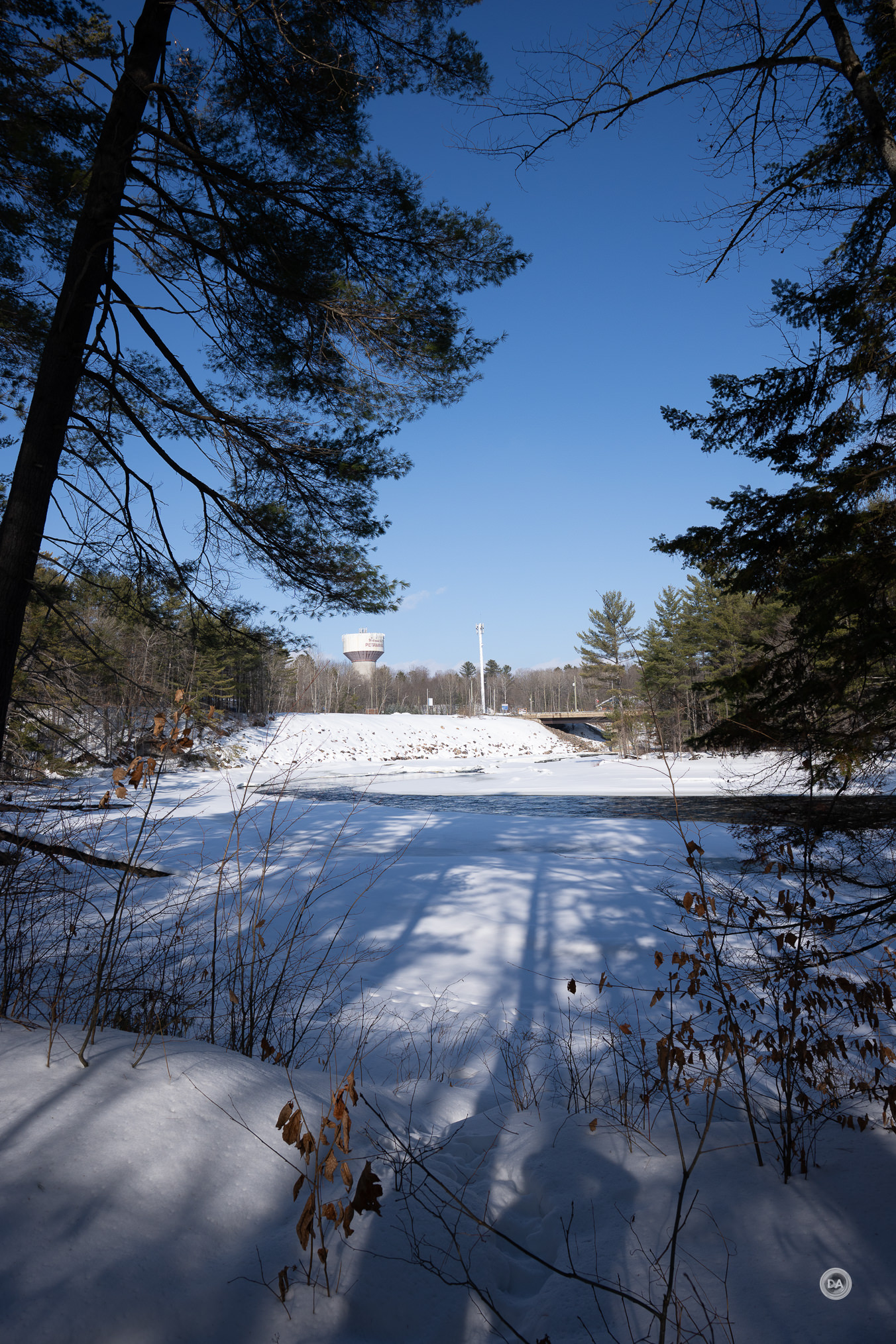
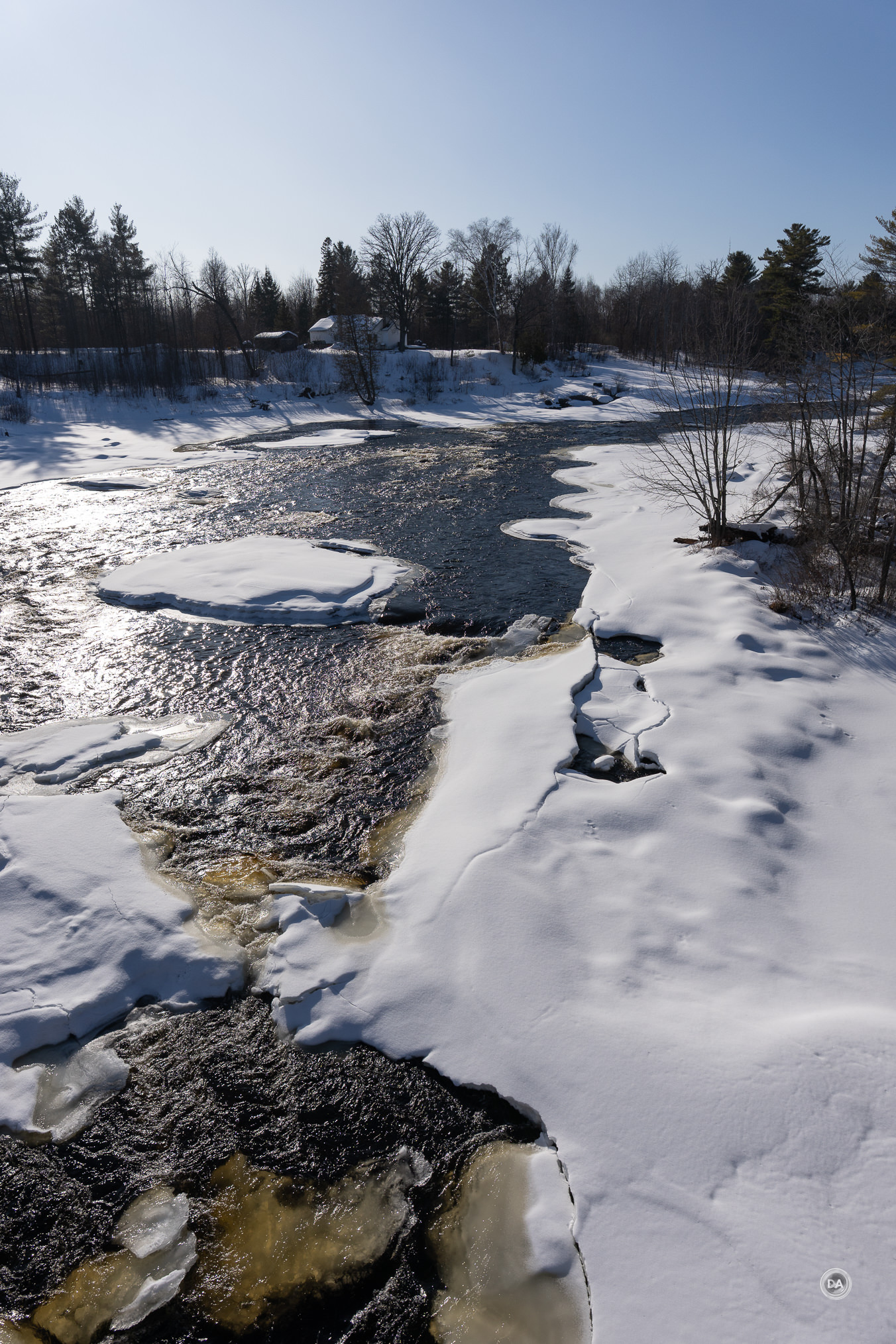
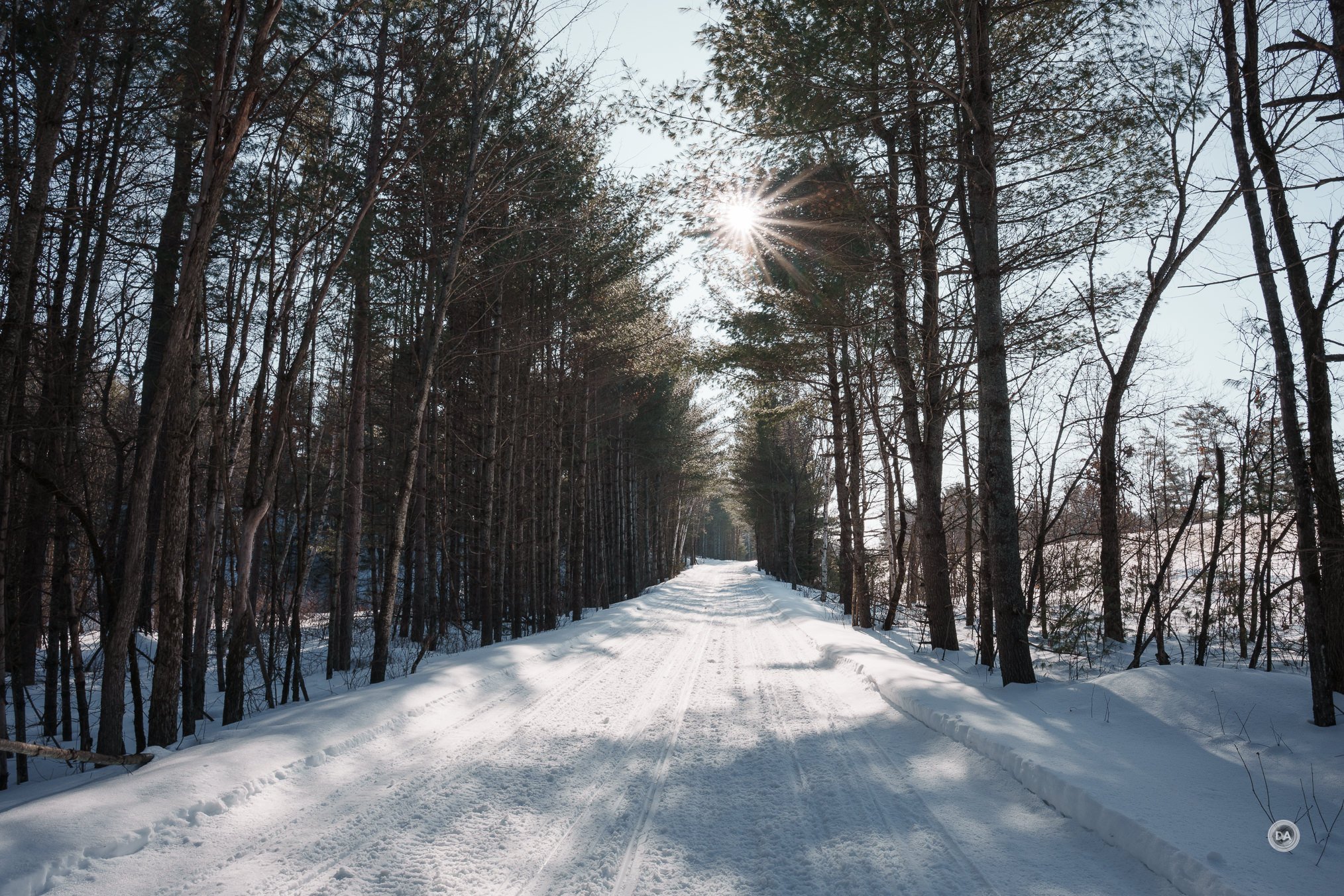
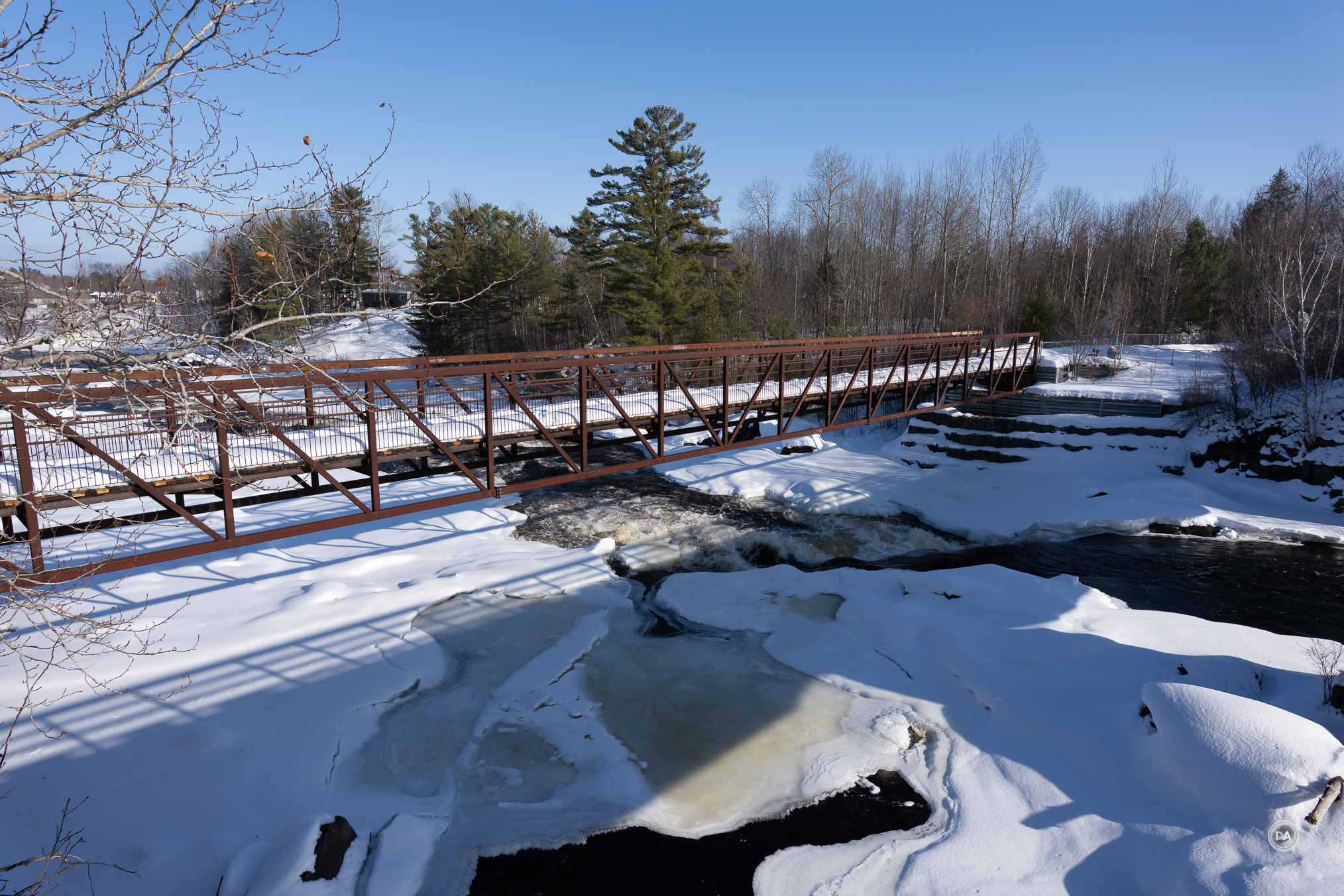
The 15mm F1.4 DC doesn’t quite achieve the same level of excellence as the 12mm F1.4, but it is still a very strong little wide angle prime. Here’s a mini-gallery of images for you to enjoy.








Conclusion
It is great to see Sigma start to pop out these higher-performing, more feature-rich Contemporary primes. The Sigma 15mm F1.4 DC | Contemporary joins last year’s 12mm F1.4 as being a step up from previous lenses in the series. These offer higher-end features, maximum aperture, and performance as compared to the Viltrox AIR series lenses while undercutting first-party options from Sony or Fuji. Canon RF shooters have been woefully underserved in first party lenses, so these are great on RF for the simple reason that they provide very good prime options.

I don’t think the 15mm is quite as fantastic as the 12mm, demonstrating more vignette, distortion, and fringing while also providing slightly less sharpness, but it does compete well with lenses from other brands.
Digital corrections take care of most flaws, so the biggest issue you might see in the real world is the fringing, but that should be reserved for some specific cases where you are very close to your subject. The proposed price of $579 does put it into the range of Viltrox’s F1.2 Pro series lenses, but thus far none of them have been anywhere close to as wide a focal length as these lenses. The Pro lenses are also huge, and thus just not viable for some people that shoot APS-C because it is compact. The Sigma 15mm F1.4 DC is a great option for those who want performance but also want a compact, lightweight option. This is a great space for Sigma to occupy.
Pros:
- Value for Money: At $579, the Sigma 15mm F1.4 offers a compelling alternative to premium lenses like Sony’s 15mm F1.4 G, which is priced nearly $950.
- Fast Maximum Aperture: The F1.4 aperture allows for shallow depth of field and excellent low-light performance, making it a versatile lens for creative photography.
- Compact and Lightweight Design: Weighing around 220g and measuring 64mm in diameter, it is lightweight and easy to carry.
- Improved Build Quality: The lens features enhanced weather sealing and a premium design, with an aperture ring and smooth manual focus operation.
- Fast and Accurate Autofocus: Equipped with a stepping focus motor, the autofocus is quick and nearly silent, performing well in various lighting conditions and for both photo and video applications.
- Strong Optical Performance: Provides high sharpness even wide open at F1.4, with commendable image quality across the frame.
- Effective Flare Resistance: Demonstrates good flare resistance, allowing for well-contrasted images when shooting toward light sources.
- Good Color Rendition: Produces rich, saturated colors without appearing overly exaggerated, enhancing overall image appeal.
- Compatibility: Available in multiple mounts (Sony E-mount, Fuji X-mount, and Canon RF), catering to a broad range of photographers.
Cons:
- Vignetting and Distortion: noticeable vignetting and barrel distortion that may require digital correction in post-processing.
- Less Sharpness Compared to 12mm: While sharp, it is slightly less sharp than the Sigma 12mm F1.4, particularly in the corners.
- Chromatic Aberration: Some longitudinal chromatic aberrations and green fringing occur, particularly at close distances, potentially affecting image quality in precise scenarios.
- Dependence on Digital Corrections: The high level of optical corrections needed can be a downside for those who prefer less reliance on post-processing.
- Bokeh Quality Issues: While better than many wide-angle lenses, the bokeh can exhibit “cat-eye” effects near the corners, which may be undesirable for certain uses.
- Comparative Performance with Alternatives: Although strong, performance is slightly outclassed by some competitors at smaller apertures, especially when comparing against lower-priced options like the Viltrox AIR 15mm F1.7 in specific settings.
_________________________________________________________________________
GEAR USED:
Purchase the Sigma 15mm F1.4 DC @ B&H Photo | Adorama | Amazon | Camera Canada | Amazon Canada | Amazon UK | Amazon Germany
Purchase the Sigma 12mm F1.4 DC @ B&H Photo | Adorama | Amazon | Camera Canada | Amazon Canada | Amazon UK | Amazon Germany
___________________________________________________________________
Purchase the Sony a7RV @ B&H Photo | Adorama | Amazon | Camera Canada | Sony Canada | Amazon Canada | Amazon UK | Amazon Germany
__________________________________________________________________
Purchase the Sony a7IV @ B&H Photo | Adorama | Amazon | Camera Canada | Sony Canada | Amazon Canada | Amazon UK | Amazon Germany
_________________________________________________________________
Purchase the Sony Alpha 1 @ Camera Canada | B&H Photo | Adorama | Amazon | Sony Canada | Amazon Canada | Amazon UK | Amazon Germany | Ebay
_________________________________________________________________
Want to support this channel? Use these affiliate links to shop at: B&H Photo | Amazon | Adorama | Camera Canada | Amazon Canada | Amazon UK | Ebay | Make a donation via Paypal
Buy DA Merchandise https://bit.ly/TWIMerch

Keywords: Sigma 15mm, DC, ART, Sigma 15mm F1.4, Sigma 15, F1.4, Sigma 15mm F1.4 Review, #SIGMAEmount, #SIGMA #SIGMA1415Contemporary, #SIGMAArt, #SIGMADC, APS-C, Review, Sony E, Canon RF, Fuji X, Review, Hands On, Dustin Abbott, Real World, Comparison, Sharpness, Bokeh, Flare Resistance, Autofocus, Image Quality, Sample Images, Video, Photography, let the light in, weathersealing, #letthelightin, DA, #Sigma15mmF1.4, #APSCLensReview, #SigmaMirrorlessLens, #OpticalPerformance, #SigmaContemporary, #VideoAutofocus, #WeatherSealedLens, #SonyFujiCanonLens, #CameraGearReview, #FlagshipAPSCLens, #ImageQuality,
Related posts:
 Sigma 12mm F1.4 DC | Contemporary Review
 Sigma 17-40mm F1.8 DC | ART Review
 Sigma 17-40mm F1.8 DC | ART Gallery
 Sigma 24-70mm F2.8 DG DN II | ART Review
 Sigma 28-45mm F1.8 DG DN | ART Review
 Sigma 28-105mm F2.8 DG DN | ART Review
 Sigma 135mm F1.4 DG | ART Review
 Sigma 35mm F1.2 DG II | ART Review
 Sigma 10-18mm F2.8 DN X-Mount (40MP) Review
 Sigma 28-45mm F1.8 DG DN | ART Gallery