Up next in 10

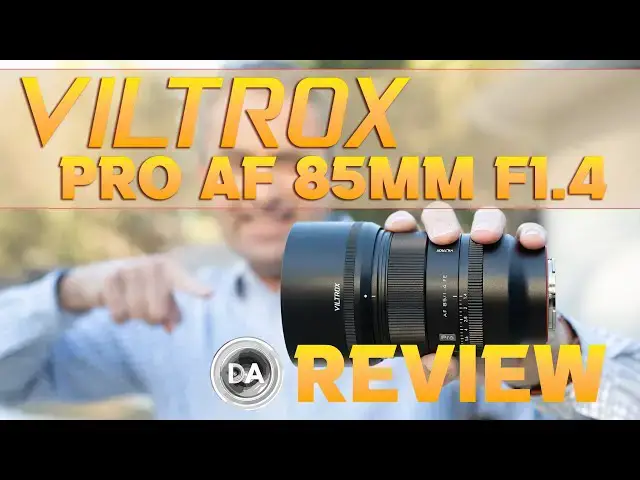
Viltrox PRO AF 85mm F1.4 FE Review | GM Quality for $600?
Apr 18, 2025

Photographer Dustin Abbott shares a deep dive review of Viltrox's next industry disruptor - the Viltrox PRO AF 85mm F1.4 - the first full frame lens in their hit Pro series. | Read the Text Review: | Visit the Image Gallery: |
Check out the DA Merch here: https://bit.ly/TWIMerch | Become a Patron: https://www.patreon.com/dustinabbott | On the Web: http://dustinabbott.net/ | Sign up for my Newsletter: http://bit.ly/1RHvUNp | Instagram: http://bit.ly/DLAinsta | Facebook: http://on.fb.me/1nuUUeH | Flickr: http://bit.ly/1UcnC0B | 500px: http://bit.ly/1Sy2Ngu Follow Craig @ https://www.instagram.com/craigstoffersen/
Want to support this channel? Use these affiliate links to shop at:
B&H Photo: http://bhpho.to/1TA0Xge
Adorama: https://howl.link/nt4zdz1goa7ql
Camera Canada: http://bit.ly/DLACameraCan
Sony Canada: https://www.thesonyshop.ca/?ref=abbott
Amazon: https://amzn.to/3HrY64d
Amazon Canada: https://amzn.to/3qG1p18
Ebay: http://bit.ly/DustineBay
Into the AM Clothing: https://bit.ly/intotheAMda and use code DUSTIN10 for 10% off
Fioboc Clothing: https://tinyurl.com/FiobocDA20 and us code DUSTIN20 for 20% off
Make a donation via Paypal: https://www.paypal.com/paypalme/dustinTWI
=============================
Table of Contents:
=============================
0:00 - Intro
1:18 - Pro vs LAB
2:20 - Build and Features
9:36 - Autofocus for Stills
12:02 - Video AF
13:16 - Image Quality Summary
18:40 - Conclusion and Pricing
20:04 - Optical Deep Dive
---------------------------------------------------------
Oben Tabletop Tripod shown in video: https://bhpho.to/3vL8YWy
My Cameras:
Purchase the Sony a7RV @ B&H Photo https://bhpho.to/3ZivNyZ | Adorama https://howl.me/cjNY1LU3gFH | Amazon https://amzn.to/3CRCDlq | Camera Canada https://shrsl.com/3vulf | Sony Canada https://bit.ly/BuyA7R5 | Amazon Canada https://amzn.to/3H8yeNH | Amazon UK https://amzn.to/3kbg5FM
Purchase the Sony Alpha 1 @ Camera Canada https://shrsl.com/2wdk2 | B&H Photo https://bhpho.to/3upRFZd | Adorama https://howl.me/cj2nQpjLBKW | Amazon https://amzn.to/3t1m8MD | Sony Canada https://bit.ly/BuySonyA1 |Amazon Canada https://amzn.to/3cVFrBB | Amazon UK https://amzn.to/2OtrjGe | Amazon Germany https://amzn.to/3d0GtMO | Ebay https://ebay.us/i371Vs
Canon EOS R5: B&H Photo https://bhpho.to/3iMH18x | Amazon https://amzn.to/33L3D53 | Camera Canada https://shrsl.com/2jqth
Purchase the Fujifilm X-H2 @ B&H Photo https://bhpho.to/3KAInTC | Adorama https://howl.me/cjyzbiO5lVp | Amazon https://amzn.to/41zMzKl | Camera Canada https://shrsl.com/4128o | Amazon Canada https://amzn.to/40gY4W7 | Amazon UK https://amzn.to/43Grn7a | Amazon Germany https://amzn.to/3L6hwjR
Get a discount off all Skylum Editing Software (Luminar, Aurora HDR, AirMagic) by using code DUSTINHDR at checkout: http://bit.ly/LuminarDLA
DISCLAIMER: This video and description contains affiliate links, which means that if you click on one of the product links, I’ll receive a small commission. As an Amazon Associate I earn from qualifying purchases.
Keywords: Viltrox AF 85mm F1.4 Pro FE, Viltrox AF, Pro, Viltrox Pro, #PRO, #PRO85, #explorebeyond, Viltrox 85mm, Normal, Full Frame, F1.4, f/1.4, VCM, Viltrox Pro 85mm F1.4 FE, Viltrox PRO 85mm Review, Viltrox AF 85mm F1.4 FE Review, Sony a7IV, Sony Alpha 1, Sony a7RV, Review, Hands On, Dustin Abbott, Real World, Comparison, Sharpness, Bokeh, Flare Resistance, Autofocus, Image Quality, Sample Images, Video, Photography, let the light in, weathersealing, #letthelightin, DA
Show More Show Less View Video Transcript
0:00
[Music]
0:10
well here we go again Viltrox is back with a lens that competes with the very best on the platform at a price that is
0:17
well below the competition The Viltrox Pro AF 85mm F1.4 is the first full-frame
0:24
lens in their Pro series We've seen a couple of APS-C lenses 27mm f1.2 and a
0:30
75mm f1.2 on APS-C but this is the first of the
0:36
F1.4 Pro Series lens for full-frame So the Pro 85mm
0:42
F1.4 delivers top tier optics top tier build and top tier autofocus for a
0:49
bargain price of just $598 even less if you use the discount
0:55
code that you can find in the description So I've been using the Sigma 85mm
1:02
f1.4D art lens for the last four or five years I've compared it to just about
1:07
everything and I still have it I really really like it But has my Sigma lens
1:12
finally gotten dethroned well we'll look at that more right after a word from our
1:17
sponsor So let's start by defining what the Pro Series is At this point we're aware that Viltrox has their premium lab
1:25
series lens So we'll call that their G Master here since we're in Sony space And those in the case of an 85mm lens
1:32
will come in the form of an F1.2 lens So we've already seen the 35mm f1.2 lab
1:37
along with 135mm f1.8 And still to come is a 50mm and 85mm f1.2 However Viltrox
1:46
is also going to hit the 35,50 and 85mm uh focal lengths with a pro f1.4 lens
1:53
and this is the first of these So interestingly here over the last 3 months we've seen a lens from each one
2:00
of their series at a different focal length And so we've seen the 50mm f2 from their air series We've seen the
2:07
35mm f1.2 from the lab series And then the 85mm f1.4 from the pro series It's
2:13
kind of a cool approach actually where they're mixing and matching and we'll probably see all of that swapped around in the next round of lenses This is a
2:21
lens that although we're kind of now looking at what the definition of what a pro versus the lab series is I would say
2:28
that this is a actually a really beautiful lens and in many ways the longer that I have used it actually the
2:35
more that I've come to appreciate it I really like aspects of the lab design And from a visual perspective I have to
2:41
admit I kind of miss that cool OLED screen that's right there in the center of the lens but on a practical level
2:48
when it comes to the handling here I like this lens a lot And there are things that I don't love about the Lab
2:54
series that I actually kind of prefer here on the Pro series So it is a beautifully made lens made out of
3:00
premium materials We've got aviation grade magnesium magnesium aluminum alloy
3:05
as for the body and the chassis That's a really tough material and it feels very
3:10
very premium which for the price it's it's not really priced like a premium lens at all but it certainly feels like
3:17
one Now the downside of that is that it's a it's a beautiful build but it doesn't come small or light which has
3:24
been kind of a trend with these premium lenses from Viltrox It is 84.5
3:30
millimeters or 3.3 in in diameter It's 108.5 millimeters or 4.27 in in length
3:38
Now compared to the Sigma which the Sigma they did a great job of downsizing this lens So the Sigma is smaller It is
3:46
about 2 mm narrower in diameter and it's a full 12 mm shorter in overall length
3:54
The G Master Mark II lens is about the same size as the Viltrox almost identical identical in its overall
4:00
specifications However the Viltrox is the heaviest of this trio It come weighs in at 800 g or 28 oz And so that
4:08
compares to 625 g for the Sigma 642 g for the G Master Significantly heavier
4:15
than the other two in this trio of lenses It does have a 77mm front filter
4:21
thread which is shared with the recent 35mm f1.2 lab series lens It has a
4:27
traditional aperture design for which I can say a big yay I like that much
4:33
better than the approach on the lab series which interacts with the um OLED screen And beyond that it also is going
4:40
with more of a Nikon customizable control ring type approach I don't love that on Nikon
4:47
necessarily and I don't love it on the lab series either I prefer we'll call it the Sony approach which is just a
4:53
traditional aperture ring And so that means that you have the option of having it in clicks with the traditional 1/3
5:00
stop markings from f1.4 to f16 and then a hard stop between f-16 and the a or
5:06
automatic mode What we're don't have here is an aperture iris lock Something that the GM and the Sigma do have where
5:14
you can either lock in of that aperture ring or out of the aperture ring depending on your preference But we do
5:19
have the ability to declick the aperture And as you can see here I was able to do
5:24
pretty good aperture racks uh without any kind of visible steps And so that's a great feature to have there Aperture
5:32
Iris itself has 11 rounded blades And as you probably saw in the sequence I just showed you it does a pretty decent job
5:39
of maintaining a circular shape with the geometry as you stop the lens down Other
5:44
features include an AFMF switch always welcome and then the customizable function button on the side which is
5:51
whatever function you've assigned through the camera body to that particular button So always good to have
5:57
that It has basically matches the feature set of the Sigma and the GM lens
6:02
with the exception of that iris lock that I mentioned that both of those have and this does not We do have a
6:09
thoroughly weather sealed body here and that starts with this cool magenta colored uh ring that's at the rear of
6:16
the lens I think which I really like kind of that distinctive look I loved when Zeiss first came out with the blue
6:22
rubber gasket there at the end And so I like this look as well I also appreciate the fact that I count about 10 other
6:29
seal points throughout the lens Also present here on the lens mount is a USBC port Now the lens is also Bluetooth
6:36
enabled and so the you have the ability to do firmware updates either through a computer with the USBC port via
6:42
Bluetooth or you can actually do a direct connection with USBC to your phone I found this to be a little bit
6:48
more stable in my opinion than the Bluetooth firmware updates And so that's the way that I've just been doing it is
6:54
through the app and then a direct connection to the lens Now unlike the Lab series you don't have any
6:59
customization options because a lot of those are centered around a secondary function button and also the LCD screen
7:07
and whatever you can program there Outside of the aperture ring we do have a focus ring here at the front It does
7:14
move smoothly with a nice damping I wouldn't mind it even a little bit heavy heavier But one thing I did note is that
7:21
the focus throw is a little on the long side But I was able to still do you know smooth focus pulls and if you want it's
7:28
it's not linear and so if you go a little bit faster you can vary up how how long those rotations are going to be
7:35
I actually found I could do a decent job of doing repeatable pulls As you can see in this clip there is no lens base image
7:43
stabilization or optical stabilization So you're going to have to rely as with all the all the competing lenses with
7:48
whatever your camera body has in terms of image stabilization Now a lot of these recent
7:54
Viltrox lenses along with a lot of Sony lenses for that matter other premium lenses do have floating elements to help
8:01
with uplose performance So what that means is when your lens is disconnected you will feel a little bit of a clunking
8:07
of things moving around However that goes away the moment that you mount the lens and turn the camera on no clunk
8:13
left because those elements are now energized and won't be moving any longer
8:18
So what that enables you to do however is to get a better a little bit better minimum focus distance You can focus
8:24
down to 79 cm and you get a 0.13 times level of magnification On paper that's a
8:31
little bit better than the Sigma It's hard for me to tell with them side by side And it is definitely better than
8:36
the GM which is only a 0.11 times But what is definitely true is that you do
8:42
get excellent uplose performance with good contrast and good detail And so those floating elements are doing their
8:48
job A lens hood is included It's just bayonet style No locking thing on it I
8:54
wouldn't say that the lens hood feels quite as premium as what I've seen on the Lab series lenses but you know it's
8:59
nice enough I think the Sigma hood's a little bit nicer but um you know it's it's it's fine It does the job It does
9:07
include a pouch like a leatherrett type pouch Overall I would say that the build quality is very nice Um I would say it's
9:15
pretty much the same class as the Sigma and the GM lens Maybe the lens hood might be the exception with Sigma taking
9:21
a little bit of a win there but I actually think that this is a really beautiful lens It's it's a really clean
9:26
looking design and I really like the design language they've got going here I wouldn't mind at all if the 35mm and the
9:32
50mm f1.4 4 Pro series follows in that same pattern So how about autofocus
9:39
we've actually got the same style of hyper VCM focus motor in this lens than
9:44
what we do in the lab series lenses The difference being with the lab lenses we've seen with both of the ones
9:50
released so far that they feature either dual or quad hyper VCM focus motors
9:55
We've only got a single one here but remember the Sigma for example is running off of a single STM focus motor
10:02
And so this HyperVCM motor does allow you to get faster overall focus pulls
10:08
And when I did um you know racking focus back and forth I definitely found that the Viltrox was a little bit faster than
10:15
with the Sigma Now of course neither one of these are in the class of the GM Mark II which has exceptional you know multi
10:23
um of their XD linear focus motors They're great focus motors And I think
10:28
Sony does the probably the best job that I see of any brand with integrating into their premium lenses And so not quite at
10:35
that that class but very fast Fast enough that I had no problem grabbing birds in flight at f1.4 for example I
10:42
also found that just when trying to just kind of snap up focus at my son from being defocused to just grabbing his eye
10:49
instantly locked on the eye And as you can see it is perfectly focused So all of that is very very good Autofocus is
10:56
also very quiet in operation and it just quickly racks back and forth No problems
11:02
there I shot a portrait series and I got very very good portrait results And that
11:09
was true even when I was shooting in backlit situations shooting full body shooting closer it didn't matter I got
11:15
perfectly focused results As we're going to see this is a really sharp lens and so I had zero problems in getting great
11:21
looking portrait results Now one caveat with any third-party lens on Sony and
11:27
that is that your burst rate is going to be capped at 15 frames per second And so
11:32
that's on my Alpha 1 that I've got it on here that means I'm getting half of the overall burst speed And if you were
11:39
shooting with an A9 Mark III it means you're at 15 frames a second instead of potentially 120 frames per second So
11:46
obviously if you're wanting to shoot sports and you're wanting to shoot at high burst rates you may need to go with the Sony lens instead But if you're
11:53
comparing with any of the other 85mm thirdparty lenses this is the top tier that I'm seeing right now in terms of
11:59
the focus performance So great job Viltrox On the video side of things I
12:05
found that video focus pulls uh were mostly smooth but I did feel like there
12:10
was a little bit of pulsing There's a lot of speed there and it's almost like it was moving faster than what the
12:16
algorithms were keeping up with at times And so um maybe a little less than per
12:21
perfect there I did see some focus breathing noticeable amount of focus
12:26
breathing So I'm not going to justify that other than to say I saw even more with the Sigma lens And so um it is an
12:33
improvement on that But obviously you're going to get a better result with a Sony lens Again because Sony has the
12:40
limitation that the focus breathing compensation that's available in some of their cameras it only works with Sony
12:45
lenses not third party lenses I did find in my hand test that I had no problems with that Transitioning from my hand to
12:52
my eye and back no problems there I also found that real world focus results were
12:57
good For example here is I'm tracking a seabird moving along in very early pre-dawn light f1.4 no problem Focus is
13:05
moving along excellent on that And obviously in static shots where I didn't want focus moving around it didn't move
13:12
around It stayed nice and stable overall So good results there So how about the
13:17
image quality i will give you a deep dive in the optical performance after that And by the way I will be releasing
13:23
a subsequent video where I really go head-to-head in every area with the Sigma to help you to make a
13:28
determination between these two lenses We have an optical design in this new Vtrox of 15 elements in 11 groups Almost
13:35
all of those are exotic elements So we have three extra low dispersion nine high refractive index elements and one
13:42
aspherical elements So that leaves only two leftover non-exotic elements in this
13:47
optical design So they've really thrown a lot of good stuff in there You can see that the MTF chart looks really really
13:54
good for an 85mm lens Save in the far corners There's a little bit of a dip
13:59
What I found at f8 is you pretty much get a straight line across but it's at just a little bit lower uh level in the
14:06
center of the frame as compared to wide open So if I line it up next to the Sigma's MTF you can see that over a lot
14:14
of the frame the Viltrox is a little better but because they both go up and down a little bit there's some give and
14:20
take between the two And frankly give and take is how I would quantify what I found in head-to-head comparisons
14:26
Neither one of these lenses quite reaches the level of optimal contrast and detail that the GM Mark II does but
14:33
the GM Mark II also has a trade-off that I'll get to in just a second I found in
14:39
real world results as noted that it was give and take versus the Sigma And so I found that overall I think the Sigma has
14:45
a bit higher contrast at large apertures but uh while the Sigma looked a little
14:50
bit sharper in the mid in the center of the frame to me I preferred the mid-frame and the corners three out of
14:57
four corners looked better on the the Pro the Viltrox Pro lens compared to the Sigma with one corner looking better on
15:04
the Sigma So again there's give and take certainly along the way By the time you stop them down to f2.8 both these lenses
15:10
are ridiculously sharp all across the frame I don't know that I would use sharpness as the means of
15:15
differentiating between the two However one area where the Vtrox is very
15:20
obviously better than the Sigma is when it comes to distortion The Sigma has kind of a weird amount of pin cushion
15:27
distortion I felt like at the time when I reviewed it that it was what had to give in the engineers to get the lens as
15:34
compact as they did Obviously it didn't put me off too much cuz shortly after doing the review I bought one and uh I
15:40
have been using it ever since But the Viltrox has almost no discernable distortion I I dialed in a minus2 So a
15:47
tiny bit of pin cushion distortion but frankly you could leave it uncorrected and never notice Also in the vignette
15:53
department quite low for an F1.4 lens Only a plus 48 to correct the vignette Even at f1.4 and you know as you stop it
16:01
down it'll brighten up a bit The Sigma wasn't bad either but the Vtrox is just slightly better in that regard I found
16:07
that it wasn't like a lab level of correction for fringing There was a little bit of fringing Not really much
16:13
on the chart but I did see some in some real world situations but very very minimal amount Tiny bit of fringing in
16:20
bokeh highlights for example but I didn't see any of the lateral style chromatic aberrations No problems there
16:27
I got really really excellent wide openen sharpness results Again not GM levels of contrast I don't think that
16:33
the Viltrox has quite as high a level of contrast However as we're going to see in the rendering department that may
16:39
actually pay off for it It's it's a pretty sweet blendness uh blend of sharpness and contrast Real world shots
16:46
there was plenty of sharpness and plenty of contrast I never felt like I lacked in those Stopping down to f2 you'll see
16:53
some improvement Not so much in the center of the frame but you'll see it in the mid-frame in the corners a bit By the time you get to about f2.8 8 you're
17:00
pretty much perfect You'll get a little bit more corner sharpness at f4 and f5.6 but it's it's just it's splitting hairs
17:07
at that point So basically from f2.8 to f8 you're pretty much getting perfect sharpness across the frame A tiny step
17:14
back at f11 due to defraction and at f-16 a little bit more F-16 is minimum
17:19
minimal aperture but it never gets too bad Where this lens definitely in my
17:25
opinion exceeds the GM Mark II is in the bokeh quality I didn't love the
17:30
rendering from the GM Mark II It's amazingly sharp And if you go back and watch that review I praised it because
17:36
of its incredible sharpness but I did lament that I didn't feel like the rendering had that special sauce that I
17:43
love I would say that this lens does I actually really like the Sigma as well And frankly I did lots and lots of side
17:50
byside comparisons and it was hard for me to see a difference between the two And since I considered the Sigma to be
17:56
awesome it means I also think that the Viltrox is awesome I also think that it
18:01
has just a beautiful blend of sharpness and softness So sharpness where it matters softness where it matters This
18:08
simple shot of just evergreen needles you can see it just nails both of those things I also found that the colors were
18:15
really really good And again in doing you know head-to-head comparisons I would say that I actually slightly
18:20
favored the Viltrox colors versus the Sigma colors And so again great job
18:25
there There are some minor flare issues that you can see here It's not flawless but again there's nothing that was
18:32
overly disruptive that I found either And so I would it's about what I would call an average performance for Flare
18:38
which these days is pretty good overall So my conclusion is this This is an
18:44
another amazing Viltrox blend of build features autofocus and optical
18:51
performance at a fabulous price Frankly I don't hardly know how they're doing it
18:57
Producing lenses this good and charging as relatively little for them as they do
19:03
It's it's some kind of wizardry that I don't fully understand You have the siri
19:08
Aurora 85mm f1.4 that you can get for a little bit cheaper You've got the
19:14
Samyang AF85mm f1.4 Mark II that is in the same kind of price maybe a few
19:21
dollars more But you know what but when you look at all of these sub $1,000 85mm
19:26
options I would take the Viltrox every day of the week over any of them Yes it is a little bit bigger and heavier than
19:32
those lenses but outside of that man there's just very little to complain about And the fact that I am seriously
19:39
debating between which one of these lenses I'm going to use as my 85mm lens
19:44
moving ahead it tells me that Viltrox has done a fabulous job cuz I love the Sigma and I will do that deeper dive
19:51
with the Sigma yet to come and so you can decide for yourself Now if that wasn't enough information for you you
19:57
can either check out my full text review that's linked in the description down below or stay tuned and we'll jump into
20:02
a deep dive of the optics right here together Okay we'll start by taking a look at vignette and distortion You can
20:09
see here with the uncorrected image on the left that there is just the tiniest amount of pin cushion distortion You
20:15
really wouldn't see it unless you were looking at a grid or a chart like this very simple to correct I used a minus2
20:21
to correct just a little bit for here in the corners There's just a there is some vignette It's not particularly heavy but
20:28
it is present I used a plus 58 to correct for excuse me plus 48 to correct
20:35
for what was present there So just right under two stops Taking a look here we can see that there is a bit of
20:40
longitudinal style chromatic aberration Not strongly pronounced but little bit of magenta before a little bit of green
20:46
afterward No big deal there What I found in real world shots is that yes there is
20:51
a tiny bit of that green fringing that's after the plane of focus Mostly what I see out of this is it's just enough that
20:58
there's just a little bit of blooming on some of those textures So contrast is just a little bit lower There's a
21:04
trade-off for that that we'll come back to Here you can see that lateral chromatic aberrations are literally zero
21:11
problem I don't see any evidence of fringing here near the edge of the frame in those transitions from black to white
21:17
So here's the test chart that we'll examine at very high magnification This is with using a 61 megapixel uh A7R Mark
21:24
I and we'll look at 200% magnification In the center of the frame you can see
21:29
great detail and good not exceptionally good but very good contrast overall The
21:35
mid-frame actually looks really quite excellent It's holding up very nicely A lot of detail and information there And
21:41
again contrast isn't so strong that it's creating that strong wire pattern but uh
21:46
contrast is good And you can see a nice consistency from this point to this point I like to check towards the
21:54
corners We do see a little bit of a softening effect but we also see a very
21:59
consistent performance in the corners all around And so it's a nice centering
22:04
job So here we have the Sigma at f1.4 on the right You can see that the Sigma
22:10
does have some deeper contrast levels There's a little bit more of that MAR pattern showing up which shows a little
22:16
bit more intense contrast that's taking place in this mid-frame zone We can see
22:21
that I would say I actually like the Viltrox detail just a little bit better
22:26
but it is it's very very close And if we look down in this right corner I like
22:32
the Sigma better If I look over on this side however I think the Viltrox a little bit better up in this corner
22:38
Again I think the Viltrox is a little bit stronger Look at this versus this for example And the upper right corner I
22:46
definitely think that the Viltrox is cleaner right out to the edge as you can see here So there's some give and take
22:53
there It really kind of looks at depends on where you're examining in the frame Now while I think looking at the test
22:58
charts is very informative it doesn't always give you context for real world performance So here's f1.4 for again 61
23:05
megapixels but at 100% magnification which is the way you're actually going to look at your images at most and you
23:11
can see that there's just a beautiful amount of detail there in the early morning light here is you know from a
23:17
higher position shooting at f1.4 four And so obviously there's going to be minor depth of field issues even from
23:23
this height You can see that we've got detail that goes off right into the corners Uh no problem with that Up in
23:30
this corner it's going to be a little more impacted by depth of field but plenty plenty of detail there And if I
23:36
cue up an f5.6 version here on the right you can see the contrast has deepened
23:42
And so you know shadows look a little bit deeper All of that looks a little bit more intense Obviously depth of
23:48
field is going to help in the corners and so they're going to be more positive but we can see that overall I mean it
23:55
doesn't look bad at all at f1.4 It looks good and it obviously is going to look better at
24:00
f5.6 So for portrait work you've got plenty at f1.4 to work with And so I'm
24:06
going to show you a few f1.4 portrait shots You know obviously shooting full body at f1.4 four allows you to have the
24:12
black background nicely blurred out some great subject separation but plenty of
24:17
detail You're never going to get um you know models that are asking for more
24:22
detail than what we are seeing uh here in these shots You can see here with a little bit more favorable light that you
24:29
know the contrast ratio goes up a little bit more and so the detail is really fantastic but also just really gorgeous
24:35
separation and rendering of the background here Even in a strongly back lit situation you can see detail is
24:42
holding up really nice I mean the intense sun is right here in the frame And you can see that again um it's
24:48
there's maybe a little less contrast in a situation like this but plenty of detail No problem there Now if we stop
24:55
down to f1.8 I don't really see a significant improvement here I would say there's probably a little more contrast
25:02
We'll look at one other spot to see And yeah I mean think the the brights are brighter and so that's showing a little
25:07
bit more intense contrast You move on to f2 I would say it's just a little bit
25:12
more pronounced in terms of the detail we're seeing You can see up here into the corner for example that again
25:19
there's just a little bit more contrast Like all of this text looks a little inkier And so definitely some
25:25
improvement there But again it's not like a huge huge difference From f2 to f2.8 date we see more contrast that is
25:33
emerging there You can see here that shadows just look dark darker and so the
25:38
textures just pop a little bit more back in the center of the frame You know it looks good Uh it doesn't necessarily
25:44
look significantly different up here You can see however that you know all of this text is just becoming more
25:51
pronounced by f 5.6 Really really just awesome all across the frame And this
25:57
corner which I think was the weakest of the the four you can see it's now intensely good And so zero problems with
26:04
resolution By f11 we'll see a bit of softening due to defraction mostly in loss of contrast And you can see that
26:11
becomes more pronounced at f-16 which is minimum aperture Here power for the course on a high resolution body We can
26:17
see at the minimum focus distance at f1.4 we have got good but not great
26:24
contrast Uh plenty of detail there No problem there The plane of focus is nice
26:29
and flat So um I'm I think it's very useful up close Gives you a look at a
26:34
three-dimensional object at minimum focus So there's your magnification level but also the kind of contrast and
26:40
detail that you can expect to see And I think that it's looks just fine Uh
26:45
looking here for a moment you can see in these specular highlights that there is a there's a little bit of activity in
26:52
there Certainly not to the onion ring level but you know definitely a little bit of an inner line A tiny bit of
26:57
fringing around some of those specular highlights And so you know good but not exceptionally good Looking out into a
27:03
real world shot here at minimum focus you can see that nice very very razor thin depth of field And so obviously at
27:11
minimum focus distance in some cases you're probably going to want to stop down because that depth of field is very
27:16
small Very nice transition to defocus Uh this image stands out as a great
27:22
combination of really really good detail and contrast here and then a pretty soft
27:27
rendering of what is a fairly complicated background Likewise here I really like
27:33
the subject isolation I've intentionally put some foreground uh material here and so you can see bokeh both before and
27:40
after the plane of focus You can see detail looks great but then that transition to defocus also great Here's
27:48
another shot here So lots of opportunity for fringing here and loss of contrast
27:54
And again you know contrast is good It's It's not like the GM level of contrast but I think I there's plenty there for
28:01
most people to be perfectly happy with Uh this image I think looks great Um
28:06
good amount of detail and contrast on that but the rendering of a fairly complex background is great And I
28:12
actually I'm really partial to the color that comes off of this lens I think it's just really really nice And and so here
28:19
you can see the managed to catch some of the raindrops that were falling while I was out shooting with this But I mean I
28:26
think that image looks great So here we can see up close contrast uh in this
28:31
really really difficult zone as far as the fringing There's a little bit there maybe a little in this transition but
28:37
this is one of the things that I shoot to really show off for longitudinal style chromatic aberrations And frankly
28:44
I'm not concerned with anything there You can see as we stop the aperture down that our are specular highlights they're
28:51
getting more consistently round across the frame You can see those 11 aperture blades but again it's it's it's a pretty
28:58
circular shape all the way down to f4 Still looking quite good Again I I think that the colors are great from the lens
29:05
I love just you know this is a simple image but I just love the way that it comes out Colors here obviously look
29:11
beautiful Uh I love you know this shot you know just catching all of that spray
29:16
and foam against that rising sun But beautiful color rendition This is a raw image right out of camera There's
29:22
nothing literally nothing that's been done to it So very very nice As far as
29:28
flare you can see here this is wide open A little bit of a ghosting pattern a little bit of loss of contrast Stopping
29:34
down to f11 There's your sunstar Uh it's a little busy to my eye Just too many
29:39
blades These highbladed uh lenses they're great for uh keeping a circular
29:45
shape Not so great for the sunstar but people aren't using 85 millimeters for that Anyway now as you get closer to the
29:51
corner you'll get a little bit more of a stretching of that ghosting artifact and I like that less here wide open You can
29:58
see that it's there but not quite as prominent Finally when it comes to the
30:03
night sky star points in the center of the frame they look really really good As we pan off here to the corner you can
30:10
see that right up in the corner you're definitely seeing some little bit of wings That's the effects of coma that's
30:16
taking place It seems to be mostly concentrated just in the very corners But just note that uh it isn't perfect
30:22
in that regard though you know as you can see it neither is it bad either And so as you can see this is a lens that
30:29
just really has that great blend of sharpness and then rendering It's not
30:35
perfectly corrected so much so that it loses all of its character but corrected enough that you're not dealing with the
30:41
flaws either Great job Viltrox As always thanks for watching Have a great day and
30:47
let the light in [Music]
Science