Up next in 10

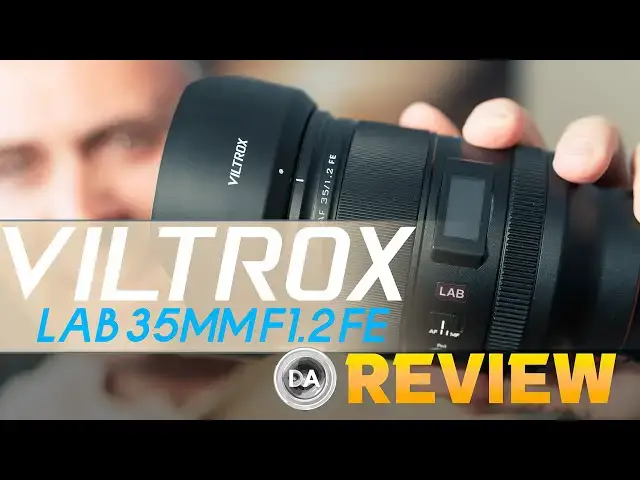
Viltrox LAB 35mm F1.2 FE Review | Viltrox Bullies the Competition
Apr 6, 2025

Photographer Dustin Abbott shares a deep dive review of Viltrox's next industry disruptor - the LAB 35mm F1.2 FE. Is this the new top 35mm option? | Read the Text Review: | Visit the Image Gallery: |
Check out the DA Merch here: https://bit.ly/TWIMerch | Become a Patron: https://www.patreon.com/dustinabbott | On the Web: http://dustinabbott.net/ | Sign up for my Newsletter: http://bit.ly/1RHvUNp | Instagram: http://bit.ly/DLAinsta | Facebook: http://on.fb.me/1nuUUeH | Flickr: http://bit.ly/1UcnC0B | 500px: http://bit.ly/1Sy2Ngu Follow Craig @ https://www.instagram.com/craigstoffersen/
Want to support this channel? Use these affiliate links to shop at:
B&H Photo: http://bhpho.to/1TA0Xge
Adorama: https://howl.link/nt4zdz1goa7ql
Camera Canada: http://bit.ly/DLACameraCan
Sony Canada: https://www.thesonyshop.ca/?ref=abbott
Amazon: https://amzn.to/3HrY64d
Amazon Canada: https://amzn.to/3qG1p18
Ebay: http://bit.ly/DustineBay
Into the AM Clothing: https://bit.ly/intotheAMda and use code DUSTIN10 for 10% off
Fioboc Clothing: https://tinyurl.com/FiobocDA20 and us code DUSTIN20 for 20% off
Make a donation via Paypal: https://www.paypal.com/paypalme/dustinTWI
=============================
Table of Contents:
=============================
0:00 - Intro
1:14 - Build and Features
11:59 - Autofocus for Stills
14:34 - Video AF
16:20 - Image Quality Summary
23:28 - Conclusion and Pricing
24:21 - Optical Deep Dive
---------------------------------------------------------
Oben Tabletop Tripod shown in video: https://bhpho.to/3vL8YWy
My Cameras:
Purchase the Sony a7RV @ B&H Photo https://bhpho.to/3ZivNyZ | Adorama https://howl.me/cjNY1LU3gFH | Amazon https://amzn.to/3CRCDlq | Camera Canada https://shrsl.com/3vulf | Sony Canada https://bit.ly/BuyA7R5 | Amazon Canada https://amzn.to/3H8yeNH | Amazon UK https://amzn.to/3kbg5FM
Purchase the Sony Alpha 1 @ Camera Canada https://shrsl.com/2wdk2 | B&H Photo https://bhpho.to/3upRFZd | Adorama https://howl.me/cj2nQpjLBKW | Amazon https://amzn.to/3t1m8MD | Sony Canada https://bit.ly/BuySonyA1 |Amazon Canada https://amzn.to/3cVFrBB | Amazon UK https://amzn.to/2OtrjGe | Amazon Germany https://amzn.to/3d0GtMO | Ebay https://ebay.us/i371Vs
Canon EOS R5: B&H Photo https://bhpho.to/3iMH18x | Amazon https://amzn.to/33L3D53 | Camera Canada https://shrsl.com/2jqth
Purchase the Fujifilm X-H2 @ B&H Photo https://bhpho.to/3KAInTC | Adorama https://howl.me/cjyzbiO5lVp | Amazon https://amzn.to/41zMzKl | Camera Canada https://shrsl.com/4128o | Amazon Canada https://amzn.to/40gY4W7 | Amazon UK https://amzn.to/43Grn7a | Amazon Germany https://amzn.to/3L6hwjR
Get a discount off all Skylum Editing Software (Luminar, Aurora HDR, AirMagic) by using code DUSTINHDR at checkout: http://bit.ly/LuminarDLA
DISCLAIMER: This video and description contains affiliate links, which means that if you click on one of the product links, I’ll receive a small commission. As an Amazon Associate I earn from qualifying purchases.
Keywords: Viltrox AF 35mm F1.2 LAB FE, Viltrox AF, LAB, Viltrox LAB, #LAB, #LAB35, #explorebeyond, Viltrox 35mm, Normal, Full Frame, F1.2, f/1.2, Hyper VCM, Viltrox LAB 35mm F1.2 FE, Viltrox LAB 35mm Review, Viltrox AF 35mm F1.2 FE Review, Sony a7IV, Sony Alpha 1, Sony a7RV, Review, Hands On, Dustin Abbott, Real World, Comparison, Sharpness, Bokeh, Flare Resistance, Autofocus, Image Quality, Sample Images, Video, Photography, let the light in, weathersealing, #letthelightin, DA
Show More Show Less View Video Transcript
0:00
[Music]
0:10
so here it is the first of the f1.2 lab series lenses from vro this is the 35mm
0:18
f1.2 lab and I'm going to be reviewing it on Sony emount today I'm filming with it at the moment this f1.2 series of
0:26
lenses is almost certainly going to be a very serious disruptor on both the Sony e-mount and the Nikon Z Mount space
0:34
because these are ridiculously good lenses much like the 135mm f1.8 that I
0:40
reviewed last fall the lab 35mm f1.2 comes with brilliantly good Optics
0:47
incredibly fast autofocus and a very affordable price downside being it's big
0:54
and it's heavy however as we're going to see in this case when you're comparing against f1.2 competition it's really not
1:01
all that big and heavy relative to what exists on the market but there's no question that this lens is going to
1:07
cause some palpitations amongst the first-party brands we'll dive in today and see why that happens to be the case
1:14
so we'll start by taking a look at the build and handling of the lens as you can see this is a large lens and there's
1:22
no question about that however it is it's all about context this is a big
1:28
lens if you compare it to for example Sony's own 35mm f1.4 GM a lens that I
1:34
own and I love and it is amazingly Compact and so compared to that the lab
1:40
series lens looks huge however if you look at some of the more direct kind of counterparts we have the now
1:46
discontinued Sigma 35 mm f1.2 DM that lens was 15 mm longer than this lens and
1:54
weighed 170 G more so significantly bigger and heavier like wise the newly
2:00
released uh Nikon 35mm f1.2 sline lens that this viltrox lens will be going
2:07
directly up against once it comes out on Nikon zount that lens is a full 29 mm
2:14
longer and weighs 140 additional grams and so if you compare it kind of directly to the 35mm f1.2 options that
2:22
exist on the market or have existed then the size of it is actually lower than
2:28
those and so I'm going to give it a little bit more of a pass than what I did with the 135 mm lab which was bigger
2:34
and heavier than everything and so in this case we are looking at overall size of 89.2 mm or 3.5 in in diameter
2:44
121.8mi
2:50
thread very common and it weighs in at 920 G or
2:56
32.4 Oz reason for that weight is twofold number one we have got a really
3:03
beautiful mag magnesium aluminum alloy body and so you know aircraft grade
3:09
materials used on this and then also of course there's lots of glass with that f1.2 aperture and so all of that adds up
3:16
to a lens that has some heft to it there's no doubt about it another thing that's relevant to those two competitors
3:21
that I've mentioned already is that relative to the sigma the lab is coming to the market at just a little more than
3:26
50% of that price and it's about a third of the price of the sine lens from Nikon
3:32
and so it obviously is a huge value when considered from that perspective I've been spending a little more time with
3:39
some of Nikon's sine lenses and so part of the design philosophy really makes a
3:44
little bit more sense to me now with the lab series lenses and I say that because I was coming to the lab series from
3:52
obviously first releasing onone emount and that continues to be the case here from the son emount perspective the
3:58
design decision made around the aperture ring makes a little bit less Sense on
4:03
Nikon and that's true of the z-mount version of the 135 mm lab I'm sure will be true of this when it comes to zount
4:10
as well like Nikon S sine lenses this ring is not just an apure ring but it's
4:16
a customizable control ring so it can be used for other things be it uh ISO or
4:22
exposure compensation and so you can program other features on Sony you can't do that and if you're just operating it
4:28
purely as an aperture ring well frankly I would prefer a more traditional aperture setup in this case we have
4:35
something that acts more like that control ring but it only has one possible function and that is going to
4:41
be for aperture now you do have a couple of options here because there are no marked positions means you're going to
4:47
be relying either on the LCD screen or something on your camera to tell you what apt aperture position that you've
4:53
selected however the screen is going to show you that aperture information you
4:58
do have the option to de click the aperture and for it to become much smoother and to allow you to do things
5:03
like aperture racking it works fairly well for aperture racking but you'll notice here that there is some very
5:11
slight evidence that it's moving in stops rather than moving just smoothly
5:17
with the aperture opening and closing in just one linear fashion and so I didn't find that I could do perfect aperture
5:23
racking there you can see some of the steps along the way so I'm hoping that maybe firmware will allow them to
5:29
improve that behavior but I have no guarantee that that's going to happen the other thing that I don't love about
5:34
this particular approach is that because it's designed to be used potentially for other things as well it means that
5:40
you're not instead of having like the onethird stop clicks instead it's more like every click that you feel if it's
5:47
clicked is more like a ninth of a stop and so it's a little bit of an odd configuration that I don't love there
5:54
what is better however is that the aperture Iris itself it has 11 BL blades
6:00
they are pretty nicely round and as you can see as we go back through some of that apture racking you can see that
6:05
probably all the way through about f5.6 it's still a very circular shape you can see a little bit of those blades as you
6:11
stop it on down from there but overall the geometry is fairly good the LED will
6:18
also show a few other things it does show you a distance scale which is useful um not not just in terms of your
6:24
overall distance but one thing that I noted that I don't think I noticed on the 13 5 mm I'll have to go back and
6:30
check it because what I noticed here is that as you change the aperture it actually is showing you the depth of
6:36
field increasing there with a yellow bar and so that was an interesting extra feature there that it will give you a
6:41
little more idea of how much he going to be in focus at a particular apperture setting so another useful thing that
6:47
they can do interacting with that LCD screen in terms of other features we do have an AFM switch here on the side and
6:54
then we have two programmable function buttons the top one of those function
6:59
buttons is just whatever you typically will program in from the camera body whatever value of assigned to that just
7:05
the same as you would do on a Sony lens but the lower one is used in conjunction
7:11
with the LCD screen you can uh set an AB Focus if you're in manual focus mode you
7:17
can focus to your first preset position you hold that down and it will set the a position then you focus to what you want
7:23
to be the B position hold it down and then after that you can just click it and it will go instantly back and forth
7:29
between those two preset uh positions which is obviously very useful the other thing that you can do however through
7:35
the the vro app is you can actually assign different functions not a lot of different functions but a few different
7:41
functions and you can program which operates and does what and so I do appreciate the fact that it can be
7:47
customized in that kind of way now using the vro app you can do firmware updates
7:53
through that USBC just through your computer but now increasingly I'm relying on the vrox app and you can
7:59
connect via Bluetooth and that will work for a lot of the different functions it seems like they've now moved to
8:05
requiring you to have a USBC cable for doing firmware updates I don't know through the Bluetooth connection that
8:11
maybe there were some people that had some issues with updating firmware that maybe you know cause some software
8:17
issues in the lens so they're looking for a stable stable connection for doing that now at this point it works really
8:24
well however you can do firmware updates quick and easy and what I'm finding is by attaching by that USBC cable it's the
8:31
most reliable way to do it I just connect it from my phone to the lens itself you can do a few other things
8:36
including programming the splash screen when the lens Powers up and so I've got
8:42
my name on there obviously those firmware updates and then you obviously customizing some of the control scheme
8:48
as well which is great one thing I would like to see them add is something that Tamron has done with some of their lenses and that is that you have the
8:55
option of putting in some different behavior for the manual focus ring as far as the overall Focus throw whether
9:00
it's linear nonlinear things like that I would love to see them Implement that kind of functionality CU I found that to
9:07
be useful myself and frankly here the manual focus ring is nice it moves nicely it has nice damping what I did
9:14
find is that I found that Focus throws were a little bit too long and so you
9:19
know typically if I'm going to doing do a pull that's within a meter um I want
9:24
to be able to do that with just one L wrist Lo rotation right now I found that
9:29
it just went a little too far for my wrist to rotate and so it means that I can't do that in a nice you know like
9:36
fully linear mode and so I would appreciate the ability to tweak that but overall manual focus it works well it's
9:42
nicely damped this is a beautifully built lens and that includes thorough weather ceiling HD Nano coating on the
9:49
front and then we've got a gasket at the mount along with a total of 12 different
9:55
seal points throughout the lens itself there is no lens based stabilization
10:00
here and so you're going to have to rely on whatever is within your camera though frankly handholding a 35mm f1.2 is much
10:07
easier for example than handholding 135 mm f1.8 and so maybe less of an issue
10:14
here now like the 35 mm or the 135 mm you do have the floating elements here
10:20
and so you will feel a little bit of a clunk if you're just kind of rocking back and forth the lens like this when
10:26
the lens is powered on um that will go away because those uh elements are going to be energized and they stop moving but
10:33
what that will allow you to do is to have much better up close uh Focus performance and so you can focus down as
10:39
closely as 34 cm and get a 0.17 times magnification all of that's useful but
10:46
not exceptional uh there are other uh 35mm options including this one that can
10:51
get you a lot closer the uh GM for example you can focus as closely as 0.26
10:57
times or have a magnification I should say of 0.26 times compared to the 0.17
11:02
so that's definitely an advantage for the GM but what those floating elements do allow is amazing up close performance
11:09
it is just brilliantly sharp even at f1.2 at close Focus distances included in the package you
11:16
have a very nice um you know premium feeling Hood nice uh Rich materials it's
11:22
it's thick it's it's ribbed on the inside it doesn't feel cheap at all and then also it comes with a nice kind of
11:29
Leather Pouch similar to Canon's L Series lenses I would prefer something like sigma's approach with the padded
11:36
you know nylon case which I find more useful personally but something is better than nothing this I mean
11:43
comparing these two lenses side by side I mean the actual look of the lab actually feels more premium than what
11:49
the GM Master is but frankly they have similar levels of design and features and so I mean this is a premium grade
11:56
lens and obviously at a fantastic price in some ways things get even better when
12:02
we start talking about autofocus once again they have employed their newest premium Focus motor system which they
12:08
call hyper vcm which is a voice coil motor and it's not just one but dual vcm
12:15
or hyper vcm Motors that are driving Focus so similar to Sony's approach with
12:20
the Dual linear Motors that they've employed employed in their 35mm GM and
12:26
so as you can see here uh autofocus is basically instant I mean there's literally no lag between going from
12:33
point A to point B it's just pretty much instantaneous whether indoors or outdoors in fact head-to-head within a
12:39
couple of minutes of comparing with the GM I felt both in my Impressions while shooting and then when looking at the
12:45
video afterward I felt like the that the vro lab is actually the faster of the
12:51
two which is mindblowing to me it was fast enough that even at f1.2 I was able
12:56
in the early morning light to grab a bird in flight and you can see that it's perfectly focused if we jump in and we
13:03
look at the the degree of focus there I found that just it's very fast it's very
13:08
quiet and it's also very accurate and I shot lots of very thin narrow things and
13:14
it just nailed focus and when I zoomed in it's like oh that's awesome because also the sharpness and contrast is
13:20
amazing I was able to shoot portraits even in very strongly backlit conditions
13:25
in Myrtle Beach with the rising sun off the water on the Beach and even at f1.2
13:31
again if we we punch in and we look you can see it's perfectly focused and there again there was no lag in that situation
13:37
it just grabbed I took the picture it was really that simple I was able to track squash action even at f1.2 as you
13:44
can see here on my Alpha One shooting at 15 frames per second more on that in just a second you can see that focus is
13:51
perfect even at f1.2 even in you know quick moving action no problems there
13:57
now the caveat that I do want to mention is that relative to a first party Sony lens you are going to be limited to 15
14:03
frames per second on Sony that's a across theboard third party limitation and so it doesn't matter whether you're
14:09
shooting with an alpha 1 an A9 series even the A9 Mark III 15 frames per
14:15
second is the upper limit now if you're shooting with one of the slower bodies doesn't matter that's probably going to
14:20
be at the upper limit or beyond what your other otherwise limitation would be but if you're shooting on one of the
14:25
sports bodies that is a limitation good news for you Nikon users once it comes to zount that's not a problem and I
14:32
can't wait to try one out on my Z8 now when it comes to video autofocus
14:38
again I was very pleasantly uh impressed surprised whatever you want to call it Focus pools as you can see they are very
14:46
smooth and confident going back and forth without any hesitation or lag a good degree of damping it's not you know
14:52
just kind of jumping around but goes smoothly back and forth now there is some obvious Focus breathing and it is
15:00
not as bad as the 35 GM you can see here that the GM is is worse still and it's
15:05
got a reputation for that however again Sony has baked in an advantage for the GM at least with some of their newer
15:11
bodies that doesn't exist for the vro and so here I can switch over and put turn on their focus breathing
15:17
compensation with the GM lens and you can see it's a big crop because it's a lot of focus breathing but it Bas
15:23
basically mathematically eliminates Focus breathing from the equation I can't do that with the build procs and
15:29
so just something to be considered natively it actually outperforms the GM but once you bring in the the digital
15:36
compensation it is going to underperform the GM when it comes to focus breathing my hand test went good good reactiveness
15:43
I was very happy about that it picked my hand up quickly and moved back and forth and thus as we saw in the opening
15:49
sequence even if you're approaching the camera and I was shooting that opening sequence at f1.2 it has no problem in
15:55
tracking and keeping up with the action I found for just my real world video clips uh that autofocus worked great I
16:03
got beautiful looking end results it's basically all what you would expect from a premium lens with a premium autofocus
16:10
system so how about the image quality I'll give you a quick overview and then if you want the Deep dive into the
16:15
Optics it will come at the end of the video just so you know I will be doing one of my head-to-head between these two
16:21
lenses in the future and hopefully down the road if I'm able to do the same with
16:27
the sine lens I'll try try to arrange that on Nikon no guarantees but it's
16:32
always interesting to see these things head-to-head optically we have 15 elements in 10 groups and in this case
16:39
2third of those are exotic elements five extra low dispersion elements three High
16:44
refractive index elements and then two extreme aspherical elements to make up this Optical design vro is just kind of
16:52
you know throwing out all the stops here and going just going at it and so you can see from the MTF chart that the Mt F
16:59
looks great it's only in the Far Corners that we see any kind of dip and if you look at the f8 um on the right side you
17:06
can see it's just a straight line across the top pretty much in other words perfect what's interesting is that I
17:11
took the MTF charts from the Sony GM and the Nicor uh sine lens and I Lin them
17:18
all up and then put a line through 80% and you can see looking at that that basically the lab series lens has more
17:25
above 80% than either of the other two lenses and the only place that any of the lenses is better is the GM is a
17:32
little bit better in the corners this lens is amazingly sharp even at f1.2
17:38
really fantastic and it's only in those extreme Corners that I saw any kind of drop off even at f1.2 now on some of the
17:45
other technical side of things I found that there is a minimal amount of distortion at uh
17:52
f1.2 um it's obviously nothing like we saw with say the Canon 35mm f1.4 l vcm
17:59
which was terrible in this metric so there is a minimal amount of distortion but the unfortunate part is that it's
18:05
rather complex and so it has a little bit of pin cushion type performance on the edges if you try to correct that
18:11
however you create Barrel Distortion in the middle and so I dialed in my compromise was dialing in a tiny minus
18:17
two and that gave me the best but certainly not a perfect result it will be better once we get to the retail
18:23
where then all of the profiles become available and that I'm sure will correct it in a better way uh vignette was
18:30
moderately heavy I needed a plus 70 to correct for the vignette however what I found is out in the real world most the
18:36
time that vignette just the way that it it falls I didn't really notice it this shot for example has zero correction
18:43
shot at f1.2 and you can see that I don't really see any kind of objectional vignette and so I mean it's all going to
18:49
be up to you you know what you want to correct but there is that there there's much more vgn yet than there is
18:55
Distortion when it comes to testing for fringing I found that the longitudinal style chromatic aberration I saw
19:00
basically none on my chart and I saw basically none in most of my real world shots save I did take this shot of an
19:09
old SLR and you can see a bit of green fringing after the plane of focus on the
19:14
um on the camera body itself and so um you know there's there's a tiny bit of fringing but it's very very
19:20
insignificant I didn't see basically any kind of real world lateral style chromatic aberration very well corrected
19:27
for that all of that adds up to an amazing wide open sharpness and you can see that it looks great in the center of
19:34
the frame looks great in the mid-frame and then just a little bit softer into the corners what I found when I compared
19:41
it to the Sony GM with both of the lens is wide open so f1.2 for the lab f1.4
19:48
for the GM I found that the lab is sharper in the center sharper in the mid-frame and then a little bit softer
19:54
in the corners relative to the GM however if I stop the lab down to f1.5 for as you can see it caught up to the
20:00
GM and maybe even surpassed it in the corners and so I mean it's just it's incredibly sharp wide open and you can
20:07
see that in some of these real world shots just amazing detail and really amazing micro contrast its ability to
20:14
resolve fine details and fine textures with both of these lab lenses so far I've been kind of Blown Away by just how
20:21
good they are in that metric I also found in doing a lot of head-to-head comparisons that I felt
20:26
like light transmission is a little bit better the lab than what it is in the GM you know and considering how compact the
20:32
GM is maybe that's not surprising and frankly I haven't always found that to be a GM strength anyway light
20:39
transmission is not always fantastic this lab series you know it's it's bigger they've got more room to handle
20:44
it and I think it does a better job there basically by the time you stop down to F2 you have Flawless image
20:50
quality all across the frame and so anywhere between F2 and f8 your image quality is basically Perfect by the time
20:57
you get to f11 there'll be a tiny bit of softening due to defraction and then a little bit more obvious softening due to
21:04
defraction at F16 though frankly it's probably still sharper than a lot of lenses uh even when your defraction has
21:11
taken its chunk out of it when I did comparisons of the bo bouquet quality and rendering I found that I actually
21:18
probably favored the vro over the GM in terms of those metrics and I love the GM
21:23
and so I was kind of surprised by that I feel like the out of focus colors are just a little bit more pleasing to my
21:30
eye I like the optical glass a lot in the slns when it comes to color IND condition so in terms of those specular
21:35
highlights obviously they're going to be bigger and softer at f1.2 but what some people don't know is that when you have
21:41
a larger aperture lens even when you stop it down to f1.4 and then compare the specular highlights are still bigger
21:48
and softer and so it's going to have a bouquet Advantage all throughout the aperture range because it starts with a
21:55
bigger maximum aperture and so that's just one of those things I think is a a hidden benefit of large really large
22:02
aperture lenses like this and so there is a little bit of a cat eye effect into the
22:07
corners but it is less so than what you see on the GM and so overall I mean the bouquet quality as you can see from
22:14
these various shots it's very very nice even in very complex scenes like this shot in a kind of like a general store
22:21
there's a lot of busy things going on I feel like it has great subject isolation and the overall bouquet rendering is
22:28
still nice nice and if you get really close to a subject obviously you can really blur out the background and get a
22:33
great looking shot out of that I also found when shooting the night sky obviously another very attractive option
22:40
for an f1.2 lens with a you know wider focal length it it does great um there's
22:45
no fringing around bright star points there's a little bit of of coma smear in
22:51
the corners but it's very very minimal overall even at f1.2 it does amazing you could stop it down a bit and get even
22:58
less if that were a factor for you and also brighten up the corners a bit with the vignette raises by f2.8 a lot of the
23:05
vignette that is present at f1.2 um has disappeared at that point I also found that flare resistance was really
23:11
excellent particularly for with the lens with just so much glass in the front of it an f1.2 lens I found that it was able
23:18
to just hold up contrast beautifully I saw the tiniest bit of ghosting in a few
23:24
shots but I mean just a tiny bit of it overall it was just a really really excellent result so my conclusion is
23:30
this this once again is a great combo of build autofocus and Optical performance
23:36
and it's at an amazing price yes it is big and heavy and I think that that's going to be probably the the price of
23:43
entry into the lab series in general um they will be coming out also with a pro series of f1.4 lenses and that might be
23:51
a bit smaller and lighter but the price of Entry if you want to get into the lab is you're going to have to be willing to
23:56
carry a bit of weight and if that is not a deal breaker for you well there's
24:02
really not a whole lot to complain about after that if you want more information stay tuned for my direct comparison
24:09
head-to-head with the GM but you can also check out my full text review Linked In the description down below
24:14
this also links to the image gallery and some buying links and of course now if you want a deep dive into the optical
24:20
performance let's jump into that together all right we'll start our Deep dive into the Optics of this machine by
24:26
looking at the vignette and distortion so take a look here and I'm going to toggle off for a moment just so we have no distractions you can see that there
24:33
really is a minimal amount of distortion but what you can see is there is a clear mustache pattern there and so pin
24:39
cushion Distortion in the corner but if you start to try to straighten the middle out you're going to create a barrel Distortion in the middle so it's
24:45
complex here on the right side I've I've done just a little bit dial in just a plus two because it kind of balances or
24:52
excuse me a minus two which balance out between the two the best way to correct this will be once the correction profile
24:58
arriv IES which it should around the time this lens goes to retail now as far as vignette you can see vignette is
25:04
significant and that is at a plus 70 dial in in the corners to get the manual
25:10
correction you see here the shot is at f1.2 and you can see that at least in
25:15
the sky it's not really providing any kind of issue I haven't corrected for it here in the corners because of the way
25:22
that the lights falling you really can't tell a lot and so my point is is that in all not in all situations are even going
25:28
going to need to correct for that vignette now as far as the chart goes I don't see really any kind of
25:34
longitudinal style chromatic aberration here it's it's free of that this shot I
25:40
there's a little bit that I can see here on the uh SLR old SLR camera there so a
25:45
little bit of fringing there in the specular highlights you can see just a tiny bit of green fringing there so it's
25:51
it's going to be situational this is about the only shot that I saw anything in but you know every now and then you might see something now as far far as
25:58
lateral style chromatic aberration I really don't see much of anything here I didn't see anything in this nor anything
26:04
in my real world shots so that brings us to a look at resolution so this is 200%
26:10
magnification on a 61 megapixel uh A7 R Mar 5 and so here in the center of the
26:15
frame you can see it's just amazingly sharp uh contrast is super high
26:20
mid-frame looks amazing as we kind of pan down throughout all of these things
26:26
um you can see that very little drop from the upper left to the lower right just a little bit there as we get
26:31
towards the very corner you can see a bit of fade but frankly that only looks worse because the center looks so good
26:39
if we put the vro at f1.2 and the GM at f1.4 here you can see that the vro is
26:44
clearly sharper in the center of the frame it just has better contrast more detail being rendered if we pop up here
26:51
into the mid-frame you can see that they both look good but the vrox looks a
26:57
little bit better here and it's only really down here in the corner where I feel like the GM very possibly is just a
27:04
little bit better in this Zone and uh and so they're they're comparable but I would call the GM a little bit better
27:11
and you can up in this corner however I don't know if that's true and if we swap
27:16
in the f1.4 shot of the vro versus the GM you can see that the vrox is very
27:23
clearly uh Superior right up here into the left corner so yes it is tremendously sharp even at f1.2 here you
27:31
can see punching into this image at f1.2 you can see that the detail and contrast
27:37
even very very strongly back lit is excellent a shot like this I mean you
27:42
really have to kind of go into a high level of magnification even to appreciate just how good it is and you
27:48
can see in that thin you know plane of focus just how tight the detail and the
27:53
micro contrast is and of course the background is very beautifully blurred out as well this is an f1.2 landscape shot and you
28:01
can see as we pan across the frame there's just really amazing amount of detail again on a 61 megapixel sensor
28:09
even at f1.2 you know basically from side to side it looks fantastic if we
28:14
stop on down to F2 here on the right you can see that the moir is just out of control now because it's just so sharp
28:21
and high contrast that the sensor can't hardly handle it and you can see looking
28:26
here in the midf frame it looks just amazing great detail now you can see
28:31
that the corner is looking crisp on the bottom right you can see it looks fantastic here over on the left upper
28:38
left looking amazing and up into the upper right we have good centering we have a good performance all around just
28:46
great from F2 to f8 everything looks fantastic I mean here this is f2.8 and
28:51
to give you context it was kind of a cool scene it was very windy and snow was blowing the sky was just dramatic I
28:58
just shot this out of a window you know driving along at you know 70 M an hour
29:04
and you can see just how amazing the detail is in the image at f/2.8 I didn't
29:09
want to shoot too small uh depth of field cuz I didn't want any of the the window action you can see a little bit
29:14
of window reflection up here but I mean it's just it's amazing how casually good this lens is here at f5.6 and so we've
29:22
got lots of textures and a fairly flat place to look down on you can see it looks amazing in the center of it I mean
29:28
look at all of the detail that's rendered inside that that space there
29:33
and then if I pull all the way off here into the corner you can see right off to the edge along here all the textures are
29:39
just they're just really tightly resolved all that information all throughout the image is just really
29:45
excellent to maybe put it into context a little bit here here's f1.2 and then f5.6 so for looking in the center of the
29:53
frame at f1.2 versus f5.6 you could say they don't really look any different it's true they don't
29:59
really look a lot different it's more if you pan off into the corner where there's a little bit of difference
30:05
starting to show up there you can see in this Zone on this side that contrast is stronger it's resolving better off into
30:12
the corner um at f5.6 versus f1.2 but you know some of that also could be
30:17
impacted by a little bit by depth of field as well so I mean it's just it's very very sharp no matter what aperture
30:23
you shoot it at now on a high resolution body defraction will start to soften the image a bit at f11 a bit more at F16 but
30:31
again I mean the truth of the matter is is that this is still a sharper looking result than what I see even at its worst
30:38
on a lot of lenses and so I would say shoot at whatever aperture your heart desires the maximum magnification is
30:45
useful but what's more useful is just how good it is even at f1.2 at that
30:50
minimum Focus distance you can see it's just super sharp up close it means if you're going to shoot closeup images
30:56
they're going to have lots of d detail you know this shell here you can see just how tight the very fine little
31:04
plane of focus is and so obviously only a little bit of that shell is even in focus at that distance at f1.2 but what
31:12
it does allow you to do is is very strongly blur out the background the shot here again f1.2 at minimum Focus
31:19
distance so again depth of field is really really small as you can see but
31:24
contrast is great detail is great everywhere that the plan of focus is and then of course the background you know
31:31
blurs off nice and smoothly here's f1.2 it gives you an idea not just of the
31:37
sharpness here on Nala but a look at the overall rendering and defocus just our living room nothing fancy there but it
31:44
gives you a look at this scene here we can see um obviously again depth of
31:49
field is going to be small so only this is kind of in Focus here but you can see that as we moved into the out of focus
31:55
it's rendering nicely this is almost kind of a worst case scenario because there's so many just like little hard
32:02
edges all over the place and even so I would say looking at the image that it's
32:08
what you mostly see is the very sharp plane of focus and then just defocus
32:13
beyond that and so it's still good and here if you get more to like a best case scenario where you're close to the
32:19
subject and then the background is further and softer you can see you get a really creamy looking background colors
32:26
are beautiful from the lens I really think the optical glass is is great in it and here obviously these are
32:32
intensely saturated because it was early morning and the colors were really greatly saturated here it's a little
32:37
less extreme but you can still see that you know we've got both amazing detail but then we've also got just really
32:44
really nice colors when it comes to Astro you can see that in the center of
32:49
the frame all the star points are really crisp here in some of these bright areas there's not any fringing that's Maring
32:55
them uh even here I think this is actually the moon but you can see that it's you know there's there's no
33:02
fringing around that and then if we look here where there you know where coma is going to be I think there's a little bit
33:09
of of a stretching there but not much in terms of coma where we see anything kind of growing wings it Still Remains even
33:16
at f1.2 very well controlled you could stop down to f1.4 and probably get a little better still finally when it
33:22
comes to flare resistance I mean here is the bright bright sun right here and I've recovered the image you terms of of
33:28
just the overall you bringing the exposure down and so you can see detail is good we don't see any ghosting
33:34
artifacts anywhere here I've got the sun right up in this Zone and you can see again the image is held up perfectly
33:40
here it's right up in this Zone maybe there's a little ghosting right there
33:46
possibly but I mean that could also just be the color of the Evergreen there bottom line is that just everything this
33:53
lens does it does it really quite well and so you probably came away from that section as I did saying a little bit of
34:00
wow this is a very very impressive Optical instrument as always thanks for
34:05
watching have a great day and let the light in
Science