Up next in 10

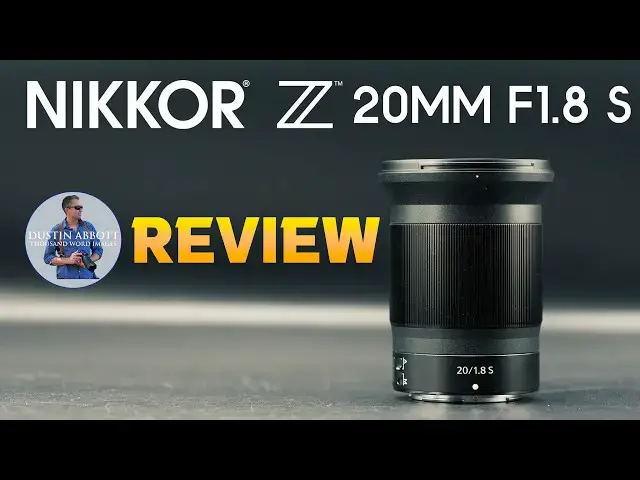
Nikkor Z 20mm F1.8 S Review | Nikon's Best Wide Angle Prime?
Oct 23, 2026

Photographer Dustin Abbott takes a deep dive look at the Nikkor Z 20mm F1.8 S - one of the only fast wide angle primes on Z-mount. Does it stand the test of time in 2026? | Read the Text Review: https://tinyurl.com/Nik1820Sda | Purchase the Nikkor Z 20mm F1.8 S @ B&H Photo https://bhpho.to/3Kbh42N | Adorama https://prf.hn/l/gxZNbYl/ | Amazon https://link.amazon/B0bJBtNFG | Camera Canada https://tidd.ly/3UJgimj | Amazon Canada https://link.amazon/B05Y094vZ | Amazon UK https://link.amazon/B02uw12Wh | Amazon Germany https://link.amazon/B0es0NMmZ
Check out the DA Merch here: https://bit.ly/TWIMerch | Become a Patron: https://www.patreon.com/dustinabbott | On the Web: http://dustinabbott.net/ | Sign up for my Newsletter: http://bit.ly/1RHvUNp | Instagram: http://bit.ly/DLAinsta | Facebook: http://on.fb.me/1nuUUeH | Flickr: http://bit.ly/1UcnC0B | 500px: http://bit.ly/1Sy2Ngu Follow Craig @ https://www.instagram.com/craigstoffersen/
Want to support this channel? Use these affiliate links to shop at:
B&H Photo: http://bhpho.to/1TA0Xge
Adorama: https://howl.link/nt4zdz1goa7ql
Camera Canada: http://bit.ly/DLACameraCan
Sony Canada: https://www.thesonyshop.ca/?ref=abbott
Amazon: https://amzn.to/3HrY64d
Amazon Canada: https://amzn.to/3qG1p18
Ebay: http://bit.ly/DustineBay
Into the AM Clothing: https://bit.ly/intotheAMda and use code DUSTIN10 for 10% off
Fioboc Clothing: https://tinyurl.com/FiobocDA20 and us code DUSTIN20 for 20% off
Make a donation via Paypal: https://www.paypal.com/paypalme/dustinTWI
=============================
Table of Contents:
=============================
0:00 - Intro
1:45 - Disclosure
2:01 - Build and Features
6:22 - Autofocus
8:58 - Video AF
9:58 - Image Quality
18:53 - Conclusion and Pricing
---------------------------------------------------------
Oben Tabletop Tripod shown in video: https://bhpho.to/3vL8YWy
My Cameras:
Purchase the Sony a7RV @ B&H Photo https://bhpho.to/3ZivNyZ | Adorama https://howl.me/cjNY1LU3gFH | Amazon https://amzn.to/3CRCDlq | Camera Canada https://shrsl.com/3vulf | Sony Canada https://bit.ly/BuyA7R5 | Amazon Canada https://amzn.to/3H8yeNH | Amazon UK https://amzn.to/3kbg5FM
Purchase the Sony Alpha 1 @ Camera Canada https://shrsl.com/2wdk2 | B&H Photo https://bhpho.to/3upRFZd | Adorama https://howl.me/cj2nQpjLBKW | Amazon https://amzn.to/3t1m8MD | Sony Canada https://bit.ly/BuySonyA1 |Amazon Canada https://amzn.to/3cVFrBB | Amazon UK https://amzn.to/2OtrjGe | Amazon Germany https://amzn.to/3d0GtMO | Ebay https://ebay.us/i371Vs
Canon EOS R5: B&H Photo https://bhpho.to/3iMH18x | Amazon https://amzn.to/33L3D53 | Camera Canada https://shrsl.com/2jqth
Purchase the Fujifilm X-H2 @ B&H Photo https://bhpho.to/3KAInTC | Adorama https://howl.me/cjyzbiO5lVp | Amazon https://amzn.to/41zMzKl | Camera Canada https://shrsl.com/4128o | Amazon Canada https://amzn.to/40gY4W7 | Amazon UK https://amzn.to/43Grn7a | Amazon Germany https://amzn.to/3L6hwjR
Get a discount off all Skylum Editing Software (Luminar, Aurora HDR, AirMagic) by using code DUSTINHDR at checkout: http://bit.ly/LuminarDLA
DISCLAIMER: This video and description contains affiliate links, which means that if you click on one of the product links, I’ll receive a small commission. As an Amazon Associate I earn from qualifying purchases.
Keywords: Nikkor, 20mm, F1.8, Nikkor 20mm F1.8 S, Nikon 20mm F1.8 S, f/1.8, Nikon, Nikon Z8, Z, Z-mount, Z8, Z5II, Review, mirrorless, Full Frame, Sports, Tracking, Dustin Abbott, Real World, Comparison, Handling, Focus, Portraits, Resolution, High ISO, Image Quality, Sample Images, Photography, 45MP, #letthelightin, #DA, #NIKON, #Z8, #NIKONZ8, #NikonZ20mmF1.8LensReview, #NikonZMountLenses, #FullFrame20mmLens, #NikonPrimeLensComparison, #Nikon85mmF1.8SReview, #NikonLensBuyingGuide, #AutofocusPerformanceNikon, #NikonLensOpticalQuality, #CompactNikonLenses, #WeatherSealedNikonLenses, #NikonZSeriesLenses
Show More Show Less View Video Transcript
0:10
Hi, I'm Dustin Abbott. As you can see,
0:12
it's starting to get frosty around here.
0:15
And I'm here today to take a look at the
0:18
fourth for me of Nicor's F1.8 Sline
0:22
series. I have previously covered the
0:23
35,50 and 85 millimeter kind of
0:26
traditional focal lengths and now I'm
0:28
going back to the 20mm f1.8s.
0:31
Of course, this is a lens like many of
0:33
these that has been out for a number of
0:35
years at this point. And my question is
0:37
as I'm going back through them at a
0:38
later date. How are they holding up
0:40
against uh you know modern developments
0:43
against newer uh competition that's come
0:46
onto the market since they were
0:47
released? Now, in this case, ironically,
0:50
there really isn't much in terms of
0:52
additional competition that's come on
0:53
the market. There are very, very few 20
0:56
millimeter lenses that exist, period.
0:58
And certainly none of them with a 20 mm
1:01
and a f1.8 or brighter maximum aperture
1:04
here on Zmount. And so, in many ways, I
1:07
think the 20mm f1.8 still occupies a
1:09
fairly unique position in Nikon's lineup
1:14
or just lenses on Zmount in general.
1:17
Now, this is the most extreme of the
1:19
lenses in the series. It is the biggest.
1:21
It is the heaviest. It is the most
1:23
expensive. And so, while in some ways it
1:25
doesn't fully fulfill, I think the
1:27
mandate of the f1.8 Sline series, it
1:30
also, as we're going to see, continues
1:31
to be a very, very good lens. And I know
1:34
that from some of your feedback, this
1:37
along with lenses like the 50mm f1.8
1:40
tends to be one of your favorites in
1:42
this lineup. And we're going to explore
1:44
why that is in today's review. Before I
1:46
jump in, however, I do want to say a big
1:47
thank you to Nikon Canada for sending me
1:49
a laner of this lens. As always, they
1:52
have had zero input in this review. They
1:54
will not see it before you, and the lens
1:55
will be going back to them after this
1:57
review is concluded. All of that aside,
1:59
let's jump in. Let's take a look. All
2:01
right, let's take a closer look at the
2:03
build and handling here. Now, first of
2:05
all, this is, as noted, the most
2:06
expensive of the S-line lenses. It is
2:09
$1,146
2:11
in terms of its MSRP. That compares to
2:13
Sony's 20mm f1.8 as $998
2:18
and of course also on Sony not here on
2:20
Zmount natively. But there's the Sigma
2:22
20mm f1.4 that you can get for $989.
2:27
So cheaper still and of course that lens
2:29
can be used on Nikon via an adapter. Now
2:32
as you can see compared to one of the
2:34
smaller lenses in the series the 50mm
2:36
f1.8 it is considerably bigger. Uh the
2:40
this lens is 84.5 millimeters in
2:43
diameter. You can see it flares out
2:44
towards the front which is fairly unique
2:46
to this lens and and so it makes a
2:48
little bit wider in diameter. That's 3.3
2:50
in. It's also longer. It's 108.5 mm or
2:54
4.3 in. So that is considerably larger
2:57
in all dimensions than Sony's 20mm
3:00
f1.8G. That lens is just 73.5 mm in
3:04
diameter. has a 67 millimeter filter
3:06
thread instead of the 77 millimeter
3:09
filter thread here. It's also in terms
3:11
of length, it's only 84.7
3:14
millimeters long. And so that means that
3:16
it's 24 mm shorter than what this lens
3:18
is. That's significant. Also, that makes
3:21
this lens heavier because of its just
3:23
sheer size. It's 505 g or 1.1 lb. And
3:27
again, that compares to 373 g for the
3:30
Sony.
3:32
However, build quality is good. This
3:34
lens has held up well. I've actually
3:35
heard zero complaints from users
3:38
regarding any of the uh S-line lenses.
3:40
Seems like the build quality has held up
3:42
well over the years that they have been
3:44
out. This is a lens that has weather
3:47
sealing all throughout. And you can see
3:49
from this diagram, it's there's about
3:51
eight different seal points throughout a
3:52
coating on the front element to help
3:55
with, you know, fingerprints and then
3:57
also moisture resistance. Terms of the
3:59
features, they are pretty slim. Here
4:01
we've got an AFMF switch and then we've
4:04
got the customizable control ring here.
4:07
And obviously, you know, the primary
4:09
function of that is going to be for
4:10
manual focus. However, depending on how
4:12
you set it up, you can assign a
4:14
different function. Now, having just a
4:16
single ring instead of a dedicated
4:18
customizer control ring means that the
4:20
way that it often is going to work is
4:22
that when it's in autofocus mode, you're
4:24
going to end up with this functioning as
4:27
an aperture ring. you switch to manual
4:29
focus, it becomes a focus ring at that
4:31
point. So, when you have it set up as an
4:34
aperture ring, you can do aperture
4:36
racking. Though, I find with all of
4:38
these customizable control rings on
4:40
Nikon, there's quite a bit of lag. And
4:42
so, if you're making like a major focus
4:44
changes, you have to kind of know that
4:46
you have to stop earlier than what the
4:48
indicator shows because it's going to
4:50
continue to change for about a half
4:52
second after you stop doing input. At
4:54
that point, the one thing that you lose
4:57
in this configuration also is the
4:59
ability to have full-time manual
5:01
override. And so, I mean, you can set it
5:03
up for that, but you're going to lose
5:04
aperture control. I just wish there was
5:06
that secondary ring that we see in a lot
5:08
of Nikon's other lenses. Now, inside we
5:11
have nine aperture blades. They stay
5:14
fairly round, circular, as you can see
5:16
here. Um, you know, through large
5:18
apertures, f1.8, f2, f2.8 shown here.
5:21
You can see when the lens is stopped on
5:23
down, you're going to definitely see
5:25
those the straight lines of those
5:26
blades. As noted previously, we've got a
5:28
77mm front filter thread, which is
5:30
easily the largest in the series.
5:32
Minimum focus distance is 20 cm, giving
5:35
you a 0.19 times level of magnification,
5:39
which is useful. And I did find that up
5:41
close results could be quite good. And
5:43
so that just adds to the versatility of
5:45
the lens. It does come with a lens hood
5:48
here. I don't find Nikon's lens hoods,
5:50
you know, particularly great. They're
5:52
just kind of plasticky, but at the same
5:55
time, it does the job. You can see it
5:57
flares out to make sure you're not
5:58
getting additional vignette there. And
6:00
so, that does add to the profile of
6:02
making the lens seem a little bit bigger
6:03
and bulkier because it's not a
6:06
particular deep lens hood, but it does
6:08
flare out even wider. So, that does add
6:10
to the overall diameter of the lens. In
6:13
general, however, though, while it's not
6:15
a lot of bells and whistles, it's a very
6:17
functional package. I found that the
6:18
lens handled great out in just using it
6:21
in real world situations. So, let's talk
6:24
autofocus. Autofocus here, like the 85mm
6:27
f1.8, comes from dual SDM focus motors
6:31
that are driving autofocus. Clearly,
6:33
Nikon felt with this lens being a little
6:35
bit more of an extreme aperture uh focal
6:38
length combination and with the 85
6:40
millimeter that these are lenses that
6:42
warranted just a little bit more thrust.
6:44
And fortunately, in terms of basic
6:47
shooting, there is plenty of speed. In
6:49
fact, in doing my formal test, you can
6:51
see that autofocus goes from close to
6:53
the distant subject pretty close to
6:55
instant. You know, there's not much of a
6:57
lag there in between. And so, in terms
6:59
of basic thrust for just general purpose
7:01
shooting, there's plenty of speed there.
7:03
It's fairly quiet in operation. I didn't
7:05
really notice any kind of issues on that
7:07
front. And likewise, when I was shooting
7:10
slowmoving action, again, I got very
7:13
good results. well focused, crisp,
7:15
detailed. Even at f1.8, everything looks
7:18
great. Unfortunately, when I tried to
7:20
capture faster moving action, that's
7:22
where the limitation showed up. And so,
7:24
Nala came running towards me. And you
7:27
can see that while focus started off
7:30
okay, as she progressively moved closer
7:32
towards the camera, the camera never
7:34
really caught up to her. And so, as a
7:37
result, at best, I had focus on her hind
7:40
quarters, but never on her face. And so
7:42
in terms of, you know, it was almost all
7:45
back focused at that point. And I think
7:47
that that is where I' i've seen the
7:49
limitation of most of these f1.8 S-line
7:52
lenses as well, that they work fine
7:54
within certain parameters, but if you're
7:57
trying to use them for action type
7:59
photography, particularly quick moving
8:00
action, they just can't quite seem to
8:02
catch up. And so that seems to be, you
8:04
know, maybe a focus algorithm type thing
8:06
or just maybe those STDM motors in this
8:08
application are just not reactive
8:11
enough. And I think that that's why at
8:13
least on the lenses, a few lenses that
8:16
are more tuned towards sports use that
8:18
we are seeing them move towards a voice
8:20
coil style motor instead. And I hope
8:22
that in second generations of lenses
8:24
like this in the future, they'll just go
8:26
to voice coil in general because I feel
8:27
like it's going to give that a little
8:29
bit of additional thrust and precision
8:31
that will allow for just a little more
8:33
flexibility for sports. And I recognize
8:35
very few people are going to use these
8:36
for sports type lenses. But I do know
8:38
that on, you know, other platforms that
8:41
the lenses that would be competing with
8:43
this lens, I think would be more
8:44
capable. Certainly, I felt with the Sony
8:47
20mm f1.8G that I was just I was better
8:50
positioned to maybe get some faster
8:52
action capture with that. So maybe
8:55
something to aspire to for Nikon in the
8:58
future. Now, on the video side of
8:59
things, it is mostly good good news
9:02
there. I found like focus pulls were
9:05
smooth and um fairly well calibrated. I
9:07
didn't see any kind of you pulsing or
9:10
hunting or anything like that. There is
9:12
a relatively low amount of focus
9:14
breathing and so I don't think that
9:15
that's going to be any kind of issue
9:16
when I did the hand test for example.
9:19
Very smooth transitions from eye to hand
9:21
and back and forth. And because there's
9:22
very little focus breathing, there's
9:24
nothing that's kind of jarring that
9:25
takes you out of the shot. And so all of
9:28
that was good on that front as well. I
9:30
didn't really shoot any kind of action
9:32
uh while doing this. I mostly used it
9:33
for scenics and landscapes and of course
9:35
for that kind of thing. I felt like
9:37
Focus really did a great job. So, no
9:39
problems on that front as well. So, on
9:42
the video side of things, I'm I think
9:44
I'm even more upbeat than I would be for
9:46
stills. Mostly for the reason that uh
9:49
you know, while the focus motors aren't
9:50
reactive enough for action while doing
9:52
stills, I think that probably for video
9:54
work where a lot is going to be in focus
9:56
most of the time, probably would be just
9:58
fine. All right, let's take a start by
10:00
taking a look at the optical design.
10:02
Here you can see we have a optical
10:04
design of 14 elements in 11 different
10:07
groups. And so that includes a total of
10:09
three different extra low dispersion
10:11
glass elements. Then three aspherical
10:13
lenses as well in the design. The MTF
10:16
chart largely looks very good. We start
10:18
off with a very sharp center. Uh by the
10:20
middle of the frame, we're still at very
10:22
very good levels. I find anything at 80%
10:25
higher looks really excellent. and we do
10:28
tail off towards the end, but you'll
10:29
also see that there's very low
10:30
estigmatism. The sagittal and meridial
10:33
lines stay very very close together. And
10:35
so although we're averaging out at maybe
10:37
about 57% near the edge, the fact that
10:39
there is low estigmatism means that that
10:41
actually ends up looking a bit sharper
10:43
than what the, you know, raw numbers
10:45
might suggest. Now, when it comes to
10:47
vignette and distortion, in my own test,
10:49
you can see that there's a minimal
10:51
amount of distortion, but some very,
10:52
very heavy vignette. And so as far as
10:55
correcting the distortion, we do have
10:56
some barrel distortion, but I was able
10:58
to correct that with a plus 9. You can
11:01
see it is a fairly linear correction.
11:03
There's a little bit of stretching
11:04
towards the corners, but in general,
11:05
that looks pretty good. Vignette, on the
11:07
other hand, required maxing out the
11:09
sliders to achieve that end result. And
11:12
so at the end of the day, the correction
11:13
profiles will deal with that obviously,
11:15
but you are going to end up with a bit
11:17
of additional noise in the corners of
11:19
images relative to what you're going to
11:21
see in the center because you're just
11:23
having to correct a lot of junk there in
11:25
the corners. Now, the correction profile
11:26
does do a good job. I found that
11:28
straight lines looked good. This is shot
11:30
at f2, so not much different than f1.8.
11:33
I would say that there's not really
11:35
evidence that vignette is negatively
11:36
impacting the image. So, I mean,
11:38
certainly it does help. Just as
11:40
mentioned, every electronic correction
11:42
does come with some kind of trade-off.
11:44
Now, when it comes to longitudinal style
11:46
chromatic aberrations, there's not much
11:47
to see here. There's a little magenta
11:49
before, a little bit of green afterward,
11:51
but it's not going to be strongly
11:52
pronounced. And of course, with a
11:53
wide-angle lens, there's not going to be
11:55
a lot of situations where you're going
11:56
to in the real world recreate what I've
11:58
done here. When it comes to looking at
12:00
my dad's old SLR, I see very little
12:02
fringing. There's a tiny bit of green
12:04
fringing in there, but you really can't
12:05
hardly see it. And in these various
12:07
shiny bits, not much there. I would say
12:09
there's a little bit of a yellow
12:11
fringing outlining the specular
12:13
highlights. I would say in general, most
12:15
people are not going to have really any
12:16
kind of real issues with this style of
12:18
fringing. And when it comes to lateral
12:20
style chromatic aberration, which tends
12:21
to impact wide angle lenses more, you
12:24
can see that it's it's it's really
12:26
really clean. We've got great looking
12:28
where I just noticed about that
12:29
aigmatism. You can see how well that's
12:31
showing up here where it's really really
12:33
crisp delineation between black and
12:35
white. I love that. Now, when it comes
12:37
to resolution, I am testing on a 45
12:39
megapixel Nikon Z8 body and this is 200%
12:43
level of magnification. You can see the
12:44
center of the frame as the MTF suggests.
12:46
High contrast, high detail. Looks
12:49
fantastic. Likewise, the mid-frame is
12:51
looking really, really strong. And as we
12:53
pan down here, I like I look at this
12:56
corner versus this corner. It's
12:57
basically identical. Very good. There we
12:59
can see all the way through this zone.
13:01
Very, very strong. Right out till about
13:03
this point. And then it's that last few
13:05
percentage points into the corners where
13:07
it does get softer. Now, in terms of
13:09
real world, how does that hold up?
13:11
Shooting a hotel interior here at f1.8.
13:14
If we just kind of pan around and look
13:16
at different places, we can see that
13:18
detail is looking really, really
13:20
awesome. You know, basically all
13:21
throughout the image, um, of course, the
13:24
advantage of an 20mm lens is that even
13:27
at f1.8, 8 most everything is in focus
13:30
most of the time unless you're focused
13:31
really closely. We're getting great
13:33
detail there. This shot out a hotel
13:35
window. You can see in the center of the
13:37
frame um the next morning, you know,
13:40
detail is really, really crisp. Contrast
13:42
is great. And even as I pan right out
13:44
here towards the edge, yeah, it's not as
13:47
crisp. You can tell it's a little
13:48
mushier here in terms of textures is
13:50
what it is here, but it's still very,
13:52
very within the range of fully usable.
13:54
Some people may wonder the value of
13:56
having a bright maximum aperture in a
13:58
wide-angle lens like this, but it does
14:00
allow you some extra creative options.
14:02
So, for example, here I can shoot just
14:04
making the foreground in focus. And
14:06
while it's not strongly out of focus, I
14:08
like what happens here where we have a
14:10
suggestion into the image and then I can
14:12
flip it around to where the eye is drawn
14:15
naturally towards the point of focus
14:16
right up down that path where it
14:18
increasingly gets into focus as you go
14:20
there. And so in both cases, I also feel
14:23
like the transition to defocus is decent
14:26
here. You know, it's not strongly out of
14:27
focus, but nothing harsh in the in
14:30
between areas there. So all of that is
14:31
good. Here we have Nala actually trying
14:33
to do her best Simba impression, but as
14:36
we zoom in there, we can see that also
14:38
shooting at f1.8. Lots of detail and
14:40
contrast here in the sweet spot of the
14:42
image. Now the mild bit of stop down
14:44
from f1.8 to f2, we can see that there
14:47
is potentially a little bit more
14:49
contrast. And I think that this test
14:50
text looks very slightly more crisp, but
14:53
you probably won't notice that uh
14:56
without a high level of magnification in
14:58
side by side. What I do notice is just
15:00
an overall better brightness that points
15:02
to better contrast, but particularly
15:03
here in the corners. I think we're
15:05
starting to see a little bit of natural
15:07
vignette lift. It's not significant at
15:09
this point, but it does look a little
15:10
bit better. That effect becomes much
15:12
more pronounced from f2 to f2.8. And you
15:15
can see that not only are the corners
15:17
looking better, they are definitely
15:18
looking much brighter. From f2.8 to f4,
15:21
the brightness isn't as noticeable in
15:23
terms of, you know, difference, but the
15:25
improved contrast and, you know,
15:27
slightly creeping further detail into
15:29
the corners is definitely starting to
15:31
get better. From f4 to f5.6, you see
15:34
that creep just getting increasingly
15:36
more. And from f5.6 to f8, the corners
15:39
get even better. I mean, look at this
15:40
text right here compared to right here.
15:42
It's becoming more readable at this
15:44
point. These corners I would consider to
15:46
be quite excellent. For a real world
15:48
example here, this is shot at f4. So
15:51
again, it's that advantage of basically
15:52
everything being in focus. Look at our
15:54
foreground. Looks nice and crisp. Good
15:56
contrast. As we pan up and look into the
15:58
main area here, we can see the mist
16:01
creeping in off the river and all the
16:04
detail is good. Right off here towards
16:06
the edge, very, very usable. Very good
16:09
detail. And so everything can basically
16:11
be in focus even at f4, which I really
16:13
like. Now, of course, defraction does
16:15
affect all lenses, all cameras.
16:18
Eventually, we have a medium. It's high
16:21
resolution, but it's medium compared to
16:22
what's available on full-frame. And so,
16:25
what I find is that defraction isn't
16:27
quite as pronounced on Nikon as what it
16:29
is, say with the higher resolution Sony
16:32
sensors. But even so, you do see that
16:34
from f11 to f16, there is a general
16:36
softening of the image. Though, I don't
16:38
think to the level where it's unusable.
16:40
So, I would say feel free to shoot
16:41
throughout the whole aperture range. you
16:43
can get good results all throughout.
16:45
Now, in terms of closeup results, I
16:48
would say that we have a quite a good
16:50
result here. Good contrast, good detail
16:52
on the textures. It's relatively flat.
16:55
You can see that, you know, we can still
16:56
out here towards the edge. These still
16:58
look in focus. I can still see crisp
17:00
lines on the top of the stamp there and
17:02
some detail there. So, overall, that's
17:04
pretty good. What's more here with this
17:06
up close result. Not only is the, you
17:08
know, up close detail and contrast
17:10
looking pretty good. I also really
17:11
appreciate the strong strong flare
17:14
resistance, which we'll talk more about
17:15
here in a moment. And so we have great
17:17
contrast holding up here even with the
17:19
sun like fully exposed there and
17:21
extremely bright. Colors I feel like are
17:24
nice and rich, good levels of saturation
17:26
and obviously good contrast and detail
17:28
in all these images. That helps a lot.
17:30
And here we see kind of all of those
17:32
things on display. Good color and
17:34
detail, but look at this flare
17:35
resistance. We've got that sun star, so
17:37
it's going to be 18 pointed from the
17:39
nine aperture blades, but flare
17:41
resistance is holding up extremely
17:42
strong. I don't see any ghosting
17:43
artifacts penetrating down here. You
17:46
know, shooting through this. Again, this
17:47
is really intense sun, and I wanted to
17:49
set up the shot. You see how well
17:51
contrast is held up all throughout this,
17:53
some tiny little bits of ghosting
17:55
artifacts, but I mean, so minimal that
17:57
in a color image, you really wouldn't
17:59
see them very much. Likewise here at
18:01
f11, you can see at this the angles I
18:04
you typically shoot towards the corners
18:05
because that's where you get the
18:06
strongest flare patterns. But as you can
18:08
see, there's just nothing of it. And if
18:10
I open up the aperture a little tiny bit
18:12
here, but nothing bad at all. If we pan
18:15
back and forth here, you can see that
18:17
overall contrast and detail holds up
18:19
well. And then stop down. There's no
18:21
real like bad angles where you get
18:24
really poor looking results. And so that
18:26
adds so much to a lens. and we go into a
18:29
shot like this where it's actually kind
18:31
of like double whammy high reflective
18:33
surface of the still water and you can
18:36
just see it's not really marred by
18:37
ghosting um at any point here and allows
18:40
me to get a really beautiful high
18:42
contrast result and this is the color
18:44
profile red um out of the camera. So
18:47
anyway, it looks really really fantastic
18:48
in general. I would say that this is a
18:50
really really strong optical performance
18:52
other than having more vignette than I
18:54
would prefer. So what's my conclusion?
18:55
Well, my first conclusion is sitting on
18:57
a metal park bench in these kind of
18:59
temperatures is not much fun. My
19:01
conclusion about the lens is that I
19:03
think that while this lens doesn't have
19:05
a lot of competition, I do think that it
19:07
has held up really really well and it
19:09
remains a really pretty quite excellent
19:12
wide-angle prime lens. It's a lens that
19:14
I certainly would find very useful in my
19:16
own kit. And while it's I think probably
19:19
maybe bigger than what it needs to be
19:21
because I don't think the performance
19:22
exceeds really what I saw from the much
19:25
smaller Sony 20 millimeter f1.8 which
19:28
was released just a few months after
19:29
this lens. I think that it's a lens that
19:32
really holds up quite well. And of
19:33
course the fact that a lot of Nikon's
19:35
bodies like the Z8 that I tested on are
19:37
fairly beefy makes it a little bit
19:40
easier to put bigger, heavier lenses on
19:42
there. Not to say that this lens is
19:43
absolutely big and heavy, but relative
19:45
to the competition, it is bigger and
19:47
heavier than many of them, but I really
19:50
like the image quality that I got out of
19:52
the lens. And what really kind of stood
19:53
out to me was how good the flare
19:55
resistance was. That's really important
19:57
to me in a wide angle prime lens because
19:59
it means that you're going to be able to
20:01
shoot in, you know, more challenging
20:03
lighting conditions. The wider the lens,
20:04
the more likely that a bright light
20:06
source is going to be in frame. So, the
20:08
more important that flare resistance is,
20:10
this lens does that really well. I felt
20:11
like colors were really beautiful. Uh
20:13
distortion is well enough controlled
20:15
particularly once you add in the
20:16
electronic corrections that uh it's
20:18
perfectly good for shooting interiors
20:20
and I got some cool shots while
20:22
traveling at a business conference. And
20:24
so I would say that uh in general I
20:27
really really like the images I got out
20:28
of the lens. I liked using it. So while
20:31
it's you know somewhat expensive, it's
20:33
definitely I would say the most
20:34
expensive lens in its class across a few
20:36
different platforms. But I also think
20:39
that you're getting relatively good
20:40
value for money because the performance
20:41
of the lens remains so strong. And of
20:43
course with the lens that's been out for
20:44
6 years, there always is a used market
20:47
if you're looking to acquire one and
20:49
maybe spend a little bit less money. If
20:51
you want more information, feel free to
20:53
check out my full text review which is
20:54
linked in the description down below. As
20:56
always, thanks for watching. Have a
20:58
great day and let the light in.
Science