


What an interesting year! Earlier this year, when reviewing the Sigma 200mm F2 OS SPORT, I marveled that it had been so long since we had seen a new 200mm F2 lens, and even more so that Sigma had beaten Sony to punch. But I’m even more surprised at the source of this second 200mm F2 lens, as Laowa has shown no previous inclination to make a lens like this, and just started making autofocus lenses at all less than two years ago. Putting autofocus on a wide angle 12mm F2.8 lens and building an autofocus 200mm F2 lens are radical different realities, yet Laowa has never hesitated to take chances. What’s more, while the Laowa 200m F2 can’t quite compete with the Sigma in pure performance, it definitely undercuts it (and every other 200mm F2 before) in price, with a price tag of just $2000 USD ($1300 less than the Sigma). Those more interested in the 200mm F2 formula for something like portraiture might find this lens a special way to set their work apart from the crowd. Is the big Laowa worth considering? Find out more in either the video review below or by reading on in the text review.
Follow Me @ YouTube | Patreon | Instagram | Facebook | DA Merchandise | Flickr | 500px | X
Thanks to Viltrox for sending me a review copy of this lens. As always, this is a completely independent review. *The tests and most of the photos that I share as a part of my review cycle have been done with the Sony a7RV and the Sony a1 II. You can find the product listing for the Laowa 200mm F2 here.
__________________________________________________________________________________________________
AI SUMMARY: The Laowa AF 200mm F2 is a surprising and ambitious entry from a brand previously known for manual-focus wide-angle lenses, marking their first autofocus telephoto prime and delivering a full-frame 200mm F2 option at just $1999—significantly undercutting the Sigma 200mm F2 Sport while adding unique features like a rotating rear filter holder. The lens excels in build quality with premium metal construction, weather sealing, a removable Arca-Swiss tripod foot, clickable/declickable aperture ring, and multiple customizable function buttons, making it feature-rich for its price. Optically, it provides excellent control of distortion, vignetting, and chromatic aberrations, along with pleasing bokeh and color rendition, creating a distinctive “dreamy” look at F2 that sharpens dramatically by F2.8. However, its primary drawback is lower contrast and apparent crispness wide open at F2—requiring stopping down for peak performance—which limits its appeal for those seeking razor-sharp results at maximum aperture, while autofocus, though reliable for portraits and events, lacks the speed for demanding sports or action photography.
Strengths:
- Aggressive $1999 pricing makes a rare 200mm F2 formula far more accessible than competitors or legacy options.
- Innovative rotating rear filter holder (43mm) with affordable filter bundle option, solving the challenge of expensive 105mm front filters.
- Solid build with weather sealing, removable Arca-compatible tripod foot, multiple function buttons, and premium feel.
- Excellent correction of distortion, vignetting, and chromatic aberrations; beautiful, smooth bokeh and color rendering.
- Reliable autofocus for portraits, events, and general stills, with quiet operation and good eye-detection performance.
Weaknesses:
- Noticeably lower contrast and “hazy” appearance at F2, requiring F2.8 for crisp, high-contrast results—undermining the main appeal of an F2 prime.
- Autofocus speed (likely STM-based) is adequate but not fast enough for sports or fast action; slower and less confident in video.
- Only nine straight aperture blades produce nonagonal bokeh when stopped down and some cat-eye effect wide open. Pronounced focus breathing and minor ergonomic issues (low-profile aperture ring, interfering tripod collar knob).
- Heavy (nearly 2kg with hood) and large, with no optical stabilization and limited close-focus capability (0.15x magnification).
__________________________________________________________________________________________________
The amount of subject isolation a 200mm F2 can provide is intense! Even at a distance of 3 meters (about ten feet), the depth of field is just 3cm (a little over an inch). Move out to six meters and it is still just 11cm (4″). That means that it is very easy to obliterate backgrounds with a lens like this.

What’s more, Laowa has given us a very feature rich lens with a lot of style and functionality alike.
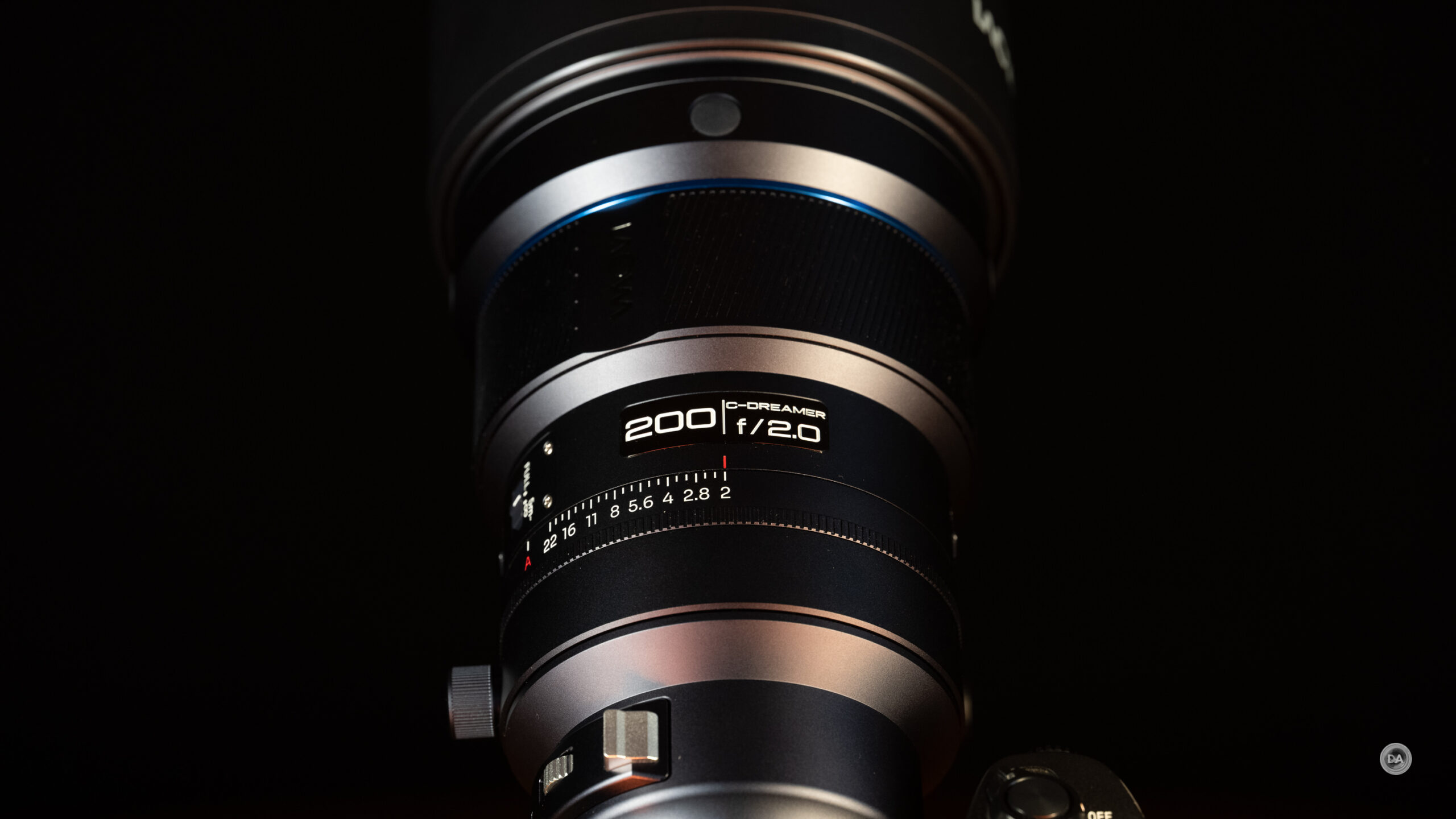
Let’s explore the details…
Build and Handling
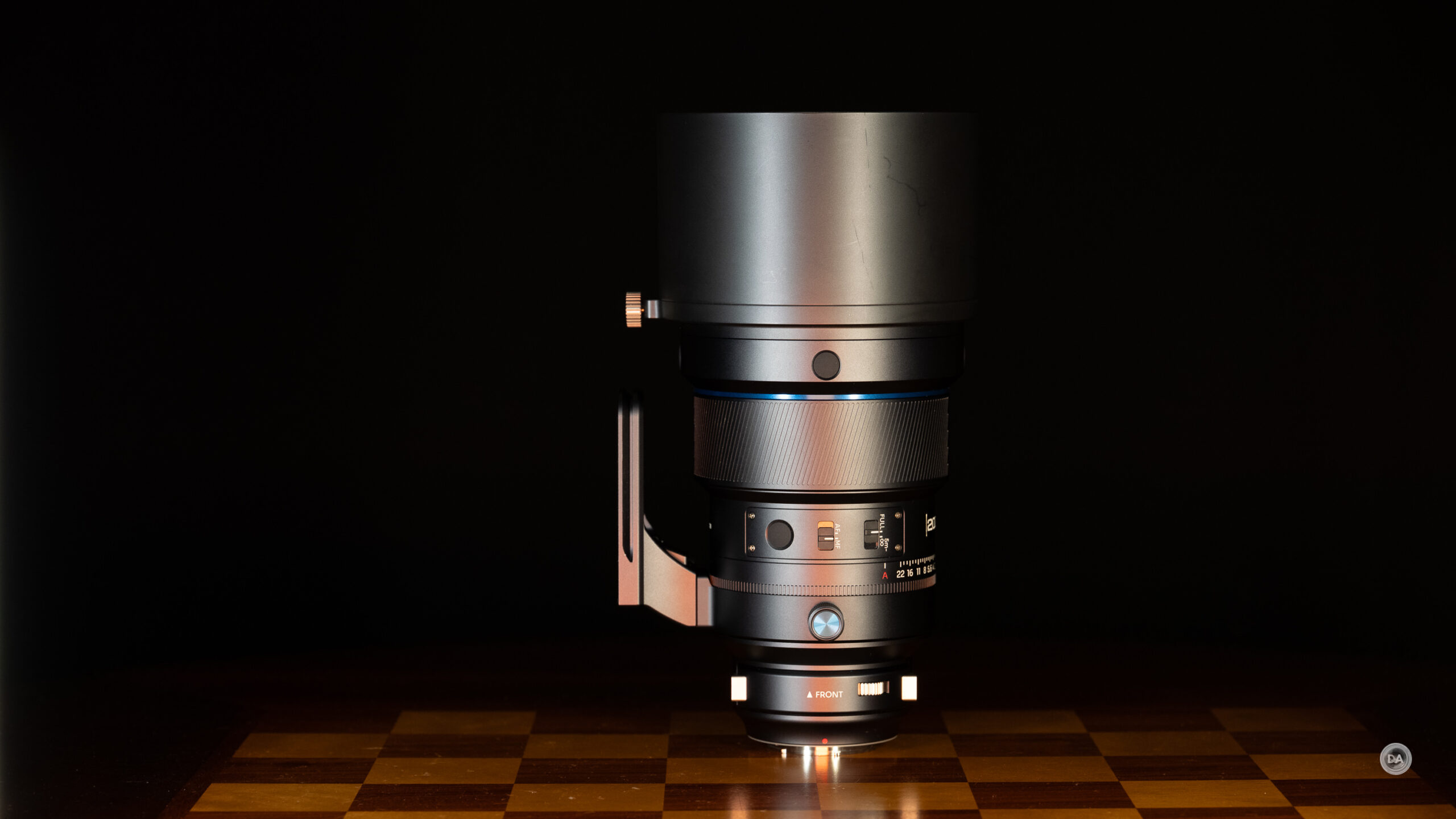
200mm F2 lenses are big and heavy. That combination produces a lot of big glass elements. Looking into the front of this thing is like looking into the abyss.
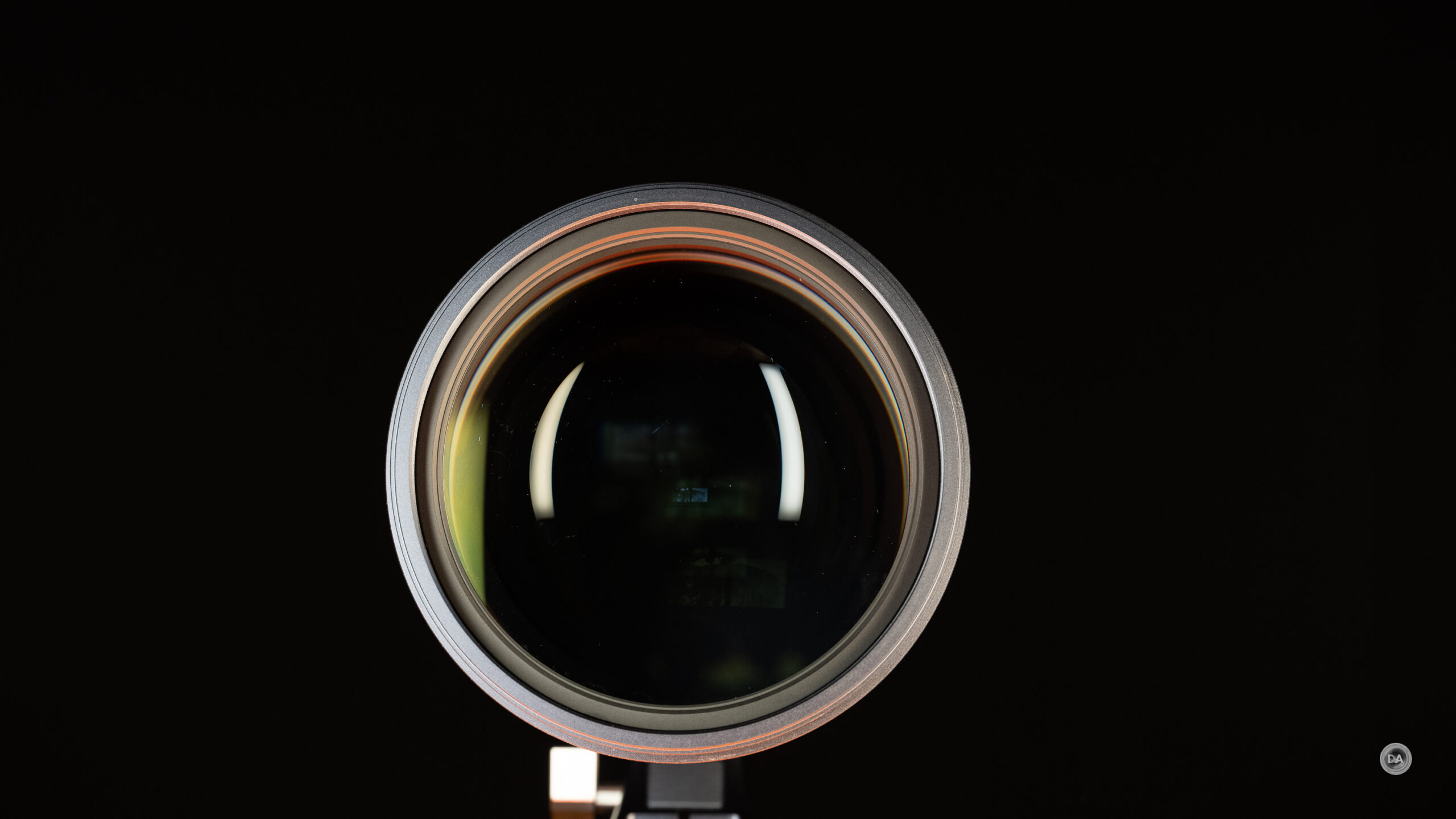
That huge front element means that the front filter threads are a whopping 105mm, which are obviously big and expensive, but Laowa has given us one feature that Sigma didn’t – a rear filter holder complete with the ability to rotate filters.
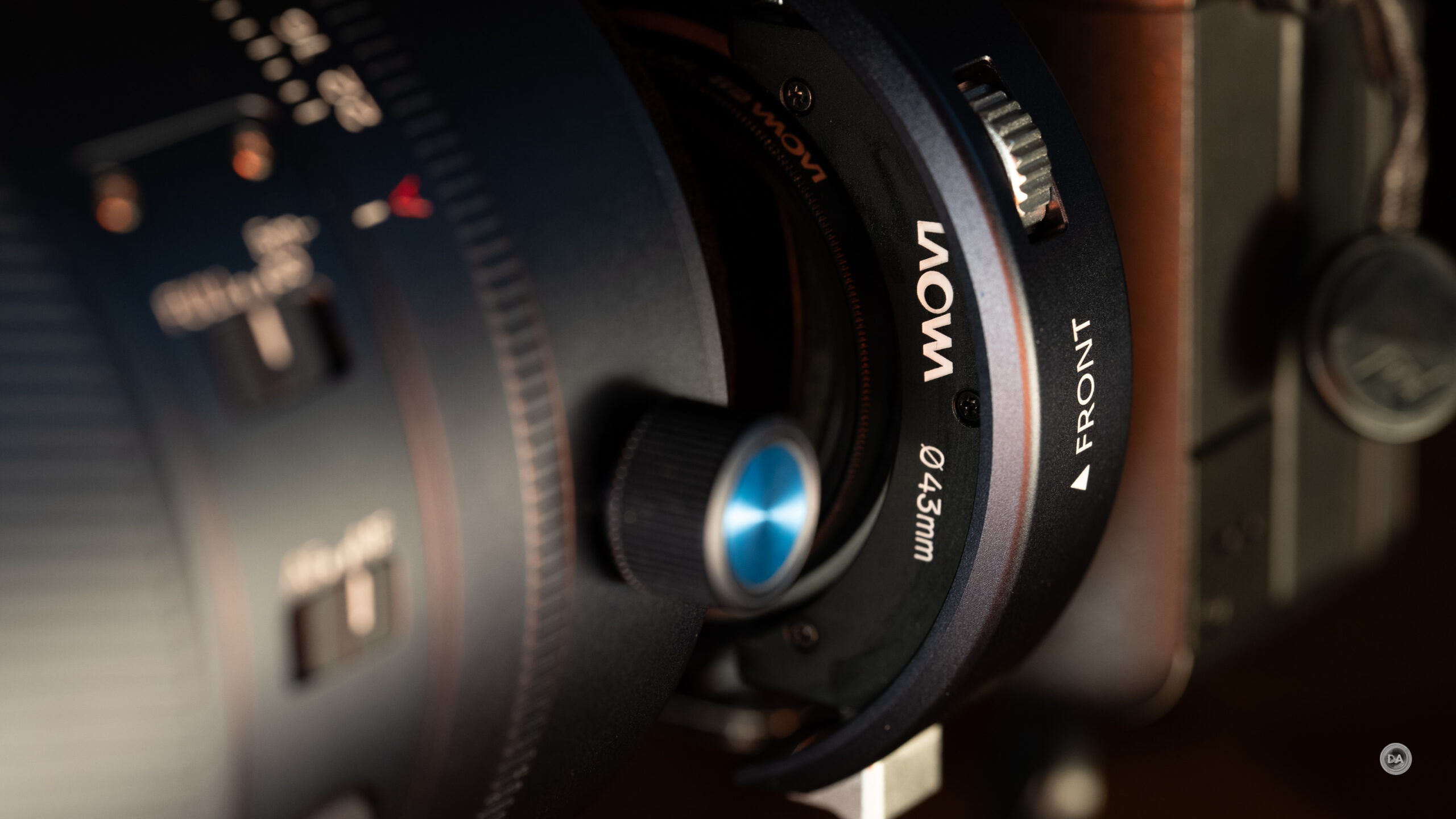
43mm filters can be loaded into the holder, allowing you to use much cheaper filters. In fact, Laowa will sell you a set of them with the lens for just $60 USD, including a ND8 + ND64 + ND1000 + CPL . That’s four filters for $60, or just $15 each. Pretty sweet.

What’s more, it has an external dial to allow you to rotate the filter in there, making it an easy way to control either a circular polarizer or variable ND filter. Nice!
The lens is substantial, measuring 118mm (4.64″) in diameter and 174.8mm (6.88″) in length. By my scale, it weighs 1776g (3.92lb) with the tripod foot removed, 1881g with the foot attached, and 1997g with the foot and hood mounted. It isn’t light, though it is worth noting that the Canon EF 200m F2L IS from the DSLR era weighed 2500g (definitely without the hood attached).
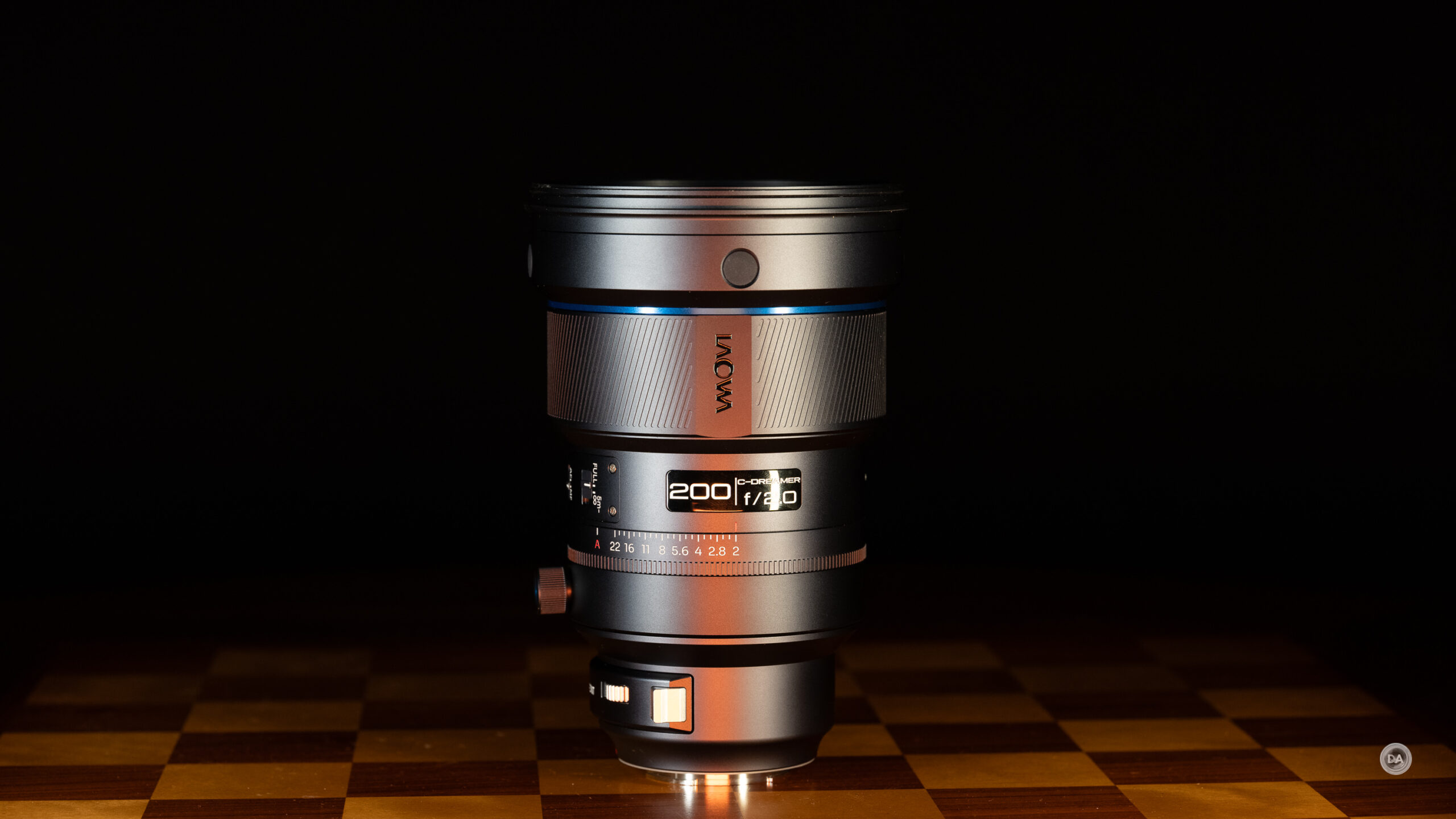
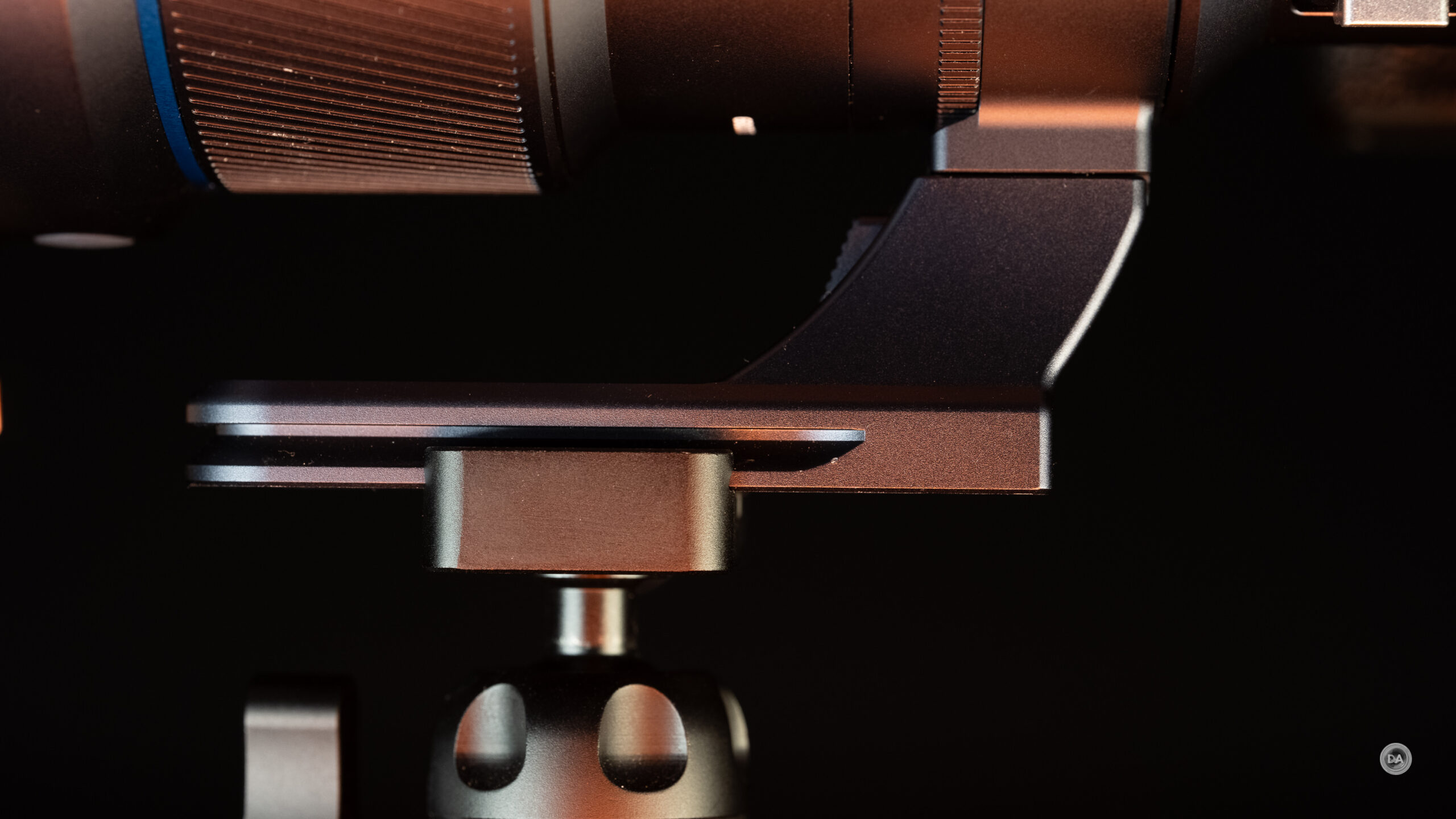
As noted, the tripod foot itself can be removed, though the collar itself is a permanent part of the lens design.
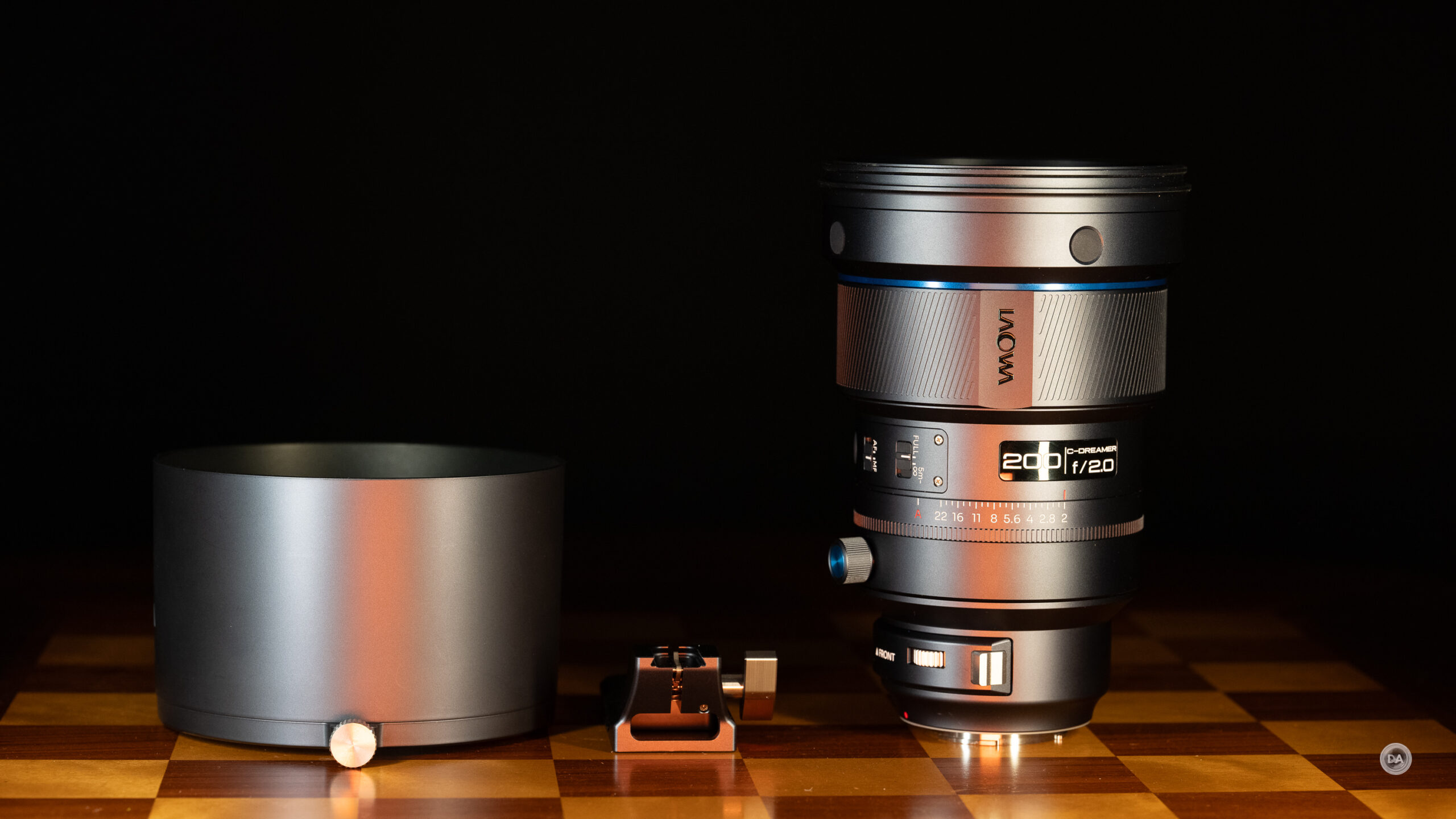
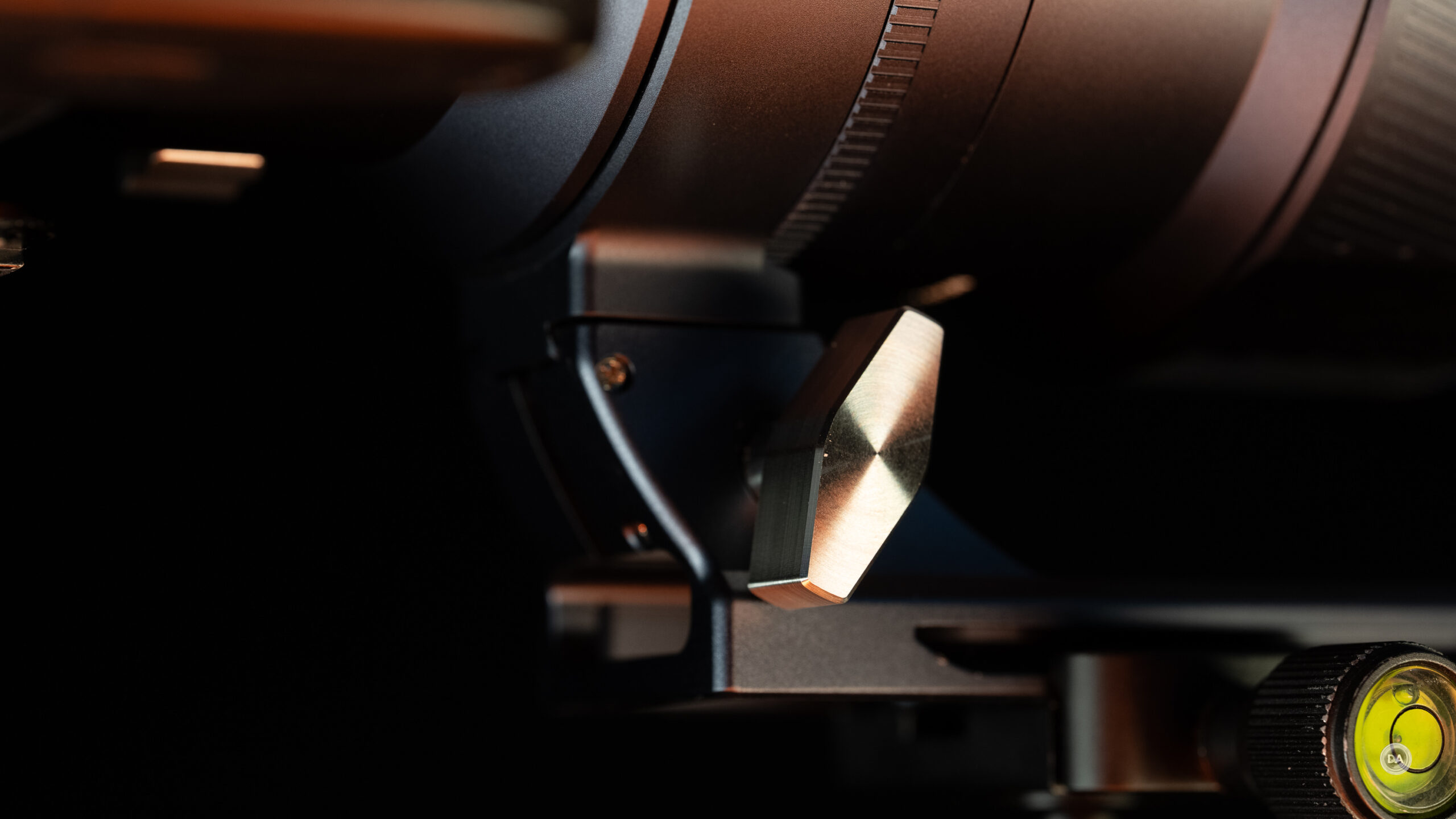
The foot can be easily removed with releasing the tension with a knob on the right side and then depressing a button that allows it to slide off. The foot has Arca-compatible grooves which allow it to mount directly onto many tripods. Another knob (the one with the blue finish) allows you to release the tension on the collar to rotate it. There are detents at the 90° points around the lens.
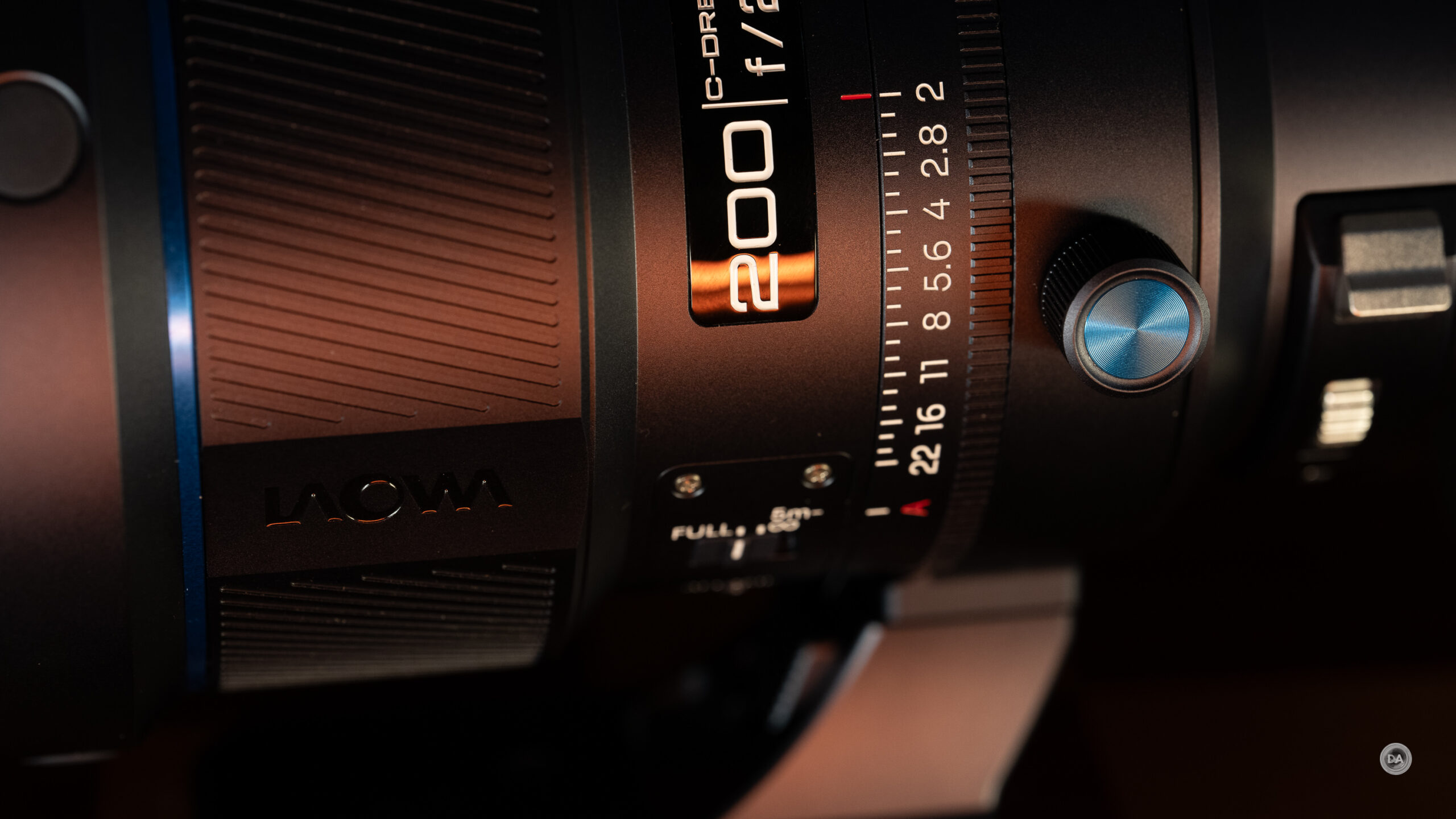
The 200mm F2 sports an aperture ring with the option of being clicked or without clicks. The latter will allow the aperture iris to smoothly rotate so that you can aperture racks, though I will note the aperture blades clatter a bit as you rotate the ring even in the declicked mode. I also found the ribbing of this ring far too low profile. It isn’t easy to grip even with bare fingers, but when wearing gloves (as I do out of necessity in a Canadian winter), it is impossible.
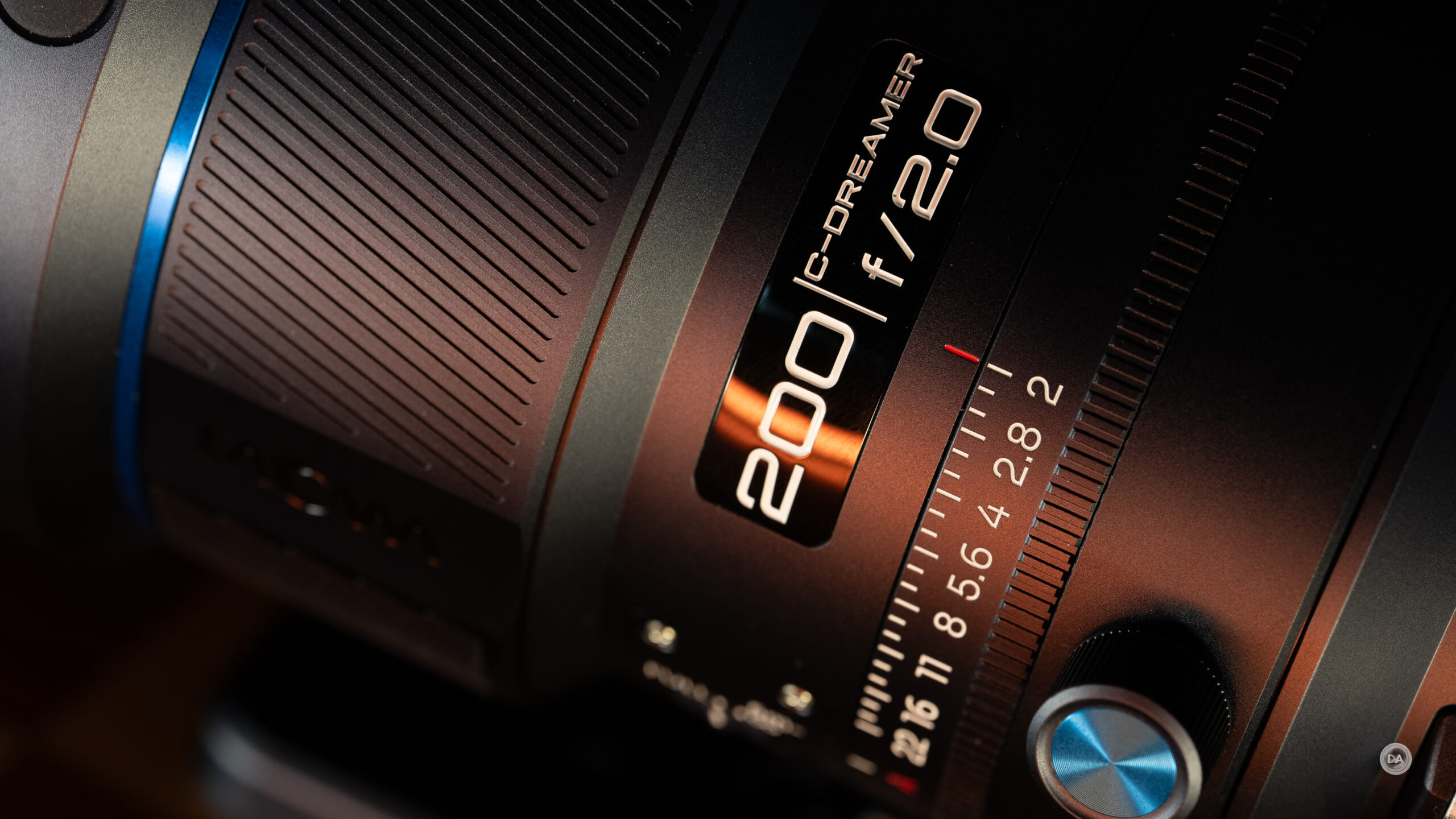
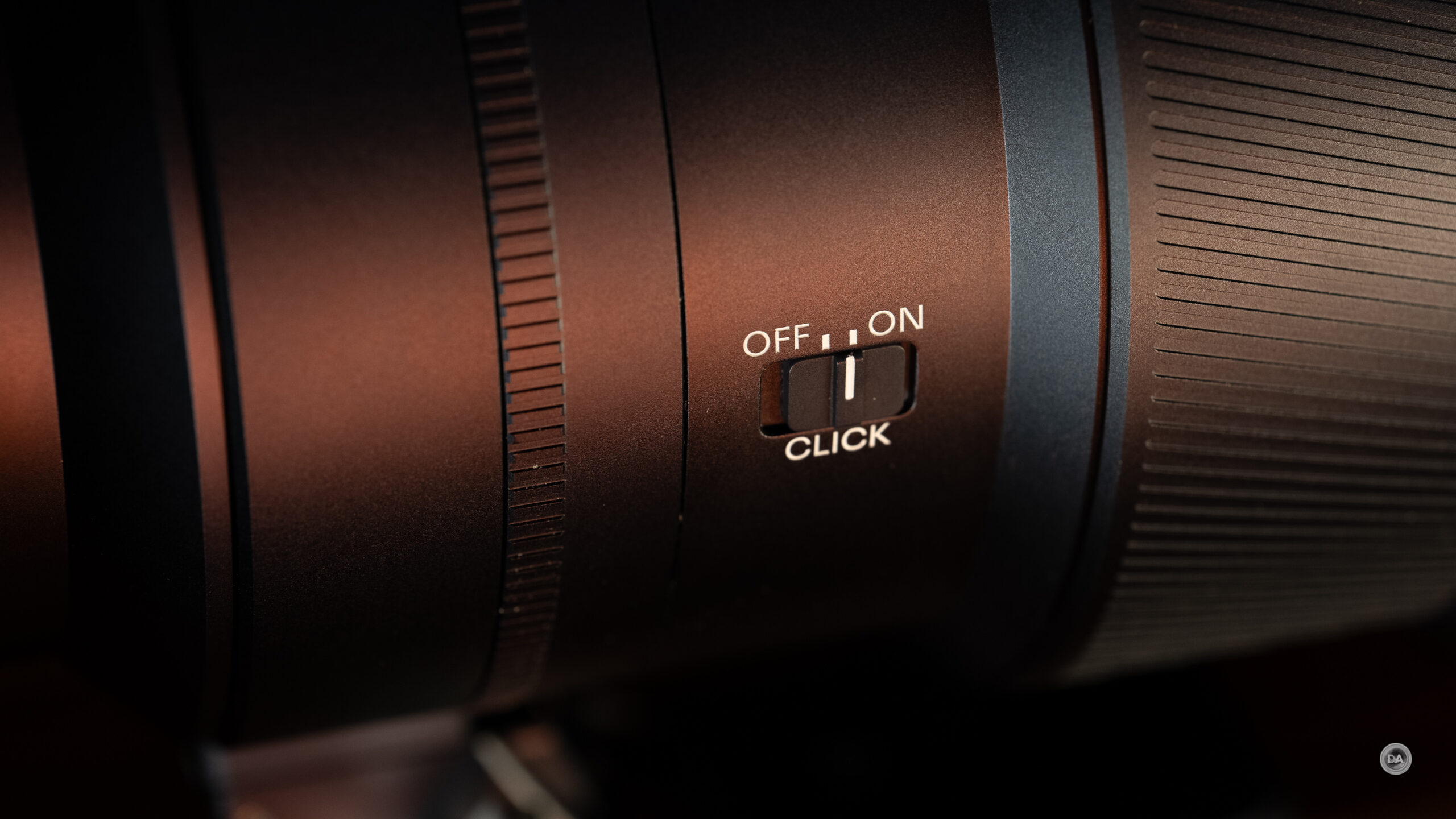
I’ll also note that the position of the tension knob for the tripod collar can also interfere with the typical left hand thumb adjustment of the aperture ring.
There is no iris lock, and the detent in between F22 (minimum aperture) and A (automatic or camera control) isn’t as strongly defined as what I would like.
The aperture iris features just nine blades, which is on the low side for a modern premium lens. What’s more, the aperture doesn’t keep an overly circular shape as you stop it down due to those blades being straight rather than curved.
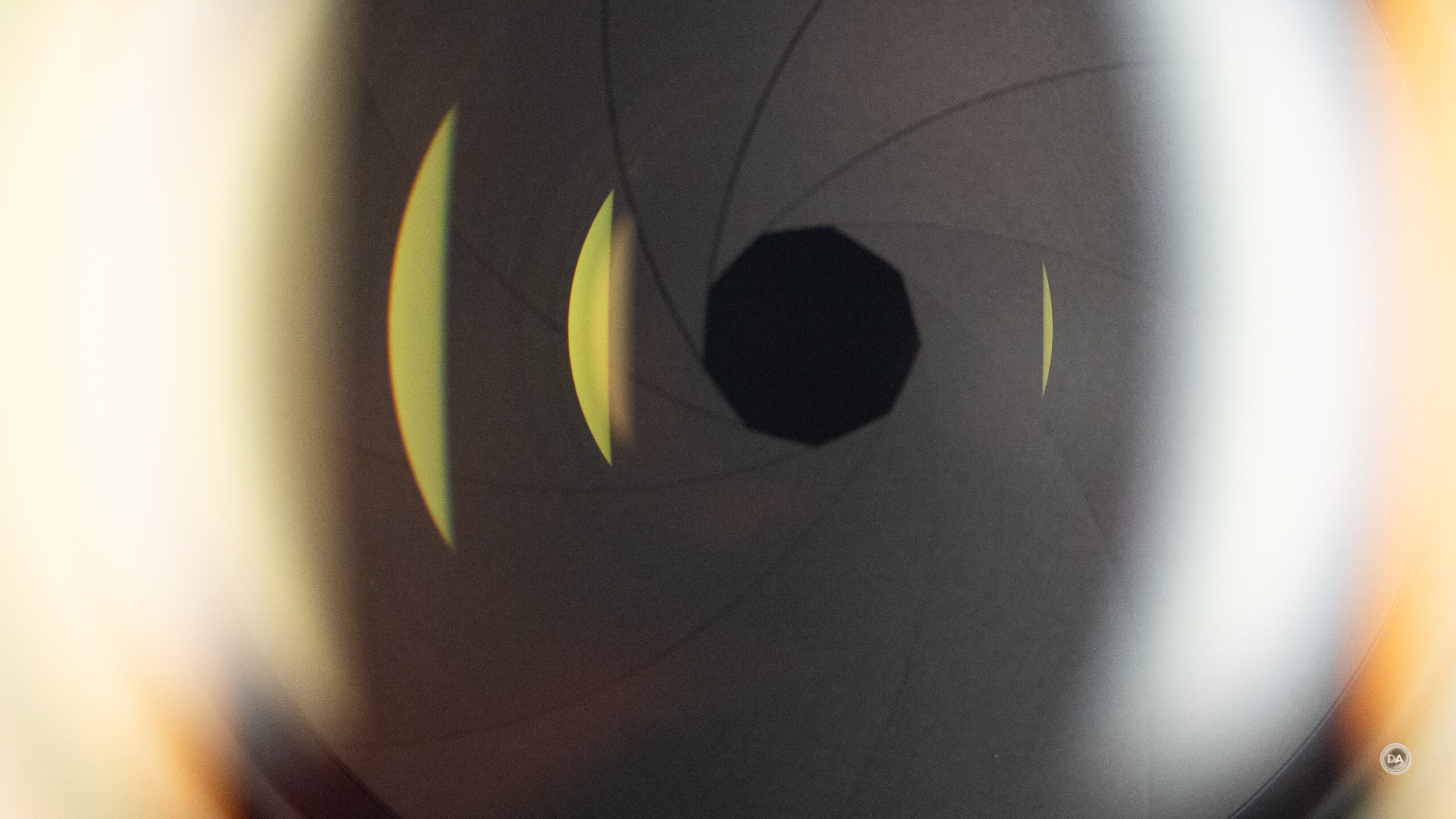
At wide apertures you will get a lemon/cat-eye shape in the corners, but everything is reasonably round by F2.8. By F4, however, you are starting to see that nonagonal shape.


Other features include a two-position focus limiter (the limited option removes any close focus possibilities and only allows focus between 5m and infinity) along with an AF | MF switch.

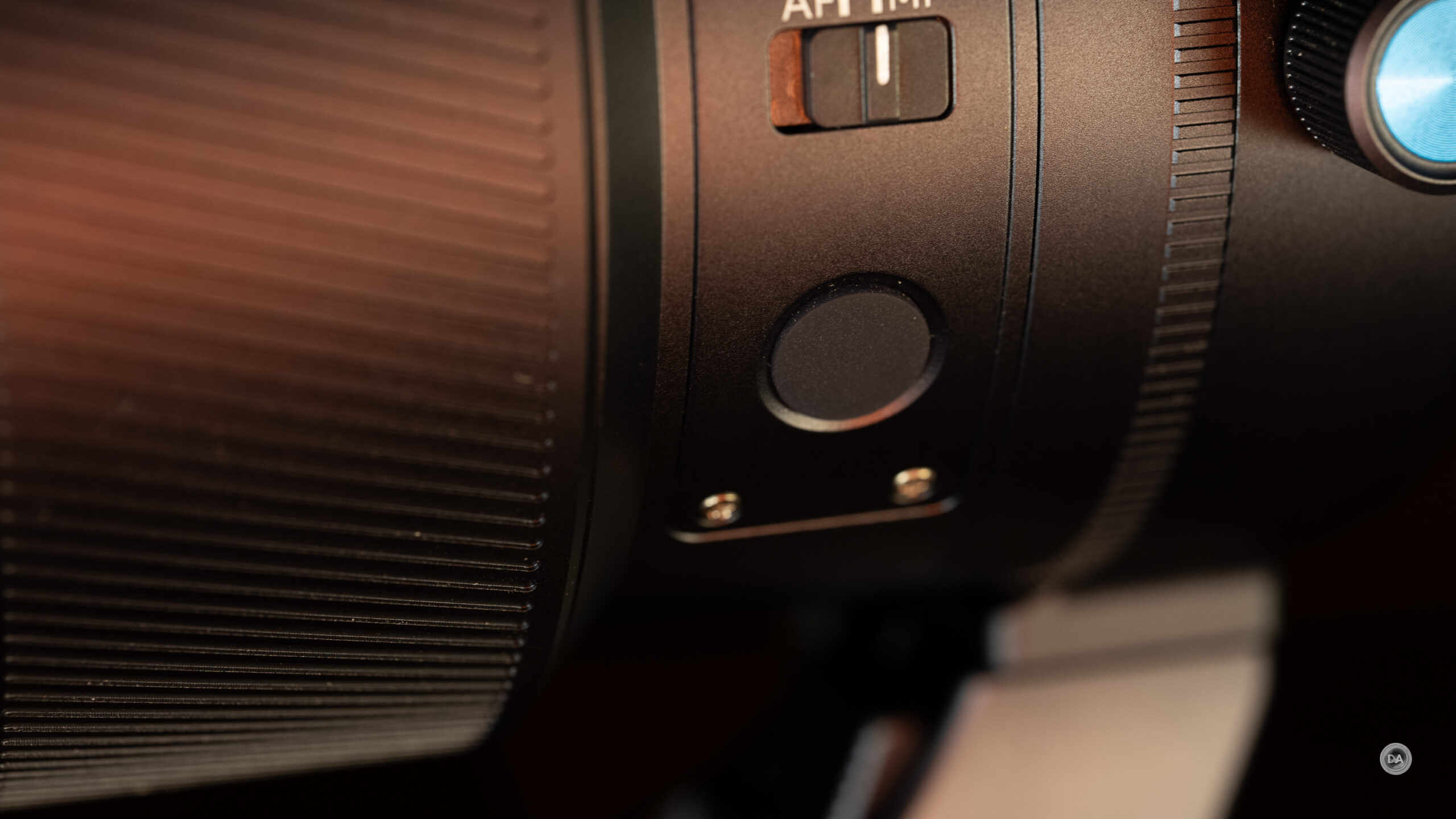
Interestingly, there is a not only a custom/function button beneath the AF | MF switch, but also redundant buttons at all four 90° positions near the front of the lens. I’m not sure those front buttons are in a particularly ergonomic position, but kudos to Laowa for working to make this a premium performer.

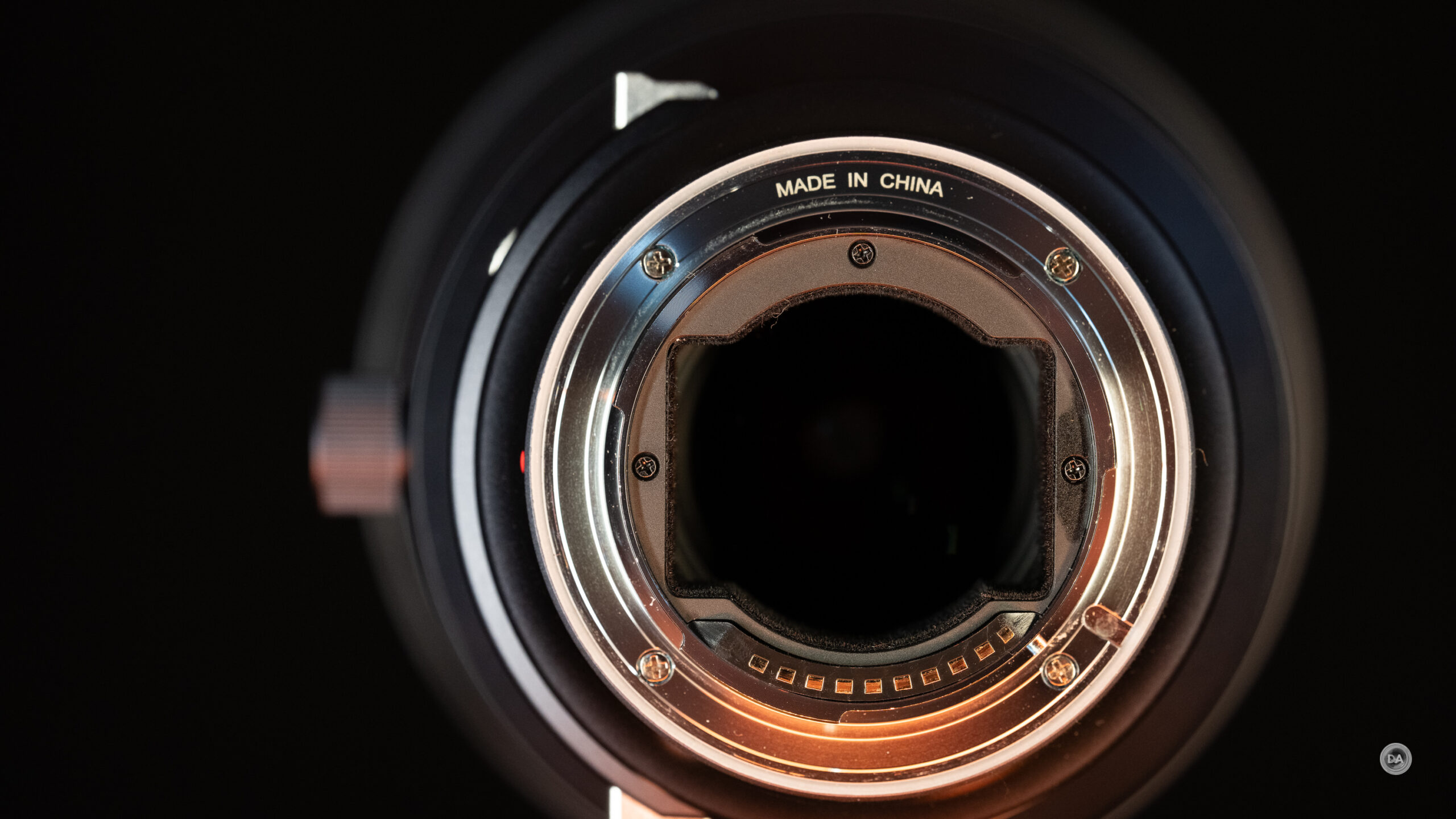
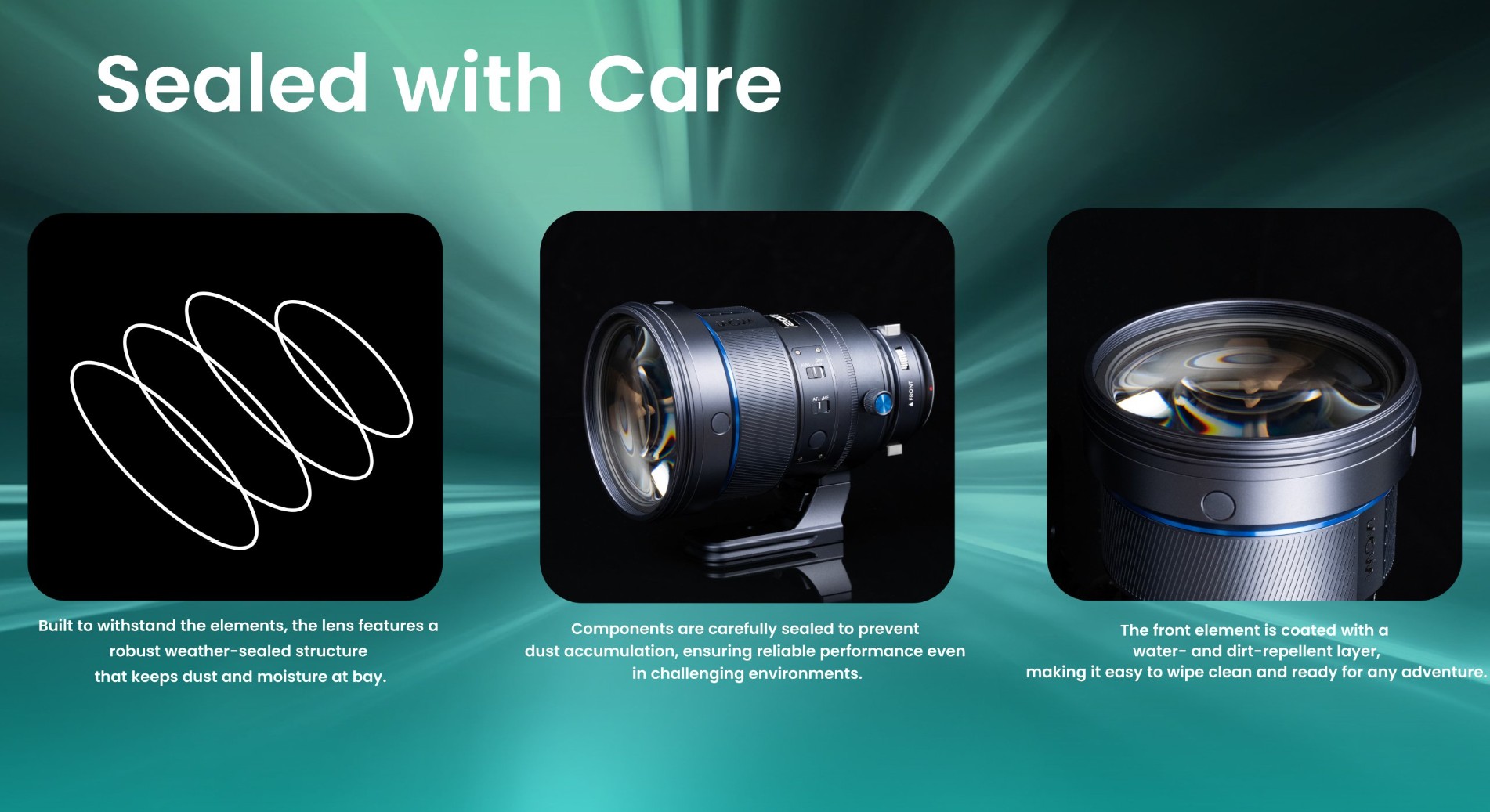
Laowa does tout some degree of weather sealing on this lens, and there is a gasket near the lens mount, a special coating up front, and some internal seals.
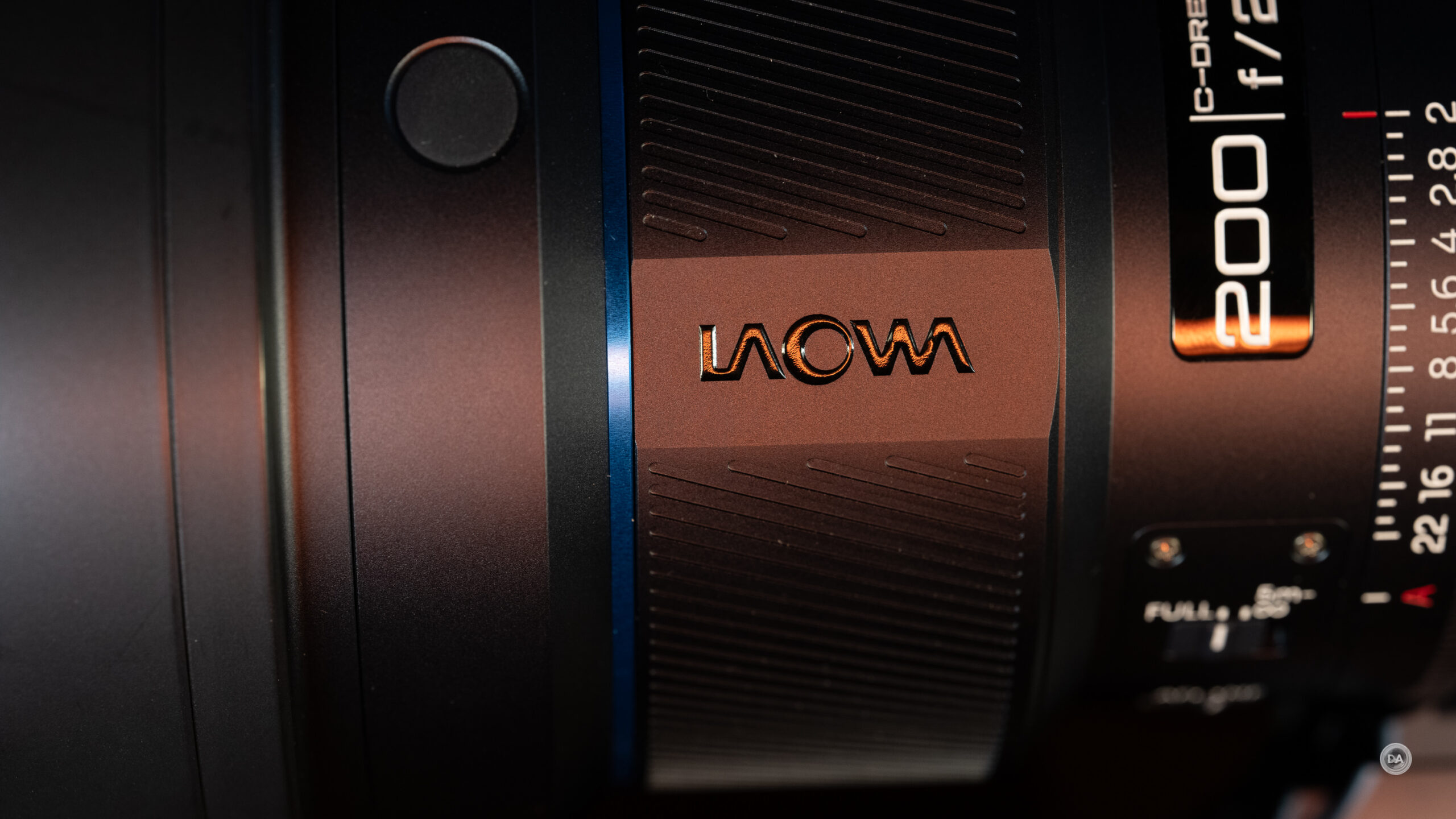
The manual focus ring has Laowa’s unique style with a flat section bearing the Laowa logo on each side. Because mirrorless lenses use a focus-by-wire system, that ring can rotate endlessly (no hard stops). That means these obvious sections have both an upside and a downside. The upside is that they give some kind of visual reference for trying to repeat manual focus pulls, but the downside for those of you with a bit of OCD is that logo section of the ring could end up anywhere…including being upside down.
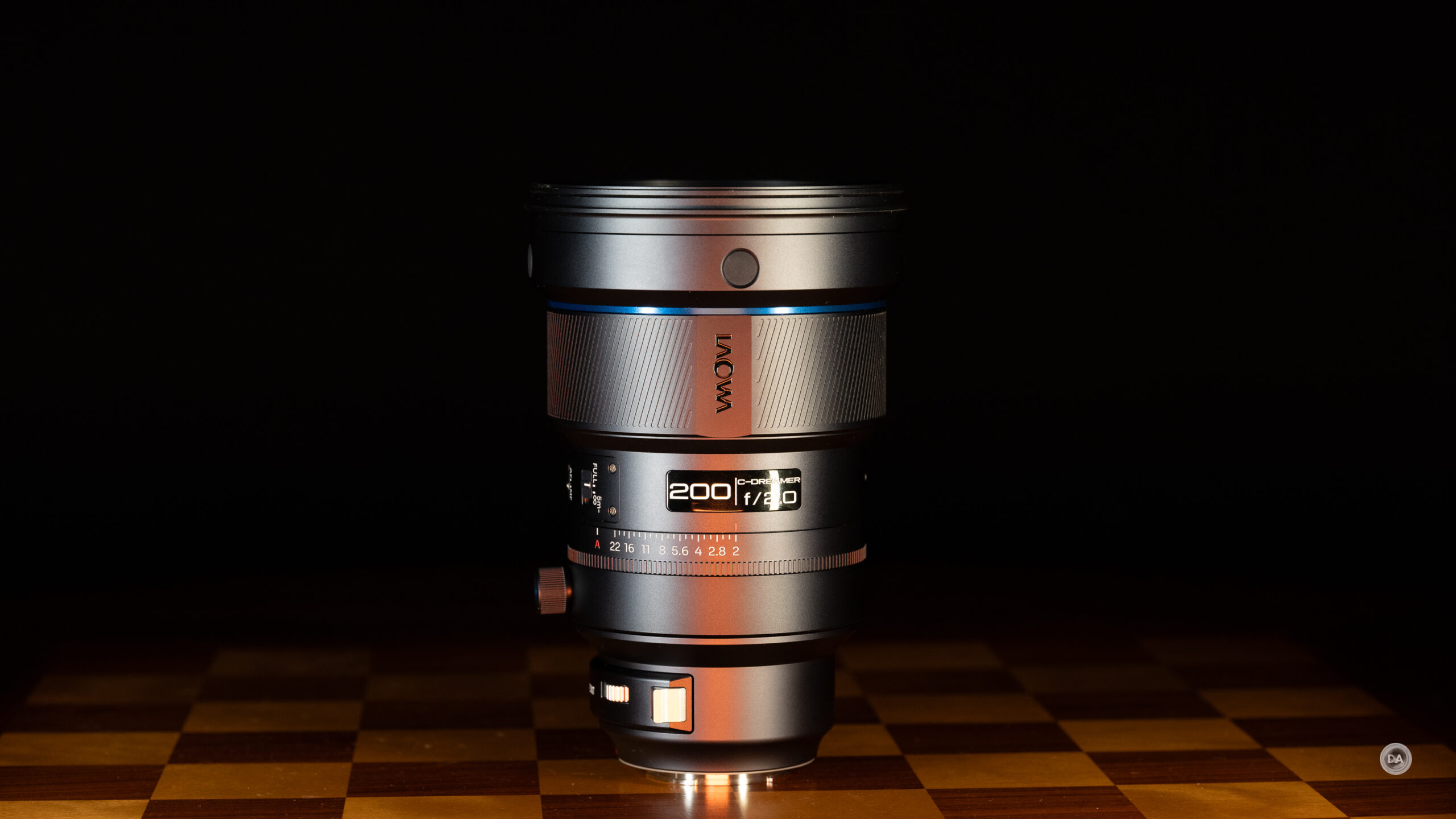
The lens feels like it is made of premium metals, and Laowa has their own unique blue/purple finish that is definitely different than anyone else, though the feedback from my audience shows that this finish is somewhat polarizing.
The lens hood is large (as is typically the case with lenses like this) and uses a tension knob to tighten it down rather than being bayonet style. My only complaint is that my loaner copy is already showing marks on the lens hood, suggesting that this finish isn’t going to hold up well over the long haul.
The minimum focus distance is 1.5m meters and the maximum magnification is just 0.15x, so don’t expect to do macro work with this lens!

Here’s a real world shot at minimum focus distance.

The Laowa AF 200mm F2 doesn’t feel quite as polished as the Sigma 200mm F2 Sport (a remarkable lens), but at $1999 vs $3299, the Sigma is also 65% more expensive. I’m impressed that Laowa took on this challenge, as this lens is definitely at a higher engineering degree of difficult than anything I’ve seen from them before. In truth, what seems to excite the audience the most about this lens is the fact that they have released a Canon EF version of it, as that not only makes it easily adaptable to Canon RF cameras but also to most other mirrorless systems.
Autofocus for Stills
I had a difficult time narrowing down what type of autofocus system is employed in the Laowa AF 200mm F2, but the marketing material is vague. I suspect we have an STM type focus motor, which does create a bit of a speed challenge for a lens with big focus elements like this one. This is probably one of the biggest areas where the Sigma lens has a clear advantage, as it uses Sigma’s much more sophisticated HLA focus system.

In my formal tests (shot on the excellent Sony a1 II, focus moved back and forth fairly quickly. Not as instantly as the Sigma, but with relatively good speed. Focus speed was fine for event settings, portraits, though I wouldn’t have confidence in using this lens for sports. Right now if you want to shoot sports with a 200mm F2, the Sigma is the better choice.
I had flawless focus results when shooting a speaker in a church setting.

As we’ll see in a moment, contrast at F2 is a bit weak, so while images don’t always look as crisp as what I would like, I can tell that focus is accurate.

Focus is fairly quiet, though if you listen carefully there is a faint high-pitched whine as focus moves back and forth.
I couldn’t get Nala moving fast (the snow is getting deep), but I did get well focused results of her moving around.

I had zero problems in a portrait session, however, with focus always being accurately on the subject’s eye. Stopping down to F2.8 dramatically increases contrast, so here’s an F2.8 image with a crop to show you how well focus has been achieved.


As with all third-party lenses, burst rate will be limited to 15FPS with autofocus on Sony, but not on Nikon. Others have tested this lens in more of a sports setting and found that it didn’t quite keep up. Laowa even adds this disclaimer: “The Laowa 200mm f/2 AF FF may not support the 15 fps shooting limit on Sony cameras when using continuous autofocus (AF-C) on Sony Alpha mirrorless models.” I wouldn’t buy this lens for sports use, but see no issues with autofocus for portrait or event work.
Video AF
Stepping motors definitely vary in their performance for video work, and the motors here move a little more slowly than I would prefer. When I forced autofocus changes by putting my hand in front of the lens and causing it to focus on my hand before allowing it to go to the background, I could see that focus wasn’t completely confident. There is sometimes a bit of a rack in the wrong direction, and the motor seems to need a second to build inertia.
Focus breathing is quite pronounced.
I had good success when approaching the camera, as the autofocus system kept me consistently in focus without obvious adjustments, and when I stepped in and out of frame, focus moved back to my face quickly and without drama.
Laowa AF 200mm F2 Image Quality
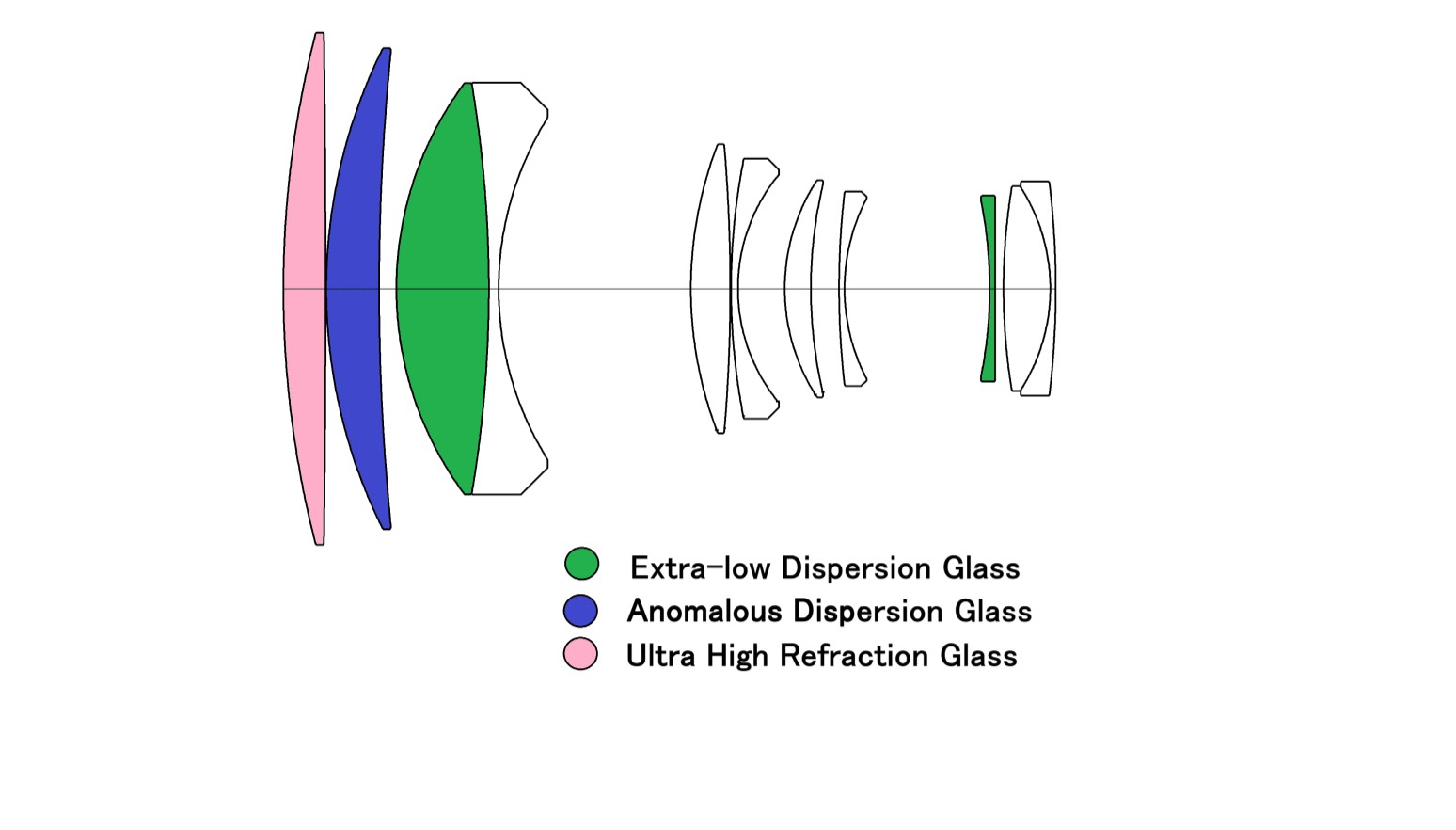
The Laowa AF 200mm F2 sports an optical design of 11 elements in 9 groups, which will appeal to those who prefer simpler optical arrangements. This includes two ED (extra low dispersion) elements, one Anomalous Dispersion element, and one UHR (ultra high refraction) element.. The MTF suggests that detail and contrast should be excellent all across the frame at F2, but I’m not sure about this one.
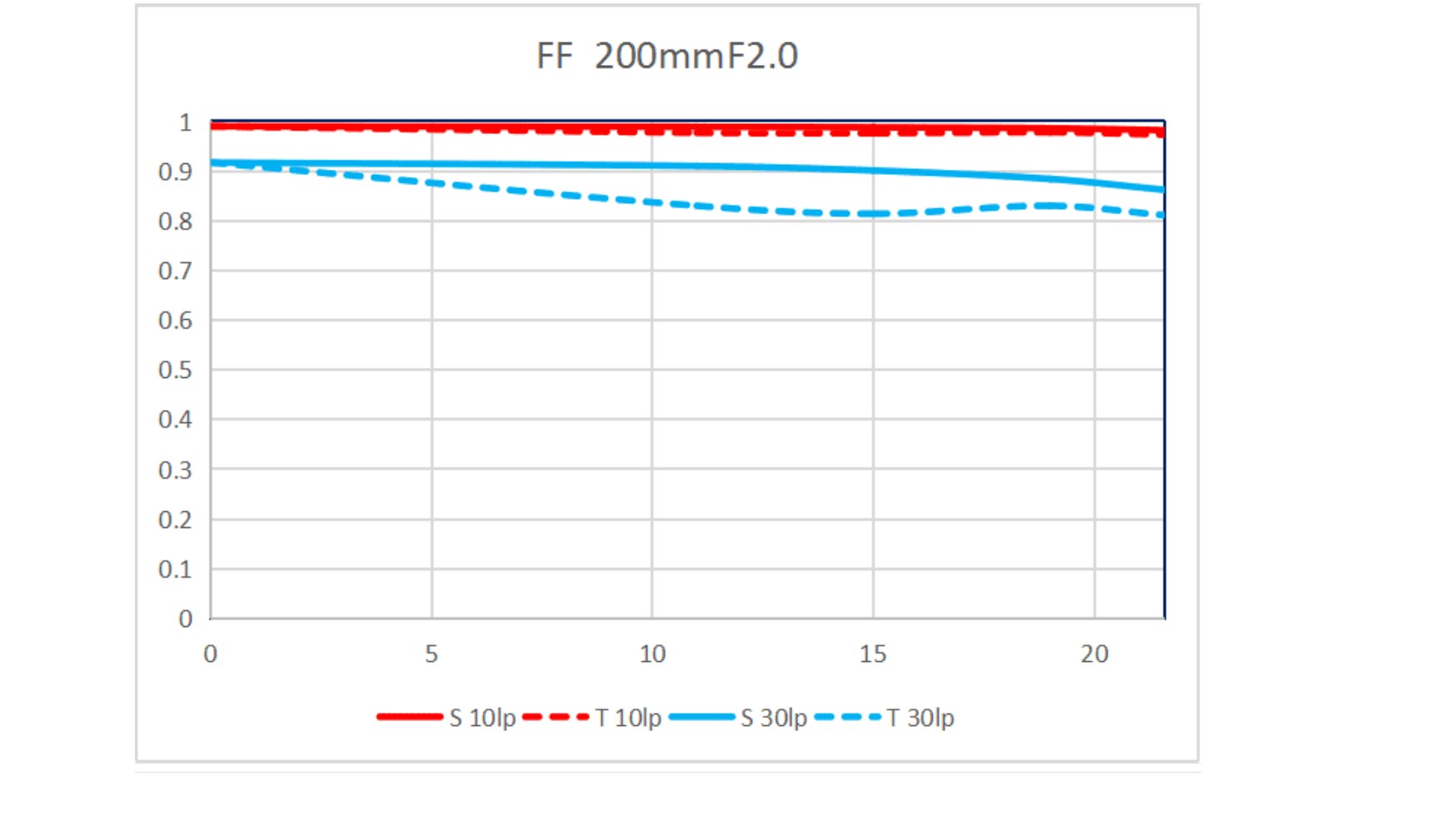
What I (and other reviewers) have found is that this is very much a “split-personality” lens, with rather low contrast at F2 (regardless of what the MTF suggests) but a fairly radical improvement by F2.8 to much higher contrast. Take a look at a real world portrait comparison:
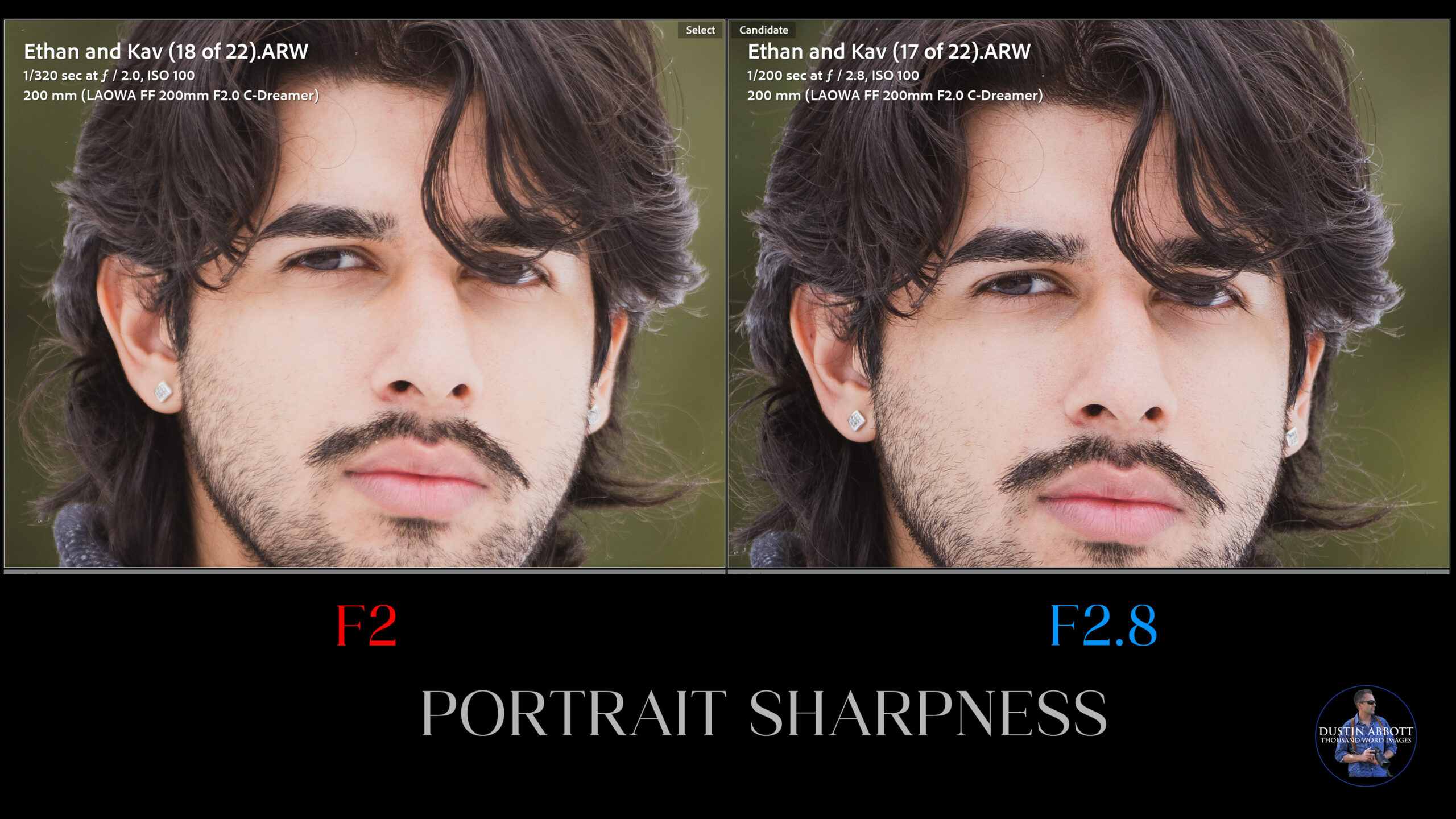
Notice the intense difference in contrast (and thus apparent detail) with the lens stopped down one stop.
We’ll circle back to that in a moment with our chart tests, but first, here’s a look at vignette and distortion.
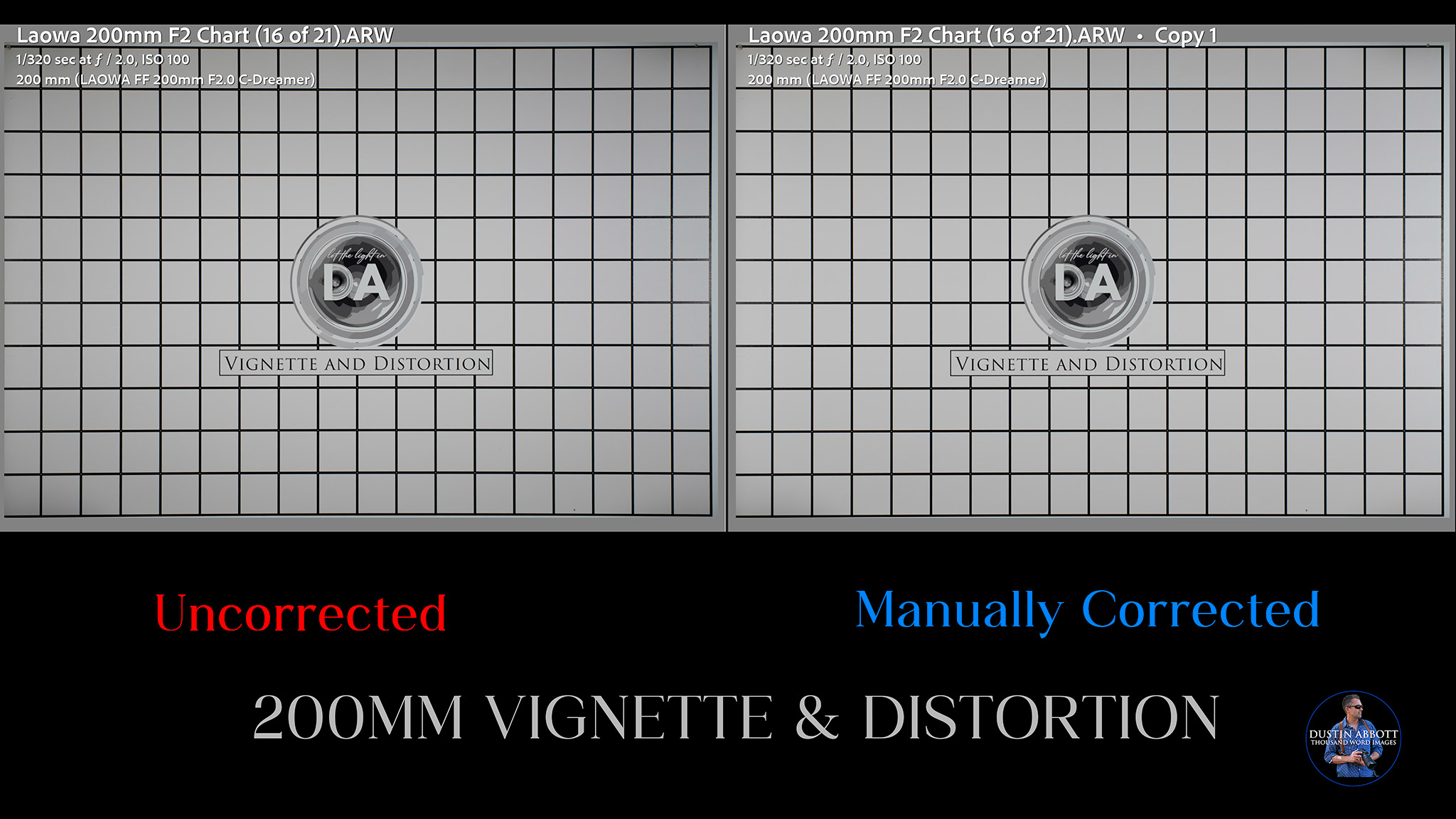
There isn’t much of either. I used a negligible -1 to correct the tiniest amount of pincushion distortion (which you would never see in real world shooting) and a +28 to correct about a stop of vignette. The vignette is also so minute that you would probably never need to correct it. That’s great, as Laowa lenses typically don’t get great in-camera profile support yet.
I saw low levels of longitudinal style chromatic aberrations (LoCA) either on my chart…

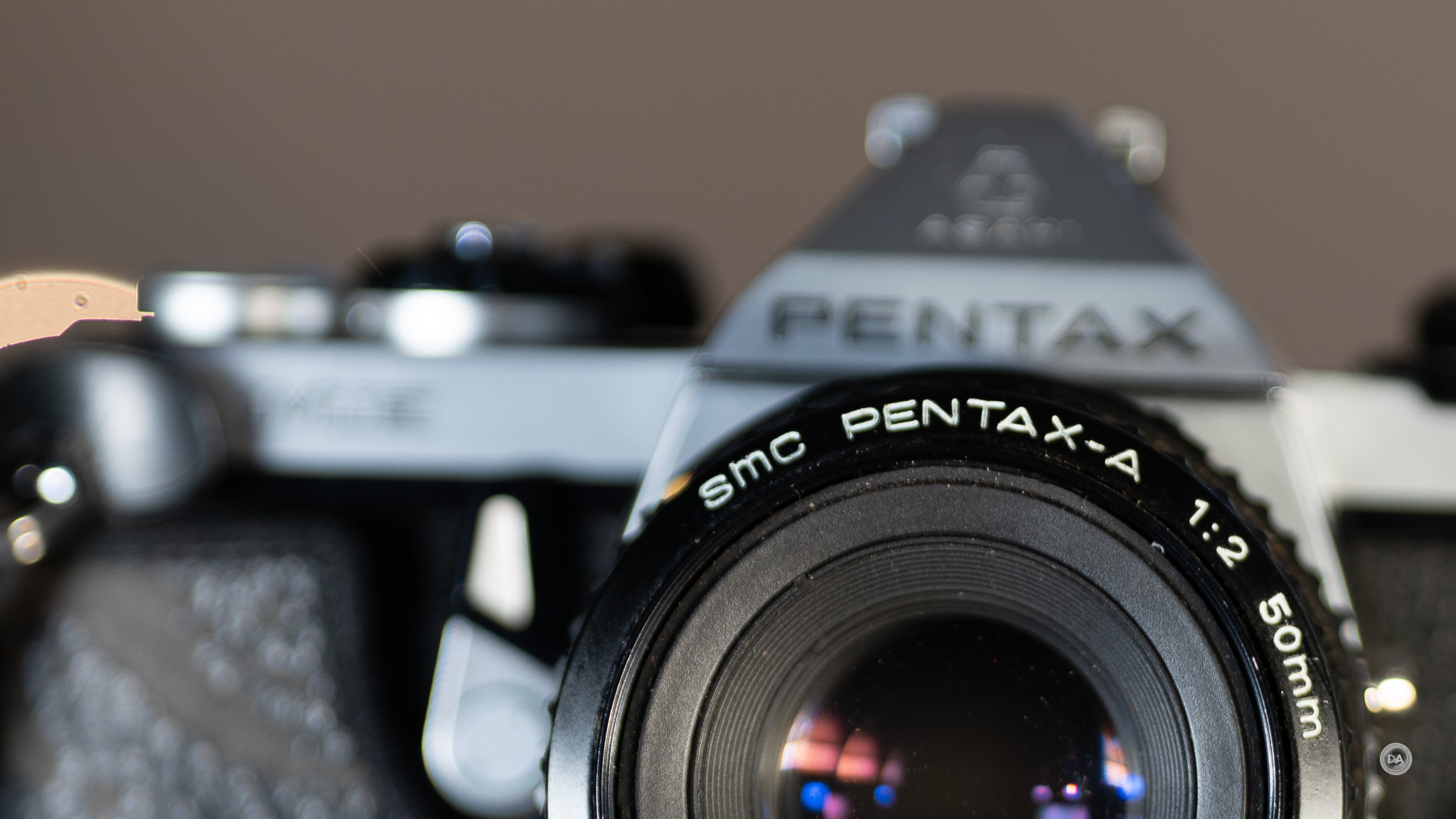
Or with my Dad’s old SLR. Everything looks very clean.
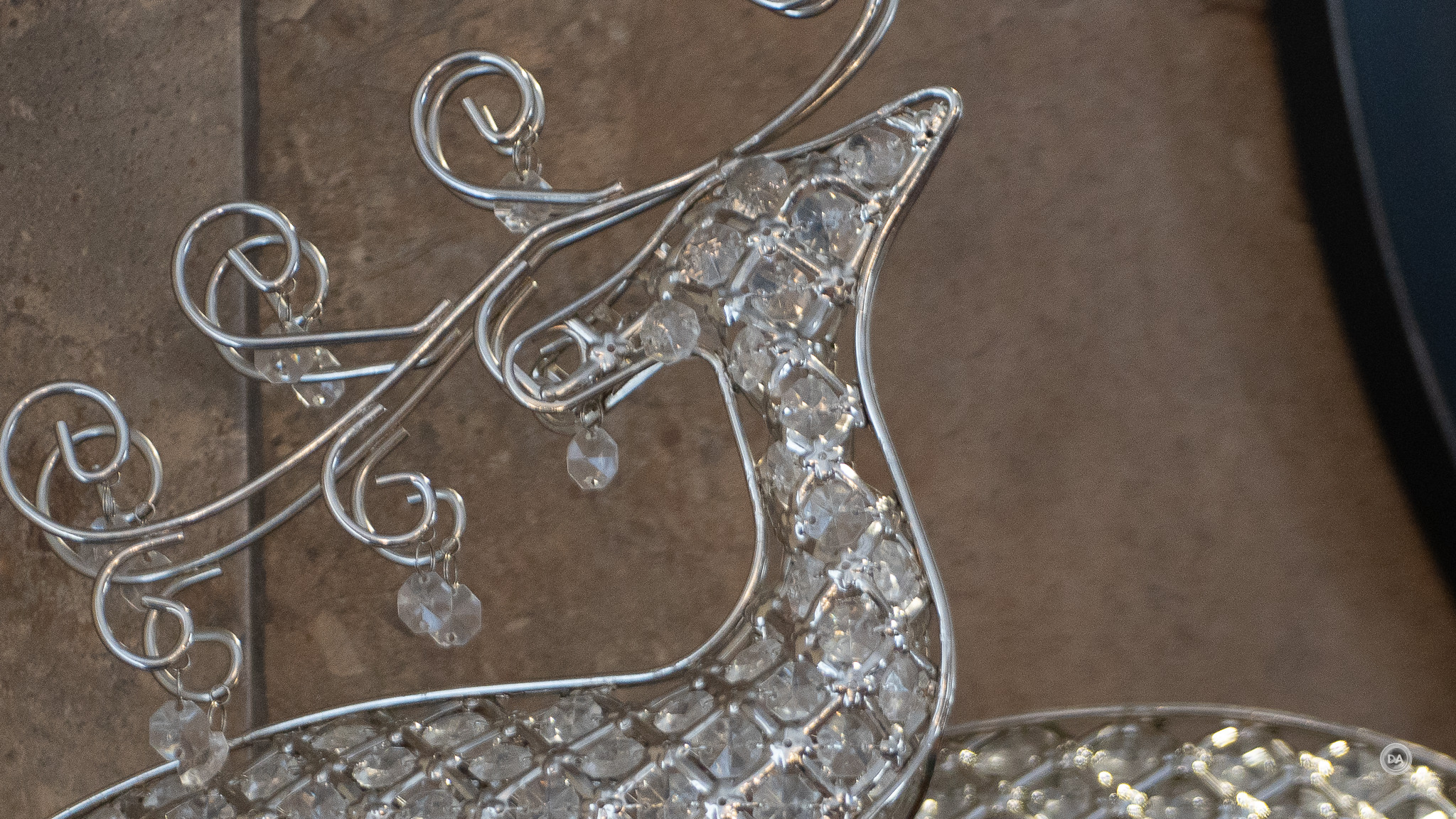
I also saw basically no lateral style chromatic aberrations (LaCA) found in the contrast transitions near the edge of the frame.

An excellent job of controlling distortion, vignette, and fringing by Laowa here.
So let’s return to focus on resolution. These results are shot on a 61MP Sony a7RV and the crops are shown at roughly 200% magnification level. Here’s a look at the test chart that the crops are taken from.

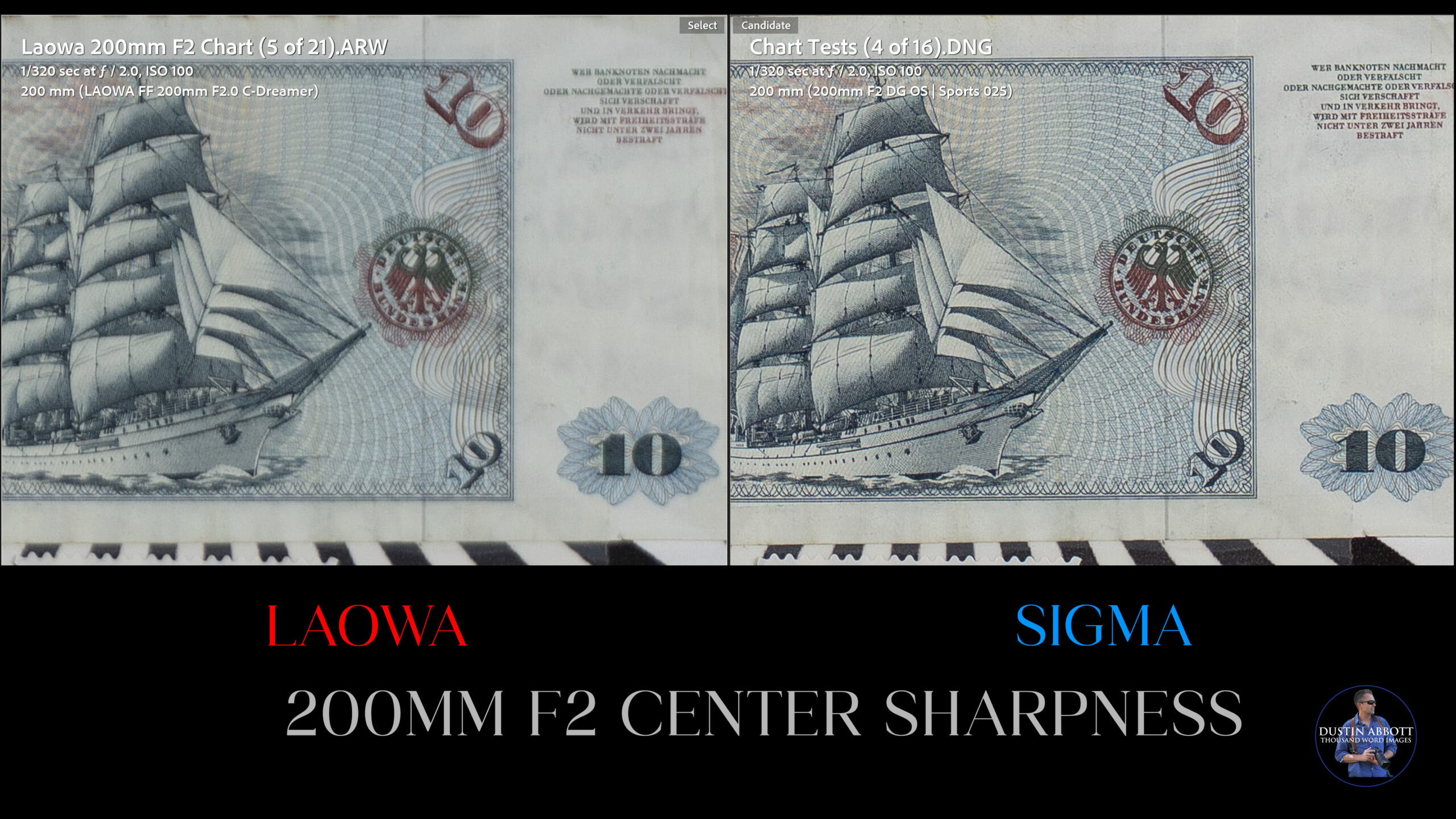
If we zoom in and look at the 200% crops at F2 from the center, mid-frame, and lower right, we discover that while there is a decent amount of resolution everywhere, contrast is quite low.



All of the textures have a bit of a haze on them. That means that the lens struggles to deliver crisp details at F2. The resolution is there, but the low contrast makes fine textures look a little muddy.
This sets it at a serious disadvantage optically as compared to the Sigma 200mm F2 Sport, which is laser sharp across the frame.
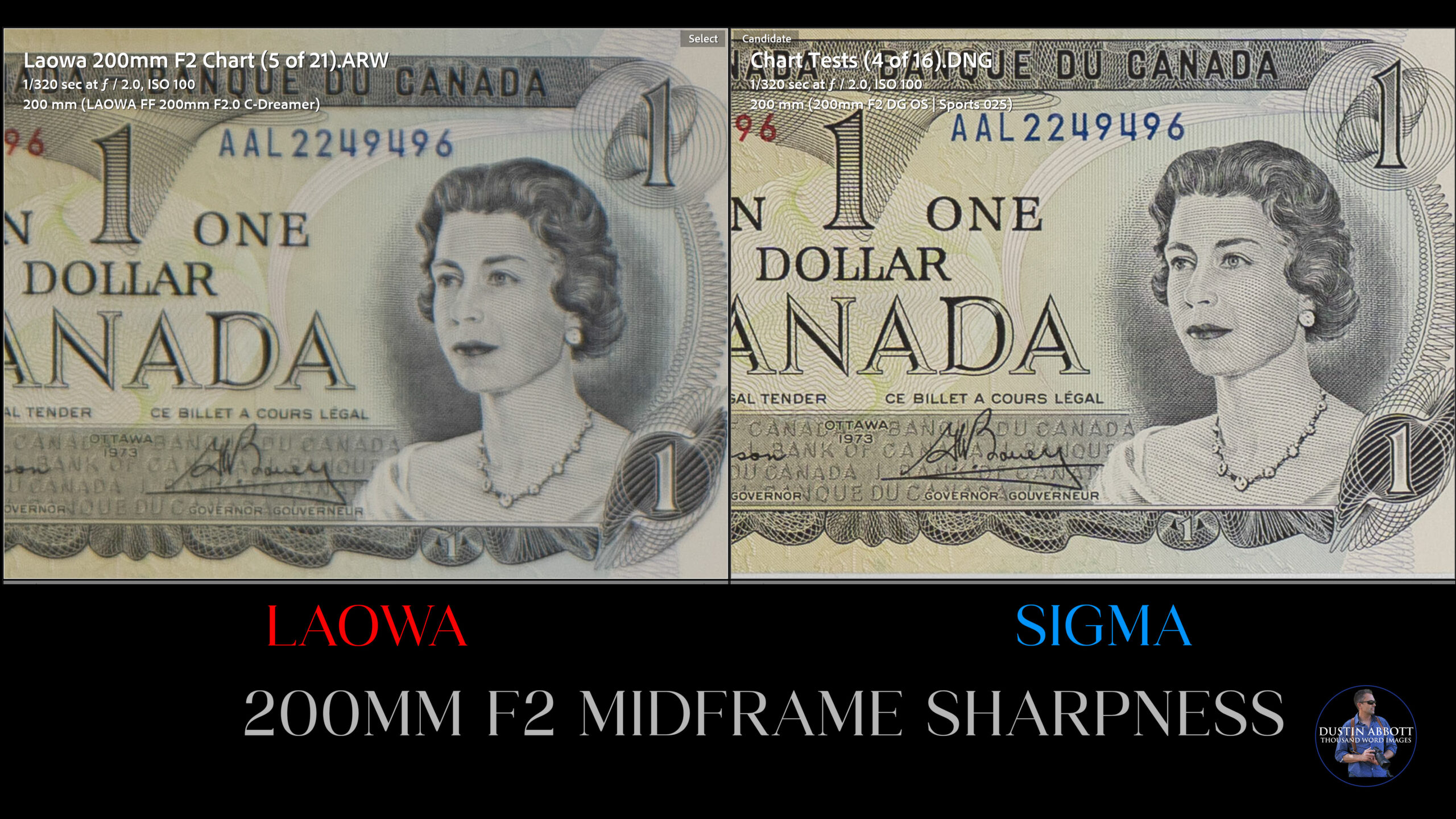
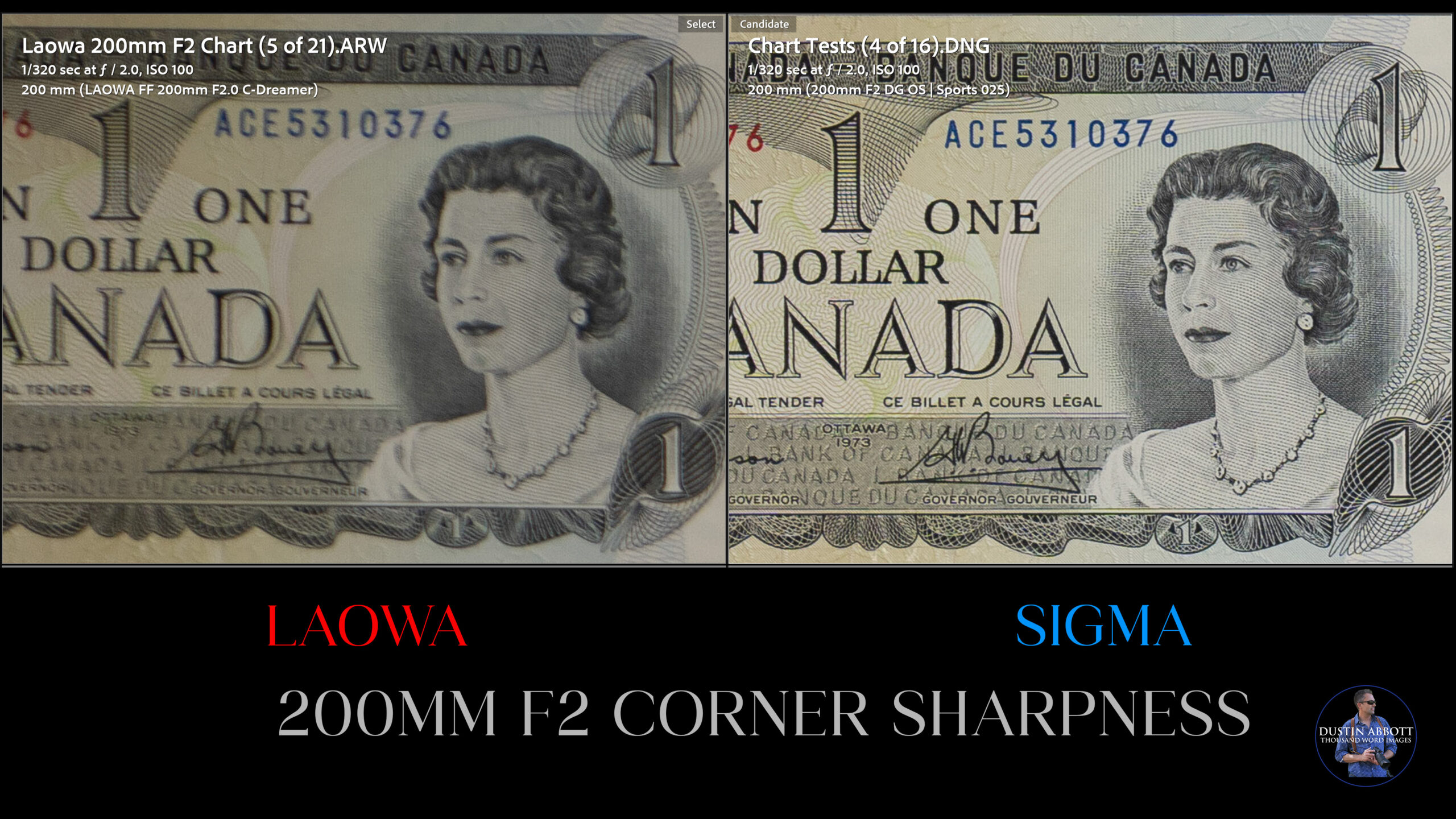
Returning to another F2 portrait shot, we can see that while resolution is there, the lower contrast gives a bit of a “dreamy” look.


In some ways this reminds me of a lens like the Voigtländer 40mm F1.2, a lens with a bit of a dreamy personality at wide apertures and then a much higher contrast image at F2.8 and smaller apertures.
Stopping down to F2.8 dramatically improves contrast…all across the frame.



This helps make the lens much more competitive with the Sigma, though it is still sharper and higher contrast.
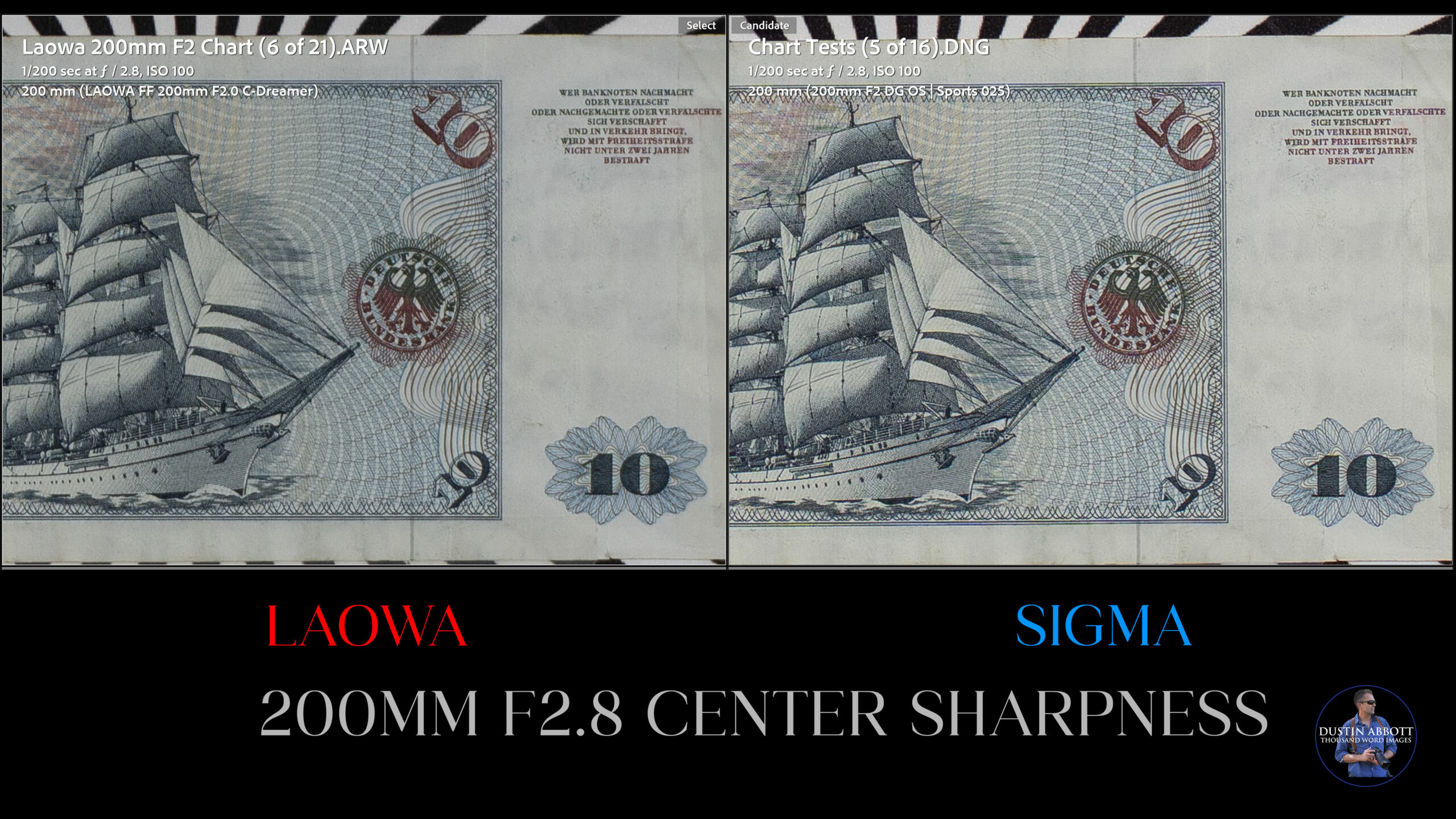
This touches on what is my primary concern with the Laowa AF 200mm F2 after reviewing it. Most people who buy a 200mm F2 lens do so to shoot it at F2. It allows for that really unique subject isolation for portraits or to capture crisp sporting images while having the capabilities to stop action. The fact that you have to shoot the Laowa at F2.8 to get that crisp contrast is a problem, as there are a number of zoom lenses which do a great job of covering 200mm and F2.8, and with the added versatility of all the other focal lengths covered…plus lower size and weight. A lens like the Tamron 70-180mm F2.8 G2 costs just $1000 at the moment, and while it doesn’t quite reach 200mm, it is delivering great results at 180mm F2.8. Someone buying this lens will have to like the look at F2, otherwise it doesn’t make a lot of sense.
There is a bit more improvement at F4:

Further gains are muted across the frame other than the far corners, which I saw improve up through F8:

Diffraction is an unfortunate reality on higher resolution cameras, so the image will start softening by F11 with a more obvious softening by the minimum aperture of F22.

Where the Laowa shines is in its rendering, which is nice and soft. While there is the typical cat-eye shape in the corners, specular highlights are generally clean looking.

The rendering even with some hard

Expect backgrounds to completely melt away for portraits.

I also think that color rendition is really quite good, too.

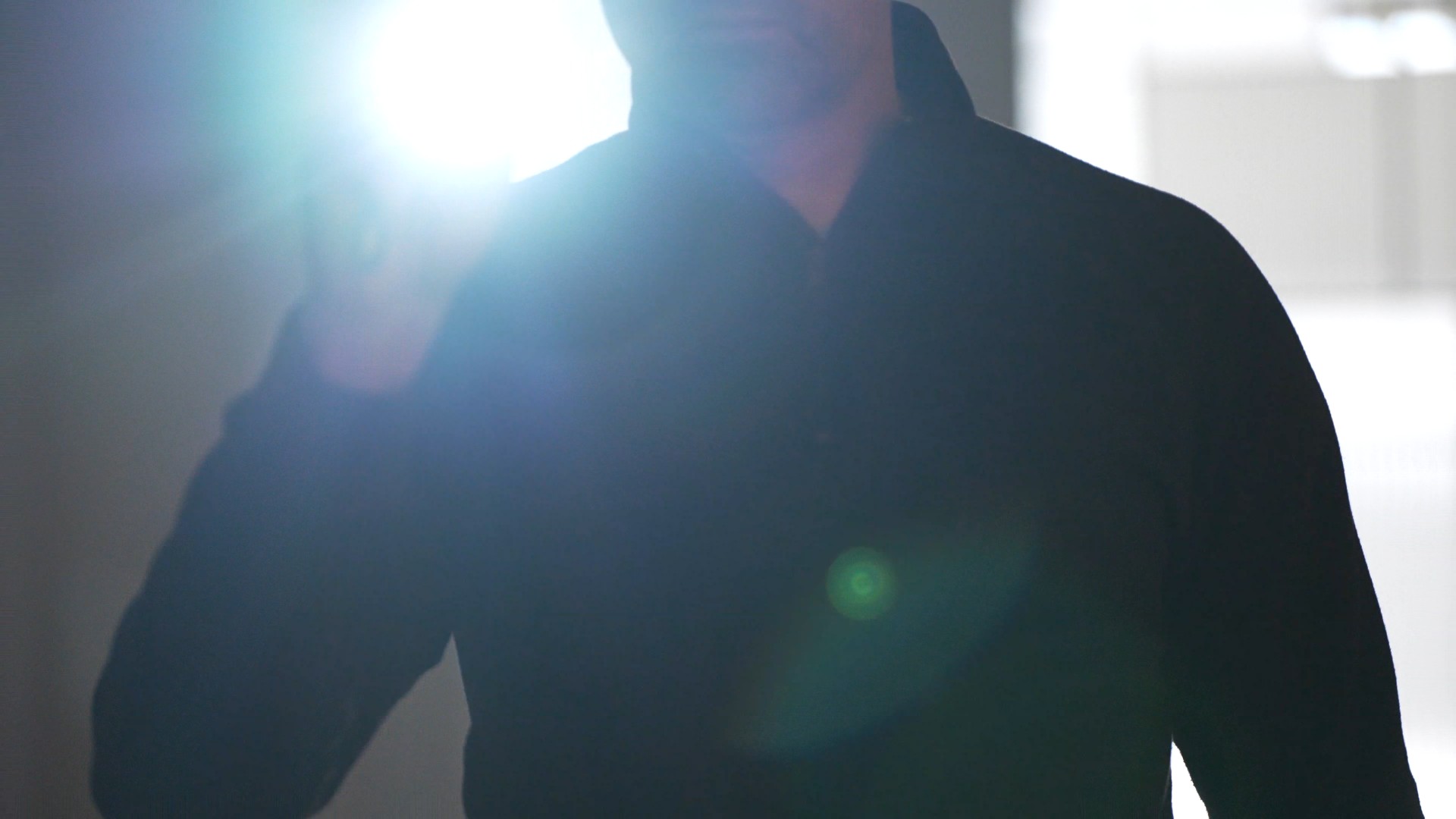
My review period fell during a lot of grey, overcast days, so the sun was not in my shots. I did test with a flashlight, however, and you will definite get some flashing and ghosting at certain angles.
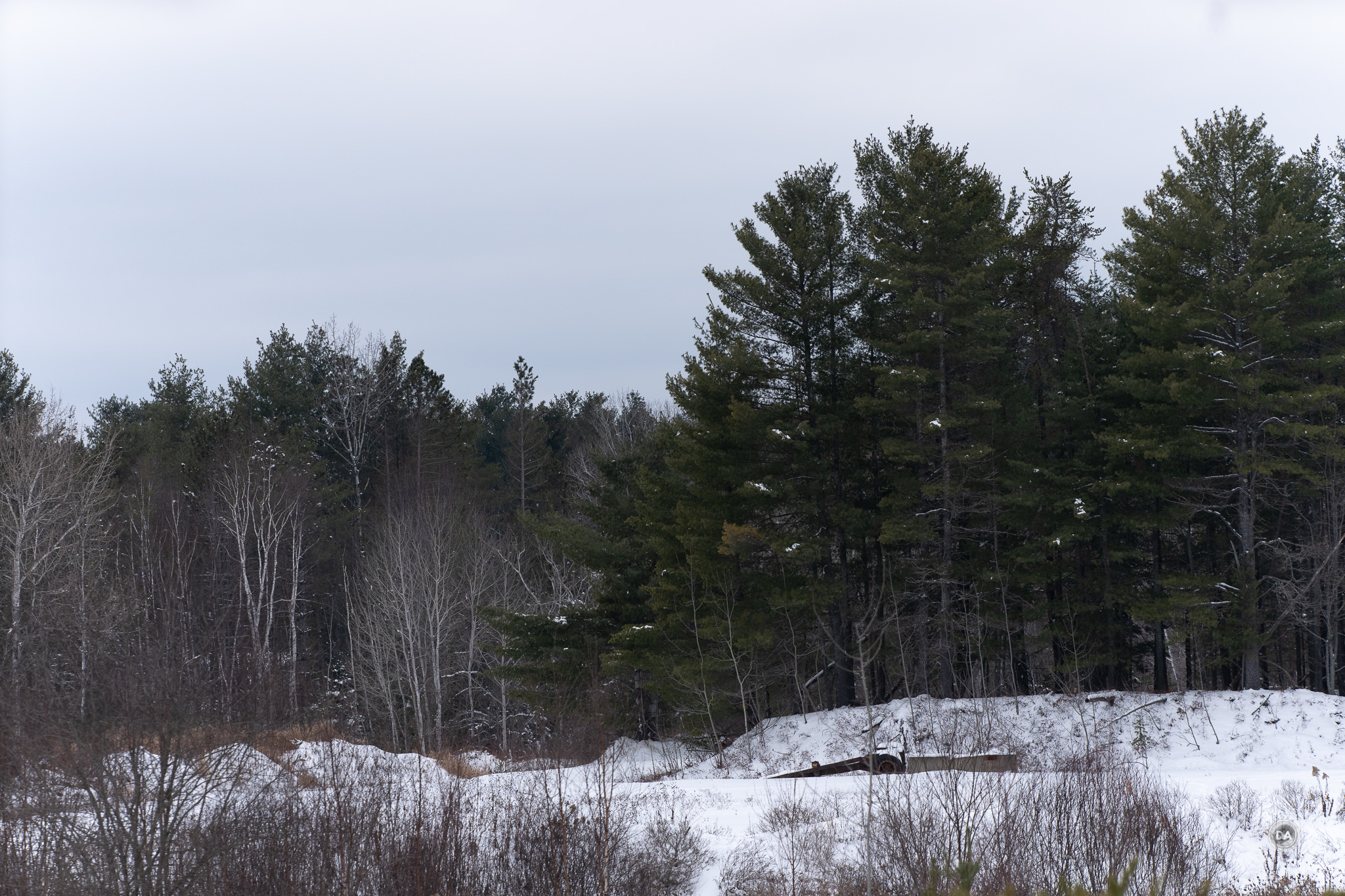
The Laowa AF 200mm F2 does many things well optically, but the lack of contrast at F2 left me a bit disappointed, even though the general rendering from the lens is lovely. Enjoy the images in the mini-gallery here.












Conclusion
First of all, I’m so impressed that Laowa took on this challenge. This is a next-level work from their engineers, and having a sub-$2000 200mm F2 lens is truly impressive, particularly considering that most such lenses in the DLSR era cost north of $5000. This is a true “bokeh-monster” that can give you incredibly shallow depth of field even at a distance.

Because the autofocus isn’t really fast enough for sports work, I would primarily recommend this lens to portrait photographers who love the 200mm F2 look but aren’t as concerned with counting pores.

When stopped down, the Laowa AF 200mm F2 is nice and sharp, but that caveat is the main “fly in the ointment” to me. I suspect that most people that would want to buy a 200mm F2 lens do so because they want to shoot it primarily at its maximum aperture to produce the maximum effect from the optics. Those who want critical sharpness at F2 or who want autofocus sufficient to shoot sports with should consider the more expensive Sigma 200mm F2 Sport instead, but if the character of the Laowa appeals to your eye, then it definitely offers up a tremendous value. I hope Laowa keeps taking risks like this, and giving photographers more unique options in the future. And bold move on the Canon EF version, Laowa…I like it!

Pros:
- Beautiful built lens
- Good feature set
- Love the rear, rotating filter hold
- Includes weather sealing
- STM motor delivers fairly quick and accurate focus
- Good contrast across the frame by F2.8
- Little distortion
- Low vignette
- Solid control of fringing
- Colors look great
- Nice bokeh
- First sub-$2000 AF 200mm F2 lens
- Good price to performance ratio
Cons:
- Need to shoot at F2.8 to get strong contrast
- No lens-based stabilization
- Laowa’s design language is polarizing
- Some flare issues
- Autofocus speed and accuracy not at a sports level
- Corners need to be stopped down to F8 to be critically sharp
_________________________________________________________________________
GEAR USED:
Purchase the Laowa 200mm F2 @ B&H Photo | Adorama | Amazon | Amazon Canada | Amazon UK | Amazon Germany
_________________________________________________________________________
Purchase the Sony a7RV @ B&H Photo | Adorama | Amazon | Camera Canada | Sony Canada | Amazon Canada | Amazon UK | Amazon Germany
__________________________________________________________________
Purchase the Sony a7IV @ B&H Photo | Adorama | Amazon | Camera Canada | Sony Canada | Amazon Canada | Amazon UK | Amazon Germany
_________________________________________________________________
Purchase the Sony Alpha 1 @ Camera Canada | B&H Photo | Adorama | Amazon | Sony Canada | Amazon Canada | Amazon UK | Amazon Germany | Ebay
_________________________________________________________________
Want to support this channel? Use these affiliate links to shop at: B&H Photo | Amazon | Adorama | Camera Canada | Amazon Canada | Amazon UK | Ebay | Make a donation via Paypal
Buy DA Merchandise https://bit.ly/TWIMerch

Keywords: Laowa, 200mm F2, Laowa AF 200mm F2, C-Dreamer, Laowa 200mm F2 Review, f/2, F2, 200mm, Sigma, ART, Sony Alpha 1, Sony A1 II, Sony a7RV, Review, Hands On, Dustin Abbott, Real World, Comparison, Sharpness, Bokeh, Flare Resistance, Autofocus, Image Quality, Sample Images, Video, Photography, let the light in, weathersealing, #letthelightin, DA
Related posts:
 Laowa AF 10mm F2.8 Zero D Review
 Sirui Aurora vs Sigma DN 85mm F1.4
 Meike MIX 24mm F1.4 FE Review
 Sigma 500mm F5.6 DN OS Sport Review
 Sigma 24-70mm F2.8 DG DN II | ART Review
 Sigma 28-45mm F1.8 DG DN | ART Review
 Sony 85mm F1.4 GM II vs Sigma 85mm F1.4 DN
 Hello from Tokyo – Takeaways from Sigma’s New Product Announcements
 Sigma 17-40mm F1.8 DC | ART Review
 Viltrox Pro AF 50mm F1.4 FE Review