


The promise of Canon’s new RF mount is that it was going to release new and novel lens designs not possible on EF mount. I would say that in many ways that is a promise that was overstated, but every now and then there are exceptions to the rule. The Canon RF 24-105mm F2.8L IS Z is the kind of lens that I heard many, many requests for back in the EF days, but was something that Canon never delivered. But now on RF Canon has delivered on the ideal of the faster aperture of the traditional 24-70mm zoom with the superior zoom range of the 24-105mm lenses that were typically limited to an F4 aperture. They’ve even added IS (Image Stabilization) and Powerzoom compatibility on top of that. This is a lens that can seemingly do it all, but you’ll have to pay for the privilege of using it. Is this beast of the lens worth the nearly $3300 USD price of ownership? Find out by watching the video review or reading on.
Follow Me @ YouTube | Patreon | Instagram | Facebook | DA Merchandise | Flickr | 500px | X
Thanks to Canon Canada for sending me a review loaner of this camera. As always, this is a completely independent review, and the thoughts and opinions expressed here are my own. Visit the product page dfor the lens here.
___________________________________________________________________________________________
AI SUMMARY: The Canon RF 24-105mm F2.8L IS Z lens offers a groundbreaking combination of a versatile zoom range with a constant F2.8 aperture, making it a highly sought-after tool for photographers. Despite its exceptional performance and advanced features like Image Stabilization and compatibility with Power Zoom adapters, it comes at a steep price of around $3300. The lens is larger and heavier than its F4 counterpart, making portability a significant consideration. Nevertheless, it excels in image quality, autofocus performance, and build, making it a valuable addition for professionals despite its drawbacks.
Strengths:
- Versatile zoom range (24-105mm) with constant F2.8 aperture.
- Excellent image quality and sharpness across various focal lengths.
- Advanced features such as Image Stabilization and dual Nano-USM focus motors, enhancing both stills and video shooting.
- Robust construction with weather sealing and high-quality build.
Weaknesses:
- High price point at approximately $3300, limiting accessibility for many photographers.
- Larger and heavier than comparable lenses, affecting portability.
- Requires digital corrections for distortion and vignette, which can impact image quality.
- Aperture ring functionality limitations with earlier camera models can be frustrating.
___________________________________________________________________________________________________
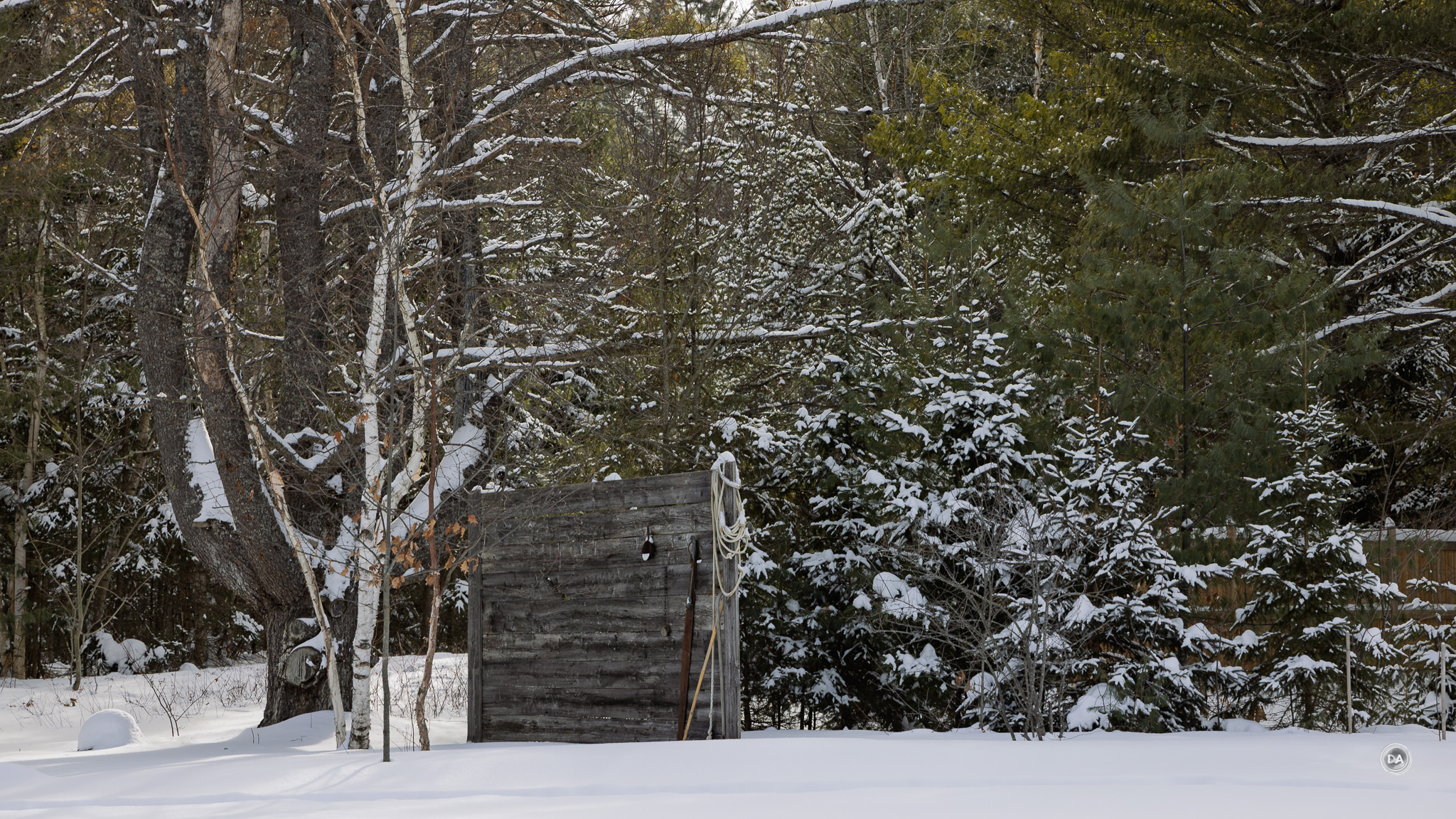
This is just the kind of lens that many people have clamored for, as this has always been an extremely useful zoom range, but adding both an F2.8 aperture and Image Stabilization makes for one of the most versatile lenses that Canon has ever made. But it does come at a cost. This 24-105mm F2.8L IS costs $2000 more than the 24-105mm F4L IS, but there’s also the cost of size (92mm longer) and weight (+600g). There’s no question that the F2.8 lens is superior in performance and versatility, but it is a steep investment. It’s bigger and heavier even than the RF 70-200mm F2.8L IS, but the ability to go from 24mm:

…to a much tighter framing at 105mm:
So the question has to be asked, “Is this lens worth the big bucks?” The answer, as per usual, is complicated.
Let’s see if we can uncomplicated it a bit…
Key Specs
- World’s first 24-105mm focal length combined with consistent f/2.8 maximum aperture
- Supports optional Canon Power Zoom Adapters
- 11 aperture blades
- Smooth, click-less iris ring for precise lens aperture control
- Close-focusing to under 1.5 feet (0.45m) at all focal lengths
- Maximum magnification 0.29x at the 105mm zoom setting
- Optical Image Stabilization up to 5.5 stops of shake correction and Coordinated Control (IS up to 8.0 stops with cameras equipped with IBIS)
- Dual Nano USM focus motors
- Includes tripod mount
- Dust- and water-resistant structure and lens fluorine coating
Build and Features
As noted, this is a beast of a lens. It is nearly double the size of the RF 24-105mm F4L IS.
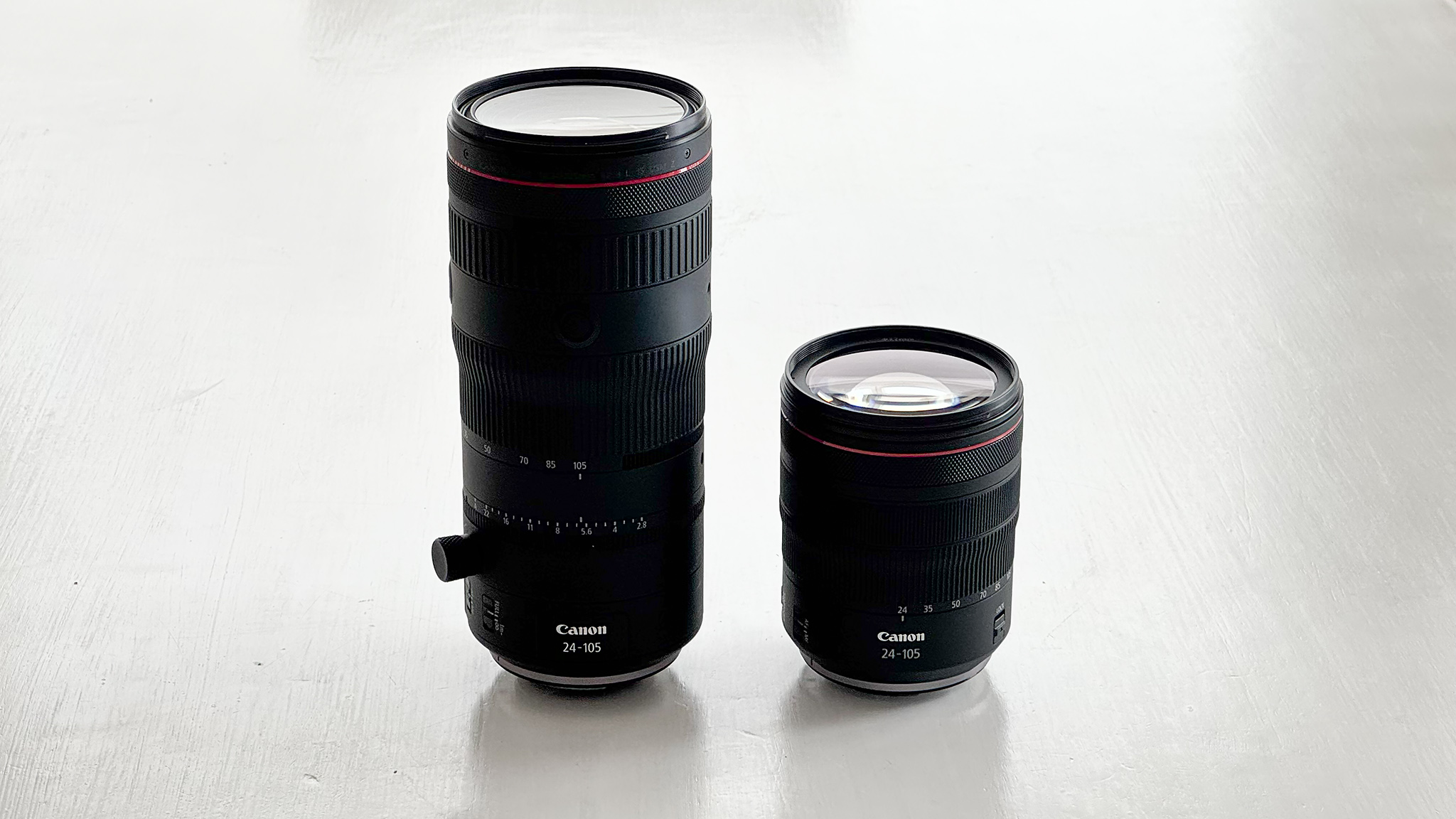
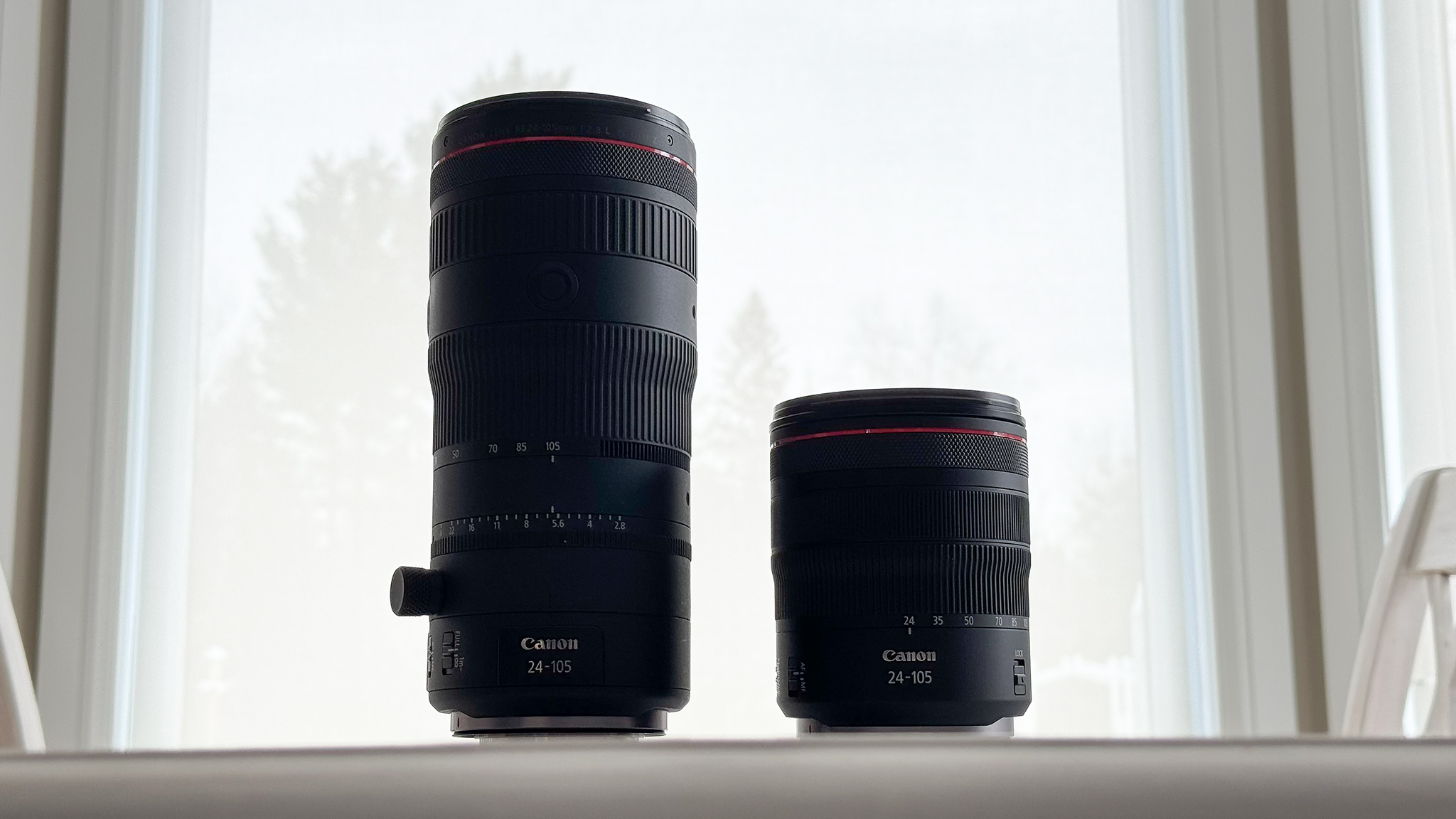
The F4 lens is 83.5mm (3.29″) in diameter and 107.3mm (4.22″) in length, while the RF 24-105L Z is 88.5mm (3.5″) x 199mm (7.8″). The weight, too, is almost double, with the F4 lens weighing in at 700g (1.54lb) while the 24-105L Z is a whopping 1300g (2.9lb). The front filter threads are a large but fairly common 82mm. The size and weight necessitated the inclusion of a tripod collar and foot in the design to help the lens better balance when shooting from a tripod.

The tripod collar itself can be rotated but not removed. There are marks at the cardinal positions but not detents, so you’ll need to use the alignment aids to make sure they are lined up properly.
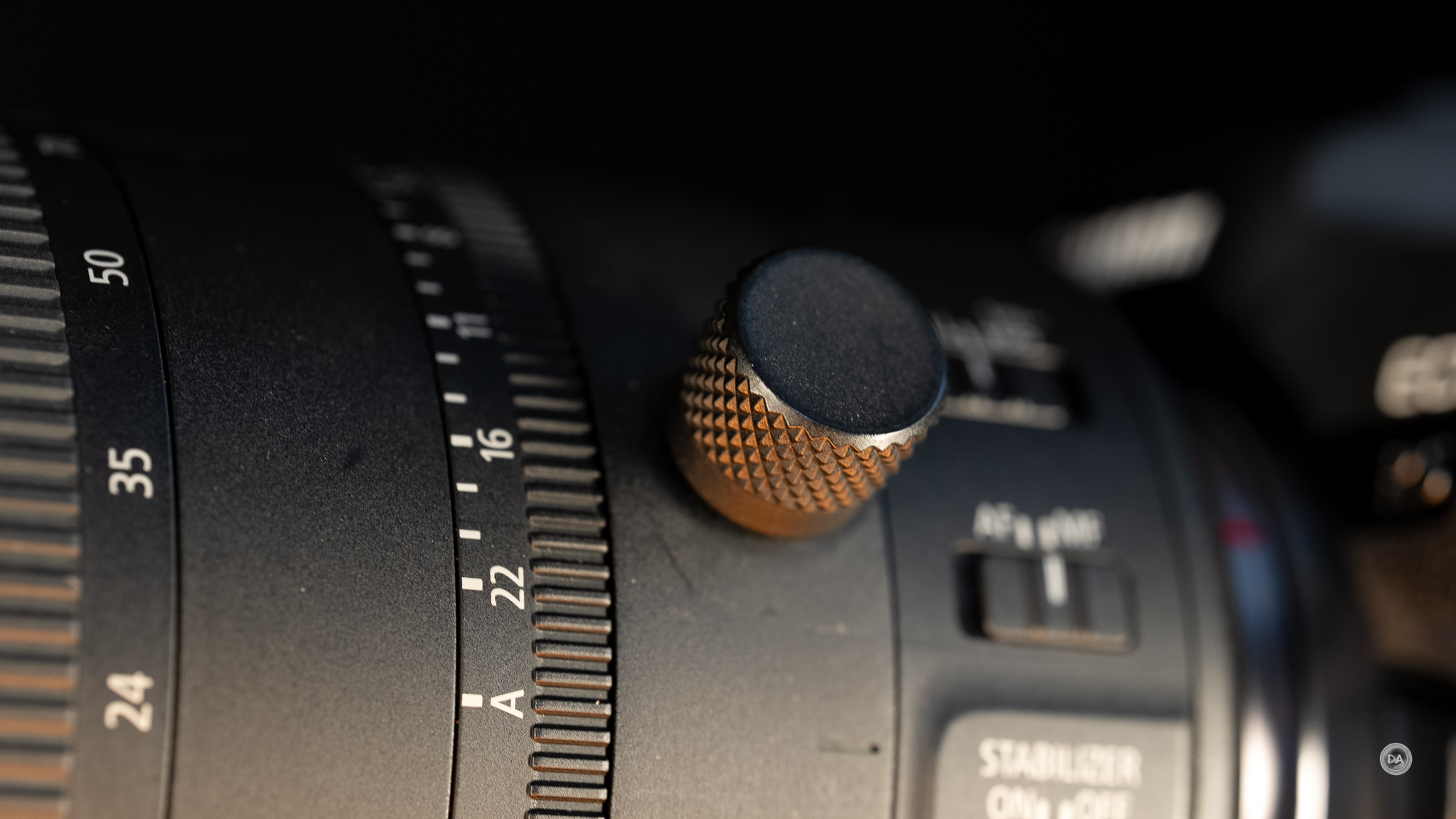
The tripod foot is easily removable by loosening another knob then hitting a release button before sliding it off.

The tripod foot does not come with ARCA compatible grooves (why???), so you’ll see I had to add an additional QR plate so mount the lens on a tripod. Neither Canon, Sony, or Nikon includes the ARCA compatibility, though it seems like all the third party brands do. I don’t get it.
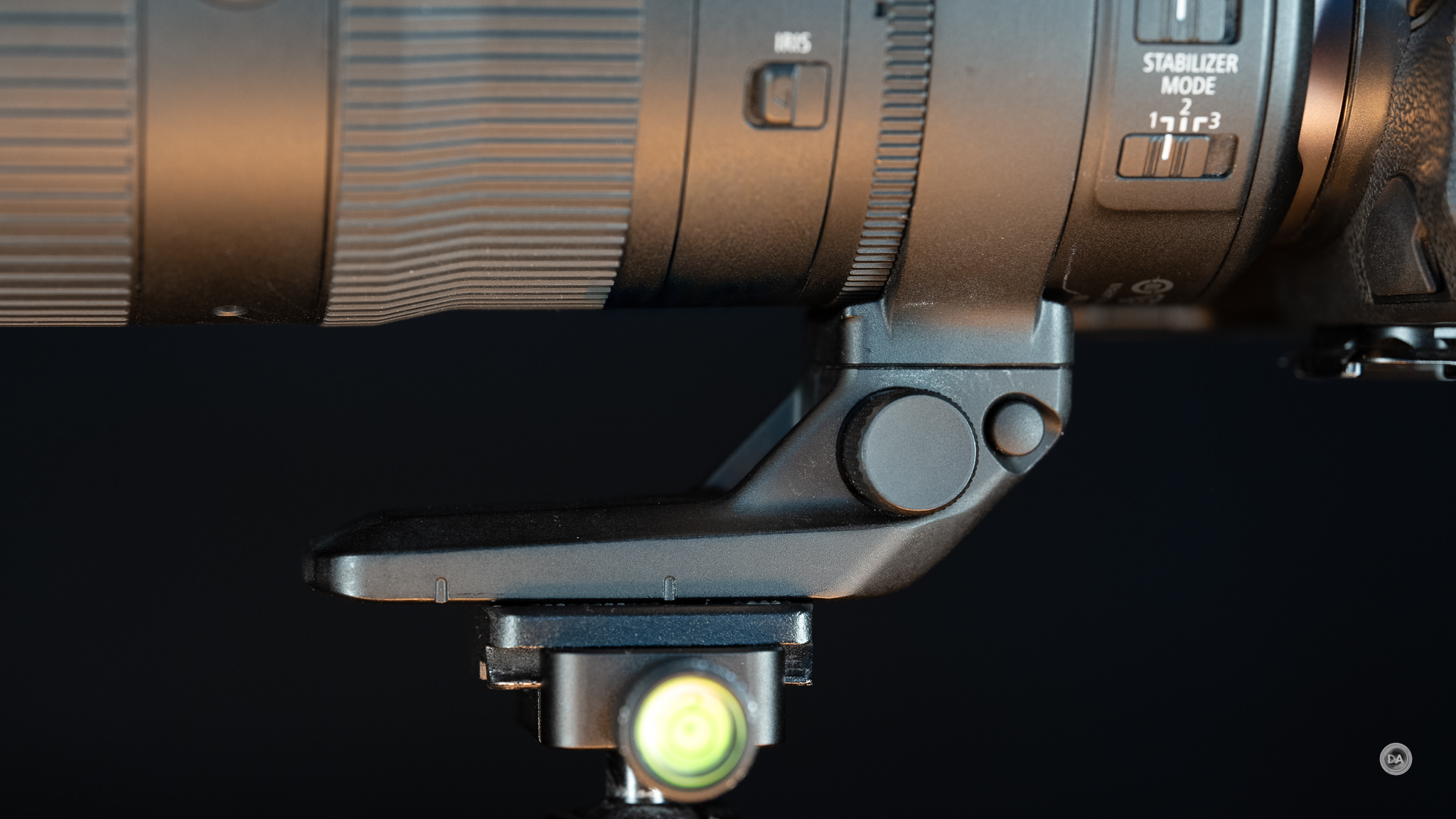
The proximity of the collar to the switches means that the foot or even the section it mounts to is often in the way of operate them. I recognize this must be the balance point of the lens, but I wish the switches were better located to eliminate this issue.
This is an L-series (Luxury) lens from Canon, so it comes with a very thorough weather sealing, with a whopping 19 seal points by my count.
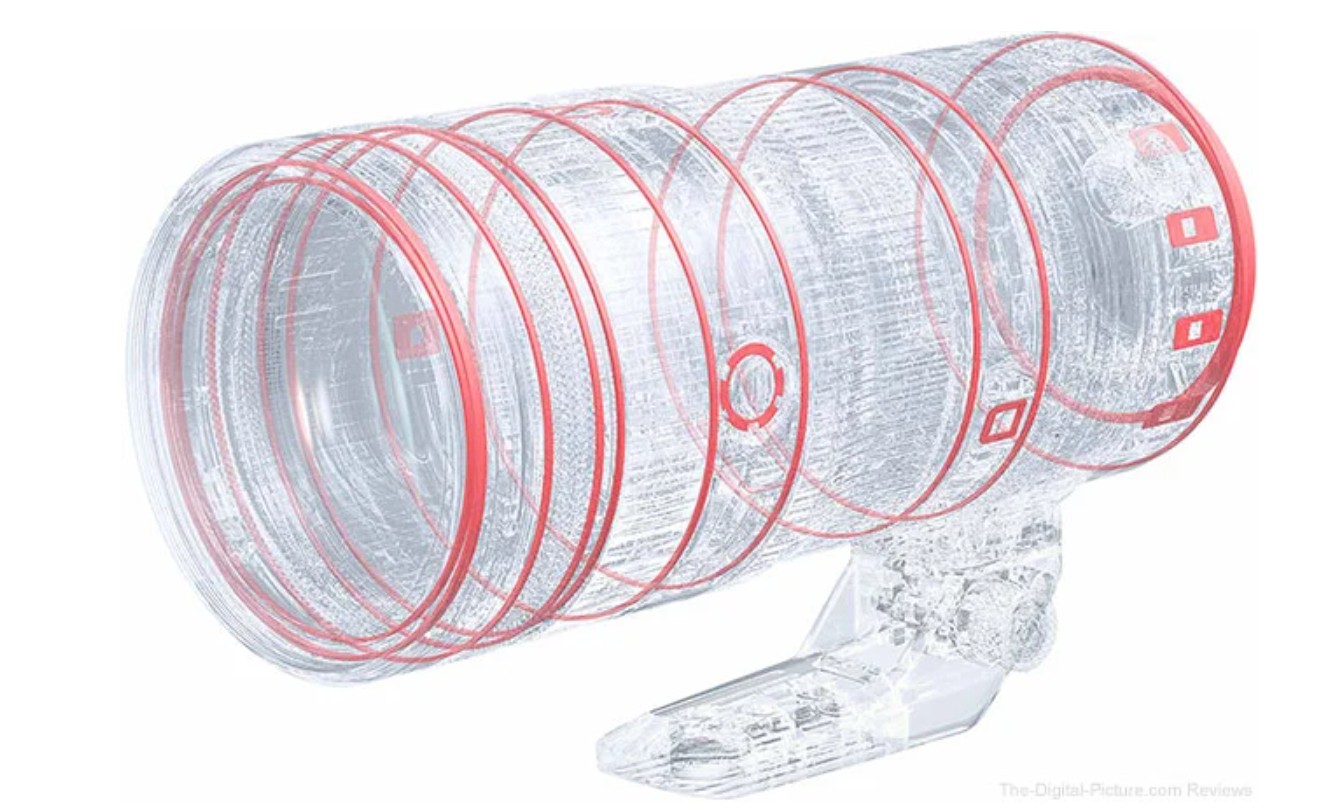
There are also fluorine coatings on both the front and rear elements to help to protect those elements and make them easier to clean. The rear gasket is nice and thick, which always feels a bit reassuring to me.
This is a lens with a robust set of features. First of all, the aperture ring.

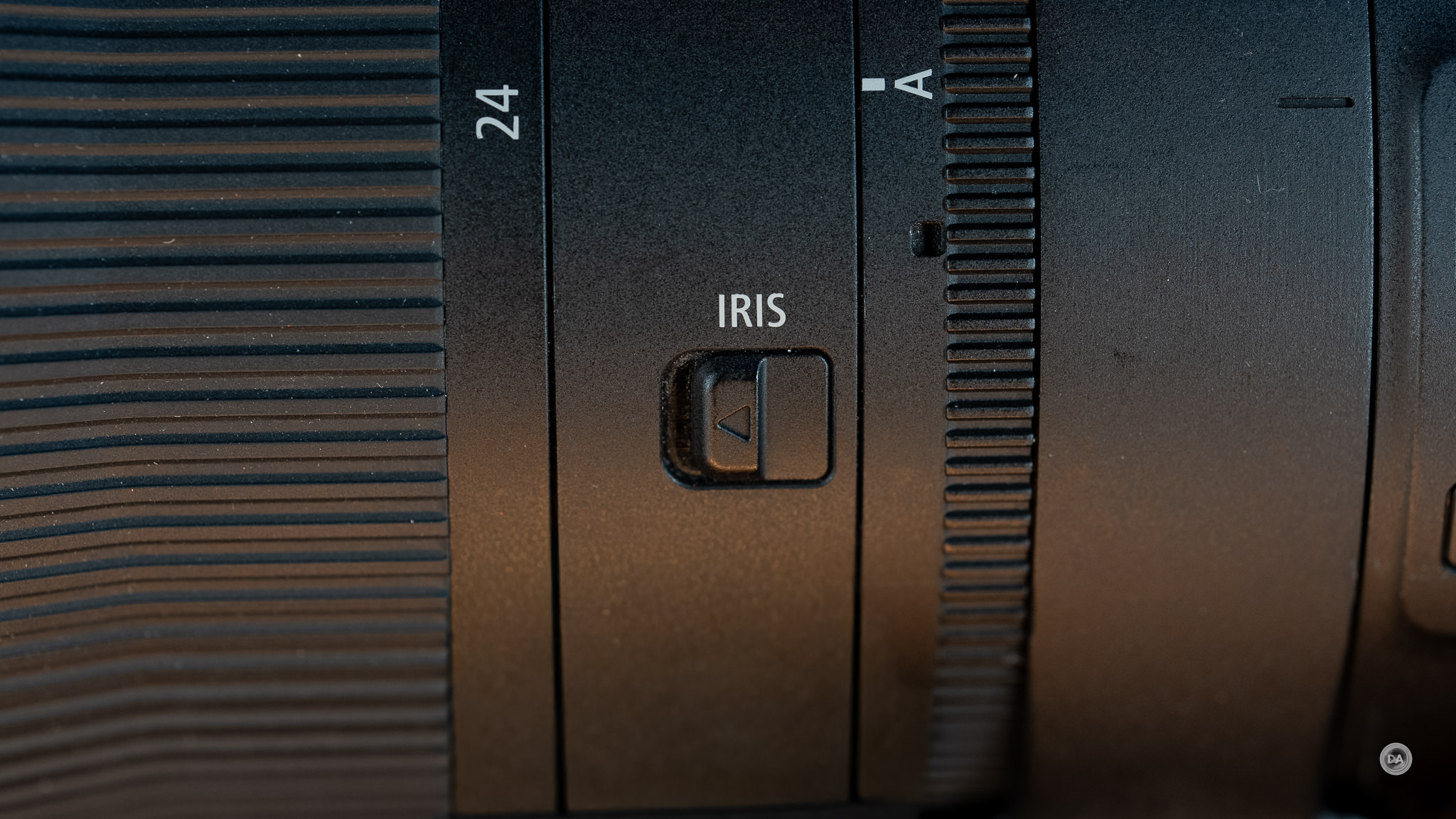
Canon has the oddest approach to aperture control that I’ve seen. Visually, it looks like a traditional design, with full aperture positions marked and lines for the one-third stops in between, though we don’t have an option to use the ring with clicks. In fact, depending on what camera you use, you may or may not be able to use the aperture ring during photo capture. Despite implementing the most recent firmware update on my Canon EOS R5 (as of late November, 2025), the aperture ring on the 24-105L Z will only work during video capture on the R5. But newer camera bodies allow the ring to be used for both stills and video. I simply don’t understand the limitation here, as from the beginning of RF one of the functions you could assign to Canon’s control ring was aperture control. But with these aperture-ring equipped Canon RF lenses you cannot use the aperture ring when shooting photos unless you have a camera from 2024 or later. On my R5 you can turn the ring all day (in photo mode) and it does nothing. Weird.
There is an iris lock which allows you to lock into the manual ring or out of it if you prefer to control aperture from within the camera itself.
I was able to do fairly smooth aperture racks when in video mode.
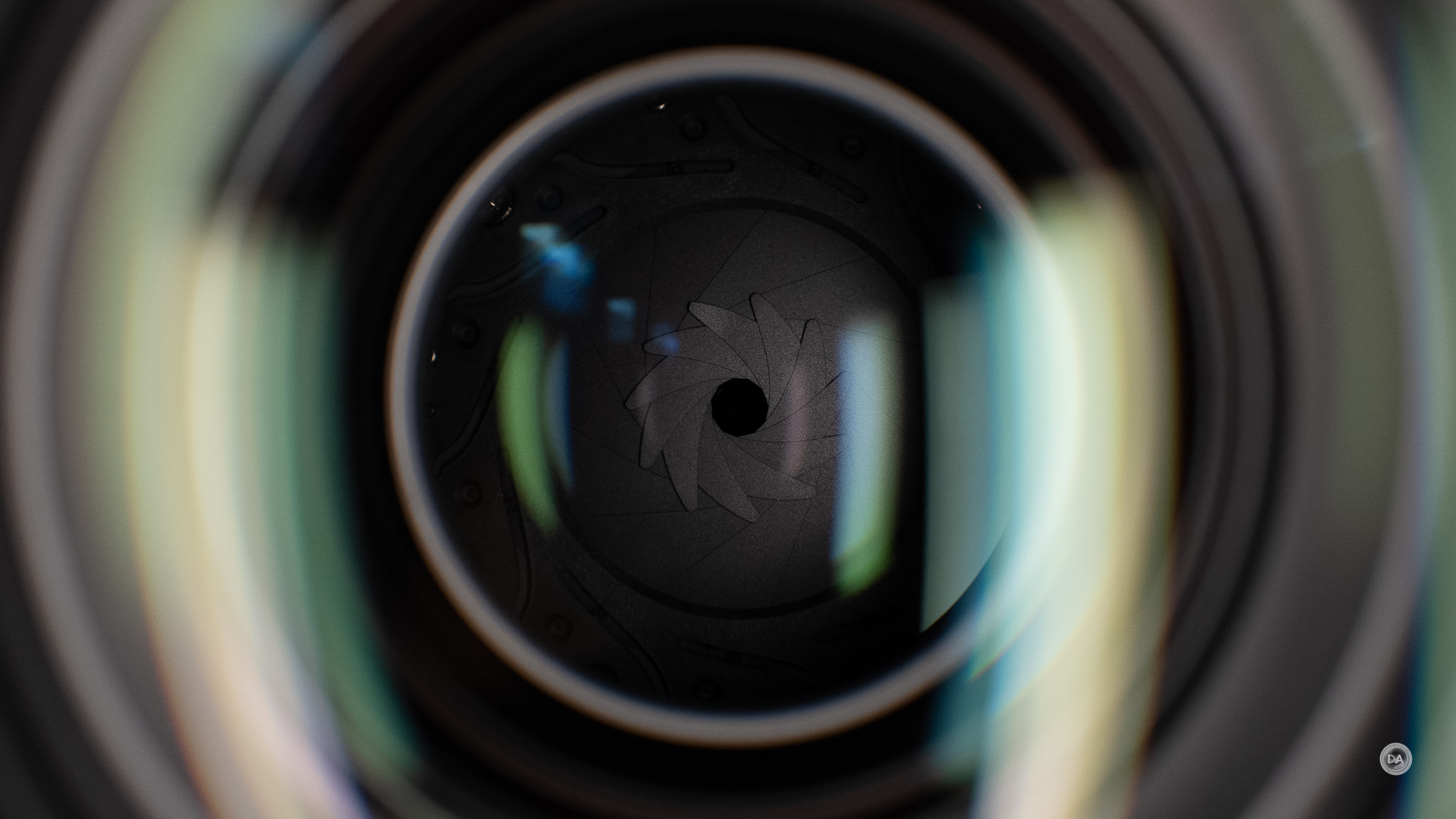
The aperture iris itself has 11 rounded blades and maintains a nicely circular shape. You will see the typical cat-eye deformation near the edge of the frame, but by F4 it is looking consistently circular (F2.8, F4, and F5.6 shown here).



Other controls include a two-position focus limiter switch. The 24-105L Z has good focus close capabilities (more on that in a moment), so the focus limiting excludes close focus and goes from 1 meter to infinity.
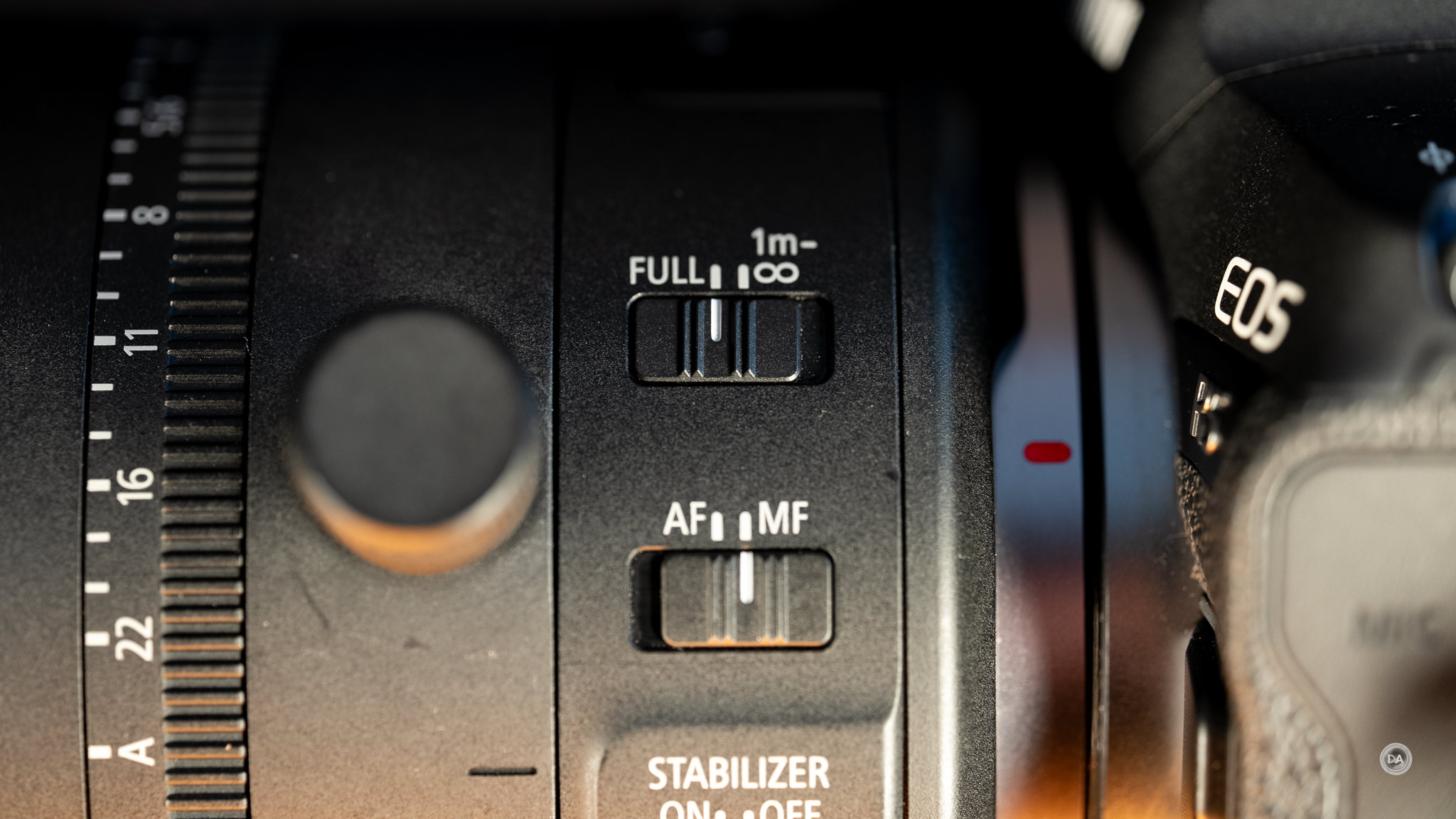
Underneath the focus limiter is an AF | MF switch, which is always welcome.
The bottom two switches are connected to the image stabilization. The top switch is just an ON | OFF for the stabilizer, while the bottom switch gives you three choices for stabilizer modes.
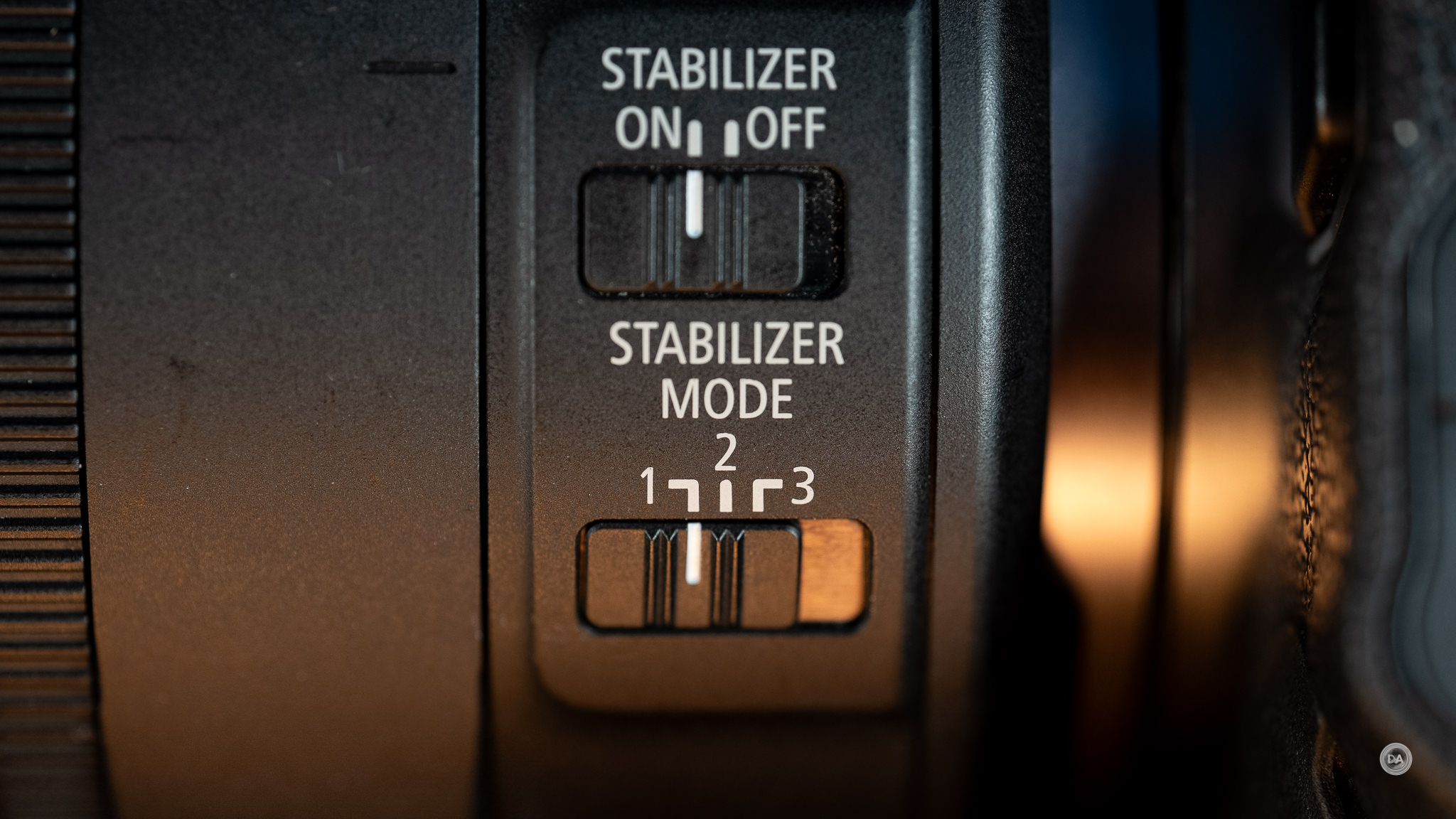
These modes include:
- Mode 1 (Standard): Corrects vibration in all directions, designed for static subjects.
- Mode 2 (Panning): Corrects vertical shake for horizontal panning (or vice versa), ideal for sports or moving vehicles.
- Mode 3 (Active): Ideal for erratic movement; IS is active only during exposure to prevent the viewfinder image from fighting the photographer’s tracking movement.
The stabilizer is rated for 5.5 stops of assistance, though the system will work in conjunction with in-camera stabilization (IBIS) and achieve a combined stabilization of up to 8 stops. My EOS R5 has IBIS, and I was able to get a successful result at 1 second shutter speed and 105mm through the combo, which is about 7 stops. I couldn’t get this result every time, but the fact that I could it at all is impressive.
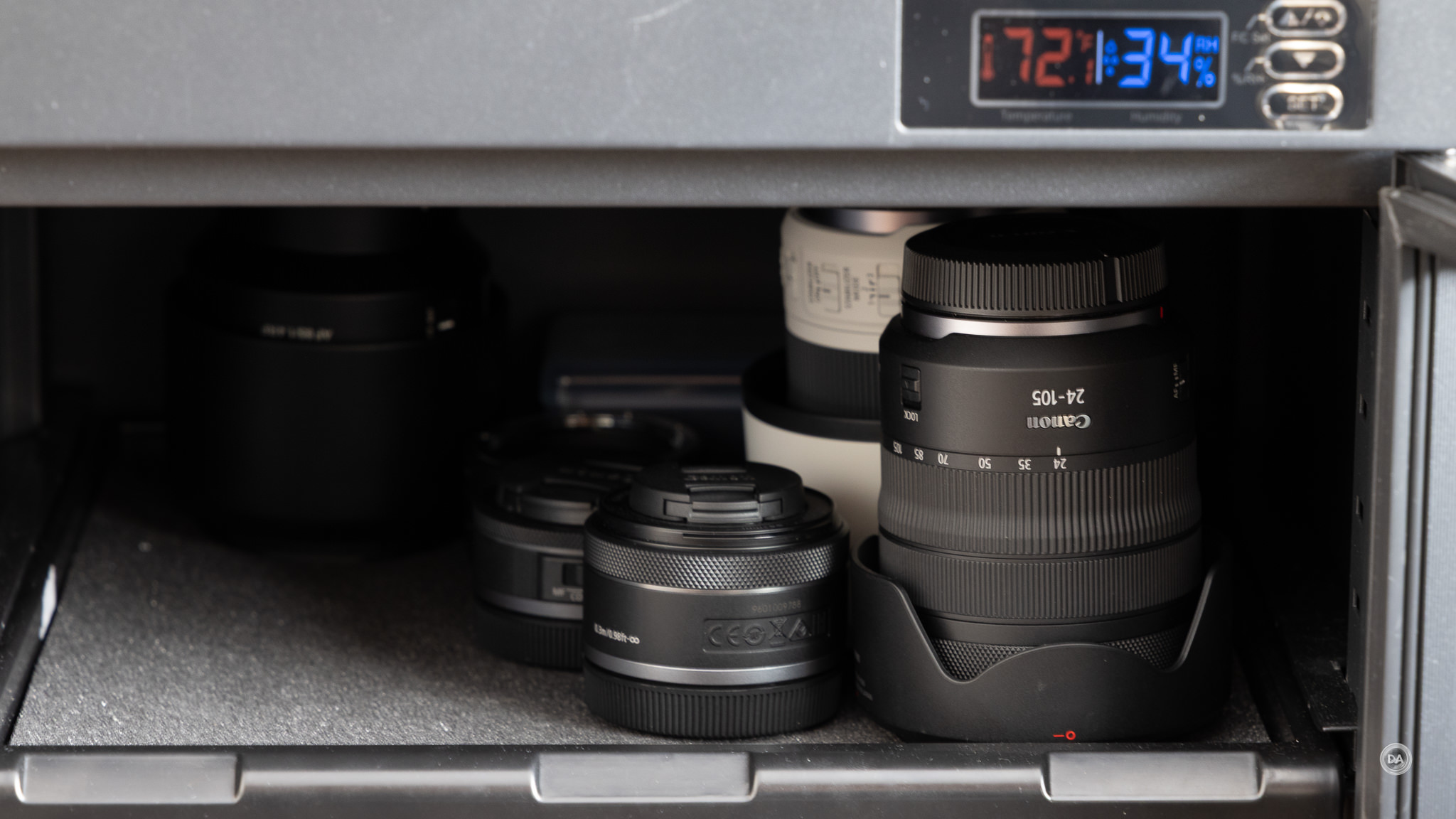
There are a total of four rings on the lens, including the aperture ring, a wide, beveled zoom ring that moves with the smoothness only an internally zooming lens can provide, a manual focus ring, and the customizable control ring at the front of the lens.
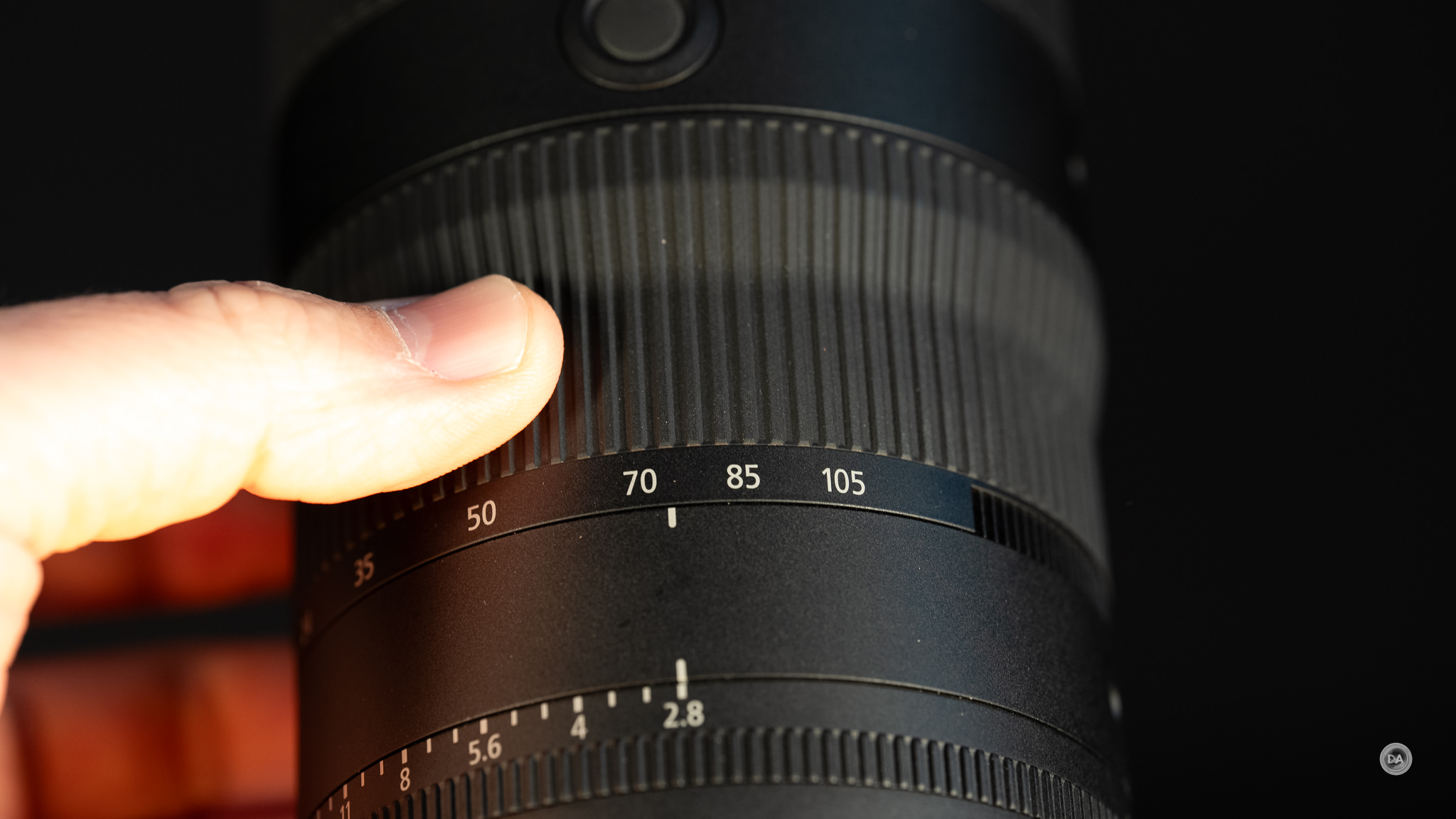
This is an internally zooming lens, as mentioned, which means that the length of the lens does not change when zooming (or focusing, for that matter), making it easier to use in a video ring and also more reactive for use as an event lens.
The control ring itself remains a strong Canon RF feature, and this multipurpose ring can be programmed to a variety of different functions from the within the camera body. It has the typical diamond pattern grip on it that gives it a different tactile feel from other rings. By default it has clicks, but it can be declicked (at a cost), though that will involve sending it to Canon for service.
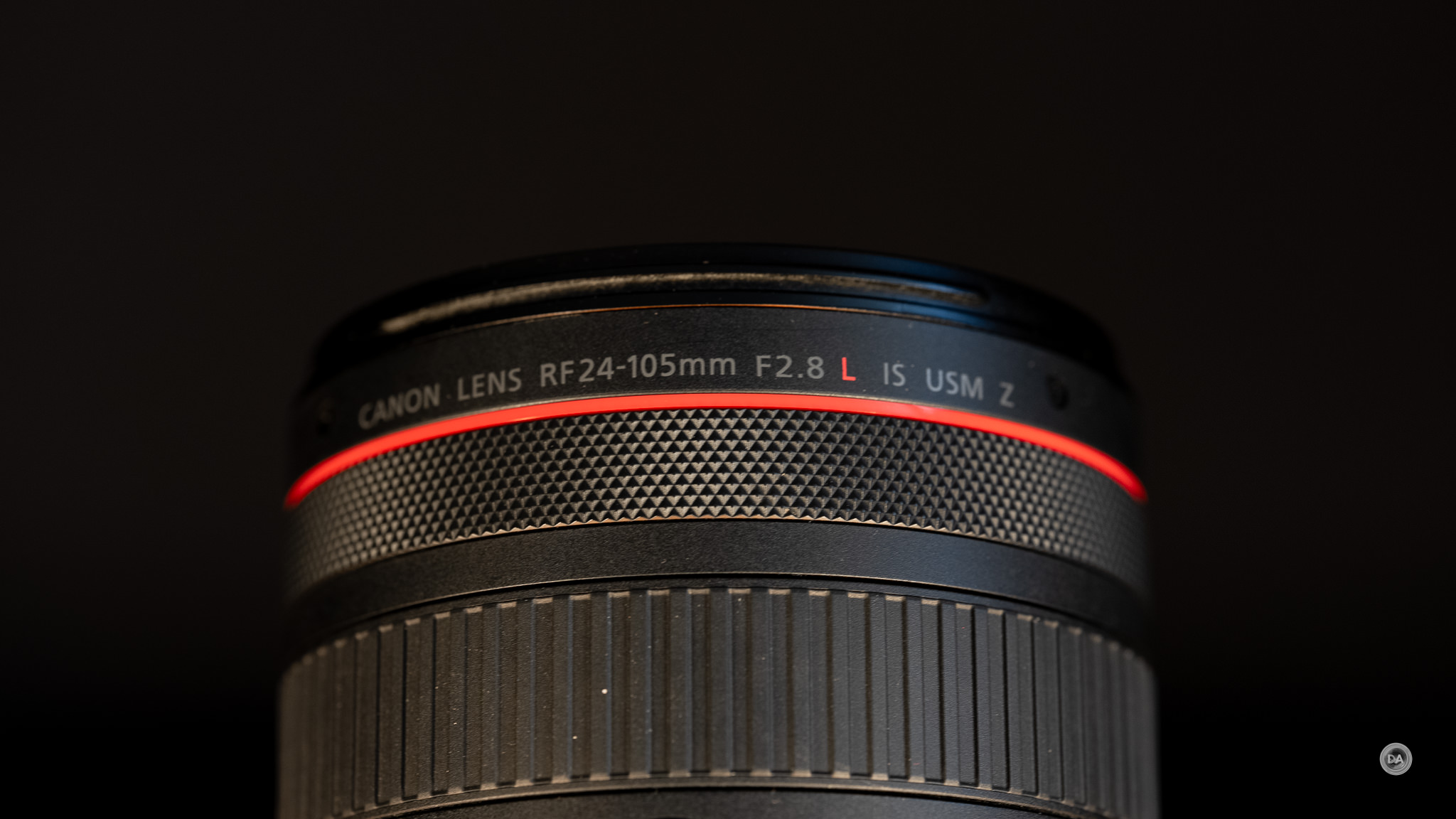
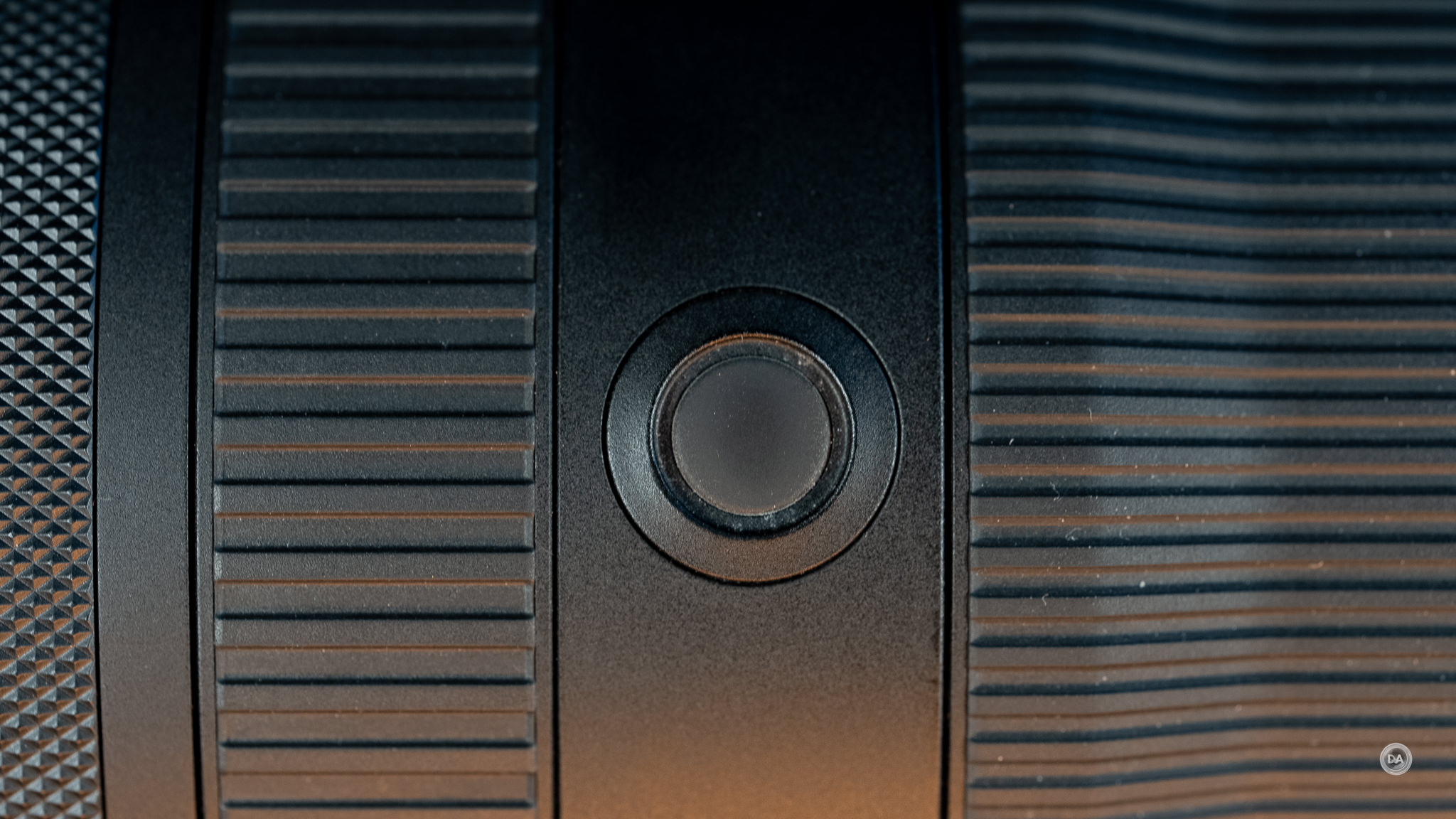
The 24-105L Z has two custom/programmable buttons that can be assigned a shared value from within the camera. There’s a broad range of functions you can choose from. There are two to allow one to be handy whether shooting in horizontal or vertical modes.
The “Z” in the lens name refers to its compatibility with Canon’s PowerZoom accessories. There are two flavors of Power Zoom adapters, the PZ-E2 and the PZ-E2B. The latter is differentiated primarily by having the 20-pin connector favored in professional broadcast settings. This allows compatible remote zoom/focus demand broadcast accessories to be used. The powerzoom adapters allow for servo- or motor-assisted zoom action that delivers a smooth and stable zooming speed – something very hard to replicate when you are twisting a zoom ring. Unfortunately this will cost you, however, as either adapter is very expensive. The PZ-E2 costs $1149 USD, while the PZ-E2B jumps to $1449 USD. Combining the lens and the PZ-E2B pushes the total cost up near $5000 – a steep investment if you aren’t doing commercial work! Here’s a look at the adapters.
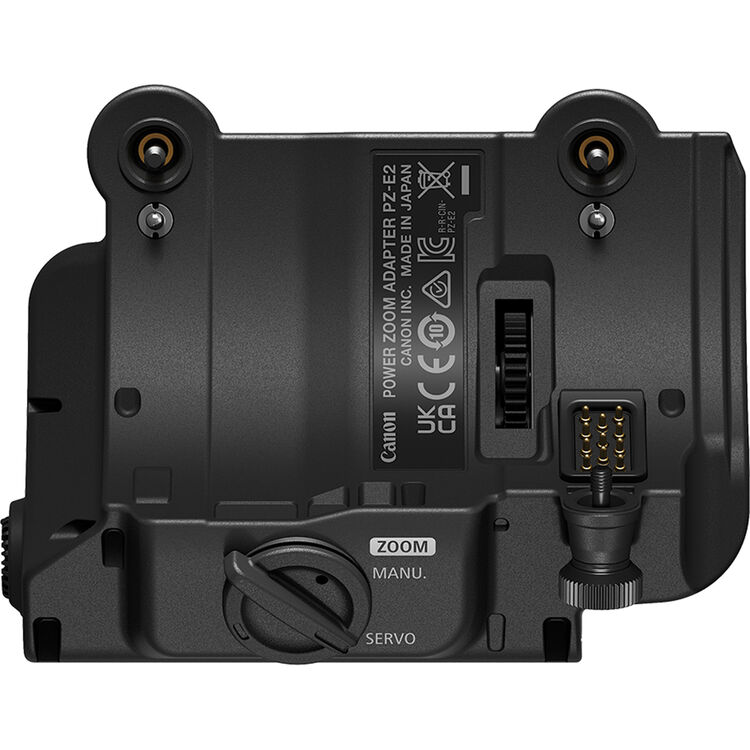
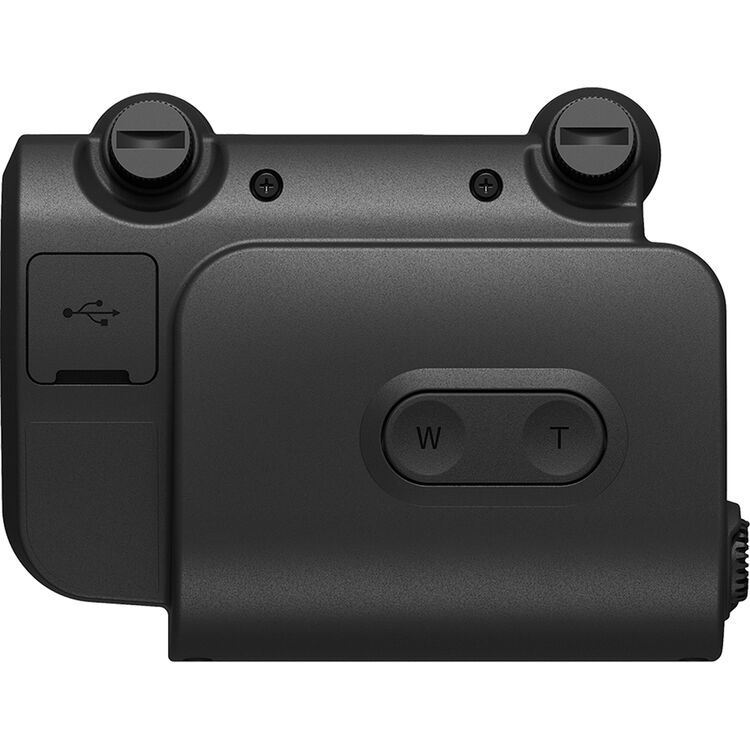
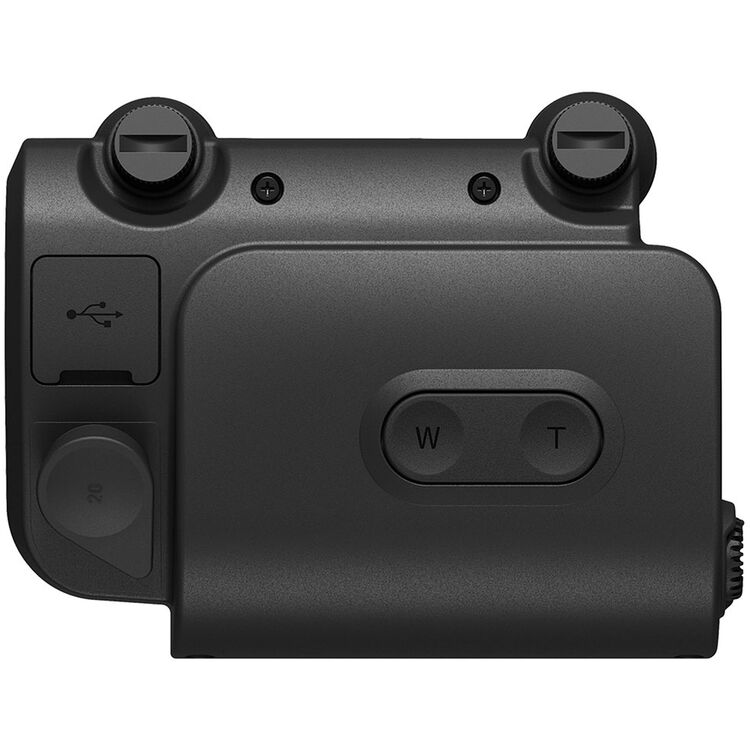
You’ll see the “prep” for mounting the adapter on the right side of the lens, including the screw mounts alongside an 11-pin contact point for electronic communication to the lens.


It would seem from the limited number of user reviews that these Power Zoom accessories are not particularly popular. What user reviews that do exist universally pan the ergonomics of the adapter. I’m not sure that it was worth Canon messing with PowerZoom compatibility for the lens, as clearly this isn’t a primary audience for it.
While my loaner copy did not include it (non retail packaging), the lens does ship with a hood. The hood is very shallow relative to the length of the lens, but it has to accommodate a lens that goes as wide as 24mm.
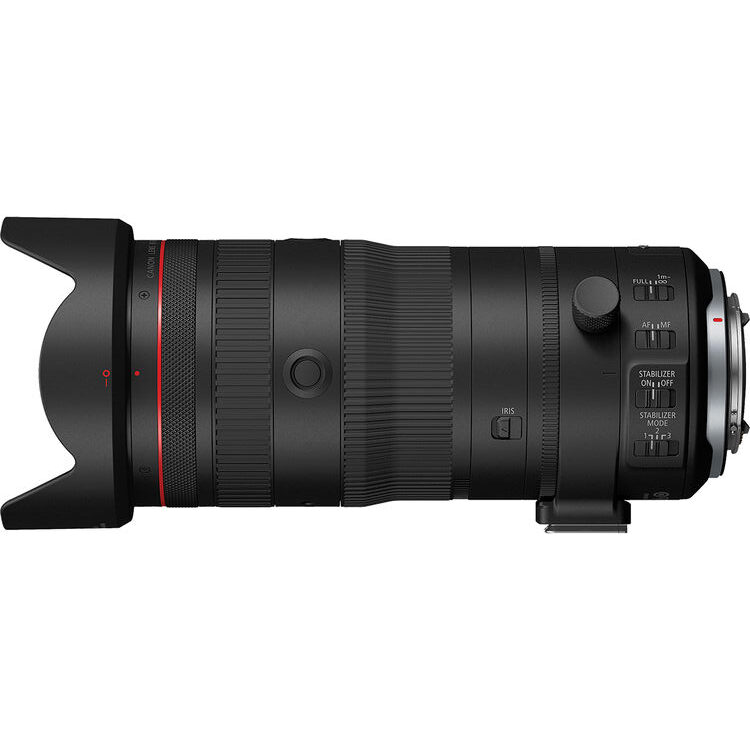
Canon gives its bigger “sports” lenses nice zippered and padded case to store and transport the lens.

The build quality feels pretty much like a standard L-series lens. Canon chose to go with the black finish rather than a off-white often seen on their telephoto lenses. There’s an engineered plastic housing over metal internal parts. It has a matte finish with fine flocking with a few platinum colored accent rings that marry nicely to the similar color on the lens mount of the camera, (and, of course that all important red ring near the front!). My experience is that this finish is resistant to scratches and marks. It feels tough and durable, and I’ve personally had Canon L-series lenses that I’ve used for a decade without issues.
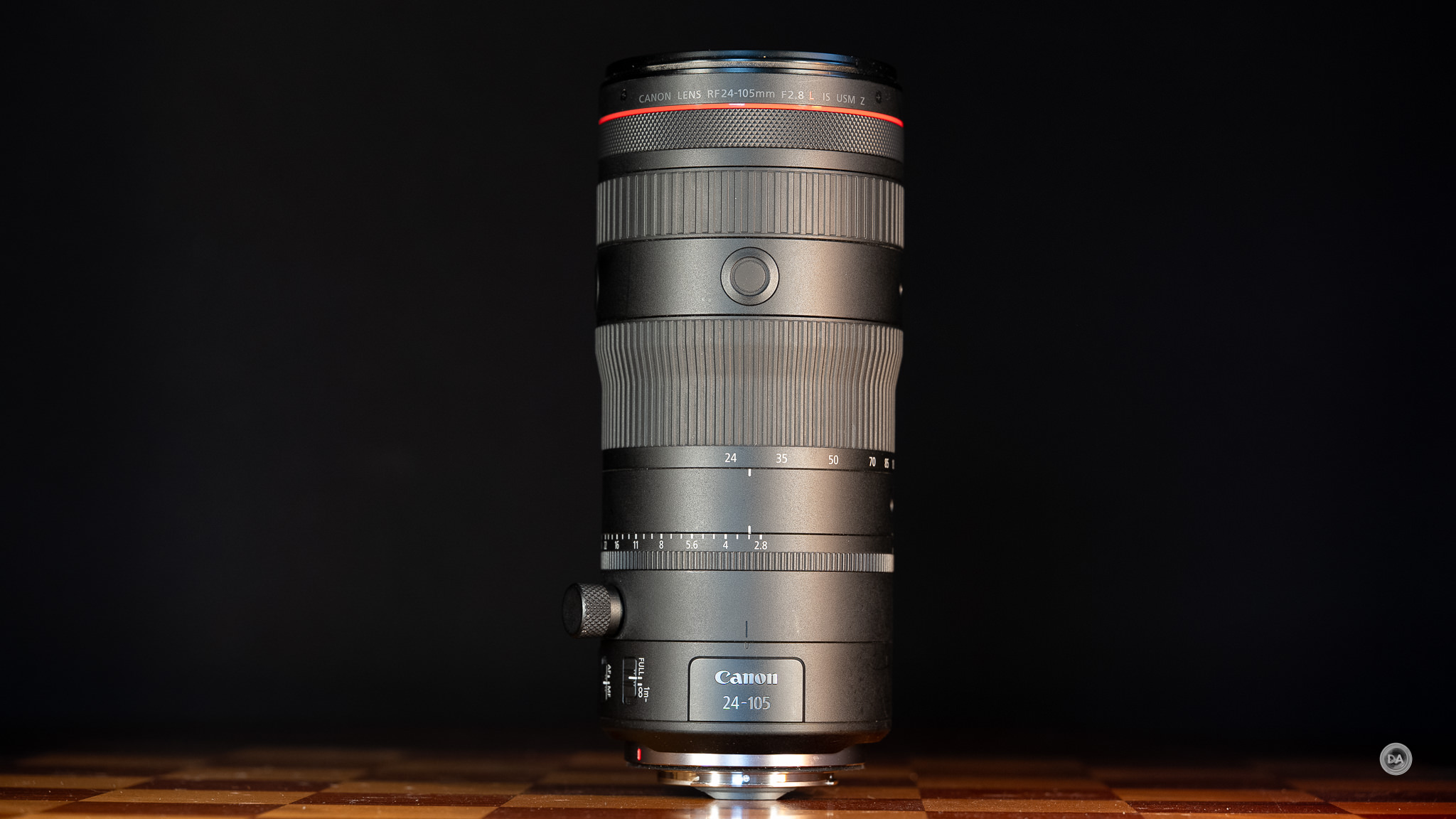
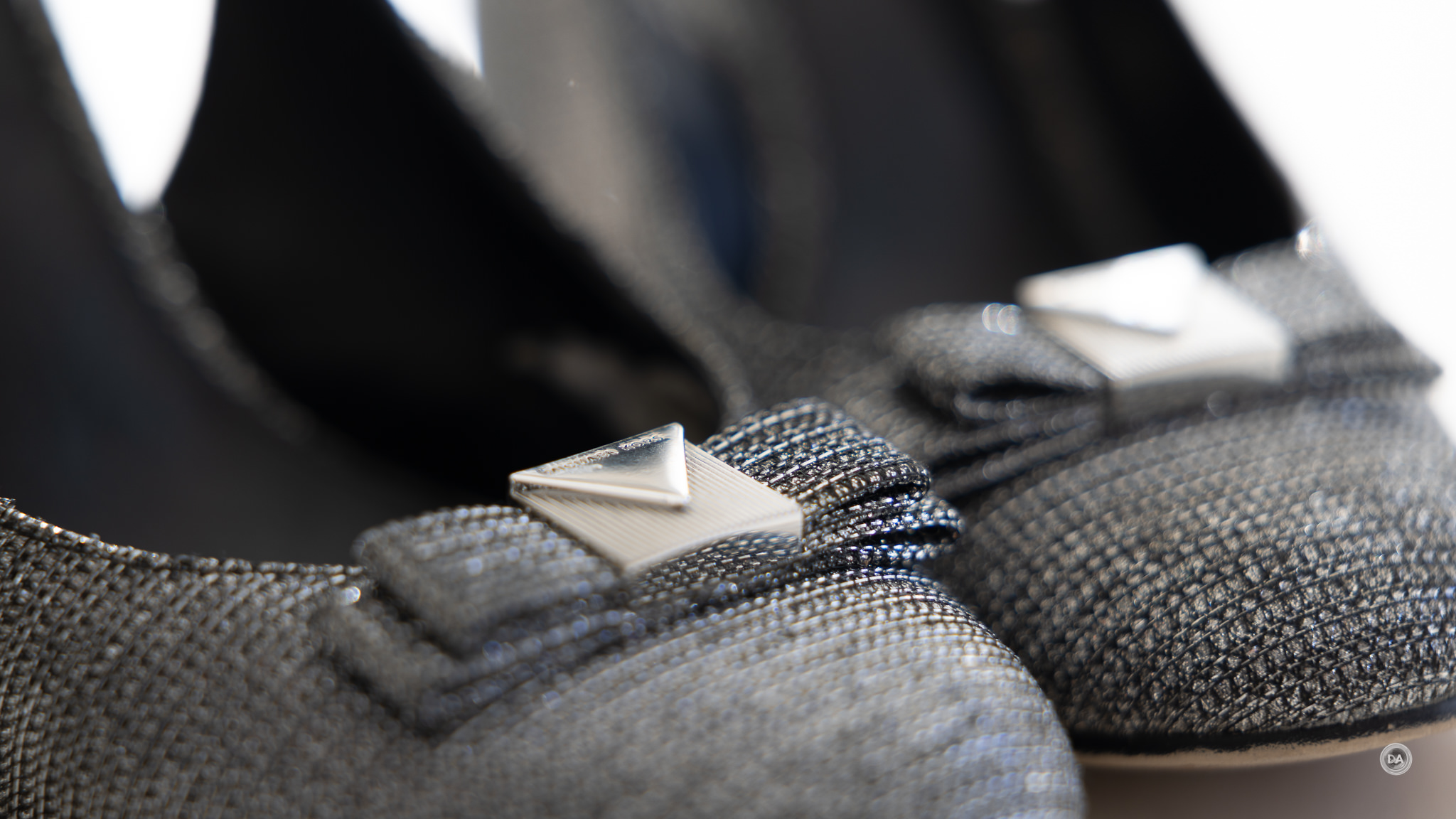
Another area where this lens excels is in the minimum focus distance and maximum magnification. You can get as close as 45cm (17.7″) at 105mm, allowing for an extremely useful 0.29x magnification level. Here’s what the magnification looks like:

Up close contrast isn’t top notch, but there’s plenty of detail there. This will really add versatility for wedding and event photographers, allowing them to compliment wider shots with details of accessories, rings, etc…

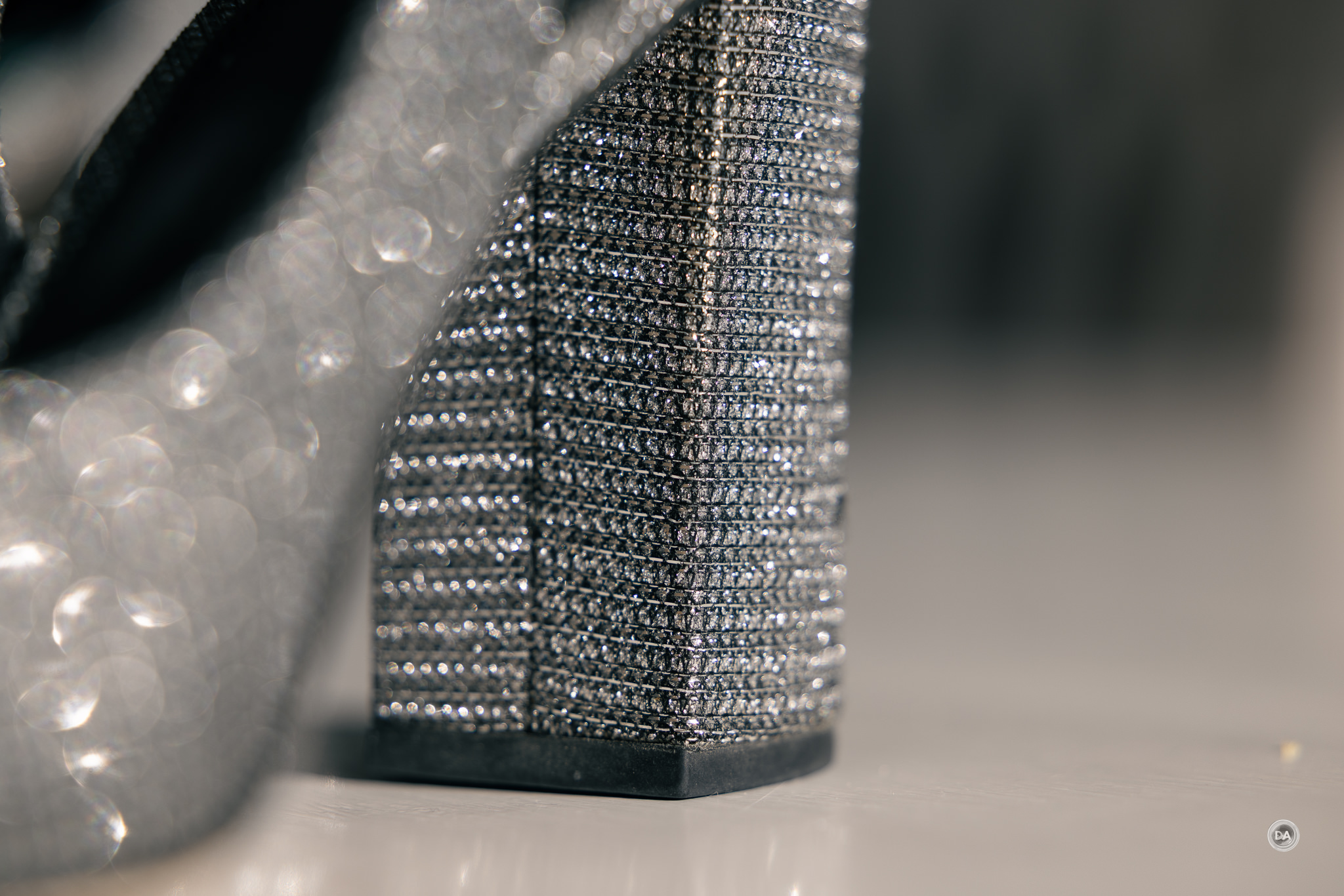
This is a big, heavy, and expensive lens, but it is also extremely versatile and feature rich. The RF 24-105mm F2.8L IS USM Z is clearly one of the most sophisticated lenses that Canon has made to date. Canon’s aperture ring design remains puzzling, but those of you with newer camera bodies will get more typical functions.
Autofocus Performance for Stills
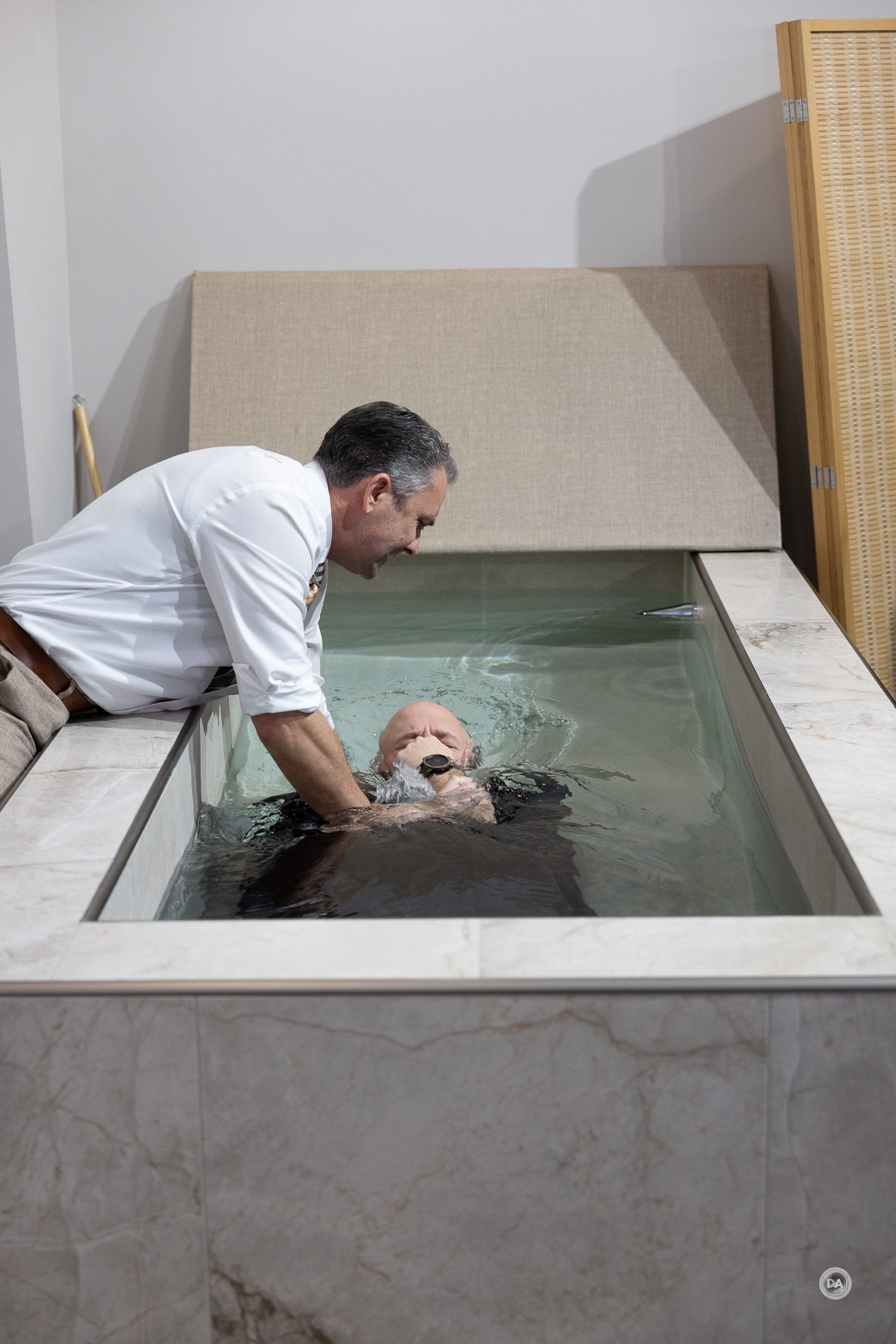
Canon’s Nano-USM focus motors are linear-style motors that offer both high-thrust for stills while also being smooth and quiet for video work. It will be interesting to see if they continue to use Nano-USM over their newer VCM (Voice Coil Motor) technology that we’ve seen in some of their primes. Both seem to be able to achieve similar levels of performance, though I do find that that the VCM motors are a little more reactive for video work. In this case we have dual USM motors used to deliver fast focus in a wide variety of situations. Focus speed in my formal tests was near-instant and moved from close to distant subjects with great alacrity. I found that useful in event settings, like catching a baptism in progress at church.
I could also snap up and grab a shot quickly when snow began to blow off branches and created a unique texture.

Focus accuracy was excellent even when the eyes were not fully visible.


I could nail focus “on the move” as well.

Focus will be flawless for portrait work, as Canon has pretty much perfected eye tracking. Even at F2.8 portraits are not only well focused but deliver crisp detail as well.


Autofocus was generally excellent.
Video AF
Canon has really leaned into the idea of hybrid lenses, and the 24-105L Z is clearly designed with both photo and video work in mind. The dual Nano-USM motors are applied with video in mind as much as stills. I’m not sure that Nano-USM is quite as good as VCM, but the results are largely excellent here. Focus pulls are very good, with nice damping and very low levels of focus breathing. I did notice a few steps, however, which isn’t something I’ve seen with the VCM-equipped prime lenses.
Likewise I noted that responsiveness was not quite as high when doing either my hand test or when approaching the camera and then ducking in and out of frame. Focus tracked me smoothly as I approached, but there was a bit of lag after I stepped back in frame before focus picked me up, whereas it was essentially instant when reviewing the 50mm F1.4L VCM late in 2025. You can see in this shot that I’m back in frame, but the lens hasn’t quite responded yet.
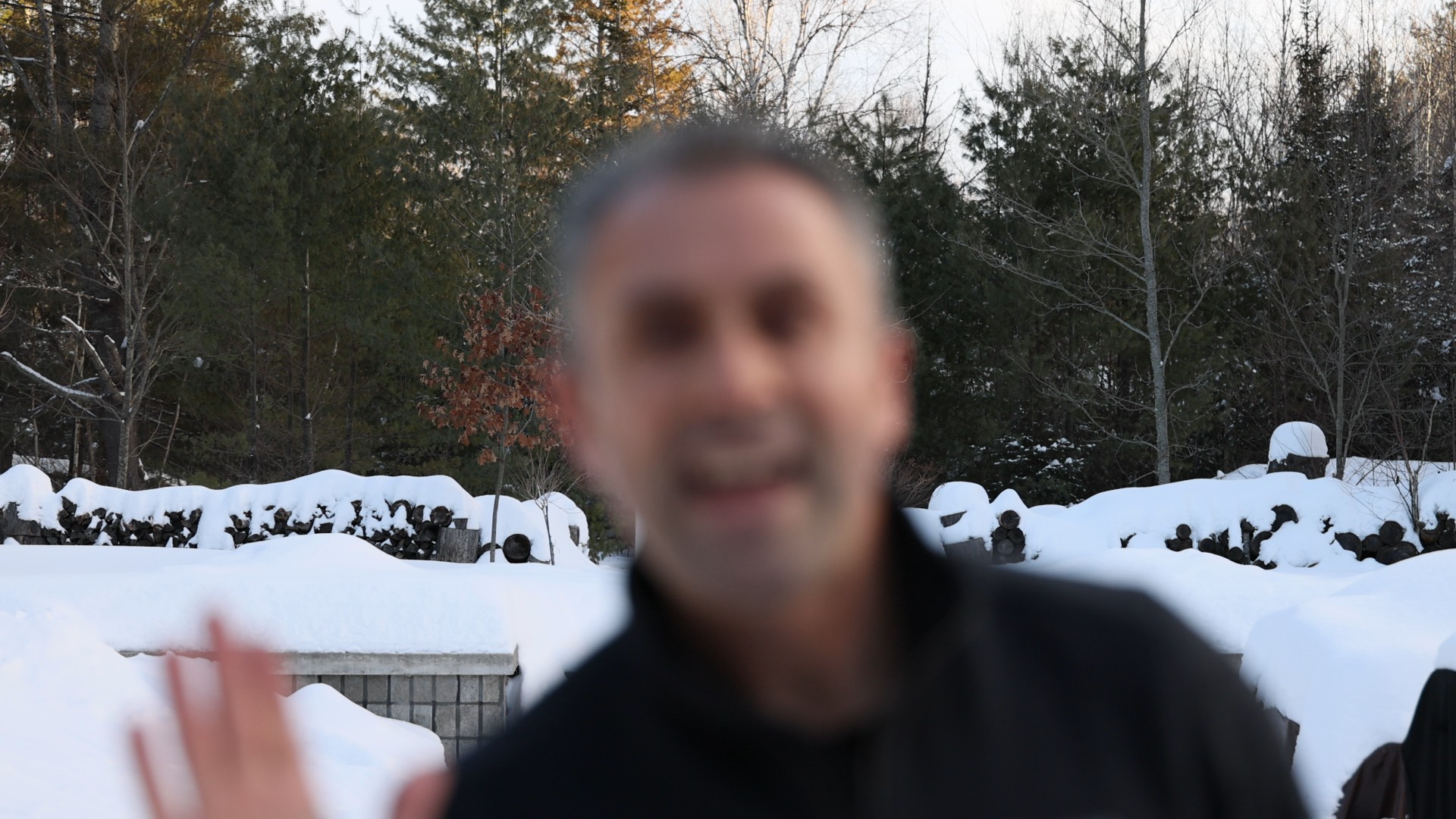
On a very positive note, I didn’t notice any issues with focus being lost and having to readjust while zooming in and out. I don’t think the lens is parfocal (though focus doesn’t change much at various focal lengths), but between the low levels of optical change and the focus motor’s ability to keep things in focus, it practically works largely like a parfocal lens. This freeze frame was captured mid-zoom, and you can see that it is perfectly focused.
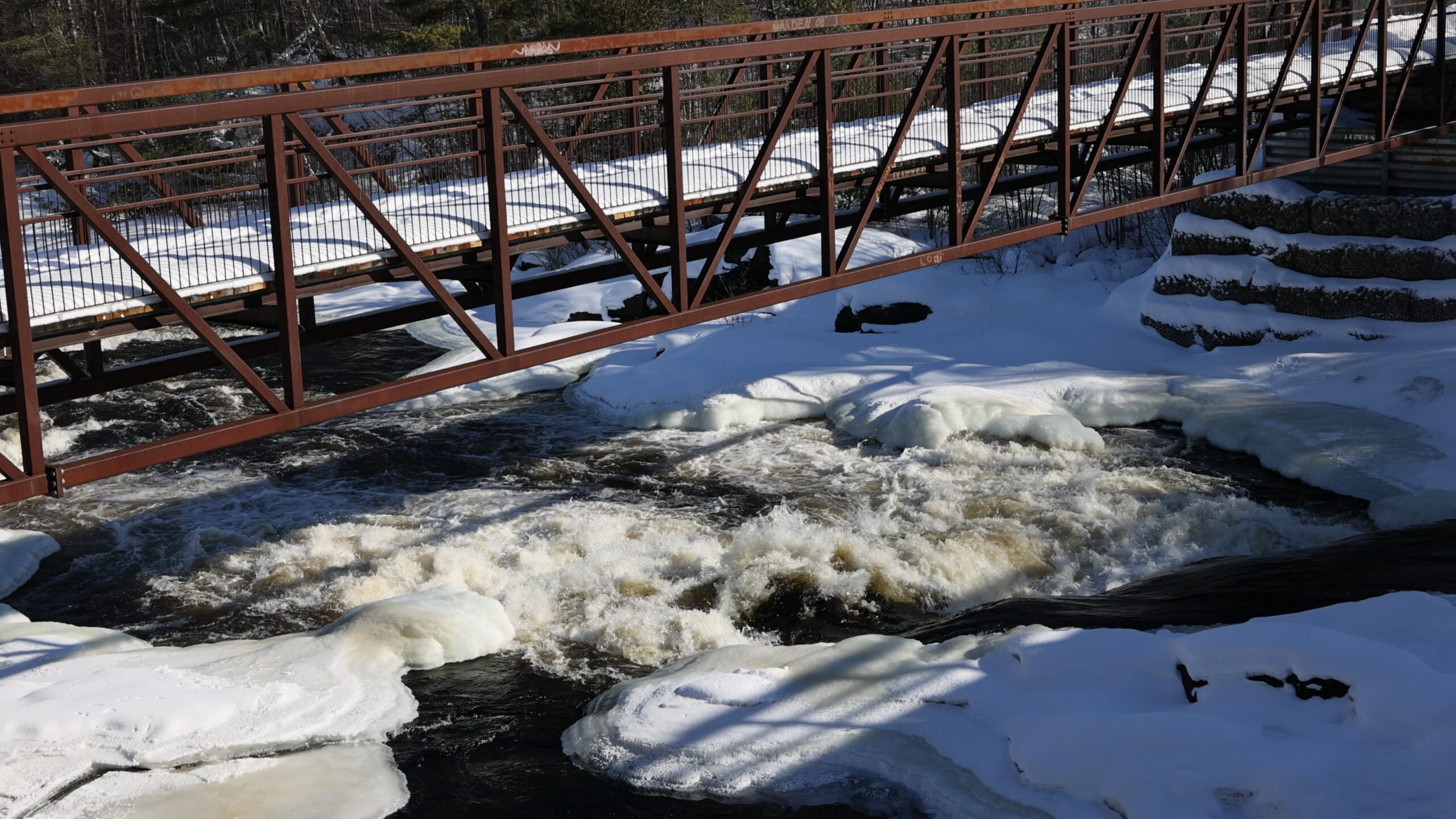
Video focus was generally excellent. It proved stable during my various clips and when filming for my YouTube channel.
Image Quality
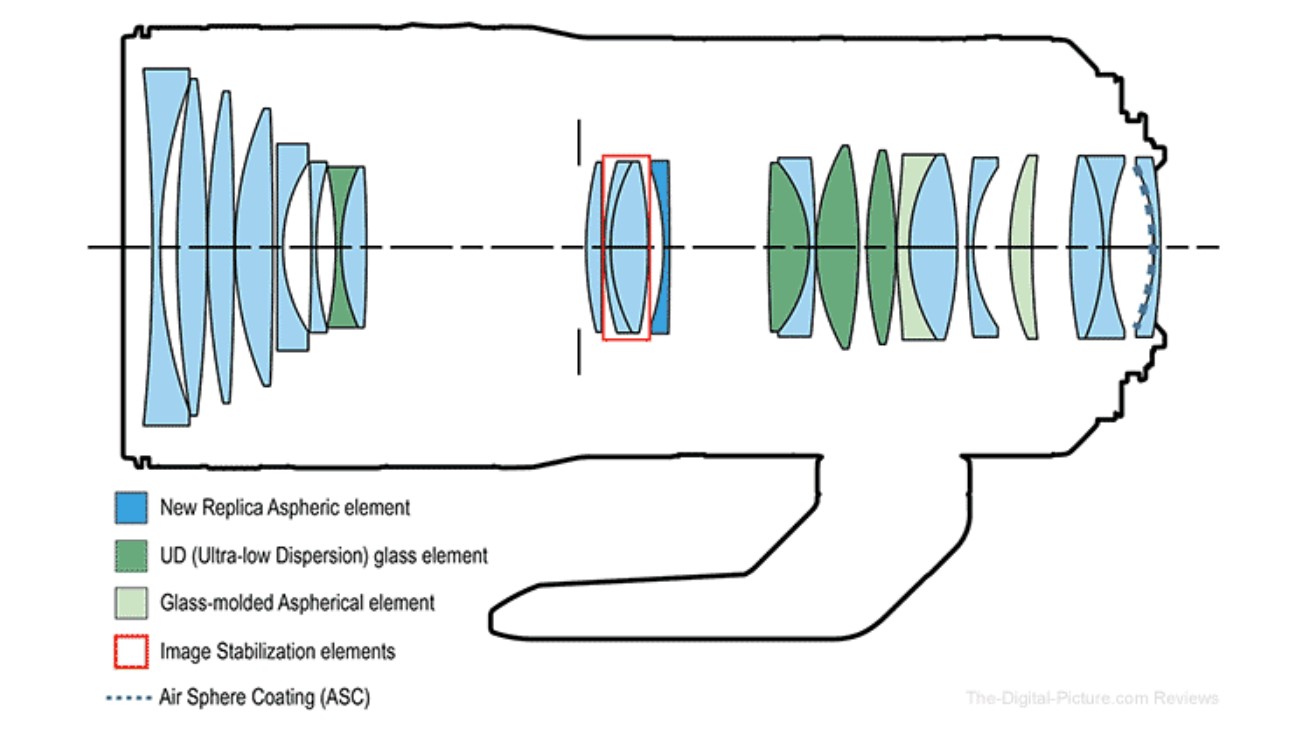
The RF 24-105mm F2.8L IS USM Z sports a complex optical design of 23 elements in 18 groups. This includes a variety of exotic elements, including some unique aspherical lenses, 4 UD elements, and Canon’s proprietary ASC (Air Sphere Coating).
The MTF chart looks consistently good on both the wide and telephoto ends, and, as you can see, bests the RF 24-105mm F4L IS across the frame. It is better at F2.8 than the F4 lens is at F4.
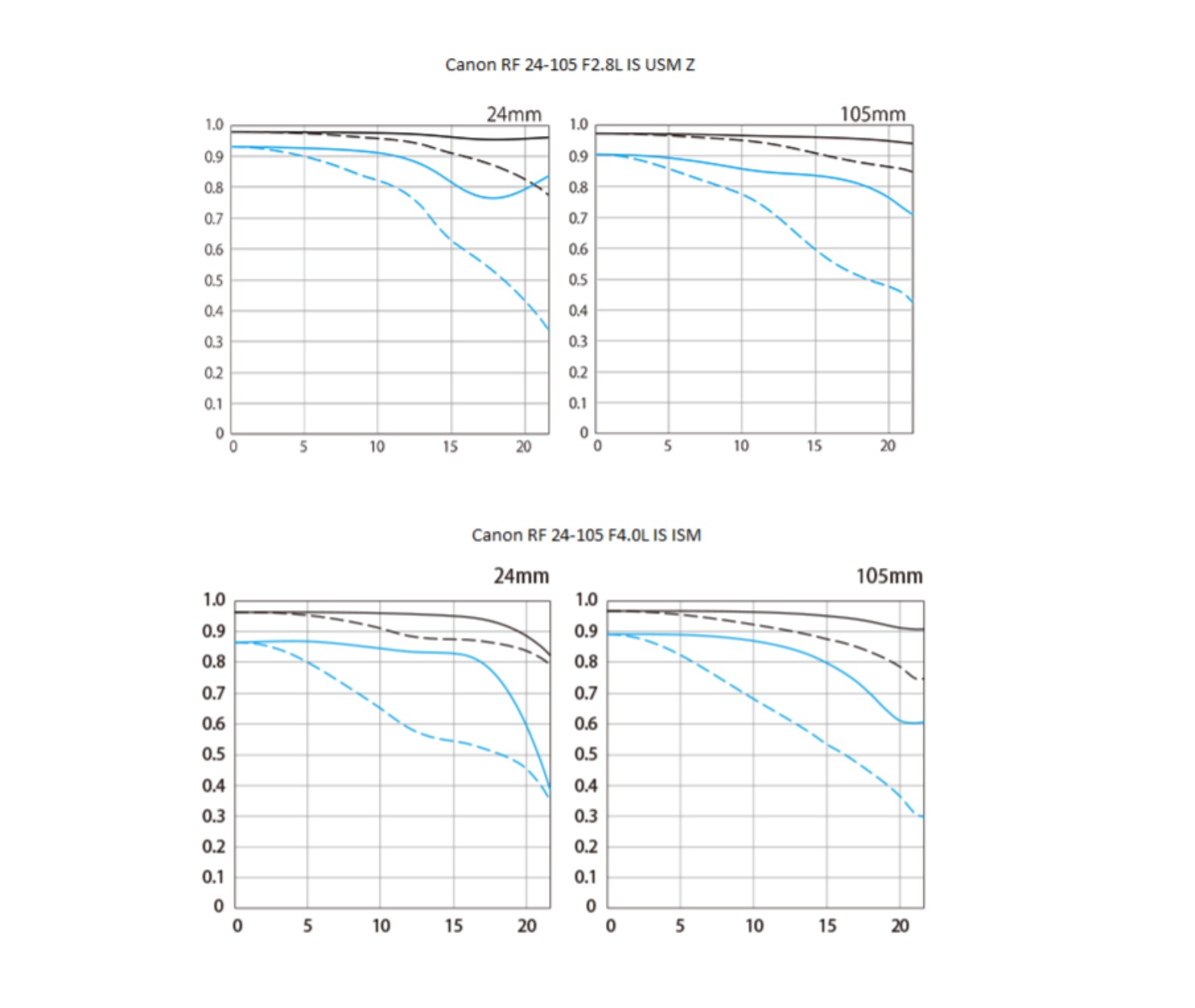
That should be expected, of course, as the F2.8 lens does cost nearly 3x as much. But, to be fair to Canon, part of the reason that no one had combined this zoom range with the F2.8 maximum aperture is that it was (and is!) an engineering challenge. One thing to note is the astigmatism in the corners, however, with a significant separation between the sagittal and meridional axis.
At its best, however, the RF 24-105L Z provides excellent detail and quite nice bokeh.


As per usual, however, we will find that Canon definitely relies on electronic trickery to achieve the end result. I know it is coming when my test chart results are tightly framed in camera and come into my editing software (Lightroom) loosely framed. That means that additional image is being captured to allow for the final image to be electronically corrected. On the plus side, Canon’s digital correction do a good job of cleaning up the mess we’re about to see. Here’s a look at the profile-corrected 24mm image.
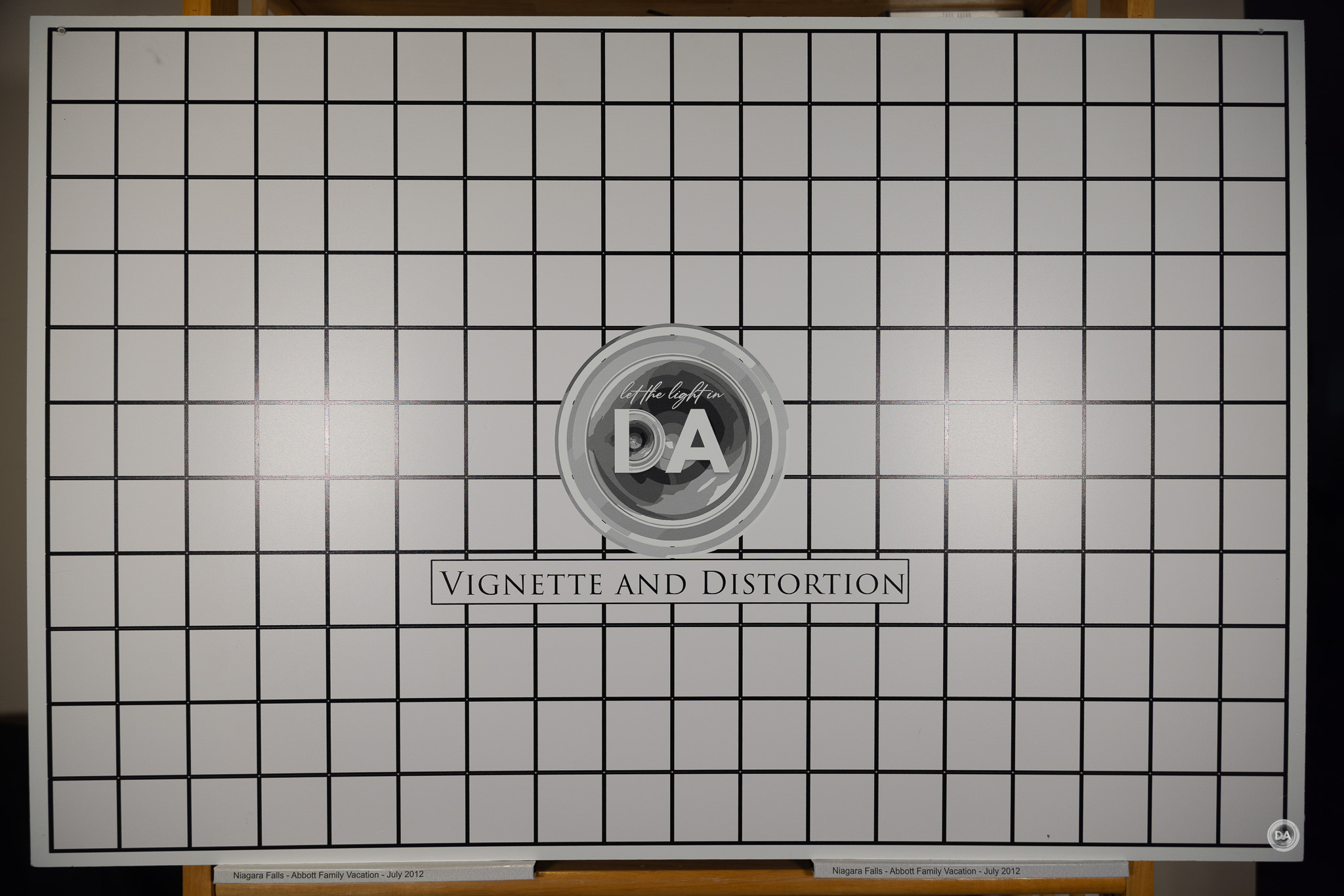
Turn off that correction profile, however, and we see that very little correction is taking place optically.
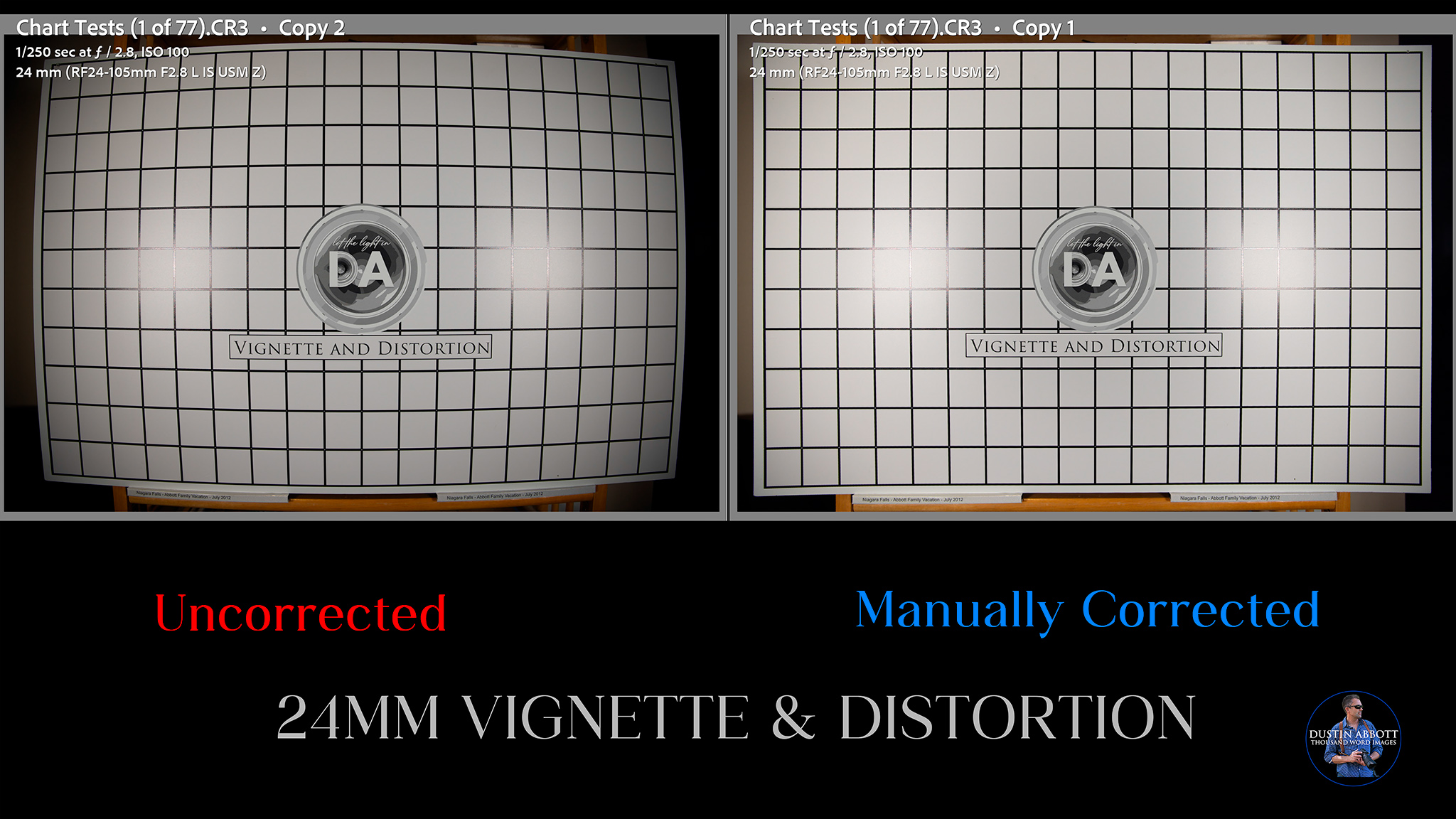
To achieve the result on the right, I had to use a +44 to correct the utterly massive amount of barrel distortion, and had to nearly max out the vignette correction slider to eliminate all the vignette.
That will produce radically different results in real world shots if you have corrections off. You can see in this image that the uncorrected RAW image actually exceeds the full frame image circle (the black mechanical vignette in the corners is evidence of that), while the correction profile crops in significantly to allow the corrected image to still be 24mm.
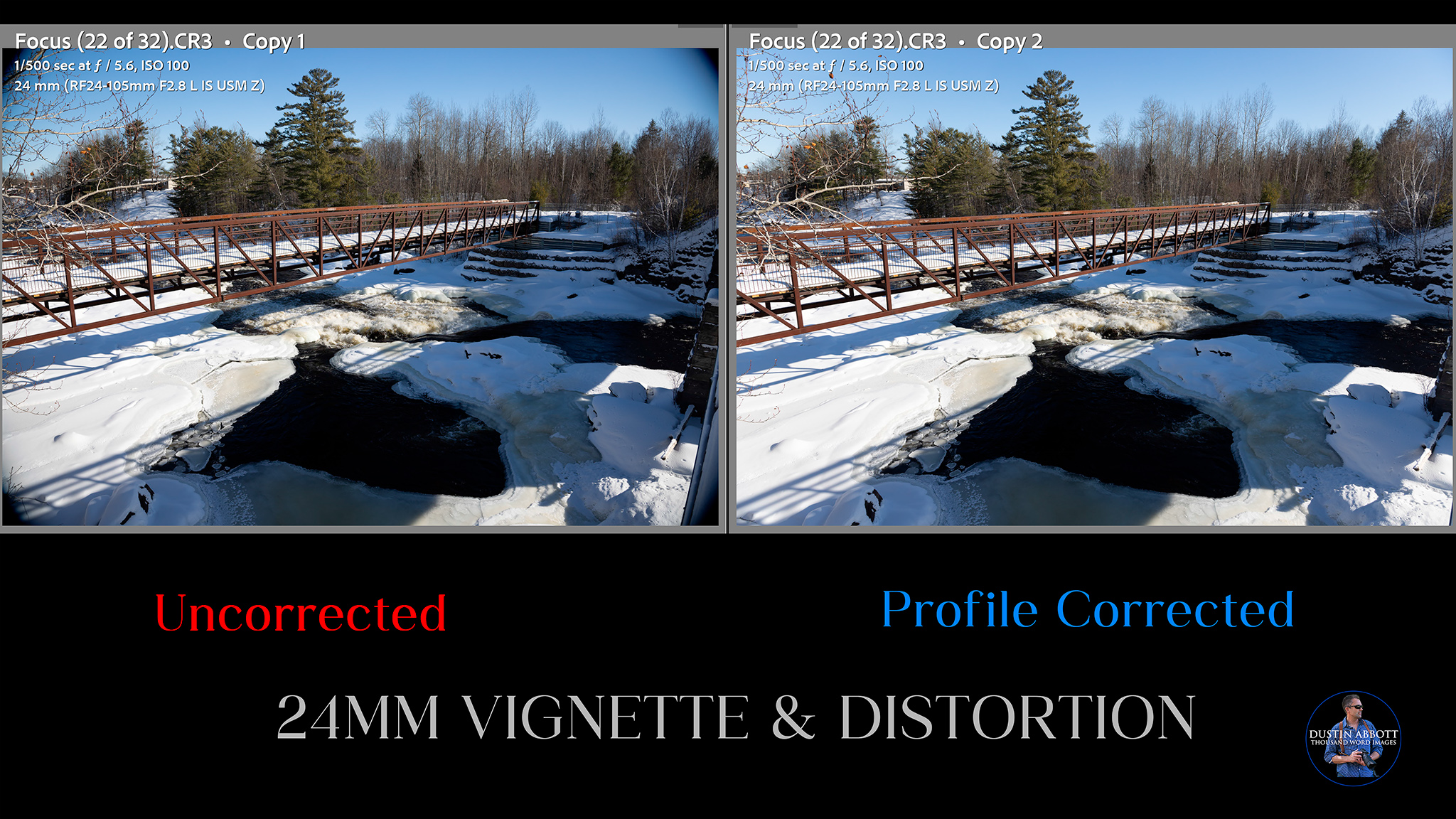
The option to leave distortion uncorrected in camera is greyed out and unavailable.
But what’s the big deal? As long as things look fine after correction, no harm done, right? The problem is that all electronic corrections come with a penalty. Correcting distortion has a negative impact on sharpness (and sometimes geometry, if the distortion is complex). Correcting vignette is like recovering shadows in that it often comes at the cost of additional noise and even some color banding. I consistently condemn using electronic rather than optical corrections because, frankly, it feels lazy. That’s particularly true in a lens that costs north of $3000.
The distortion pattern will invert to pincushion-style distortion as you progress through the zoom range, and this becomes most pronounced on the telephoto end.
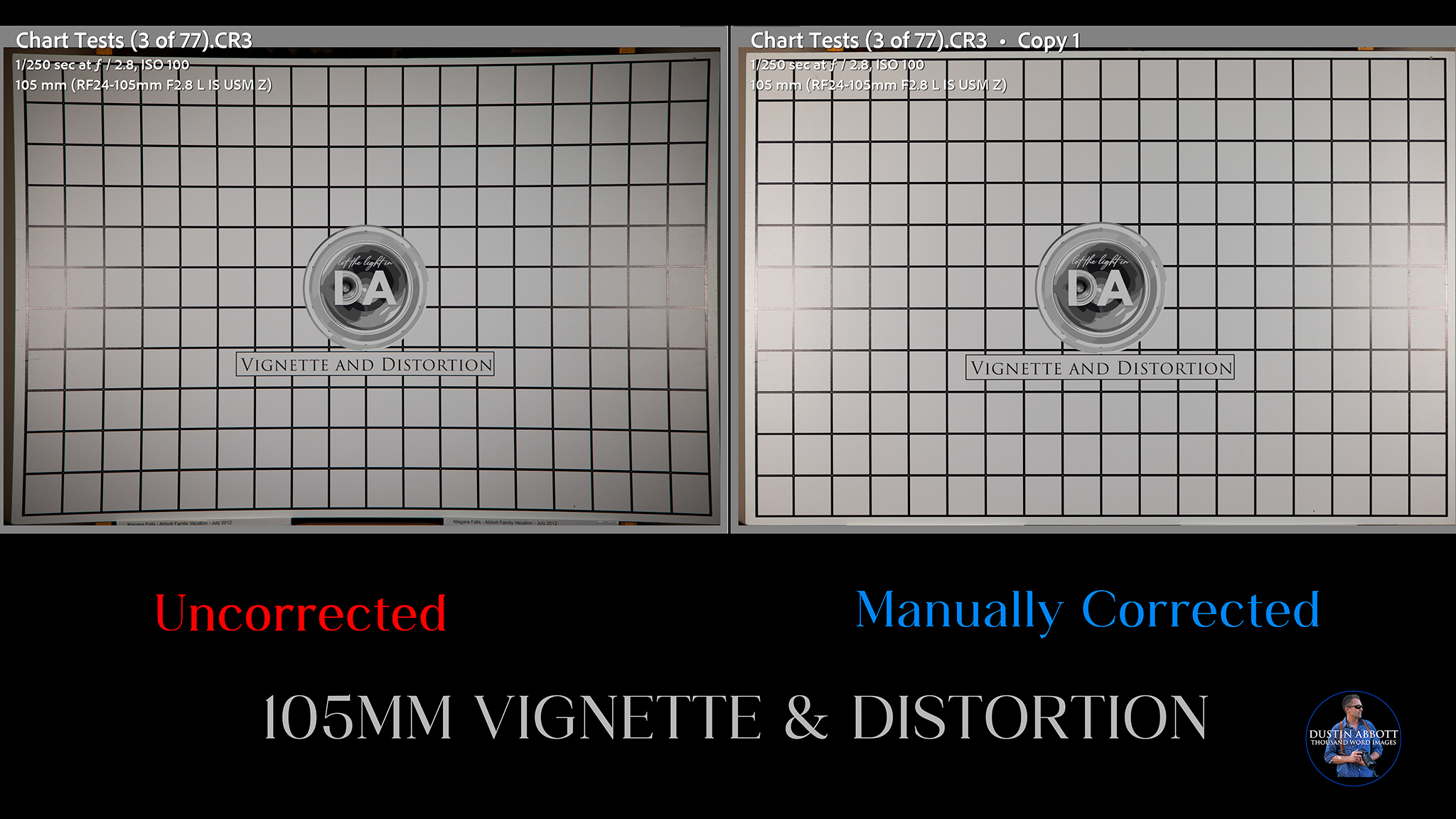
I needed a -9 to correct the distortion and a still-significant +85 to correct the vignette.
Sigh.
Things are a little better in the fringing department. Longitudinal chromatic aberrations (LoCA) occur before and after the plane of focus, and while I see some fringing, it isn’t severe.

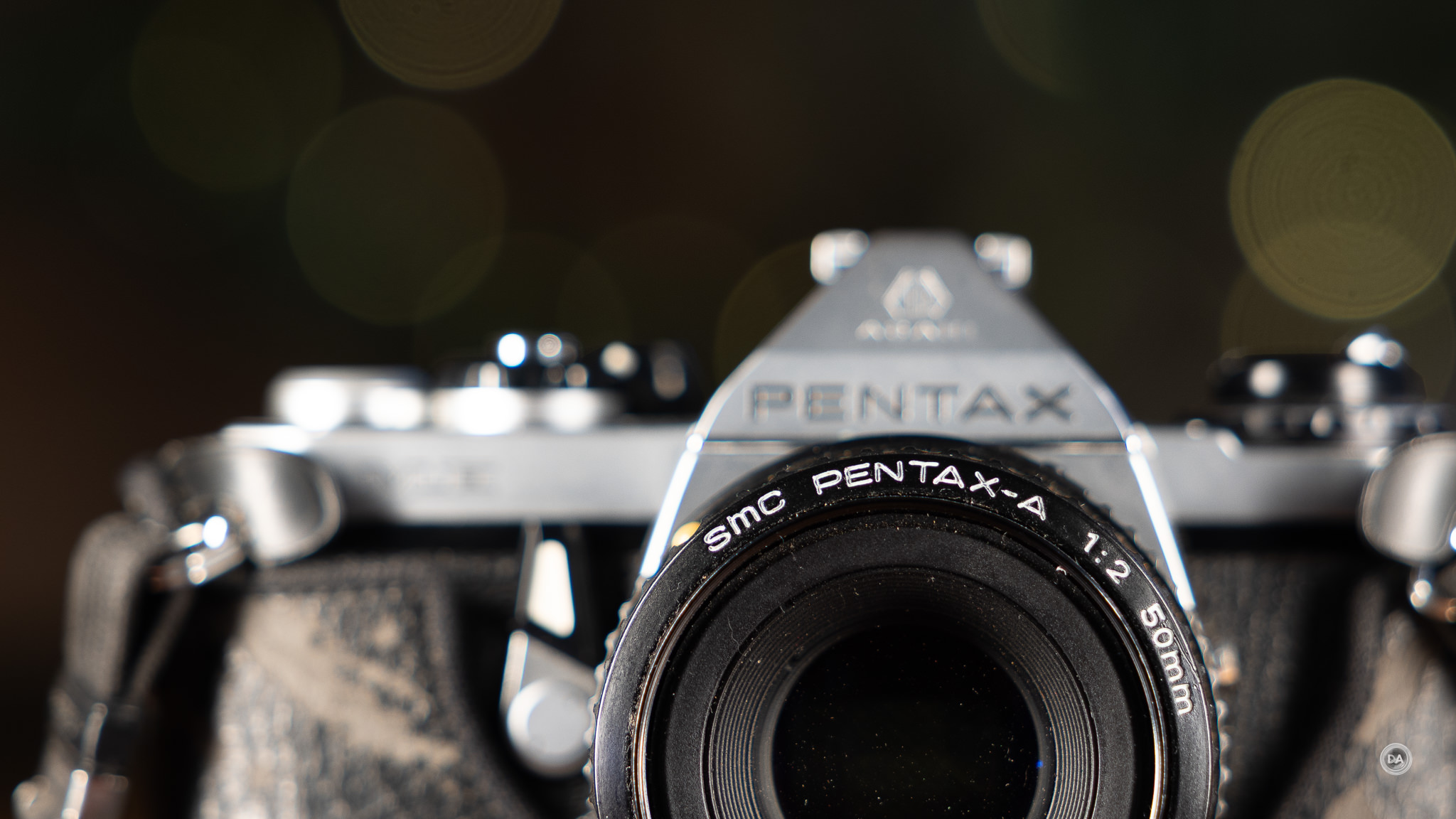
If we look at my Dad’s old SLR, we will see some fringing on the shiny bits and a bit of fringing around specular highlights, but neither is strong enough to really impact things on a global level.
There is only the tiniest amount of lateral chromatic aberrations (LaCA) near the edge of the frame, certainly not enough to be noticed in real world situations.
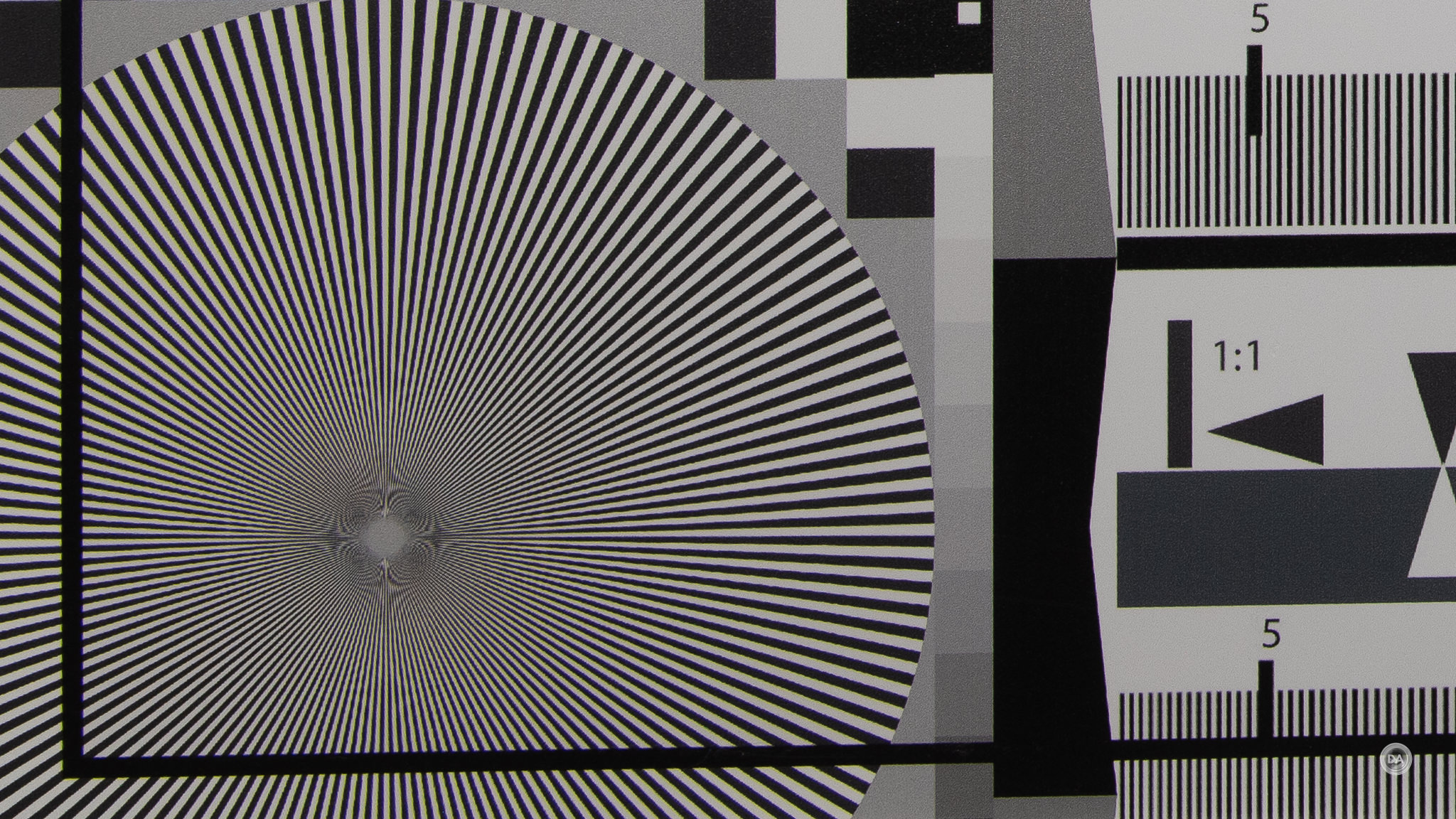
The most dominant fringing color there is yellow, which I don’t find shows up much in real-world images.
When we move on to sharpness and contrast, however, we find the greatest strengths for this lens. Here’s a look at my test chart that the crops will come from.

Starting at 24mm, we’ll take a look at high magnification crops. Here are the roughly 200% F2.8 crops from across the frame. This is on the 45MP Canon EOS R5:


We see exceptional sharpness in the center and midframe, with some expected drop-off in the corners. That’s an excellent result.
There’s basically little to no room for improvement in the center and midframe, and the corners start sharpening up by F4.

This would be an expensive lens to buy for landscape use at smaller apertures, but it certainly delivers strong results from F5.6-F8, the peak apertures for consistency of sharpness across the frame.
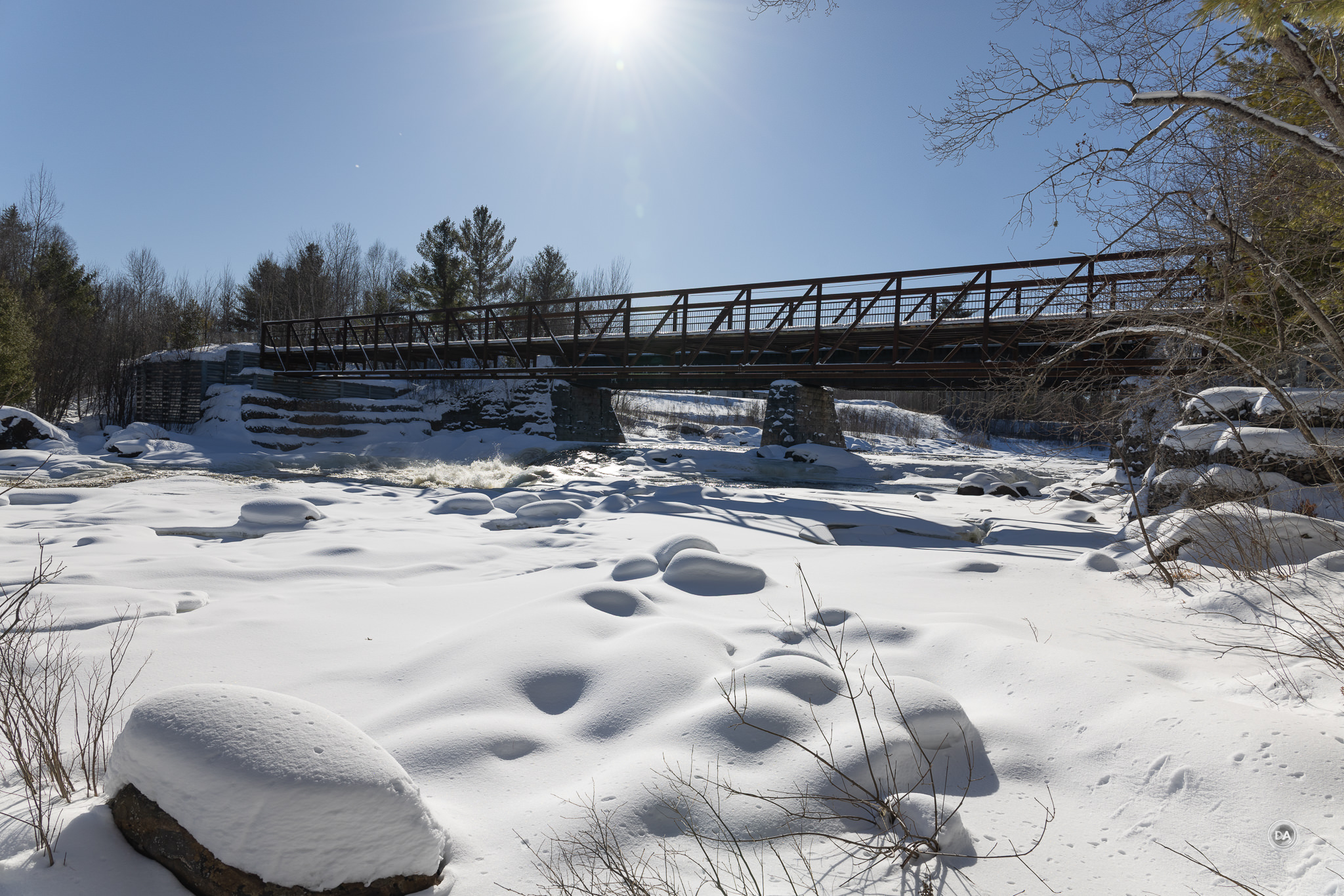

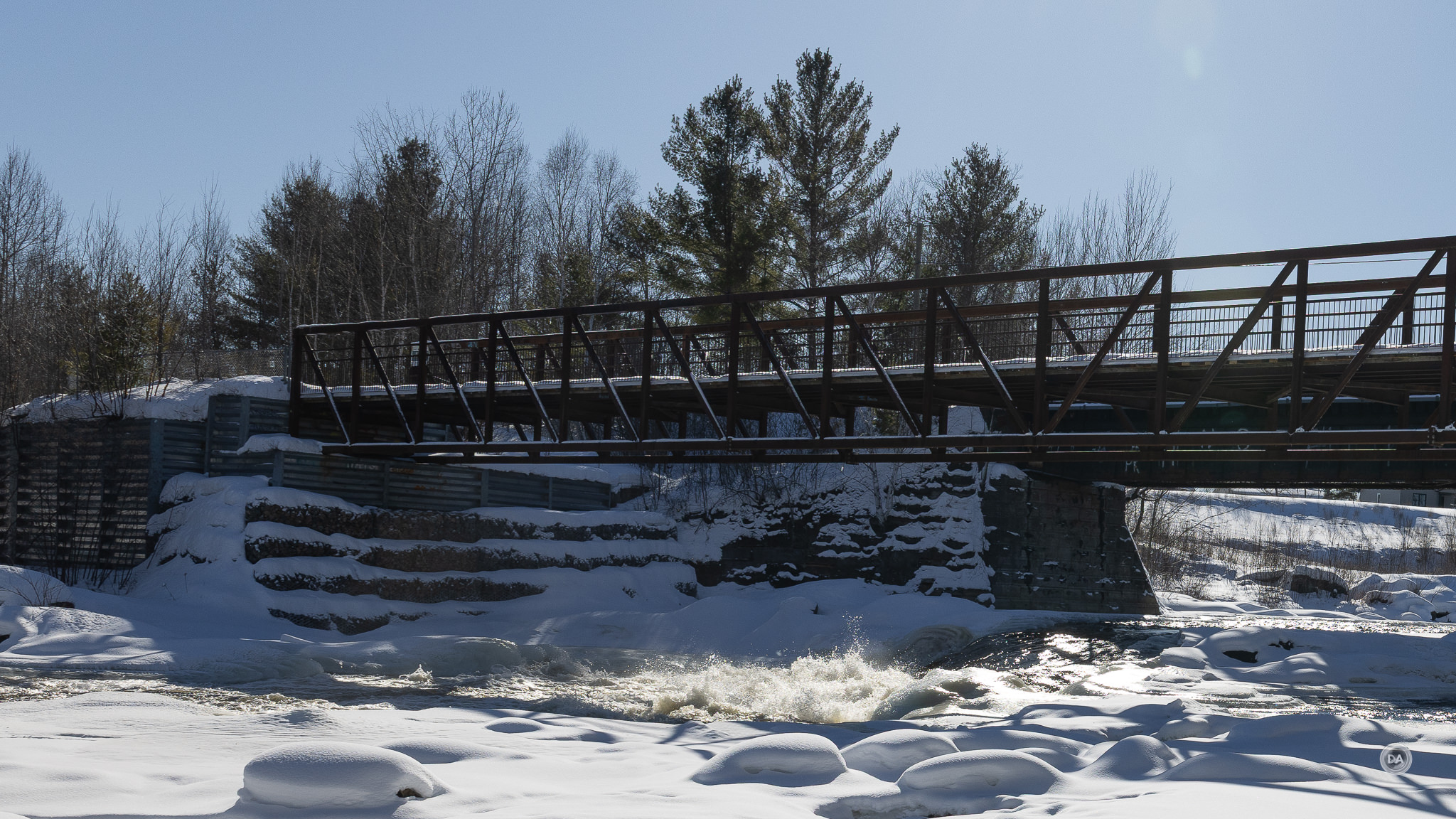
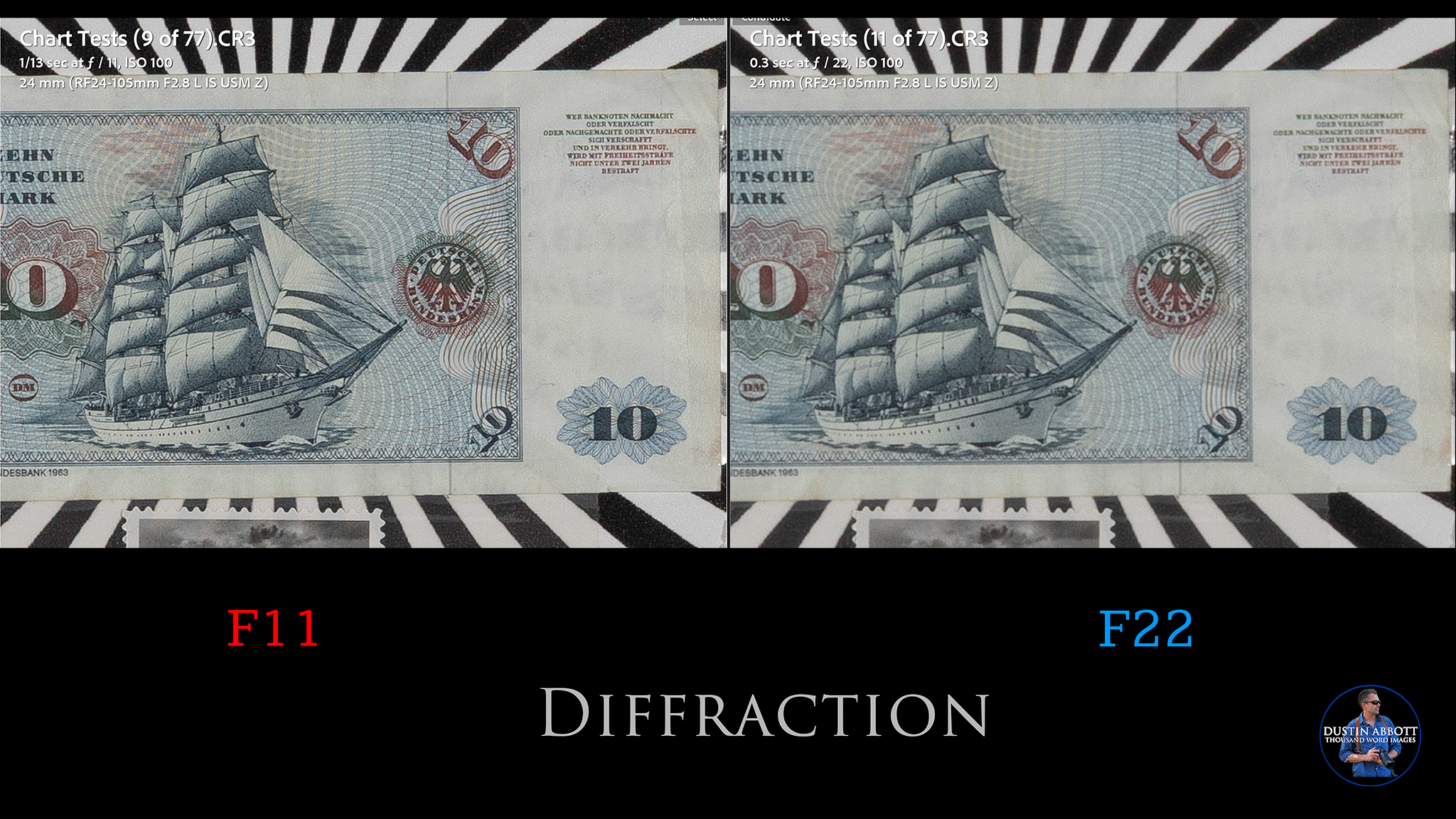
Diffraction will start to soften the image by F11 (particularly on the high-resolution bodies), with that softening becoming much more noticeable by the minimum aperture of F22.
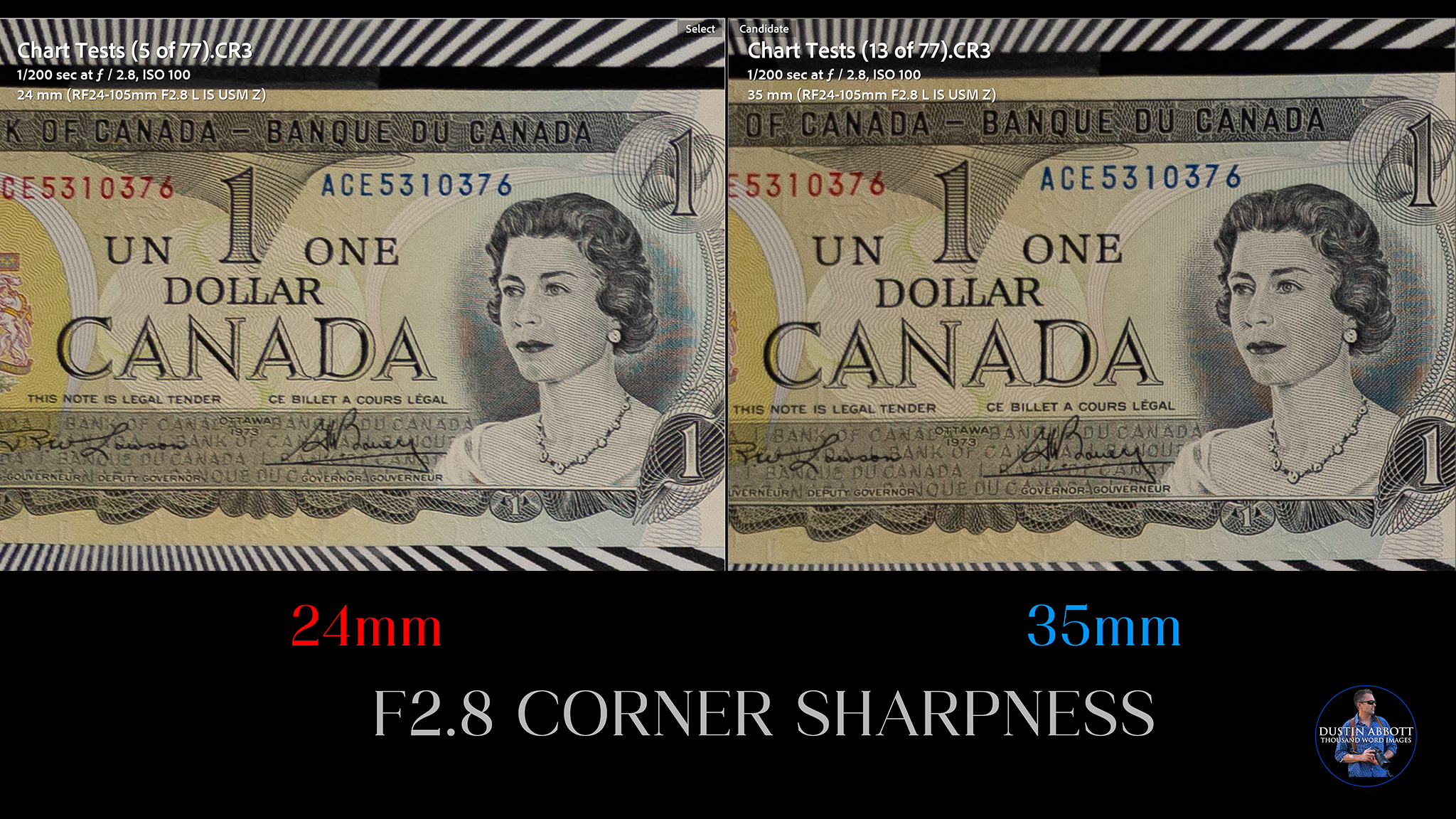
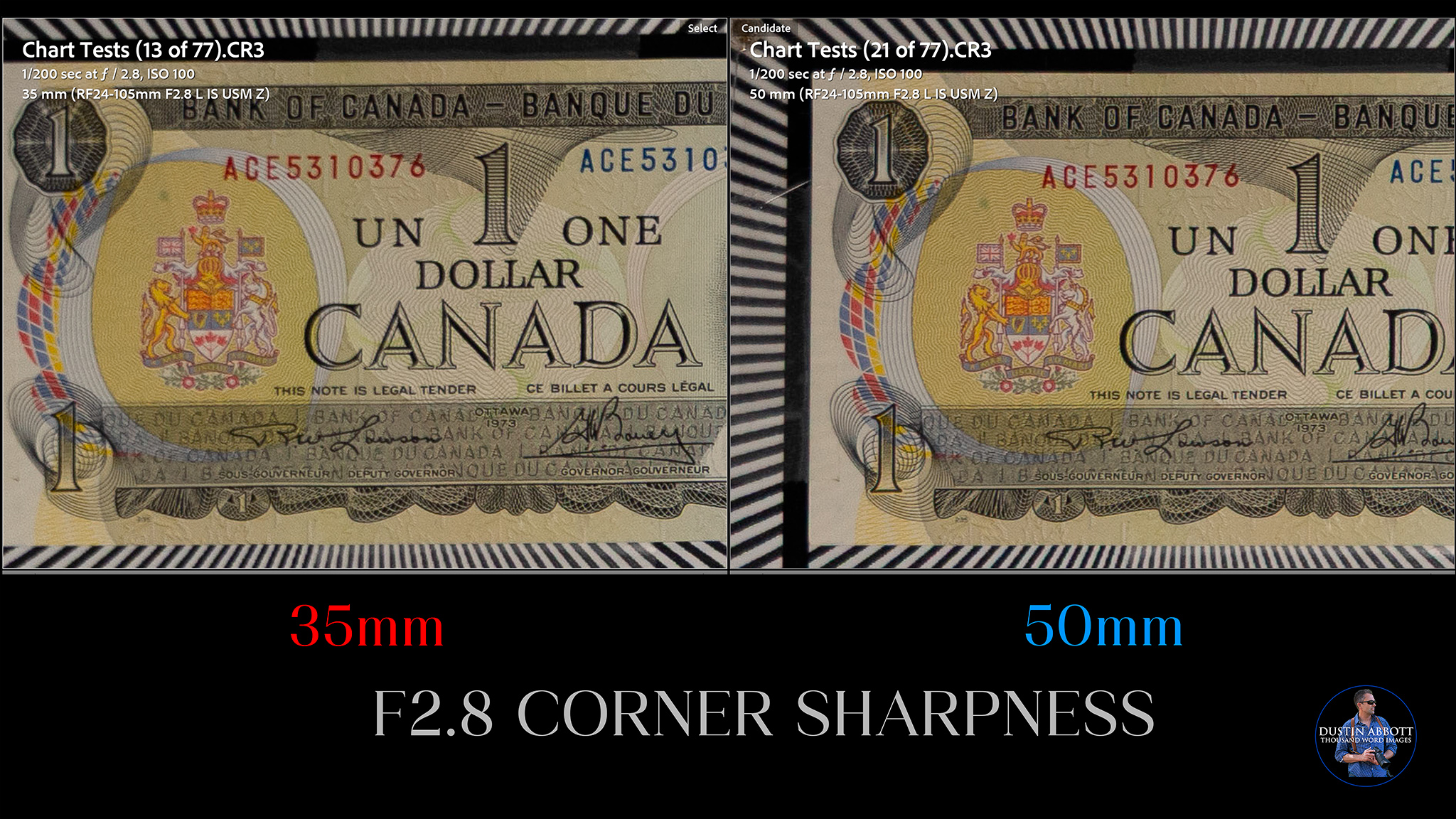
Moving on in the zoom range mostly demonstrates a nice degree of consistency. At 35mm the results are largely the same as at 24mm save with a little more detail in the corners.
At 50mm, results are very slightly softer in the center, though the midframe and corner results are largely similar, and the far corners are actually very slightly sharper.
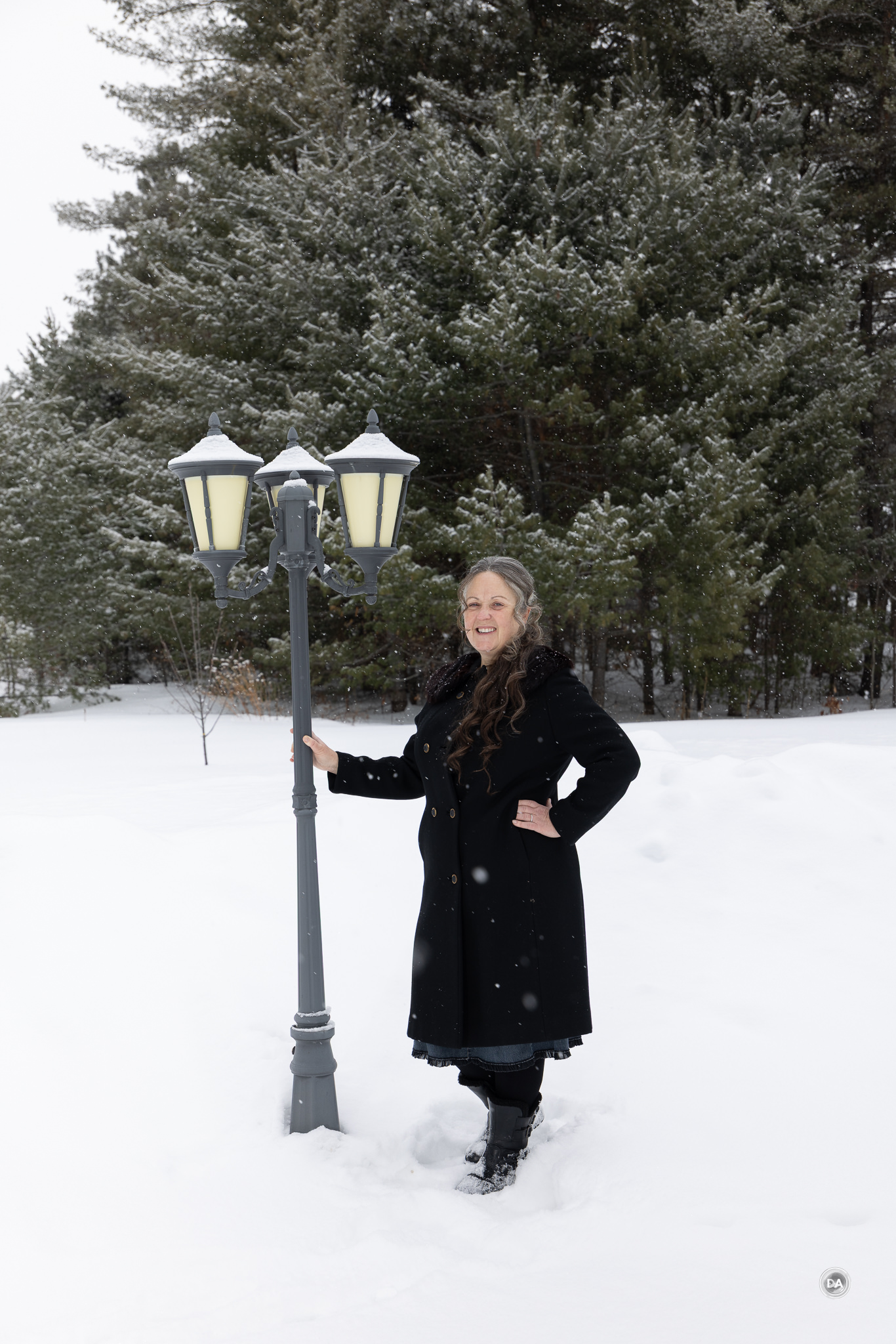
Portraits in the 50mm range have plenty of detail.
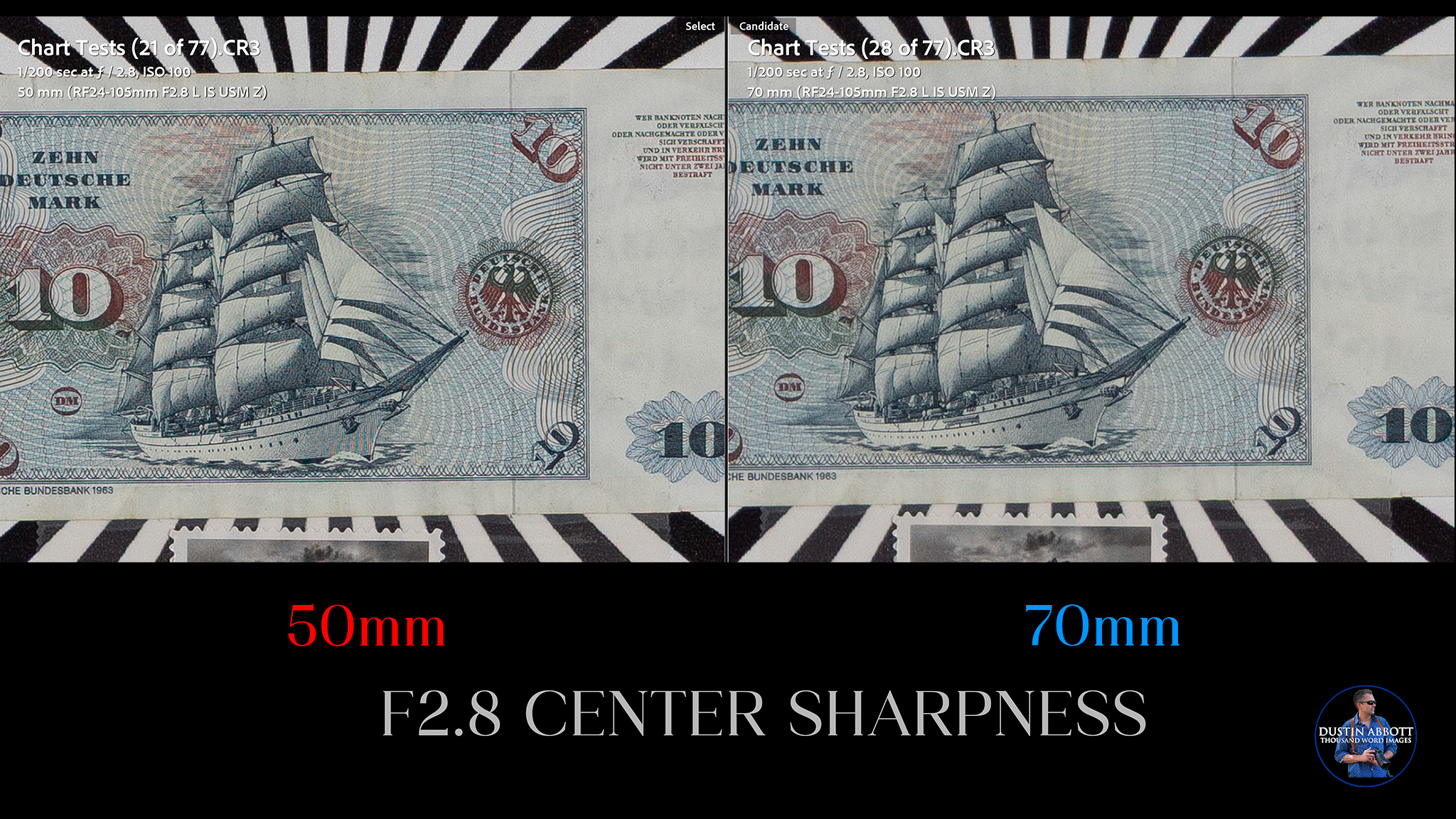
At 70mm the center is a bit less sharp, but the rest of the frame is largely the same. Here’s a look at that center performance.
Stopped down the detail is excellent.

85mm shows roughly the same performance as 70mm, with very minor nuances across the frame where one focal length looks better than the other…though to a tiny degree even at 200% magnification. Here’s a real world shot along with a crop taken at 90mm (slightly past the 85mm marker).


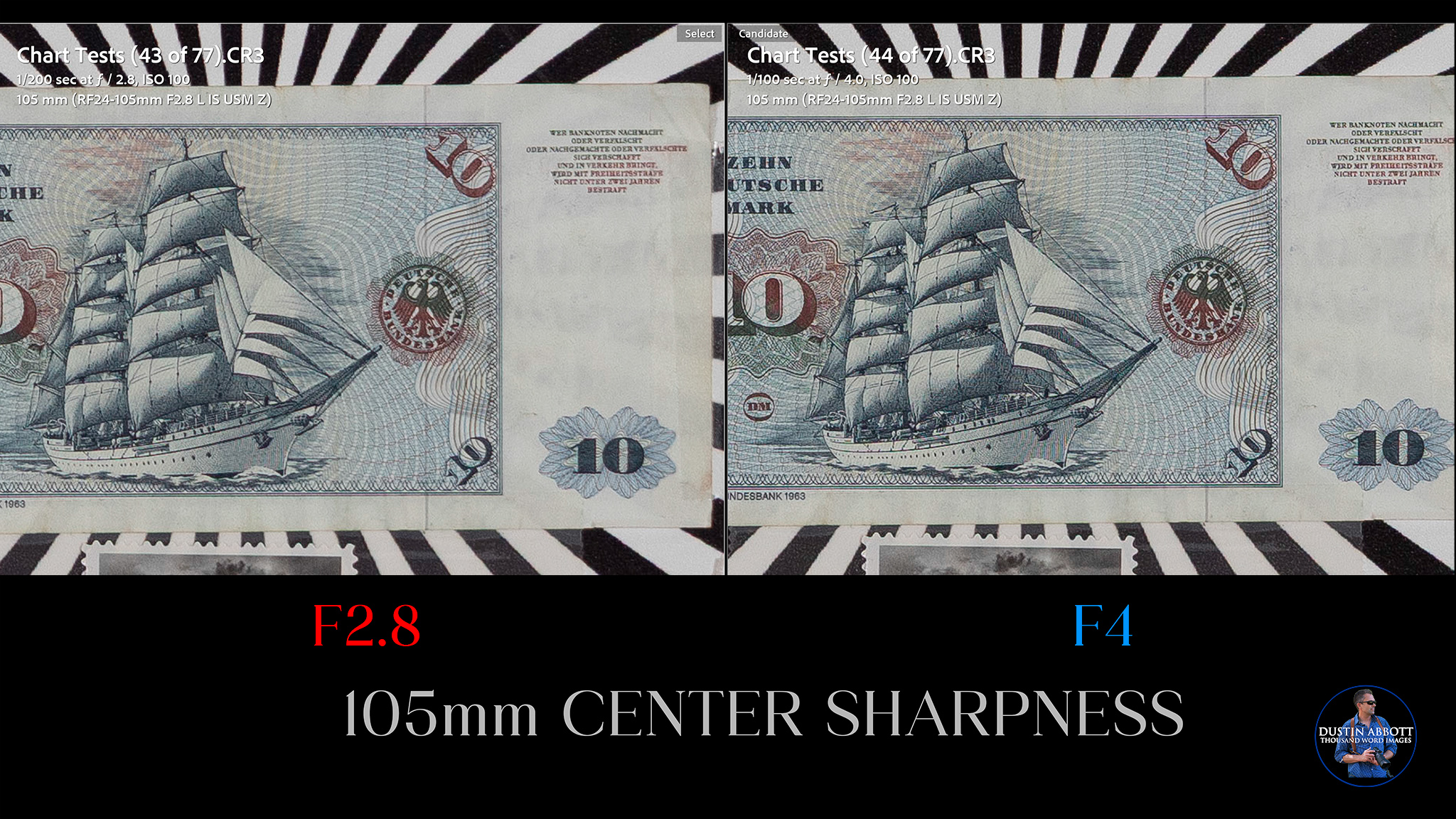
Finally, the 105mm telephoto end looks largely the same as what we’ve been seeing, though with the potential to sharp up considerable at F4:
I shot at 105mm more than any other focal length, and was generally happy with the real-world detail and contrast even at F2.8:

Stop down a bit and details will look fantastic.


I suspect that no one will have a problem with the sharpness this lens produces.
So how about rendering? It is rare that zoom lenses achieve quite the same degree of beautiful defocus as equivalent prime lenses, but there’s certainly nothing wrong with the rendering from the 24-105L Z.
My primary critique of the bokeh is that specular highlights exhibit some “onion” effect with concentric circles in bright specular highlights.

Here’s a look at a couple of potential samples shot at 64mm and then 105mm, both showing natural specular highlights.


Both look nice to me.
Here’s a natural setting without any “bokeh balls”, but just a look at the progression from focus to defocus.

The next shot shows a busier scene, with some leaves and branches in the “transition zone”, and while I wouldn’t call the result “creamy”, it certainly doesn’t look objectionable to me, either.

I would say that the rendering is generally quite good from the RF 24-105mm 2.8L.
Flare resistance is an area of (mostly) strength as well. The RF 24-105L Z has Canon’s Air Sphere (ASC) Coatings, and they seem to work generally well.
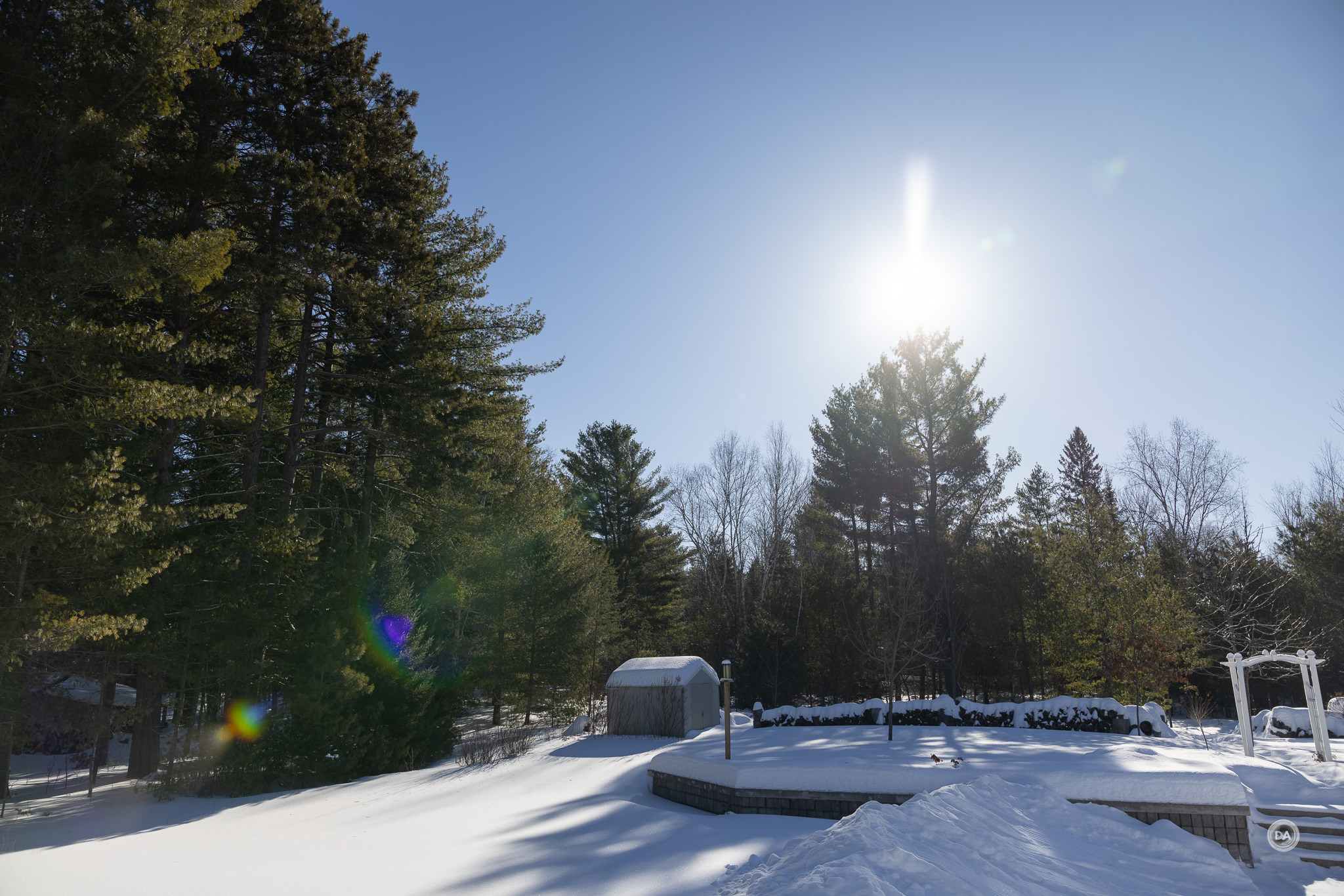


There seems to be a few more flare artifacts at smaller apertures (F11 in the middle result above), but in most normal shots I saw very little flare.
This is far from being the most colorful time of the year, but I liked the colors coming off the lens just fine.

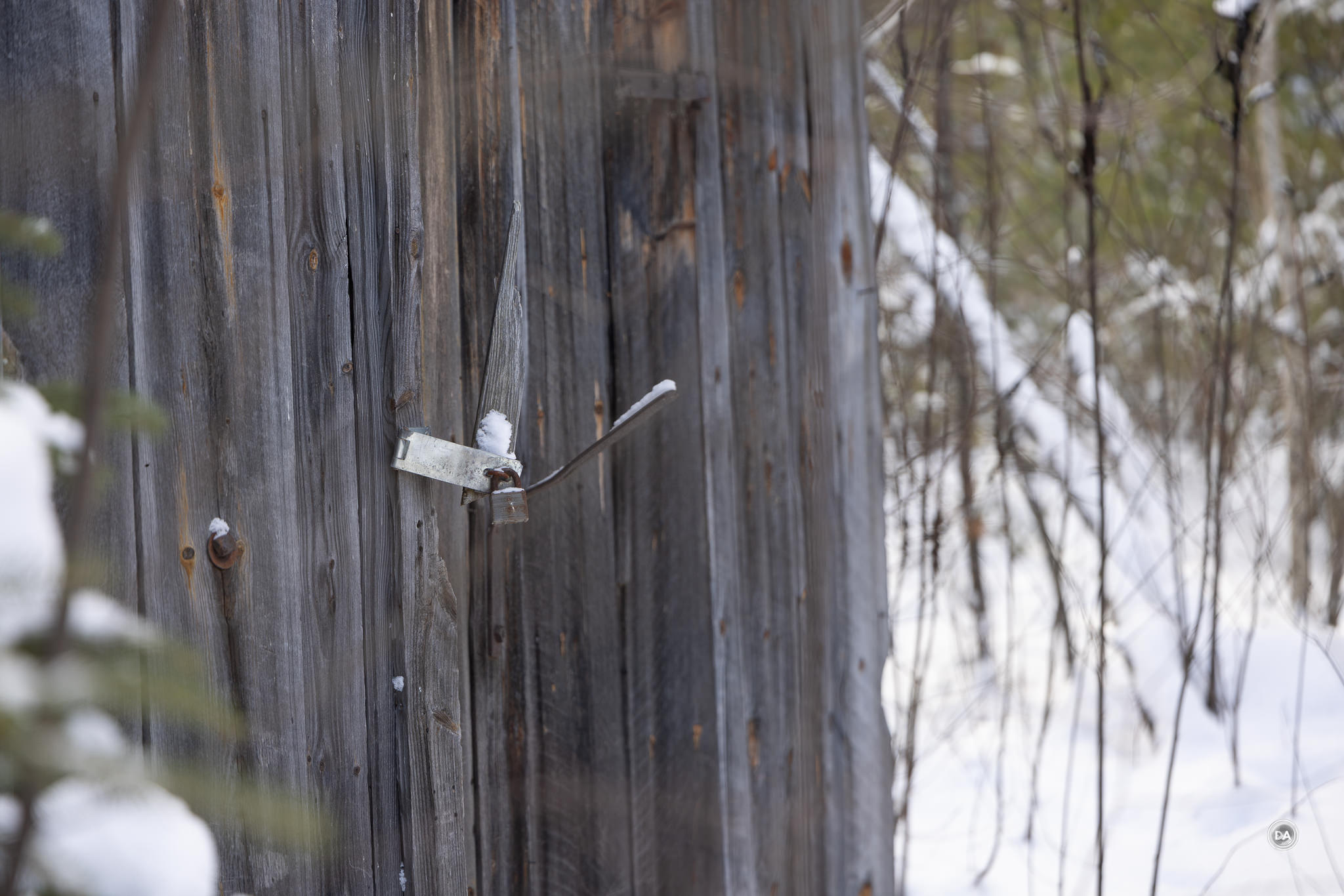
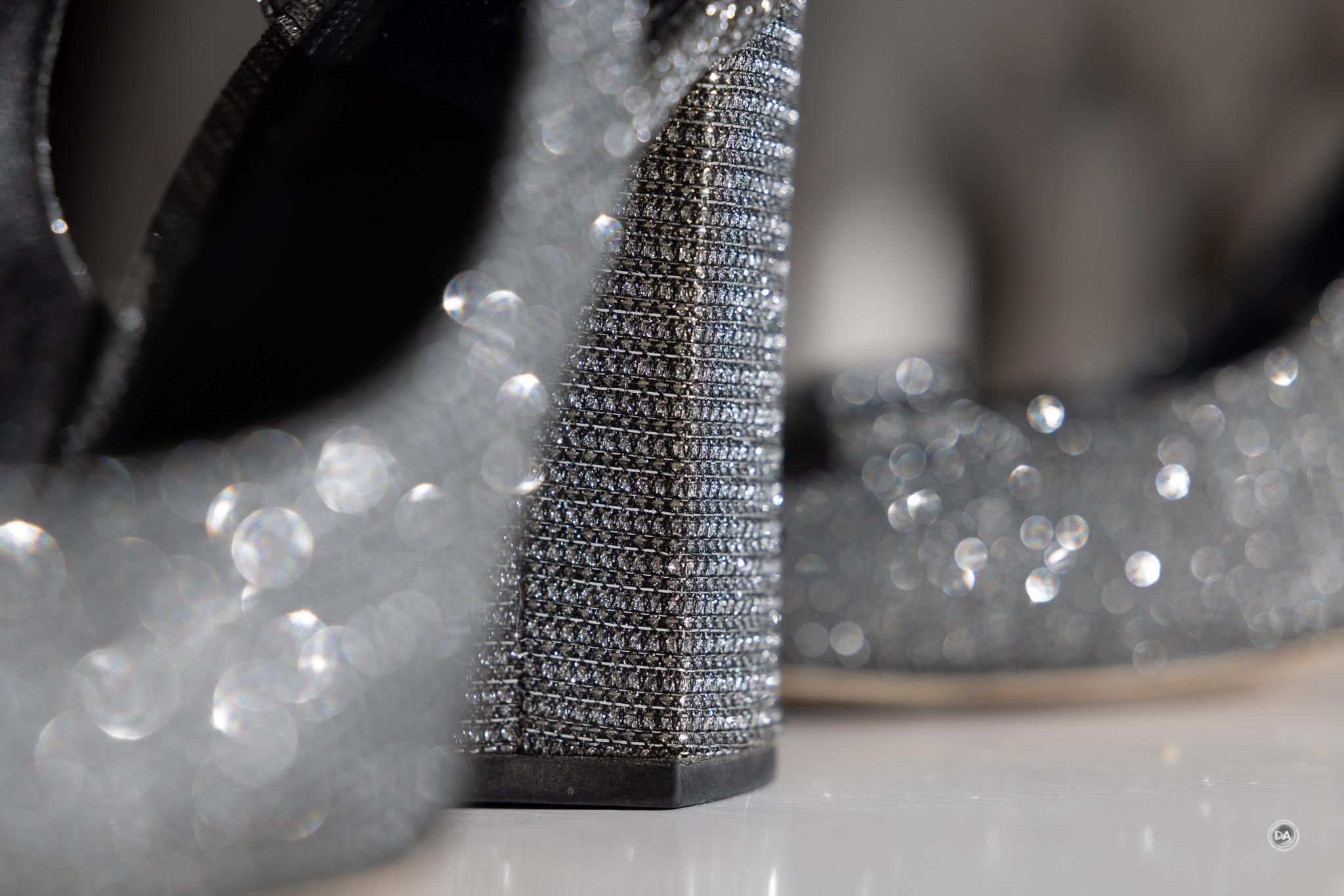
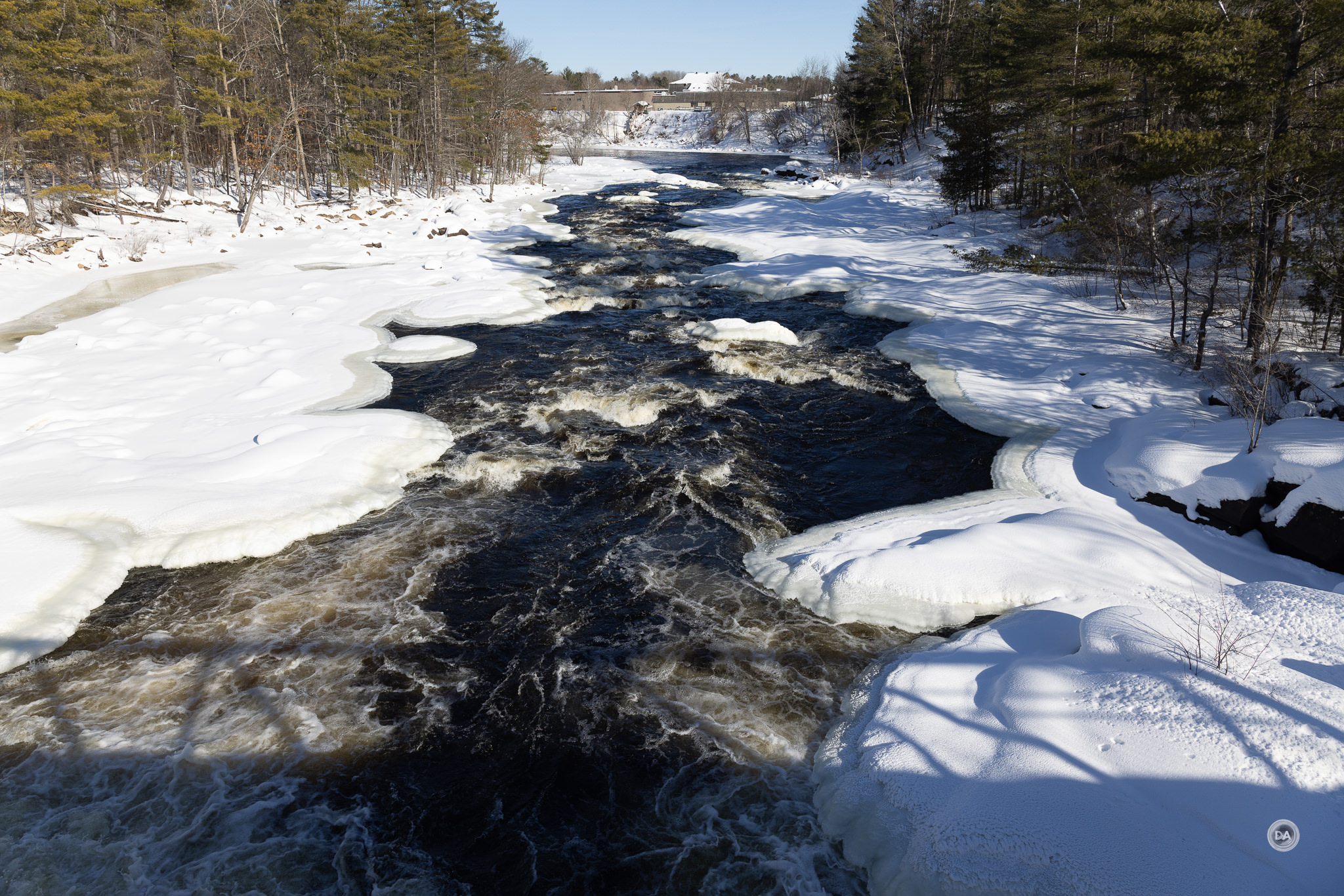
While I remain firmly against Canon’s policy of leaving things like distortion and vignette nearly entirely up to digital corrections, I do appreciate the other optical qualities of the Canon RF 24-105mm F2.8L IS USM Z. It maintains good sharpness and contrast through the zoom range, shows good flare resistance, and manages aberrations well. If this was an easy lens to engineer, a lot of others would have already done it. But Canon has done it…and done it well. Here’s a mini-gallery of other images to check out.















Conclusion
The Canon RF 24-105mm F2.8L IS Z is an exceptionally useful lens. In many ways it reminds me of the Tamron 35-150mm F2-2.8 VXD that remains my favorite all-purpose lens on Sony E and Nikon Z. It’s the kind of lens that can do pretty much anything, and while it isn’t small or light, it makes up for it with extremely versatility and strong performance. The Canon has a more useful wide end even if it sports less telephoto lens, and I suspect that many people would take that trade considering the fact that it is easy to crop with today’s high resolution cameras and sometimes impossible to step back to get more in the frame.

The Canon isn’t a flawless lens, sporting more vignette and distortion than I would like and also sporting an eye-watering price, but I suspect many photographers (particularly working professionals) already use this lens more than any other. That extra 35mm of reach over the traditional 24-70mm F2.8 can make all the difference when shooting events, weddings, or portraits.
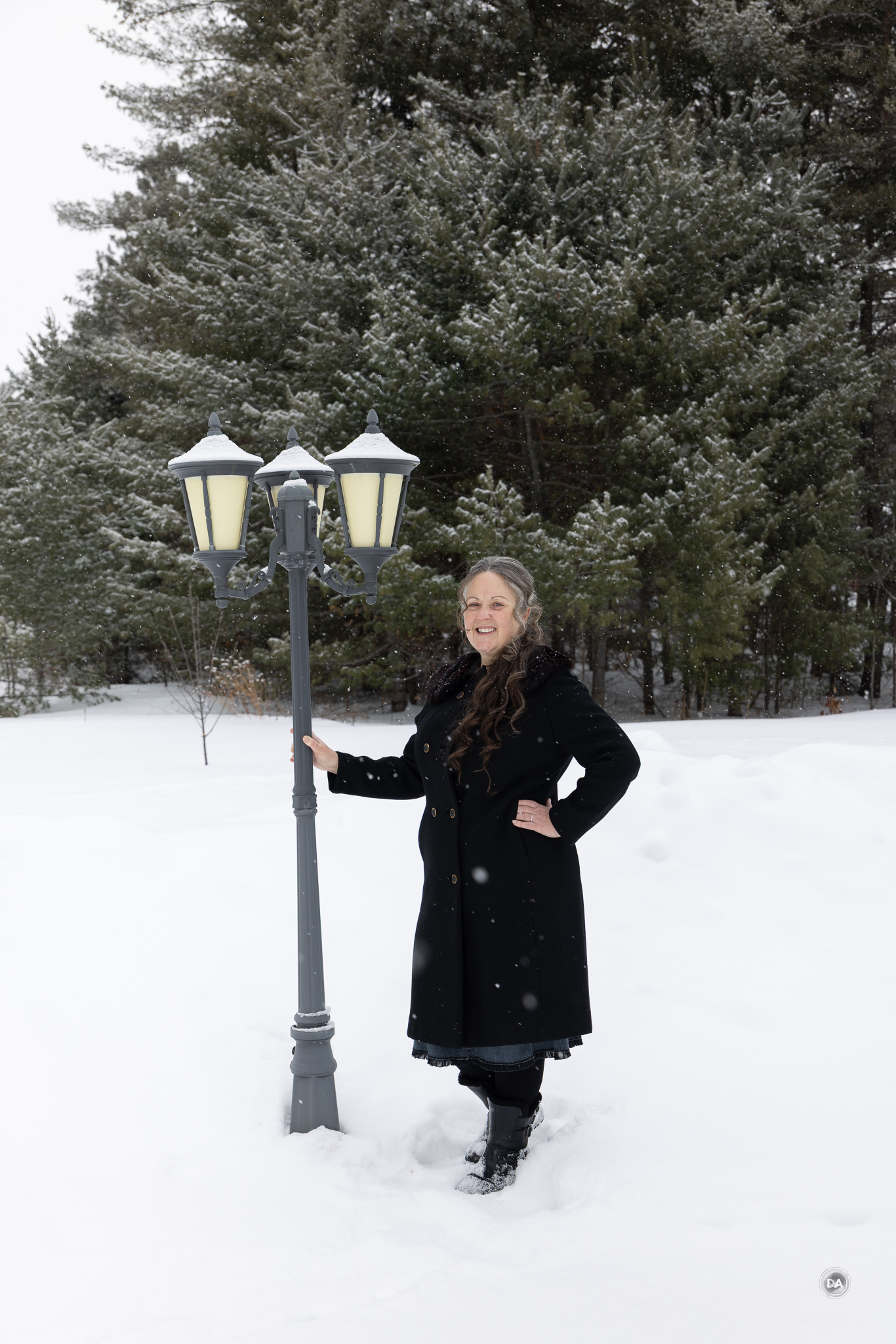
The price tag of roughly $3300 USD means that many photographers will only be able to dream of owning this lens, but for those fortunate enough to own it, it will likely be a lens that rarely leaves their cameras. I went through many user reviews and that was the prevailing sentiment. Put simply, this is a lens that every other brand wishes they had, so kudos to Canon for being the one able to successfully engineer it.

Pros:
- Versatile Zoom Range: The 24-105mm focal length offers a dynamic range suitable for various photography styles, including landscapes, portraits, and event photography.
- Constant F2.8 Aperture: The lens maintains a fast maximum aperture of F2.8 throughout its zoom range, allowing for excellent low-light performance and depth of field control.
- Image Stabilization: Incorporates Optical Image Stabilization (up to 5.5 stops), which helps reduce camera shake, making it advantageous for handheld shooting.
- Close-Focusing Capability: The lens can focus as close as 1.5 feet (0.45m) at all focal lengths, providing impressive magnification (0.29x) for detail-oriented shots.
- Robust Build Quality: Constructed as an L-series lens, it features exceptional durability, dust- and water-resistant design, and a thick rear gasket for added protection against the elements.
- Excellent Autofocus Performance: Dual Nano-USM motors provide fast and accurate focusing for both stills and video, enhancing usability in dynamic shooting environments.
- Flare Resistance: Equipped with Canon’s Air Sphere Coating (ASC), the lens demonstrates good resistance to flare and ghosting, maintaining contrast and color fidelity in challenging lighting.
- Smooth Zoom Mechanism: The internally zooming design keeps the length consistent during zooming, which is particularly useful for video work and maintaining balance.
- Customizable Control Ring: The front control ring can be programmed for various functions, offering versatility and convenience tailored to individual shooting preferences.
- High Image Quality: The optical design produces consistently strong sharpness and contrast throughout the zoom range.
- Good Bokeh: The lens produces aesthetically pleasing out-of-focus areas, making it suitable for portraiture and other creative applications.
Cons:
- High Price Point: At around $3300, it is significantly more expensive than the F4 version, which may be a barrier for many photographers.
- Size and Weight: Weighing approximately 1300g and measuring 199mm in length, the lens is considerably bulkier than its F4 counterpart, posing challenges for extended handheld use or travel.
- Digital Corrections for Distortion: The lens requires digital corrections for distortion and vignetting, which can negatively impact sharpness and image quality if corrections are not applied during processing.
- Aperture Ring Limitations: The aperture ring functions inconsistently across different camera models, particularly older ones, where it may be non-operational in stills mode.
- Limited Popularity of Power Zoom Adapters: While the lens is compatible with Power Zoom adapters, user reviews indicate that these accessories are not widely embraced due to ergonomic issues and high costs.
_________________________________________________________________________
GEAR USED:
Purchase the Canon RF 24-105mm F2.8 L Z @ Camera Canada | B&H Photo | Adorama | Amazon | Amazon Canada | Amazon UK | Amazon Germany
Purchase the Canon PZ-E2 Adapters
Purchase a Canon EOS R6 MKIII @ B&H Photo | Amazon | Camera Canada | Amazon Canada | Amazon UK | Amazon Germany
Purchase a Canon EOS R5 @ B&H Photo | Amazon | Camera Canada | Amazon Canada | Amazon UK | Amazon Germany | Ebay
_________________________________________________________________
Want to support this channel? Use these affiliate links to shop at: B&H Photo | Amazon | Adorama | Camera Canada | Amazon Canada | Amazon UK | Ebay | Make a donation via Paypal
Buy DA Merchandise https://bit.ly/TWIMerch

Keywords: Canon RF 24-105mm F2.8L, USM, Z, IS, 2.8, f/2.8L, 24-105mm, F2.8, RF 24-105L Review, Canon R6III, Canon R6 Mark III, Canon EOS R6 Mark III, #eosr6iii, Canon, Canon EOS R5, EOS, R, R5, Review, Canon EOS R6 MK III, Canon EOS R6 II, EOS R6 III Review, RF, mirrorless, Canon EOS R7 Review, Sports, Tracking, Dustin Abbott, Real World, Comparison, Handling, Focus, Portraits, Resolution, High ISO, Image Quality, Sample Images, Photography, 45MP, 24MP, 32MP, Canon, #letthelightin, #DA, #EOSR5, #Canon
Related posts:
 Canon RF 45mm F1.2 STM Review
 Canon RF 50mm F1.4L VCM Review
 Canon EOS R6 Mark III Review
 Tamron 11-20mm F2.8 RXD for Canon RF Review
 Tamron RF 11-20mm F2.8 RXD Gallery
 Canon RF 24-50mm F4.5-6.3 IS STM Review
 Canon RF 24-50mm F4.5-6.3 IS Gallery
 Canon RF 35mm F1.4L VCM Review
 Canon RF 35mm F1.4L VCM Gallery
 Canon RF-S 18-45mm F4.5-6.3 IS STM Review