


Lens design often becomes othodoxy. 70-200mm telephoto zooms “always” have fixed aperture of F2.8 or F4, but 70-300mm or 100-400mm zooms are “always” variable aperture. 70-200mm zooms are internally zooming, but 70-300mm or 100-400mm zooms are always externally zooming. There is a preset price range where these lenses essentially always land. But Sony has decided to be different, making a bold change to basically everything in the typical 100-400mm formula. The new Sony FE 100-400mm F4.5 GM OSS is a constant aperture zoom with an internal zooming design with a price tag that is more than 50% more than the older Sony 100-400mm F4.5-5.6 GM (which followed the traditional formula “to a T”). This is a completely different type of lens, a bridge between the less expensive zoom lenses that cover these focal lengths and the much more expensive primes with faster maximum apertures. While F4.5 is a bit slower than the typical F2.8 or F4 in a prime lens at these focal lengths, it is fast enough to still get fast-enough shutter speeds without setting the ISO level to ridiculous levels. And while it is an expensive lens at roughly $4300 USD or $5600 CDN, it isn’t completely out of reach like the prime lenses which often cost $10K+. For many photographers this Sony lens will make more sense than the massive, heavy, and expensive Sigma 300-600mm F4 that I reviewed in 2025. Does this new Sony 100-400mm GM jump to the top of the “most desirable” list? Get my thoughts in either the video review linked below or just keep reading.
Follow Me @ YouTube | Patreon | Instagram | Facebook | DA Merchandise | Flickr | 500px | X
Thanks to Sony USA for sending me a review loaner of this lens. As always, this is a completely independent review. *The tests and most of the photos that I share as a part of my review cycle have been done with the Sony a7RV and the Sony A1 II. You can visit the product page for the 100-400mm F4.5 GM here.
__________________________________________________________________________________________________
AI SUMMARY: The Sony 100-400mm F4.5 GM OSS lens presents a revolutionary design, positioned between traditional zoom lenses and high-end prime lenses, offering versatility and quality for photographers. Despite its slower maximum aperture compared to primes, it enables fast shutter speeds without significantly increasing ISO, making it practical for various shooting conditions. The lens is lightweight and user-friendly, with effective stabilization and a robust autofocus system that excels in both still and video applications. Ultimately, while the price tag of around $4300 may be steep, its performance and compatibility with teleconverters make it a worthwhile investment for serious photographers.
Strengths:
- Exceptional image quality and sharpness across focal lengths.
- Fast and reliable autofocus, particularly for action shots.
- Versatile compatibility with teleconverters, enhancing reach without significant quality loss.
- Reasonably lightweight and manageable, improving handling in the field.
Weaknesses:
- More expensive than any previous lenses in this segment
- Large size makes storage and transport more difficult
- Drop-in filter holder design could be improved
A secondary benefit of having a reasonably fast maximum aperture of F4.5 is that the new 100-400mm F4.5 GM plays well with Sony’s extenders. Throw on a 1.4x extender, and you have a 140-560mm zoom with a maximum aperture of F6.3 (very useful!), and it remains extremely capable optically and focuses essentially as well as the native lens. I had no problem shooting birds in flight at 560mm, F6.3, as captured here:

Throw Sony’s 2x teleconverter on there (or even Viltrox’s 2x TC, as used for the photo below) and you have a 200-800mm F9 lens. F9 is well within the range of tolerance for that kind of reach, and the results are still very good.

That kind of versatility is fantastic, and dramatically increases the value of the lens. Yes, in theory you can use the 1.4x and 2x teleconverters with Sony’s 200-600mm, though the maximum aperture becomes F9 with 1.4x and F13 (gulp!) with the 2.x. Likewise with the 400-800mm, but your maximum aperture with the 1.4x becomes F11 and a whopping F16 with the 2x TC. Now, to be fair, both of those lenses can reach a much further distance with the TC’s attached (up to a maximum of 1200mm for the 200-600mm and 1600mm for the 400-800mm), but it is my experience that those extreme focal lengths are near impossible to use well, and diffraction will severely reduce image quality at those apertures. The bottom line is that the new 100-400mm F4.5 GM will achieve nearly the reach of the 200-600mm (560mm) with an identical maximum aperture of F6.3 with the 1.4x attached, and will match the reach of the 400-800mm (800mm) and just about its maximum aperture of F8 with the 2x TC attached. It’s also worth noting that the 100-400mm will retain its 4x zoom range, while the 200-600mm is only a 3x zoom and the 400-800mm is just a 2x zoom, meaning that the 100-400mm will retain an advantage on the wide end (140mm and 200mm, respectively).
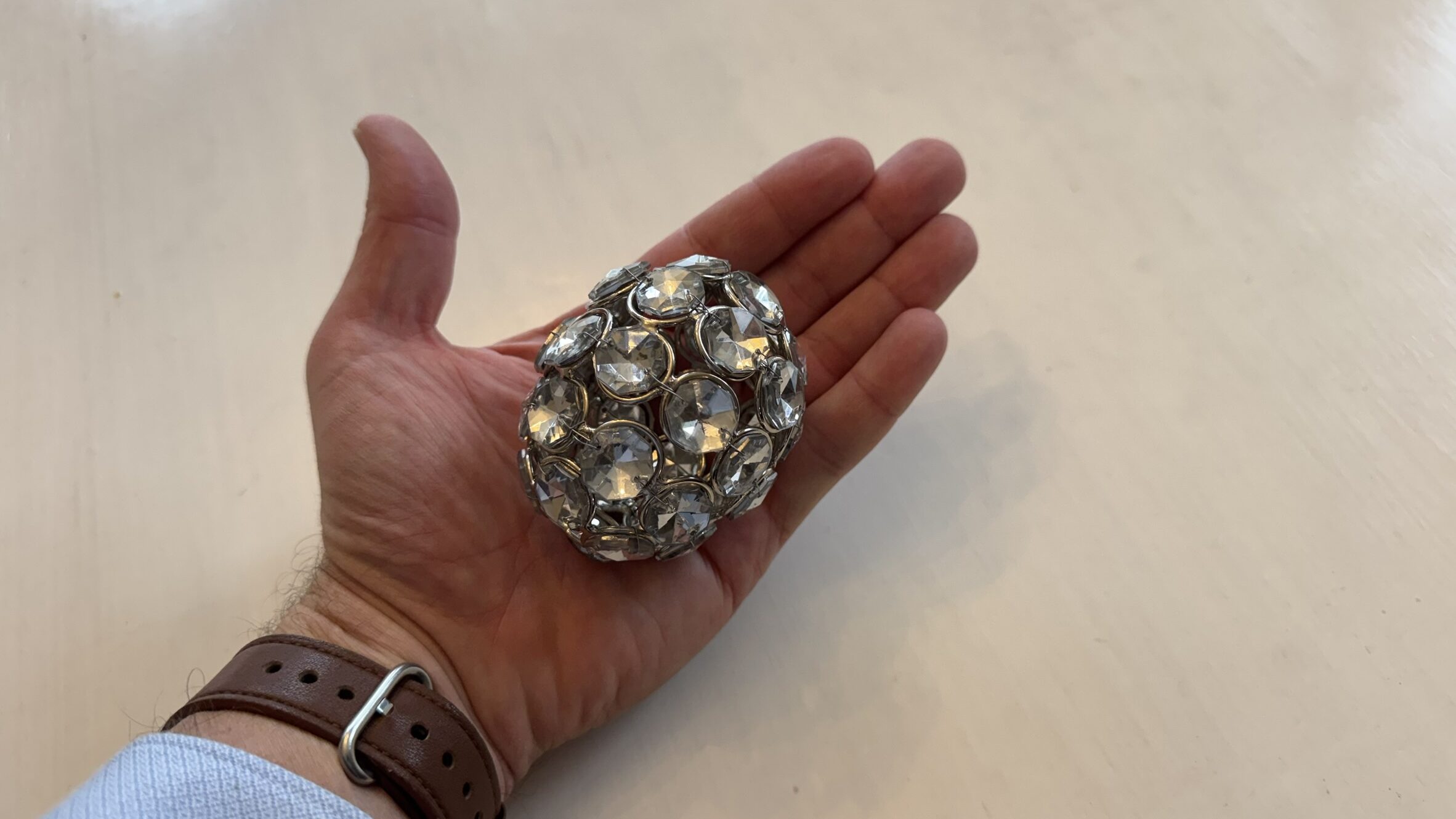
What’s more, the bare lens has a maximum magnification figure of 1:4 (0.25x) at a minimum focus distance of 1.5 meters. Here’s the size of the crystal egg I’m using for this test:
With the bare lens, here is what the maximum magnification looks like.

Teleconverters are interesting in that the way that they work doesn’t impact the minimum focus distance of a lens, so when I add the 1.4x TC, I can still focus as closely as 1.5m, but now I’m shooting with a 560mm focal length, which increases the magnification to roughly 0.35x, which looks like this.

Adding the 2x teleconverter increases that maximum magnification to 0.50x, or a 1:2 macro level.

All of that adds up to an extremely versatile lens in the hands of a skilled photographer, and the value here is that the minimum focus distance is 3.5 meters at 800mm for the 400-800mm, meaning that if a subject came too close, you couldn’t even focus on it, while here you could fill the frame with a little bird, for example, at just 1.5 meters away.
Build and Handling
In my review of the 400-800mm G lens, I wondered where the line between Gold (G) and Gold Master (GM) lay. The 400-800mm looked and felt like a premium product, with a high grade of build quality, a deep suite of features, and thorough weather sealing. Now I get to see an equivalent G Master lens, and the differences really come down to features rather than some massive difference.
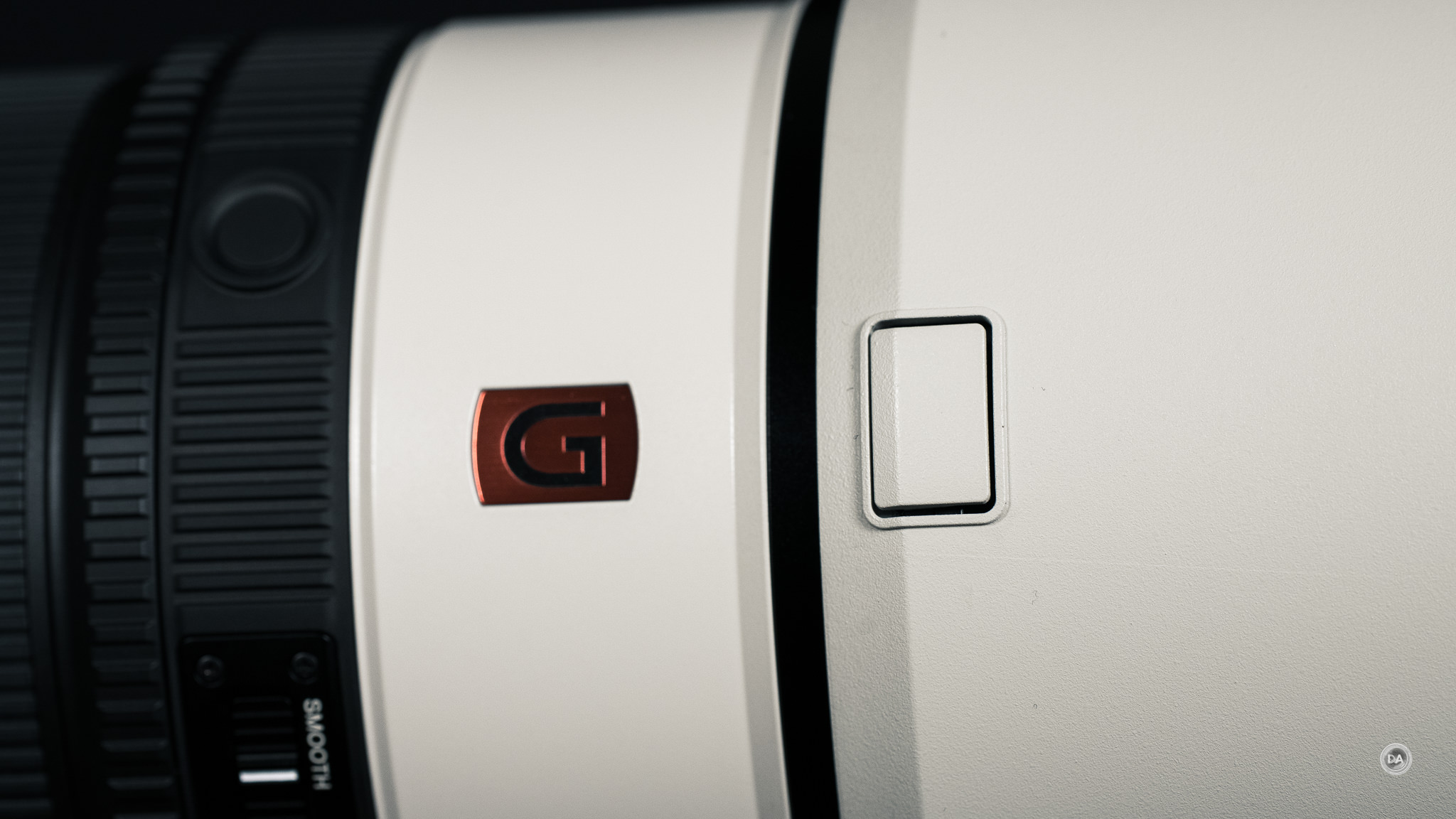
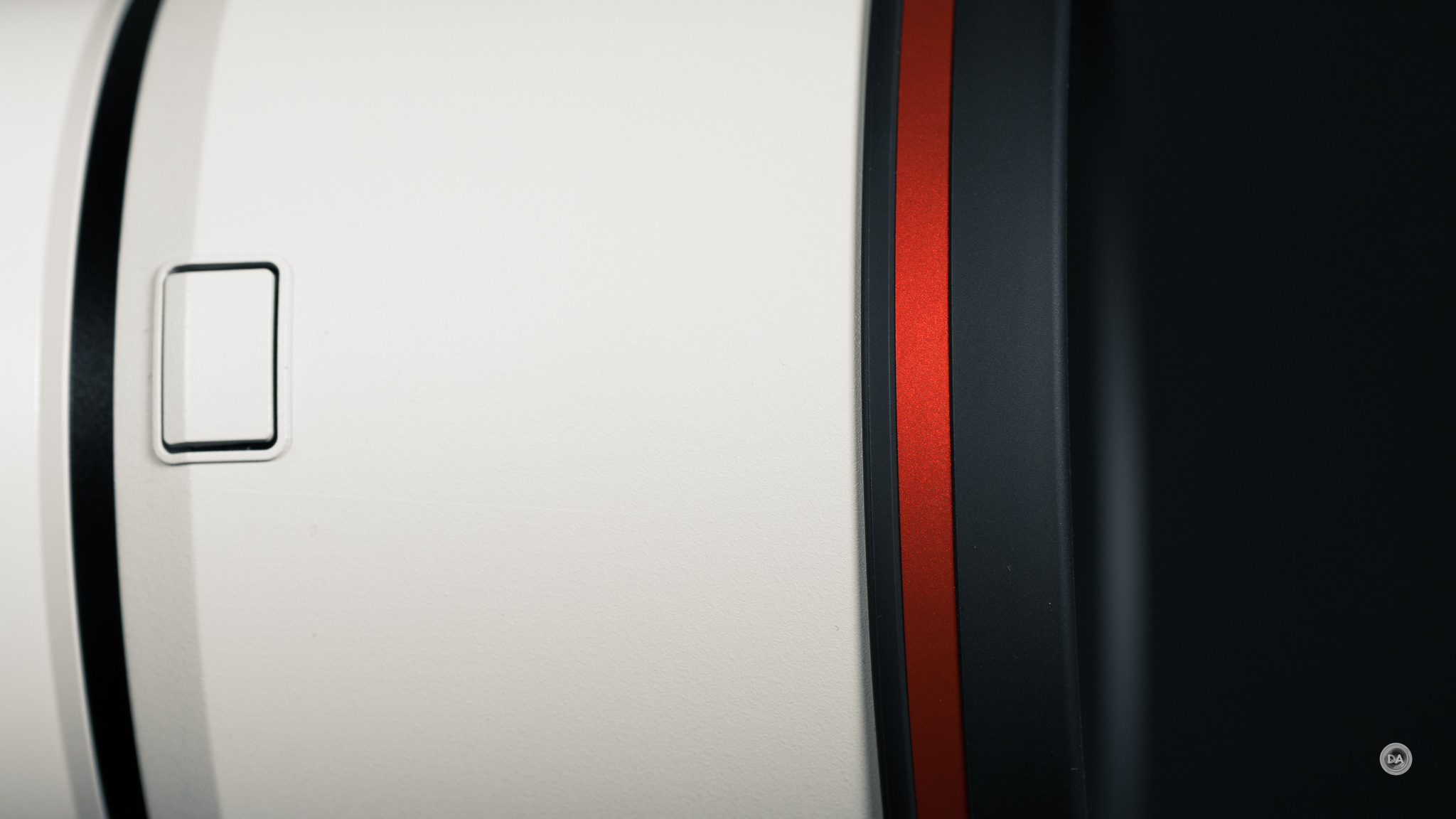
There are a few stylistic choices. The G badge of the 200-600mm and 400-800mm lenses is a silver color, while the GM badge is an orange/red, and there is a similar colored ring on the lens hood.
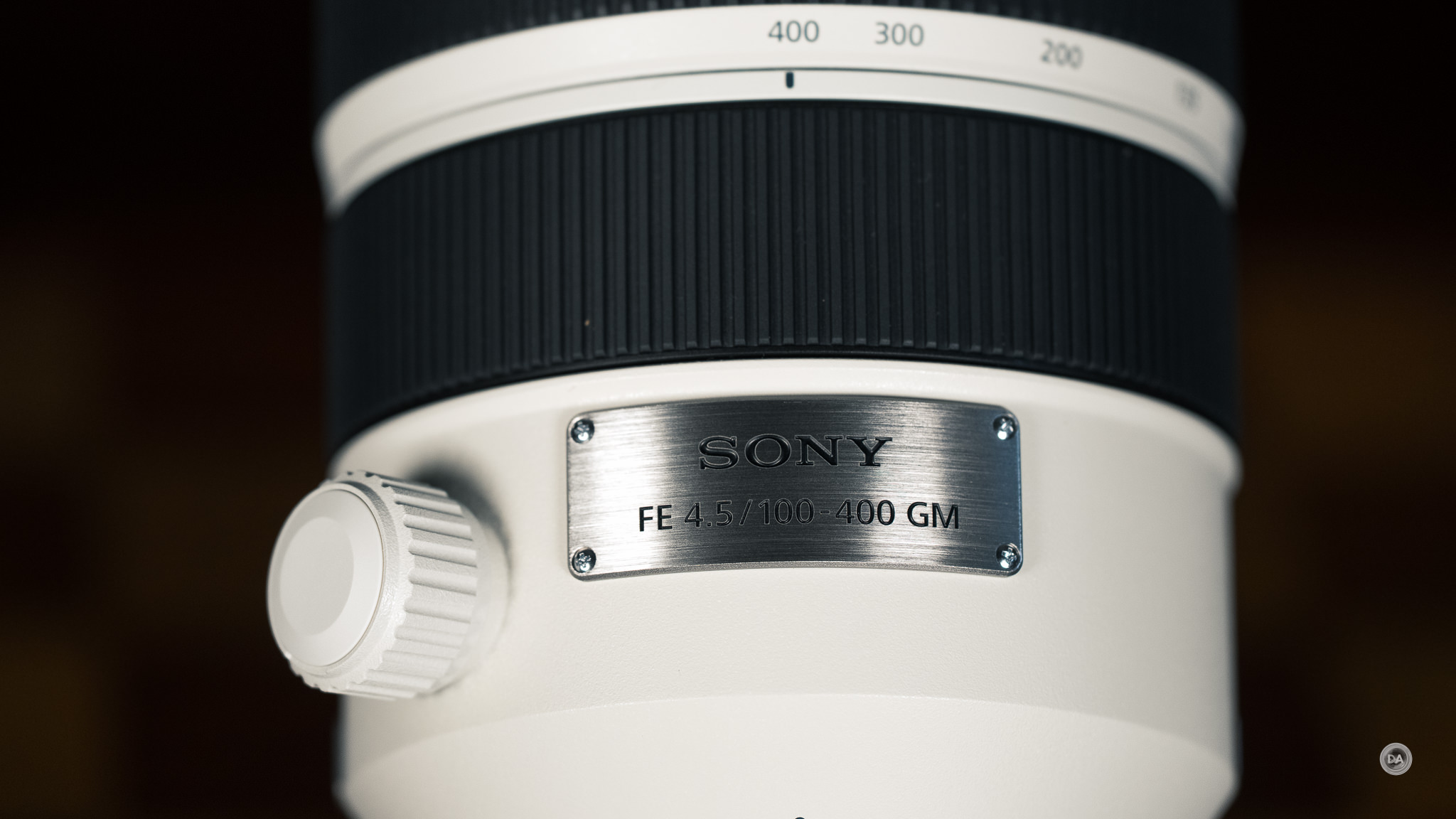
We also see a stylish plate with the lens designation on the barrel similar to what we saw on the 50-150mm F2 GM.
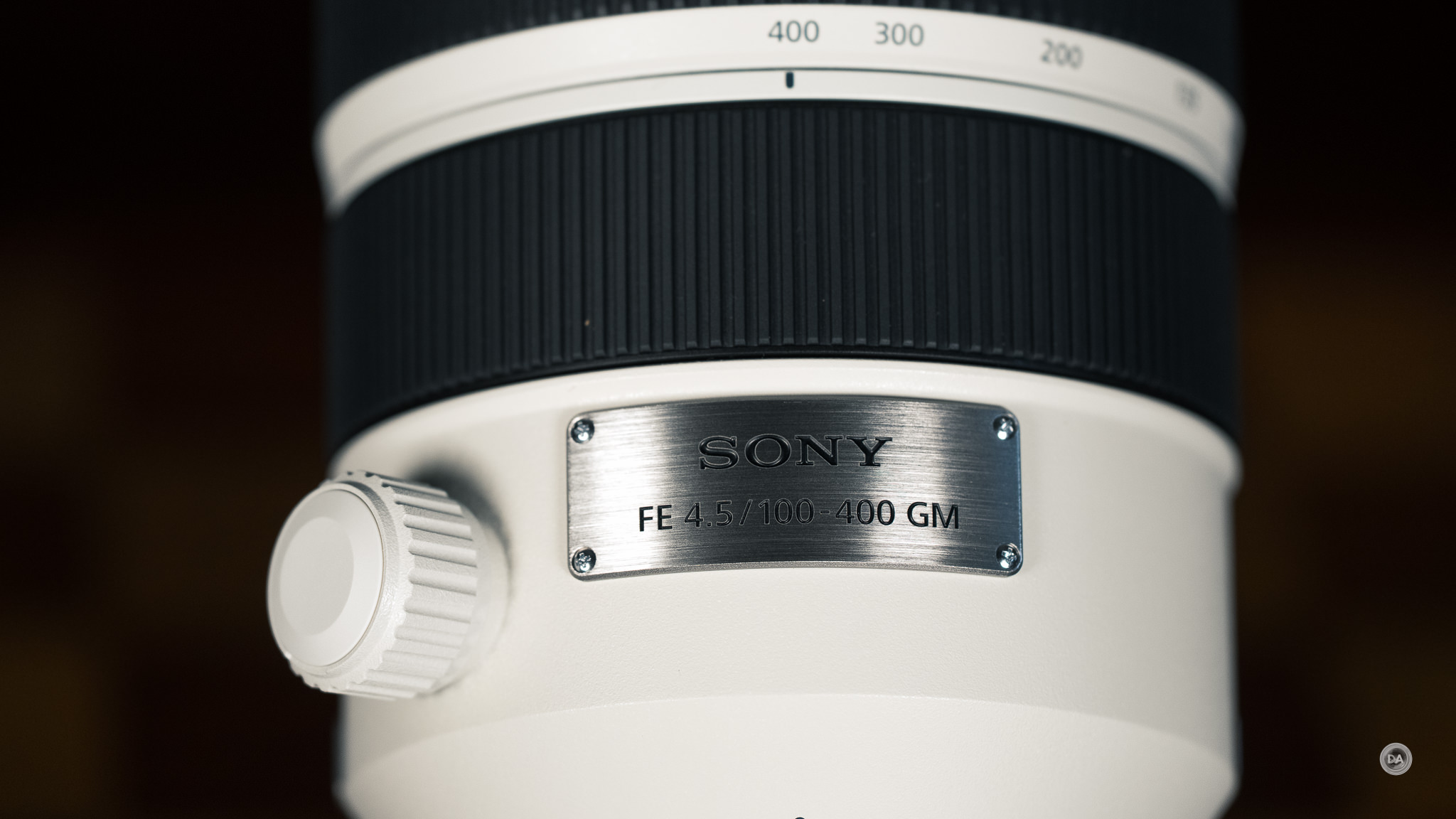
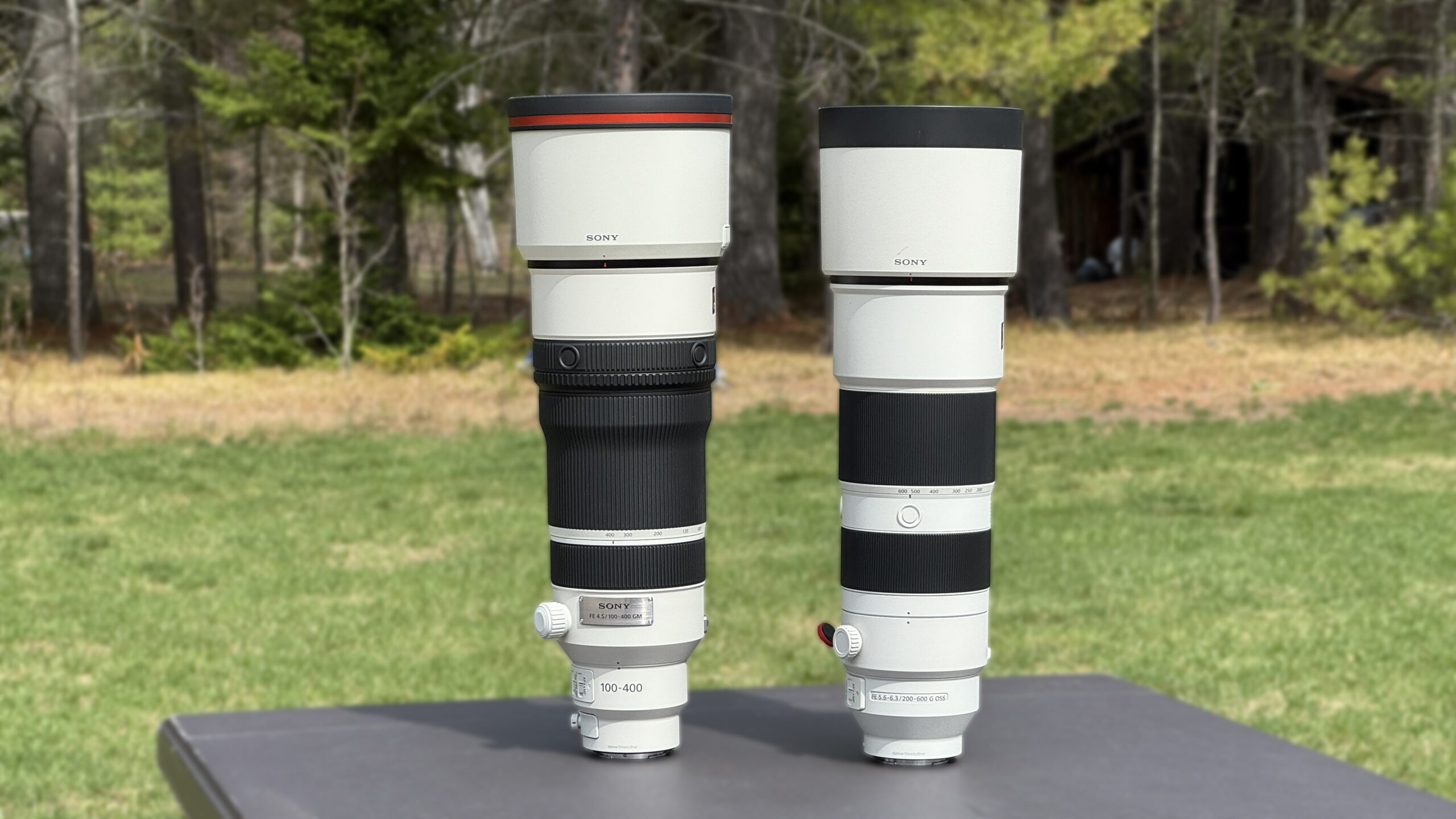
Those are the primary cosmetic differences that I can see, though the overall “feel” of the lens isn’t really different than handling one of the G-designated zooms. Part of that is that while the new 100-400mm F4.5 GM is BIG, it isn’t particularly heavy. The lens is 119.8mm (4.71″) in diameter and a whopping 328mm in length (12.91″), it only weighs 1840g (65oz).
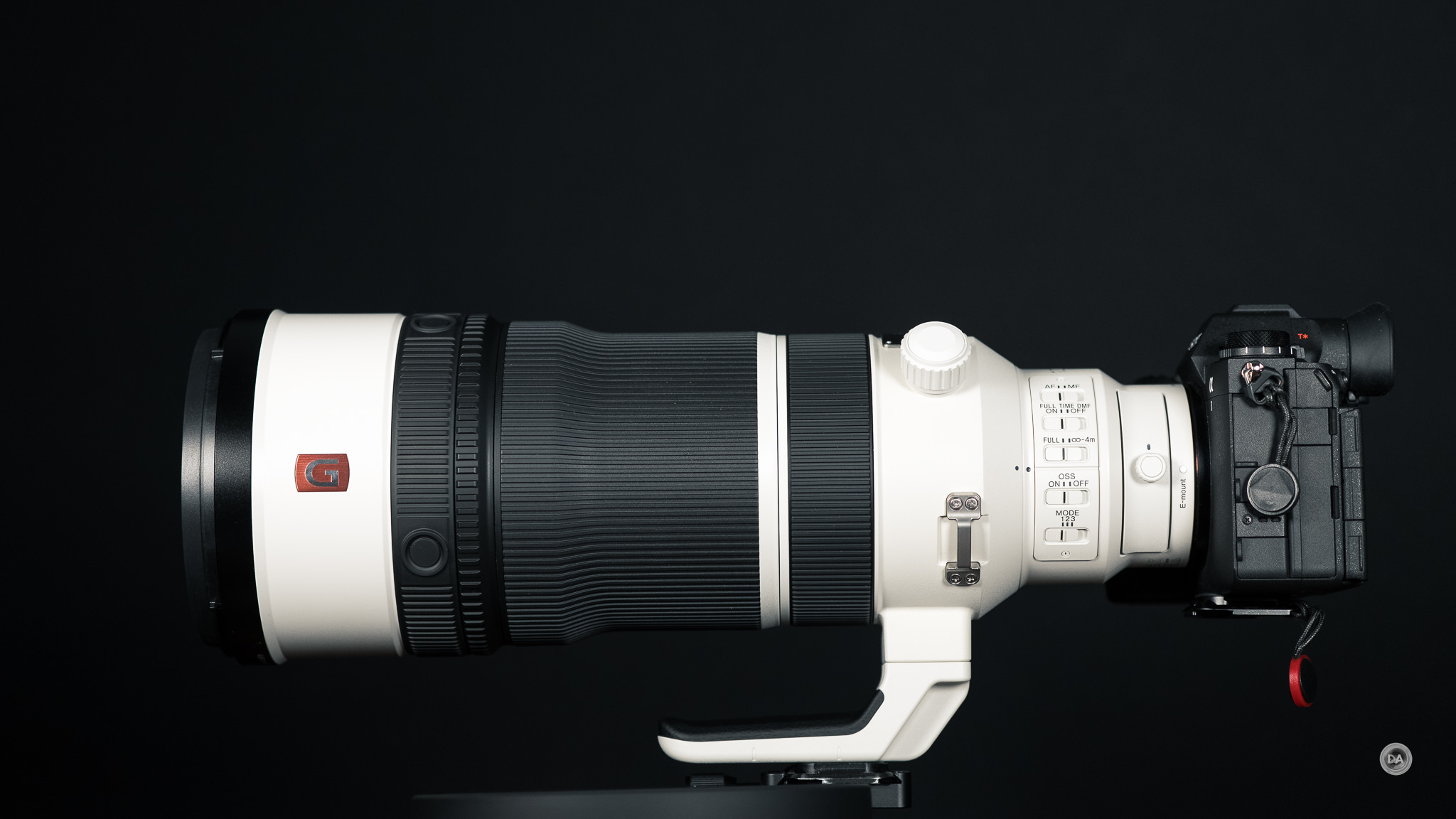
That’s not light, obviously, but is lighter than the similarly sized 200-600mm (2115g), and considerably lighter than the 400-800mm (2470g) or the extremely heavy Sigma 300-600mm F4 (3970g). The lightness of the lens surprised me relative to the size, and I had no problems handholding the lens for birding or my dog-tracking sessions. A lens like the Sigma is very difficult to handhold more than a few minutes, and even the 400-800mm gets heavy fast.

I handed the lens mounted on my α1 II body to my wife, who, unlike me, is not accustomed to handling heavy photography gear. I asked her how heavy it felt. “Not bad, actually”, she said, “the balance is very good”. That’s a nice summation, and Sony’s choices of materials to keep the lens lightweight is going to really increase the accessibility of the 100-400mm F4.5 GM.
Now, to be fair, the original 100-400mm F4.5-5.6 GM was considerably smaller and lighter (205mm in length and roughly 1400g in weight), though, to be fair, the original GM only maintains F4.5 until 115mm and is at F5.6 by 162mm. What’s more, when zoomed out to 400mm, the original 100-400mm is nearly as long as the new 100-400mm F4.5 GM at roughly 290mm.
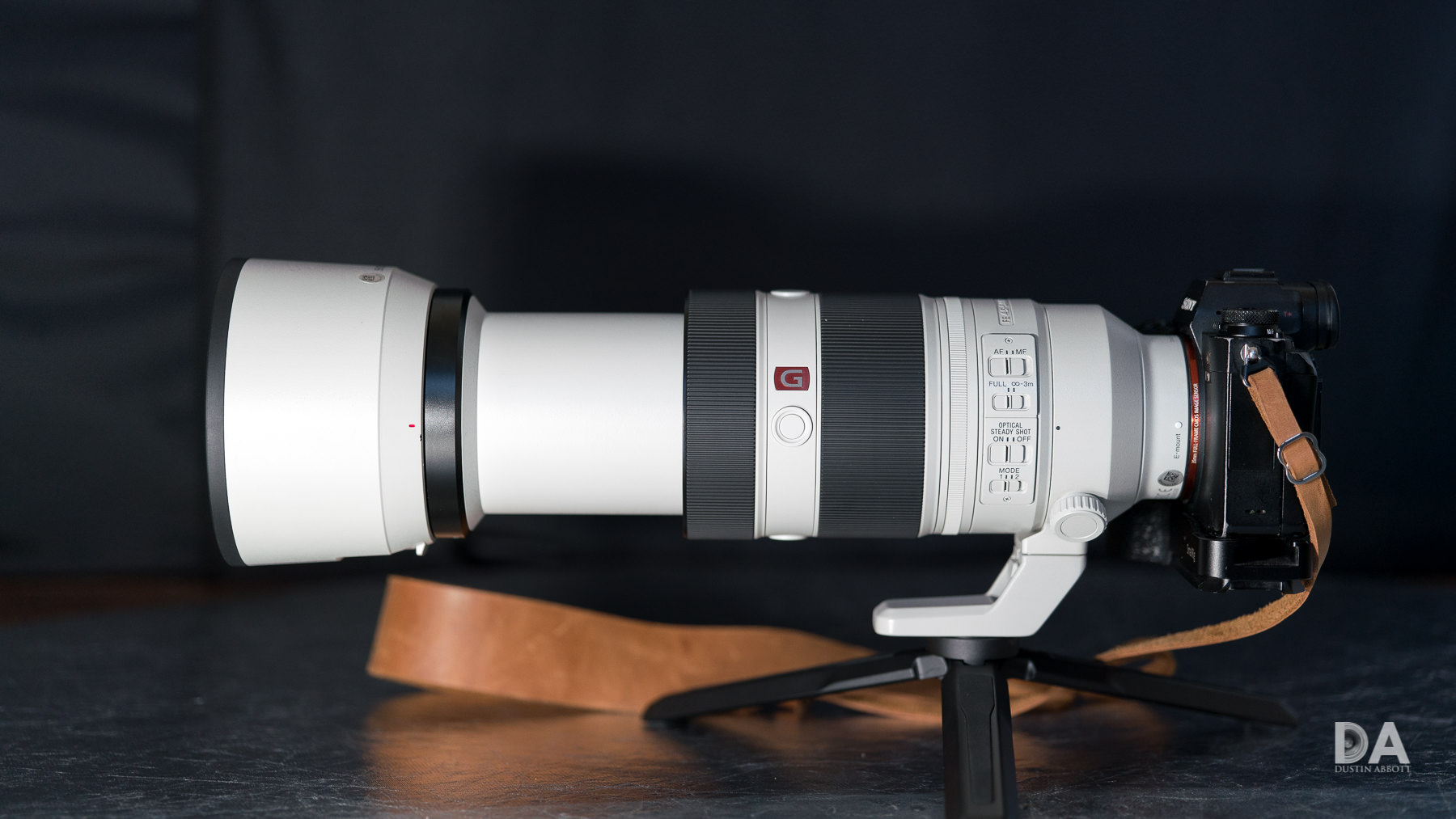
My take on the internal vs external zoom debate is that I prefer the shorter external zoom designs for storage and transport, but the internal zoom designs like the 100-400mm F4.5 GM are much easier to use in the field, allowing for fast zoom changes and better balance. The distance between 100-400mm on the zoom ring is about 85°, which is very slightly longer than what I would like. The 200-600mm is about 75°, which is about perfect.
The 100-400mm F4.5 GM gives you some options on how to control the zoom. The zoom ring itself is huge (about 80mm long), and has a bevel in it about three quarters into it to give the fingers an ergonomic position to rest on.
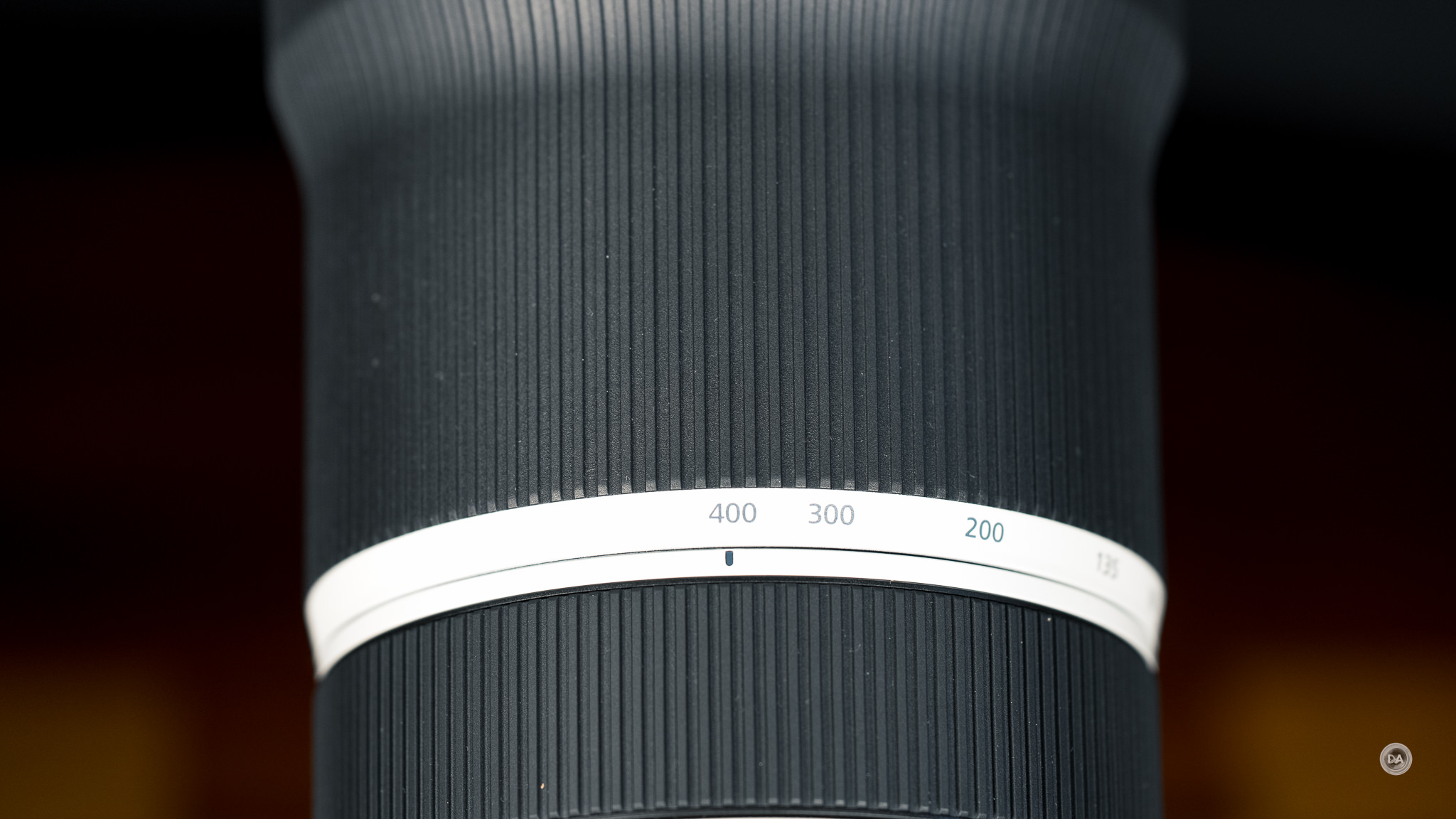
On the bottom side of the lens forward of the zoom ring there is a switch that allows you to choose the tension of the zoom ring. On the “smooth” setting the zoom action is light for quick changes, though the downside is that the lens will very quickly “creep” if the lens is pointed down (unusual for an internal zoom lens). On the tight setting the tension of the ring increases, making it better for precise adjustments (and to eliminate zoom creep).

This is just the beginning of a long list of functions built into this lens. In that same section, there are a total of 4 different Fn/Custom buttons. These don’t all have independent functions, but are redundant buttons to allow one it have one near to hand regardless of the shooting position.

Between the ribbed section with the custom buttons and the zoom ring is a unique function ring. By default this ring essentially works like a power focus ring, allowing you to rotate it either way and steadily pull focus closer or further depending on the direction of rotation. Other options include setting a preset focus position or to quickly switch between full frame and APS-C framing.
This is separate from the dedicated manual focus ring, which is located closest to the camera of the rings. It is well located for using your thumb to quickly override focus or manually focus while supporting the tripod foot with the other fingers of the left hand. As with most GM lenses, the weight of the ring is on the lighter side (I’d prefer a bit more), but the focus action is nice and responsive.

The tripod collar/foot section comes next, and it follows the same formula as the one found on the 400-800mm. The foot itself is removable, but the collar is fixed. You can rotate it by releasing the tension via a knob found on that section.
The foot itself is has a standard 1/4″ and 3/8th” holes for attaching quick release style plates, but the foot is not natively Arca-compatible.
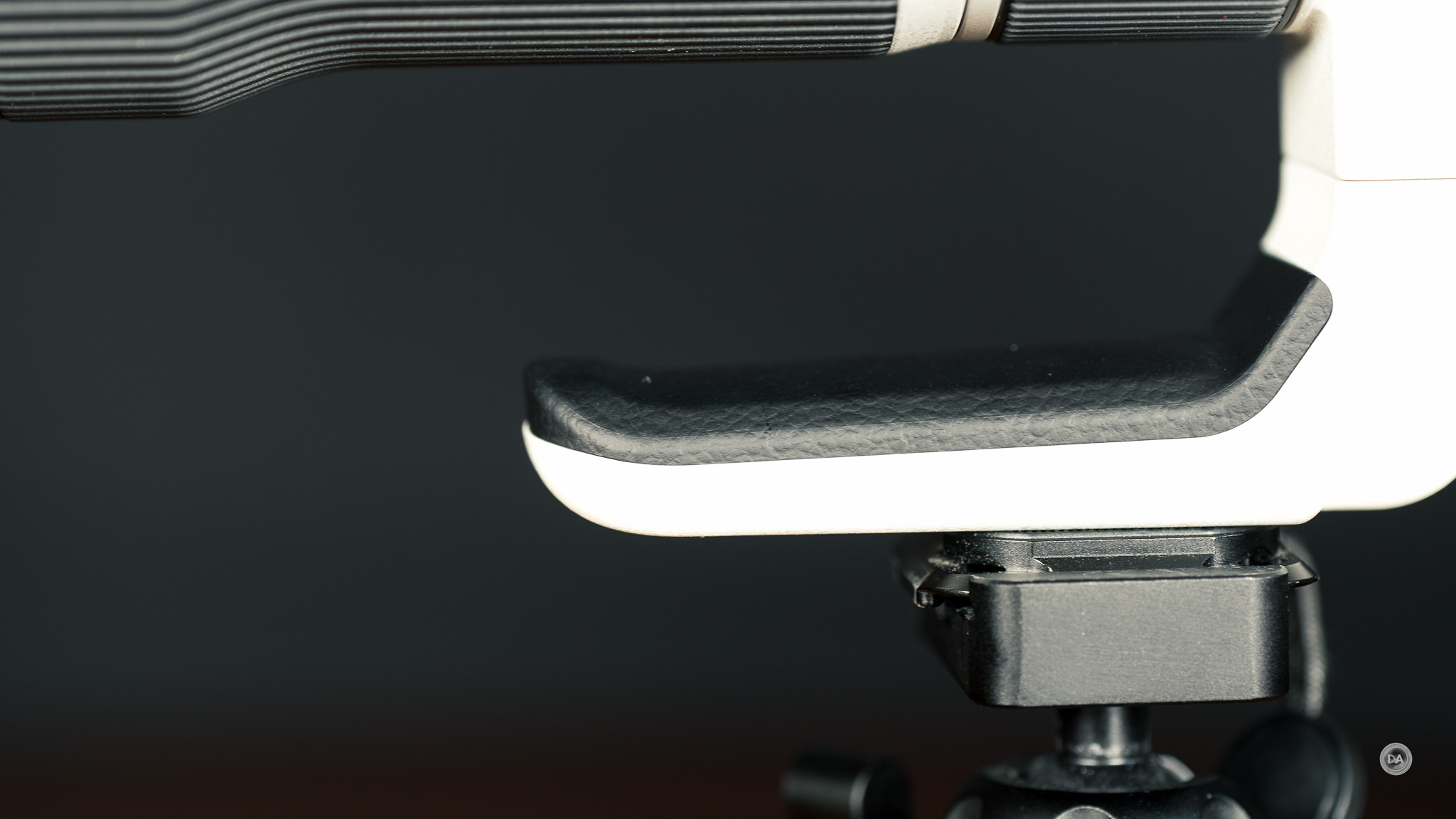
I never quite understand the lack of Arca grooves, as both Sigma and Tamron seem perfectly capable of making Arca-compatible tripod feet.
What we do have is a little port on the side of the foot that you can open and choose between having “clicks” in the tripod collar rotation (detents at the four cardinal positions on the lens) or to have no clicks and free rotation.

Clicks seem to be on by default, which is my preference as it is easier to get the lens perfectly aligned.
There are attachment points on either side of the tripod collar for attaching a carrying strap (included). The lens also comes with a large, padded case for storage.


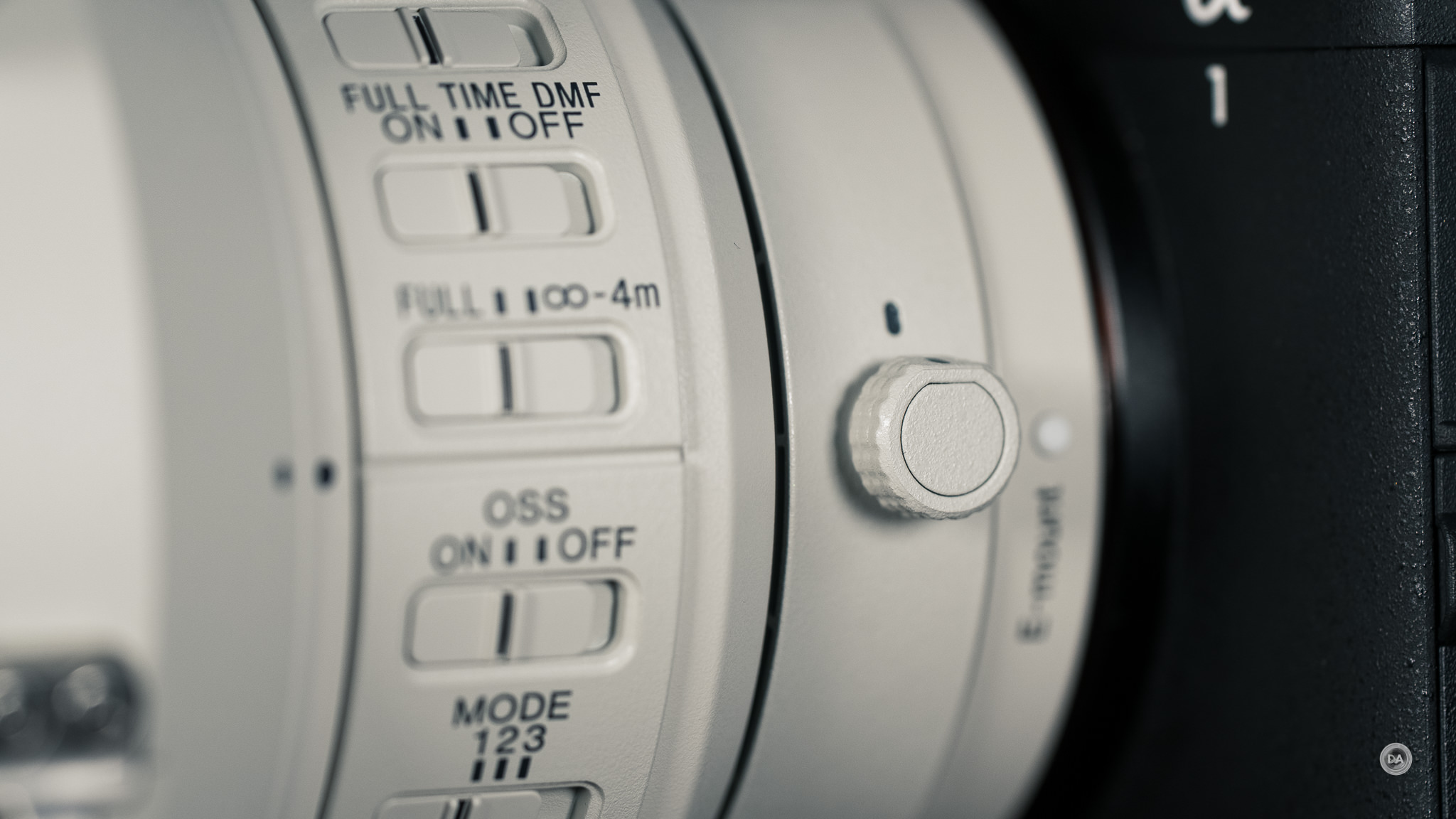
There is a bank of switches close to the lens mount.. They occupy the same plane but there is a line of division between them. The top section contains the AF | MF selector, a switch allowing for full time DMF (manual override regardless of what focus mode you’re in), and a two position focus limiter that allows for the full range of focus or limits the focus to 4 meters and beyond.

The second bank of switches is dedicated to the OSS, or Optical Steady Shot. The first switch is a simple ON | OFF, and this will override any camera setting for in camera stabilization if so equipped. The systems will work somewhat in harmony, but it is either both or neither. The truth of the matter is that in camera stabilization is rarely very effective at long focal lengths like this, however.
The second switch here is for three different modes for the OSS. The first is the standard mode, while mode 2 is for panning, and mode 3 emphasizes viewfinder stabilization to help with framing.
You can see a radical difference in trying to handhold the shot at these kinds of focal lengths when the stabilization is turned off. I could not find a rating for the stabilization in terms of stops, but the stabilization seems reasonably effective. The OSS will work in harmony with the camera-based stabilization of your camera. It wasn’t hard to hold a steady viewfinder, and I was able to get reasonable (if not perfect) results even in as little as 1/4th second shutter speeds at 400mm.

The 100-400mm F4.5 has a couple of filtering options, starting with standard 95mm filter threads up front.
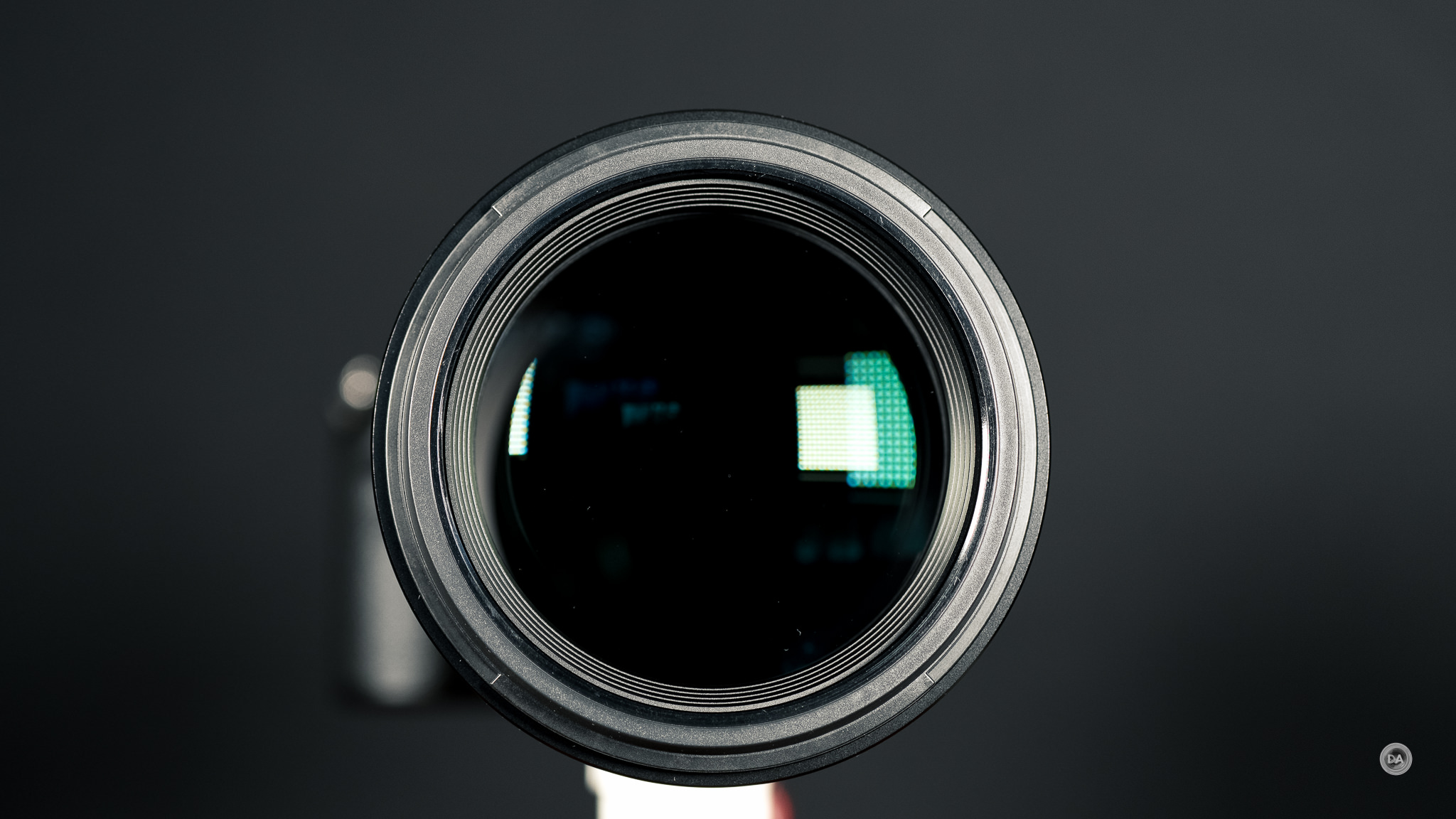
More interesting, however, is a drop-in filter holder near the lens mount. This allows you to use 40.5mm filters with less fuss and expense.
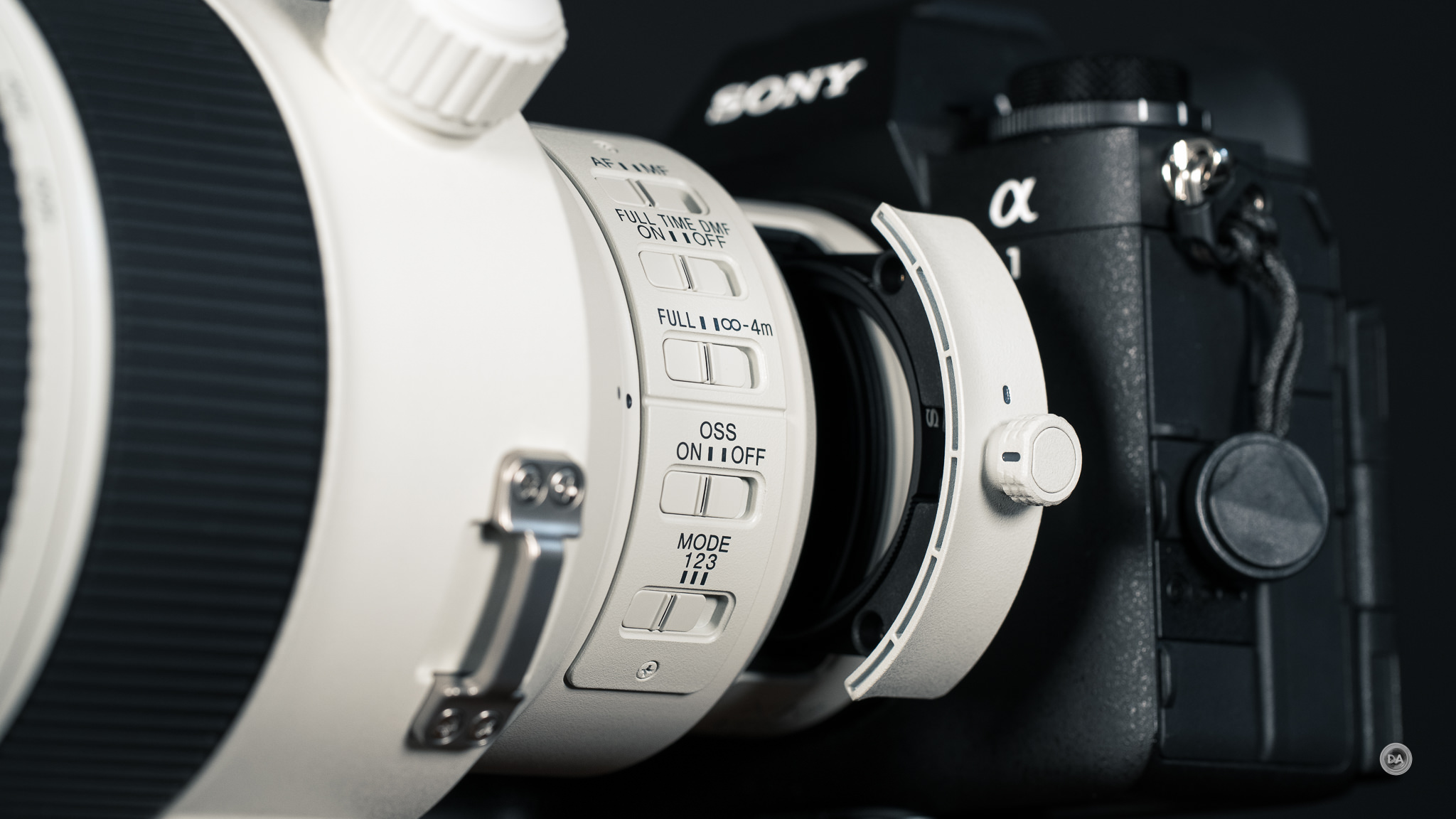
I don’t like the implementation as well as what Sigma did with the 300-600mm F4 Sport. The mechanism for opening the door is a little fiddly, and there is no option for internal rotation for a polarizer or variable ND filter unlike the Sigma. You’ll want to keep the standard UV filter in there that is included if you aren’t putting in a different filter, as a filter is a required part of the optical path.
A deep lens hood is included. It does have a locking mechanism along with a rubberized front section to allow you to set the lens down on that edge. I like the orange/red ring which aligns the lens with the high-end telephoto primes from Sony.
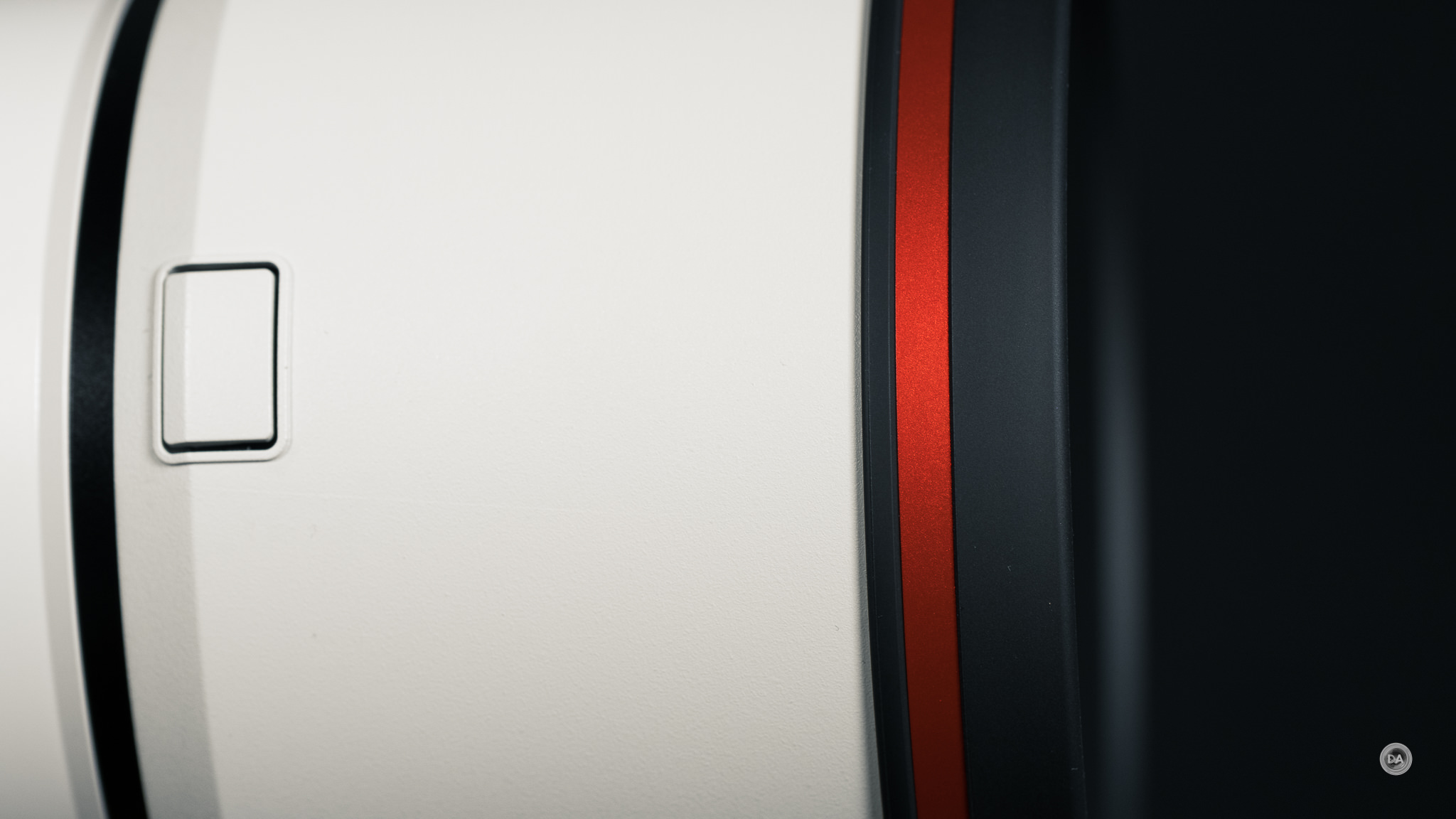
Interestingly, unlike the recent 400-800mm, there is no door for accessing a rotating filter. I frankly have found this a bit of a gimmick, so (for me), it isn’t really missed.
The finish is a perfect match for Sony’s teleconverters, for those of you who obsess over such things. The shade of the Viltrox TC is slightly different and doesn’t match as well.
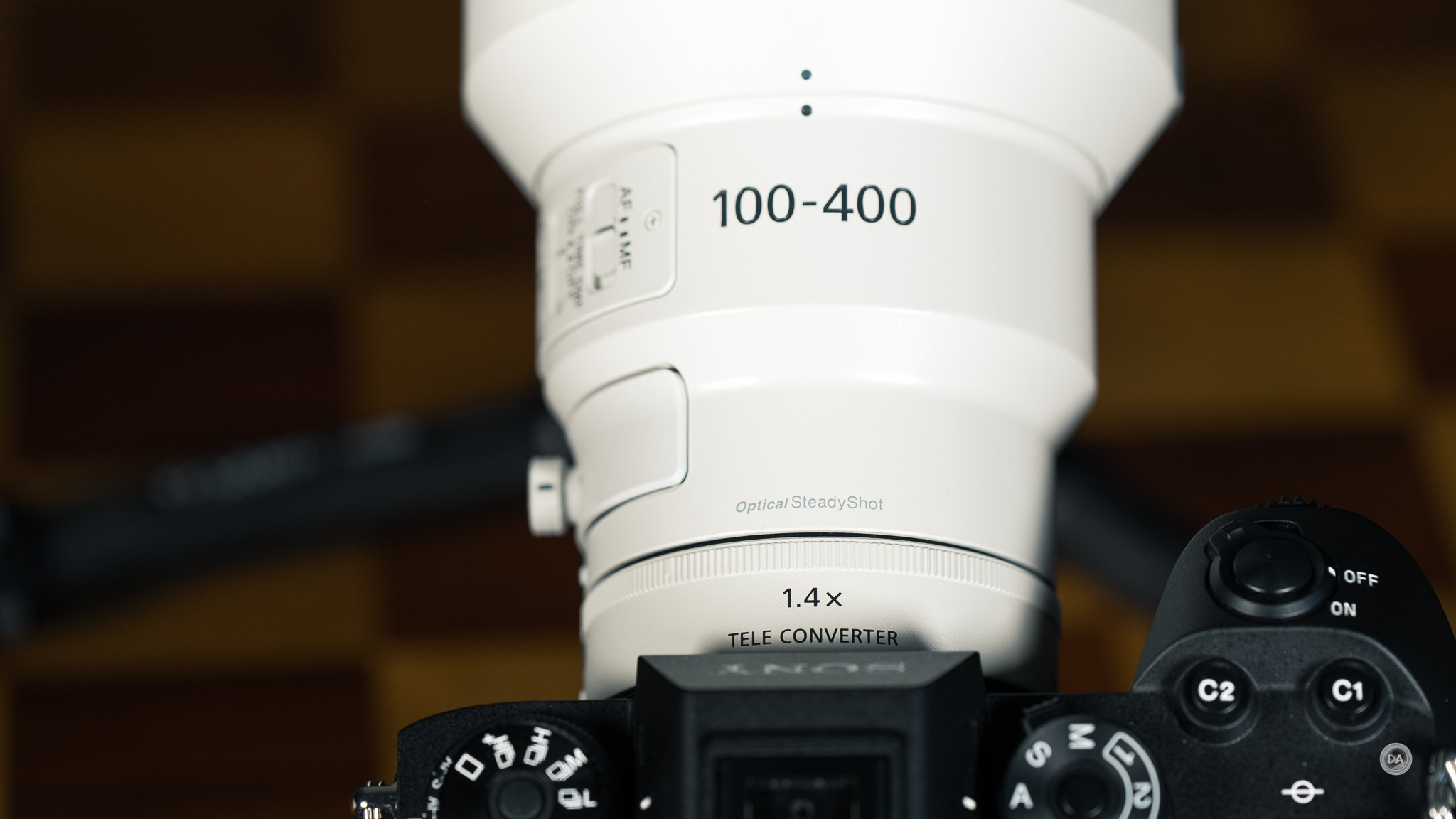

The materials seem to be a mix of metals and high end engineered plastics. As mentioned previously, Sony has managed to keep the lens lightweight while still engineering it to be tough.
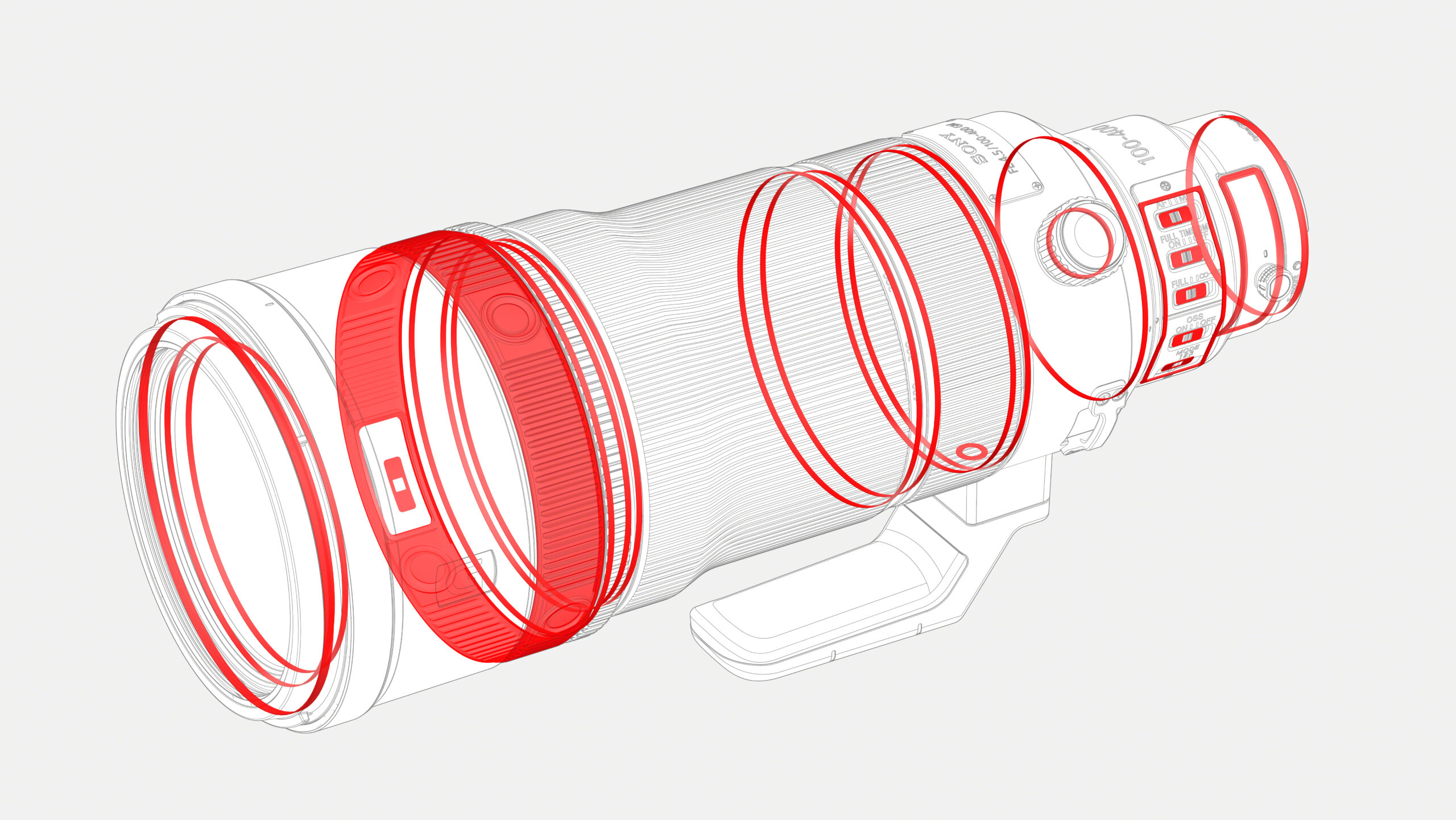
There is a weather sealing gasket at the mount, and Sony says that “all seams are sealed, buttons and switches have silicone rubber gaskets”. The front element has a fluorine coating to help resist water, oil, and fingerprints.

Here’s a look at the weather sealing diagram, which shows at least 21 seal points, by my count. This is a professional grade of moisture and dust resistance.
The aperture iris has 11 rounded blades to help maintain circular specular highlights when the lens is stopped down.
This is a professional grade lens with high quality build. Not everyone will be fans of the new (larger) shape, and it does mean that the lens might require a different carrying solution than your current carrying configuration, but I suspect you’ll find the tradeoff in the field to be well worth it. This lens was a lot of fun to use, and I found it very manageable to handhold, which is, in itself, a big win for Sony.
Autofocus for Stills
*Before entering the formal test sections for autofocus and optics, I do want to add a general caveat that the extreme nature of a lens like this means that all of my typical test processes go out the window. I don’t have enough room indoors to perform them, so everything has to get reinvented outside…where I have less control over certain variables.
Pairing a Sony telephoto lens with a Sony sports camera is generally a delight. Combine a lens like the 100-400mm F4.5 GM with my α1 II is like enabling a cheat code for tracking. Sony has employed four!! XD (eXtreme Dynamic) linear motors to drive focus here, and that results in blazingly fast autofocus which Sony claims is 3x faster than the first generation 100-400mm GM. Tracking is improved by 50% according to Sony as well. I tested focus on an α1 II body, but Sony adds this for those shooting with the lower resolution but ultra fast a9III: “Tracking easily keeps up with the 120 fps maximum burst speed of the α9 III, and continues uninterrupted even while zooming so important moments are not lost.“

In real world shooting, focus is, well, blazing. It was perfectly easy to acquire subjects like birds even when shooting through layers.

In my formal tests of autofocus, I found that focus changes between a close and distant subject was essentially instant with the bare lens. Adding the 1.4x extender didn’t seem to slow it down, and focus speed was even still near instant with the Viltrox 2x extender attached. You’ll spend more time stabilizing the lens and getting it it pointed in the right direction at longer focal lengths than you will in focusing. The reasonable maximum aperture means that it wasn’t hard to get fast enough shutter speeds to stop action without cranking the ISO (this shot is 1/2000th second and ISO 800).

F4.5 isn’t an optimal aperture for shooting indoors, but this lens is going to be much easier to use than any of the variable aperture zooms in those lighting conditions.
On a overcast day I got this shot also at 1/2000th of a second, ISO 800.

I don’t think you’ll find any better of autofocus in a telephoto lens short of one of the big white primes, and those would only win in lower light situations where their brighter maximum apertures would give an advantage.

The 100-400mm F4.5 GM sports silent, instant focus with tons of thrust and precision. Focus remained locked on during long burst sessions with perfect precision, even when the goldens charged basically right out of frame.

I saw a few misses with the Viltrox 2x TC attached, but, to be fair, most of them came when the camera was switching from one dog to the other and represented a handful out of more than one hundred shots in the burst. What’s more, my α1 II continued to shoot at 30FPS even with the Viltrox TC attached.

In short, autofocus is awesome!
Autofocus for Video
Sony has worked hard at making their lenses (and cameras) to be equally good whether doing photo or video work. Doing some of my typical video tests are impossible due to the extreme focal length, but I was able to draw some important conclusions. The first is that Sony has done a remarkable job of controlling focus breathing. There is very little variance between a subject’s size whether in or out of focus, even at the extreme of 400mm.
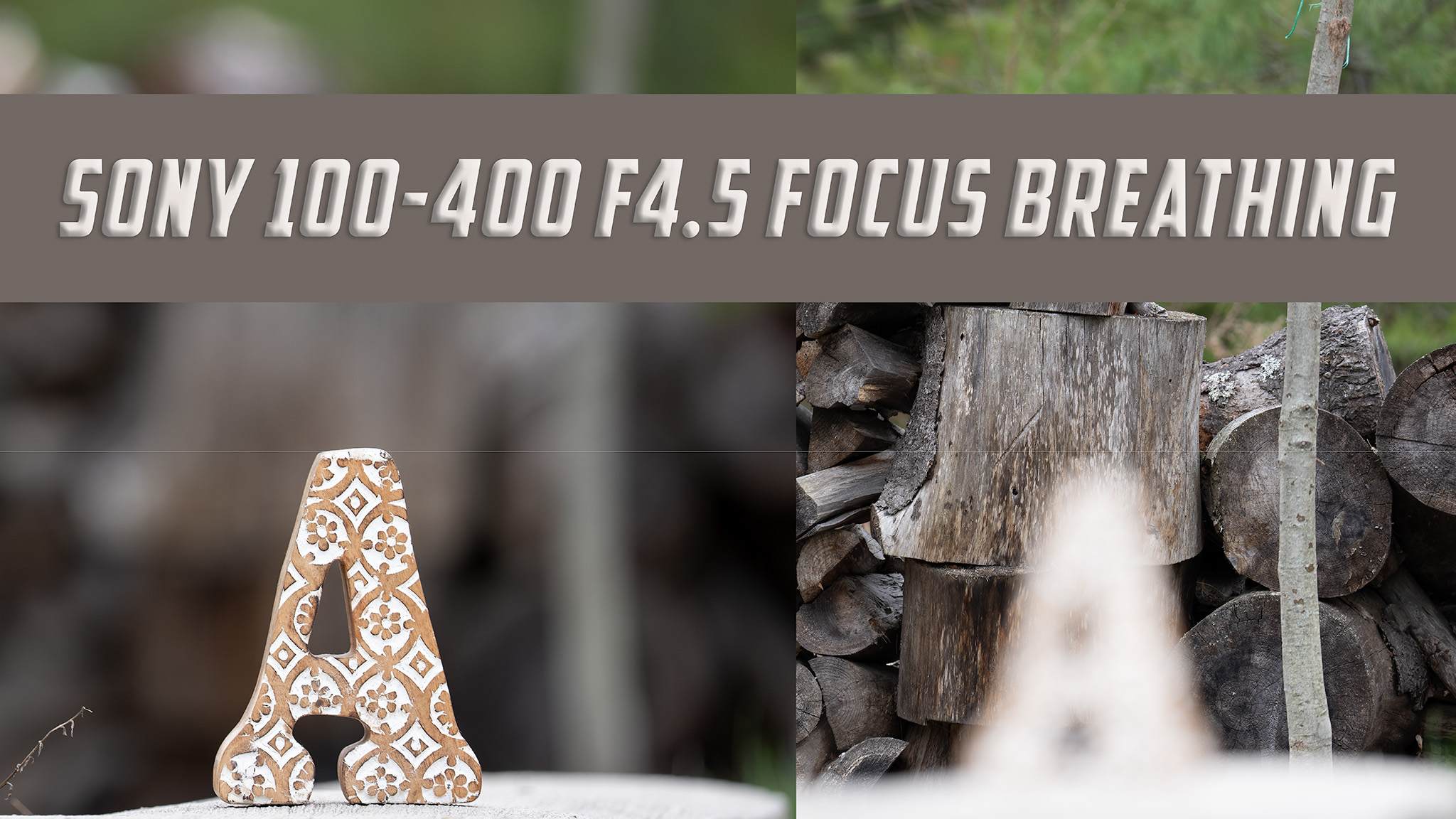
Focus pulls were smooth and confidence, though in one situation I did get some reverse racks (focus moved in the wrong direction). Using the focus limiter helped with that.
My hand test went okay, though it is much hard to black the view of my face with my hand with a longer focal length like this.

Beyond the photo tracking, I did grab a quick video or two of the dogs, and this screen grab from one of the videos shows how that focus is tracking the running dog.

Overall I would say that focus works well in video as well. I’m not sure a lens like this gets used as much for video for many people, but the performance is there if you need it.
Image Quality Breakdown
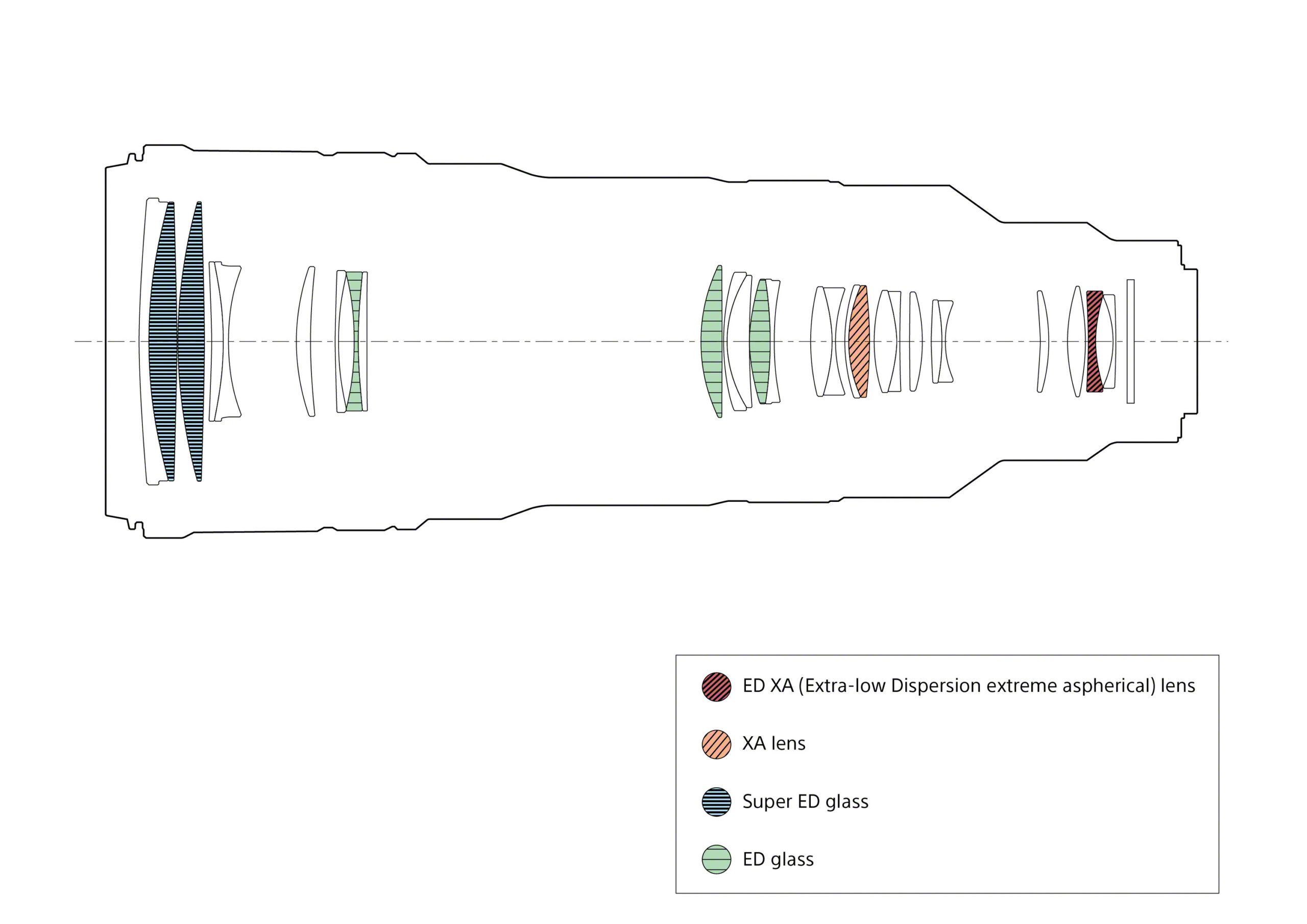
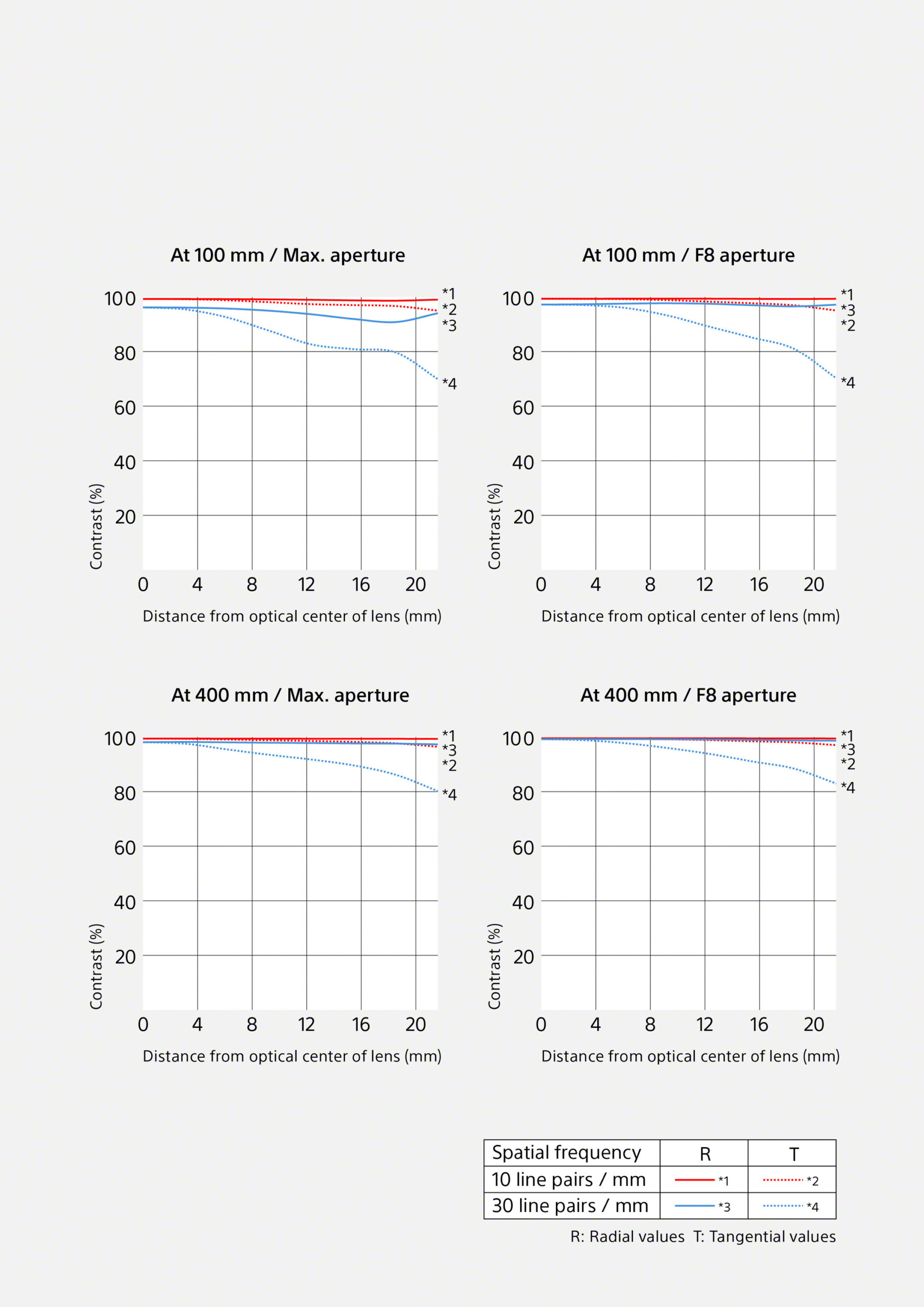
This is a complex optical design of 28 elements in 20 groups, and this includes 2 Super ED elements, 3 ED elements, and a completely new ED XA (Extra-low Dispersion extreme aspherical) lens never produced before. The MTF chart looks simply fantastic (particularly at 400mm).
Real world results are impressive at 400mm. Look at the detail in this seagull.


The key advantage to a telephoto zoom lens is that it gives you a lot more control over framing. Often shooting with a prime lens is frustrating either because you are too close or too far. The 100-400mm zoom range is a proven winner, useful for many situations and subjects, and, as discussed, the ability to throw on extenders for more reach is pretty easy to do.
Images from the 100-400mm F4.5 arrive in Lightroom with an embedded correction profile, but if I open them in Luminar NEO, I get the “unvarnished truth”. There isn’t much to get concerned about. At 100mm, the result is pretty much perfect as is.

Moving on into the zoom range will expose a bit of pincushion distortion, but at its worst (400mm) there is fairly small amount that I can easily fix with a -5 correction.
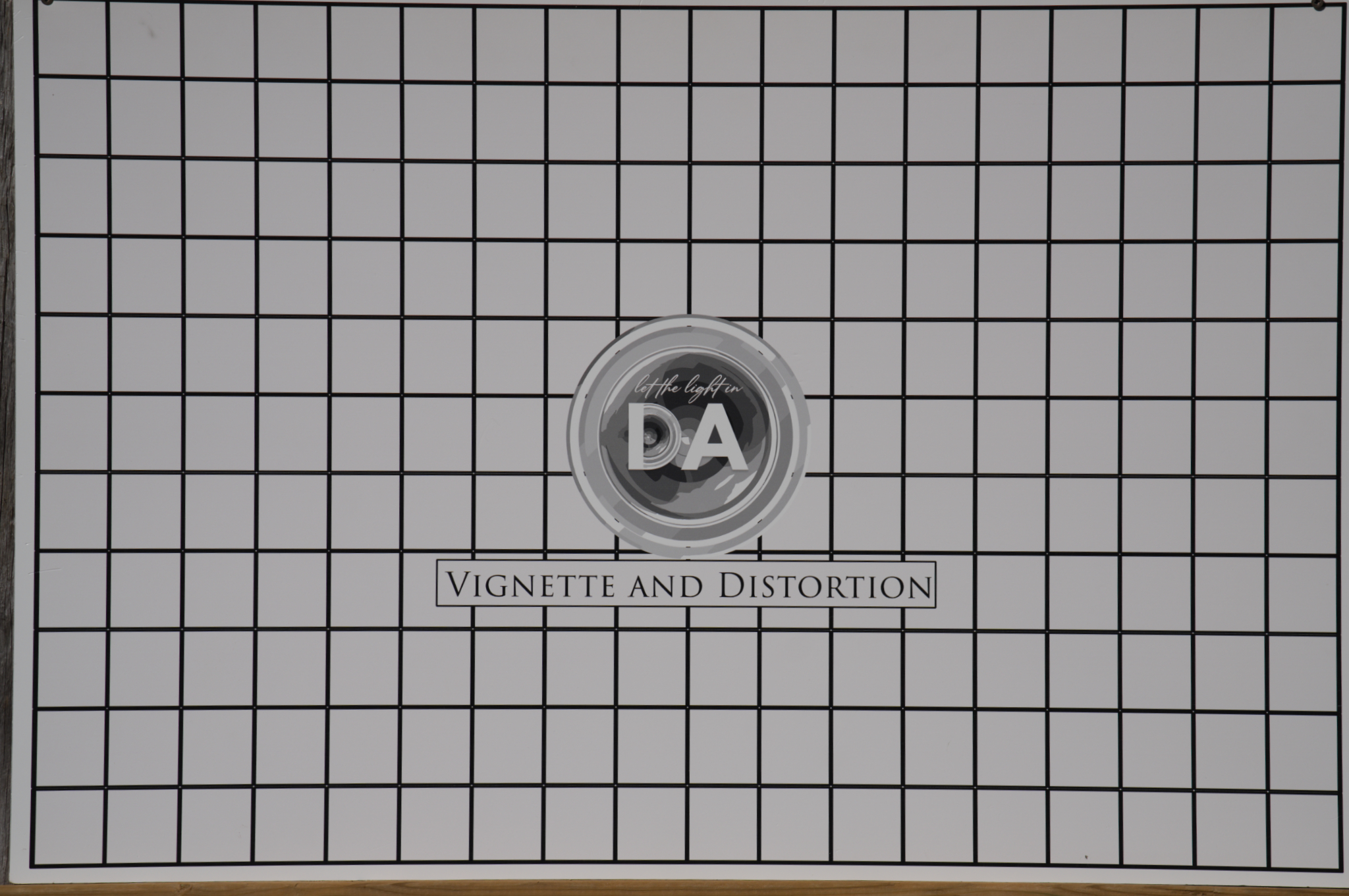
Vignette is still pretty mild. Ironically adding the 1.4x extender introduces a bit of barrel distortion that essentially corrects out the pincushion distortion, leaving a pretty neutral result (a tiny bit of barrel distortion) at 560mm. At no point does vignette seem to be an issue.
So how about other optical details?
LoCA (longitudinal type chromatic aberrations) appear well controlled, with no real fringing on the shiny bits of this decoration.

You can see in this shot of dried weeds that there is no evidence of fringing in any of the layers.


I didn’t see any fringing around the window pane in this high contrast transition.

I didn’t really see any lateral style chromatic aberrations near the edges of the frame either on my chart or in real world results.

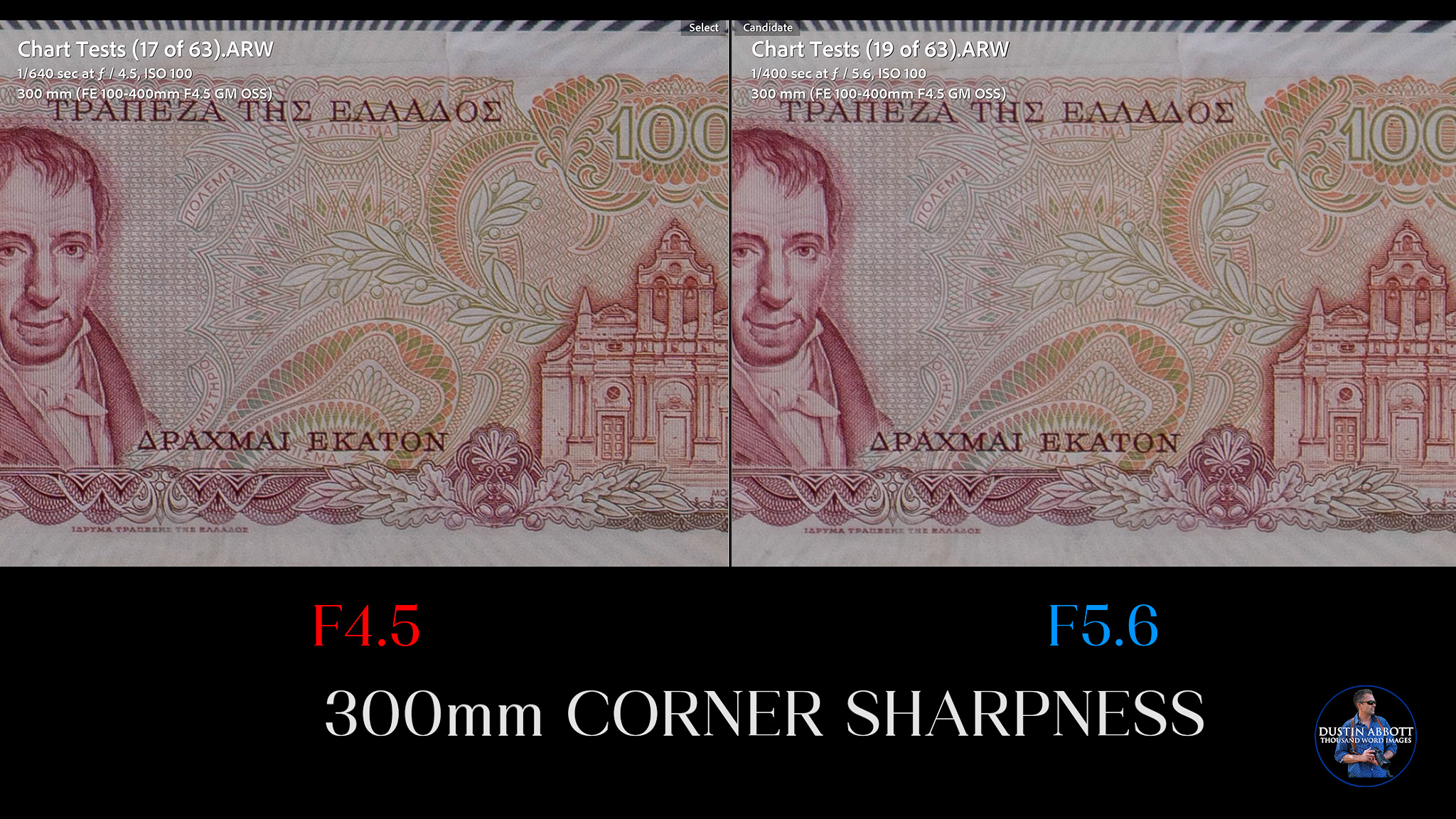
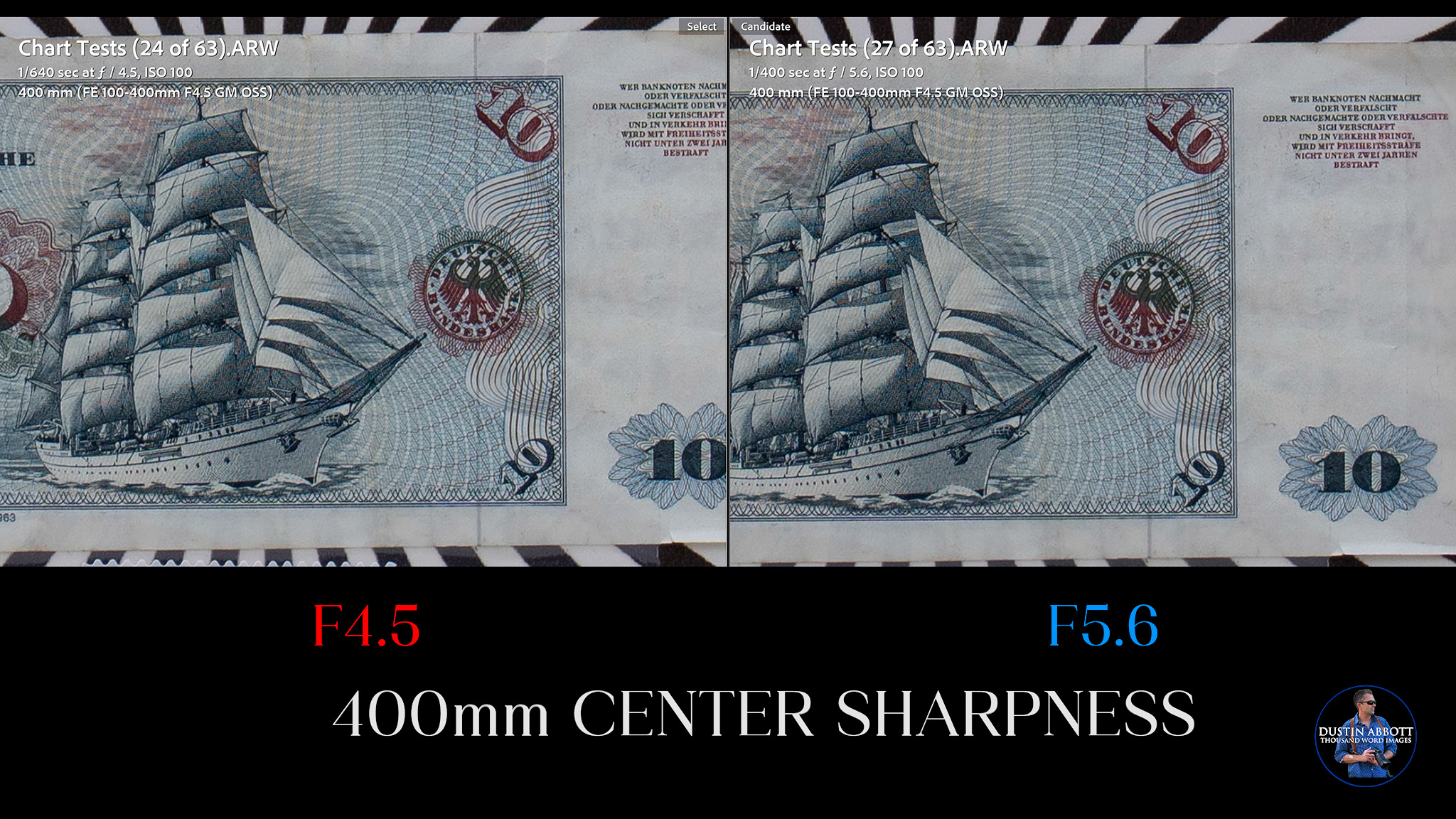
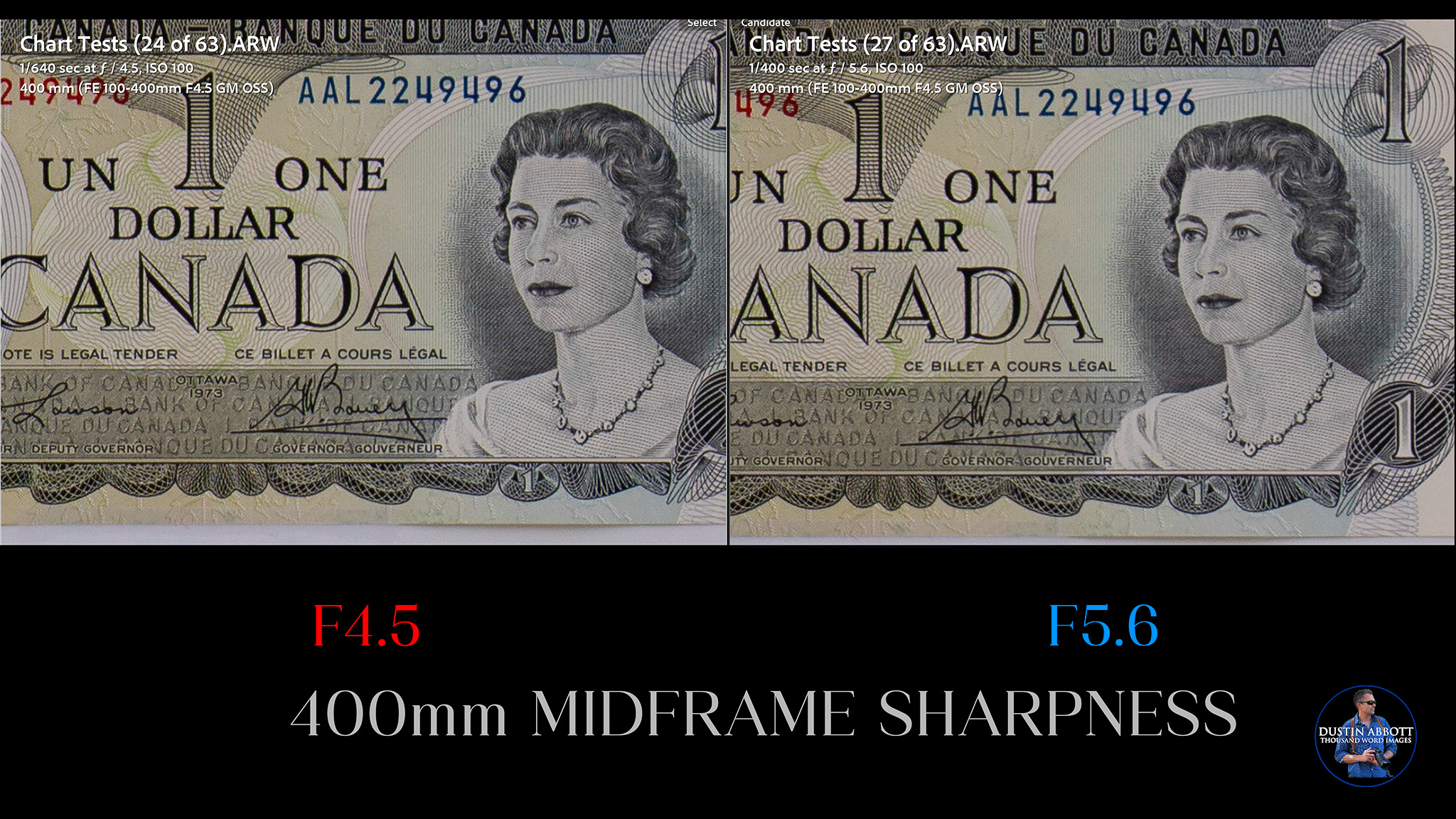
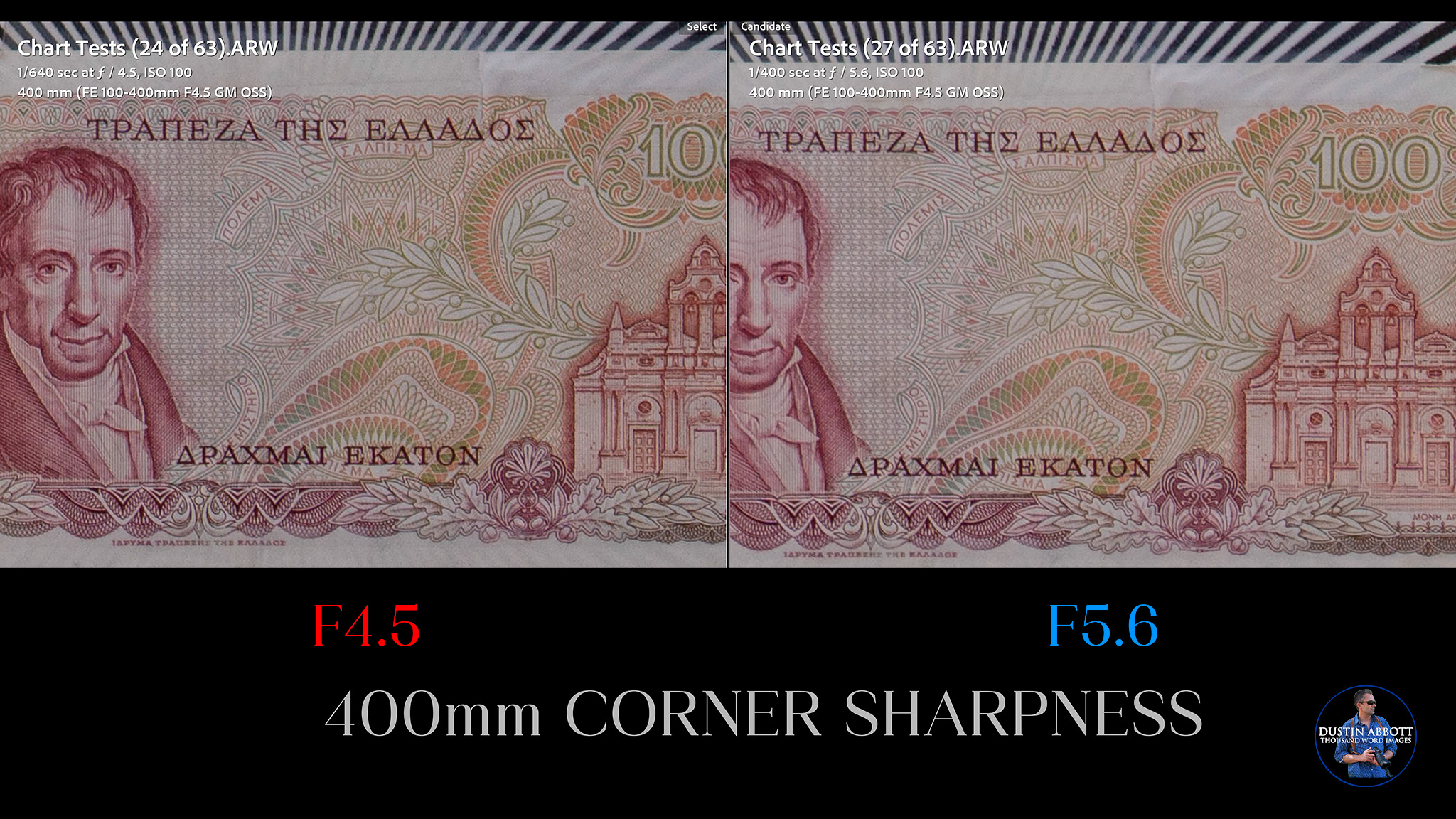
So how about sharpness and contrast? I did these tests on my Sony a7RV and its 61MP sensor. Crops are shown at roughly 200% magnification (as always) to highlight strengths and weaknesses. If you aren’t experienced with long telephoto lenses, know that sharpness results are much more dependent on environmental conditions. You are often shooting at much great distances, and there are many more variables like thermal pockets that cause heat shimmers and other optical disturbances. Shooting with long lenses requires skill and developing a sense of what works and what doesn’t…often some trial and error. I shot my test chart results multiple times to broaden the sample size for this reason. I used my most stable tripod and also moved from a 2 second timer to a 10 second timer to reduce vibrations. I’ve mixed and matched here to show the best results I found.
Here’s a look at the test chart.

You’ve already seen the test chart earlier, so I’ll go right to the deep crops. This is 100mm, F4.5, with crops from the center, mid-frame, and bottom right corner.


Stopping down to F5 or even F5.6 makes only a minimal difference. This is a lens designed to give top performance at F4.5.

Images at 100mm are nicely detailed and consistent across the frame. Sony didn’t skimp on the wide end (and I’ve seen plenty of telephoto zooms which do).

The minimum aperture is F32 across the zoom range, and you will definitely see the effects of diffraction after F11 (and strongly by F32). It looks like a smear of Vaseline has been applied to the lens.

At 200mm the performance is nothing short of amazing. The detail is amazing in the center of the frame…

…and all the way out to the extreme corners.
Real world images pop with detail.


Center performance at 300mm is similarly amazing, though the corners are slightly less sharp than at 200mm.

As you probably have come to expect, real world images look great.


Moving on to 400mm we find that sharpness and contrast remain strong. The center looks excellent, and the midframe and corners aren’t far behind.
If I compare with the 200-600mm (which I own), I found that with both lenses wide open (F4.5 for one, F6.3 for the other), that the 100-400mm was slightly better in the center:

But much better in the corners.

If I add the 1.4x TC from Sony, I get continued strong results at 560mm, F6.3 in the center and corners, with only a mild improvement at F8 (a mild vibration may have affected the F8 corner performance).
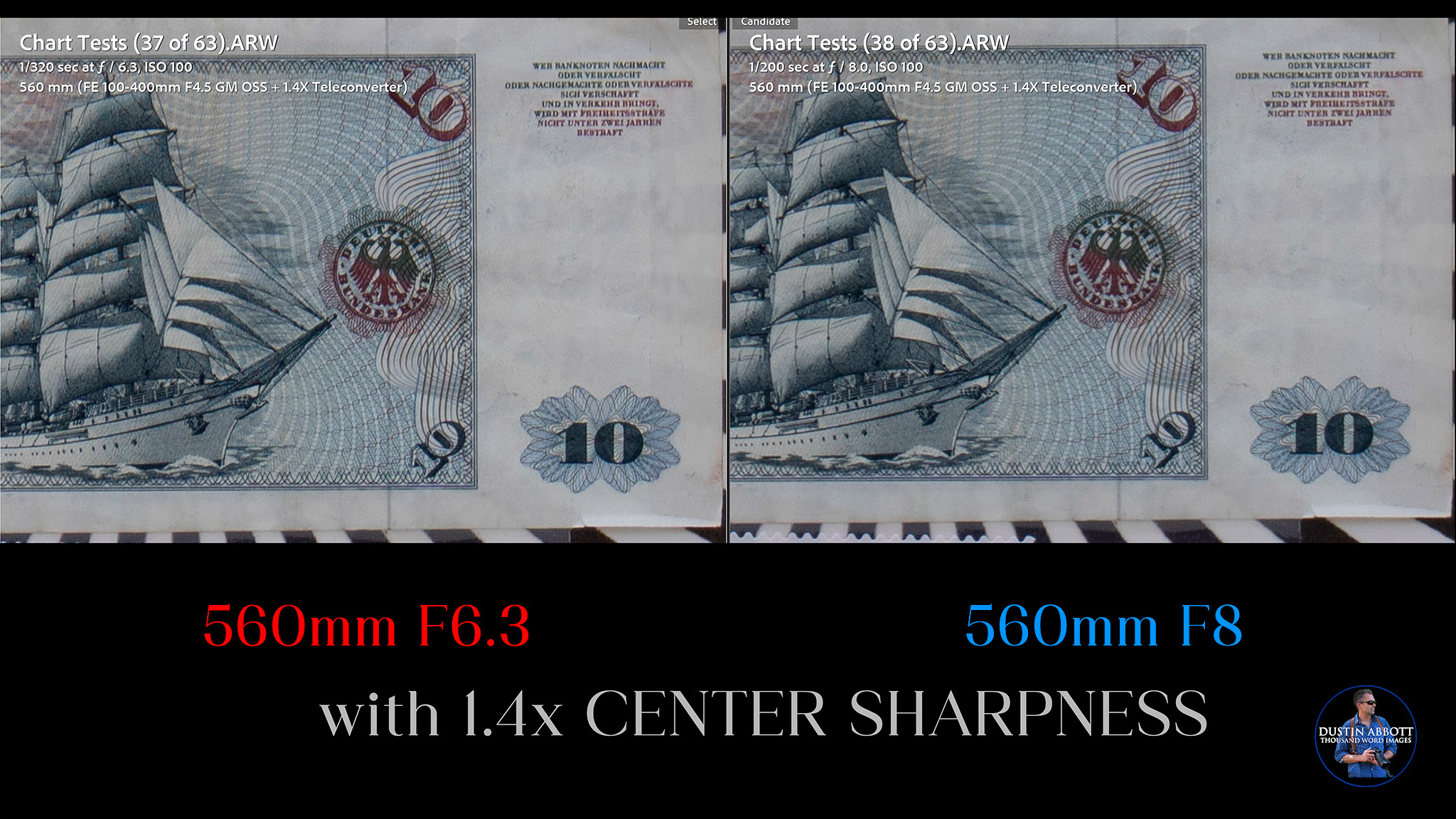
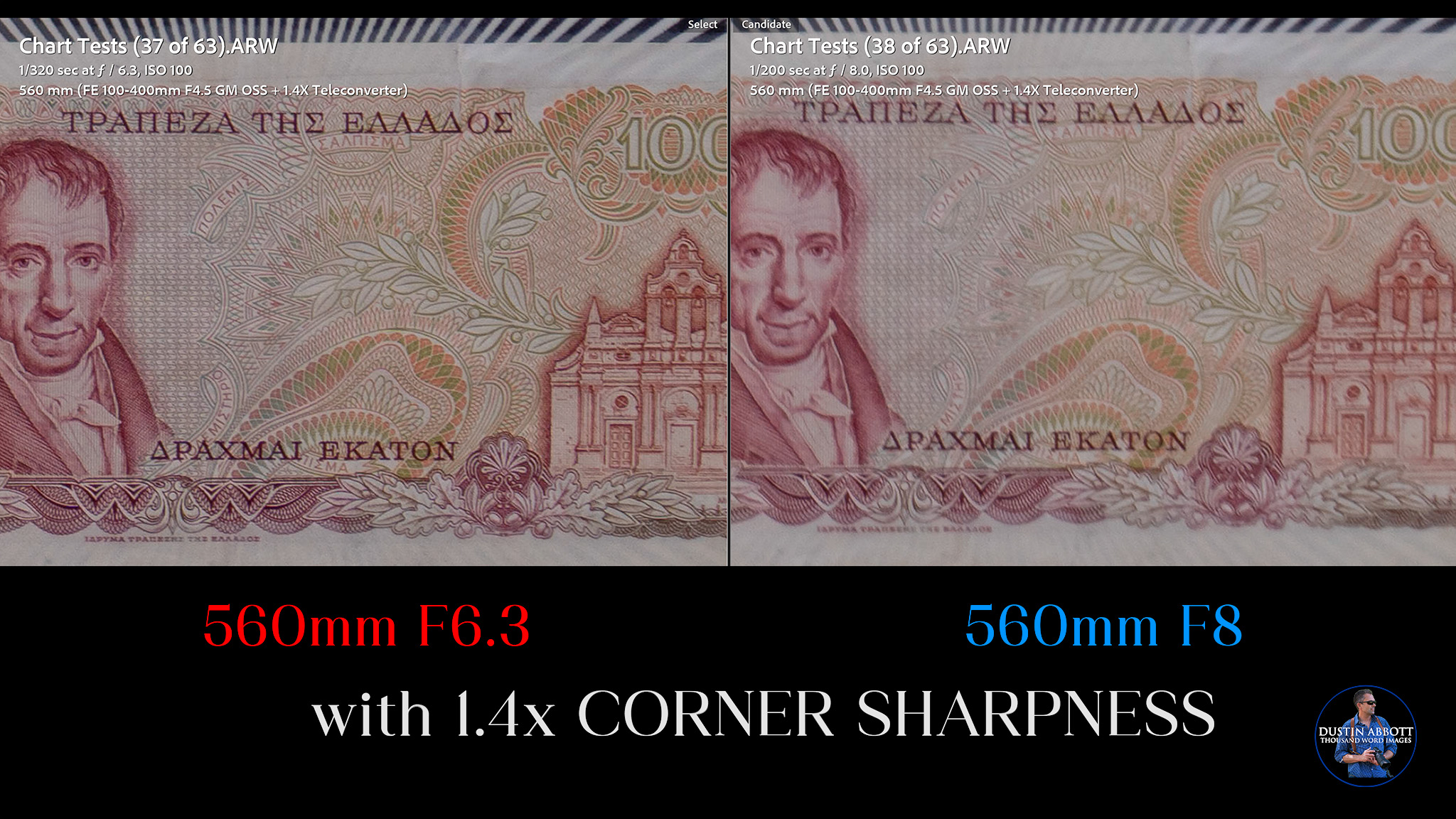
It’s worth noting that this is a better result than I saw from the 200-600mm at the same distance, though to get similar framing the 200-600mm only registered about 540mm (this comparison shows 429mm but I had to tighten framing after that).
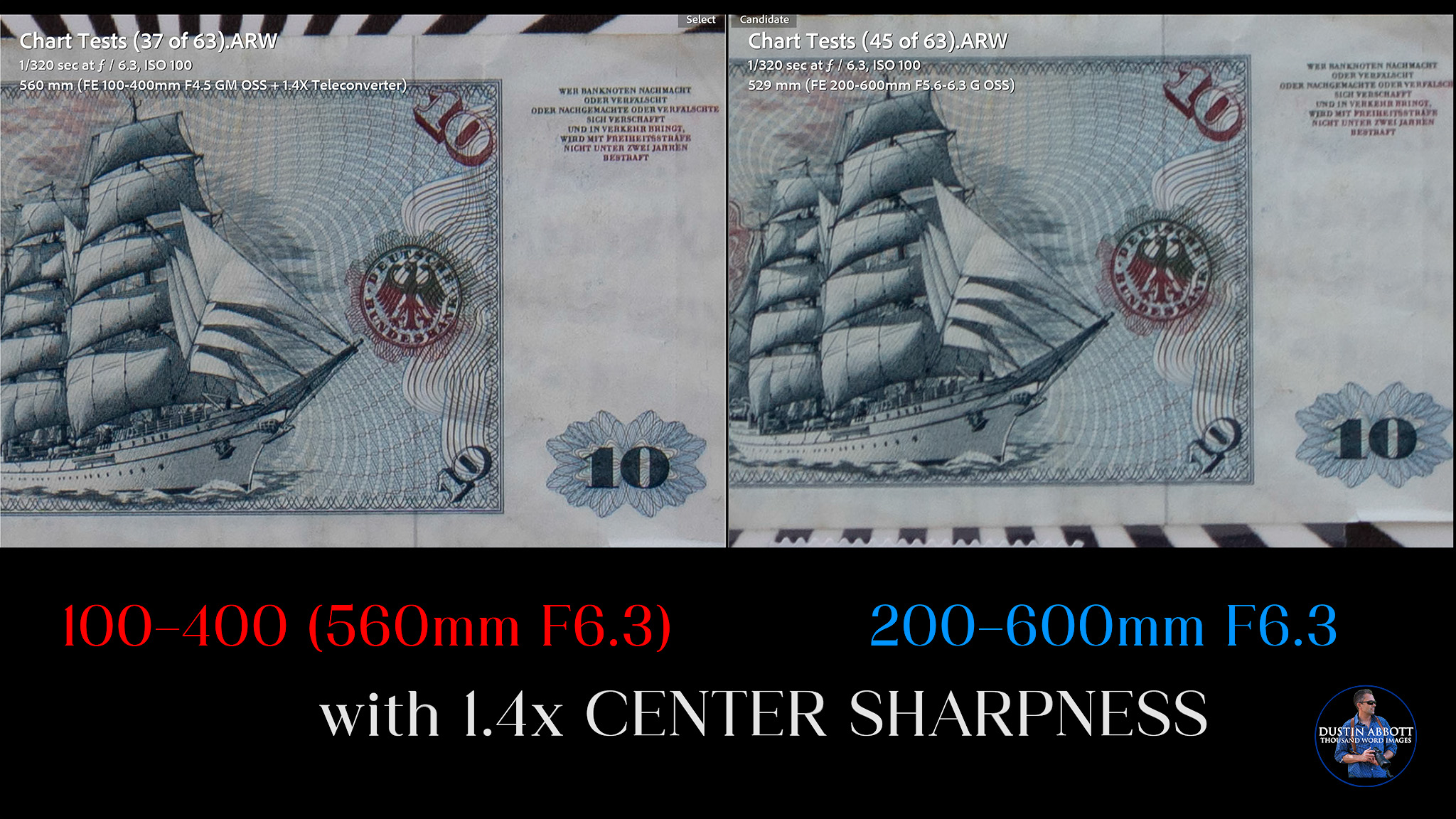
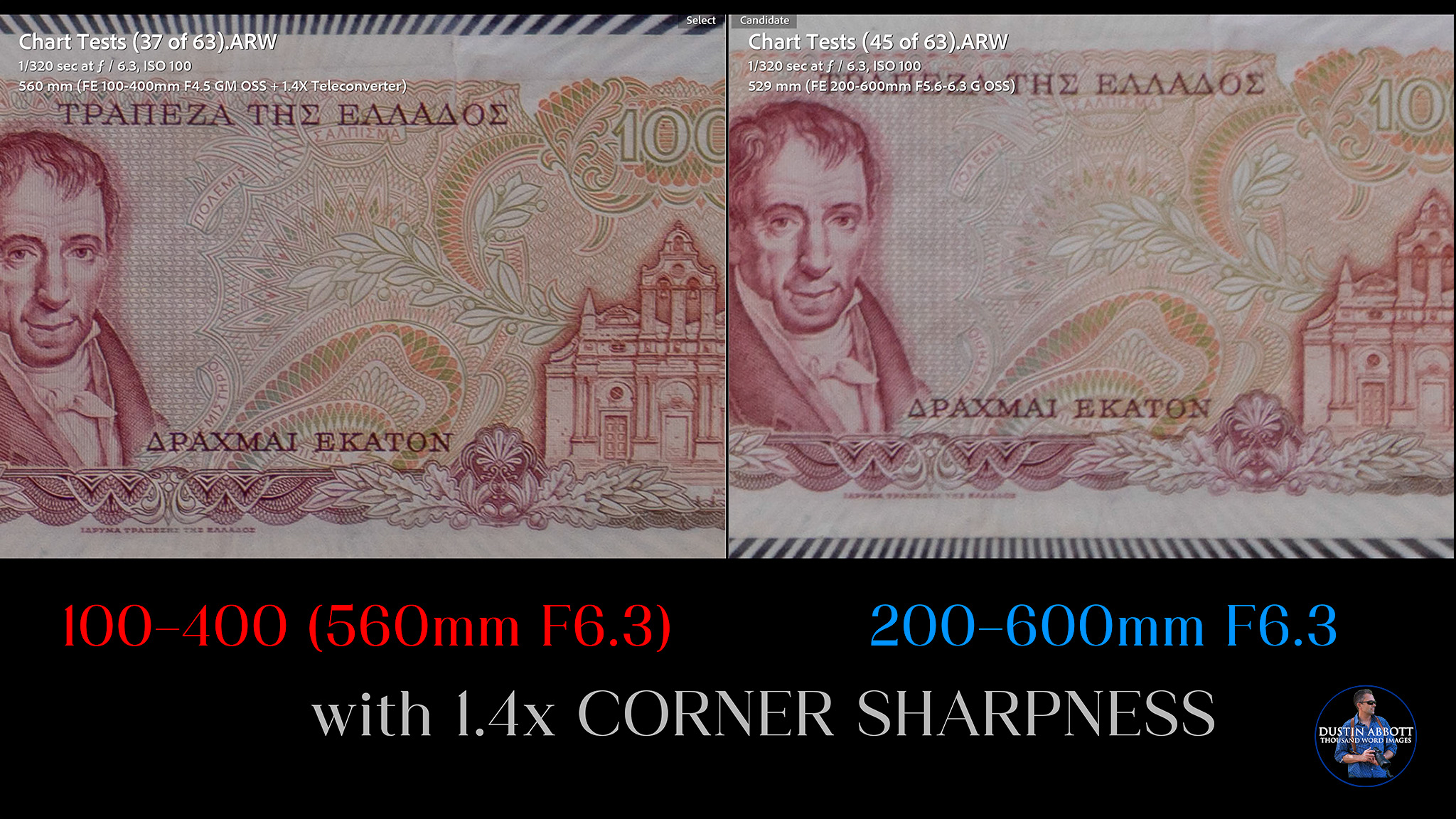
So, while you may not achieve the same amount of reach with the 100-400mm and the 1.4x, you will not lose any image quality (actually gain some).
My 800mm tests (with the Viltrox 2x TC) at 61MP turned out to have focus that was slightly off, but I also shot lower resolution 26MP results in a different setting, and at that resolution point results are pretty great.



At the full 61MP resolution I felt like results at 800mm F9 were fine but not exceptional.


Frankly it doesn’t feel much (if any) behind what I saw at 800mm on the 400-800mm.
But where the real magic of the 100-400mm F4.5 GM lies relative to the variable aperture options is the quality of the bokeh.
All of these lenses can completely crush a background at close focus distances, leaving nothing but cream in the out of focus areas.

But where I really noticed a difference was in my field shots of the dogs, as this is a location I’ve shot with a lot of different lenses, and there’s no question that bokeh rendering at medium distances was smoother and created more subject isolation.

The various layers of defocus here all look pretty smooth.

At a further distance there is still more subject isolation and a softer background due to the brighter F4.5 aperture.

I felt the bokeh rendering held up well even shooting at 560mm with the 1.4x TC:



And honestly, there is nothing wrong with the bokeh with the 2x teleconverter on there.

Flare resistance is aided by Sony’s Nano AR Coatings. It’s not perfect, but there is relatively few issues with it.


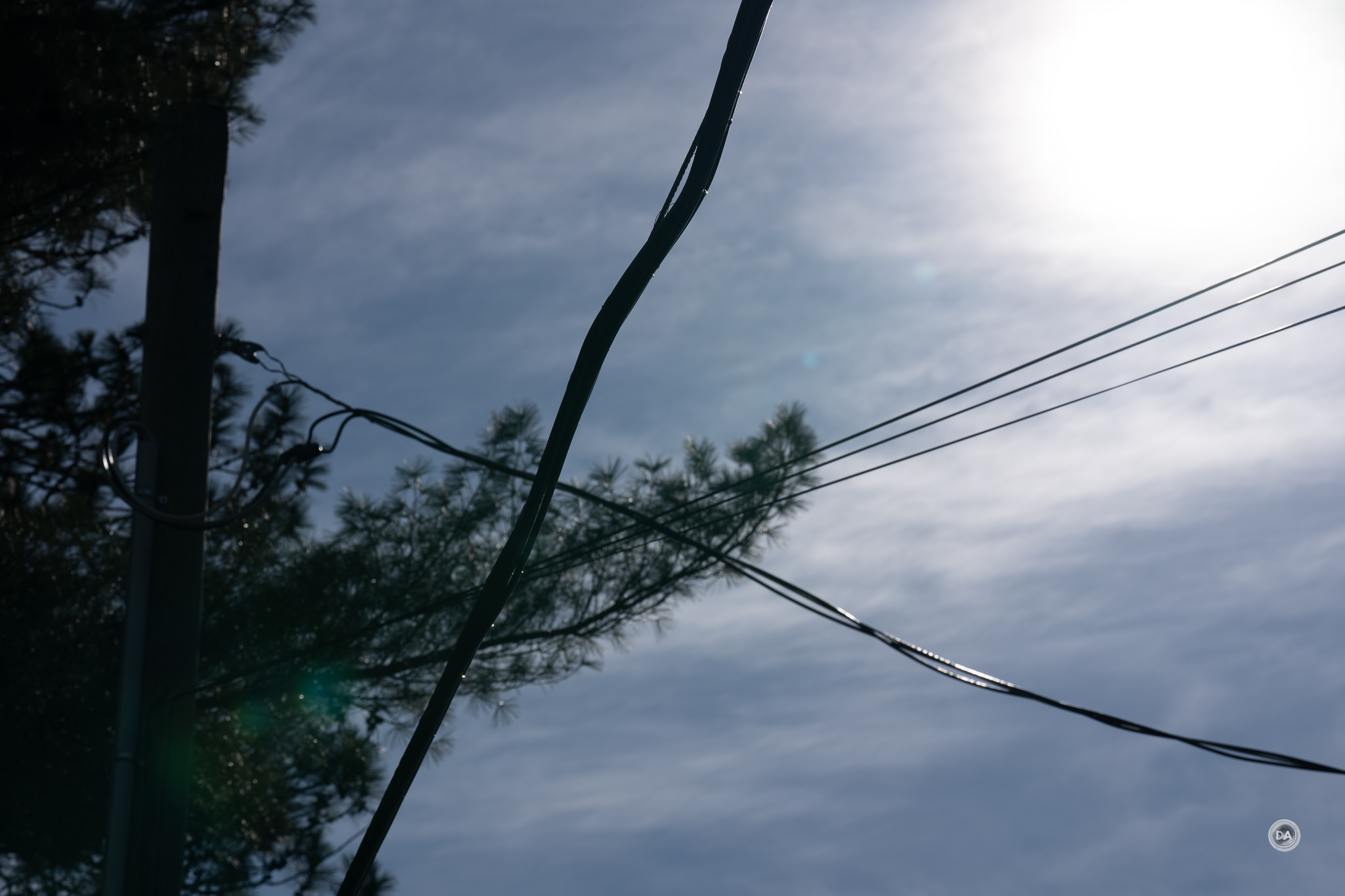
The bottom line is that this new Sony FE 100-400mm F4.5 GM OSS is going to give the best image quality of any zoom covering these focal lengths that I’ve seen. It’s definitely a cut above the performance of all the variable aperture zooms.

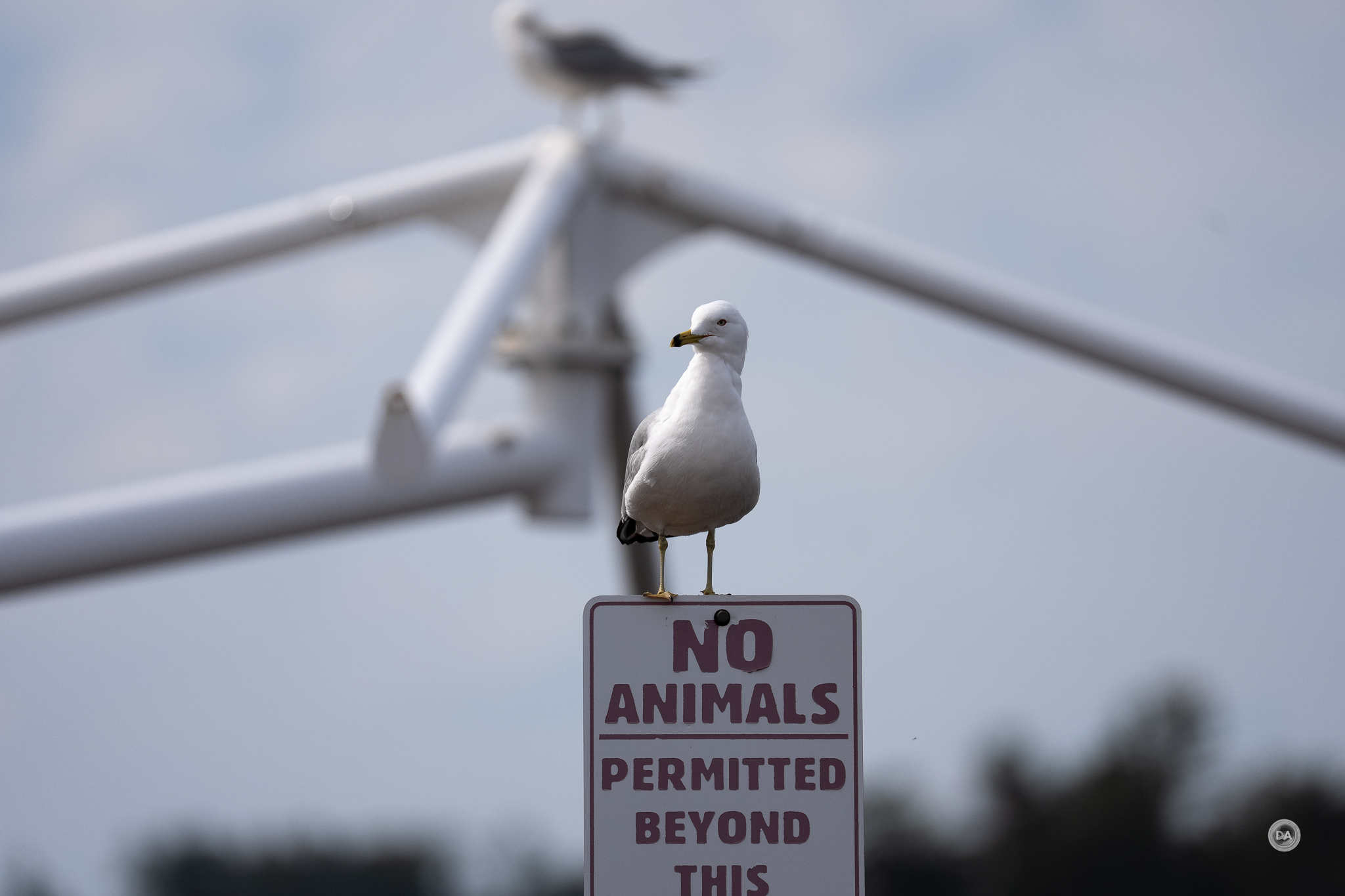
I like the image quality from the Sigma 300-600mm F4 Sport as well, but that lens is nearly impossible to handhold for any length of time, making this a much more practical option for most people. Check out more images in the mini-gallery here.














Conclusion
It’s a rare privilege to get to review a lens that completely upends a segment, but such is the case with Sony’s new 100-400mm F4.5 GM OSS lens. It tackles a familiar zoom range in a completely different way, and while not everyone will be delighted with the new form factor (and fewer with the price), but this lens, like the 50-150mm F2 GM, is part of a new segment of premium zooms that cost more than the typical GM-level zoom but far less than the über-primes.

This lens is basically a cheat code for tracking action. To be able to get 30FPS (or even 120FPS on the a9III) while tracking across the full sensor is a pretty unbelievable experience. You get to just enjoy the experience rather than stress if you’ll capture the moment or not.
You will.

This is a lens that plays far better with teleconverters than another lenses in the class, and if you’ve already invested in TCs, this lens is a great one to get some use out of them.

So yes, $4300 USD is a lot of cash for a lens like this, but this is one of those lenses that is worth selling a few others to acquire. That’s what I plan on doing.
Pros:
- Image Quality: Delivers excellent sharpness and contrast across all focal lengths, particularly at 400mm.
- Versatility with Teleconverters: Performs well with both 1.4x and 2x teleconverters, maintaining good optical quality and reach.
- Fast Autofocus: Features four XD linear motors, ensuring quick and accurate autofocus, especially in action and wildlife photography.
- Lightweight Design: Lighter than similar focal length lenses, making it easier to handle for extended periods.
- Stabilization: Equipped with effective Optical Steady Shot (OSS), which aids in reducing camera shake, especially at long focal lengths.
- Robust Build Quality: Premium construction with weather sealing and durable materials ensures longevity and reliability in diverse conditions.
- Good Minimum Focus Distance: Allows for close-up photography with a minimum focus distance of 1.5 meters.
- Smooth Bokeh: Produces aesthetically pleasing out-of-focus areas, enhancing subject isolation.
- Ergonomic Controls: Includes a comprehensive set of customizable buttons and a user-friendly zoom and focus ring design.
- Versatile Application: Suitable for both photography and videography, delivering solid focus performance in both areas.
Cons:
- High Price: At approximately $4300, it may be considered expensive for many photographers, particularly amateurs.
- Internal Zoom Design: While beneficial for balance in the field, it may not be as compact for storage and transport as external zoom designs.
- Zoom Creep: The lens may experience zoom creep on the smooth setting, requiring careful handling when pointing downward.
- Limited Arca-Compatible Options: The tripod collar is not Arca-compatible, necessitating additional adapters for certain tripod setups.
- Function Ring Complexity: The multiple functions assignable to the ring could confuse some users, especially those unfamiliar with advanced settings.
- Fiddly Filter Mechanism: The drop-in filter holder’s design might not be as user-friendly or versatile as competing brands.
_________________________________________________________________________
GEAR USED:
Purchase the Sony 100-400mm F4.5 GM @ B&H Photo | Adorama | Sony USA | Amazon | Camera Canada | Amazon Canada | Amazon UK | Amazon Germany
___________________________________________________________________
Purchase the Sony a7RV @ B&H Photo | Adorama | Amazon | Camera Canada | Sony Canada | Amazon Canada | Amazon UK | Amazon Germany
__________________________________________________________________
Purchase the α1 II @ Camera Canada | Sony USA | B&H Photo | Adorama | Amazon | Amazon Canada | Amazon UK | Amazon Germany
_________________________________________________________________
Purchase the Sony a7V @ Sony USA | B&H Photo | Adorama | Amazon | Camera Canada | Amazon Canada | Amazon UK | Amazon Germany
_________________________________________________________________
Want to support this channel? Use these affiliate links to shop at: B&H Photo | Amazon | Adorama | Camera Canada | Amazon Canada | Amazon UK | Ebay | Make a donation via Paypal
Buy DA Merchandise https://bit.ly/TWIMerch

Keywords: Sony 100-400mm, Sony 100-400 GM, Sony 100-400 F4.5, F4.5, f/4.5, GM, G Master, 100-400, Sony FE 100-400mm F4.5 GM OSS, 100-400mm, GM, OSS, Sony 100-400 Review, Sony 100-400mm Review, 1.4x, 2.0x, 2x, Teleconverter, Sony FE 200-600, 200-600, 200-600mm, Sony FE 200-600G, 200-600G Review, Full Frame, Review, Sony Alpha 1, Sony α1 II, Sony a7RV, Review, Hands On, Dustin Abbott, Real World, Comparison, Sharpness, Bokeh, Flare Resistance, Autofocus, Image Quality, Sample Images, Video, Photography, let the light in, weathersealing, #letthelightin, DA
Related posts:
 Sony FE 400-800mm F6.3-8 G OSS Review
 Sony FE 400-800mm F6.3-8 G OSS Gallery
 Sony FE 100mm F2.8 Macro GM OSS Review
 Sony FE 16-35mm F2.8 GM II Review
 Sony FE 16-35mm F2.8 GM II Gallery
 Sigma 50mm F1.2 DG DN | ART Review
 Sony FE 85mm F1.4 GM II Review
 Sony FE 85mm F1.4 GM II Gallery
 Sony 85mm F1.4 GM II vs Sigma 85mm F1.4 DN
 Viltrox AF 28mm F4.5 VCM Gallery