

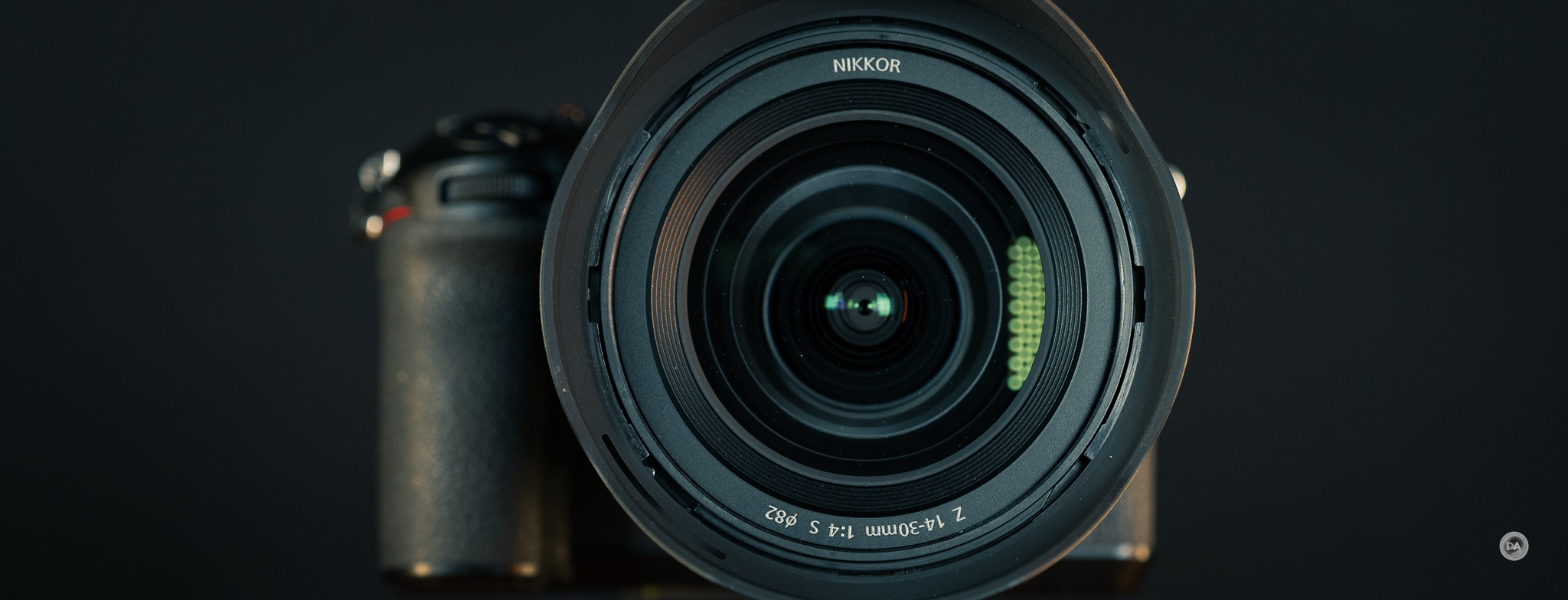
My journey continues as I familiarize myself with Nikon’s important catalog lenses. Today’s stop is in the wide angle department, where I’ll cover the less expensive of Nikon’s two S-line wide angle zooms – the Nikkor Z 14-30mm F4 S. The 14-30mm F4 S was released in early 2019, so it has been around for a while. It mixes a very welcome zoom ratio with a moderate maximum aperture of F4, and delivers a smaller price (MSRP of $1396 USD, though currently less), size, and weight (485g) relative to the bigger, heavier, more expensive 14-24mm F2.8 S. Is the lighter lens the worthy option? I’ll attempt to answer that question in the video review below or in this text review.
Follow Me @ YouTube | Patreon | Instagram | Facebook | DA Merchandise | Flickr | 500px | X
__________________________________________________________________________________________________
Thanks to Chris at Nikon Canada for sending me a review loaner of this lens. As always, this is a completely independent review. All opinions and conclusions are my own. *The tests and most of the photos that I share as a part of my review cycle have been done with the 45MP Nikon Z8, which I reviewed here. You can find the product listing page for the Nikkor Z 14-30mm F4 S here.
__________________________________________________________________________________________________
AI Summary: The Nikon Nikkor Z 14-30mm F4 S lens offers a versatile wide-angle zoom option for photographers, featuring a compact design and a moderate maximum aperture of f/4. Released in 2019, this lens is appreciated for its lightweight construction and strong performance, especially at a competitive price point compared to other options like the 14-24mm F2.8 S. While it lacks lens-based stabilization and features a retractable design that can be cumbersome, it remains well-regarded for producing high-quality images with effective autofocus capabilities. The lens balances size, functionality, and price, making it an appealing choice for those seeking a quality wide-angle lens.
Strengths:
- Compact and lightweight design at 485g, making it easy to carry.
- Strong image quality with excellent sharpness and good performance across various focal lengths.
- Competitive pricing makes it a compelling alternative to more expensive models.
- Fast and effective autofocus performance for both stills and video.
Weaknesses:
- Lack of lens-based stabilization may limit usability in certain situations.
- Retractable design can be awkward to use, requiring zooming out before shooting.
- Dependence on electronic corrections for distortion and vignette, which might not always yield perfect results.
- Perceived “plasticky” build quality compared to premium competitors.
__________________________________________________________________________________________________
Wide Angle Z-Mount Options
At the moment there are four primary options if you are looking for a wide angle zoom for your Z-mount body, which I’ll list in ascending order of price. *Prices in US dollars from B&H photo, current price a snapshot from April 14, 2026.
- Tamron 16-30mm F2.8 G2 (MSRP $929)
- Nikkor 17-28mm F2.8 (MSRP $1296.95, currently $1096.95)
- Nikkor 14-30mm F4 S (MSRP $1396.95, currently $1096.95)
- Nikkor 14-24mm F2.8 S (MSRP $2696.95, currently $1996.95)
With the release of the Tamron 16-30mm F2.8 G2, it is somewhat hard to justify the 17-28mm F2.8 at a higher price, as that lens was essentially a re-badged Tamron 17-28mm F2.8, and the 16-30mm improves on the formula in a number of ways. You can see my review of the Tamron here. The current sale price of the Nikkor 14-30mm makes it a more compelling alternative to the 16-30mm than it would at the full MSRP, as while you sacrifice a larger maximum aperture, you gain a bigger zoom range along with the various benefits that a first-party lens enjoys.

This is an amazing focal range for a wide angle zoom, allowing you to shift from dramatically wide at 14mm:

…to a significantly tighter framing at 30mm:
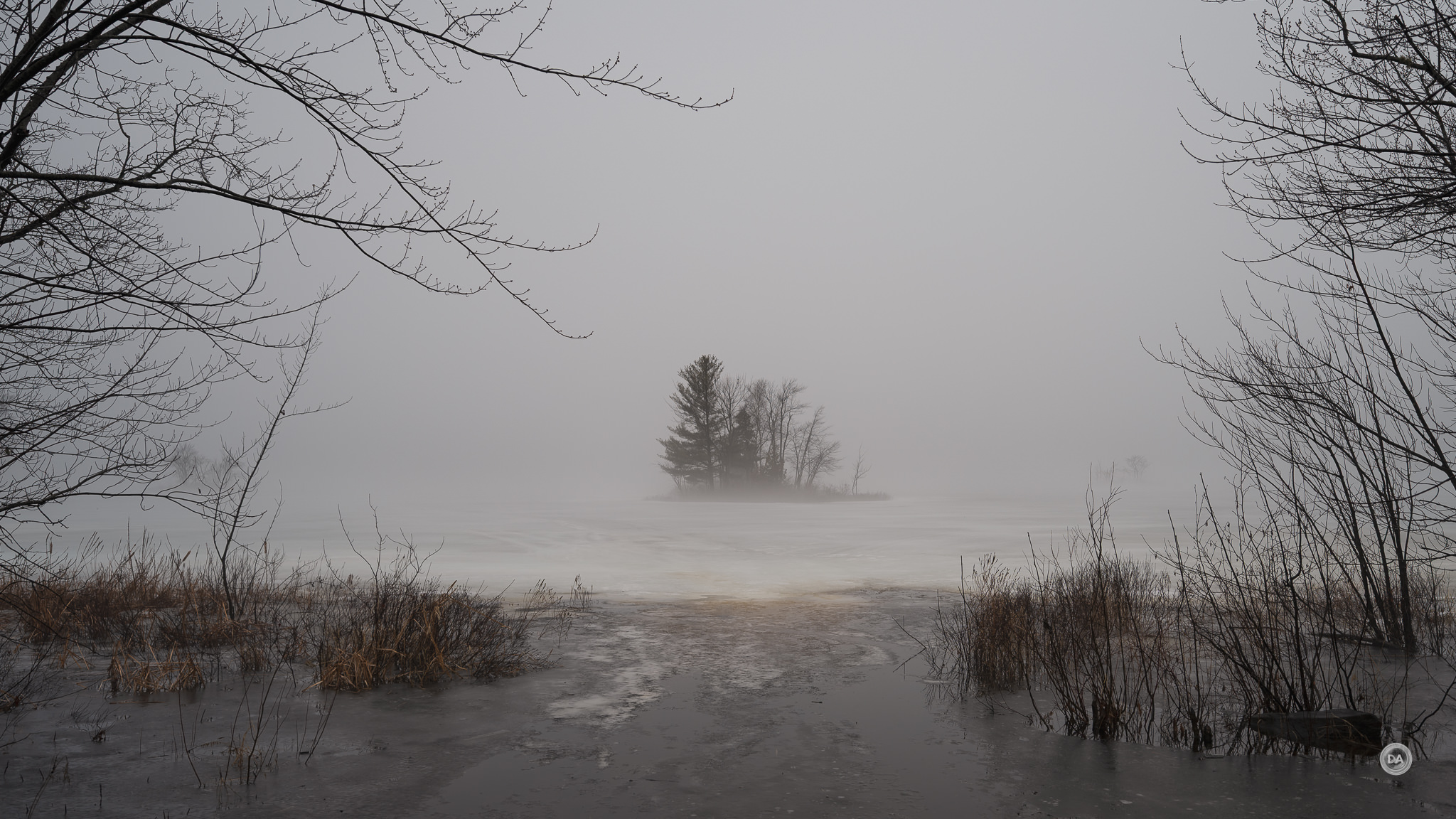
The 14-30mm F4 S is a not a “fancy” lens by 2026 standards, but it remains beloved by many photographers because of its compact size, light weight, and strong performance. Let’s break it down…
Key Features
- Z-Mount Lens/FX Format
- Constant f/4 Maximum Aperture
- Four ED and Four Aspherical Elements
- Nano Crystal & Super Integrated Coatings
- Stepping Motor AF System
- Programmable Control Ring
- Weather-Sealed Design, Fluorine Coating
- Rounded 7-Blade Diaphragm
- Retractable Design
Nikkor 14-30mm F4 S Build and Handling
Nikon’s lineup of Z-mount premium lenses – the S-Line lenses – is known for many things, but being small is not typically one of them. The 14-30mm F4 S bucks that trend, however, clocking in at a whopping 40mm shorter than the 14-24mm F2.8 S. The 14-30mm is just 85mm in length compared to 124.5mm for the 14-24mm.
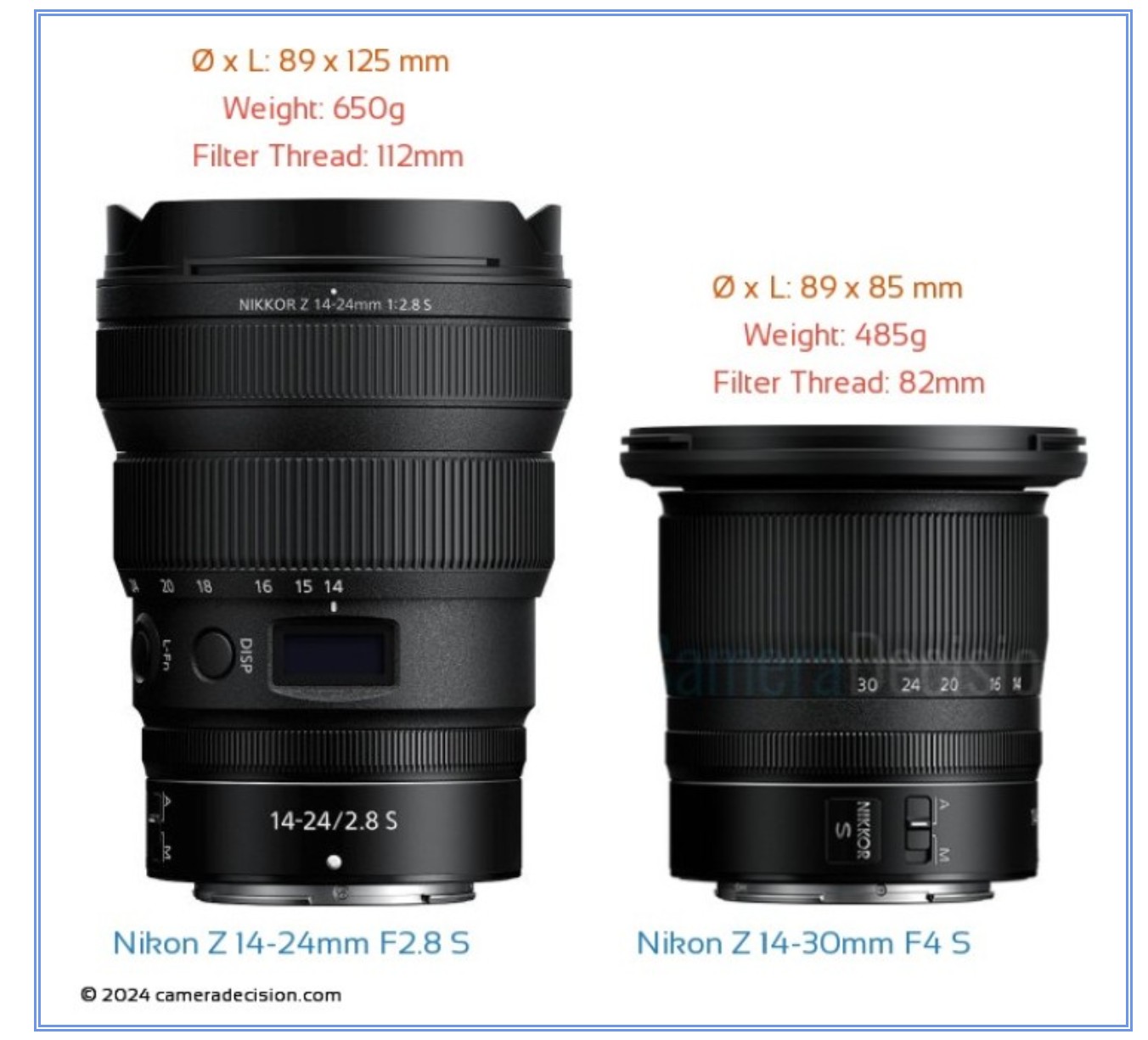
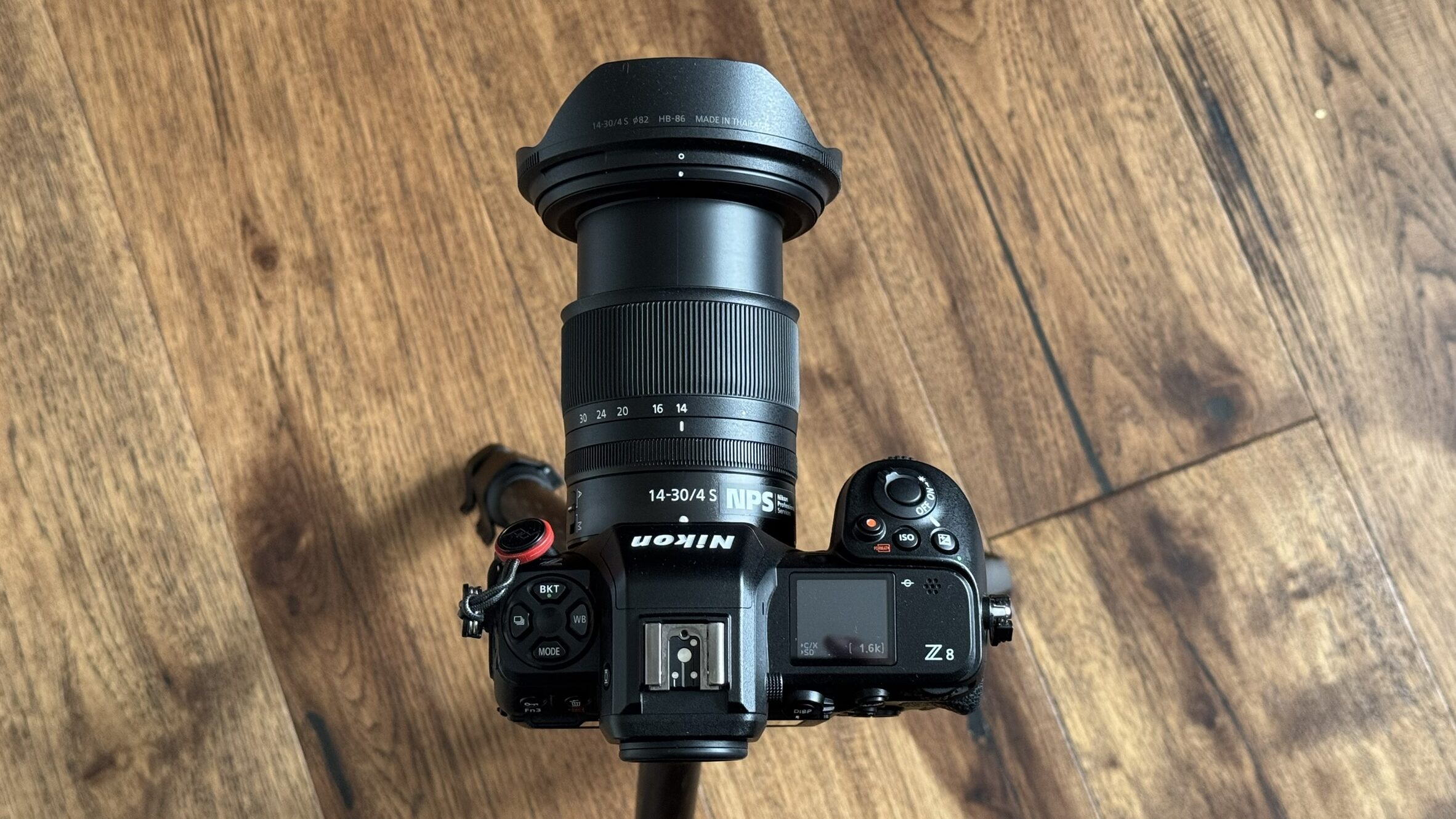
It’s shorter even than the 17-28mm (103.9mm) or the Tamron 16-30mm (101mm). There’s a trick to the compact size, however, and that is that this is a retractable design. The lens looks very compact when retracted, but you can see that there is some space between the place it currently sits and the 14mm mark:
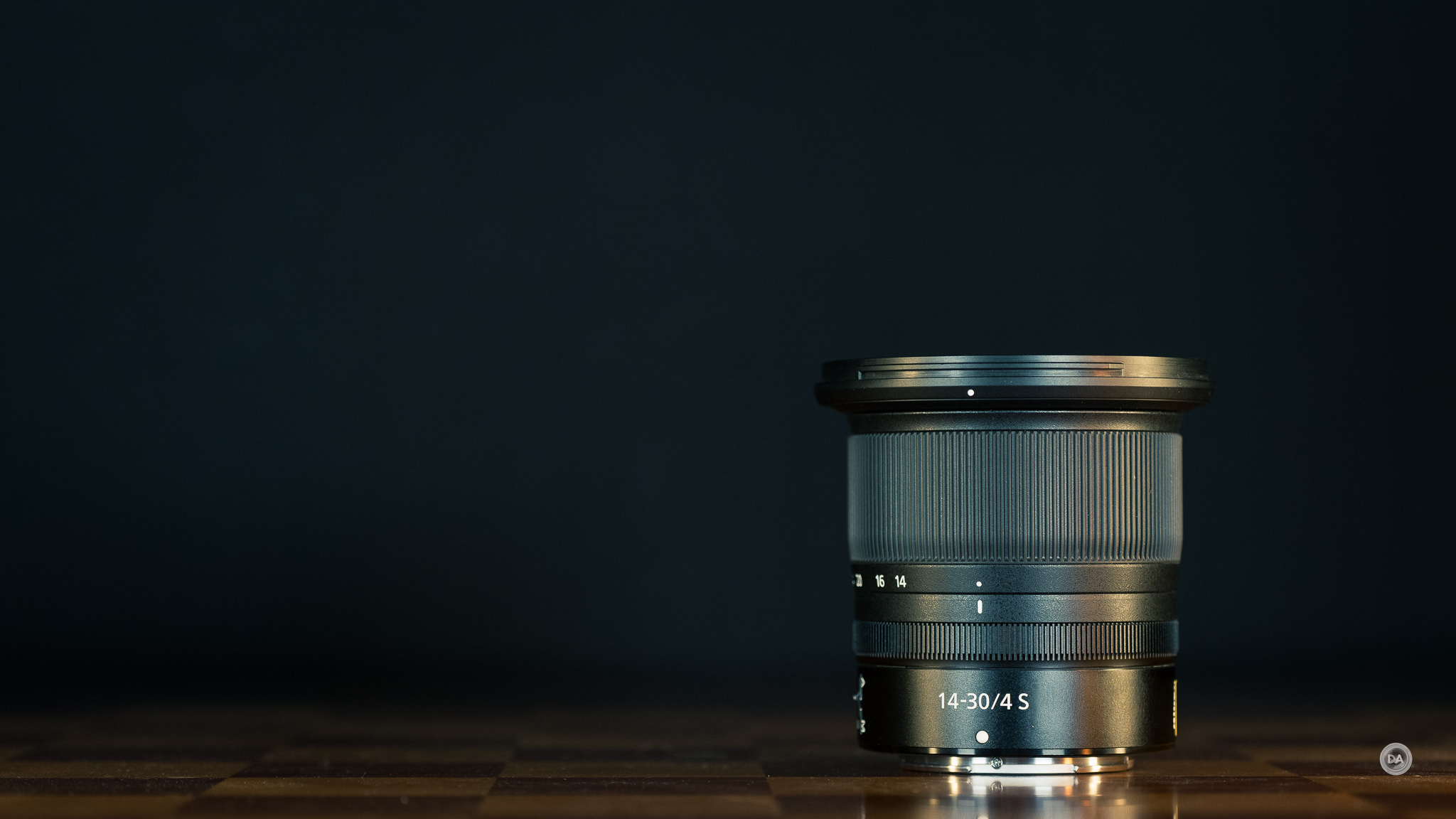
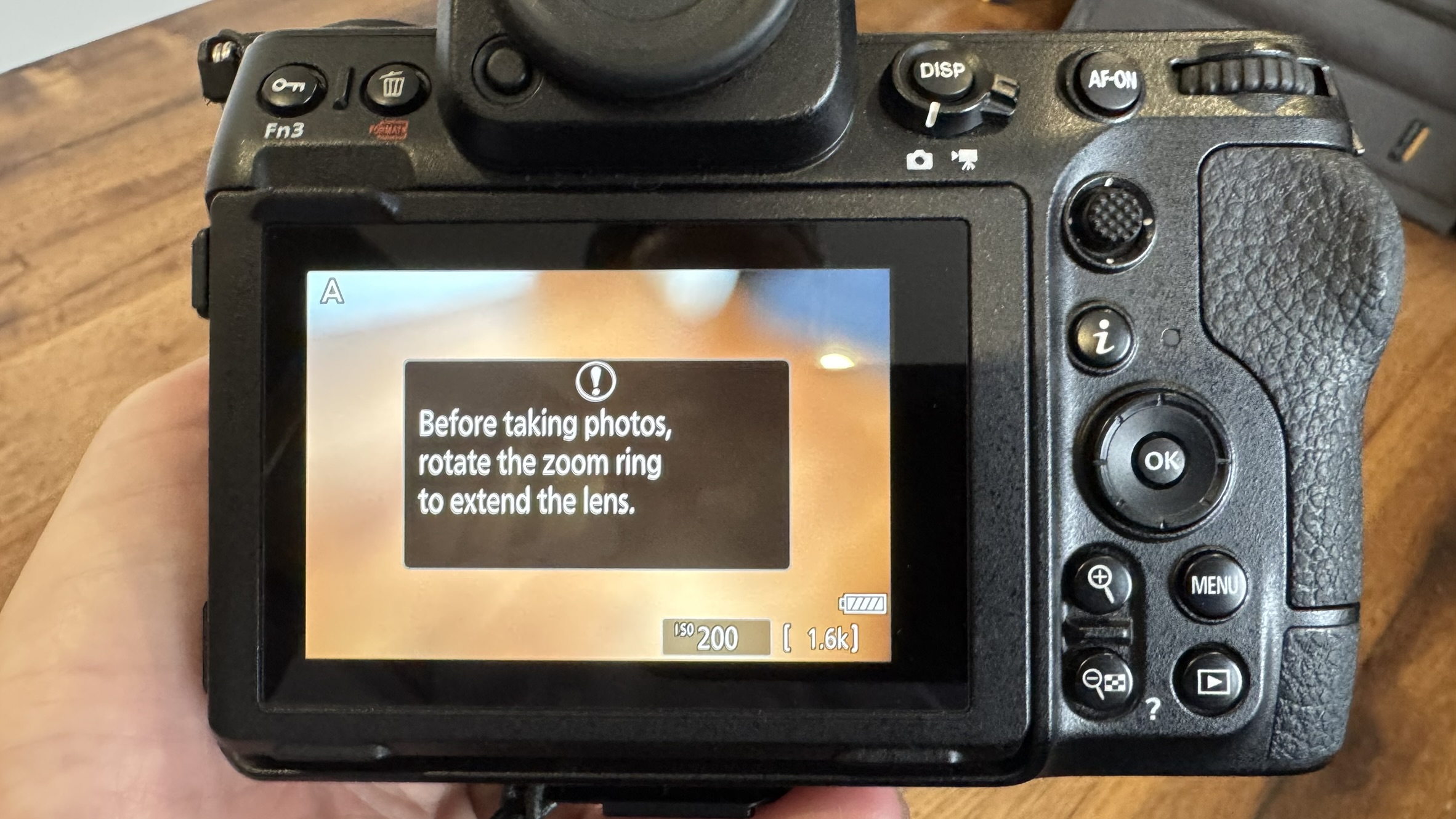
The lens must be rotated to the 14mm position to be used, and the inner barrel will extend about 28mm, making the functional length of the lens significantly longer. If the lens hasn’t be extended out of the retracted position, you will get this warning on the camera.
The lens is its longest at 14mm and its shortest around 24mm.
The retracted size is is 89mm (3.5″) in diameter while the length is 85mm (3.35″). As noted, that means that retracted the lens is shorter than the competing lenses, but when extended, it will actually be longer than a lens like the Tamron 16-30mm F2.8 G2 (101mm), as that lens is internally zooming.
Probably most people won’t mind this trade-off, though it can be a bit annoying in the early stages before you get familiar with the lens. There’s nothing like putting the camera up to your eye and getting ready to nail the shot…only to realize you need to zoom out the lens before you can take a shot.
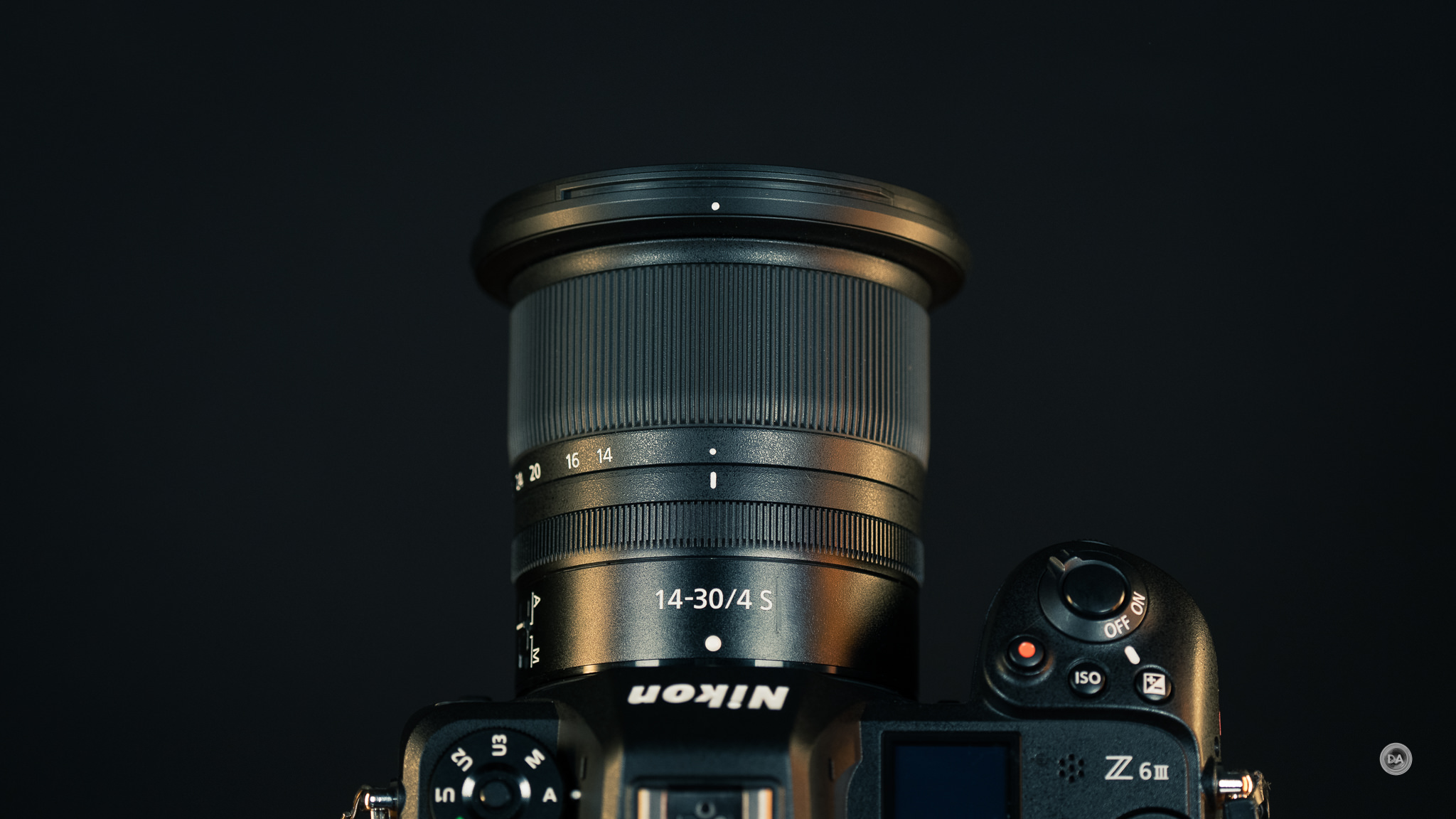
The lens is a lightweight 485g (1.07lb), which undercuts the big 14-24mm by 165g but outweighs either the 17-28mm or 16-30mm lenses by 35g. It looks pretty svelte when mounted on a medium-sized body like the Z6III.
LK Samyang has a 14-24mm F2.8 on Sony E-mount that is much closer in size to the little 14-30mm despite have the brighter maximum aperture. It is a little wider and longer, but you can see that the lenses have a similar profile.

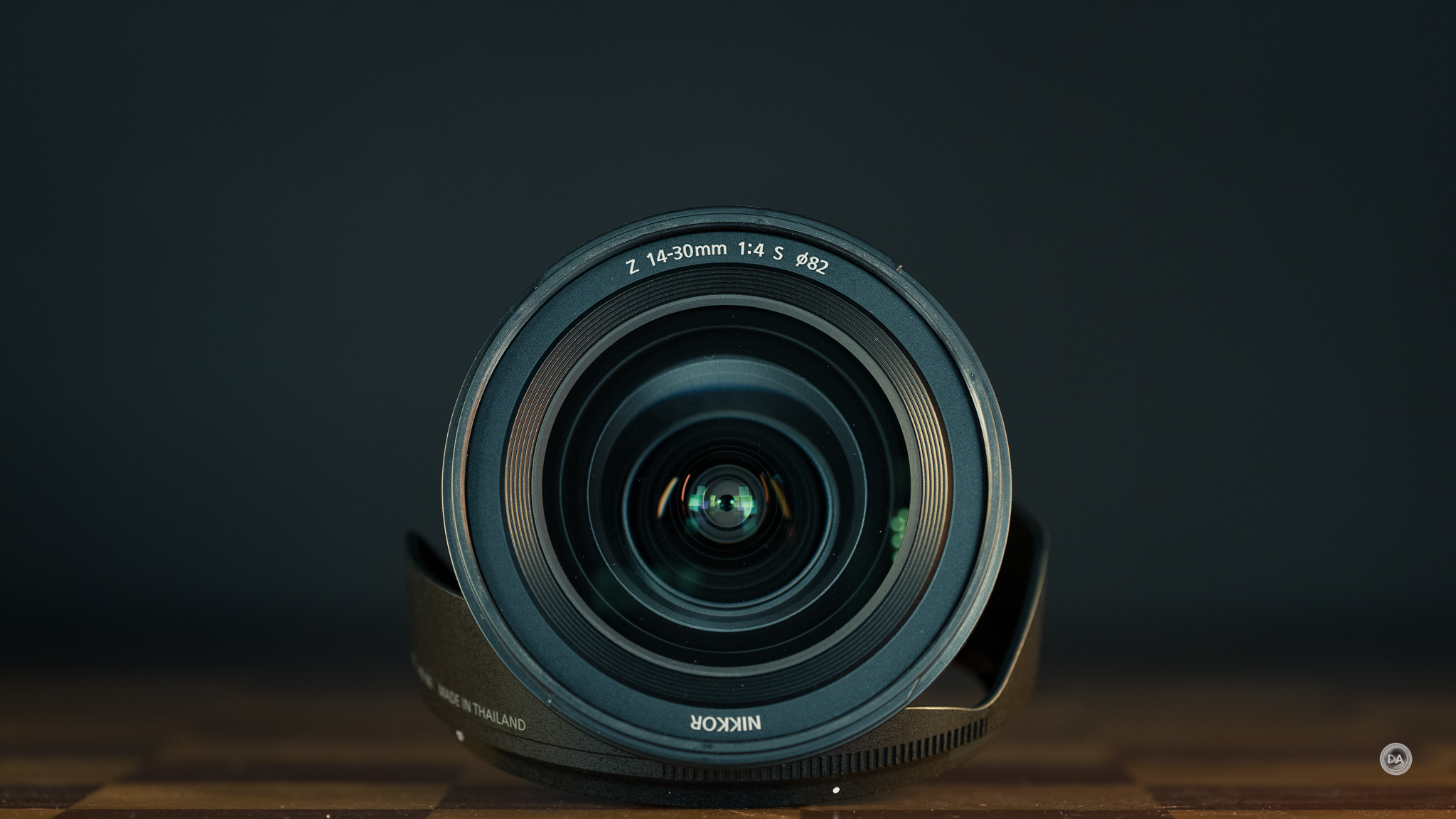
The 14-30mm F4 S manages to retain traditional screw-in filter threads despite the very wide focal length, allowing for large but common 82mm filters to be used.
The 14-30mm F4 S is a premium lens with an excellent build. Nikon notes this, “Lens body is designed carefully considering dust- and drip-resistant performance for enhanced reliability.” That being said, I could find a cutout that shows the seal points in the lens, though Nikon does note that at the least there is a fluorine coating on the front element and I can see a gasket at the lens mount.
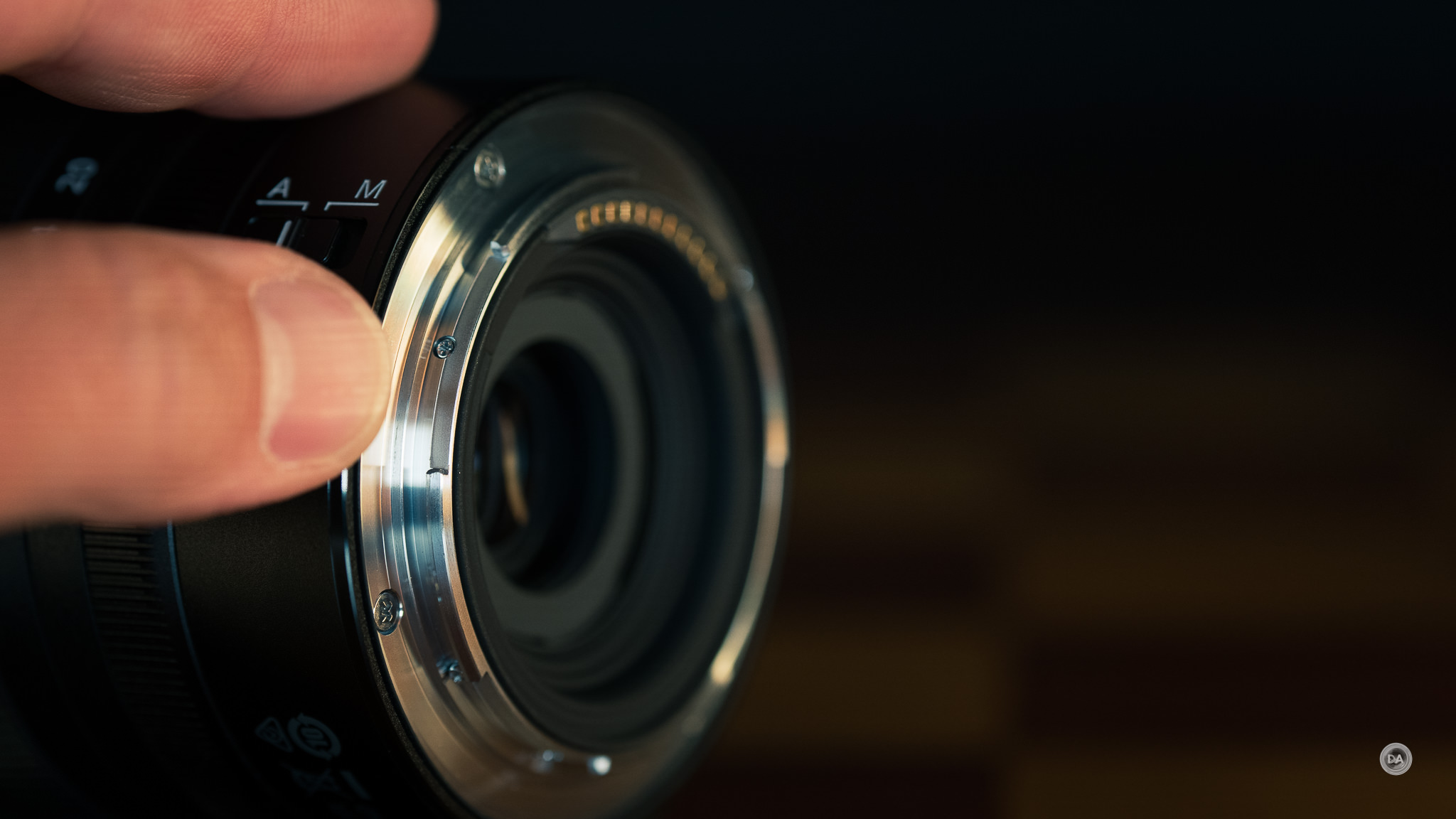
The lens itself doesn’t necessarily scream “premium”. It’s not as feature rich as Sony’s GM lenses, and it doesn’t have a red ring of Canon’s L series. It feels fairly “plasticky” to me, though, to be fair, this is a tried and true lens that has held up to professional use by photographers for years.
The feature set is essentially confined to an AF | MF switch.
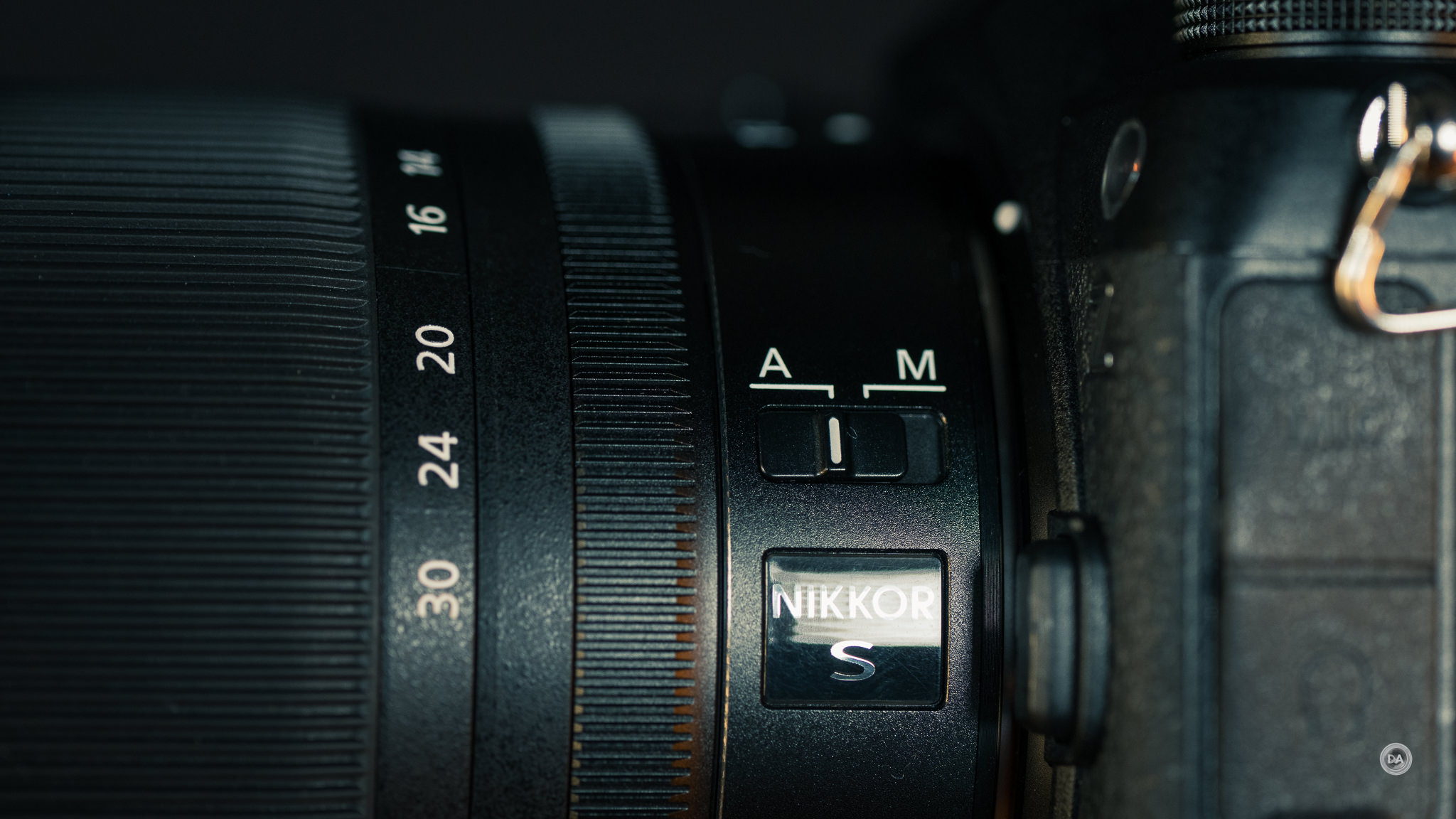
There isn’t a dedicated customizable control ring, though the narrow focus ring can serve as a customizable control ring, though at the cost of full time manual override.
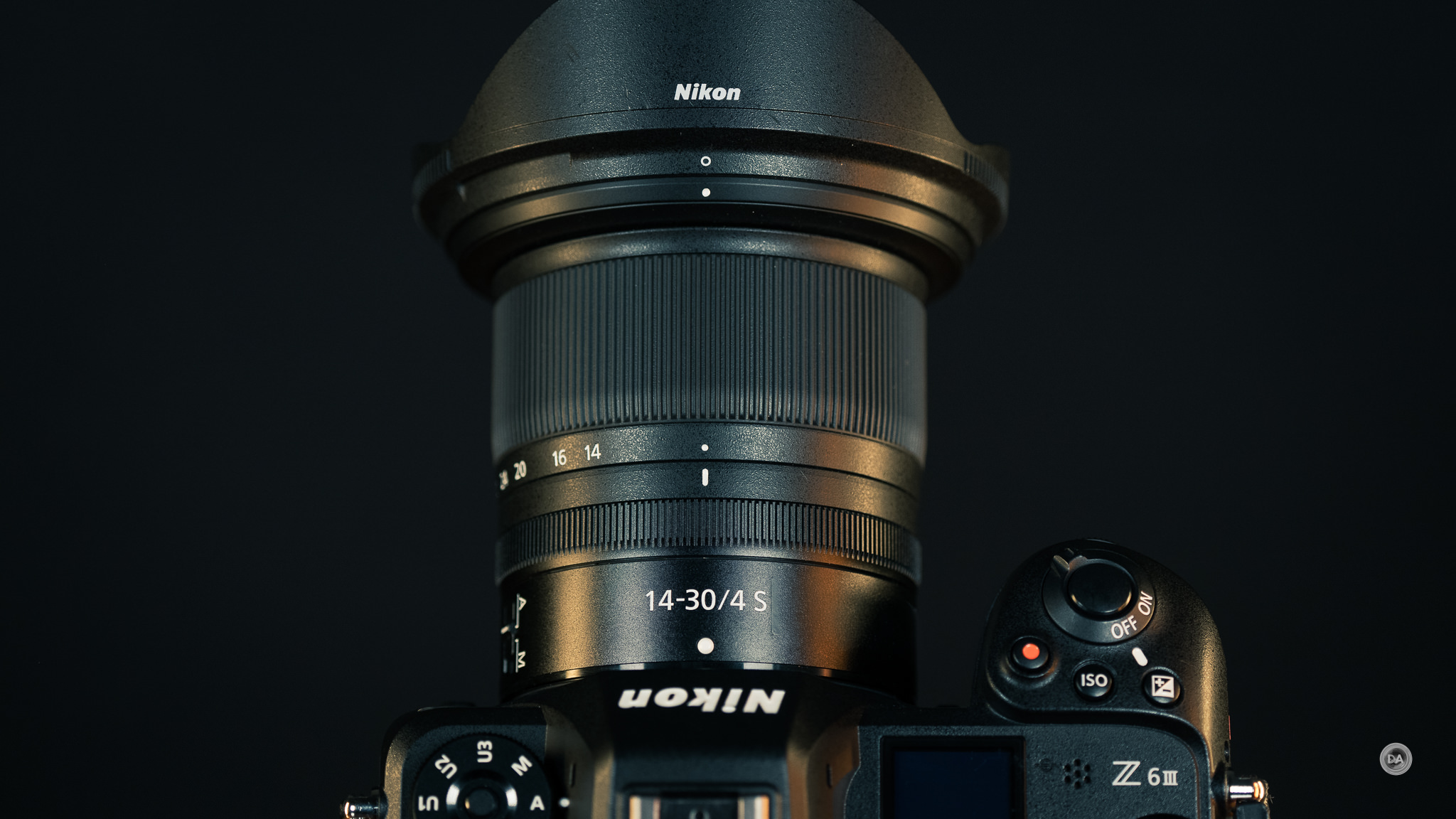
The “customizable control ring” is clickless if used for aperture and can also be used to control ISO, exposure compensation, or a few other functions – whatever you’ve set up the ring to do in the menus. Those controls can be found in the Custom Settings menu, then by selecting group F (Controls), and finally choosing custom setting F2 (Custom Controls Shooting) to change the function of the ring.
If the ring is set up for aperture control, you can do smooth aperture racks through the control ring without any visible steps.

The only other item on the lens barrel is the wide zoom ring, which is located furthest from the camera.
The aperture iris has seven rounded blades, and the aperture iris does a nice job of keep specular highlights round, though obviously this isn’t a lens that is going to give much in terms of big, soft “bokeh balls”. Here’s F4, F5.6, and F8:


The lens hood is petal-shaped and quite shallow to avoid causing vignette.
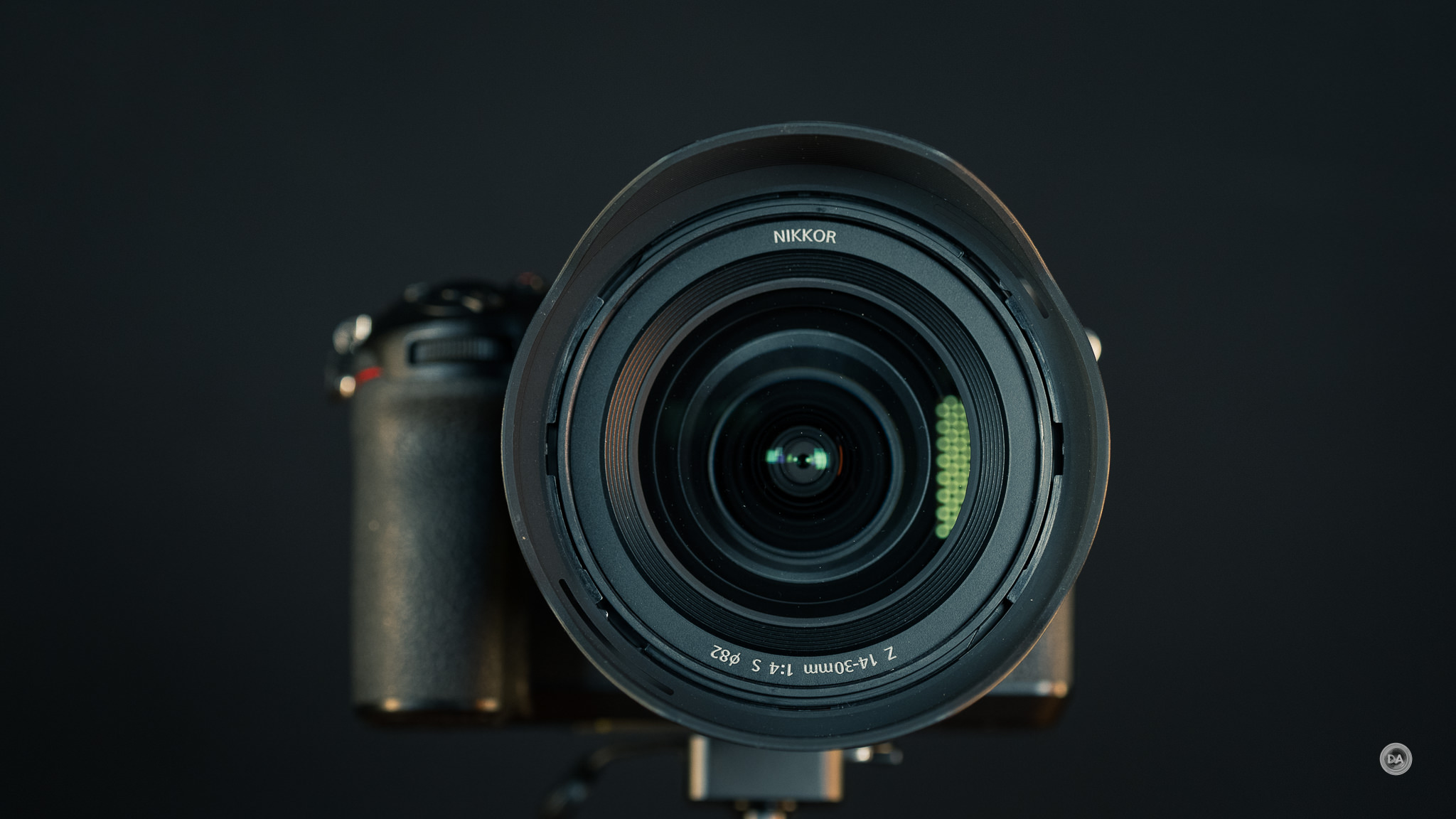
Minimum focus distance is 28cm, giving a maximum magnification figure of 0.16x, which is a bit better than the 14-24 S, but less than the 17-28mm or the 16-30mm. The level of magnification is useful but certainly not exceptional.

Up close performance is good in the plane of focus, though that focal plane is not completely flat. That works better with many real-world subjects, where flat focus across the plane isn’t nearly as important. Here’s a real-world shot with a crop at F4:
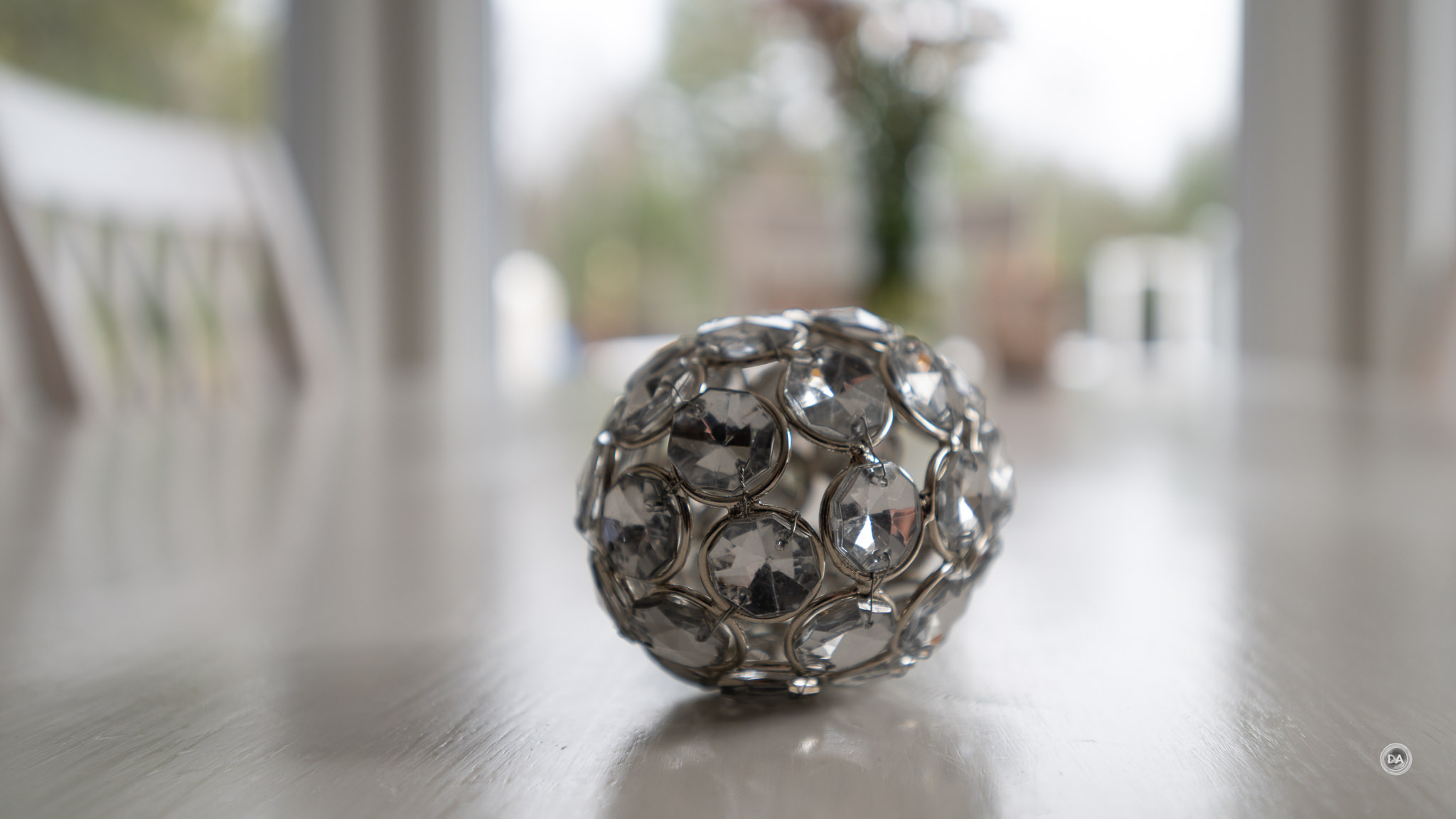

There is no VR (vibration reduction, or optical stabilization) built into the lens. That’s not a problem on a body like my Z8, which has good camera based stabilization, but could be a problem for those of you shooting on a camera without VR. None of the competing options have lens-based VR, either.
At roughly $1100 USD (sale price, as the MSRP is $300 higher), the price seems reasonable for the lens relative to what’s available from other brands. Canon’s 14-35mm F4L IS has an MSRP of roughly $1500 (though it does have lens-based stabilization), and while Sony doesn’t have a completely comparable lens, their 16-35mm F4 PZ lens carries an MSRP of $1300 USD.
14-30mm F4 S Autofocus Performance for Stills
Like the majority of Nikon’s lenses prior to 2025, the Nikkor 14-30mm F4 S utilizes an STM focus motor (stepping motor) to drive autofocus. Wide angle lenses with fairly narrow maximum aperture like this don’t need a lot of thrust, so autofocus moves very snappy.

I had a young man come to me to do some album cover shots for his burgeoning music career. We had some high energy ideas, including a varity of shots where he would be in the air above me as I shot from ground level. I had no problem snapping on for these shots and getting some great, dynamic energy shots.
Focus speed in my formal tests is basically instantaneous. Wide angle lenses are often fast because there is relatively little travel distance for the focusing element(s). A lot is in focus all the time at 14mm and F4, and even more when you start to stop it down. I shot my formal tests on the 30mm end for a bit more challenge, but focus was still near instant on the “telephoto” end.

I had no issue with autofocus during my review period, shooting a Z6III (which I was testing at the same time) or my own Z8. Detection for people, animals, or vehicles worked fine in my tests.

All told, I’m very satisfied with autofocus for still images from the Nikkor Z 14-30mm F4 S.
Autofocus (Video)
Video autofocus was also fine, though I did note one video quirk. The quirk is related to handheld video, where I saw an unfortunate amount of warping at the edges of the frame most likely due to overactive VR in the camera body. It’s unfortunate that this issue remains so late into the product cycle.
Touch to focus for my focus pull test produced good results. Focus pulls were smooth and confident, and focus breathing is very low (even on the 30mm end). When I zoomed in and out, focus seemed to stay pretty stable, so while the lens may not be perfectly parfocal, it is close enough for practical purposes.
My hand test, for example, went well, with good transitions from my hand to my face and back.

Focus was also solid when I approached the camera and ducked in and out of frame.
Video AF still isn’t quite as sophisticated on Nikon as Sony or Canon, generally, but the 14-30mm S works just fine.
Nikkor Z 14-30mm F4 S Image Quality Breakdown
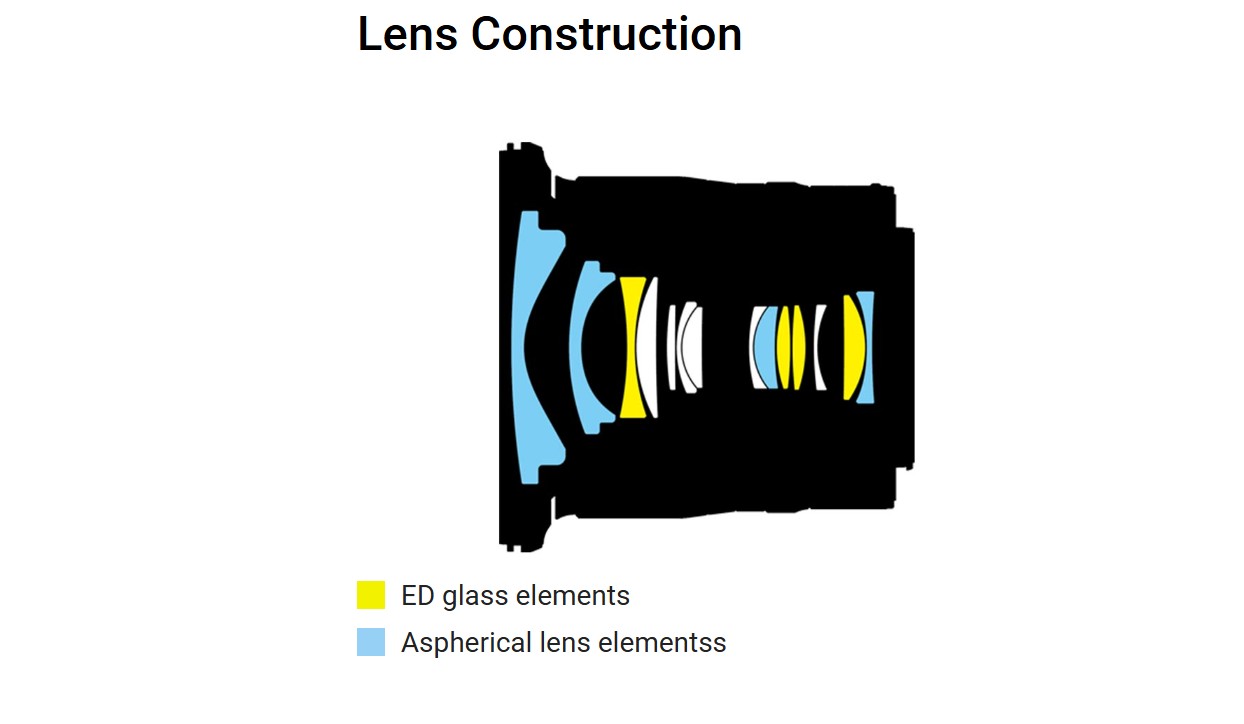
The Nikkor Z 14-30mm F4 S hasan optical design of 14 elements in 12 groups, which includes 4ED elements and 4 aspherical elements. It has also received Nikon’s nano coatings to help with flare resistance.
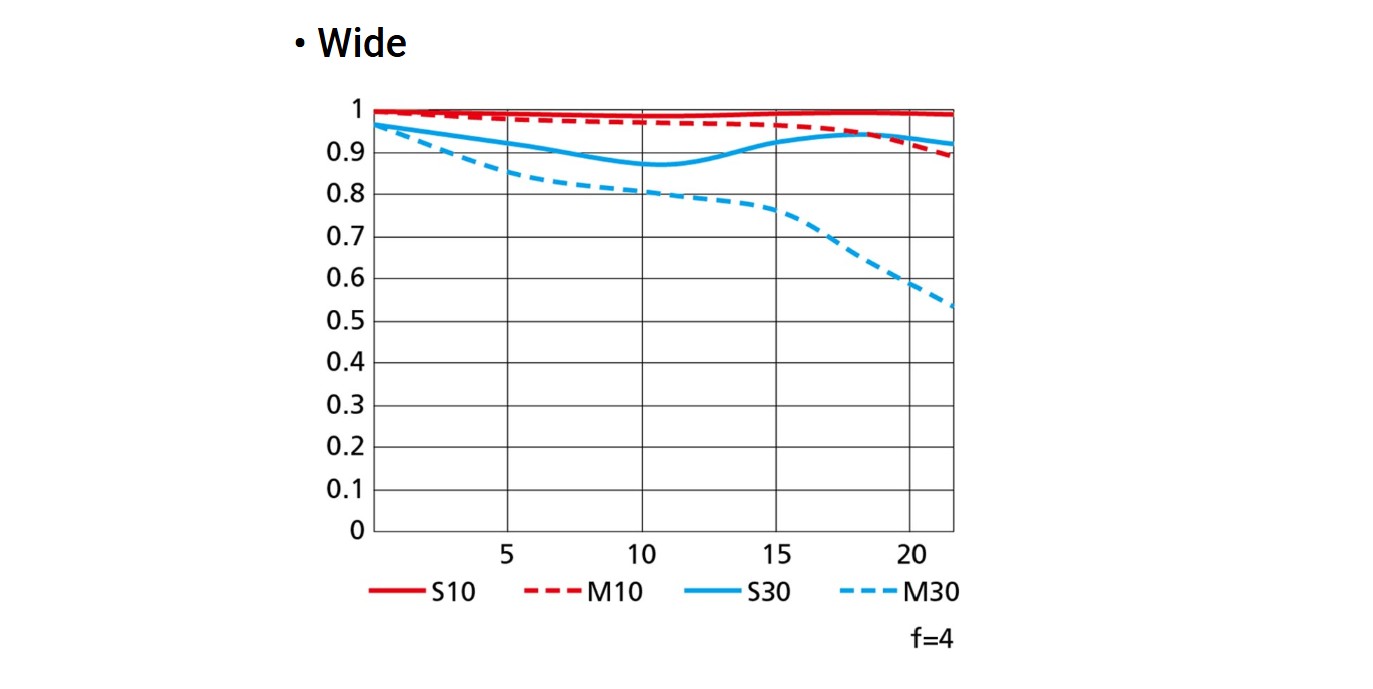
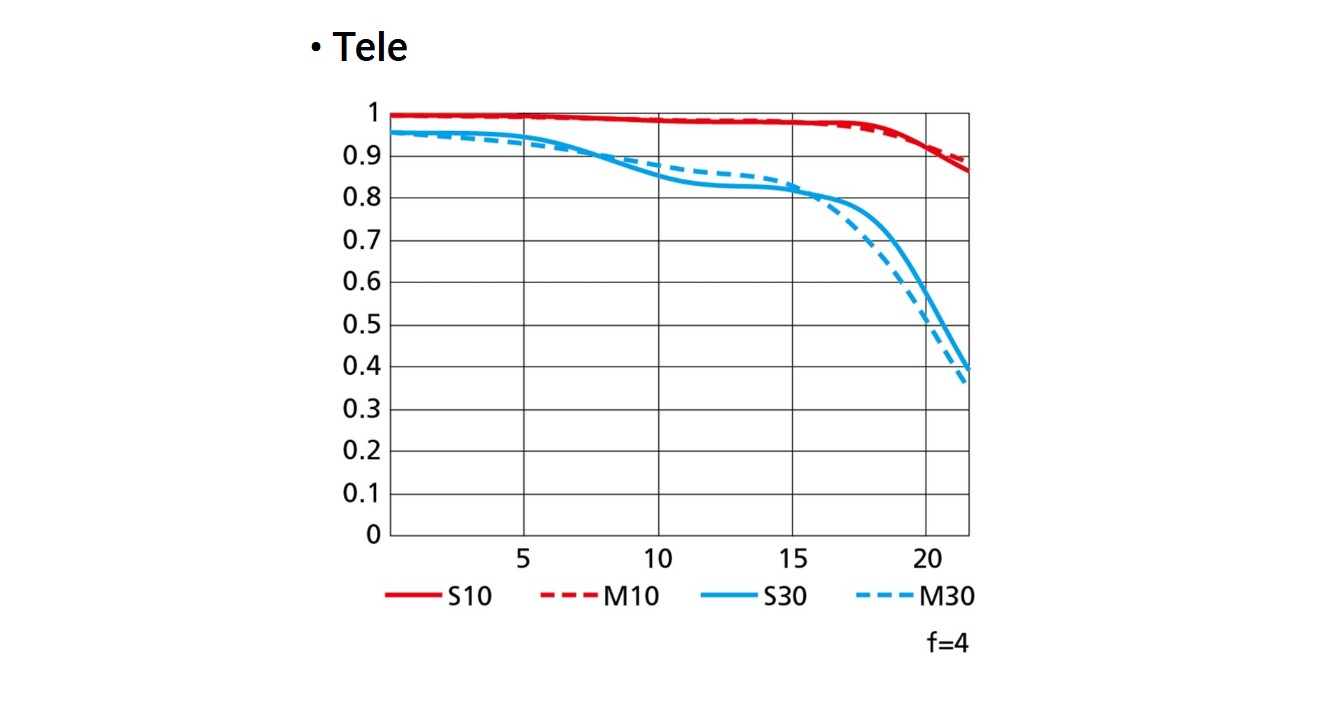
The MTF chart looks very good at 14mm, with an extremely sharp center and excellent corner performance on the sigittal axis, though the meridional axis falls in a more traditional fashion, pointing to some astigmatism that grows as you move in the corners. The 30mm end shows less astimatism (the two axis stay closer together), but the performance drops more steeply (and uniformly) into the corners.
Real-world wide end perormance is excellent from F4 on.

Let’s move on to the actual performance. Some of Nikon’s zoom lenses come with “baked-in” distortion and vignette correction, making it a little hard to see what’s happening optically. The 14-30 S is one of those lenses.
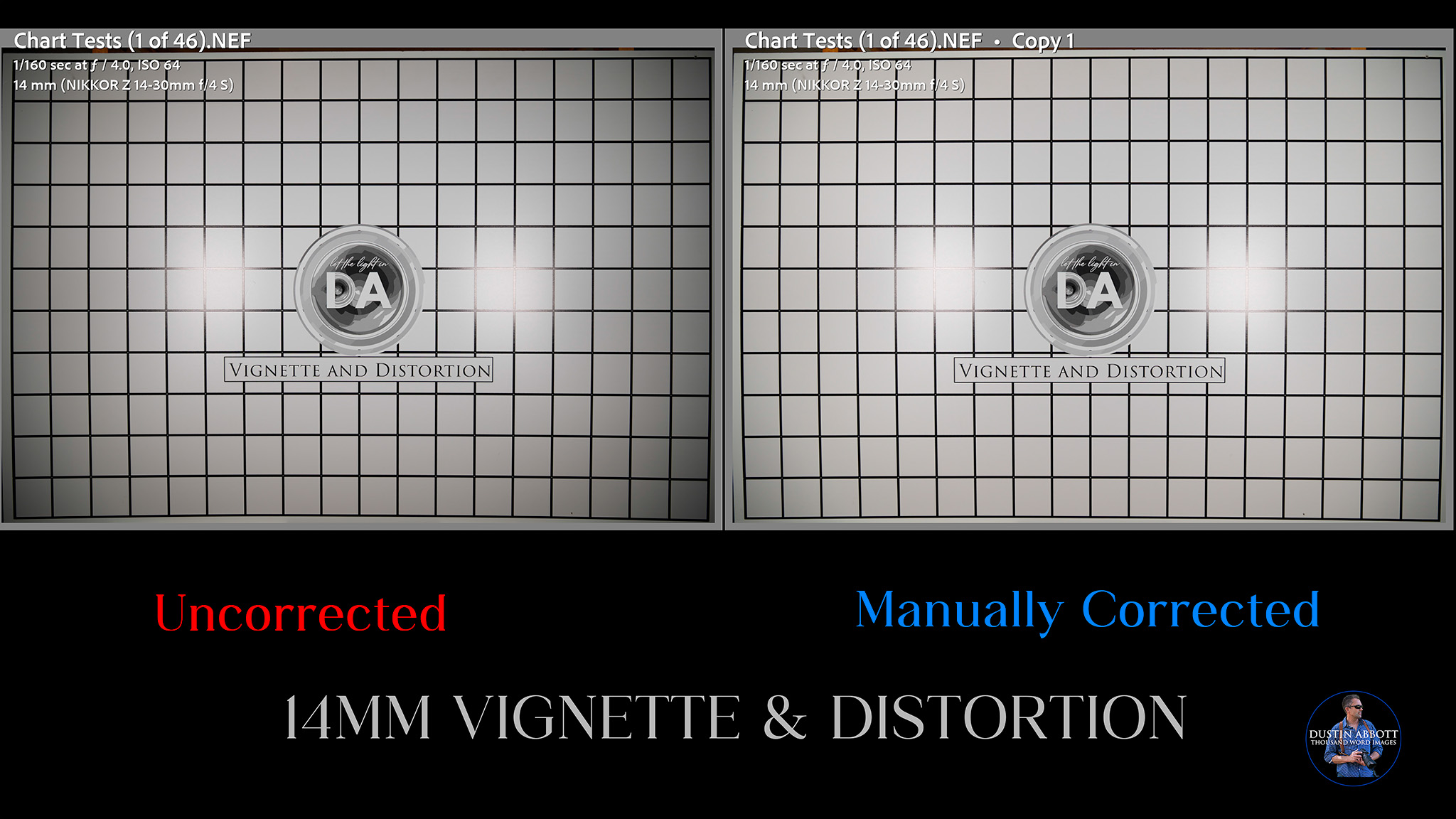
The distortion is, if anything, a bit overcorrected, resulting in a bit of pincushion distortion. I find the real story if I open the RAW file in Luminar NEO, which doesn’t have automatic corrections baked in.
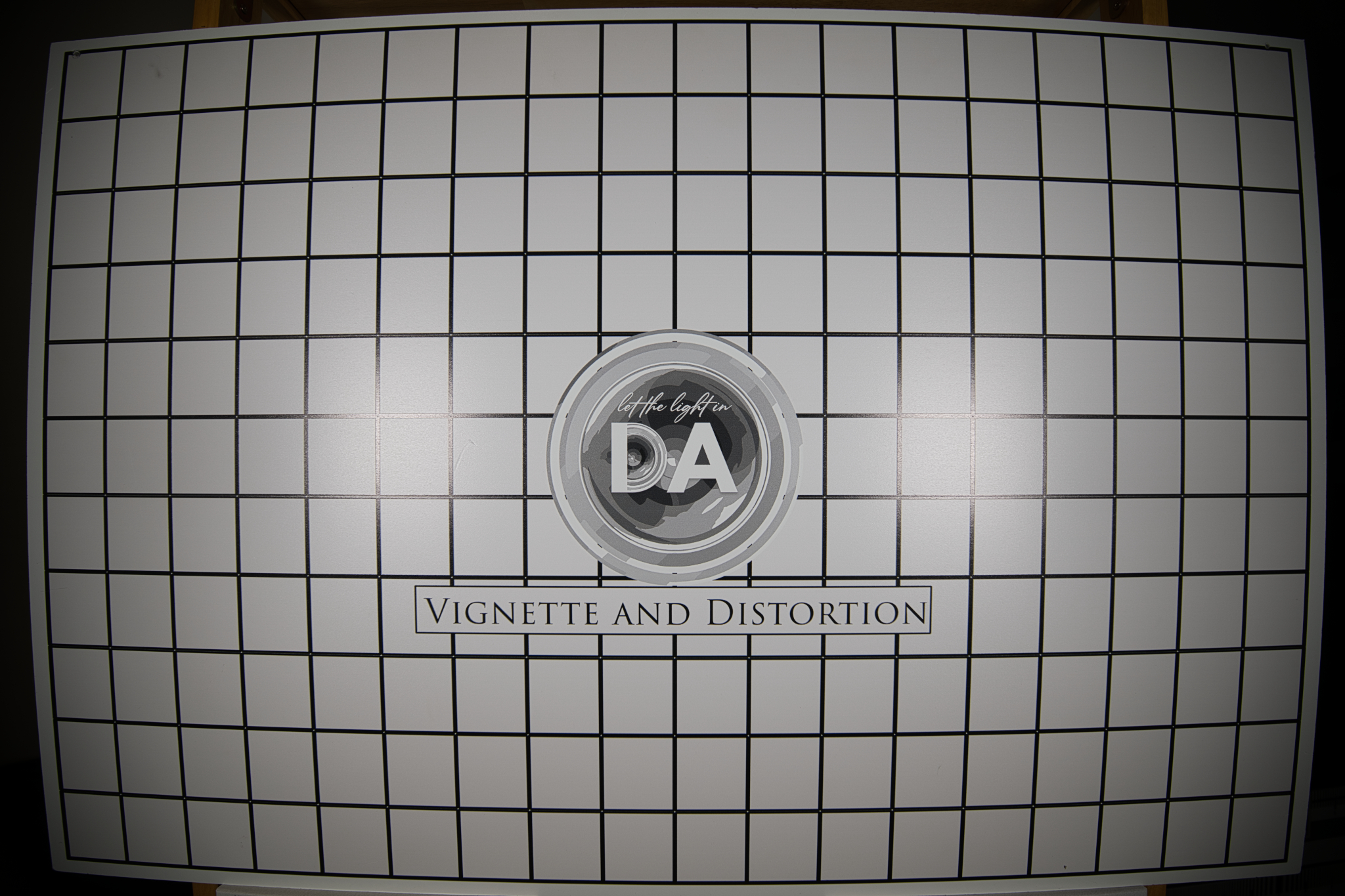
The real story is a significant amount of barrel distortion and heavy vignette. I needed to dial in a very high amount of barrel distortion correction (+32) and max out vignette correction (+100) to properly correct the image.
That distortion will even out in the middle of the zoom range before inverting to a pincushion style distortion on the telephoto end.
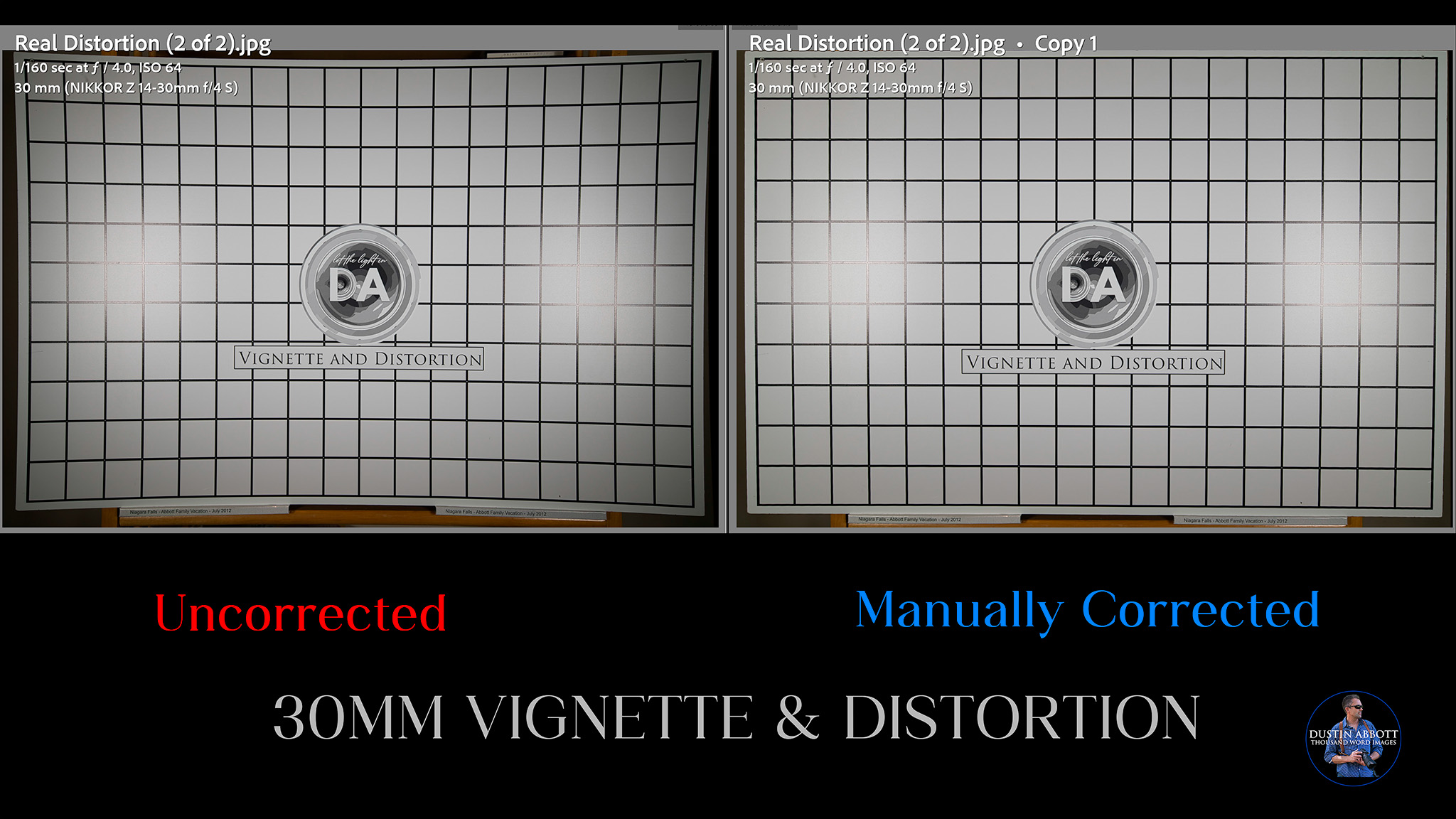
The amount of correction needed at 30mm is less extreme. I needed a -11 to correct the pincushion distortion and a +69 to correct for the vignette.
I found the standard profile slightly overcorrected the distortion but undercorrected the vignette. In camera correction corrections works well, but I did notice some vignette even with corrections.
Vignette and distortion are definitely the optical price paid for this compact design, and the electronics don’t completely mask that.
LoCA (longitudinal chromatic aberrations) are not much of a practical problem. You can see that there is some potential for some green fringing after the plane of focus, but the situations in which you can produce this shallow of depth of field are rare.
That being said, I did a couple of close shots on subjects with shiny edges, and I did see some fringing in these crops.


LaCA (lateral chromatic aberrations) typically show up along the edges of the frame with high contrast transition points. This is typically more of an issue for wide angle lenses because fringing will show up in trees or the edges of buildings. Fortunately LaCA is well controlled.
I don’t think that fringing of any kind will often be an issue in real-world shooting.
We’ll move on to inspecting our test chart. This test has been done on a 45MP Nikon Z8 sensor. I use a high end tripod and two second camera delay (or slower) to ensure vibration doesn’t affect images. Here’s a look at the test chart that we will examine at high magnification:

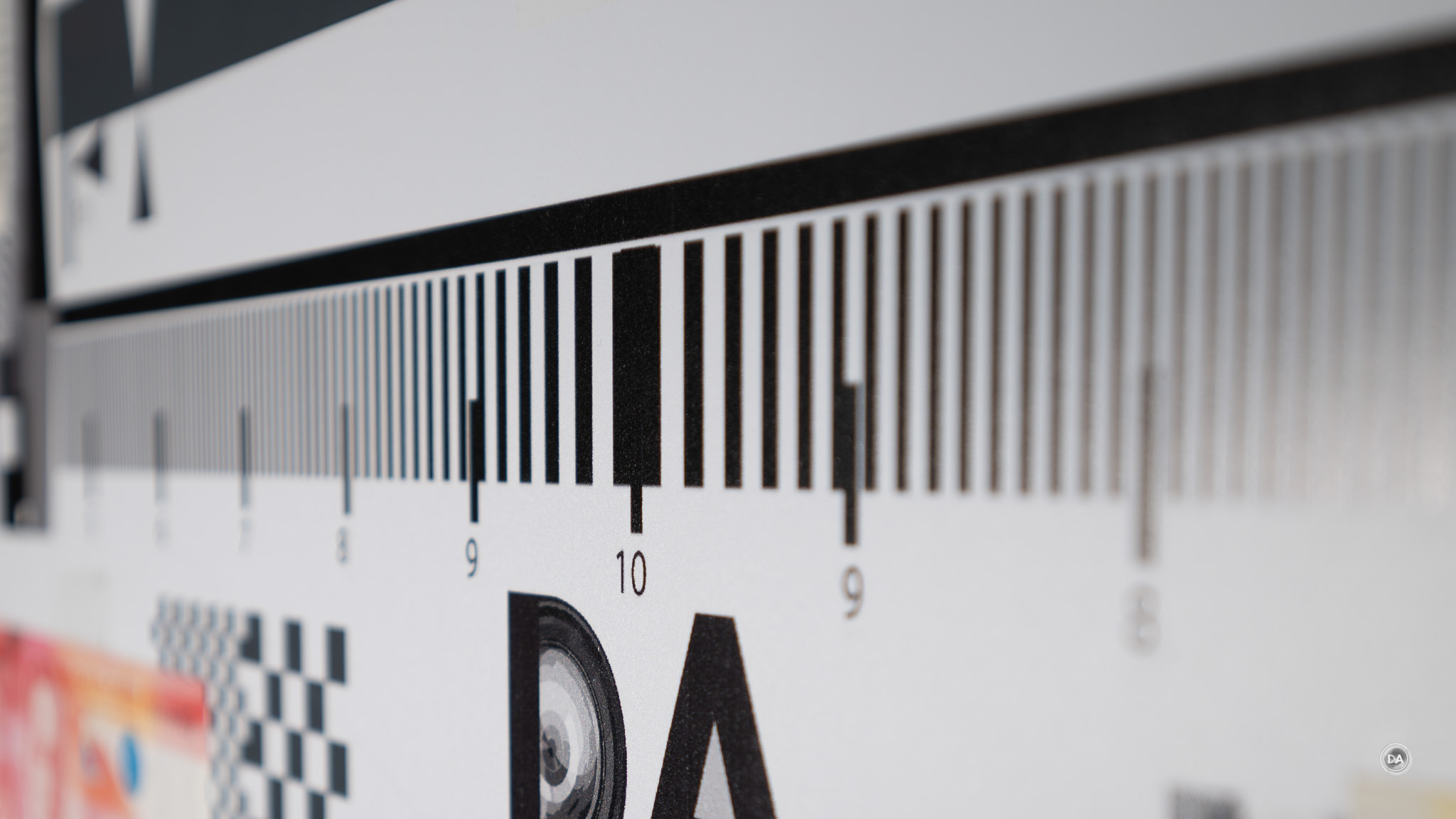
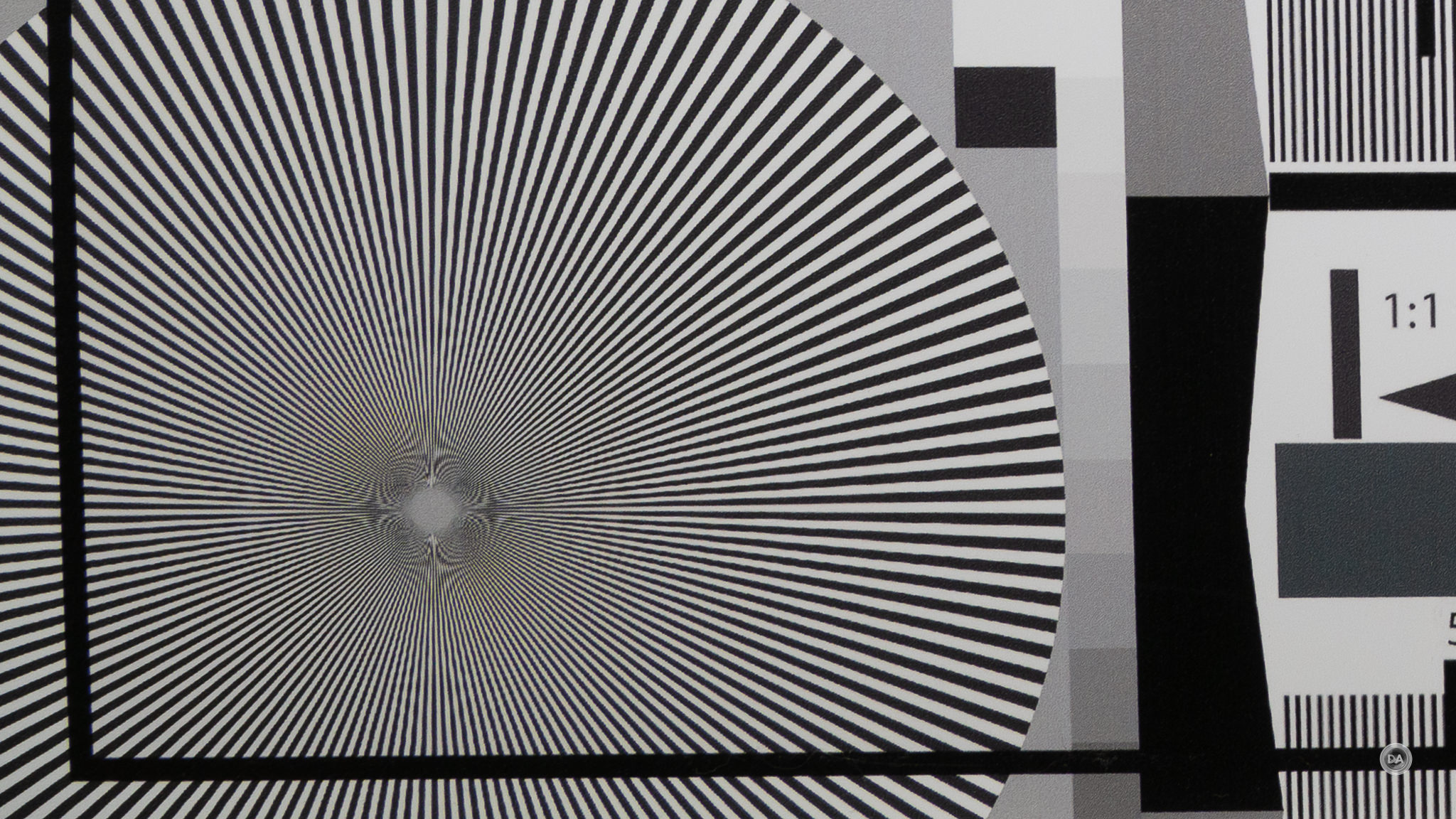
If we take a look at crops (at 200%) at14mm, F4 from the center, mid-frame, and lower right corner, we find that the center is extremely sharp and high contrast, the midframe a bit less so, and the corners actually look quite good for a wide angle lens.



Real world shots at 14mm, F4, are largely excellent. It’s a little softer in the corners, but still sufficiently sharp.



Long after the release of the 14-30mm S, Viltrox released a 14mm F4 budget prime lens from their AIR series. How does the inexpensive little Viltrox compare? The answer is quite well in the center (a draw, essentially), and it is sharper in the midframe, though the corners definitely belong to the S-line lens.
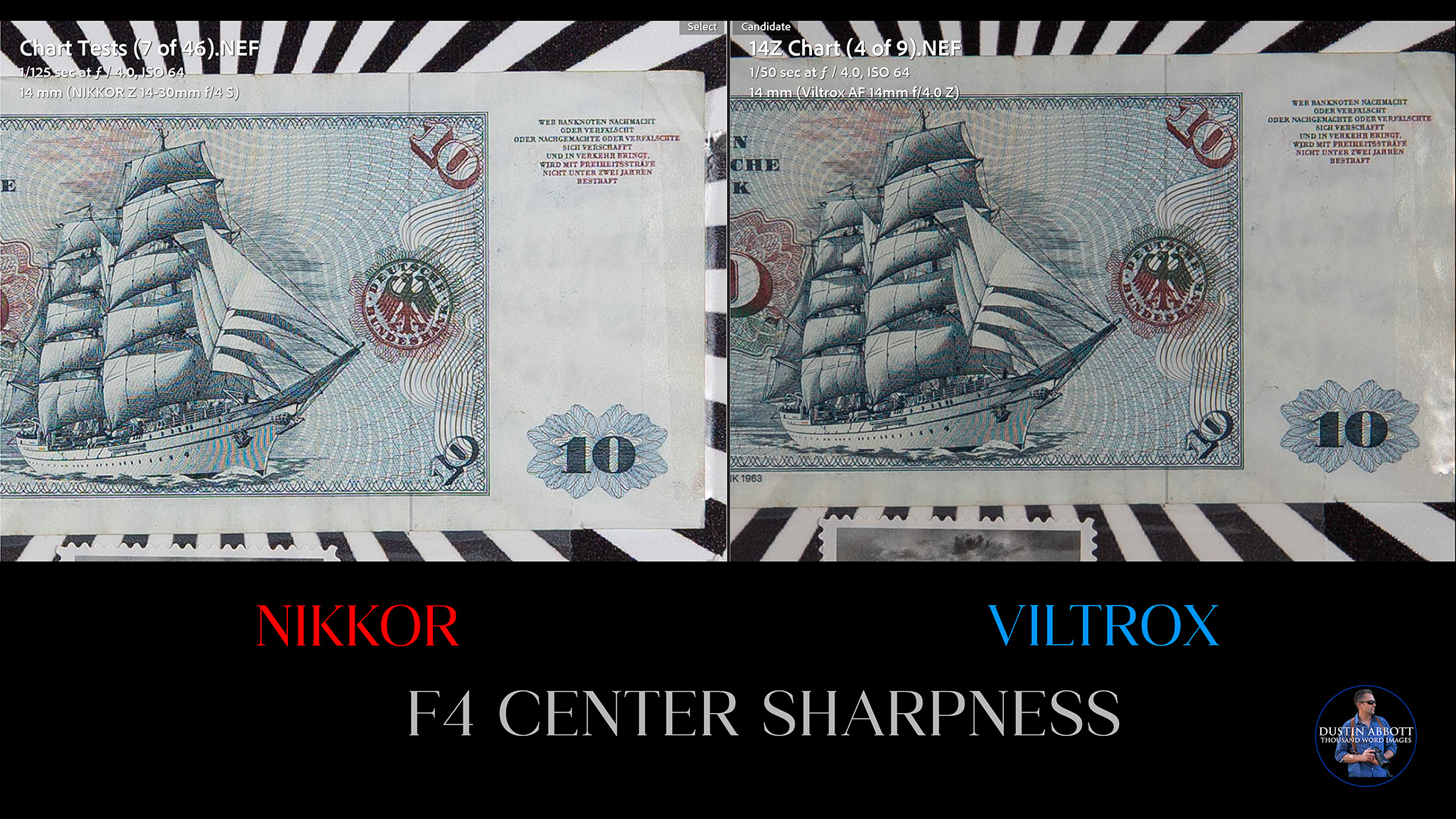
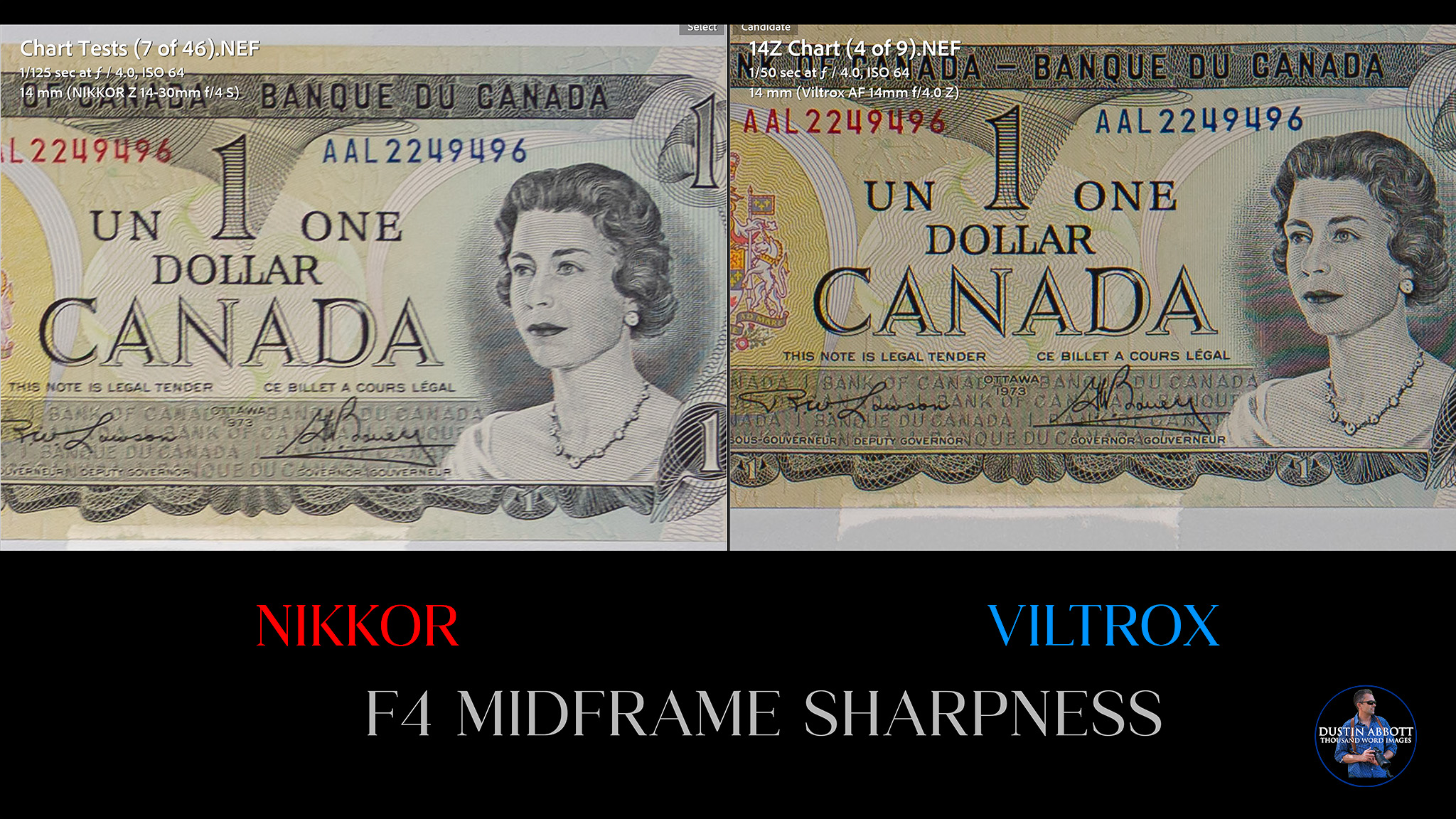

Of course the Viltrox doesn’t cover any of the other focal lengths covered by the 14-30mm, but does provide a cheap alternative if you just want to cover the 14mm focal length.
Stopping the 14-30mm down to F5.6 provides excellent sharpness all across the frame, including the corners. It’s worth that mild stopdown.

Landscape shots at F5.6-F8 look great, with good detail and color.

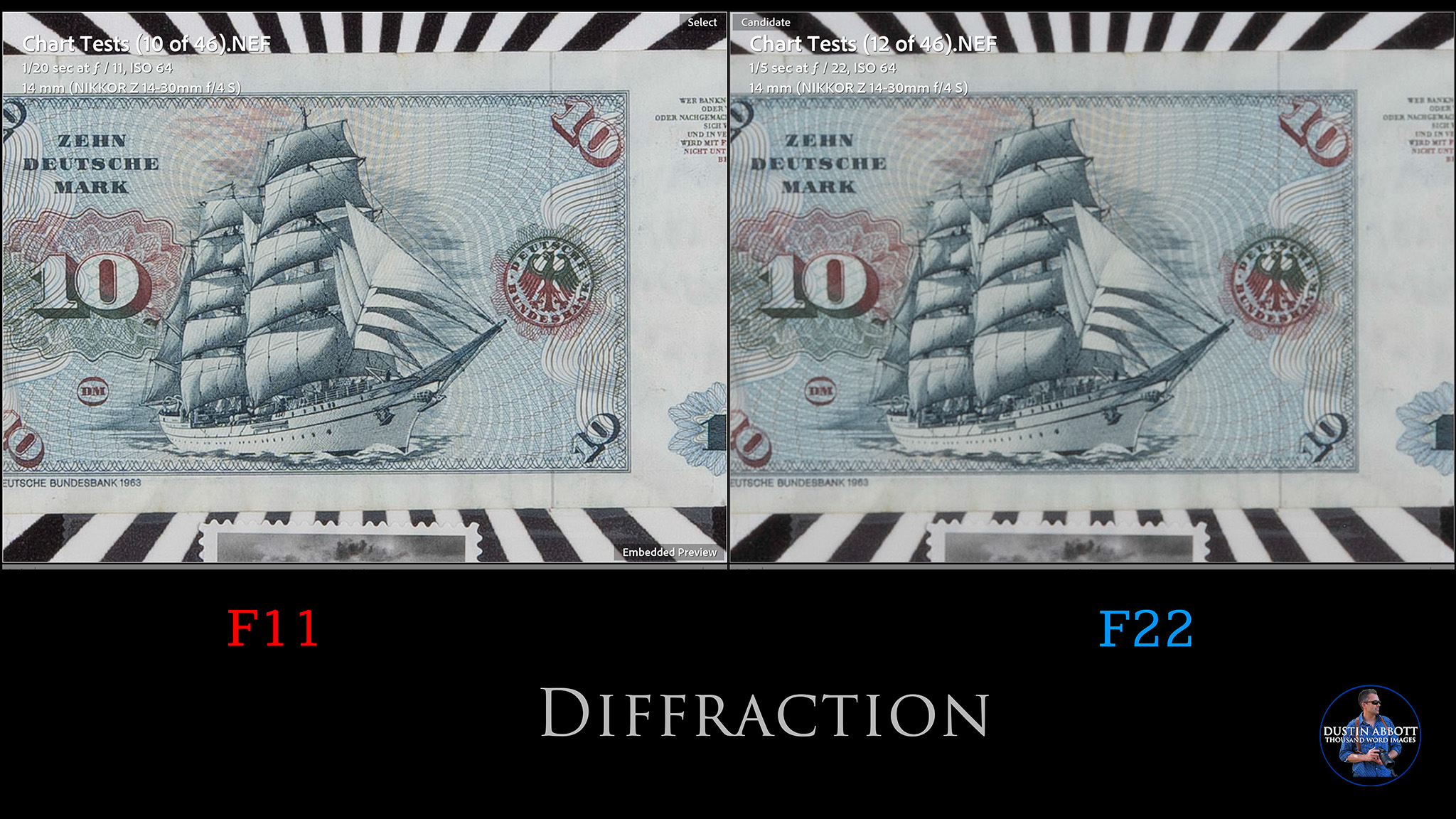
Physics will affect even the mightiest of lenses, however, so expect diffraction to start to (very slightly) soften the image by F11 and more obviously by F22, which is minimum aperture. There’s a huge difference between F11 and F22:
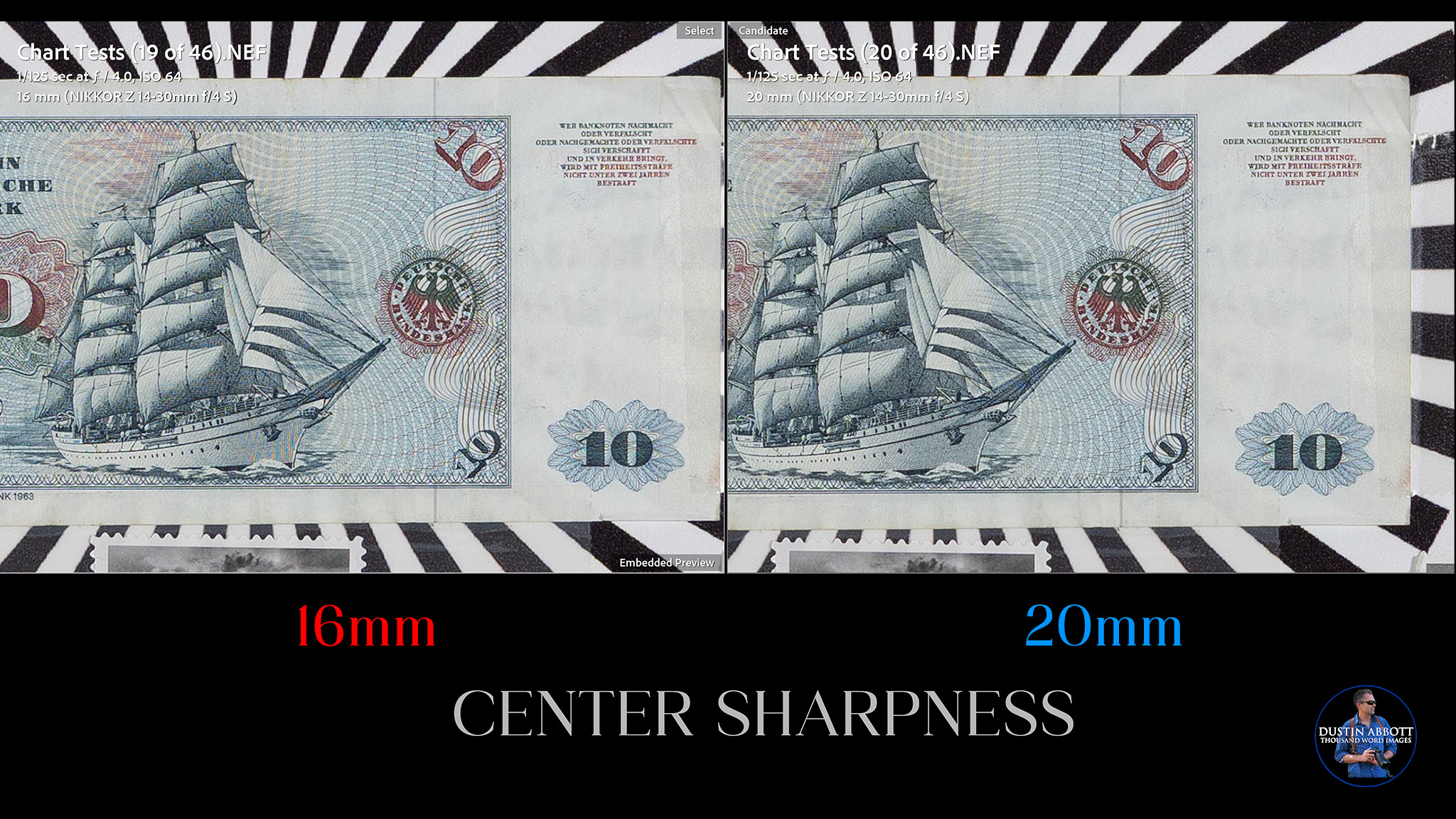
16mm largely follows the pattern of 14mm (unsurprisingly, since just 2mm separates the two marked positions in the zoom ring), with a sharp center and decent corners but an odd dip in the midrange. 20mm is slightly less sharp in the center but better in the midframe and corners.
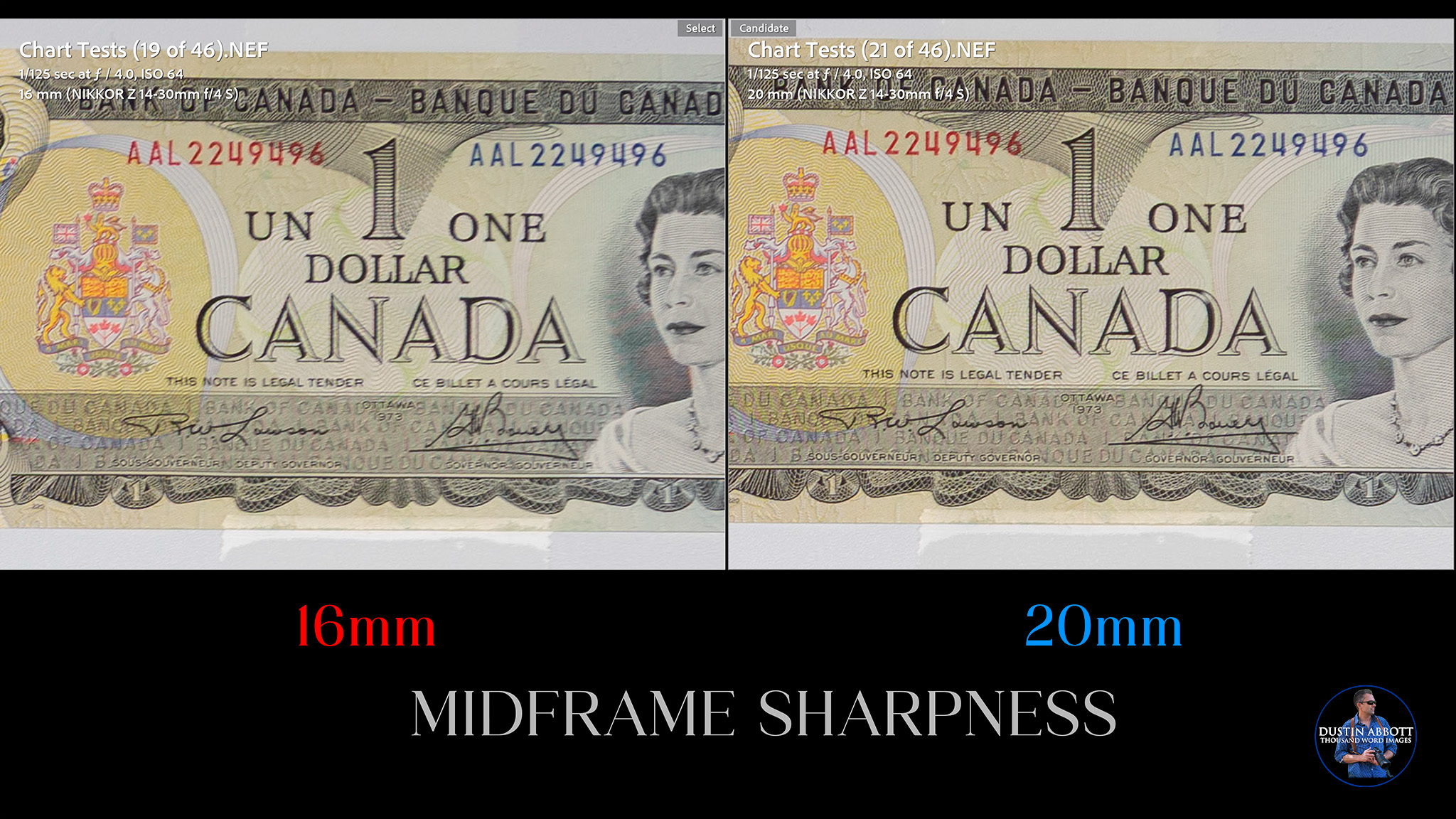
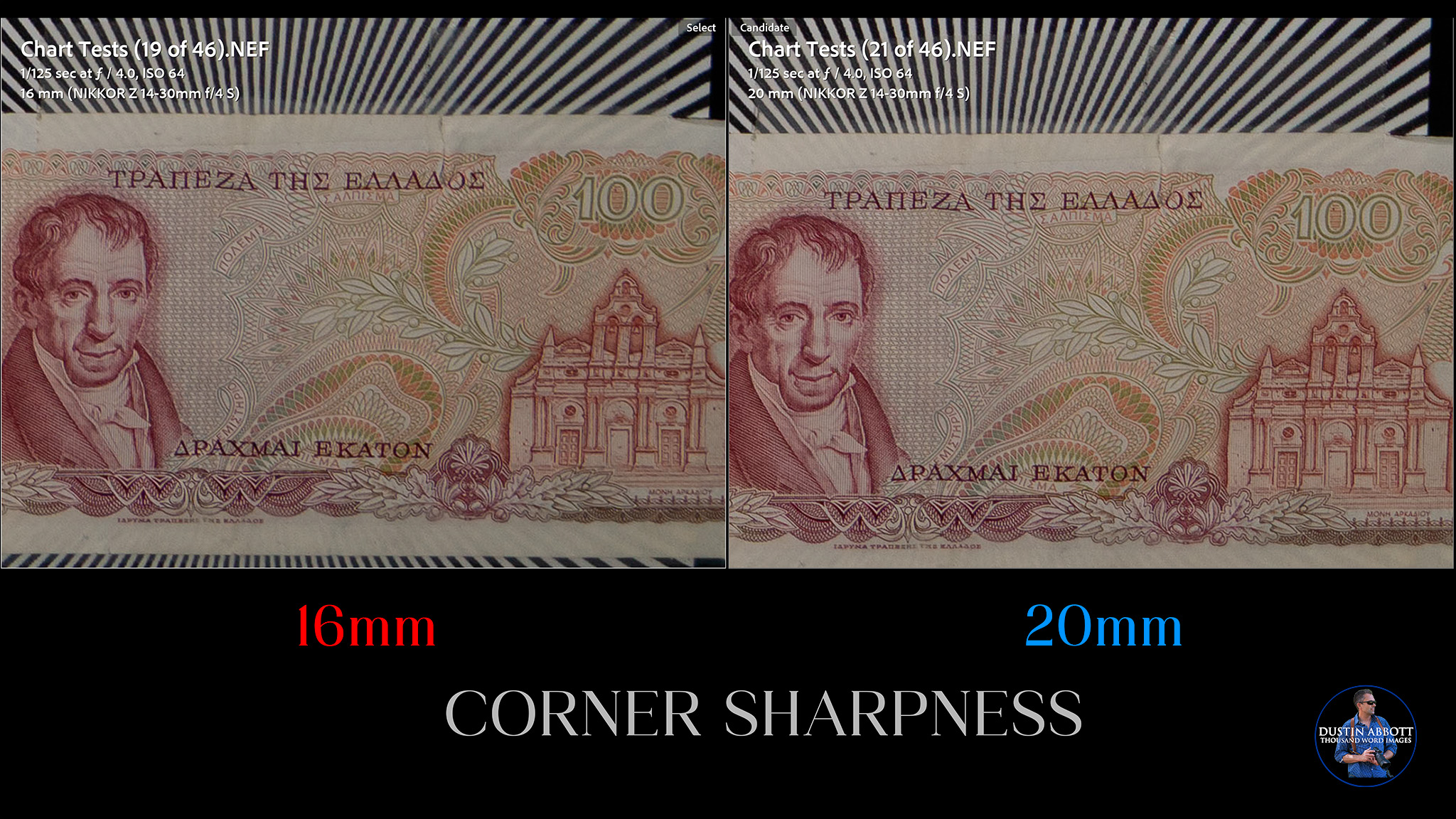
Stopping down to F5.6 provides more consistent performance across the frame, including sharp midframe results at 16mm.
Landscape results through this range are excellent.

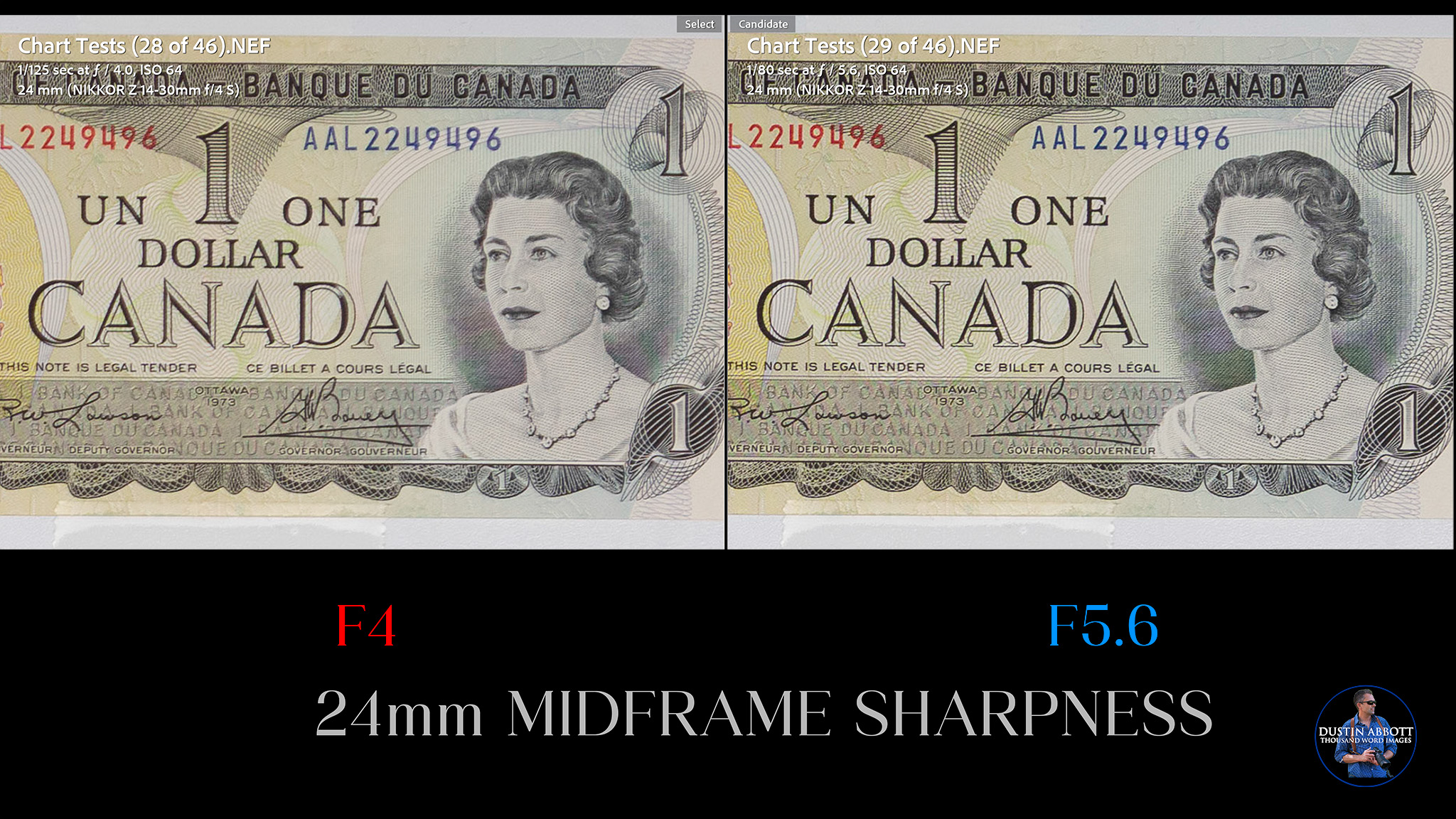
24mm shows a similar pattern with excellent center and corner results, but with a dip in the midframe that improves nicely by F5.6.
As expected, landscape images look great.
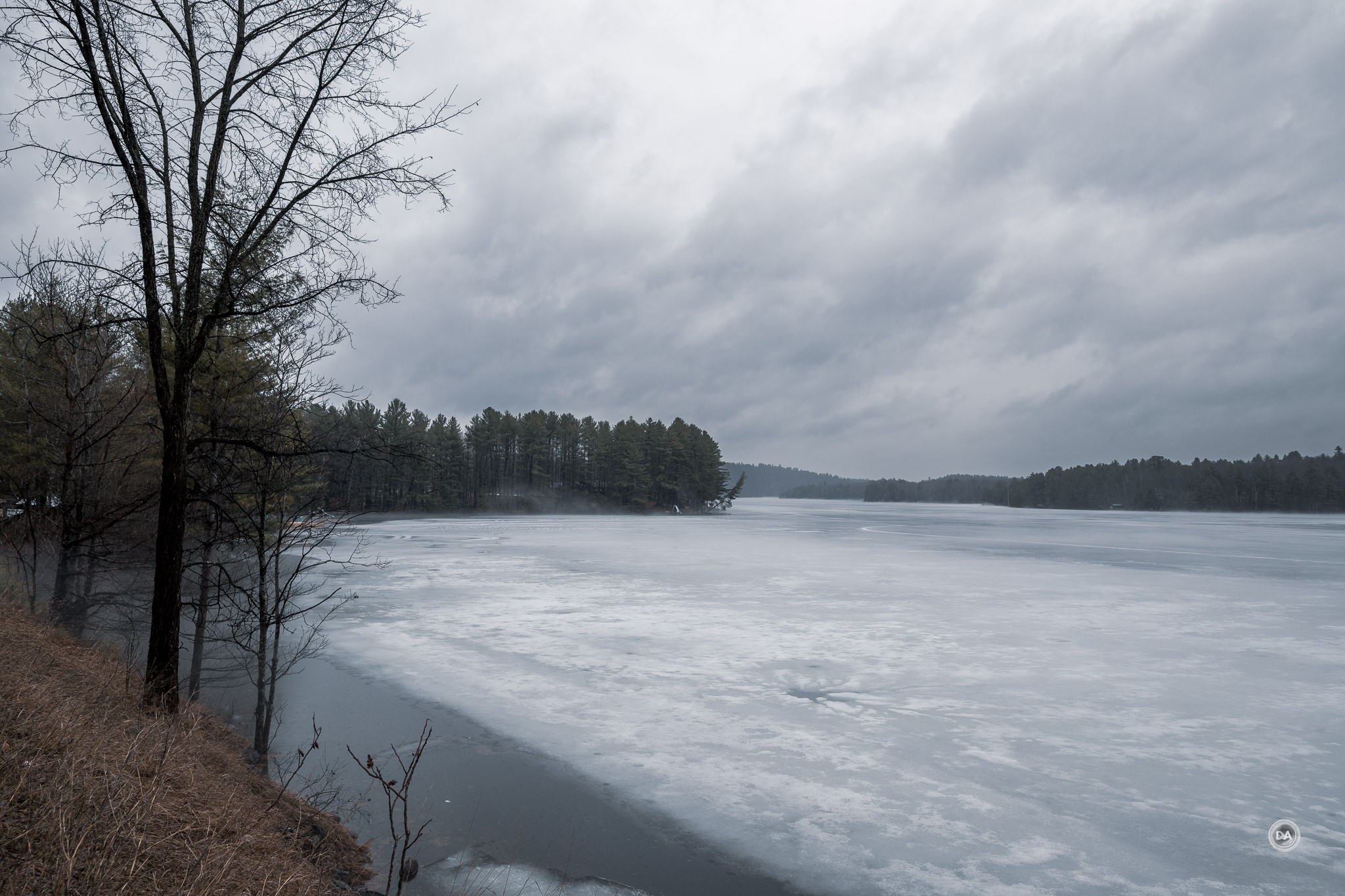
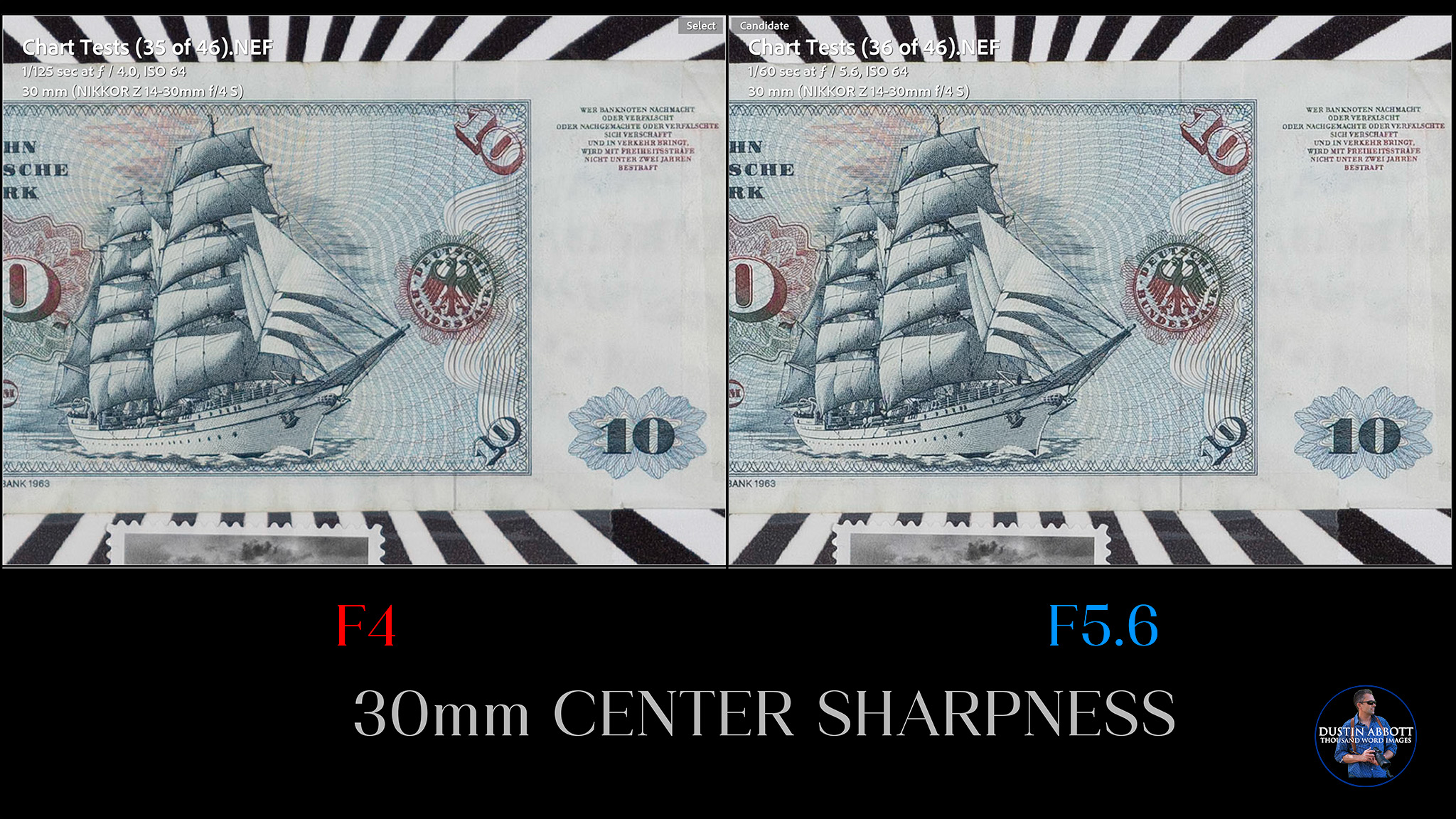
At 30mm, the lens has a bit less contrast, but stopping down to F5.6 restores the “pop”.
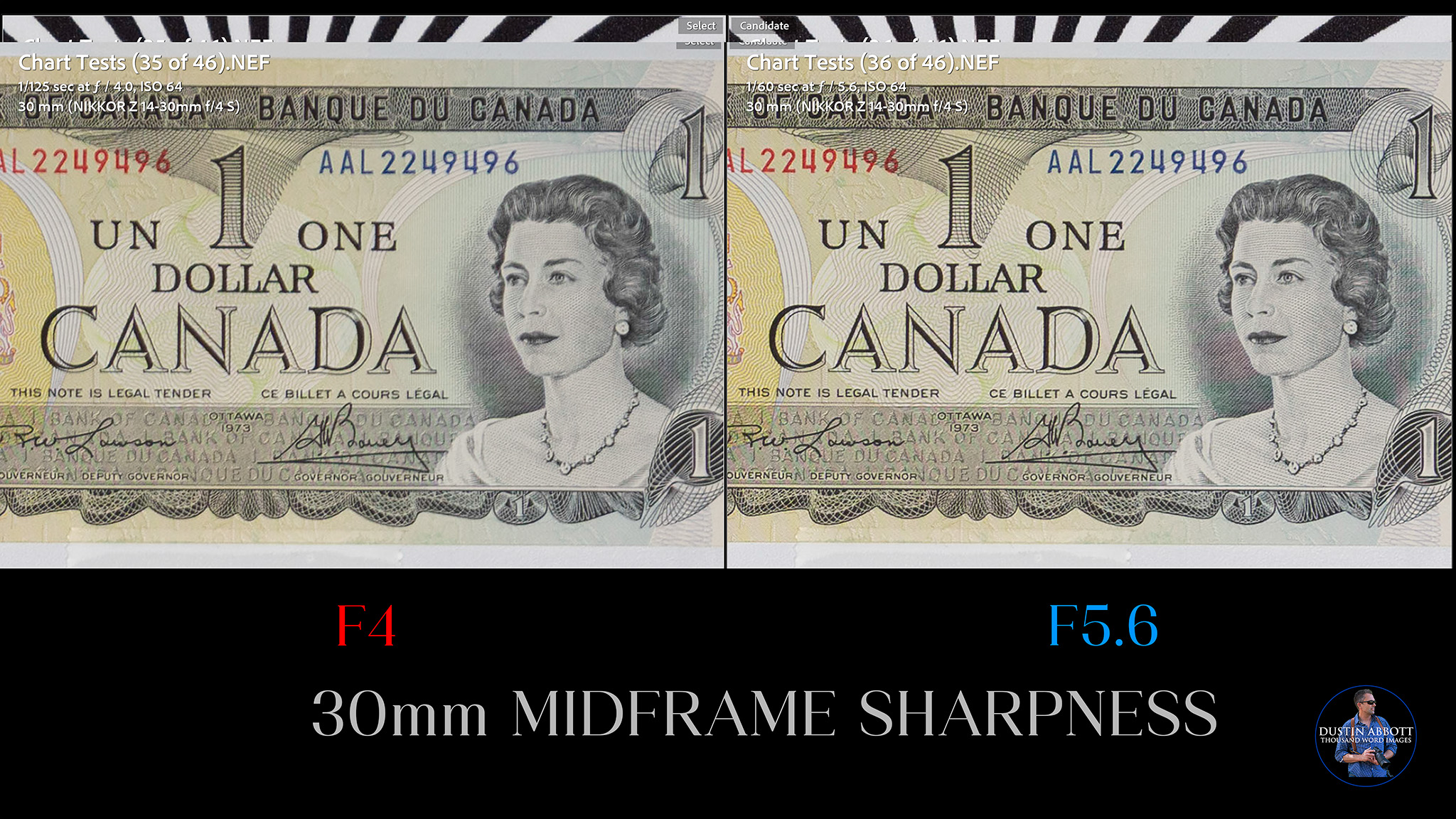
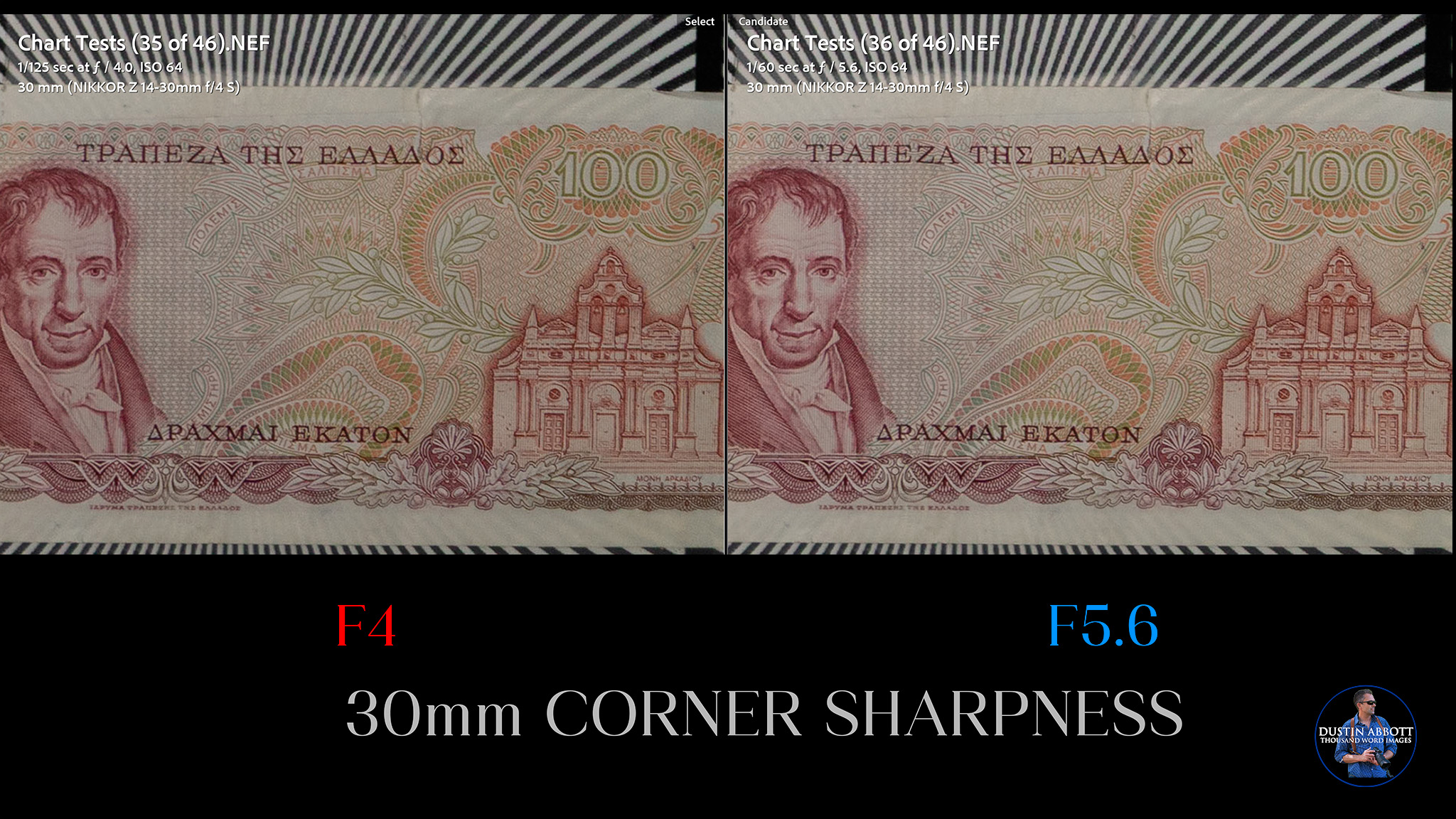
Landscapes will typically be shot at smaller apertures, anyway, so I found that I liked images from 30mm just fine.
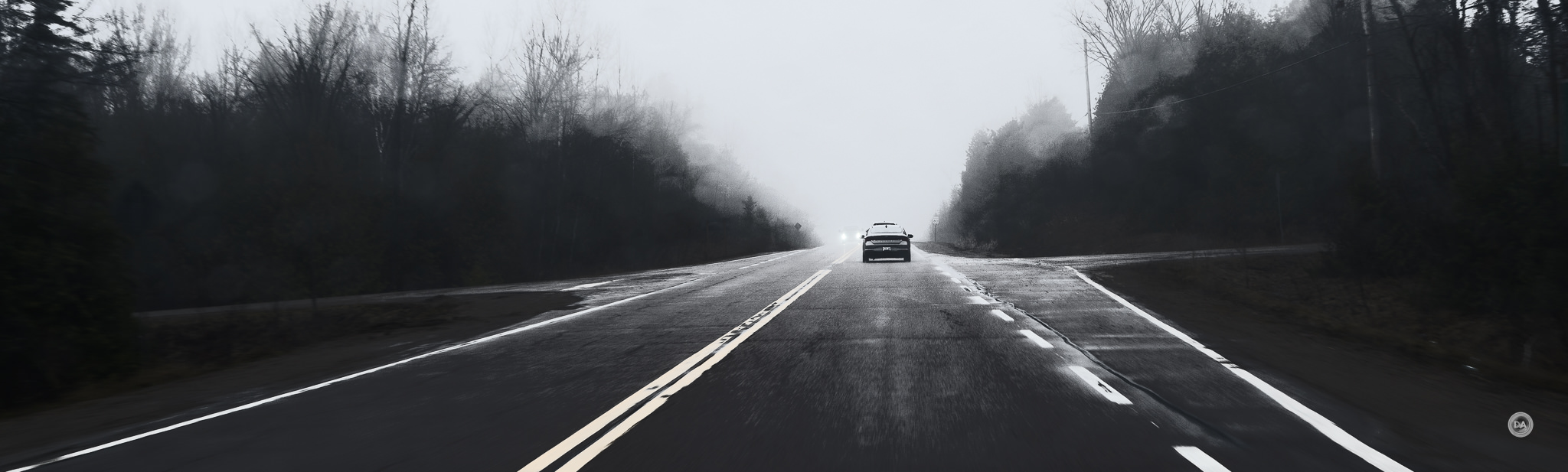
I got decent sharpness even in closer images at F4, however.

You don’t buy a lens like this for bokeh, but you can see from the image above that the transition to defocus is fine.
With a busier background (like the straw in the shot below), you can see that there are more hard edges than are preferable.
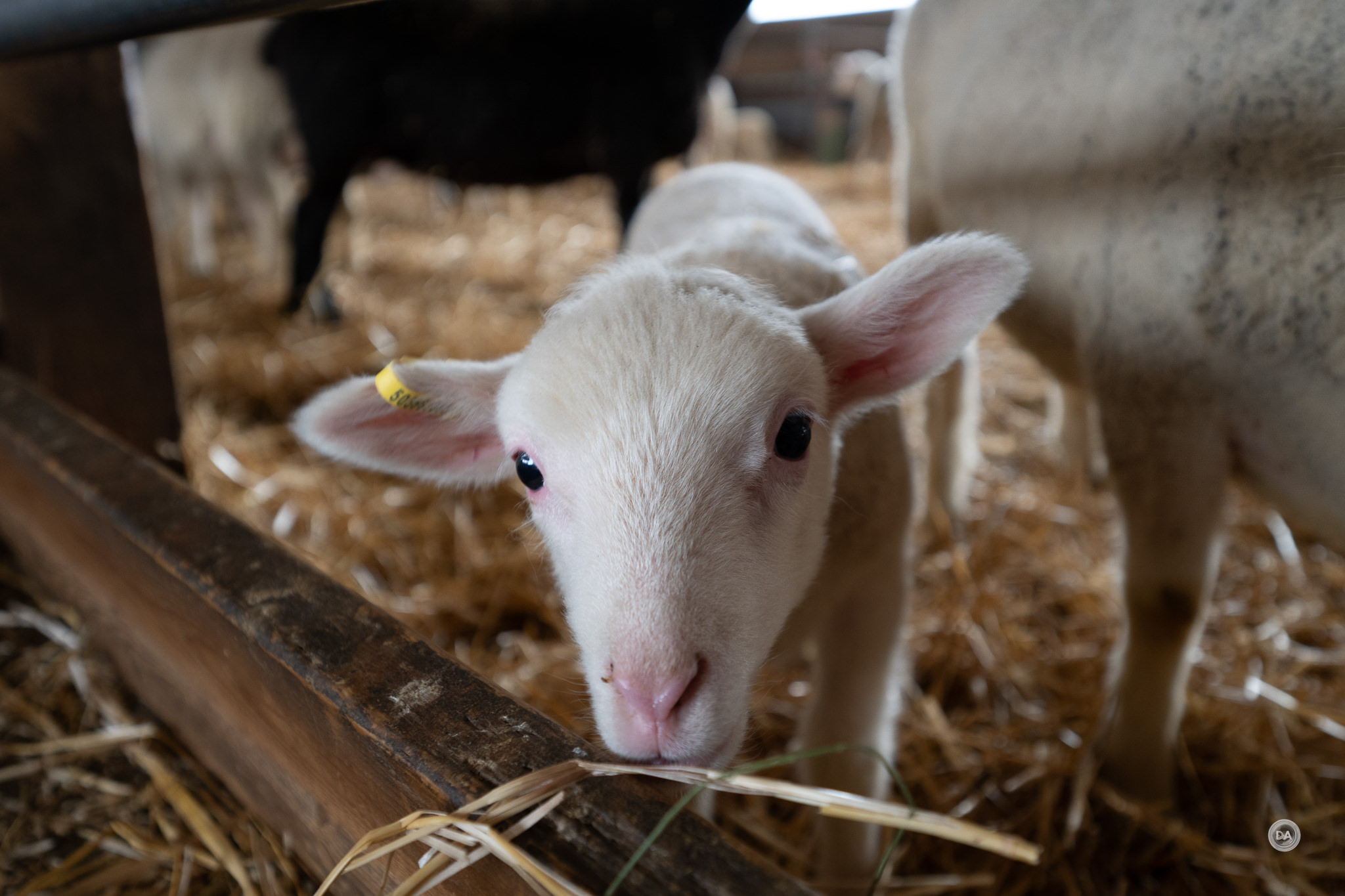
Nikkor used their Nano Crystal Coating on this lens, and, while they have newer coatings developed after this lens, I did find flare resistance to generally be very good.

I was able to use the sun as an asset rather than it be a liability.
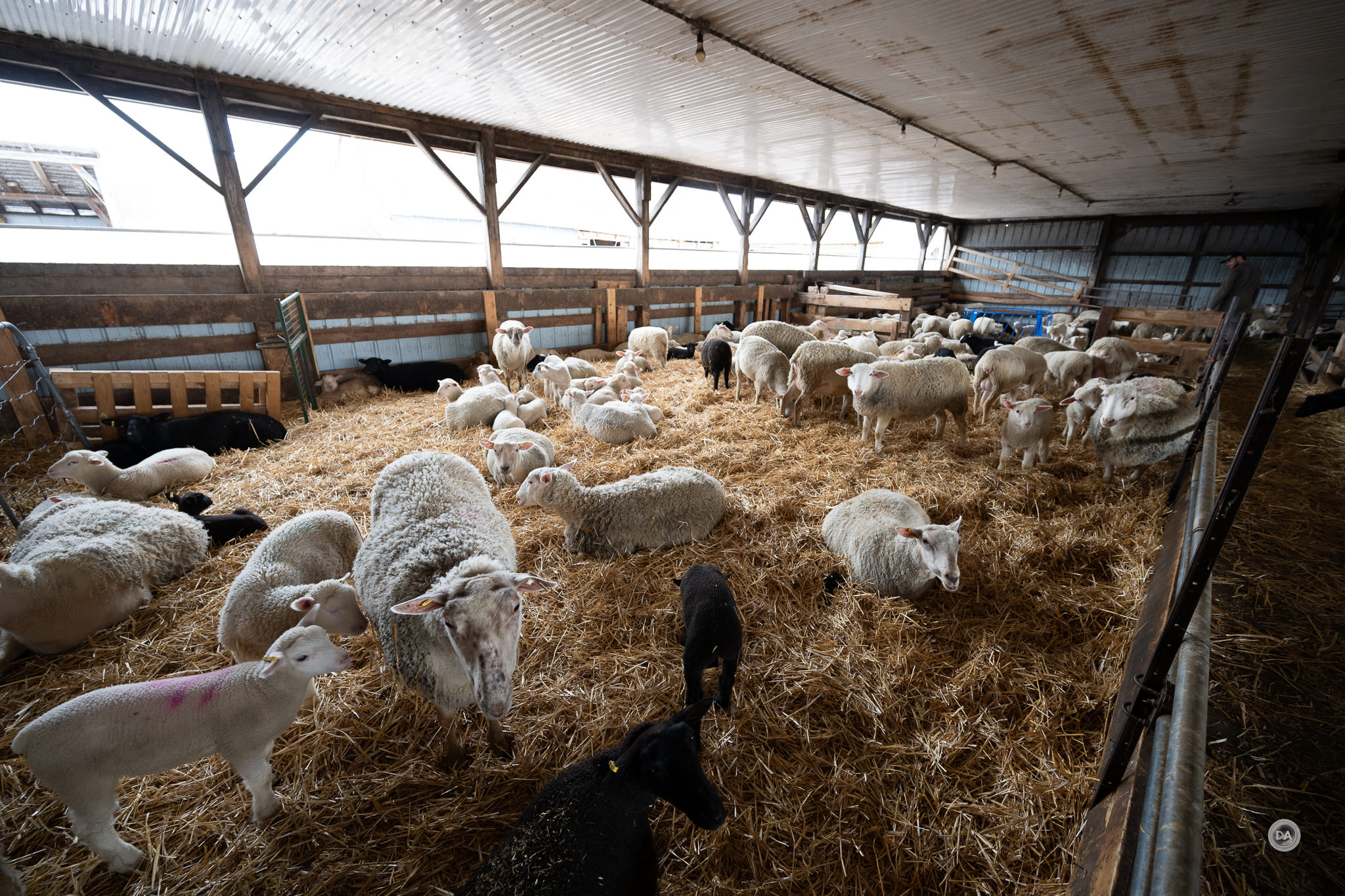
I used a few other lenses in this barn, and not all of them passed the test. The day was overcast, but the light coming through the open slats in the top of the barn was actually really bright, causing some flare issues with other lenses. The 14-30 S was unfazed.
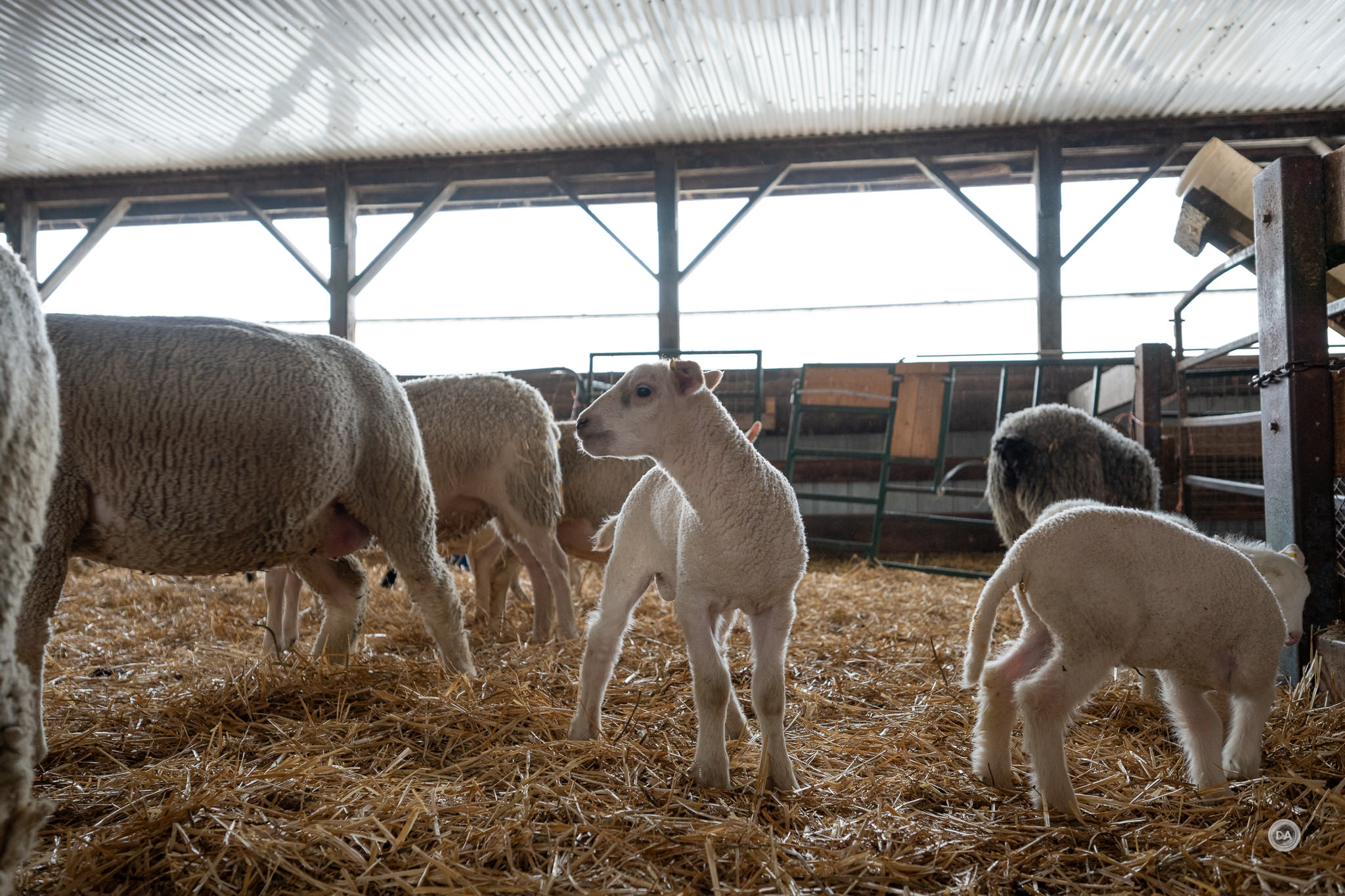
The bottom line is that there’s a reason why many people have loved the Nikkor Z 14-30mm F4 S since its release. It isn’t a flawless lens, but it is a very easy lens to make beautiful (and dramatic) photos with.

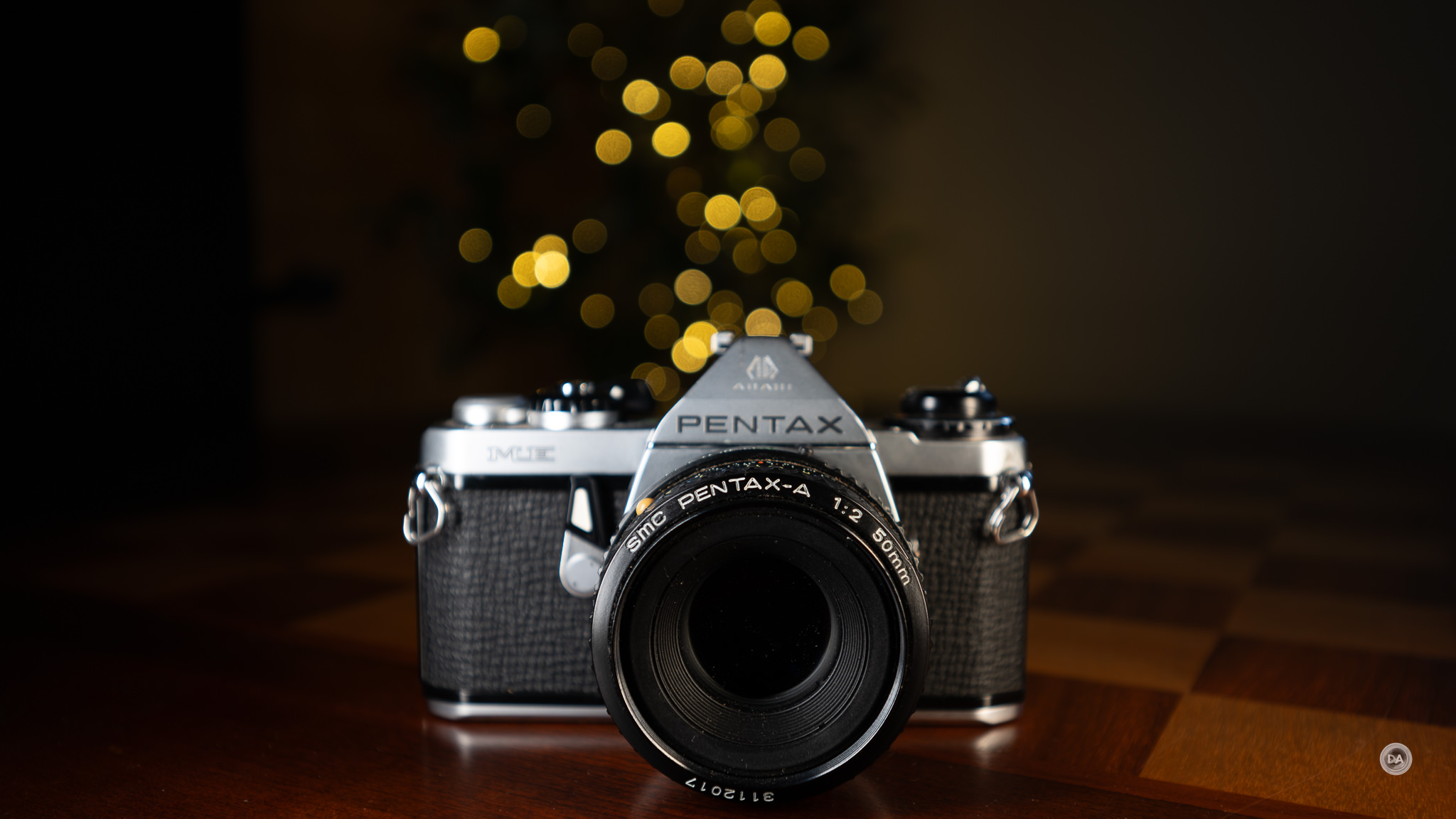
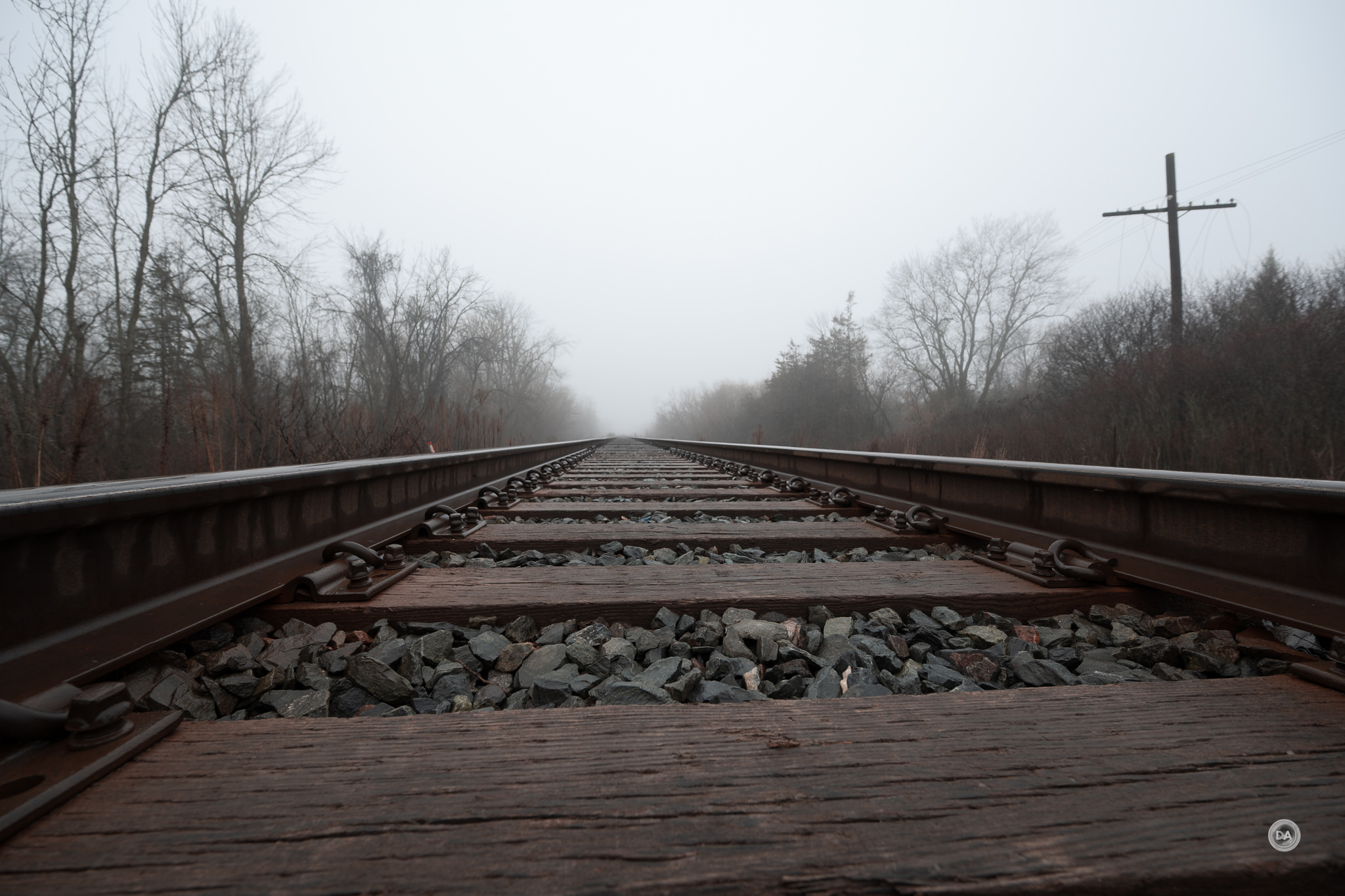
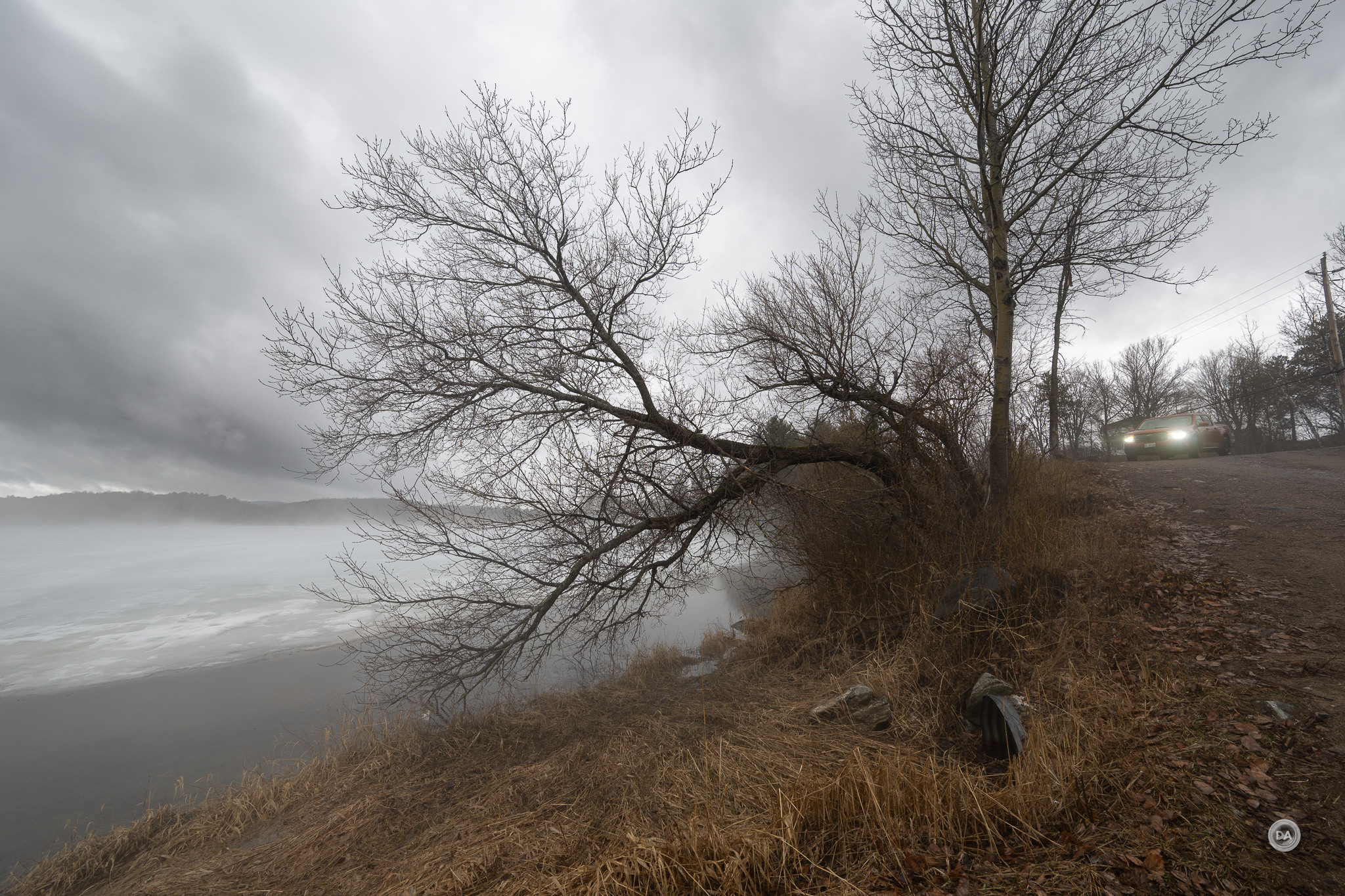
If you’d like to see more images, out the mini-gallery here.









Conclusion
My experience with wide angle zooms is that it is often the F4 variants that hit the “sweet spot” for many photographers. They are smaller, lighter, and cheaper, and most people can live without the faster maximum aperture in a wide angle lens.

The Nikkor Z 14-30mm F4 S leverages all of that into a compelling package that runs half the price of the 14-24mm F2.8 S while also offering much reach on the telephoto end. It’s probably not by accident that the F4 lens has twice as many user reviews on B&H, suggesting that it likely sells at a 2:1 ratio with the more expensive F2.8 lens.

While the 14-30mm F4 S isn’t a flawless lens, it is less optically compromised than Canon 14-35mm F4L IS, though the Canon does have the advantage of coming with lens-based stabilization. That’s not a big deal if your camera has camera-based stabilization (and all of Nikon’s cameras do), though the bit of wobble and warping I see in video suggests that lens-based stabilization might have worked a bit better. I don’t love the retractable zoom design, and I wish the lens relied a little less on electronic corrections, but there’s no question that this is a compact, useful zoom lens that I would happily own and use myself. The 14-30 S has enjoyed enduring popularity, and it is easy to see why.

Pros:
- Compact Size: At only 85mm in length when retracted, it is significantly smaller than other wide-angle options, making it more portable.
- Lightweight: Weighs just 485g (1.07 lbs), which is lighter than competitors like the 14-24mm F2.8 S, making it ideal for travel and handheld shooting.
- Versatile Zoom Range: Covers a practical focal length from 14mm to 30mm, suitable for a variety of photography styles, including landscapes and environmental portraits.
- Good Price Point: Offers a competitive MSRP of $1,396 USD, with discounts making it even more appealing compared to other premium lenses.
- Strong Image Quality: Excellent sharpness at the center and good performance in the corners, especially at f/4 and when stopped down to f/5.6.
- Fast Autofocus: Uses a stepping motor for quick and accurate autofocus, making it responsive for both stills and video.
- Weather-Sealed Design: Built for durability in adverse conditions, which is beneficial for outdoor photographers.
- Good Flare Resistance: The Nano Crystal Coating effectively reduces lens flare, enabling creative shooting in bright conditions.
- Screw-In Filter Threads: Accepts common 82mm filters, providing versatility for various photographic techniques.
- Programmable Control Ring: Allows customization of functions, enhancing shooting experience.
Cons:
- No Lens-Based Stabilization: Lacks built-in optical stabilization, which can be a disadvantage for handheld shooting, particularly in low-light situations.
- Retractable Design Limitations: The need to manually extend the lens before use can slow down shooting, especially in fast-paced environments.
- Dependence on Electronic Corrections: Requires significant electronic corrections for distortion and vignetting, which may not always yield perfect results.
- Build Quality Perception: Some users may perceive the build quality as “plasticky” compared to premium lenses from competitors, affecting the overall feel.
- Potential for Distortion: Despite good optical design, the lens exhibits some barrel distortion at the wide end, requiring corrections in post-processing.
- Color Fringing: Some longitudinal and lateral chromatic aberrations might be noticeable in high contrast scenes, although they are generally well-controlled.
_________________________________________________________________________
GEAR USED:
Purchase the Nikkor Z 14-30mm F4 S @ B&H Photo | Adorama | Amazon | Camera Canada | Amazon Canada | Amazon UK | Amazon Germany
Purchase the Tamron 16-30mm F2.8 G2 @ B&H Photo | Adorama | Camera Canada | Amazon
_______________________________________________________________
Purchase the Nikon Z8 @ B&H Photo | Adorama | Amazon | Camera Canada | Amazon Canada | Amazon UK | Amazon Germany
_________________________________________________________________
Want to support this channel? Use these affiliate links to shop at: B&H Photo | Amazon | Adorama | Camera Canada | Amazon Canada | Amazon UK | Ebay | Make a donation via Paypal
Buy DA Merchandise https://bit.ly/TWIMerch

Keywords: Nikkor, Nikkor Z 14-30, F4, F4S, Nikkor Z, Nikkor Z 14-30mm F4 S review, Nikon 14-30mm, Nikon Z 14-30mm, Nikon, Nikon Z8, Z, Z-mount, Z8, Review, mirrorless, Full Frame, Sports, Tracking, Dustin Abbott, Real World, Comparison, Handling, Focus, Portraits, Resolution, High ISO, Image Quality, Sample Images, Photography, 45MP, #letthelightin, #DA, #NIKON, #Z8, #NIKONZ8, #NikonZ14_30f4s, #NikonLens, #PrimeLens, #PortraitPhotography, #WeddingPhotography, #Astrophotography, #ProfessionalPhotography, #CameraGear, #NikonZmount, #PhotographyGear, #LensReview, #UltimatePortraitLens, #NikonPhotographers
Related posts:
 Nikkor Z 35mm F1.2 S Review
 Nikkor Z 24-120mm F4 S Review
 Nikkor Z 24-70mm F2.8 S II Review
 Nikkor Z 50mm F1.2 S Review
 Nikkor Z 135mm F1.8 S Plena Review
 Nikkor Z 135mm F1.8 S Plena Gallery
 LAB vs PLENA: Nikon 135mm Showdown
 Nikkor Z 40mm F2 Review
 Nikkor Z 40mm F2 Image Gallery
 Nikkor Z 50mm F1.8 S Review