


Before I shot DSLRs, and then mirrorless, there were ‘bridge’ cameras. I used multiple bridge cameras because of the great appeal of having better image quality than a ‘point-and-shoot’ camera (and more telephoto reach) while not having to deal with the cost and complexity of an interchangeable lens camera. Sony’s RX10 series has been amongst the best of the bridge cameras, pairing a very good quality zoom with a good 1” sensor. With the RX10V, however, the series pushes hard into becoming more aligned with the Sony’s Alpha mirrorless cameras, delivering a lot of the features, menus, autofocus, and video specs mirrorless users will be familiar with. Like many of Sony’s recent cameras, the RX10V has moved upscale in terms of performance, but also in price. Will potential buyers be ready to drop nearly $2400 on a bridge camera? Perhaps so, when they know they are getting a lens with a 24-600mm full frame equivalent zoom range, up to 30FPS burst rate, and the ability to shoot up to 4K120 video. Find out my full thoughts in the video below, or read on in the text review.
Follow Me @ YouTube | Patreon | Instagram | Facebook | DA Merchandise | Flickr | 500px | X
Thanks to Sony USA for sending me a review loaner of this camera. As always, this is a completely independent review. *The tests and most of the photos that I share in this review have been taken with the camera. You can find the product page for the camera here. Most of the links are included are affiliate links from I earn a small percentage when you purchase from them.
__________________________________________________________________________________________________
AI SUMMARY: The Sony RX10V represents a significant advancement in the bridge camera category, merging high-end features with user-friendly design, making it appealing for both photographers and hybrid shooters. With a powerful 24-600mm zoom lens and improved autofocus capabilities, it caters well to wildlife, sports, and travel photography. However, despite its excellent video specifications and robust build quality, the 1-inch sensor faces limitations in low-light situations. Overall, the RX10V stands out for its unified functionality, though its high price might challenge some consumers to embrace this high-performance bridge camera.
Strengths:
- Exceptional 24-600mm zoom range and solid build quality.
- Significantly improved autofocus with AI tracking.
- Strong video capabilities up to 4K120, along with extensive connectivity options.
- Enhanced battery life and an updated interface consistent with Sony’s Alpha lineup.
Weaknesses:
- 1-inch sensor struggles in very low light compared to larger sensors.
- Fixed lens limits flexibility in terms of wider apertures and unique focal lengths.
- Design and form factor closely resemble its predecessor without notable redesign features.
- Buffer clearing is relatively slow after high-burst shooting sessions.
________________________________________________________________________________________________
Key Features
- 0.5”, 3.68 mil dots Viewfinder
- Tilting 3” LCD screen with 1.62m dots resolution
- Dust and moisture resistant
- Up to 4K120 (crop) | 4K60 – full pixel, 5.4K oversampling
- S-Cinetone, S-LOG, user luts, Time-lapse, Auto Framing
- MI shoe | 2 or 4 channel video recording
- Active Mode stabilization + Lens based OSS
- 24-600mm (F2.4-4 Zeiss Vario-Sonar T* zoom) 25x zoom (35mm equivalent)
- 8 ED, 2 Asph ED, Precision AA (Advanced Aspherical)
- Focus Hold, AF | MF, Declick, etc… – feature set updated to current standard
- Macro capabilities – 3cm” on wide end – 0.42x | – 0.49x
- Powerzoom + Clear Image Zoom
- 1” Stacked Sensor, 20.1 MP. Exmore RS backside illuminated stacked CMOS
- 557 points covering 70.6% of sensor
- Dedicated AI Chip. Bionz XR – Real Time tracking
- All of the typical subject detection options from Alpha, including Auto
- Promoting Creative Look (FL2 and FL3) – all 12 presets are customizable
- Expanded Dynamic Range Optimizer up to Level 8
- ISO 100-12,800
- Up to 30FPS, black-out free, up to 60 AF/AE calculations
- Speed Boost – get faster burst when needed
- 5Ghz WiFi, 2 x USB-C, Micro-HDMI, Headphone + Mic jacks, Livestreaming up to 4K30 (supports RTMP, RTMPS, and SRT protocols for direct streaming)
- Creator’s App support
Zoom Range
The RX10V has the same lens as its predecessor, but that’s only because the lens was already quite excellent, particularly for a lens that covers a 24-600mm equivalent zoom range (that is a 25x zoom ratio!) The 1″ sensor has a 2.7x crop factor, so the actual lens focal length is 9.1-210mm. It gives you the ability to shoot from 24mm equivalent like this:
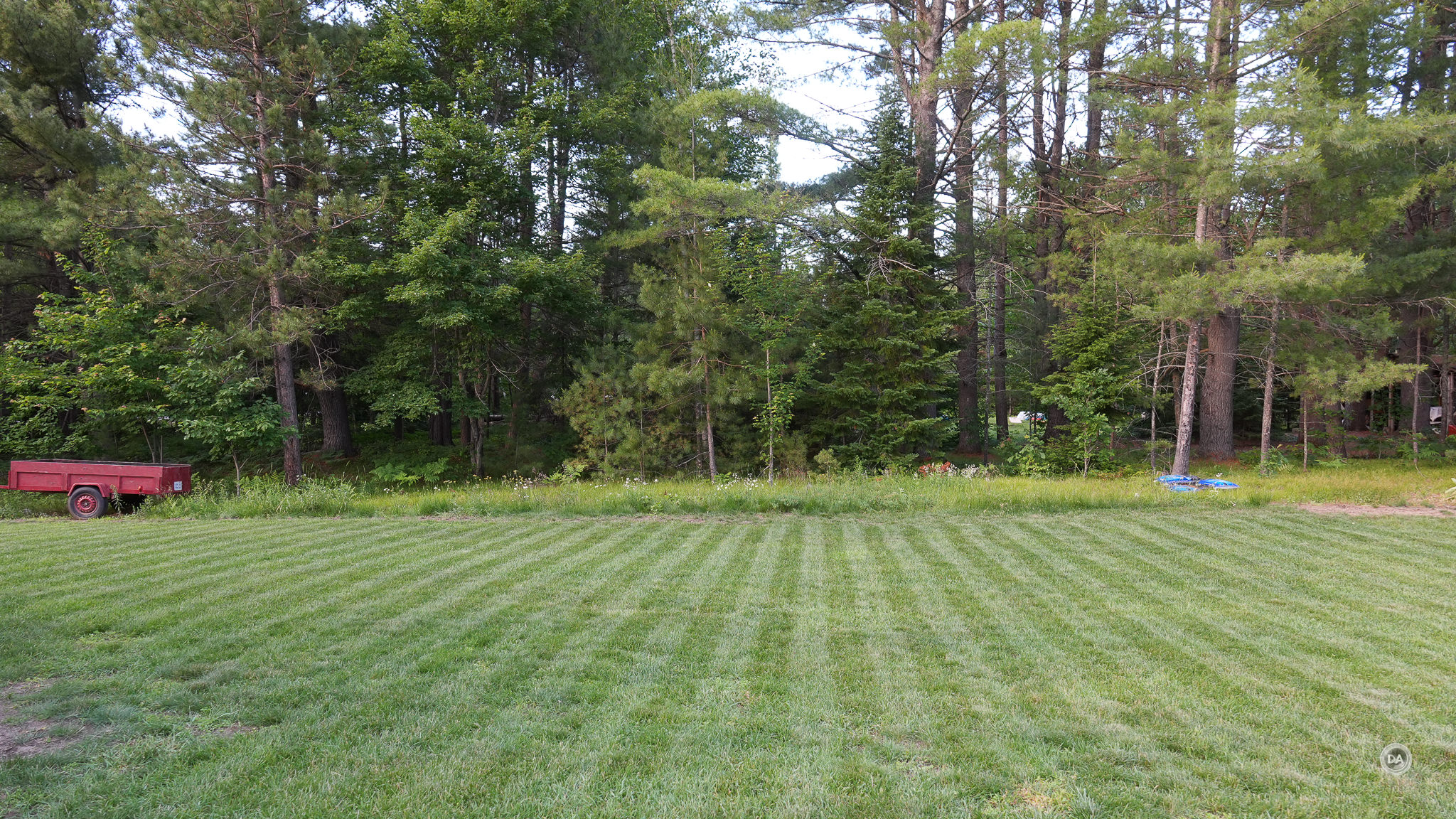
…all the way up to 600mm equivalent like this:

That is obviously an unbelievable range of ways to frame the scene.
That obviously covers pretty close to every necessary photography situation, save the rare one that requires a bit more width. And while the absolute image quality can’t match what high quality lenses mounted on high quality mirrorless bodies, the image quality is good enough to satisfy most people in most situations. The new RX10V keeps the soul of the RX10 IV while bringing it firmly into the current era of AI-powered autofocus, pro-level video tools, and refined usability. Let’s dive deeper.
Build and Features
When I picked up the RX10V, I found it very familiar. It felt like a slightly more chunky Alpha camera, complete with a familiar control scheme, menus, and general functionality. The one thing I had to wrap my mind around is that the front dial doesn’t turn the camera on or off but instead controls the power zoom. I definitely spent quite a few moments realizing I was zooming instead of powering off the camera. The ON | OFF button is located on the top plate, instead, but is still in a adequate position for one-handed operation.
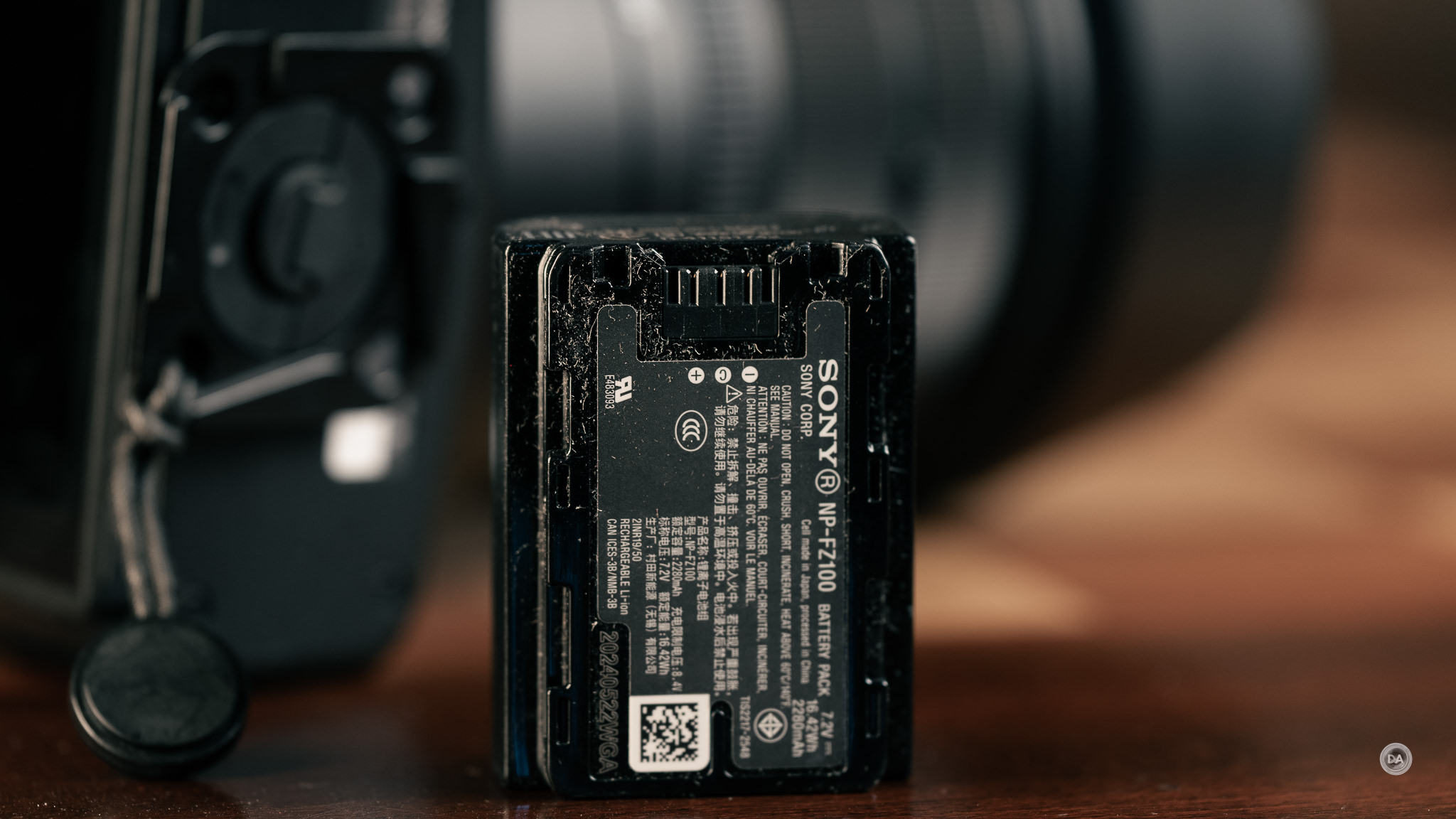
One of the key improvements over the RX10IV is an upgrade to the NP-FZ100 battery that we see in so many of the Alpha cameras. This is a higher capacity battery and solves one of the major issues with the RX10IV – battery life. We have about a 50% improvement, according to Sony, with as many as 630 shots per charge when using the LCD (as rated by CIPA). Using the viewfinder will give a few less, but as with all CIPA ratings, it is very easy to get many more shots than that.
The memory card slot is also located in the battery compartment (not my favorite location), and it is a single UHS-II rated SD slot. The camera has a high burst rate, but the relatively low resolution point (20MP) means that the files are small enough that the slower SD standard is fast enough.

The viewfinder stack looks a lot like many Alpha cameras, though it does extend a bit further back. Inside is an upgraded 0.5-inch EVF with approximately 3.68 million dots of resolution. Even better, however, is that the new sensor is fully stacked, allowing the viewfinder to be blackout free during burst shooting. In practice, the viewfinder is clear and has a decent refresh rate, and, while it can’t match the resolution found in some of Sony’s better cameras, is a clear upgrade over the previous generation and will feel familiar to someone coming from a camera like the a7IV.
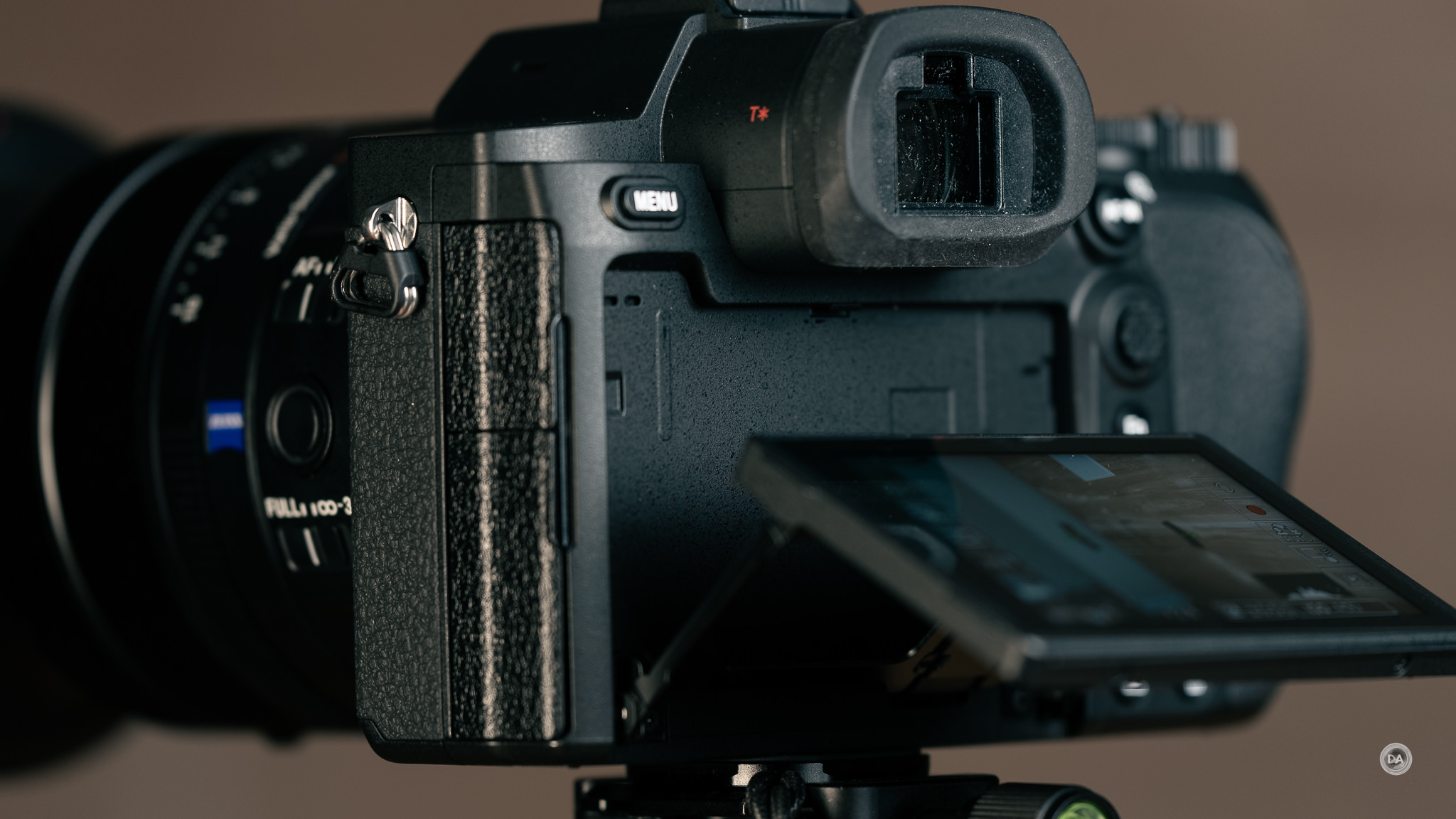
The hotshoe on top of the viewfinder stack has been upgraded to Sony’s “MI-shoe” (Multi-Interface), which allows not just for flashes or flash triggers to be mounted there but also for digital 2- or 4-channel audio recording via compatible microphones.
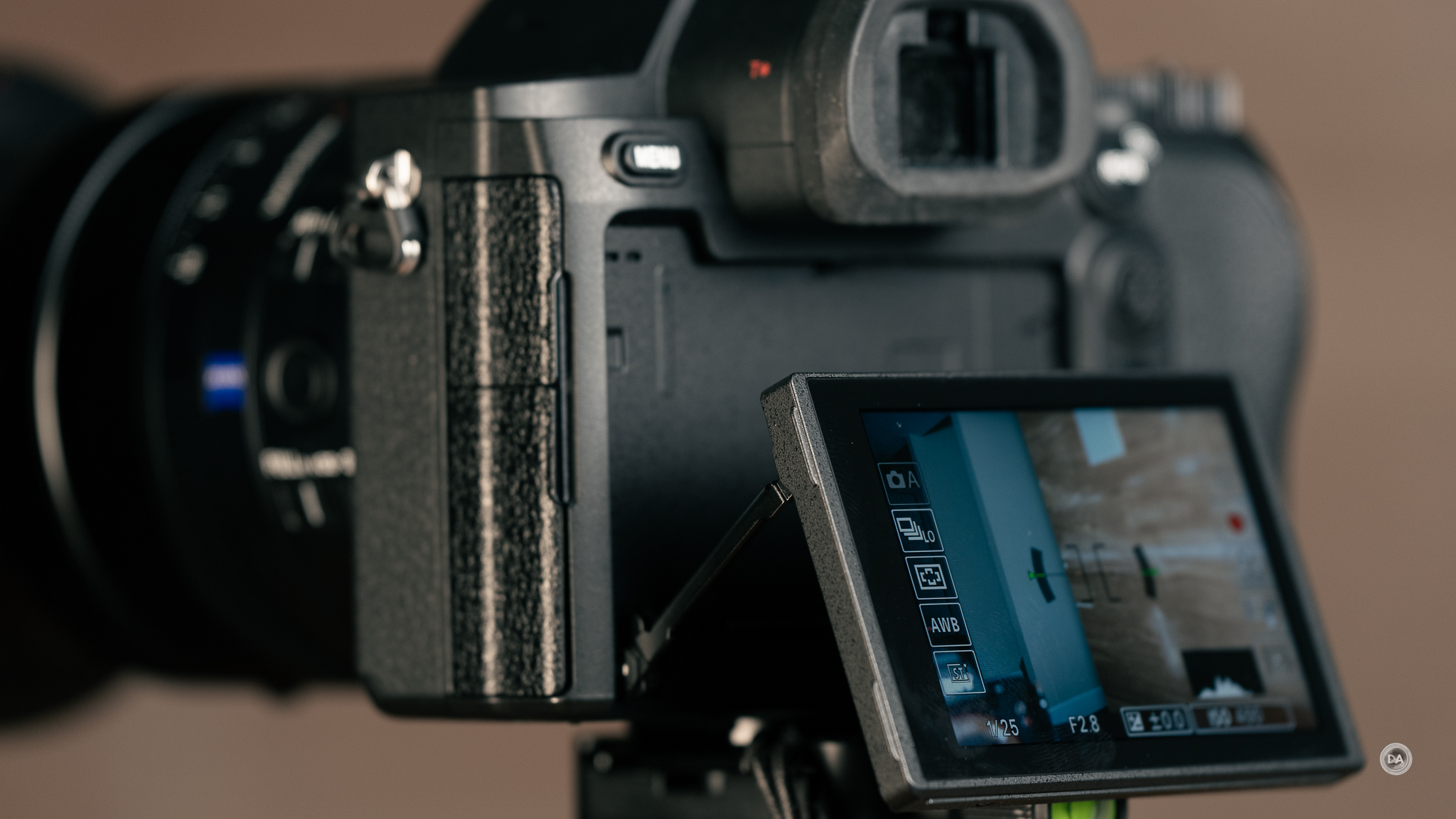
Also improved is the LCD, which is now a tilting (but not articulating) 3” touchscreen with 1.62 million dots of resolution.
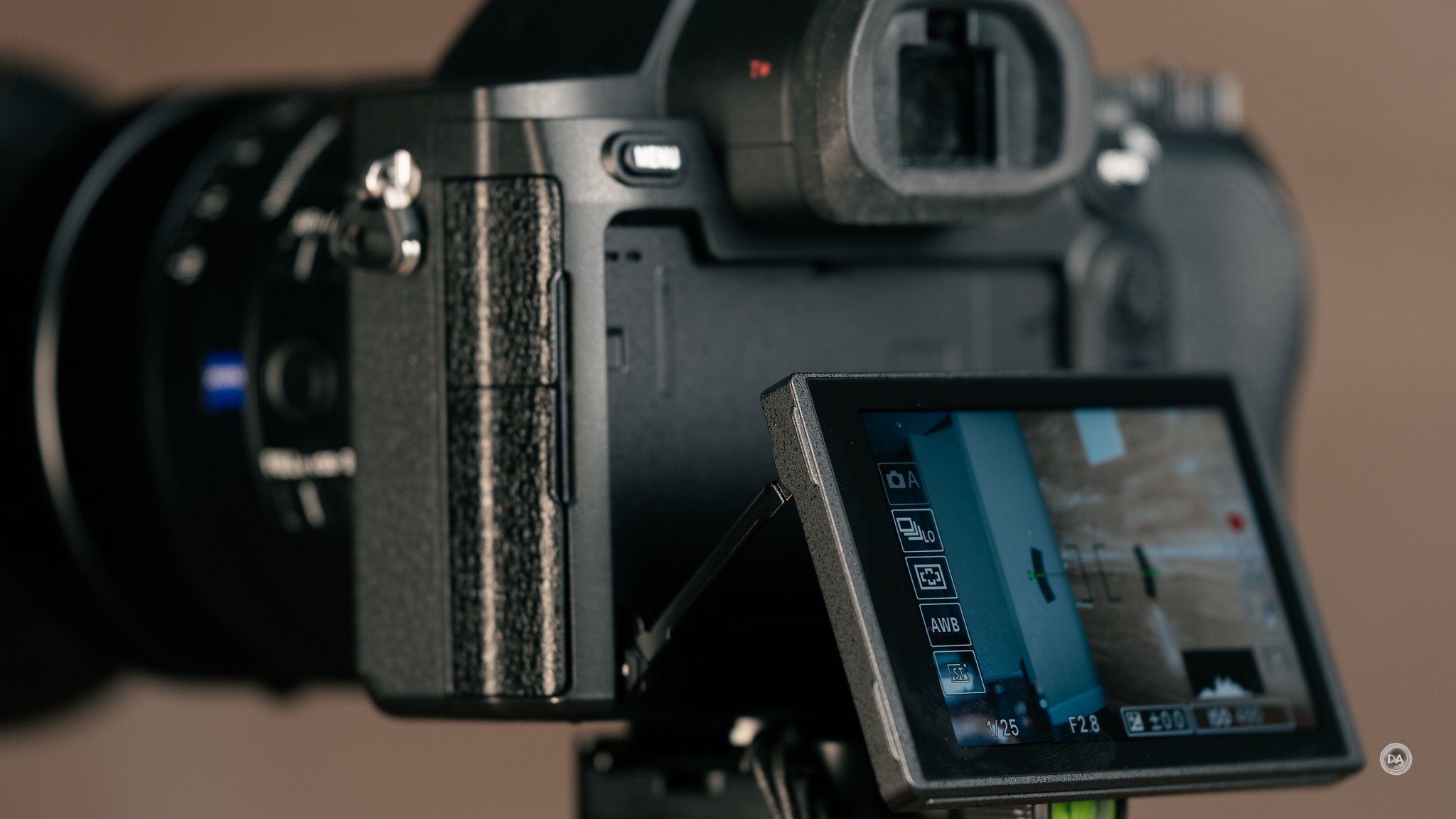
The menus have been updated to the current Sony standard for their Alpha cameras, so can be fully navigated by touch and have all the familiar locations for various settings. Not everyone loves Sony’s menu UI or the location of certain settings, but at least this establishes uniformity and makes it fairly easy for someone to pick up the RX10V and find what they are looking for.

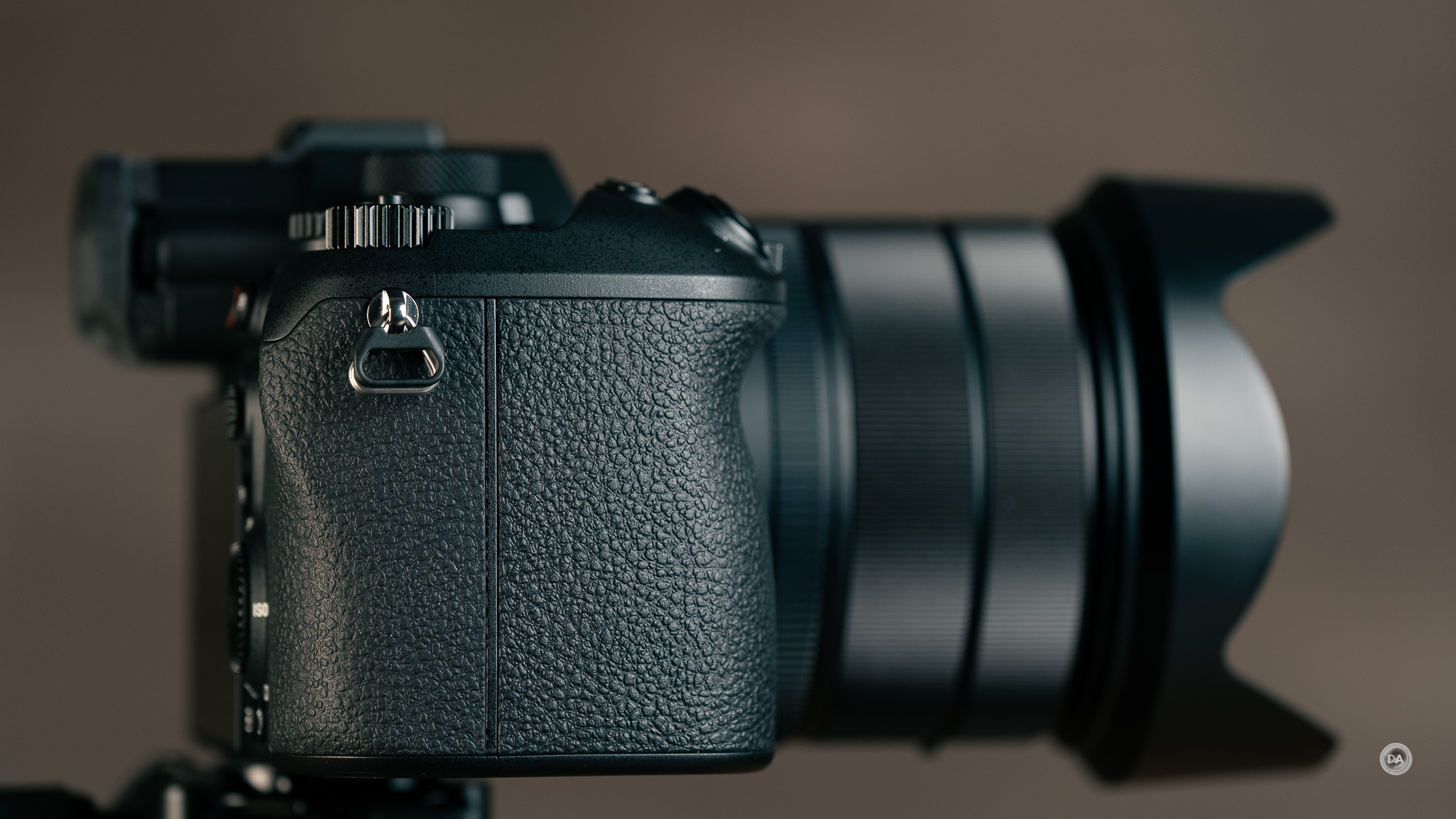
The body also gains dust and moisture resistance, making it more suitable for outdoor and travel use. I’ve read some complaints about previous models feeling somewhat “plasticky”, but the RX10V just feels like an Alpha camera. If anything, the slightly chunkier grip feels better in my hands. I was traveling with the RV10V and my a1 II, and I would say that for my size of hand, I prefer the grip of the RV10V.
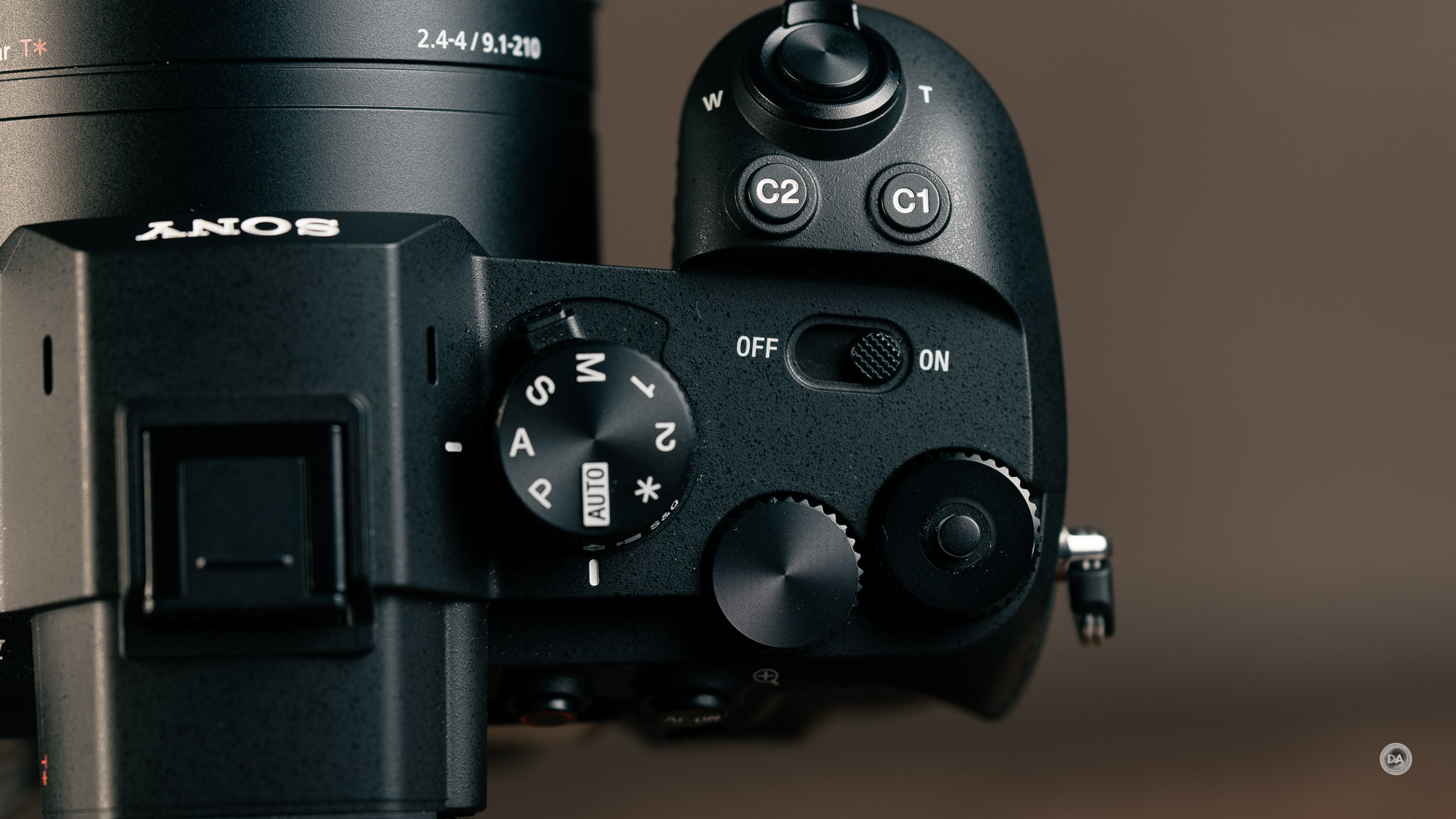
The control scheme is largely familiar. Around the shutter button is a toggle that controls the power zoom of the lens. Behind the shutter on the top are two custom buttons that can be programmed to whatever function you prefer. The ON | OFF switch lies just behind that, where it can be reached with a forefinger while still gripping the camera. There are three dials on top of the camera. One is near the viewfinder stack, and it is Sony’s two-layer control/mode dial. The top dial has the standard PASM control along with multiple customizable setups, while the bottom layer is a toggle for Stills, Video, and Sony’s S&Q (Slow and Quick) modes. Like most modern mirrorless cameras, you can have a separate control scheme for each mode, allowing for different custom button assignments for video than stills, for example.
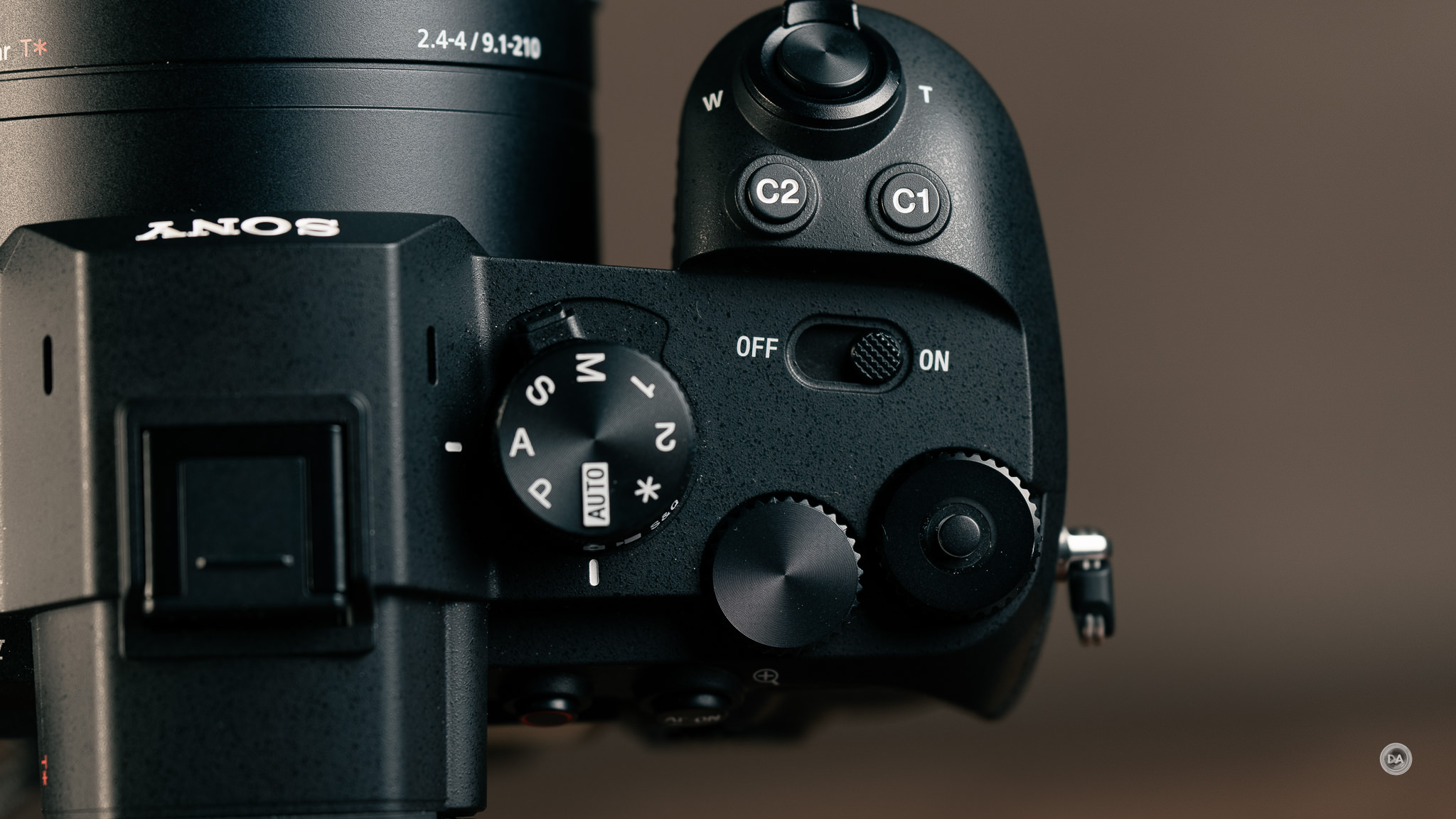
Also present are two dials. The closer one is the Sony’s standard rear dial, typically used for controlling shutter or aperture. Out near the edge is a lockable dial that, by default, is programmed for exposure compensation but can be assigned another purpose through the menu.
A third control dial can be found on the back of the camera surrounding the “OK” button (though it isn’t labelled here). That dial also serves as a four-position D-pad that can control an assignable function in each direction.
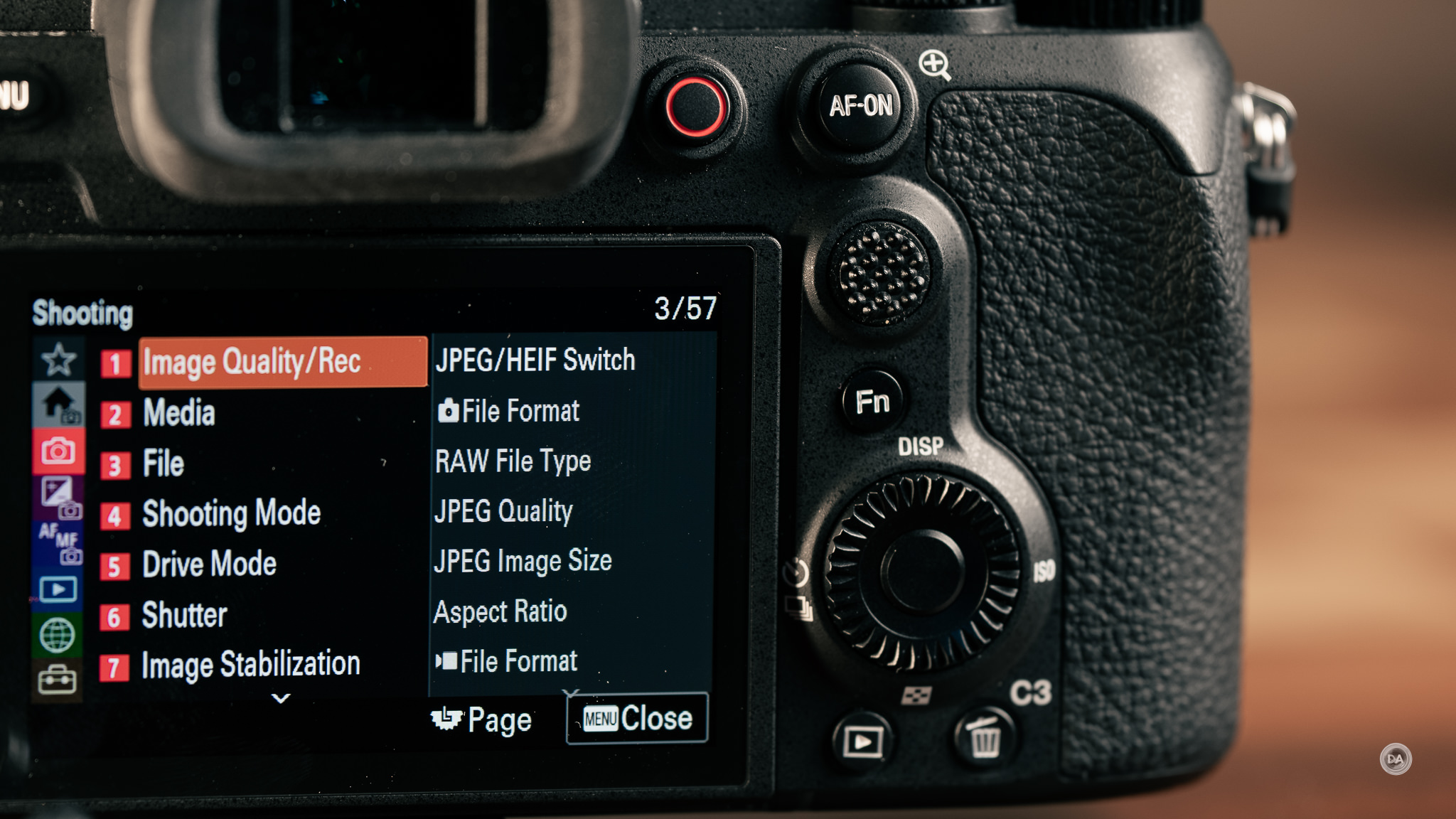
Other button positions are very standard, with the MENU button to the left of the viewfinder stack and the video record and AF-ON buttons to the right. There is a familiar feeling joystick along with a Fn menu, play, and trash buttons. There aren’t as many custom buttons as some of Sony’s cameras, but they’ve done a great job of putting everything in a familiar position, which really helps muscle memory for those of us just picking up the camera for the first time.
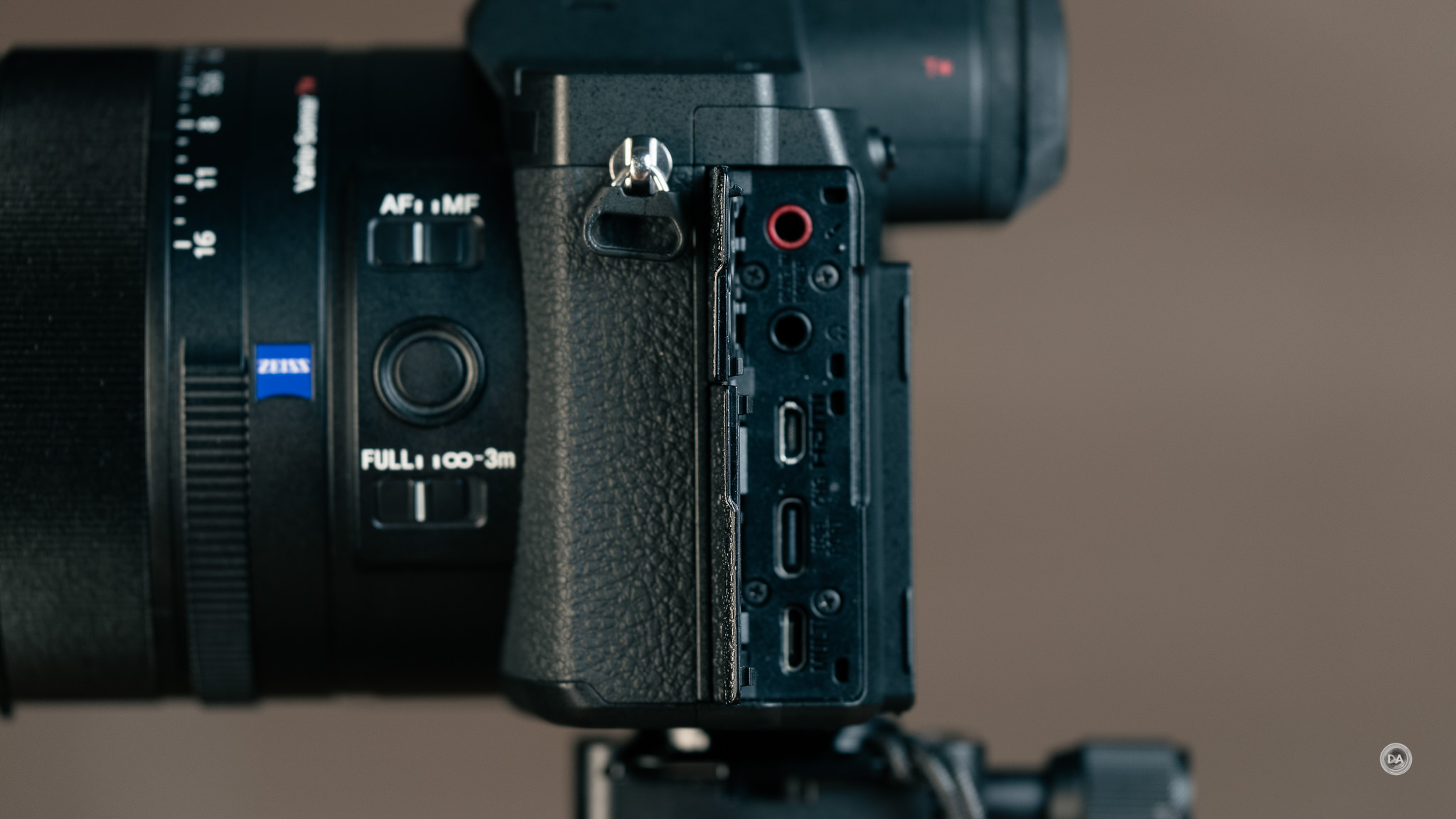
There aren’t quite as ports as some of the Alpha cameras, but on the left side we have standard 3.5mm microphone and headphone monitoring jacks, a micro-HDMI port, and then one USC-C port (where the camera’s battery can be charged via a PD-standard charger), and then a micro-USB port for data transfer. I would have liked to see the dual USB-C configuration that Sony has been moving to in other models, as I feel like the micro-USB standard is quickly becoming obsolete (fewer of those cables will be around when everything is moving to the USB-C standard). The doors covering these ports do have weather seals on them and click into place with a good degree of precision.
In general, the basic camera controls are very familiar, and while nothing here is revolutionary for those accustomed to recent Alpha cameras, everything here is a giant leap forward for the RV10 series.
Zeiss Vario-Sonnar T* Lens
At the heart of the RX10V is the same excellent 25x optical zoom lens found on the RX10 IV: a 24-600mm equivalent (35mm) Zeiss Vario-Sonnar T* with a bright F2.4-4 aperture range. I use the term “equivalent” intentionally, as this is the zoom range equivalency when the crop factor (2.7x) from the 1” sensor is applied. This isn’t a new lens at this point, but Sony felt confident enough in the optical performance to retain it.
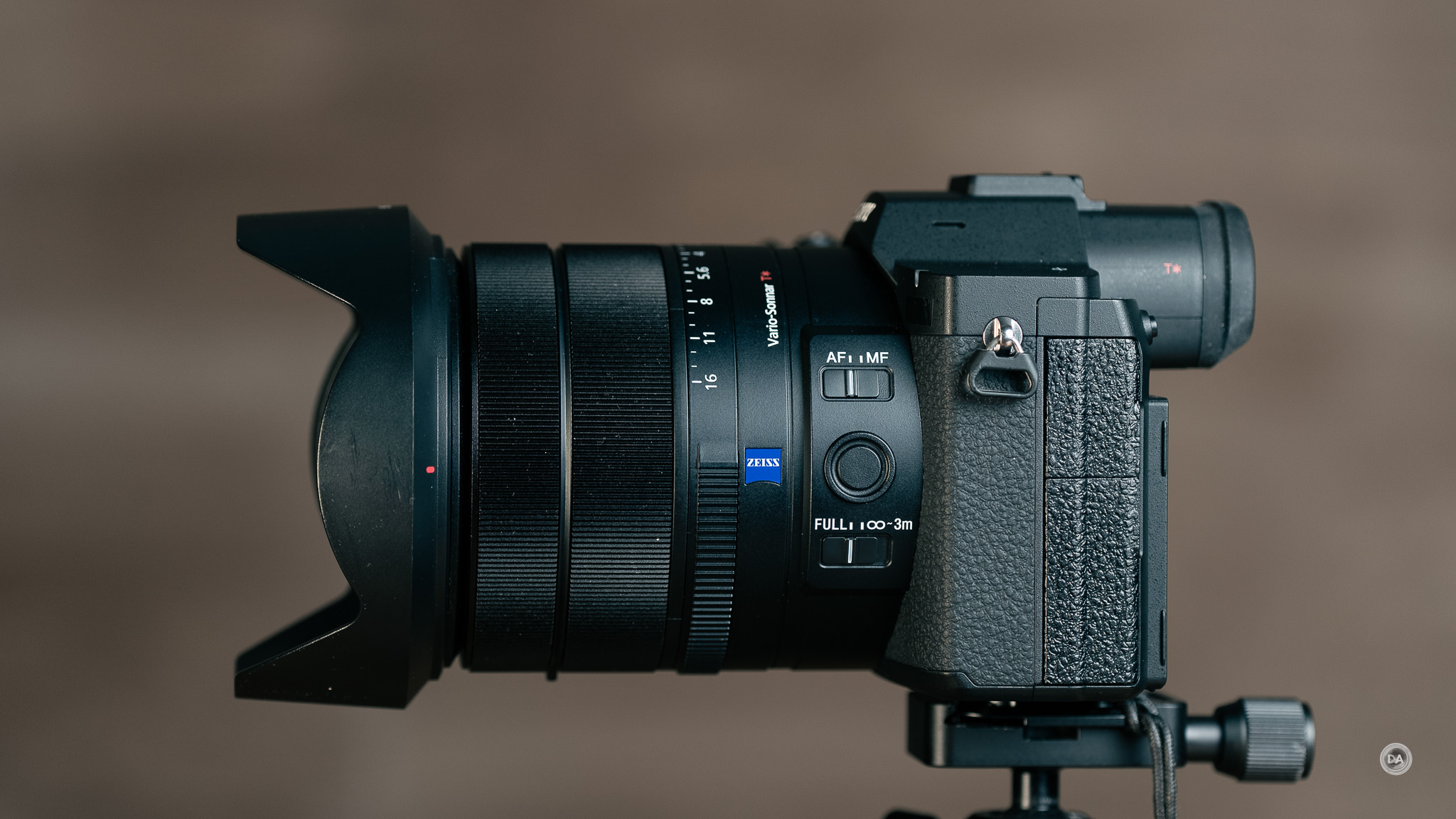
The optical formula includes 8 ED elements, 2 Aspherical ED elements, and Precision AA (Advanced Aspherical) elements and delivers fairly strong results across the zoom range.
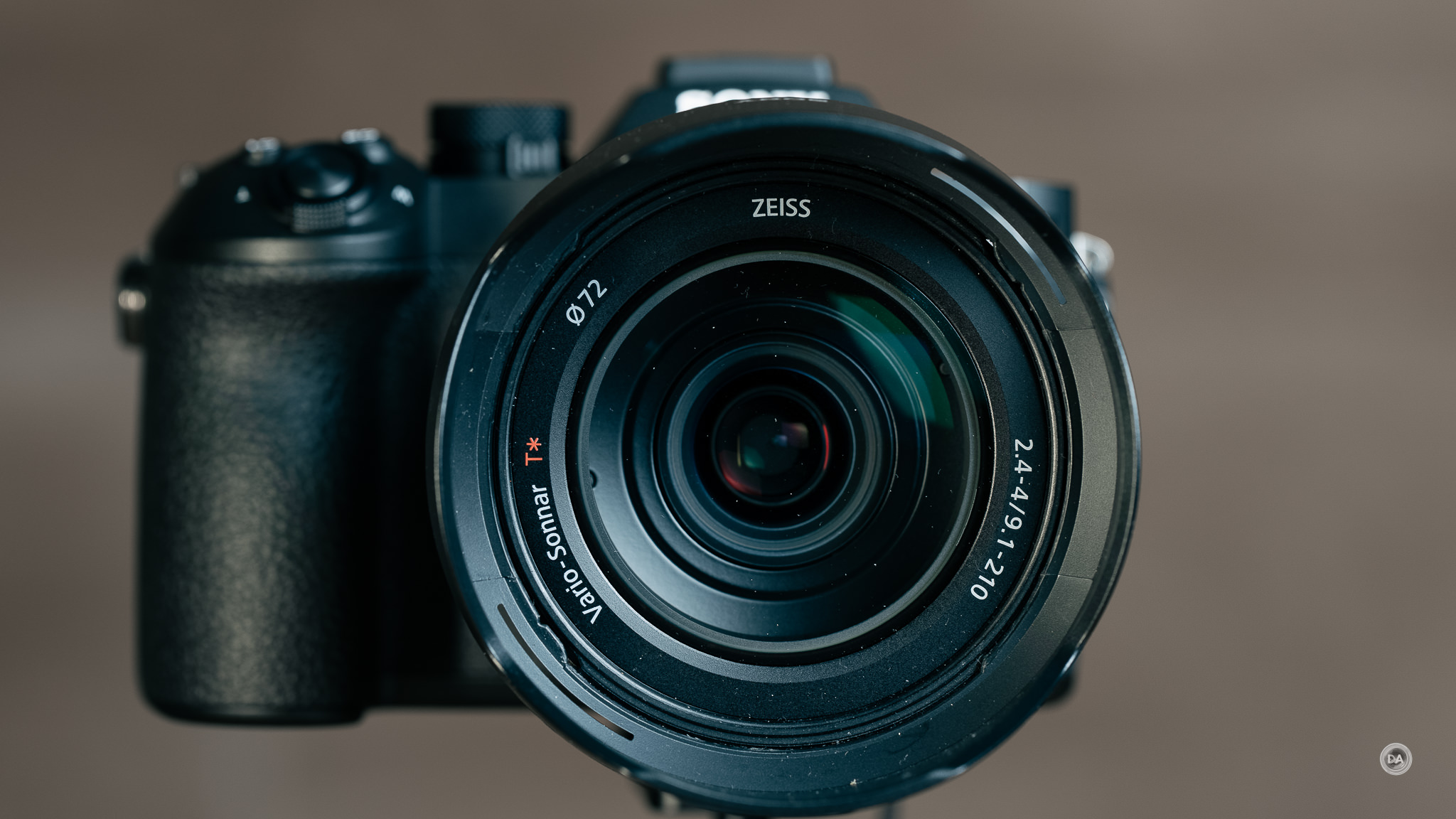
The front filter threads are 72mm.
While the optics are not updated, Sony has updated the handling with modern conveniences: Focus Hold button, AF/MF switch, declickable aperture ring, and Power Zoom support, plus Clear Image Zoom for extra reach when needed. This gives you one more customizable buttons and the ability to declick the aperture (the switch is on the lower right side) gives you more control for video work.

There is an aperture ring as well, though the settings won’t always perfectly line up to the aperture once the lens is zoom in, as this is a variable aperture zoom.
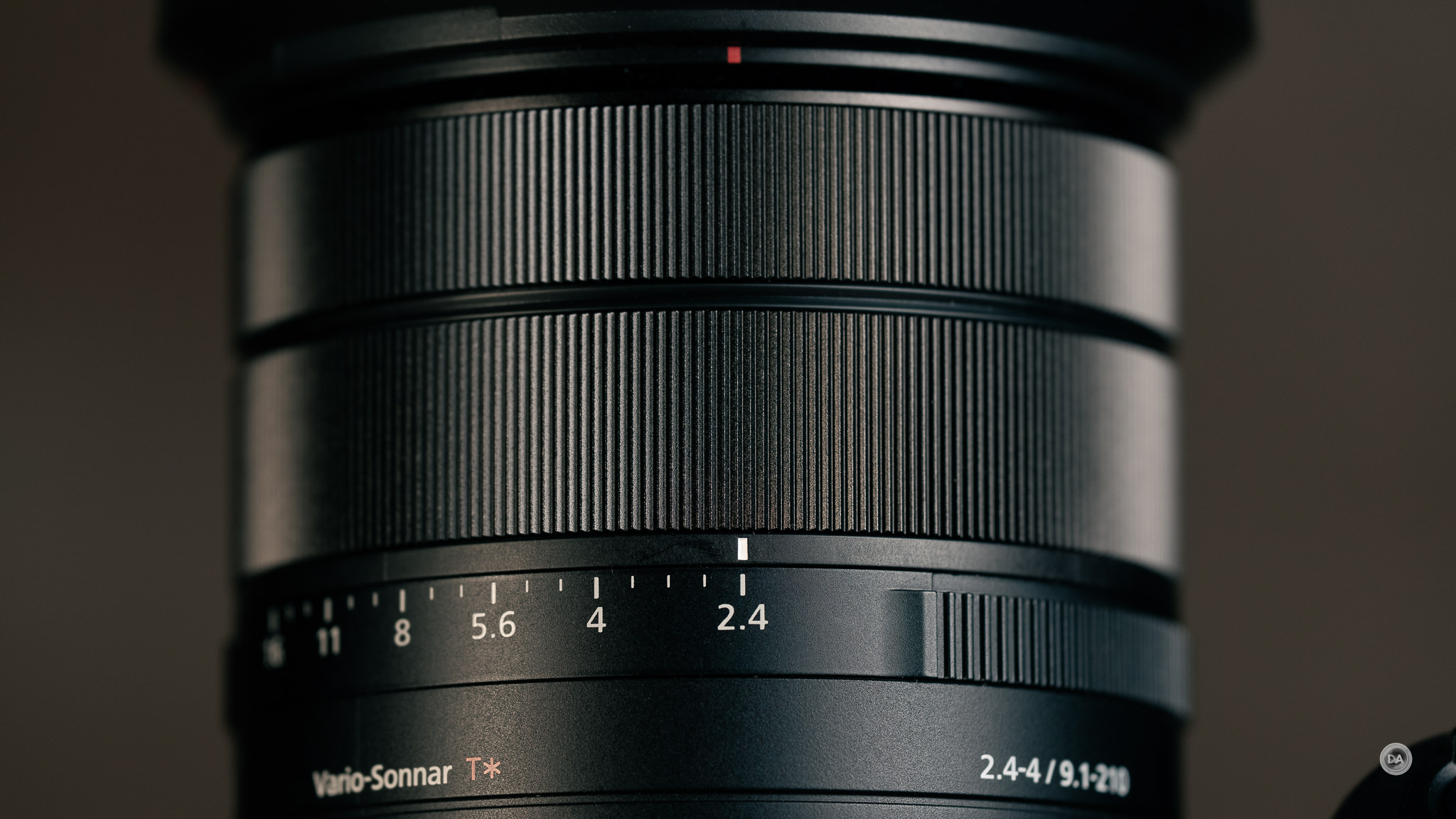
The closer of the two rings is the manual focus ring, while the further is the zoom ring. I find the powerzoom toggle more reactive than the ring, but the ring is slightly better for making fine tuning adjustments.
Macro performance has been enhanced, with a minimum focus distance of just 3 cm on the wide end and magnification up to approximately 0.49x. That is rarely very practical (3cm places the subject within the lens hood, if mounted!), but the telephoto end delivers a nearly-as-good 0.42x which is much easier to achieve. I’m pleasntly surprised here, as I feel like (when shooting at low ISO) the macro detail is quite good.


Rather than in-body stabilization, the stabilization is lens-based, though using Active mode will combine digital stabilization with the lens-based stabilization. Stabilization seems to work fairly well, though, as always, remember that stabilization won’t stop your subject from moving!

Lens sharpness is somewhat situational. At its best, it is quite good, delivering good detail and fairly good contrast, as above.
As you get into the telephoto range, however, contrast can sometimes be a bit lacking, leaving images without the “bite” on might want.

Bokeh is also situational. At shorter focal lengths it can be somewhat busy, as the effective aperture for depth of field for such a small sensor is fairly large. At longer focal lengths, however, things look fairly soft and pleasing.

The lens’ optical qualities are much like other superzoom lenses. There are some compromises associated with including so many focal lengths, but Sony has masked a lot of them between good optical design and electronic assistance. Distortion, for example, looks fairly good, but if I work really hard at finding the actual optical properties on the wide end, I find that there is a LOT of barrel distortion.
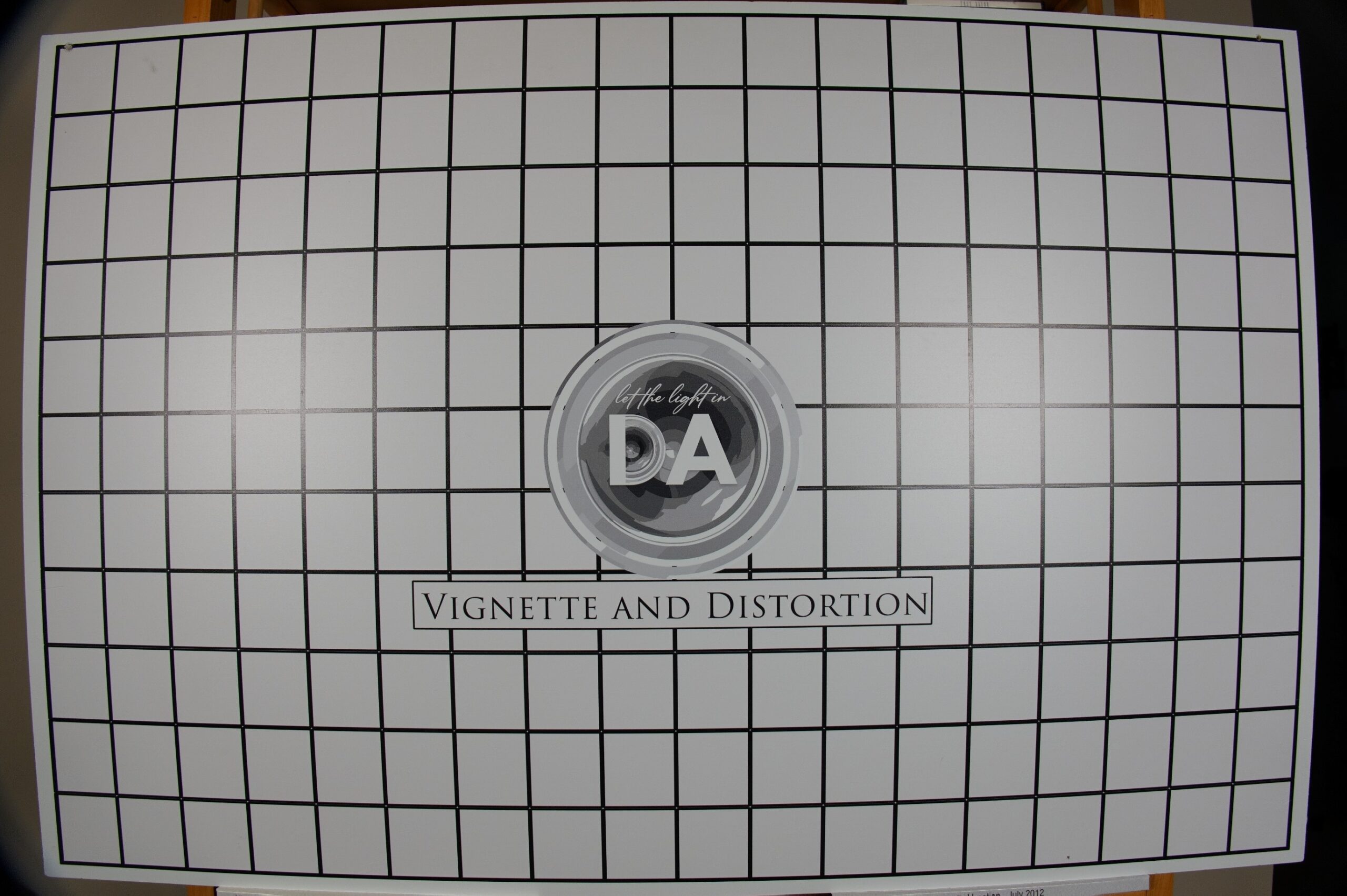
That same test also shows some lateral chromatic aberrations if you turn off the corrections.
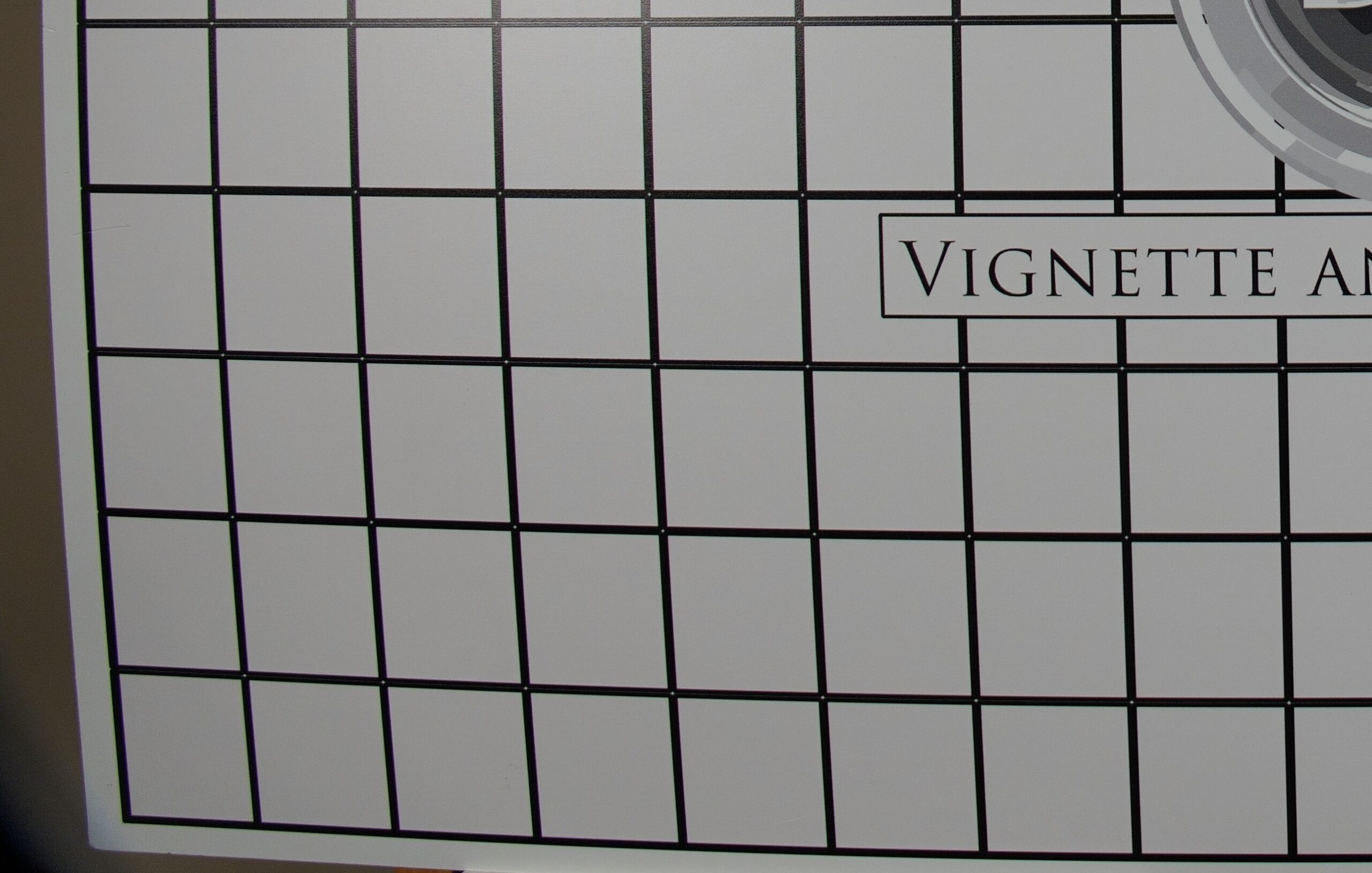
None of this is unexpected, however, and most people will never notice because of the electronic corrections that will be cleaning up the mess.
The image quality is not going to match a dedicated wide angle or telephoto lens, but, under the circumstances, I would say that this is a quite good lens…particularly at this resolution point.

Shutter, Burst Rate, and Buffers
The RX10V features a leaf shutter design. built-in,, lens-mounted leaf shutter. Unlike traditional camera shutters built inside the camera body, a leaf shutter sits inside the lens itself. It uses overlapping metal blades that open and close like the iris of an eye to expose the camera’s sensor. This has a few key advantages, including extremely fast flash sync speeds. This shot, for example, was taken at 1/1000th of a second and without using HSS (High Speed Sync).

You can go up to the limit of the mechanical shutter (1/2000th of a second). A typical limit would be 1/200th – 1/250th second.
The second advantage is that since the blades are lightweight, the shutter fires almost completely silently and causes no vibration. This helps the camera to have very good stabilization and also to be very quiet even when using the mechanical shutter. This shot, for example, has no apparent motion blur despite being a casual shot at 600mm equivalent and just 1/50th of a second shutter speed.

It’s not an amazing photo, per se, but it is very stable for the conditions.
The third advantage is that a leaf shutter largely eliminates rolling shutter, allowing this to be both a better action camera and a better video camera.
There are some quirks, however. If you use Lossless Compressed RAW, the upper shutter limit is just 1/1000th of a second, so you’ll have to compromise a bit of image quality to get faster shutter speeds (at least with the current firmware). The mechanical shutter will go up to 1/2000th of a second, but your faster speeds are connected to the electronic shutter, which will go up to 1/32,000th of a second, but yes, only when shooting Compressed RAWs and not Lossless RAWs.
If achieving maximum image quality matters to you, prepare to staying attuned to changing your shutter settings so that you can use Lossless Compressed RAWs when shooting in ideal conditions.
The burst rate will be as high as 30FPs for the electronic shutter, and I was able to get about 113 Compressed RAW images before the frame rate dropped using a good quality Sony Tough UHS-II SD card. The buffer does not clear quickly, however, and I had to watch this old favorite for a while after shooting a burst.
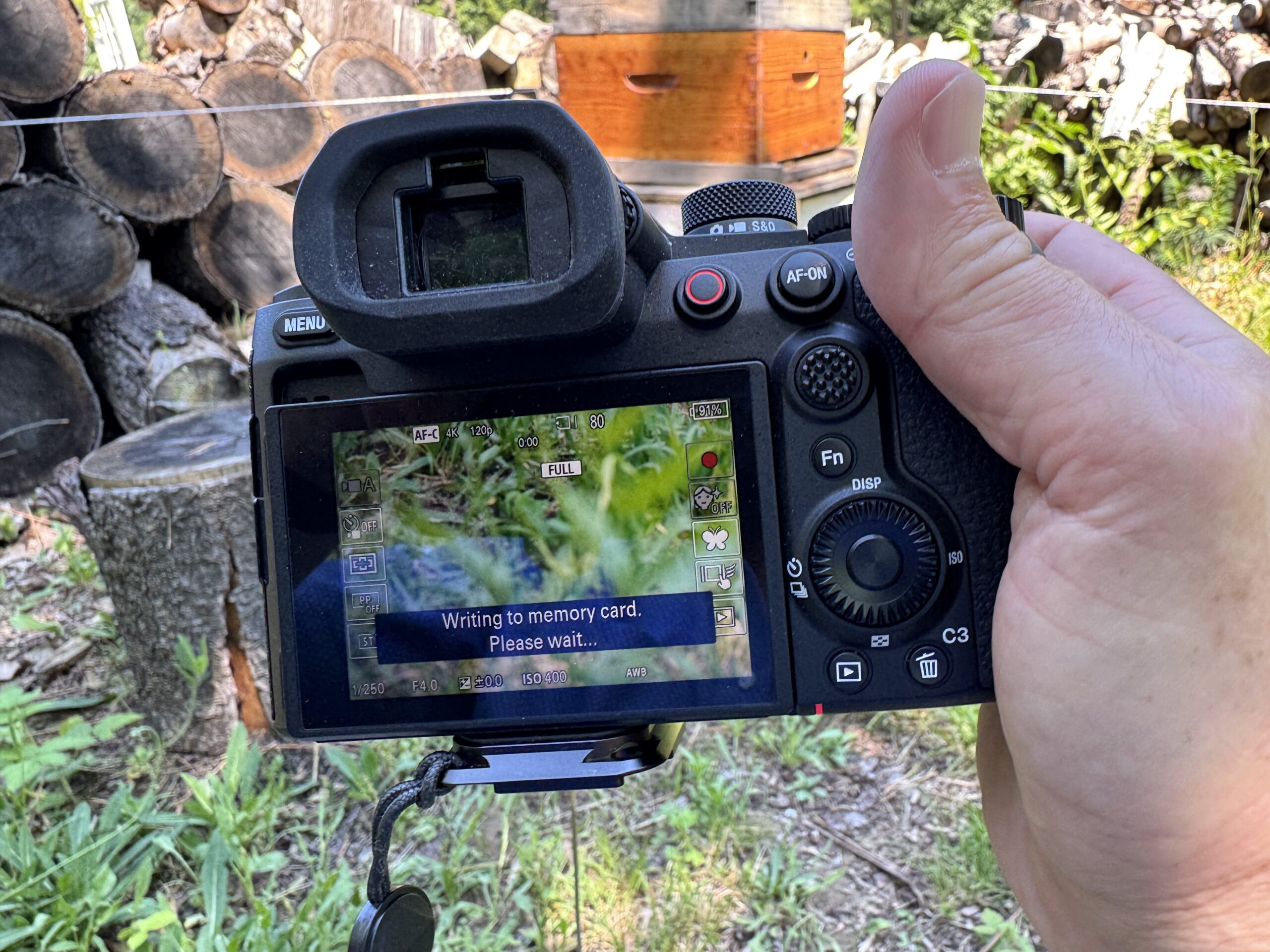
It’s been a long time since I’ve seen that on a Sony camera. I would estimate it took most of a minute for that buffer to fully empty. You can shoot more frames as it clears, but only at very slow speeds (probably 3-5 FPS).
Obviously the buffer depth will shrink with the higher Lossless Compressed RAW format, but the great restriction may be the reduced shutter speed (assuming you need to stop motion).
Autofocus Performance
Autofocus Performance
Autofocus performance has been significantly upgraded with 557 phase-detection points covering approximately 70.6% of the sensor area. The camera supports blackout-free shooting at up to 30 fps, with up to 60 AF/AE calculations per second. A new “Speed Boost” mode allows users to temporarily ramp up burst rates when needed for fast action. At it’s best, this focus system is perfectly capable for freezing fast action.

This is aided by a dedicated AI chip working alongside the Bionz XR processor. This brings real-time subject tracking and the full suite of advanced subject detection modes from Sony’s current Alpha cameras, including automatic subject recognition. Subject recognition and tracking is far more in line with where modern Sony cameras are relative to the previous generation RX10IV. Recognition targets include humans, animals, birds, insects, planes, cars and trains. Most important to me is that it includes Sony’s “Auto” mode which most of the time will properly detect the correct subject.

In practice, I found autofocus to generally be very good. Because there is a fixed lens, that means that the autofocus system is married to the performance of the lens. In low light, for example, you can’t help the camera’s AF system by using a brighter lens, so there will be times when the autofocus is a bit slower due to not getting a lot of light to the sensor. I still found, however, that autofocus was snappy when shooting at higher ISOs in dimmer lighting conditions. I shot at a religious convention at ISO 3200 and 6400, and still found that autofocus quickly found the subject and locked on accurately.

The RX10V makes for an interesting compact event camera even if the images aren’t ideal for the simple amount of flexbility it provides. It is even more interesting as a video camera in those situations.
When shooting fireworks and those radically different lighting conditions, autofocus would snap onto the fireworks burst near instantly.

Eye AF tracking seemed sticky to me with a variety of subjects.
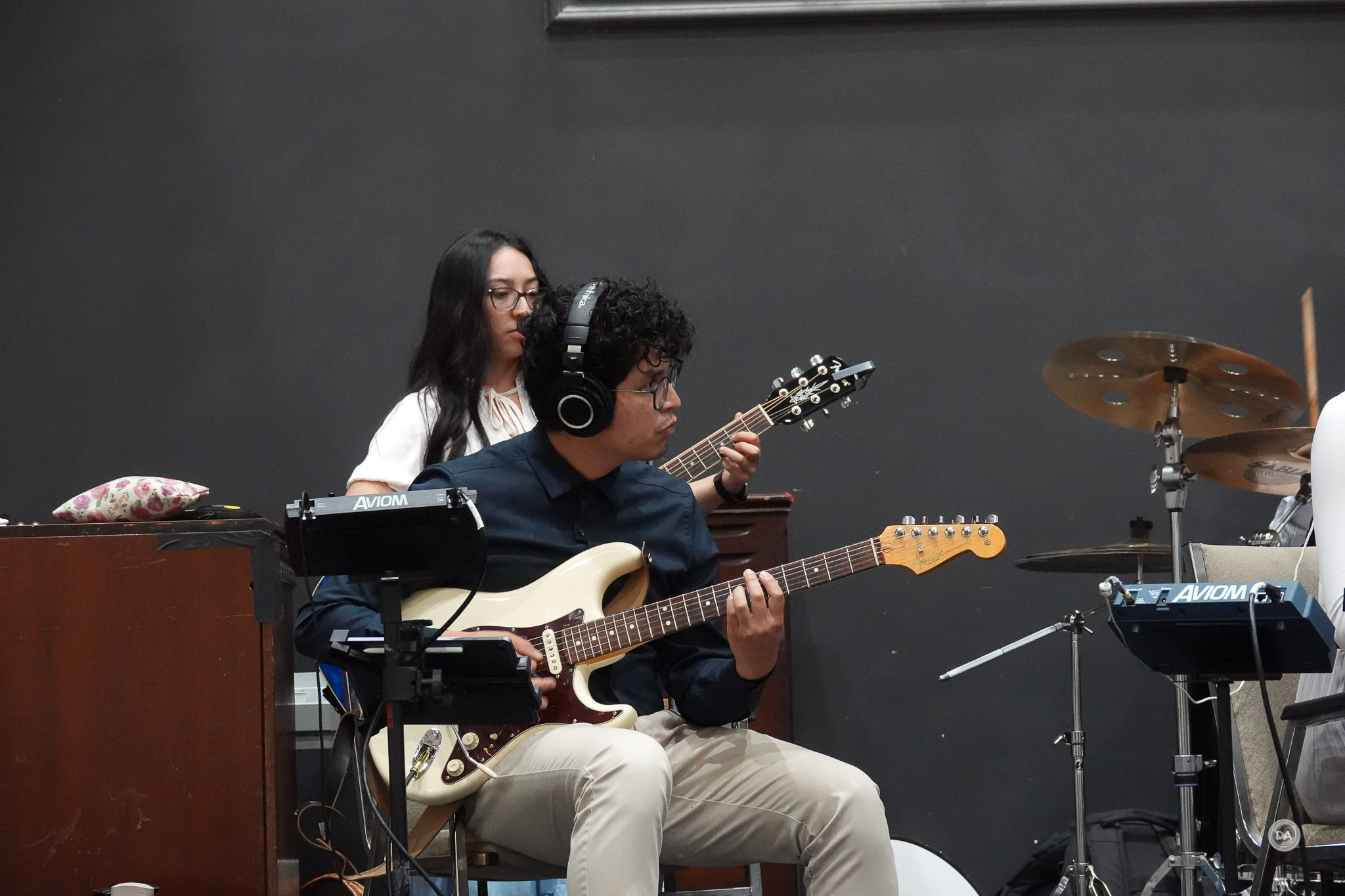
In general, there is no question that this is best autofocus performance I’ve seen from a bridge style camera. It’s not my α1 II, obviously, but it is a surprisingly versatile camera for capturing a wide variety of subjects…though having better light is preferred.
Video Performance
This is the area where the RX10V makes its biggest biggest gains for this generation. The camera now supports:
- 4K60p with full pixel readout and 5.4K oversampling
- 4K120p (with crop)
- S-Cinetone, S-Log gamma, and support for user LUTs
- Time-lapse recording and Auto Framing
There is a crop at 4K120, but it isn’t terrible. Here’s a look at the same scene showing the uncropped 4K60 on the left and the cropped 4K120 on the right.
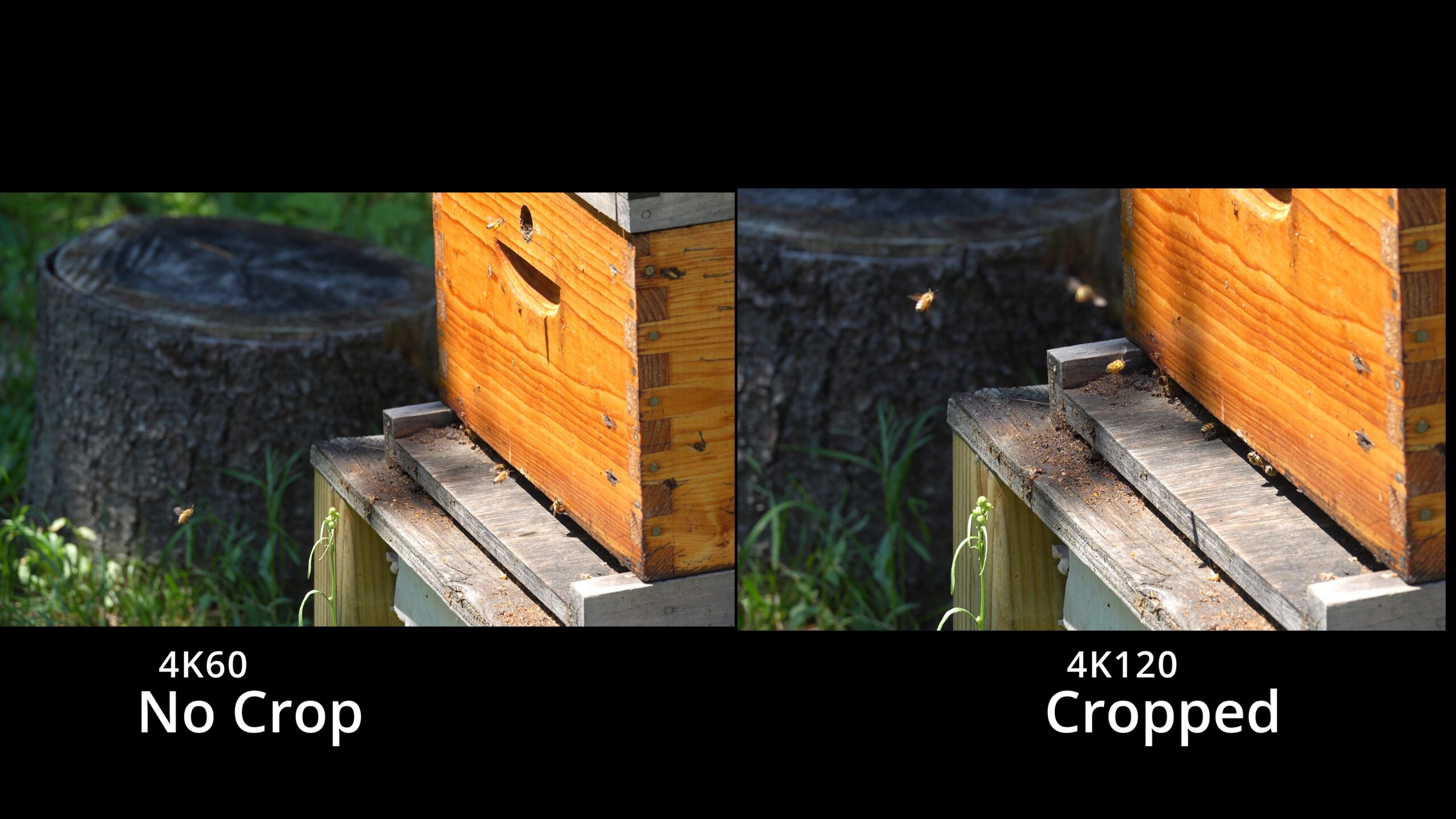
The camera can shoot reasonably wide, so I suspect most people can live with the crop at 4K120.
Stabilization combines Active Mode with the lens’s Optical SteadyShot (OSS). Audio has been upgraded with a Multi Interface (MI) Shoe and support for 2- or 4-channel recording. Livestreaming is now possible directly from the camera at up to 4K30 using RTMP, RTMPS, and SRT protocols.
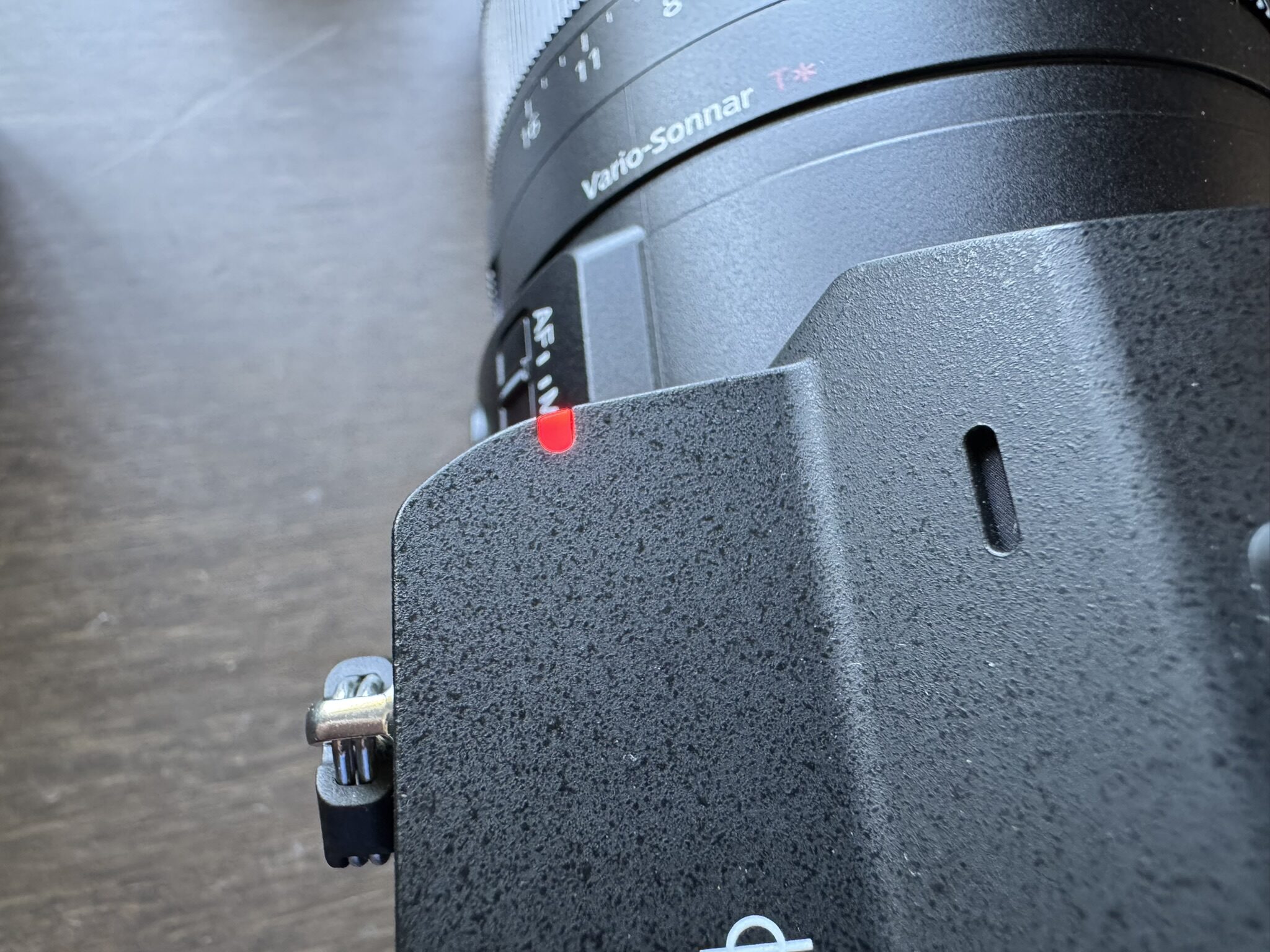
Like the recent Sony α7R VI, the RX10V sports a tally lamp on the left side front of the camera which can be a visual cue that recording is taking place.
These features position the RX10 V as a genuine hybrid tool — capable of high-quality run-and-gun video or even basic live production work without needing a separate cinema camera.

Footage really looks quite good, with good detail and color. The shot above is a still from a video clip of Nala going crazy on top of a fence.
Sensor Performance
The 20.1MP 1-inch backside-illuminated stacked Exmor RS CMOS sensor remains unchanged in resolution and basic architecture, so the basic image making is not going to be radically different. What’s new is the processing pipeline: a dedicated AI chip working alongside the Bionz XR processor. It can be somewhat difficult to evaluate cameras like this within the proper context, as a smaller sensor like this can’t compete with the larger APS-C or full frame sensors that I typically test. For its class, however, it delivers excellent image quality, fast readout speeds, and strong dynamic range.
The key is “for its class”, as while small sensors like this do okay within a small radius of “optimal”, they tend to fall apart when pushed to the extremes. Even the cheapest Sony APS-C camera is going to dominate the RX10V in essentially every optical category. According to the data from Photons to Photos, for example:
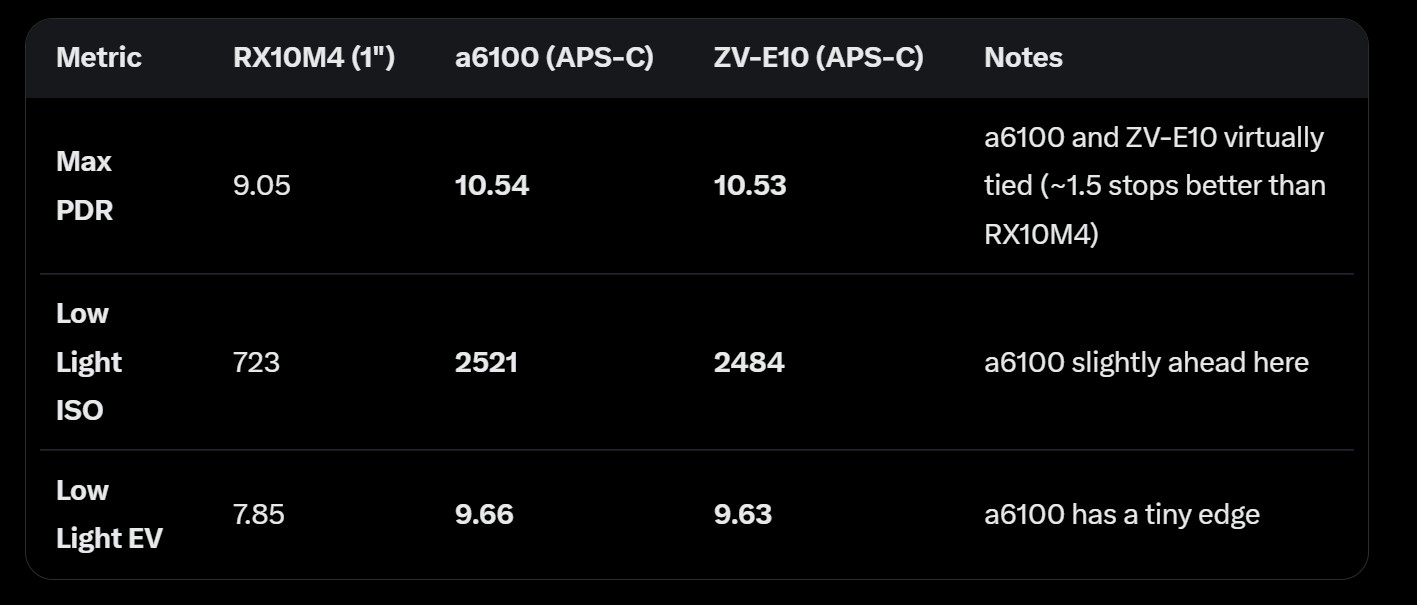
The RX10V uses the same basic sensor as the RX10IV, though I suspect that Sony will squeeze a bit more out of the sensor due to modern processing power. Still, the numbers from the RX10IV (M4) are largely representative of what you are going to see from the RX10V. It is about 1.5 stops worse in dynamic range, at barely over 9 stops, and most notable is the low light performance. The image quality is already starting to decline before ISO 800, while the cheapest APS-C cameras (about the half the price of the RX10V) are nearly 4x better.
We’ll take a closer look at these metrics and how they play out in real life. *One minor caveat: Lightroom and ACR don’t yet support the RAW files from the RX10V, so I’ve had to open them in Sony’s Imaging Edge software, export them as TIFFs, and then open them in Lightroom. This shouldn’t result in a performance reduction, as these are all lossless formats.
Resolution
The resolution from the RX10V is 5632 x 4096 pixels. That’s not a massive amount of resolution by modern standards, but the effective resolution of 20MP is useful enough. It sets a reasonable standard for the lens to live up to, as covering that kind of zoom range would be an intense challenge at a higher resolution standard.
I can take this image:
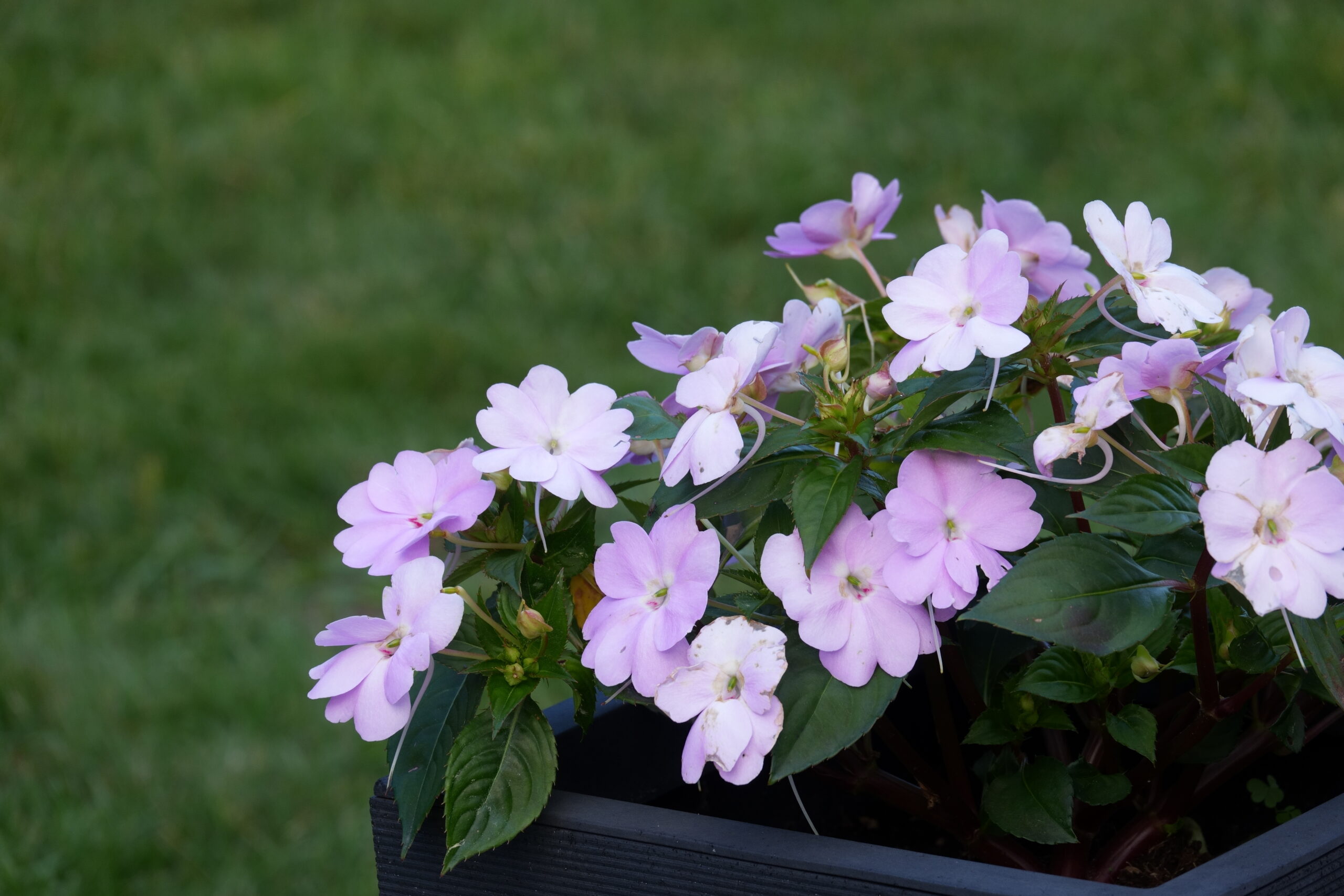
…and crop it fairly deeply while still retaining good detail.

An image like this, though not shot at optimal conditions, still shows nice detail if not amazing contrast.
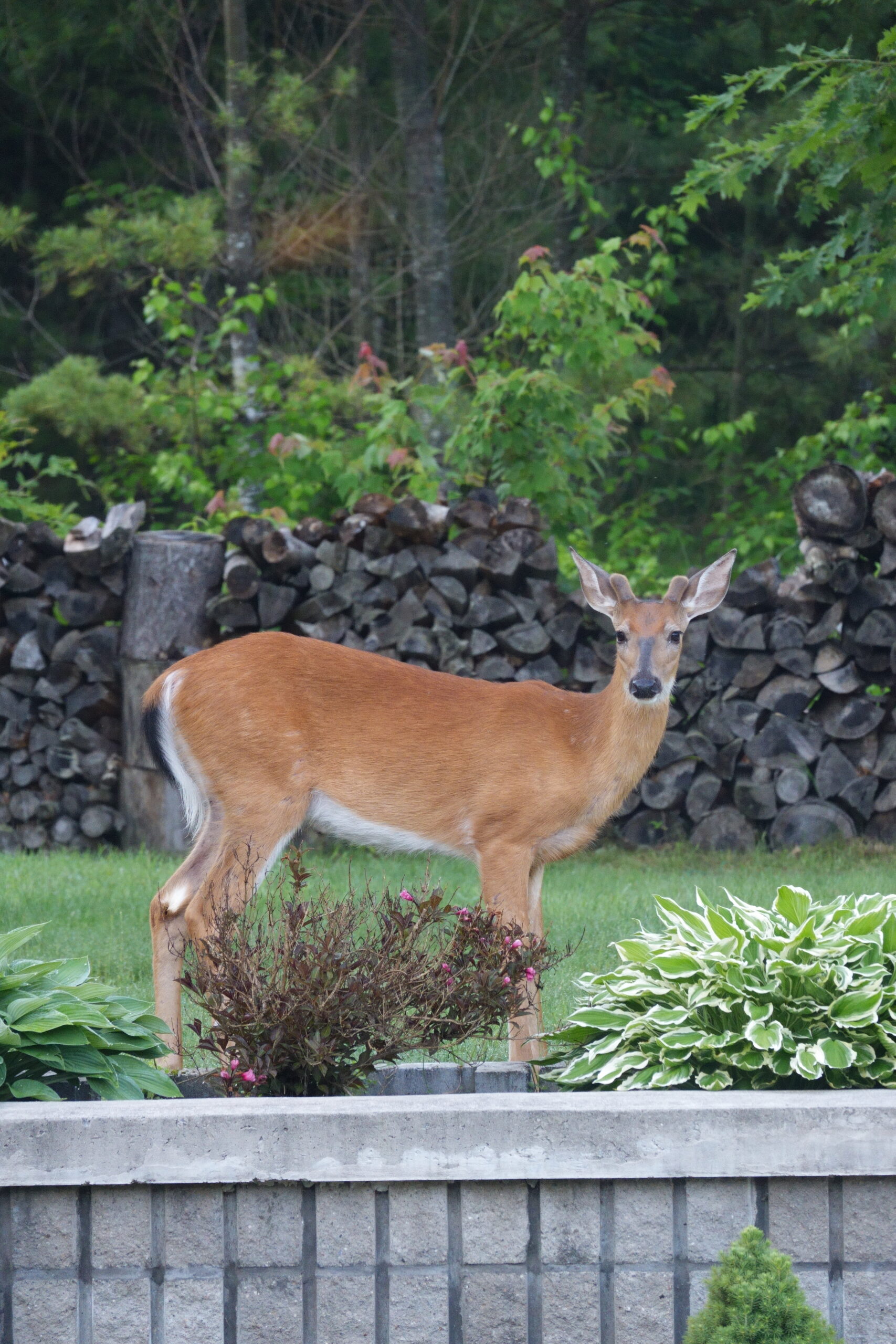
ISO Performance
One of the biggest challenges for a small sensor is low light performance. There’s a reason why your phone’s camera takes decent pictures in good light but horrendous ones in low light…and that’s with all kinds of processing taking place. Photons to Photos suggests that even by ISO 800 there is some drop in performance. Here’s how that looks:
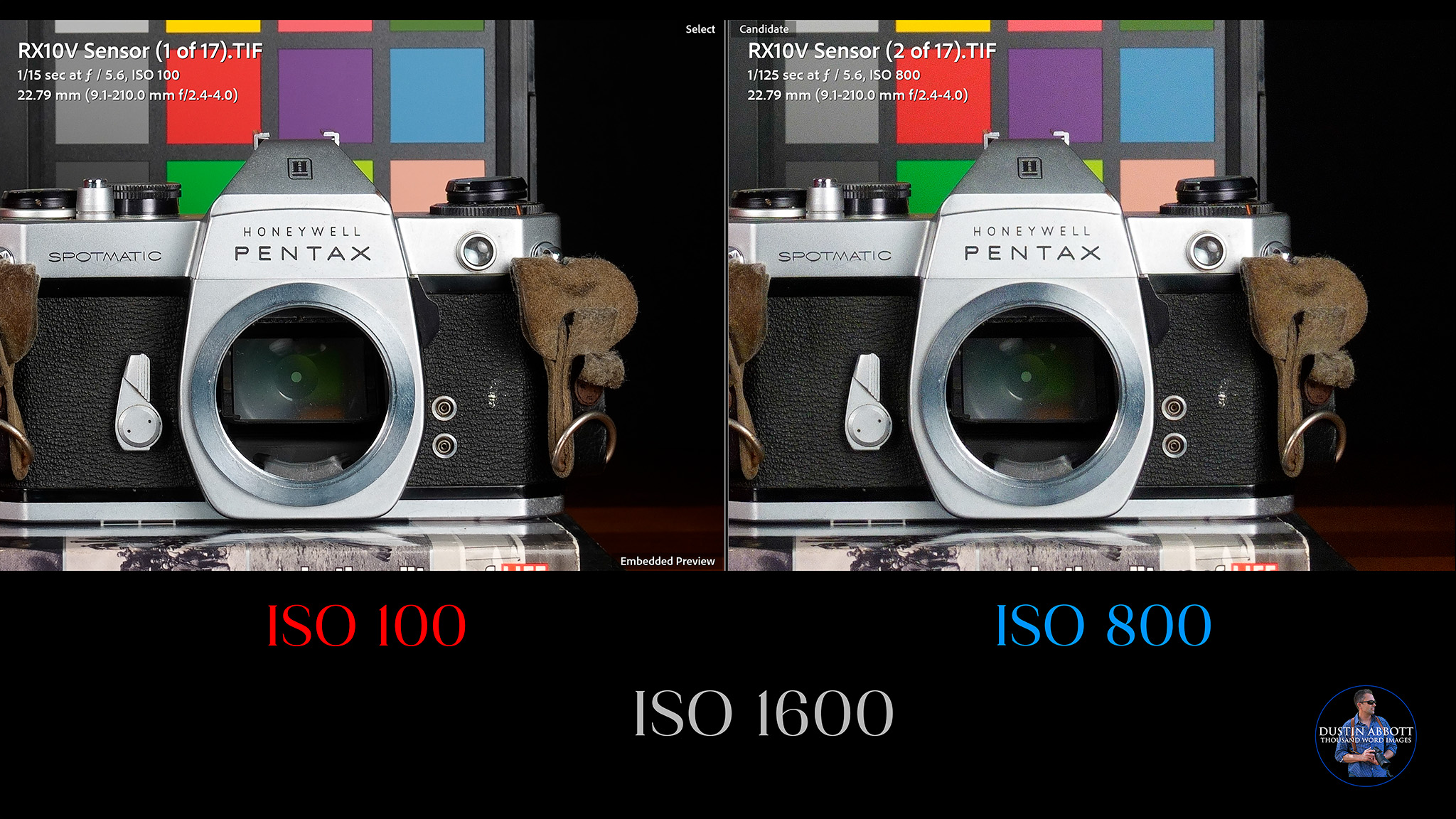
There’s definitely some noise starting, and some loss of contrast, though the image is still usable.
By ISO 1600, however, the degredation is more obvious.
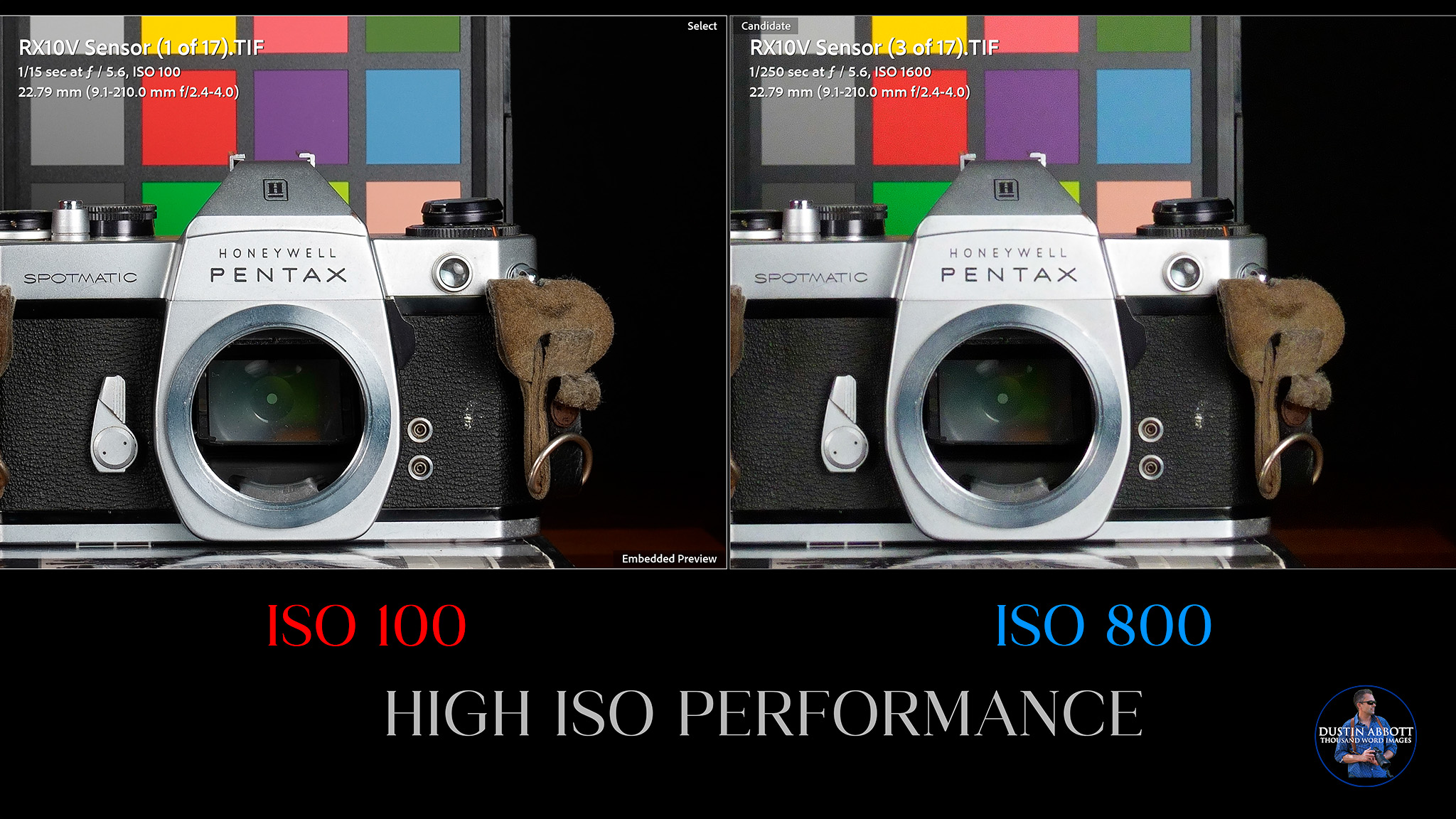
There is noticeably less contrast and detail by ISO 1600, with some obvious smoothing starting to take place.
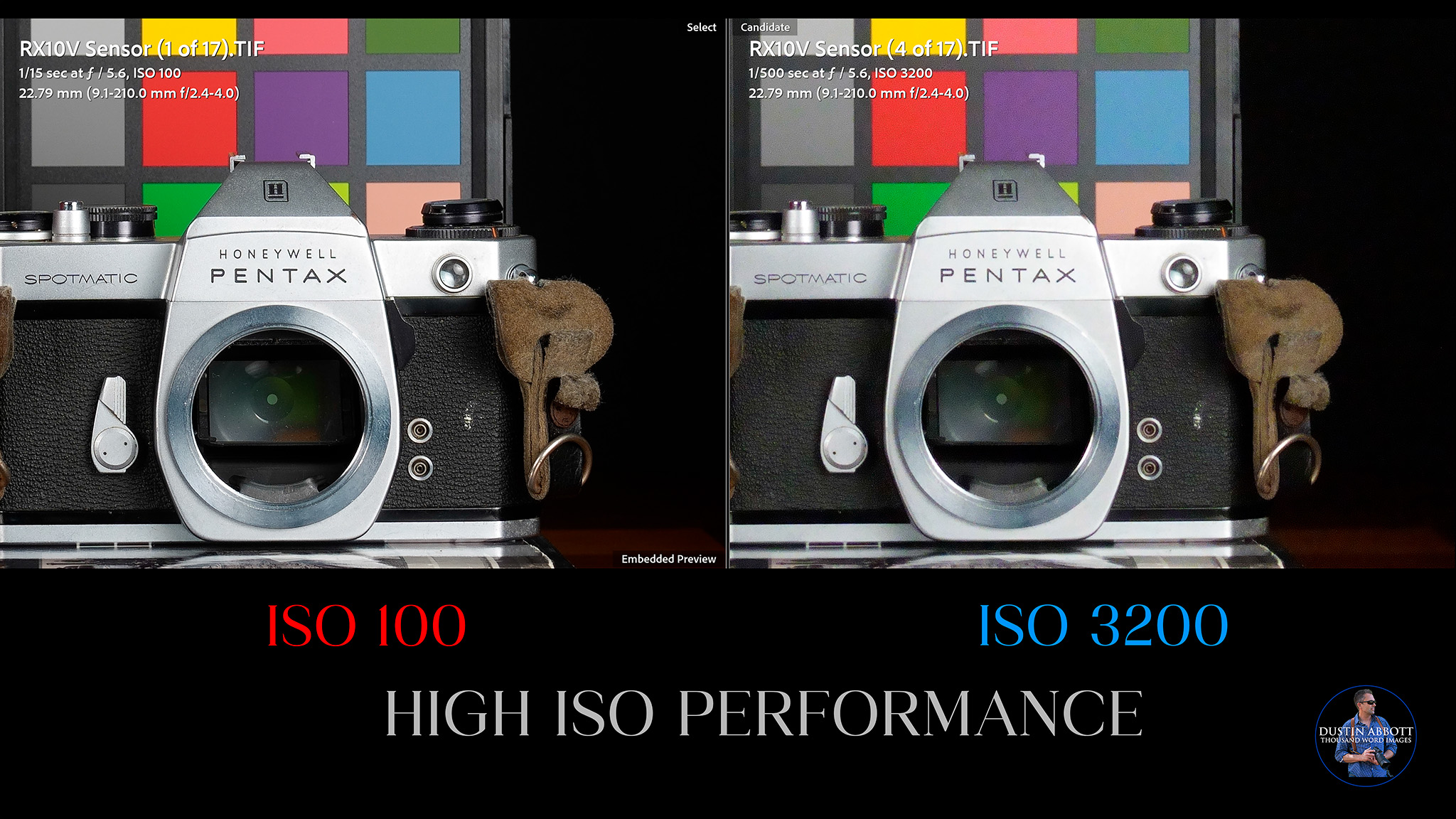
ISO 3200 is more of the same, with the addition of some color blotching starting to set in. It is remarkable how much less detail and contrast there is.
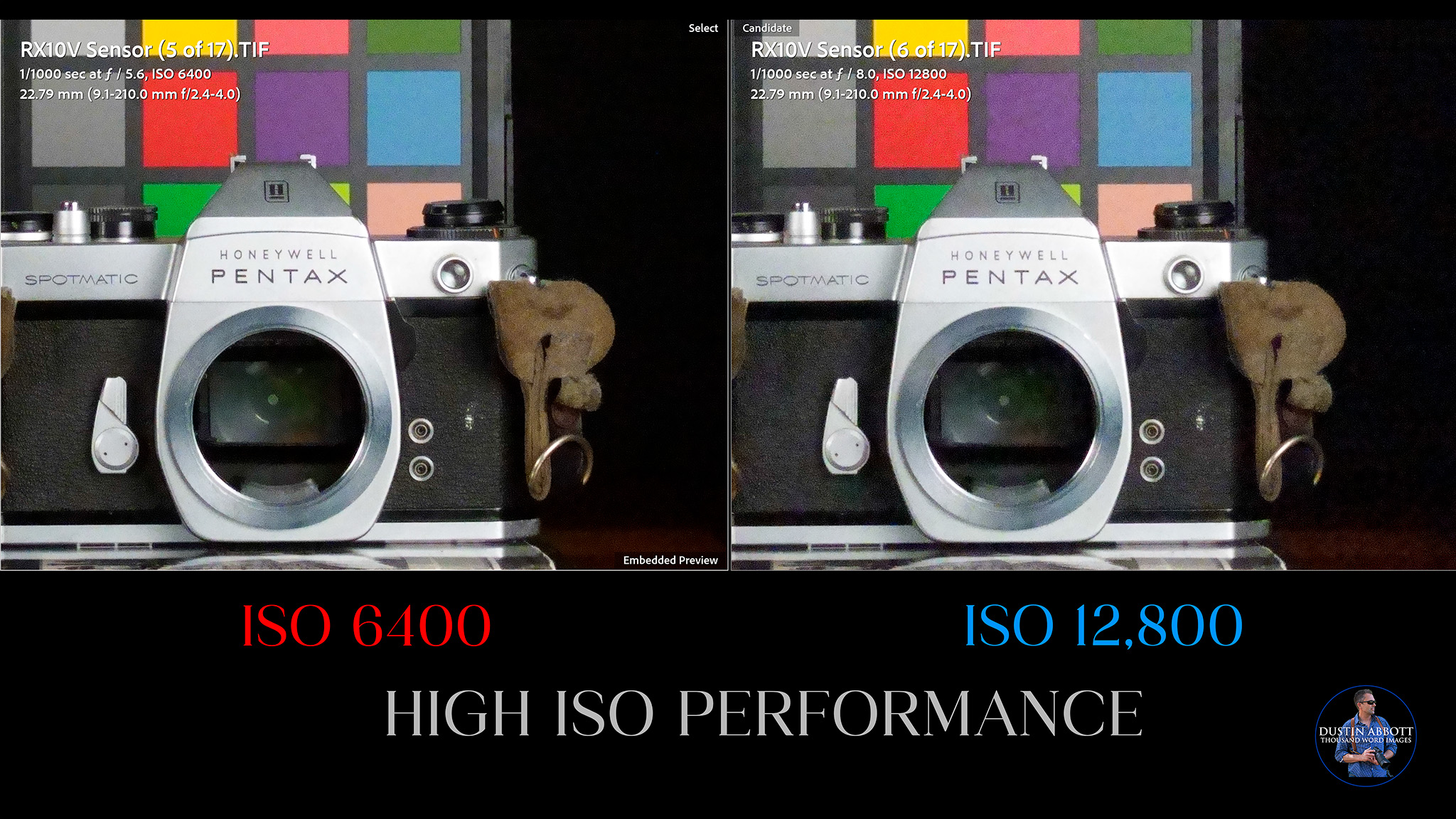
At ISO values of 6400 and 12,800 (in particular), there isn’t much image left. ISO 12,800 is completely unusable, and I would argue that 6400 isn’t really usable either. It looks like the image was shot through thermal heat waves rising off hot pavement.
JPEGs look marginally better, but you can tell that they’ve been processed quite a bit, with a lot of obvious smoothing.

This shot at ISO 1250 looks good.

Practically, this is a sensor that is going to operate best under ISO 2000, and even moving up to 3200 comes with significant costs. It’s worth noting that some of the Panasonic LUMIX FZ series cameras (also bridge cameras) have similar numbers on Photons to Photos, so it’s not that this is a bad sensor for a bridge camera (far from it), but rather a reflection of the penalities attached to having a smaller sensor.
Dynamic Range
Photons to Photos ranks the sensor from the RX10IV at right over 9 stops, which is not fabulous by the standard of larger sensors, but about average for 1 inch sensors.
In good light, and at base ISO, you can get enough dynamic range to have good info in shadows and highlights.

I definitely reached the limits in my formal tests much faster than usual. One stop of highlight recovery was okay, if not exceptional.

But before I even got to 2 stops of highlight recovery I found the limit. It was not able to fully recover the even color in the timer face or the hot spots where highlights were blown out even slightly.
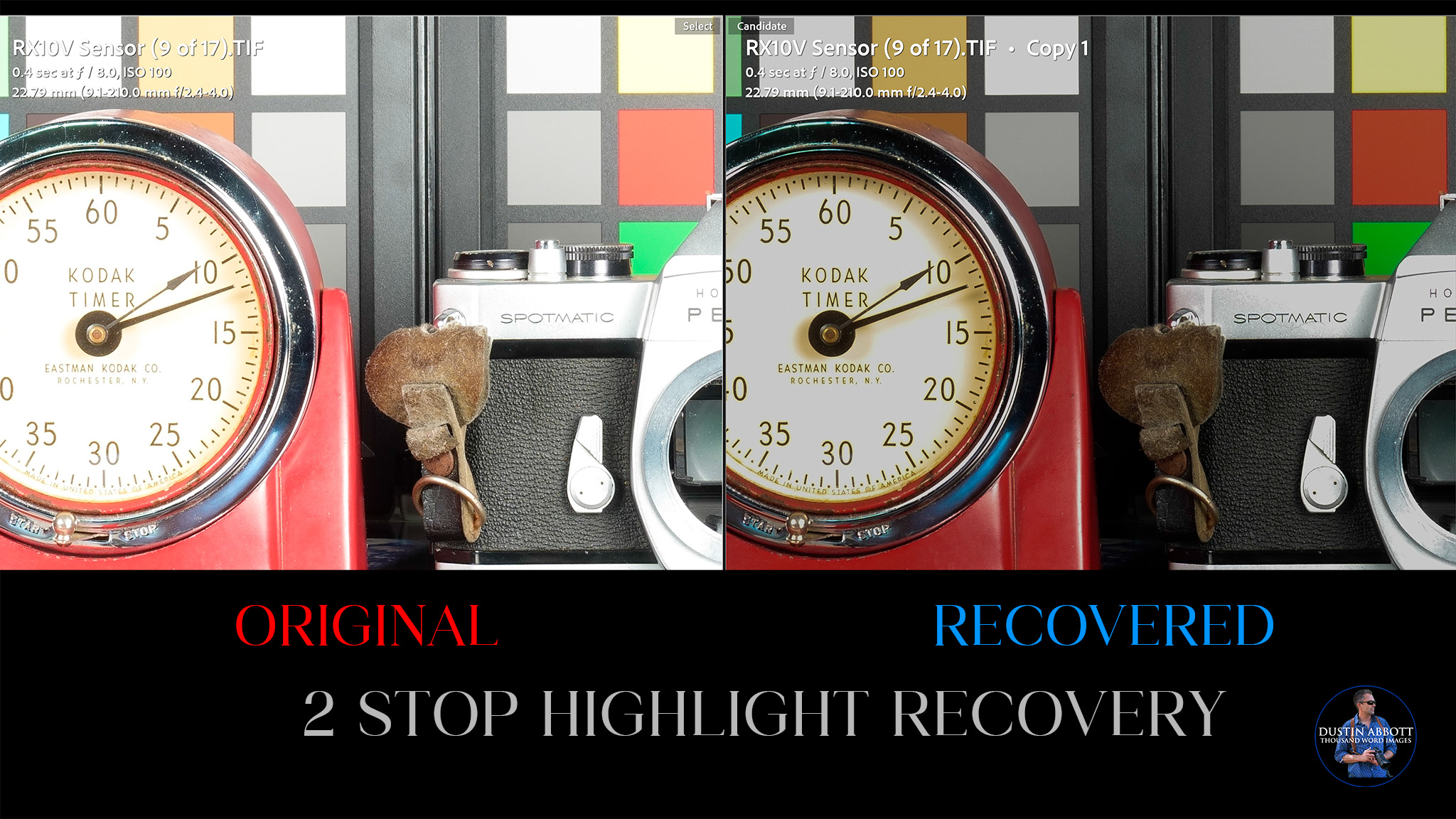
Anything beyond that is a complete mess.
Shadow recovery is better, but not exceptional. I can recover 2 stops of shadows with good success, but at 3 stops I’m not recovering as much contrast and detail.
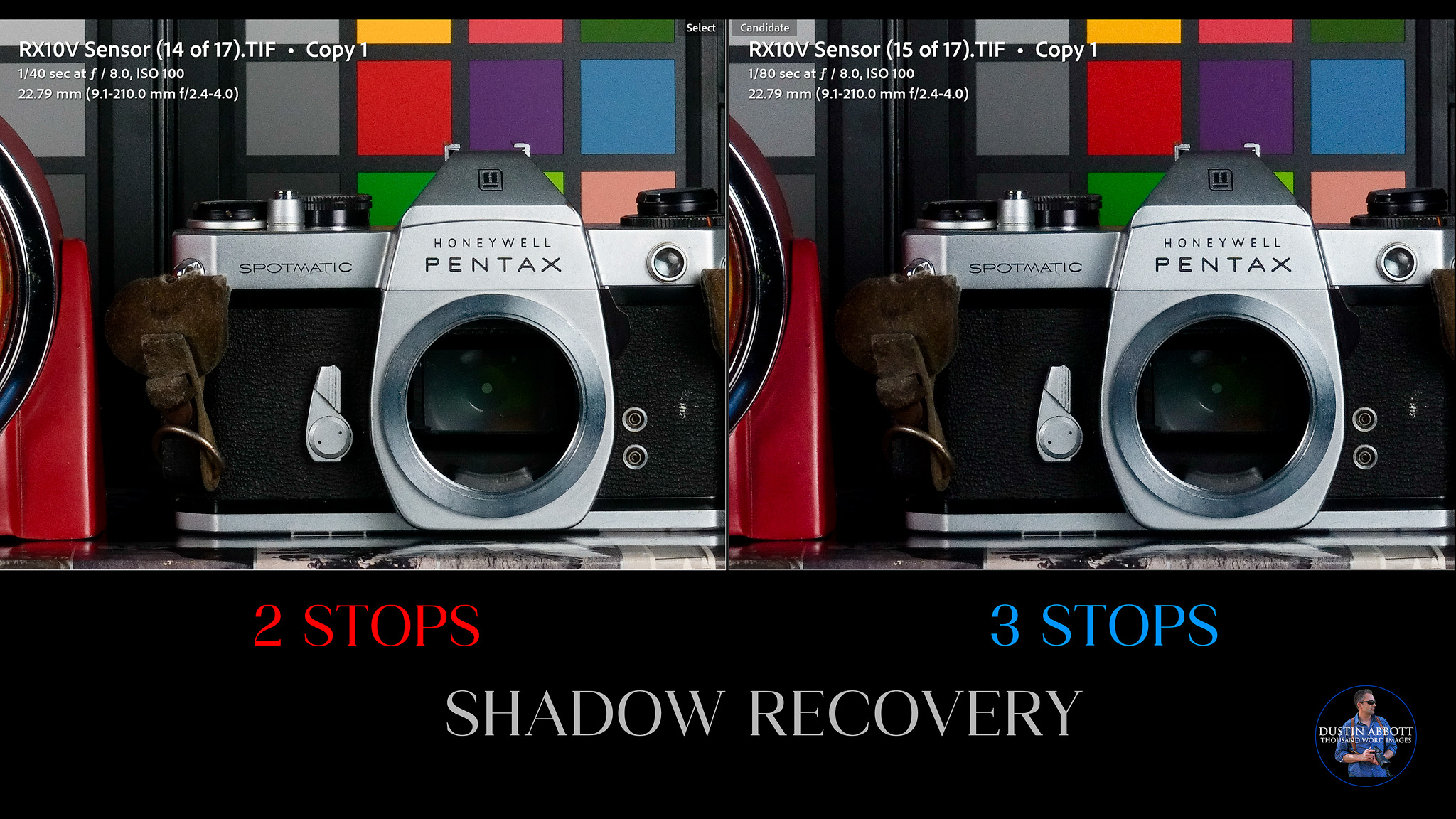
By 4 stops I’m starting to see some color blotches and even less contrast.
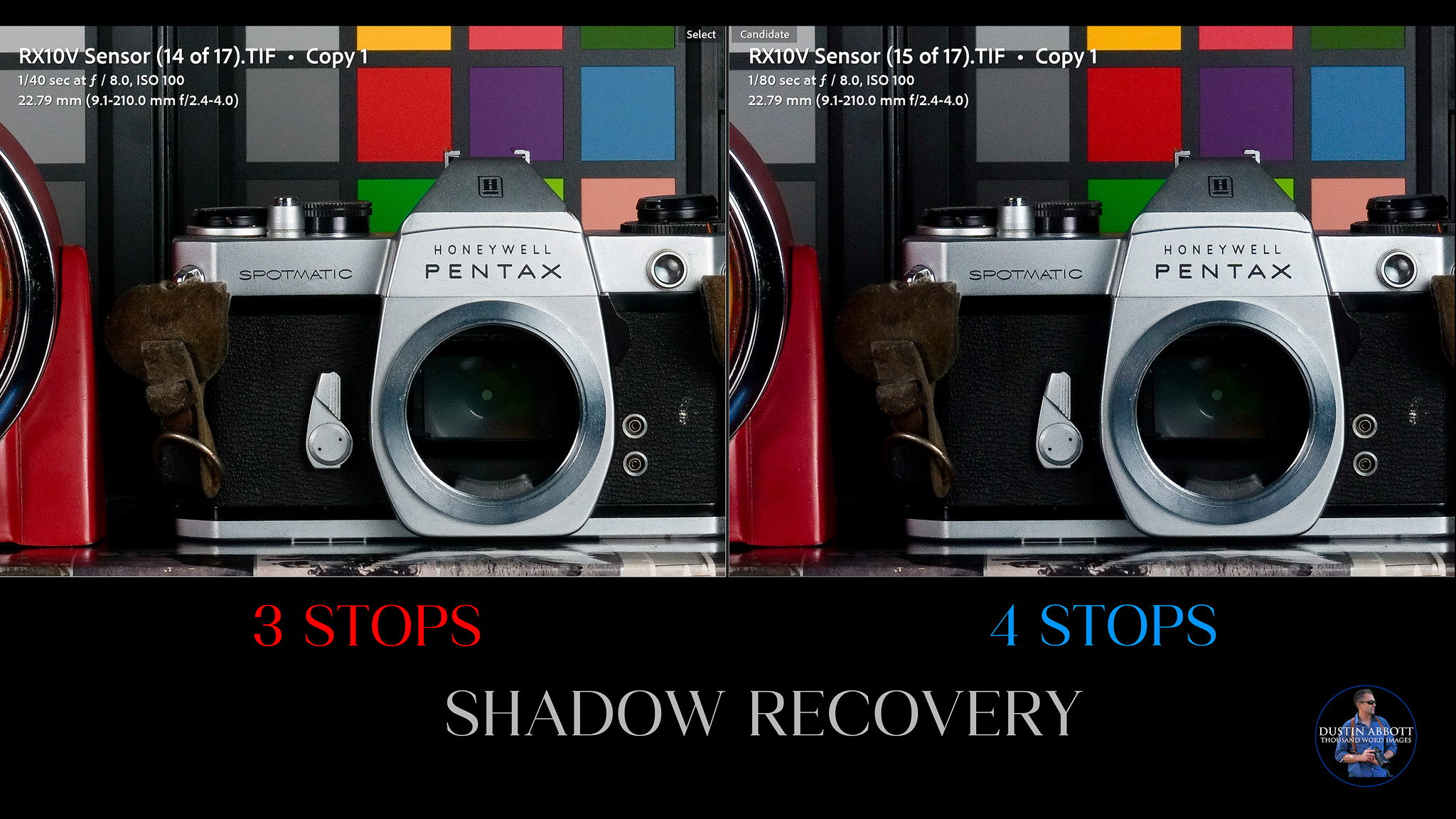
If we compare to the base exposure, we can see that the 4-stop recovered image has less detail, more noise, and is generally less bright.
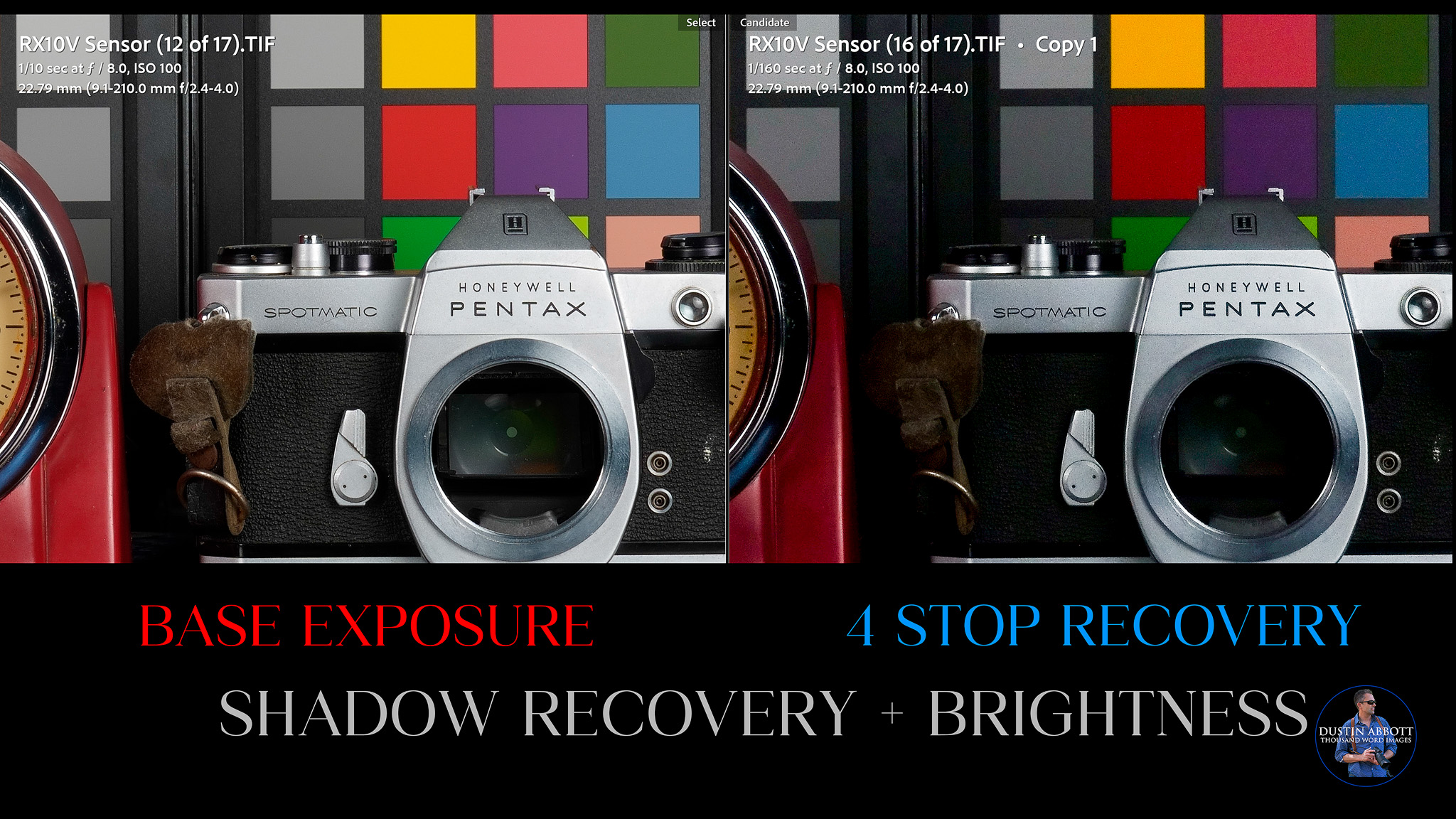
My conclusion is that the dynamic range is sufficient for doing small recoveries and edits, but you might want to utilize exposure bracketing and HDR if you are looking for images with a big dynamic range.
Color
Sony’s basic color science is very solid at this point, and they do an excellent job with white balance. That’s true here as well. I found the color in images to be nice.

You have the option of utilizing their picture profiles if you are shooting JPEGs, though Sony isn’t quite as advanced in this areas as some competitors like Fuji or even Nikon.
We shot some basic portraits in terrible lighting to capture some people elected to new offices, and skin tones looked accurate across the different tones of the candidates.

You could obviously shoot much nicer portraits using good lighting and technique, but I’ve had to do this review while traveling and in business sessions and minimal opportunity for good photography.
Sensor Conclusion
The sensor is about what I expected. Good for a bridge camera, but quickly showing its limitations compared to bigger sensors.
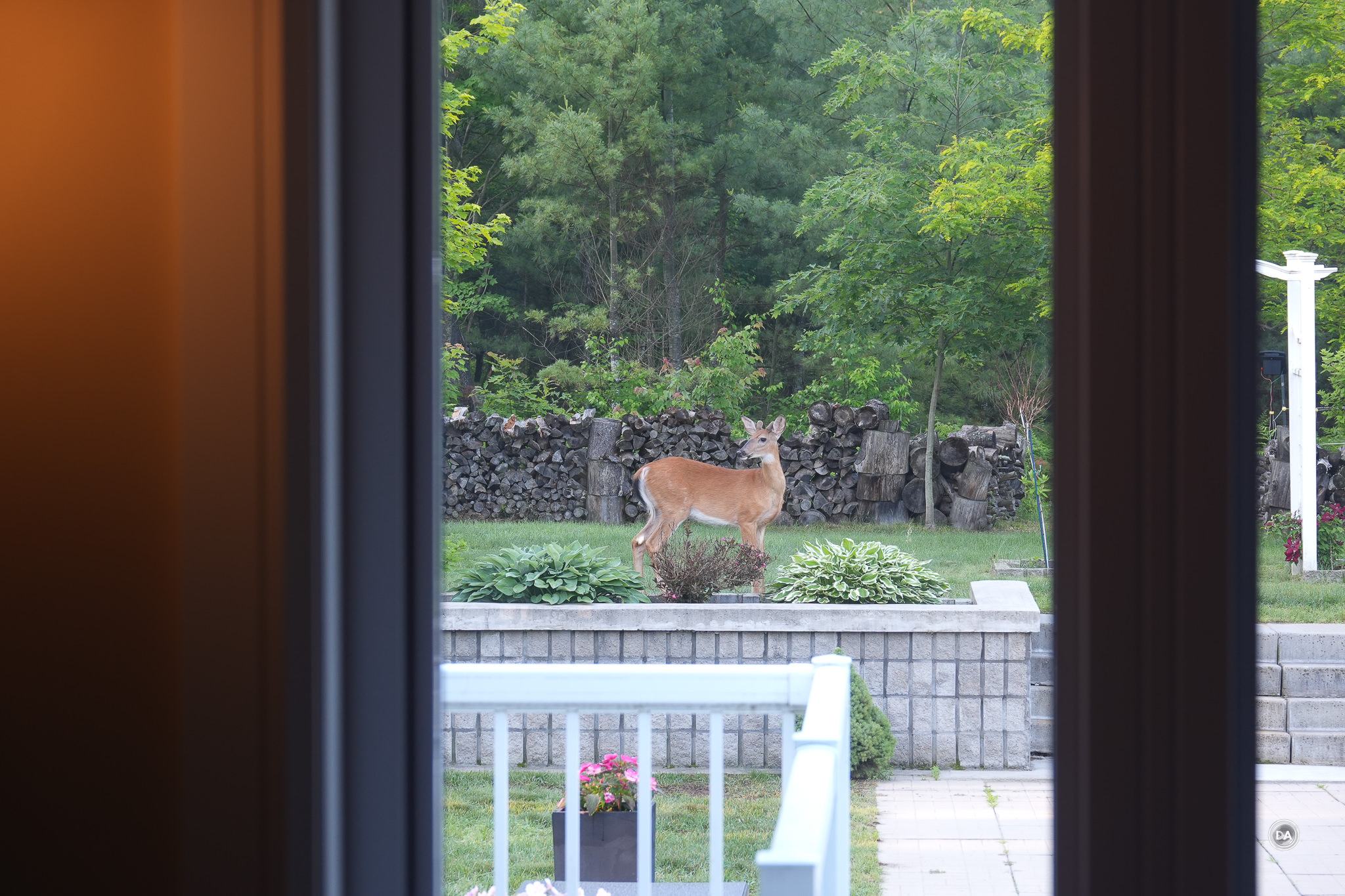
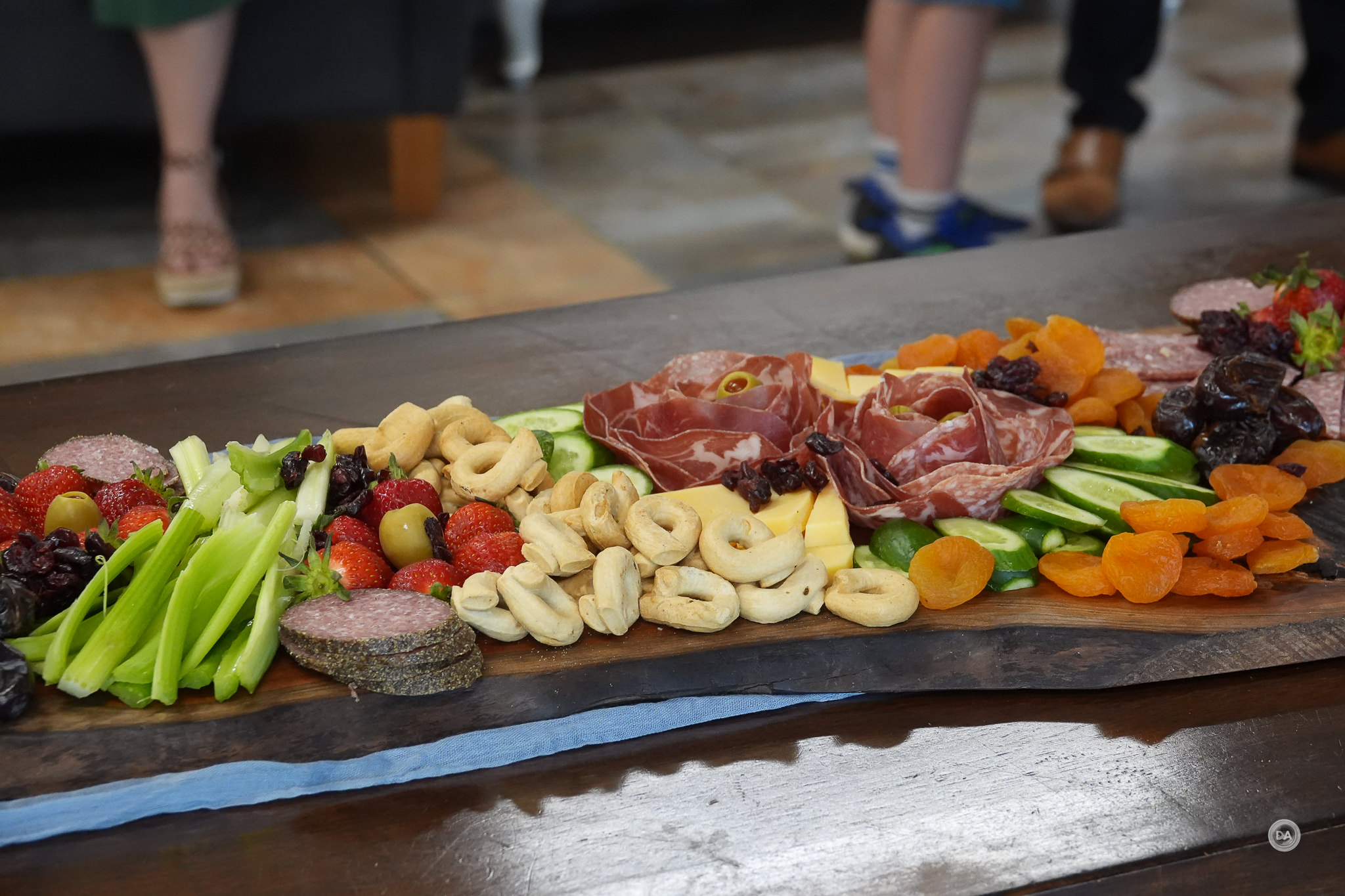
Here’s a mini-gallery of further images taken with the camera for you to enjoy






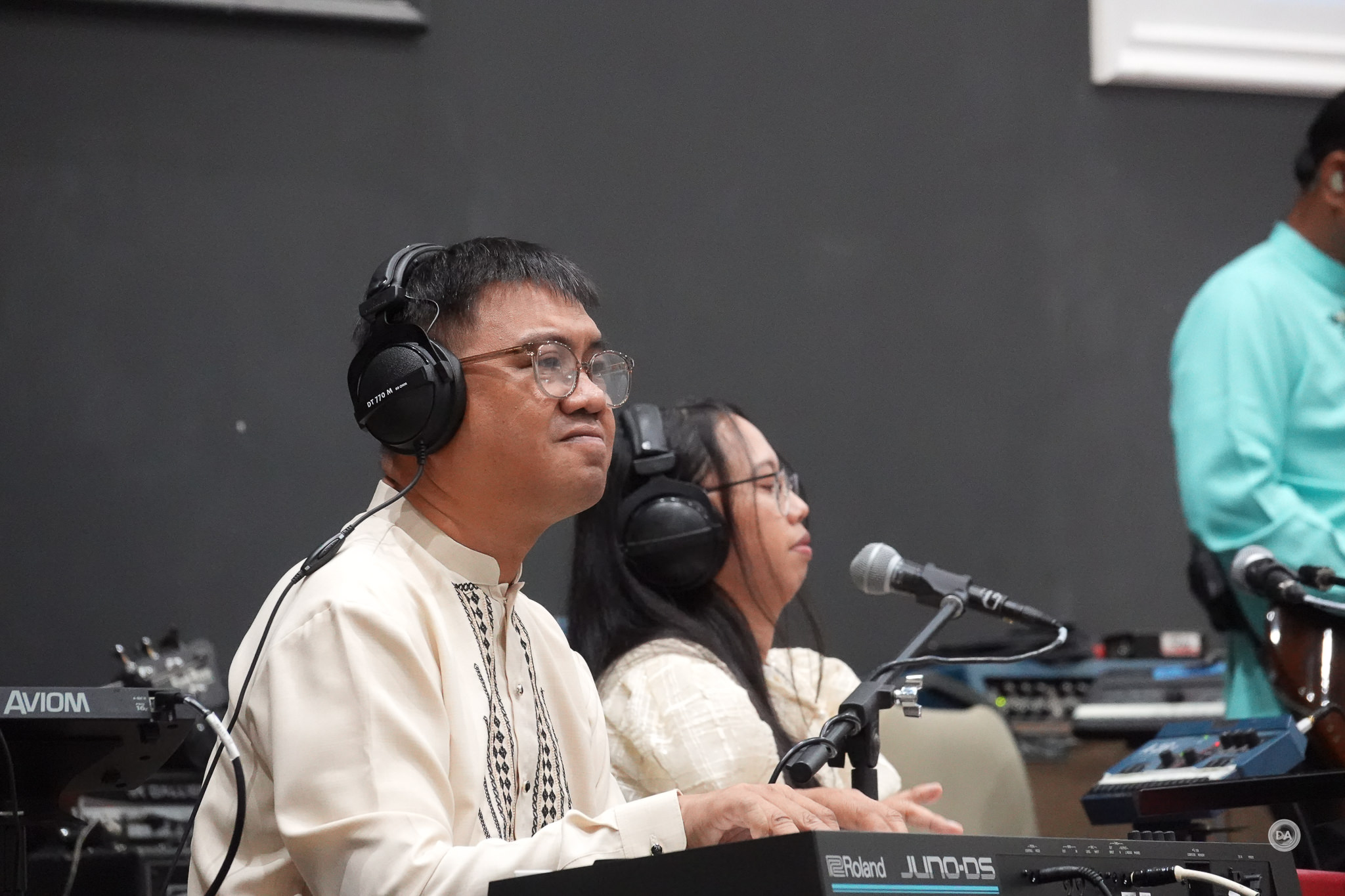

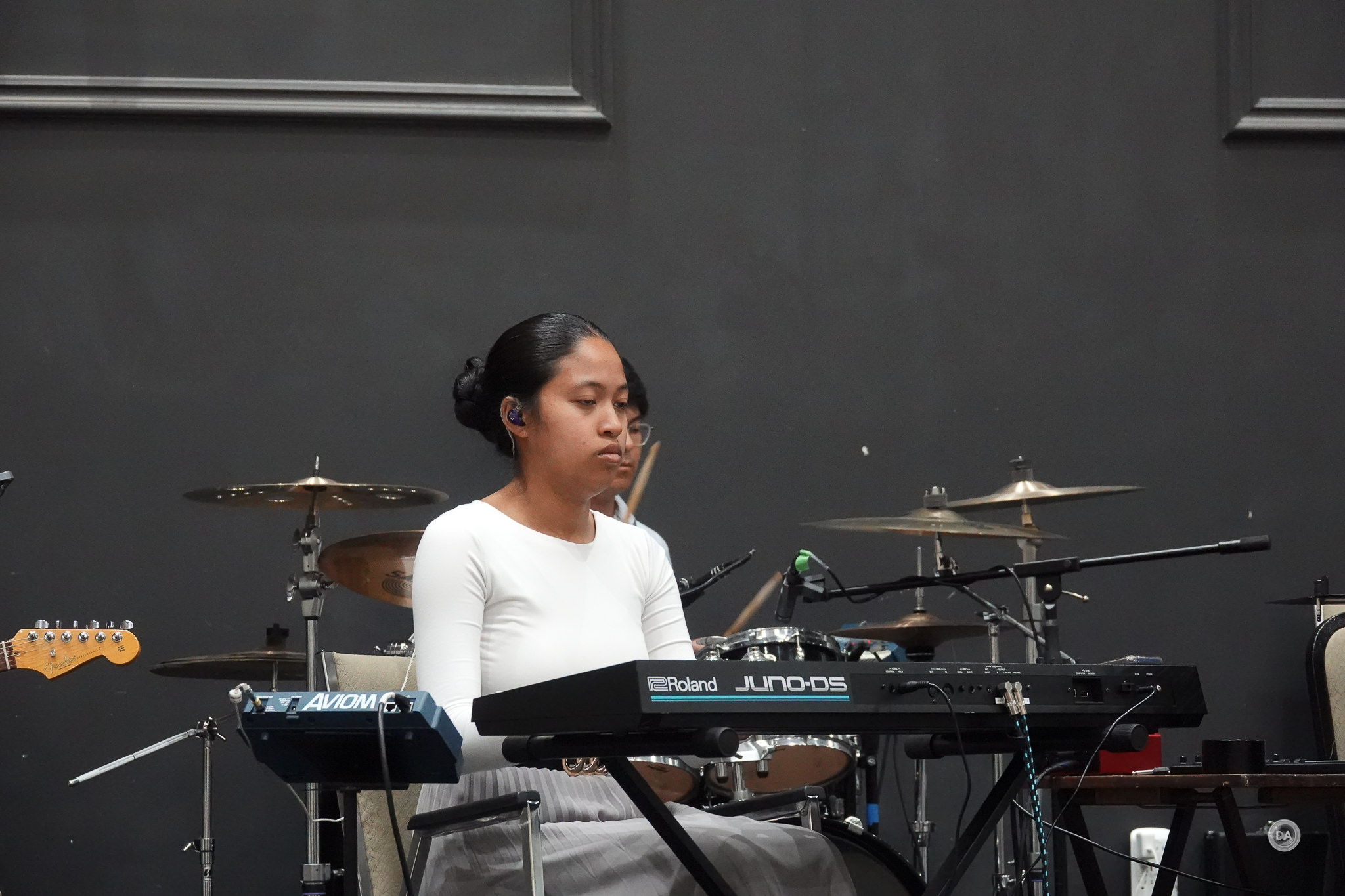



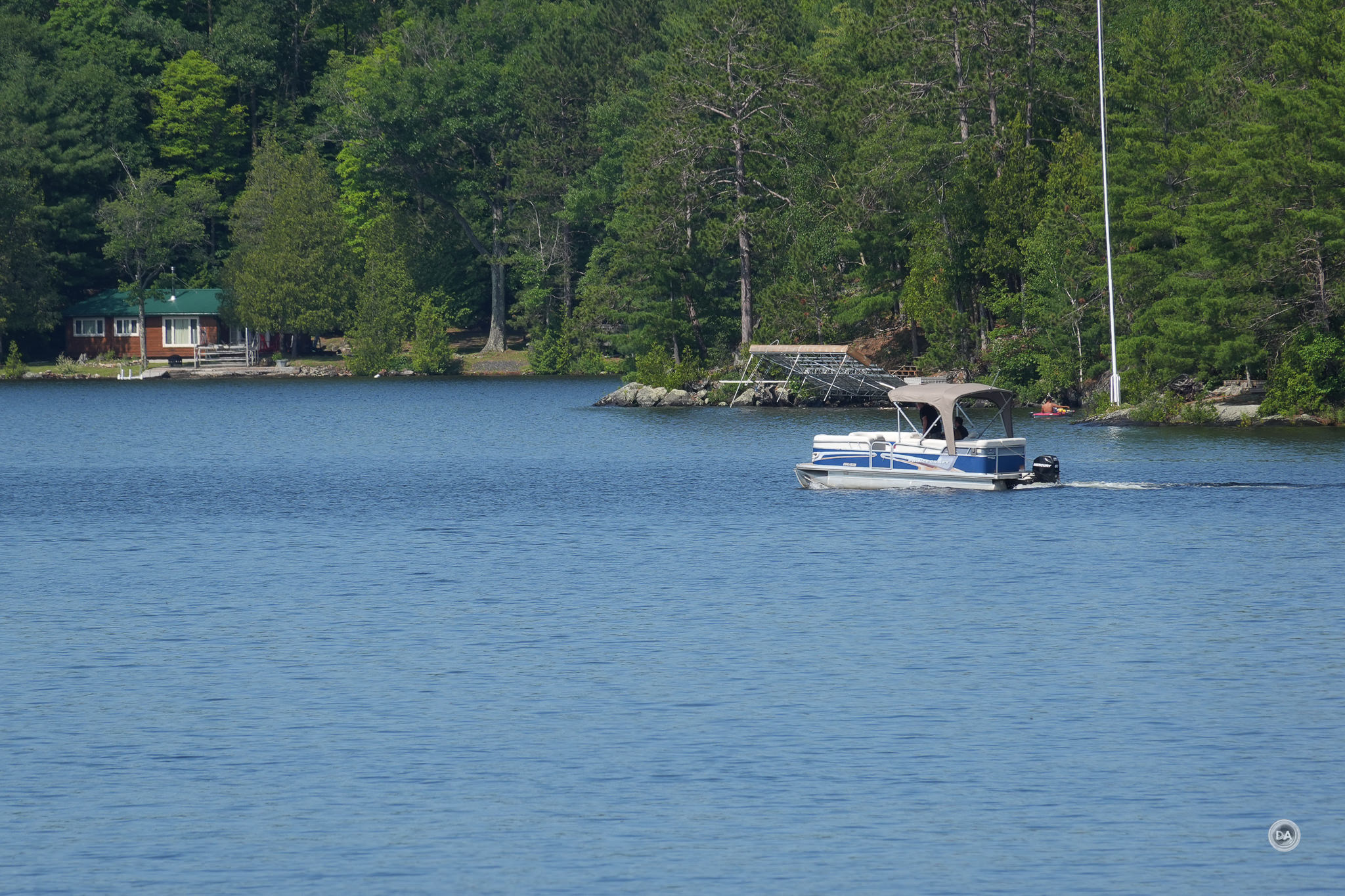


Conclusion
The RX10 V is aimed at photographers and hybrid shooters who value one-camera convenience above all else. Wildlife, sports, travel, and event photographers who don’t want to carry multiple lenses or swap glass in the field will find the 24-600mm reach irresistible. I had a few photographers who handled the RX10V (and felt very lucky to do so), and they were all pretty excited about the concept. One went on about how they continued to love a bridge camera they have owned for more than 15 years despite it being beaten up and outdated because of the versatility it offers. The Sony RX10V is a clear improvement over any bridge camera I’ve used in the past, managing to do a pretty good impression of a good mirrorless camera with an all-in-one lens attached most of the time.

The small sensor still falls short in more challenging lighting conditions, and that’s probably the single biggest issue here. The combination of a fixed lens and subpar low light performance means that this is a camera best used in at least decent lighting, and the fixed lens means that you can’t solve the problem by attaching a brighter lens.

This is still a really intriguing camera despite those limitations. While the lens and the sensor haven’t really been upgraded, everything else about the camera has. It focus faster, shoots faster, has much longer battery life, has standardized menus and controls to match the Alpha lineup, and now features vastly improved video specs. It’s a camera that does a lot of things well, and if you are looking for a self-contained package with a versatile fixed lines, the Sony RX10V comes up to the top of the list.

Pros:
- Exceptional Zoom Range: The 24-600mm equivalent zoom provides versatility for various photography situations, from landscapes to wildlife.
- Advanced Autofocus System: 557 phase-detection points and AI-based subject recognition greatly enhance focusing speed and accuracy.
- High Burst Rate Performance: Capable of shooting up to 30 frames per second, ideal for capturing fast-moving subjects.
- Strong Video Capabilities: Supports 4K60p and 4K120p with full pixel readout and 5.4K oversampling, making it suitable for high-quality video projects.
- Robust Build Quality: Improved dust and moisture resistance enhances durability for outdoor use.
- Longer Battery Life: New NP-FZ100 battery offers about 50% more shots per charge compared to previous models.
- Usability Improvements: Familiar control layout and updated menu system consistent with the Alpha series allow for intuitive operation.
- Enhanced Viewfinder & LCD: Upgraded 0.5” EVF and tilting touchscreen provide better display quality for composing shots.
- User-Friendly Features: Includes modern filming tools like S-Log, time-lapse, and auto-framing capabilities.
- Solid Connectivity Options: Multiple ports including microphone, headphone jacks, and dual USB-C connections provide versatile usage for creators.
Cons:
- Limited Low-Light Performance: The 1-inch sensor struggles significantly in low-light conditions, resulting in noise and image quality degradation.
- Fixed Lens Inflexibility: The inability to change lenses limits creative options, especially for photographers needing wider apertures or specialized focal lengths.
- Slow Buffer Clearing: Buffer clearing after continuous shooting is slower compared to competitors, potentially hindering action photography.
- Chromatic Aberration & Distortion: Some optical imperfections like barrel distortion and chromatic aberration may be noticeable, particularly at the extreme ends of the zoom range.
- Reduced Dynamic Range: Compared to larger sensors, the dynamic range of the 1-inch sensor in recovery scenarios is less impressive.
- High Price Tag: The nearly $2400 price point may deter potential buyers, especially compared to other options that might offer better low-light performance or sensor quality.
- Fixed Aperture Limitations: The variable aperture of f/2.4–4 does not allow for creative control that a brighter lens could provide at certain focal lengths.
_________________________________________________________________________
GEAR USED:
Purchase the Sony RX10V @ B&H Photo https://bhpho.to/4gkmz0c | Adorama https://prf.hn/l/LARZoVL/ | Amazon https://amzn.to/44LrJLB | Camera Canada https://tidd.ly/4eRKT76 | Amazon Canada https://amzn.to/4wuyJsd | Amazon UK https://amzn.to/4wuyRYJ | Amazon Germany https://amzn.to/4wrl315
__________________________________________________________________
_________________________________________________________________
Want to support this channel? Use these affiliate links to shop at: B&H Photo | Amazon | Adorama | Camera Canada | Amazon Canada | Amazon UK | Ebay | Make a donation via Paypal
Buy DA Merchandise https://bit.ly/TWIMerch

Keywords: RX10V, Sony RX10V, DSC-RX10M5, #DSC-RX10M5, RX10 V, Sony RX10V Review, Bridge, Travel, All-in-One, Superzoom, Review, Sensor, Resolution, Dynamic Range, ISO, Autofocus, Video, Burst Rate, FPS, Review, Hands On, Dustin Abbott, Real World, Comparison, Sharpness, Autofocus, Image Quality, Sample Images, Video, Photography, let the light in, weathersealing, #letthelightin, DA
Related posts:
 Sony a7V Review
 Sony α7RVI (a7R6) Review
 Sony α1 II (ILCE-1M2) Camera Review
 Tamron 28-300mm F4-7.1 Di III VC VXD Review
 Tamron 28-300mm F4-7.1 VC VXD Gallery
 Tamron 25-200mm F2.8-5.6 VXD G2 Review
 Tamron 35-100mm F2.8 Di III VXD Review
 2023 DA Awards – Best Lenses and Cameras
 Tamron 90mm F2.8 Di III Macro VXD Review
 Tamron 90mm F2.8 Macro VXD Gallery