

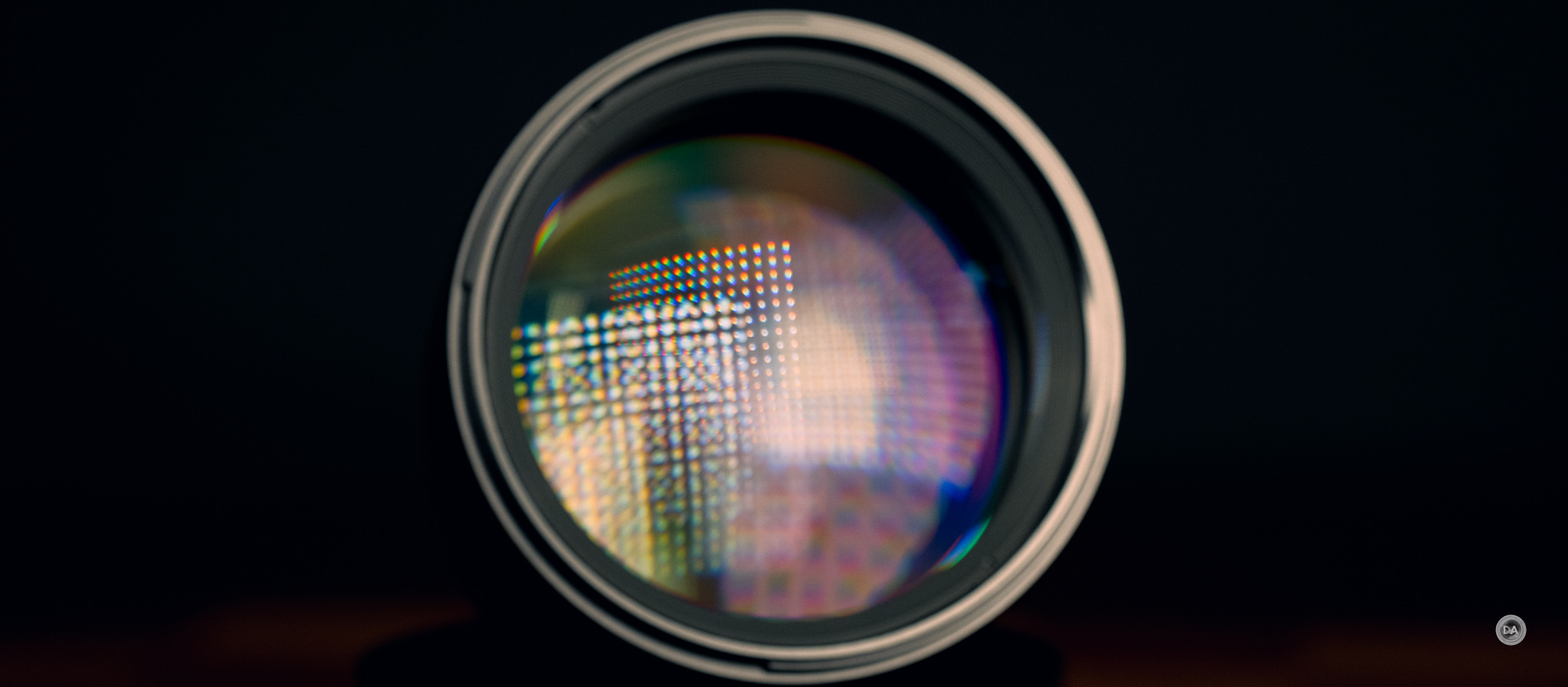
Just a couple of years the number of native 135mm lenses on Sony E, Nikon Z, and L-mount could be counted on one hand, but first Samyang (my review here), then Viltrox (my review here), and with a big splash, Sigma (my review here). And now 7Artisans arrives with their own autofocusing 135mm F1.8 lens, and the 7Artisans AF 135mm F1.8 has the lowest MSRP of the bunch at just $689 USD), which slightly undercuts the Samyang/Rokinon ($799 USD MSRP, but frequently available for less) or Viltrox ($899 USD, but frequently cheaper). Can the 7Artisans bring something distinctive to the table that those lenses lack? That will be the true challenge, but there is no question that this is the most robust offering yet from 7Artisans. Find out more in either the video review below or by reading on in the text review.
Follow Me @ YouTube | Patreon | Instagram | Facebook | DA Merchandise | Flickr | 500px | X
Thanks to 7Artisans for sending me a review sample of this lens. As always, this is a completely independent review. *The tests and most of the photos that I share as a part of my review cycle have been done with the Sony a7RV and the Sony A1 II. You can find the listing for the Thypoch 7Artisans AF 135mm F1.8 here.
__________________________________________________________________________________________________
AI SUMMARY: The 7Artisans AF 135mm F1.8 lens enters a competitive market as a cost-effective option among notable brands like Samyang, Viltrox, and Sigma. While it offers a robust build and pleasing bokeh, it falls short in optical performance and autofocus precision compared to its rivals. The lens lacks some advanced features found in competing products, leading to mixed results in sharpness and contrast during testing. Overall, it might appeal to budget-conscious photographers, but it struggles to distinguish itself in a crowded field.
Strengths:
- Attractive price point at $689, undercutting some competitors.
- Beautiful bokeh and pleasing general rendering.
- Good build quality with useful features like an aperture ring and customizable buttons.
Weaknesses:
- Needs a bit more polish in the details
- Autofocus accuracy needs improvement, especially in dynamic scenarios.
- Strongly flare prone.
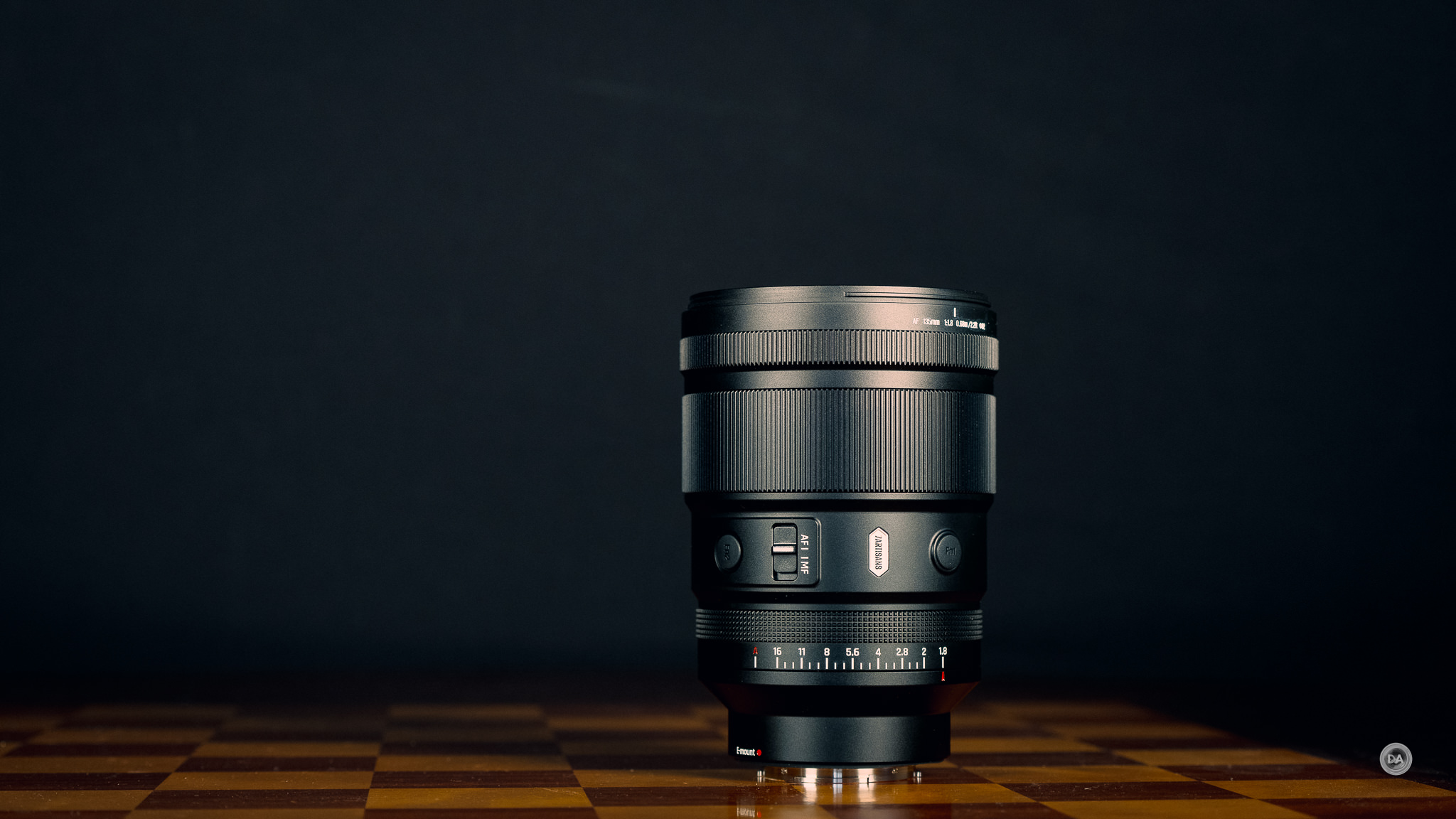
135mm F1.8 lenses tend to be big and heavy, and the 7Artisans is no exception. It is lighter than the big Viltrox LAB 135mm F1.8 (1235g) at 1014g, but that’s considerably heavier than the Samyang/Rokinon (772g). It doesn’t have as good of optical qualities or autofocus as the Viltrox, which leads us to the biggest challenge regarding the 7Artisans lens – it isn’t really exceptional in any way relative to existing competitors, which makes it a bit of a hard sell. That’s not to say that it doesn’t have lovely image quality (it does), but there are already some really strong options on the market.

One area of strength is the bokeh, which is soft and lovely.

The 7Artisans AF 135mm F1.8 feels like it needs a firmware update or two, but it definitely has some potential. Let’s take a closer look….
7Artisans AF 135mm Build and Handling
I have a lot of sympathy for newer lensmakers, as the bar is set so ridiculously high these days. 7Artisans has loaded this lens with an aperture ring, dual function buttons, and an AF | MF switch, but it is still missing some features found on alternatives like the ability to declick the aperture or an iris lock. That being said, this is a really nice lens design, packed with features.
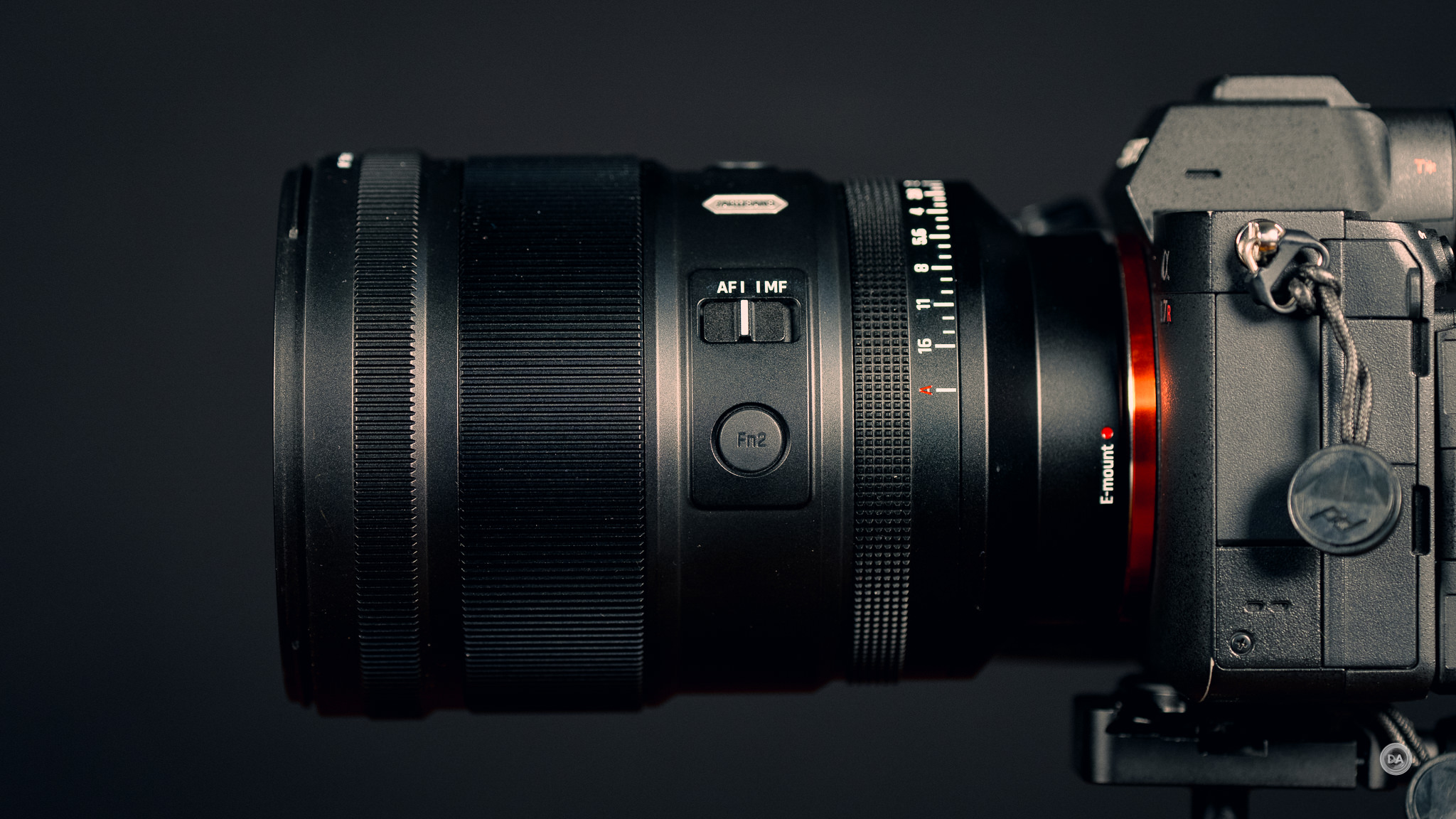
The size is 91mm (3.58″) in diameter and 136mm (5.35″). That’s narrower than the Viltrox or Samyang lenses (93mm), but a little longer than the Samyang (130mm), though the Viltrox is longer still at 145mm.
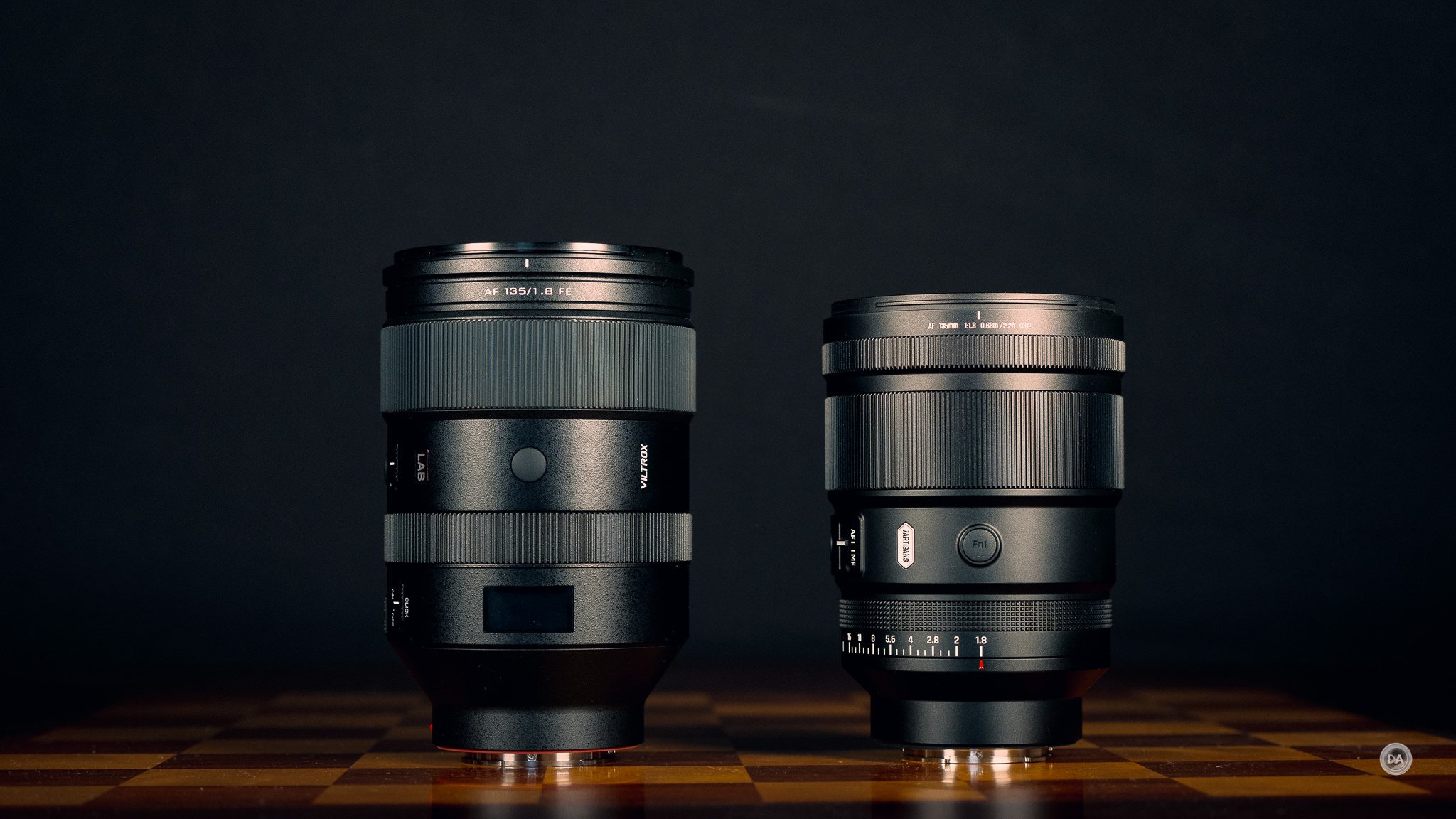
The lens weighs in at 1014g (35.75oz). That’s heavier than the Samyang, as mentioned, and also slightly heavier than the Nikon 135mm F1.8 Plena (995g) or the Sony 135mm F1.8 G Master (950g). In part this is because the 7Artisans body is all metals.

The filter size is 82mm, which is pretty standard for this focal length/aperture combination.
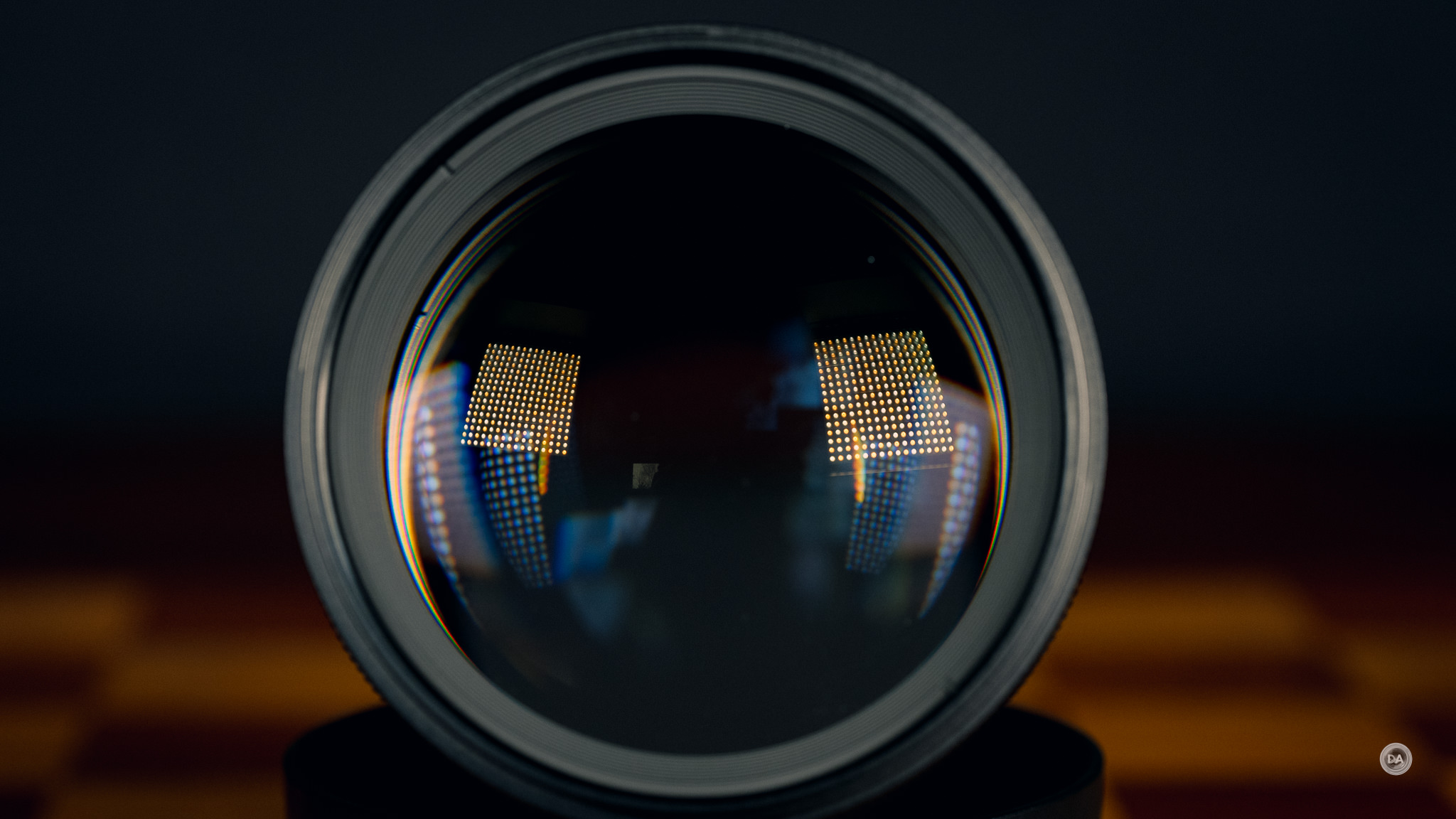
There is a manual aperture ring that has light clicks. There’s a similar spacing gap between F1.8 and F2 (unusual) as there is between F16 to A (Automatic). Neither has a firm feeling, which is good between F1.8 and F2, but not great between F16 and A, as you could shift out of the manual aperture range unintentionally.
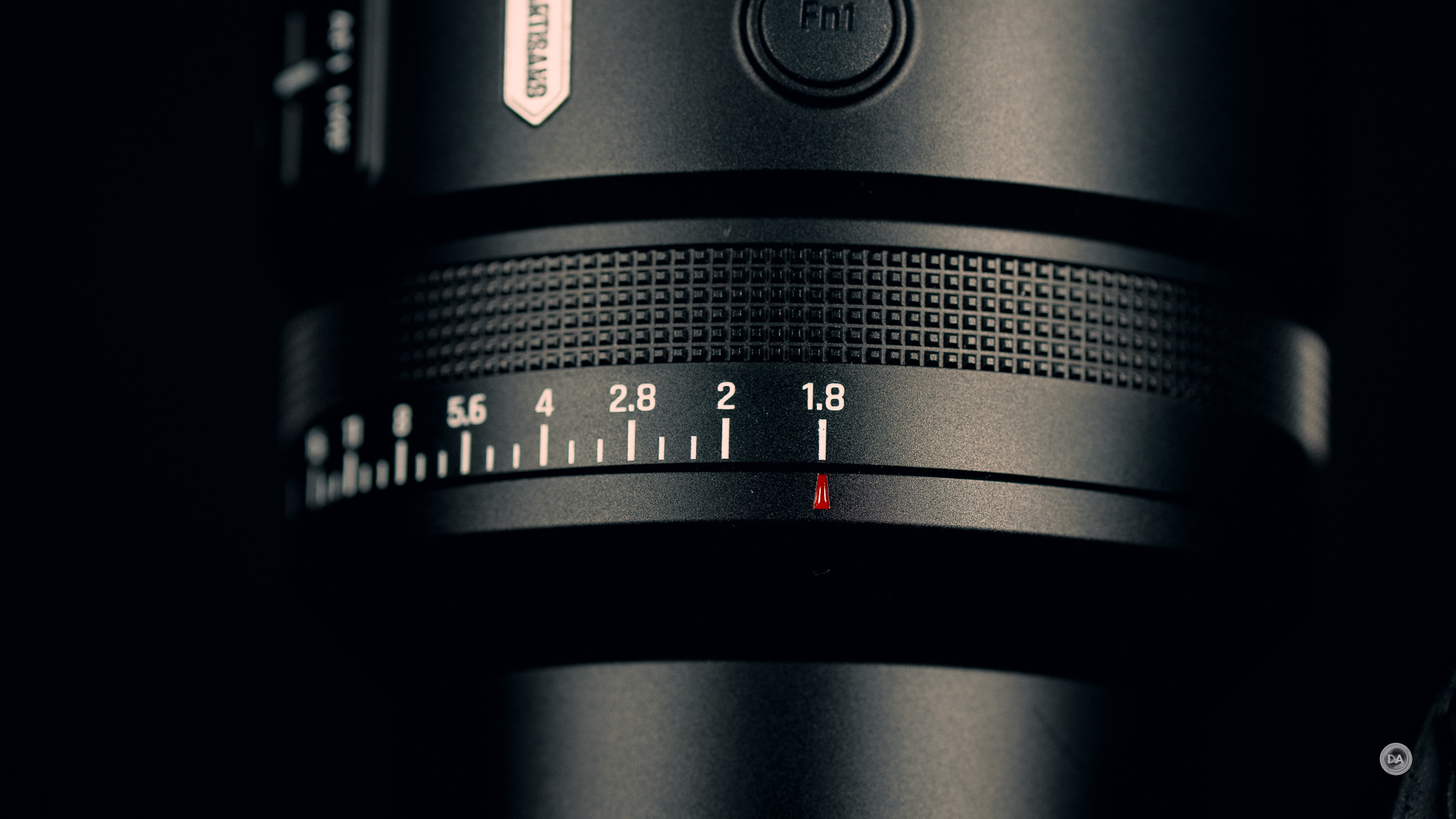
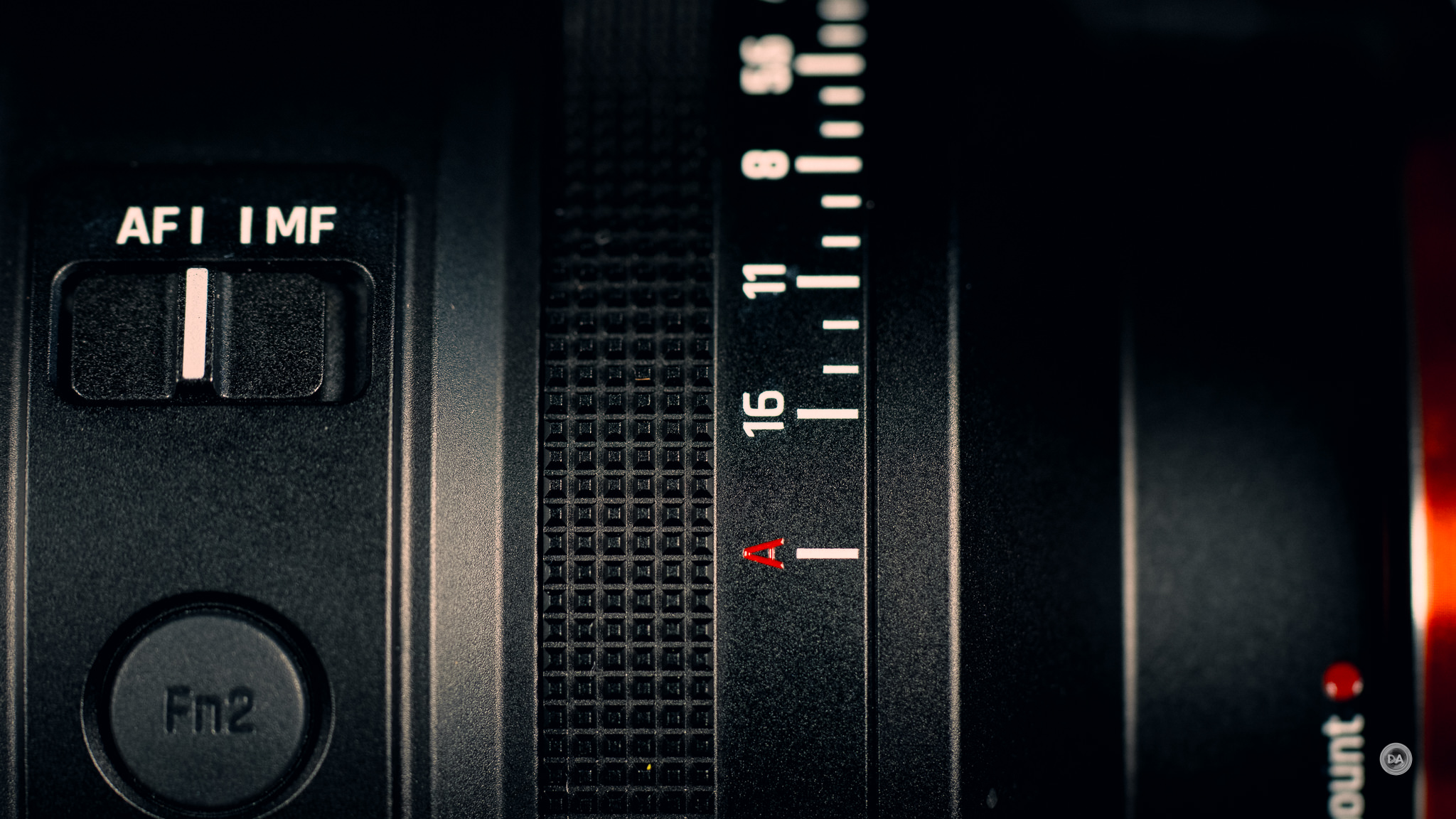
The aperture ring doesn’t have a great feel, with a slight drag if you make a significant change in aperture. As noted, there is no option to declick the aperture ring for video.
The aperture iris itself has 12 aperture blades. I noticed a bit of “clacking” noise when changing apertures.

At the small aperture shown above, you can see some straight edges on the blades, but the high blade count makes for a nicely rounded aperture through most of the aperture range. Here’s what the bokeh geometry looks like at F1.8, F2.8, and F4:


That’s very nice…better than most 135mm lenses.
There are two Fn (Custom) buttons, one located on the top and the other on the left side. These achieve the same function, but the two buttons allow easier accessibility whether shooting in vertical or horizontal modes.
There is also an AF | MF switch to allow easy switching between the two.
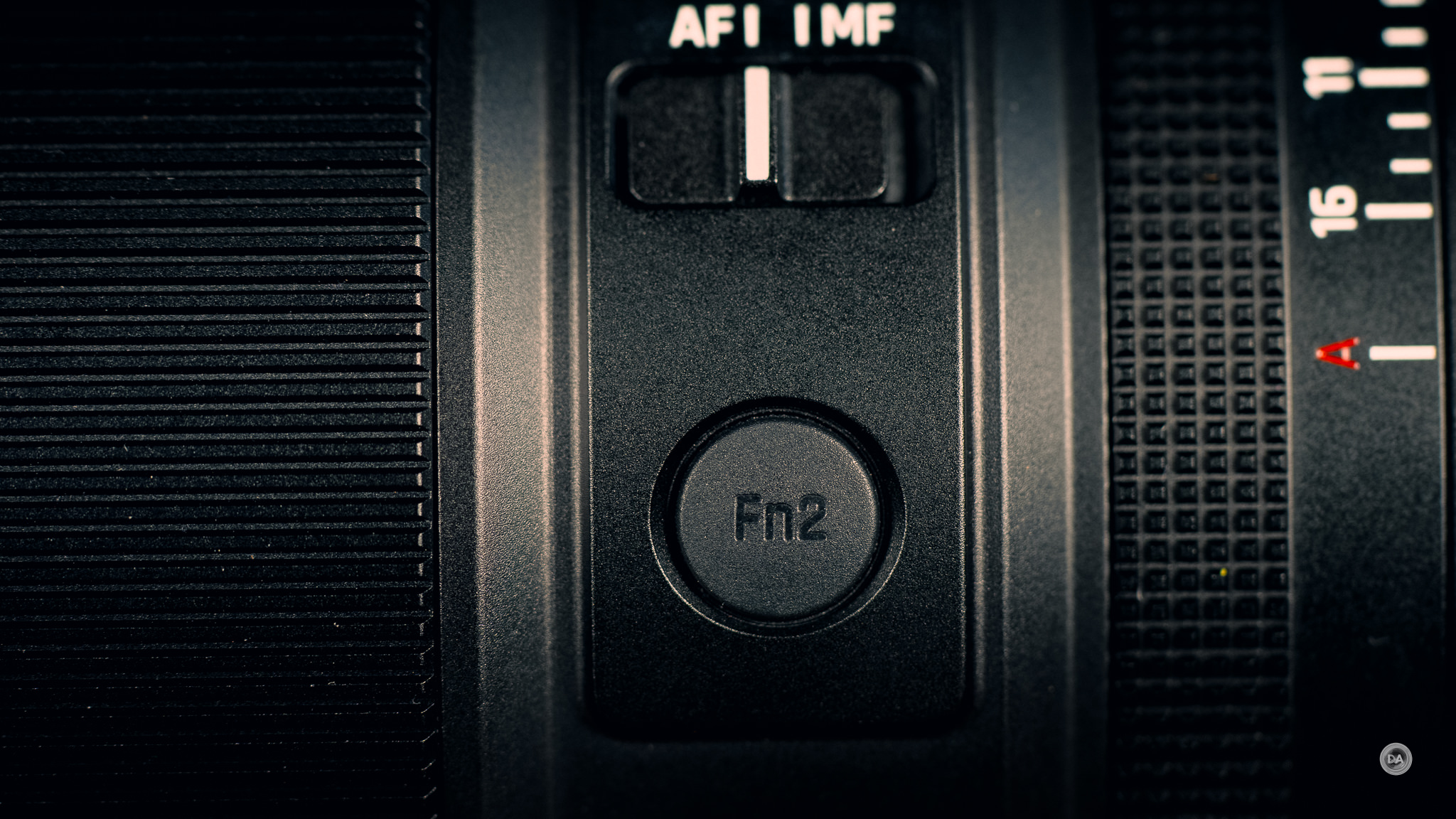
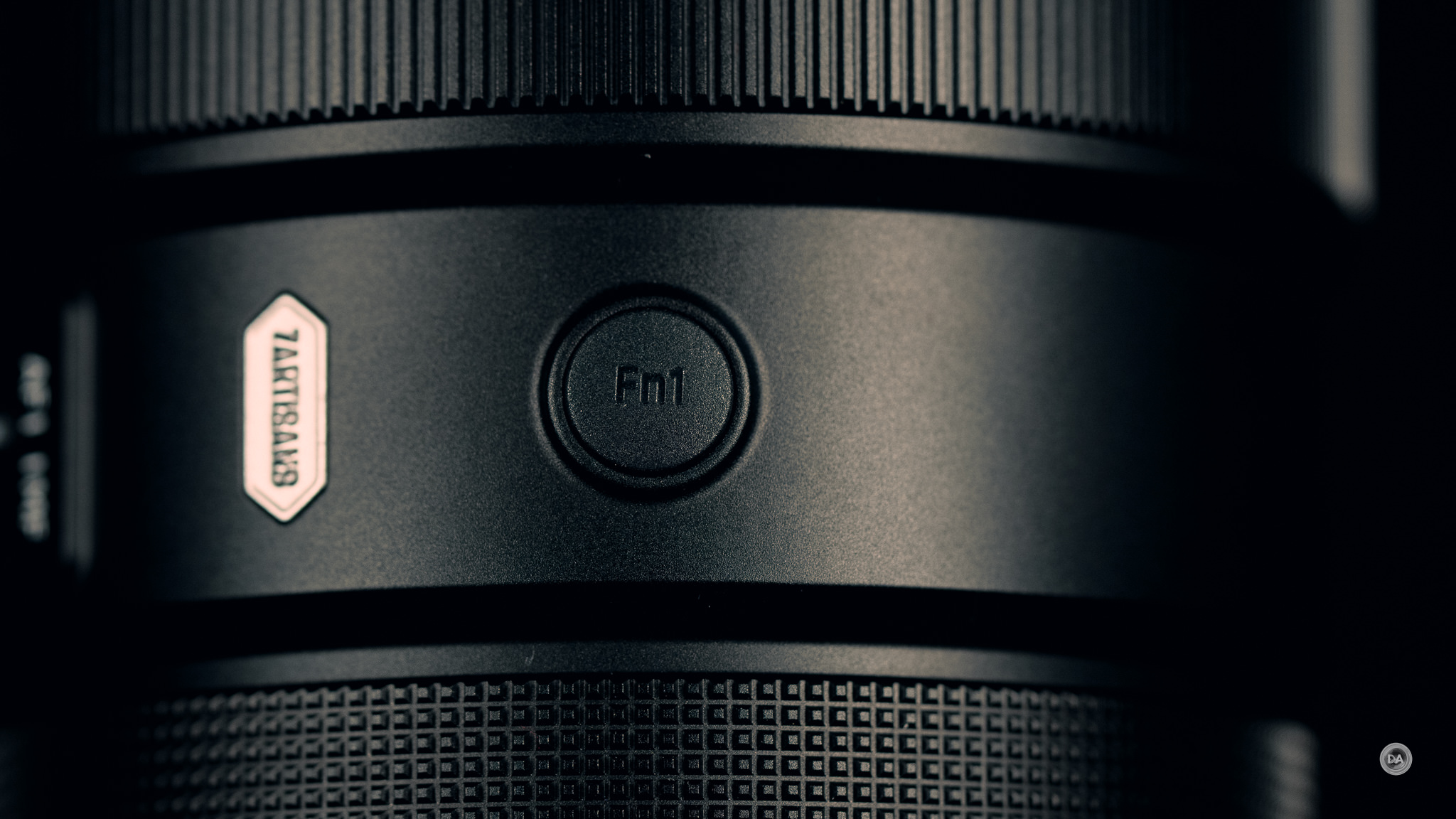
These are very welcome additions to the lens, positioning it as a more upscale zoom despite its inexpensive price tag. One missing feature that many competing 135mm lenses have is a focus limiter switch.
A shallow lens hood is included with the lens. There is no lock button, but it seems to lock into place reasonably well (though without a strong, satisfying “click”).
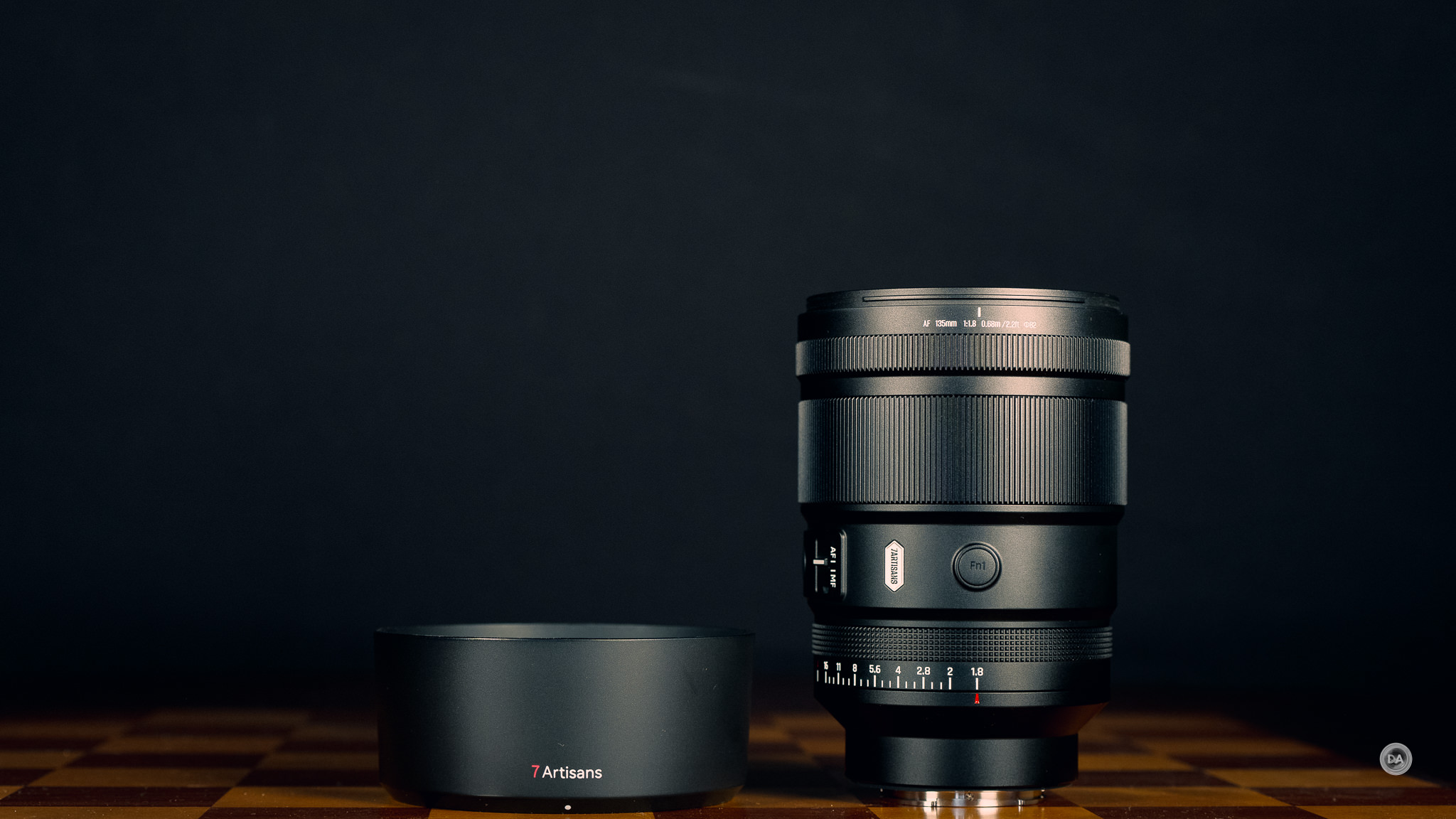
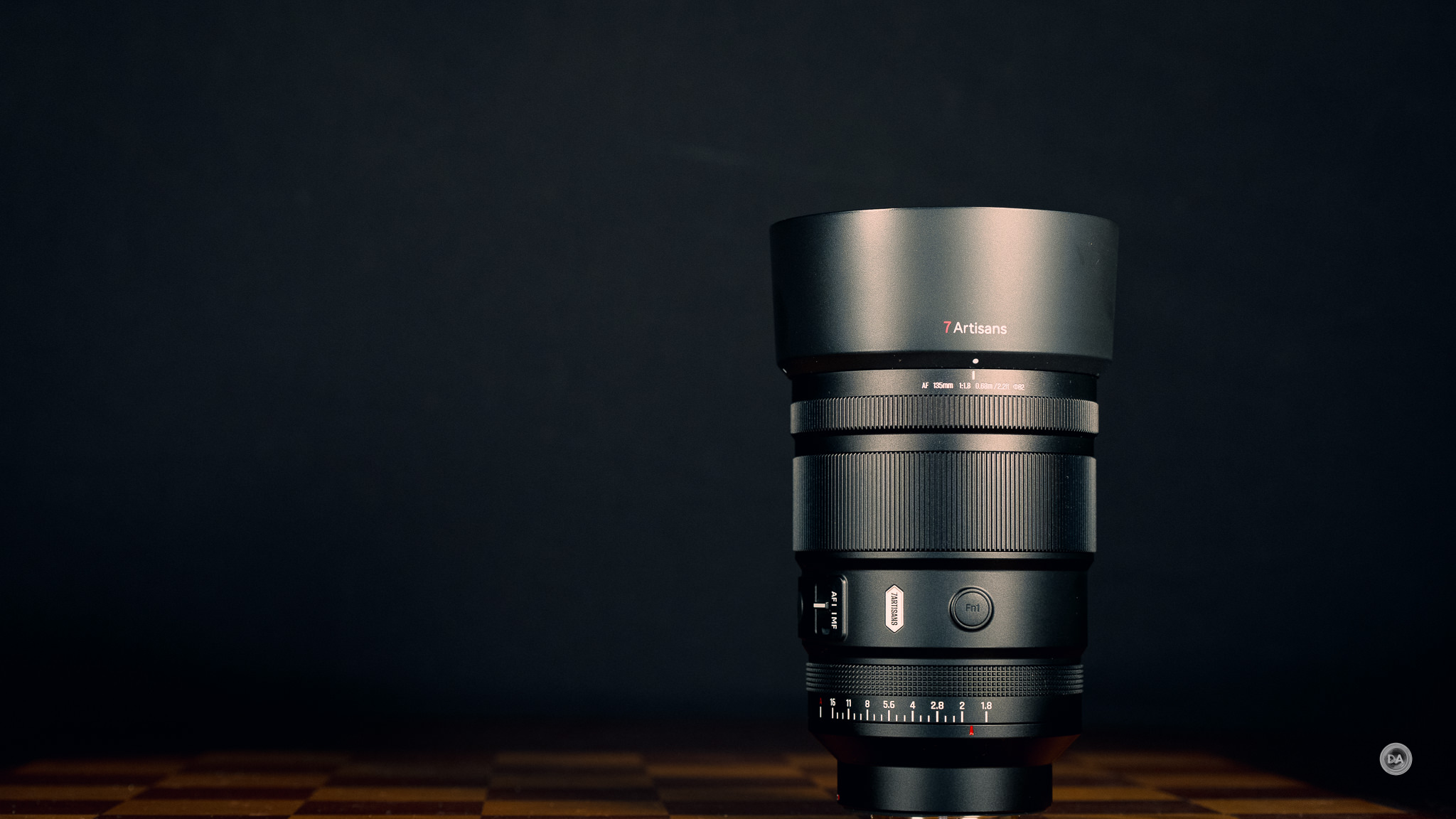
There is a weather sealing gasket at the mount, though I haven’t seen a diagram of internal seal points.
Also present at the rear mount is a USB-C port for firmware updating.
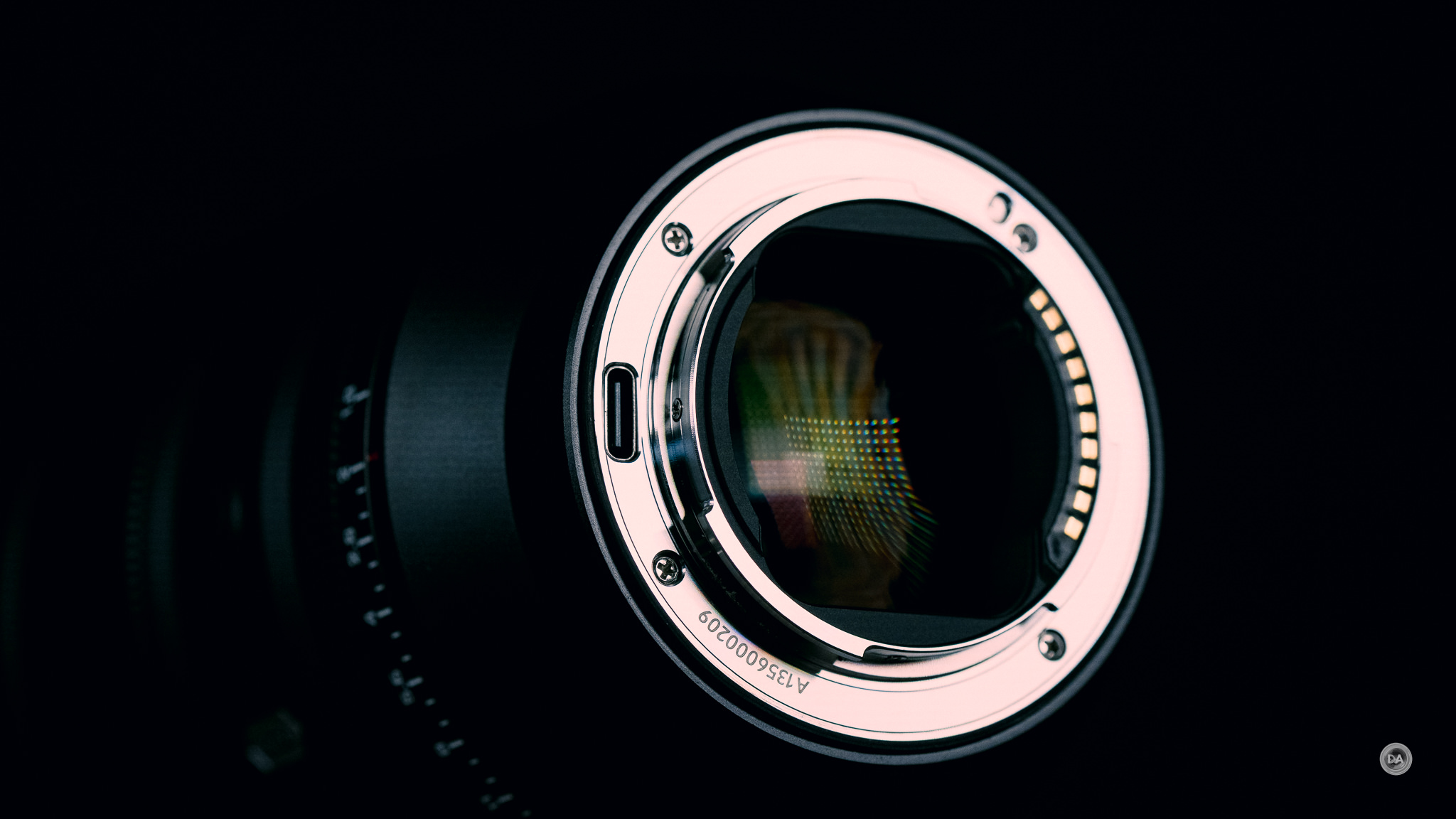
Future firmware updates will be available through the 7Artisans site.
The manual focus ring has a very light weight but turns smoothly and responsively. There is a ribbed grip section near the front of the lens that is there more for aesthetic purposes (like some Nikkor lenses).
There is no lens based stabilization, so you will need to rely upon the in-camera stabilization if your camera is so equipped. That’s true of competing lenses as well, though I’m not sure that communication is flawless in the current firmware build that I tested. I felt like I saw less stabilization in the viewfinder than expected, and some motion blur in photos where I wouldn’t expect it (like in this portrait at 1/250th of a second).

I found that changing my camera’s Steady Shot settings from automatic focal length detection to manual and inputting 135mm made a difference. This is probably a quirk that will get deal with via firmware, but I would recommend this change if you feel like you aren’t getting as steady of results as you would like.
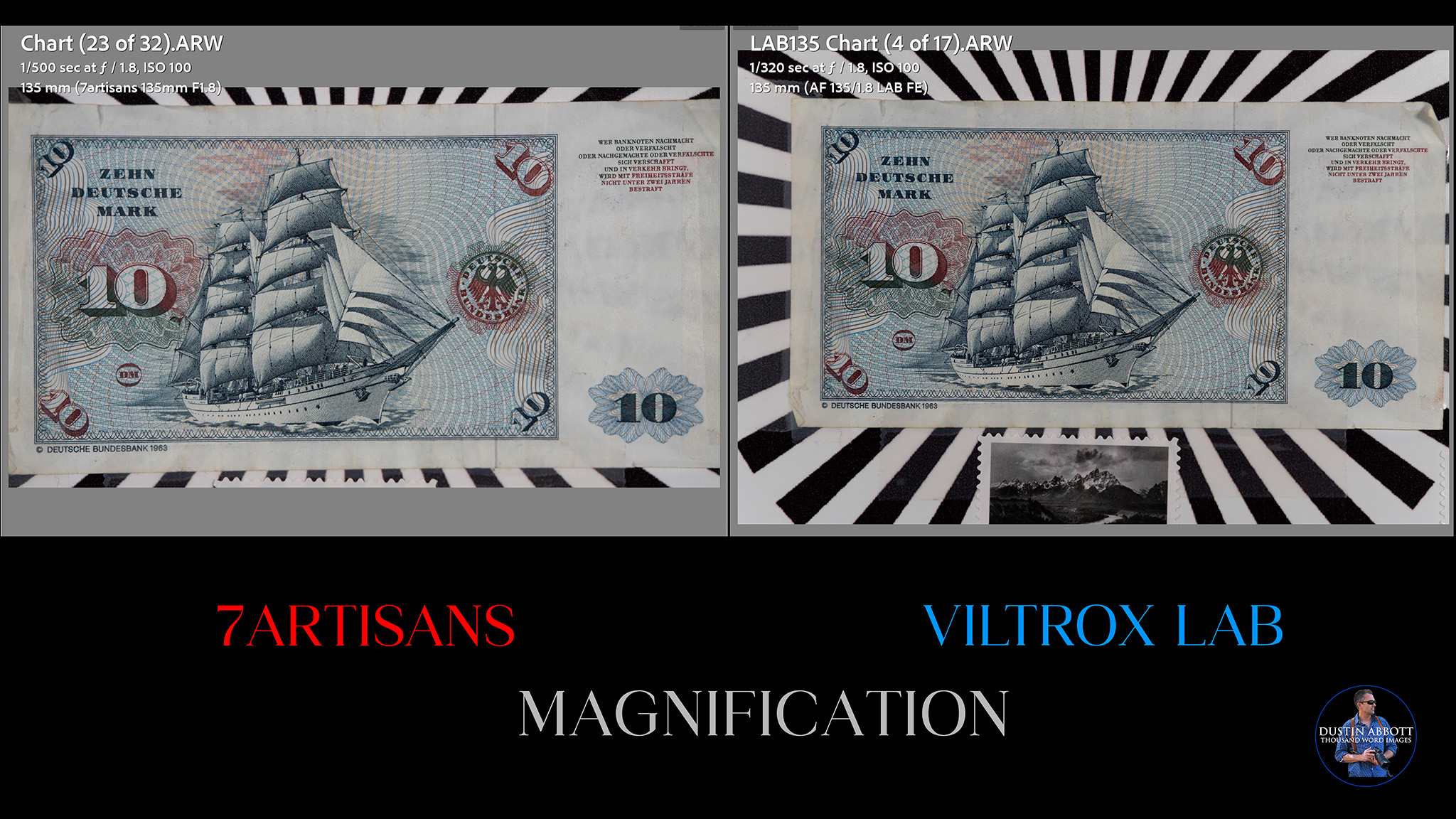
The 7Artisans AF 135mm focuses as closely as 68cm, which is the closest amongst competing lenses (the Samyang is next at 69cm). In theory we should see a magnification figure over 0.25x (common amongst these lenses). though 7Artisans hasn’t published that figure. Here’s the level of magnification:
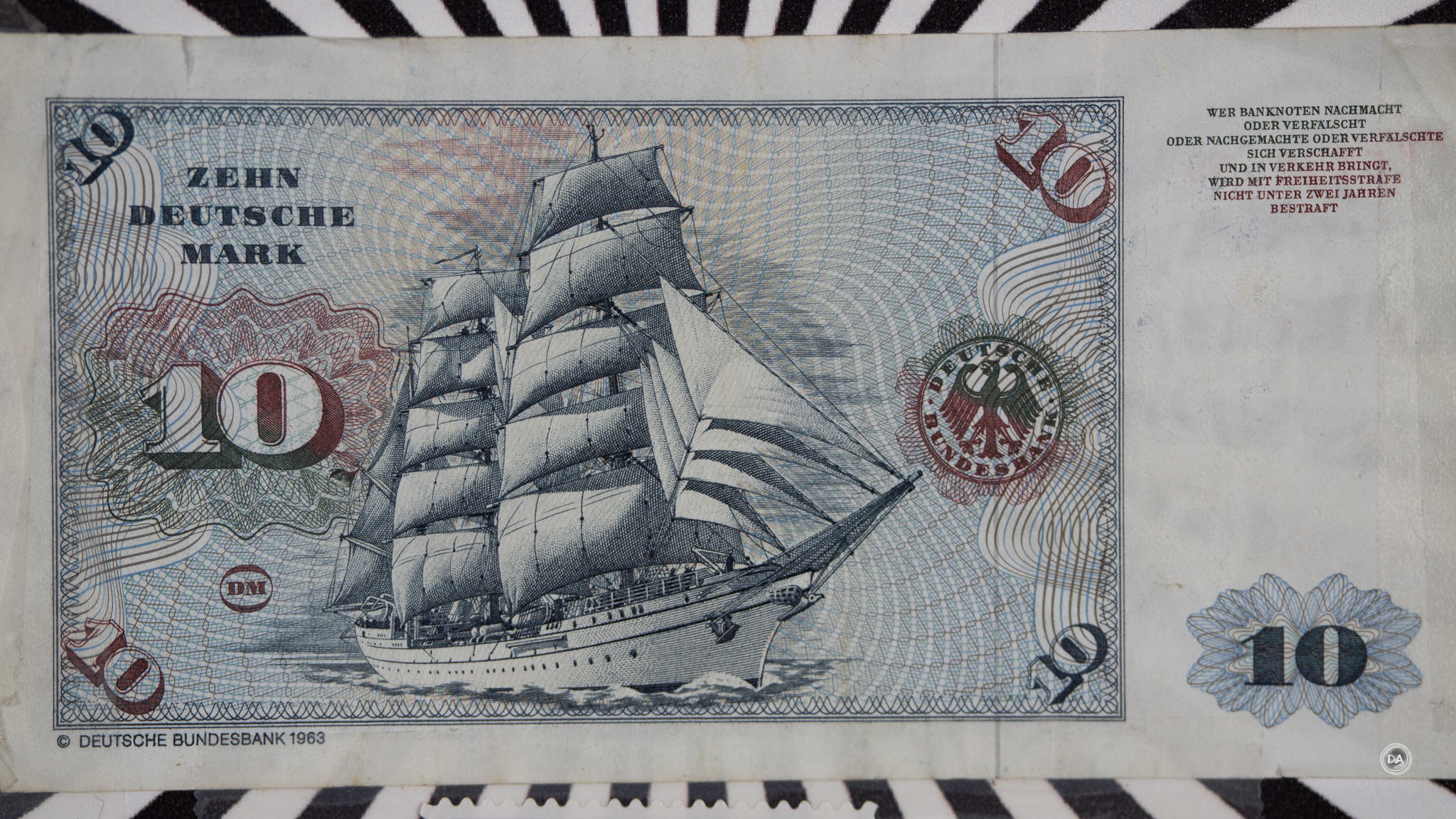
That looks like at least 0.30x to me. You can see that it is obviously higher than the Viltrox’s 0.25x.
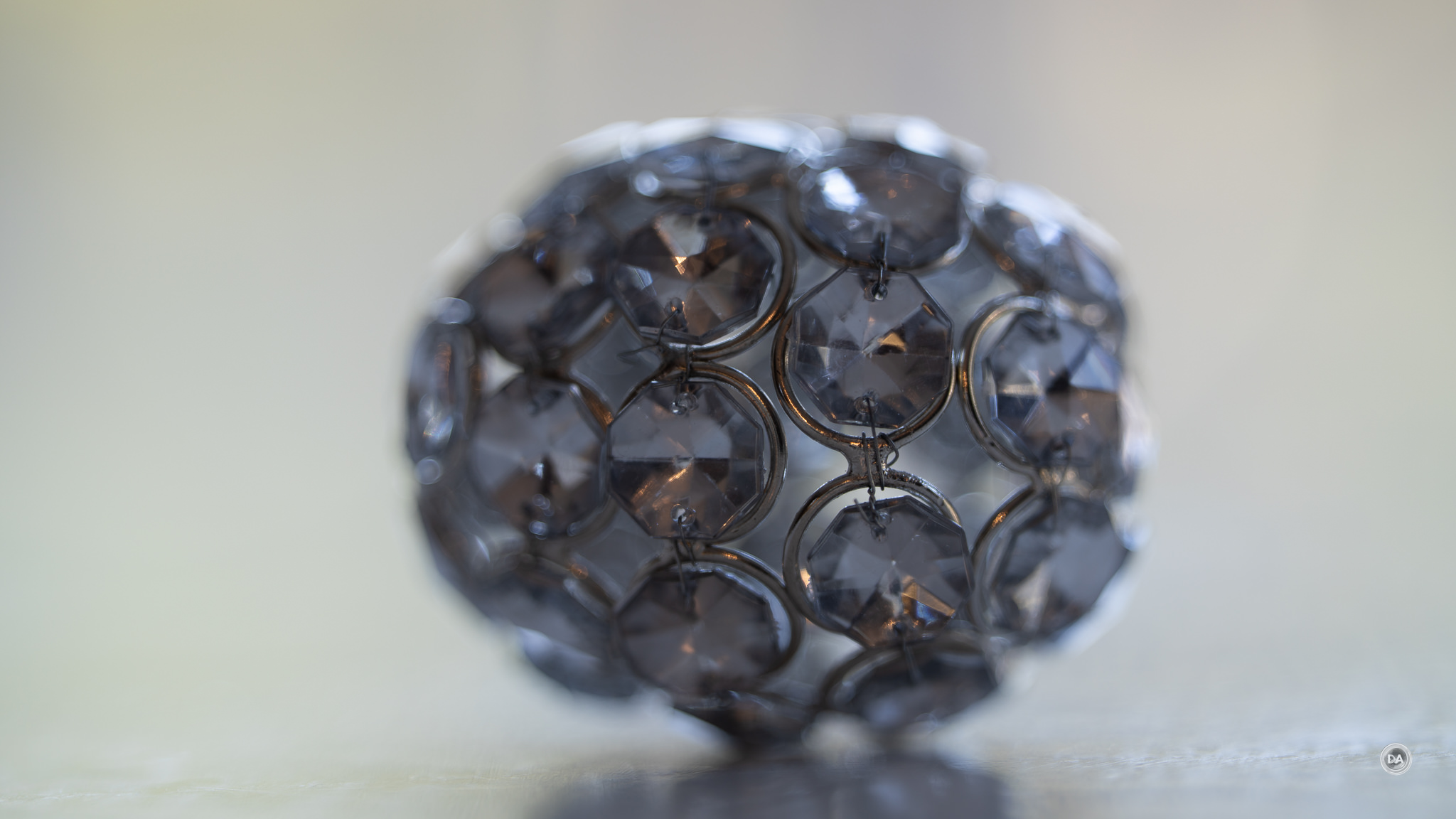
I’ve been using this little crystal egg to test both magnification and fringing (lots of shiny, reflective surfaces). You can see that the 7Artisans not only fills the screen with the egg, but also shows its ability to completely obliterate a background at that distance. My kitchen table and everything beyond just disappears.
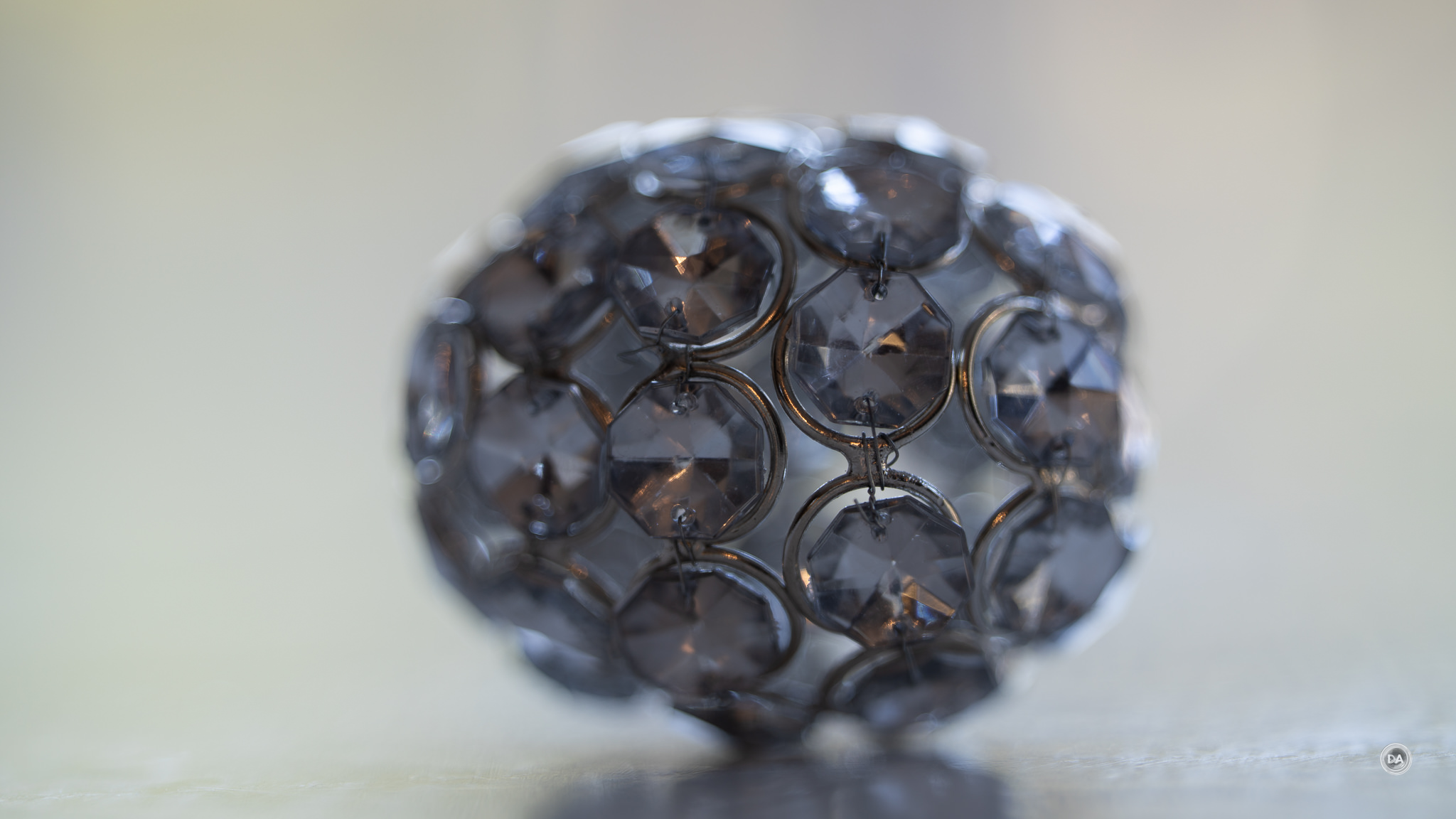
As we will see later on in the review, the bokeh and general rendering from this lens is one of its greatest strengths.
The 7Artisans AF 135mm F1.8 is a lens that delivers mixed feelings for me in the build and packaging. It is generally a very looking lens with an initial feeling of quality. Some of the details don’t quite hold up, however, with some rough edges to the aperture ring (and noise of the aperture iris), the less-than-ideal hood bayonet, and the communication error with the stabilization. The 7Artisans doesn’t feel quite as polished as some of the competition, though the bargain price of $689 USD does help.
Autofocus for Stills
7Artisans has been making autofocus lenses for a few years now, and the autofocus performance from the STM focus motor is good by the standards of, say, 5 years ago, but less ideal than the current competition. At the top of the heap for performance is Sony’s 135mm F1.8 GM, with dual XD linear motors. Viltrox similarly uses dual Hyper VCM motors in their LAB 135mm F1.8. The 7Artisans will be back with the slower tier that includes the Samyang 135mm. Autofocus is one of the areas where firmware improvements are needed, as accuracy fell a bit behind what I would expect in certain situations, with close but not perfect autofocus, like in this portrait shot.


You can see some front focus in the crop (along with a bit of that motion blur). I found that focus was frequently a bit in front during my portraits, which robs the eyes of some sparkle.
Here, for example, you can see that the cheek bone is slightly more in focus than the eye.

I also noted that focus wasn’t good if I clicked a spot on my α1 II screen for focus to concentrate on, particularly if that focus area was well off center. This isn’t the first time that I’ve had these type of challenges with a 7Artisans lens, though all of them are well within the bounds of what can be fixed via firmware.
Focus speed in my formal tests was actually quite good in AF-C mode, moving back and forth from close to distant subjects in just a split second. Focus is fairly quiet, with only a light whirring/grinding sound that I could hear only when putting my ear near the lens barrel.
At a distance, I didn’t have a problem acquiring birds in flight, including some ducks that I startled and had to snap quick shots of.
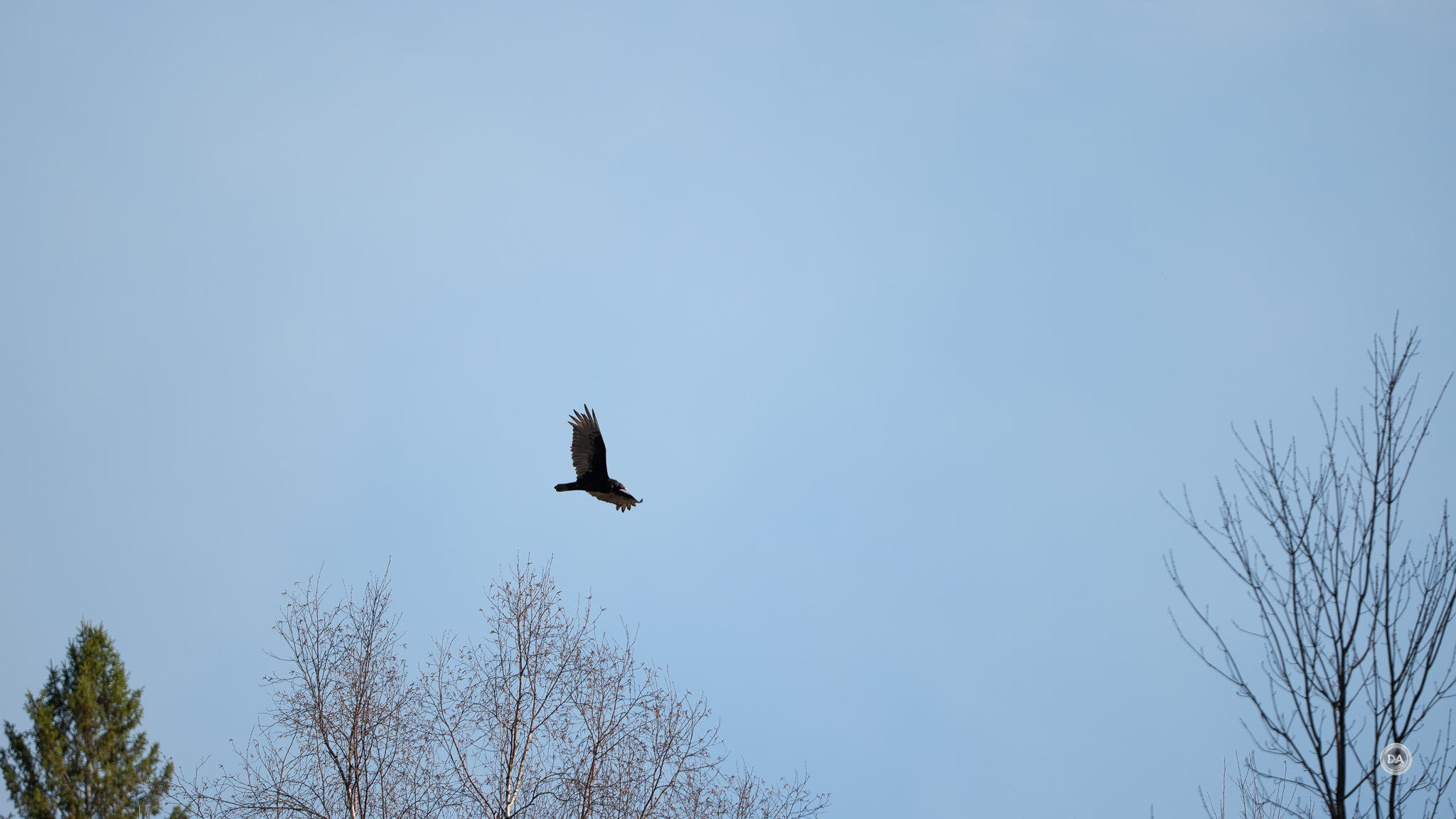
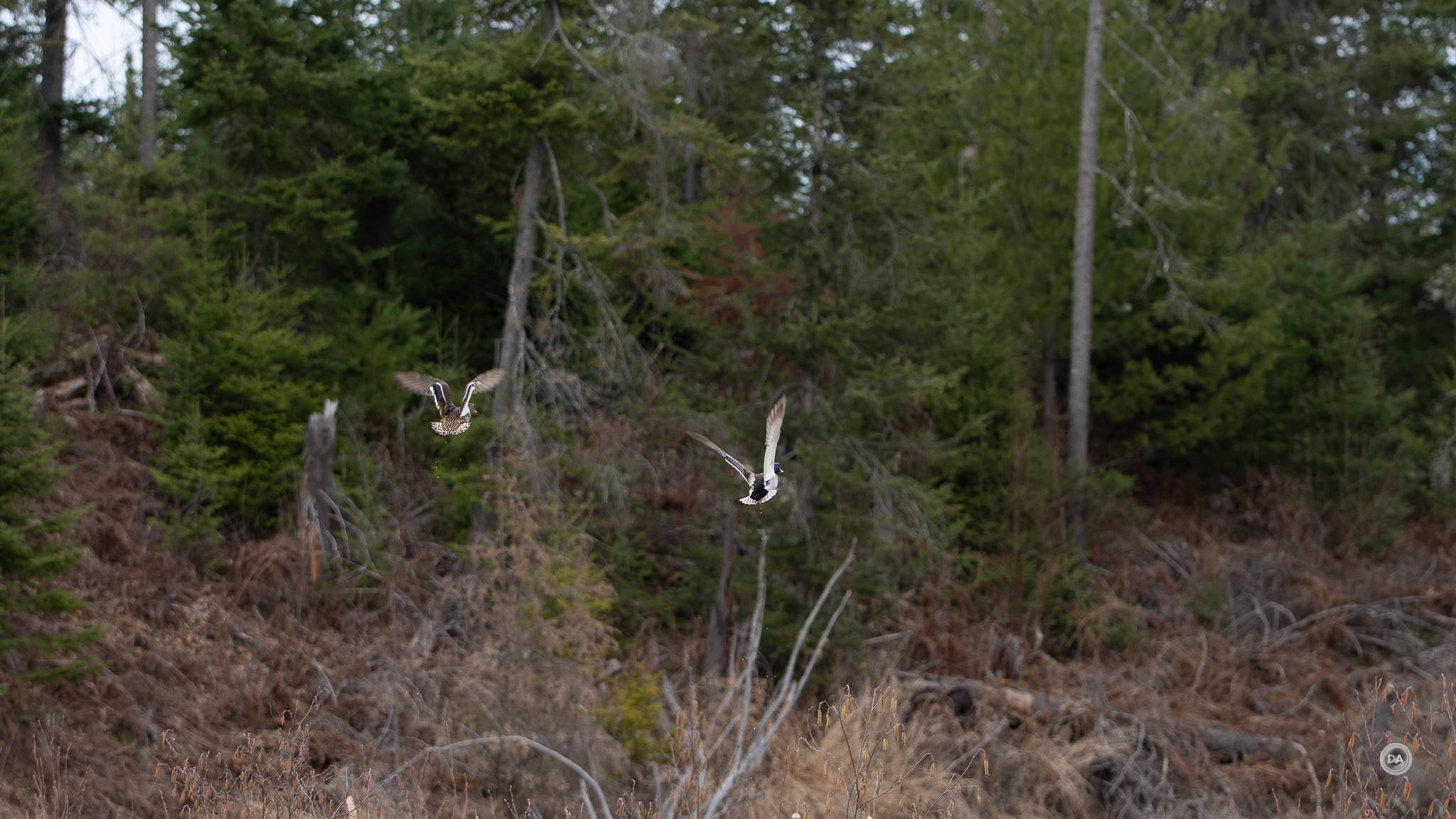
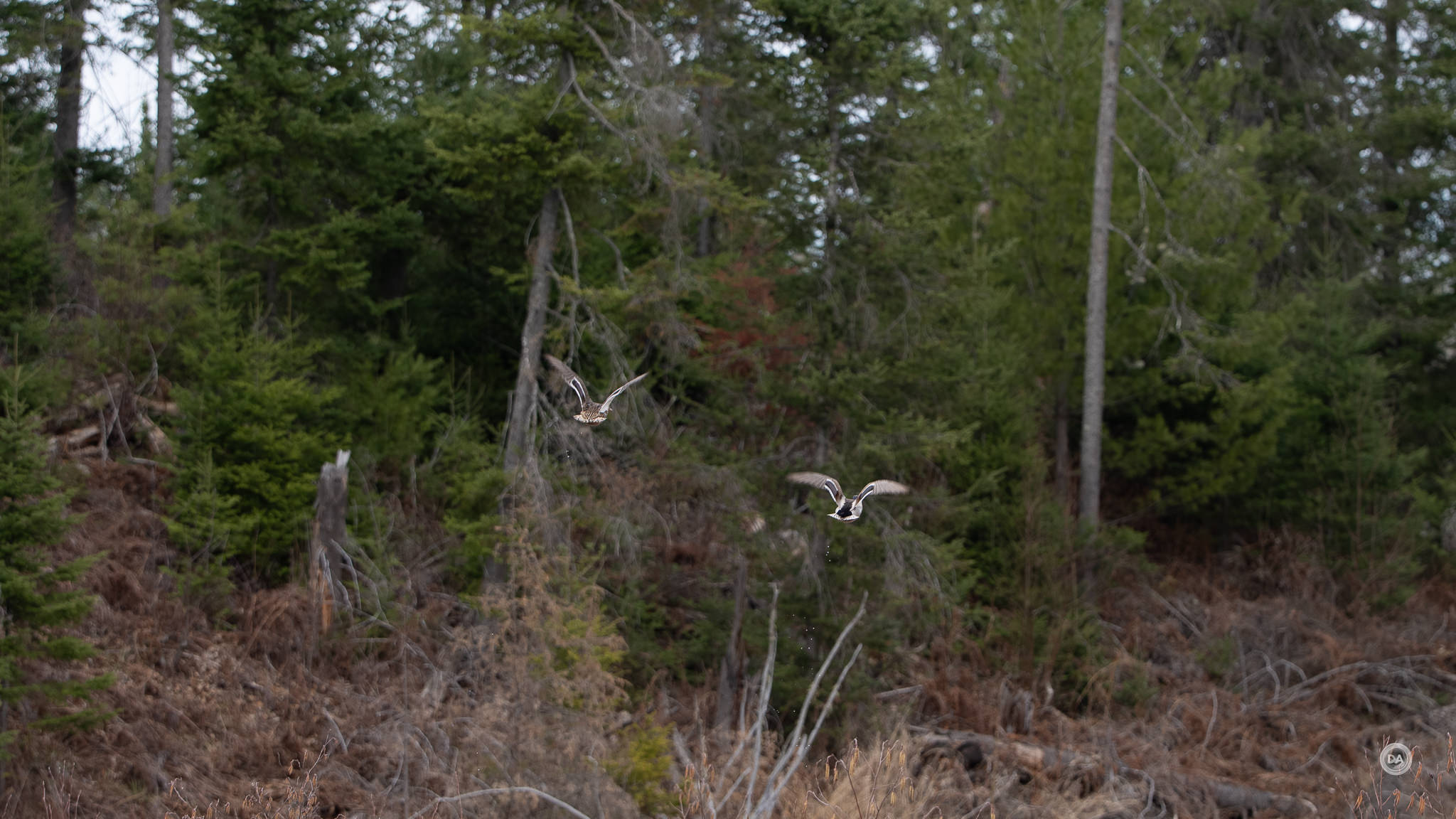
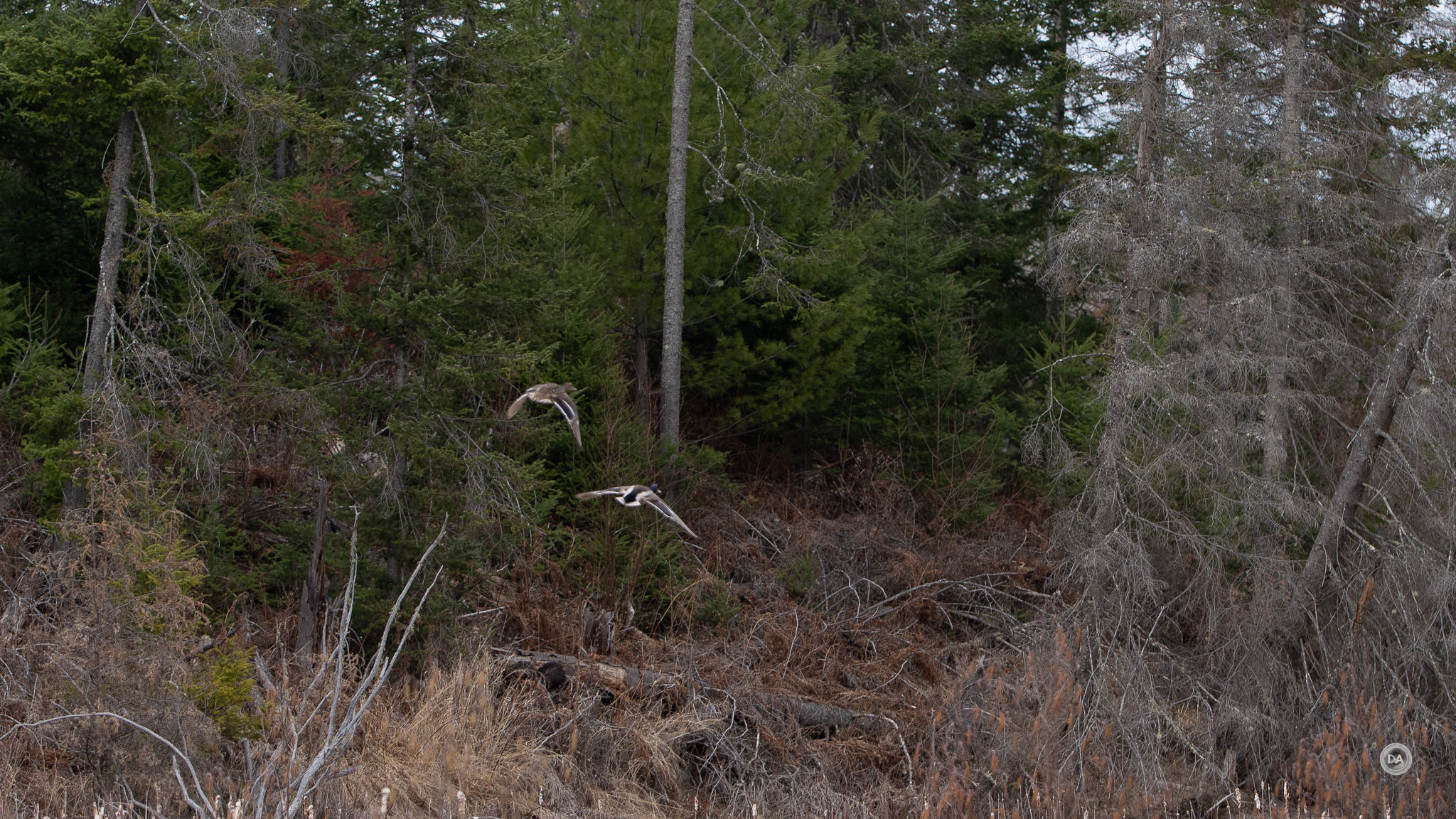

When Nala was still, autofocus grabbed her eye and delivered perfectly focused results.
But when she started to move, it was largely the same as what I’ve seen from a lot of third party lenses. There was some obvious backfocus as focus didn’t quite keep up with her.

I also felt at times that focus was close but not perfect, which impacted my perception of sharpness and contrast. I wouldn’t be surprised if subsequent firmware updates tune up that precision a little more. I also feel like firmware updates could help with accurate focus on moving subjects, as the lens seems to have plenty of focus speed available, but as it stands, the 7Artisans AF 135mm F1.8 isn’t quite matching the focus accuracy or reliability of competing lenses.
Video AF
The video front largely brings positive things. Touch to focus pulls are a bit of a mixed bag, as there’s often a lag between touch input and focus actually happening, though the focus pulls are fairly confident once focus begins. I didn’t see a lot of pulsing or settling, though I did see one quick rack in the wrong direction. Focus breathing does exist, though its not particularly strong for a 135mm lens. Currently third party lenses are not supported by Sony’s “Focus Breathing Compensation”, so that’s one area where the native Sony lens will have an advantage (*though because the Sony has even higher focus breathing, that compensation will come at a significant crop).
My hand test went (mostly) well, with smooth focus transitions from my hand to my face and back, though I did have one sequence where focus didn’t quite reach my hand.


Autofocus was smooth when tracking me approaching the camera, and picked up fairly quickly when I stepped out of frame and back in.
7Artisans AF 135mm Image Quality
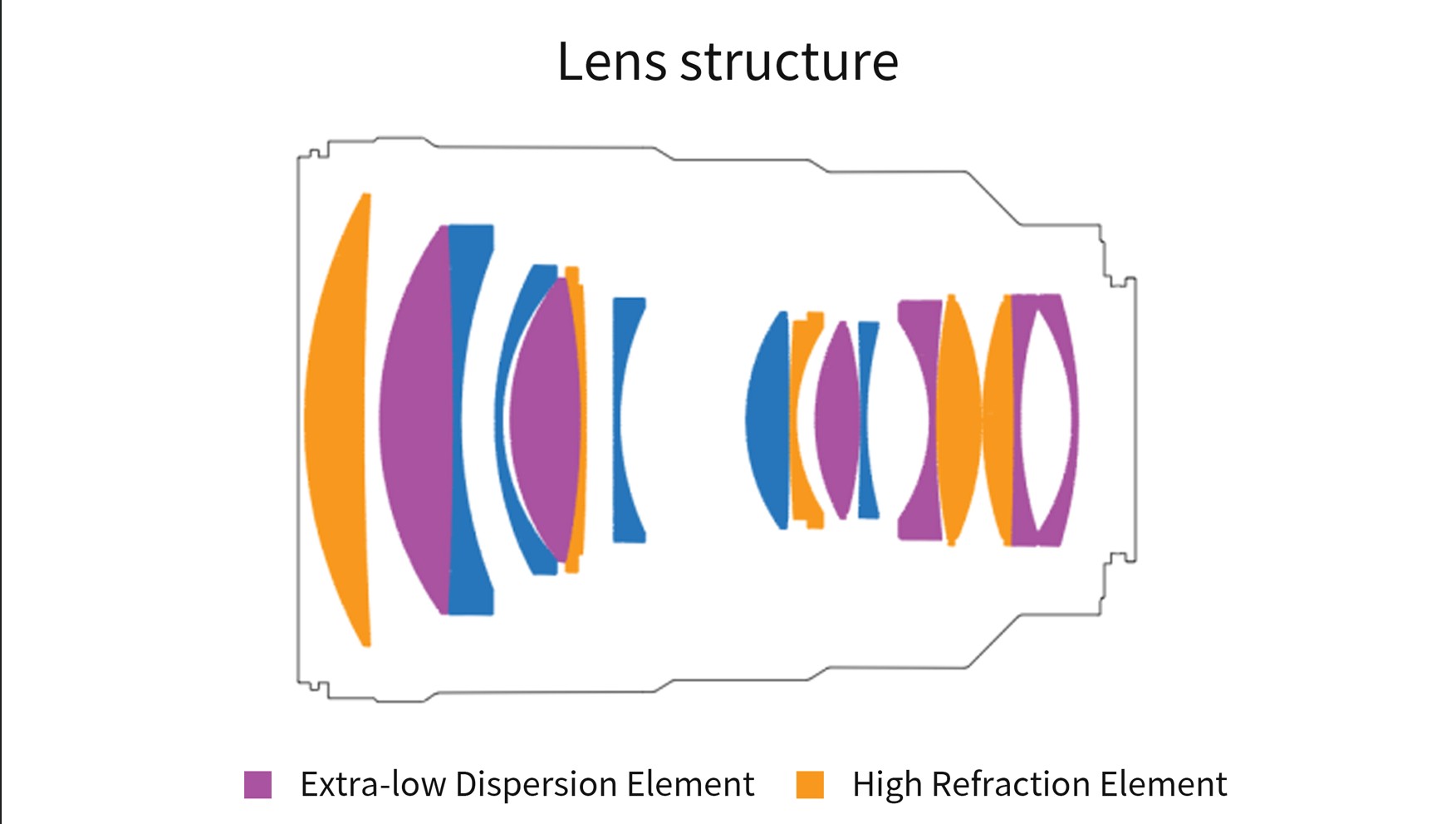
The 7Artisans AF 135mm F1.8 sports a sophisticated optical design of 16 elements in 13 groups. This includes a whopping 6 ED (extra low dispersion) elements and 5 HR (high refractive index) elements, leaving only 5 ordinary elements. 135mm lenses tend to be very sharp, and the 7Artisans is no exception, though not quite to the level of some of the competition. The MTF shows a fairly consistent performance across the frame, starting near 90% in the center and ending at roughly 75% in the corners.
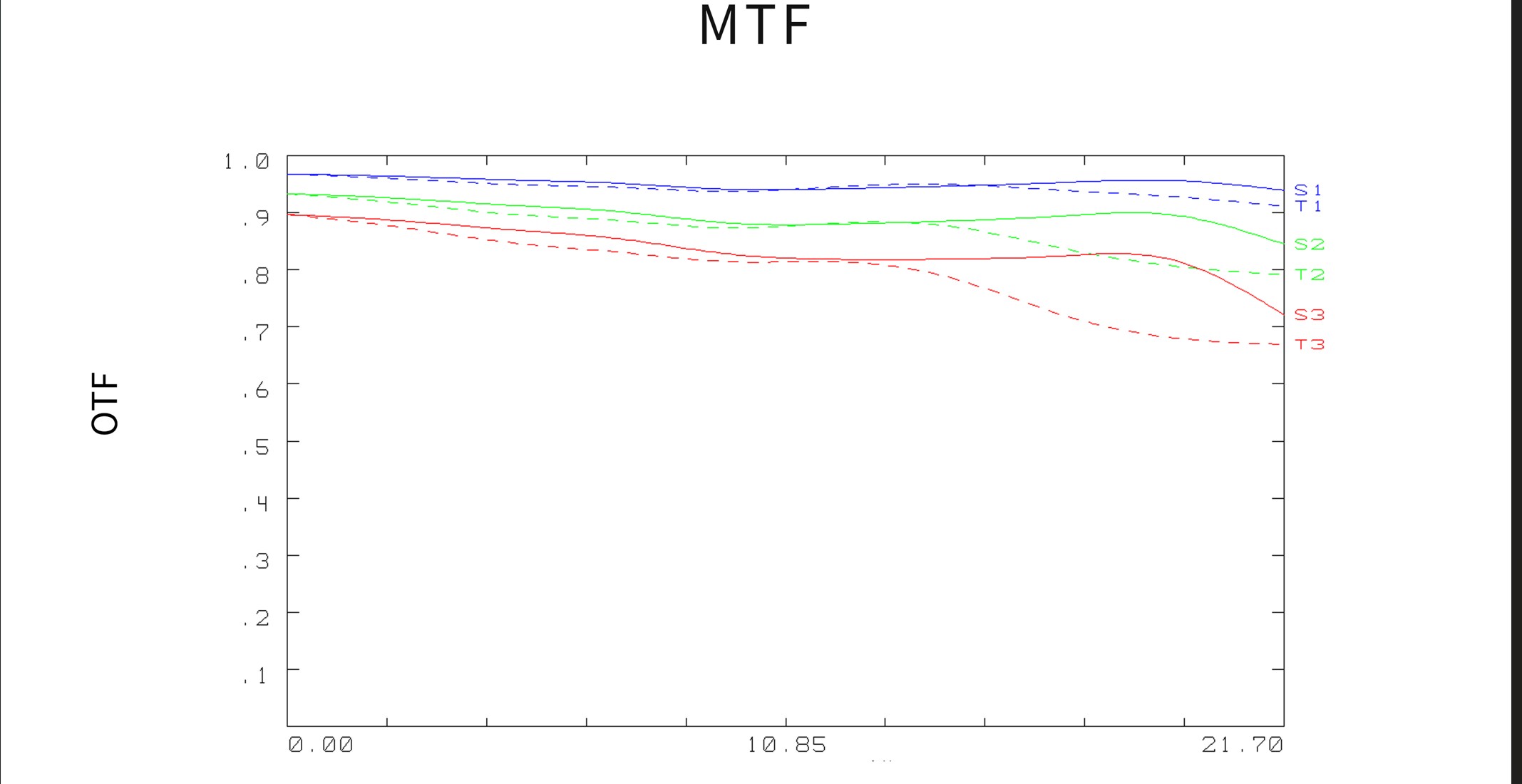
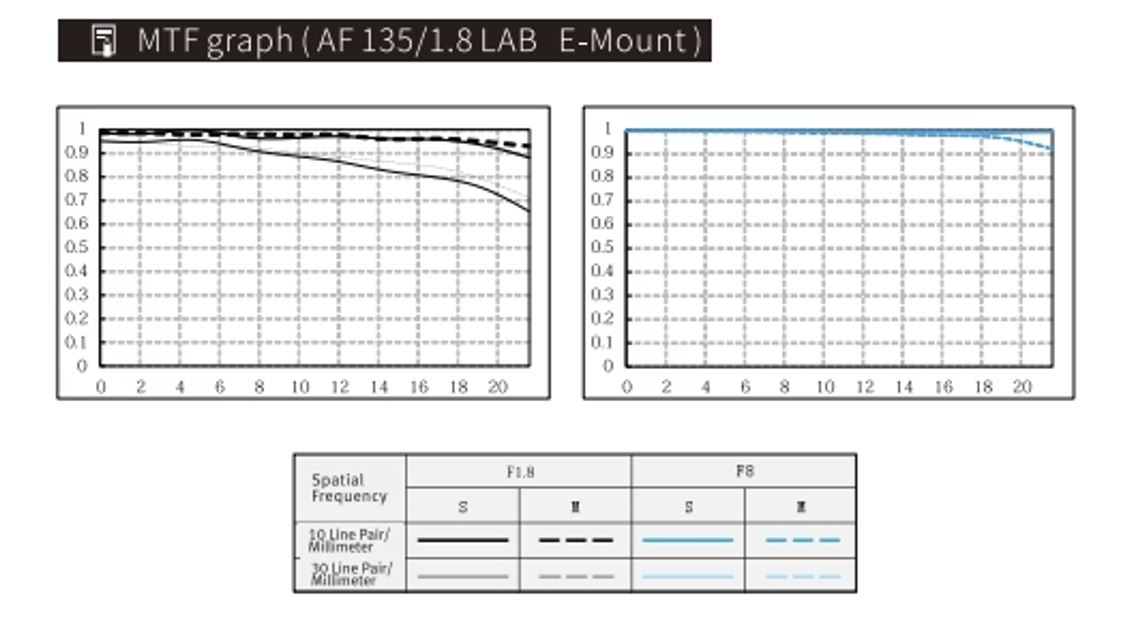
By comparison, the Viltrox LAB starts sharper in the center and remains stronger in the mid-frame, while dropping more in the corners.
There were real world moments where I felt sharpness and contrast looked excellent, like here:


…but also situations where I felt like contrast and detail weren’t as impressive.


But what about some of the other optical metrics?
As a third party lens, the 7Artisans can’t hide behind electronic corrections to solve optical problems, though 135mm lenses tend to be low on distortion (but sometimes high on vignette).
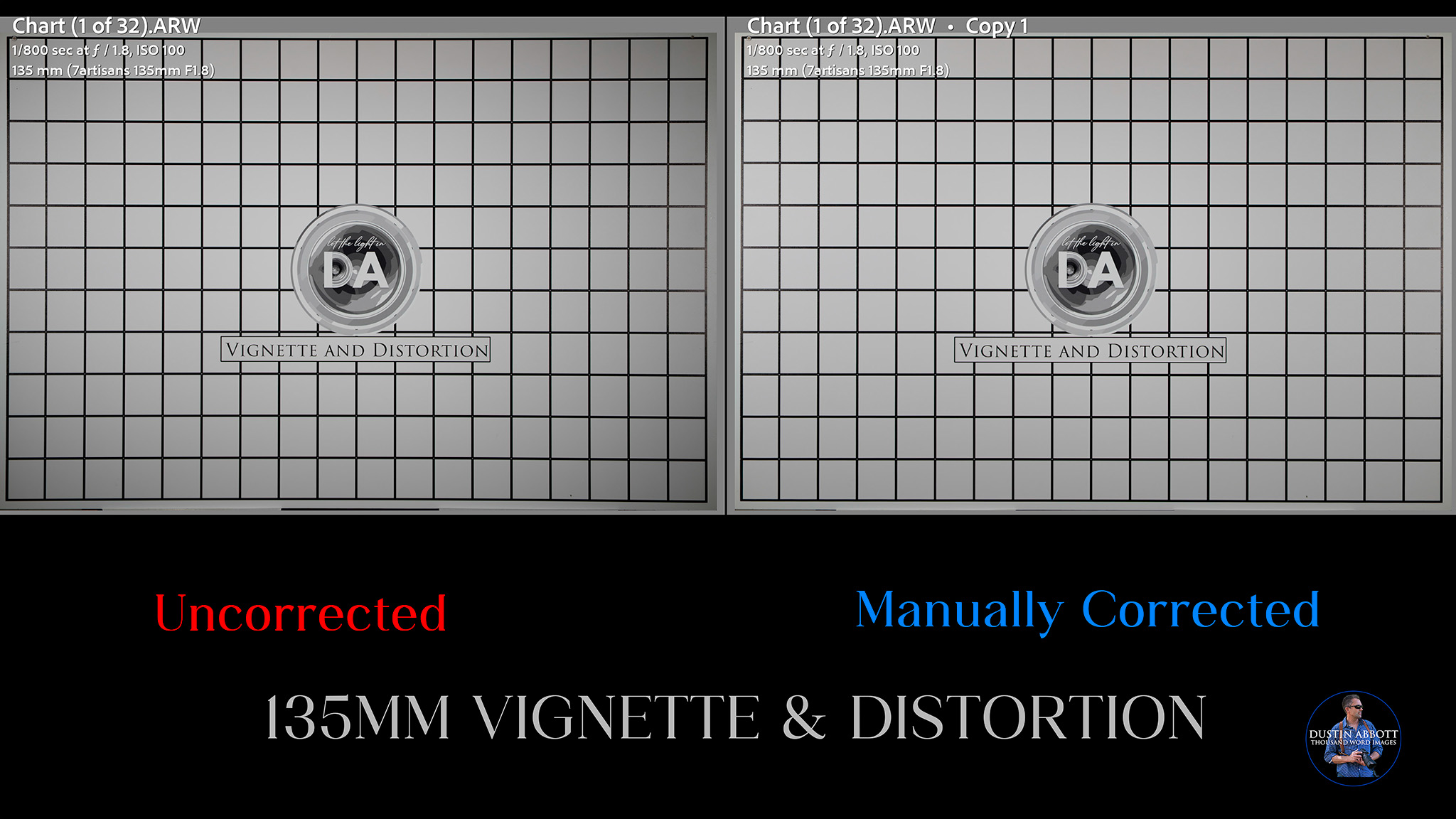
The 7Artisans isn’t really bad on either, requiring just a -2 to correct a tiny amount of pincushion distortion and a mild +43 to correct a bit of vignette. In most situations, that will be just enough to help make the image more attractive.

Longitudinal chromatic aberrations (LoCA) show up as fringing before or after the plane of focus. The 7Artisans is very well controlled here, with almost no visible fringing.

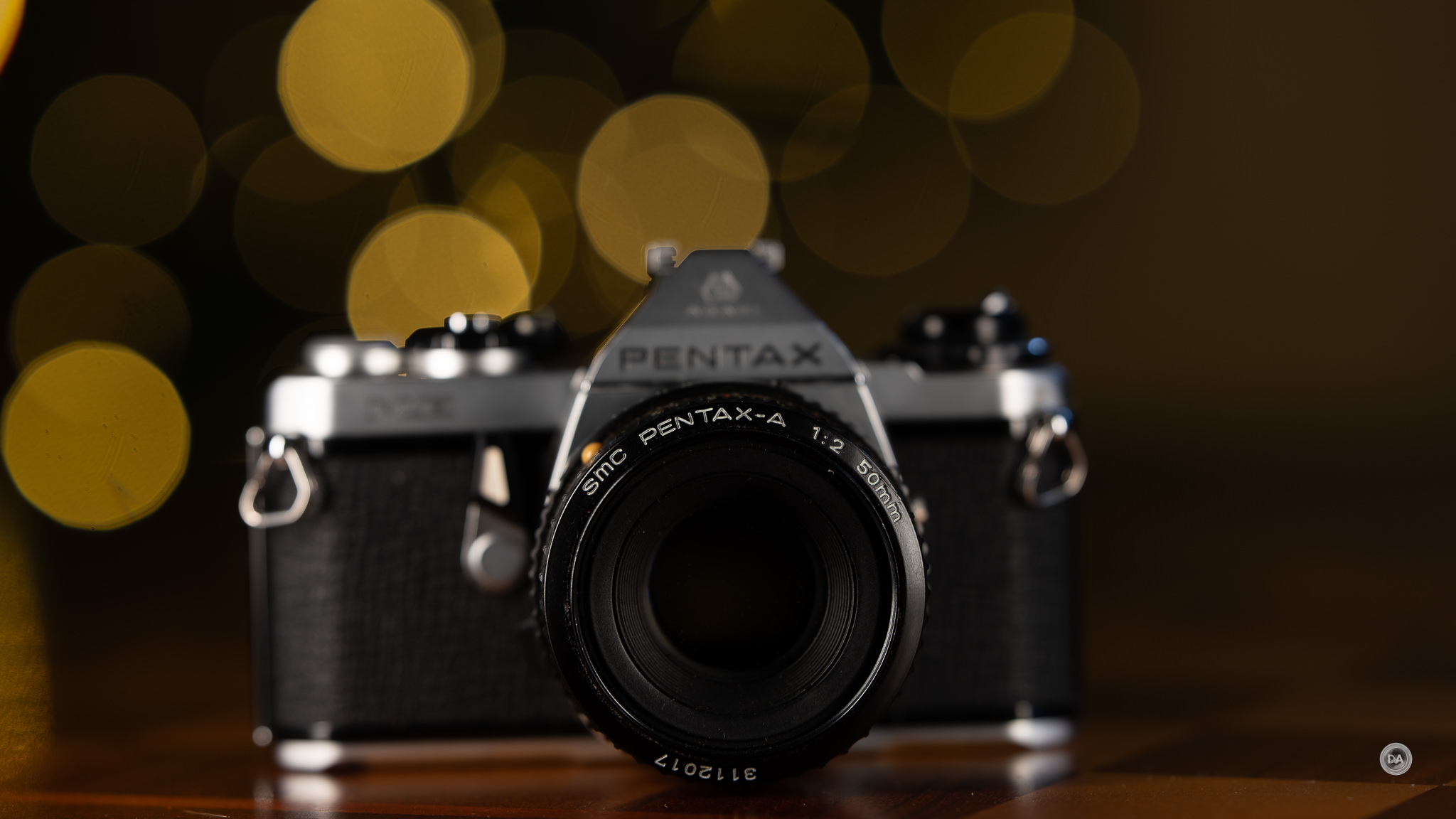
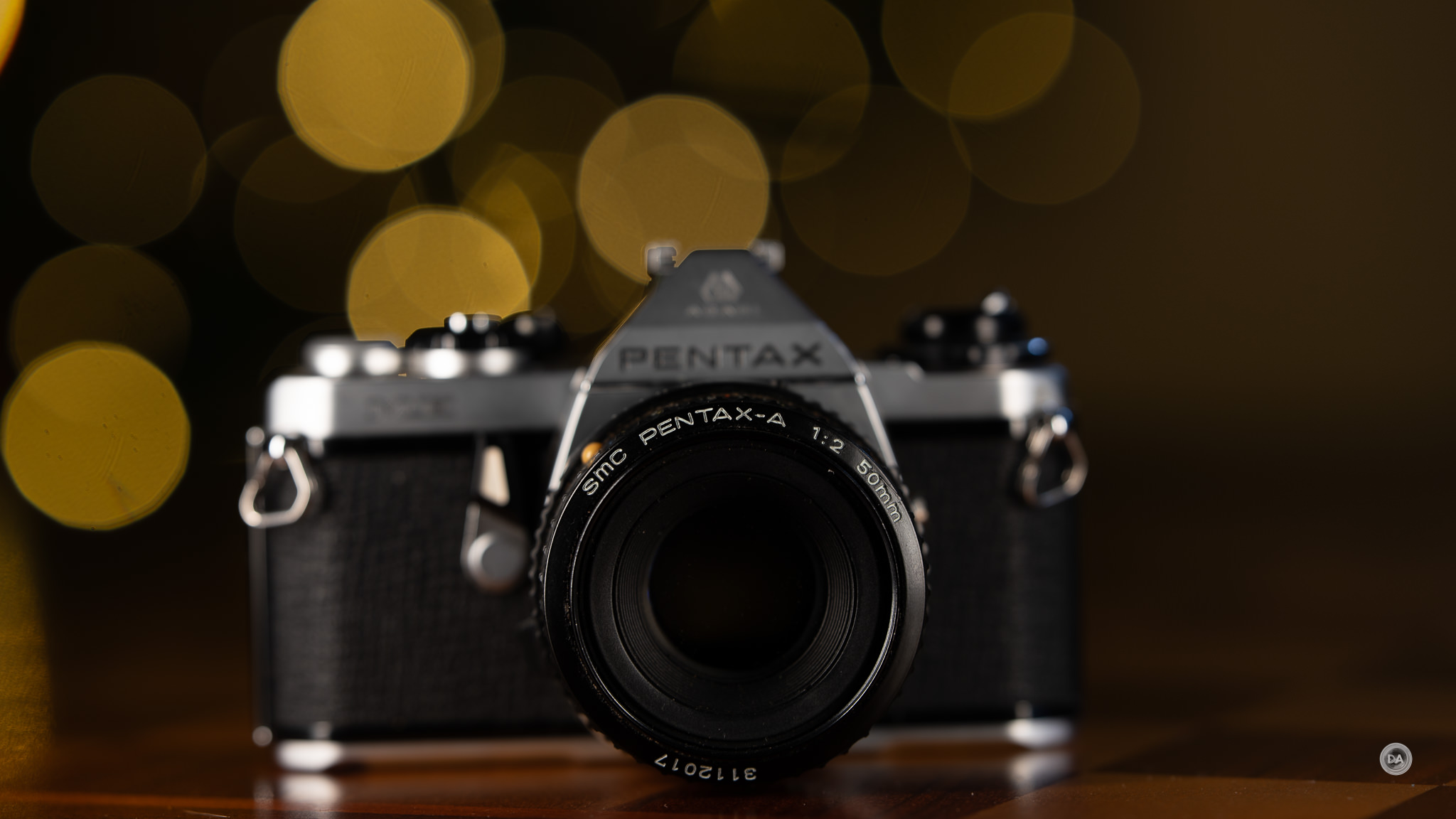
I see almost no fringing on my Dad’s old SLR, and the earlier photo of the crystal egg showed nearly no fringing as well.
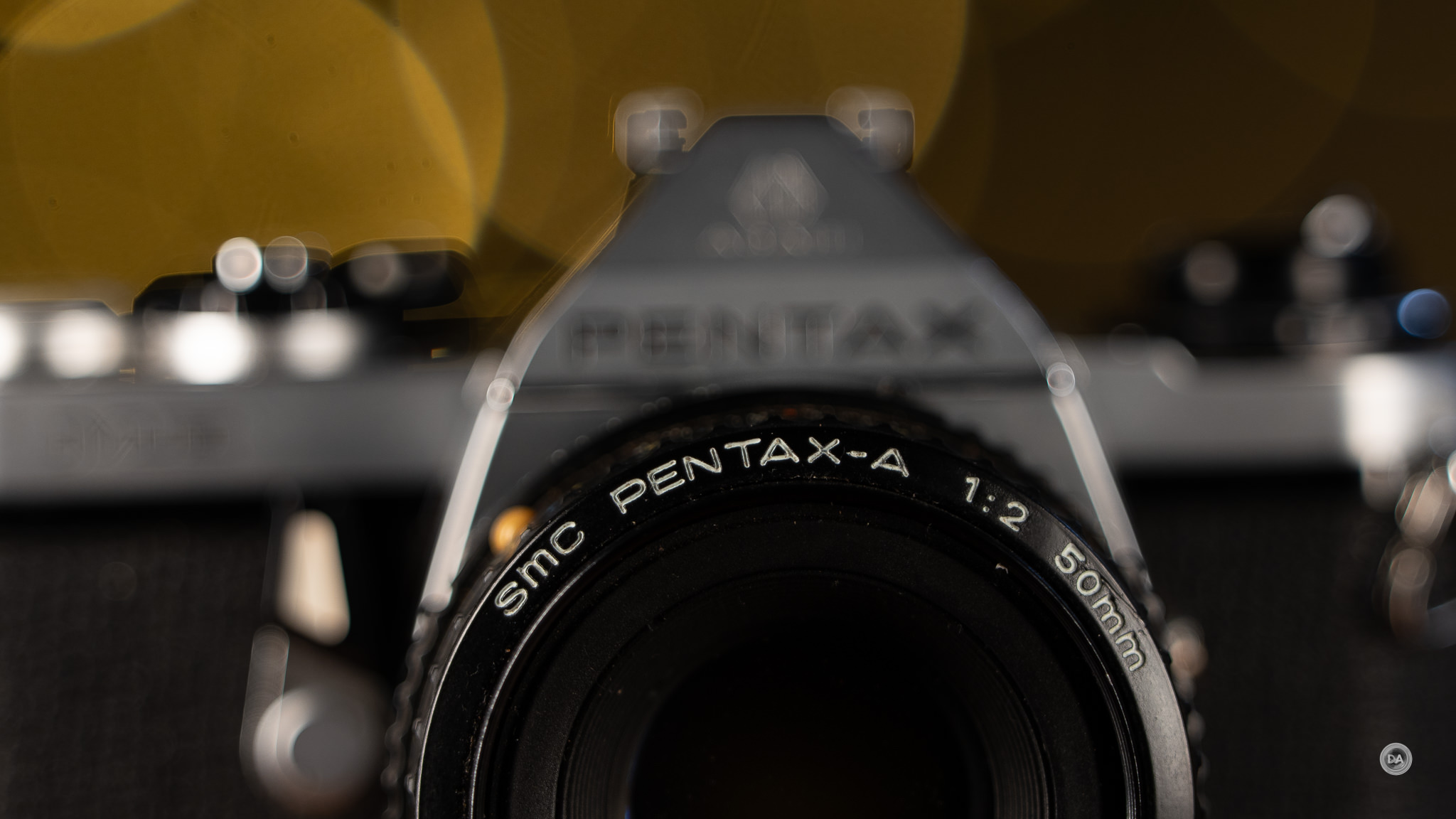
Close up shots of shiny objects showed excellent control of aberrations.
Lateral chromatic aberrations (LaCA) show up in the contrast transitions near the edge of the frame. These aren’t difficult to correct, but sometimes do cost a bit of contrast after correction. The 7Artisans delivers another strong result here, with no apparent fringing.
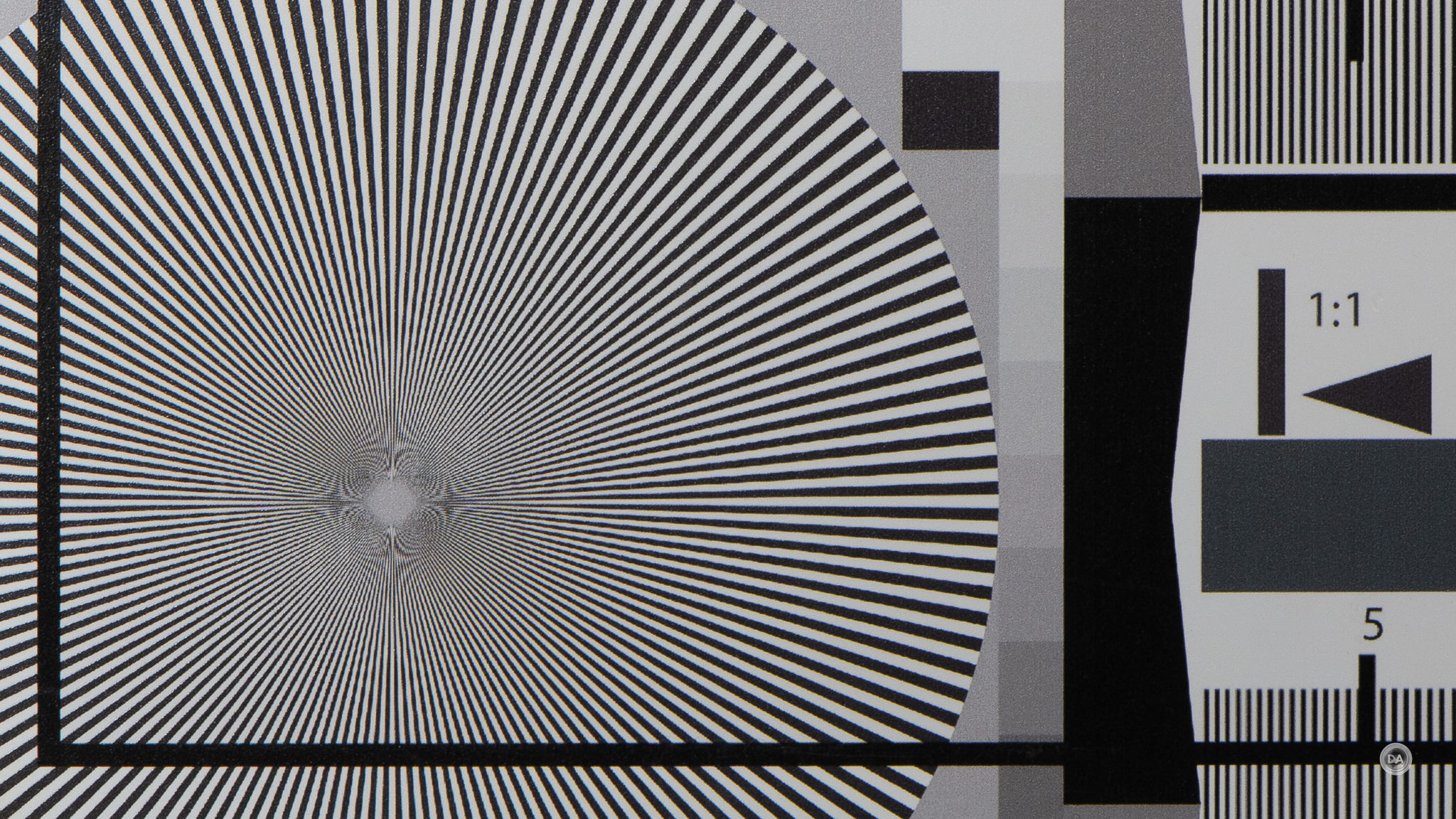
These metrics are all passed with flying colors.
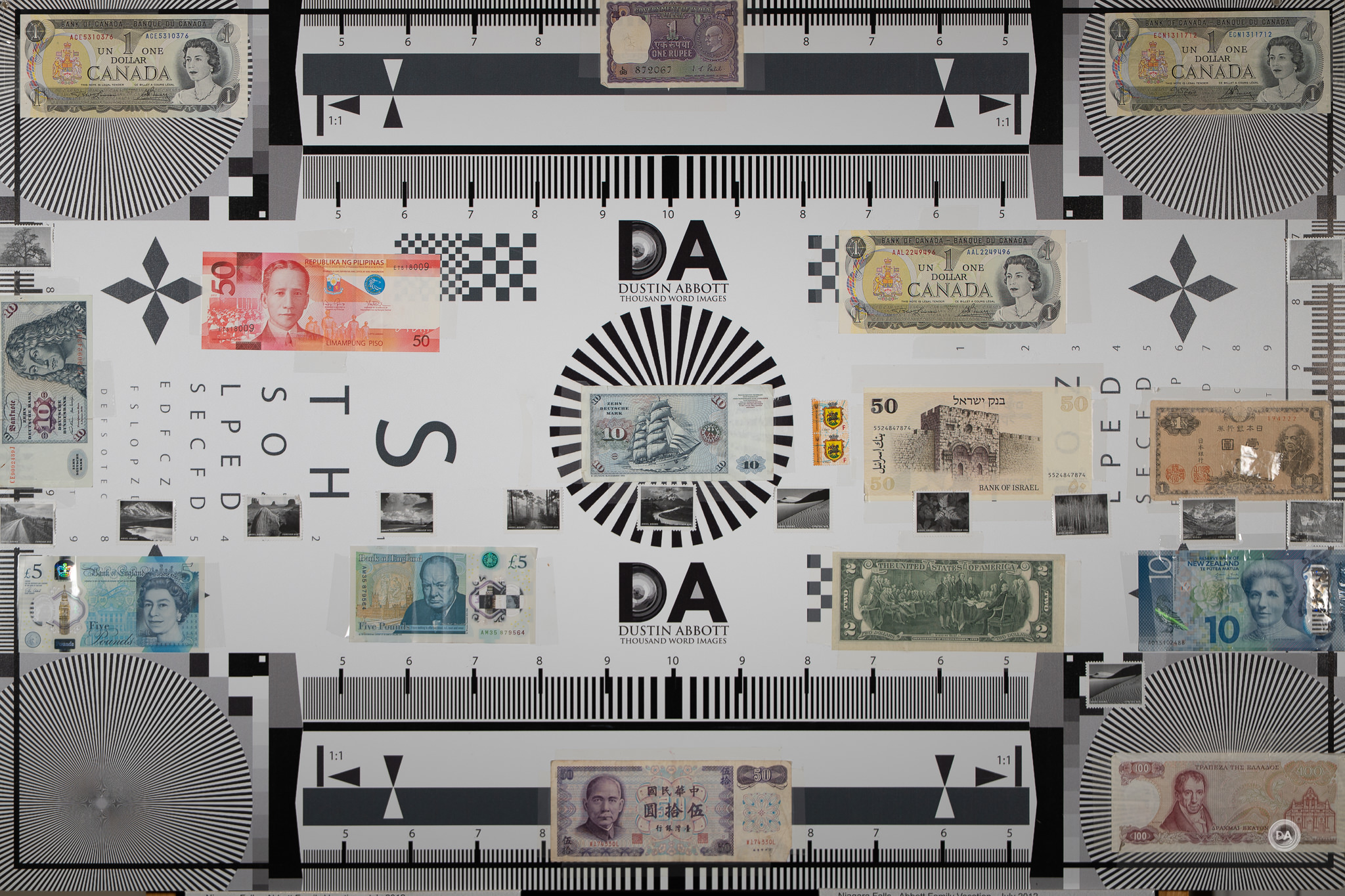
So how about resolution and contrast? These results are shot on a 61MP Sony a7RV and the crops are shown at roughly 200% magnification level. Here’s a look at the test chart that the crops are taken from.
If we zoom in and look at the 200% crops at F1.8 from the center, mid-frame, and lower right, we discover excellent results.
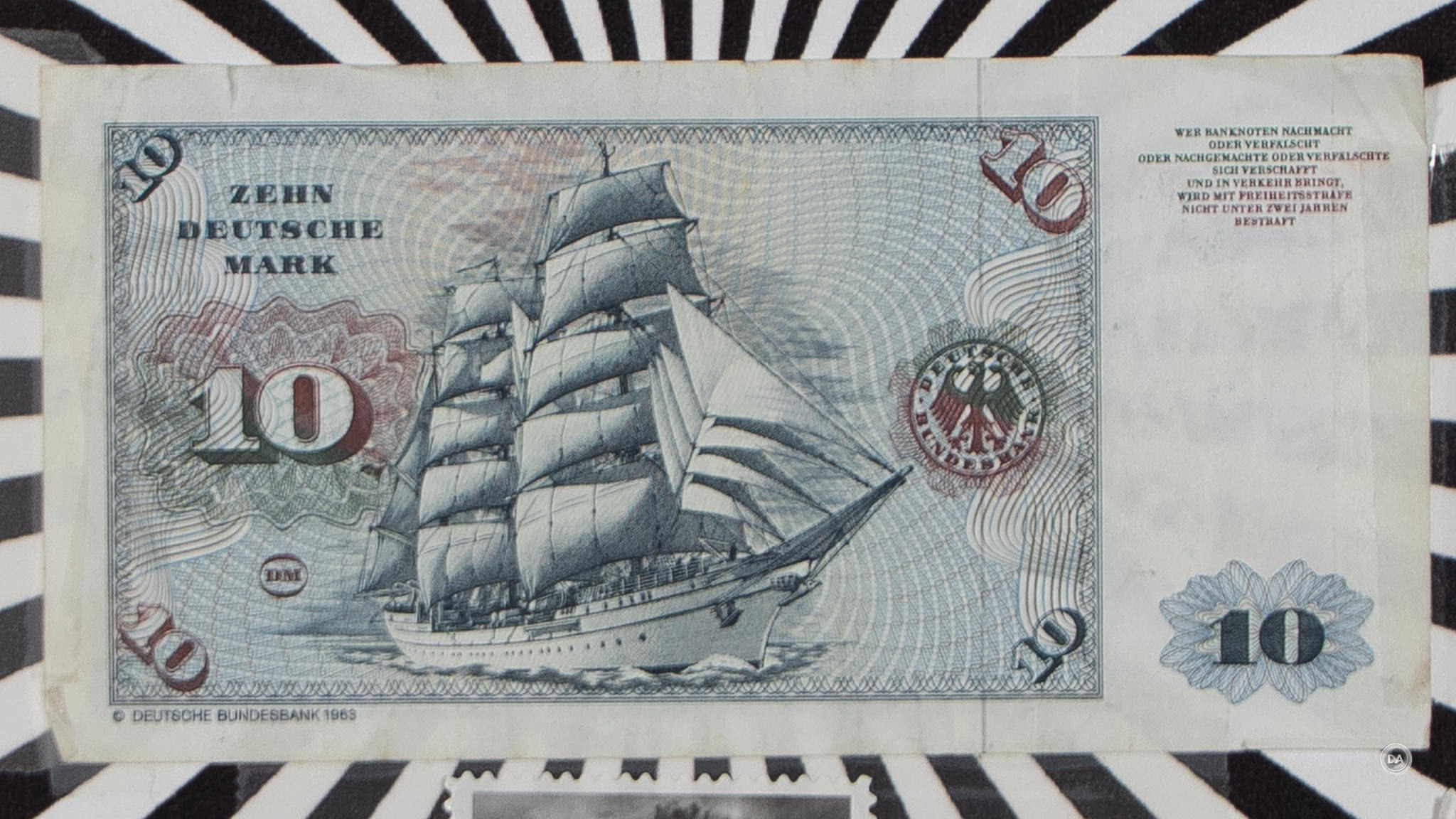


Sharpness is excellent even at F1.8, with strong results in the center, midframe, and right into the corners.
If we compare with what will almost certainly be the main competitor to the 7Artisans – the Viltrox LAB 135mm F1.8, also from China – we find that the contrast favors the Viltrox, but results are not dissimilar across the frame.
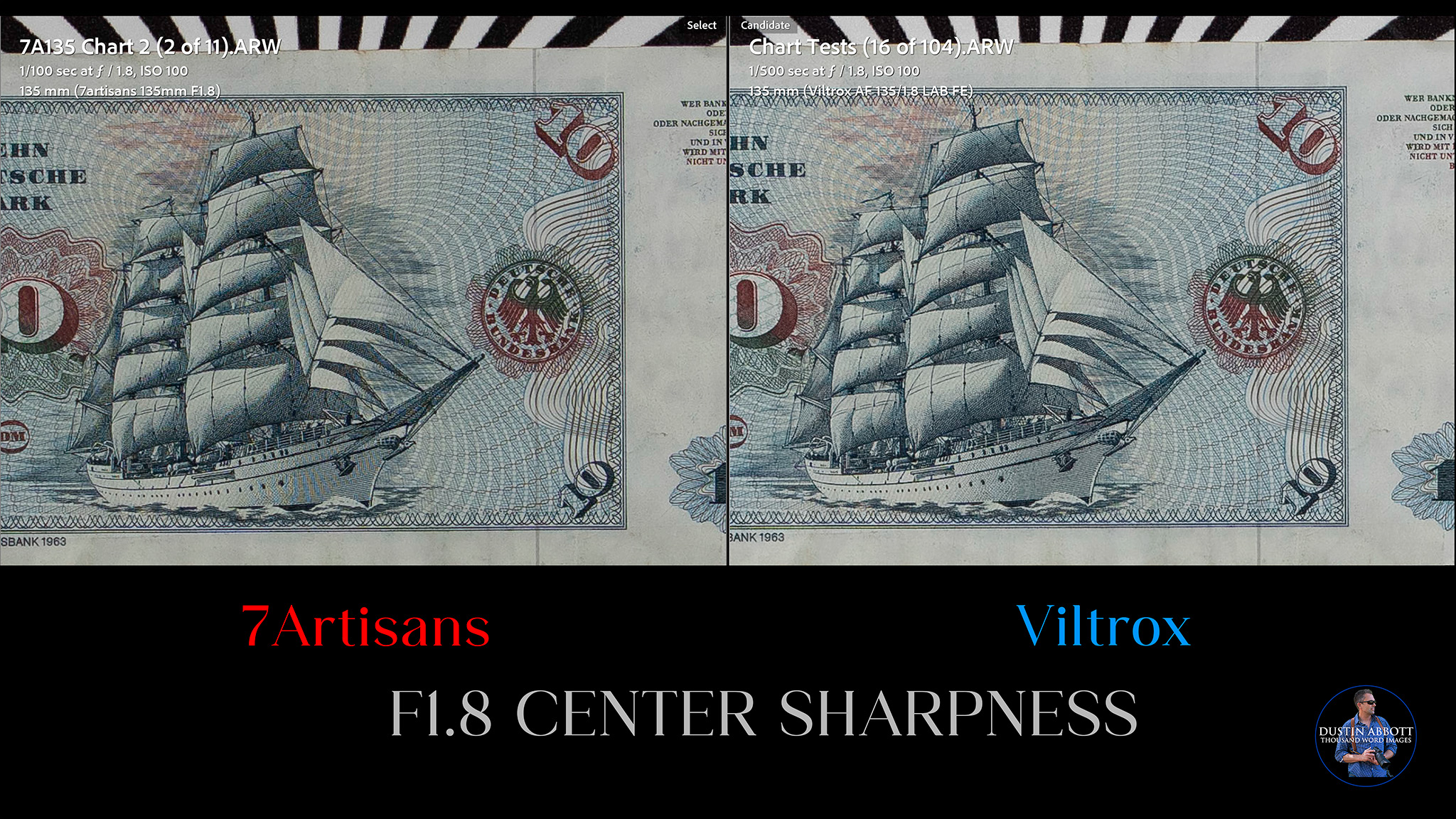
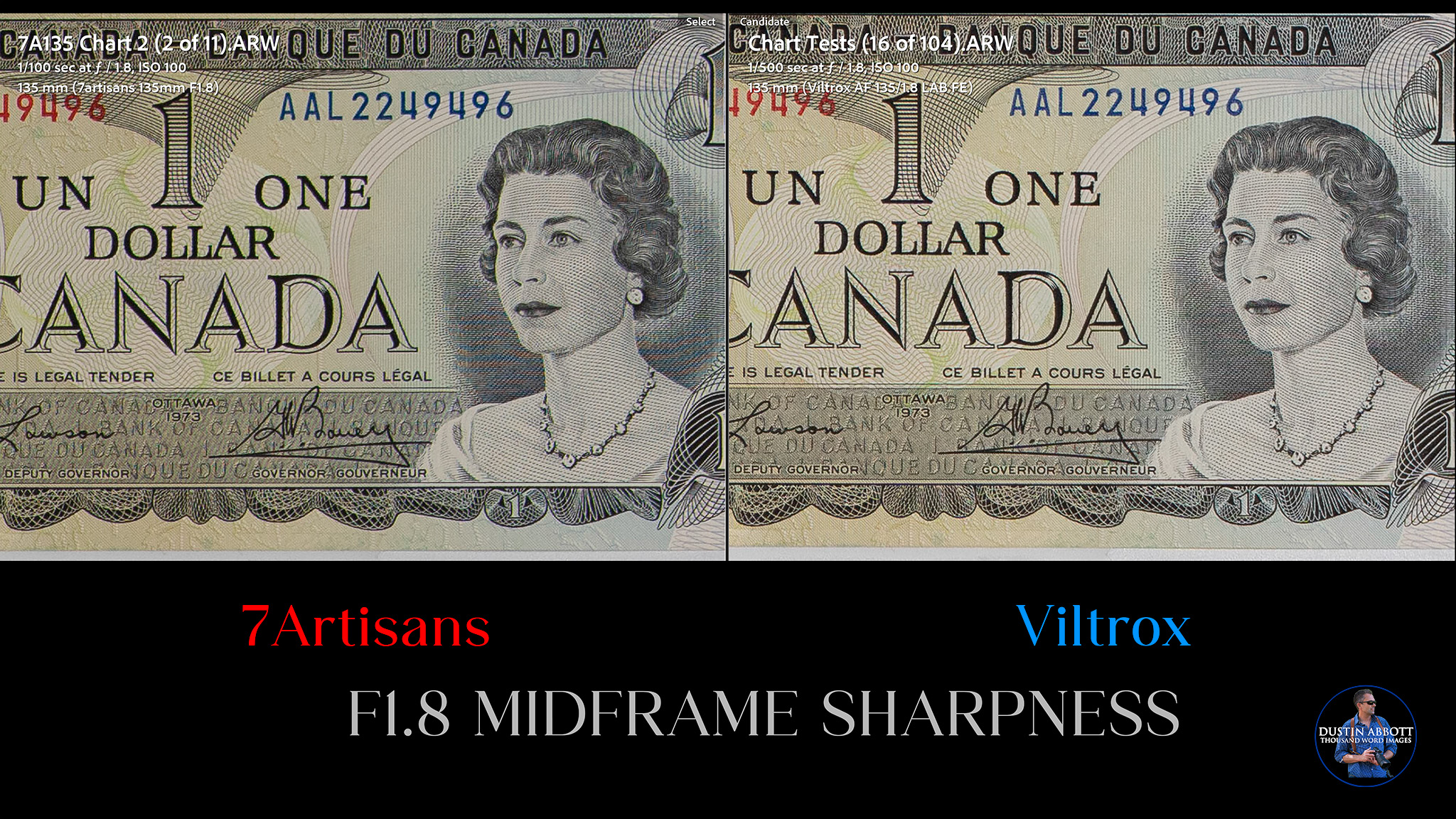
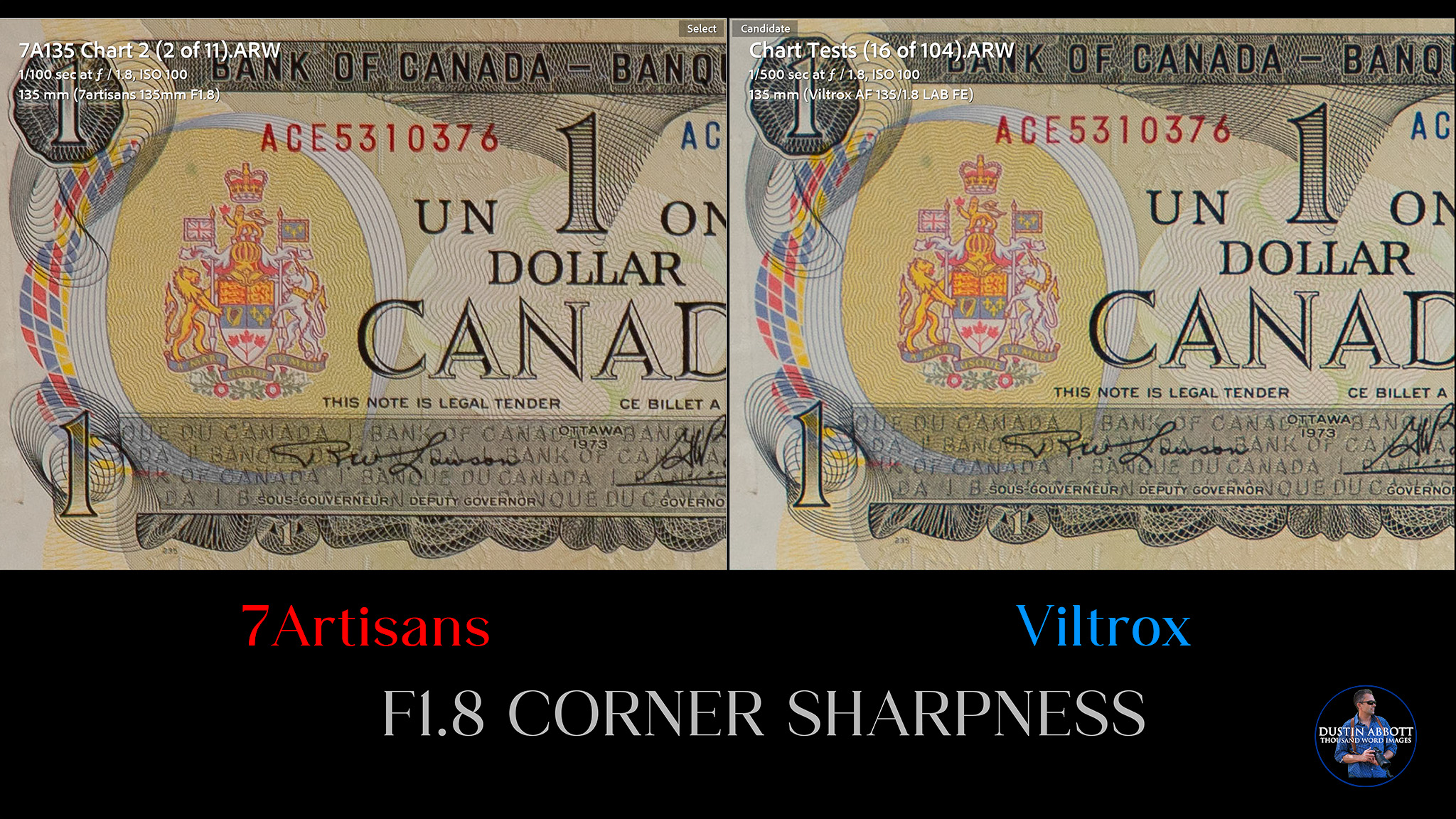
That’s impressive, as the Viltrox is one of the stronger lenses optically that I’ve ever tested.
That pattern largely holds as the lenses are stopped down, though I would say that the Viltrox improves more than what the 7Artisans does. Here’s a look at F2.8:
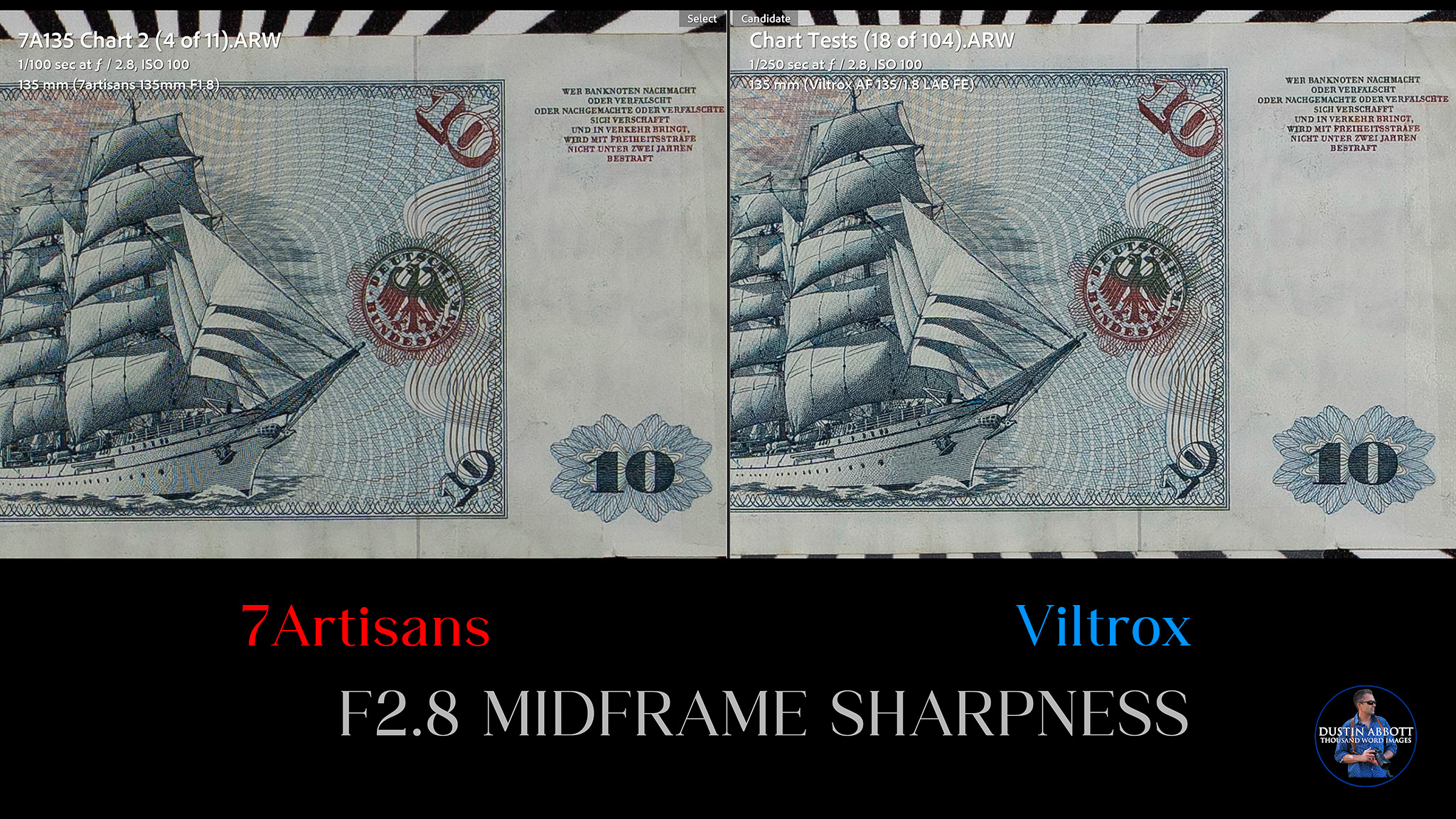
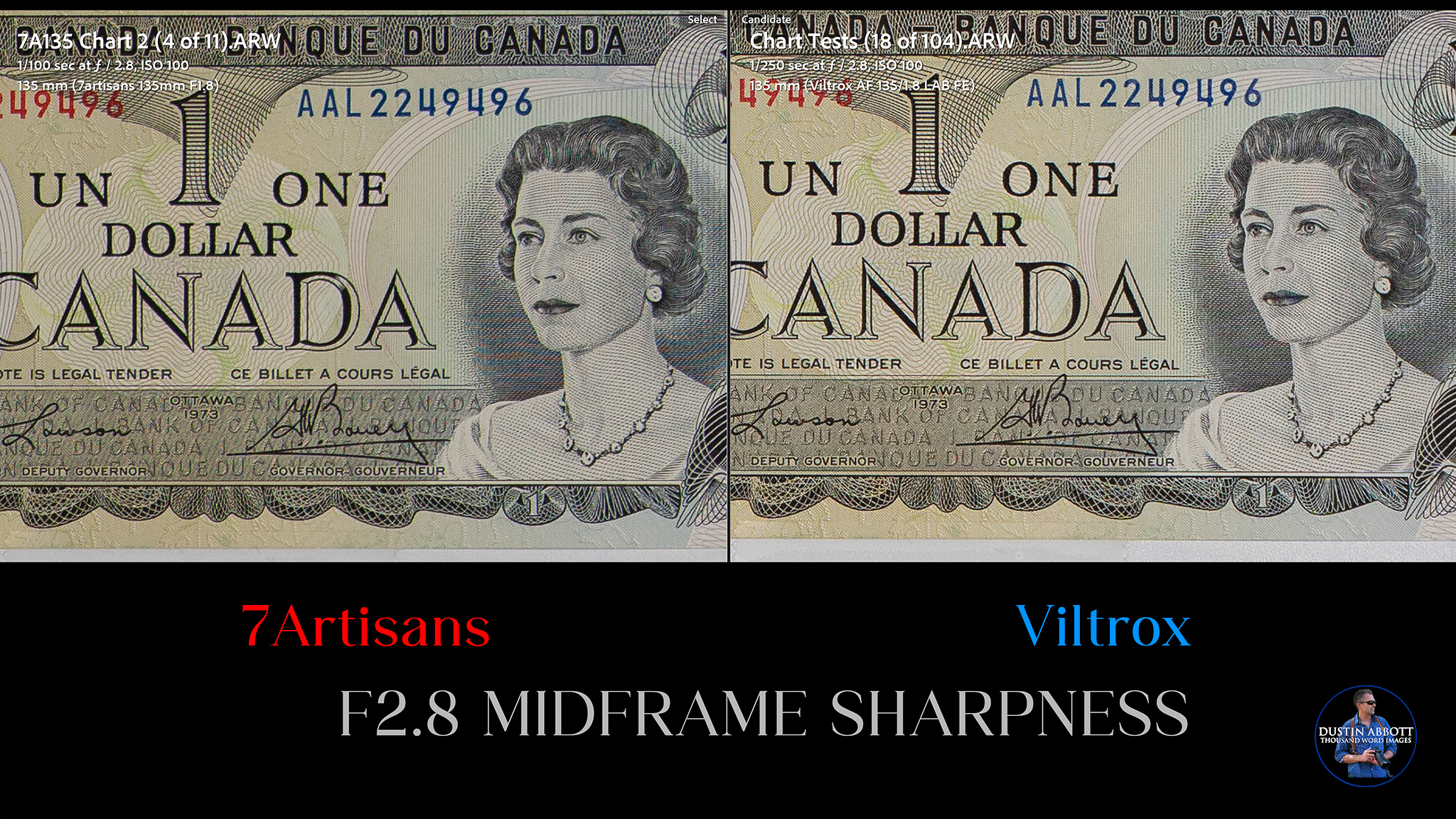
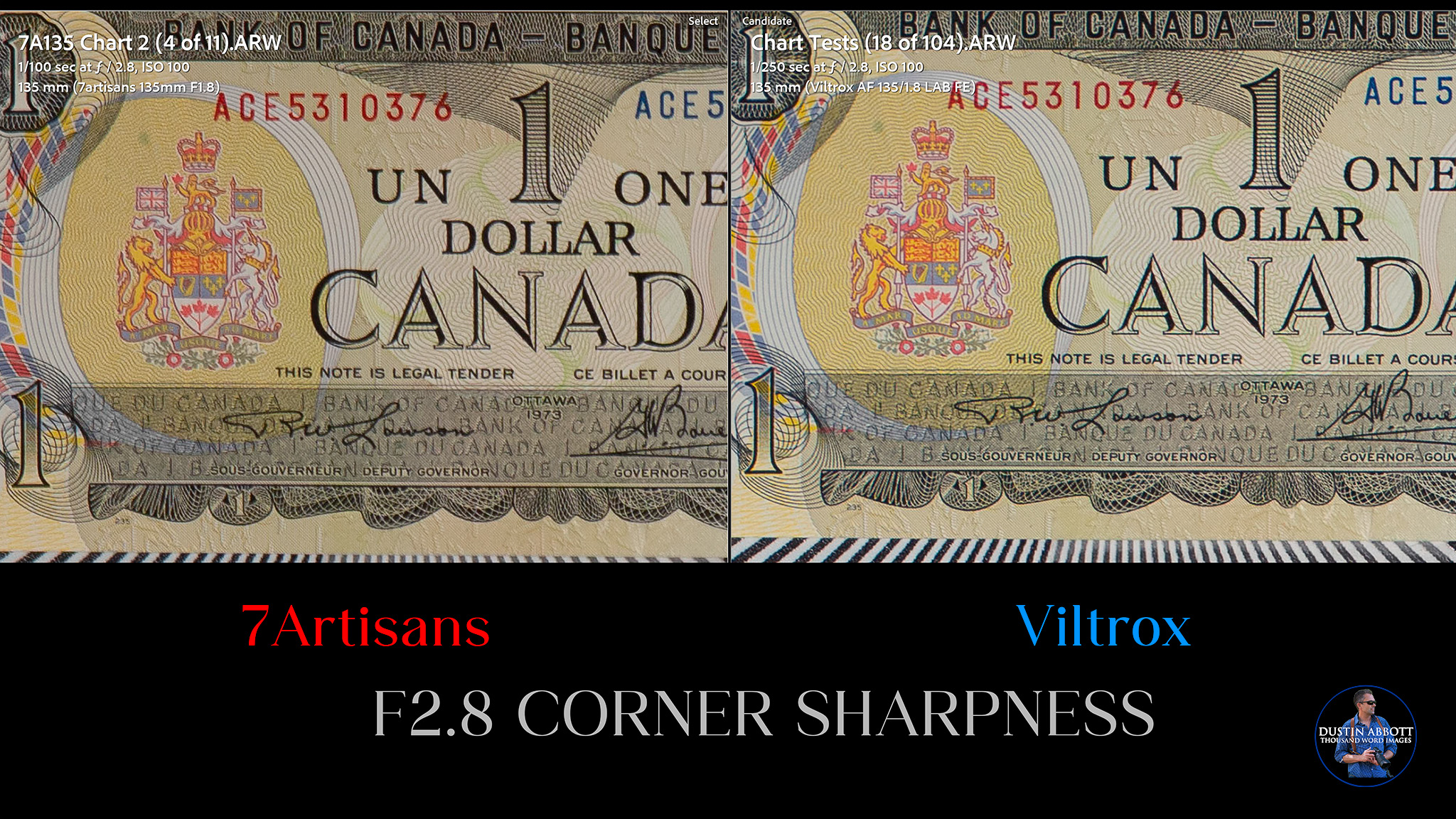
The 7Artisans largely achieves peak performance right at wide open, with only minor gains to be seen as you stop down a bit.
Shooting landscapes at F5.6 and F8 will deliver nice detail, though as you can see here, depth of field at medium distances and these smaller apertures is still pretty shallow.
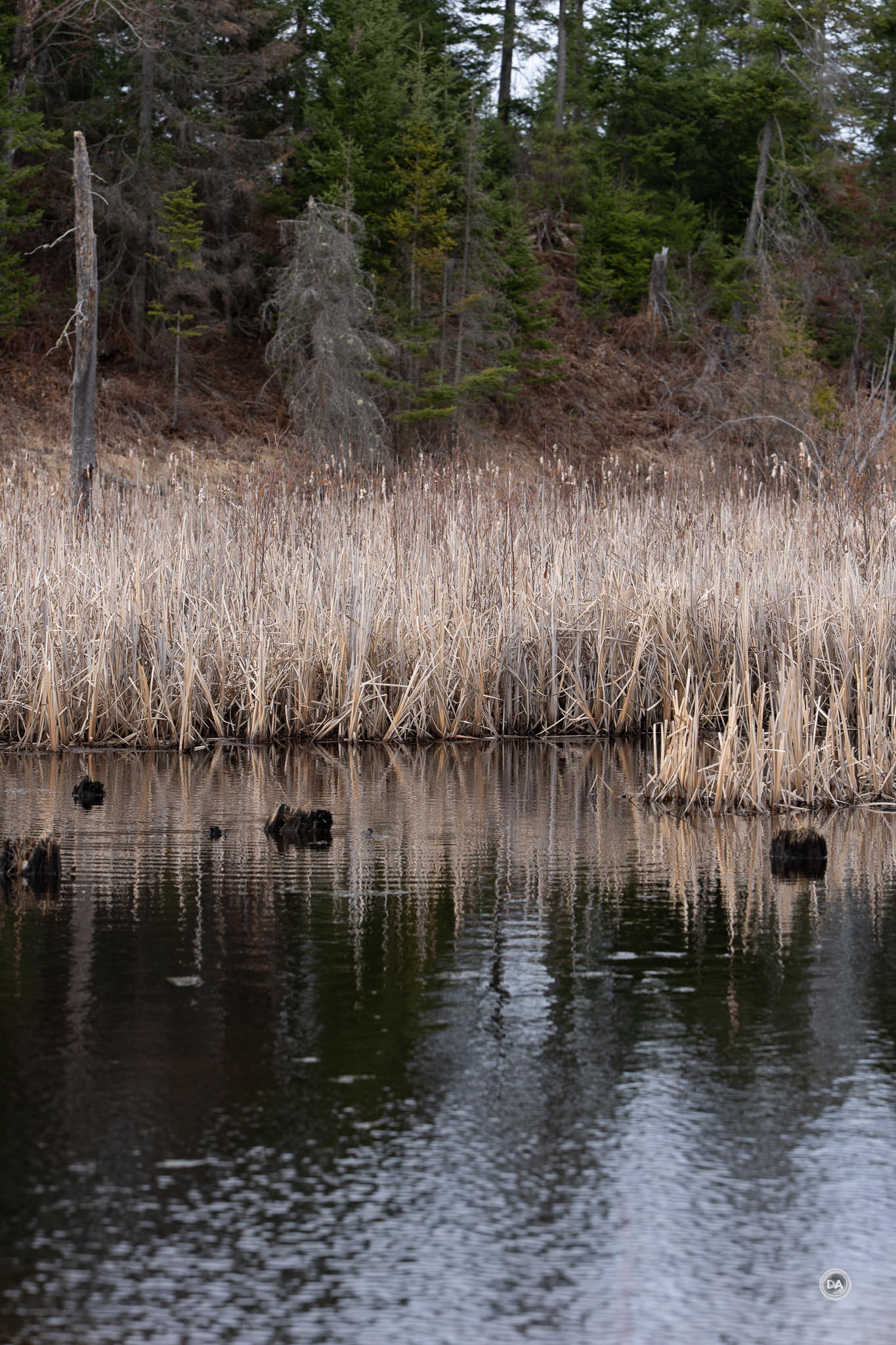
135mm lenses work nicely for landscapes, but they work better if you have a fairly flat scene without a lot of depth layers (if you want everything to be in focus).
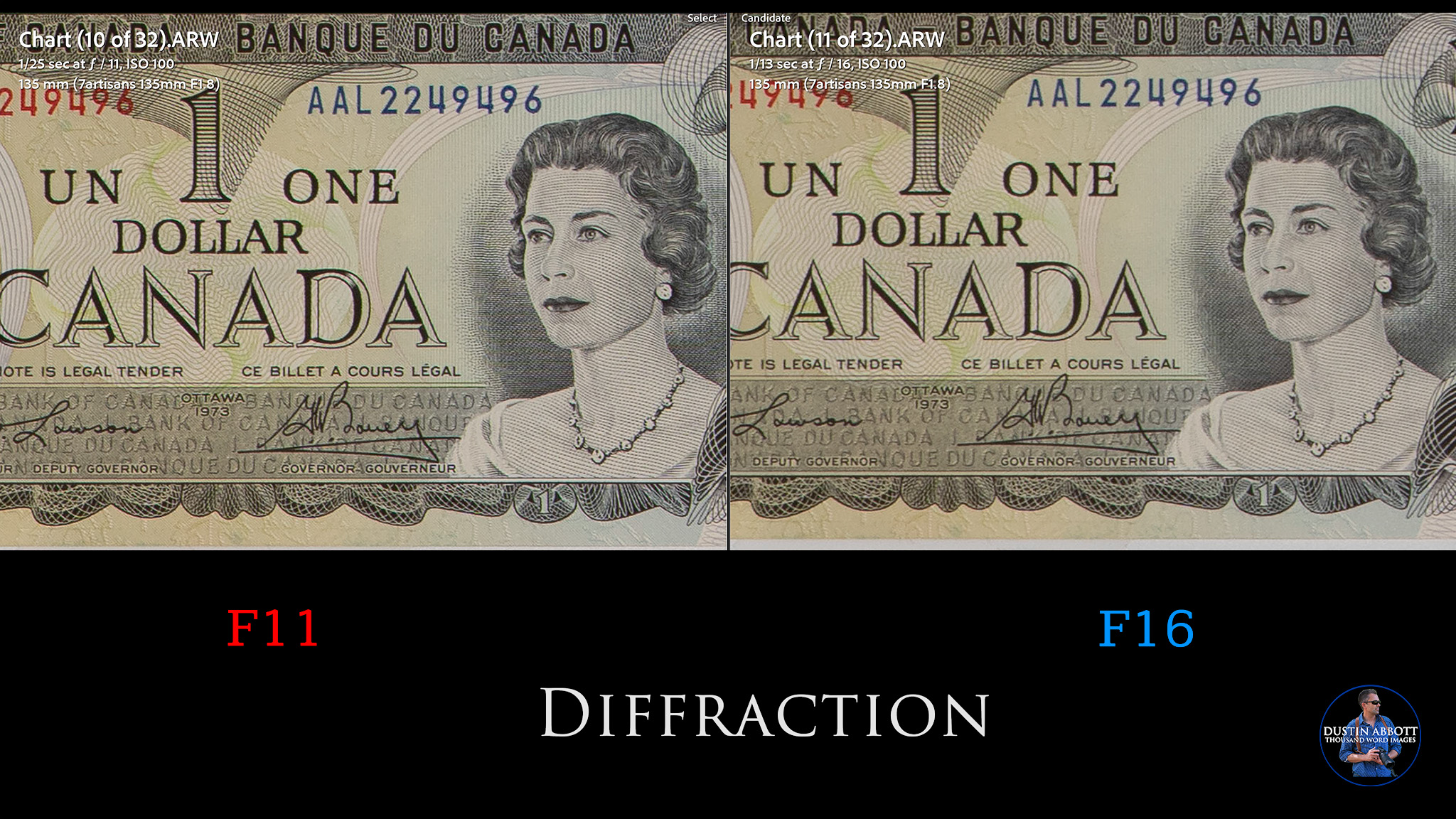
Diffraction is an unfortunate reality on higher resolution cameras, so you will see some softening by F11 and a more obvious softening by the minimum aperture of F16.
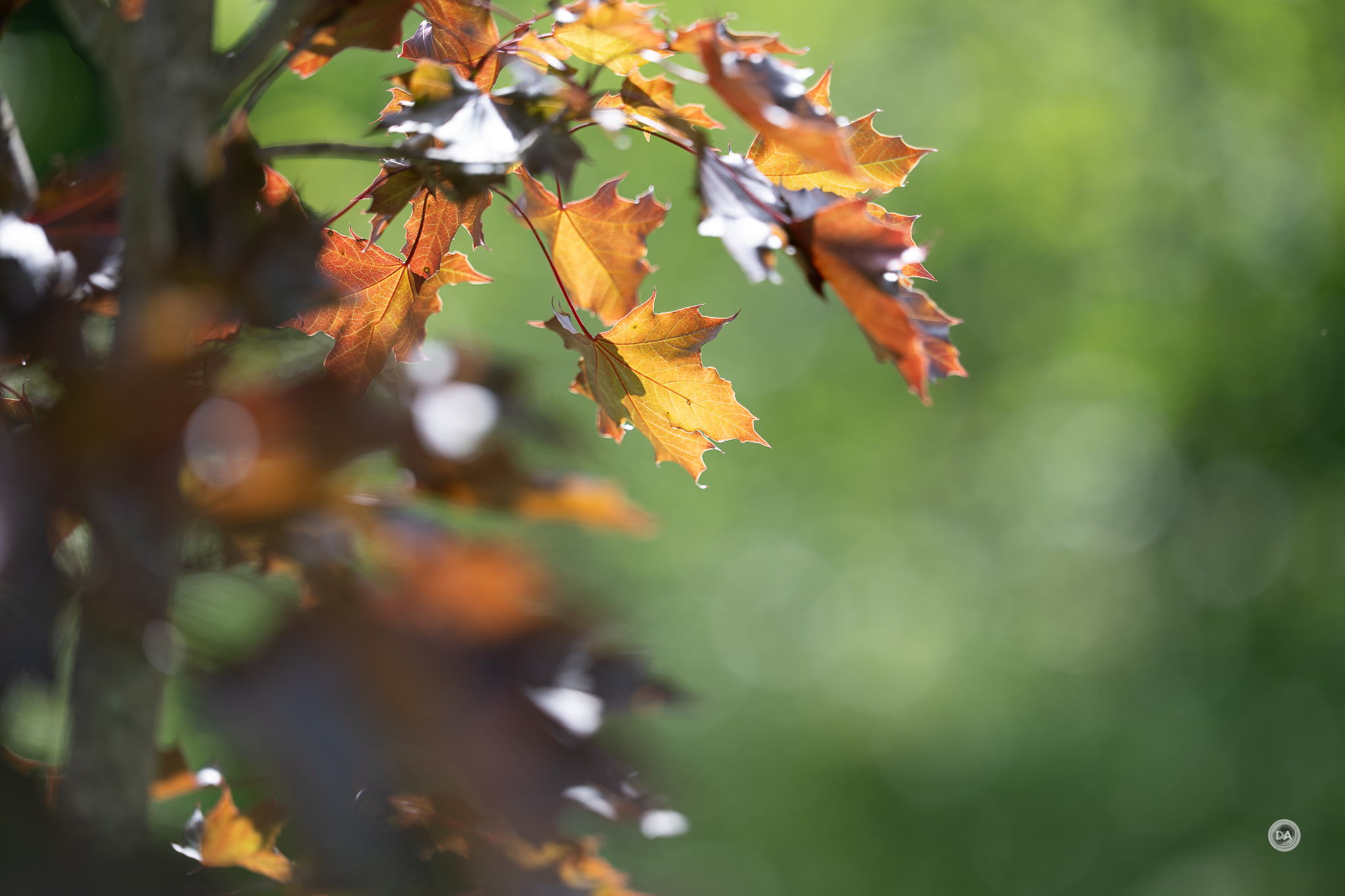
Where the 7Artisans shines is in the quality of the bokeh and general rendering. The look of the bokeh in some ways reminds me of the very expensive Nikkor 135mm F1.8 Plena lens, with very soft bokeh highlights that stay fairly round near the edge of the frame (the Plena is better still in this regard).

At closer focus distances, the backgrounds will be beautifully blurred and soft.
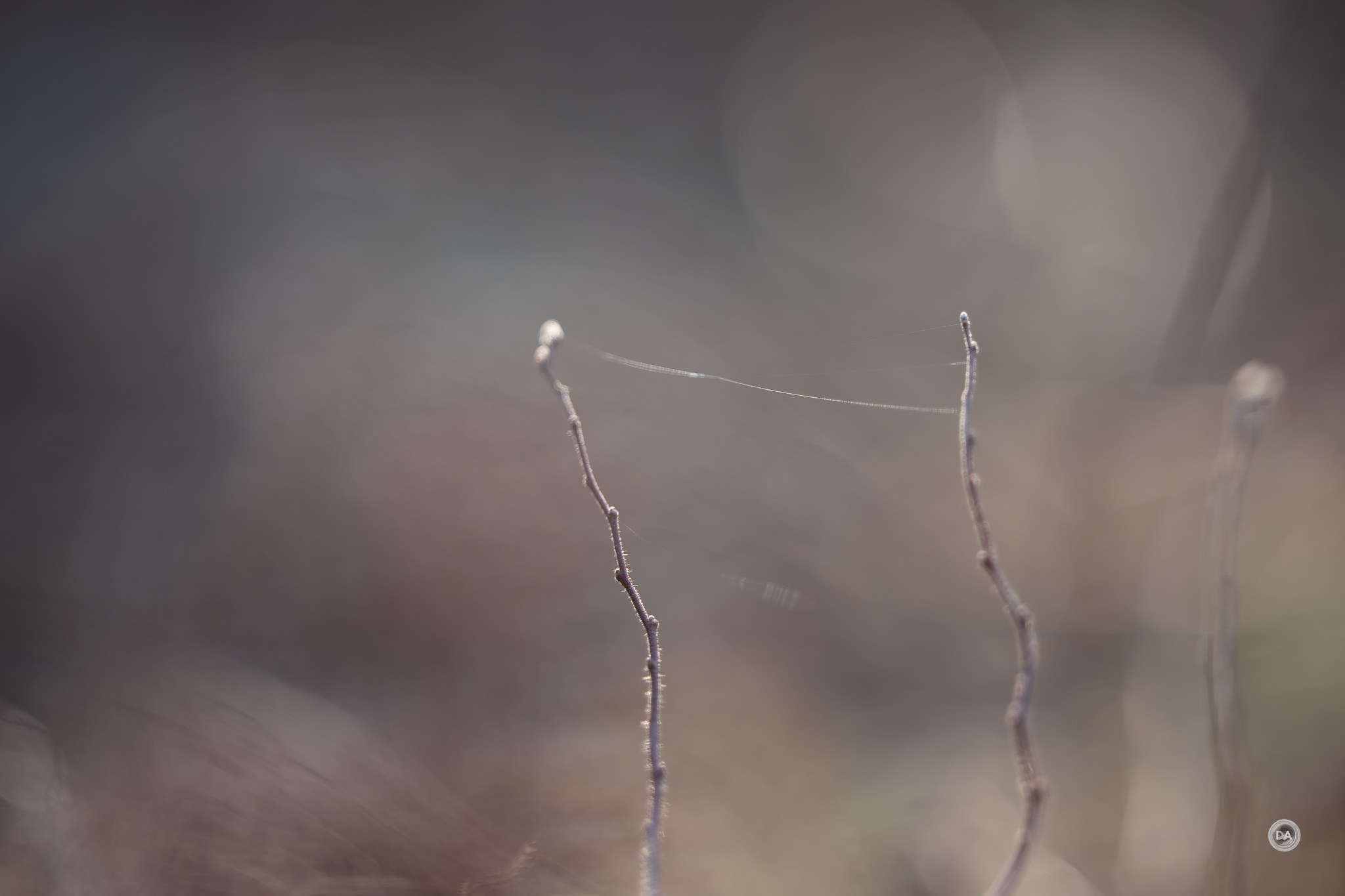
Even in more complicated situations, however, with most busyness in frame, the rendering remains quite nice.

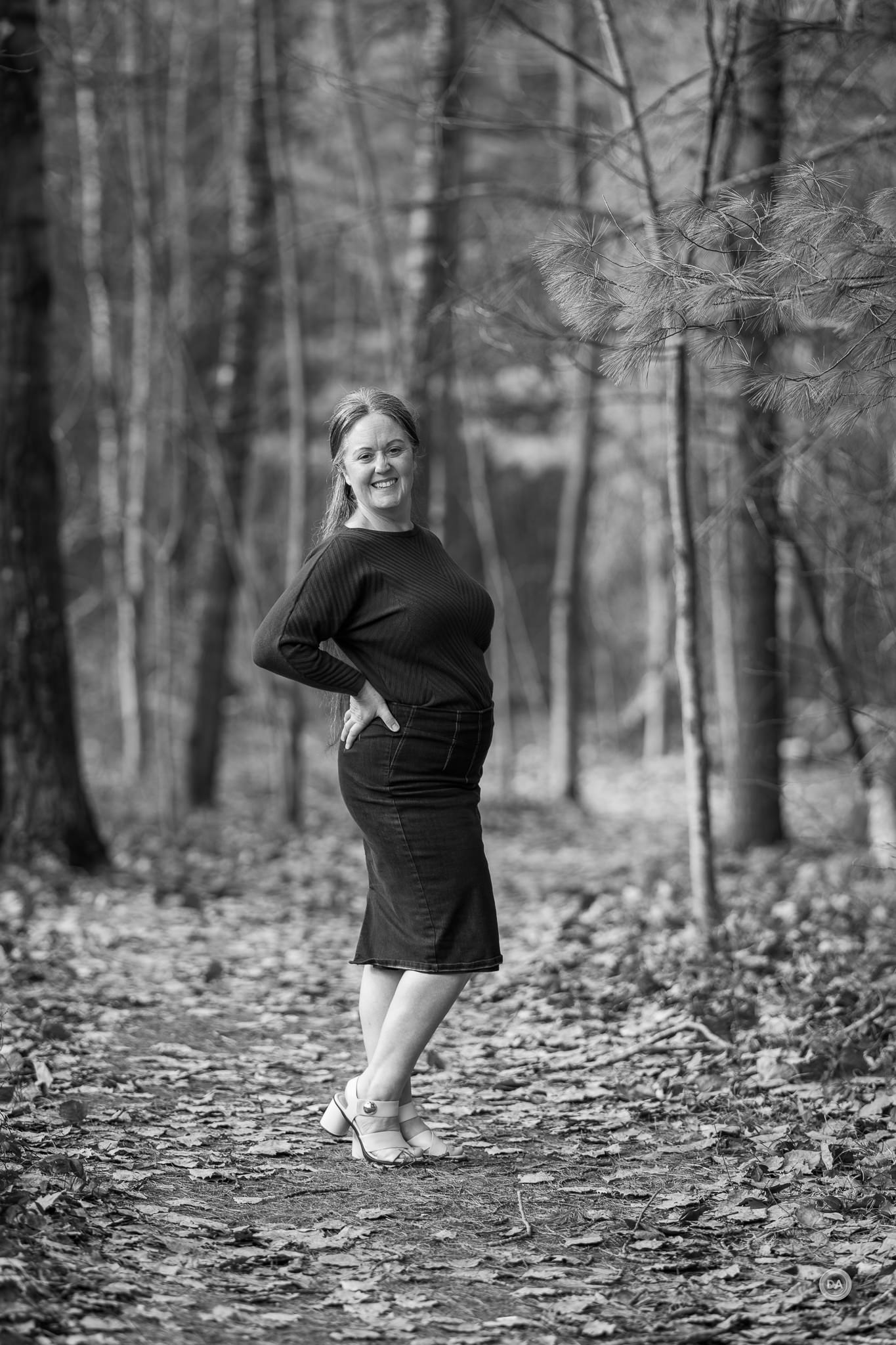
I love using 135mm lenses for full length portraits (particularly environmental portraits), as the “cut-out” effect even at medium distances is lovely.

We are currently in between seasons, and the woods are not particularly pretty at the moment, and yet the 7Artisans makes the scene beautiful.
The dew on early morning grass looks a bit like a “soap bubble” effect, but that works in this kind of setting.

Here’s another shot from later in the season where the effect is even more intense.

Many Chinese lenses have struggled a bit with their coatings than established brands from Japan. This is obviously a more difficult area of lens design than most people consider. The end result is more issues with flare. At certain angles the 135mm will produce some strong blooming/flashing.
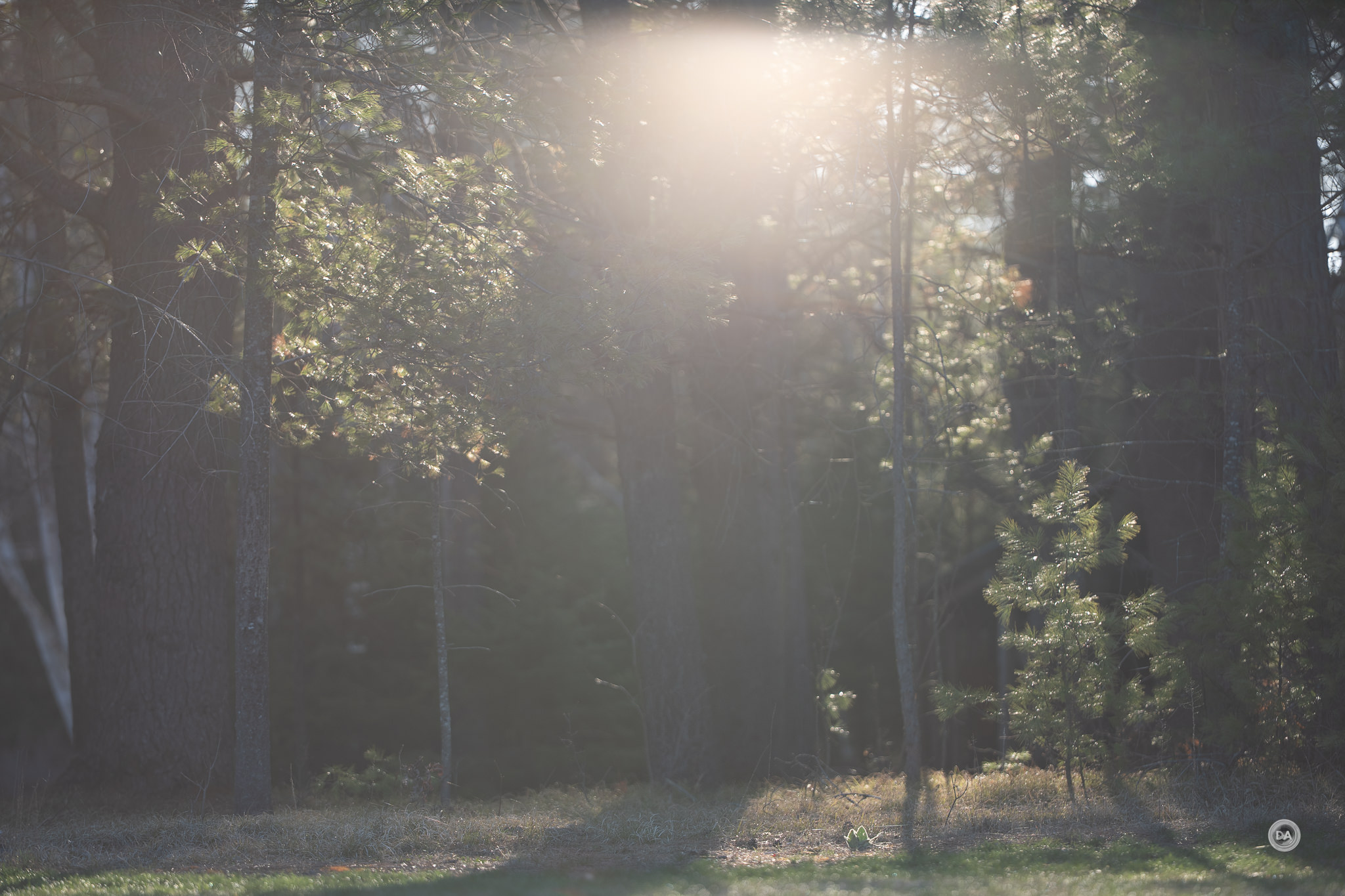
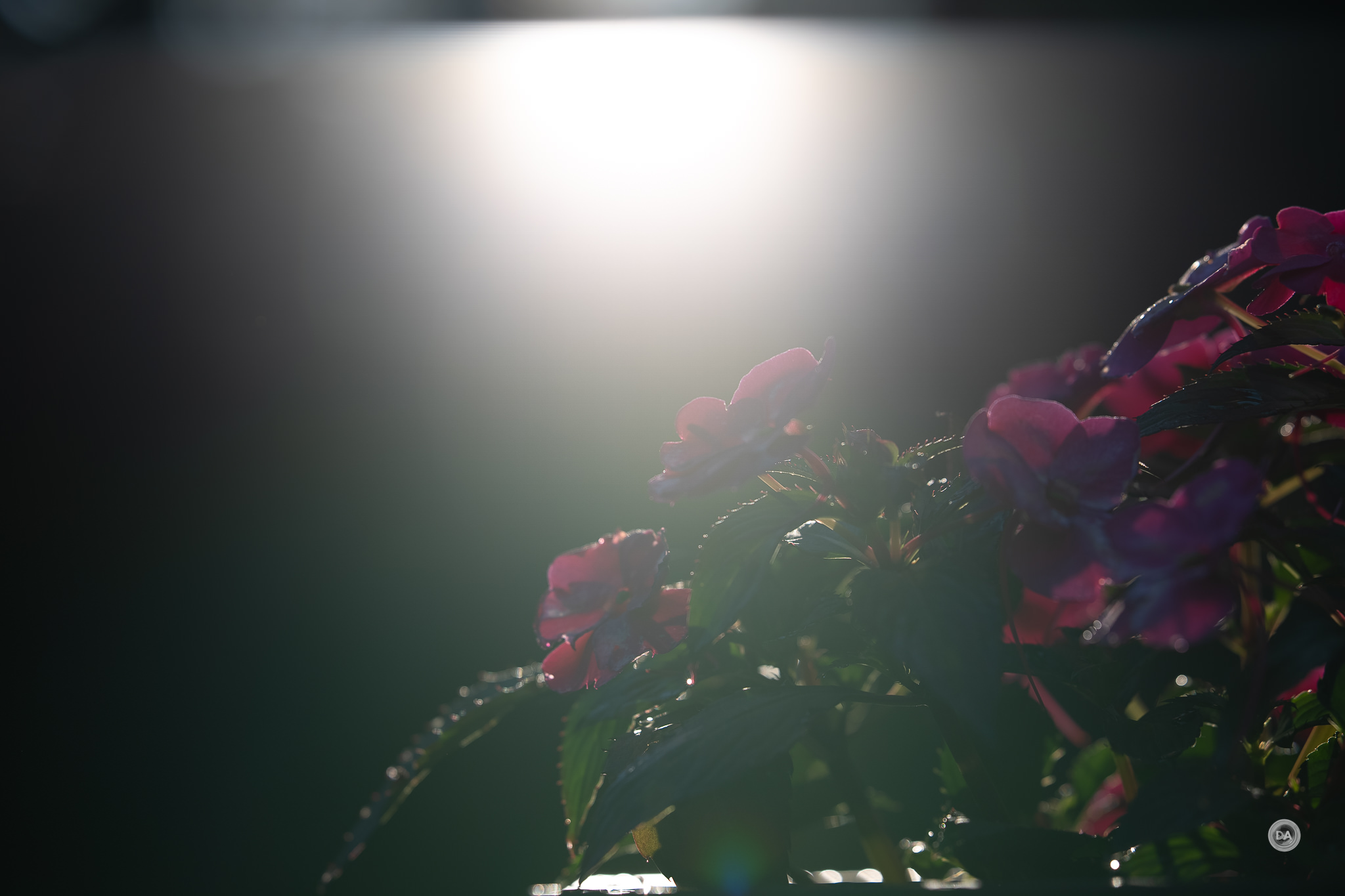
Wide open you will see some localized veiling (loss of contrast) along with some mild ghosting artifacts.
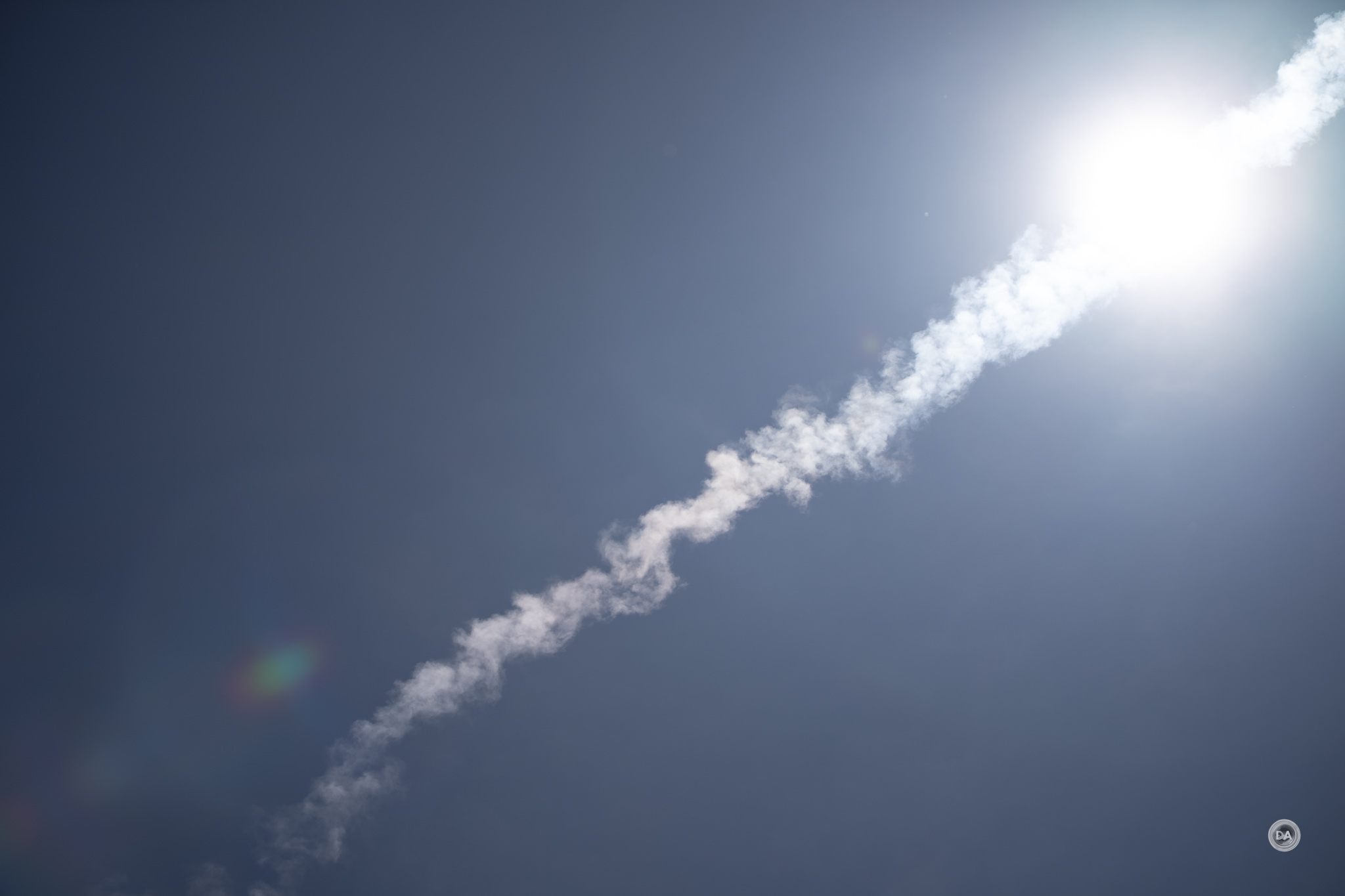
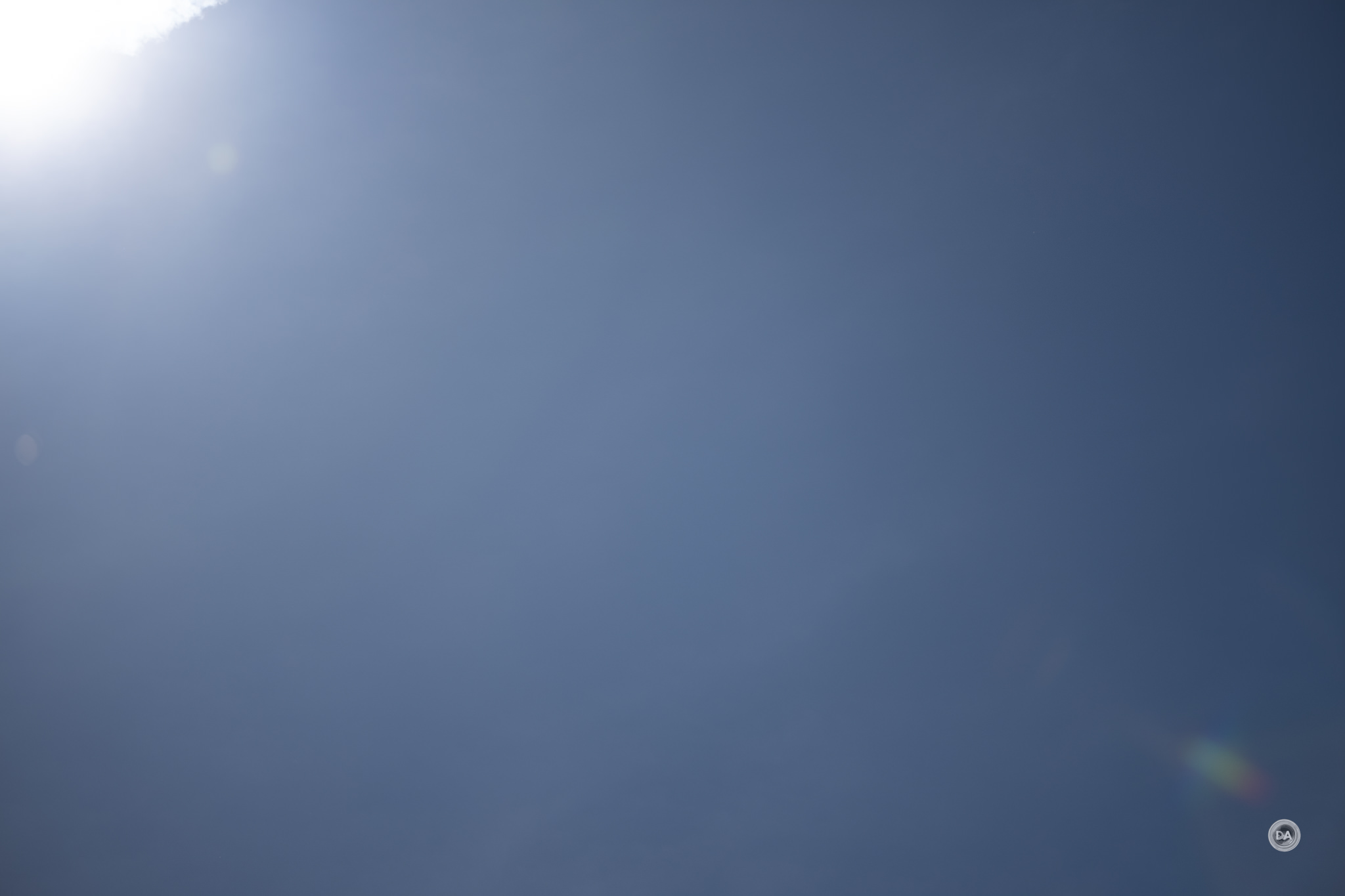
When stopped down, you will see more of a flare/ghosting pattern, particularly when the sun (or light source) is in a corner.


You might be able to use these creatively, but there will probably also be some annoyances with flare at times.
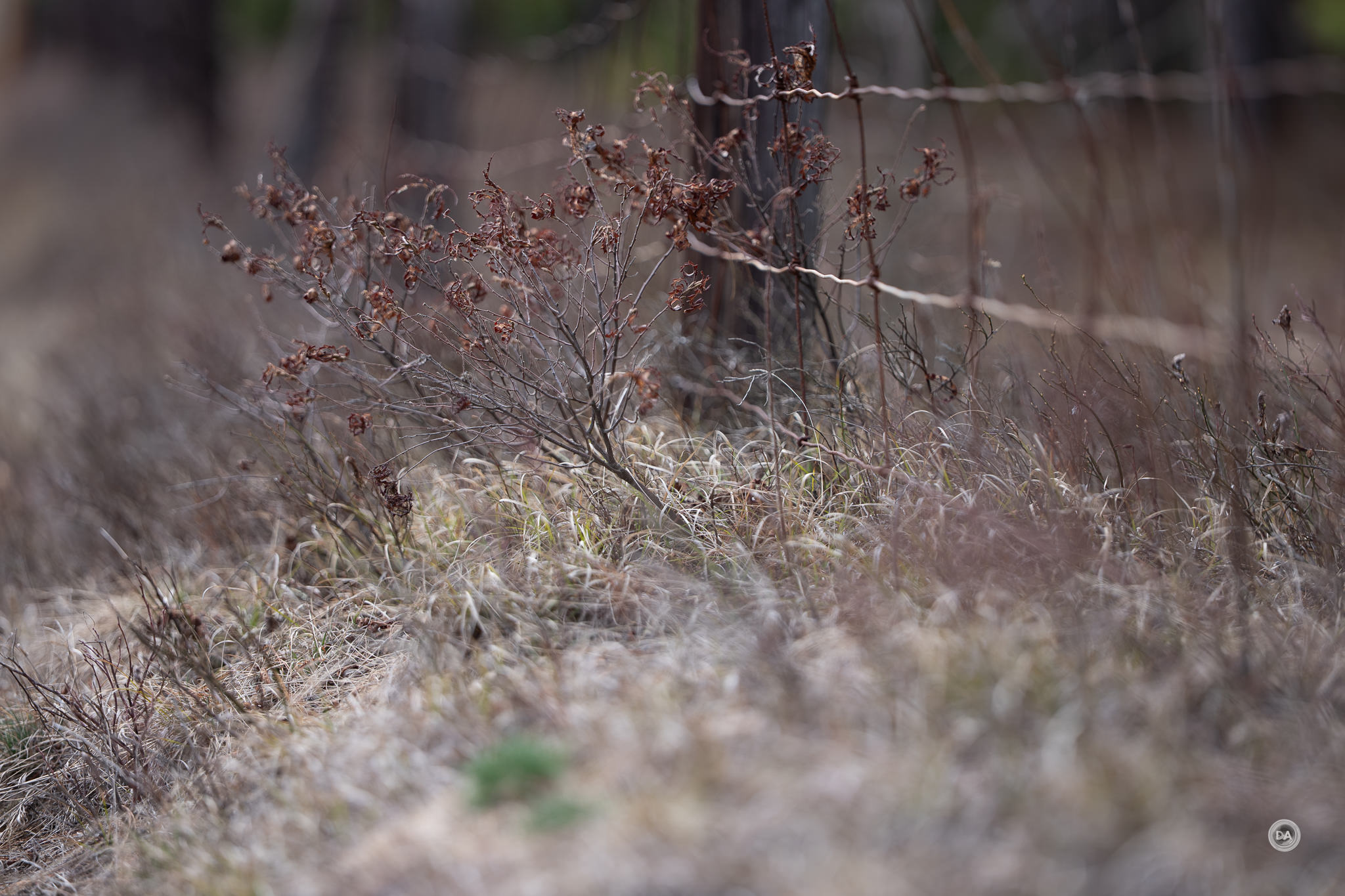
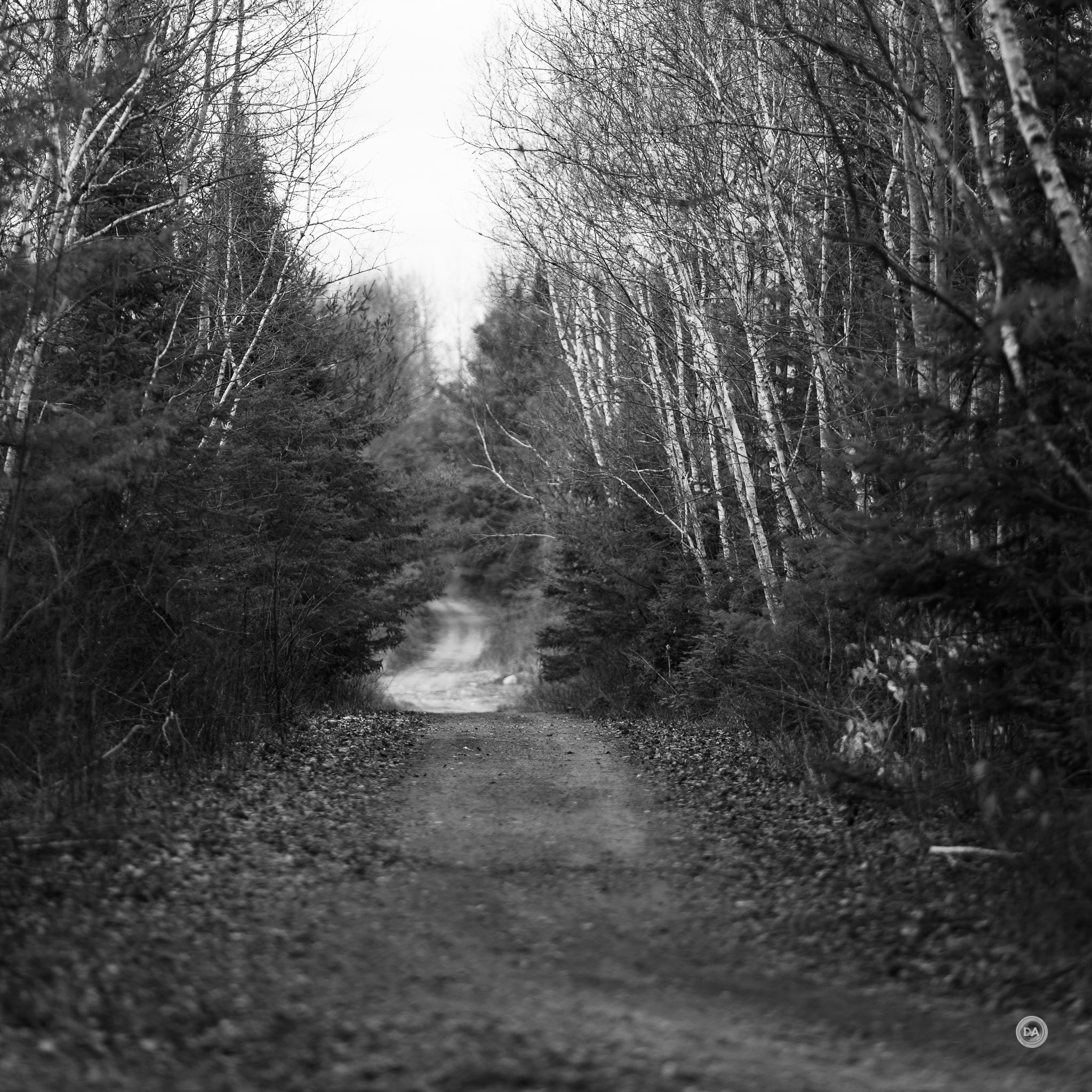
There are sharper, higher contrast 135mm options available, but the 7Artisans does a very nice job in the rendering department. I suspect it might find some fans amongst those don’t want insane levels of contrast and prefer a slightly more cinematic look. Here’s a gallery of images to help you decide.











Conclusion
The profusion of quality prime lenses from newer Chinese lensmakers over the past few years has been nothing short of astonishing. It feels odd to call the 135mm segment “crowded”, but the reality is that the 7Artisans AF 135mm F1.8 is the fourth(!) E-mount 135mm lens release in the past couple of years (including the Sigma 135mm F1.4 ART), meaning that there are at least six autofocusing 135mm lenses available (or seven if you include the older Sigma 135mm F1.8 ART) on Sony. The 7Artisans biggest claim to fame will be the fact that it is the cheapest, though in many ways that sells short what is really quite a nice lens.

I wouldn’t be surprised to see this lens selling in the $500 range in the future, and it would be hard to argue against its value at that price. The biggest challenge on the day of this review is that the Samyang AF 135mm is available for about $600 on sale, a price that it has hit a few times over the last two years. This is a very competitive segment.
I do really like the rendering from this lens, as the bokeh is really lovely, though I remain a little concerned about some of the “bugs” in the lens that still need to be squashed via firmware. If it had released even two years ago, I think it would have made a decent splash as an inexpensive alternative to the premium Sony 135mm F1.8 GM and the Nikkor 135mm F1.8 Plena, but as it stands, I think 7Artisans will have a challenge in trying to set their lens apart from the crowd.
Pros:
- Affordable Price: At $689, it offers a competitive entry point compared to other 135mm lenses, making it accessible for budget-conscious photographers.
- Lovely Bokeh: The lens produces soft, aesthetically pleasing bokeh, making it ideal for portrait and creative photography.
- Robust Build Quality: Made with a metal body, it feels sturdy and well-designed, giving a premium feel for the price.
- Feature-Rich Design: Includes an aperture ring, dual custom buttons, and an AF/MF switch for user convenience.
- Compact Size: While still substantial, the lens diameter is slightly narrower than competitors, enhancing grip and handling.
- Smooth Manual Focus: The manual focus ring is responsive, allowing for precise adjustments when needed.
- Good Close Focus Distance: With a minimum focusing distance of 68cm, it offers a higher magnification capability compared to competitors.
- Low Chromatic Aberration: Successfully controls longitudinal and lateral chromatic aberration, providing clear, high-contrast images.
- Potential for Future Updates: The USB-C port for firmware updates suggests that performance can be improved over time.
Cons:
- Less Competitive Autofocus: Autofocus performance lags behind the leaders in the class
- Inconsistent Performance: The lens does not always operate in a stable way on Sony cameras.
- Weight Considerations: At 1014g, it is heavier than some alternatives
- Missing Advanced Features: Lacks features like declickable aperture and a focus limiter, which are common in higher-end lenses.
- Need for Firmware Improvements: Autofocus inconsistencies suggest that the current firmware might require updates to maximize performance.
- Potential Flare Issues: The lens can produce noticeable flare and ghosting artifacts, especially in high-contrast lighting conditions.
- Competition Saturation: The crowded 135mm lens market makes it challenging for the 7Artisans lens to stand out, even with its strengths.
_________________________________________________________________________
GEAR USED:
Purchase the 7Artisans AF 135mm F1.8 @ B&H | Adorama | Amazon | Amazon Canada | Amazon UK | Amazon Germany
_________________________________________________________________________
Purchase the Sony a7RV @ B&H Photo | Adorama | Amazon | Camera Canada | Sony Canada | Amazon Canada | Amazon UK | Amazon Germany
__________________________________________________________________
Purchase the Sony a7IV @ B&H Photo | Adorama | Amazon | Camera Canada | Sony Canada | Amazon Canada | Amazon UK | Amazon Germany
_________________________________________________________________
Purchase the Sony Alpha 1 @ Camera Canada | B&H Photo | Adorama | Amazon | Sony Canada | Amazon Canada | Amazon UK | Amazon Germany | Ebay
_________________________________________________________________
Want to support this channel? Use these affiliate links to shop at: B&H Photo | Amazon | Adorama | Camera Canada | Amazon Canada | Amazon UK | Ebay | Make a donation via Paypal
Buy DA Merchandise https://bit.ly/TWIMerch

Keywords: 7Artisans, AF, 135mm, F1.8, AF 135mm, f/1.8, 7Artisans 135mm F1.8, 7Artisans Review, 135mm, AF, Sony a7V, Sony A1 II, α1 II, Sony a7RV, Review, Hands On, Dustin Abbott, Real World, Portrait, Comparison, Sharpness, Bokeh, Flare Resistance, Autofocus, Image Quality, Sample Images, Video, Photography, let the light in, weathersealing, #letthelightin, DA
Related posts:
 7Artisans AF 50mm F1.8 Review
 7Artisans AF 50mm F1.8 Photo Gallery
 7Artisans AF 85mm F1.8 Review
 7Artisans AF 85mm F1.8 STM Gallery
 7Artisans AF 24mm F1.8 Review
 7Artisans AF 24mm F1.8 Gallery
 7Artisans AF 27mm F2.8 Review
 Viltrox AF 35mm F1.8 II EVO E-Mount Review
 Thypoch Voyager 24-50mm F2.8 Review
 Brightin Star AF 12mm F2.8 Review